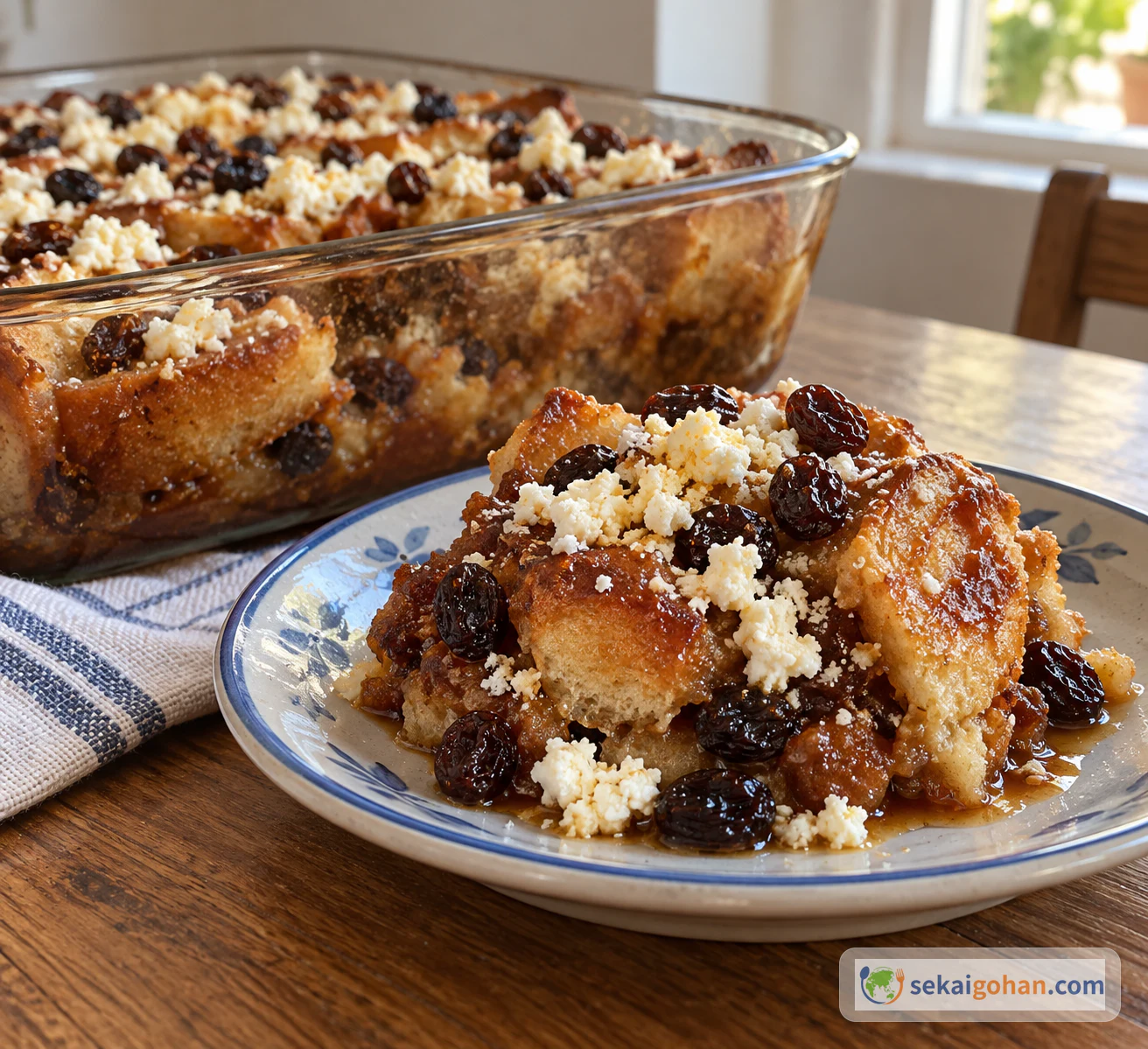
Capirotada: Mexican Layered Bread Pudding with Piloncillo Syrup

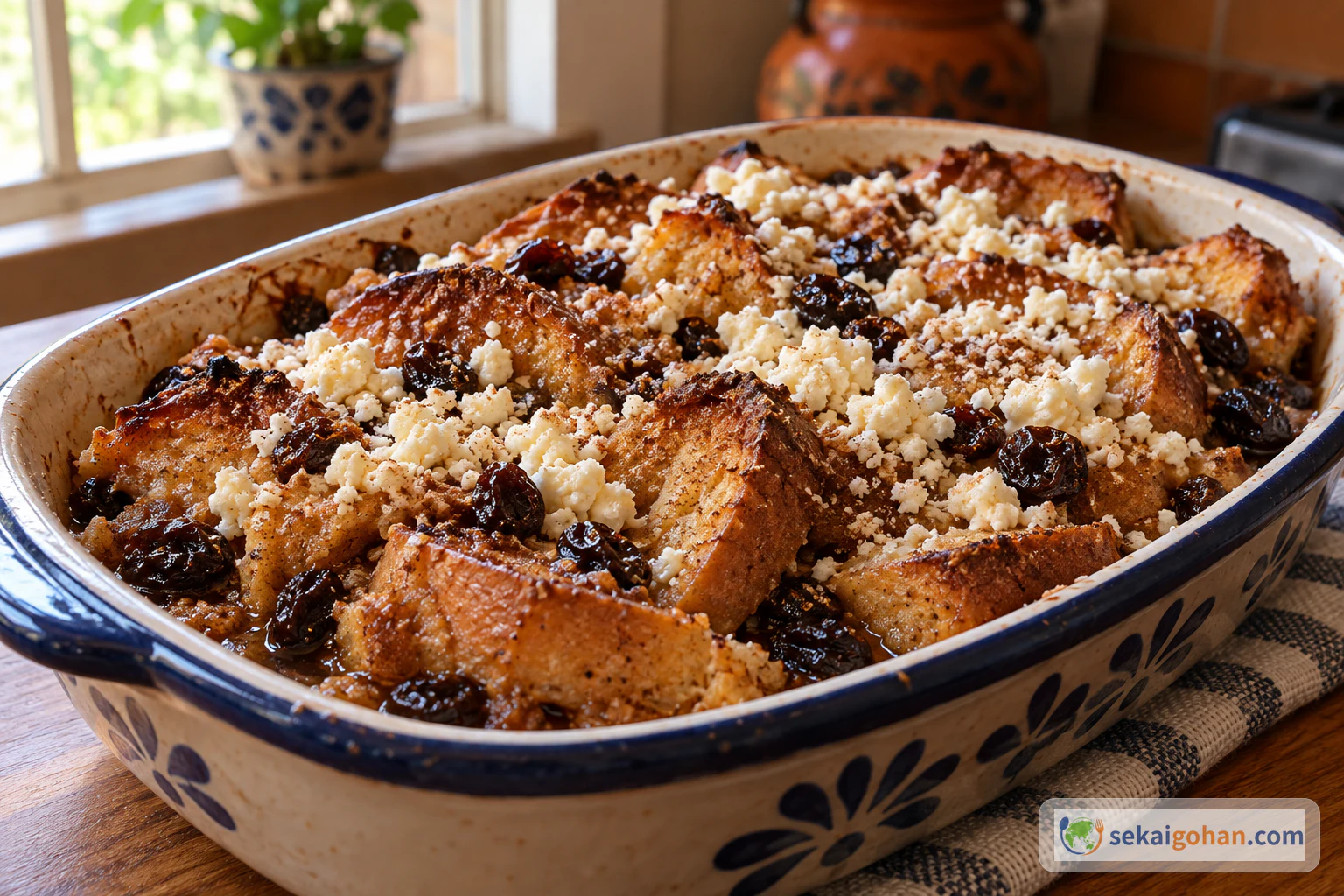
Capirotada: bread soaked in piloncillo syrup, layered with raisins and crumbled cotija cheese
Cuisine
Mexican

How to make capirotada from a Michoacán-inspired recipe published by Guanajuato's tourism and food site: toasted telera or bolillo layered with crumbled cotija, raisins and a piloncillo syrup scented with anise, lemon peel and cinnamon. Covers the method, choosing ingredients outside Mexico, honest notes on what the source leaves open, and how this sweet version relates to capirotada's many historical and regional forms.

Cooking flow

Cooking steps

STEP11 / 5

Slice the bread and toast it in the oven

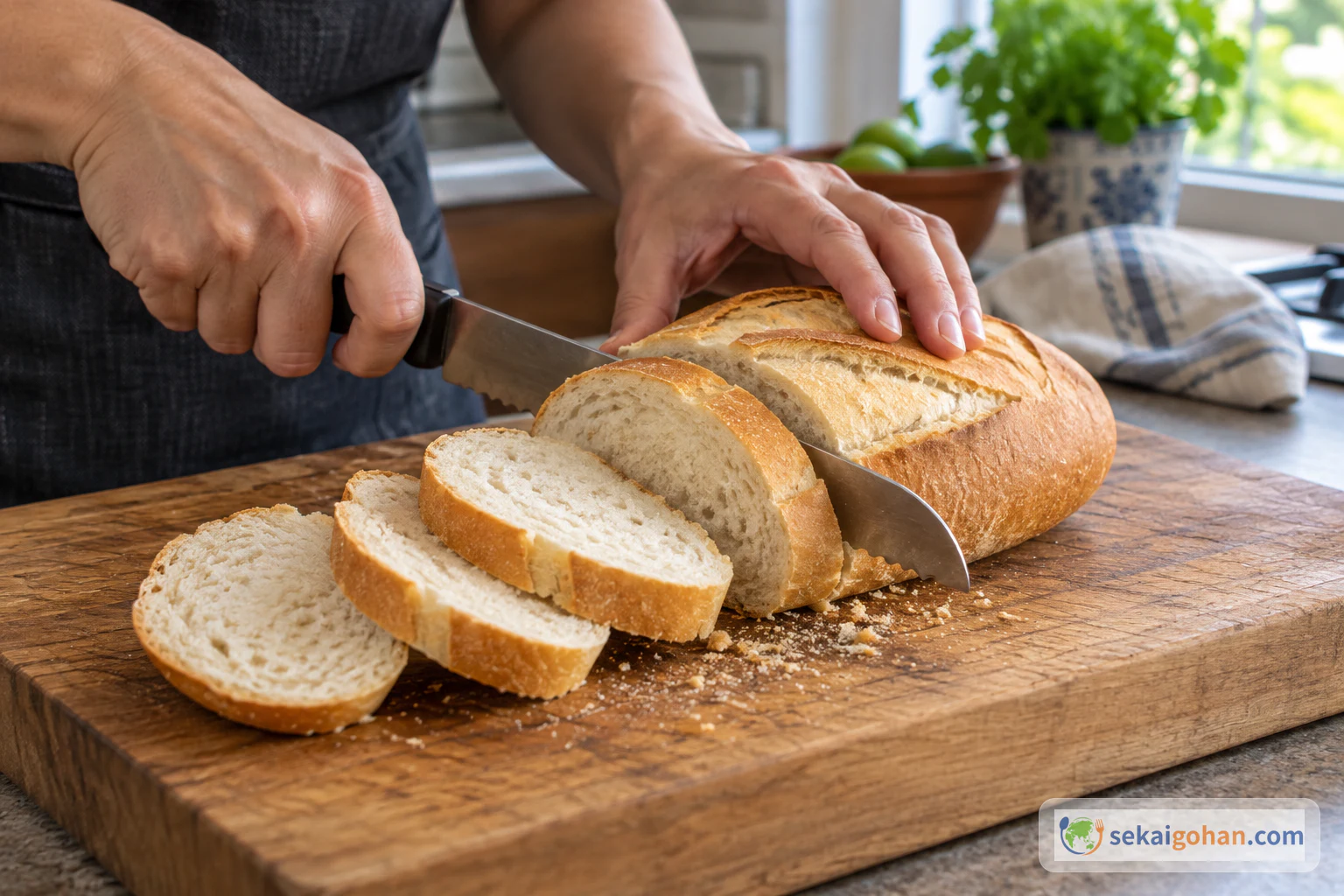
Hands slicing a bolillo into even rounds on a wooden board
Slice the rolls into rounds of even thickness

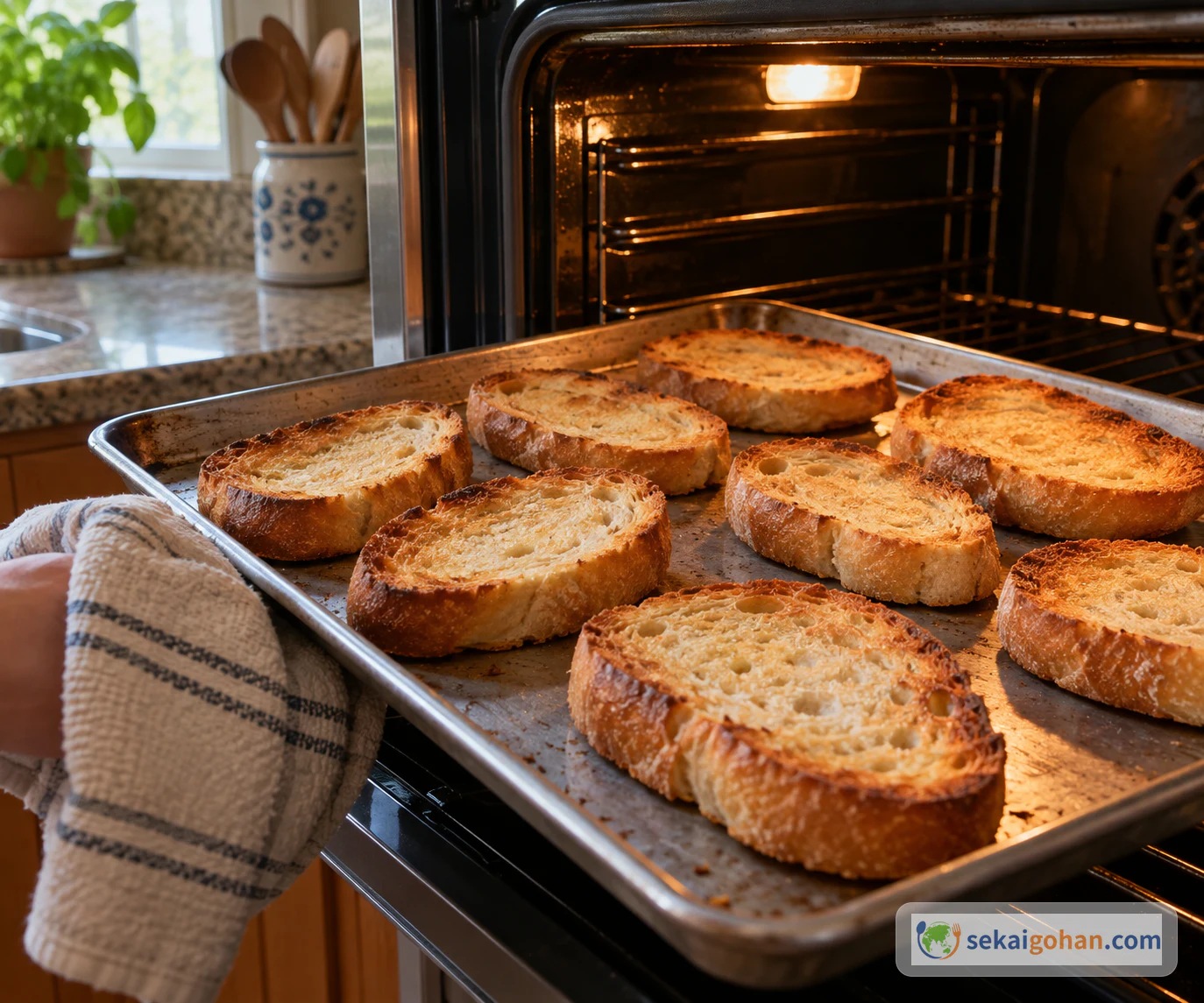
Slice the telera or bolillo. Spread the slices on a tray without overlapping so they dry and color evenly, and toast them in the oven until lightly golden. Aim for a pale golden color rather than dark: scorched bread can carry bitterness into the finished dish.

A tray of lightly toasted bolillo slices at an open oven
Toast the slices until they are lightly golden, not dark
STEP22 / 5

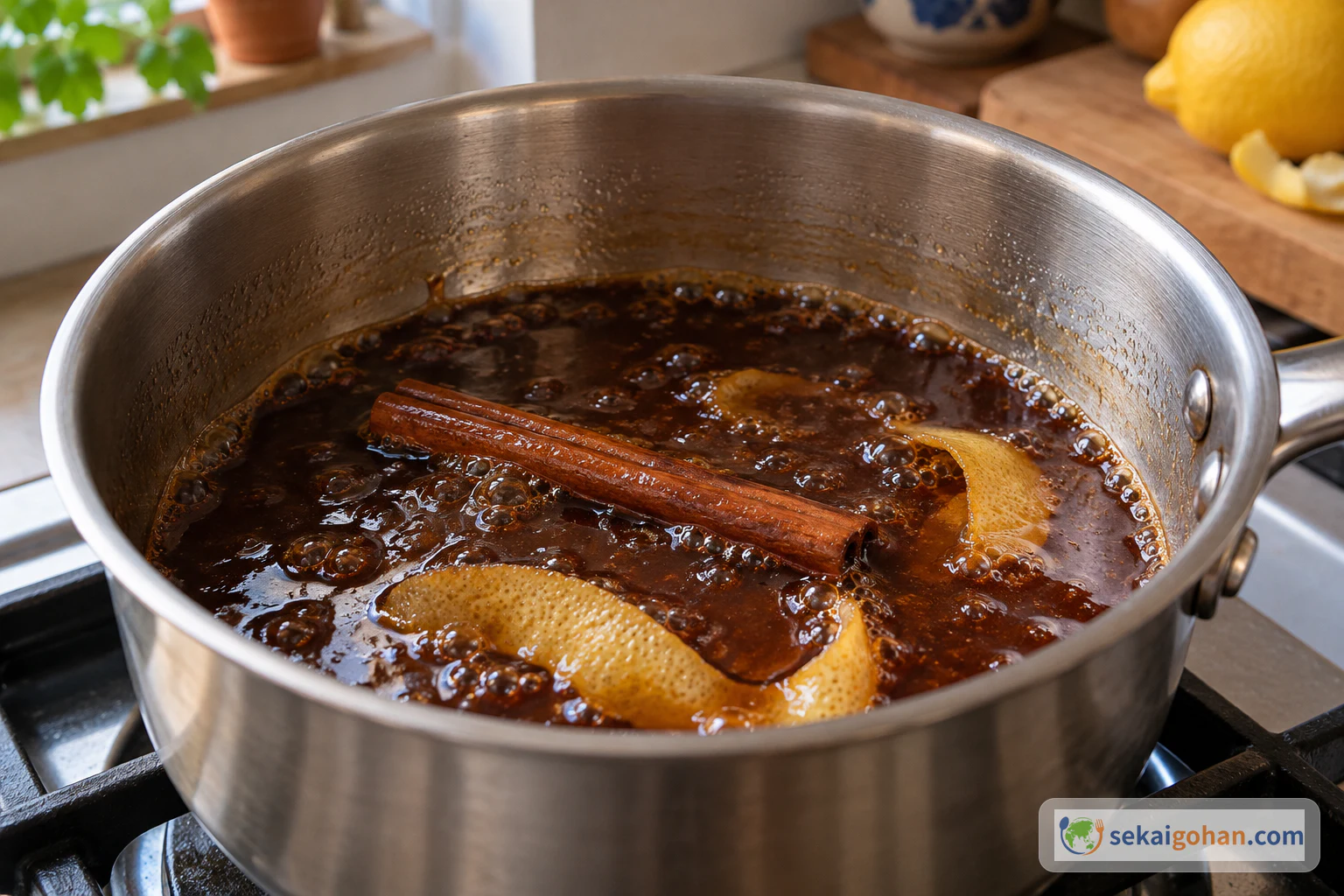
Simmer the scented syrup and reduce it by half

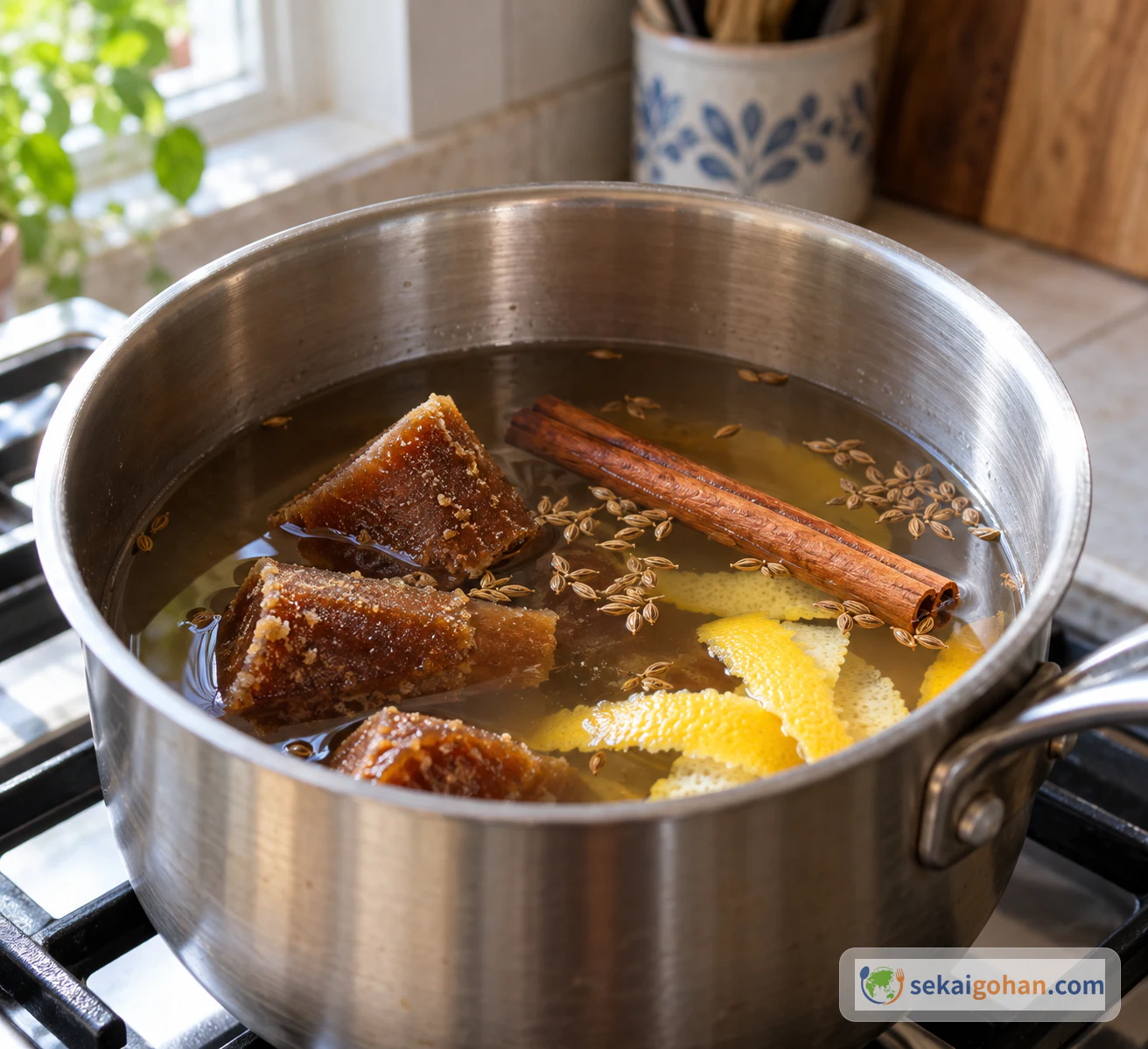
A saucepan with water, piloncillo, anise seed, lemon peel and a cinnamon stick, just starting to heat
Combine water, piloncillo and the aromatics in the pan

Put 3 cups (750 ml) water, 14 oz (400 g) piloncillo, 1 tsp anise seed, the peel of 1 lemon and the cinnamon stick in a saucepan, and heat until the piloncillo dissolves. Keep cooking until the syrup has reduced to about half the volume it had once everything was combined and dissolved. Judge this by the level in the pan, not by measuring the water alone.

When the syrup is reduced, lift out the cinnamon stick and lemon peel so they don't end up in the layers. The anise seeds stay in the syrup.

Dark amber piloncillo syrup simmering gently with a cinnamon stick and lemon peel
Reduce the combined syrup until it is about half its starting volume
STEP33 / 5

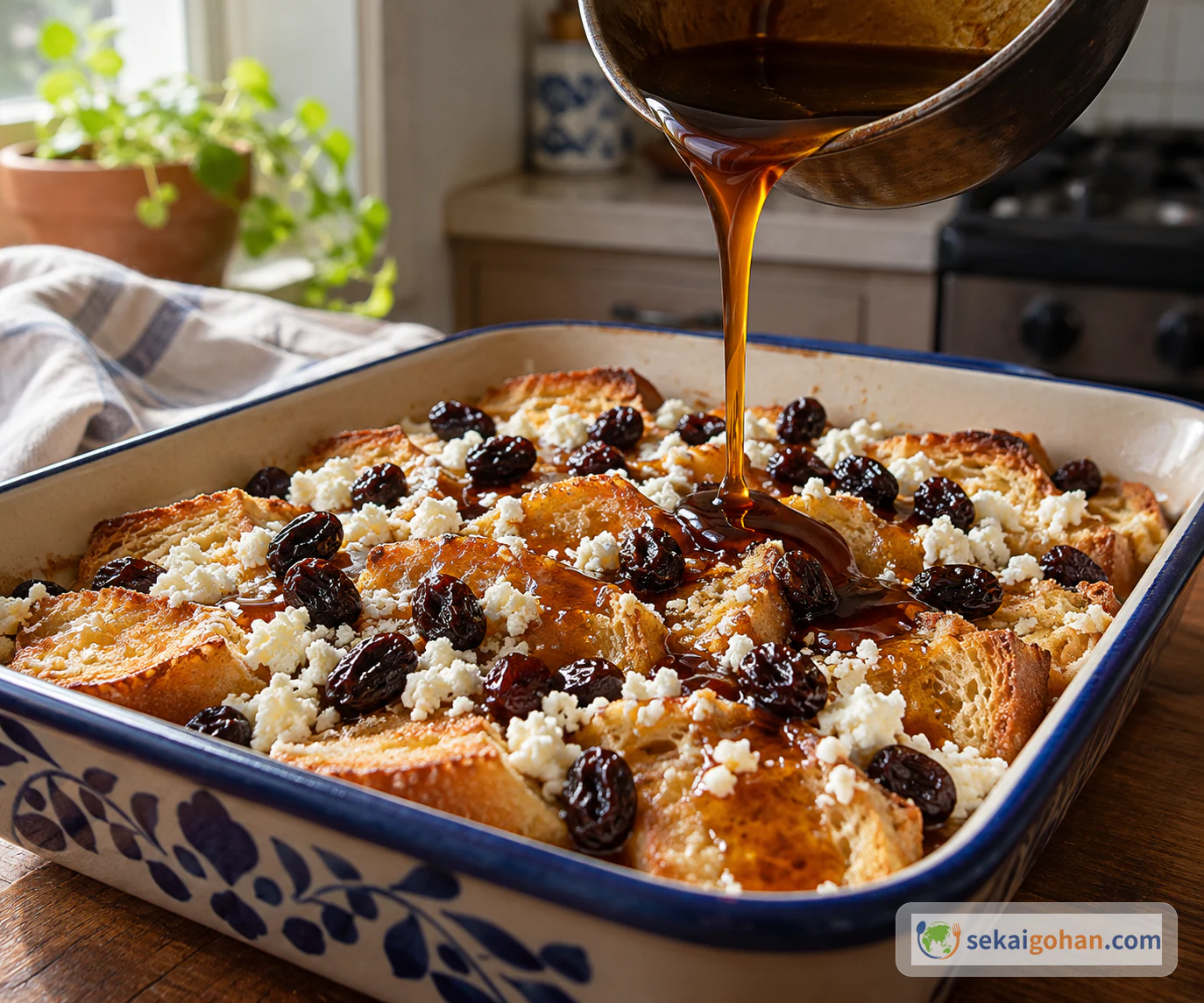
Layer bread, cheese, raisins and syrup

Piloncillo syrup poured over layered bolillo, raisins and crumbled cotija in a baking dish
Pour the syrup over each layer so the bread soaks evenly

Arrange a layer of toasted bread in the oven-safe dish, then add crumbled cotija, raisins and syrup. Repeat in that order until the ingredients are used up. Spread the syrup so that every part of the bread gets some and no dry patches remain.

STEP44 / 5

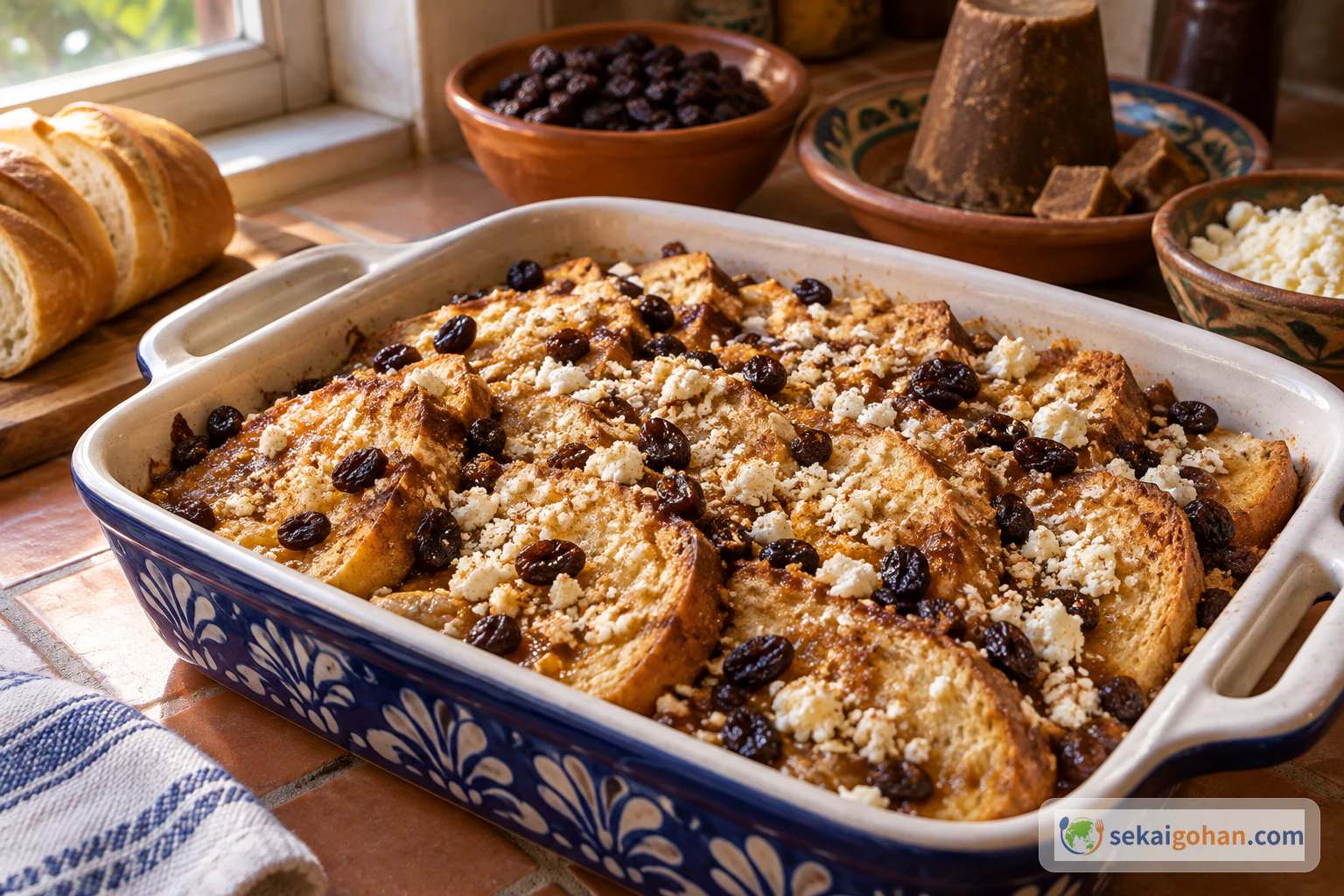
Bake on low heat

An unbaked capirotada with bread, raisins and cheese moist with syrup, ready for the oven
Assembled and ready to bake: the bread is moist with syrup but not submerged

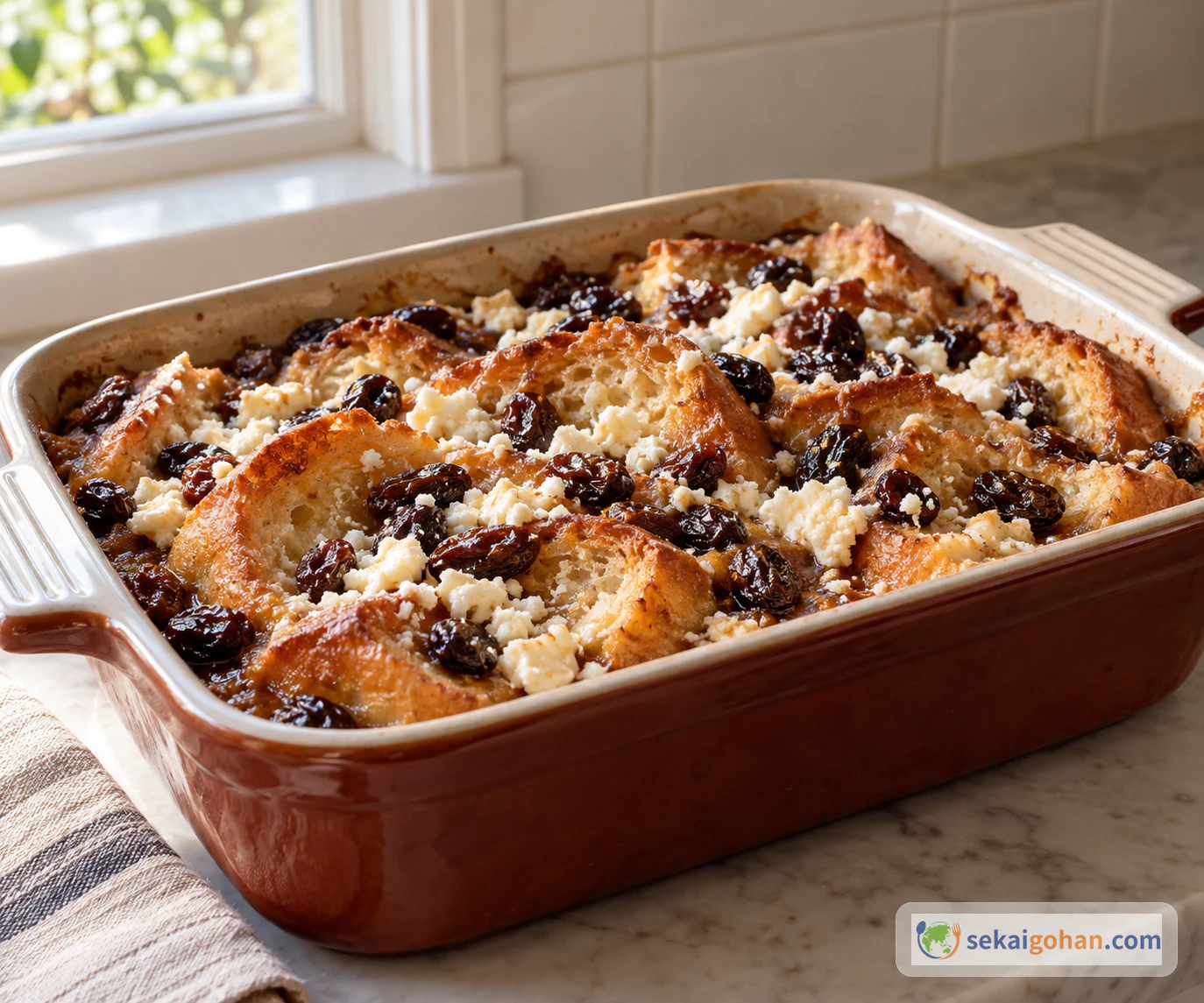
Bake the dish in the oven on low heat. Check it by sight: look for syrup that has soaked into the bread and a surface that has not dried out. Oven differences, dish size and how dry the bread was will change how it behaves.

Capirotada just out of the oven, glossy with syrup and lightly golden at the edges
After gentle baking, the syrup has settled into the bread
STEP55 / 5

Lift out portions and serve

A portion of capirotada on a small plate showing its syrup-soaked bread layers
Lift portions so the layers of bread, raisins and cheese stay visible

Let the dish settle briefly before cutting, so the layers hold when you lift out portions. Serve on small plates.

0 / 0
Ingredients

Ingredients

1 / 1

Ingredients

Ingredient Amount Role
Unrefined cane sugar (piloncillo) 14 oz (400 g) The sweetness and molasses-like depth of the syrup
Bread rolls, sliced (telera or bolillo) 14 oz (400 g) The base that is toasted and then soaks up the syrup
Cotija cheese, crumbled (queso cotija, or adobera) 5.5 oz (150 g) Salty layer between the bread
Raisins 3.5 oz (100 g) Fruity sweetness scattered through the layers
Water 3 cups (750 ml, 3/4 liter) The liquid for the syrup
Anise seed 1 tsp (cucharadita) Aroma for the syrup
Lemon peel Peel of 1 lemon Citrus aroma for the syrup; the juice is not used
Cinnamon stick 1 Aroma for the syrup
0 / 0

Golden slices of toasted bread drink in a dark piloncillo syrup, with raisins tucked between the layers and salty cotija crumbled over each one. The dish then bakes gently until the layers settle into one another. Capirotada is Mexico's layered bread pudding, and each spoonful moves between molasses-like sweetness and a salty, milky edge. The syrup is piloncillo, the unrefined Mexican cane sugar, simmered with anise seed, lemon peel and a cinnamon stick. This version is inspired by one from Michoacán.

Capirotada Across Mexico

Capirotada has never been a single recipe, and versions still differ from region to region across Mexico. (You can find more dishes from the same country on our Mexico page.) In the 19th century the name covered several quite different dishes: savory ones with meat, vegetable ones and sweet ones. One 19th-century recipe layers fried bread with a tomato-based seasoned broth, herbs, dried fruit, nuts and cheese. Today's sweet bread pudding is only one branch of that family.

The sweet version is historically tied to the Lenten table. A 20th-century sweet recipe is built on piloncillo syrup, bread, cheese, raisins, peanuts and walnuts, while regional versions in the north use beans or chickpeas.

A Zacatecas-style capirotada shows how far apart the versions can be. It starts with a sweet "milk" of cooked chickpeas blended with milk and sugar, then adds cinnamon, bolillo, fresh cheese, raisins and roasted peanuts. The Michoacán-inspired version here goes another way, with a water-based piloncillo syrup and no nuts.

Ingredients: One Michoacán-Inspired Version
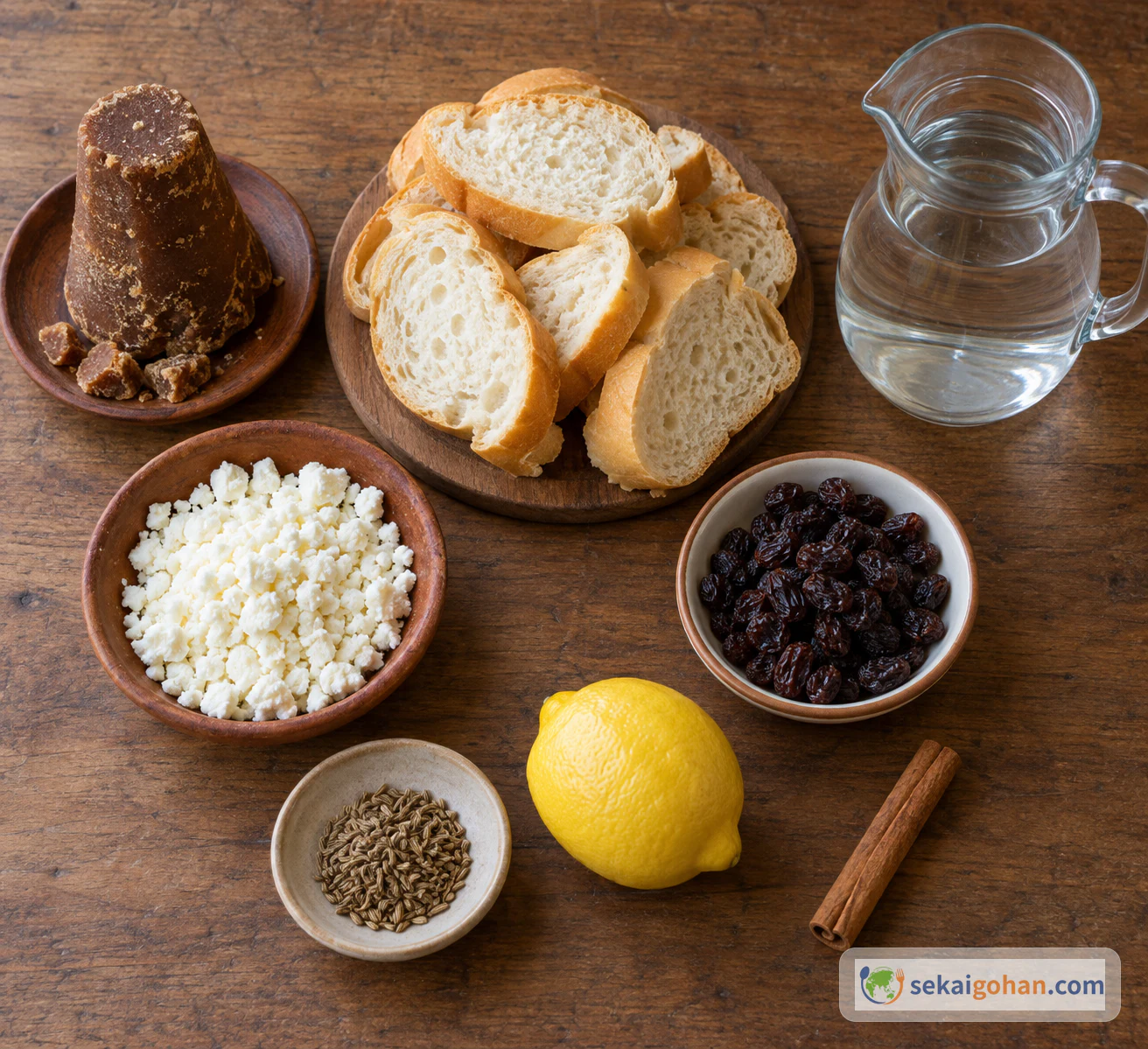
Piloncillo, sliced bolillo, crumbled cotija, raisins, anise seed, a lemon, a cinnamon stick and a jug of water
Everything in this version: bread, piloncillo, cheese, raisins, water and three aromatics

No butter, oil, milk, egg or nuts go into this version.

Equipment

  • Bread knife and cutting board
  • Baking sheet or oven tray for toasting the bread
  • Saucepan for the syrup
  • Slotted spoon or tongs for lifting out the cinnamon stick and lemon peel
  • Food-safe, oven-safe shallow baking dish for layering
  • Oven

Choosing Ingredients for Capirotada

Piloncillo. Look for it at Mexican or Latin American grocers and import shops, where it's usually sold as solid cones of unrefined cane sugar. If you can't find it, a dark unrefined cane sugar such as Japanese kokutō will stand in, though the syrup will have a different aroma and dissolve differently.

Bread. Telera and bolillo, both Mexican white rolls, each work well. Notice how their cut surfaces differ and how much syrup each one takes up. Failing both, use a plain table bread that isn't strongly salted, and expect the texture and the way it absorbs syrup to change.

Cheese. This recipe uses crumbled cotija, but adobera works too. The two can differ in age and firmness, so if you find both, compare their saltiness and how easily they crumble, and check the labels. Other cheeses vary in salt and texture, so taste for saltiness and firmness before you substitute.

Lemon peel. Wash a yellow lemon well and take only the thin colored outer peel.

How to Make Capirotada

Order of work

Toast the bread, simmer and reduce the scented syrup, layer bread, cheese, raisins and syrup, then bake gently. Watch the food rather than a clock.

Capirotada Troubleshooting

Problem Likely cause What to look at
Bitter edge in the finished dish Bread toasted too dark Next time, check the bread early and stop at pale golden
Some bread stayed dry Syrup poured mostly in one place, or too much on the top layer Divide the syrup across every layer and look for dry patches before baking
Heavy or sticky result Syrup reduced too far, or bread not toasted enough to hold its shape Keep the full amount of water; watch the toasting and how far the syrup reduces instead. Dish size also plays a part
Thin, runny syrup Not reduced enough Keep simmering until the combined syrup is about half its starting volume

Allergens and Storage

Allergens

This dish contains wheat (bread) and milk (cheese). If you have a wheat or milk allergy, don't eat it. Check the labels on bread, cheese and raisins for allergens and shared-facility statements.

For leftovers, follow your local food-safety guidance for a cooked dish containing cheese.

Frequently Asked Questions

Is capirotada eaten during Lent?

The sweet version has long been associated with the Lenten table, though that's a historical tradition rather than a rule every household follows.

Can I make it with brown sugar instead of piloncillo?

A dark unrefined cane sugar such as kokutō can stand in. The syrup will taste and dissolve differently.

What temperature and how long should I bake it?

Bake on low heat, and look for syrup soaked all the way into the bread and a surface that hasn't dried out.
Sources

  • Guanajuato.mx / Discover Guanajuato, "Capirotada." The recipe used here: ingredients and amounts, the order of steps (toast the bread, reduce the syrup by half, layer, bake on low heat), the note that versions differ across Mexico, the Michoacán inspiration, and bread, piloncillo syrup, raisins and cotija as recurring elements. https://guanajuato.mx/en/gastronomy/guanajuato-si-sabe/capirotada/
  • Guanajuato.mx / Descubre Guanajuato, "Capirotada," recipe by María Elena Acros de Morales. The Spanish original of the same recipe, confirming 3/4 liter of water in both the ingredients and the method, the Michoacán inspiration, and reducing the combined syrup by half. https://guanajuato.mx/gastronomia/guanajuato-si-sabe/capirotada/
  • Revista BiCentenario / Instituto de Investigación José María Luis Mora, "La capirotada en México en los siglos XIX y XX." The several savory and sweet dishes called capirotada in the 19th century, a 19th-century layered recipe, the link between the sweet version and Lent, a 20th-century sweet version, and northern versions with beans or chickpeas. https://revistabicentenario.com.mx/index.php/archivos/la-capirotada-en-mexico-en-los-siglos-xix-y-xx/
  • Larousse Cocina, "Capirotada zacatecana." A contributor's family recipe for a Zacatecas-style capirotada with a chickpea-based "milk," bolillo, fresh cheese, raisins and roasted peanuts, cited only as a regional contrast. https://laroussecocina.mx/receta/capirotada-zacatecana/