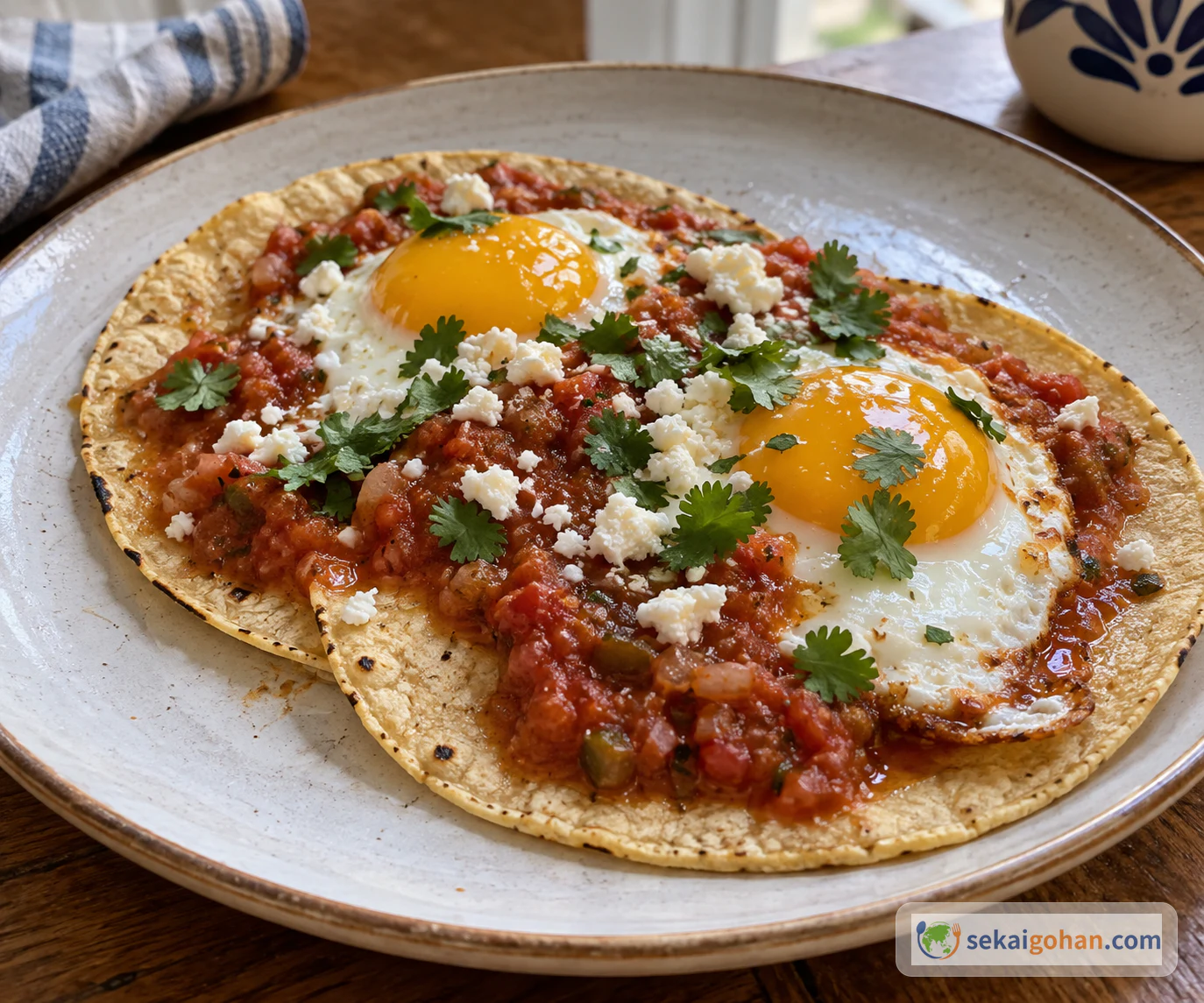
On a cold morning you put a pot on the stove meaning to make plain hot chocolate, and suddenly the tip of your whisk gets heavy. That's the moment champurrado gets interesting. Corn slowly rises from behind the sweet smell of cacao, and the drink turns as satisfying as porridge. Champurrado is the chocolate version of atole, Mexico's warm drink thickened with corn. It is sweet and spiced with cinnamon, and the flour gives it a body that plain cocoa never has.

Champurrado and the Mexican Corn Table
Champurrado is made from masa de maíz, masa harina or fine corn flour, along with piloncillo, cinnamon and chocolate. In Mexico it often comes with tamales, churros, pan de muerto and sweet breads. Tamales are the most natural partner: "steamed masa" and "drinkable masa" sitting side by side, both from the same corn culture.
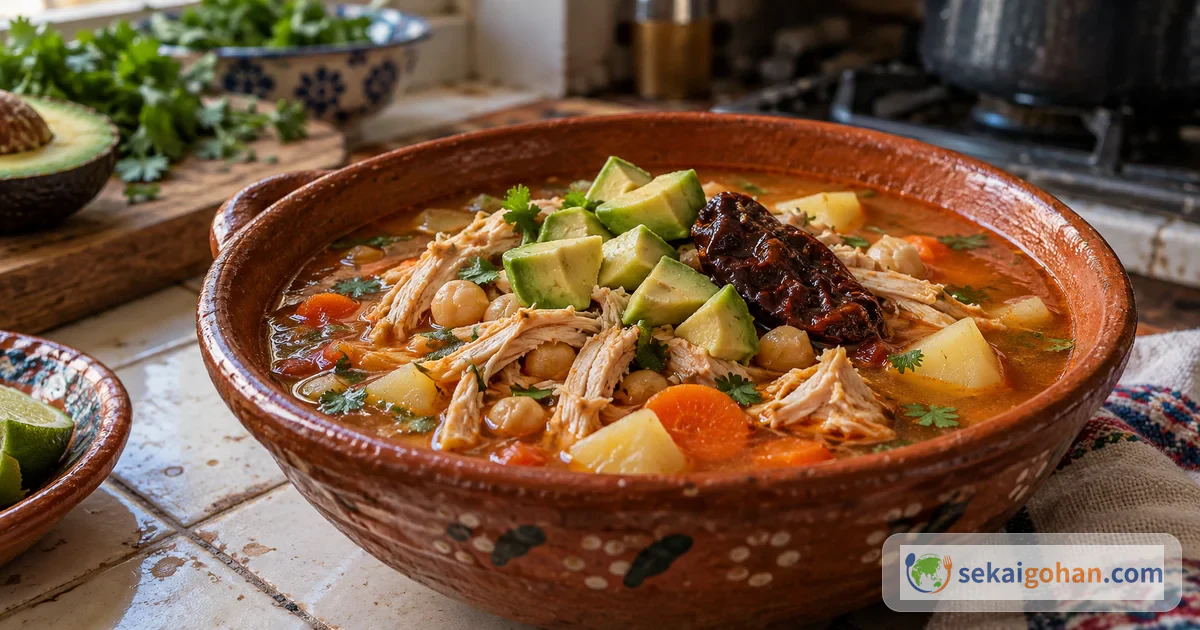
If you are already planning to make tamales, any leftover masa harina can go straight into this cup. To fill out a Mexican table, add mole poblano for the deep aroma of chile and cacao, or tinga de pollo for a red stew.
Ingredients (serves 4, about 4 cups)

This amount makes 4 cups of just under 200 ml each. Made on the thick side, it is closer to a breakfast or early-evening snack than an after-dinner dessert.
Made with milk alone, it is mellow but heavy. Splitting water and milk lets the cinnamon and sugar aromas stand up and keeps the bitterness of the chocolate. Think of it as a warm corn porridge scented with cacao, not a rich cocoa drink.
This recipe uses milk. Some chocolate and cocoa products contain milk, soy or wheat. Masa harina and imported corn flour are sometimes made on lines that handle wheat, so if you have an allergy, always check the product label.
Ingredients that are hard to find

The flour comes first. Bags labeled masa harina, instant corn masa flour, tortillas or tamales are the closest match. Harina P.A.N., made for arepas, is not really masa harina. It is a pre-cooked white corn flour for arepas and cachapas. If you use it for champurrado, treat it as a home-version thickening aid, and expect a different aroma.
| What to look for | What to look for on the label | If you can't find it |
|---|---|---|
| Masa harina | masa harina, instant corn masa flour | A finely ground white corn flour for a home version. Don't use cornstarch alone |
| Piloncillo | piloncillo, panela | Substitute dark brown sugar, raw cane sugar or light brown sugar |
| Mexican table chocolate | Mexican chocolate, cacao, canela | Use dark chocolate together with pure cocoa |
| Cinnamon sticks | Ceylon or cassia both work | If powder, use a small amount. Check for grittiness before finishing |
| Molinillo | wooden whisk | An ordinary whisk is fine. Move it as if scraping the bottom of the pot |
The whole cinnamon stick is useful because you can simmer it and take it out. Ground cinnamon also gives aroma, but it sinks to the bottom of the pot and tends to be gritty, so sticks are easier to handle in champurrado.
A thermometer is not essential. But a milk-based drink forms a skin and scorches easily if it boils, and the chocolate's aroma dulls. Until you can judge the thickening by feel, a thermometer makes it easier: wait for the drink to thicken in the 80s °C.
Choosing the Corn Flour for Champurrado
At home, the flour is the hard part. The chocolate is easy. Masa harina gets you closest to the real thing, and a finely ground white corn flour works well if you can't find it. Cornstarch alone will thicken the drink, but it brings no corn aroma and the mouthfeel is something else entirely.
How to make it: dissolve the flour in cold water, then thicken over low heat
Add flour straight into a hot pot and only the outside sets, making lumps. First make a smooth liquid with cold water, then pour it in a thin stream into the chocolate pot. This drink scorches easily, so low heat gets you to a stable result faster than boiling hard.
Fixing Lumpy, Scorched or Thin Champurrado

Most things go wrong at two points: just after the flour goes in, and once the drink starts to thicken. A thin drink is easy to fix. A scorched one is not, because if you keep stirring a pot that smells burnt, the burnt flavor spreads through the whole batch.
| State | Cause | Fix |
|---|---|---|
| White lumps remain | Flour went straight into a hot liquid; the cold-water mixing was rough | Turn off the heat and strain through a tea strainer. Next time, make a paste with cold water first |
| The bottom scorches | The heat is too high, or the bottom isn't being scraped | Move only the clear liquid on top to another pot. Rewarm over low heat |
| Too thin | Cooked too briefly, or too little flour | Dissolve 10 g masa harina in 2 tbsp (30 ml) cold water and add, cooking 3 more minutes over low heat |
| Thick and heavy | Too much flour, or it set as it cooled | Add 3.5 tbsp (50 ml) milk or water at a time and stir for 2 minutes over low heat |
| Powdery | Undercooked, or a coarse flour was used | Cook 5 more minutes over low heat. If it is very gritty, use a finely ground flour next time |
Above all, don't scrape a scorched bottom with your whisk. The burnt taste blends into the bitterness of the chocolate, so you barely notice it at first, but it lingers in the aftertaste once you start drinking. If you suspect scorching, pour off only the liquid on top and leave the rest behind.
Lumps start with dry flour. Sprinkle it into the pot and only the surface takes on water, so it forms tiny dumplings. Stir the flour into a little cold water to make a loose liquid, then pour it in a thin stream into the pot over low heat. Do that every time and the final adjustments get much easier.
Storing and Reheating Champurrado

Champurrado is best fresh, but leftovers keep up to 2 days in the refrigerator. Let it cool, transfer it to a clean, sealed container, and press plastic wrap right against the surface so a thick skin doesn't form. It picks up refrigerator smells easily, so keep it away from onions and fish. And since it's a sweet drink, don't push a make-ahead batch past that window.
The next morning it will look like a failure. It's heavy on the spoon, the surface is wrinkled, and it won't pour. Don't panic and turn the heat up high, or the outside heats while the bottom sticks. Put it in a small pot and work in a little milk or water to loosen the cold paste first. Then warm it gently over low heat, and the starch relaxes back to something close to fresh. It looks separated at first and smooths out as it heats.
| Storage | Guide | Reheating |
|---|---|---|
| Refrigerator | 2 days | Add 50 ml milk or water per cup and warm over low heat for 3 to 4 minutes |
| Freezer | Not suitable | The starch recovers poorly and tends to turn gritty |
| Thermos | Within 2 hours | Left longer, flour sinks to the bottom. Stir before pouring |
In a microwave, heat it at 600 W for 40 seconds, stir well, then go 20 seconds at a time. One long run will make it boil over.
FAQ

Q1. Can I make it with cornstarch if I have no masa harina?
You can, but it will taste less like champurrado, because cornstarch has almost none of the corn's aroma or grain. If you have to use it, dissolve 18 g cornstarch in ¼ cup (60 ml) cold water in place of the 1.75 oz (50 g) masa harina and treat the result as a thin chocolate drink. Don't swap it in at the masa harina quantity.
Q2. Can I make it without milk?
Yes. With water alone, the bitterness of the cacao and the aroma of the corn come forward. Replace the 2½ cups (600 ml) milk with 2½ cups (600 ml) water and increase the dark chocolate to 2.75 oz (80 g) so it doesn't feel thin. If you use soy milk, choose unsweetened and warm it over low heat without letting it boil.
Q3. How sweet is it in Mexico?
Sweet. Because it is often served with tamales or sweet bread, some people find it heavier on its own than ordinary cocoa. The first time, use 1.5 oz (45 g) dark brown sugar and taste a little at the end. If you're serving it with a meal, leave it there. For a dessert drink, another 5 to 10 g of sugar pulls it together.
Q4. Do I need a molinillo?
No. A molinillo adds atmosphere and froth, but an ordinary whisk is enough. What matters is scraping the bottom of the pot the whole time, not raising foam. If your whisk can't reach the edges of the bottom, switch to a wooden spatula for the finish so it doesn't scorch.
Q5. What goes well with it?
The easiest match is tamales, where sweet champurrado balances the salty steamed masa and chile sauce. At breakfast, a small cup next to chilaquiles works well too. And to see what cacao does in a savory dish, try mole poblano, which pairs it with chile.