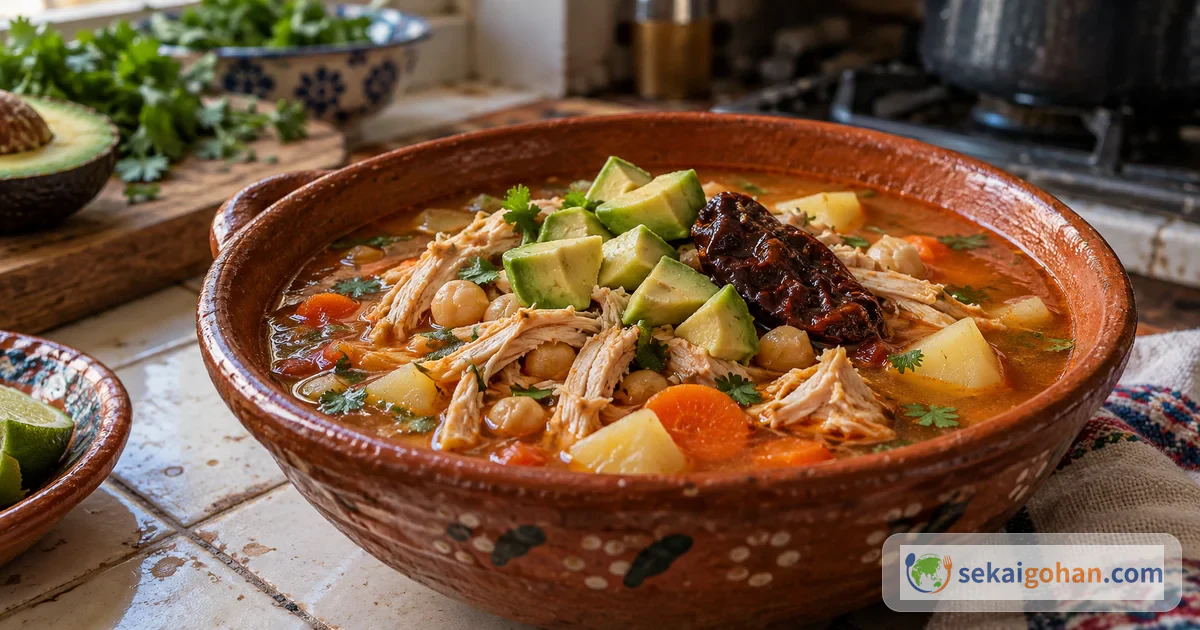
Dark beans go down first on a tostada, then glossy red shredded chicken, ribbons of lettuce, slices of avocado, and white cheese. That red chicken is tinga de pollo: chicken cooked down with tomato, onion, and chipotle until the sauce turns smoky and gently hot. It comes from Puebla and takes about 65 minutes from start to finish. Shredded chicken and chipotle are the stars, and the one rule for a crisp tostada is to assemble just before eating.
Tinga de pollo in Puebla and central Mexico
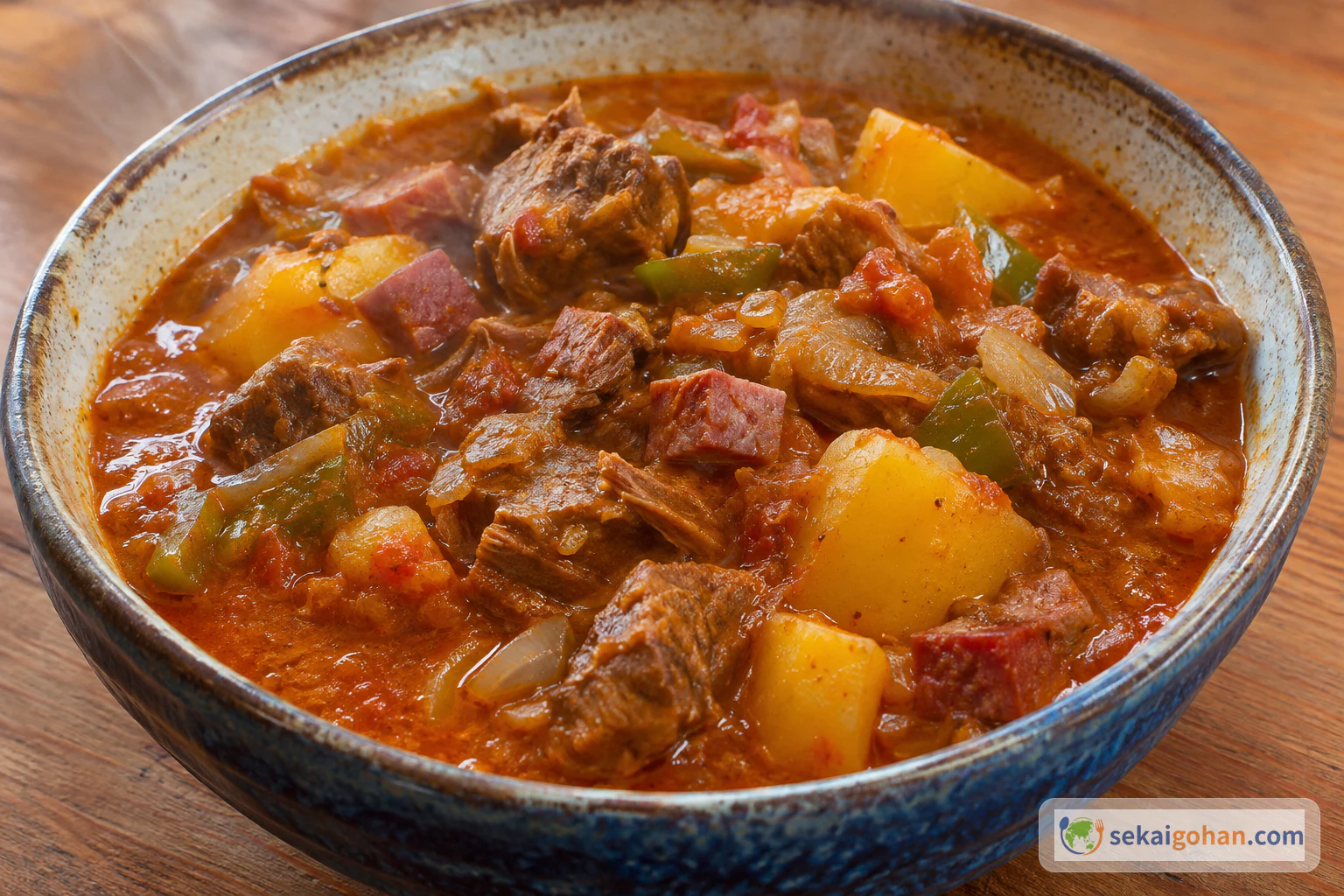
Tinga originated in Puebla, and versions now turn up in states across central Mexico. The earliest example dates from 1881, and it looked quite different from today's chicken tinga. There was tinga caliente, made with pork offal and blood, and tinga escandalosa, which combines pork, potatoes, and longaniza. As the dish spread from Puebla into central Mexico, local ingredients worked their way in.
The meat changes from place to place, but chipotle stays. Tinga is made with chicken, pork, beef, and even sardines. In Tlaxcala, one version adds longaniza or chorizo and potatoes and goes into molotes. In Morelos, a mushroom called hongo cazahuate takes the place of meat altogether.
Tinga fills tostadas, tacos, and quesadillas, and it can anchor a midday meal. It's an everyday stew that lives close to the home kitchen.
Puebla also has the cemita poblana, which enjoys chipotle in a different way. It layers fried meat on a sesame-seed roll, and reading about it alongside tinga gives a fuller picture of Puebla's table.
Ingredients (serves 4)
Prepare the meat and the toppings separately to make the final steps easier. Plan on 4 servings and 8 tostadas as the baseline. For smaller tacos, figure on 10–12. You can use 1.25 lb (600 g) chicken thighs or substitute 1.5 lb (650 g) chicken breast. Don't judge doneness by cooking time alone; check the internal temperature.

The cheese and crema contain milk. Tortillas and processed chipotle products can contain wheat, soy, or other allergens, so check the labels. To avoid dairy, leave out the cheese and crema. Wash any knife and cutting board that touched raw chicken before reusing them, and keep them separate from raw vegetables. Cook the chicken until the center of the thickest part reaches 75°C (167°F) for at least 1 minute. Color or juices alone don't prove it is safe.
Choosing chipotles and other ingredients for tinga
Your first stop is a can of chipotles in adobo, sold in the international or Mexican aisle of many supermarkets. Check the label to make sure the chiles are packed in adobo sauce; dried chipotles are a different product and can't be swapped in at the same amount. You use both the chiles and the sauce, but the whole can is far too strong for 4 servings. Start with 1 chipotle and 1 tbsp of adobo sauce and go easy, because heat varies from brand to brand and even from one chipotle to the next.
For tomatoes, use about 1 lb (450 g) fresh or 14 oz (400 g) canned diced. Ketchup alone changes both the sweetness and the seasoning. Any ordinary onion is fine, but slice the onion thinly so it brings plenty of sweetness to the sauce as it sautés.
Home cooks in Mexico make tinga in different ways, and some add tomatillos to the tomatoes, though they're optional. If Mexican oregano is hard to find, Mediterranean oregano works.
On days without chipotle, one home-style workaround is to replace the 1 chipotle and adobo sauce with 2 tsp smoked paprika, 1 tsp regular paprika, 1/4 tsp ground red chile (such as cayenne), and 1 tsp vinegar. Reduce the ground chile for less heat. It won't taste the same, and if you're tasting the dish for the first time, chipotle is still the most direct route to its true aroma.
Instructions
The order goes like this: poach and shred the chicken, then return it to a sauce built on sautéed onion. Reducing the sauce first lets the flavor cling properly to the chicken. Reducing time depends on your heat and how watery the tomatoes are, so don't rely on the numbers alone; look for a moist consistency where the liquid no longer runs. The goal is moist, not soupy.
When using 650 g chicken breast, the standard is the same: 75°C (167°F) at the center for at least 1 minute. Take it out as soon as it reaches that temperature and don't keep it boiling. Overcooking makes it dry. When shredding, leave coarse strands rather than chopping the meat finely. If it looks like it's drying out in the sauce, add poaching liquid 2 tbsp at a time.
The moment the sauce goes in, the oil and liquid spatter hard. Lower the heat to medium-low and use a long spatula. Partially covering the pan with a lid lets moisture escape while limiting spatter. Aim for a consistency where the spatula's track shows for an instant. After the chicken goes back in, stop while it's glossy with a little sauce left on the bottom. If some browned bits form on the bottom of the pan, there's no need to scrape them up.
Fixing heat and texture in tinga de pollo
Heat is easiest to manage when you plan to add heat later. If you're setting some aside for children, portion it out before the spicy ingredients go in. When a batch turns out too spicy, dilute it with more tomato and chicken; sugar doesn't remove the compounds that make it hot. For those who can eat dairy, a spoonful of crema at the table softens the bite.
Wateriness is the other common problem, and the fix is simplest if you adjust the thickness before adding the chicken.
| Problem | Fix | How to tell / caution |
|---|---|---|
| Too spicy | Add 3.5 oz (100 g) canned tomatoes and 3.5 tbsp (50 ml) poaching liquid and simmer for about 5 minutes. Add more cooked chicken if needed | Taste a little at a time |
| Watery | Remove the lid and keep cooking over medium-low heat for about 5–8 minutes | Stir so it doesn't scorch, taking it from runny to moist |
| Chicken has dried out | Add 3 tbsp poaching liquid and 1 tsp oil and let it absorb over low heat for about 2 minutes | Lost texture won't fully come back |
| Tostadas went soft | Keep the filling and bases separate and assemble just before eating | Use fresh bases rather than trying to re-crisp soggy ones |
| Flavor tastes flat | Taste after each pinch of salt or 1 tsp of lime juice | Add the salt gradually |
Serving and storing tinga de pollo
Tostadas and other bases

Beans, chicken, lettuce, avocado, cheese, crema, lime: some of these layers carry a lot of moisture, so layering just before eating keeps the tostada crisp. Change the base and the same beans and fillings become a different dish. Panuchos, from Yucatán, have the beans stuffed inside the tortilla instead of spread on top. Sopes catch their toppings with the rim of a thick corn masa base. The pairing of beans and corn is the same, but each feels quite different in the hand.
Leftover tinga
Leftover tinga goes into all kinds of meals in the days that follow. Spoon 2–3 tbsp onto each warm tortilla for tacos, or combine it with cheese for quesadillas. It also works as an omelet filling or in a warm sandwich, and piled on rice with lettuce and lime, it makes a good rice bowl. To compare regional shredded meats, try cochinita pibil, which pairs pork with achiote and citrus. For a deep sauce built from layers of nuts and chiles, see mole poblano.
Storage and reheating
Once cooking is done, divide it into shallow containers (clean ones) and refrigerate promptly instead of leaving the big pot at room temperature while the center cools. Keep the refrigerator at 10°C (50°F) or below and the freezer at −15°C (5°F) or below. Eat refrigerated tinga soon, and freeze anything you want to keep longer in single portions right away. Store the toppings separately, and reheat thoroughly to the center when serving.
Thaw in the refrigerator or microwave, never at room temperature. When reheating, stir and heat thoroughly until the center reaches 75°C (167°F) or higher. In a skillet, add 2 tbsp water and heat over low; in a microwave, stir partway through. Check the temperature rather than relying on a fixed time such as a set number of minutes at 600 W. If it smells off or seems abnormal, don't eat it; looking normal is no guarantee of safety. Write the cooking date on the container so you always know how old it is.
You might also like
- Panuchos: a Yucatán dish with beans stuffed inside the tortilla.
- Cemita poblana: a Puebla sandwich pairing chipotle with a sesame-seed roll and fried meat.
- Sopes: beans and toppings layered on a thick corn masa base.
- Cochinita pibil: a Yucatán dish of shredded pork finished with achiote and citrus.