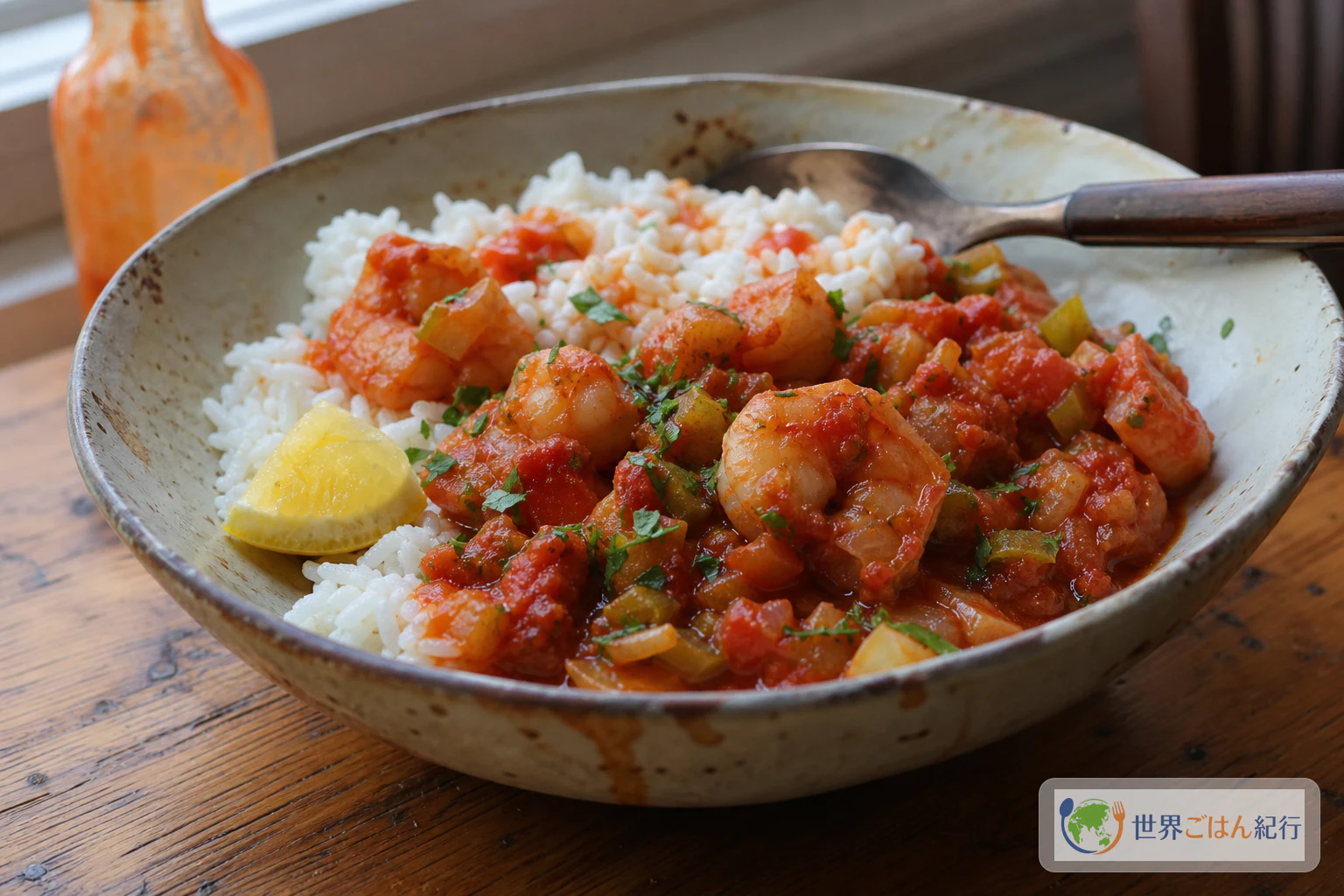
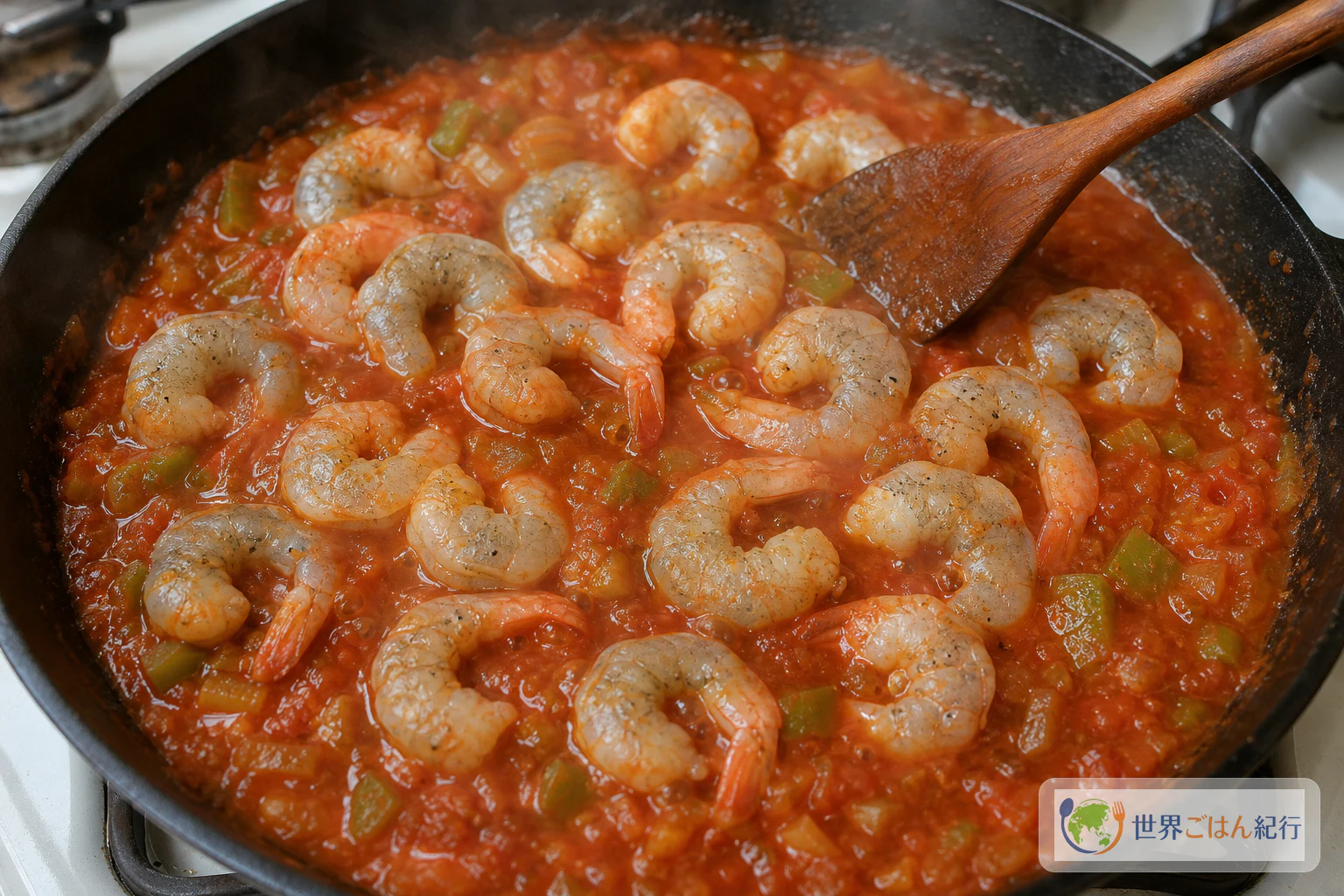
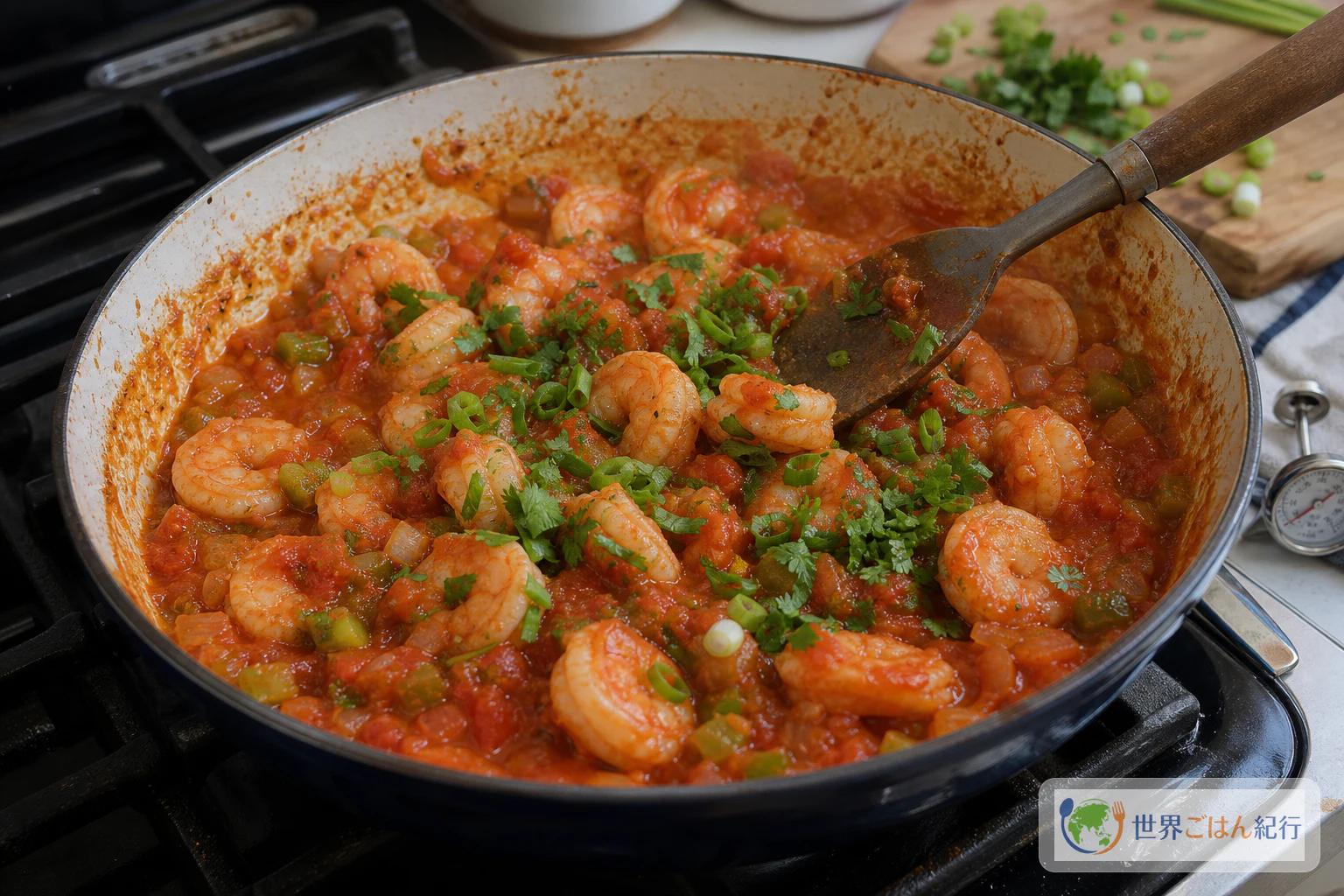
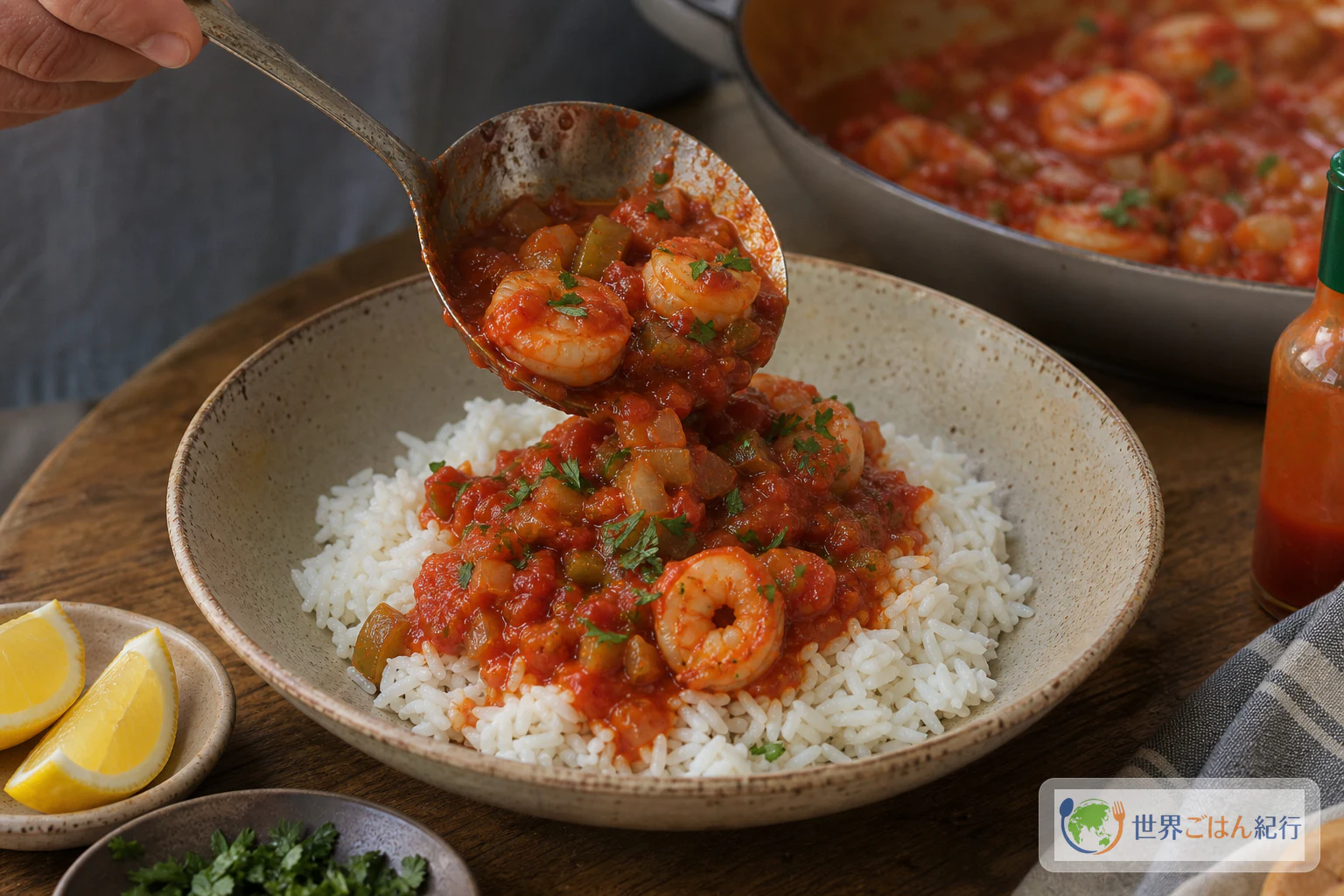
Chop onion, celery and bell pepper, drop them into the pot, and a green aroma rises before you even hear the oil. You press tomato paste into the vegetables as they fry, then layer on canned tomatoes, thyme, oregano and smoked paprika. When the sauce turns thick, in go the shrimp, their gray flesh flushing pink all at once, and your kitchen starts to feel like a Louisiana diner. Shrimp Creole is that red, gently spiced sauce of tomato, onion, celery and bell pepper with shrimp, spooned over white rice. It comes from the New Orleans area, and it tastes sweet from the vegetables, a little smoky, and only as hot as you want it.
Shrimp Creole among Louisiana dishes
Shrimp Creole sits between several Louisiana rice dishes. Jambalaya cooks the rice in the pot, and gumbo pours a dark roux and its broth over rice. Étouffée is the closer cousin if you want a light roux instead of tomato, with the shrimp broth up front. Because the rice and sauce stay separate here, it's easier to correct than jambalaya, and it reaches the table faster than gumbo, which needs a long time to develop its dark roux.
If you've made dirty rice or red beans and rice, the holy trinity of aromatics and the spices carry over unchanged. It's lighter than the fried po'boy, and as a rice dish, the liquid is easier to manage than in jambalaya.
Local recipes vary. Some use a little roux, some reduce the tomatoes without it, some make stock from the shrimp shells, and some use frozen shrimp to save time.
What makes it taste Creole
Treated as a simple tomato stew, the dish loses its outline. With onion alone, it lands somewhere between a Japanese shrimp chili and a yōshoku tomato stew. Add celery and bell pepper, fry the tomato paste briefly, and season a little strong, since it goes over rice. Hold on to those three things, and even ordinary home ingredients move toward Louisiana cooking.
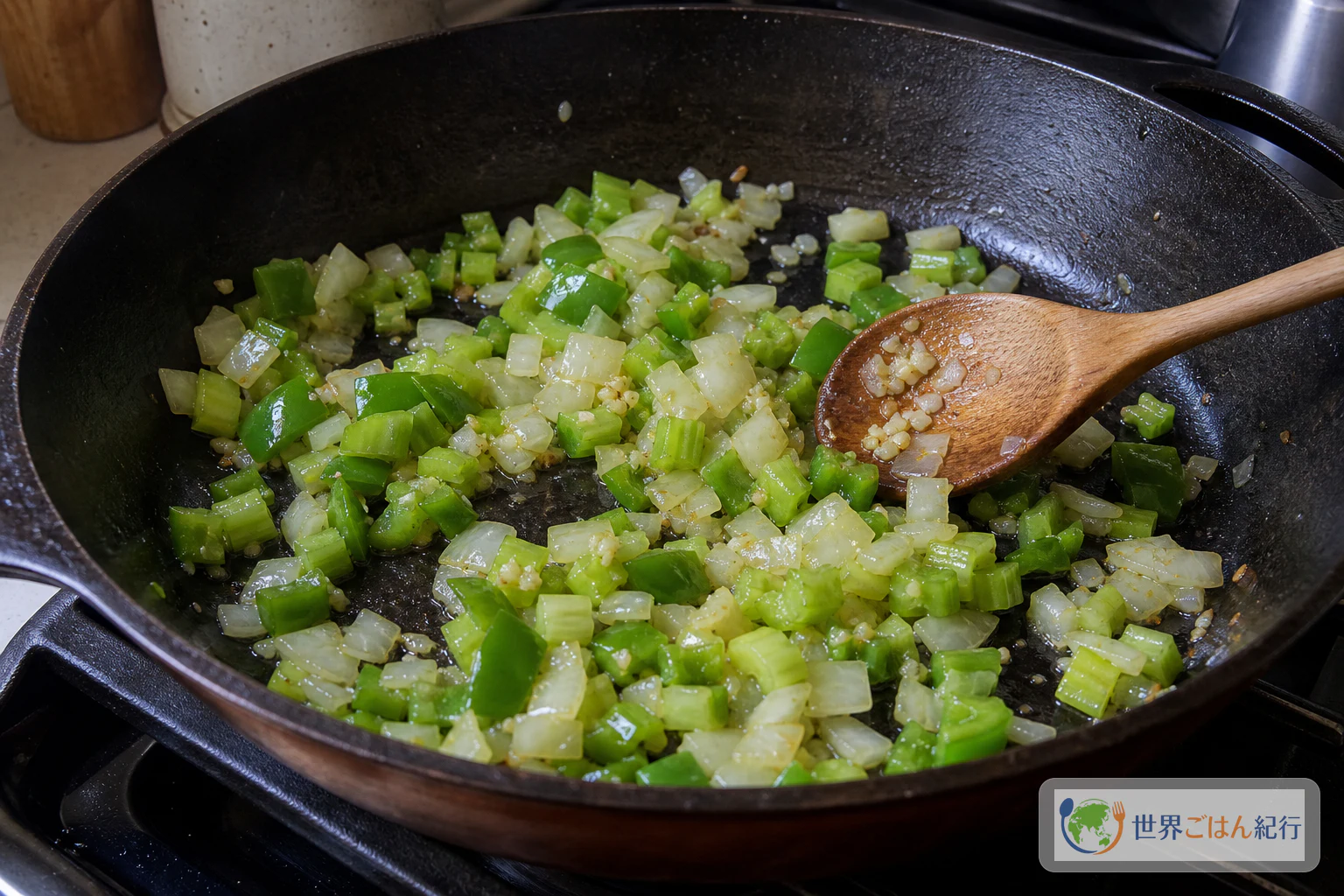
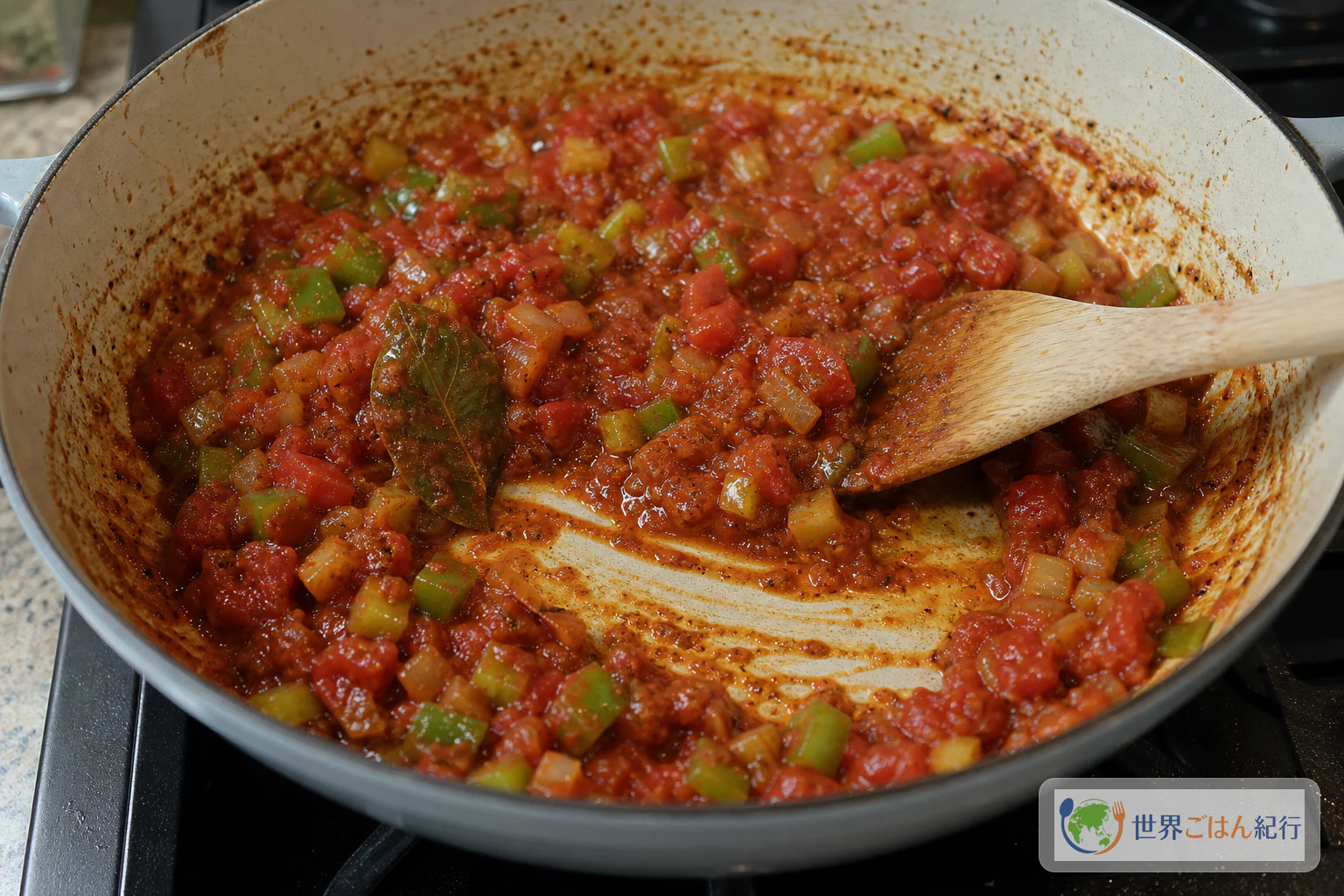
The order of the aromatics matters more than the color of the pot. Start with the canned tomatoes and the vegetables will cook, but the sweetness of the onion and celery is slow to reach the sauce. Fry the trinity in oil first, sear the tomato paste briefly at the bottom of the pot, then add the liquid, and even canned tomatoes taste like more than plain red sauce. That makes a bigger difference than expensive ingredients.
Ingredients (serves 4)
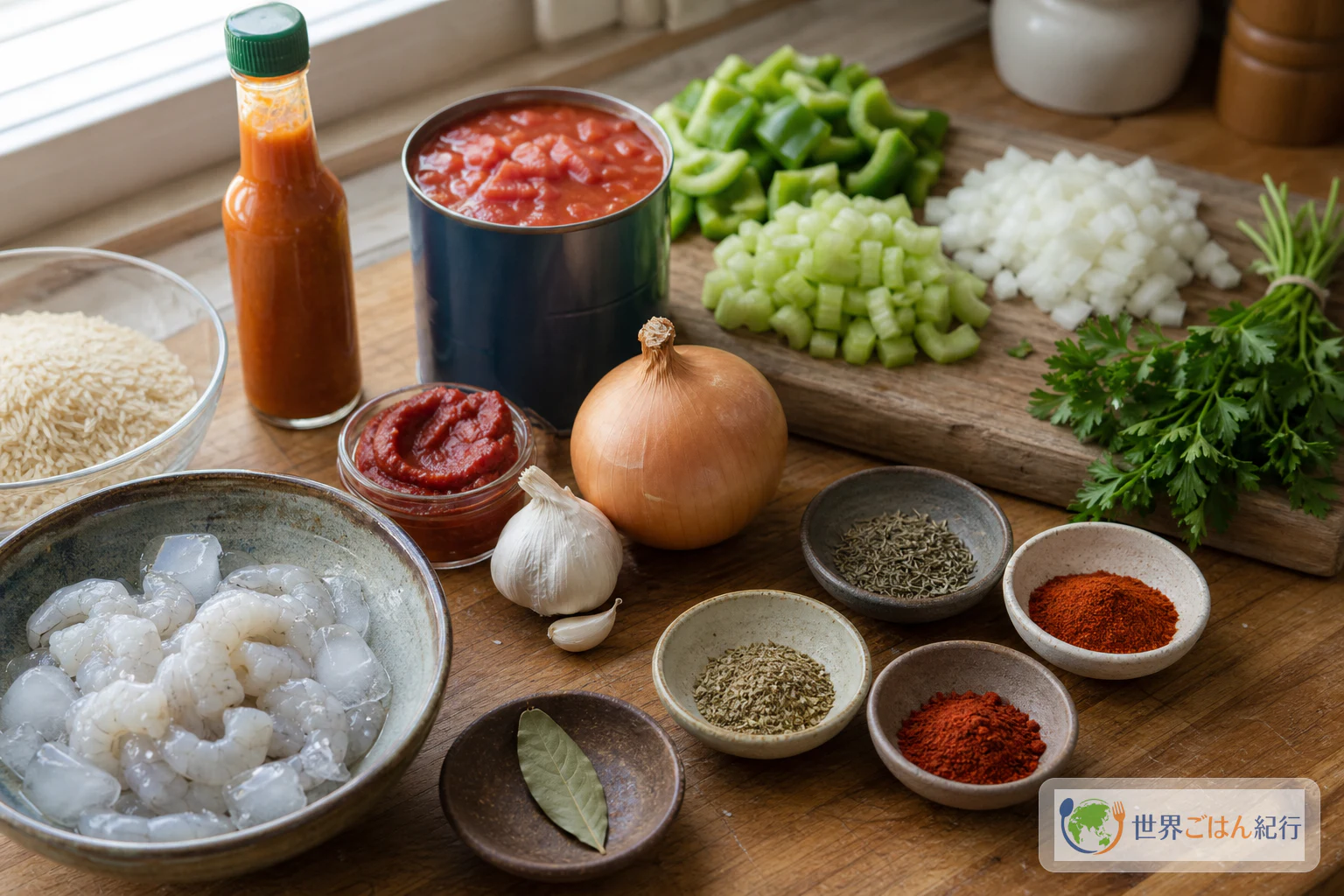
The amounts suit a deep 24–26 cm frying pan or a shallow heavy pot. If the shrimp come in the shell, peel them and simmer the shells in 1¼ cups (300 ml) water for 10 minutes to make a simple shrimp stock. On a busy day, use unsalted chicken stock or water instead. Above all, do not overcook the shrimp.
This recipe uses shrimp and Worcestershire sauce. Some Worcestershire products contain wheat, so check the label. At a table with a crustacean allergy, do not use shrimp, and keep the utensils separate. Cook shrimp until they are opaque through to the center and firm; with a food thermometer, aim for 145°F (63°C). Do not thaw frozen shrimp at room temperature; thaw them in the refrigerator or under running water.
Choosing ingredients for shrimp Creole
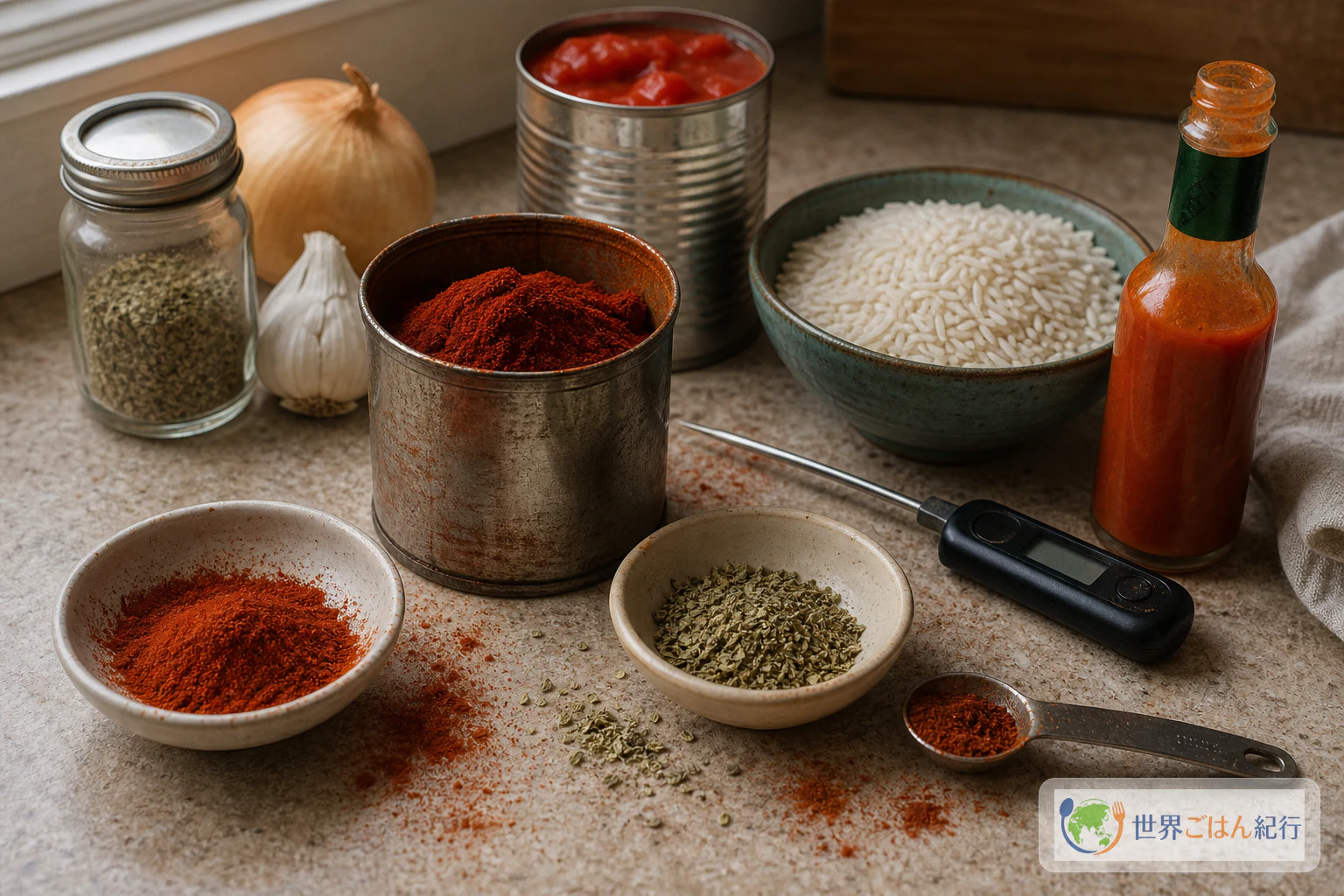
Shrimp, onion, celery, bell pepper and canned tomatoes are all easy to find at an ordinary supermarket, so buy those locally and spend only on the spices that make the difference. The spices keep a tomato dish from drifting toward a Japanese yōshoku stew, and a thermometer keeps the shrimp from toughening.
Smoked paprika stands in for andouille or other smoked meat. Shrimp Creole has no meat, but a little smoked paprika adds the red aroma typical of Louisiana cooking and keeps the sweetness of the canned tomatoes from going flat. It works in gumbo and jambalaya too.
Even a small amount of oregano changes the shape of a tomato sauce, tying together the sweet tomatoes, the green bell pepper and the aroma of the shrimp. If you have an old jar at home, smell it. If the aroma is weak, it's worth buying a new jar just for this dish.
Shrimp are easy to judge by sight, but in a sauce it's easy to lose track of how cooked they are. With large shrimp or thawed frozen shrimp, a thermometer tells you calmly whether to simmer a bit longer or stop now.
| Where you hesitate | The axis to keep, Louisiana-style | A realistic choice at home |
|---|---|---|
| Rice | Cook it separately from the sauce and keep the grains | Long-grain is ideal. With short-grain, cook it firm and let the steam out |
| Aromatics | The trinity of onion, celery and bell pepper | Keep the bell pepper. Remove the bitter seeds and pith |
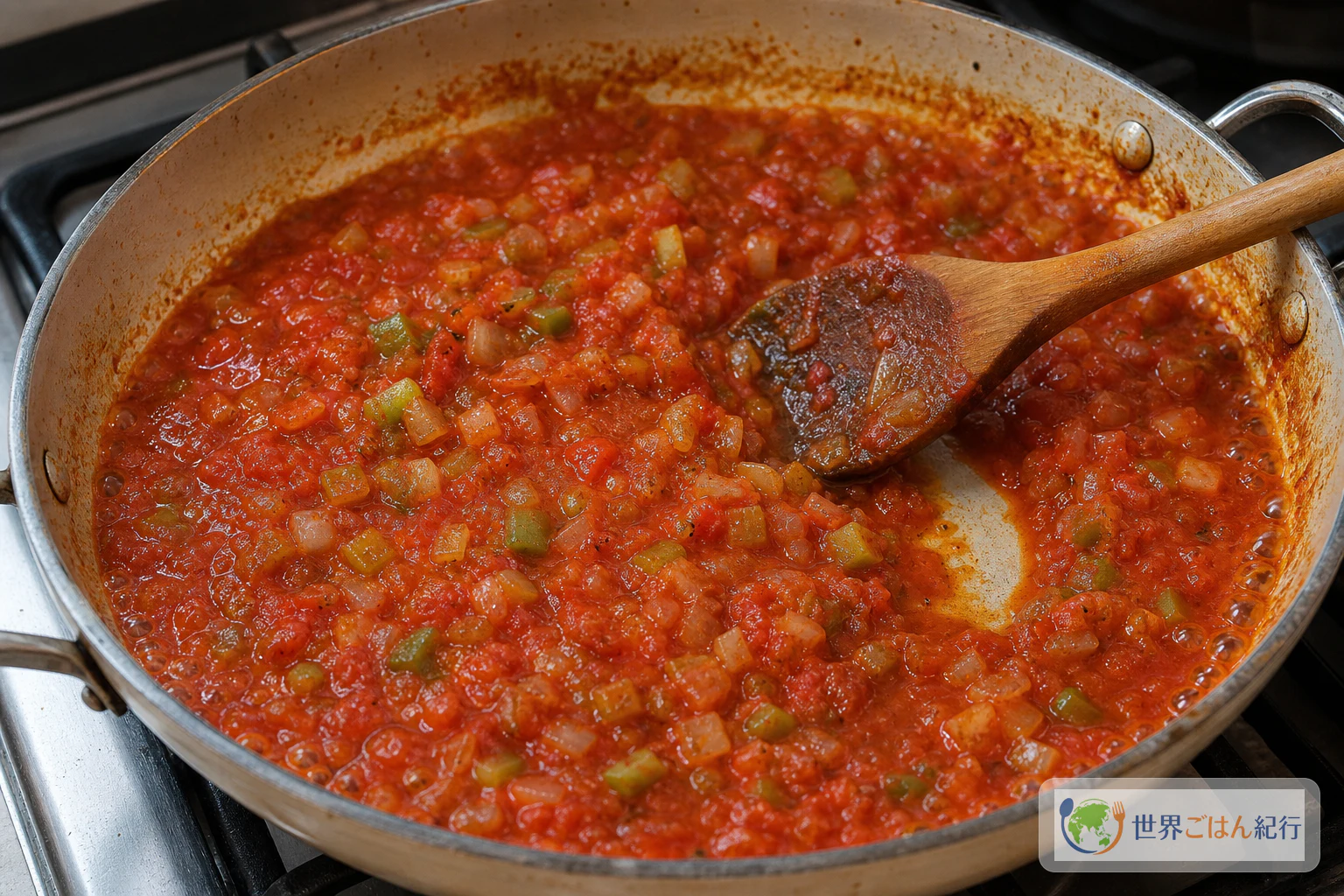
| Tomato | Reduce it as a sauce | Canned tomatoes with tomato paste, using the wooden-spoon trail as the guide |
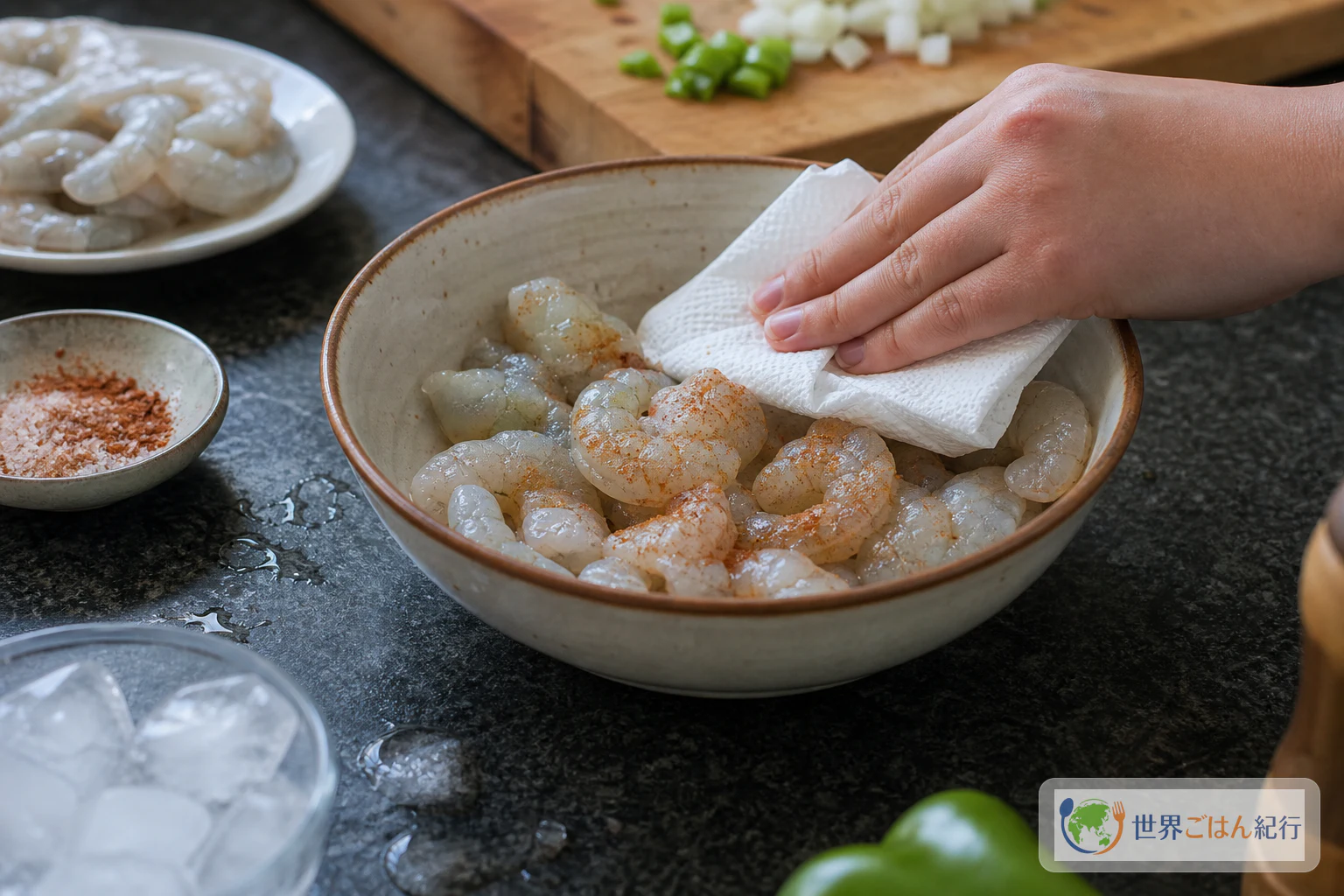
| Shrimp | Cook briefly at the end | Frozen peeled shrimp are fine; wipe them dry before adding |
| Heat | Modest in the pot, add at the plate | A little cayenne. Adjust hot sauce at the table |
Method
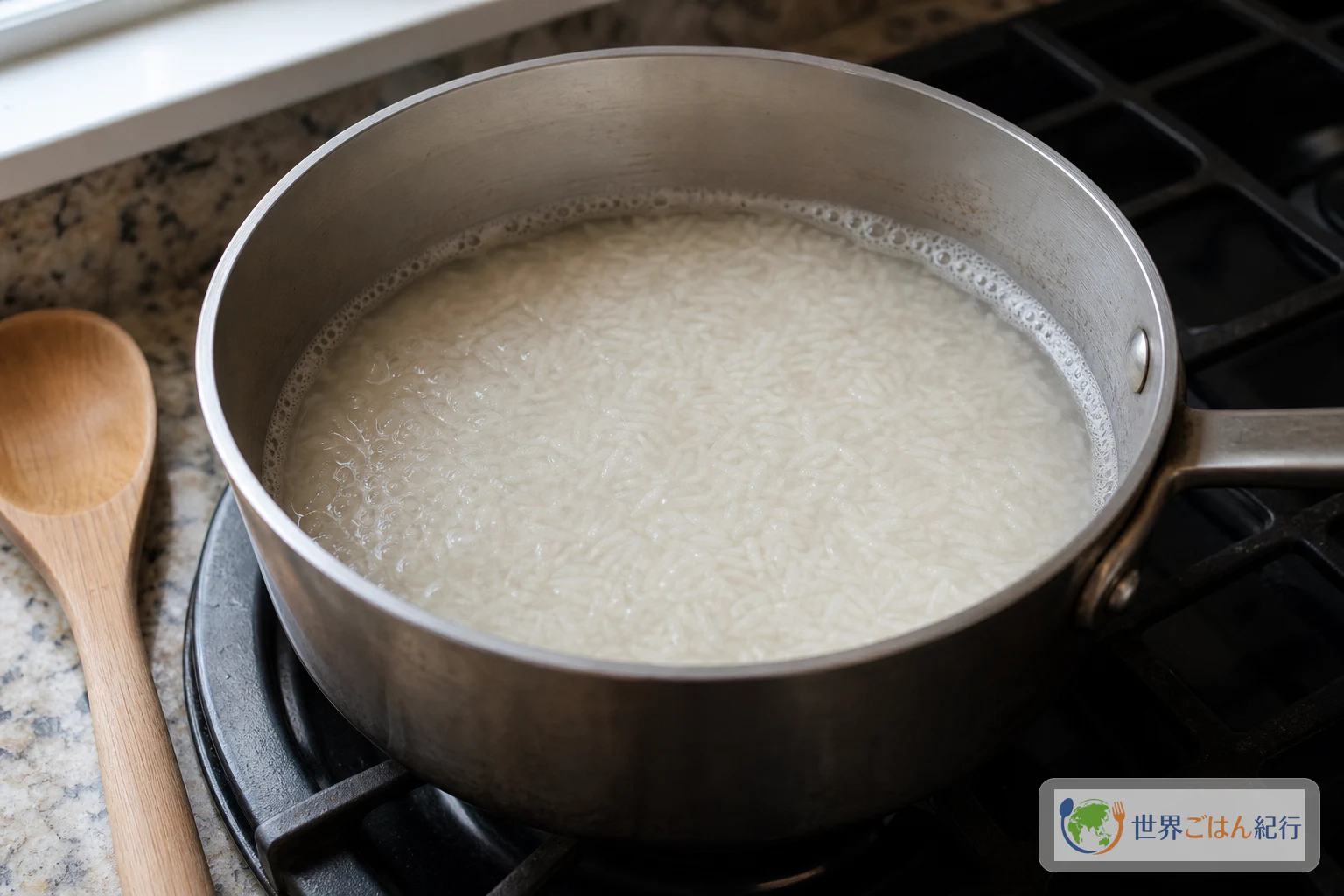
Cook the rice separately, make the sauce, and add the shrimp at the end. Working in separate steps lets you correct as you go: reduce the sauce if it is thin, or turn off the heat if the shrimp have gone in too long. Once the shrimp are in, work fast or they turn tough, so have the rice and plates ready before step 6.
Shrimp Creole: common problems and fixes
| What happens | Cause | How to fix |
|---|---|---|
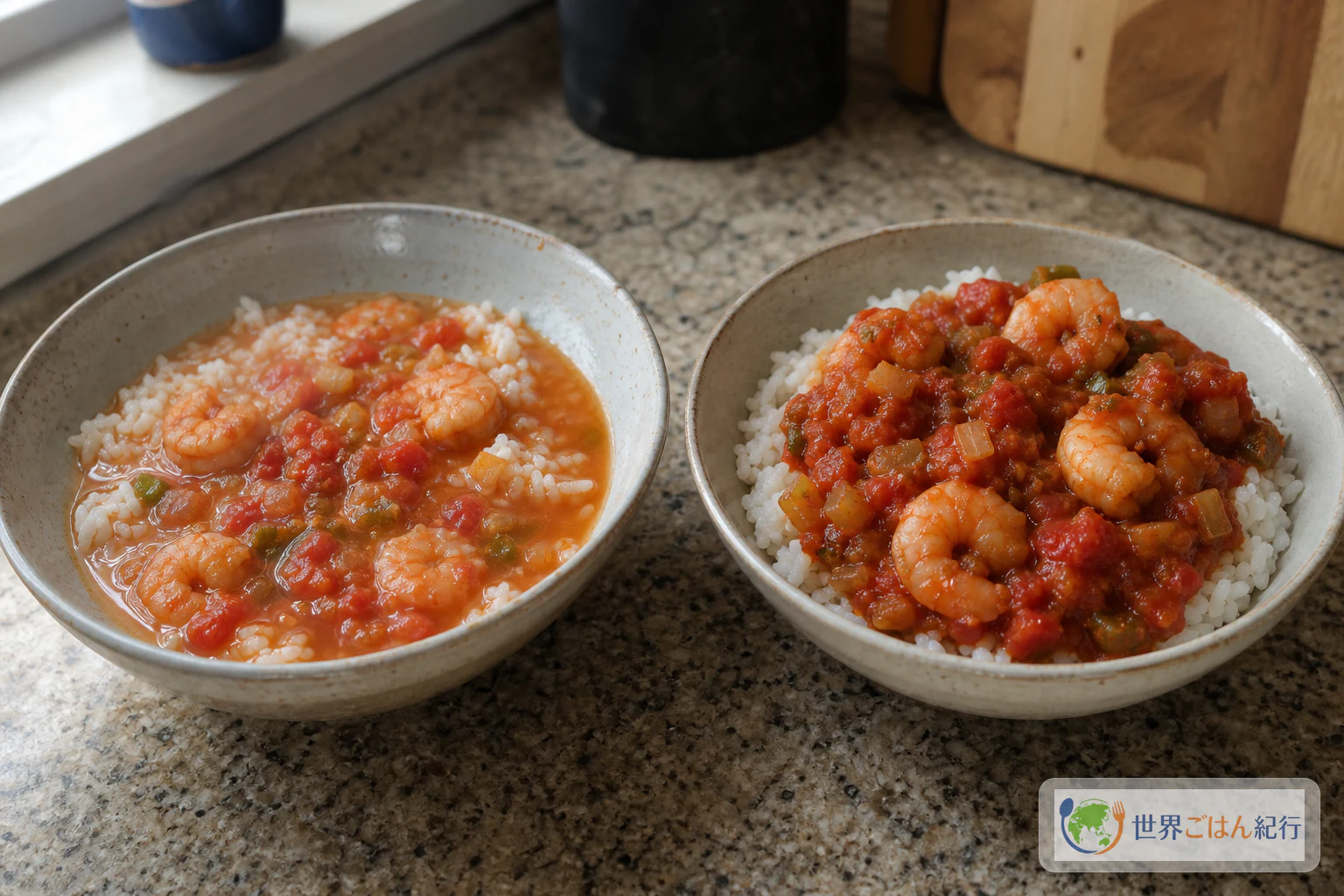
| The sauce is watery | The canned tomatoes had a lot of water, or the shrimp were not wiped dry | Reduce for 3–5 more minutes before adding the shrimp. Wipe the shrimp next time |
| The shrimp are tough | They were simmered long while adjusting the sauce | Settle the sauce's thickness first, and stop the shrimp at 3–5 minutes |
| The tomato is sour | Not reduced enough, or the canned tomatoes are very acidic | A pinch of sugar, a little Worcestershire sauce, and 3 more minutes of simmering |
| The aroma is yōshoku-like | The bell pepper was omitted, or the spices are weak | Add the bell pepper and a little more oregano and smoked paprika |
| The rice is heavy | Japanese-style rice was cooked soft | Cook it firm, and spread it on a plate to let the steam out before using |
Judge the thickness of the tomato by the pot, not by the numbers in the recipe. Canned tomatoes differ in water content by maker, so even 14 oz (400 g) behaves differently as it reduces. If the spoon's trail disappears at once, the sauce is thin; if it sticks to the bottom and spatters, it's too thick.
Overcooked shrimp are the most common disappointment. Even with shell stock, simmering for 5 minutes or more in step 6 toughens the flesh, and the poor texture outweighs any extra aroma. At home, timing the shrimp matters more than the stock.
Heat won't rescue the dish, either. You can always add it at the end, but under-cooked trinity and under-reduced tomato are hard to fix on the plate. Sweeten the aromatics first, thicken the sauce, and only then layer on heat bit by bit.
Serving, storing and varying shrimp Creole
At the table
Set out white rice, shrimp Creole, lemon and hot sauce separately so everyone can adjust their own plate. People who like acidity add lemon, people who want heat add hot sauce, and children or anyone who dislikes spice eat it as it is.
Rice comes before bread. In Louisiana cooking, rice is less a side than the lead that receives the sauce. Skip rich meat dishes on the side; cucumber pickles, a simple leafy salad, or coleslaw with plenty of lemon go better. Later in the week, the leftover celery and bell pepper can go into jambalaya or dirty rice, so nothing is wasted.
Storage and reheating
| Storage method | Guideline | Reheating |
|---|---|---|
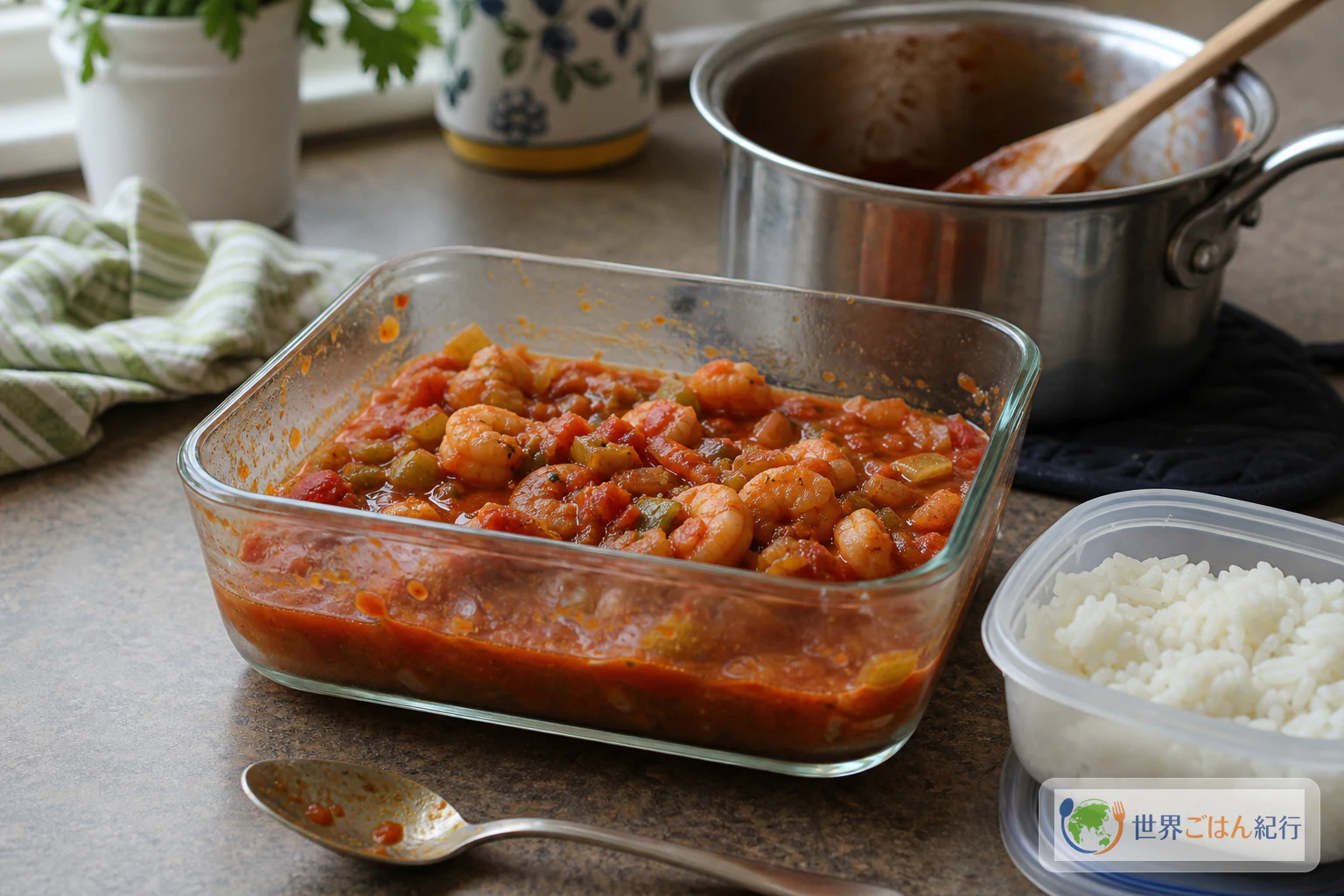
| Refrigerator | 1 day | Warm only the sauce over low heat for 3 minutes. Warm the rice separately |
| Freezer | Not well suited | The shrimp tend to toughen. If freezing, only the sauce, for 2 weeks |
| Packed lunch | Same day | Reheat thoroughly, cool, and eat the same day. Avoid on hot days |
Long reheating in the microwave toughens the shrimp. It's more reliable to move the sauce to a small pot, add 1 tbsp water or stock, and warm it over low heat until bubbling. If you do use the microwave, heat at 600 W for 1 minute 30 seconds, stir once, and add 30 seconds at a time, stopping as soon as it's hot through to the center. A squeeze of lemon or some scallions after heating takes away the made-ahead feel.
With roux, or as étouffée
This version gets its body from tomato paste and reduction, which keeps it easy for a weeknight. If you want roux, fry 2 tbsp oil and 2 tbsp flour over medium-low heat until light brown, then add the vegetables from step 3. And on a day when you'd rather thicken the shrimp sauce with a butter-and-flour roux, the same ingredients take you toward étouffée.
Frequently asked questions
Is there any point in using shell-on shrimp?
Yes. Simmering the shells for about 10 minutes adds a shrimp aroma to the sauce. It isn't essential, though. On days you use frozen peeled shrimp, focus on wiping them dry, reducing the sauce first, and cooking them briefly at the end.
If I don't use roux, is it off from the real thing?
No. Some shrimp Creole recipes use roux, and others build body by reducing the tomatoes. Roux makes thickness easier but can turn heavy, so make it without roux the first time and learn how the sauce reduces. If it still feels thin next time, add a light roux.
Can I make it with Japanese-style short-grain rice?
Yes. Cook it with a little less water so it's firm, then spread it on a plate or tray and let the steam out for about 5 minutes. Plenty of hot sauce over soft short-grain rice makes everything heavy. If you can get long-grain rice, even trying it once changes the impression of the dish considerably.
How hot is it?
This amount has aroma but not strong heat: the pot has 1/4 tsp cayenne, and hot sauce goes on at the plate. Too much cayenne in the pot makes the saltiness and acidity stand out, so add heat at the plate first, and next time raise the cayenne in the pot to 1/2 tsp.
Can I make it without shrimp?
If someone has a crustacean allergy, it's safer to make a separate dish than to substitute in the same pot. To get a similar flavor, cut 10.5 oz (300 g) chicken thighs small, brown the surface over medium heat before step 3, set aside, and return it in step 5 to simmer. Cook chicken to 165°F (74°C) at the center.