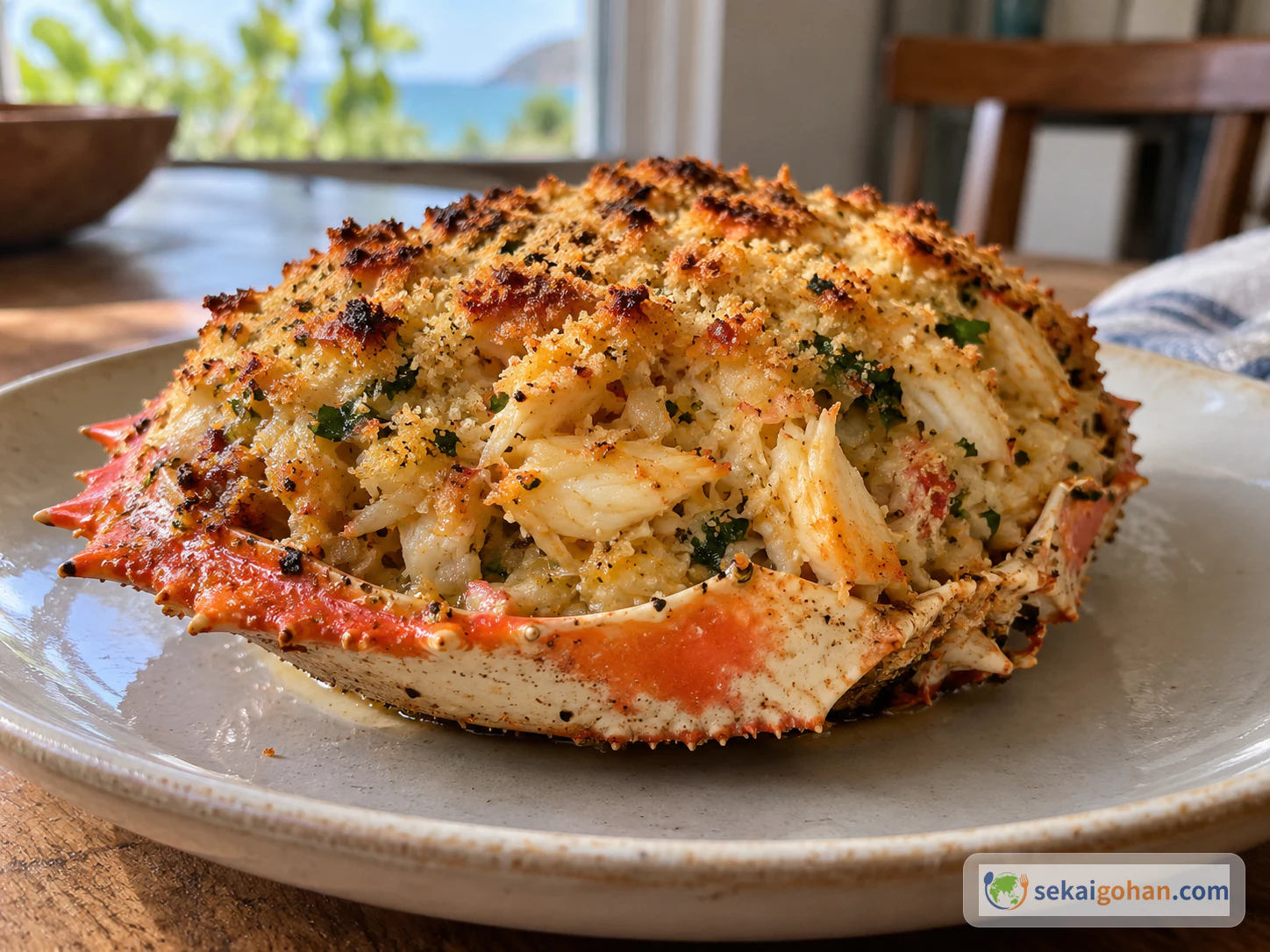
Picture a crab shell filled with its own sweet meat, a browned crust of breadcrumbs on top, and fine strips of root vegetable running through a filling that hasn't been mashed smooth. That's crabes farcis, stuffed crabs, one of the Caribbean dishes to try on Saint-Barthélemy. The version here is a general French crabe farci for two, and it's a reliable way to cook stuffed crab at home.
Crabes Farcis on Saint-Barth
The food of Saint-Barth combines French cooking technique with local produce. Visitors usually meet stuffed crabs alongside fish boudin, accras and christophine with salt cod, as part of the island's table.
Recipes for crabes farcis vary a good deal. One version for four crabs puts white wine in the court-bouillon and adds mushrooms, cream, curry, paprika and Parmesan to the filling, then binds it all with three yolks only.
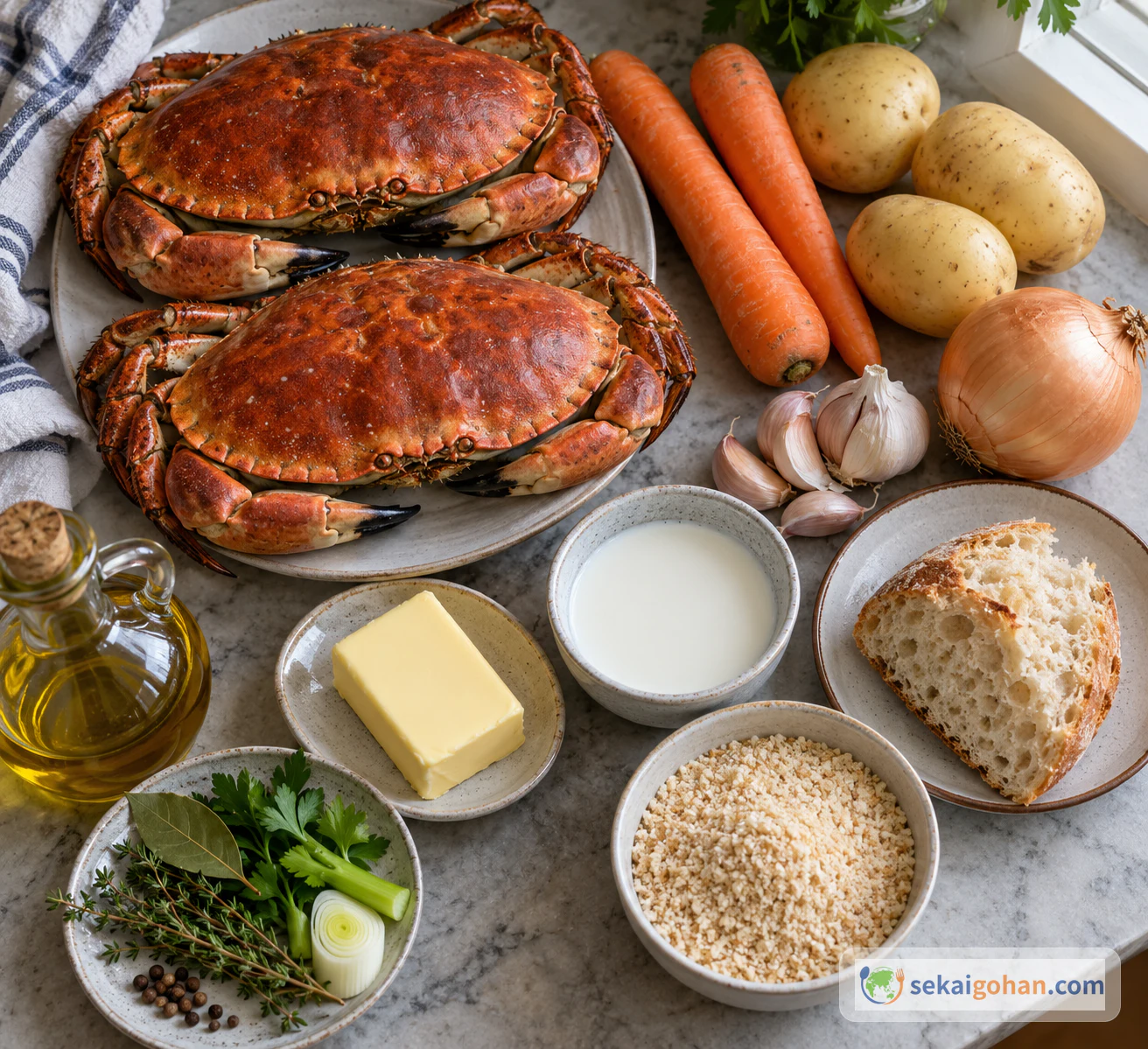
Ingredients: 2 Crabs, 2 Servings
Equipment
- Large pot
- Tray or rack for cooling the crabs
- Kitchen shears and seafood picks
- Chef's knife and cutting board (a mandoline is optional)
- Sauté pan
- Mixing bowl
- Oven and baking tray
- Cooking thermometer
Choosing Crab and Substitutes
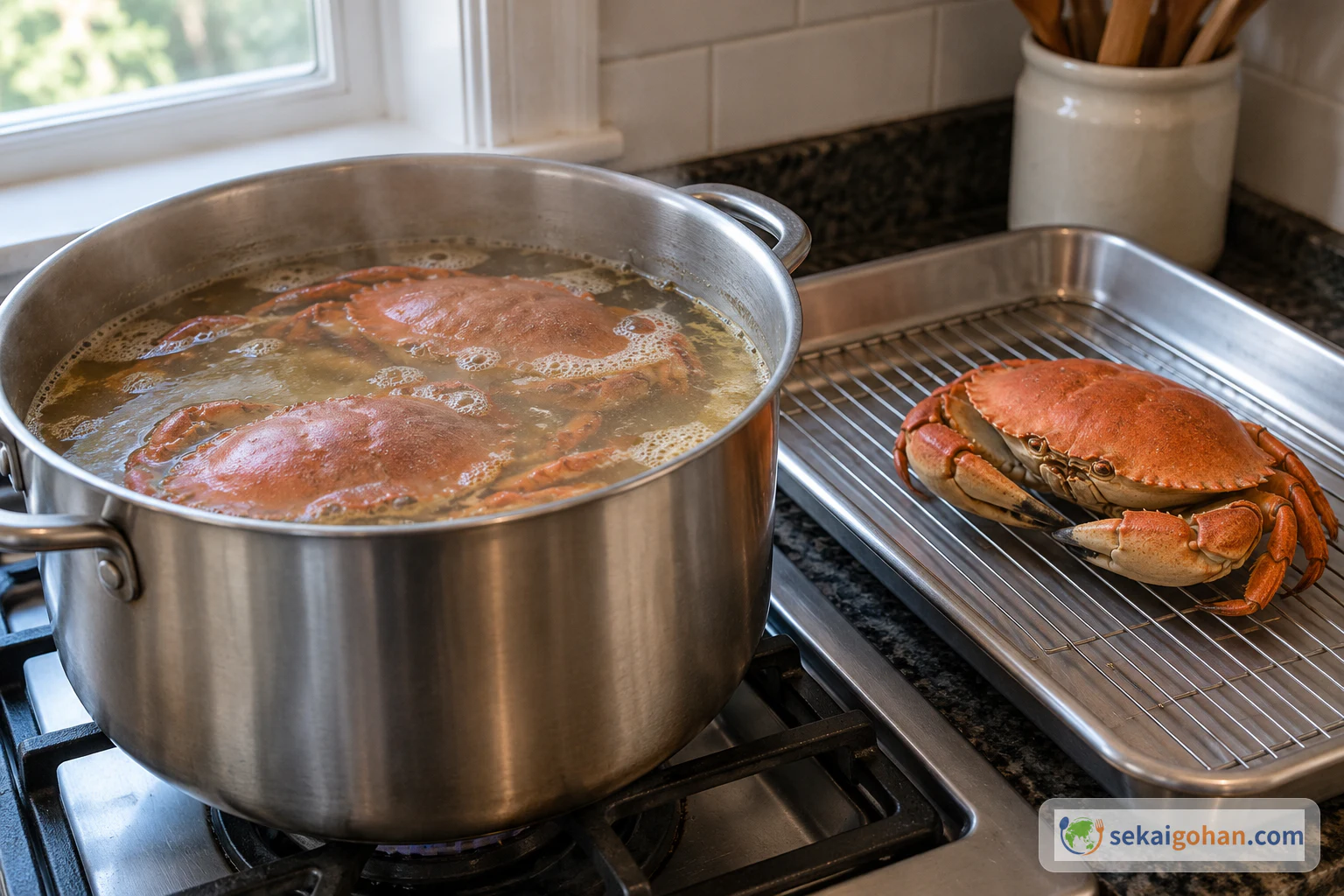
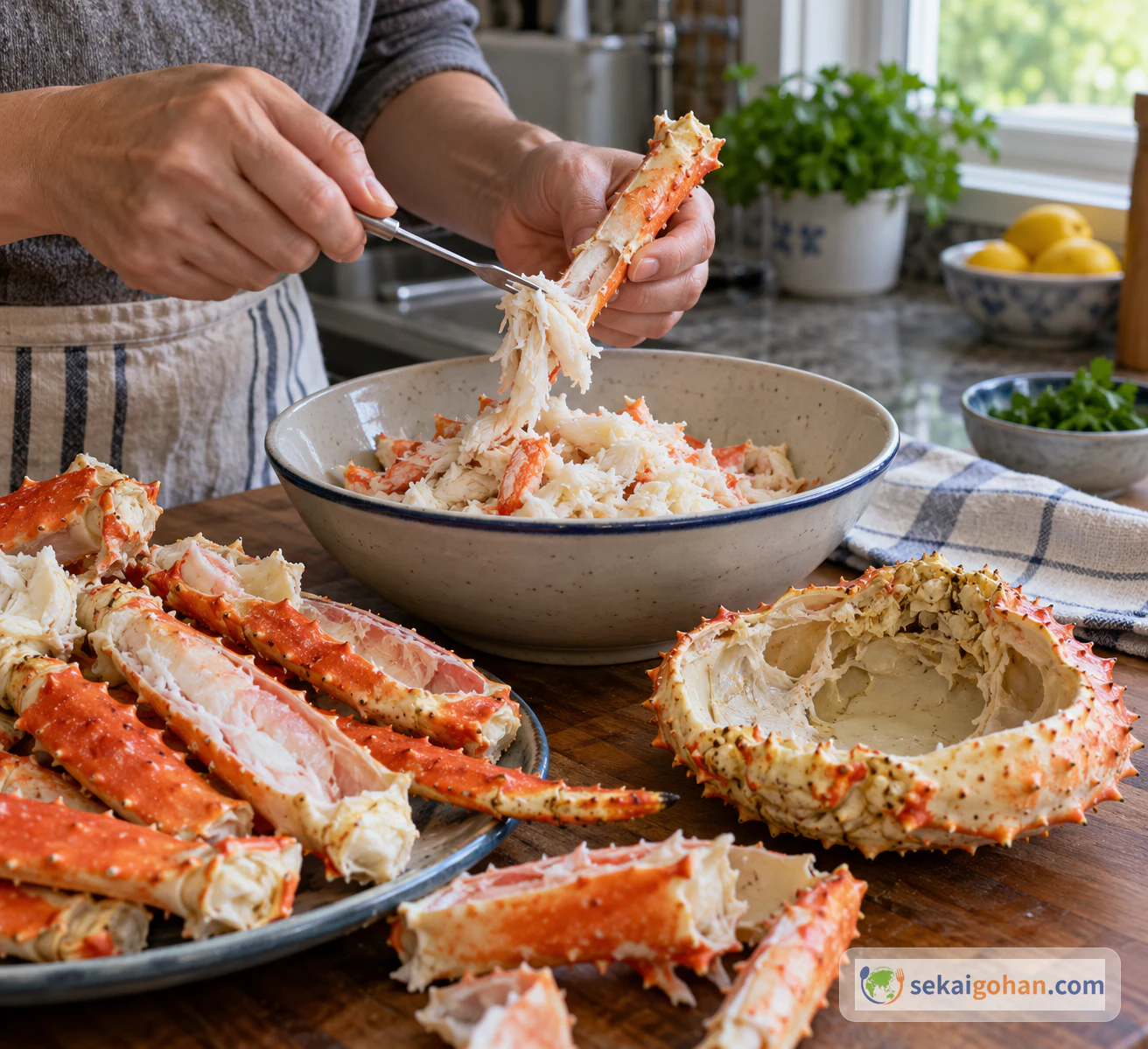
Brown crab isn't sold everywhere. A whole crab from a fishmonger works too, though the species changes how much meat you get, how salty it is and how it feels in the mouth. If you'd rather not cook live crabs, buy them already cooked and start from step 2. Frozen crab is fine as well: follow the package directions for thawing and heating, and keep it cold until you use it.
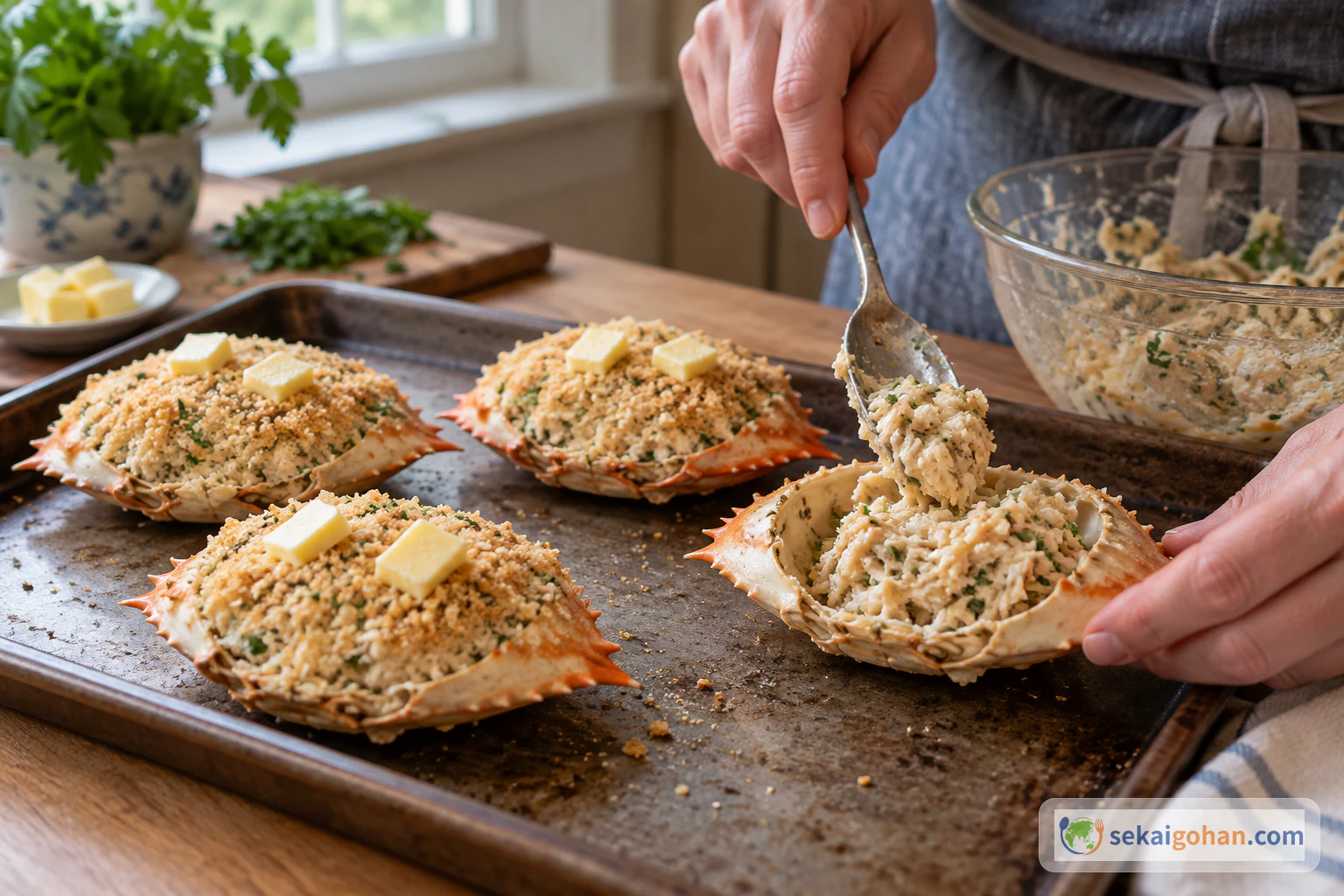
Crab meat on its own is the easiest route, but the dish won't be quite the same. Without shells you bake it in an ovenproof dish, so it looks different on the plate.
The other ingredients matter more than you might think:
- Bread. White bread is a reasonable choice. Other types of bread will change the filling.
- Potatoes. The variety affects the moisture and texture of the filling.
- Espelette pepper. If you can't find it, leave it out or use another dried chile you like. Either way, the court-bouillon will taste a little different.
- Egg. Set out one egg, but only the yolk goes into the filling.
- Bouquet garni. It goes into the pot with the crabs.
Method: From the Pot to the Shell to the Oven
Taste and adjust the seasoning before the raw yolk goes in. Finish by temperature: the center of the filling should stay at 167°F (75°C) for at least 1 minute.
Common Problems with Stuffed Crab
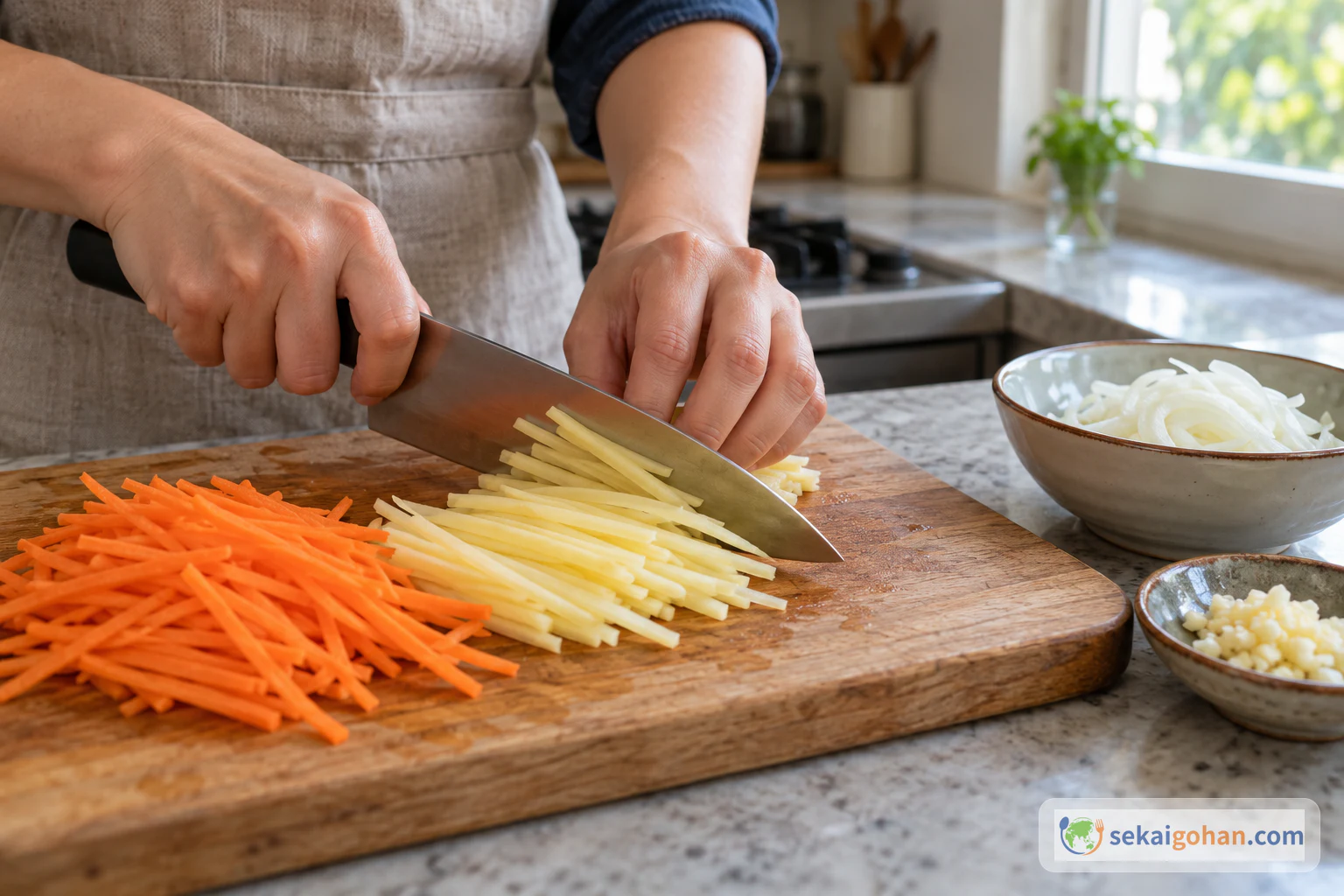
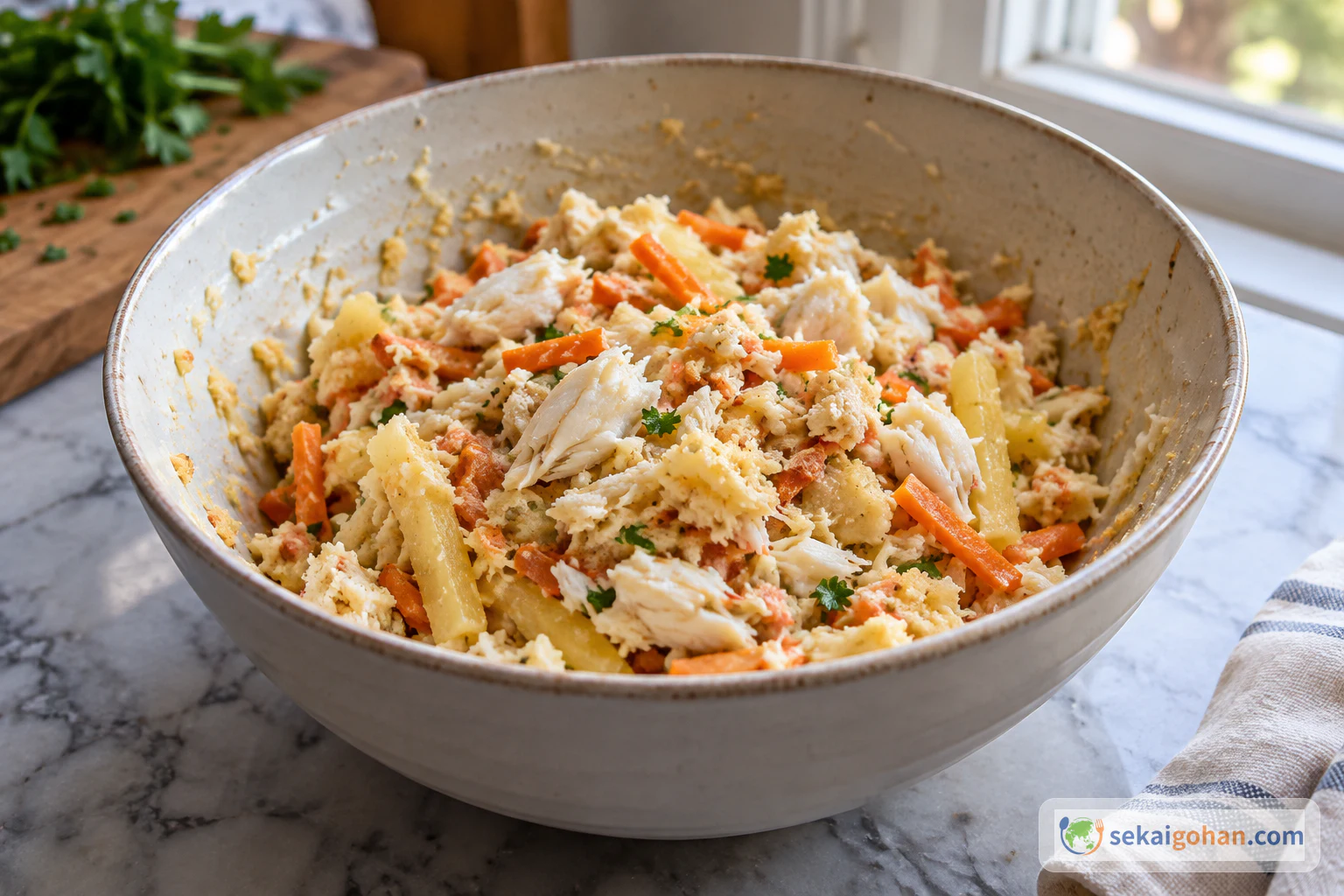
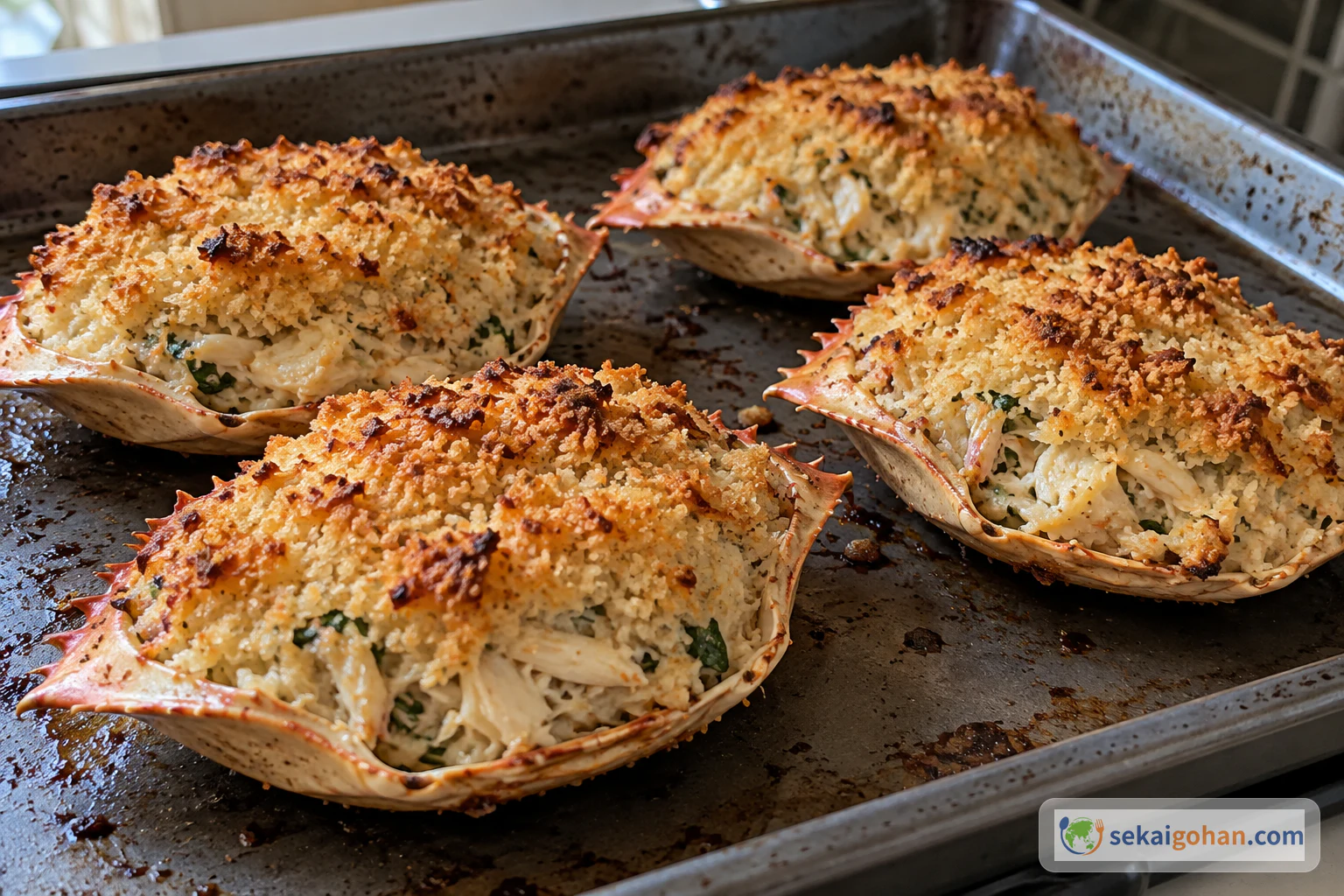
Keep the crab in coarse pieces, keep the carrot and potato in fine strips, and stop mixing before the filling turns to paste. The browned top tells you the surface is ready. A thermometer in the center tells you the filling is ready.
Taste the filling and adjust the seasoning before the yolk goes in, so nobody ends up tasting raw egg. The recipe gives no baking time, so the thermometer check is your endpoint.
| What you notice | Likely reason | What to do |
|---|---|---|
| The filling looks like paste | Mixed too much | Fold only until combined, and keep the crab in coarse pieces |
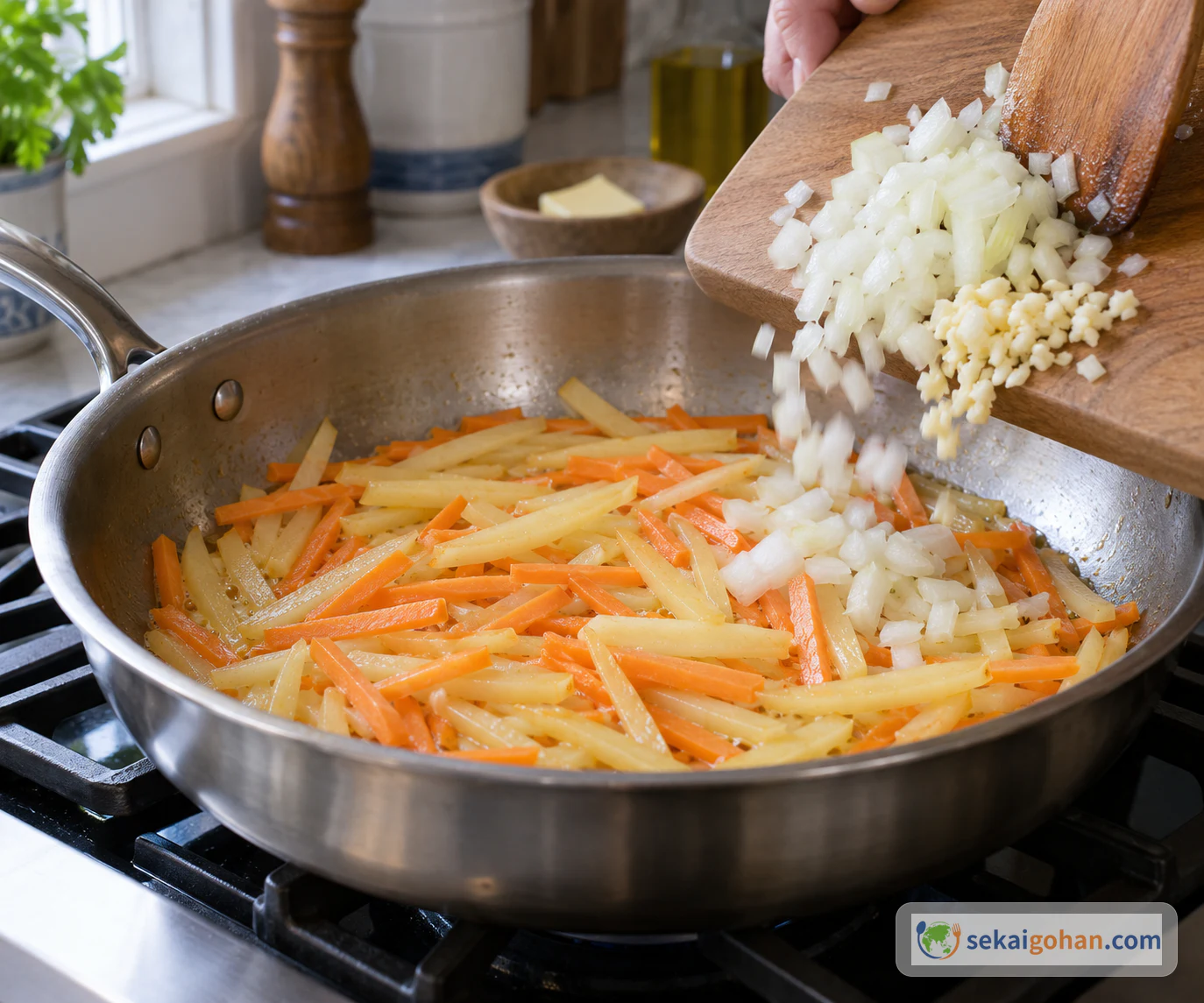
| The vegetables are browning | The heat is too high | Lower the heat. The strips should stay pale and just translucent |
| The bread is soggy | Too much milk | Squeeze it again. Next time, start with less milk and add only what the bread absorbs |
| You can feel bits of shell | Fragments were missed during shelling | Pick through the meat again before mixing |
| The top is brown but the center is below 167°F (75°C) | The surface is coloring faster than the center is heating | Bake at the 350°F (180°C) end of the range and keep going until the center holds 167°F (75°C) for at least 1 minute |
Serving, Storing and Varying Crab Farci
Serving
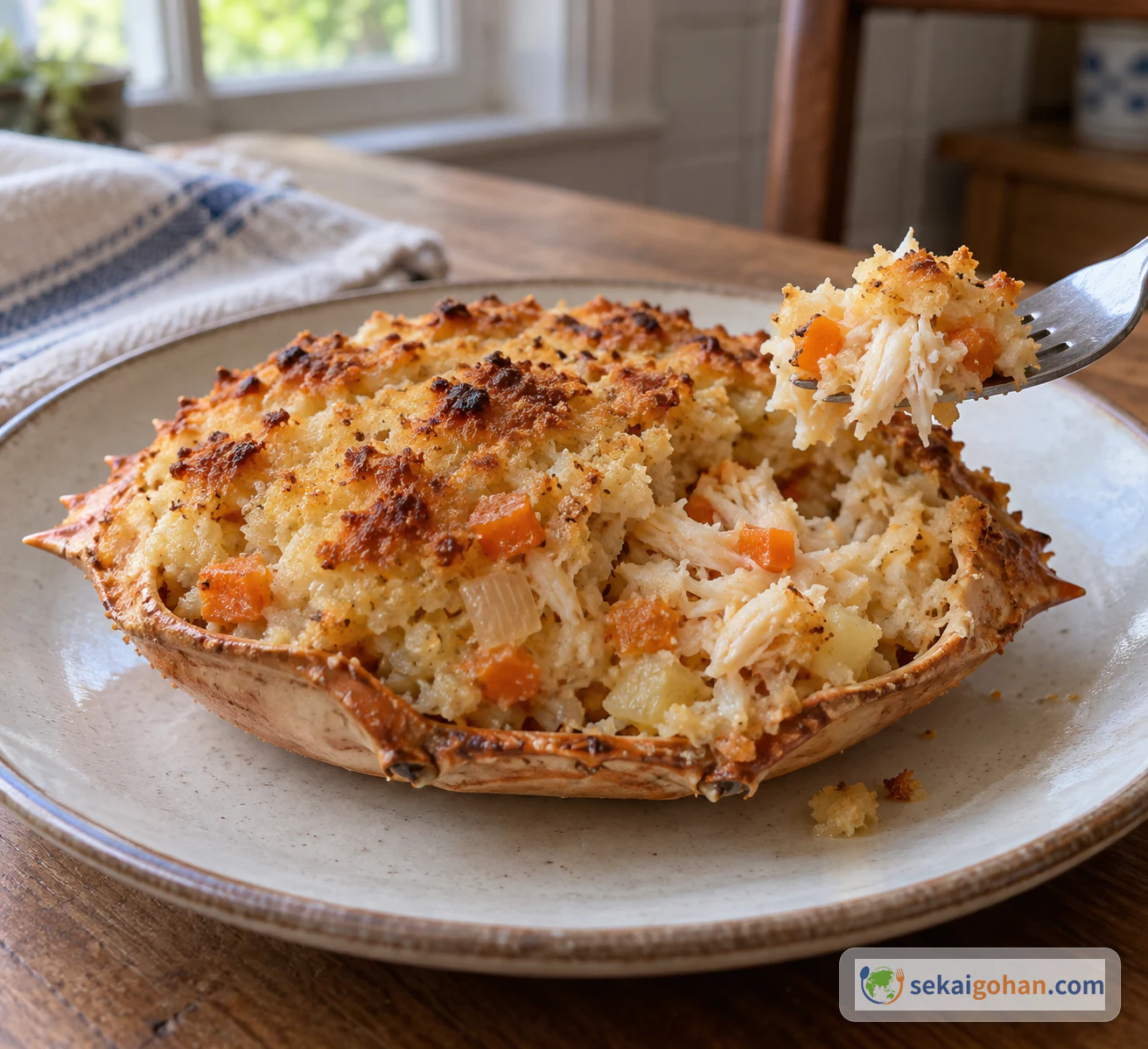
Serve the shells hot, as soon as they've passed the temperature check. Before you dig in, look along the edge where the filling meets the shell for any stray fragments.
Safe Handling, Allergens and Leftovers
The yolk goes into the filling raw and is only cooked in the oven. Do not skip the 167°F (75°C) check, especially when serving older adults, children aged 2 and under, pregnant people or anyone with a weakened immune system. Avoid raw egg for these groups, and choose thoroughly cooked egg dishes instead. Raw or undercooked crustaceans should not be offered to them either.
- Hands and tools. Wash your hands before and after handling meat, fish and eggs. Wash knives and boards after cutting raw meat or fish, then pour boiling water over them before reuse.
- Keeping seafood cold. Follow the label and the seller's storage instructions first. Keep it at 50°F (10°C) or below in your refrigerator. For the strictest limit, keep it at 36°F (2°C), the temperature of melting ice. Listeria can grow even at low temperatures.
- Leftovers. Divide them into shallow containers, cool them quickly and refrigerate at 50°F (10°C) or below. Reheat to 167°F (75°C) or above.
- Allergens. This dish contains crustaceans, egg and milk, including the butter. Check the labels on the bread, breadcrumbs and anything store-bought for wheat.
Variations
Lardons are an optional French-style addition if you're curious. To avoid gluten, you can replace or leave out the bread and crumbs. That changes both the texture and how the filling holds together, though, so think of the result as a different dish.
Frequently Asked Questions
Is crab farci unique to Saint-Barth?
It's one of the Caribbean dishes to enjoy on the island. The recipe here is a general French version.
What if I don't have shells?
Bake the filling in an ovenproof dish. It will look different on the table, and the same 167°F (75°C) check applies.
How long does it bake?
Bake at 350–400°F (180–200°C) until the surface takes on color, then confirm that the center holds 167°F (75°C) for at least 1 minute. Allow 1 hour for the whole recipe, plus time to cool and shell the crabs. Trust the visual cues and the thermometer more than the timings.
Should I use a whole egg or just the yolk?
This recipe uses only the yolk, and the white has no use here. If you'd rather use a whole egg, change only that ingredient and that step.