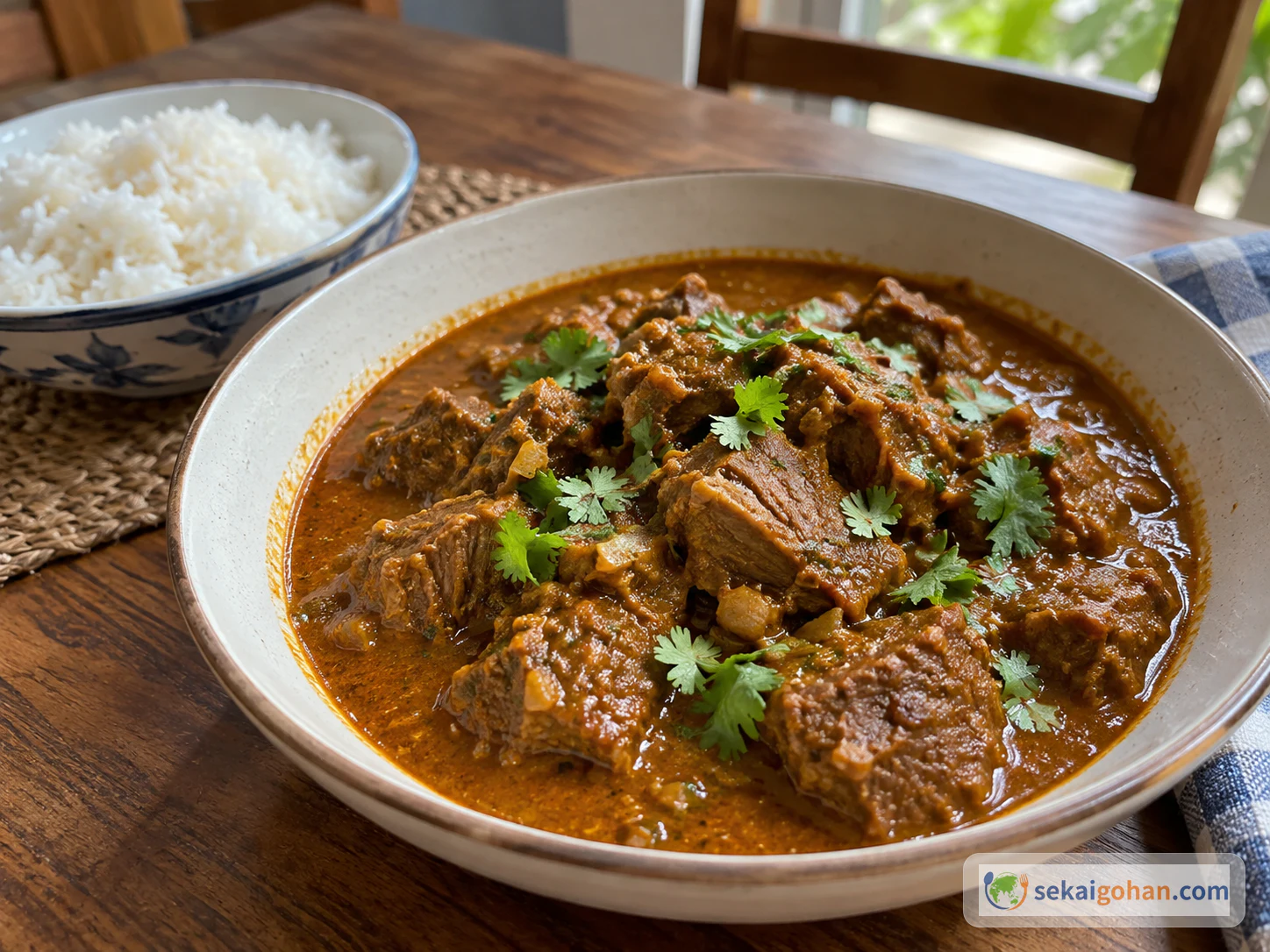
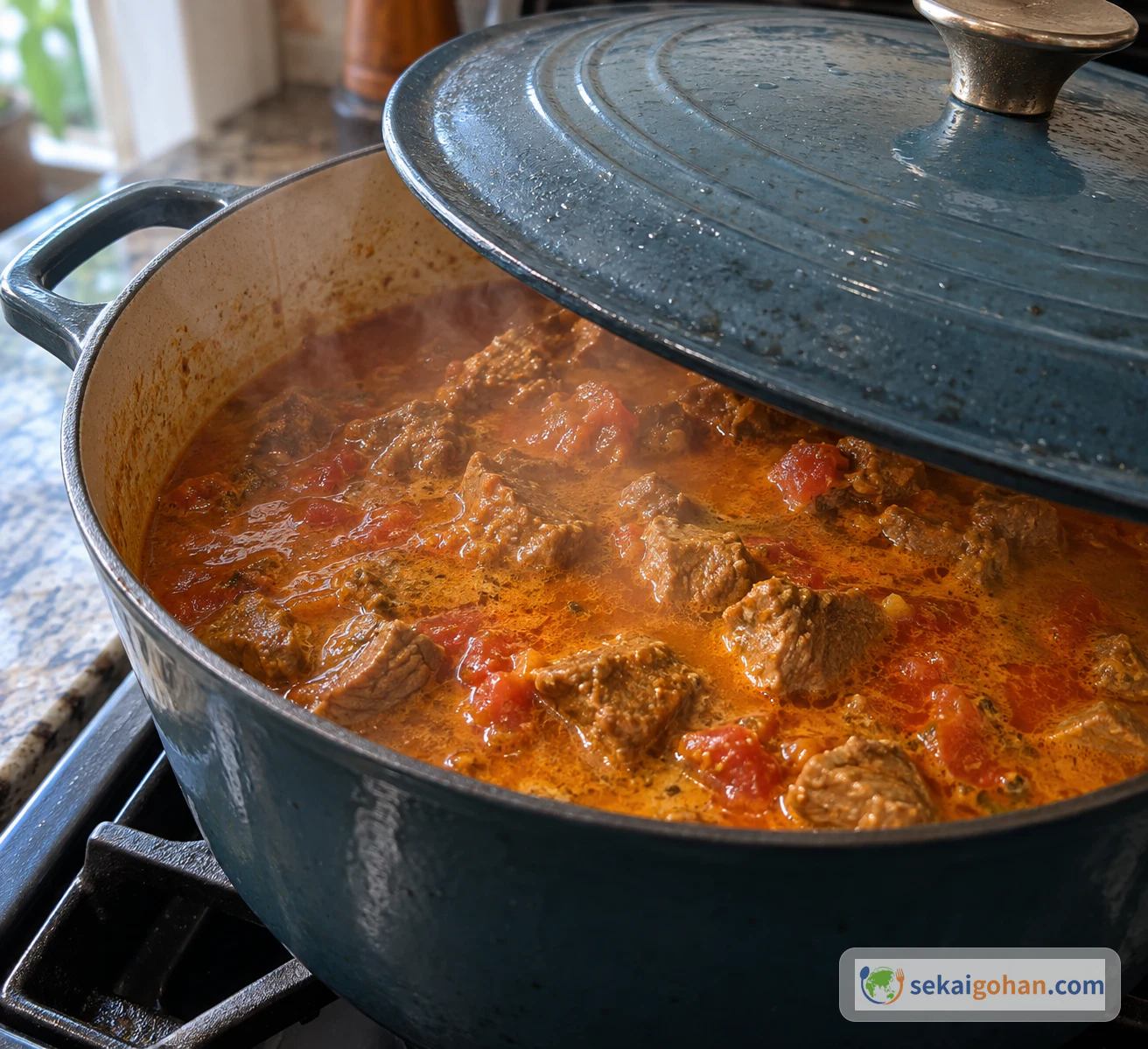
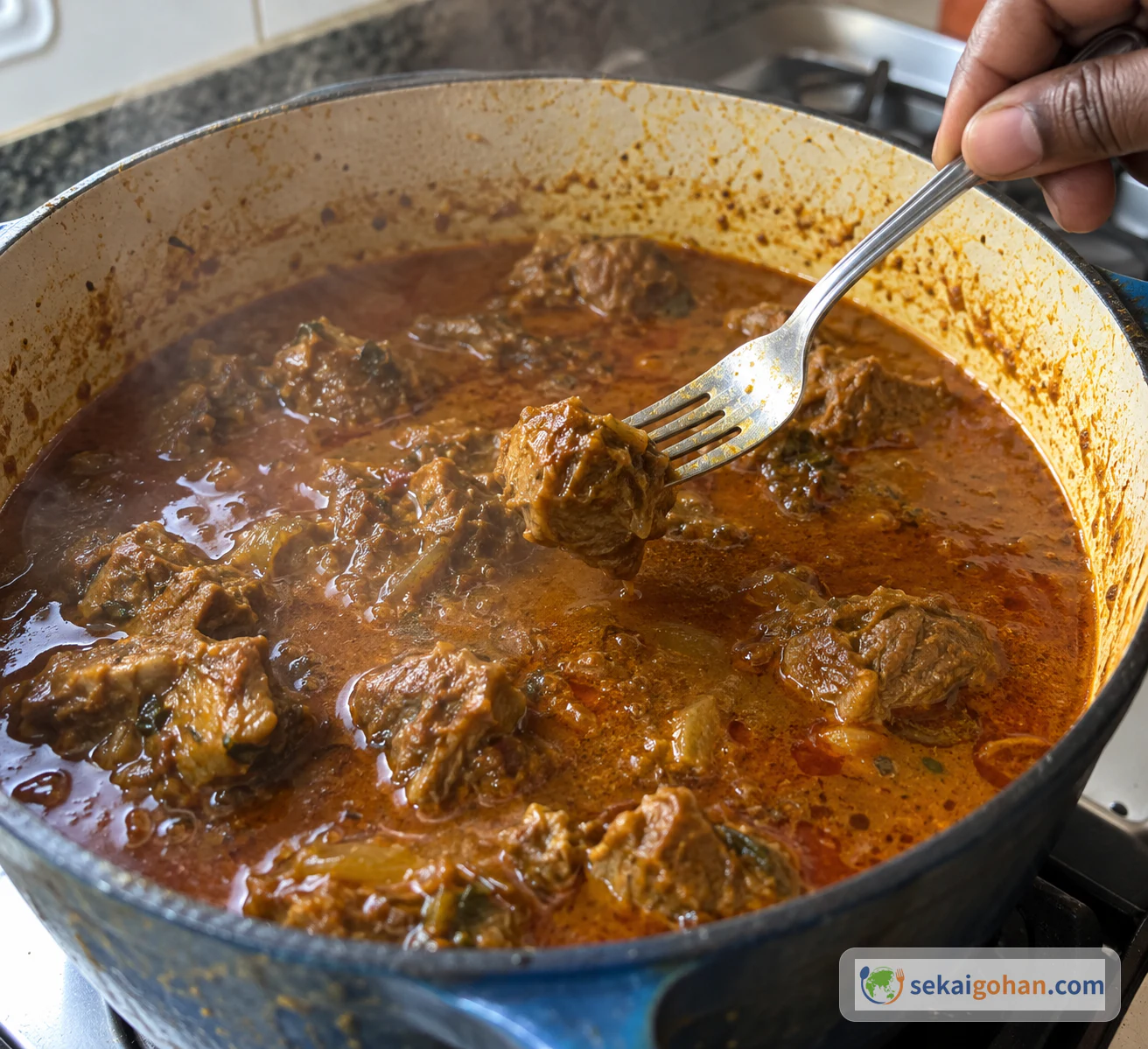
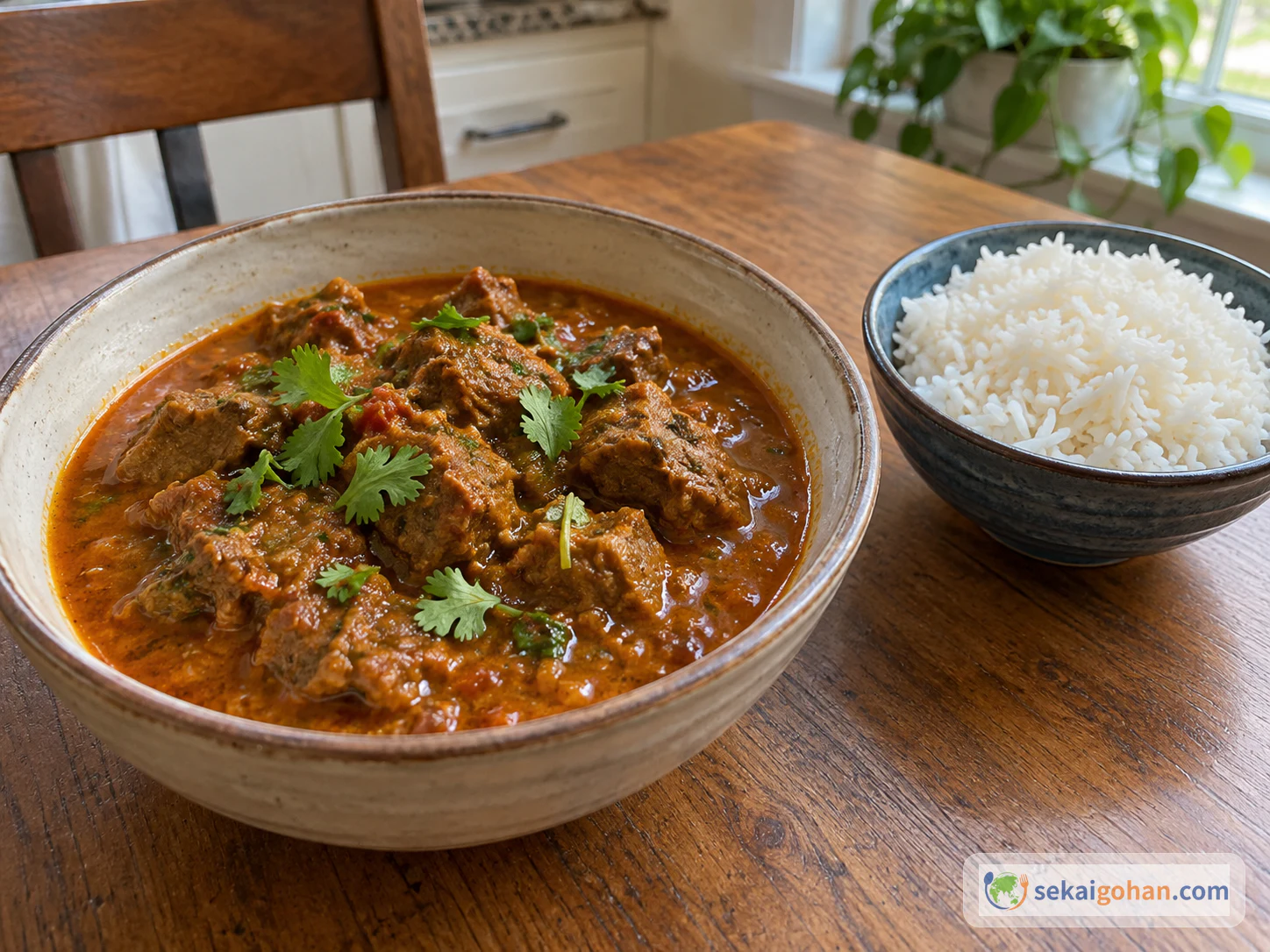
Picture a shallow bowl of goat in a warm, reddish-brown sauce, scattered with cilantro leaves, with rice close by. Goat stew is one of Anguilla's local classics, a soupy, broadly West Indian curry of goat simmered with spice paste and coconut milk. The meat should be tender and the sauce loose enough to spoon over rice, with fresh cilantro, lime and salt added at the end, a little at a time. Recipes vary from kitchen to kitchen, so think of this as one good version among many.
Goat Stew in Anguilla
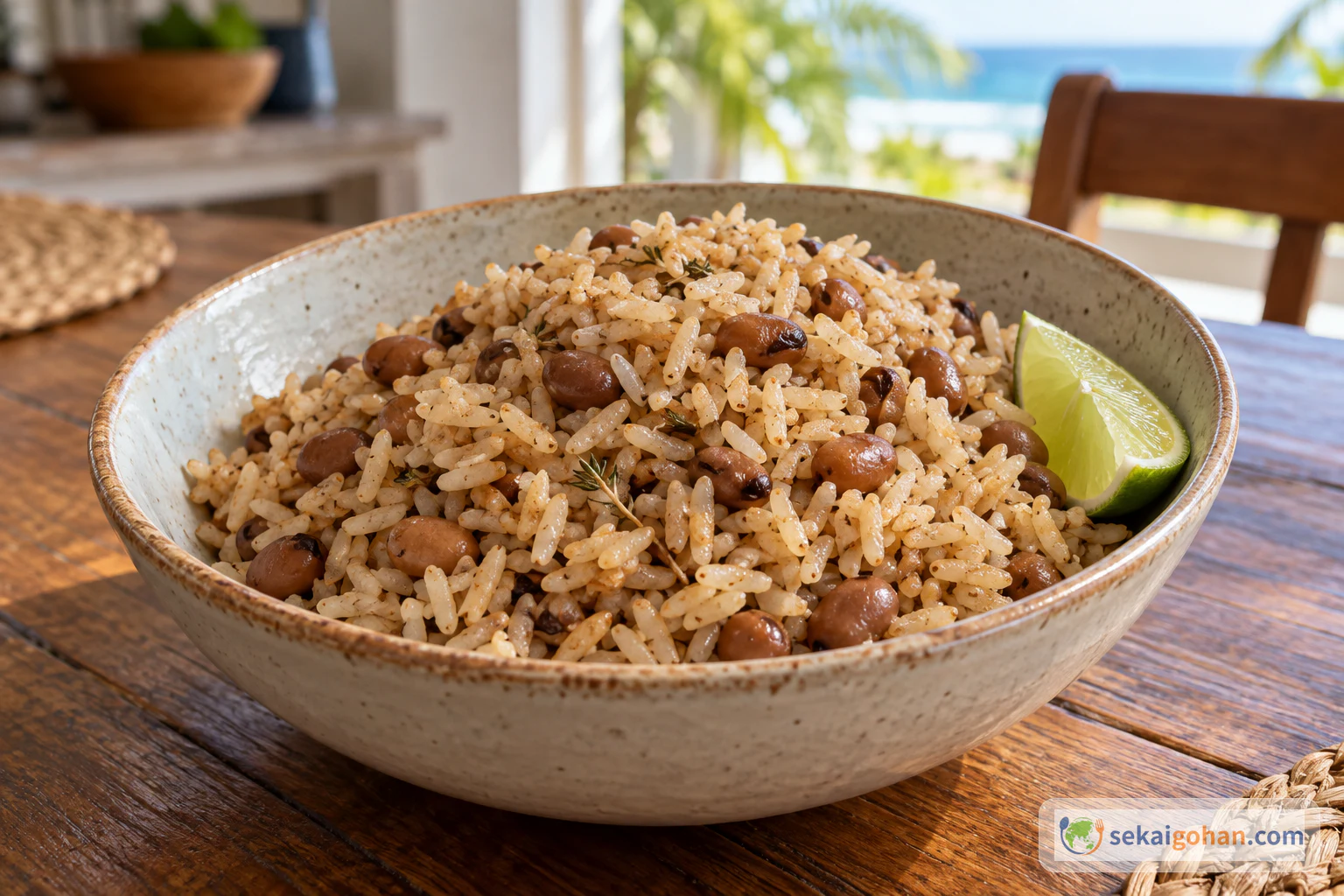
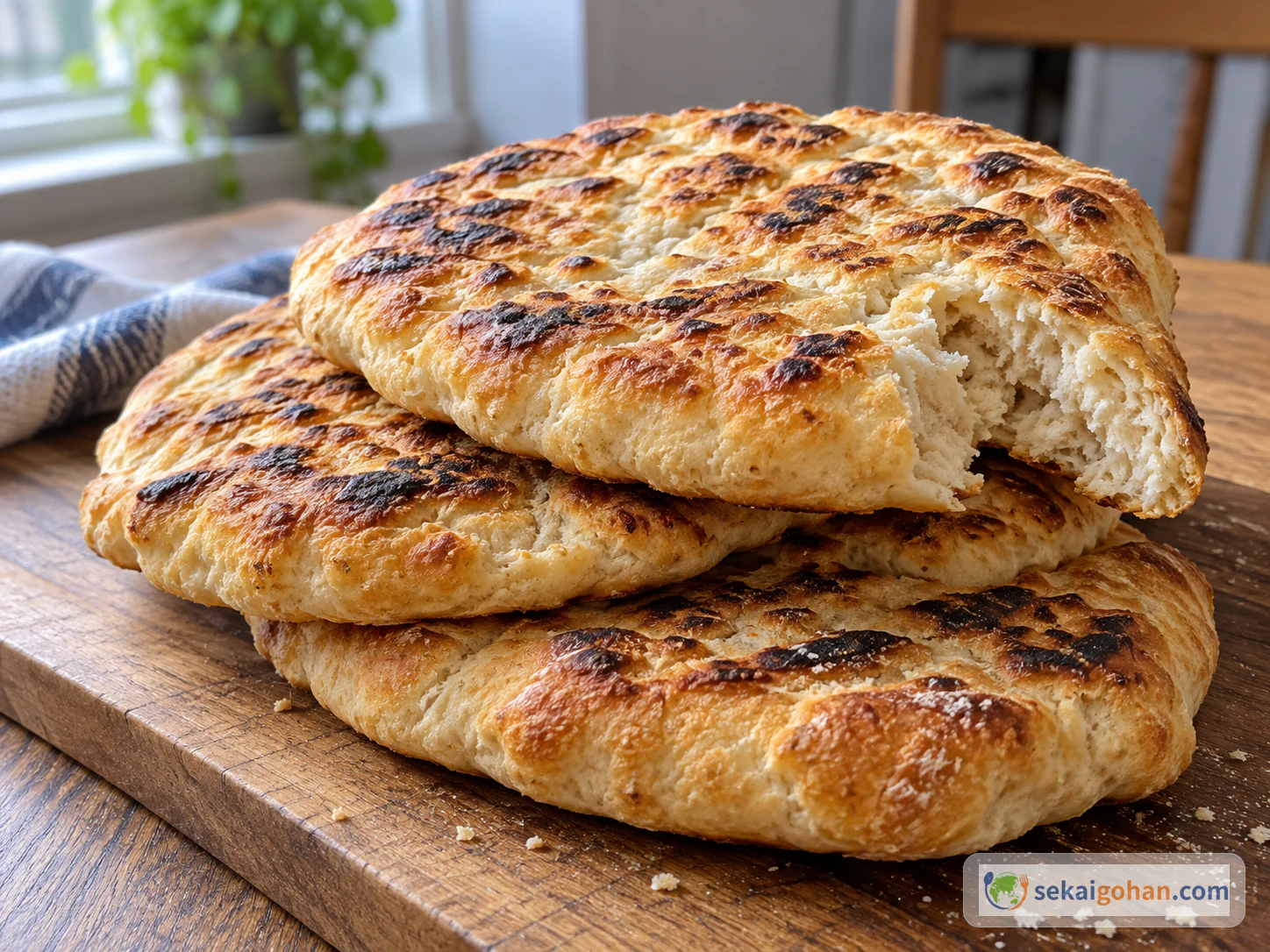
Goat is an island specialty, and the stew sits alongside pigeon peas and rice, johnny cakes, grilled snapper, and local crayfish and lobster among Anguilla's classics. Sunday lunch is a notable food occasion on the island. One common way to serve the stew is with rice and pigeon peas or other vegetables, and hot sauce is a regular presence in Anguillian cooking. Because the seasoning of rice and beans differs from family to family, you'll meet many versions rather than one fixed formula.
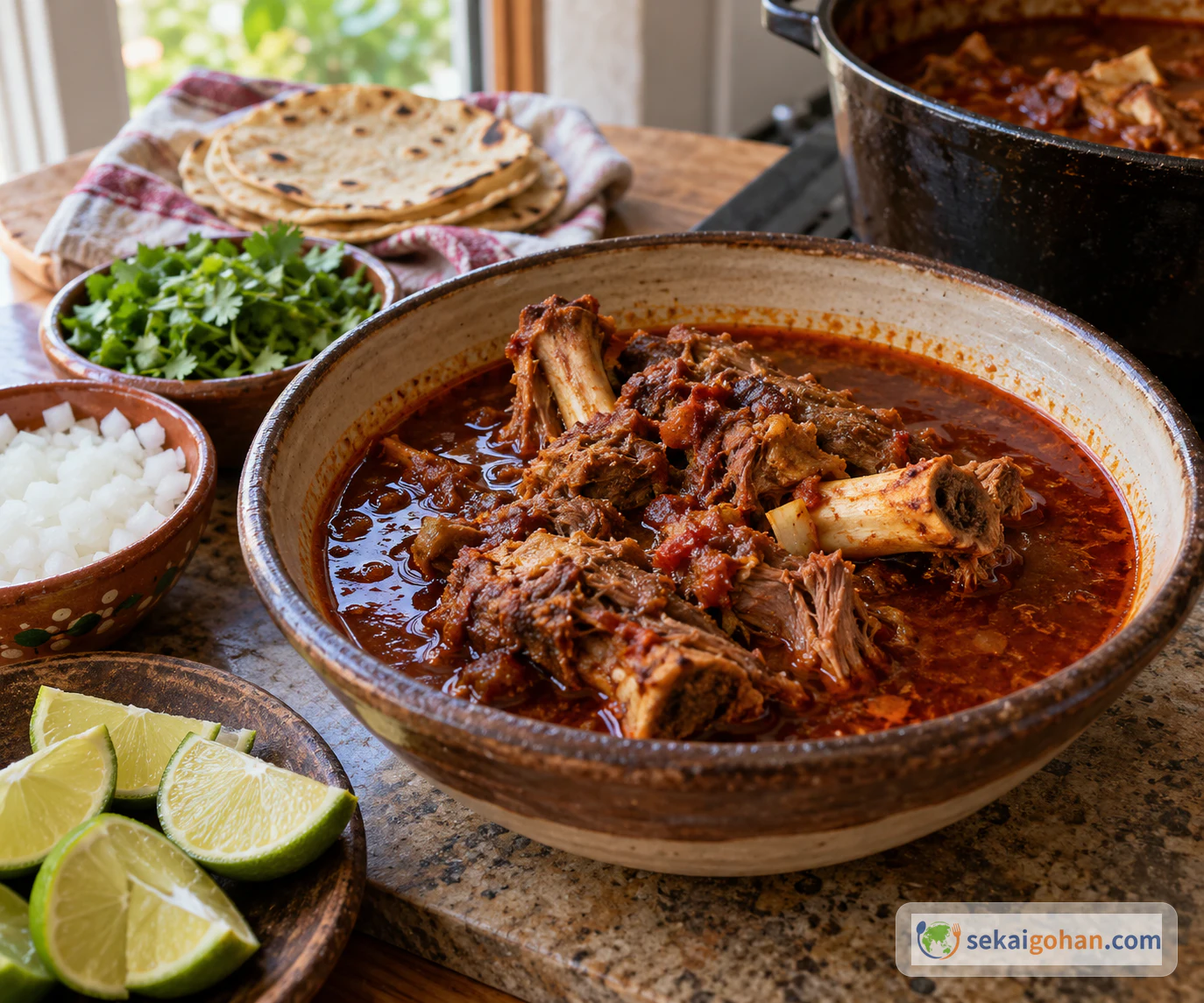
Don't confuse this stew with Goat Water, a separate goat soup or stew name used on several Caribbean islands. Goat Water is listed for Antigua and Barbuda, Montserrat, St Kitts and Nevis, and St Vincent and the Grenadines, but not Anguilla, and it has its own formula.
For comparisons from elsewhere in the region, try Jamaican curry goat, a separate dish with its own regional identity. Jamaican rice and peas offers another take on rice and legumes, and Trinidadian curry chicken shows Caribbean curry seasoning with a different meat.
Ingredients (Serves 6)
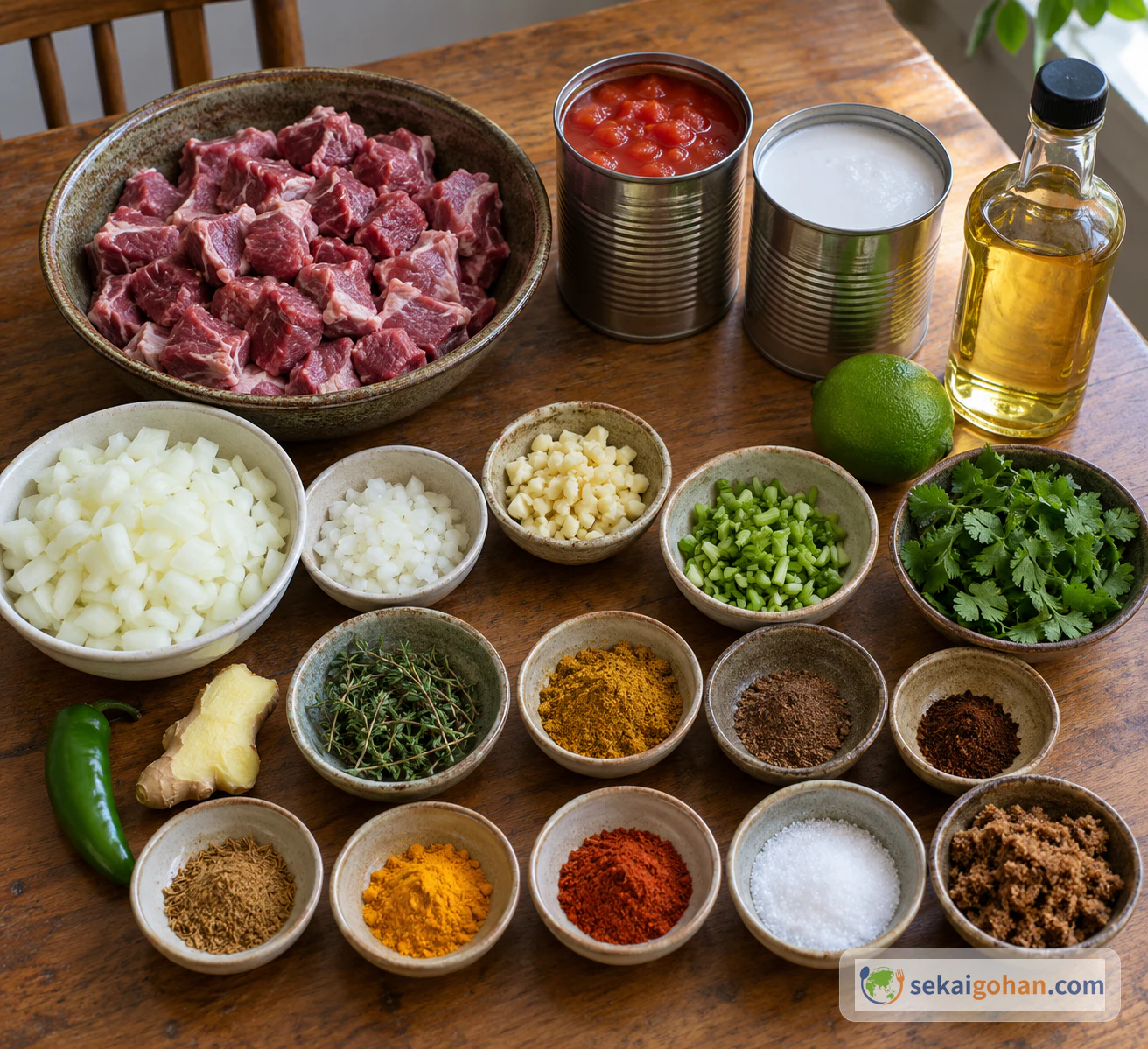
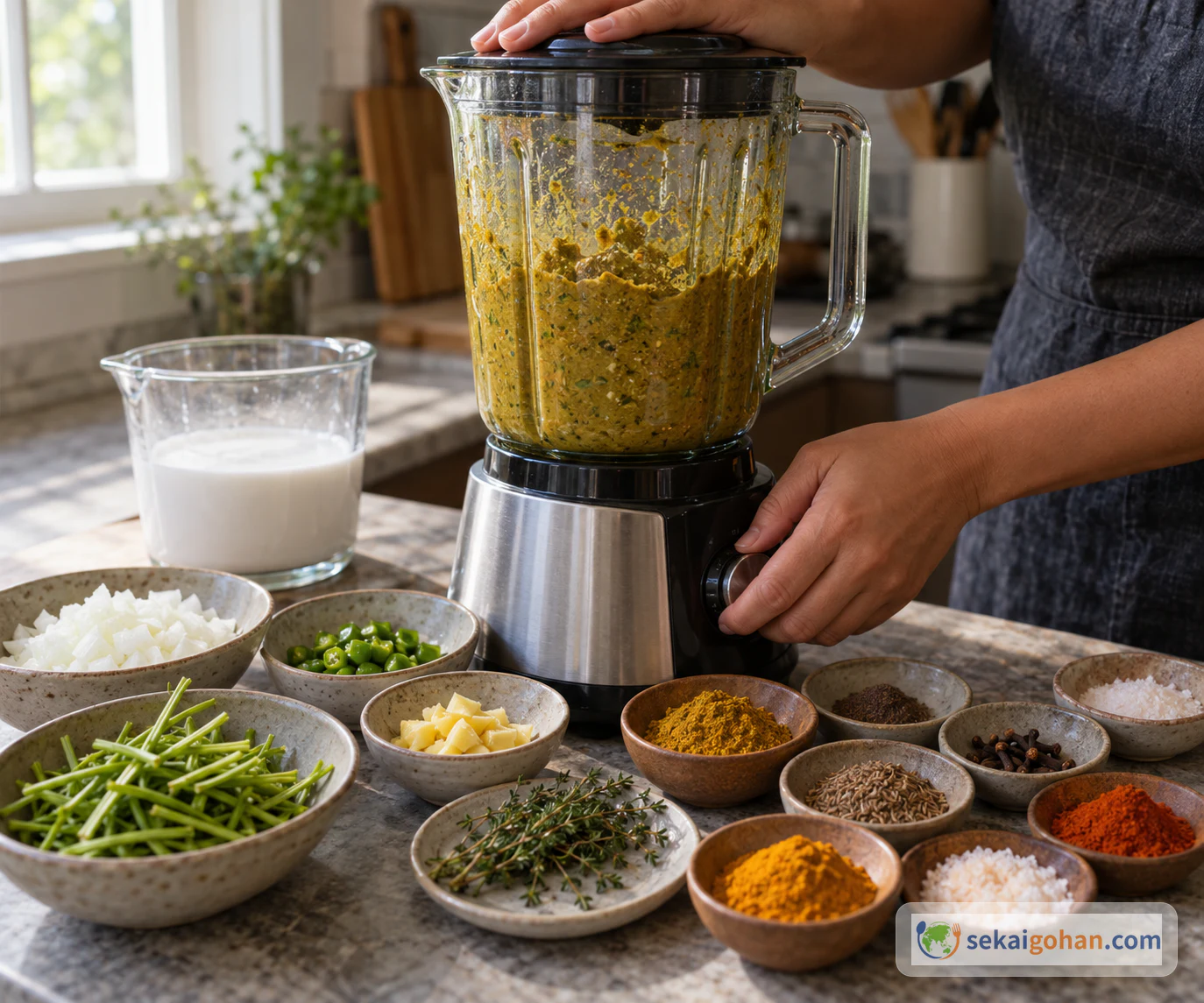
Three ingredients are used in stages: the onion is measured twice, the can of coconut milk is divided between the paste and the pot, and the cilantro stems and leaves go in at different times.
Equipment
- Blender
- Large, heavy pot with a lid
- Covered container that fits in the refrigerator
- Separate cutting board and utensils for raw meat
Choosing Ingredients for Goat Stew
Goat: Boneless shoulder is the cut used here. Bone-in neck or shank also works, but plan on about 3 hours of simmering and go by how tender the meat is. Beef or lamb can stand in, though the flavor changes.
Annatto or paprika: Either one fills the 2 tsp in the paste, but each gives the stew a slightly different color and aroma.
Chile: Heat varies by variety, so start with a small amount of an unfamiliar green chile.
Peanut oil: Another neutral oil will work, though the aroma changes.
Allspice and cloves: These are two different spices and aren't interchangeable. Cloves are strong, so keep to the small amount listed.
Curry powder: Flavor varies by brand; use one you like.
Brown sugar: An unrefined dark sugar can replace it, with a different flavor.
Canned tomatoes: Can sizes differ between countries, so check the size on the label.
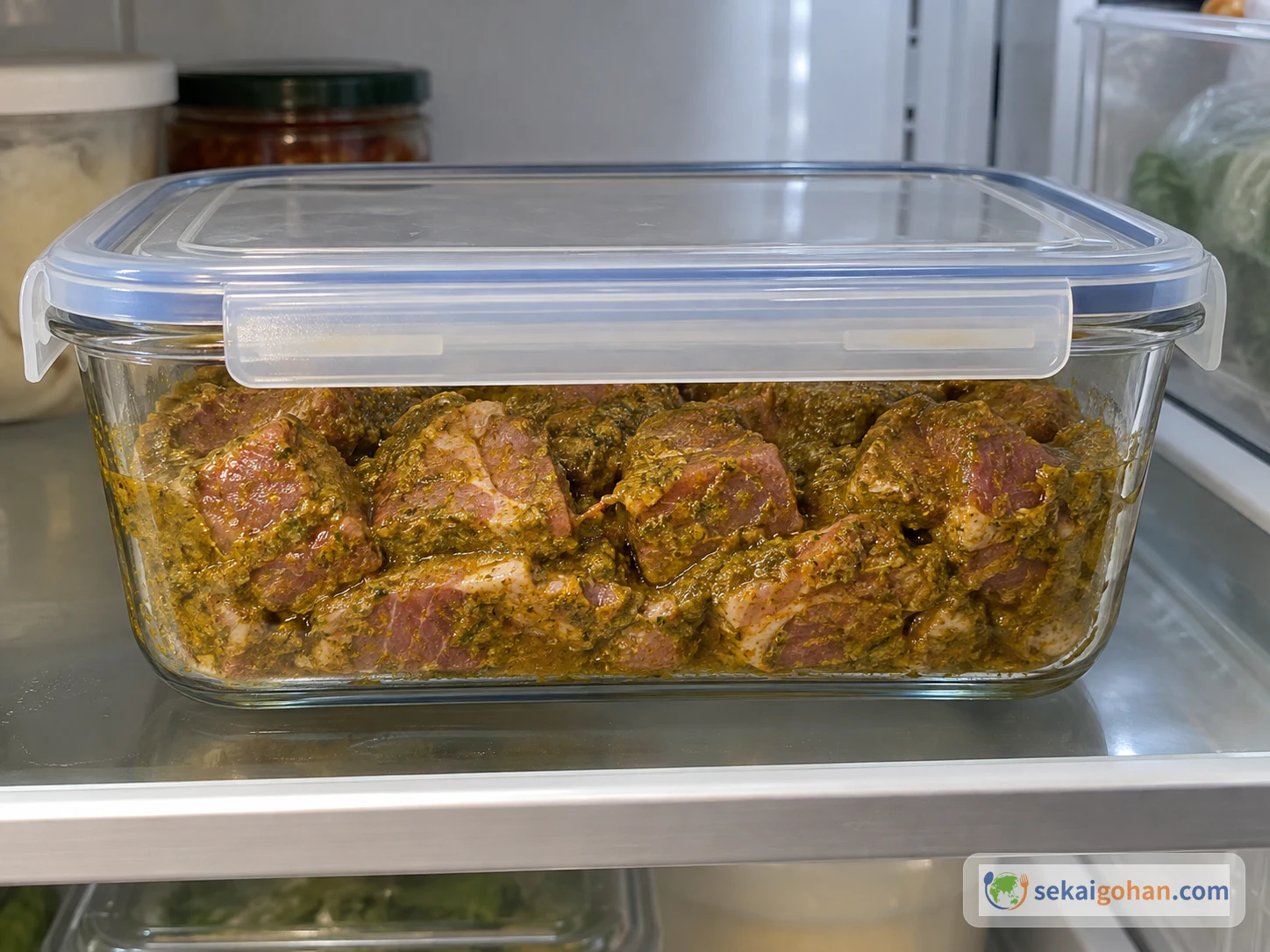
Peanut oil contains peanut, and the stew contains coconut. Curry powder ingredients vary by product, so check the labels. Marinate only in the refrigerator, at 40°F (about 4°C) or below, never at room temperature. Keep separate tools and boards for raw meat, and wash your hands and anything the raw meat touched. Simmer until the meat is tender, and serve the stew hot throughout.
Method: From Spice Paste to a Soupy Finish
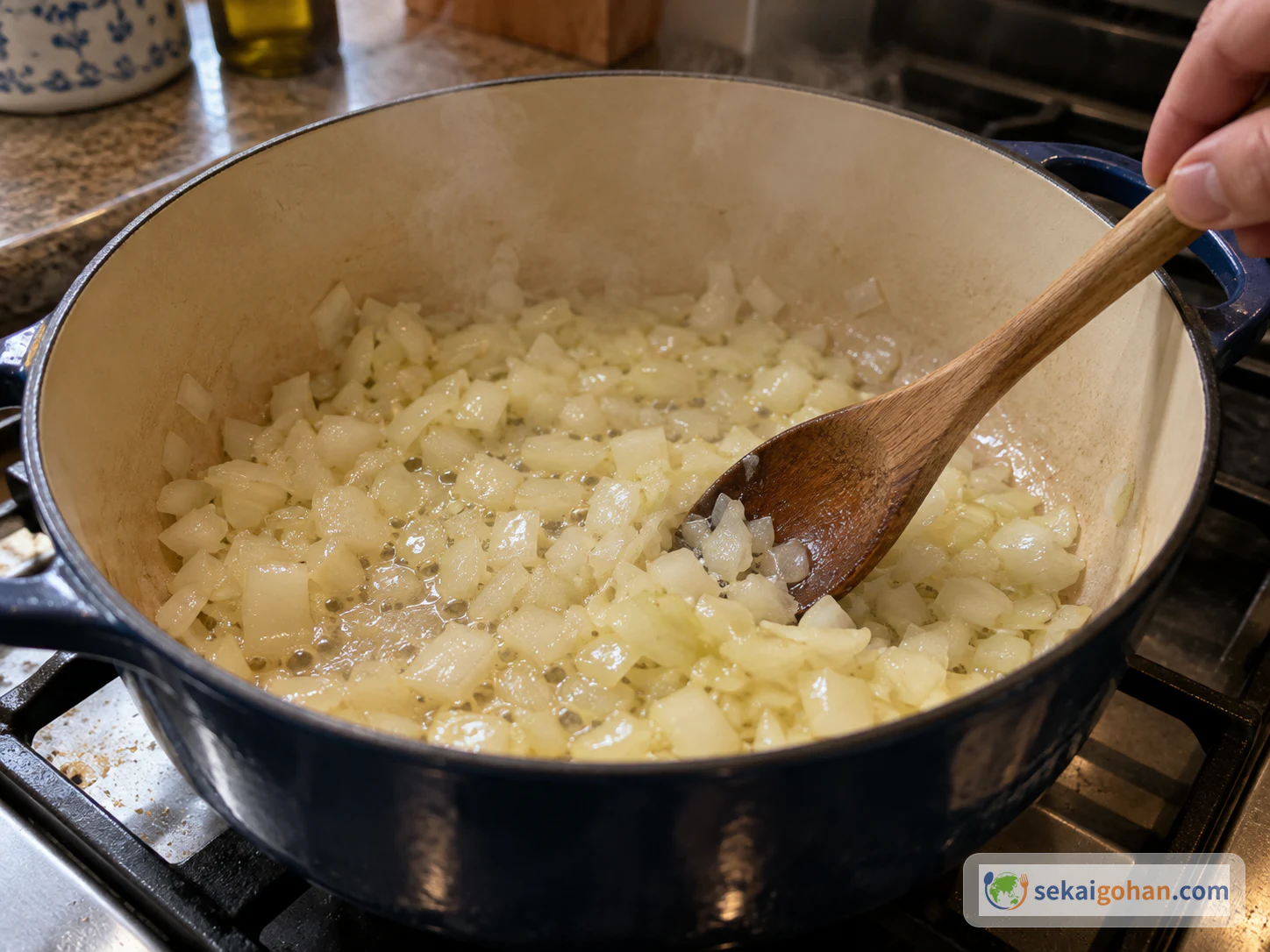
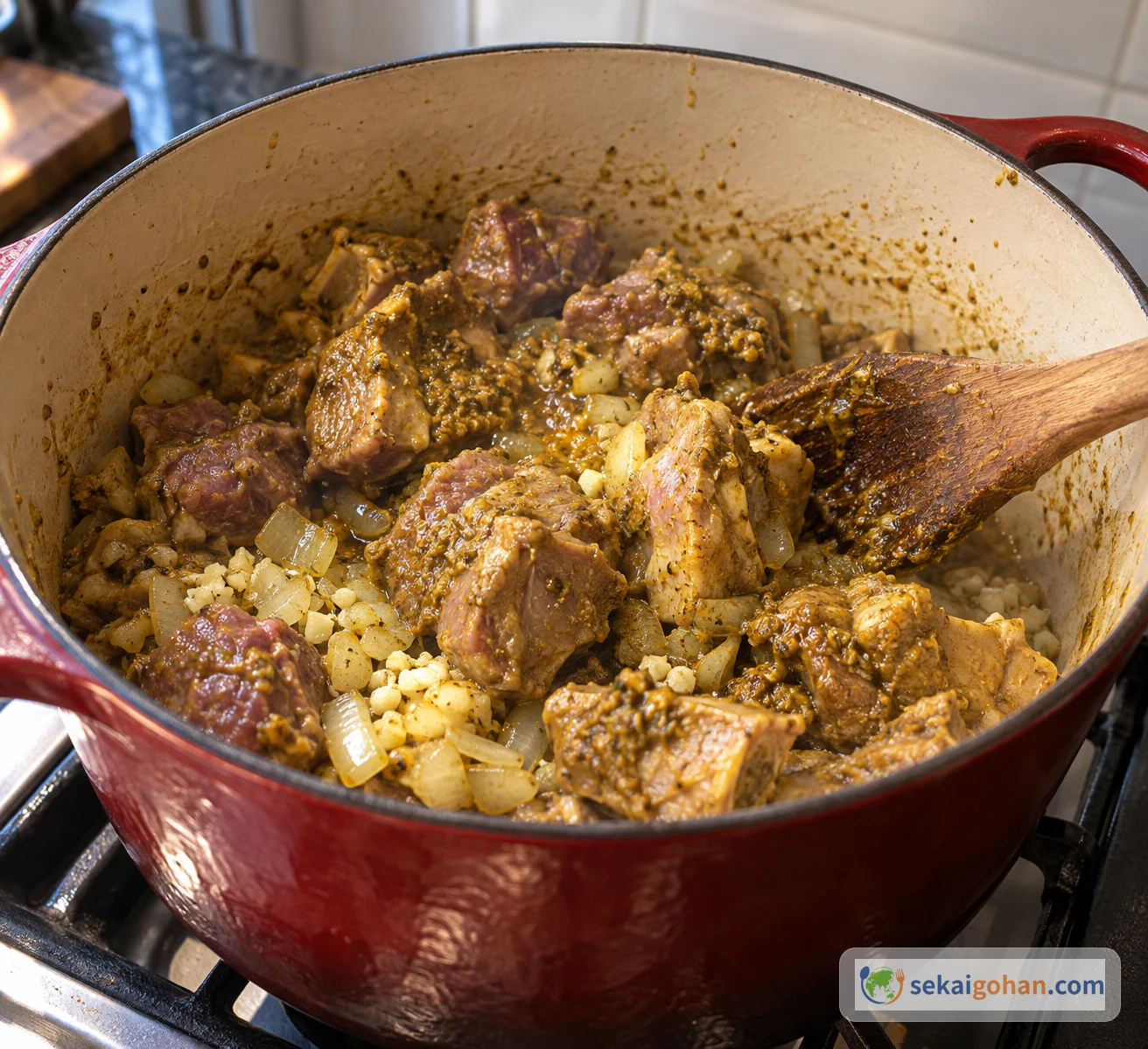
The paste flavors the meat, and the sauce comes together later in the pot. Watch the meat more than the clock, because cuts differ in how long they take to turn tender.
Goat Stew Troubleshooting
| What you notice | What to do |
|---|---|
| The goat is still firm after 1 hour | Cover and keep simmering, checking every 20 minutes. Bone-in neck or shank needs about 3 hours |
| The pot looks dry in step 4 | Adjust the heat so the paste doesn't scorch |
| A layer of fat sits on top | Skim off the excess before you adjust the sauce and seasoning |
| The sauce is thin | Simmer it down a little, stopping while it is still soupy |
| The flavor seems flat | Add salt, lime juice or brown sugar a little at a time, tasting between additions |
| The stew is too hot | Use less chile next time and add hot sauce at the table |
Serving Goat Stew
Spoon the curry over plain rice, with a spicy homemade hot sauce alongside. If you'd like pigeon peas and rice, set them out as a separate side and keep the peas out of the stew itself.
Hot sauce at the table is also the easiest way to handle a crowd with different tastes. Use less chile in the paste and let everyone build their own heat; the pot will taste milder than the recipe as written, but no one is stuck with a stew that's too fiery.
Frequently Asked Questions
Why not marinate at room temperature?
Always marinate food in the refrigerator, never at room temperature. Marinate for at least 1 hour, or overnight, and keep the refrigerator at 40°F (about 4°C) or below.
Can I make it without coconut milk?
Coconut milk defines this stew, so leaving it out makes a different dish. There's no equal substitute.
How should I store and reheat leftovers?
Don't leave cooked stew out for more than 2 hours, or 1 hour above 90°F. Refrigerate it at 40°F (about 4°C) or below, and reheat until hot throughout before eating.