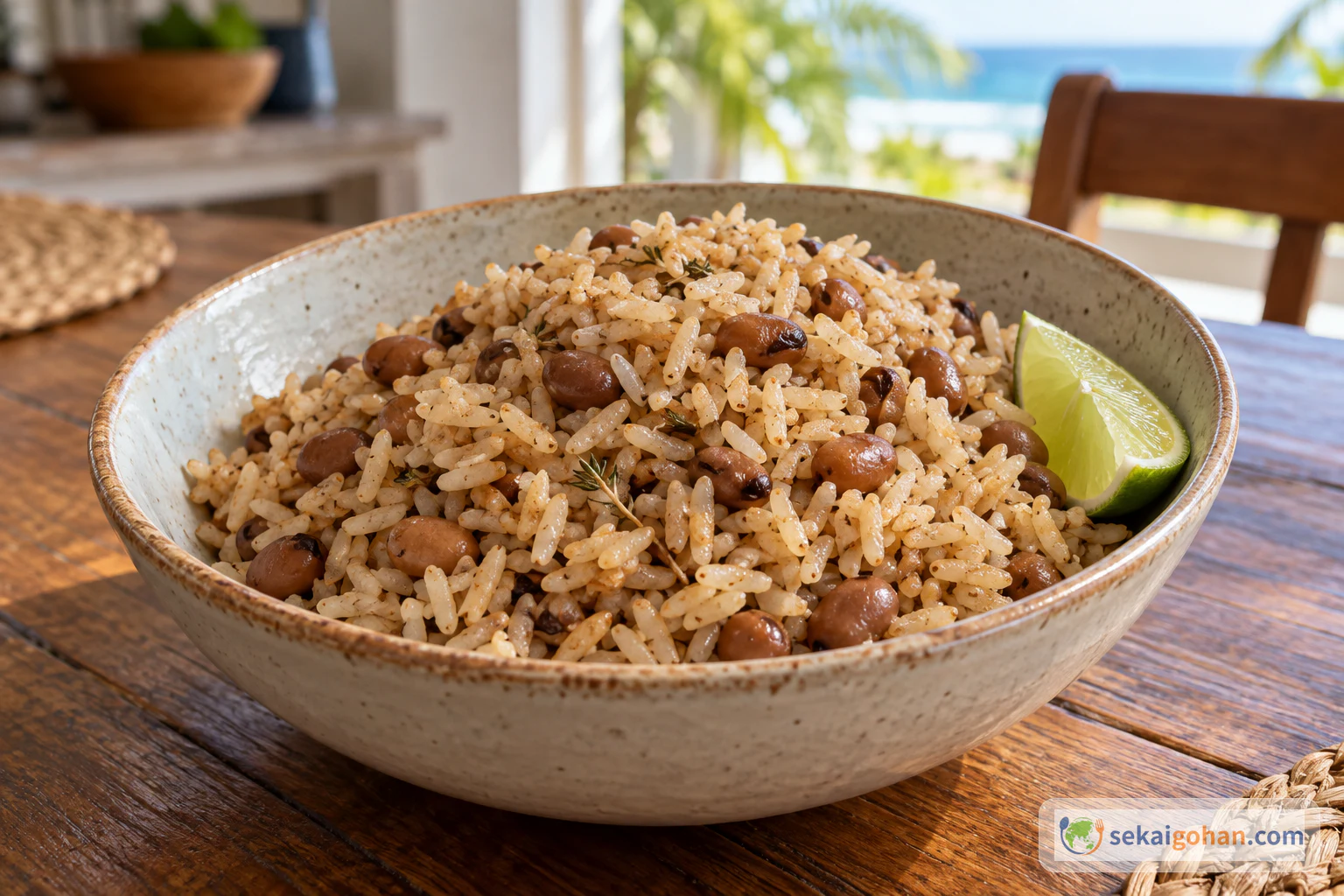
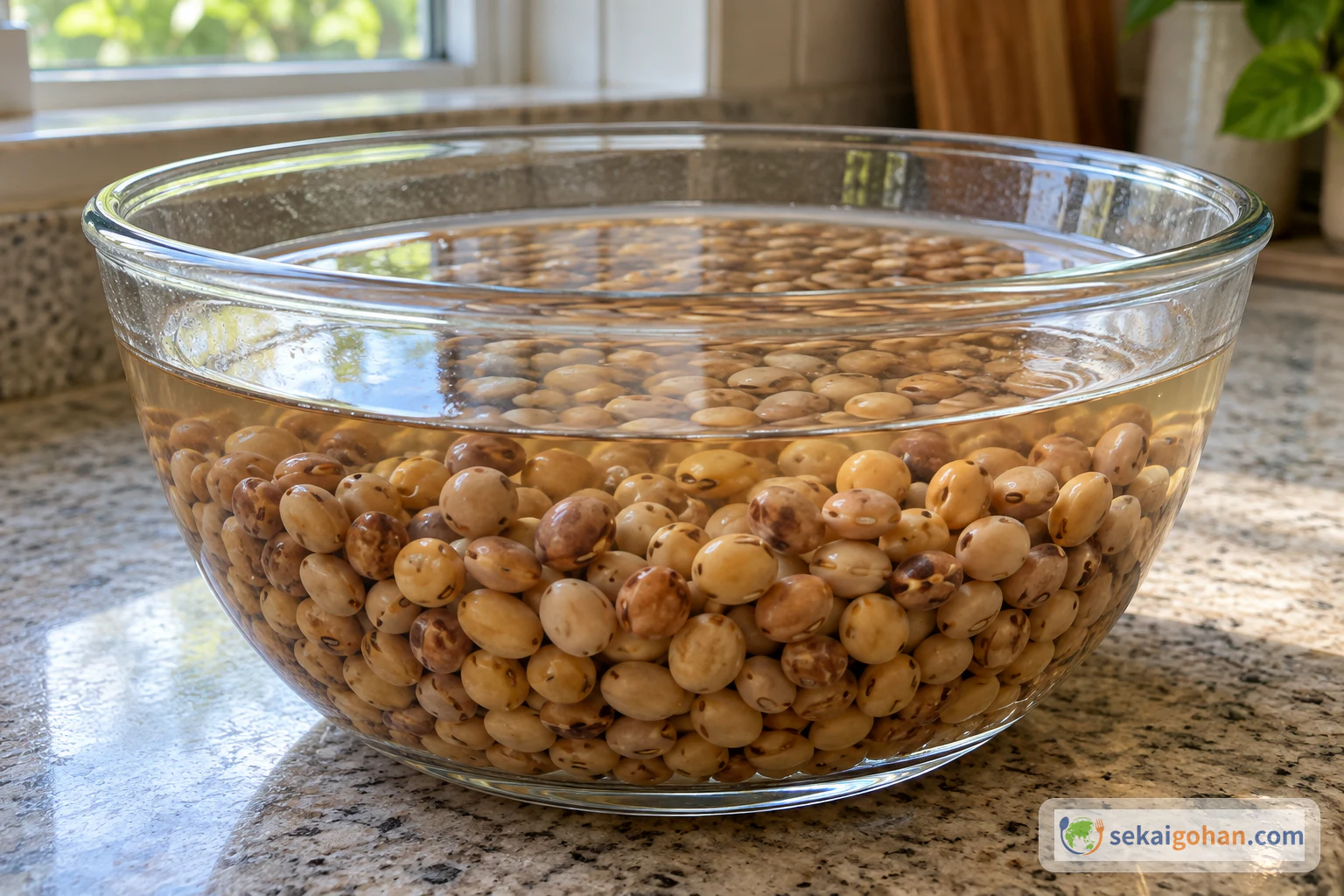
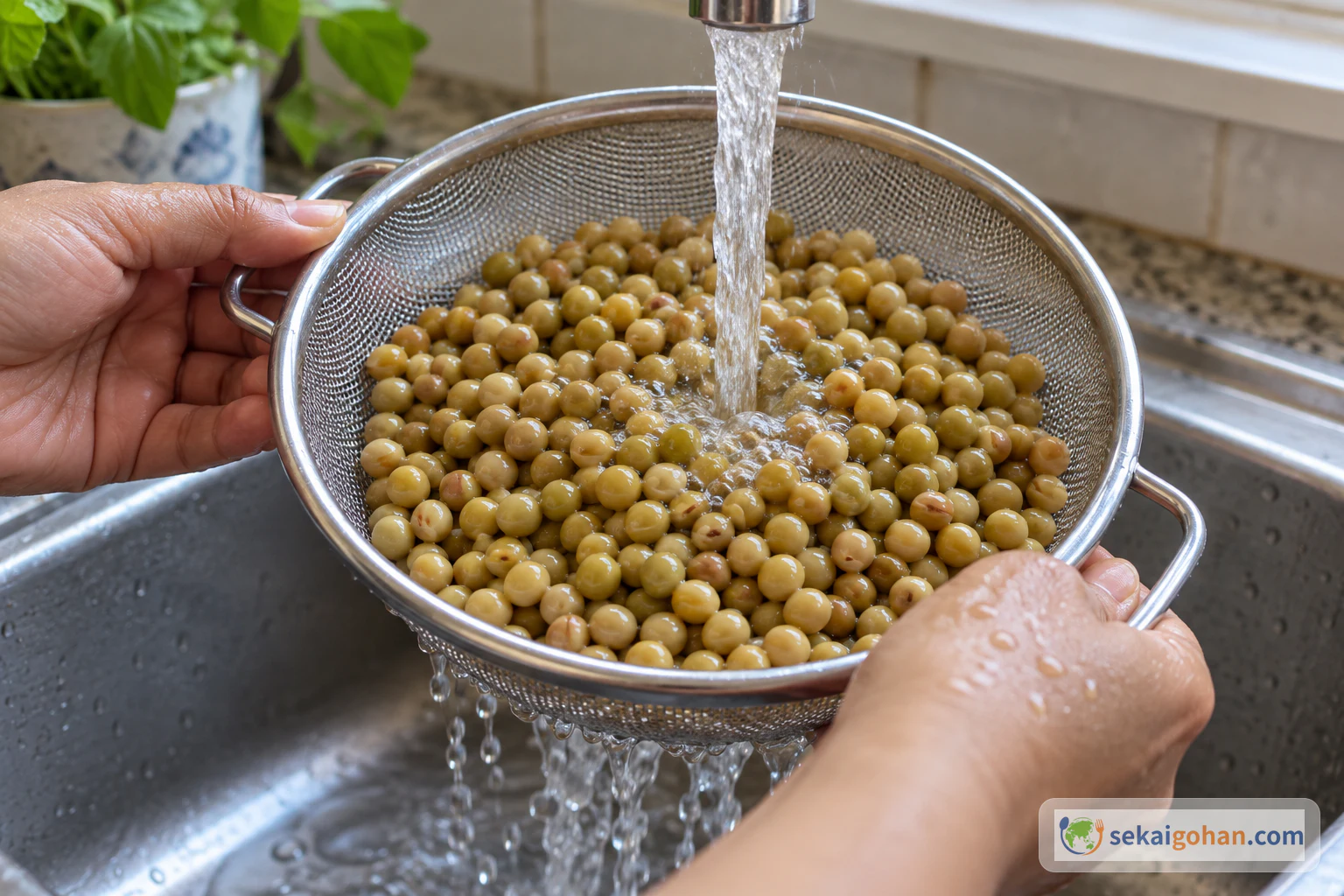
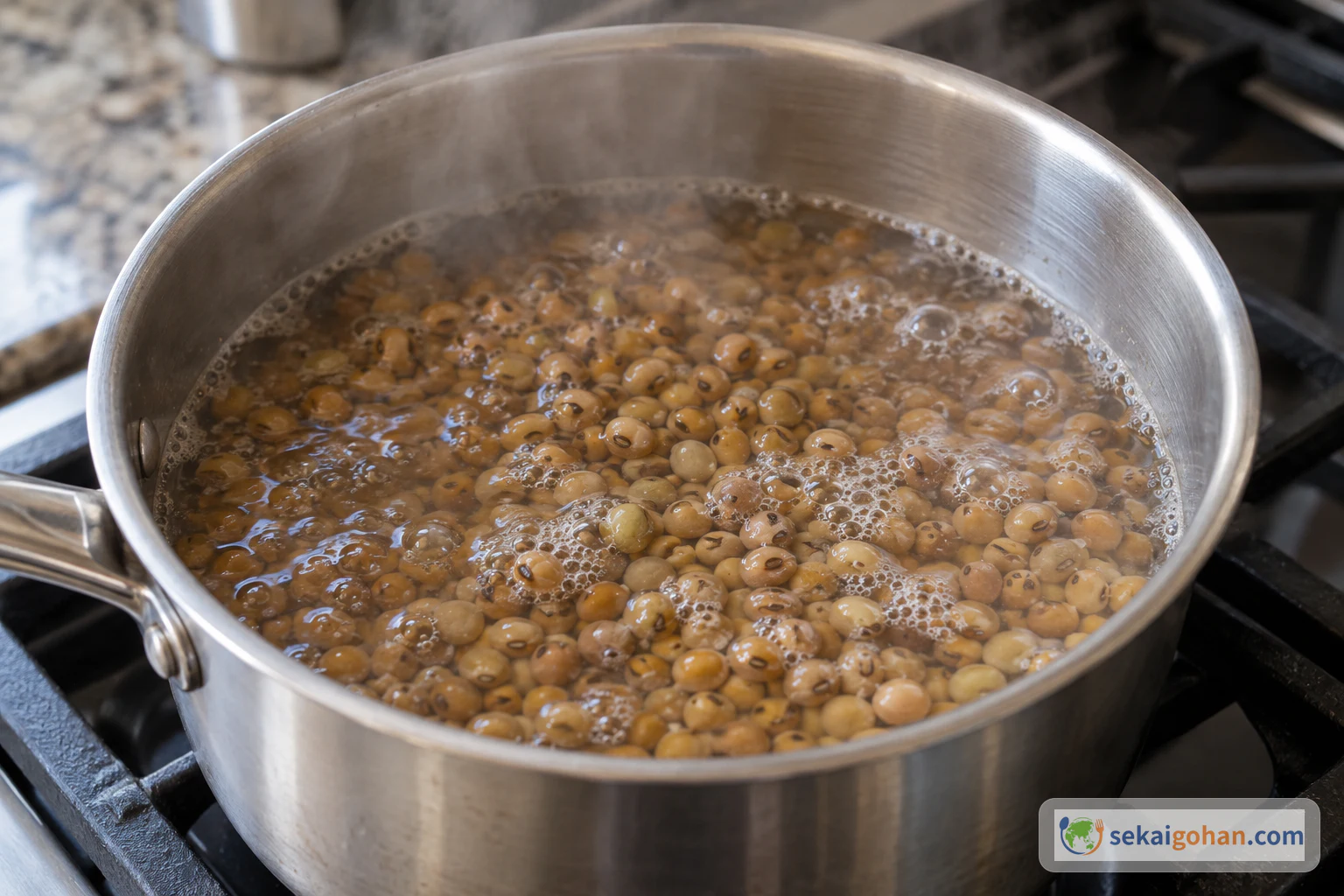
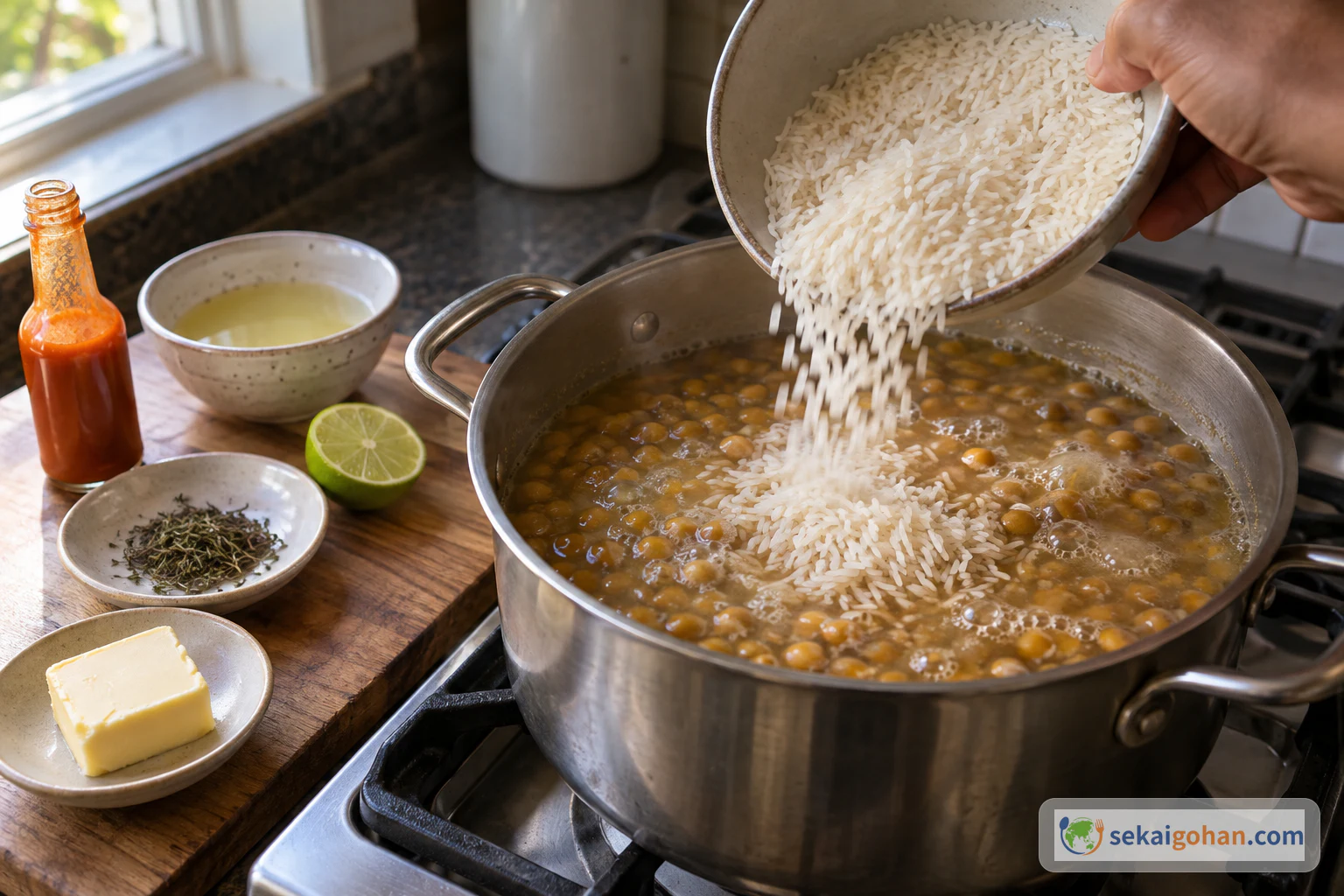
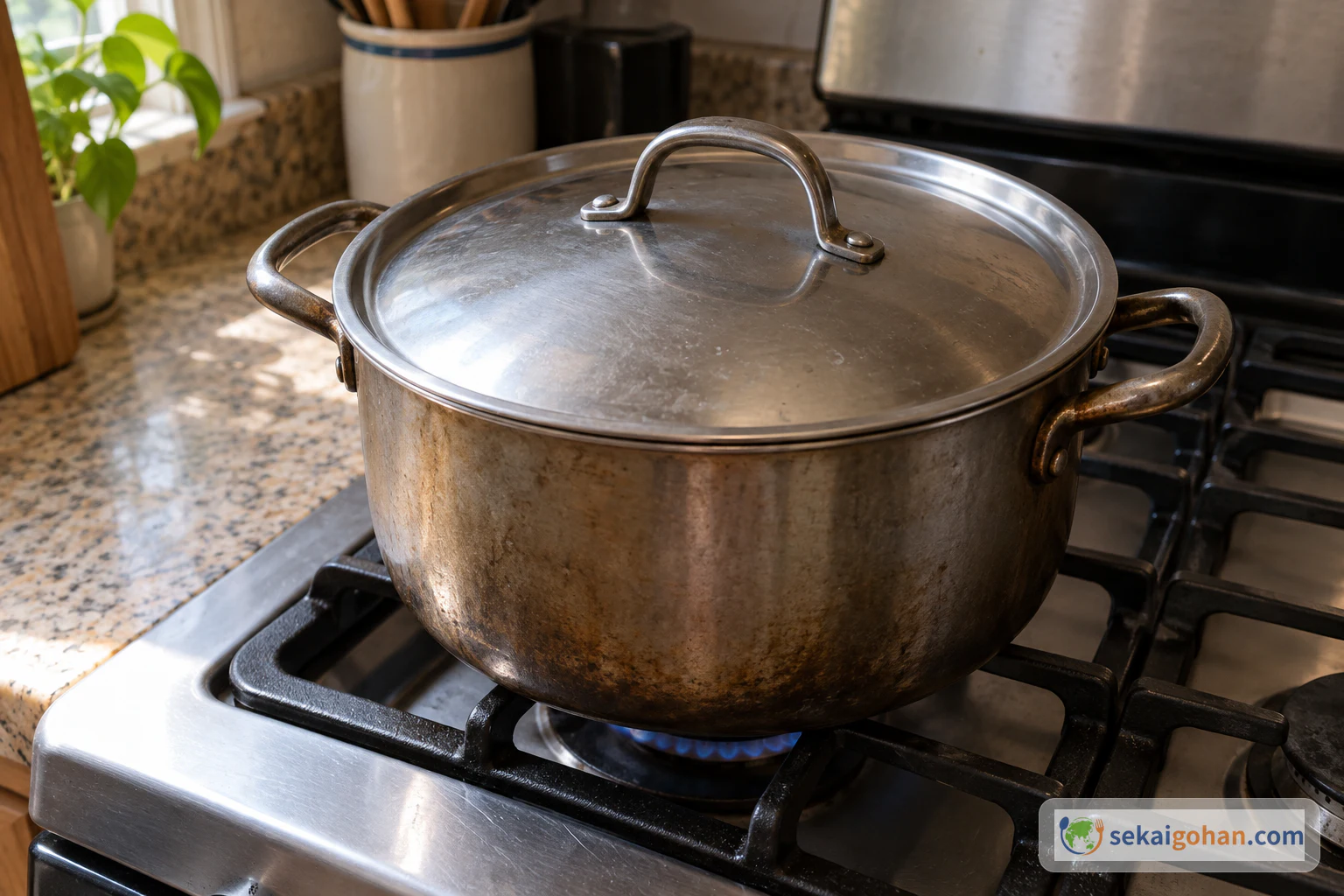
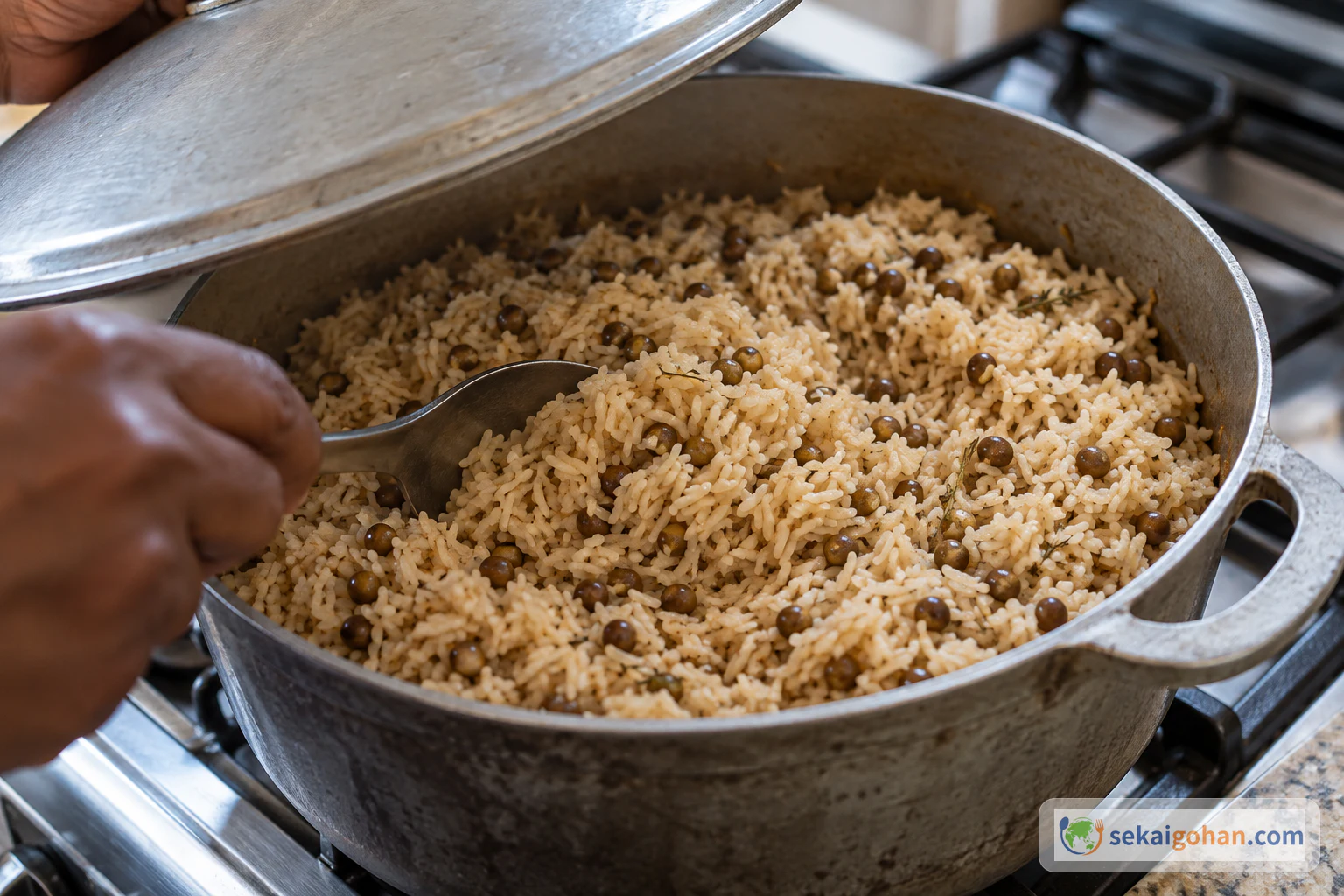
The peas go in first. Dried pigeon peas soak overnight or boil for about two hours, then go back on the heat in fresh water until they're tender. Only then do the rice, lime juice, thyme, butter and a little hot sauce join them. The lid goes on, and for about twenty minutes the rice soaks up the liquid. The dried peas take time, but the rest is simple, and everything finishes in one pot.
Pigeon Peas and Rice in Anguilla
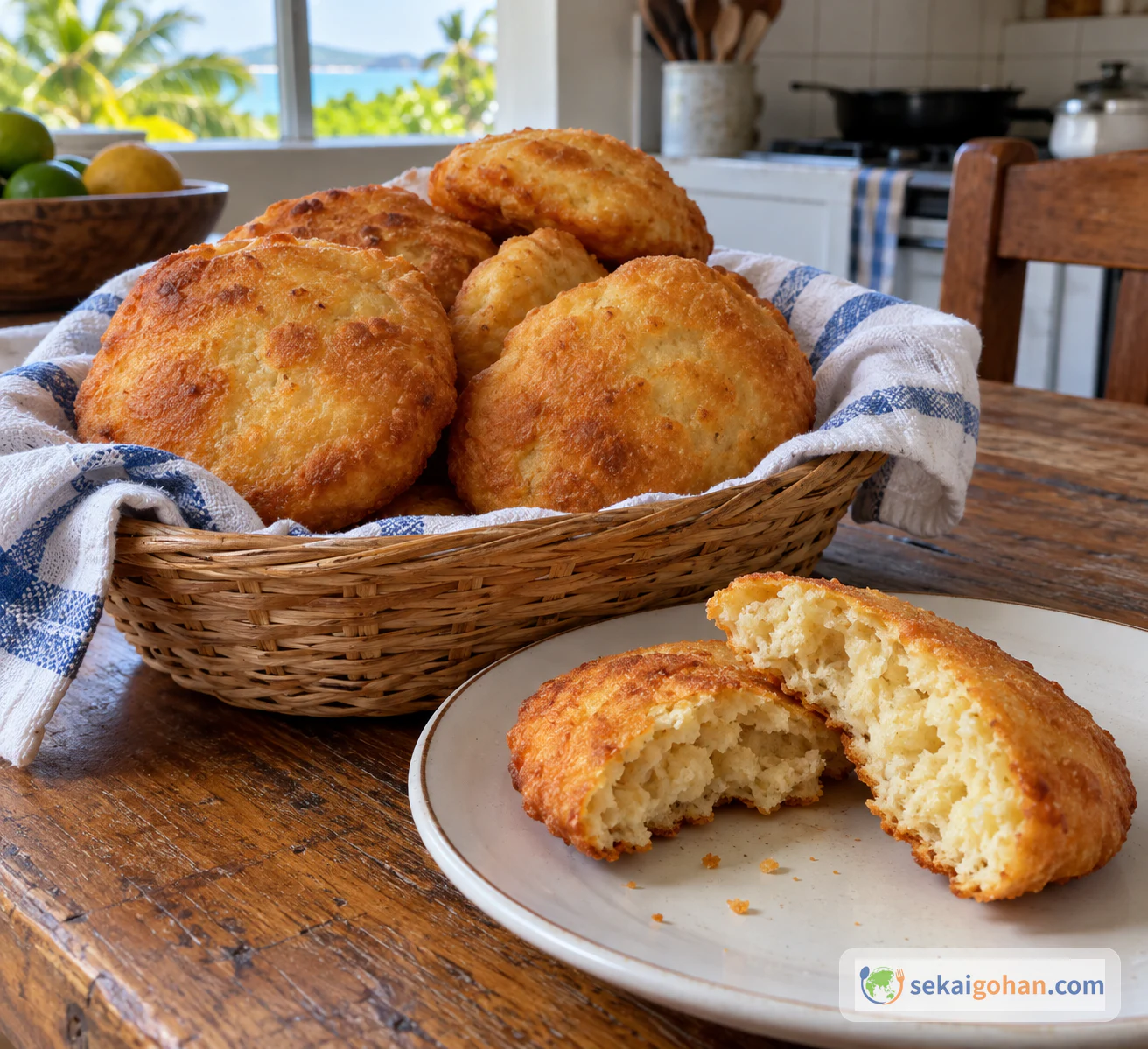
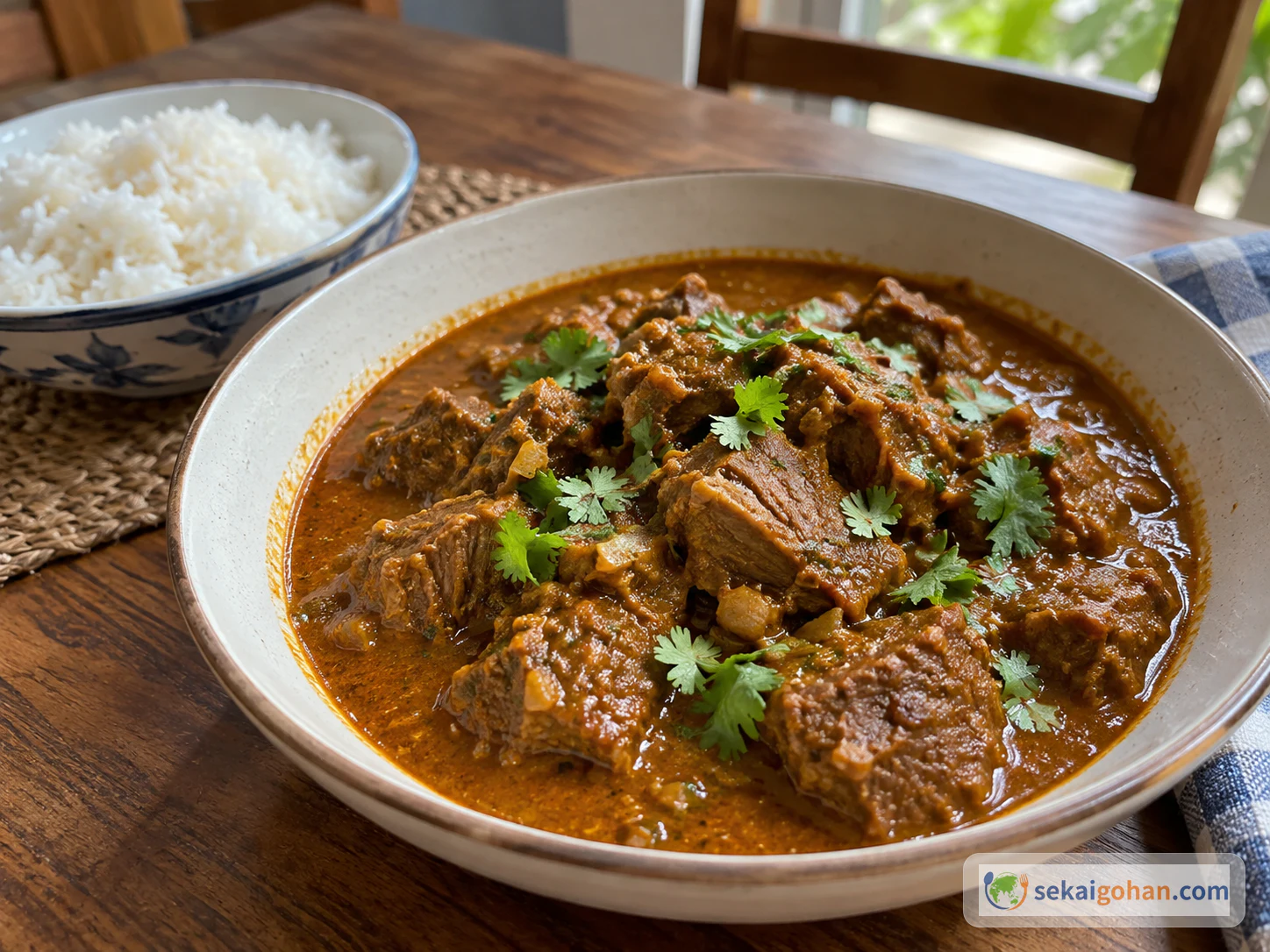
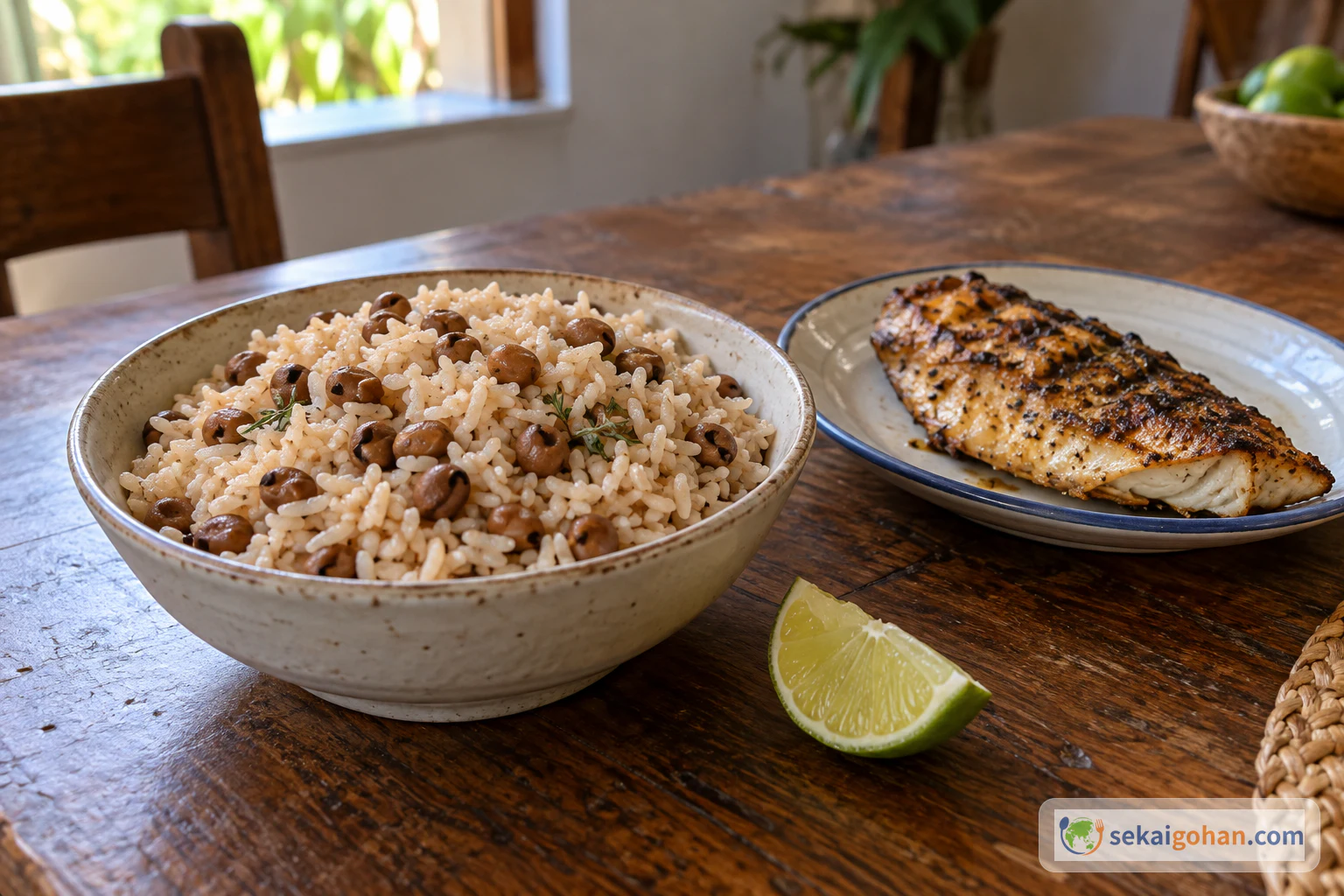
Pigeon peas and rice is one of Anguilla's classics, alongside johnny cakes and goat stew. Butter, thyme, lime and hot sauce are all the seasoning it gets. A bowl of it can be the center of a meal, or it can sit next to meat or fish.
Anguillians usually call the dish peas and rice, while the Caribbean diaspora in Britain tends to say rice and peas. You'll find the same dish under either name, so the name alone won't tell you which recipe you're looking at.
Versions around the Caribbean differ in what they're called, which peas they use, whether they add coconut milk and whether they include meat. Jamaican rice and peas, Dominican moro de guandules and Puerto Rican arroz con gandules are separate dishes in their own right. This version is Anguillian, with no coconut milk, and here it's made without the optional meat.
Ingredients
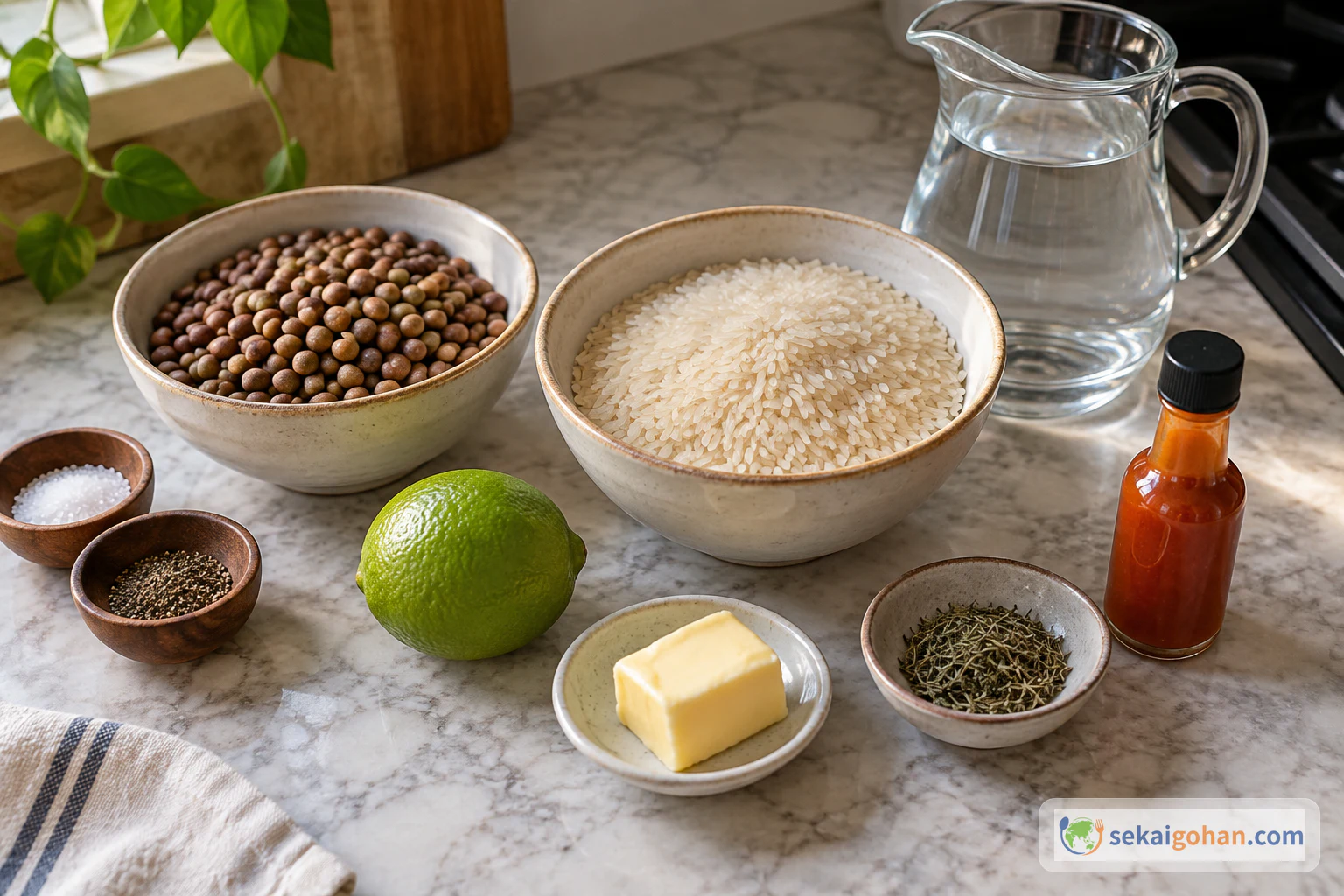
Equipment
- Bowl for soaking the peas
- Fine-mesh colander or strainer
- Pot with a lid
- Measuring cup
- Spoon
Choosing Pigeon Peas and Rice
Not every store stocks pigeon peas, so search for both "pigeon peas" and "gungo peas," and check whether the product is dried or canned. The amount here is for dried peas and won't work as a canned weight. If the bag gives soaking and cooking times, follow them.
Any brand or variety of rice will do, but the liquid amount is meant for long-grain rice. Short-grain rice takes up liquid differently, so if you use it, keep a close eye on the texture and the liquid.
Fixing Peas and Rice That Go Wrong
| What you see | What to do |
|---|---|
| The peas are still hard after coming back to a boil | Keep cooking them before you add the rice. There's no fixed time, so go by the bite |
| Liquid is still in the pot when the time is up | Put the lid back on, keep cooking over low heat, then check again |
| The liquid is gone but the rice is still firm | Cover and keep cooking over low heat, checking often |
| The peas are firmer than you'd like in the finished dish | Next time, cook them longer before the rice goes in |
| The flavor seems flat | Add salt and black pepper a little at a time, and put hot sauce on the table |
Serving Peas and Rice and Variations
Serve a bowl on its own for a simple meal, or put it beside meat or fish. Keep any accompaniment separate so the peas and rice stay as they are. You can also adjust the hot sauce to suit the people at your table.
With corned or salt beef. Use 1/4 lb (about 114 g) of corned beef or salt beef. Boil the meat first, then add it when the peas go back to a boil. The meat adds salt, and brands vary in how salty they are, so season only at the end.
Frequently Asked Questions
How much liquid does the rice need?
Use 2 cups of liquid for every cup of rice, a 1:2 ratio. The liquid is the pea cooking liquid topped up with water. Use that ratio for the 7 oz (about 200 g) of rice here, which is a little over 1 cup, and watch how the rice is doing as well as the measurements.
Can I use canned or fresh pigeon peas?
The amount in this recipe, 6 oz (170 g), is for dried peas. If you try canned peas, you'll need to work out the quantity and liquid yourself.
Should I add coconut milk?
This Anguillian version has none. Some other Caribbean versions of peas and rice use it, and those are best made from their own recipes.