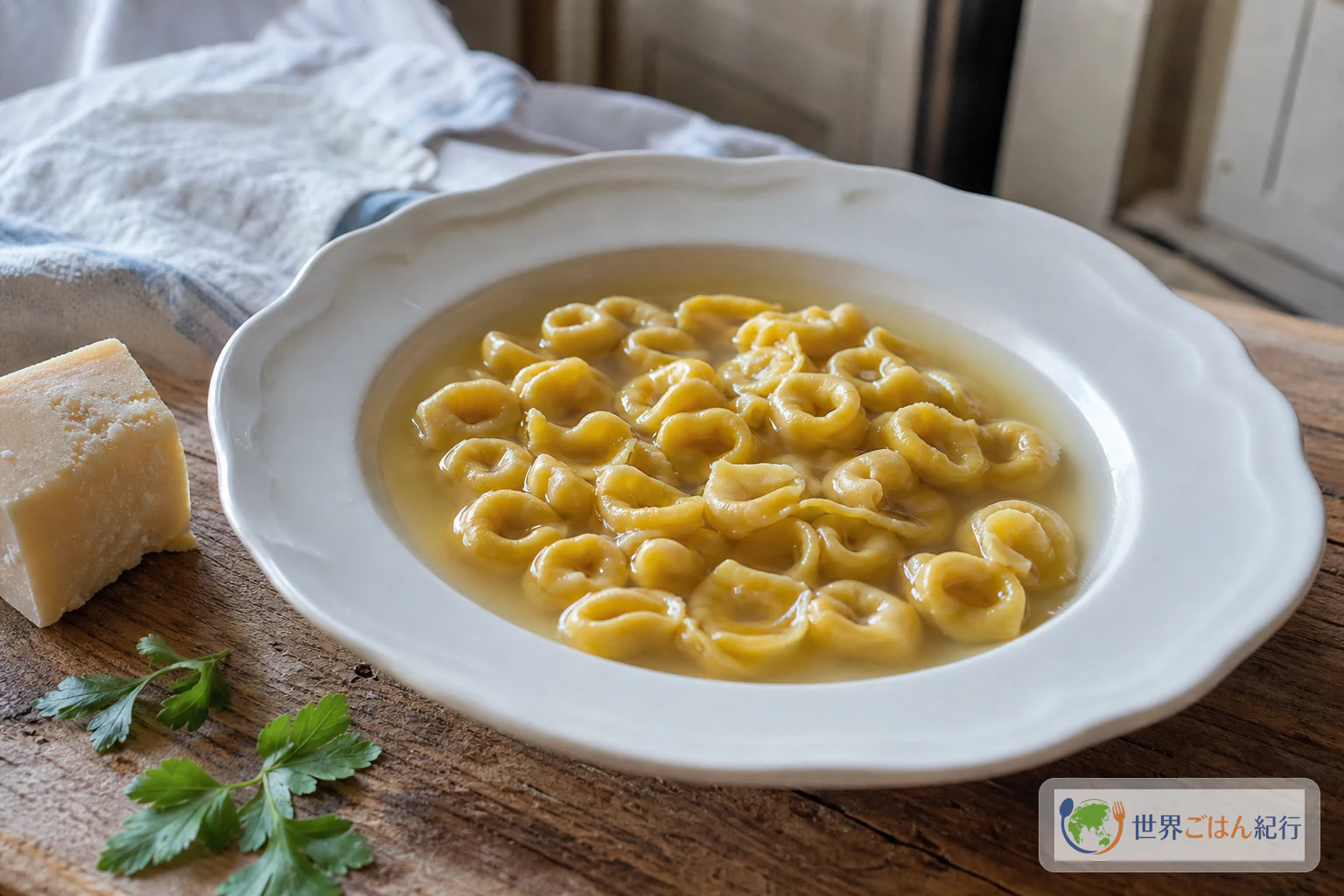
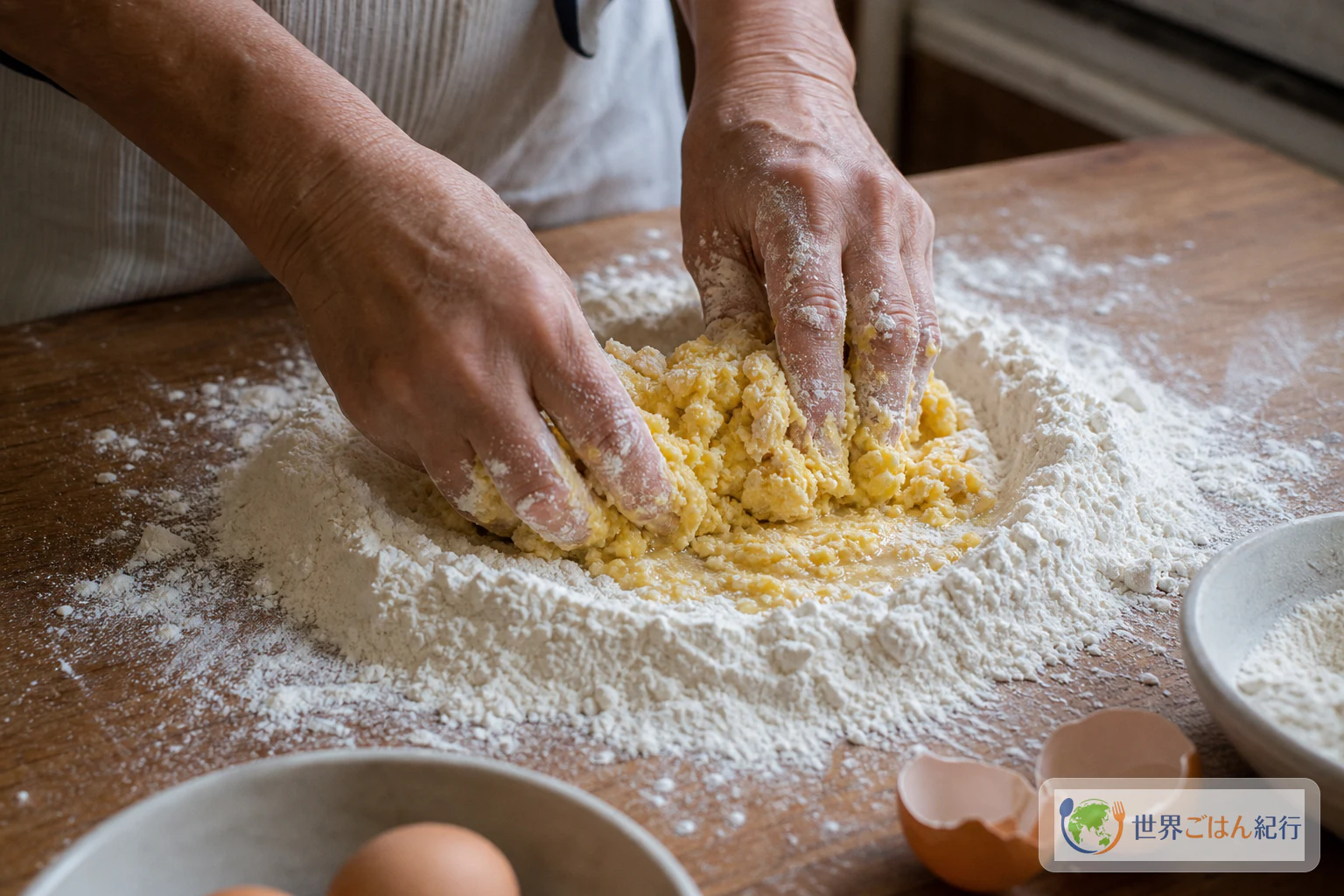
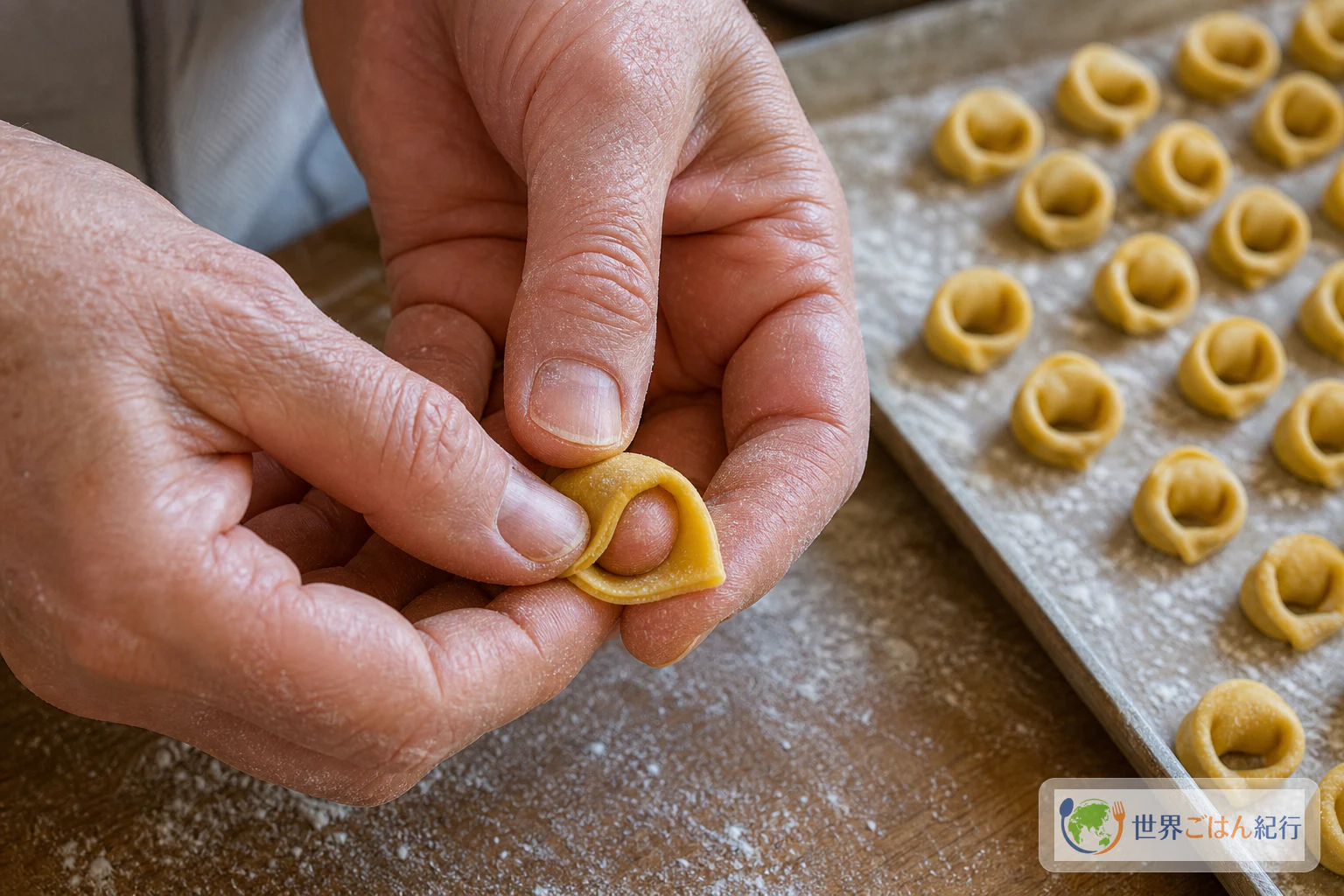
Crack eggs onto a mound of flour, work them in a little at a time with your fingertips, and suddenly your kitchen smells like the back room of a pasta shop. On thin yellow dough you place just a little meat, cheese and nutmeg, close it into a triangle and wrap it around your finger. By the time dozens are lined up, it feels less like lunch and more like a dish you want to wait for quietly at the table. Tortellini (turtlén in Bolognese dialect) come from Emilia-Romagna in Italy, especially Bologna and Modena, and they're traditionally eaten floating in a clear, steaming broth.
Tortellini in Bologna and Modena
The shape and the filling
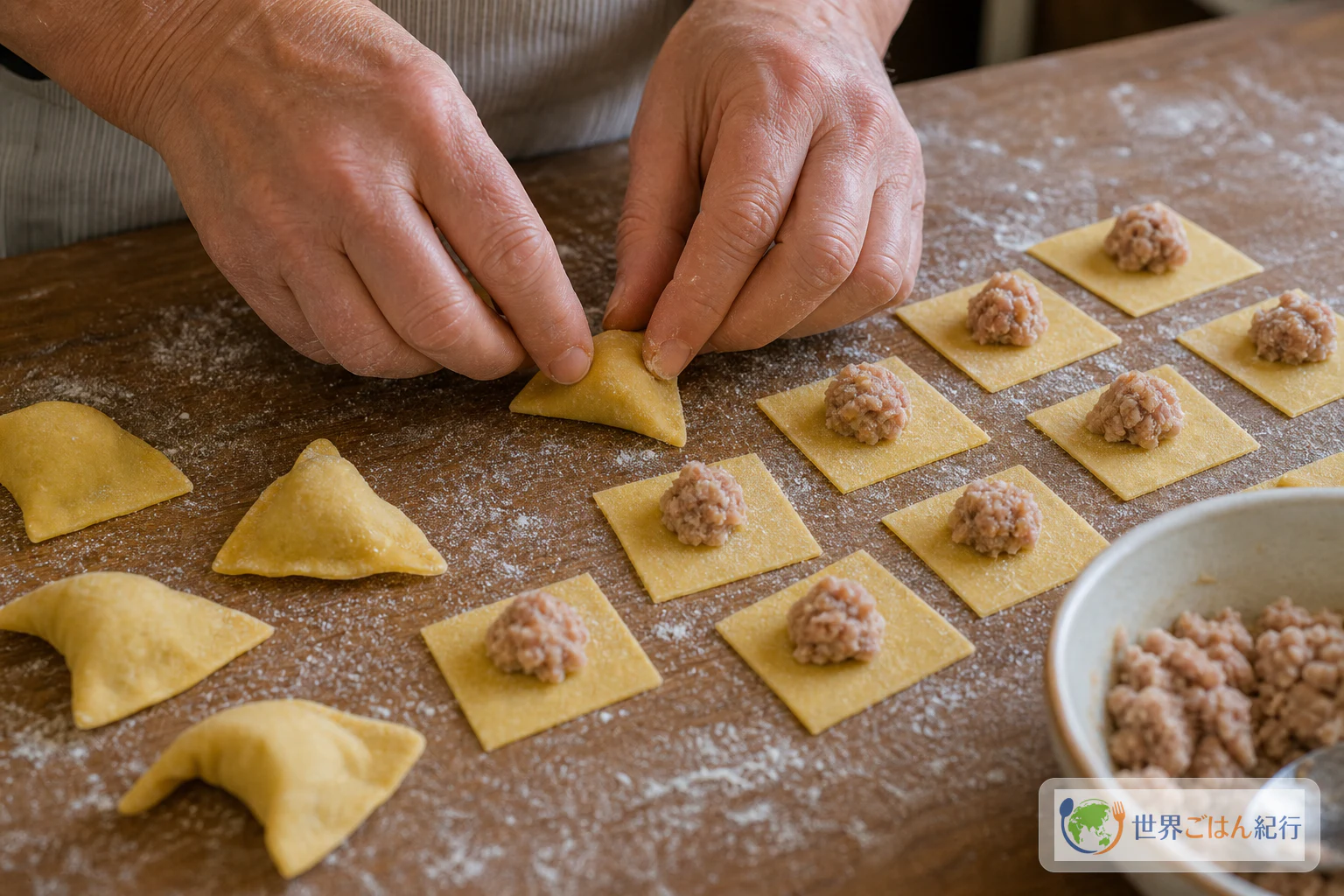
Tortellini belong to Bologna, Modena and Castelfranco Emilia. The best-known origin story compares their shape to the navel of Venus, and once you curl a little ring with your fingertips, you see why that closed, wrapped form defines the dish. In Bologna they're folded around the little finger; in Modena, around the tip of the index finger. Skip wrapping them around your finger and you just have small ravioli.
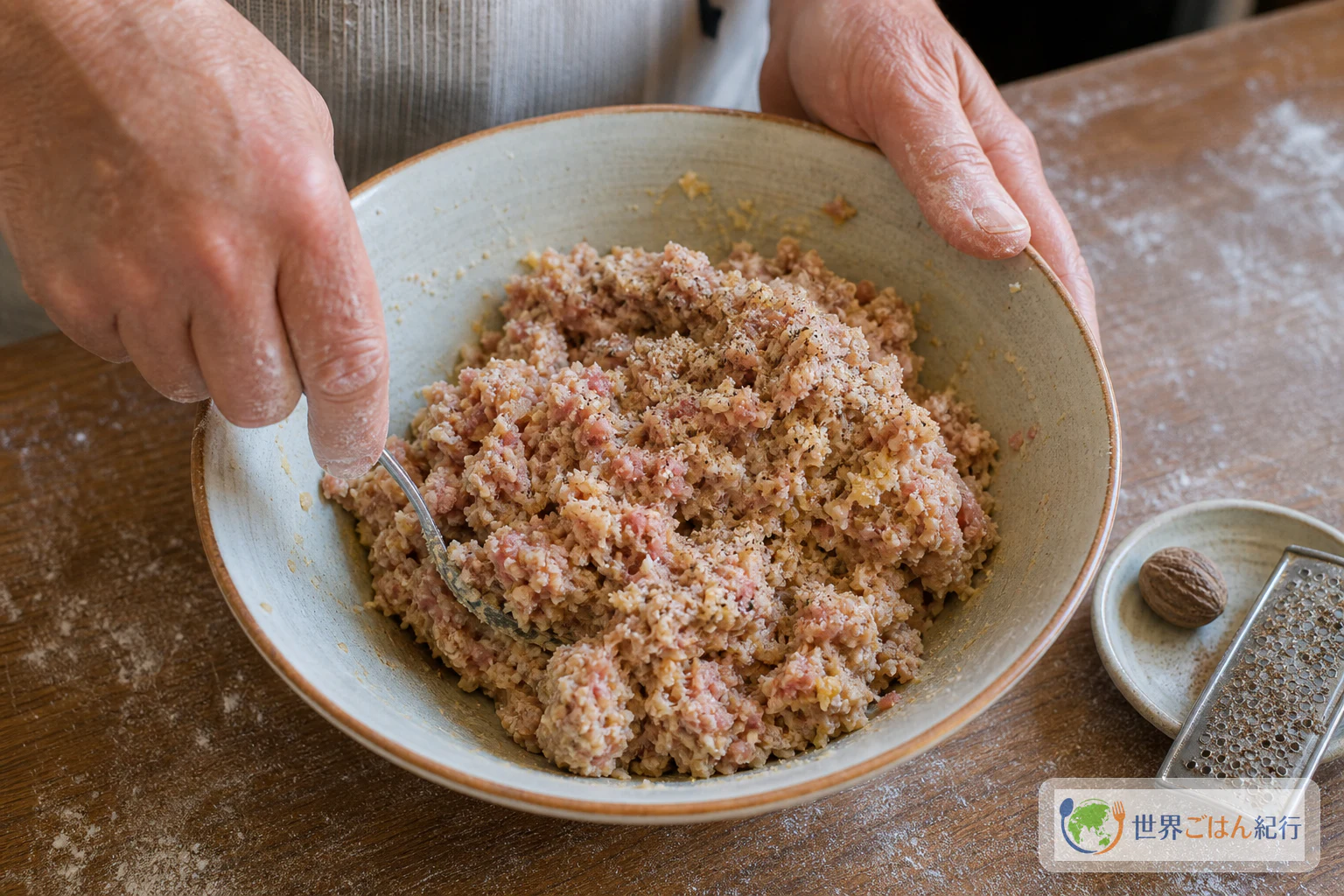
The traditional filling is pork loin, prosciutto, mortadella di Bologna, Parmigiano-Reggiano, egg and nutmeg, wrapped in a thin dough of flour and eggs. Reproducing the old local method exactly is hard outside Italy, so focus on what matters most: a thin egg dough, savory meat, nutmeg, and broth.
A holiday dish eaten in broth
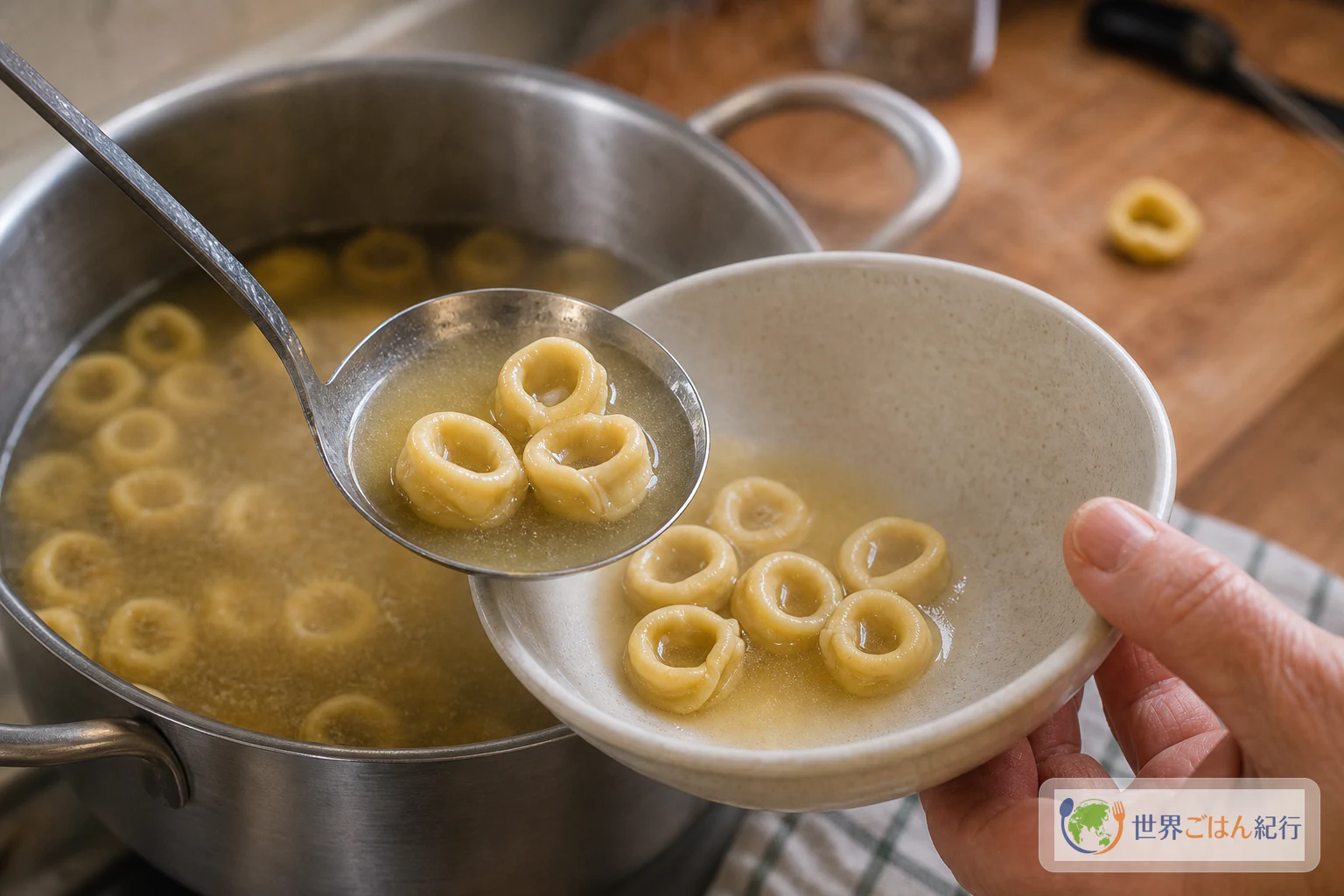
Locally, tortellini are often a holiday dish, served at Christmas and year-end meals. They aren't smothered in a rich sauce. You make a good broth and eat them in the bowl while they're still steaming. Because they're small rings, they float, and when you scoop one up with a spoon, the pasta, meat and soup reach your mouth at the same temperature. They look plain, but the effort is hidden.
Tortellini and their relatives
If risotto is a dish where rice absorbs broth, tortellini are a dish where a small, meaty aroma spreads through it. Their wheat dough makes them a cousin of Russian pelmeni, but tortellini are about a small bite of meat with cheese and nutmeg, eaten in clear soup, rather than a big portion of meat.
| Term you'll come across | What to know |
|---|---|
| turtlén | The Bolognese dialect word for tortellini |
| tortellini in brodo | The traditional way of serving them in broth |
| tortelloni | Larger, often with ricotta or greens in the filling |
| cappelletti | A different filled pasta, close in shape and region |
Ingredients (serves 4, about 100 pieces)
The first surprise is how little filling there seems to be. But tortellini aren't meant to be stuffed tight. Fold them small, and it's enough that the meat, cheese, nutmeg and egg dough all arrive at once when you take one in with the broth. The more filling you add, the more easily they tear, and the broth turns cloudy too.
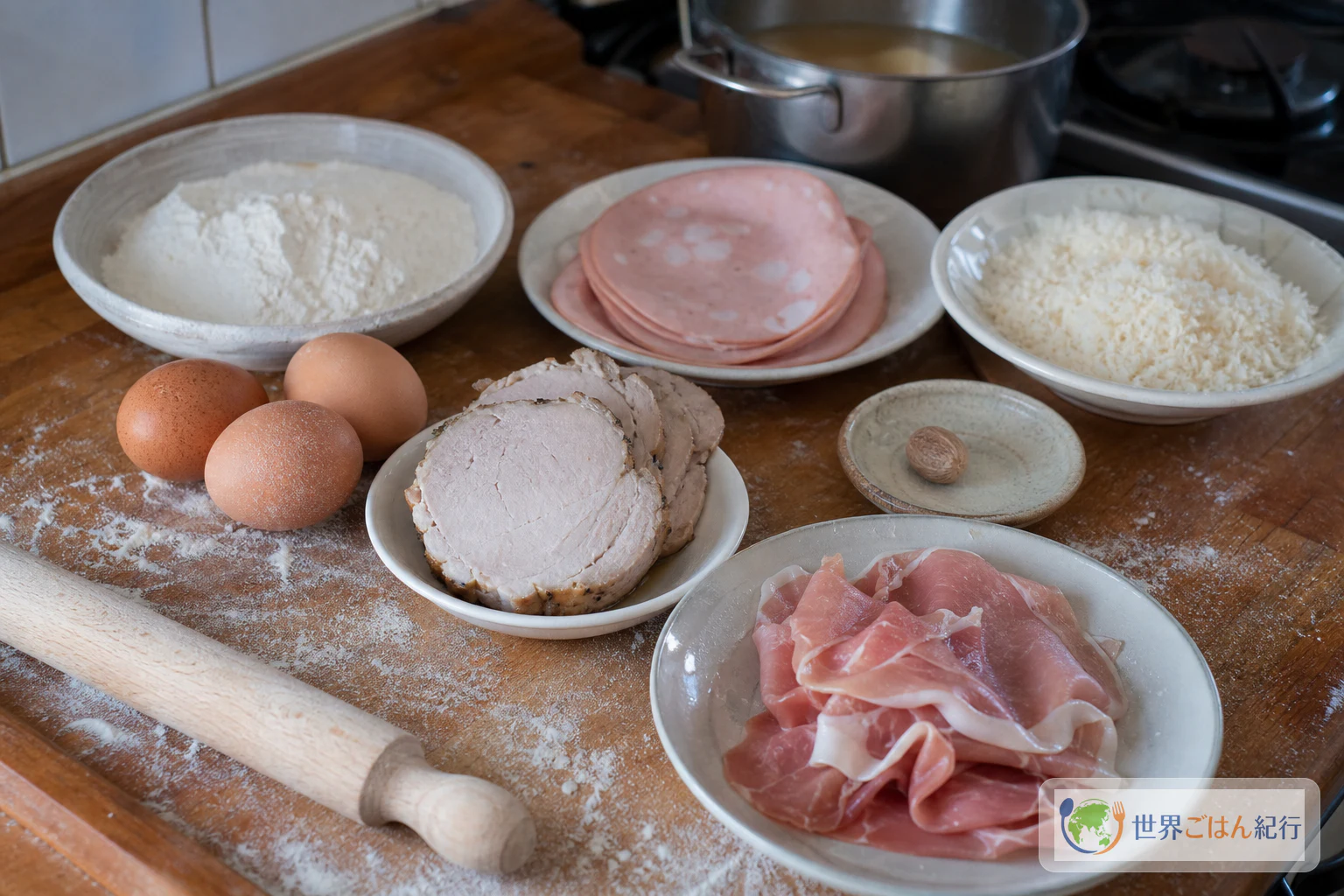
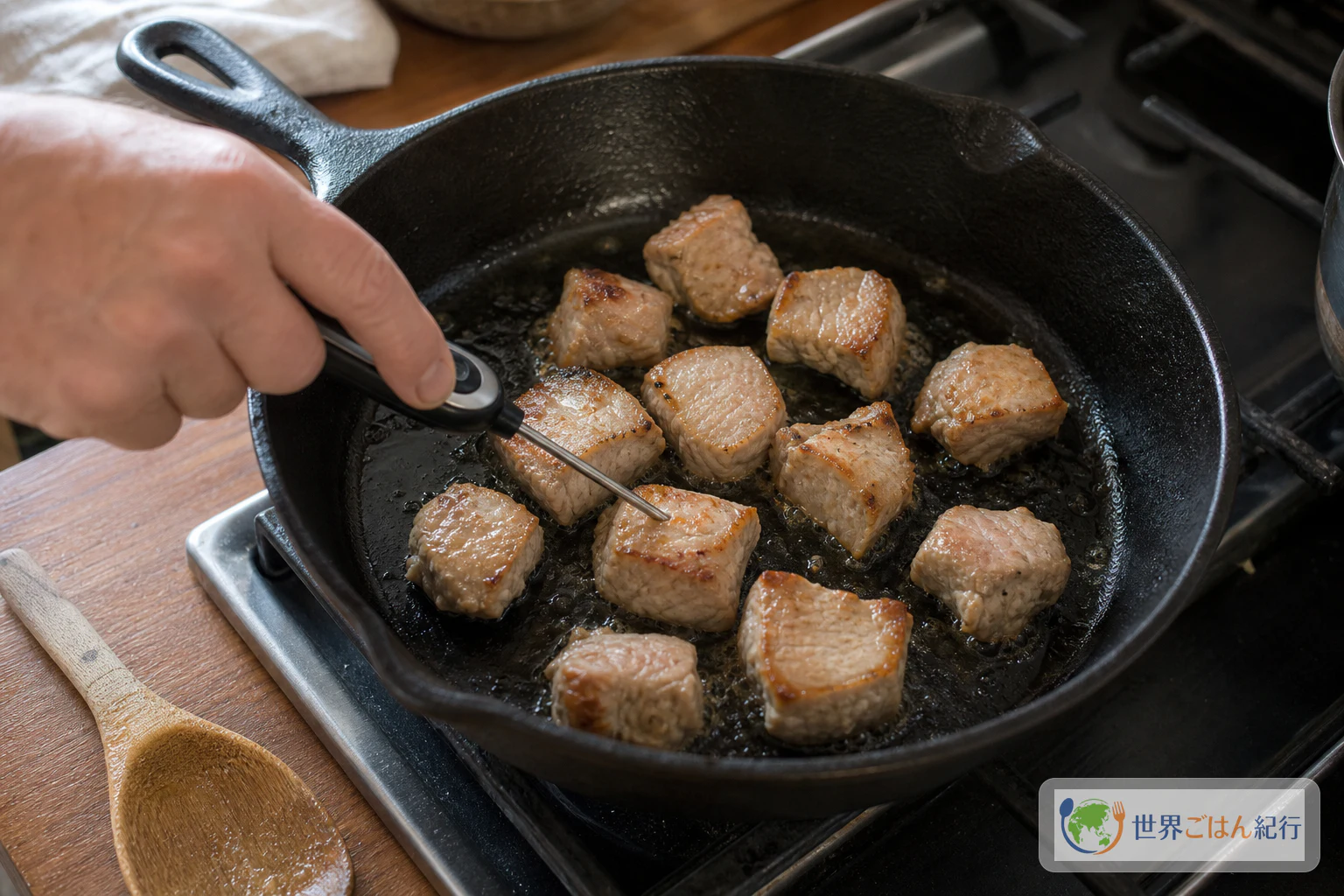
This recipe uses wheat, eggs, dairy and pork. Cook the pork to an internal temperature of at least 70°C (158°F) before making the filling, and chop it on a clean cutting board after cooking. Prosciutto is an uncooked, salt-cured and aged ham; mortadella is a cooked processed meat. Refrigerate both after opening and don't leave them at room temperature for long while you work.
Ingredients and tools worth thinking about before you shop
There's no need to order pork, eggs, flour or cheese online when your local supermarket has them. What's worth seeking out is a rolling pin to roll the dough evenly, an instant-read thermometer so you don't second-guess the pork, and a small grinder for using nutmeg fragrantly in small amounts. With tortellini, small differences in thickness, temperature and aroma show in the result more than the ingredients do.
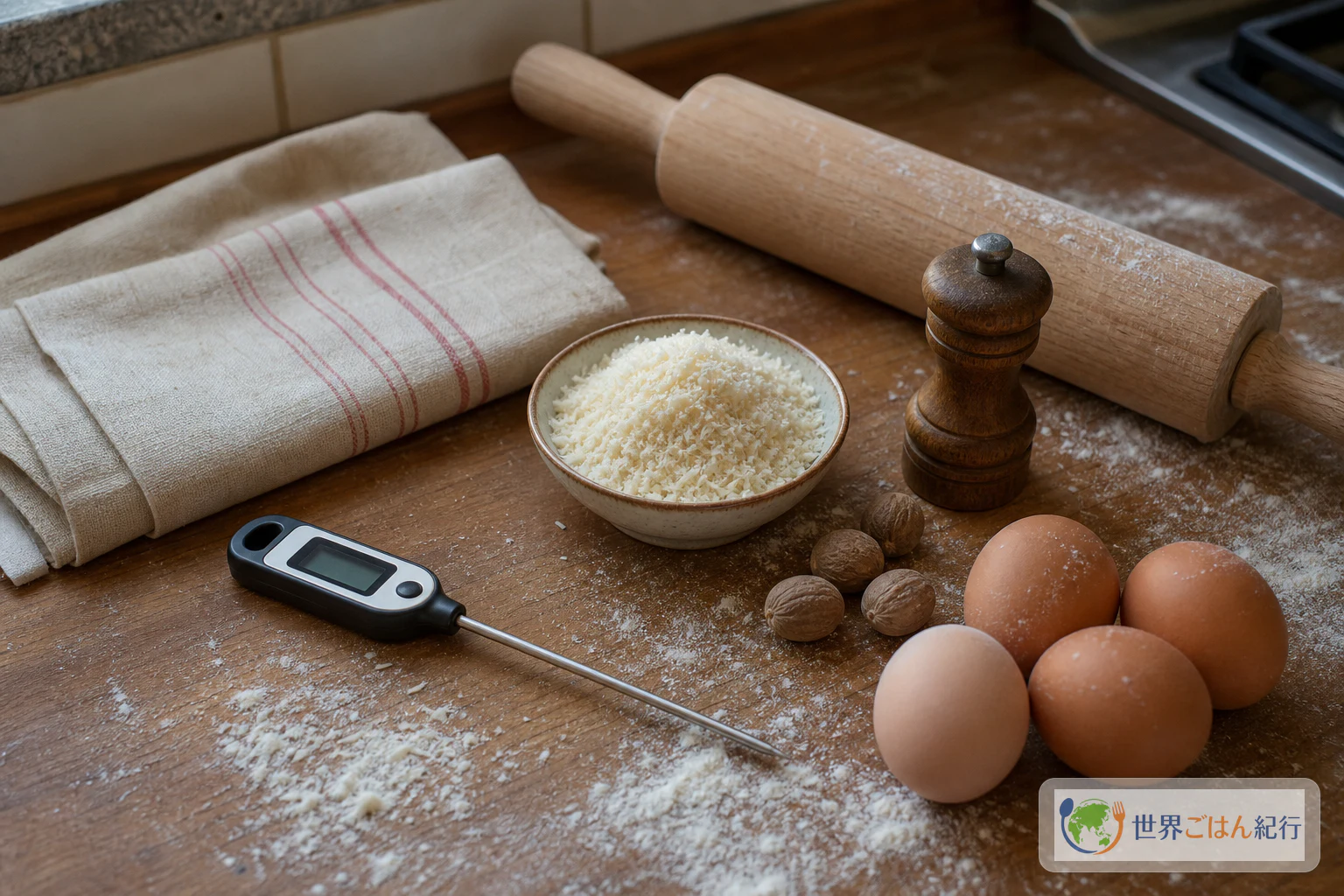
The rolling pin doesn't need to be long. Around 12 inches (30 cm) is easy to handle even in a small kitchen, and you can also use it for thin pasta, dumpling wrappers and wrapped doughs like salteñas.
Pork loin is hard to judge by appearance alone. Because the filling is cooked first and then chopped, a thermometer cuts down the time spent wondering whether "it still looks a bit pink inside."
You can use ground nutmeg, but because the filling is so small, freshly grated nutmeg really comes through. A small grinder also serves for black pepper and dishes that use small amounts of whole spices.
Choosing tortellini ingredients and substitutes
Insist that everything be authentic and you'll never start. What to hold on to is the thin egg dough, folding them small, the savoriness of meat and aged cheese, nutmeg, and eating them in broth. The type of flour, how the meat is cut, where the mortadella comes from and how you make the broth are all open to change.
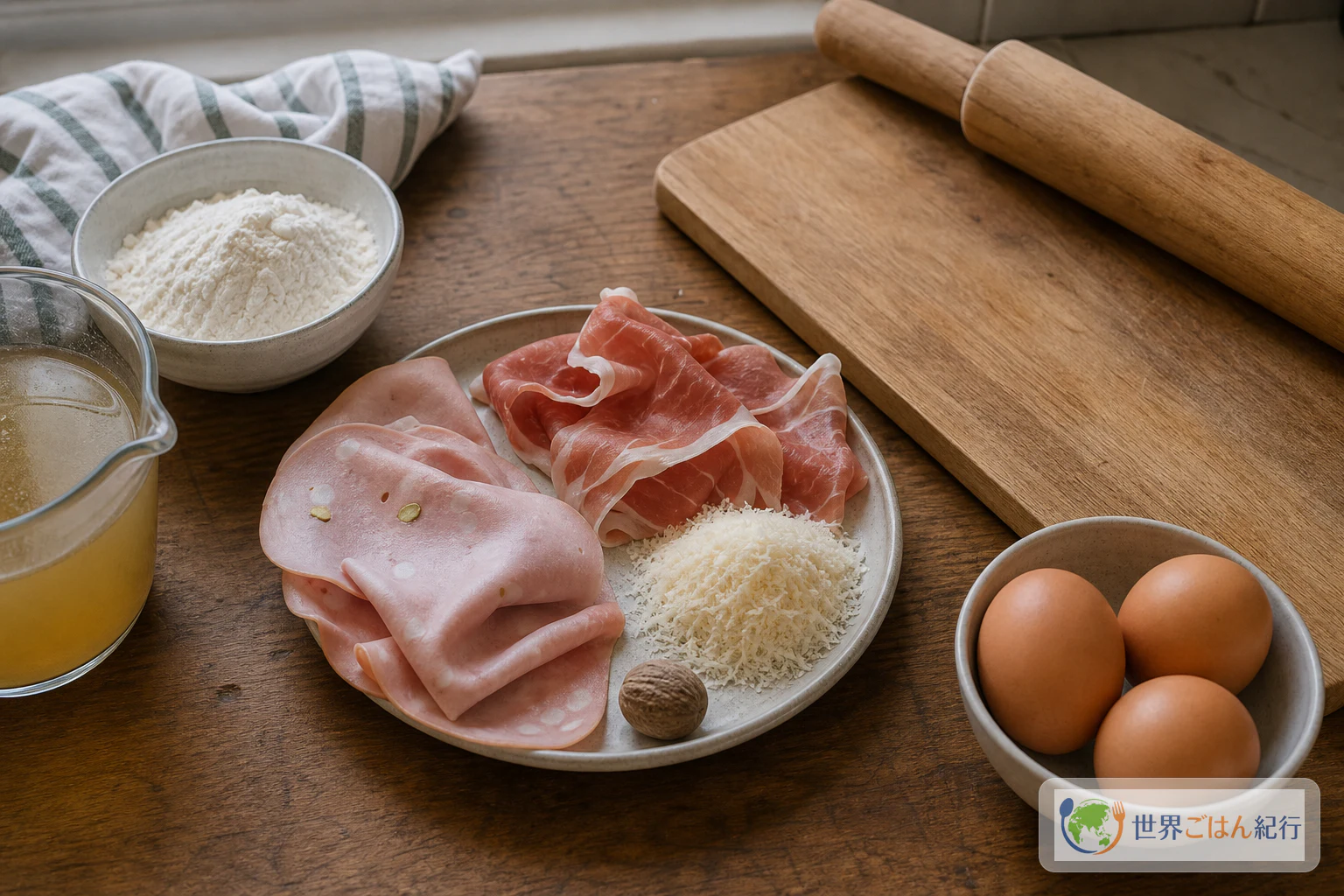
| What to decide | What to protect | What you can change |
|---|---|---|
| Dough | Mixed with eggs and rolled thin | Without 00 flour, a blend of cake flour and bread flour is fine |
| Filling | Pork, prosciutto, mortadella-style meat, aged cheese, nutmeg | Mortadella can be replaced with bologna sausage or lean ham |
| Size | Each piece small, with 3 g to 4 g filling | Slightly larger is fine the first time, but add 1 minute of cooking |
| Broth | Cook at a gentle simmer and eat with the broth | Chicken wings, carcasses or a light store-bought bouillon are fine |
| Finishing | Serve hot | Treat cream sauce as a separate variation |
Shopping priorities
Real mortadella and Parmigiano-Reggiano bring the aroma closer, but they aren't always at a regular supermarket. If you're unsure, prioritize mortadella over 00 flour, and the broth over mortadella. Cake flour and bread flour handle perfectly well, but a filling with a light aroma blurs in the broth. And even with mortadella in hand, an overly strong store-bought consommé pushes the saltiness forward and buries the nutmeg and prosciutto. Rather than buying expensive ingredients, keep the salt low and leave room to add cheese in the bowl.
| Situation | Shopping priorities |
|---|---|
| You can get to an Italian or import grocer | Get mortadella, Parmigiano and nutmeg |
| You're cooking from a supermarket only | Choose pork loin, prosciutto, a ham with some fat, and aged grated cheese |
| You're short on time | Make store-bought bouillon on the light side, and fill small to prevent tearing |
| You're cooking for guests | Make the broth the day before and cook freshly folded tortellini on the day |
Replacing mortadella
What matters most isn't mortadella itself but the layered aroma of pork, prosciutto, a fatty cured meat, aged cheese and nutmeg. Replace all of that with light ham and you're closer to a Western-style wonton. If you can't find mortadella, mixing 2.5 oz (70 g) lean ham with 5 g finely chopped unsalted butter brings the mouthfeel a little closer, though the spiced aroma won't be the same. Accept it as a home version the first time, and don't overdo the nutmeg to make up for it.
A simple home broth
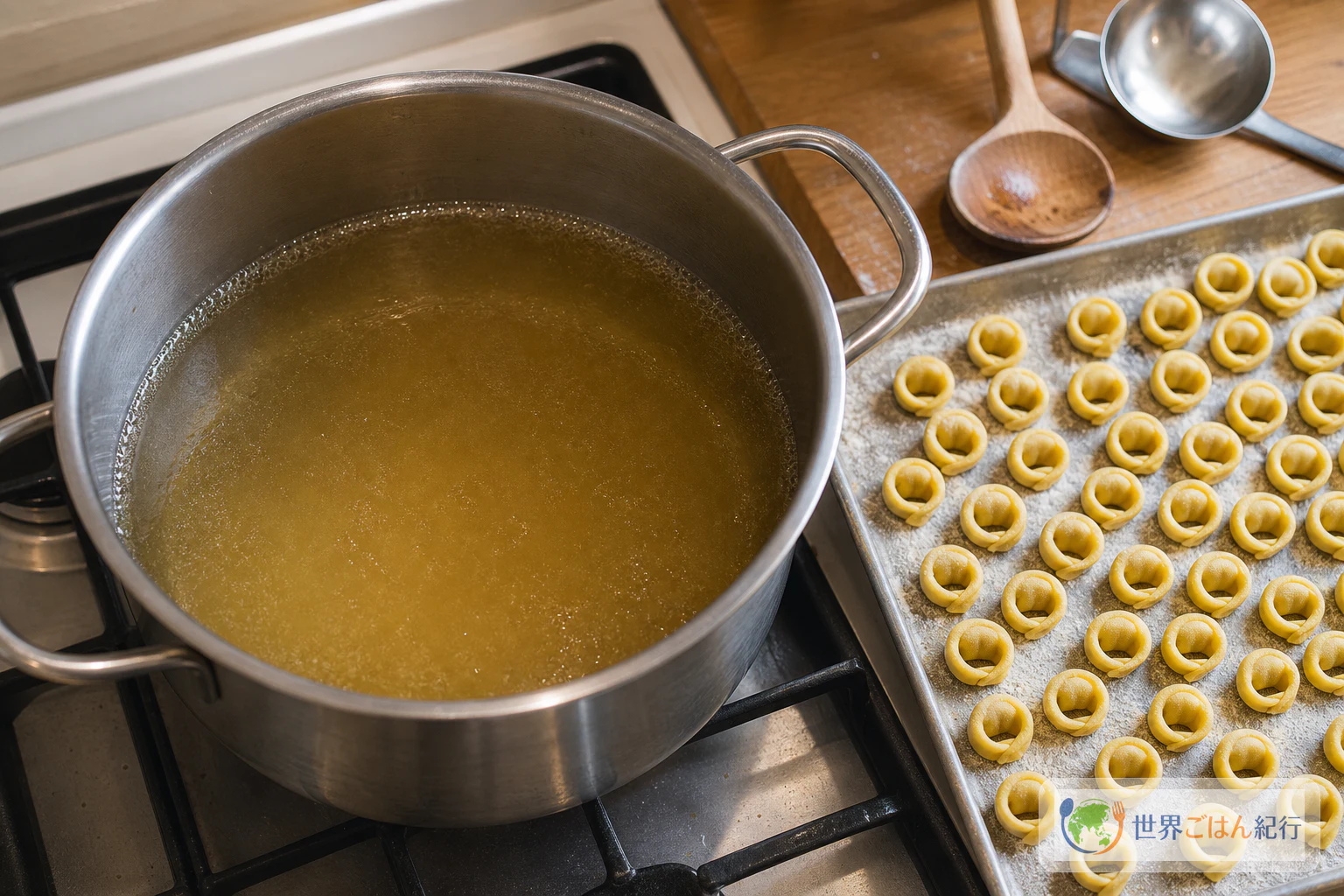
A traditional beef-and-capon broth or a rich chicken stock isn't necessary every time. Simply simmering 4 chicken wing tips, 1/2 onion, 1/3 carrot, 6¼ cups (1500 ml) water and 1/2 tsp salt over low heat for 45 minutes gives a gentle, perfectly good base. On days you use store-bought bouillon, make it weaker than the package says and add water if it reduces.
Method: fold small with a thin dough
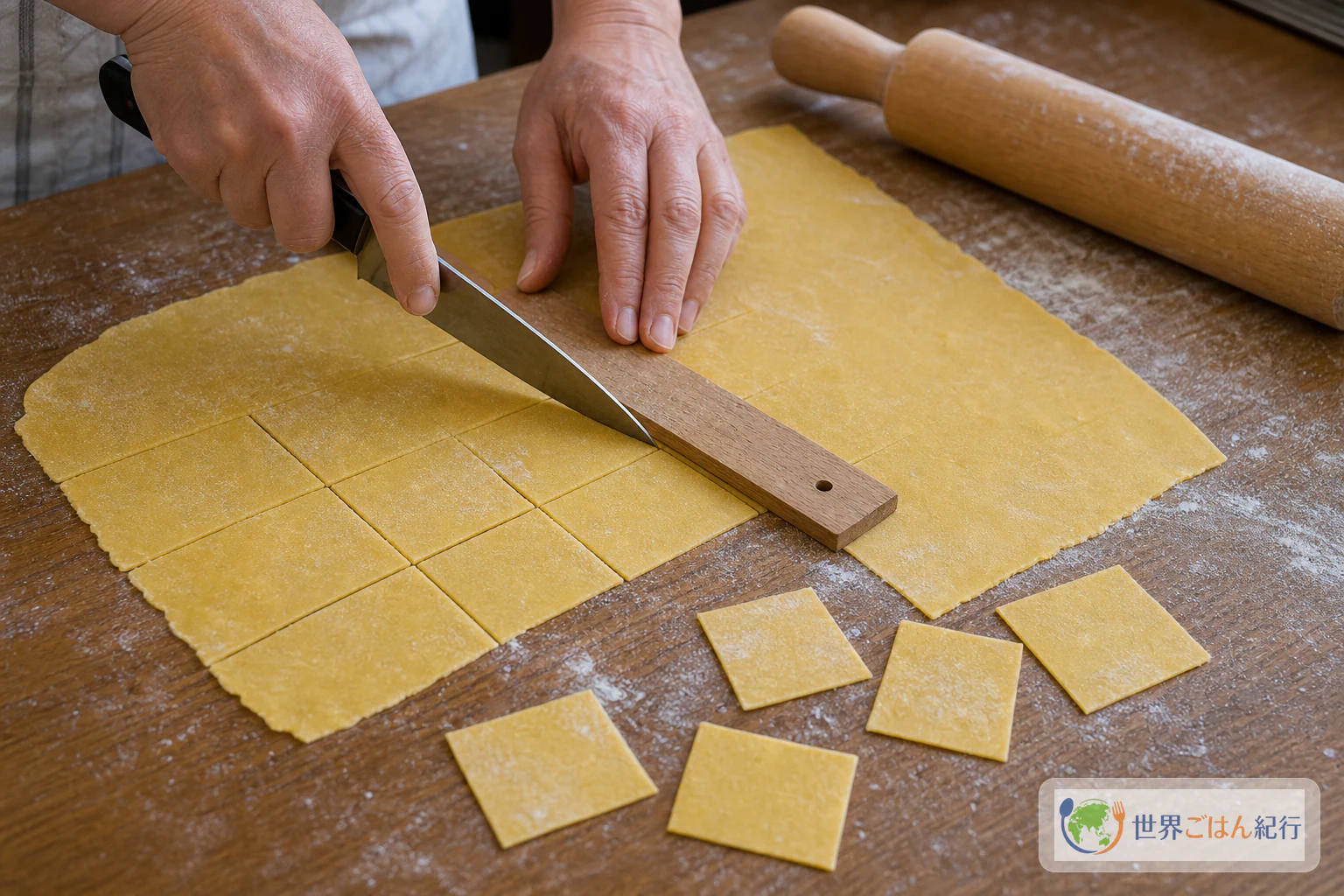
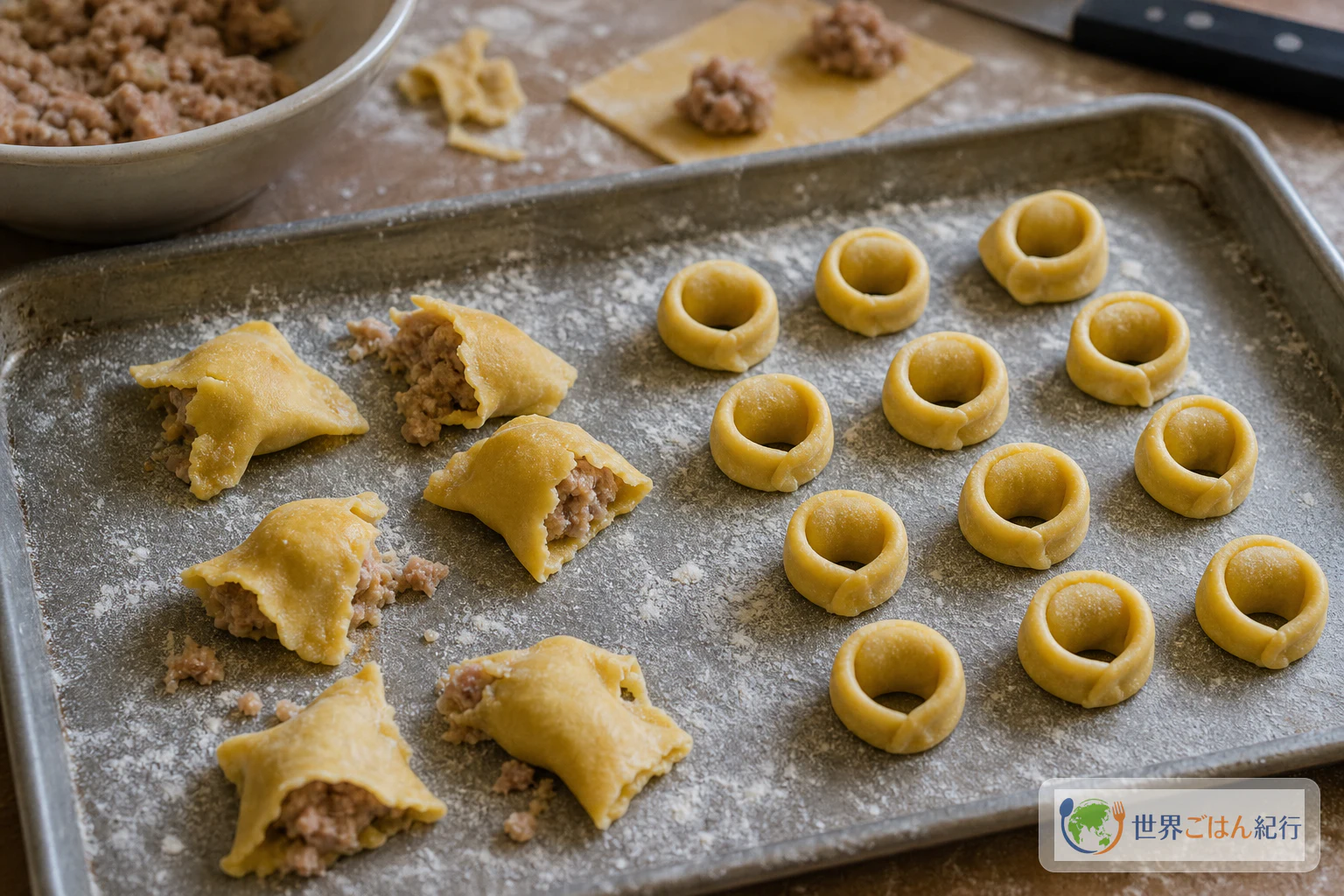
Rest the dough, cook and cool the meat, chop it finely, roll and cut, fold. There are many steps, but no need to hurry. Drying out is the only enemy, so keep any dough you're not using and the folded tortellini covered with a well-wrung damp towel as you go.
Rolled dough dries at the edges as soon as it meets the air, and even sealed pieces open while cooking. Rewrap any dough you're not using, and cover the cut squares with a damp towel too. If an edge dries, dab on a little of the reserved egg with your fingertip before sealing.
Common tortellini failures and fixes
The most common failure is overfilling. Next come drying dough and boiling too hard while cooking. Keep to three rules: don't overfill, keep the broth from boiling hard, and cook the meat to a safe temperature first. Rolling to 0 inch (0.6 mm) is hard with only a rolling pin, so about 0 inch (1.5 mm) is a sensible target that tears less easily.
| Problem | Cause | Fix |
|---|---|---|
| Seams come open | The dough dried out, or too much filling | Brush the edge thinly with egg, reduce the filling by 1 g and reseal |
| The dough tears | Rolled too thin, or the edges dried | Don't cook torn pieces; remove the filling and move it to fresh dough |
| The broth turns cloudy | It boiled hard, or torn pieces went in | Lower the heat and pour only the clear top layer into bowls |
| The meat smells heavy | The pork was overcooked, or not enough nutmeg | Add 1 bay leaf to the broth and go easy on the finishing cheese |
| Too salty | Strong prosciutto and cheese | Don't add more cheese to the filling, and dilute the broth with water |
| The flavor is flat | Weak broth, or not enough cheese | Add a little cheese in the bowl and a grind of black pepper |
Keep torn tortellini out of the pot. Escaping filling clouds the broth and makes even the intact pieces taste floury. Instead, braise the torn ones in a small skillet with a little butter and 2 tbsp water over low heat and eat them separately as a taster, so nothing goes to waste.
Serving and storing tortellini
Serving in brodo
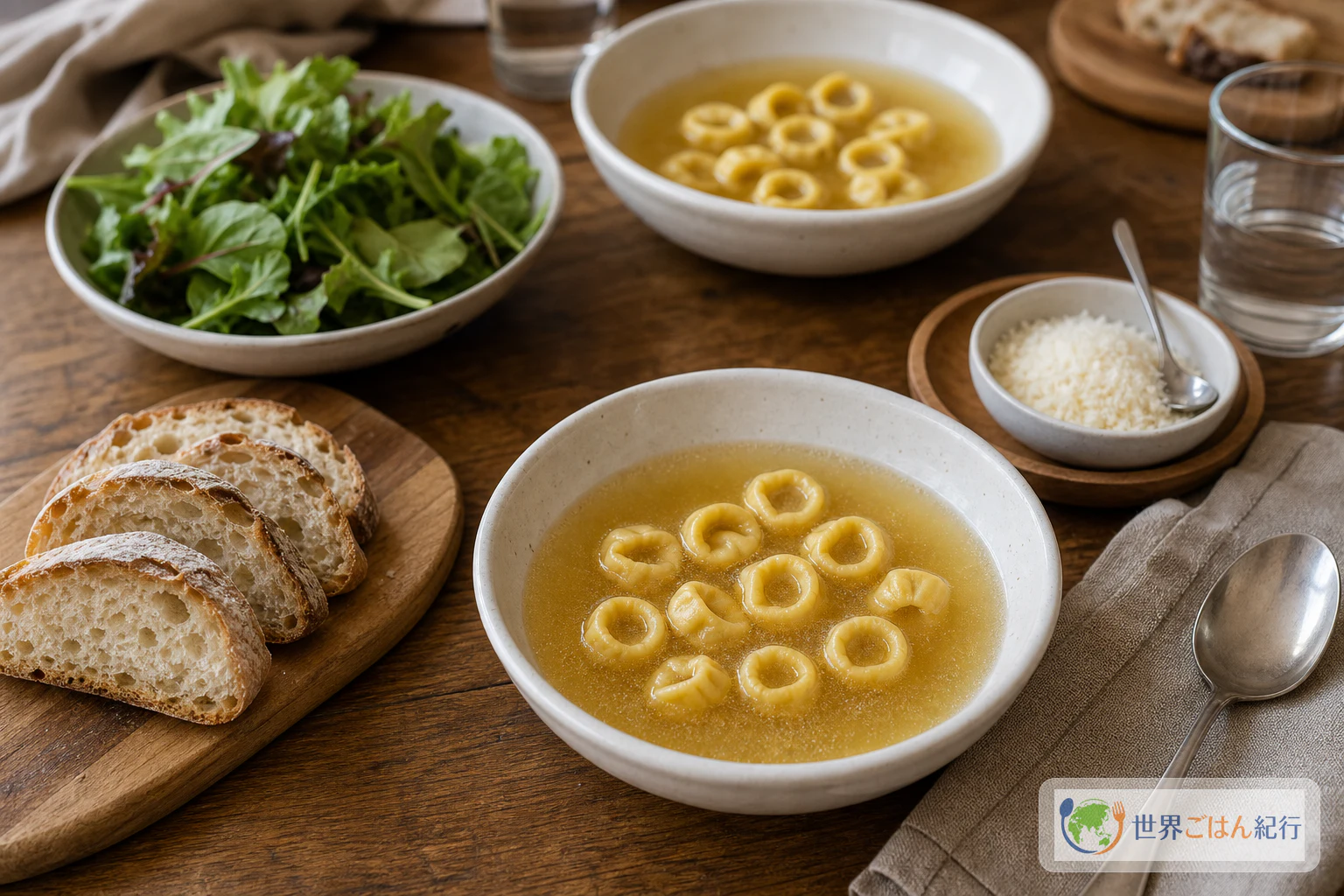
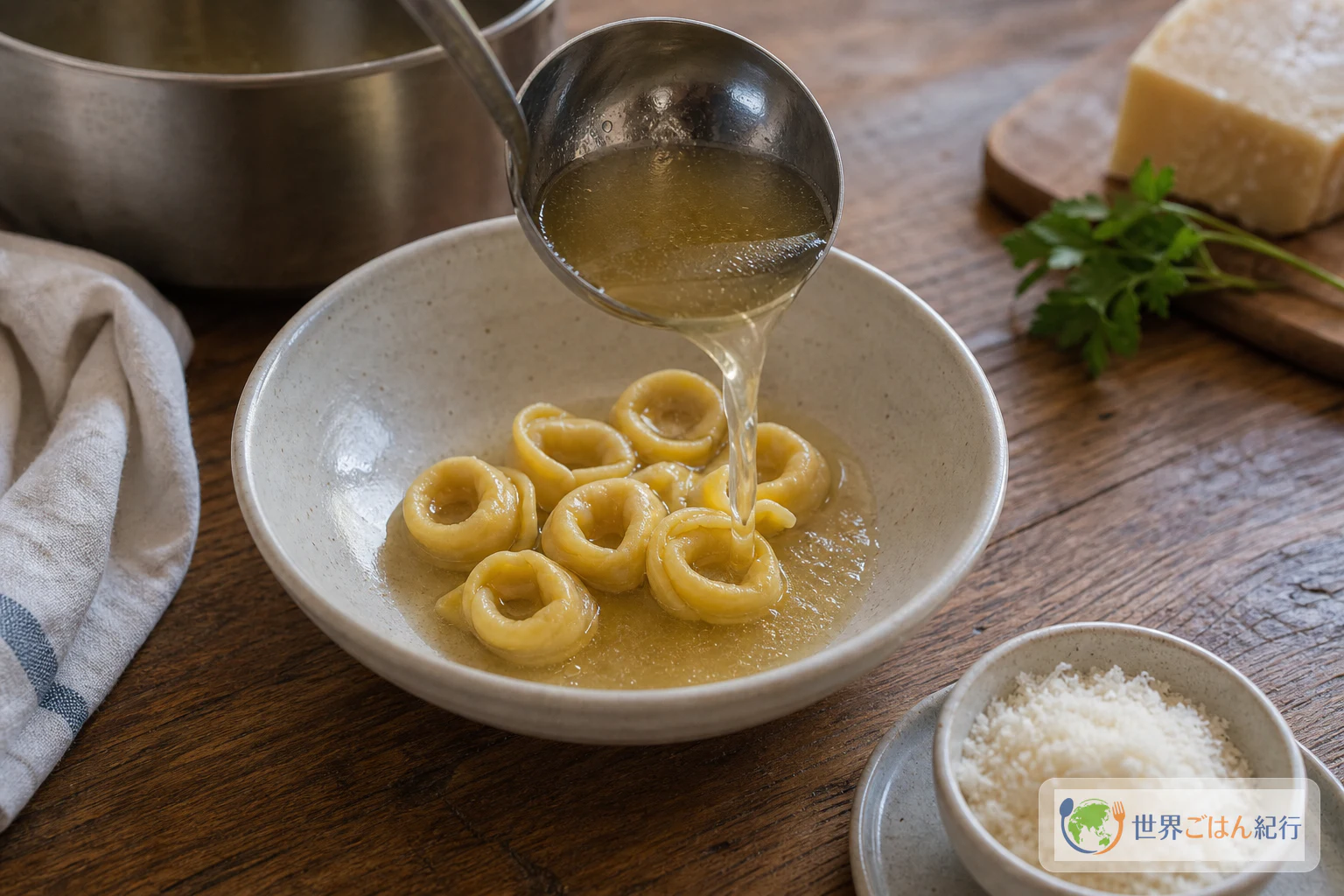
Around Bologna and Modena, tortellini are usually served in brodo. You'll also see them in cream or tomato sauce, and cream is common on menus outside Italy, but heavy industrial cream hides the aroma of the filling and broth. Eat them in clear soup first; it's the easiest way to taste whether your filling came out right.
| How to serve | Best for | Watch out for |
|---|---|---|
| In brodo | A first try, a holiday centerpiece, a cold-weather table | Don't boil the broth hard, and eat as soon as it's in the bowl |
| A little cream | Eating leftovers the next day, making them gentler for kids | Simmering makes the pasta soggy; toss with cream and cheese warmed in a separate pan |
| Butter and sage | Serving as a small side dish | Gets heavy on days the filling is salty |
| Tomato sauce | Days you use store-bought tortellini | The acidity tends to overpower a homemade meat filling |
Timing matters more than presentation. Left too long after cooking, the egg dough absorbs broth and swells, blurring the ring shape, so put them in the pot only once everyone is seated and eat as soon as the broth is poured. This isn't a stew that can wait in the pot.
For the rest of the menu, keep the starter light. A tangy bread-and-vegetable dish like panzanella or a simple leafy salad keeps the gentleness of the broth. Serving them on the same day as risotto doubles up on carbohydrates, so make tortellini the centerpiece and keep any meat dish small.
Making ahead
The first time, don't cram all the work into one day. Make the broth the day before and refrigerate it, then spend the day itself on the dough, filling, folding and cooking. You can also make the filling a day ahead: cool the cooked pork and cured meats well and refrigerate them in a clean container. Check the firmness just before folding. If it's dry, add 1 tsp meat juices or broth; if it's loose, add 2 tsp cheese.
Storing and freezing
Tortellini are best cooked the day you make them, but folding takes so much effort that it's worth freezing half. For same-day use, arrange them on a lightly floured tray, cover with a damp towel and refrigerate for up to 2 hours. Any longer and the dough turns damp and sticks, so if it's more than half a day ahead, freeze them.
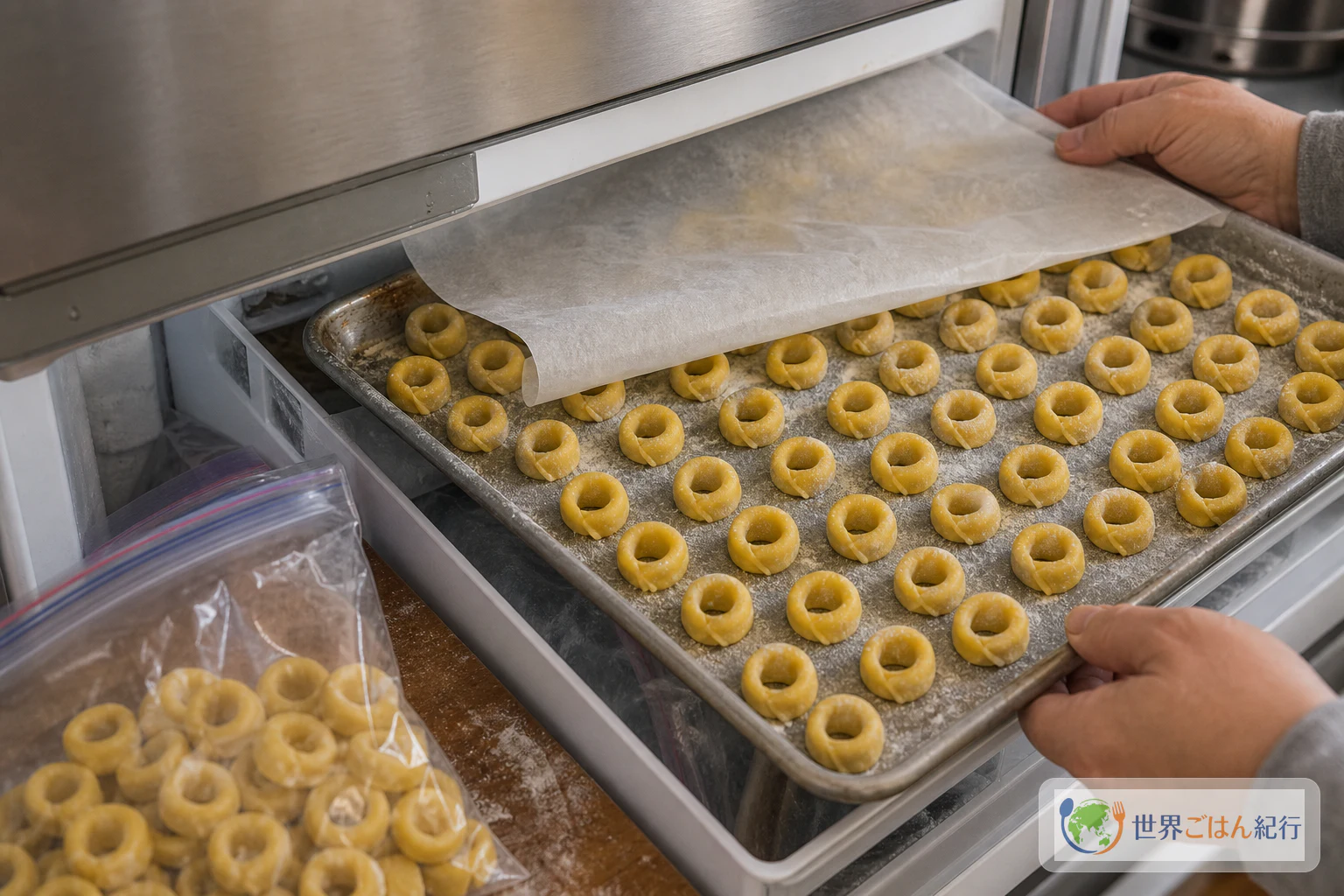
To freeze, arrange them in a single layer on a tray and freeze for 1 to 2 hours; stacking them while soft crushes the carefully sealed shapes. Once firm, transfer to a storage bag, press out the air and use within about 2 weeks. Cook them straight from frozen in the broth, 1 to 2 minutes longer than usual, since thawing makes the dough absorb moisture and tear.
Cooked tortellini don't keep well. If you have leftovers, refrigerate them separately from the broth and warm them over low heat the next day, stopping before it starts to simmer, or they'll open. For guests, have them folded and waiting rather than cooked ahead.
Frequently asked questions
Can I make them without a pasta machine?
Yes. With only a rolling pin, aim for about 0 inch (1.5 mm) instead of 0 inch (0.6 mm). Even slightly thick, if you keep the filling to 3 g to 4 g and cook them in broth for 4 to 5 minutes, they come together well.
I don't have mortadella.
You can substitute bologna sausage, lean ham or thinly sliced cooked sausage. The aroma changes, but combining pork, prosciutto, aged cheese and nutmeg keeps the direction. Ordinary ham for everything makes the flavor monotonous, so keep the pork loin and prosciutto.
Can I make them without prosciutto?
Yes, but the saltiness and aged aroma will be weaker. Instead of 2 oz (60 g) prosciutto, render 1 oz (30 g) bacon over low heat, chop it and combine it with 1 oz (30 g) cooked ham. In that case, leave the salt out of the filling and use only 1 tsp of the bacon fat.
Can I cook them in water instead of broth?
Water works if you only care about avoiding tears, but the flavor will be weaker. The filling's aroma passes into the soup as they cook, so even a light broth or weak store-bought bouillon comes together far better than water.
How should I adjust them for children?
Halve the nutmeg and leave out the black pepper. If the prosciutto is very salty, reduce it to 1.75 oz (50 g) and make the broth lighter too. For small children, let the bowl cool a little before serving so they don't burn themselves on hot broth.
How are they different from ravioli or tortelloni?
Ravioli is often used as a general term for flat filled pasta and varies widely in shape and size. Tortelloni have a similar shape but are larger, often with meatless fillings like ricotta and greens. Tortellini are small, have a meat filling and are strongly associated with being served in broth.