In an evening kitchen, the small sound of chopping onion goes on and on. Butter melts in the bottom of the pot, and when the white rice goes in, its dry rustle rises a little in pitch; pour in white wine and the steam carries acidity mixed with the sweet smell of rice. Risotto is a rice dish from northern Italy that you cook standing at the pot, watching how fast the rice drinks the broth. Done well, each grain keeps a thin core at the center while everything around it flows into something creamy, rich with butter and cheese.

Risotto and northern Italian rice
Rice country in the north

Italy suggests pasta first, but in northern Italy rice is an important staple too. Paddy fields spread around Lombardy, Piedmont, and the Veneto, and rice suited to risotto, such as Carnaroli, Arborio, and Vialone Nano, has grown there. In Milanese cooking the combination of butter, broth, rice, and cheese comes naturally, and the feel is quite different from the southern Italian table, where olive oil and tomato come forward.
Risotto alla milanese is that northern rice culture meeting the aroma of saffron. In Milan it is treated as a representative regional dish and is sometimes served alongside ossobuco. A traditional version uses beef marrow, which most home kitchens can't gather every time; without it, you can make it with rice, hot broth, wine, butter, cheese, and saffron.
How risotto differs from congee and paella
Some people call risotto a "Western-style congee," and cooking it with that idea in mind tends to end badly. Congee is closer to warming cooked rice in liquid. Risotto coats raw rice lightly in fat, lets it absorb hot broth a little at a time, and makes a sauce from the starch the rice gives off, so it turns creamy without any cream.
In paella valenciana, once the rice is in, you don't stir. Paella keeps the grains whole, toasts the bottom of the pan, and builds the socarrat, while risotto draws a little starch from the surface of the rice and builds a flowing texture with butter and cheese. Both use short-grain rice, but the thinking is reversed, and making the two side by side is the quickest way to learn the range of rice dishes.
Other rice cultures choose differently again. Egyptian koshari is a street dish that layers rice, lentils, and pasta, with the grains mixed into the sauce, and Finnish karjalanpiirakka wraps milk porridge in rye dough. Risotto brings the rice itself close to being the sauce.
Mantecare and all'onda
Mantecare is the technique that finishes risotto: cold butter and cheese go into the pot off the heat, so the starch of the rice and the fat bind smoothly. Recipes often end at "stir in the cheese at the end," but this final emulsification is the heart of the dish.
The goal is risotto all'onda, which doesn't stand up in a firm mound on the plate but spreads slowly like a wave. When you shake the pot, it rolls back. The grains hold their shape, yet there is sauce around them, and on the plate it spreads a little without liquid running off on its own. It's a silkiness made by the rice's starch and milk fat, quite unlike thickening with starch powder.
Ingredients (serves 4): gathering them in a home kitchen
Risotto has few ingredients: rice, onion, fat, white wine, broth, cheese, butter. That is exactly why carelessness with any one of them shows in the taste. Still, you do not need to source everything from Italy. The two worth buying first are the rice and the cheese. The rice, in its grain shape and how its starch comes out, decides the result; the cheese decides the final aroma and saltiness.

This recipe uses dairy (butter, cheese) and alcohol (white wine). Cooking removes the alcohol and keeps the aroma. For children and anyone avoiding alcohol, use water and lemon juice in place of the wine. Many store-bought bouillons are very salty, so go easy on the first salt.
For a quick one, dissolve 2 tsp granulated chicken bouillon in 4¼ cups (1000 ml) water and keep it just below a boil. For a gentler flavor, soak 5 g kombu in 4¼ cups (1000 ml) water for 30 minutes and warm it over low heat for a kombu stock. Because risotto reduces its liquid, a broth that tastes "a little thin on its own" is the easiest to work with.
A bag of risotto rice is useful well beyond plain risotto: mushroom, saffron, tomato, cheese, and reusing leftover stews. Short-grain table rice works for practice too, but you will notice the difference when you compare how well the grains hold their shape.
Cheese supports the aroma and saltiness at the final mantecare. Pre-grated cheese works, but freshly grated Parmigiano or Grana Padano gives definition even in small amounts. It is an ordinary cheese, so buy it wherever you normally shop.
The white wine does not need to be expensive. Choose a dry one, not sweet, that tastes acidic and smells light. If you only have rice wine or sake at home, a little lemon juice makes up for the missing acidity.
Decide before you shop
Shopping for risotto gets expensive if you go in too keen. You do not need Carnaroli, marrow broth, aged cheese, and saffron all at once on the first try. Where to spend depends on the result you want.
| Goal | Buy first | Fine to economize on | Why |
|---|---|---|---|
| Learn the basic | Carnaroli rice, a hard cheese rather than pre-grated | White wine, the pot | Grain that holds its shape and the finishing saltiness make the biggest difference |
| Weeknight dinner | Short-grain table rice, a thin broth, a heavy skillet | Saffron, imported cheese | If the goal is practicing the technique, local ingredients are plenty |
| For guests | Carnaroli rice, Parmigiano, dried porcini or saffron | Expensive wine | Choosing a single star aroma tightens the whole dish |
| Cutting back on dairy | Good olive oil, vegetable broth, a little white miso | Butter, cheese | Less emulsified richness, but fat and umami can be supplied by other ingredients |
If in doubt, buy only the rice a little better. You can upgrade cheese and wine later, but if you finish heavy once with a rice that collapses easily, it is hard to tell whether the heat or the rice was wrong.
Choosing rice, broth, and a pan for risotto

For home cooking, Carnaroli is the rice least likely to fail. Arborio is easier to find, but its outside softens quickly and the grains can collapse if stirred too much. Short-grain table rice is fine for practice; it turns sticky easily, so stir less and start with slightly less broth. Pre-rinsed rice is convenient, but it has little surface starch, which works against the emulsification.
Whatever rice you use, don't wash it. Rinsing is routine in many rice traditions, so this can feel wrong, but the creaminess of risotto comes from the starch on the surface of the grain, and washing rinses it away.
If it worries you, keep risotto rice in a sealed bag in the refrigerator to avoid odors transferring. If you really want to wash it, think of the dish as closer to a pilaf, and you will be more satisfied with the result.
Store-bought bouillon or consommé works as broth, but it is strong in salt and umami and turns salty as it reduces. Make it a little weaker than the package says and set the saltiness with the finishing cheese. For a vegetable-only risotto, use vegetable broth.
If you want to move toward the Milanese version, saffron is the one thing worth adding to your shopping. Turmeric will make it yellow, but the dry floral scent that stays deep within the rice and butter is something else entirely.
The pan matters, too. In a thin skillet the liquid evaporates quickly and the bottom scorches easily; in a pot that is too deep, there isn't enough surface area and the rice cooks unevenly. A heavy shallow pan 24–26 cm across, or a slightly deeper skillet, is easiest. It spreads the rice in a layer so heat reaches it, makes the final all'onda motion easier, and a heavy sauté pan is useful for much more than risotto.
How to make it: letting the rice absorb the broth a little at a time
You do not have to stir risotto constantly or stand over it stirring hard. What matters is to move the rice just enough that it does not stick to the bottom, and to add the next ladle when the broth is nearly absorbed. Too much liquid and the rice swims; too little and only the core remains. Go by sound, steam, and the surface of the rice.
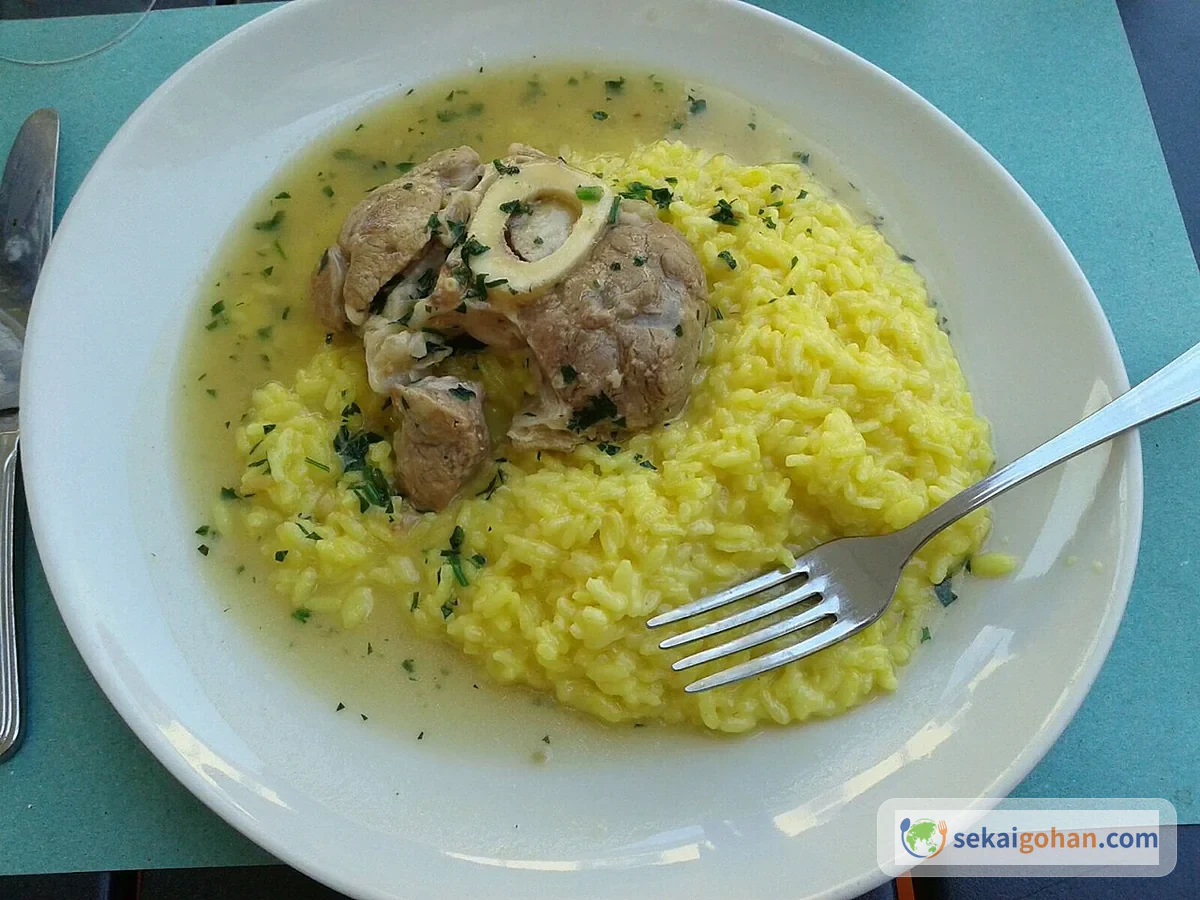
After adding broth three or four times, bite a grain. If the outside is soft and you can see a white dot in the center, you are on track. The last 2 minutes cook quickly, so check every 30 seconds from here and you will make fewer mistakes.
Risotto mistakes and how to fix them
Mistakes at home tend to cluster in the same places: cold stock that stops the cooking, stirring until only stickiness comes out, driving off the liquid so fast the core stays hard, and adding the finishing butter and cheese over the heat so it turns greasy. Avoid these and you get quite close without a special pot or luxury ingredients.
Adding cold broth drops the temperature of the pot and leaves only the center of the rice hard. On the other hand, adding strong bouillon as it reduces makes the finished dish salty.
Stirring hard and constantly bruises the grains and gives only stickiness. Leaving it alone, though, scorches the bottom. Stir the whole pot just after adding a ladle, then stroke the bottom once every 30–40 seconds. With home burners that is about the easiest rhythm.
When you bite, the outside is soft and the center pushes back a little. If a thick white core remains it is underdone; if the grains are split it is overcooked.
Take the pot off the heat before you add cold butter and cheese. Adding cheese over the heat drives off the aroma and makes oil float. The last 2 minutes are not for 'simmering' but for 'binding.'
Because the pot changes minute by minute, there's room to recover if you notice partway that something is off. A burnt smell can't be removed, but firmness, moisture, and saltiness can be adjusted quite a lot.
| Condition | Cause | Fix on the spot | Prevention next time |
|---|---|---|---|
| A thick core left in the rice | Broth was cold, or the heat was so high only the outside cooked | Add hot broth 3.5 tbsp (50 ml) at a time and extend in 2-minute steps over medium-low heat | Keep the broth pot beside you, always steaming |
| Sticky and heavy | Stirred too much, grains split, or worked it while liquid was low | Add 2 tbsp hot broth, turn off the heat, and stir to spread | Move only the bottom once every 30–40 seconds |
| Too salty | Salt from broth and cheese stacked up | Round the edges with unsalted butter, hot water, or a few drops of lemon juice | Keep the broth thin and do not overdo salt until the end |
| Cheese separates | Cheese was added over the heat | Take it off the heat, add a little hot broth, and shake quickly | Always mantecare off the heat, with cold butter and cheese |
| Water runs on the plate | Too much liquid at the end, or not rested enough | Return to the pot and heat for just 30 seconds, then rest for 1 minute | Stop when it is "slightly loose" before finishing, then rest and plate |
Seen this way, a failure comes down to temperature, moisture, or emulsification rather than "somehow I'm bad at this." It's less about skill than practice in reading the pot.
Serving and storing risotto

Risotto is best the moment it is finished. Even on the plate, the rice keeps absorbing liquid with residual heat, and after 10 minutes the loose, wave-like quality is gone. So call everyone to the table before you mantecare.
If you want to round out an Italian meal, panzanella, where bread soaks up tomato juice with no cooking, takes the opposite approach to moisture. For something after dinner from Sicily, try mpanatigghi, pastries that wrap chocolate and a little beef.
Making ahead: stop at 80%
On a weeknight, "home in 10 minutes" can stretch to 15 or 20, and keeping a finished risotto warm ruins it. Restaurants cook risotto partway, spread it thin to cool, and finish it with a little liquid before serving, and the same idea works at home. Stop the heat when the rice is still a little firm, at roughly 75–80% of the total cooking, spread it thin on a tray, and let the steam escape. When cool, refrigerate it, and just before eating return it to a pot, add hot broth, and finish in 3 to 5 minutes.
Storing and rewarming
To store finished risotto, let the heat dissipate, refrigerate it in a clean container, and eat it by the next day. Microwaving alone tends to make it stiff, so move it to a pot, add 3–5 tbsp broth or water, and loosen it over low heat. A little butter or olive oil at the end brings back some smoothness.

Leftovers taste better if you don't force them back to what they were. Cold rice that has soaked up its liquid suits another dish: roll it into small balls around cheese, coat in breadcrumbs, and pan-fry or fry them for Sicilian-style arancini. It's a small pleasure when risotto gone hard in the corner of the refrigerator becomes the next day's snack.
| Condition | Storage guide | Suitability for recooking |
|---|---|---|
| Rice cooked to 80% and cooled | Refrigerate 1 day | Best for finishing again with hot broth |
| Finished risotto | Refrigerate until the next day | Add liquid in a pot to rewarm. Texture drops a little |
| Hardened leftovers | Refrigerate until the next day | Good for arancini-style, baked risotto, or gratin |
| Left out at room temperature for a long time | Do not keep | Rice dishes spoil easily, so discard it |
Do not leave rice dishes at room temperature for a long time. Refrigerate within 2 hours of cooking, and when rewarming, heat all the way through. For potlucks or packed lunches, reheated arancini-style balls are easier to handle than risotto kept warm as it is.
Risotto variations

Basic white risotto is a foundation that takes in all sorts of ingredients. Learn it plain first, listening to the rice and watching how the liquid reduces; then keep the same flow and change only when you add things, and it becomes a seasonal risotto.
Mushroom risotto
Sear 3.5 oz (100 g) shimeji, 3.5 oz (100 g) maitake, and 1 king oyster mushroom in a separate skillet over fairly high heat, and add them for the last 5 minutes. Added from the start, mushrooms release liquid and make it hard to judge the rice. Soak 10 g dried porcini in ¾ cup (200 ml) lukewarm water and use the soaking liquid as part of the broth; even a small amount ties the flavors together.
Risotto alla milanese

For a home version, soak a pinch of saffron in 3 tbsp broth for 10 minutes, and add it 8 minutes after you start cooking. Saffron is expensive, but its color and aroma are strong, so a little is enough. Resist pushing in turmeric just to deepen the color.
Spring vegetable risotto
Boil asparagus, green peas, and rapini (nanohana) separately and add them for the last 3 minutes. Added from the start, their color turns dull and they tire before the rice is cooked. A little grated lemon zest over the top lightens the weight of the cheese.
Dairy-light risotto
Replace the butter with olive oil, leave out the cheese, and at the end dissolve 1/2 tsp white miso in 2 tbsp hot broth and stir it in. It isn't traditional Italian, and the aroma is different, but miso adds umami and saltiness when you want to avoid dairy. Too much pulls it toward a Japanese-style rice porridge, so keep it small. If dairy isn't a concern, even a little cheese gives a more risotto-like result.
Risotto from leftover soup
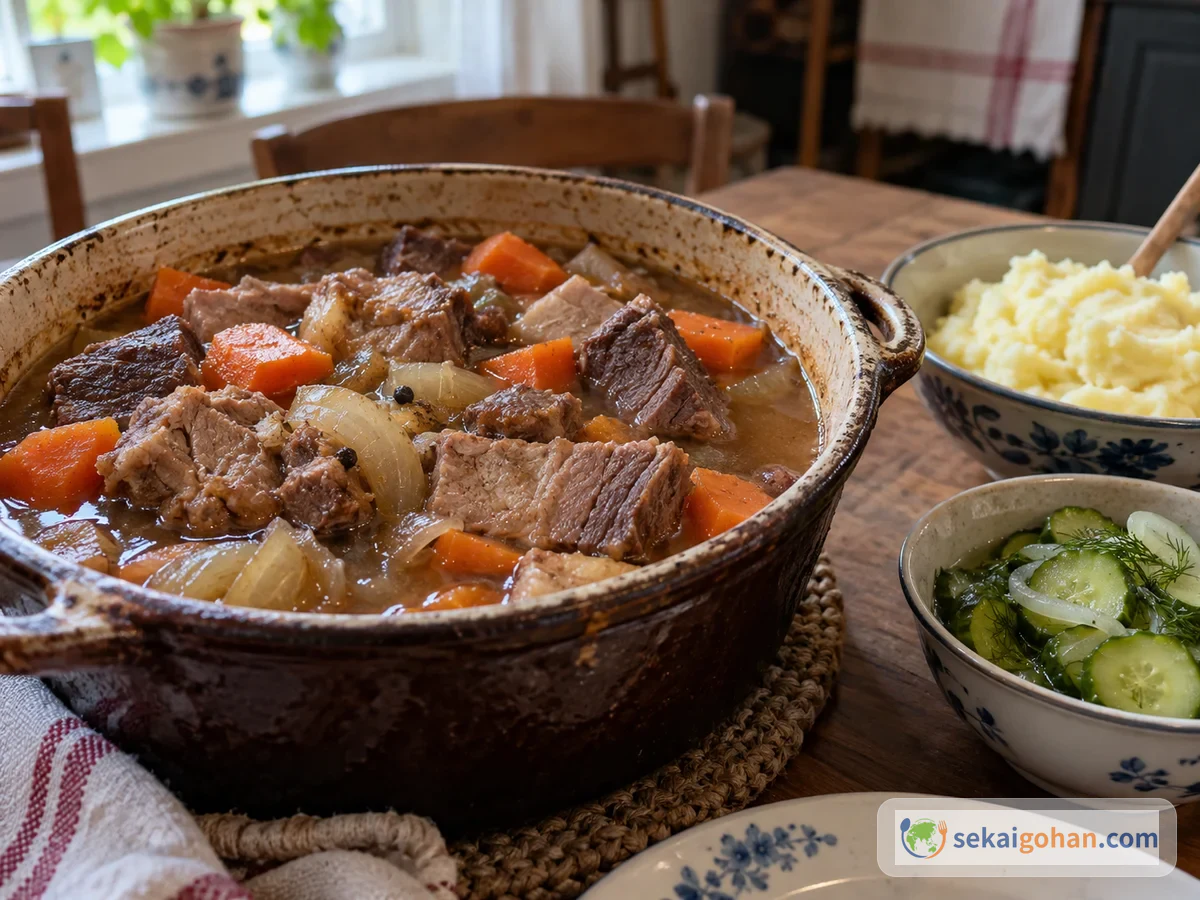
Dilute leftover liquid from goulash or fasolada and use it as broth for another day's lunch. Soups with many solids scorch easily, so strain them and warm only the liquid. Dilute strongly flavored soups with water and reduce the finishing cheese.
Frequently asked questions
Q1. Can I make risotto with cooked rice?
You can, but it will be closer to cheese rice porridge or a rice gratin. Cooked rice has already absorbed its liquid, so the raw rice never drinks the broth. On days you want to save time, rinse the rice to remove the sliminess and simmer it lightly with a little broth and cheese; it's easy to eat, but you won't get al dente grains.
Q2. What should I watch for with short-grain table rice?
Use it unwashed and stir less, since it turns sticky easily. Don't add too much broth at once; wait until the surface of the rice shows before adding more. Use a little less cheese at the end, and if it firms up, add hot broth rather than water so the flavor doesn't dilute.
Q3. Can I substitute consommé for the broth?
Yes. Make it weaker than the label says and adjust the salt at the end, because it turns salty as it reduces. For mushroom risotto, mixing in the soaking liquid from dried porcini makes the flavor feel natural.