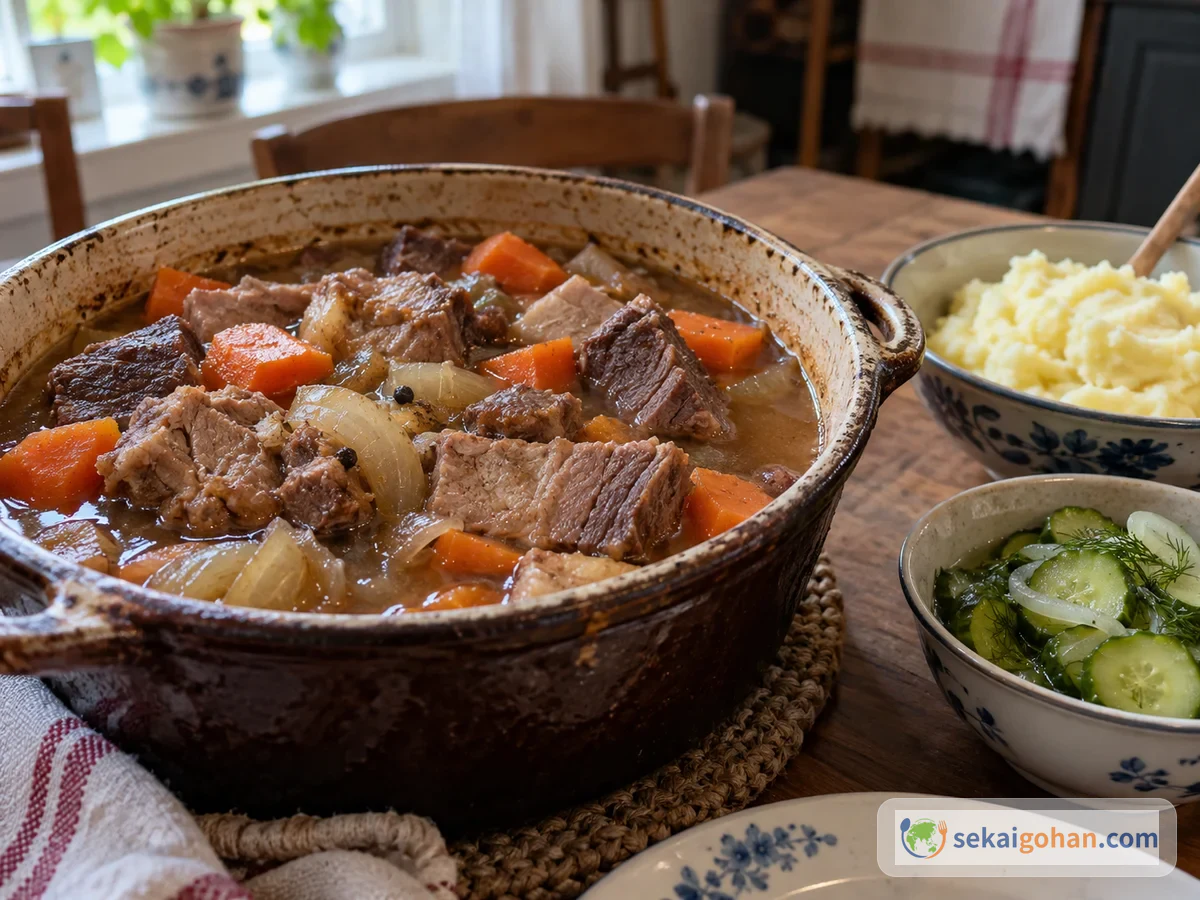
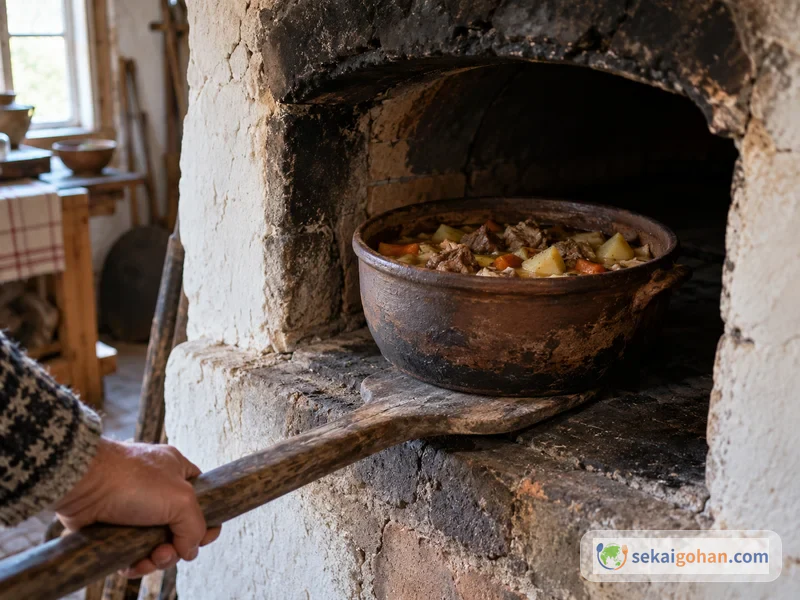
The big stone oven that baked the bread first thing in the morning kept the whole house warm long afterward. In Karelia, in eastern Finland, one oven did both jobs. Once the fire had died and only the heat remained, an earthenware pot of meat, onions, whole spices and water went in. By evening the meat was tender enough to fall apart under a spoon. This is karjalanpaisti, a meat stew cooked in the oven's residual heat. The seasoning is astonishingly plain, just salt, allspice and bay leaf, yet meat and onions cooked for hours give a broth of deep flavor. At home, a heavy lidded pot that can go in the oven stands in for the bread oven.
Karjalanpaisti, the oven stew of Karelia
Karelia is the easternmost region of Finland, bordering Russia. Karjalanpaisti is one of its best-known dishes, alongside karjalanpiirakka, the rye pastry filled with rice porridge. In Karelian it is called päččiliha, and in Finnish-speaking Karelia people often just say "paisti (stew)" or "uunipaisti (oven stew)." The pot has its own names, uuniruukku or pata, both meaning a deep pot that goes into the oven.
When meat was precious, this stew was a dish for celebration days and a harvest-season feast. As meat became easier to get in the 20th century, it turned into everyday food all over Finland.
In 2007, readers voted karjalanpaisti Finland's "national dish." In a vote held in autumn 2016, it came in second after rye bread.
Ingredients (serves 4)
Stew
Side dishes
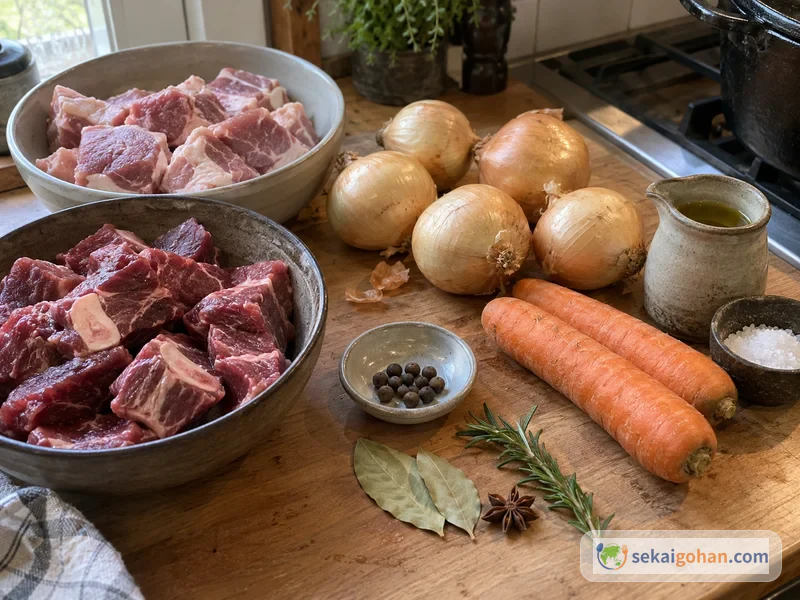
Allspice is a spice whose single berry has an aroma like cinnamon, clove and nutmeg together, and in Finland it is called maustepippuri ("spice pepper"). The ground form is easier to find in a supermarket spice aisle, but for this stew whole berries suit it. Over 3 hours of simmering, the aroma comes out gradually, and it doesn't cloud the broth the way ground does.
Beef shank is sometimes sold diced as "for curry and stew" at supermarkets. It has a lot of sinew, but the longer it simmers, the more the sinew melts and loosens, so it actually suits this dish. For pork, choosing the fatty shoulder keeps it from drying out.
Choosing the meat and spices for karjalanpaisti
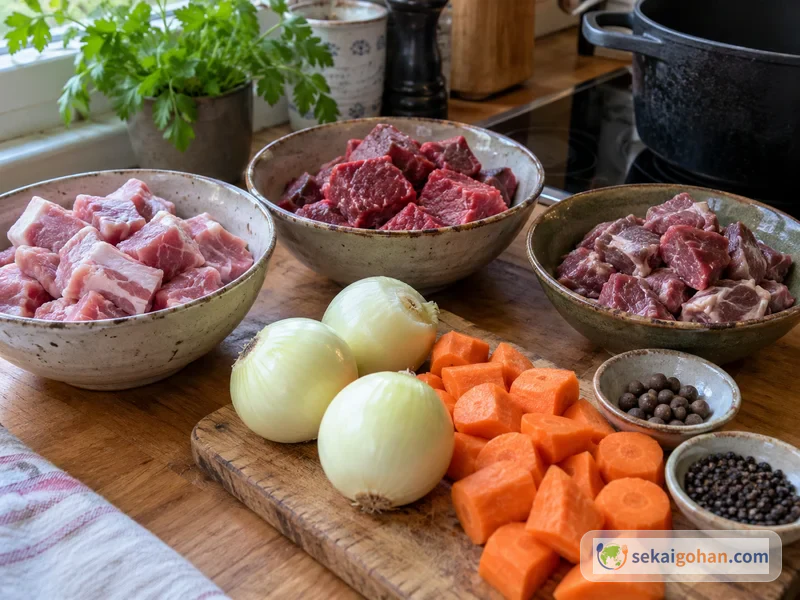
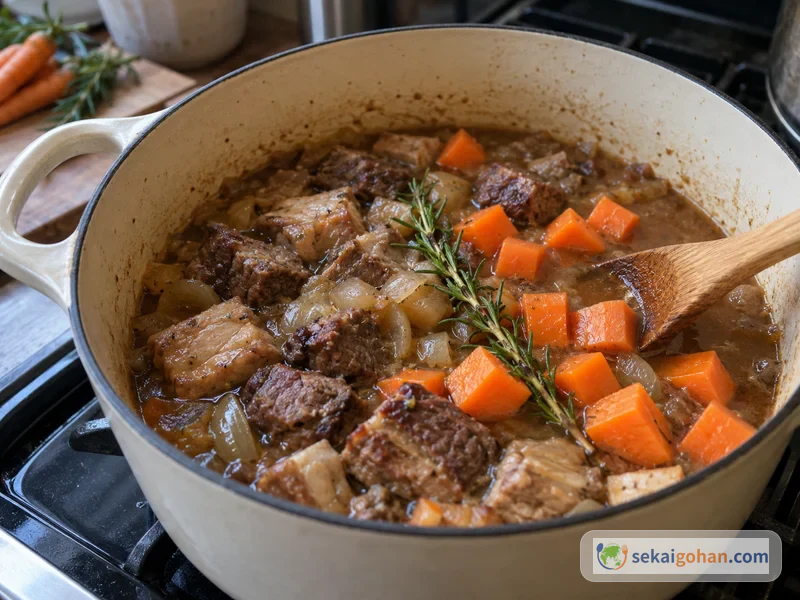
Use more than one kind of meat. Pork and beef are the basis, and some households add moose (elk) or lamb. Stewed together, they give you the richness of pork fat and the firm fibers of beef in the same pot. Any cut will do, and game works too. Root vegetables such as carrots and onions can go in as you like.
There is no fixed formula for the spices either. Some households use only allspice, others whole black peppercorns, others add bay leaf, and all are accepted as Karelian flavor.
Allspice, the star of karjalanpaisti, is made by drying the berries of a myrtle-family tree native to the Caribbean and Central America. A spice from that far south, carried here by trade, sets the aroma of a stew in northern Karelia.
How to make karjalanpaisti
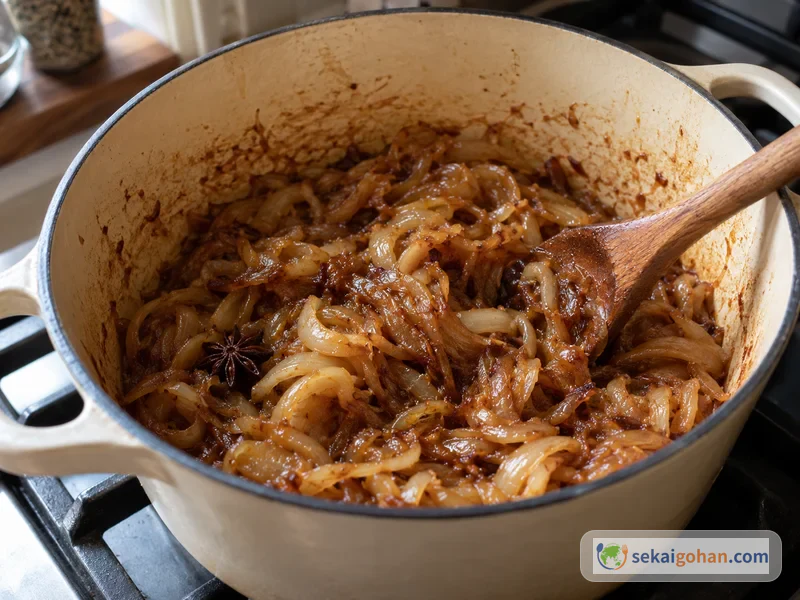
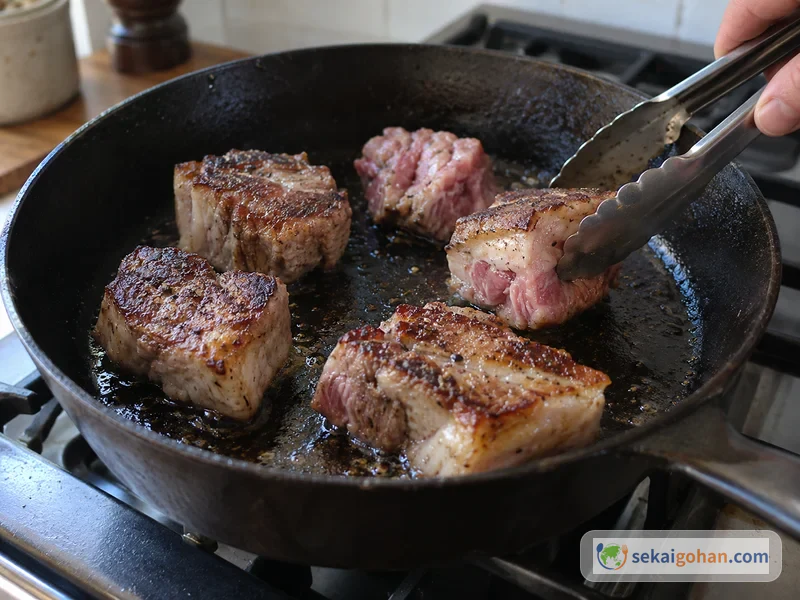
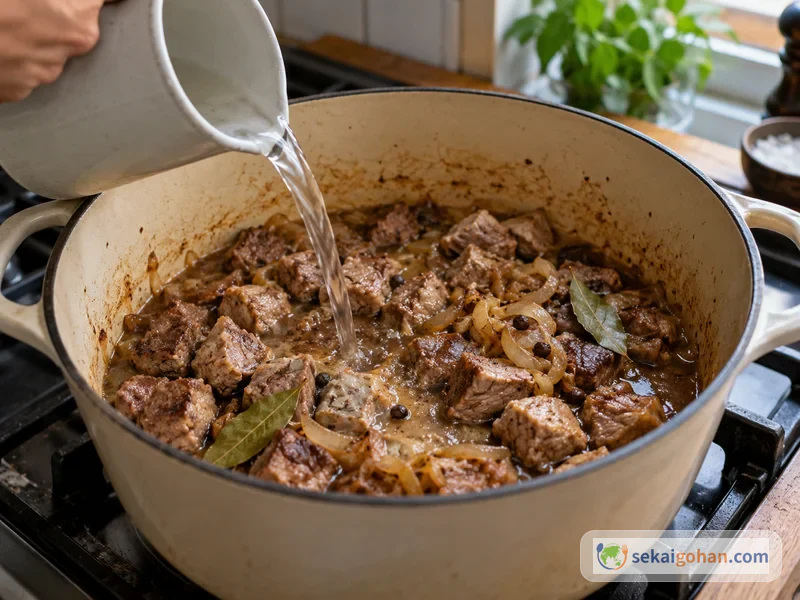
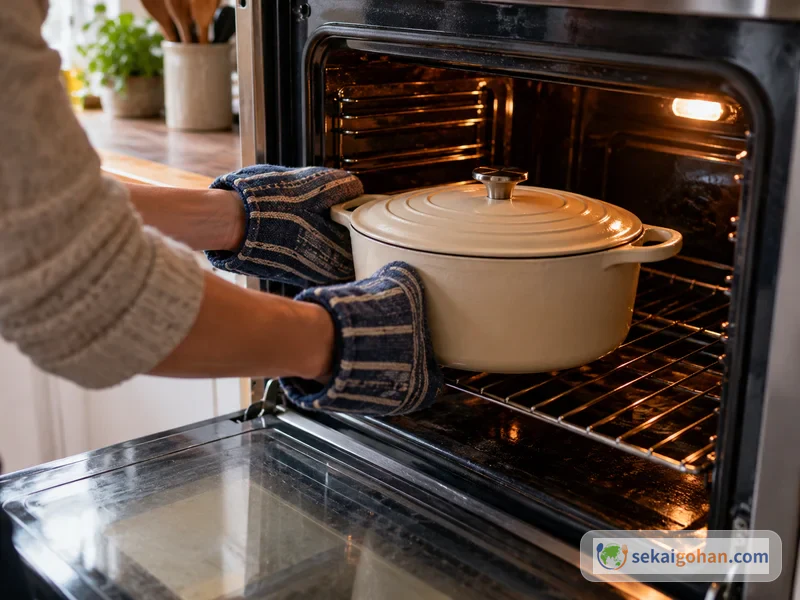
Prep takes about 20 minutes. Slice the onions and cube the meat. If you sear the meat during the 40 minutes the onions are frying and heat the oven meanwhile, nothing is wasted. Once it goes in the oven, it takes almost no effort for 3 hours.
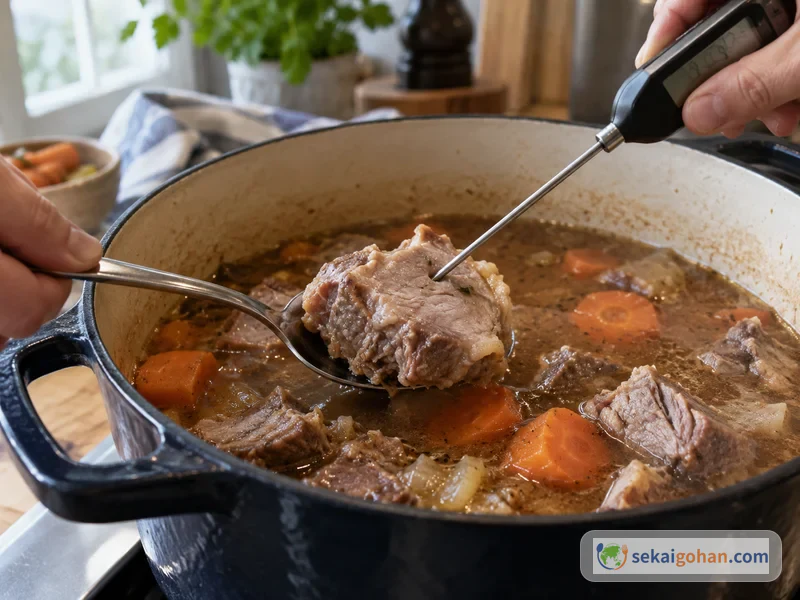
Heat the center of the pork at 167°F (75°C) for at least 1 minute. Even fresh pork can cause food poisoning or hepatitis E virus infection if the inside isn't heated thoroughly. A whitish center is a sign, but for large pieces, a thermometer is more reliable.
If you don't have an oven, or can't use it for a long time, you can stew the same length of time in a heavy pot on very low heat. The bottom scorches more easily, so stir gently from the bottom every 30 minutes, and add hot water if the liquid has reduced.
Karjalanpaisti is a stew whose flavor settles better after a night. When it cools, the fat sets white on the surface, so if that bothers you, remove it before reheating.
Serving and variations
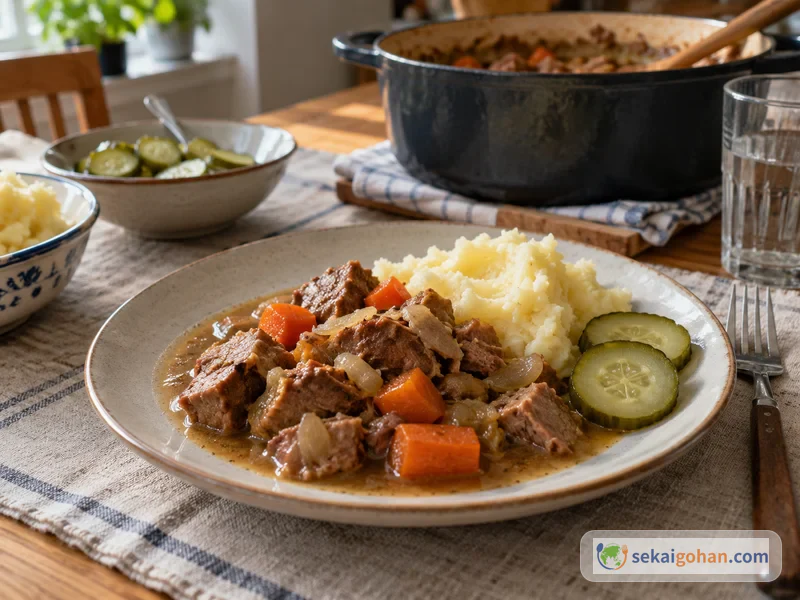
With mashed potatoes and sour pickles
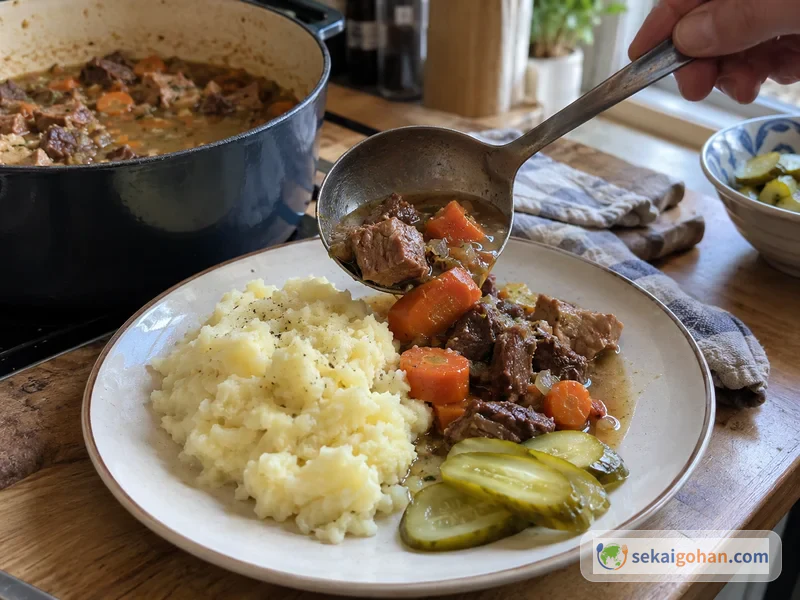
Karjalanpaisti is served with smooth mashed potatoes and lactic-fermented pickles. The broth isn't thickened, so the potatoes soak it up on the plate and do the work of a sauce. Then a bite of sour pickle makes the richness of the fat clear away at once; the acidity lightens meat that has cooked for hours.
Ordinary cucumber pickles are fine at home. If you can find lactic-fermented cucumber or cabbage pickles, you'll be closer to the way it's eaten locally.
The plain oven method
This recipe takes a few extra steps compared with the traditional way: the onions fry for 40 minutes, the meat is browned, and rosemary goes in at the end. The plainest version puts only meat, whole raw onions, peppercorns, salt and, if you like, bay leaf into the pot, with water to cover. The surface sears at 425°F (225°C), then the oven drops to 300°F (150°C) for 3 hours in total; check early on that there is enough liquid. The flavor is milder, but the effort is far less, so it's a good choice on busy days. Each household's version grew out of these everyday ways of using the oven's leftover heat.
For another gentle, northern-style Finnish dish, try lohikeitto, which simmers salmon and potatoes in milk.
Frequently asked questions
Can I make it with only pork, or only beef?
You can, but combining two or more meats is the basis of this dish. Pork alone comes out fattier and softer, beef alone lighter. Either way, make sure the center of the pork reaches 167°F (75°C) for at least 1 minute.
What can I use if I don't have allspice?
10 whole black peppercorns can stand in, and some Finnish households use black pepper anyway. The aroma changes, but the meat and onions still carry the flavor.
Can I shorten the stewing time?
You can with a pressure cooker, though the texture differs a little from meat whose fibers loosen slowly in the oven. Set the pressure time according to the instruction manual, and check the center temperature of the pork at the end.
Can I make it ahead?
Yes. The flavor settles overnight, so it suits making the day before. Cool it slightly, refrigerate, and eat it promptly. When reheating, heat until the center is thoroughly hot.
Are there allergy ingredients to watch for?
The stew itself contains no major allergens, but the mashed potatoes use butter and milk (dairy). To avoid dairy, loosen the potatoes with their cooking water and olive oil instead.