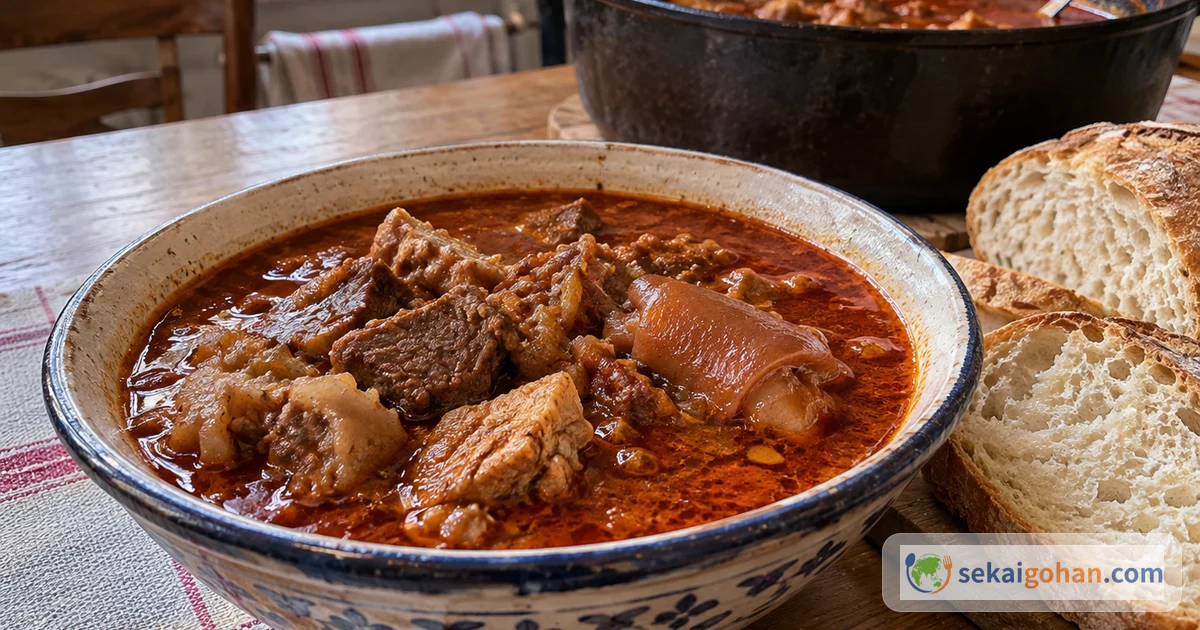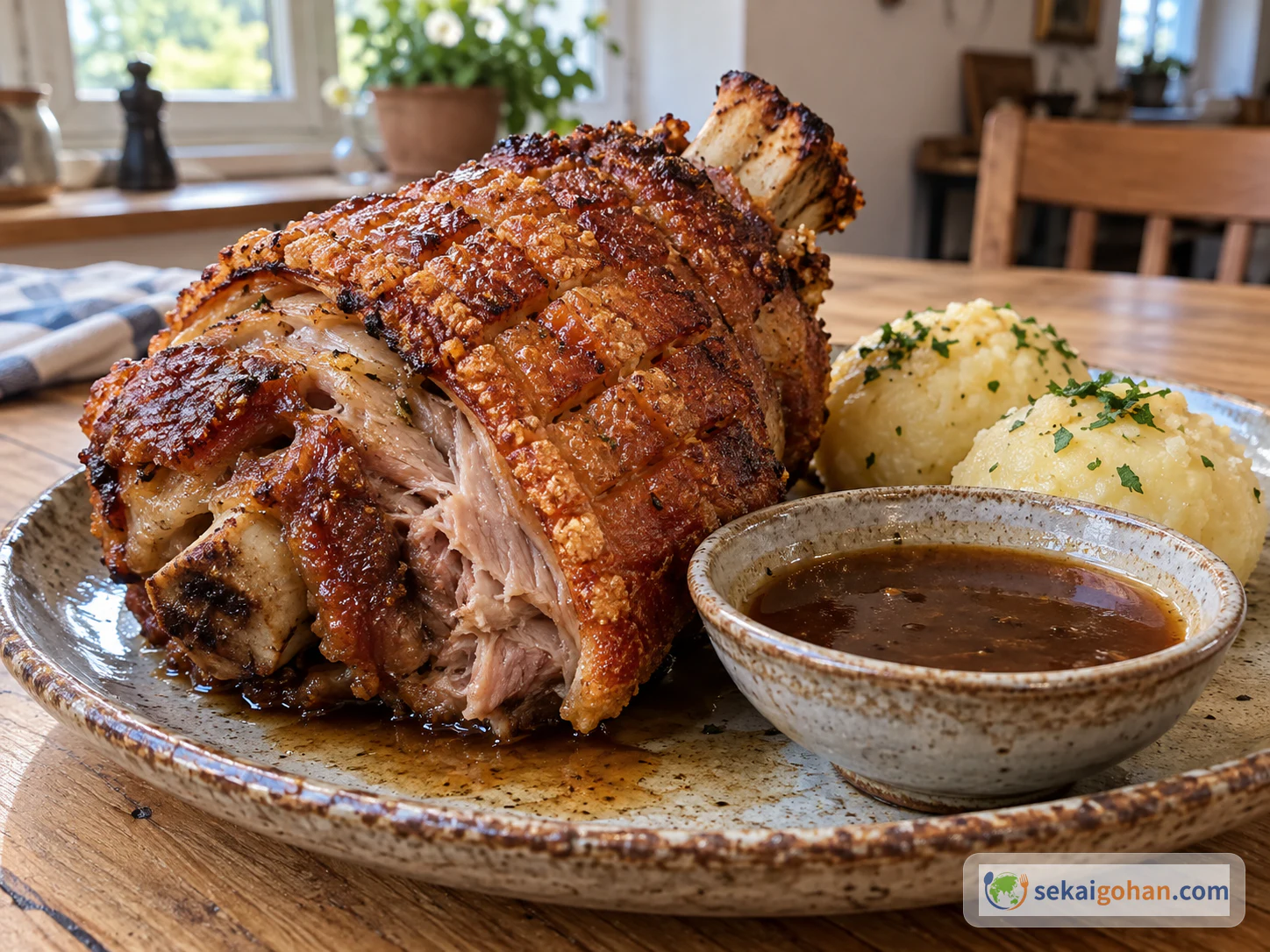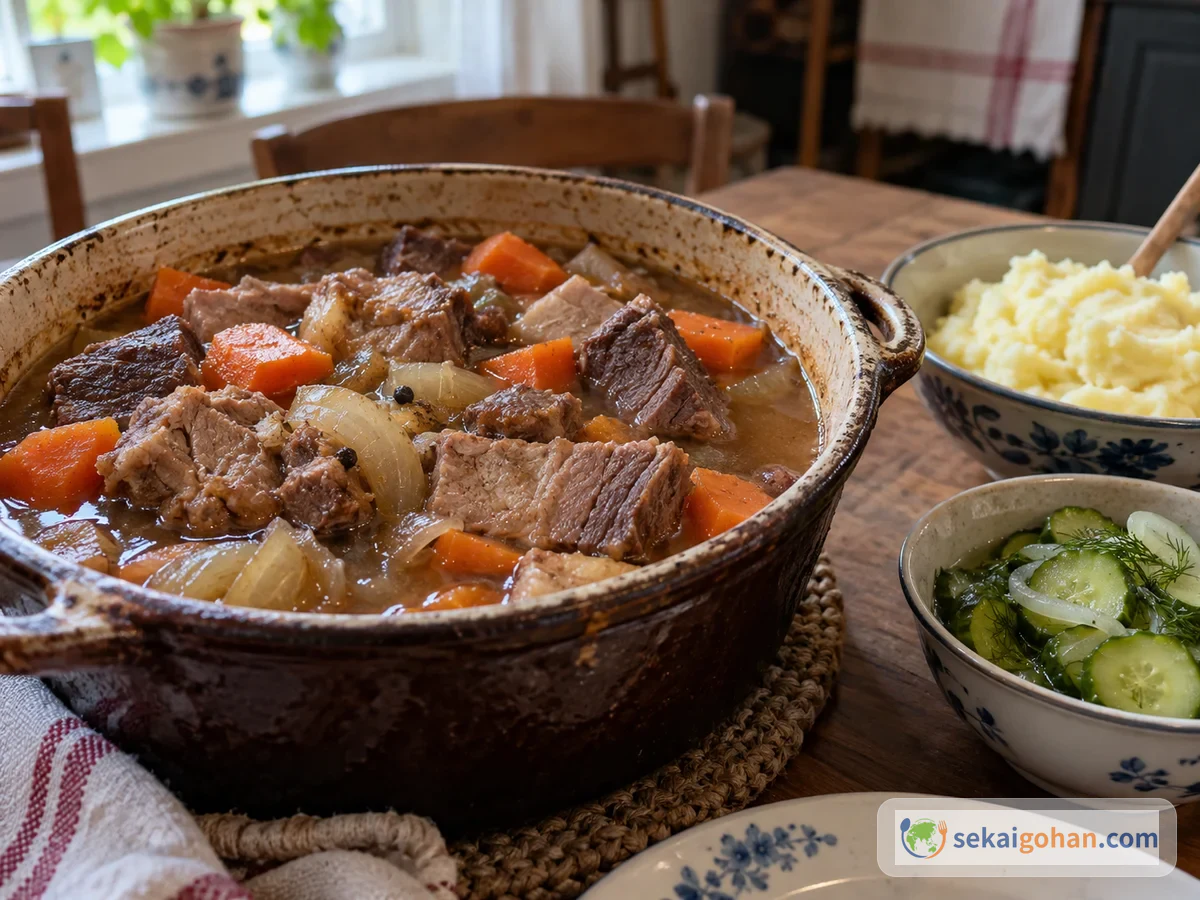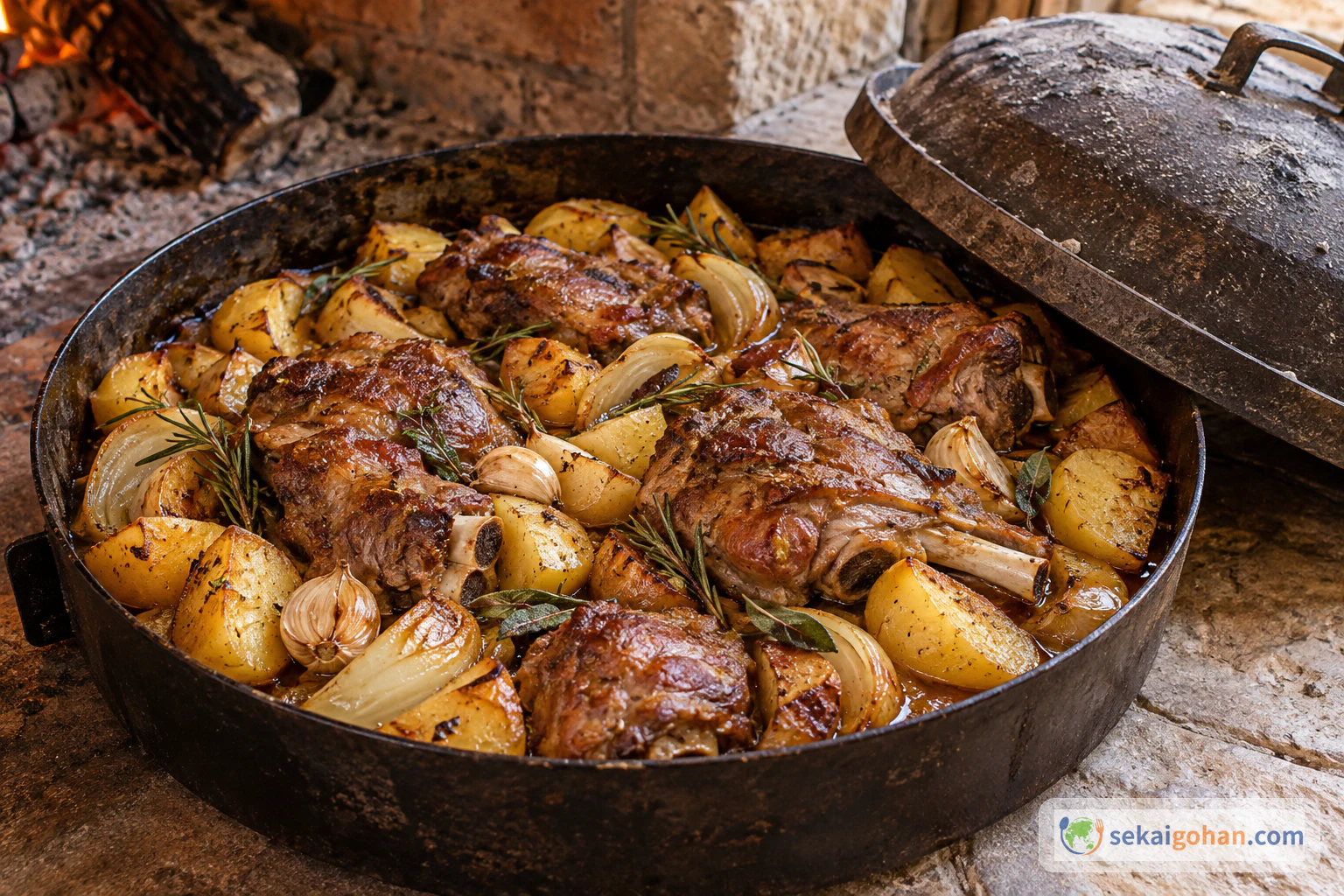
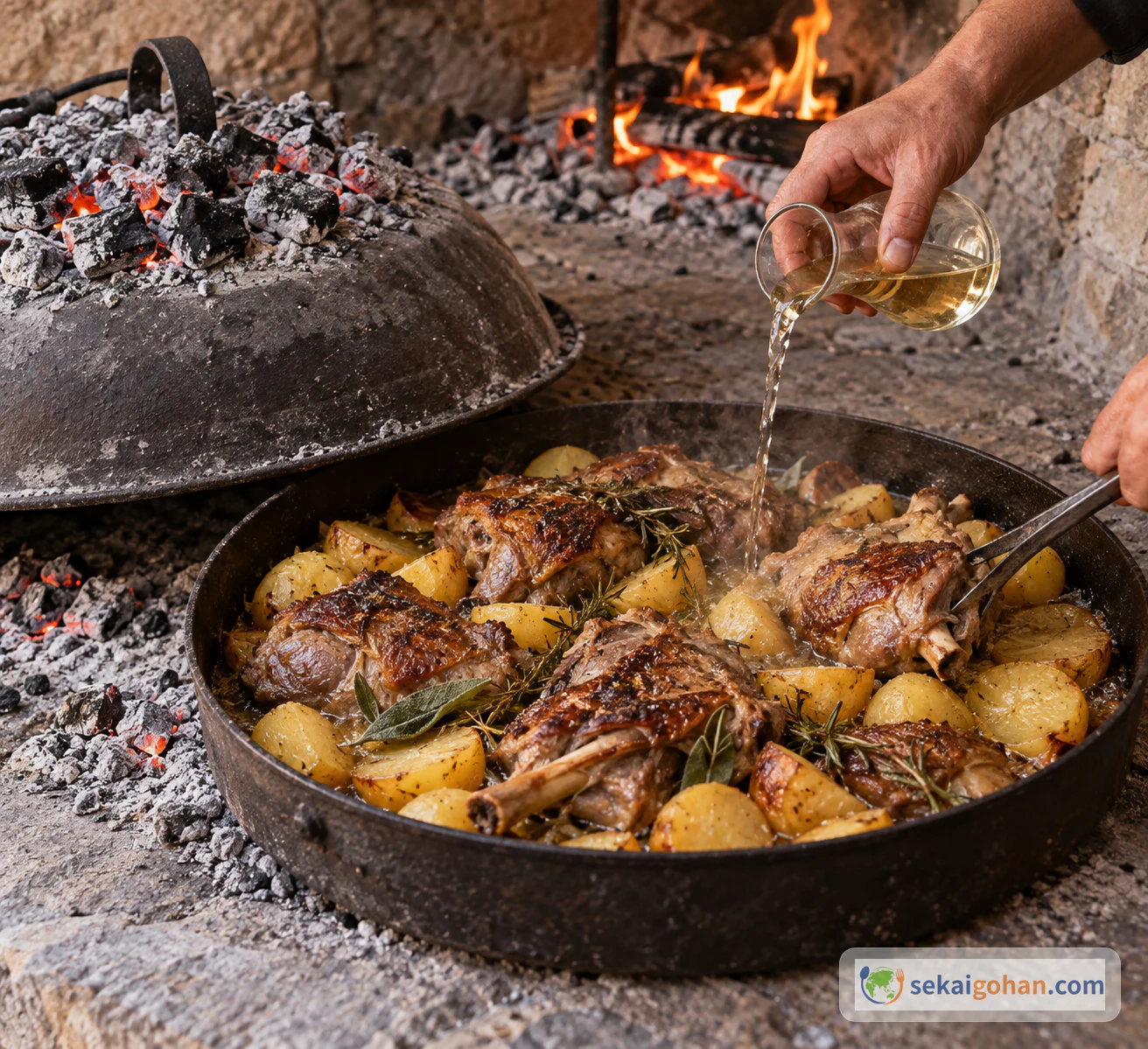
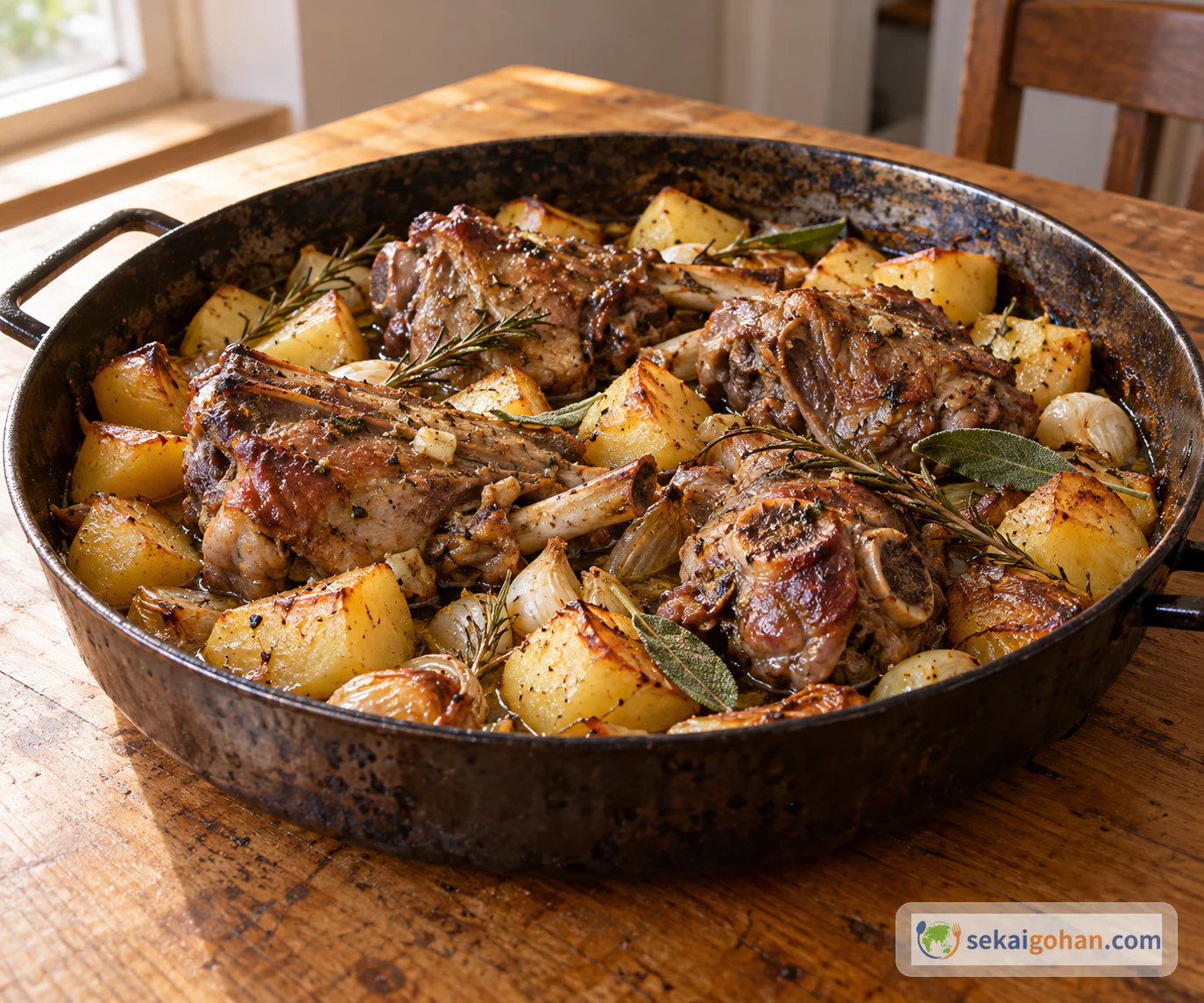
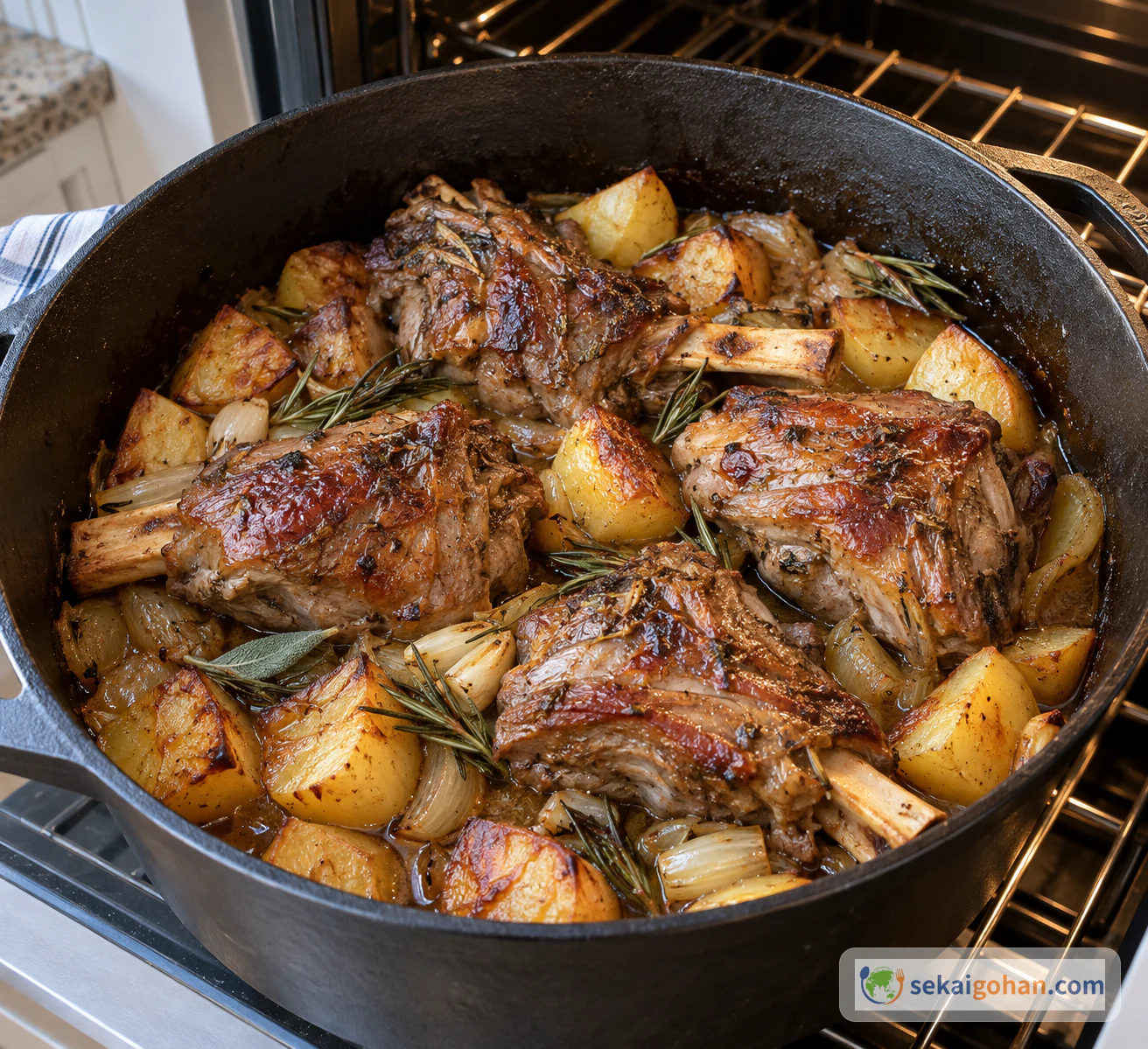
A shallow pan sits at the center of the table. Under the domed lid are large bone-in pieces of lamb, browned on top, and beneath them potatoes that have spent hours soaking up the meat's drippings, along with soft onion, whole garlic cloves, rosemary and sage. This is janjetina ispod peke, "lamb under the peka," a Dalmatian meal for a gathering, served straight from the pan it was cooked in. The lamb roasts and steams at the same time under a closed iron bell, and everything it gives up ends up in the potatoes.
What Peka Is and How It Works
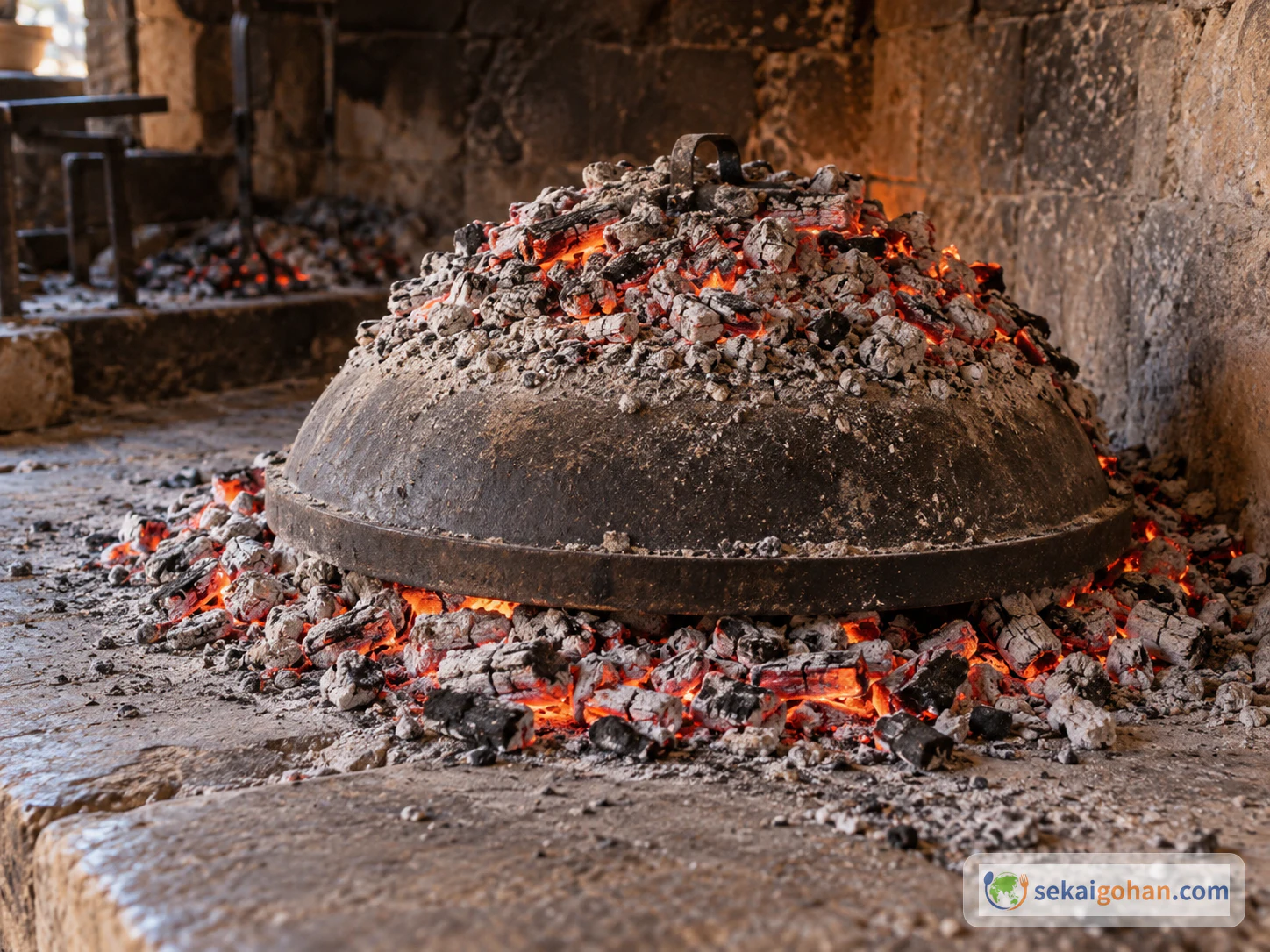
The word peka means three things. It is the iron bell-shaped cover. It is the method, in which food in a shallow pan is covered by the bell and the bell is buried in embers and ash. And it is the dish that comes out from under it. In Dalmatia, meat, vegetables, fish, octopus and squid are all cooked this way, each with its own amounts and timing.
Cooking under the lid
The pan sits on a hot hearth, the bell goes over it, and embers and ash are heaped over and around the bell, so heat comes from above as well as below. The food partly roasts and partly cooks in its own juices. In Istria the cover is called a čripnja, but the idea is the same: a heavy, closed cover holds in the steam while heat reaches the food from all sides.
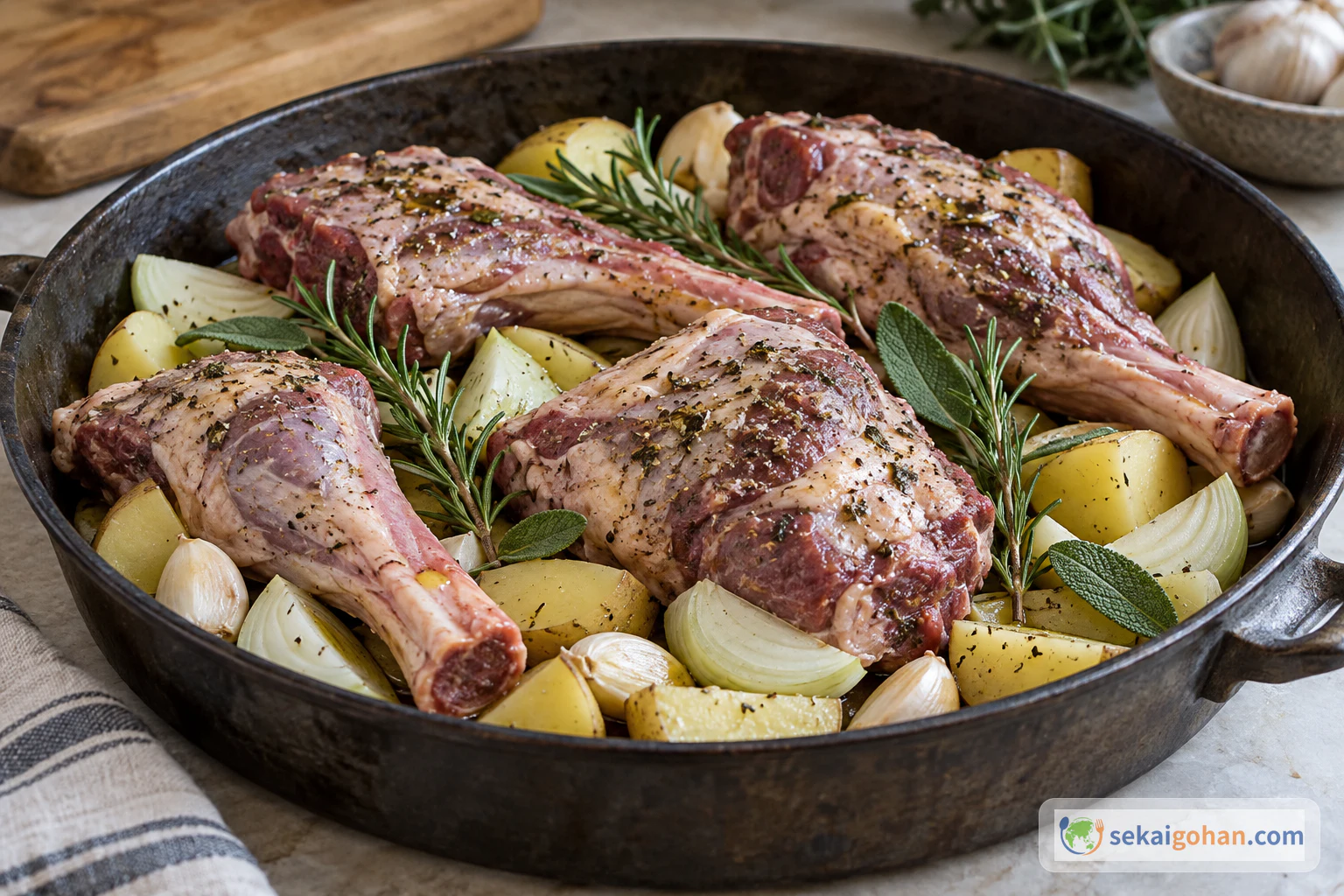
Layering matters. Potatoes, onion and garlic go on the bottom and the lamb on top, so the fat and juices from the meat drip down into the potatoes. The vegetables underneath are the side dish, and honestly, much of the lamb's flavor ends up in them.
Peka on the Dalmatian table
In Dalmatia you find peka in konobas (taverns) and restaurants across the region. It is a fireplace dish and a living way of cooking rather than a single fixed recipe. The lamb version is made for a crowd: the fire has to be built and watched, the bell stays closed while everyone waits, and the pan goes to the middle of the table.
Its origins are hard to pin down. What is certain is that peka is still cooked and served in Dalmatia today as a traditional method. For more dishes from the country, from slow braises to dishes cooked outdoors over fire, start at Croatia.
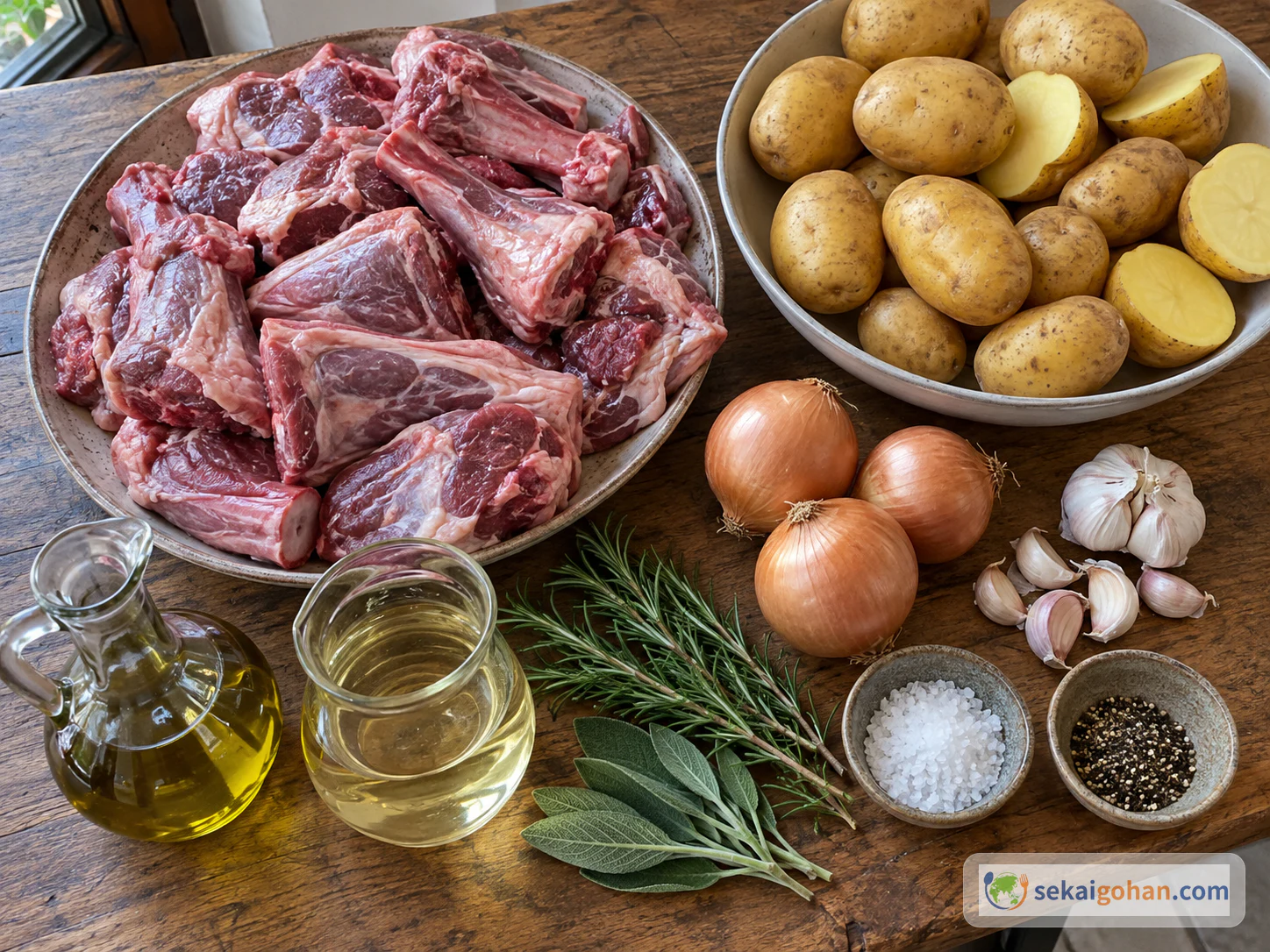
Ingredients: Lamb Peka for 6–8 People
Equipment
- For the hearth method: an iron peka bell, a shallow pan that fits under it, a hearth, and wood for a fire that burns down to embers
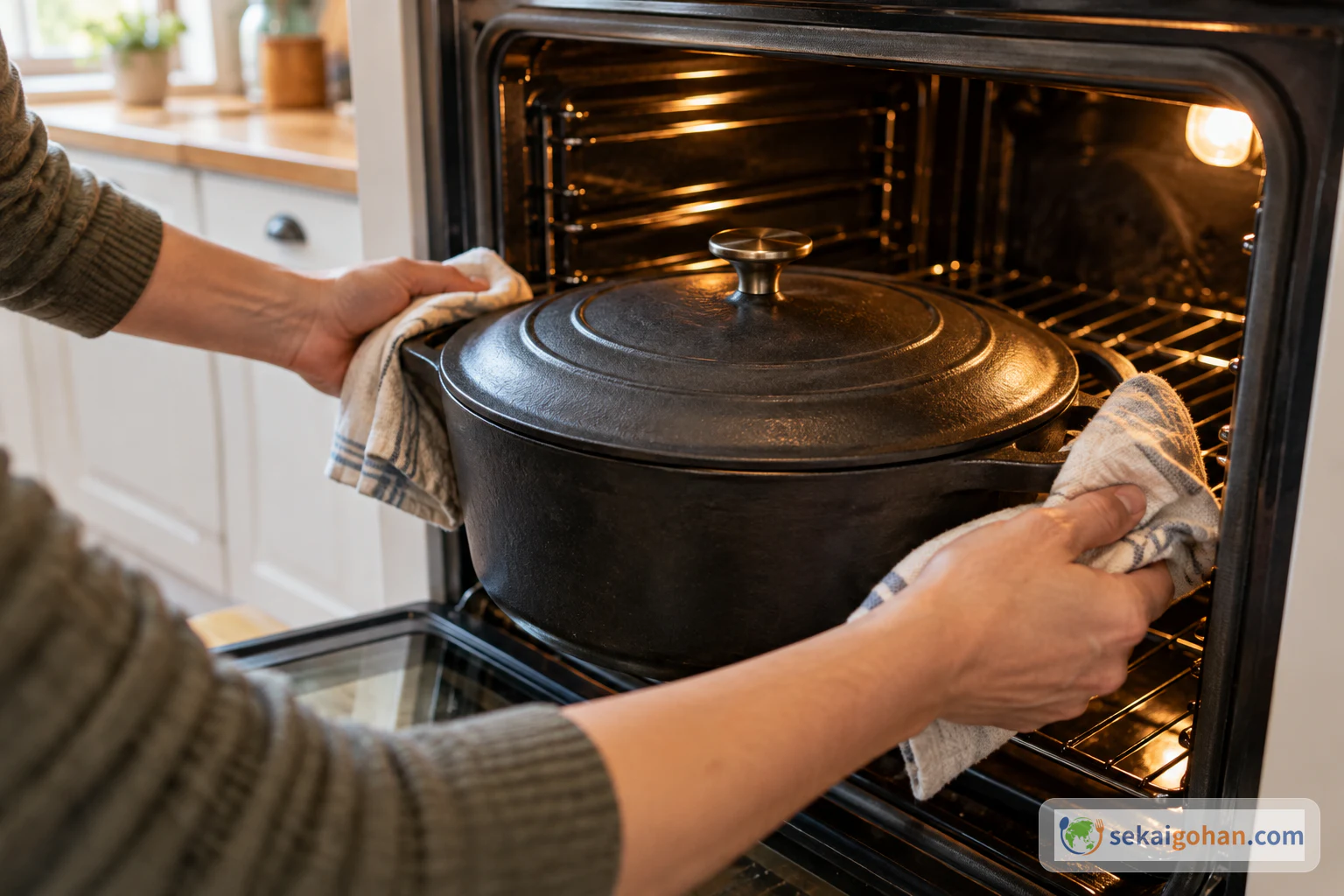
- For the oven method: a heavy cast-iron pot with a lid that can go in the oven
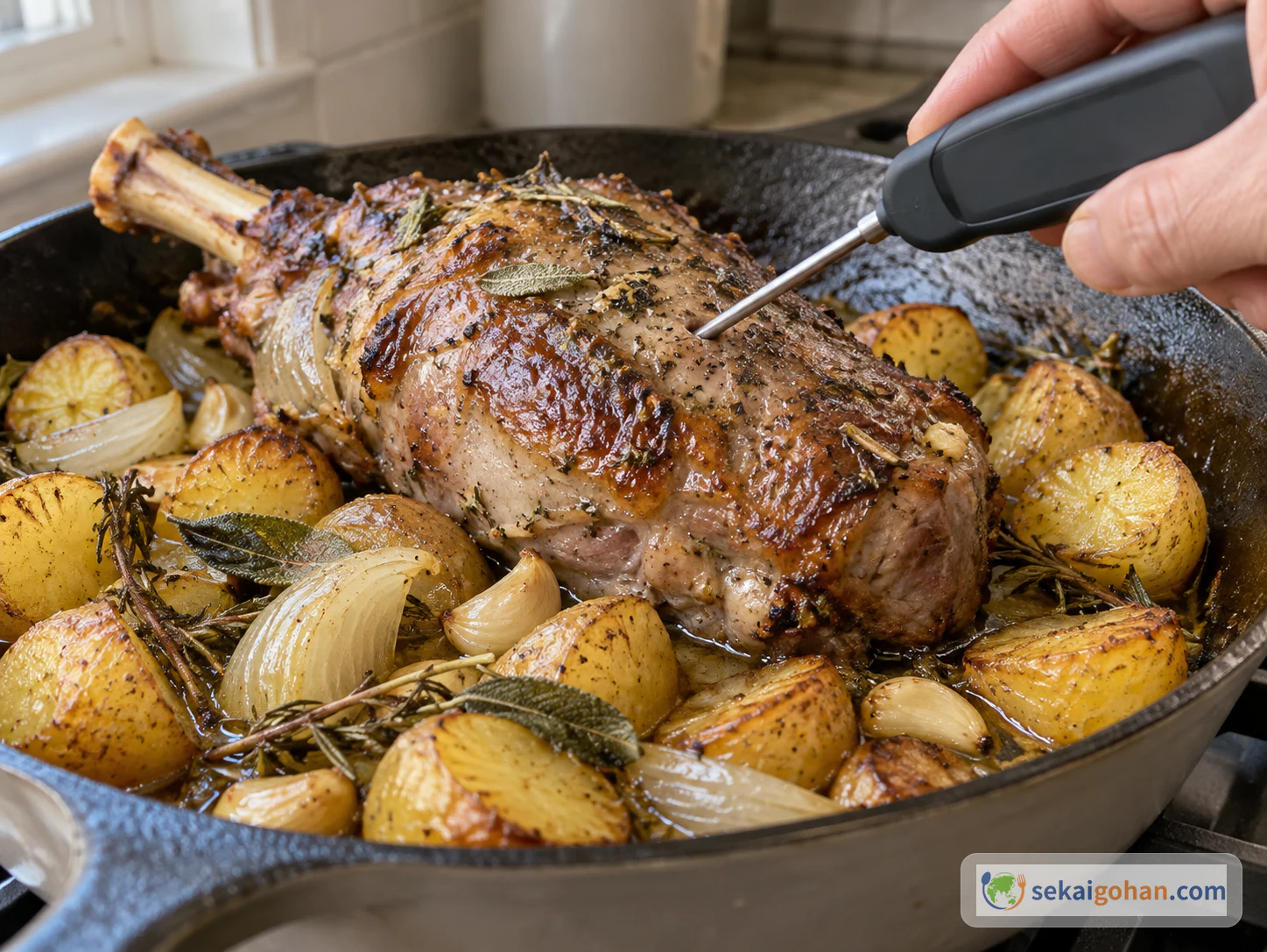
- A food thermometer
- Heatproof mitts
- A separate cutting board and knife for raw meat
Choosing Ingredients for Lamb Peka
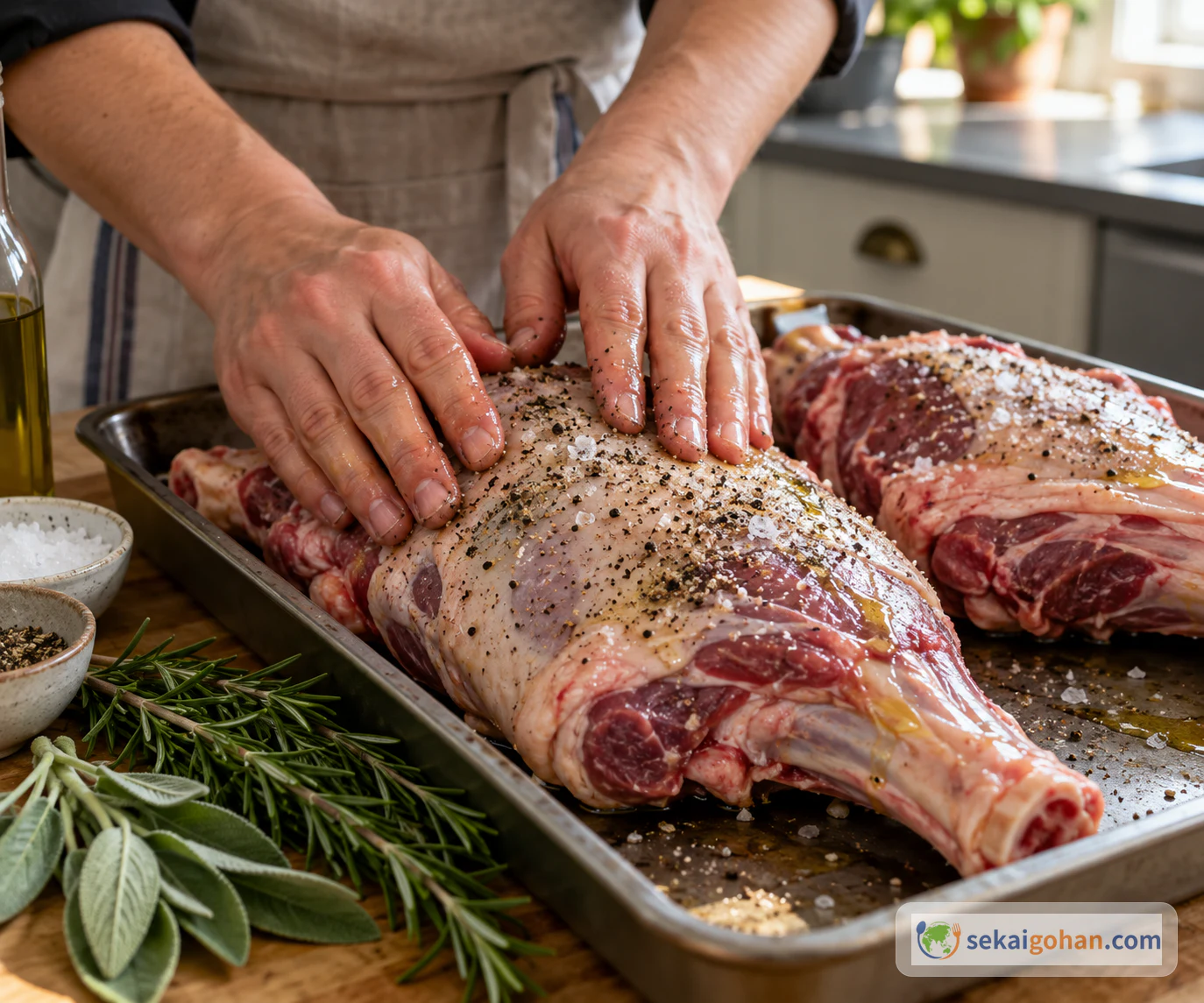
Lamb. Look for bone-in shoulder or leg in large pieces at a butcher or an online meat supplier. When you order, check the weight including the bone and, if the meat is frozen, how it should be thawed. Beef, pork or chicken would bring different fat and a different cooking time, so stick with lamb here.
Potatoes, onions, garlic and olive oil. Ordinary supermarket potatoes, yellow onions and everyday olive oil are fine.
Sage. Fresh rosemary and sage give the dish its herb aroma. If you can't find sage, leave it out, knowing the aroma will change.
White wine. Any white wine you would cook with will do. If you need to avoid wine, treat any replacement as an experiment.
The bell. Most home cooks have neither a peka bell nor a wood-fired hearth. A heavy lidded cast-iron pot in the oven (steps 8 and 9) is a practical way in: the weight and tight fit of the lid hold in the steam, though you won't get the smoke and ember heat of the real thing.
Method: The Hearth Version and the Oven Version
Hearth method: steps 1 through 7. Oven method: steps 2 and 3 (assembled in the cast-iron pot instead of the shallow pan), then steps 8 and 9, then finish with steps 6 and 7. Check the meat, not the clock. The size of the meat, the heat of the embers or oven, and the pot all change the times.
Keep the boards, knives and trays used for raw lamb separate from those used for vegetables and serving. Wash your hands and any utensils that touched raw meat.
Hearth and oven side by side
| Hearth method | Oven method | |
|---|---|---|
| Equipment | Iron peka bell, shallow pan, hearth, embers | Heavy lidded cast-iron pot, home oven |
| Before cooking | A fire started at least about 1 hour ahead | No fire to prepare |
| First stage | Covered, 60–75 minutes | Covered at 400°F (200°C), about 1 hour |
| After the turn and wine | Covered with fresh embers, 60–90 minutes | 350°F (180°C) for 45–60 minutes, last 15 minutes uncovered |
| Aroma | Gets the smoke and heat of embers | No ember smoke |
| What stays the same | The same lamb, potatoes and layering, with wine added at the turn | The same lamb, potatoes and layering, with wine added at the turn |
Troubleshooting Lamb Peka
| Problem | Likely cause | What to do |
|---|---|---|
| Potatoes are watery, not roasted | Lid opened too often, pan overcrowded, too much liquid | On the hearth, open only once, at the turn. Leave space in the pan and halve the larger potatoes. Add the wine at the turn, not at the start |
| Lamb is still tough after the given time | The amount of meat and the strength of the embers or oven vary | Cover again and keep cooking, checking tenderness. A safe temperature reading does not mean the meat is tender |
| Top is getting too dark | Too much heat from above | Hearth: adjust the embers on the lid. Oven: shorten the final uncovered stage |
| Not sure when the wine goes in | Adding it early is a common slip | All the wine goes in at the halfway turn, together with the pan juices |
| No bell, no hearth | Missing equipment | Use the cast-iron pot and oven method, and accept that it will not taste of ember smoke |
The open-once rule is for the hearth. In the oven method the lid comes off at the planned turn and again for the final browning, and that's exactly as intended.
Variations, Leftovers and Allergens
Optional additions. A little paprika and a few slices of bacon are traditional extras, left out of the main list to keep the core flavors clear.
Another lamb version. A different lamb peka uses 4.5 lb (2 kg) lamb, 2.25 lb (1 kg) potatoes, 2 tomatoes, 1 onion, ½ cup (100 ml) white wine, 5 spoons of grease, herbs, and optional carrots and peppers. It cooks under the embers for one hour, is opened to stir and add the wine, and then cooks for another half hour. Its amounts and timing are its own, so follow one recipe or the other.
Whole cuts of lamb such as roasts should reach at least 62.8°C / 145°F in the thickest part, followed by at least 3 minutes of rest. Reheat leftovers to 73.9°C / 165°F. Check with a thermometer, not by color or time alone.
Keep raw lamb and its utensils apart from vegetables and serving dishes. Refrigerate leftovers, and when reheating, bring them to 73.9°C / 165°F.
The main ingredients are lamb, vegetables, herbs, olive oil and white wine. If you add bacon or any other processed ingredient, check its label for allergens.
Frequently Asked Questions
Can I make it without the iron bell?
Yes. Use a heavy lidded cast-iron pot in the oven, following the oven steps in the method. It won't have the smoky aroma of the hearth version.
How long does it take?
On the hearth, start the fire at least about 1 hour ahead. Then roast covered for 60–75 minutes, turn and add the wine, and roast another 60–90 minutes, followed by about 10 minutes of rest. In the oven, roast covered at 400°F (200°C) for about 1 hour, then 45–60 minutes at 350°F (180°C). Either way, the meat and the heat source change the timing, so go by the meat.
How do I know the lamb is done?
Look for meat that comes away from the bone easily and potatoes that are golden and soaked with juices. Then confirm with a thermometer in the thickest part, away from the bone: at least 62.8°C / 145°F, followed by at least 3 minutes of rest. Safety and tenderness are separate checks.