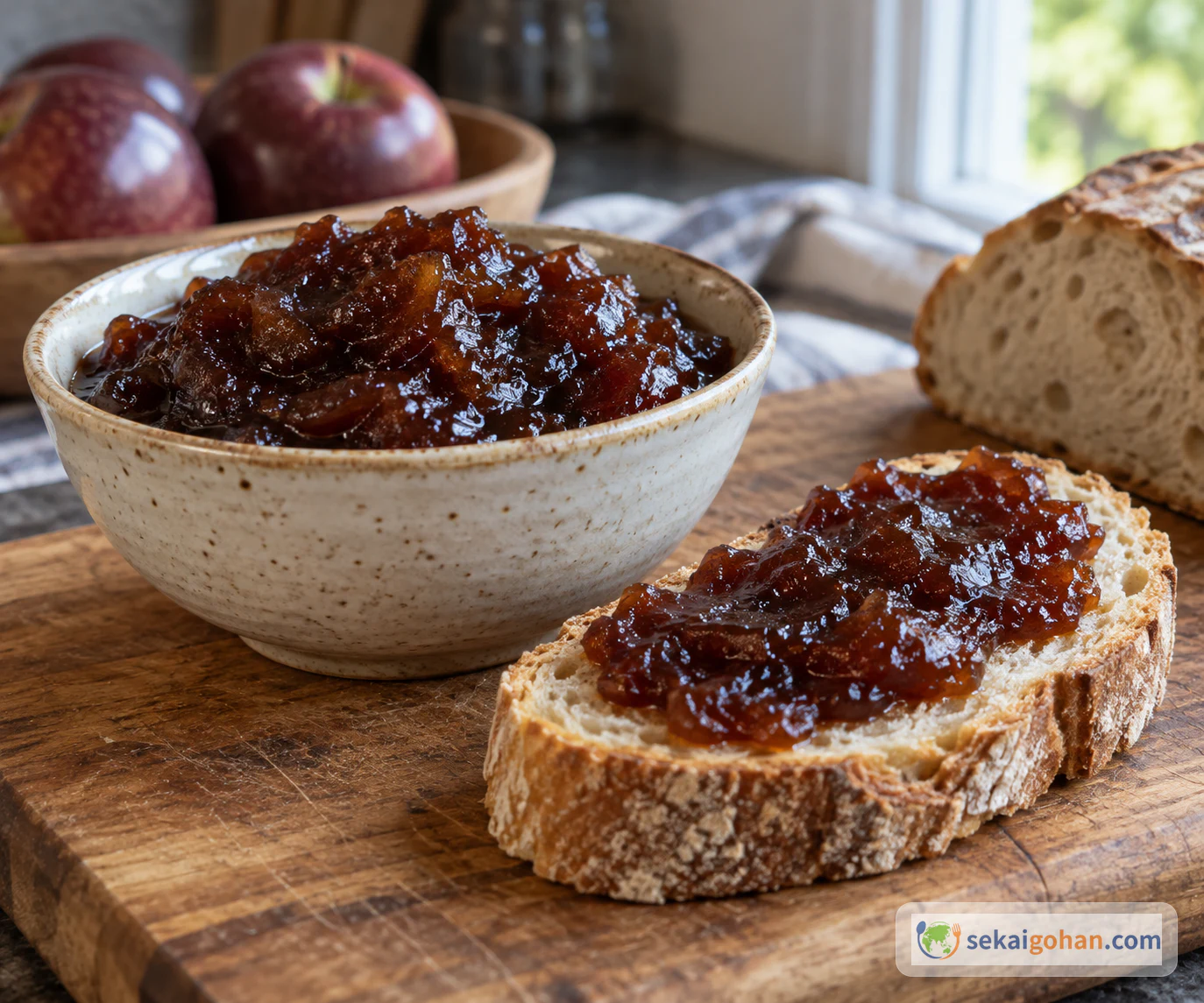
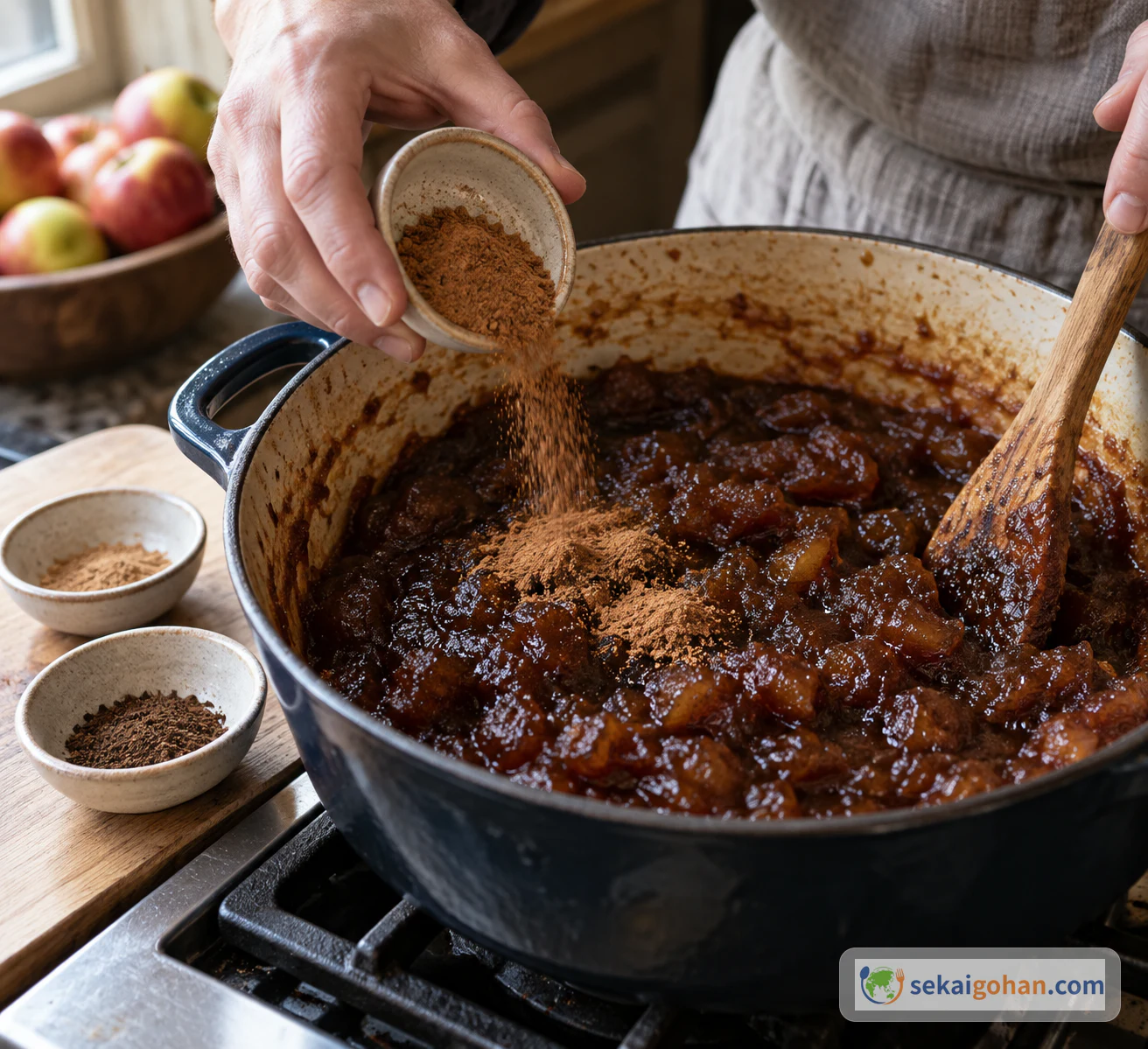
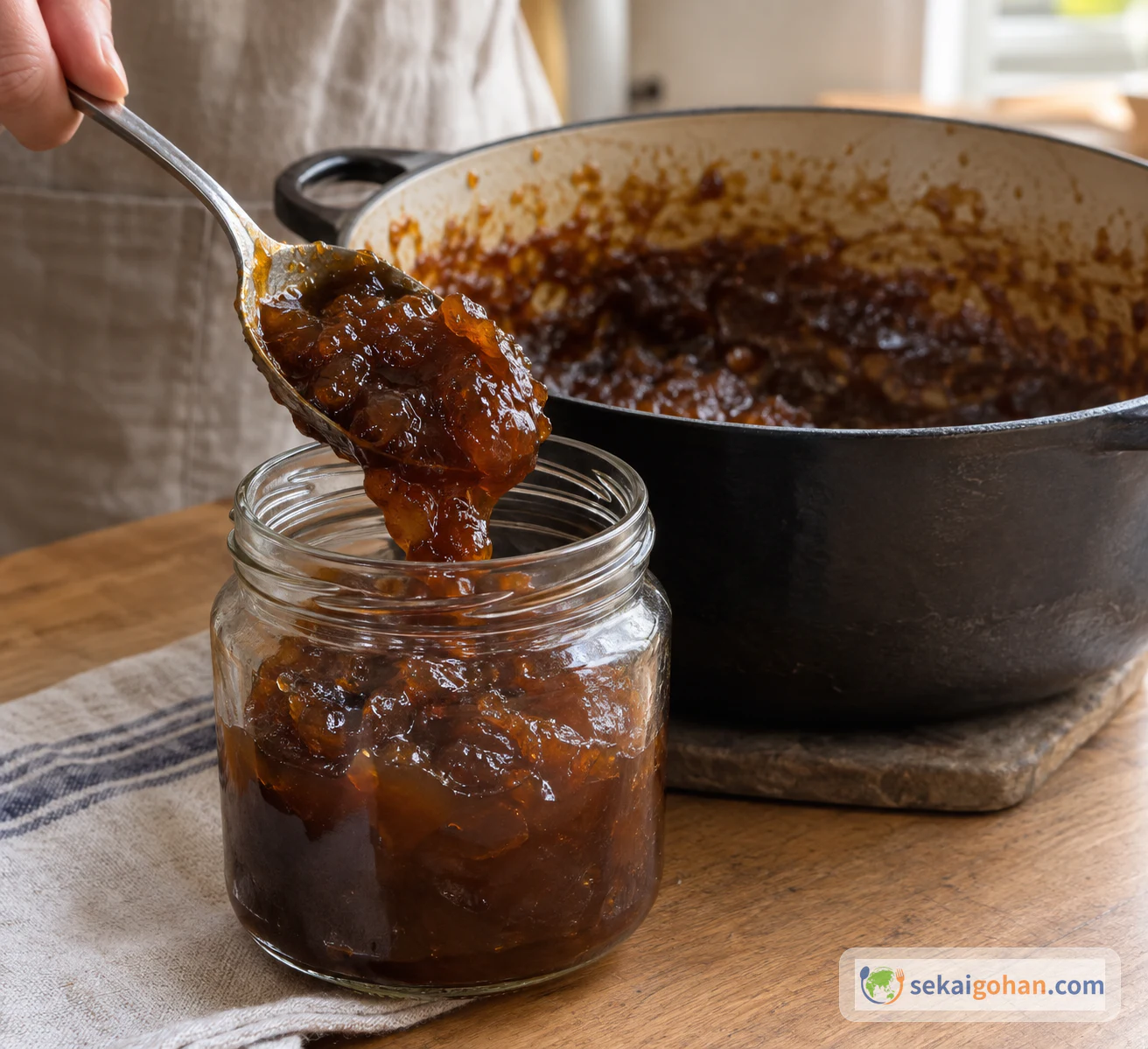
On Jersey's black butter nights, neighbors peeled hundreds of pounds of apples, reduced cider, and took turns stirring a great pan through the night. The version here is far smaller: one heavy pan in a home kitchen, with water, apples, sugar, lemon and three spices. What comes out is a dark, glossy apple preserve, sweet and sharp at once and warm with spice. It is one of the island's oldest autumn traditions, and it fits on a slice of toast.
About Nièr Beurre
A "Black Butter" With No Butter in It
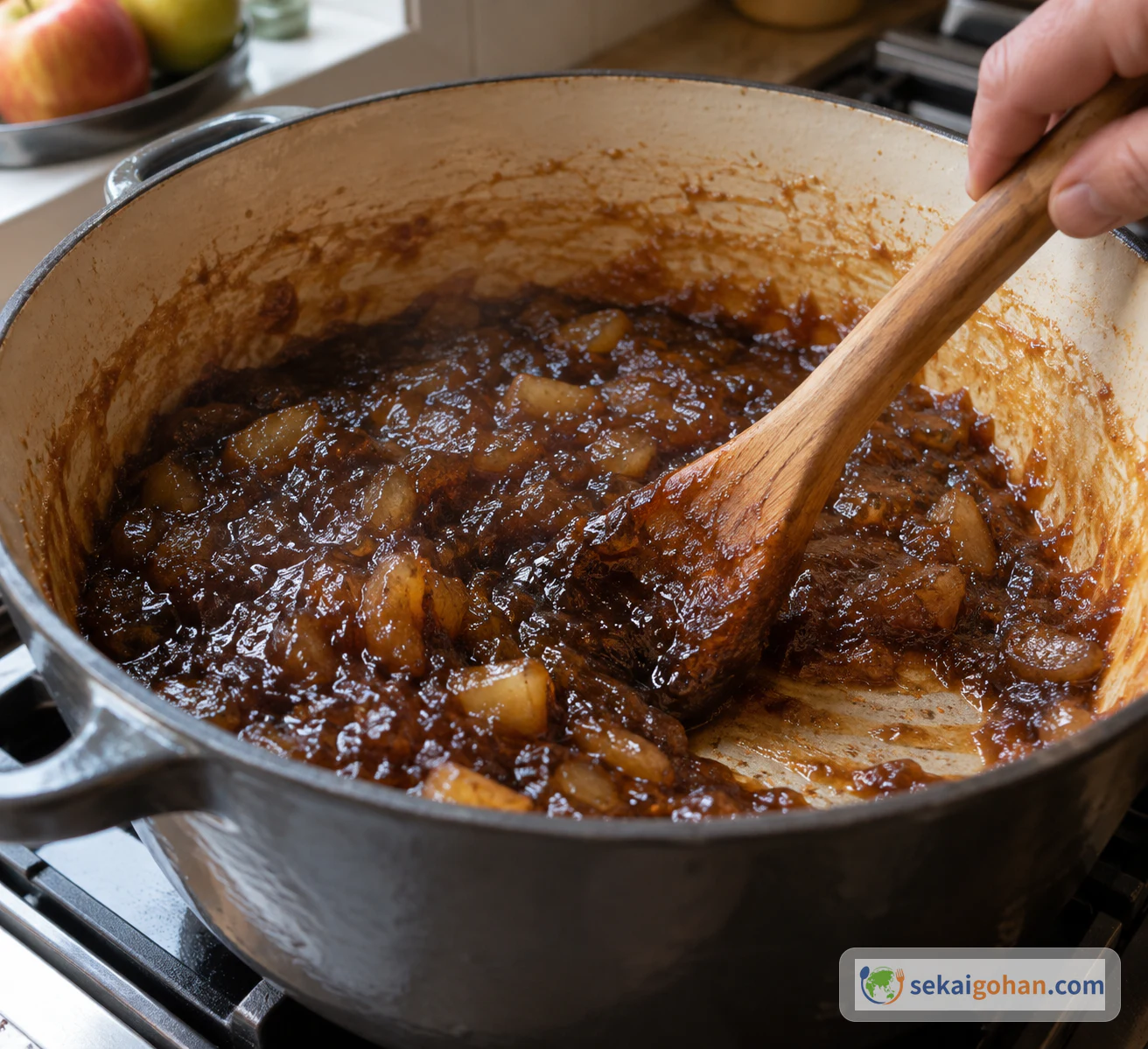
The name is the surprise. In Jèrriais the preserve is Lé Nièr Beurre, or Nièr beurre, and you will also see it written Beurre Nièr. It translates as "black butter," but it is a concentrated, spiced apple preserve, and this recipe contains no butter or dairy of any kind. The dark color comes from long reduction: as the water cooks away, the color and flavor deepen.
Black Butter in Jersey's Autumn
Black butter belongs to Jersey's autumn, when heritage apple varieties are harvested for cider and black butter. It is a traditional preserve of the cider season, and making it has long been a communal job. The shared effort of autumn and winter is called séthée d'nièr beurre, and the pot is stirred for hours with a long-handled wooden tool called a rabot.
The National Trust for Jersey runs a three-day Black Butter Festival at The Elms, where neighbors gather around a large pot over a wood fire to cook apples, sugar, liquorice and lemon. The occasion is as much about song and conversation as the recipe. Dates can change from year to year, so check the current schedule if you hope to attend.
From the Cauldron to the Home Pan
The difference in scale is huge. The communal cauldron takes 14 cwt of apples, 113 gallons of cider and 30 lbs of sugar, plus liquorice, cinnamon and spices, stirred for 24–30 hours in a giant pot. The home recipe is its own recipe, made with water instead of cider and sized for about 6–8 jars, so its amounts and timing aren't worked out from the cauldron version.
This recipe gives no set cooking times, temperatures, finished weight or storage period. Judge the cook by the finish: very thick, deeply colored and glossy. Process the jars for the times in step 8, and if you skip processing, refrigerate the preserve and eat it soon.
Ingredients: Two Kinds of Apple, Sugar, Lemon and Three Spices
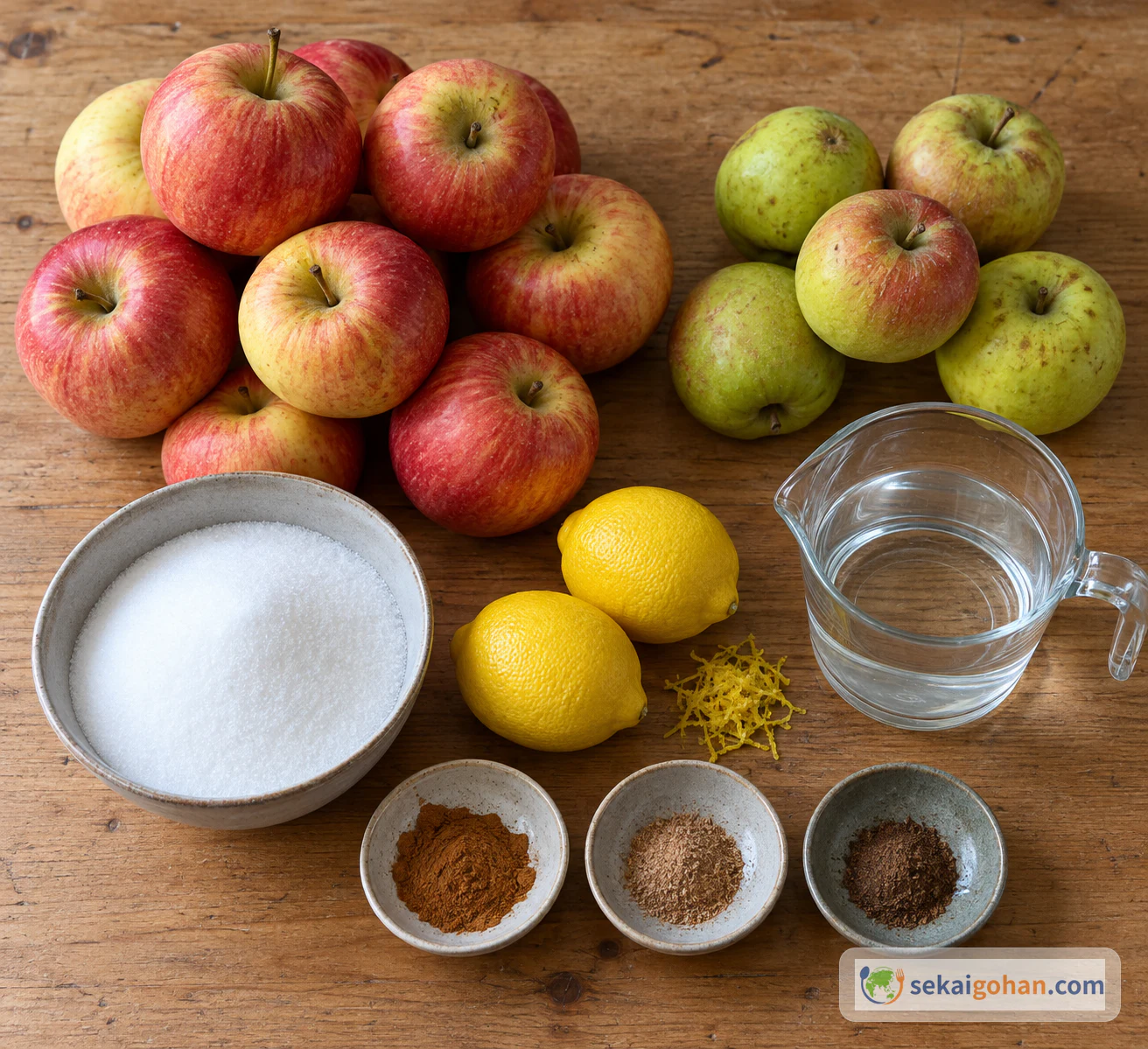
Makes about 6–8 jars.
Choosing Apples, Sugar and Spices for Nièr Beurre
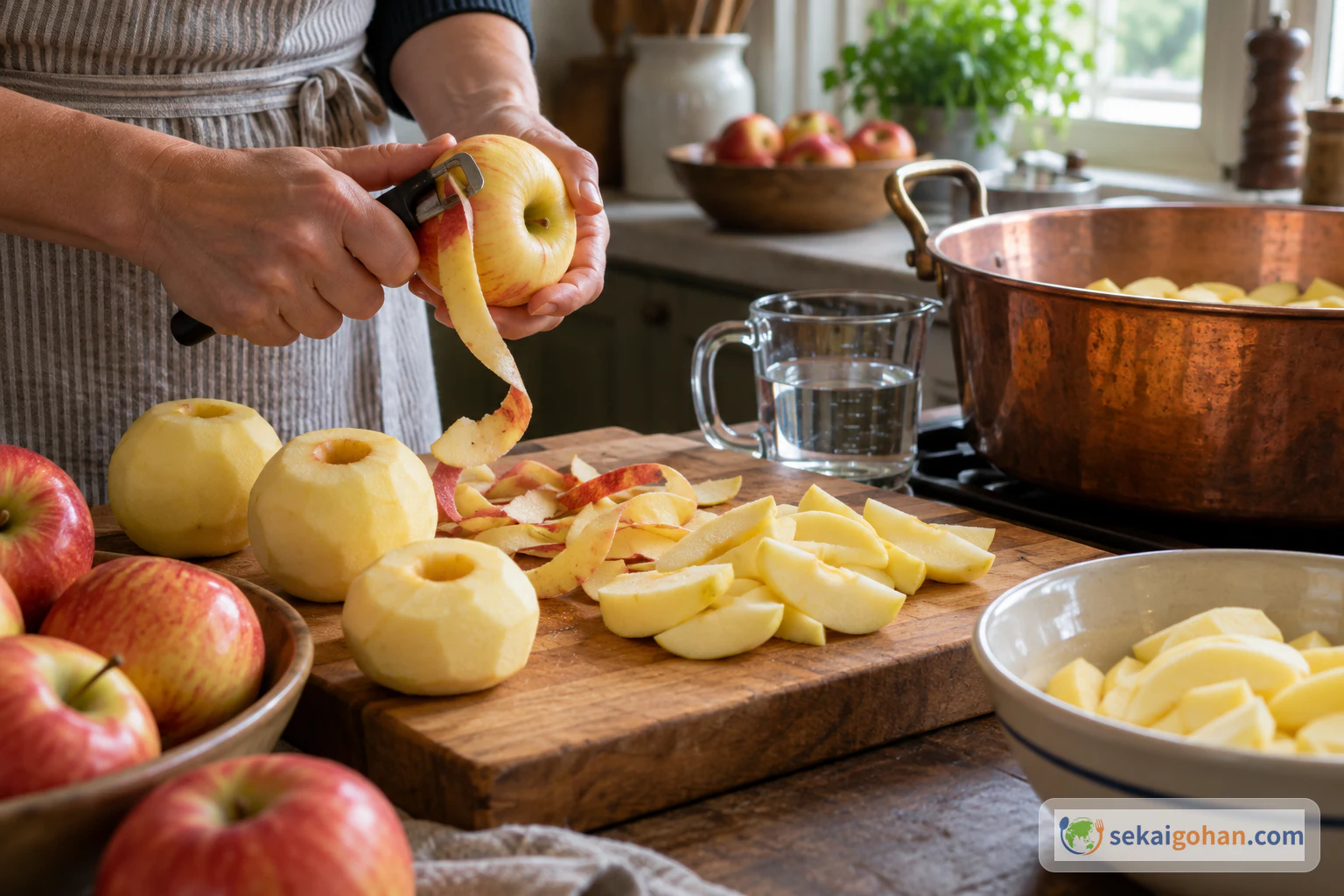
Apples. Use two types: sweet apples for the soft base, and sharp cooking apples so the finished preserve isn't only sweet. Whichever sweet and sharp apples you can buy will work. In Japan, Kōgyoku is one option for the sharp apples.
Sugar. Stay within 1.25–1.5kg.
Lemon. Use the yellow part of the zest, then add the juice.
Allergens. No major allergen is deliberately included, but check the labels on your sugar and spices for cross-contact information.
Equipment
- Large, deep, heavy-bottomed pan
- Long-handled wooden spoon
- Peeler, knife and cutting board
- Zester or grater and a citrus juicer
- Jars with lids
- Boiling-water canner, for processing the jars
Method: Reducing Slowly Over Low Heat
Thick, sugary fruit paste can spit as it bubbles. Use a deep pan and a long-handled spoon, and keep your face away from directly above the pot. Heavy pans and low heat also help prevent scorching, which is most likely near the end.
Judge each stage by how the pot looks rather than by the clock. Expect a long cook and don't rush it with higher heat.
Fixing Problems in the Pot
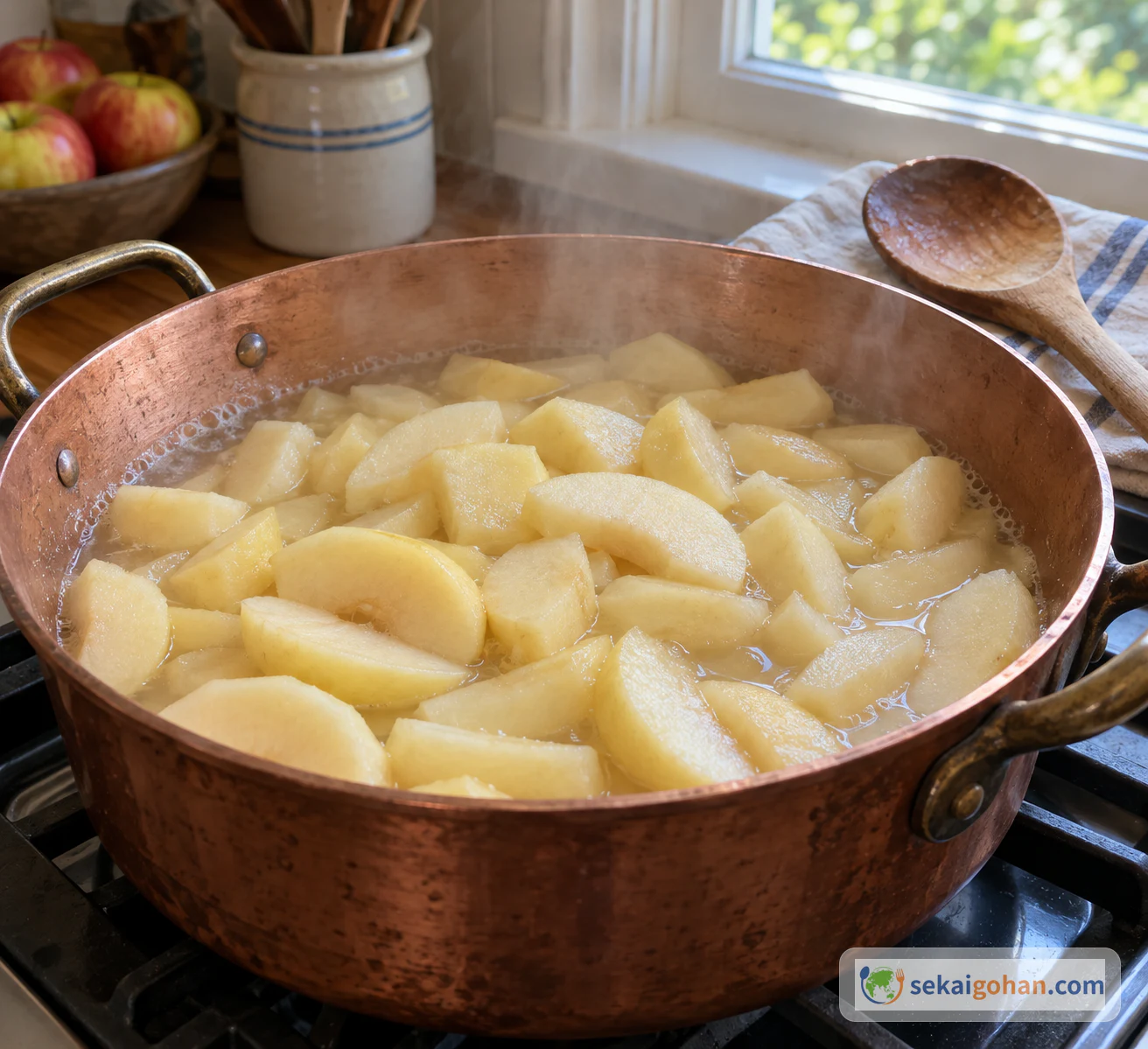
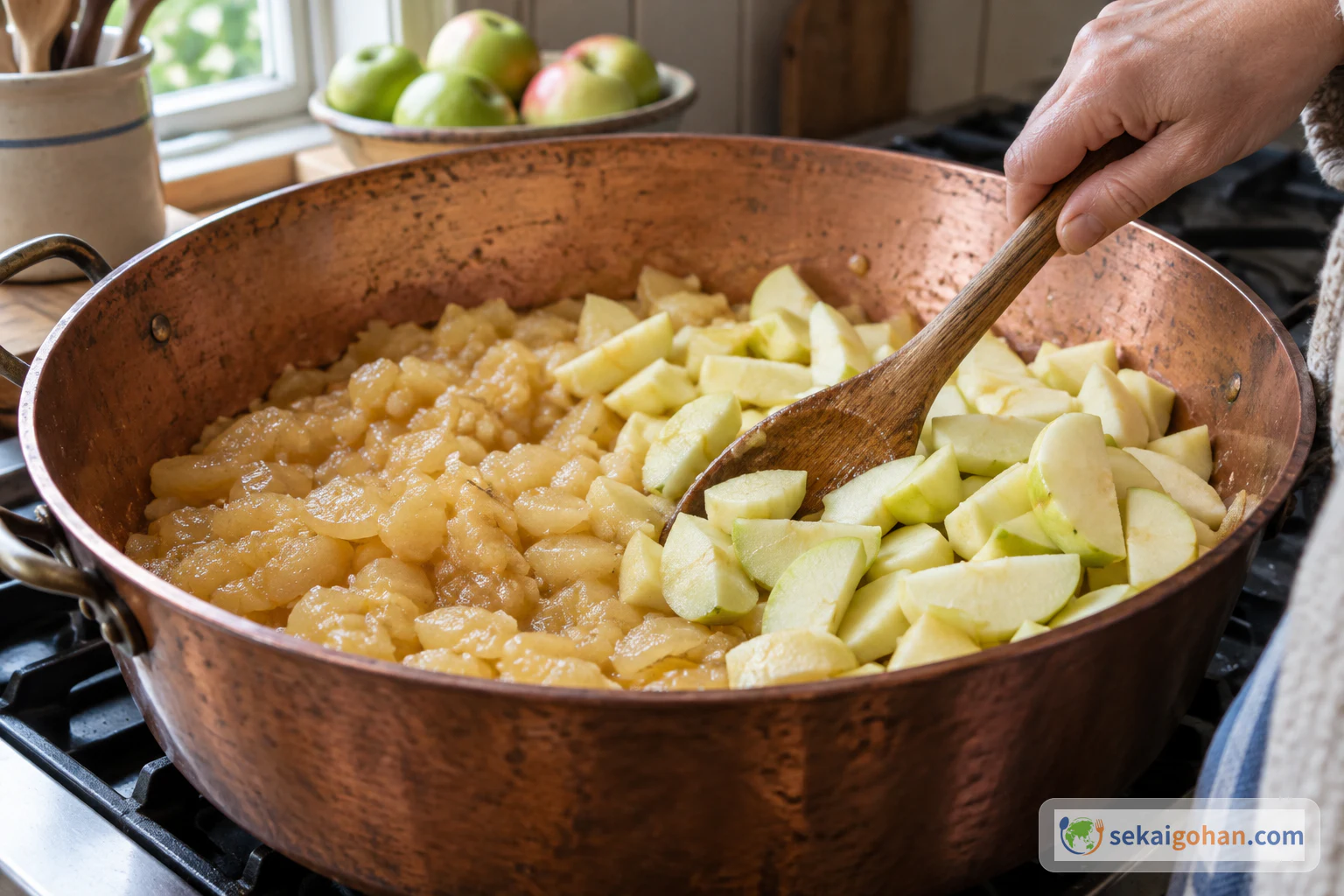
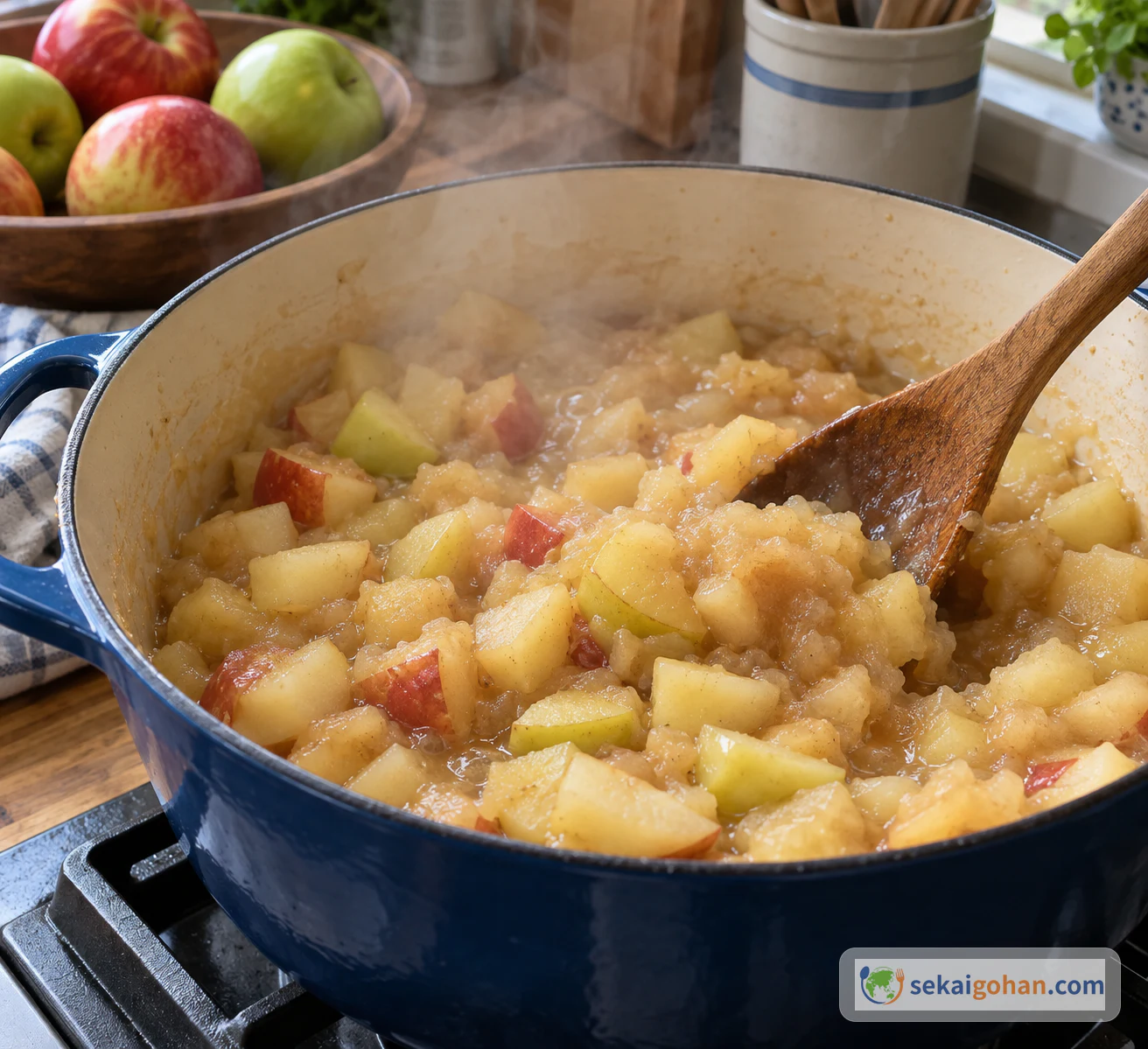
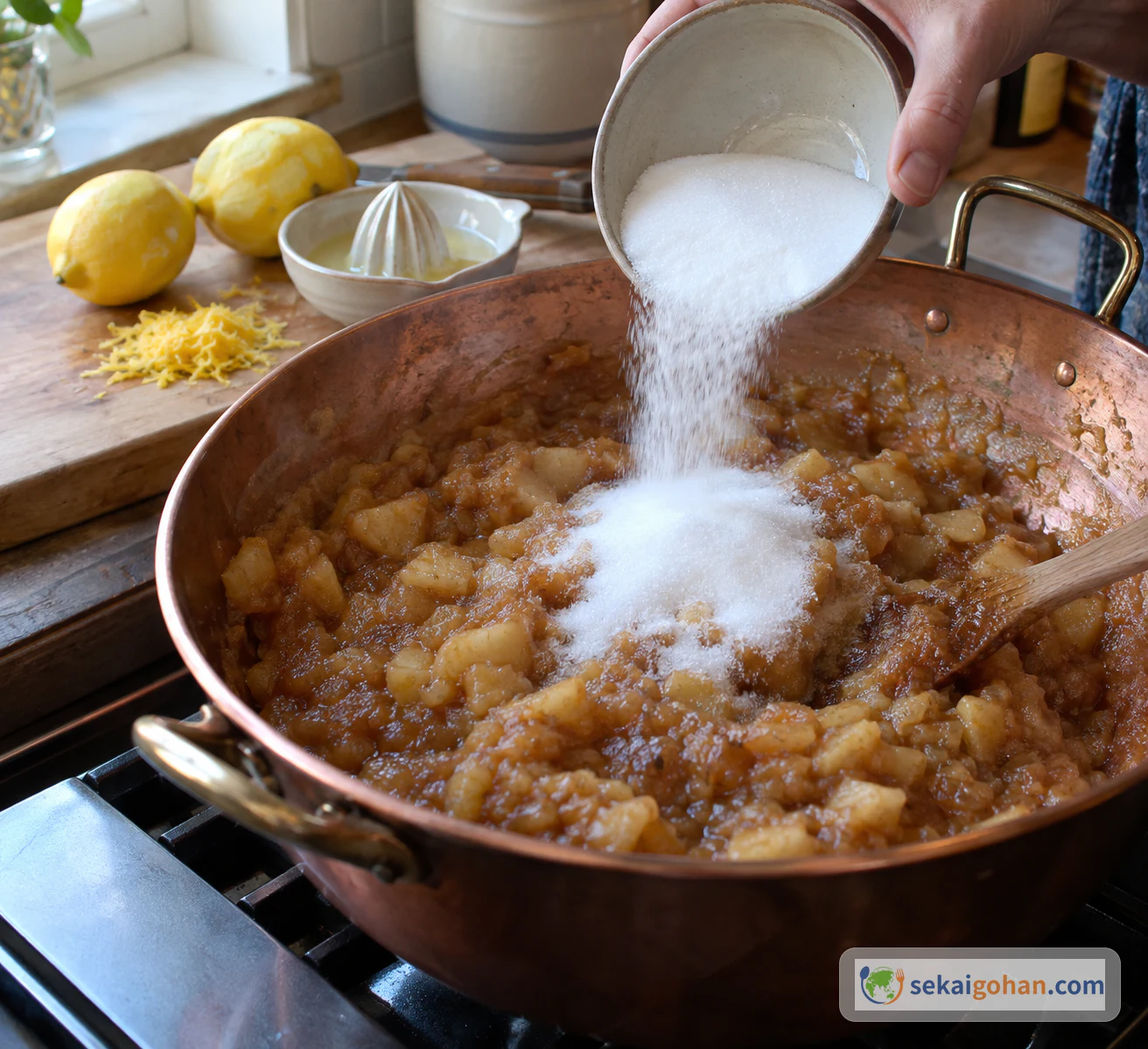
Soften the sweet apples first, add the sharp apples later, and hold back the sugar and lemon until the fruit has reduced considerably. The spices go in last. Finish when the preserve is very thick, deeply colored and glossy.
| Problem | Likely cause | What to do |
|---|---|---|
| The bottom is catching or smells scorched | The heat is too high, the pan is thin, or the thick mixture isn't stirred enough | Lower the heat and scoop from the bottom more often. Use a heavy pan next time, since scorching brings bitterness |
| The mixture is spitting | It is thick, sugary and bubbling | Lower the heat, use a long-handled spoon, and keep your face away from directly above the pot |
| It is still pale and loose | It hasn't reduced enough | Keep cooking over very low heat and stirring. Go by the thick, deep, glossy finish, not the clock |
| It tastes too sweet | The apples and sugar ran sweet together | Next time, choose the low end of the sugar range |
Serving, Storing and Varying Nièr Beurre
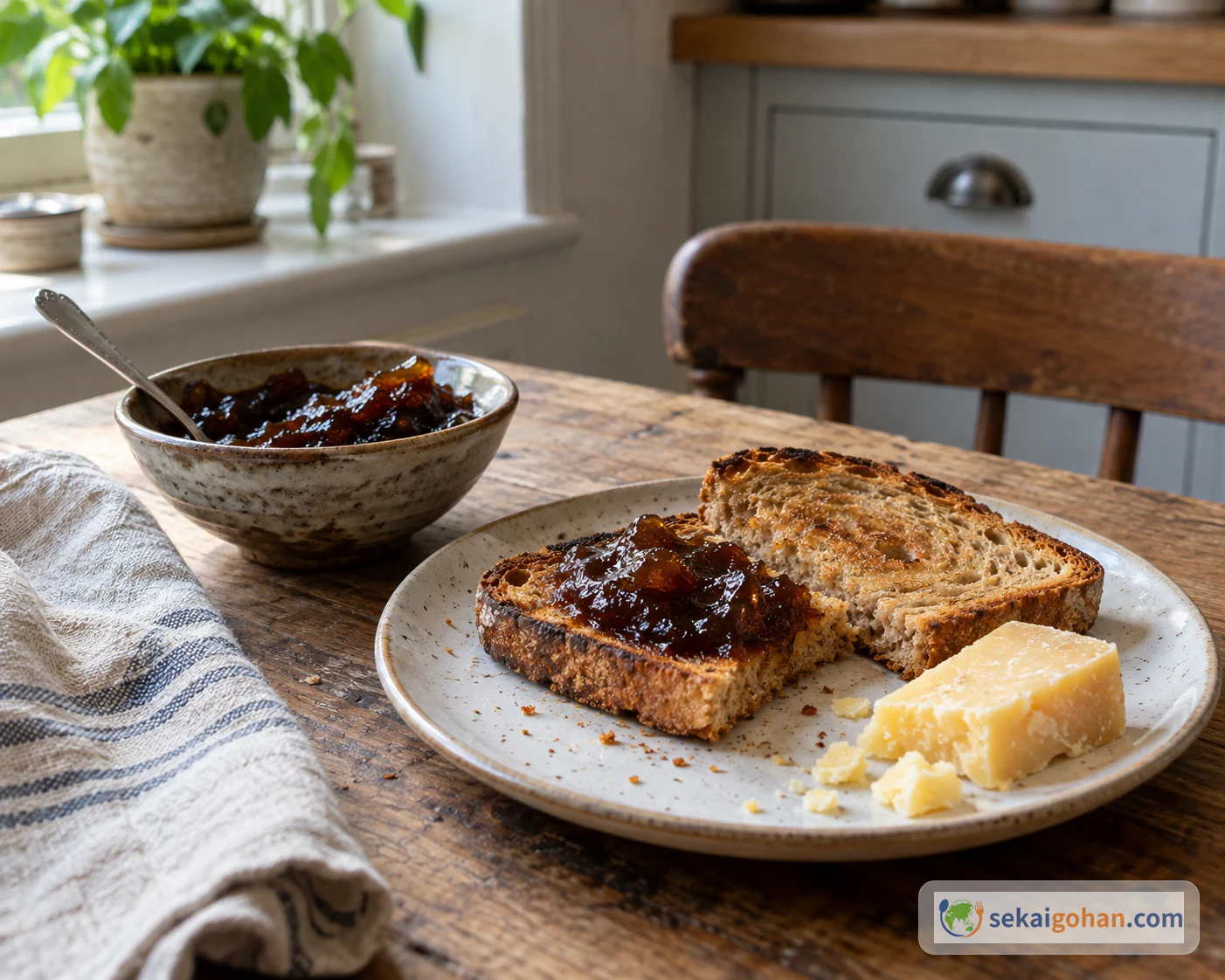
Taste the preserve on its own first, for its sweet-sour balance and spice. Then spread it on toast, the simplest place to start. It also works with savory food: try a small amount with mature cheese, roast pork, or gravies and stews, where it adds sweetness and acidity.
Pot the hot preserve into clean, sterilized jars, seal them, and process them for the times in step 8. The recipe gives no set storage period. Sugar, lemon and long reduction alone don't make the preserve safe at room temperature, so if you skip processing, refrigerate it and eat it soon.
For variations, play with the balance of apples, using more or fewer sharp ones. For a more traditional version, replace some or all of the water with Jersey cider, or add a small piece of liquorice root. Liquorice has a distinctive aroma, and it can take some searching to find.
For another European apple dish, try Austria's apfelküchle.
Frequently Asked Questions
Are cider and liquorice required?
Not for this home recipe. They are an option for a more traditional version, and the communal cauldron versions use them.
How many hours does it take?
The home recipe gives no set time, so judge it by the finish: very thick, deeply colored and glossy. The 24–30 hours belong to the giant communal pot.
Can I store it at room temperature?
Only if you seal and process the jars as described in step 8; even then, no storage period is given for this recipe. If you don't process the jars, refrigerate the preserve and eat it soon.