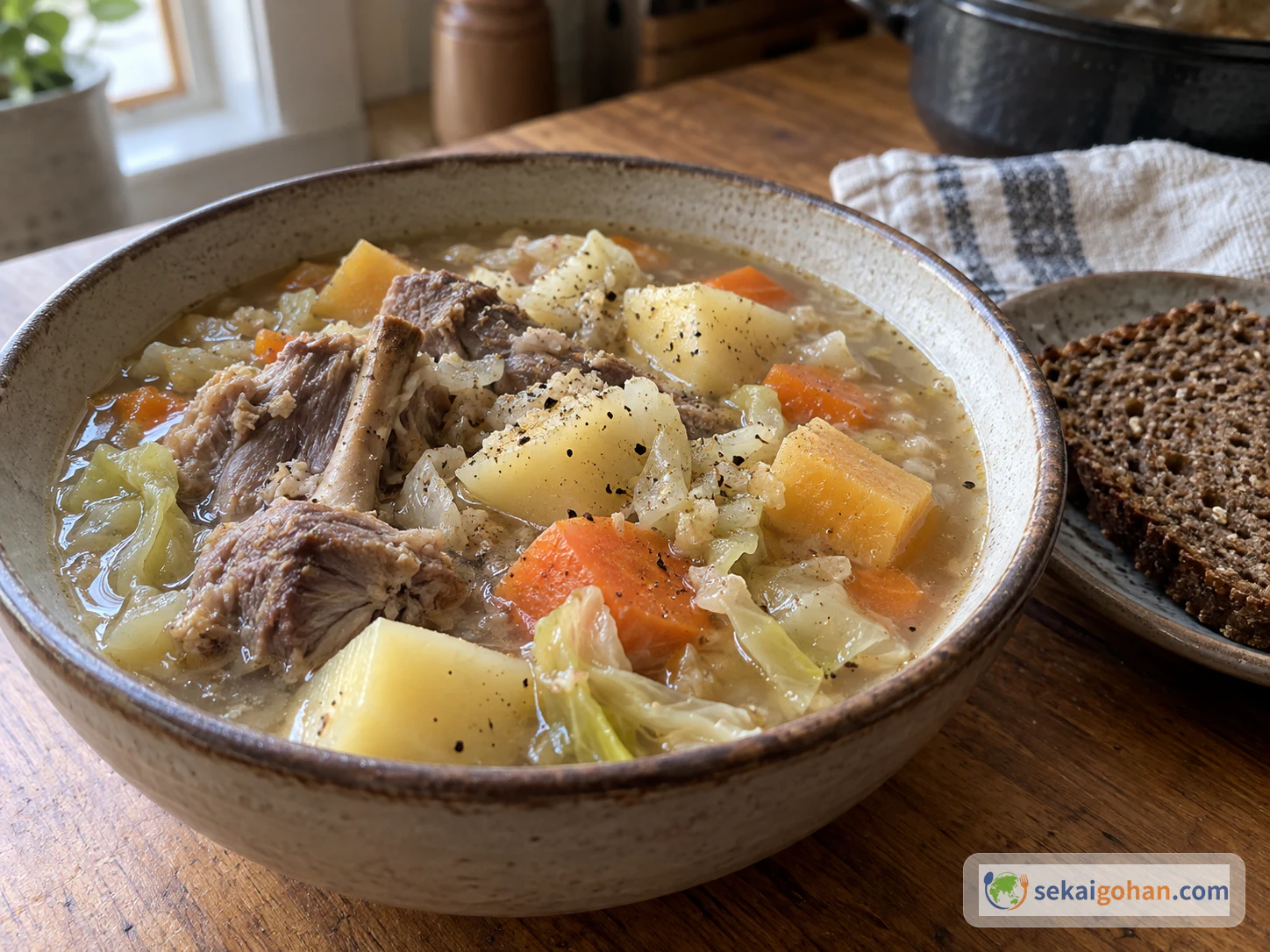
On a cold day, taking out the big pot can settle the question of dinner all by itself. Beef shank goes in, then water, then the fire. Within about an hour the steam carries the sweet smell of meat, celery and onion, and the house starts to feel a little like a French dining room. Pot-au-feu isn't a flashy dish, but you'll keep wanting to lift the lid. Beef and winter vegetables simmer slowly until the meat is tender and the broth is rich enough to drink as its own course.

About Pot-au-Feu
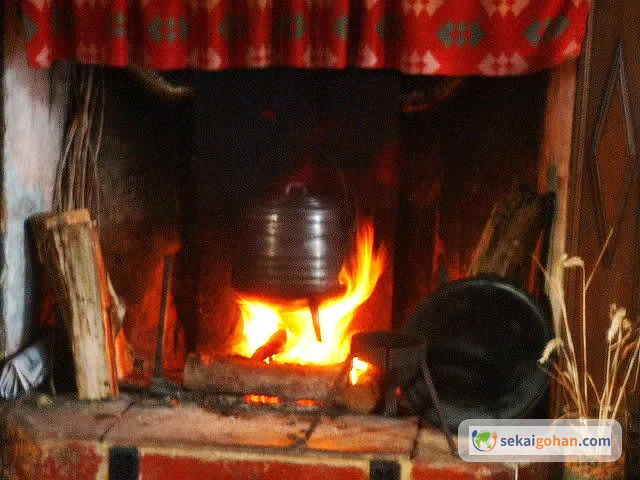
Pot on the fire
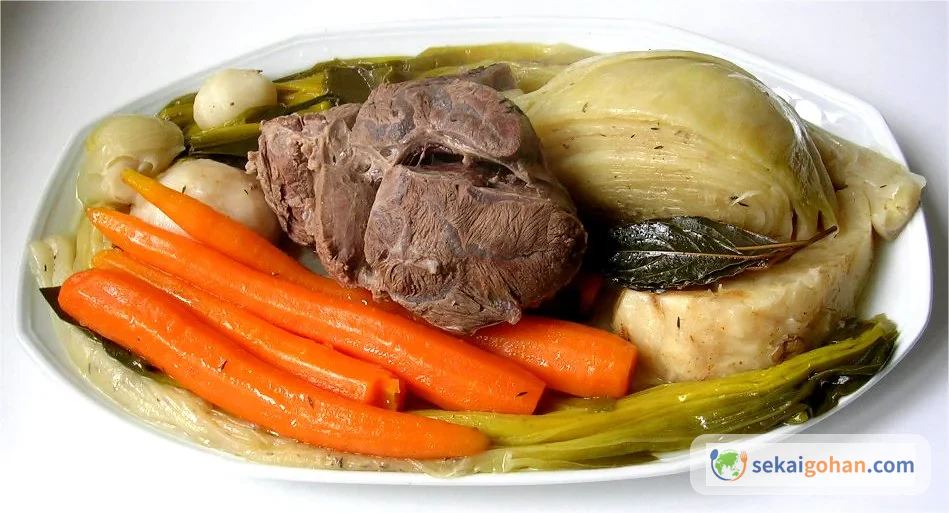
Pot-au-feu means, literally, "pot on the fire": beef simmered with vegetables and aromatics, served with its broth. In Japan it spread as a light Western-style soup of sausage and cabbage, but the French dish is much more about the meat. The stars are beef shank, shoulder, short rib and bone-in cuts that turn tender with long cooking, while the vegetables soak up their savor.
The technique is restrained: starting the meat in cold water, never boiling it too hard, and simmering a long time at small bubbles. Goulash and carbonnade build toasty flavor by browning. Pot-au-feu draws out a clear broth instead.
A home dish and a national dish
Pot-au-feu and potée both take their names from "pot," the cooking pot, and both slowly simmer meat and vegetables in water. Pot-au-feu centers on beef. Potée became a strongly regional dish built on pork, sausage and cabbage.
Pot-au-feu was never luxurious like court cuisine. It wastes no meat, the vegetables simmer alongside, and the bouillon gets used too. Homes in the countryside and the city alike cook it again and again, which is how it became a symbol of French cooking. The word also suggests the fire in the house, the kitchen, the household budget and a family meal, a little like how "mother's cooking" in Japan carries more warmth than a dish name.
So there's no need to dress it up as a polished restaurant dish. Make it in a big pot, keep the leftovers for the next day, and send the bouillon on to other dishes. Time, not a premium cut, is what makes tough meat delicious. One pot quietly carries the kitchen through several days.

Pot-au-feu and its relatives
Spain's cocido madrileño is a theatrical stew of chickpeas and meat eaten in three acts. Belgium's waterzooi is a gentle stew that binds chicken or fish with cream. Each makes a whole meal in one pot. Pot-au-feu is the quietest of them: no browning, no strong spices, just a clear meat broth with the flavor finished by what you serve alongside.
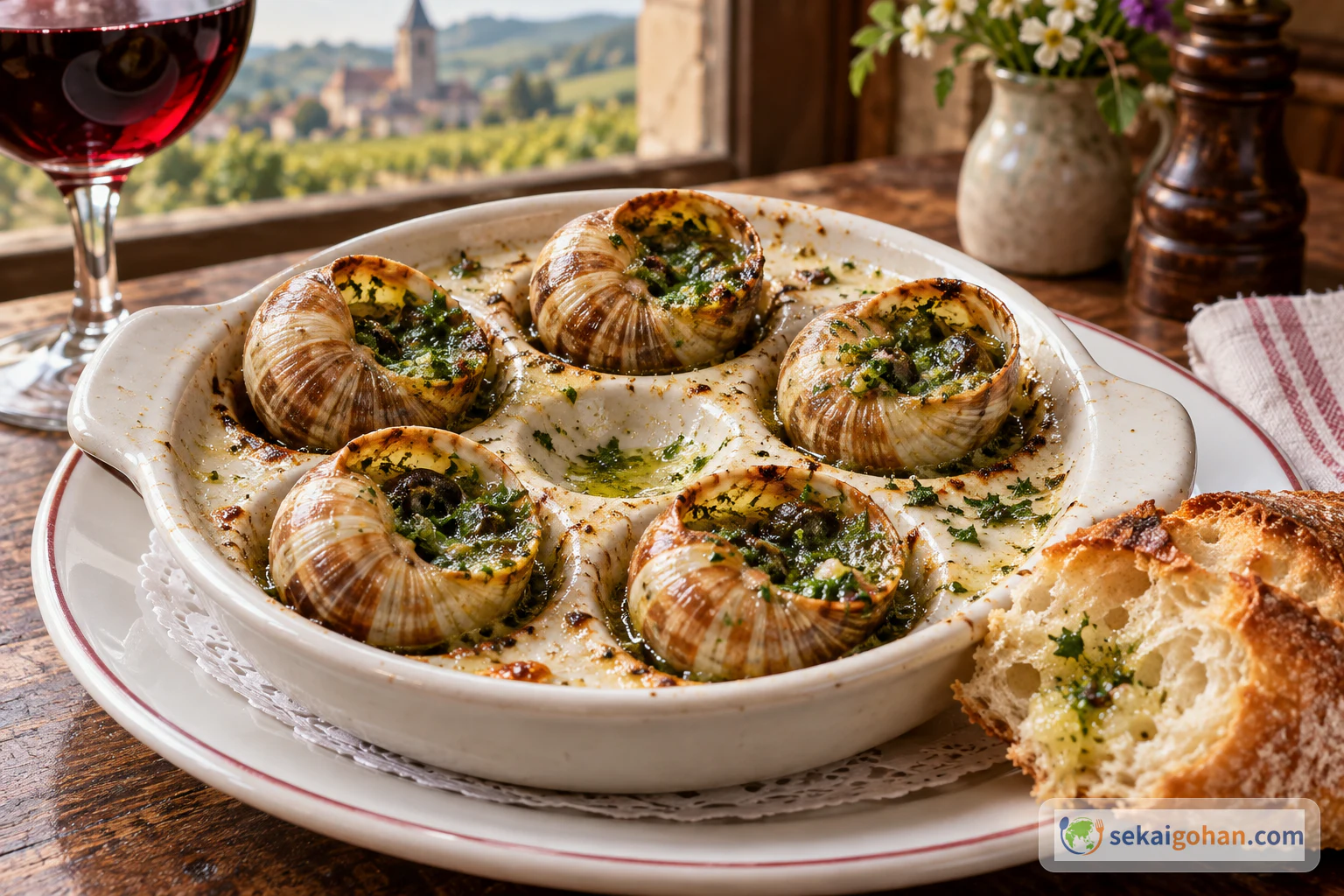
Within France, bouillabaisse is the contrast. It quickly layers the fragrance of seafood, where pot-au-feu slowly clarifies a meat broth. For a light southern French lunch, there's pissaladière, baked with onion and anchovy on top. Frog legs with herb butter from the Dombes area cook fast in a frying pan, a completely different rhythm from the pot.
Pot-au-feu also resembles oden: both simmer in a big pot and are eaten with their broth. But oden builds its flavor from fish cakes and soy-based dashi, while pot-au-feu centers on a bouillon of meat and aromatic vegetables. They look alike, but they leave quite different impressions.
Ingredients (serves 4) Gathered from an ordinary grocery
The ingredients are easier to shop for when grouped into meat, aromatics, late-added vegetables and accompaniments. Mustard and cornichons look like supporting players, but they give shape to eating simmered beef. The meat has a gentle taste, so the accompaniments add sourness and heat. That is the French way.

This recipe uses beef and chicken. Mustard may require allergen labeling, so check before serving family or guests. Move leftovers to shallow containers and refrigerate them promptly. Keep them 3–4 days in the refrigerator and reheat to 74°C (165°F). Don't leave the big pot at room temperature for long.
Prepare the accompaniments too. With just mustard, cornichons and coarse salt, it is no longer only a soup. It becomes a dish where you eat the meat.
Choosing Meat and Vegetables for Pot-au-Feu
The ingredients are plain, so your shopping decides most of the result. Skip expensive steak cuts and look for cuts whose gelatinous tissue loosens over a long simmer: shank, shoulder, short rib, oxtail and bone-in cuts. These are what make the stock.

Meat
Beef shank is tough at first, but its fibers loosen with long simmering. Chuck and short rib carry fat and give the soup roundness. Bone-in beef or oxtail makes it authentic, but supermarkets often don't carry them. In that case, make beef shank the star and add two chicken wings. They're there for body, not chicken flavor: the bones, skin and gelatin keep the bouillon rich even with supermarket beef.
Beef marrow on the side turns pot-au-feu into a feast, though marrow is hard to find in many places and the price climbs quickly.
Vegetables
Winter vegetables are plenty: carrots, turnips, potatoes, leeks, celery and onion. Thick leeks or scallions stand in well for French leeks.
In French homes, the cut side of a halved onion is blackened in a dry frying pan before it goes into the pot. Don't eat the burnt part. Its job is to give the stock an amber color and a toasty note, so the soup looks deeper with no caramel coloring needed.
The pot
For 4 servings, a heavy pot of 5.25 quarts (5 L) or more is easy to handle. A heavy pot holds low heat steadily, and the vegetables keep their shape better. Overfilling raises the water level and makes skimming difficult, so go bigger rather than smaller.
Method: start in cold water and simmer at small bubbles
The steps are simple. The hard part is resisting the urge to raise the heat. High heat toughens the meat and clouds the soup, even though it seems to soften things faster. Keep the heat low enough that small bubbles rise quietly from the bottom of the pot.
A pressure cooker cuts the meat's cooking time to 35–45 minutes. A low-heat simmer keeps the broth clearer and the vegetables in better shape, though. Pressure-cook only the meat, then open the lid and cook the vegetables in an ordinary pot to avoid failures.
Pot-au-Feu Troubleshooting
Pot-au-feu usually goes wrong in one of five ways: cloudy soup, tough meat, vegetables that melt, blurry flavor or greasiness. It's a simple dish, so the causes are easy to pin down.

The soup is cloudy
Cloudy soup comes from boiling too hard, especially early on, when there's a lot of scum. A slightly cloudy broth is fine at home. For a clear one, skim carefully for the first 30 minutes and keep the heat low after that. A tightly closed lid makes the pot boil more easily, so leave it slightly ajar.
The meat is tough
Tough meat means the simmer was too short or the cut was wrong. Thin slices of lean meat don't work here. Use shank or shoulder, and simmer until a bamboo skewer goes in easily. Salting partway through isn't the culprit. High heat is, because it tightens the muscle fibers, so keep it at small bubbles.
The vegetables melt
Melting vegetables went in too early. Turnips and potatoes break down easily, so add carrots partway through and potatoes, turnips and leeks in the second half. If everything goes in at the start, the vegetables melt, the broth clouds, and the dish looks and tastes heavy. Cut cabbage large and leave the core on so the leaves hold together.
Serving, Storing and Varying Pot-au-Feu
Bouillon first, then meat and vegetables
In Japan, pot-au-feu often ends up as a hearty soup in one bowl. At French tables, the bouillon, meat, vegetables and accompaniments are each enjoyed separately. Pour the bouillon into small cups first and add a little coarsely ground pepper. On a cold day, that first sip warms you without weighing you down. If it needs salt, add it here; seasoning the bouillon ties the meal together better than salting the meat heavily.

Then come the meat and vegetables. Long-simmered beef shank tastes gentle, and it gets monotonous without some heat and sourness. A little Dijon mustard sharpens it, and cornichons add the acidity it needs. Let the vegetables soak up a little bouillon on the plate and finish them with a pinch of coarse salt. Potatoes with mustard are satisfying even when there isn't much meat.
Storing pot-au-feu
The danger with a big-pot dish is leaving the whole pot to cool at room temperature, since the center stays hot for a long time. Divide the meat, vegetables and bouillon into shallow containers and refrigerate them once the steam settles. They keep 3–4 days in the refrigerator.
Once chilled, fat sets on the surface. Lift some of it off the next day and the bouillon becomes clearer and easier to drink. The flavor also settles overnight: the salt and aromatics soak back into the meat, and the soup tastes softer.
Move it to a small pot and heat thoroughly to the center, to 74°C (165°F). Reheating again and again lowers both flavor and safety, so warm only what you will eat, in small portions.
Leftovers and variations
Shred leftover meat for hash-style beef, curry, croquettes or sandwiches. The bouillon works for risotto, vegetable soup or as a base for noodle soup. Use it instead of water in a basic risotto, and a plain white risotto turns into a feast.
When beef feels too heavy, make a chicken pot-au-feu with bone-in thighs and wings. Simmer for 60–80 minutes and add the vegetables late, as usual. It isn't the formal French dish, but it makes a light home soup that children find easy to eat.
For a Japanese-style pot, soak a 2-inch (5 cm) piece of kombu in the water for 30 minutes before the meat goes in to add umami to the bouillon. Use only 1 tsp of soy sauce at the end; more pushes it toward oden. Daikon, lotus root and burdock bring Japanese winter vegetables into the French-style stew.
In spring, go light with new onions, spring cabbage, new potatoes and chicken. Shorten the simmering time and finish with whole-grain mustard and lemon. Pot-au-feu is a cold-day dish, but with different ingredients it works for any season's vegetables.
FAQ

Q1. How many hours should I simmer pot-au-feu?
For beef shank, simmer 2 1/2 to 3 hours over low heat. It's ready when a bamboo skewer goes in easily and the meat fibers loosen. In a pressure cooker, the meat alone takes 35–45 minutes. Cook the vegetables afterward in an ordinary pot so they keep their shape.
Q2. Can I make it without beef?
Yes, with bone-in chicken or sausage, though it becomes a Western-style stew rather than French pot-au-feu. It lacks the deep bouillon you get from beef, but as light home cooking it's quite delicious.
Q3. Can I add a bouillon cube?
If the broth tastes thin, add about 1/2 of a cube. Using a lot from the start puts the processed seasoning ahead of the meat and vegetables. Adjust the salt first and build body with the charred onion and chicken wings. Save the cube as a backup.
Q4. Can I freeze it?
The meat and bouillon freeze well. Potatoes and turnips lose their texture, so eat those from the refrigerator. Portion out just the meat and bouillon for freezing and use within about 1 month. Reheat thoroughly to the center.
Sources
- Larousse, "Definitions: pot-au-feu" https://www.larousse.fr/dictionnaires/francais/pot-au-feu/62982 (accessed 6 May 2026)
- Cuisine a la Francaise, "Pots et Potees" https://www.cuisinealafrancaise.com/fr/idees-pour-recevoir/articles/26-pots-et-potees (accessed 6 May 2026)
- Cuisine a la Francaise, "Pot-au-feu albigeois" https://www.cuisinealafrancaise.com/fr/recettes/viandes-et-volailles/boeuf/pot-au-feu-albigeois (accessed 6 May 2026)
- Epicurious, "Pot-au-Feu" https://www.epicurious.com/recipes/food/views/pot-au-feu-241767 (accessed 6 May 2026)
- USDA Food Safety and Inspection Service, "Leftovers and Food Safety" https://www.fsis.usda.gov/food-safety/safe-food-handling-and-preparation/food-safety-basics/leftovers-and-food-safety (accessed 6 May 2026)
- USDA Food Safety and Inspection Service, "Safe Minimum Internal Temperature Chart" https://www.fsis.usda.gov/food-safety/safe-food-handling-and-preparation/food-safety-basics/safe-temperature-chart (accessed 6 May 2026)
- Wikimedia Commons, "Category: Pot-au-feu" https://commons.wikimedia.org/wiki/Category:Pot-au-feu (image licenses checked, accessed 6 May 2026)