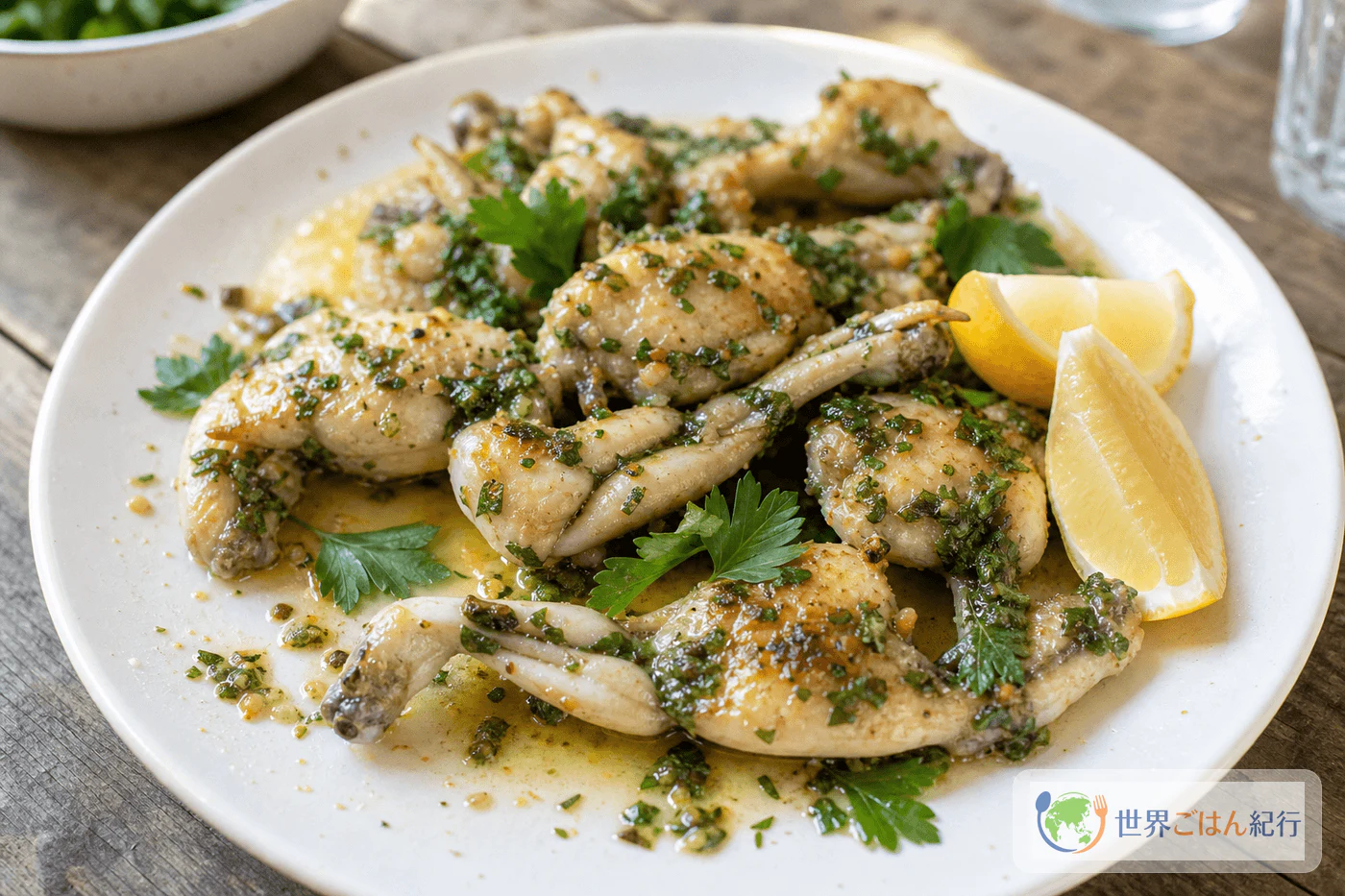
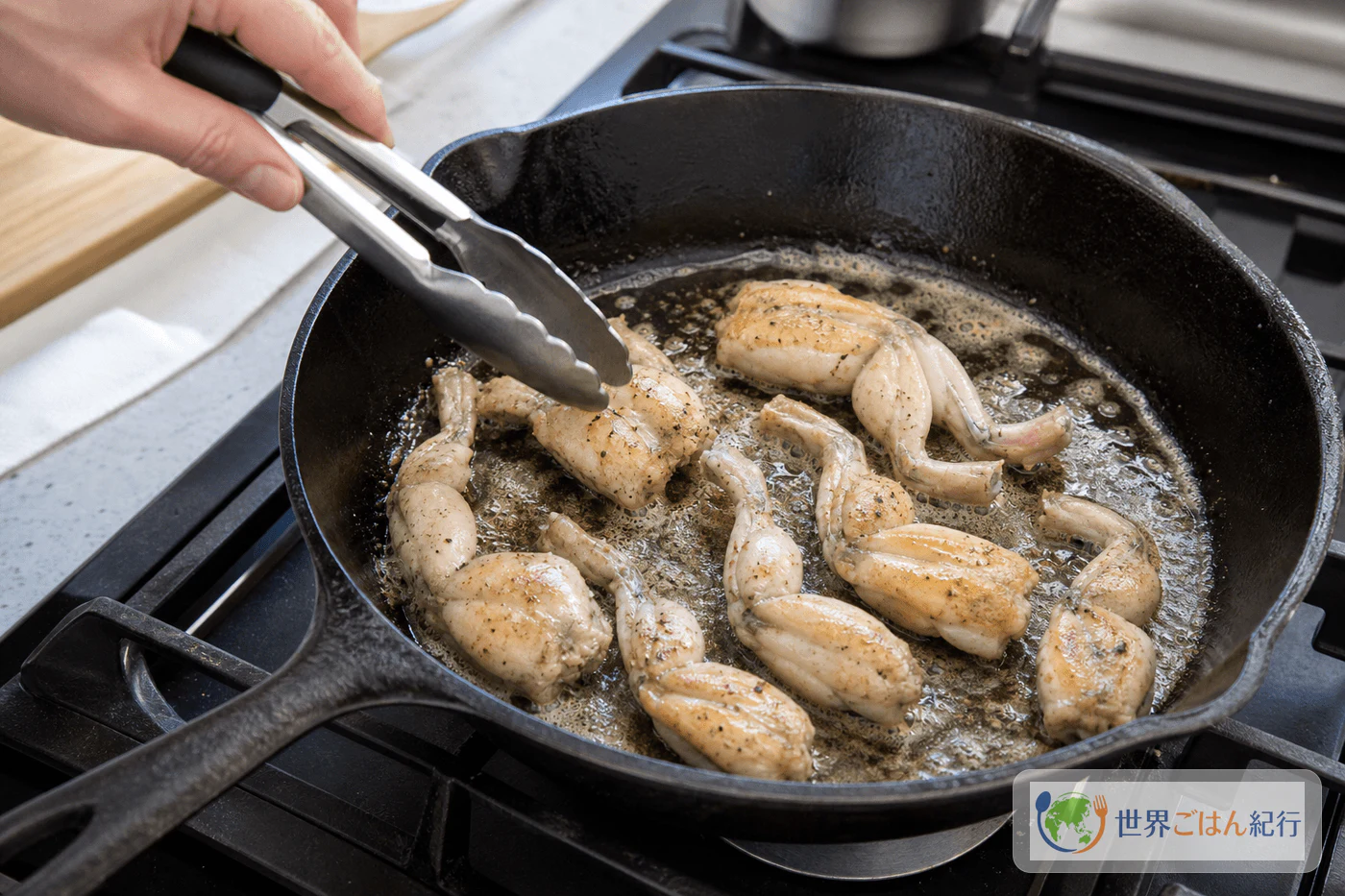
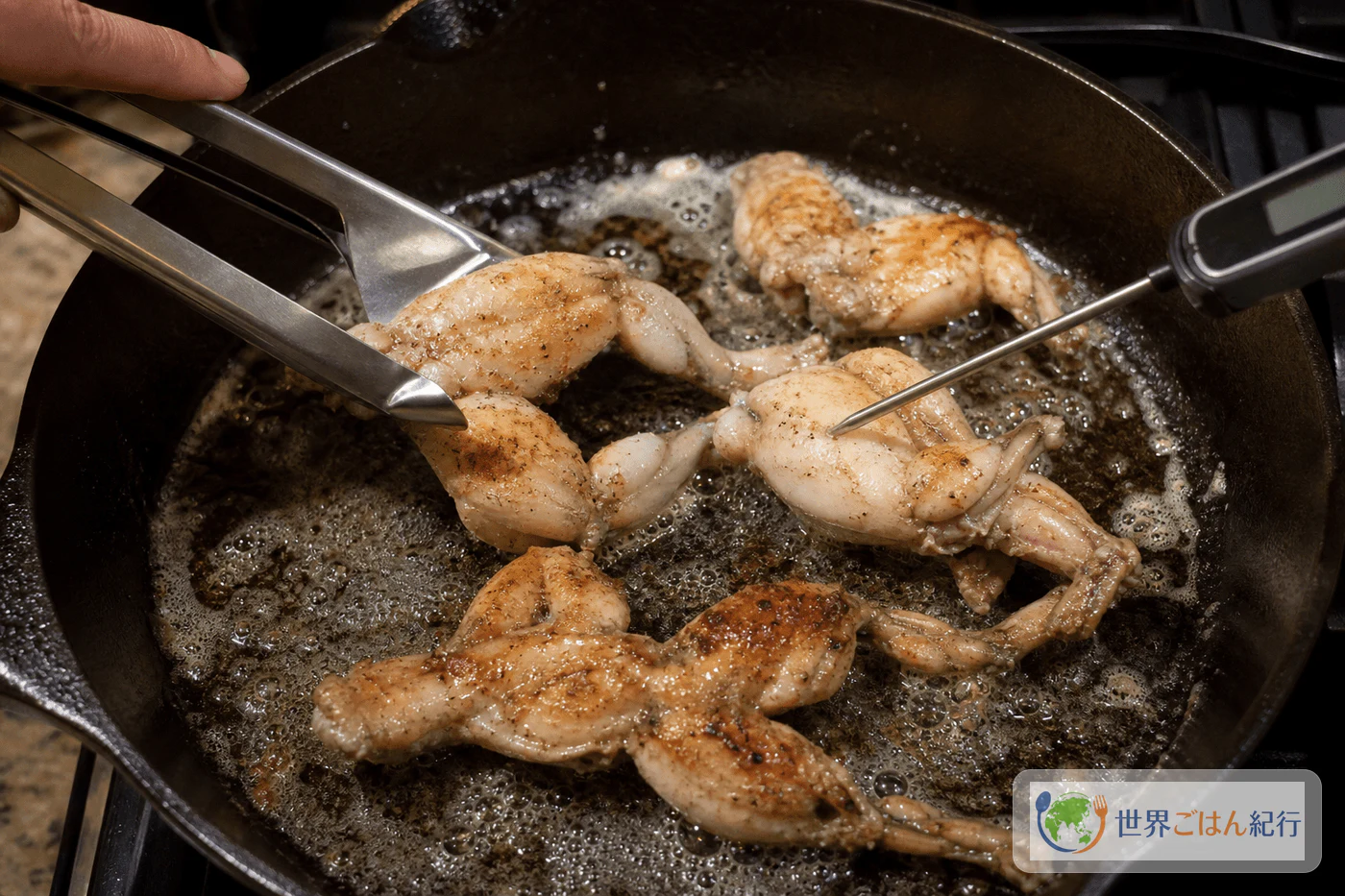
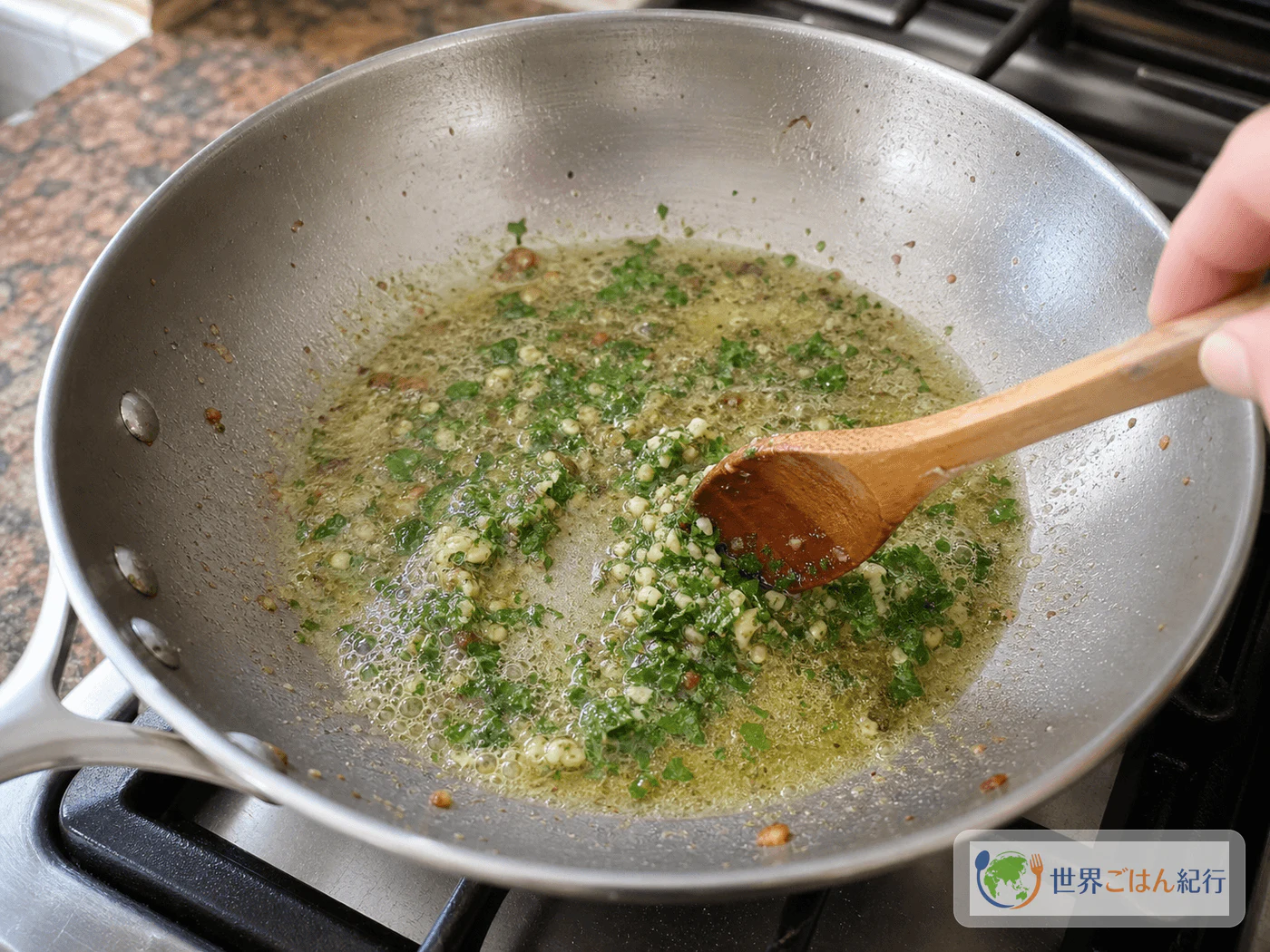
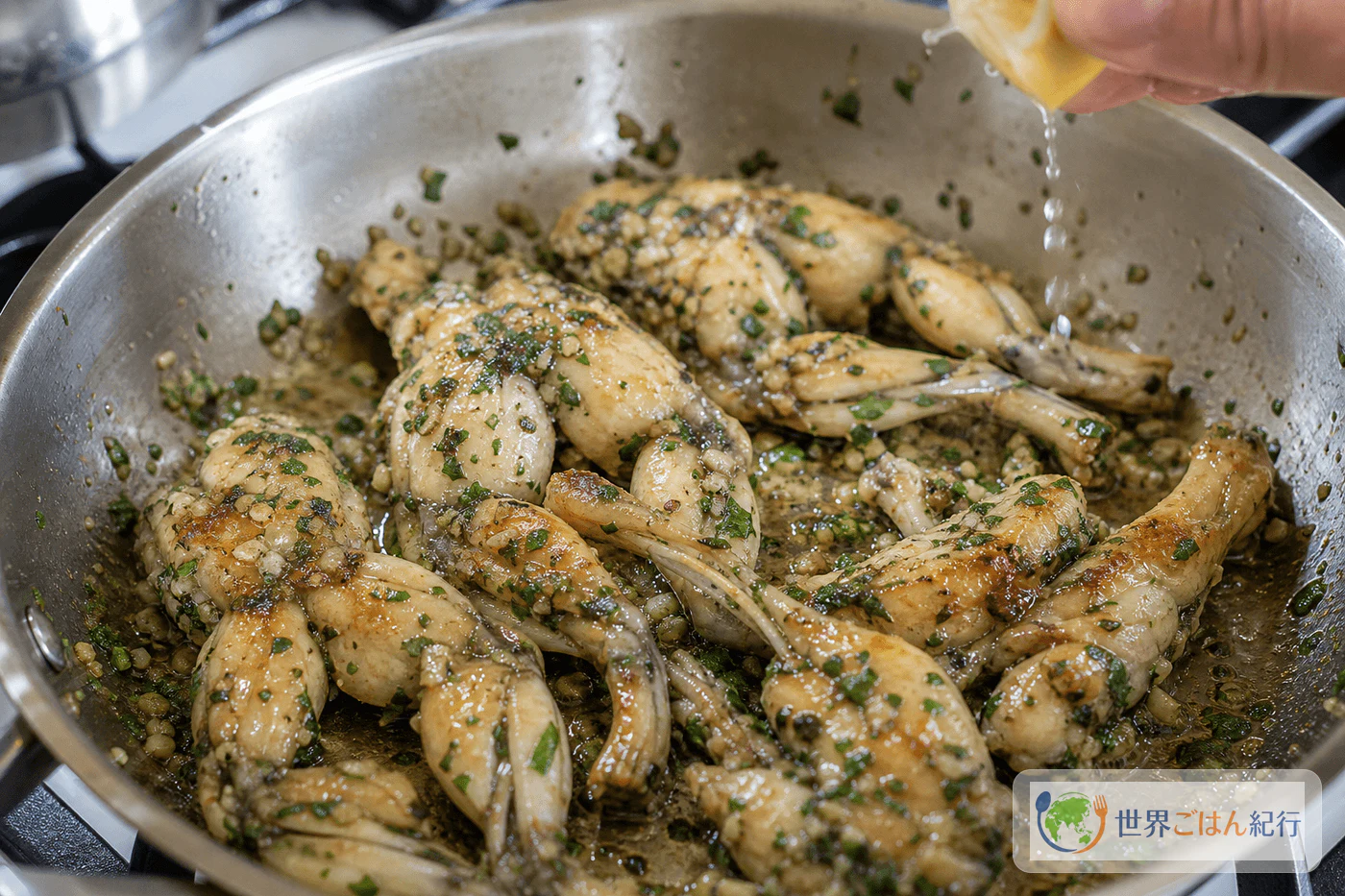
Butter foams in the pan. When the edges of the garlic have just started to round, in goes the chopped parsley, and a green aroma rises at once as a thin coat of herb butter clings to frog legs that were pale a moment ago. In French they are cuisses de grenouille, and the classic preparation is grenouilles à la persillade: frog legs dusted thinly with flour, browned in a frying pan, and finished in garlic-parsley butter. Many cooks are wary of them, but the cooking is close to white fish or chicken wing sections. Two things matter: how far to cook them, and how to keep odor down.
Frog Legs in the Dombes and Beyond
Persillade is a mix of parsley, garlic, and fat. The French use it on chicken and potatoes too, and with frog legs it gives the pale flesh a clear outline of aroma.
When people in France talk about frog legs, the Dombes often comes up. It's a region northeast of Lyon, full of ponds and known for its freshwater fish, birds, and frogs. There, frog legs aren't only restaurant food; they belong to the seasons of a land of ponds and to home cooking with butter and parsley. Elsewhere the dish has mostly survived as a joke about "the French eating frogs," but the real plate is a delicate one: pale white meat finished briefly with herbs and garlic.
Other regions take frog legs in other directions. Near the Dombes and Burgundy, butter, garlic, and parsley are the stars. In the American South and Louisiana, battered, fried frog legs are the familiar image, and in Chinese and Southeast Asian cooking they go into stir-fries and braises. For a French-leaning version, keep the coating thin, keep the sauce away from sweet-and-salty, and brighten it at the end with parsley and lemon.
The rhythm is also different from other French classics, like bouillabaisse, the fish soup of the port towns, or pot-au-feu, the quiet simmer of meat and vegetables. Frog legs are never simmered long to draw out savoriness. The flesh is small and shrinks quickly if overcooked, so you build the toasty flavor in a short cook and add the herb butter only for the last few minutes.
Ingredients (serves 4)
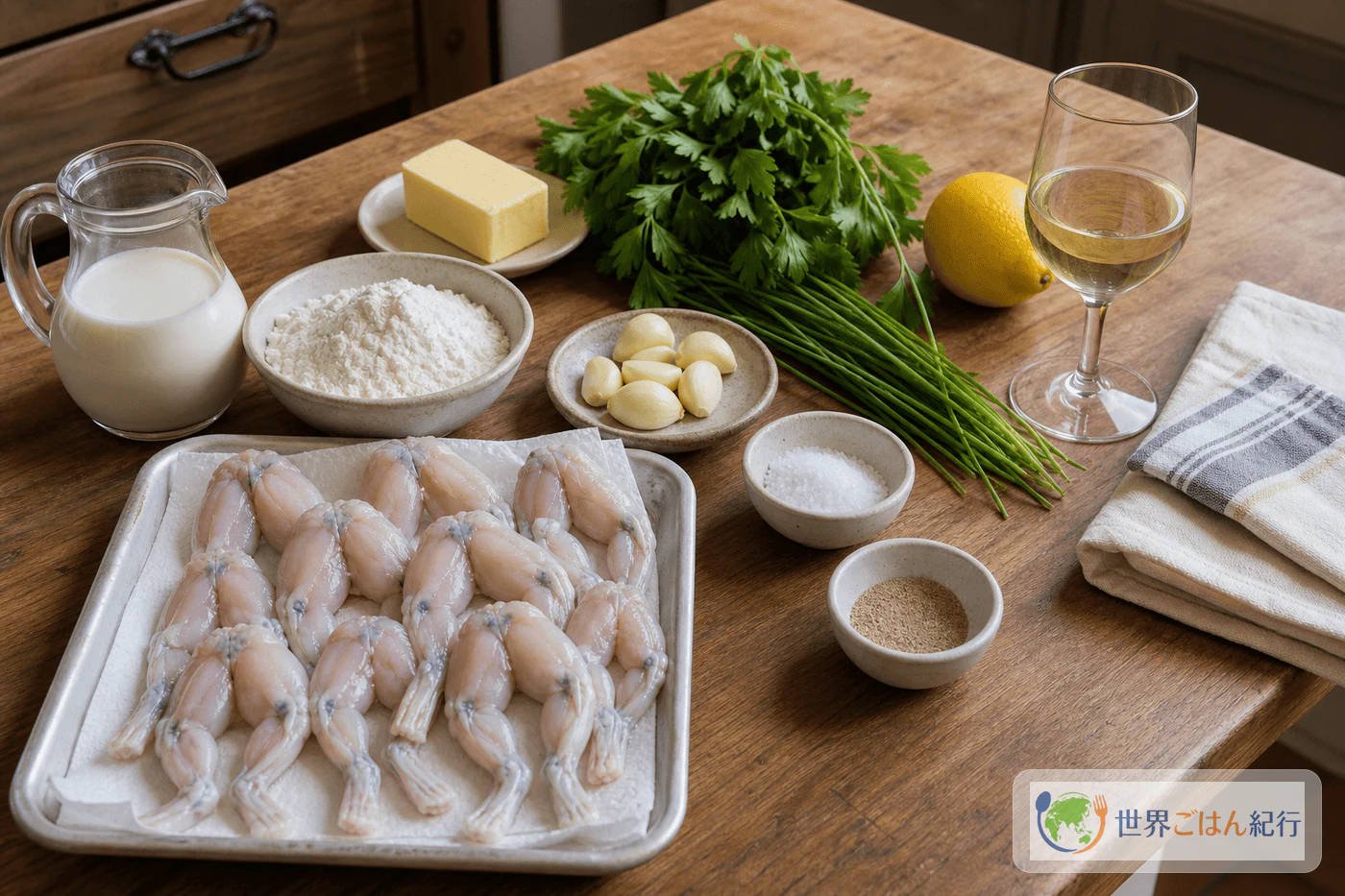
This amount fits a heavy frying pan about 10 inches (26 cm) in diameter, cooked in 2 batches. Frog legs vary a lot in size, so aim for a total of 1.25 lb (600 g). Small ones are about 12 pairs, large ones about 8. Thaw in the refrigerator, following the package. Even in a hurry, don't leave it at room temperature.
For allergies, watch for wheat, milk, and ingredients derived from frogs. Check the package label for fish and shellfish, since imported products can share a factory with them. For older people, pregnant people, or anyone with a weakened immune system, don't serve it as a delicacy. Serve only a small amount, cooked through to the center.
Choosing Frog Legs, Equipment, and Substitutes
Buying frog legs
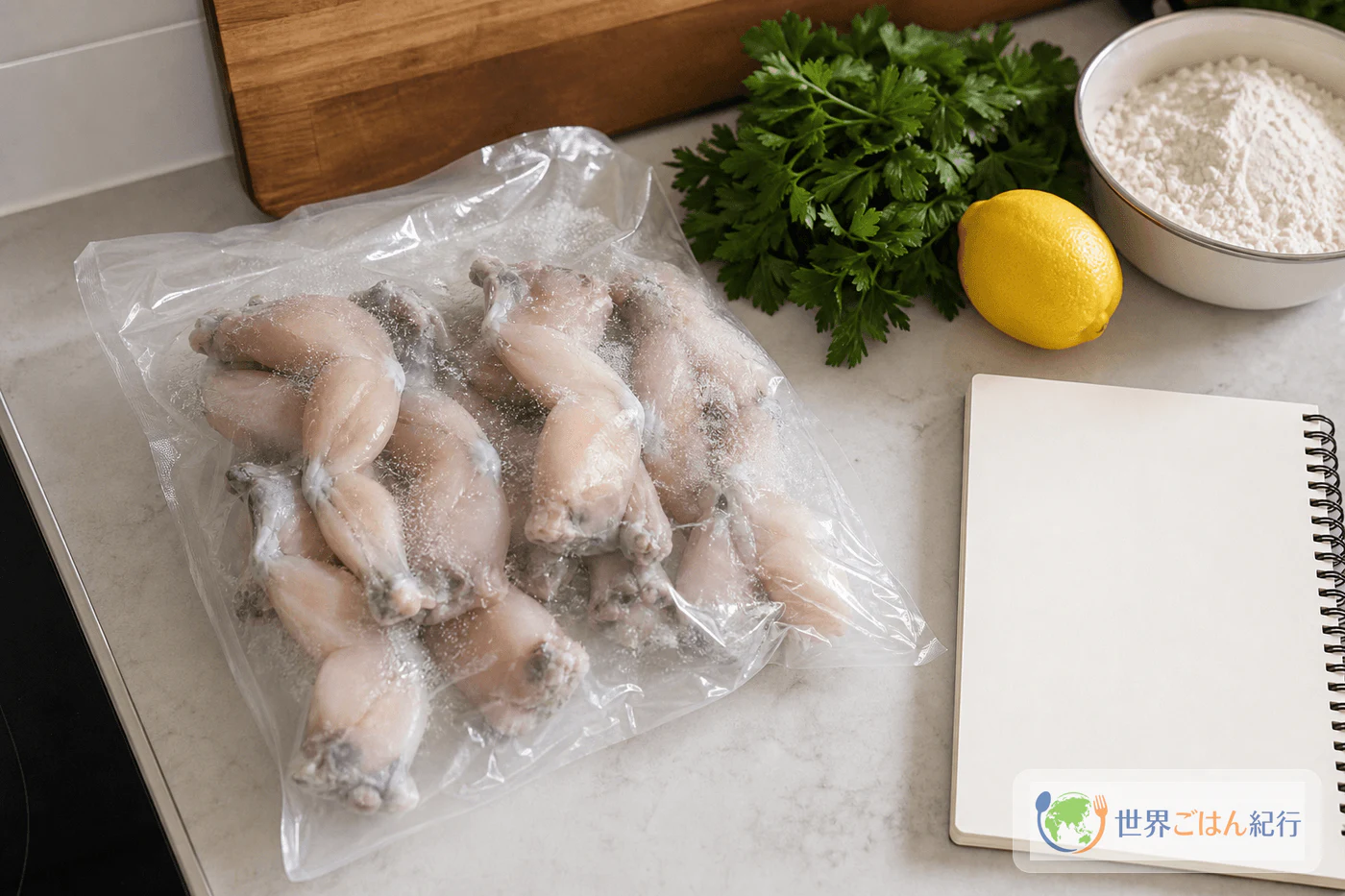
You often can't buy frog legs at the nearby supermarket. Look at shops that sell frozen imported foods, restaurant supply stores, and online sellers. Everything else (butter, parsley, garlic, lemon, flour) you can buy locally, so the frog legs are the only thing you need to hunt for.
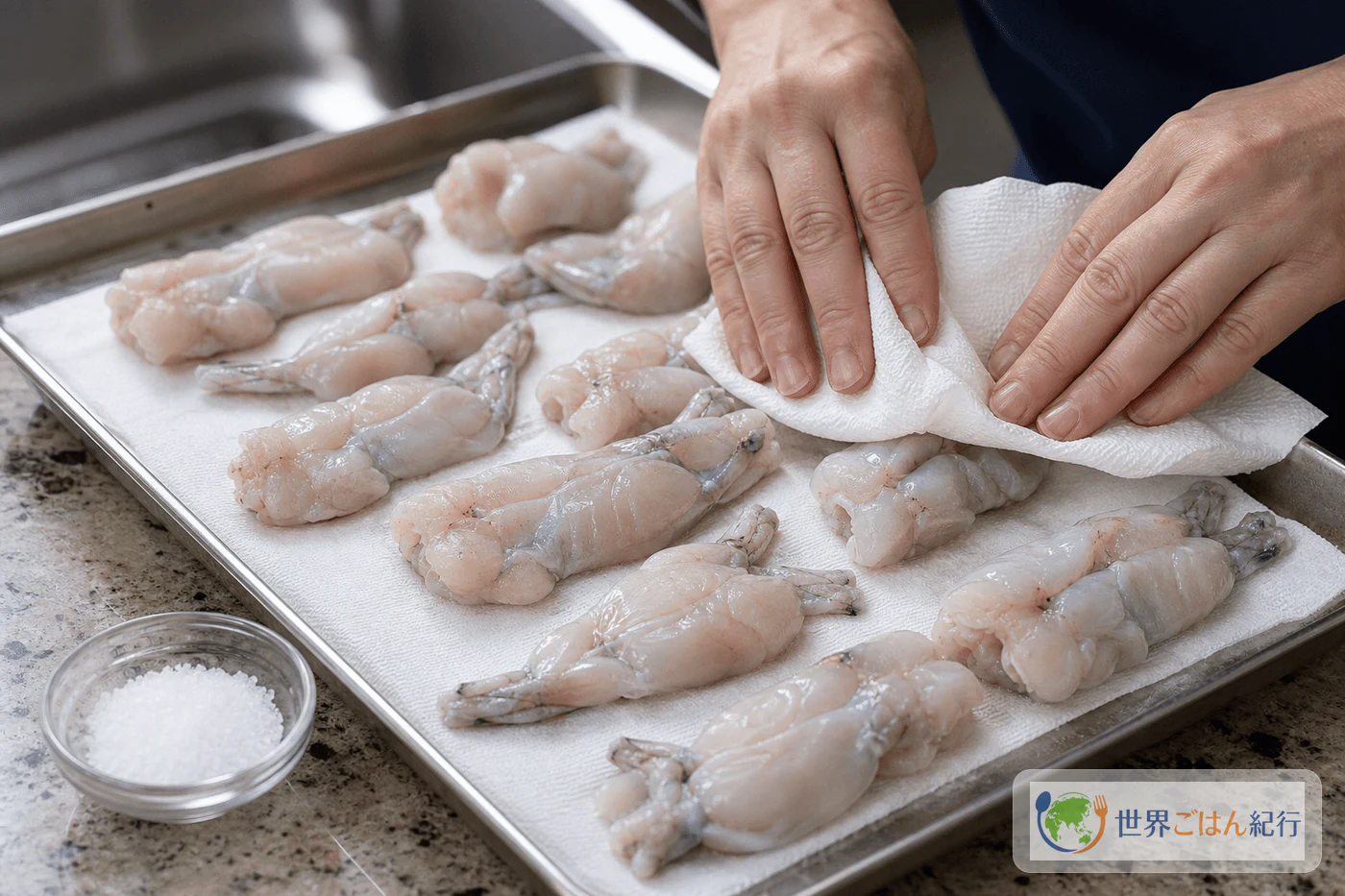
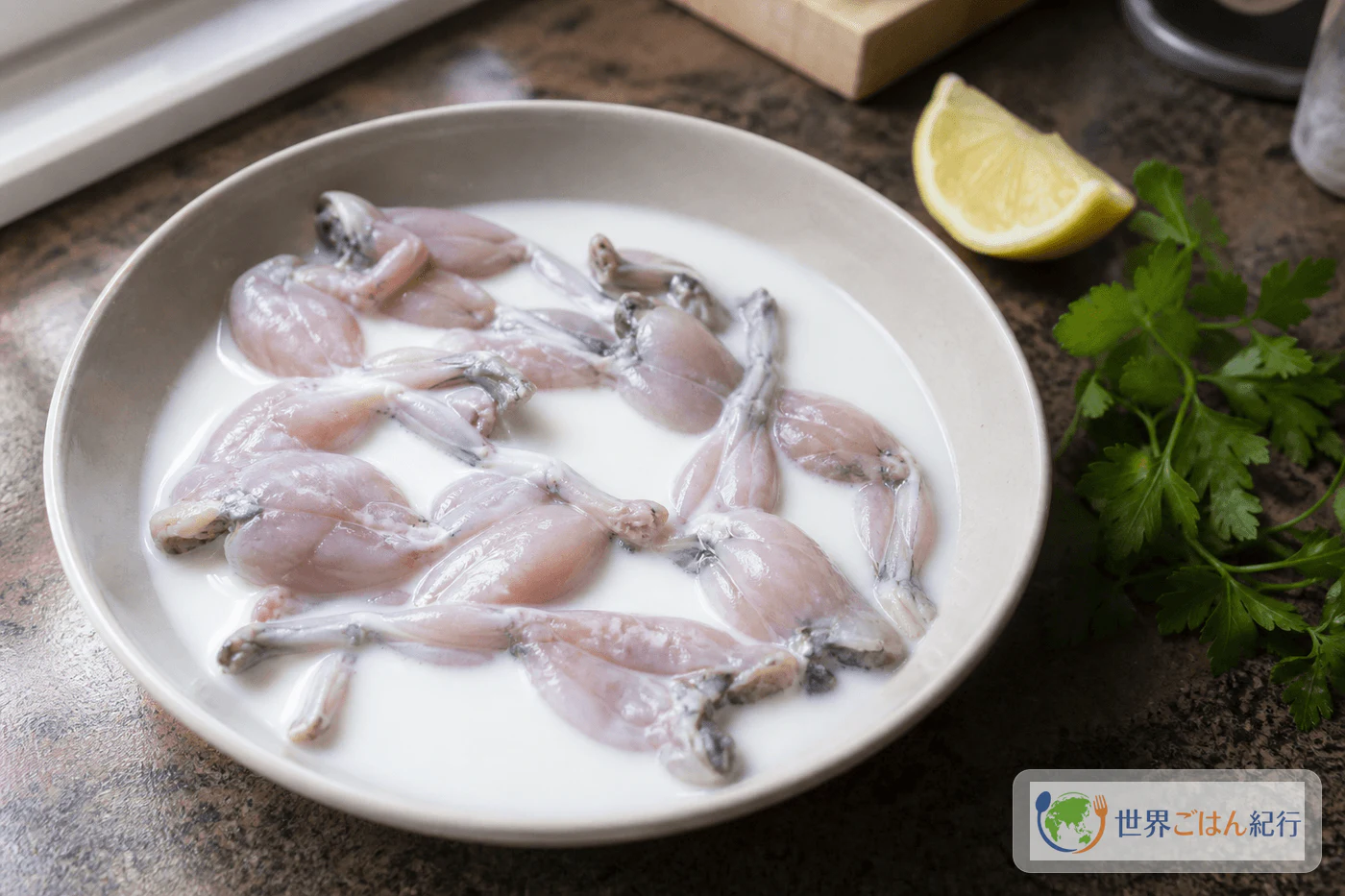
Before buying, check that they are prepared, that there's no heavy freezer burn or lots of frost in the bag, that the country of origin or importer is readable on the label, and that you can use the whole quantity at once. About 1.25 lb (600 g) is plenty the first time, rather than a big cheap package. With frozen product, careful thawing decides half the flavor. If odor worries you, don't reach for more garlic; wipe off the moisture carefully after thawing, then settle the legs briefly in milk or light salt water.
Where they come from matters, too. Demand for frog legs in France puts pressure on wild populations, and imports and resource management are real problems. Never catch frogs in the wild yourself: species protection, parasites, pesticides, and hygiene all make it a bad idea for home cooking. Buy prepared frozen product sold as food, read the labels, and buy only what you'll finish.
Equipment
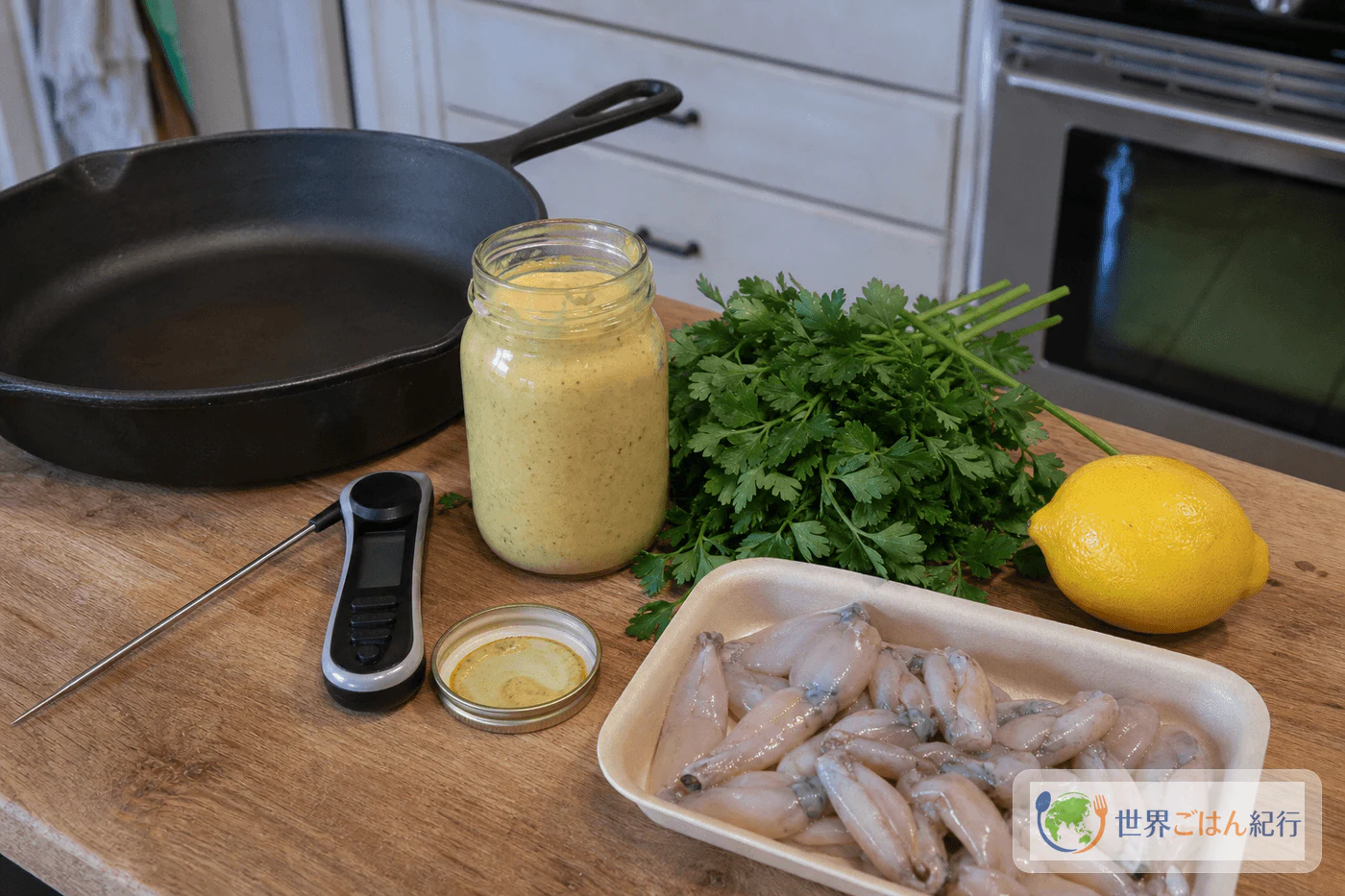
Aside from the frog legs, choose equipment and seasonings that will earn their place in other dishes: a heavy frying pan to hold the herb butter, a thermometer if you're unsure about doneness, and Dijon mustard to add acidity at the table. All three come back for French dishes such as pissaladière and garbure.
Substitutes
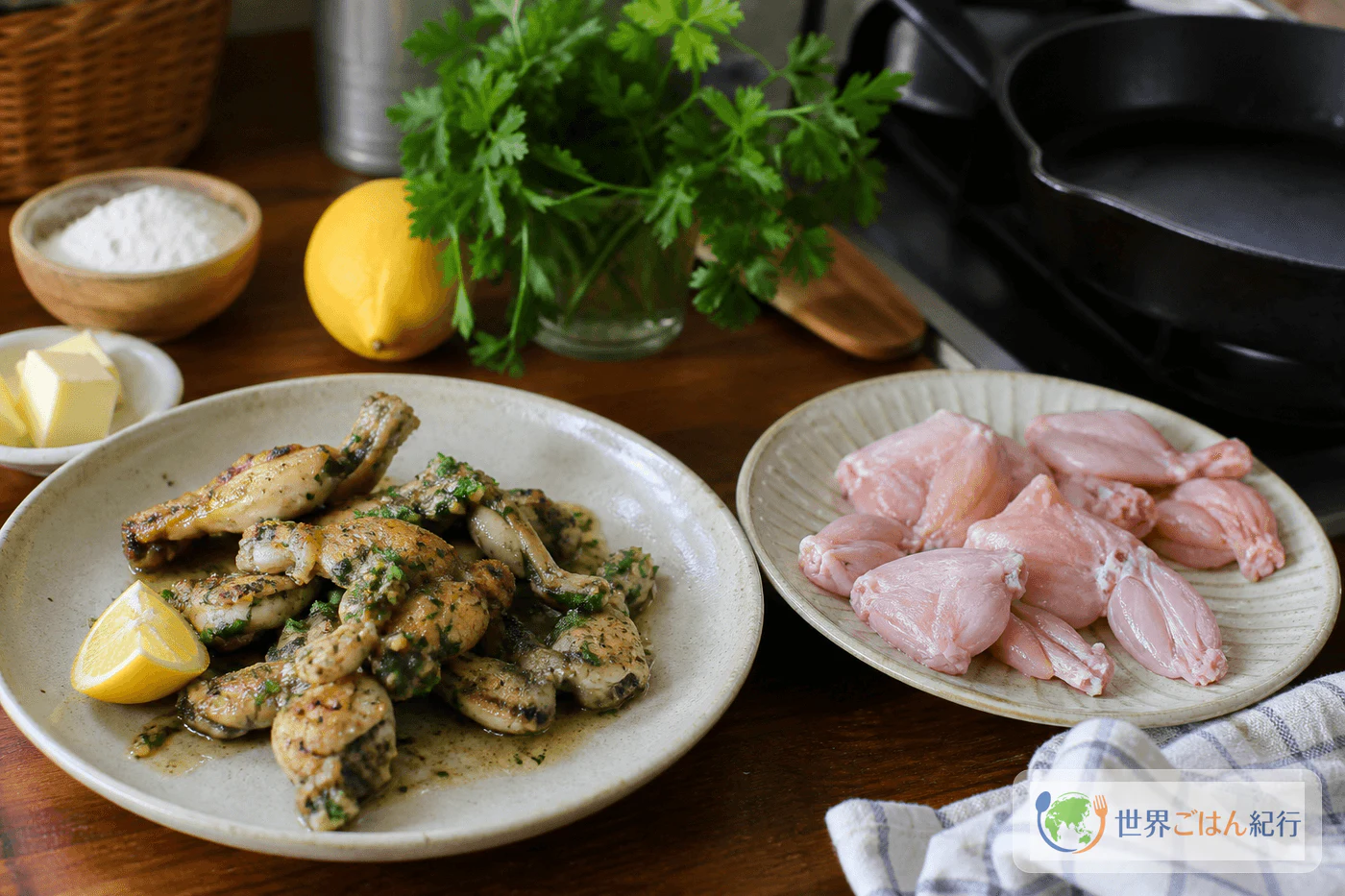
Good stand-ins are chicken wing sections, chicken neck meat, and white fish fillets. Chicken wing sections are closest in the feel of eating off the bone, and they're ideal for practicing the herb butter, since the heat control, the thin flour, and not burning the garlic all carry over. White fish is close in lightness but breaks easily when floured and pan-cooked, so choose skin-on cod or sea bass. Nothing quite replaces the fine fibers, thin bones, and springiness of frog legs, though. Practice with a substitute, then make the real dish with a small amount of frozen product.
Method: Finish With a Thin Dusting of Flour and Herb Butter
The cooking time is short, but it succeeds better if you do not rush the preparation. Finish thawing, drying, flouring, and chopping the herbs first, and once the legs are in the pan finish in one go. Forcing the whole amount into one batch drops the temperature, so with a 10-inch (26 cm) frying pan cook in 2 batches.
Frog Legs: Common Failures and Fixes
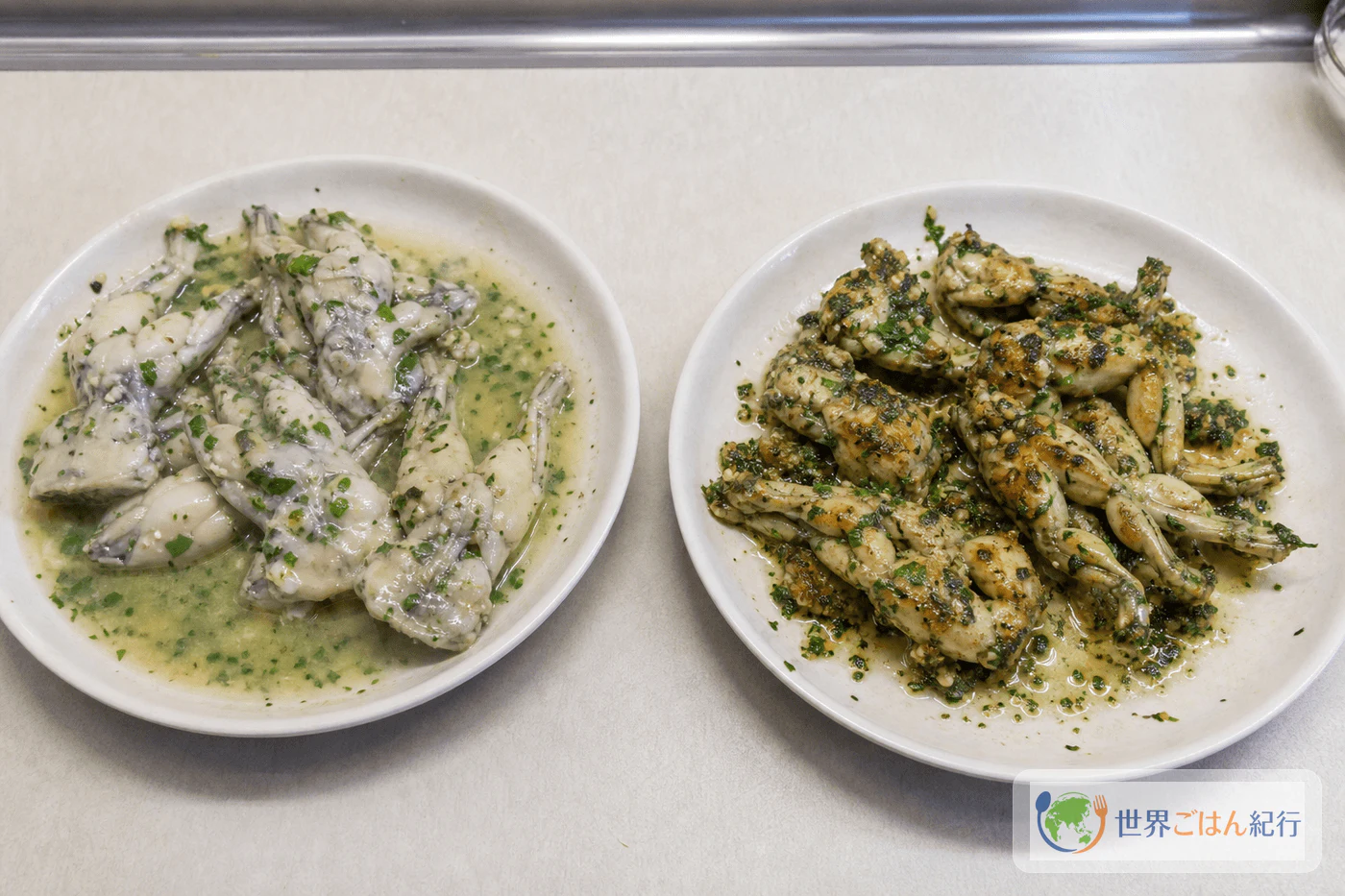
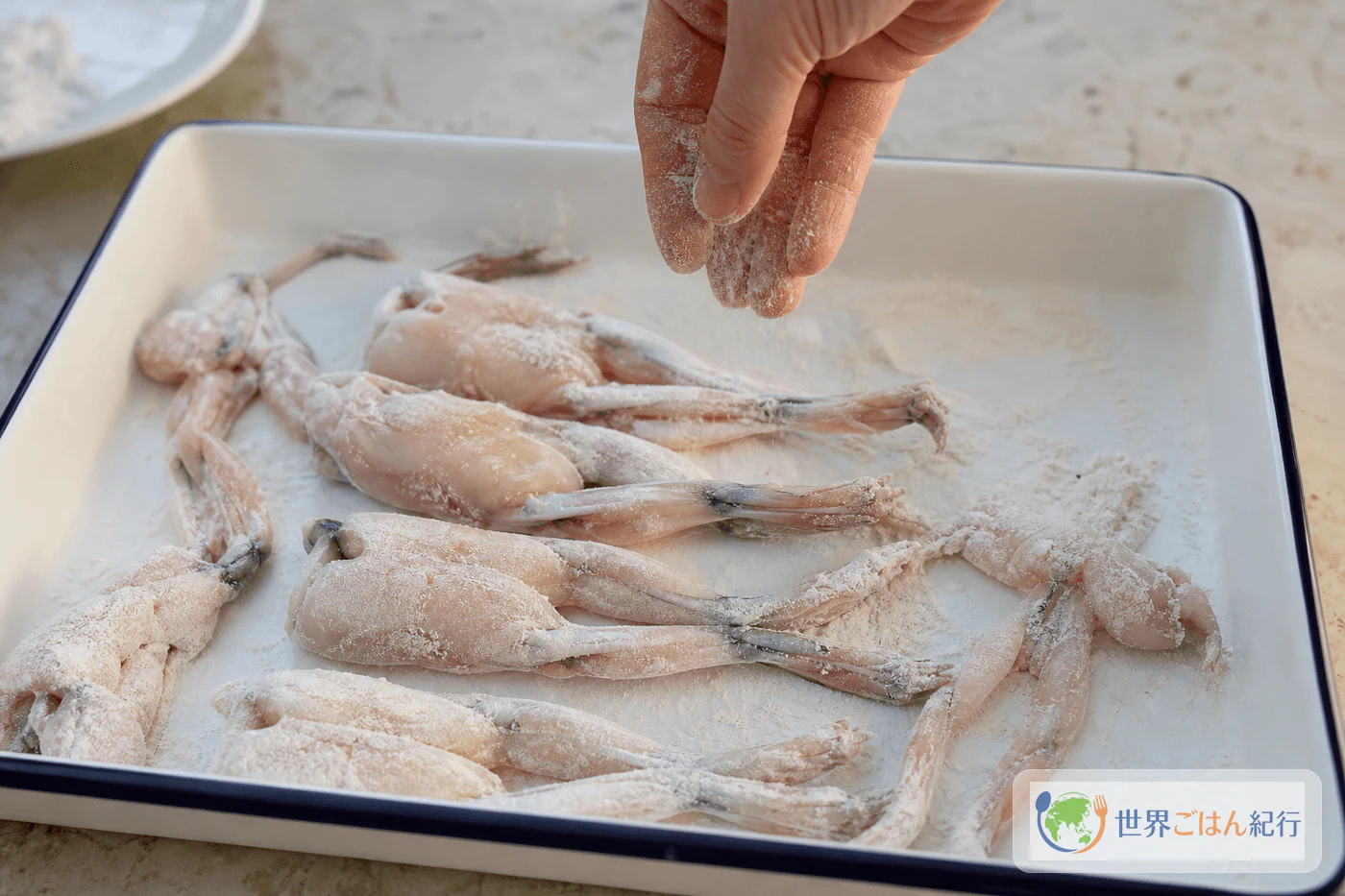
If you cook frog legs with moisture left on them, they steam before they turn toasty. After thawing, wipe them thoroughly with paper, use only a thin dusting of flour, and cook over medium to medium-low heat. Frog legs aren't on the standard food-safety temperature lists, so treat them as a pale white meat: the center should be white and opaque, and the thick part should reach 145°F (63°C) or more on a thermometer. When reheating leftovers, heat them thoroughly to nearly 167°F (75°C).
The most common failure is wateriness. Thawed frog legs hold more water than they look, and if you cook them after only a light wipe, the pan temperature drops, the flour turns to paste, and even the herb butter goes cloudy. If you use the milk soak, always wipe them again afterward. Remove the moisture first and keep the flour thin, rather than using thick flour to absorb it, and the result will be lighter.
Toughness comes from overcooking. Frog legs are smaller than chicken thighs and bonier than a fish fillet, so residual heat keeps shrinking them after they're done. If you have large and small pieces in the pan, take the small ones out first. Once the thick part is white, opaque, and over 145°F (63°C), don't leave it long; give extra time, 30 seconds at a time, only to pieces still translucent near the bone.
Garlic turns bitter when it goes in too early. Added at the start, minced garlic burns before the frog legs take on color, so make the herb butter separately at the end and just warm the garlic briefly over low heat. If it does burn, don't try to rescue it with white wine. Wipe out the blackened garlic with paper and start again with fresh butter.
If the dish tastes flat, lemon and mustard at the table fix it better than salt sprinkled on at the end, which only makes the small amount of flesh salty. Dissolve a little salt into the herb butter instead and spoon it over the plate to season evenly.
Serving and Storing Frog Legs
Serving
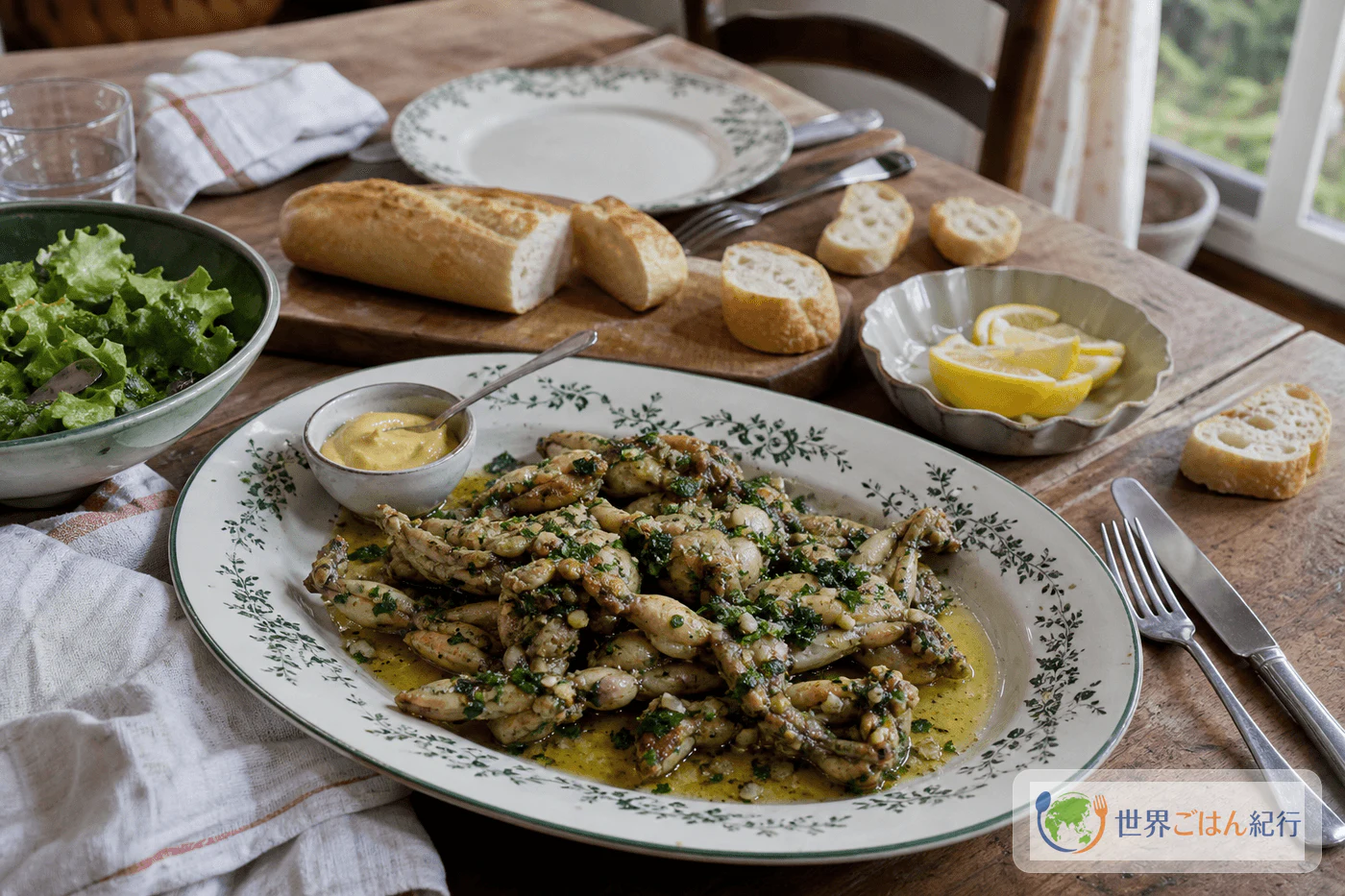
Keep the meal light. Frog legs work best as a small plate between starter and main rather than as the main dish. Serve them with a salad and a baguette (or thin toast, to catch the butter), alongside a light southern French snack such as pissaladière or a hearty soup such as garbure. White wine or sparkling water suits it. The herb butter is strong, so skip rich cream dishes and bring acidity and leafy greens instead.
Storage and reheating
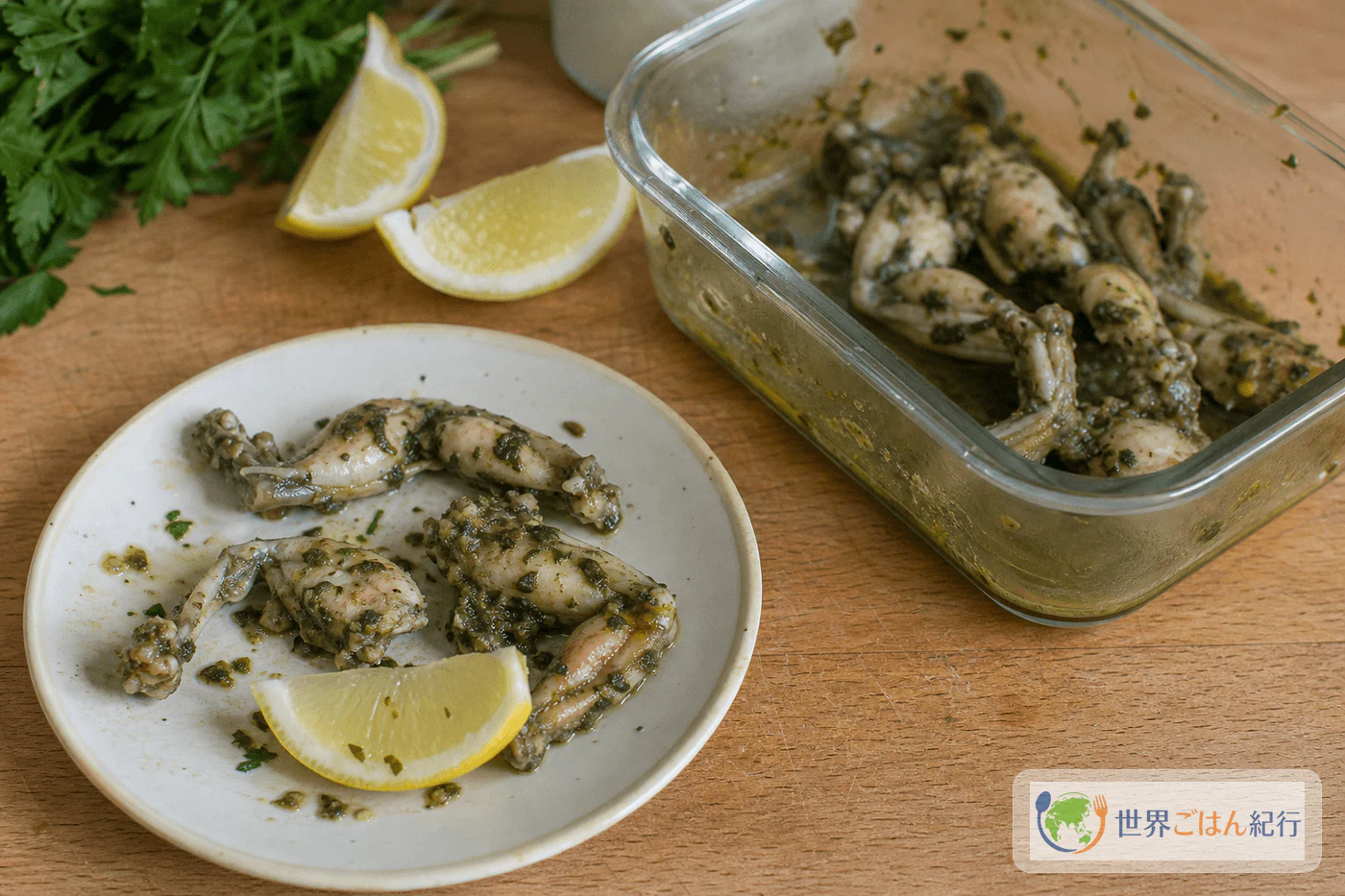
This dish is best eaten fresh. If there are leftovers, let them cool slightly, move them to a shallow container, and refrigerate; eat them the next day at the latest. Repeated reheating shrinks the small, bony flesh and dulls the herbs, so warm only what you'll eat: put it in a small frying pan with 2 tsp of water or white wine, cover, and heat for 2–3 minutes over medium-low heat.
When reheating, put safety before aroma. Heat leftovers thoroughly to the center and confirm 165°F (74°C) or more with a thermometer. In a microwave, heat at 600 W for 40 seconds at a time, turning the pieces partway through. If they've gone tough from overheating, toss them off the heat with a few drops of lemon juice and 5 g of butter, and they'll recover a little.
Next-day leftovers are best with warm bread rather than on a salad. You can pull the meat off the bones for pasta, but it breaks easily; it works better to use the herb butter as the sauce and warm the frog legs separately to put on top.
Frequently Asked Questions
What do frog legs taste like?
They taste somewhere between chicken and white fish. The flesh is pale, with a light springiness around the bones. The aroma is mild, which is exactly why any wateriness from thawing or cooking mistakes stands out, and why preparation and a short cooking time matter.
How should I thaw frozen frog legs?
The basic way is overnight in the refrigerator. If you're in a hurry, thaw the sealed bag under running water and cook immediately. Leaving them out at room temperature warms only the surface, which is bad for both hygiene and texture.
Do I need the milk soak?
It's optional. If the aroma of frozen product bothers you, soak them for just 10 minutes; any longer makes them watery, so take them out on time and wipe them dry again. To avoid milk, use light salt water made by dissolving 2 g of salt in ¾ cup (200 ml) of cold water.
Can I deep-fry them?
You can, but it takes the dish away from French-style herb-butter pan cooking. If you fry, make the flour coating a little thicker and fry briefly in oil at about 350°F (175°C). Try pan-cooking first, though: it's easier to check the internal temperature and see how much the flesh shrinks.