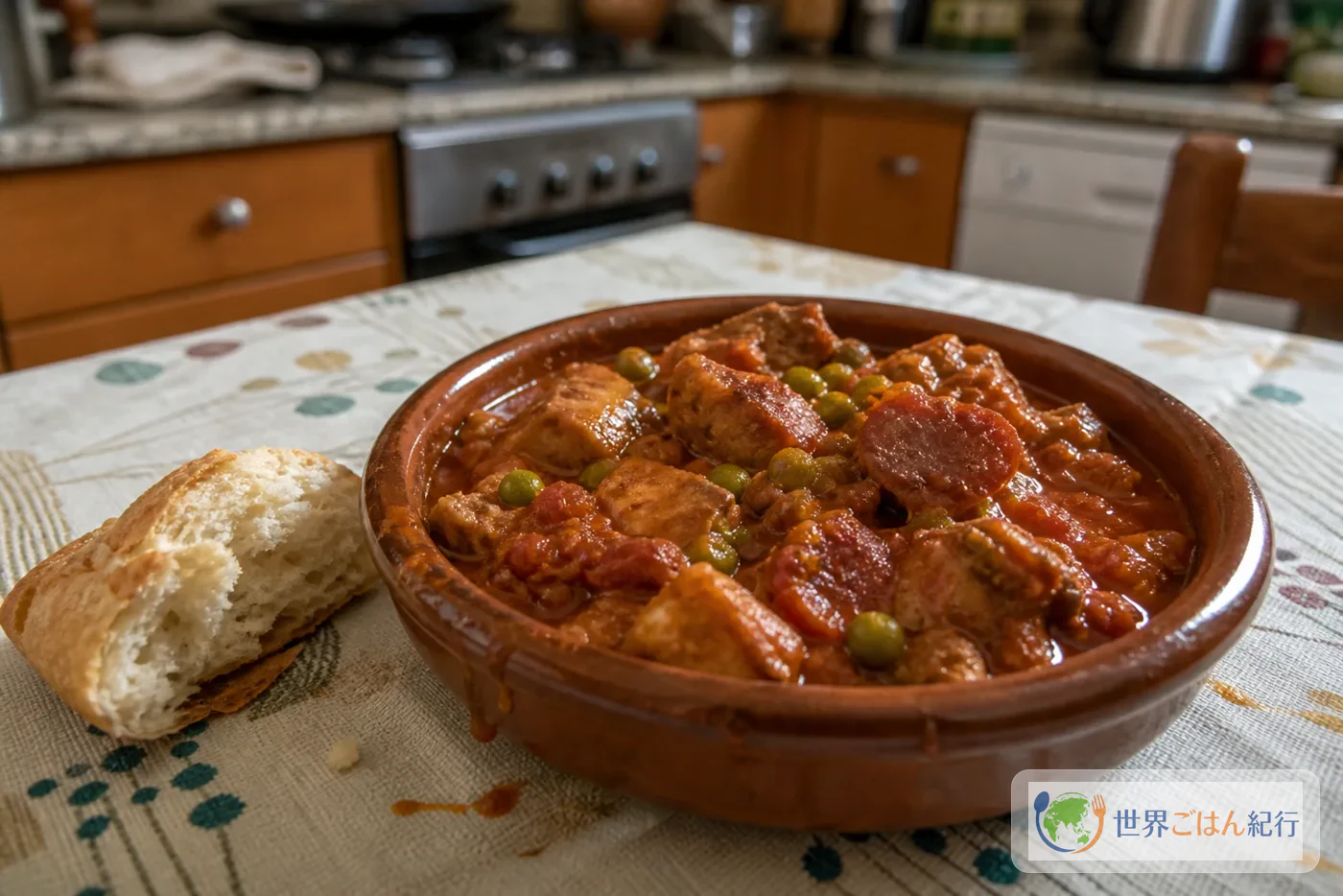
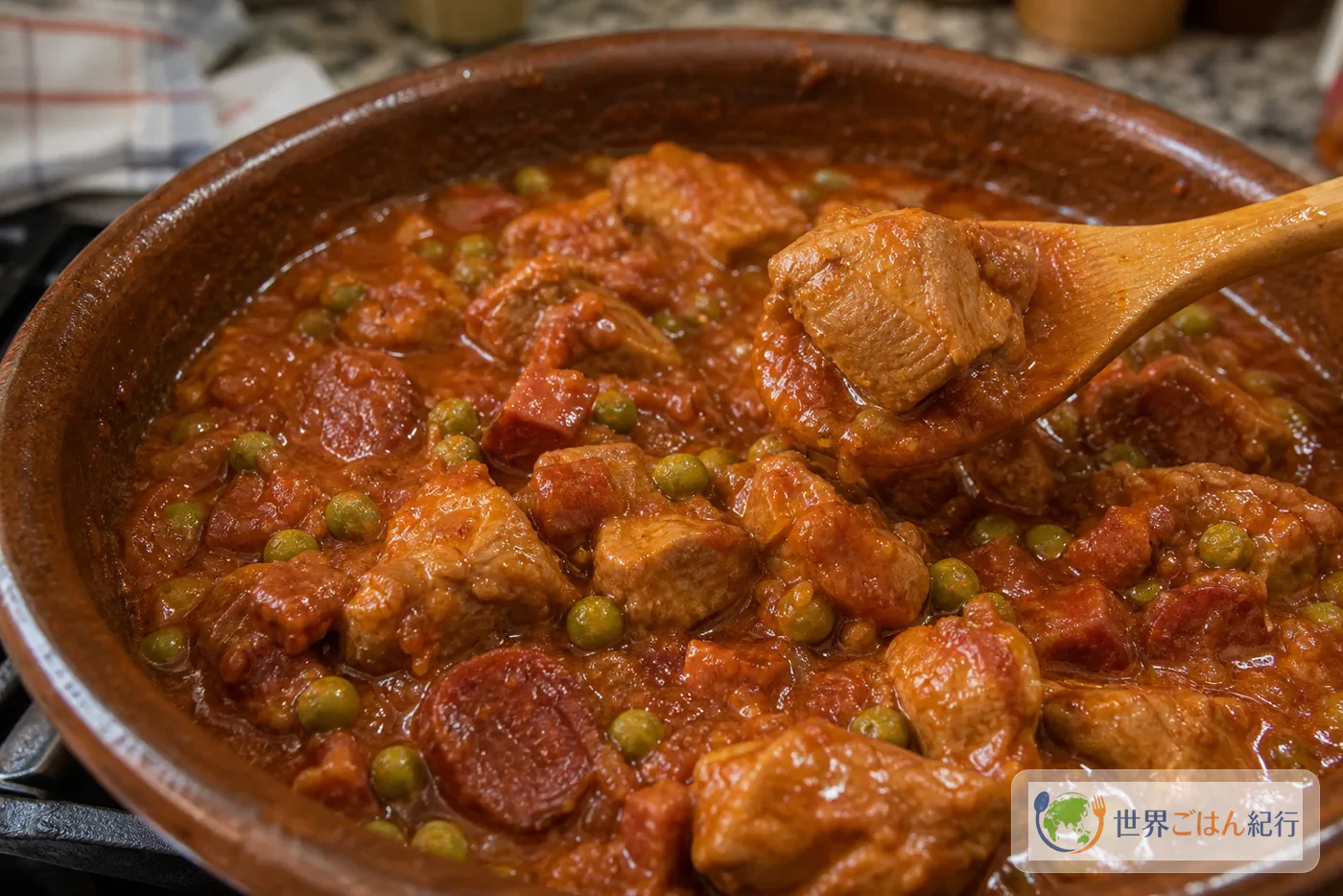
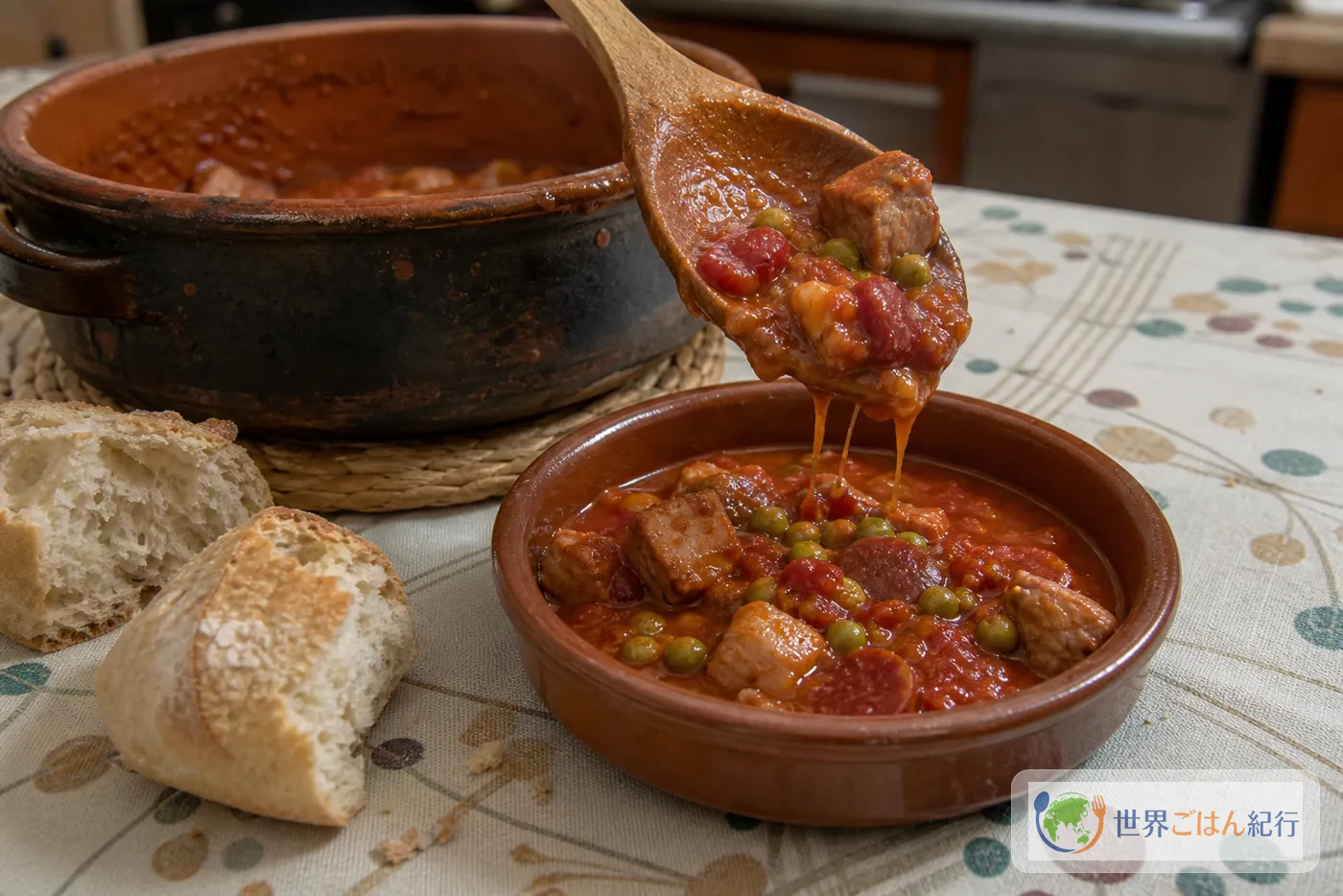
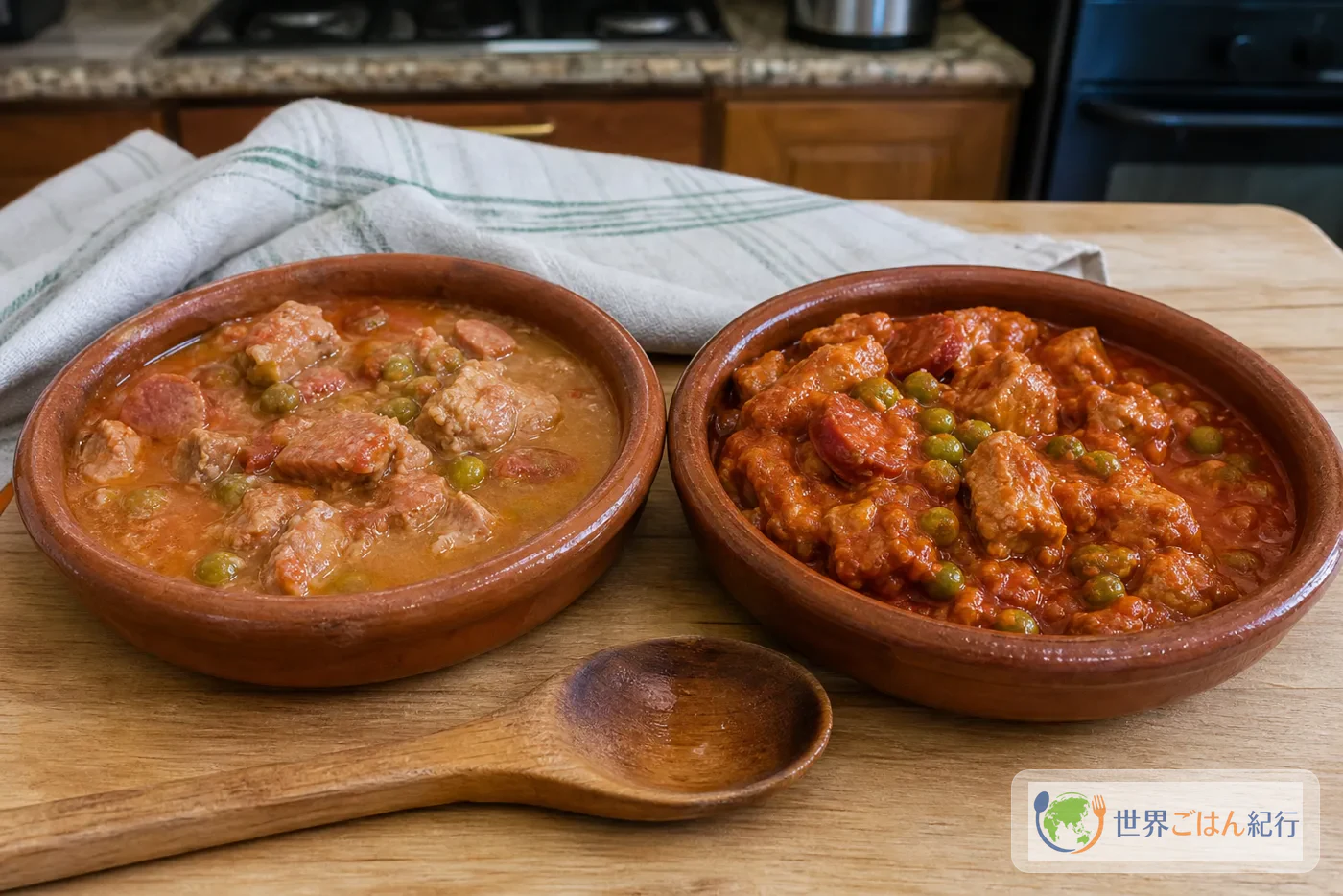
Cut into a chorizo in the evening kitchen and red oil seeps from the knife marks. Layer on garlic, onion, white wine and tomato, and even if you've never been to Spain, the smell makes you want to tear off a piece of bread and wipe up the sauce. Carcamusas is a Toledo small plate that is very honest about that urge: lean pork, chorizo, jamón and green peas in a tomato sauce cooked down until it clings, sweet from the peas and smoky with paprika.
Carcamusas in Toledo
Carcamusas is loved in Toledo, the old capital city in Castilla-La Mancha in central Spain. There it comes piping hot in a small earthenware cazuela, sometimes with bread or French fries on the side. It's less a big-platter feast than a tapa you order first at the bar counter and eat down to the last of the sauce.
The dish dates from the mid-20th century at Bar Ludeña in Toledo, and it grew out of bar conversation, name and all. There are several explanations for the name. A popular one joins "carcas," for the older men who gathered at the bar, and "musas," for the young women.
Next to Spain's other meat stews, carcamusas is modest. Cocido madrileño is a big pot of beans and meat eaten in stages, and northern Spain's fabada asturiana is a hearty stew of white beans and cured pork with a similar aroma. Carcamusas has a bar-food lightness instead, made in about an hour and shared in small dishes.
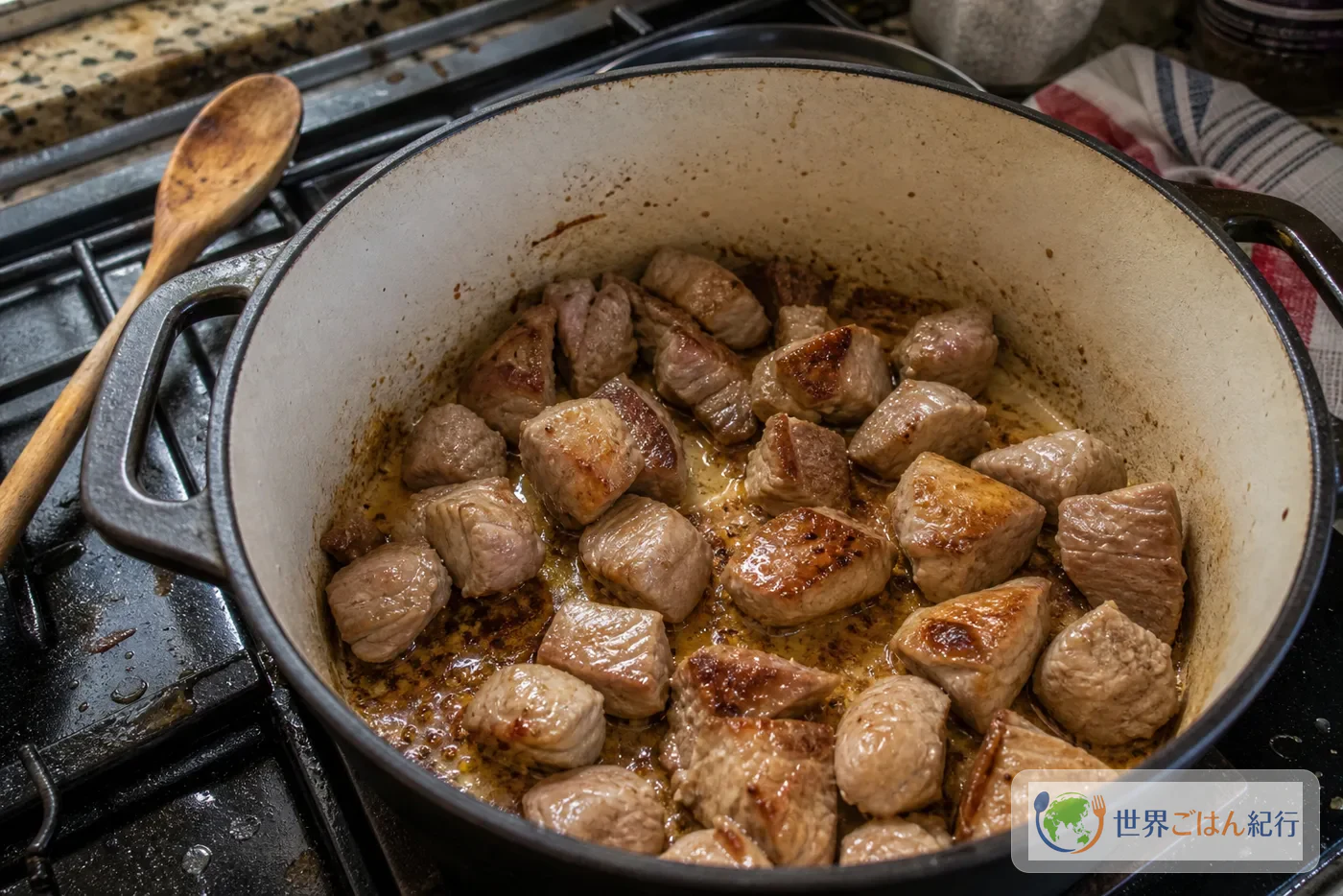
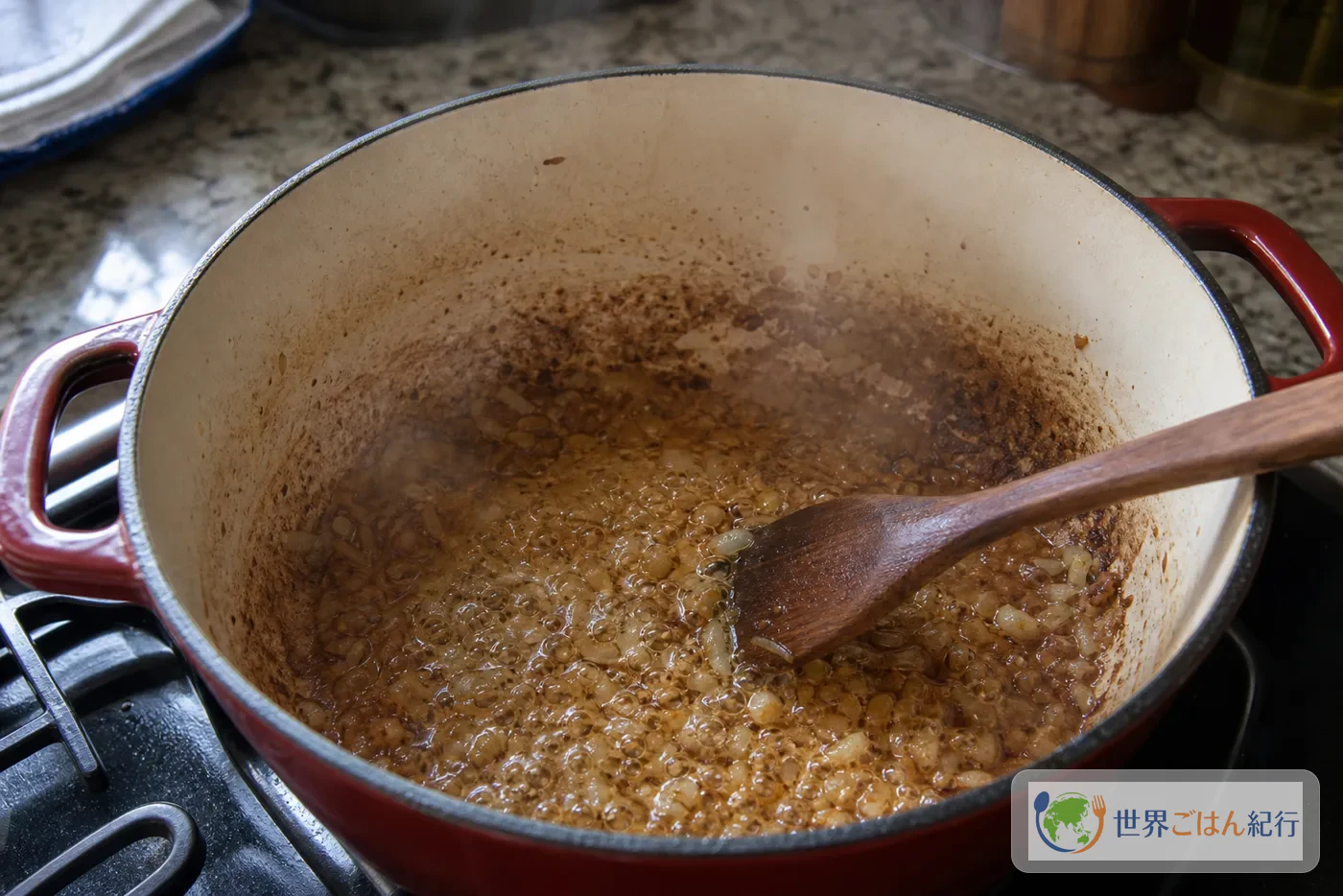
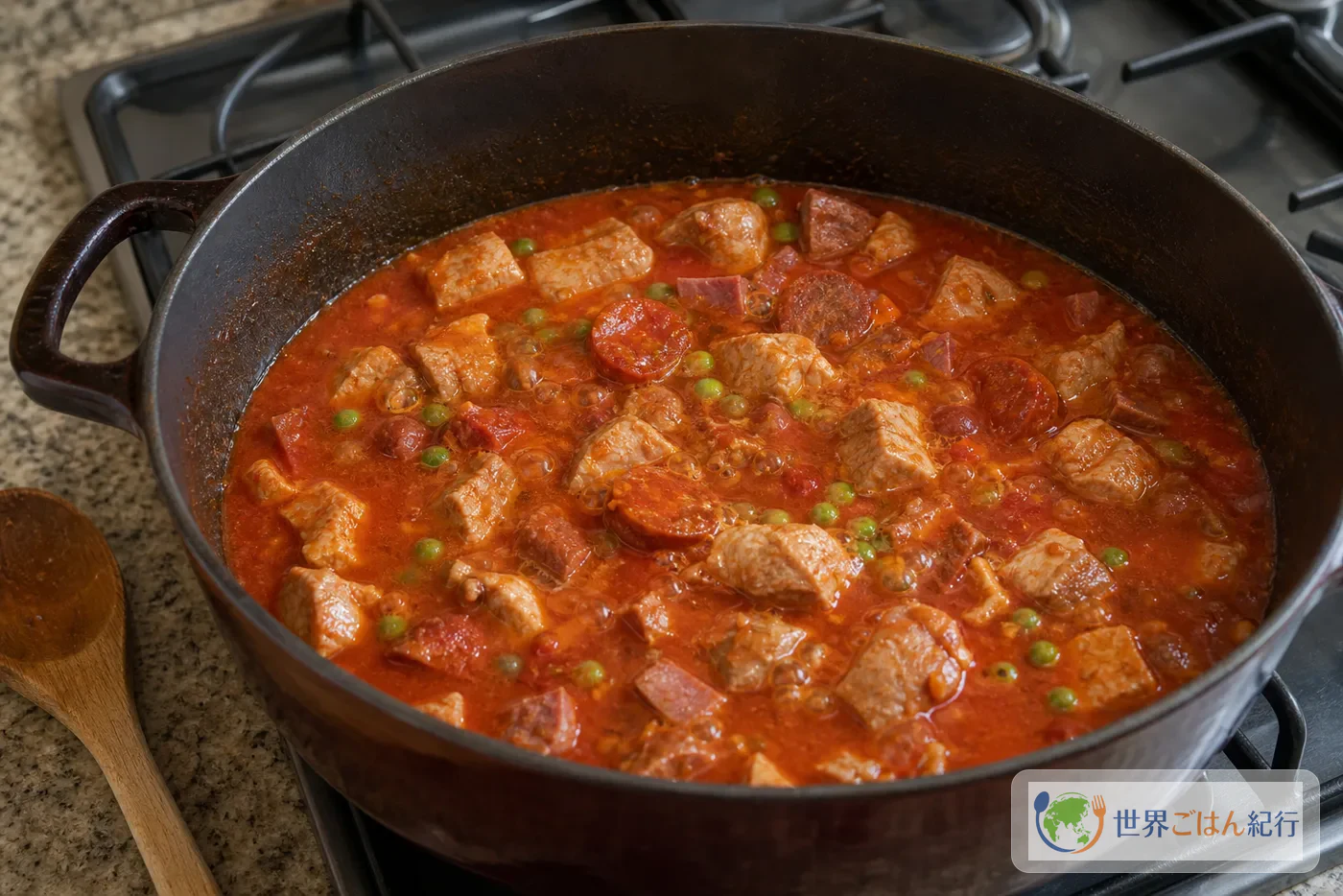
At home, three things matter most. Brown the pork first, reduce the white wine to bring the flavor at the bottom of the pot back into the sauce, and at the end cook the tomato sauce down until it clings to bread. Even without chorizo and jamón, keeping the red oil, the smoked paprika and the sweet peas moves this from a plain pork-and-tomato stew toward Toledo.
Ingredients (serves 4)
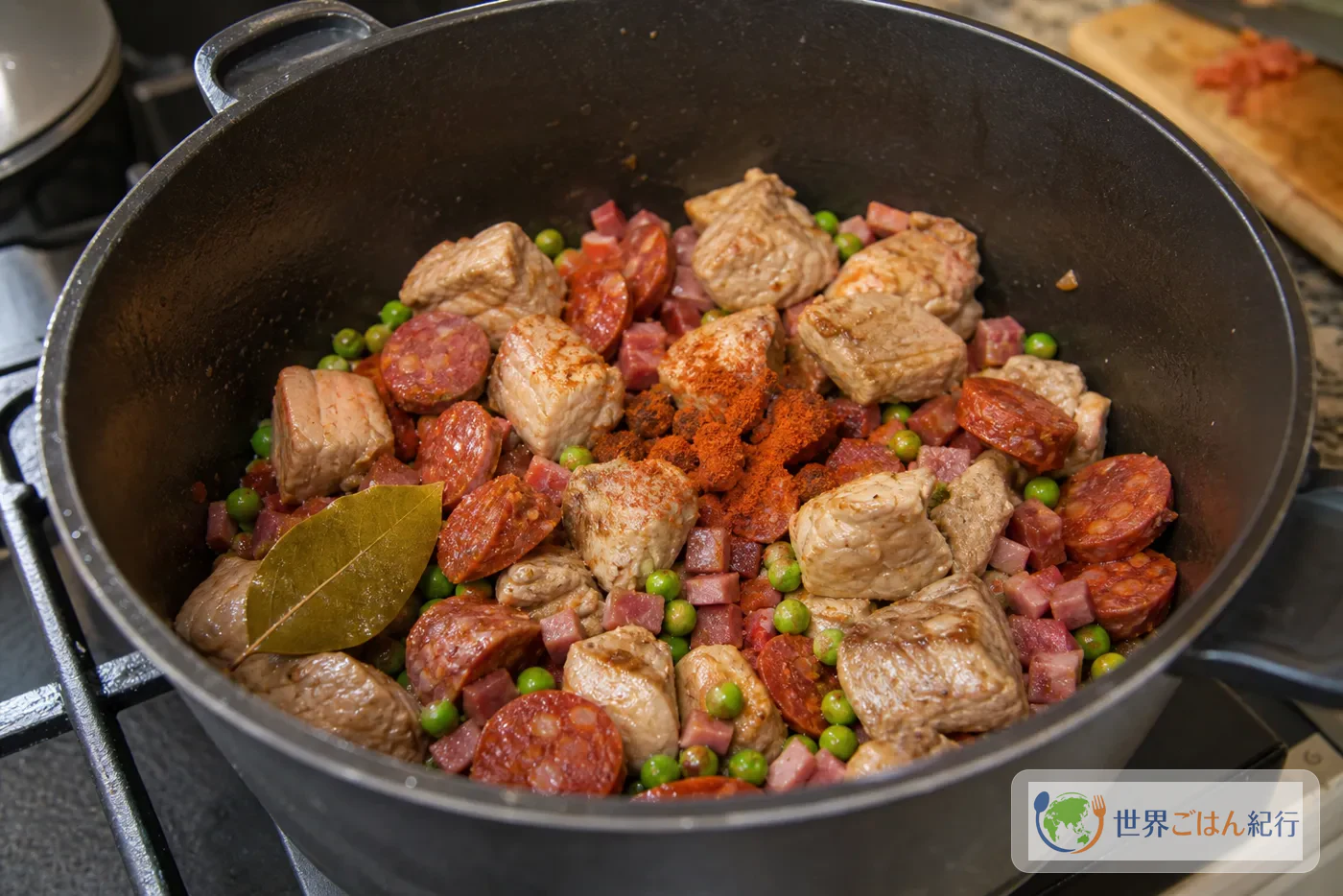
If the meat is cut too large, carcamusas loses the easy-to-eat quality of a tapa. Cut the pork into 1 inches (3 cm) cubes, the chorizo into 0.25 inch (5 mm) slices and the jamón or bacon into 0.5 inches (1 cm) dice. Aim for pieces small enough that a spoonful holds meat, peas and sauce together.
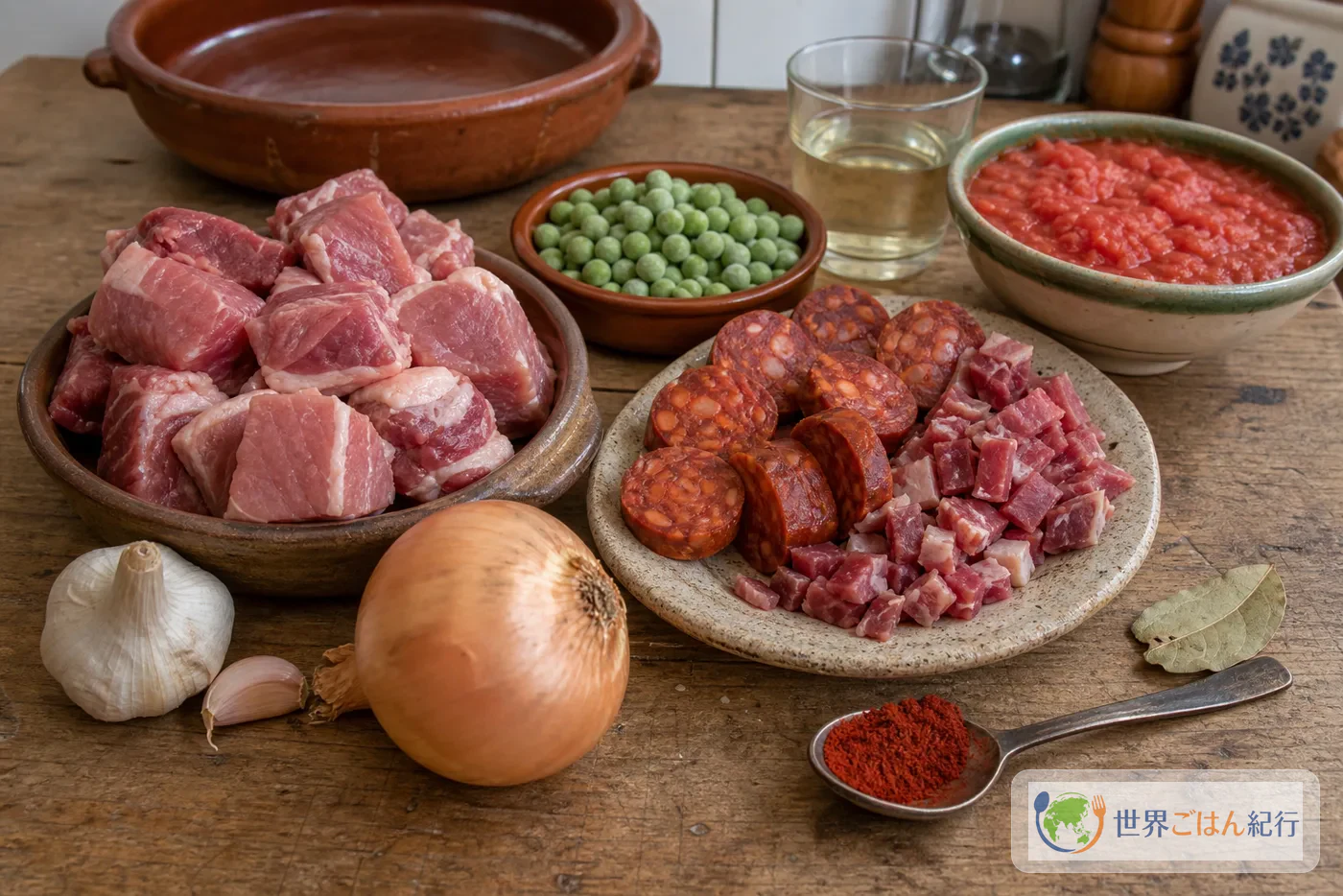
May contain pork, processed meats and wheat. Depending on the product, chorizo and bacon can contain milk, egg, wheat or soy, so check the labels. Cook pork through to the center; if you use a thermometer, aim for at least 63°C (145°F) in the center followed by a 3-minute rest. In a stew, it is then cooked further for texture before serving.
Pork shoulder is the easiest cut. It has a little fat and doesn't dry out even with about 50 minutes of simmering. If you use leg, keep the browning short and, above all, don't let the liquid boil hard. Made with pork belly alone, the sauce gets too fatty and the result is a heavy stew rather than one that suits bread.
Not just any "spicy sausage" will do for chorizo. Look for one with the red oil and smoky paprika aroma rather than chili heat. Bacon is a fine stand-in for jamón serrano, but a strongly smoked one clashes with the smoked paprika, so use a little less.
Choosing ingredients for carcamusas
The pork, onion, garlic, frozen green peas and tomatoes come from any nearby store; this version uses easy-to-find pork shoulder and tomato passata. The chorizo and smoked paprika are worth seeking out, since they define the dish.
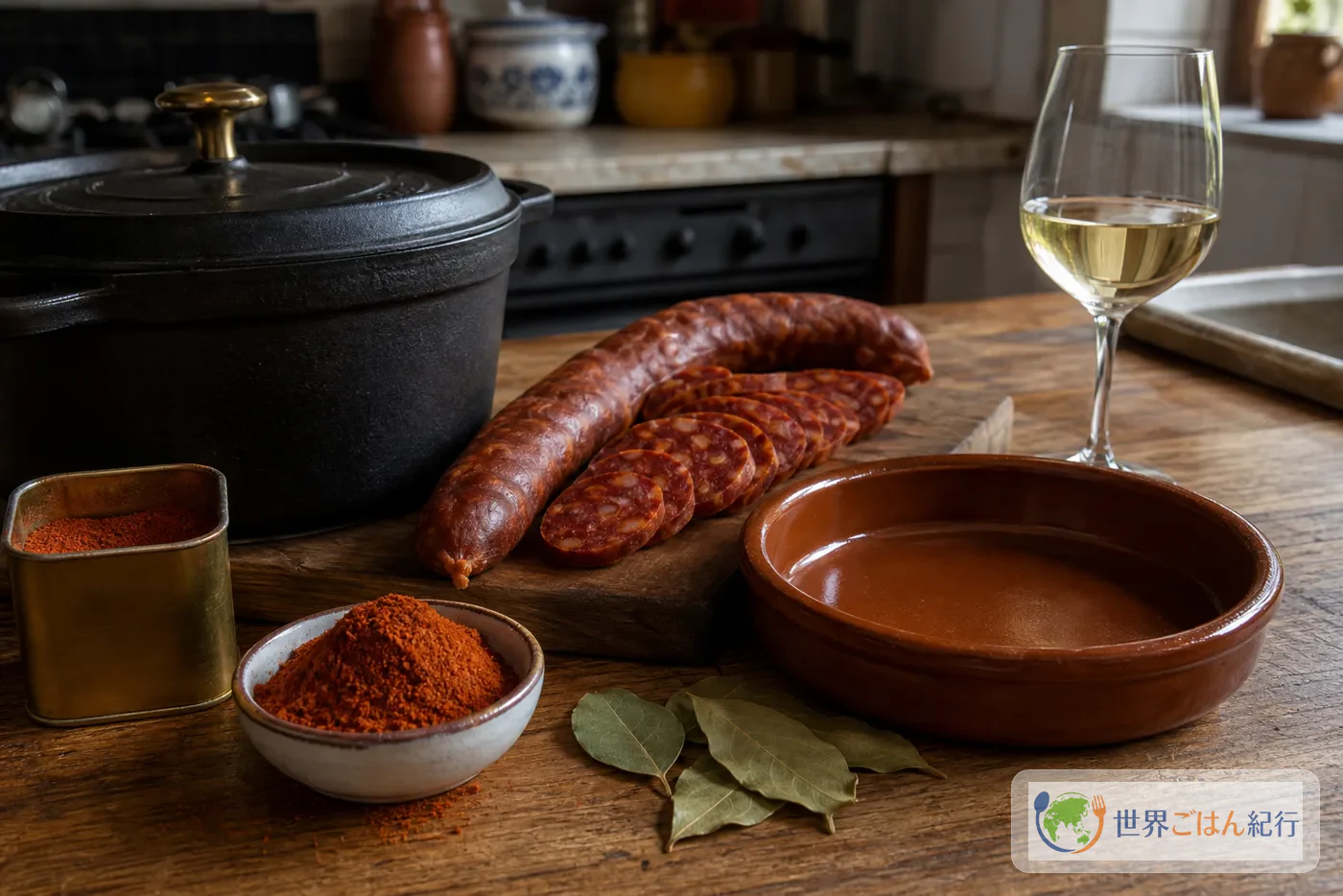
Chorizo makes the red oil in carcamusas. Even if you plan to use ordinary sausage, try a paprika chorizo the first time so you know which aroma you're substituting for. Sausage gives a slightly rounder flavor; brown it well, increase the smoked paprika to as much as 1 1/2 tsp and add a little chili.
Smoked paprika is your insurance when you can't find chorizo, and it fills in the chorizo's aroma even when you can. Choose sweet smoked paprika for a distinctly Spanish red aroma without heat. Soy sauce or a sweet brown sauce for extra richness quickly pulls the dish away from Spain; if you add anything, stop at olive oil, salt and the acidity of white wine.
A heavy pot isn't essential, but it helps. This is a stew whose sauce you reduce, and a pan with harsh hot spots will scorch the tomato. A heavy pot makes it easier to move between low and medium heat, and the meat is less likely to toughen.
Method: build the sauce, then simmer gently
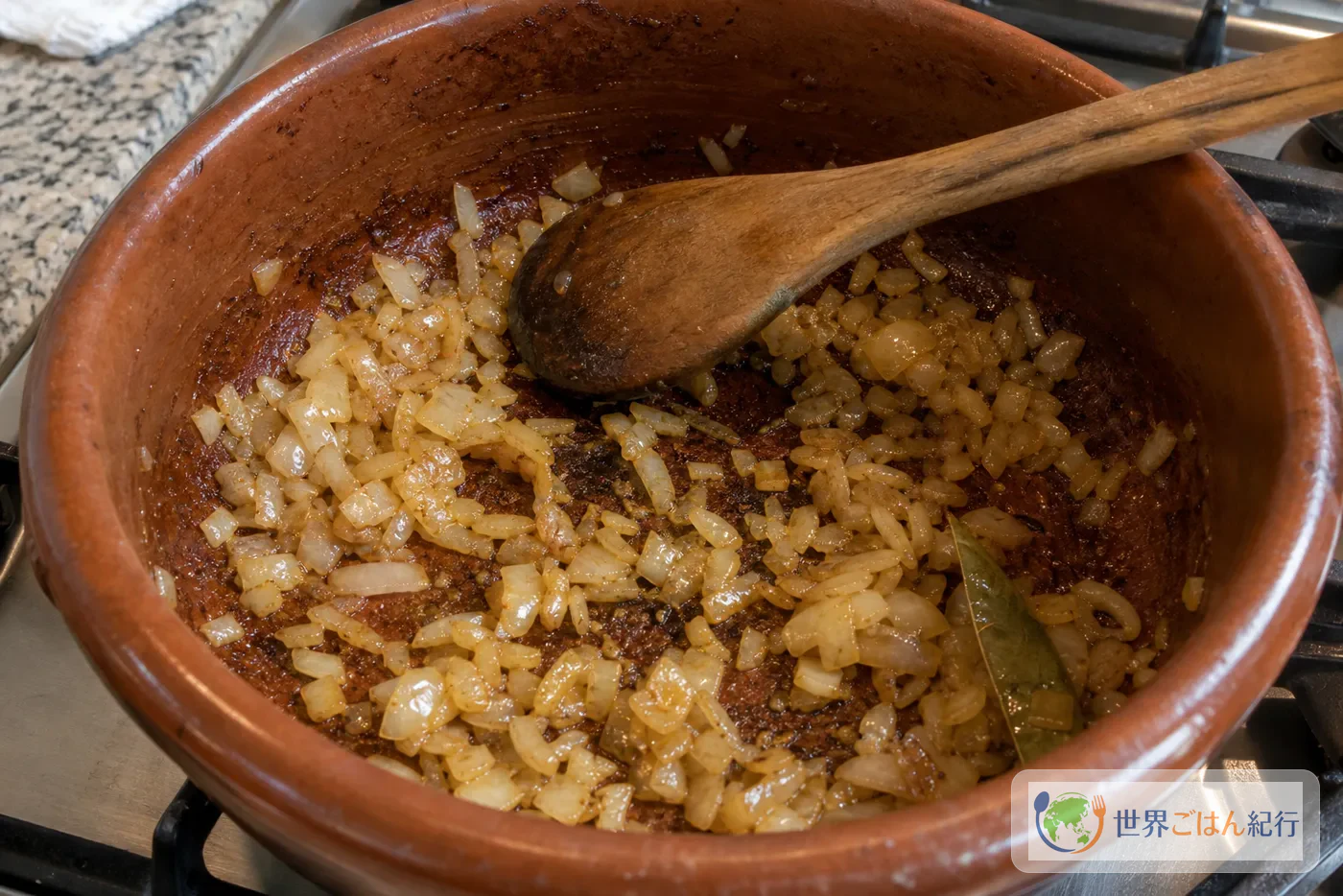
If you put everything in the pot at once and simmer it, carcamusas tastes flat. Brown the meat, sauté the aromatics, deglaze the bottom of the pot with white wine, bring together the chorizo and peas, then simmer in tomato. Follow that order and the sauce won't turn watery, even in an ordinary home pot.
Use medium to medium-high only to brown the meat, medium-low for the onion and paprika, low after the tomato goes in, and medium-low for the final reduction. The longer it boils hard, the tougher the pork gets and the more the tomato's acidity comes forward over its sweetness.
Common problems with carcamusas
Carcamusas goes wrong in consistency more than in flavor. A watery sauce won't cling to bread, and over-reducing leaves only saltiness. The depth of the pot, the water in the tomatoes and the fat in the chorizo all change how fast it thickens, so for the last 8 minutes, watch the sauce rather than the clock.
| Problem | Cause | Fix on the spot |
|---|---|---|
| Thin, runny sauce | Watery tomatoes, or simmered with the lid closed | Remove the lid and reduce over medium-low heat 2 minutes at a time. Stir only across the bottom so the meat doesn't break up |
| Too salty | Salty jamón or chorizo | Add 3.5 oz (100 g) boiled potato, cubed, and simmer over low heat for 5 minutes. Don't add salt |
| Tough pork | Boiled hard for a long time, or used leg meat | Add 3 tbsp water and simmer over low heat for 10 more minutes. Use shoulder next time |
| Too acidic | Not reduced enough, or very acidic canned tomatoes | Uncover and reduce over medium-low heat for 3 minutes, then add 1 tsp olive oil |
| Bitter paprika | Cooked too long after adding the powder | Can't be fully fixed on the spot. Next time, add liquid within 30 seconds of the powder |
Serving and storing carcamusas
Serving it the Toledo way
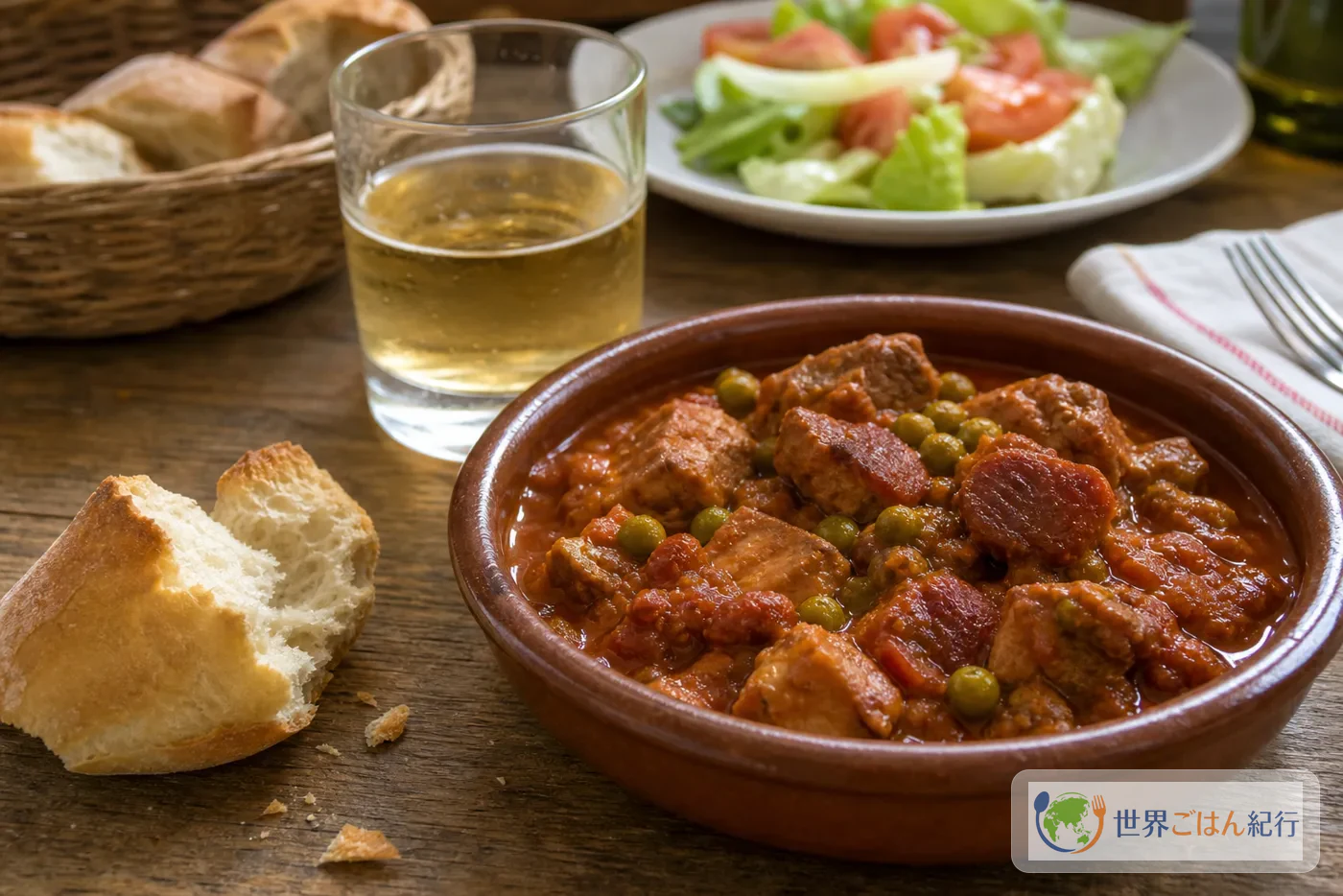
In Toledo the star isn't only the meat but the sauce, and wiping up what's left in the small dish with bread is part of eating it. Some bars serve it with potatoes, but at home, toasted bread and a simple salad keep the sweetness of the stew from feeling heavy.
Serve about two ladlefuls per small dish and add more from the pot as needed. Portions small enough to finish with bread before the sauce cools give you that tapa feeling of "a little rich, but I could have one more bite." For dinner over plain rice, reduce the sauce a bit more and spoon it over rice spread thinly on a shallow plate, so it doesn't turn into a rice bowl.
Menu and drinks
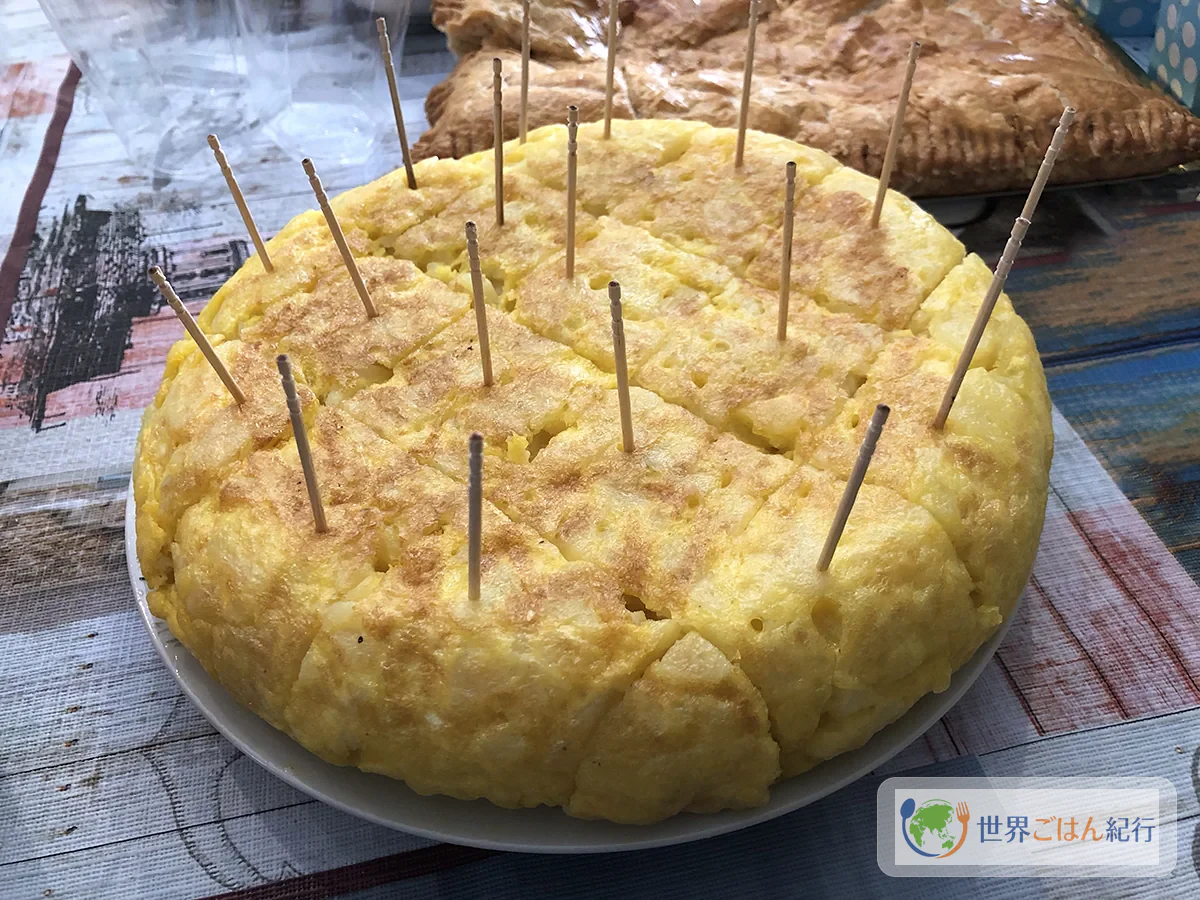
For a Spanish menu, start with chilled gazpacho, add tortilla española as the egg dish, and make seafood fideuà or paella valenciana the centerpiece for the brightness of a Spanish table.
Young red wine, rosé and cold beer are easy matches. Go with beer if you've made it spicier, and rosé if you've let the tomato's sweetness lead. White wine went into the pot, but it doesn't have to go into the glass.
Storage and reheating
Carcamusas is also good the next day: as it cools, the saltiness of the chorizo and jamón melds into the sauce and the tomato's acidity mellows. It's still a stew of pork and processed meats, though, so don't leave it at room temperature for long. Once it has cooled slightly, transfer it to a clean container.
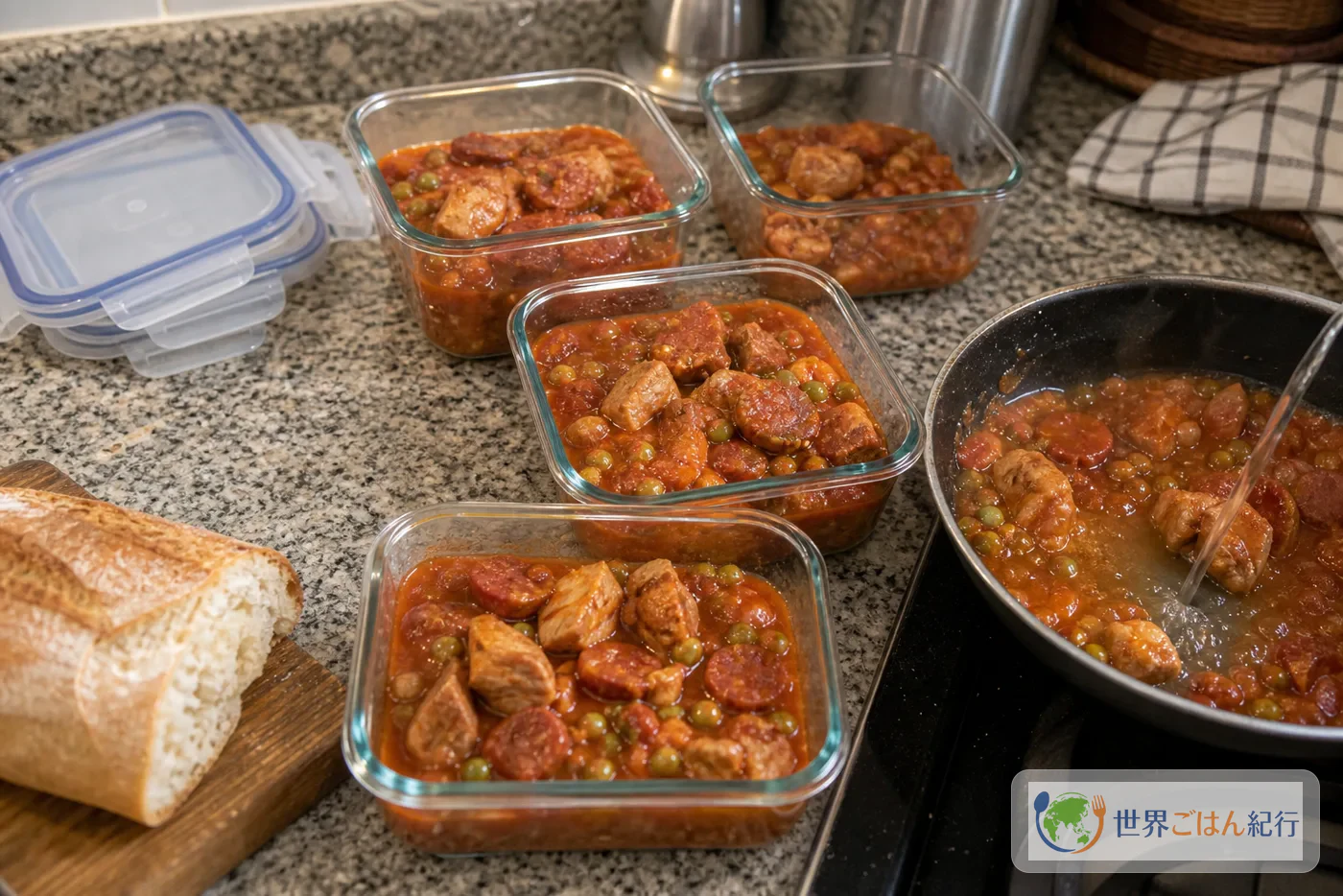
Refrigerate for up to 2 days, spread flat in the container so it cools quickly and reheats easily. To freeze, divide into single portions and eat within 2 weeks. The peas soften a little after thawing, so if you care about their texture, set some aside before freezing and add fresh peas when reheating.
A small saucepan works best. Add 2 tbsp water per serving and warm over low heat for 4 minutes; when it's steaming and hot all the way through, cook off the liquid over medium heat for just 1 minute. In a microwave, cover loosely with plastic wrap and heat at 600 W for 2 minutes, stir well, then continue in 30-second bursts. Toast the bread separately and bring it out just before dipping, and much of the feel of the table comes back.
Frequently asked questions
Which cut of pork works best?
Shoulder is the easiest to work with. You can use leg, but it toughens easily if boiled hard, so keep the browning short and simmer quietly over low heat. Made with belly alone, it's very fatty and the sauce gets heavy. Thin-sliced pork scraps cook quickly but don't give the cubed texture of carcamusas.
Can I make it without white wine?
Yes. Use ½ cup (120 ml) water and 2 tsp white wine vinegar, and simmer over medium heat for 2 minutes to round off the acidity. Japanese cooking sake (ryorishu) tends to add sweetness, so if you use it, use ½ cup (100 ml) and add a little more tomato paste to keep the balance.
Frozen or canned green peas?
Frozen, which keep their color and shape in the stew. If you use canned, drain them and add them only for the last 8 minutes rather than at the start of step 5. Added at the start, they soften, fall apart and make the sauce murky.
What can I use if I don't have chorizo?
2.5 oz (70 g) coarse-ground sausage and 1/2 tsp smoked paprika work well at home, with a little more chili for heat. Some chorizo-style sausages are strongly chili-hot, so check that the one you use actually has a paprika aroma.
Can I thicken a watery sauce with flour?
Reduce it with the lid off instead, 2 minutes at a time over medium-low heat, and stop when a line drawn with the wooden spatula stays visible for a moment. Flour pushes the stew toward gravy and tends to make a heavy, starchy sauce rather than a rich one that clings to bread.
Can I save time with a pressure cooker?
Yes, but add the chorizo and peas afterward. Cook the pork, onion, white wine, tomato and water at high pressure for 8 minutes, let the pressure release naturally, then open the lid and add the chorizo, jamón, green peas and smoked paprika. Reduce over medium-low heat for 8 to 10 minutes to adjust the consistency of the sauce.