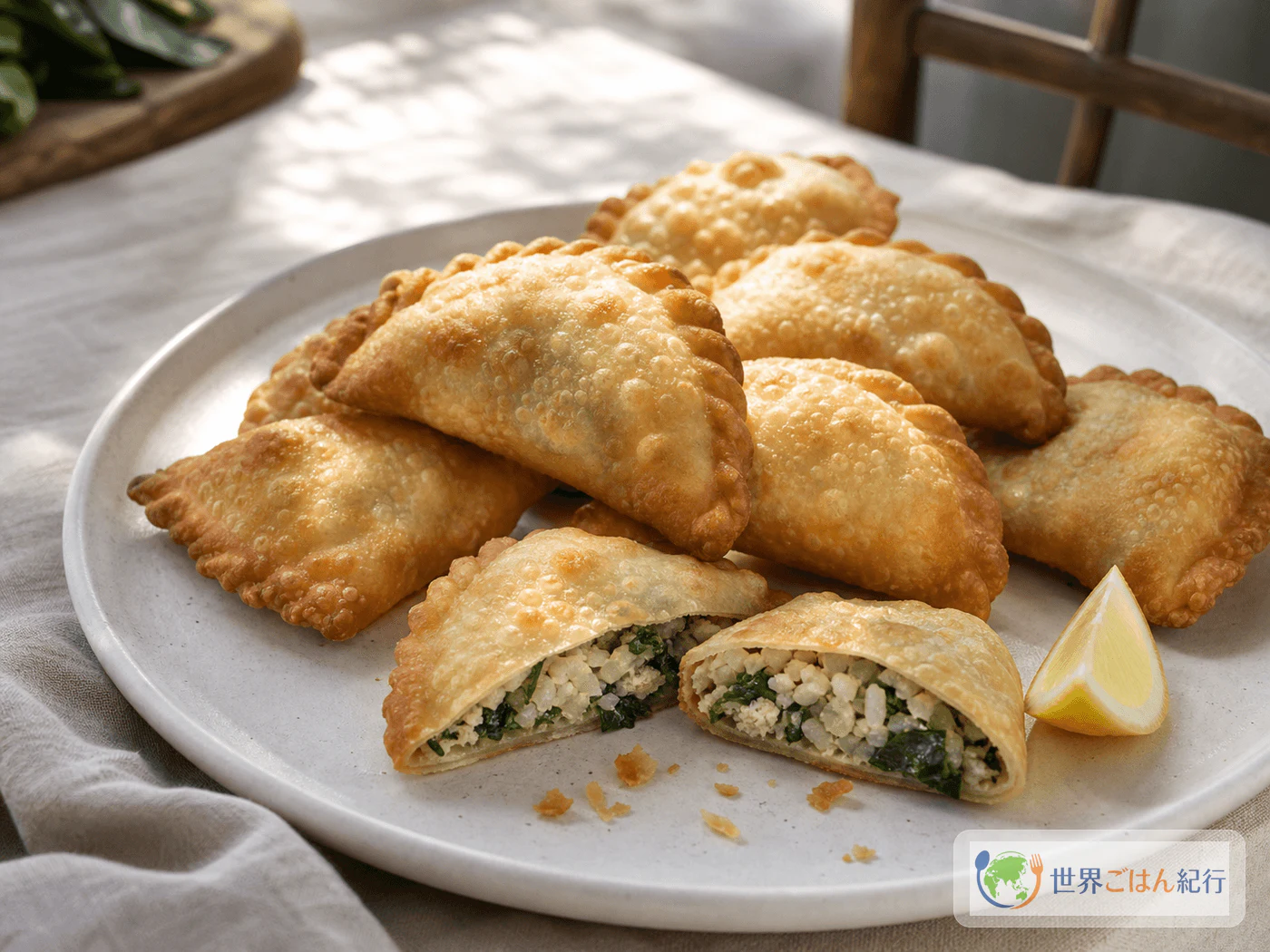
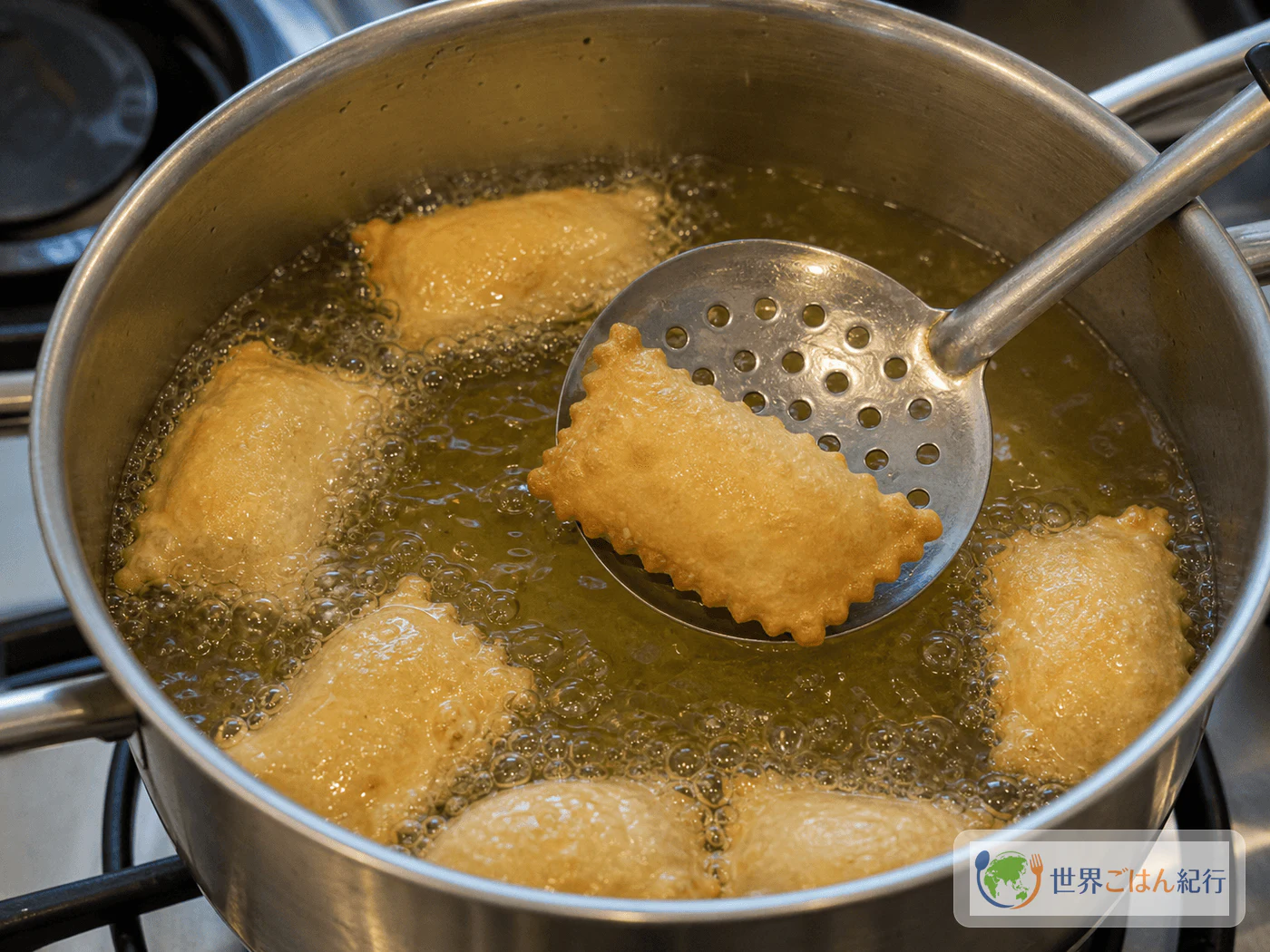
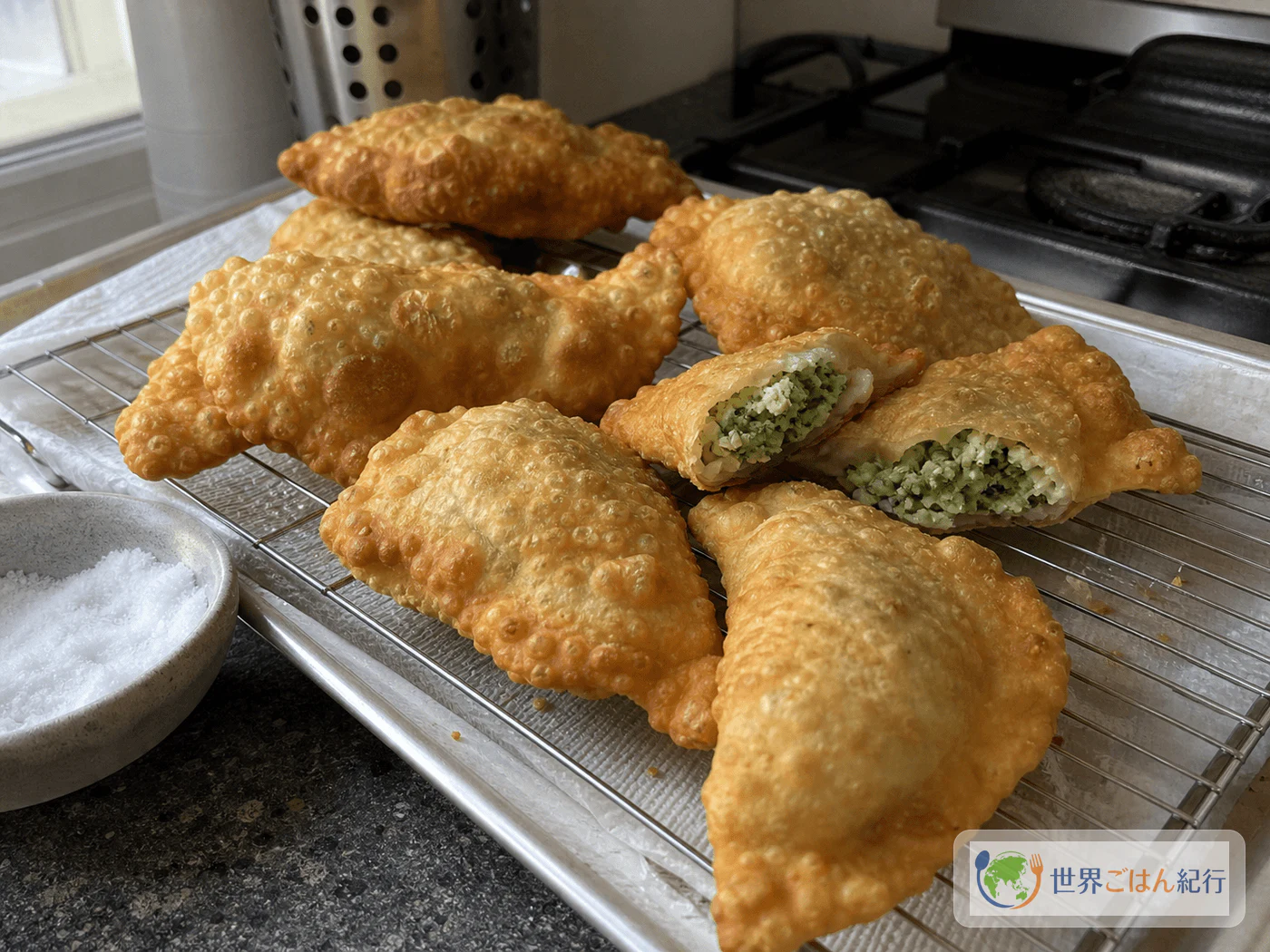
A small half-moon of dough puffs up in the hot oil, and once the edge turns pale gold you lift it out with a slotted ladle. Let it rest a moment, then break it open: the smell of chard, ricotta, rice and cheese rises with the steam. Barbajuan (also written Barbagiuan) is a fried ravioli filled with greens, loved in and around Monaco. Its pleasure is quiet: the slightly earthy aroma of the greens, the light milkiness of ricotta, the chew of rice and the toasty fragrance of thin fried dough.
Barbajuan from Castellar to Monaco
In French-speaking regions the name is written Barbajuan, while Monégasque and the regional spelling give Barbagiuan. The name is usually explained as "Uncle John." The dish came to Monaco from Castellar in southeastern France.
In Monaco it turns up as a snack, as a starter and on holiday tables, and it is tied to Monaco's National Day on November 19. You'll see half-moons, squares and long shapes, but every version follows the same frame: greens, cheese and rice wrapped in dough, then fried. It looks a lot like Italian fried ravioli or a small empanada. The filling, though, is mostly greens, so the flavor is gentle rather than meaty.
Four things matter most when you make it at home:
| What to keep | Why |
|---|---|
| Drive off the water in the greens before wrapping | A watery filling tears the dough and makes the oil spatter |
| Add a small amount of rice | It absorbs the moisture of the filling and gives a light chewiness |
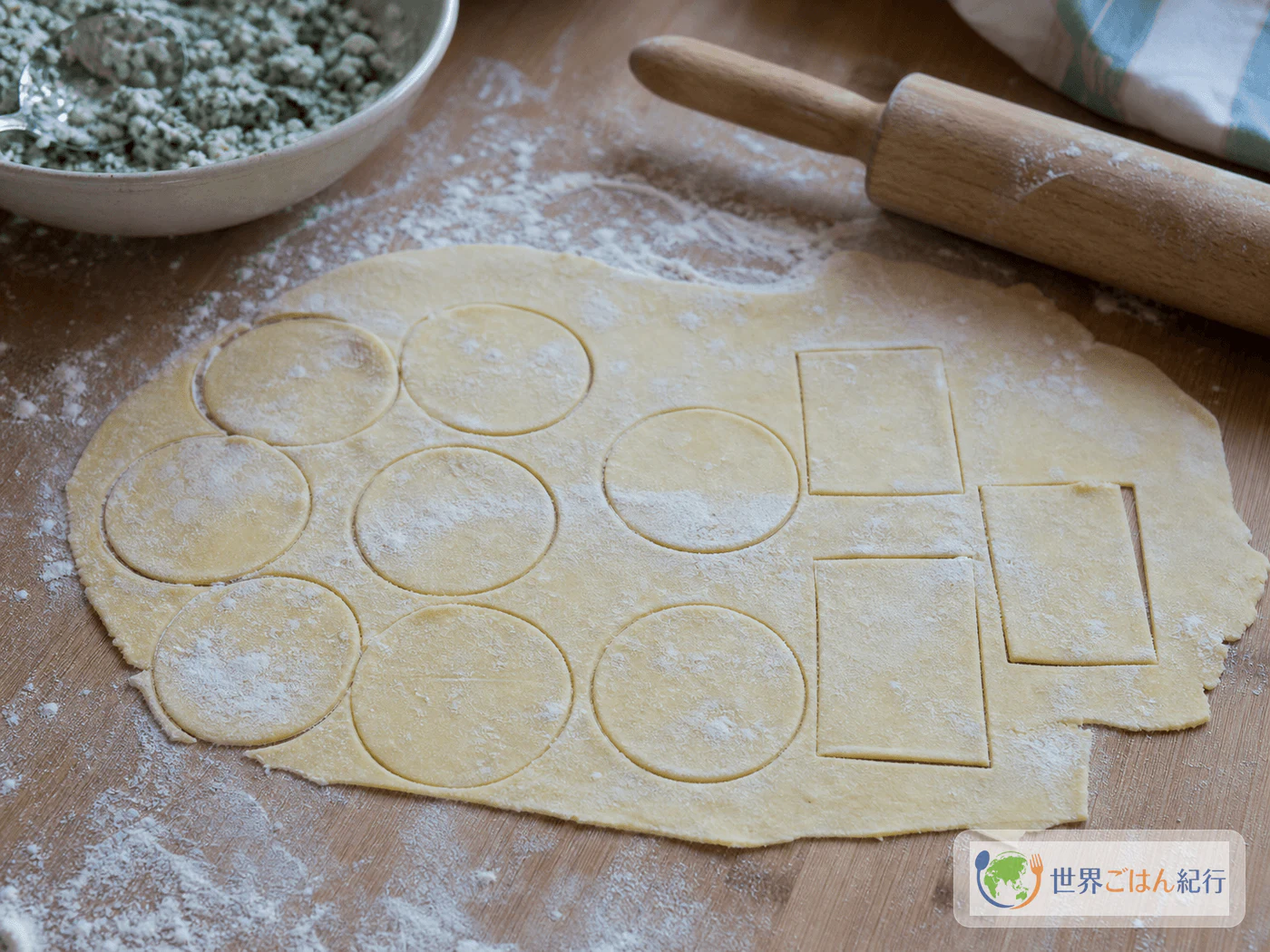
| Roll the dough as thin as 0.125 inch (1.5–2 mm) | If thick, the inside becomes heavy like a dumpling |
| Fry a few at a time at 350°F (170–175°C) | Low oil temperature makes it greasy; too high only darkens the color |
Ingredients (serves 4, about 18 small pieces)
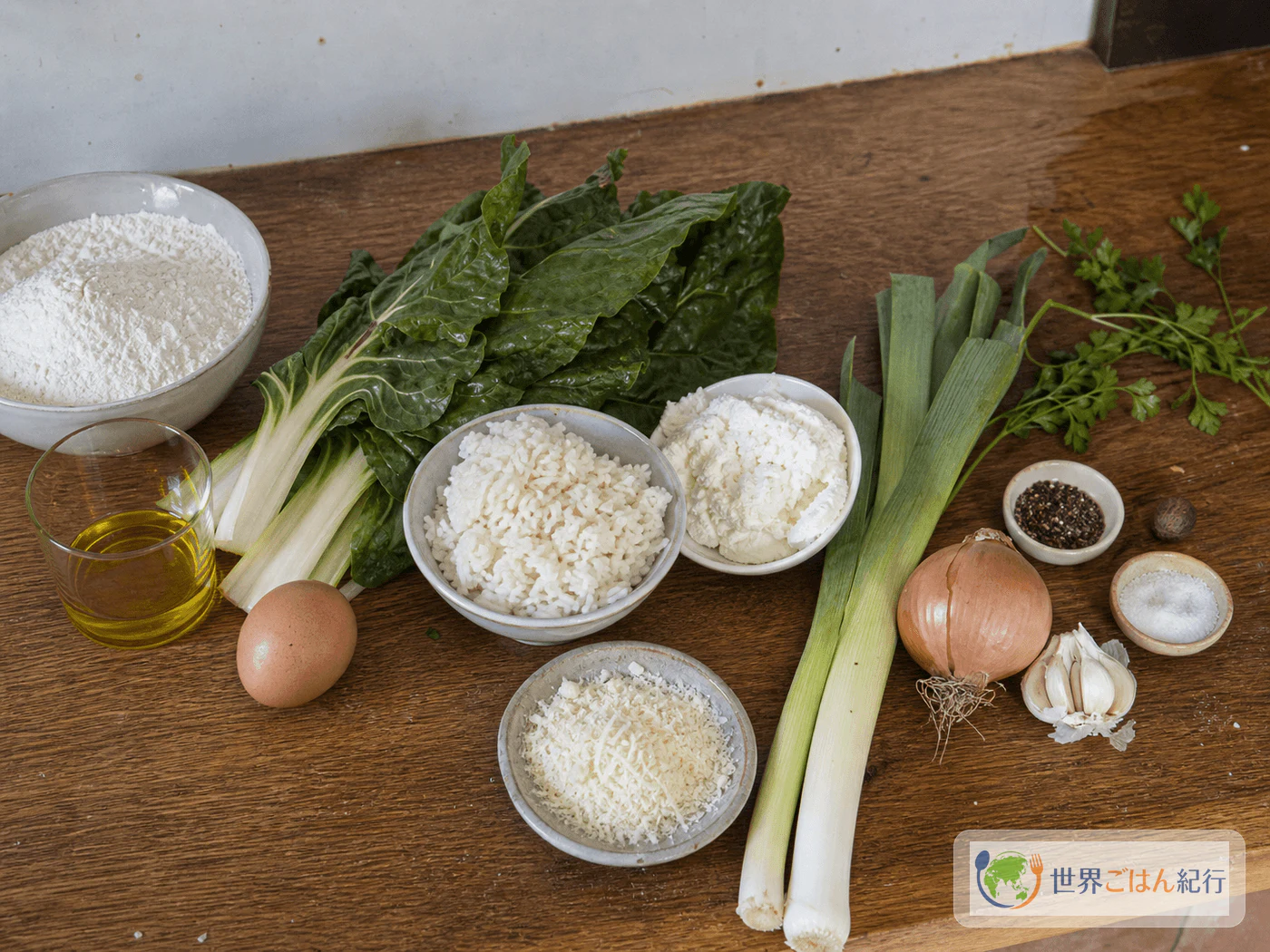
It contains wheat, egg and milk. If serving family or guests, check for allergies first.
Greens mix for days without swiss chard
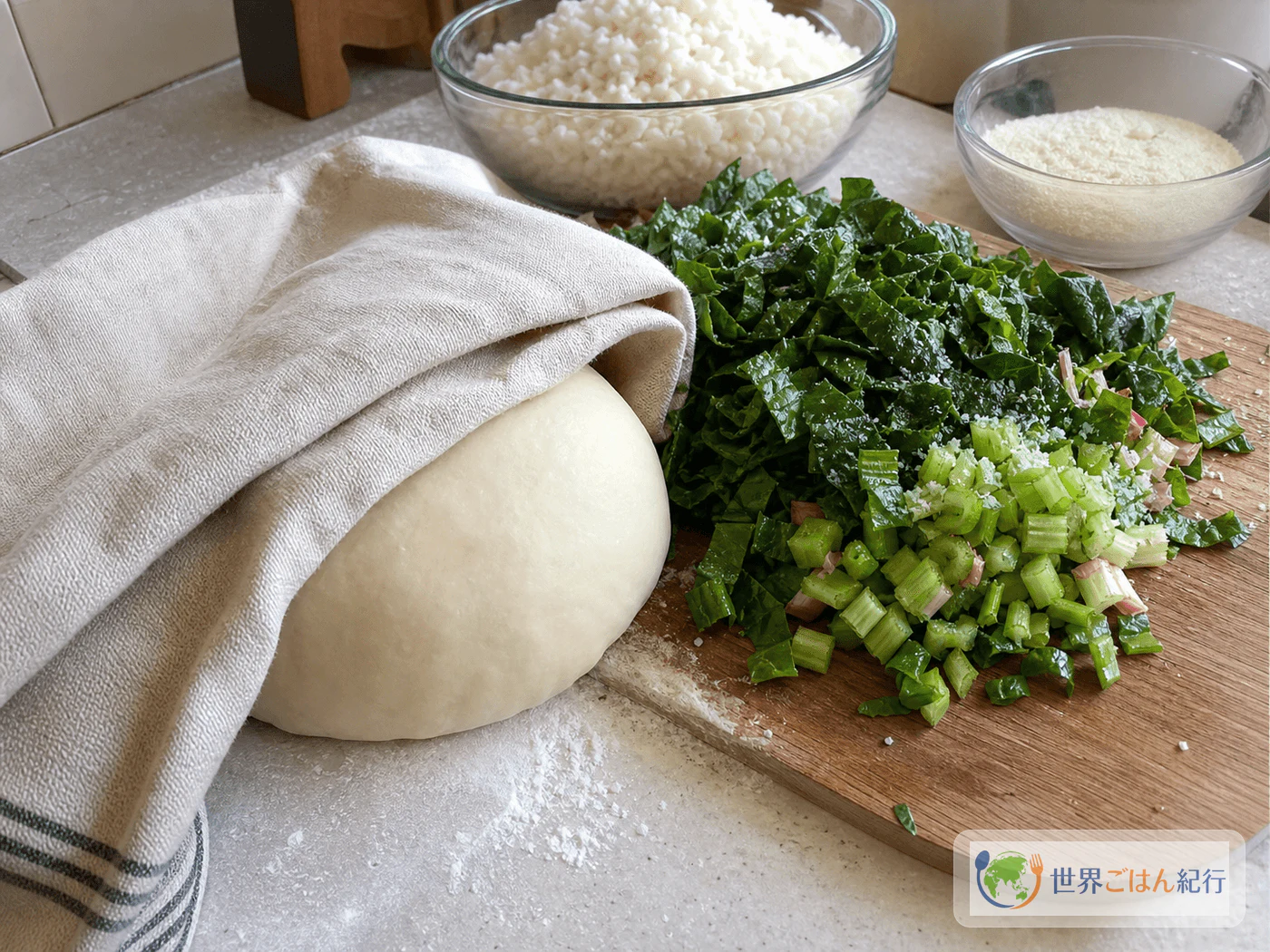
Swiss chard is a green whose leaves and stems can be used together. It is not always available in every supermarket, so mixing komatsuna and spinach makes it easier to handle. Komatsuna alone has a strong stem aroma, and spinach alone turns watery. Chop 5.5 oz (150 g) komatsuna and 4 oz (120 g) spinach into 0.25 inch (5 mm) widths and drive off the water after cooking, and you get a balance of presence and softness in the greens.
Equipment notes
A regular supermarket has everything you need: flour, eggs, leek, onion and oil. Worth adding are tools that help you roll thin dough evenly, chop greens fine and hold the oil at temperature. Barbajuan depends on careful work more than on the ingredients.
If you make thin dough often, a rolling pin about 12 inches (30 cm) long is easier to handle. With a short pin, the center stays thick and the edges get heavy after wrapping. For dough rolled to 0.125 inch (1.5–2 mm), a long pin keeps the thickness even.
You can chop the greens and aromatics by hand, but for 18 pieces a small food processor is quicker. The tip is to stop at a coarseness of about 0.25 inch (5 mm), without making a paste.
If you are not used to deep frying, a thermometer helps most. Barbajuan has a filling, so frying long at a low temperature makes it soak up oil, and at a high temperature only the skin colors while the inside stays heavy.
Choosing greens, cheese and rice for barbajuan
| Where you hesitate | The closer choice | Compromise in a home kitchen |
|---|---|---|
| Greens | Use swiss chard, leaves and stems together | Komatsuna plus spinach to split aroma and softness |
| Cheese | Ricotta plus Parmesan | Drained cottage cheese plus grated Parmesan |
| Rice | A small amount to firm up the filling | Use cold rice without rinsing, loosened |
| Shape | A small half-moon or square | About 3 inches (8 cm) is easy to fry in a home pot |
| Frying | Thin dough in oil that is not too hot | Keep to 350°F (170–175°C) and fry 4 at a time |
When you can get swiss chard, chop the stems finely and use them. Their faintly green aroma gives the filling a regional character that cheese alone can't. If you can't find chard, komatsuna (Japanese mustard spinach) and spinach get you close.
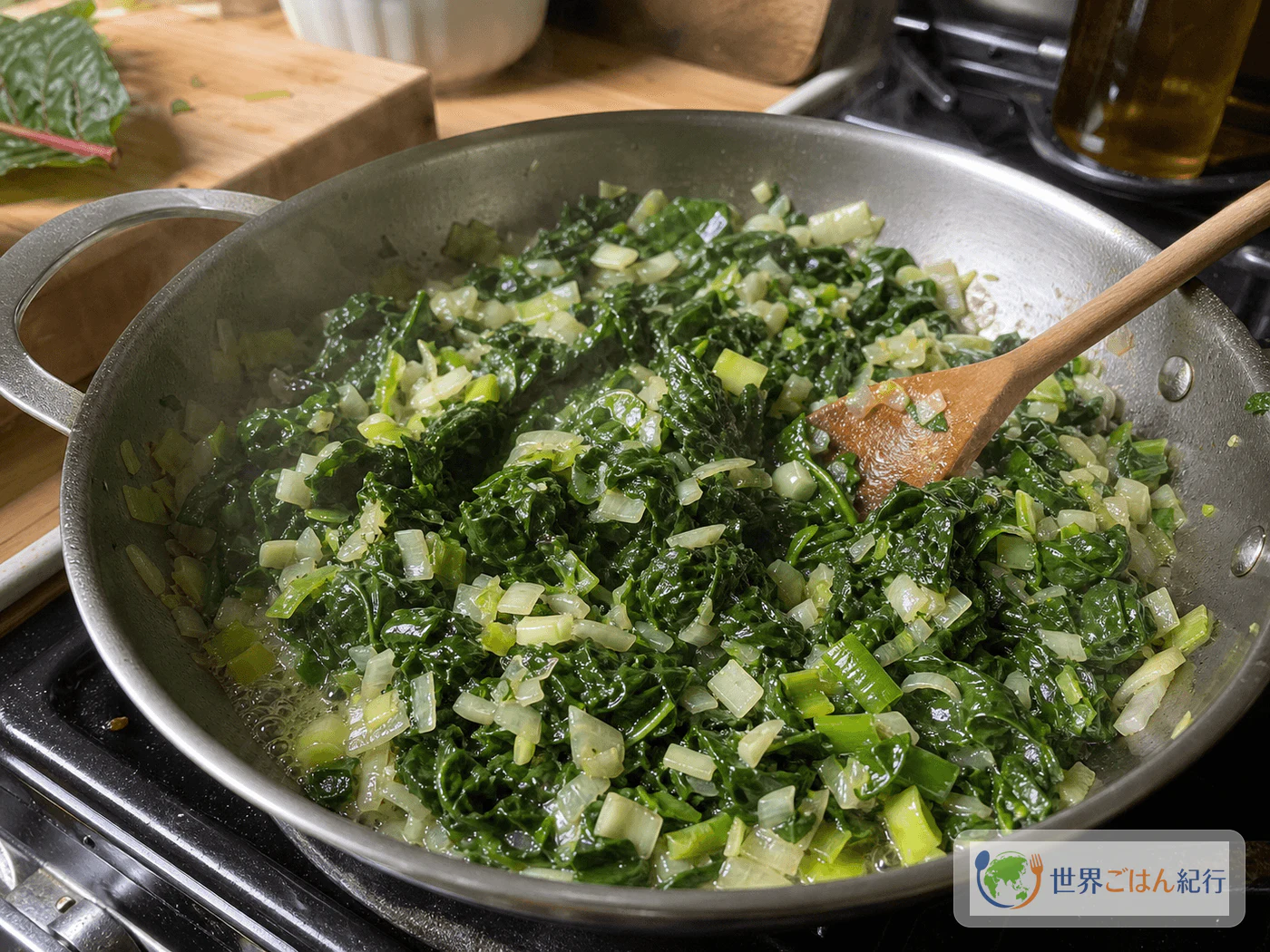
Spinach on its own holds a lot of water. Raise the heat a little at the end of cooking and give it 1–2 extra minutes, until no liquid is left on the bottom of the pan, then cool it.
How to make it: drive out the water, wrap thin and fry
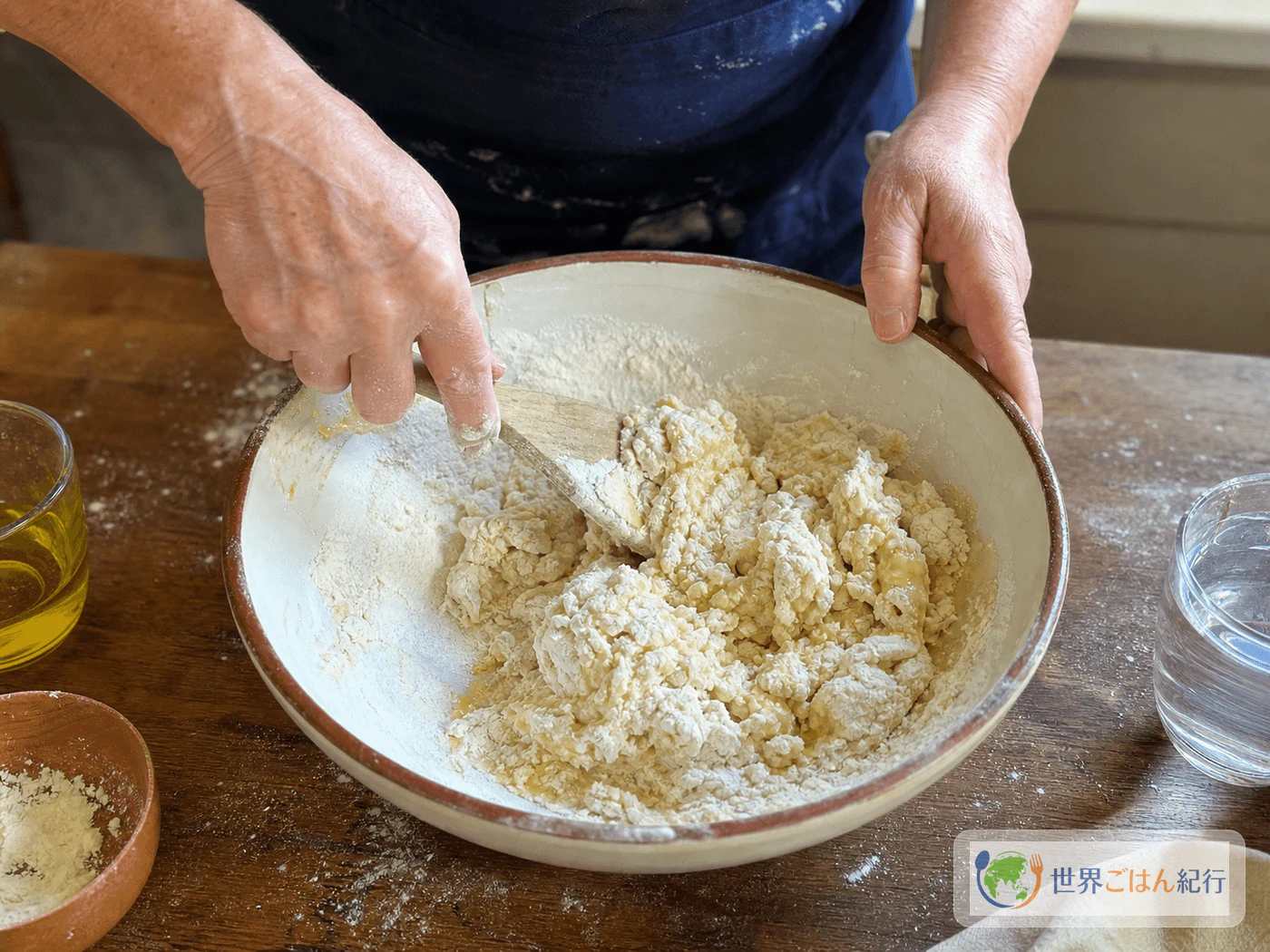
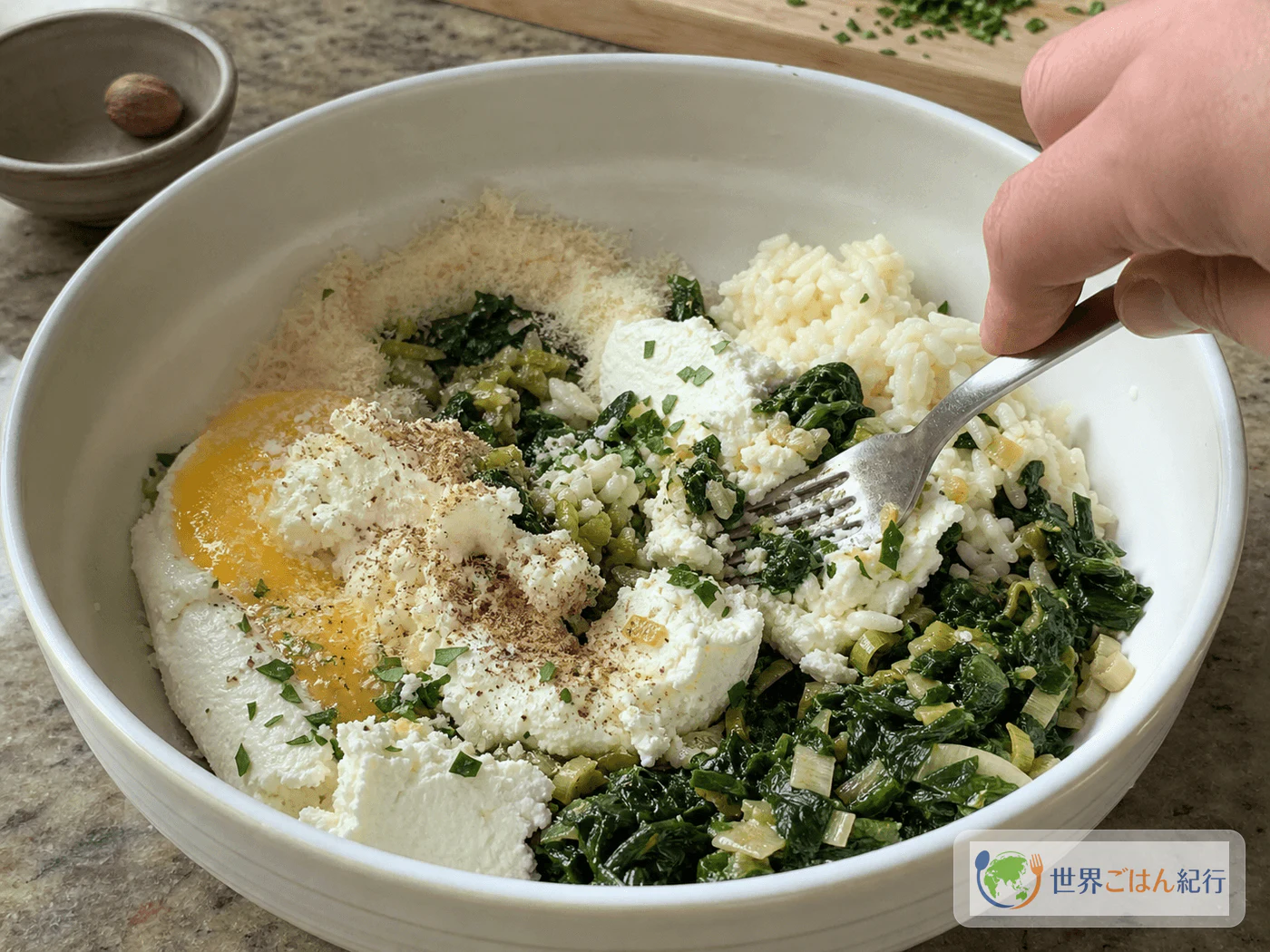
If you wrap the filling while it is hot, the dough goes limp. First knead the dough and let it rest, and meanwhile chop and sauté the greens, cool them, and then combine with the cheese. If you decide beforehand where the oil, rack, paper and plate go, you will not be rushed after frying.
Barbajuan problems and fixes
It opens while frying
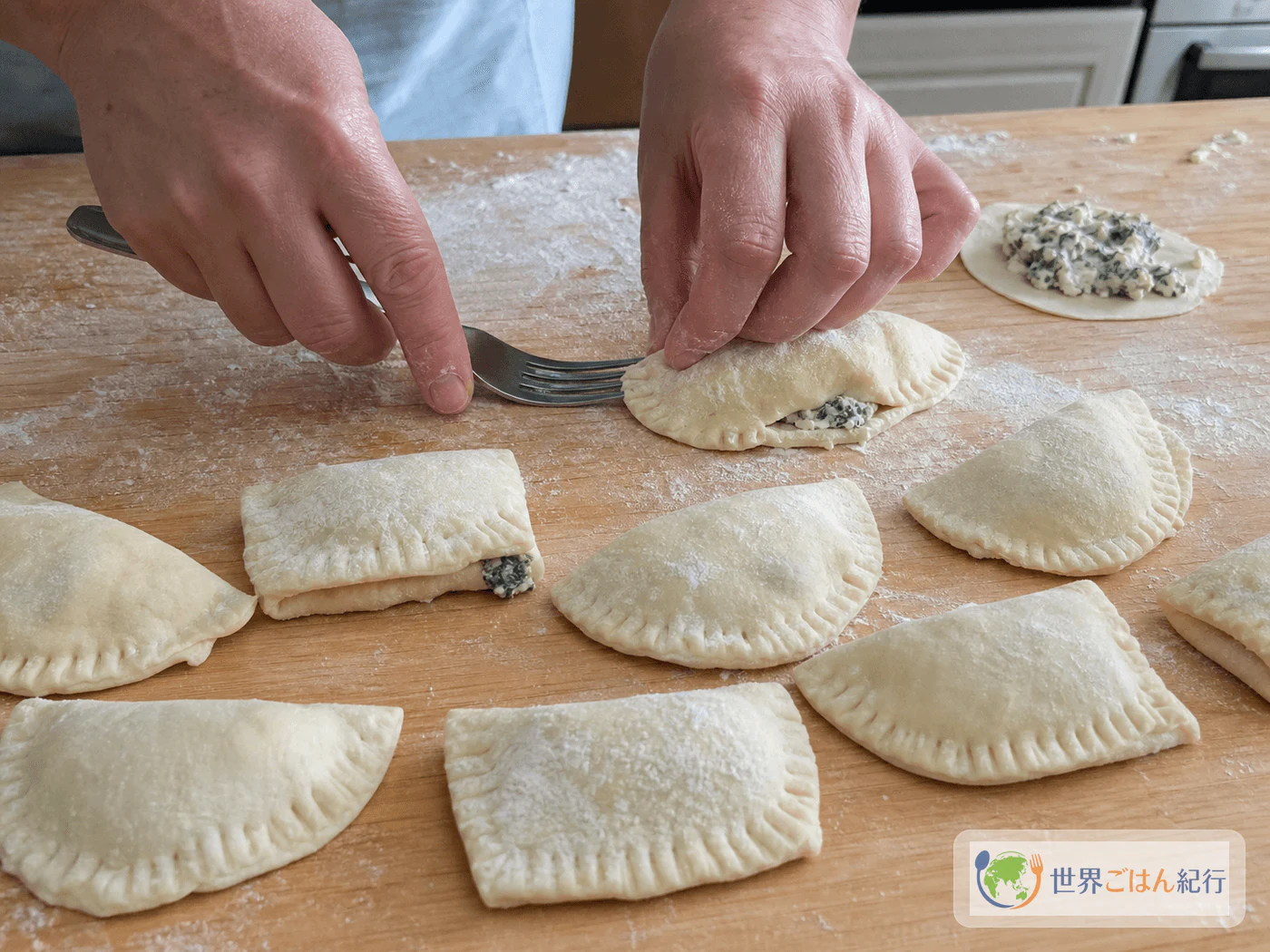
Usually there's too much flour on the edge or too much filling inside. Brush the dusting flour off the edge with your finger, brush on a little water, and keep the filling to about 18 g each, pressing out the air as you seal. The fork marks are there to thin and press the edge so it sticks together.
It turns greasy
The oil was too cool. Adding too many at once drops it below 325°F (165°C), and the skin soaks up oil, so in an 8-inch (20 cm) home pot, fry 4 at a time. No thermometer? Drop in a small scrap of dough: fine bubbles should appear at once, and it should color lightly in about 20 seconds.
The inside is watery
Water from the greens is still in there. After chopping, sprinkle them with salt and squeeze, then cook in a skillet until the bottom of the pan is dry. Hot greens loosen ricotta, so always cool them on a tray before combining.
The skin gets hard
The dough is too thick or it fried too long. Over 0.125 inch (2 mm), it never turns light and the edge stays hard. While the bubbles are still big and wild, it's too early; once they turn fine and the edge goes pale gold, lift it out. Residual heat keeps darkening the color, so don't wait for dark brown.
Serving and storing barbajuan
How to serve them
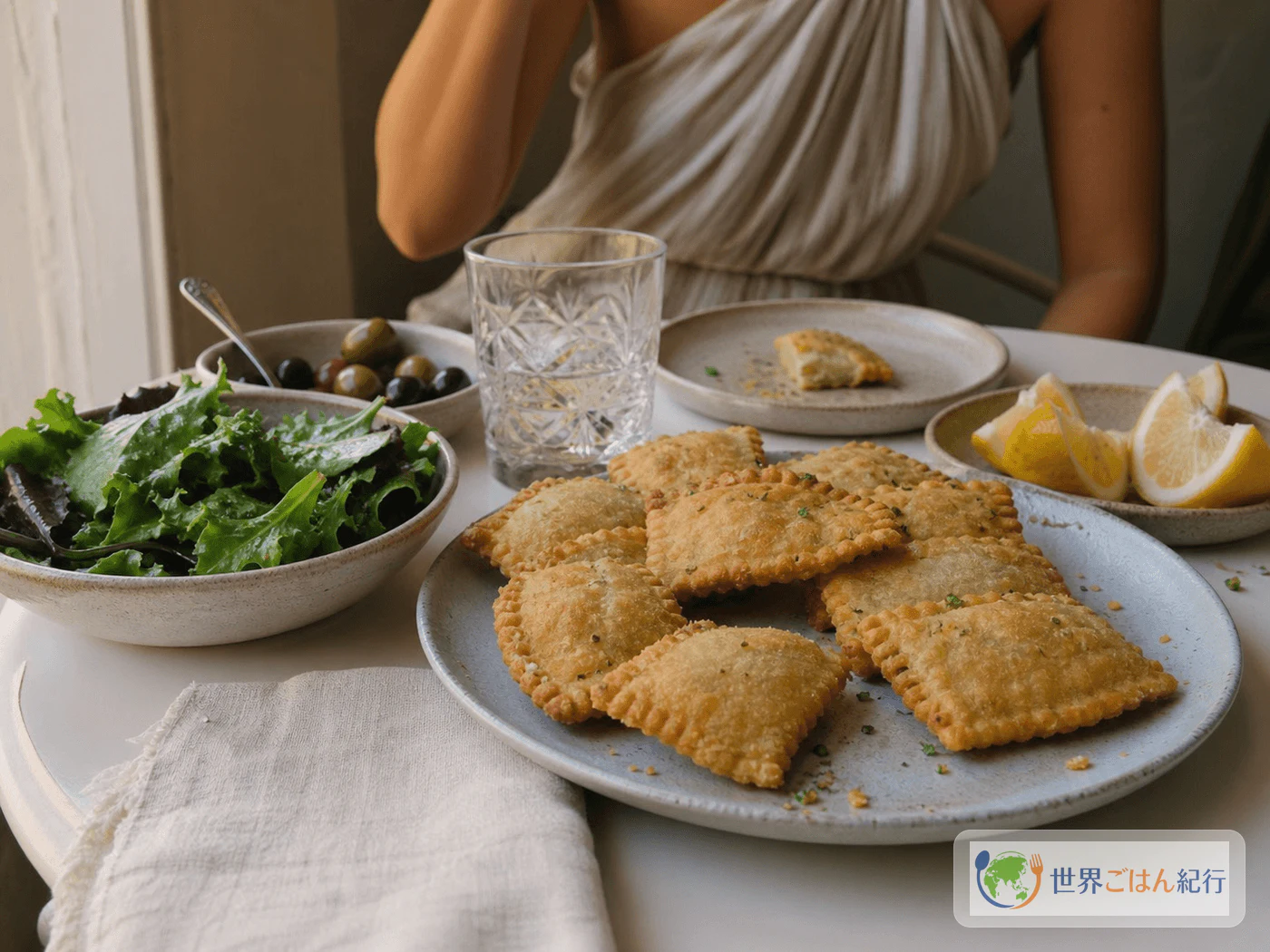
Serve them as a starter once they've settled a little, rather than piled up and piping hot, so you can actually taste them. With a leafy salad, olives and lemon on the table, the toasty skin and green aroma never feel heavy. White wine is a good match; at home, cold sparkling water or strong tea works too.
For another greens-and-thin-dough dish, the closest is the Croatian soparnik, a baked greens pie led by garlic oil. For similar frying, try the Tunisian fricassé and the Vietnamese chả giò, and for more fried filled dough, the Argentine empanada.
Storage and reheating
They taste best between 3 and 10 minutes after frying. If you're making them ahead, decide whether to stop before wrapping or after frying.
| State | How to store | Guide |
|---|---|---|
| Filling before wrapping | Airtight, refrigerated | Until the next day |
| Wrapped dough | Dusted with flour, in one layer, refrigerated | Up to 6 hours |
| After frying | Cool, airtight, refrigerated | Until the next day |
| Freezing | Freeze on a tray before frying, then bag | Up to 2 weeks |
Reheat refrigerated ones in a toaster oven or oven at 350°F (180°C) for 6–8 minutes. A microwave alone makes the skin soggy; if you use one, warm them for only 20 seconds at 600 W, then finish in the toaster. Fry frozen uncooked ones straight from the freezer in 350°F (170°C) oil for 2 minutes per side, until the surface is pale gold.
Frequently asked questions
Can I make it without swiss chard?
Yes. Combining 5.5 oz (150 g) komatsuna and 4 oz (120 g) spinach gives you the stem texture of one and the soft leaves of the other.
What if I cannot find ricotta?
Mix 5.5 oz (160 g) drained cottage cheese with 1.75 oz (50 g) grated Parmesan. Cream cheese is too rich and hides the greens; if you use it, limit it to 2.75 oz (80 g) and make up the rest with cottage cheese.
Do I have to put in rice?
It's easier to handle with it, since the rice absorbs moisture from the greens and cheese. If you leave it out, cool the sautéed greens more thoroughly and add 10 g more Parmesan so the filling holds together.
Can I bake them in the oven?
You can, but the result moves toward a different dish, because barbajuan is all about thin dough puffing up in oil. If you must bake, brush the surface with oil and bake at 425°F (220°C) for 10–12 minutes. The edges and skin still come out lighter and toastier when fried.
How much can I prepare the day before?
Make the filling the day before: sauté and cool the greens, combine them with the cheese and rice, and refrigerate airtight. The dough rolls more easily if kneaded the same day. If you make it ahead, refrigerate it and bring it back to room temperature 30 minutes before use. Fry wrapped ones within 6 hours, before their bottoms turn damp.