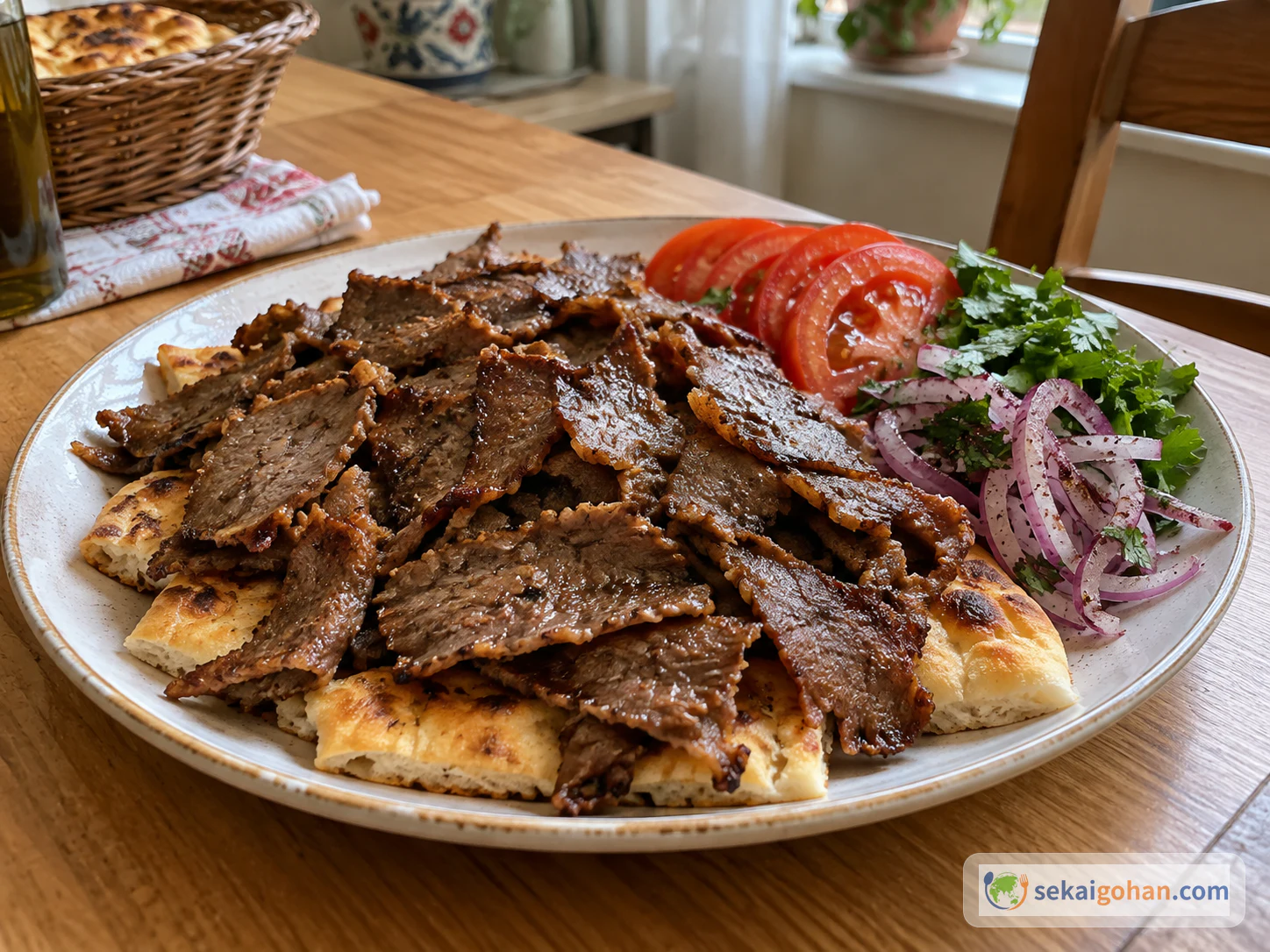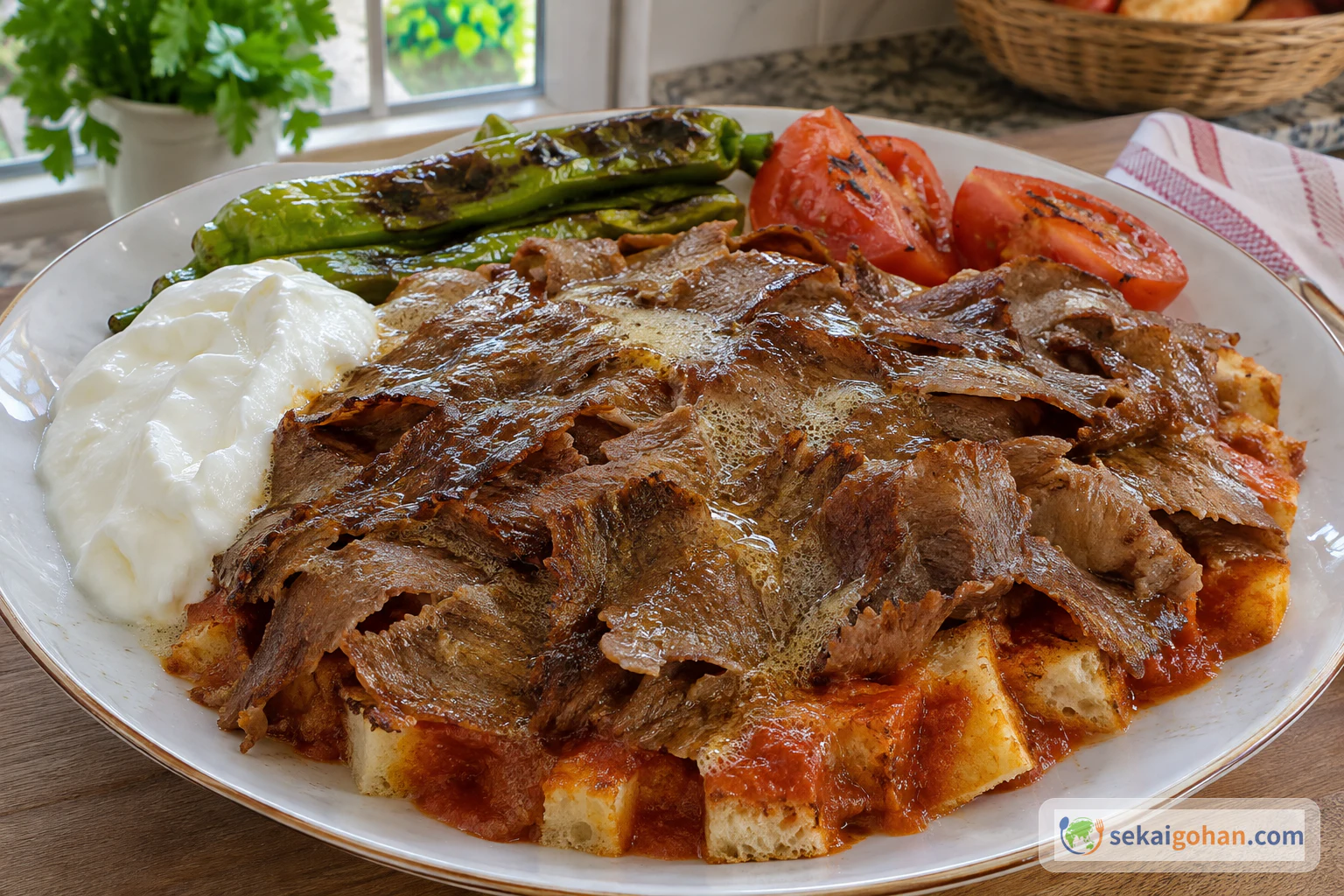
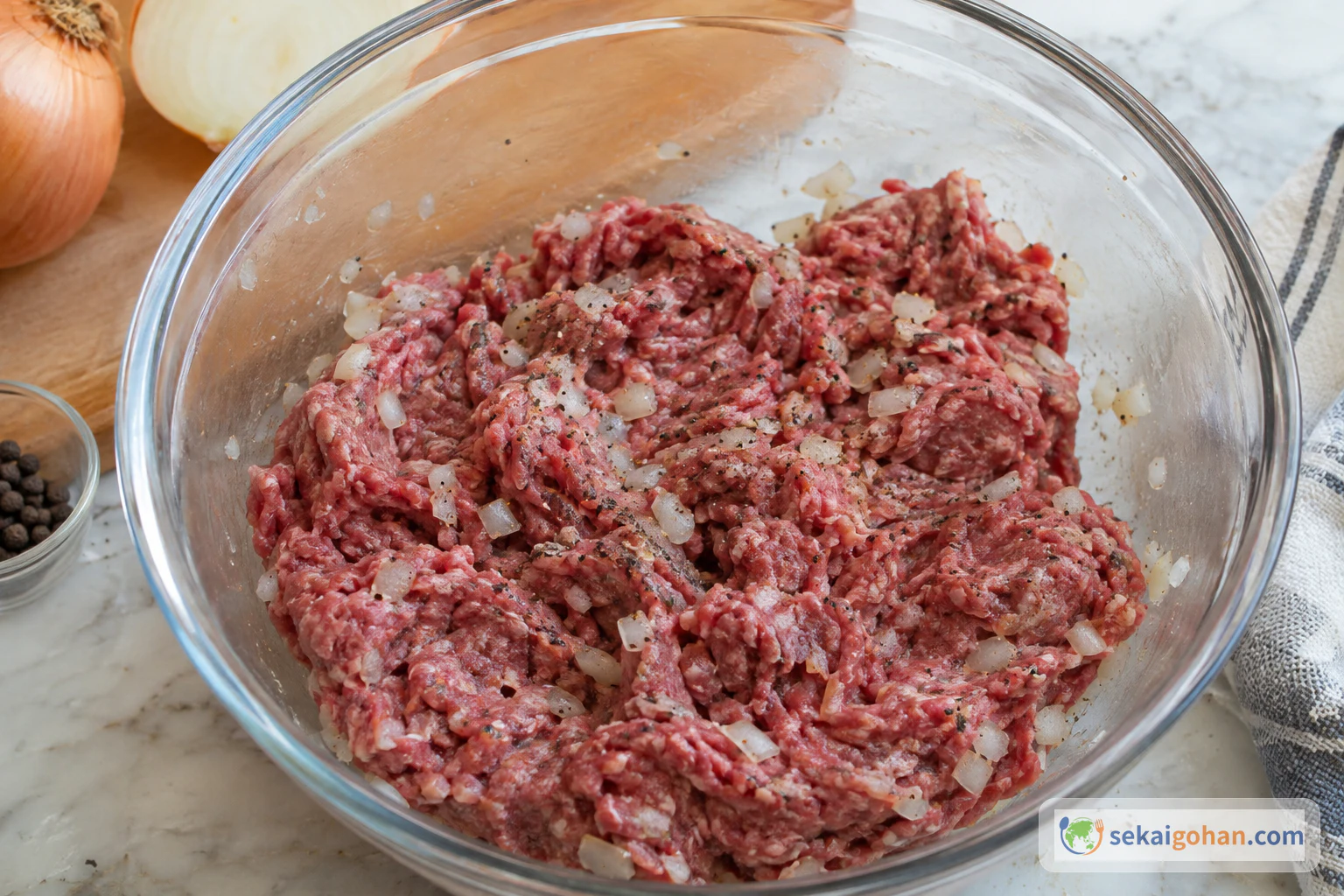
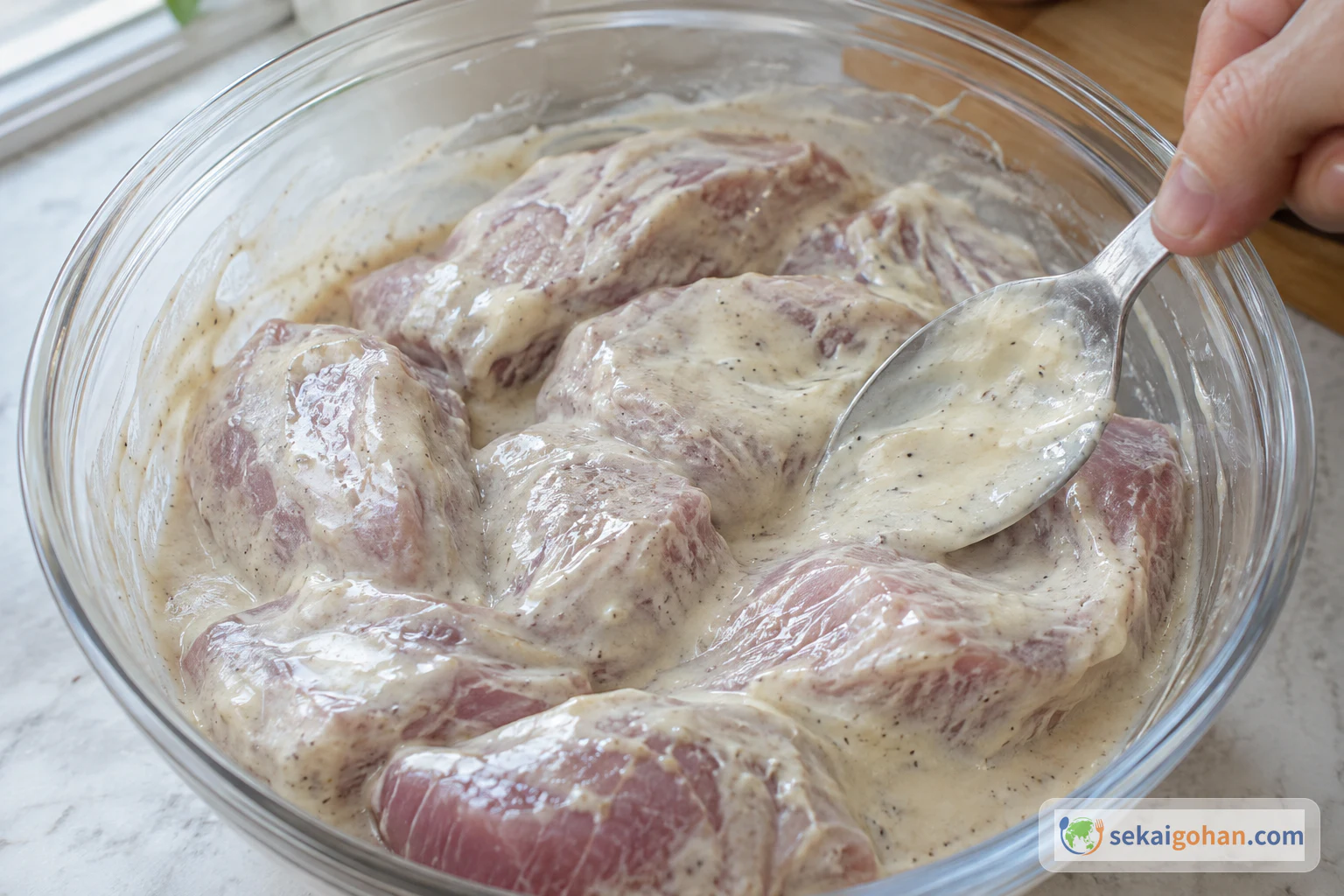
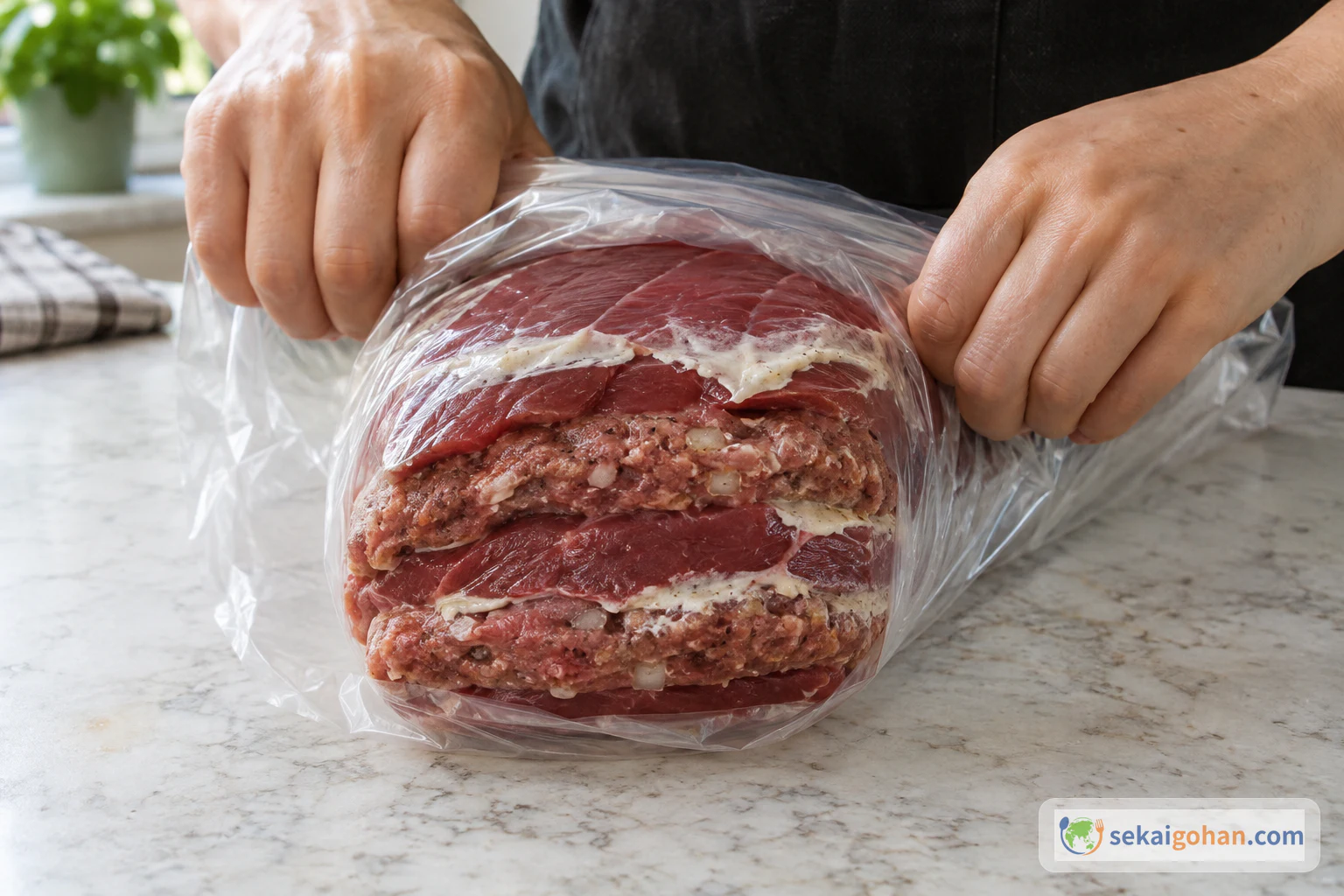
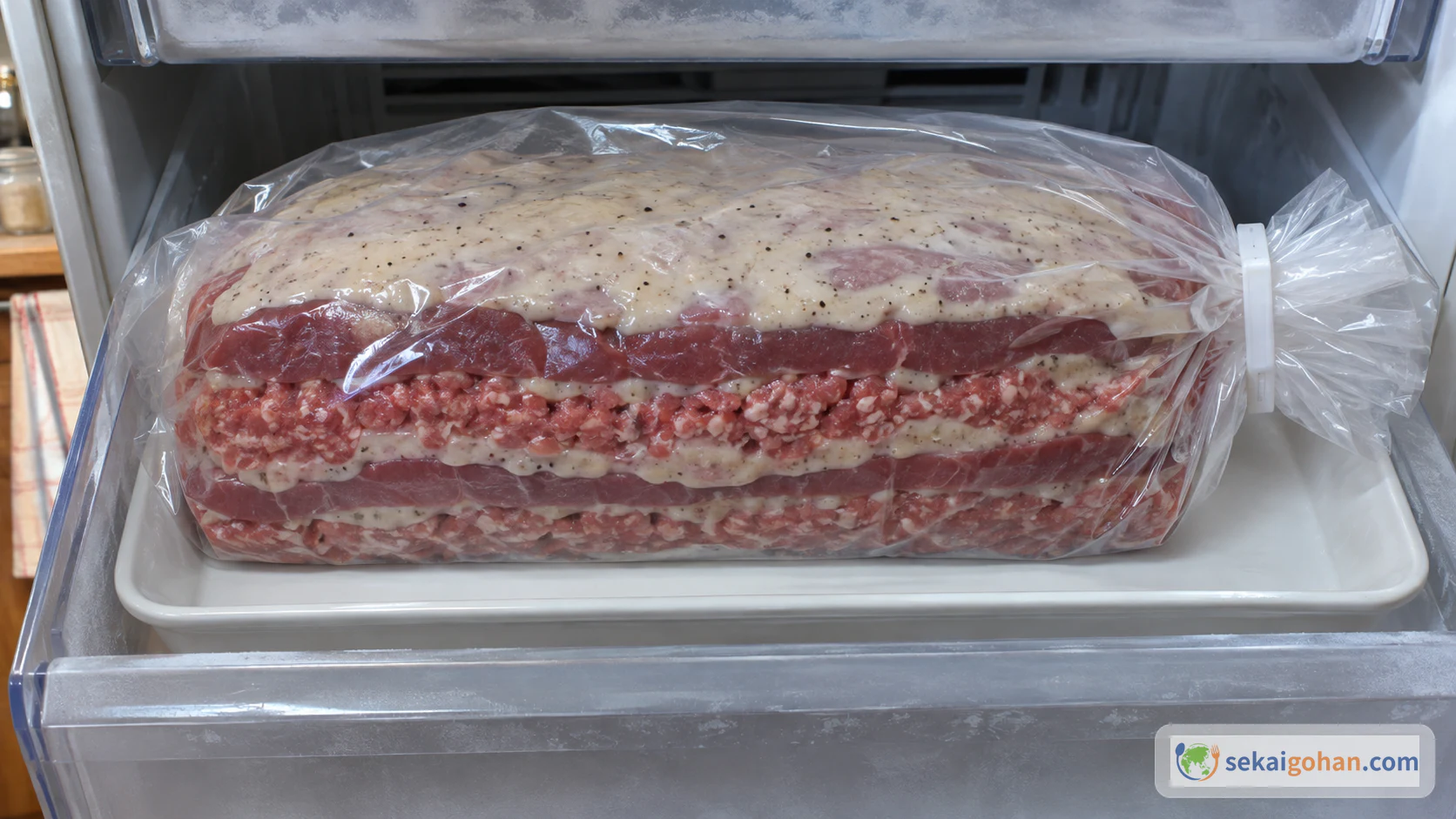
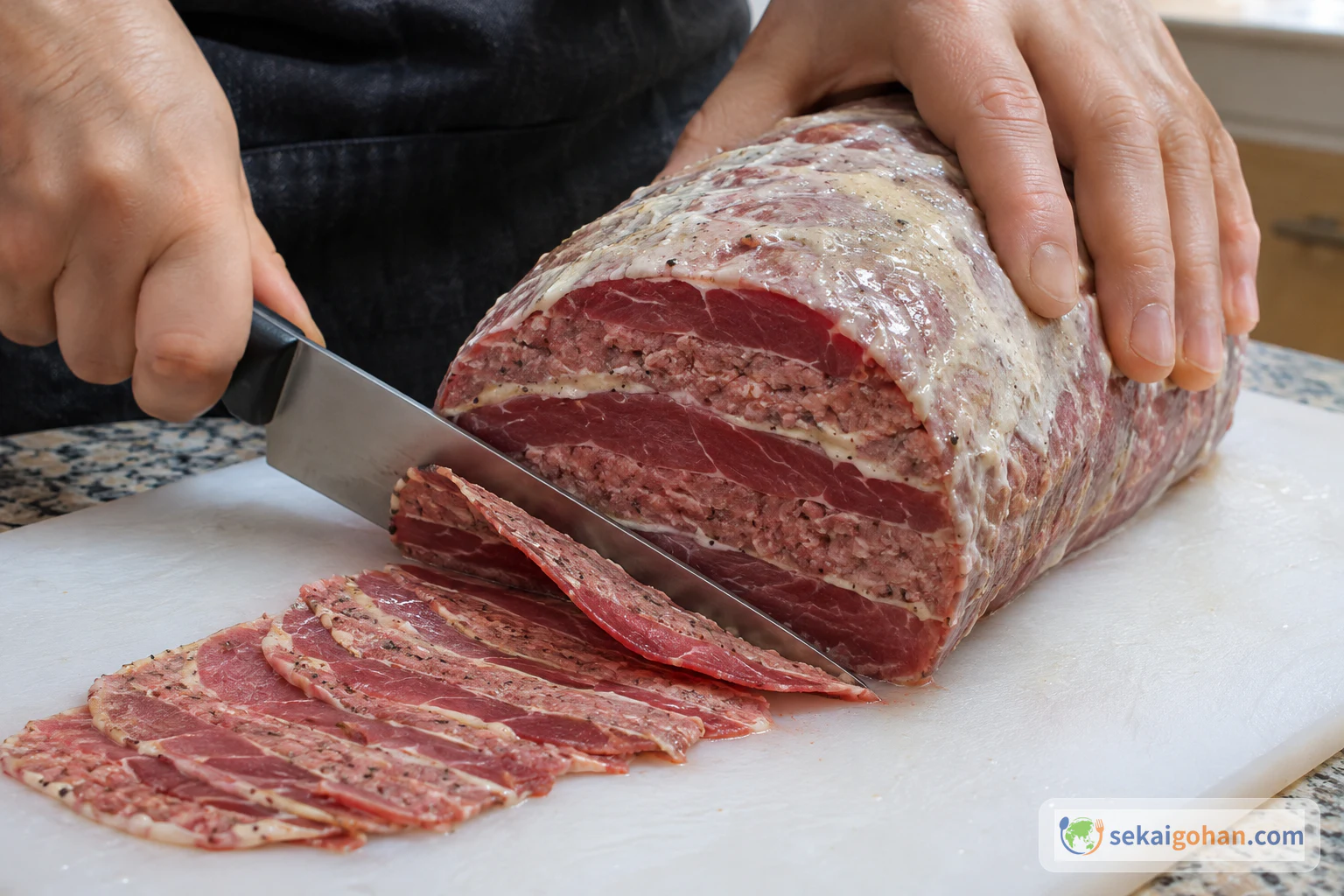
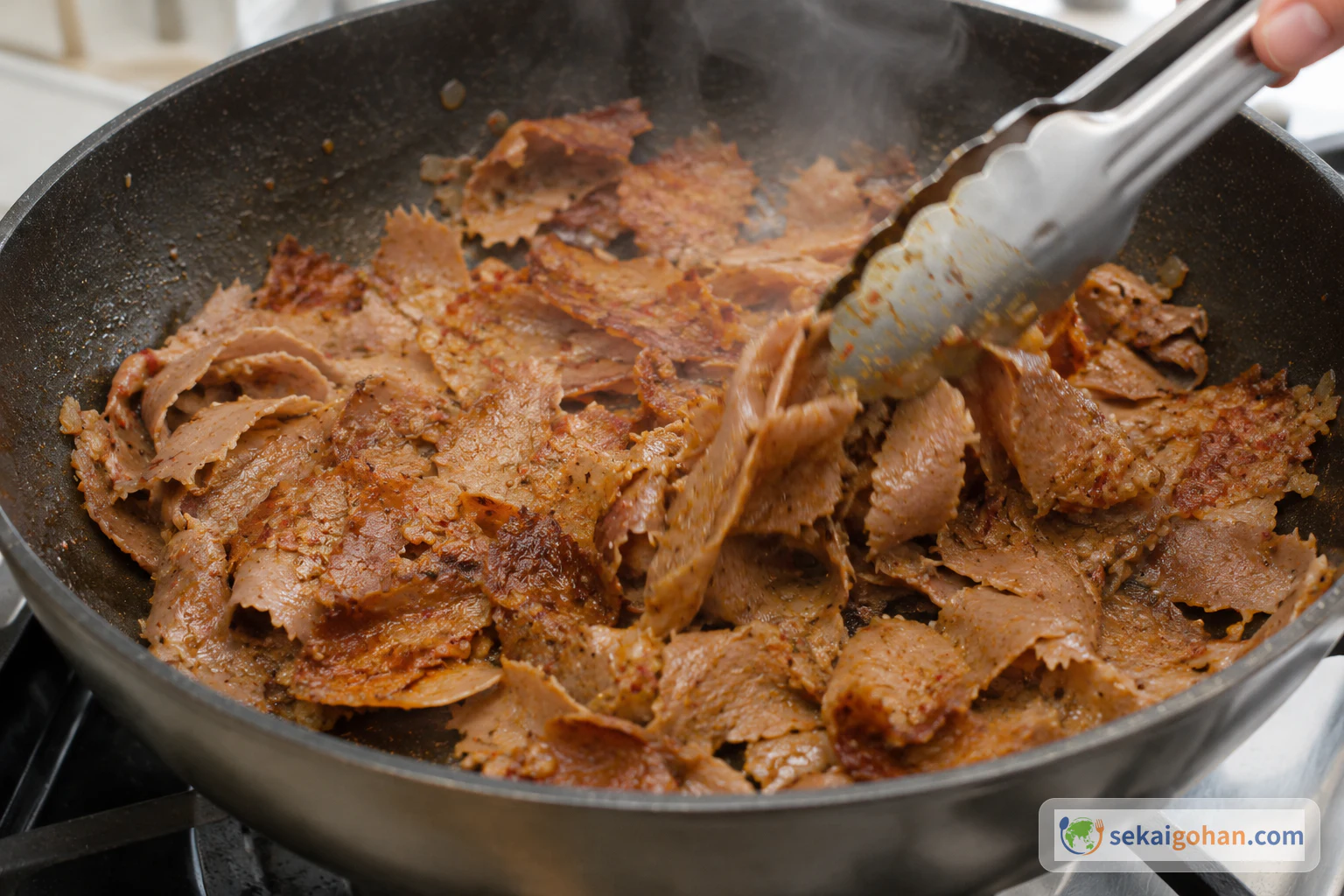
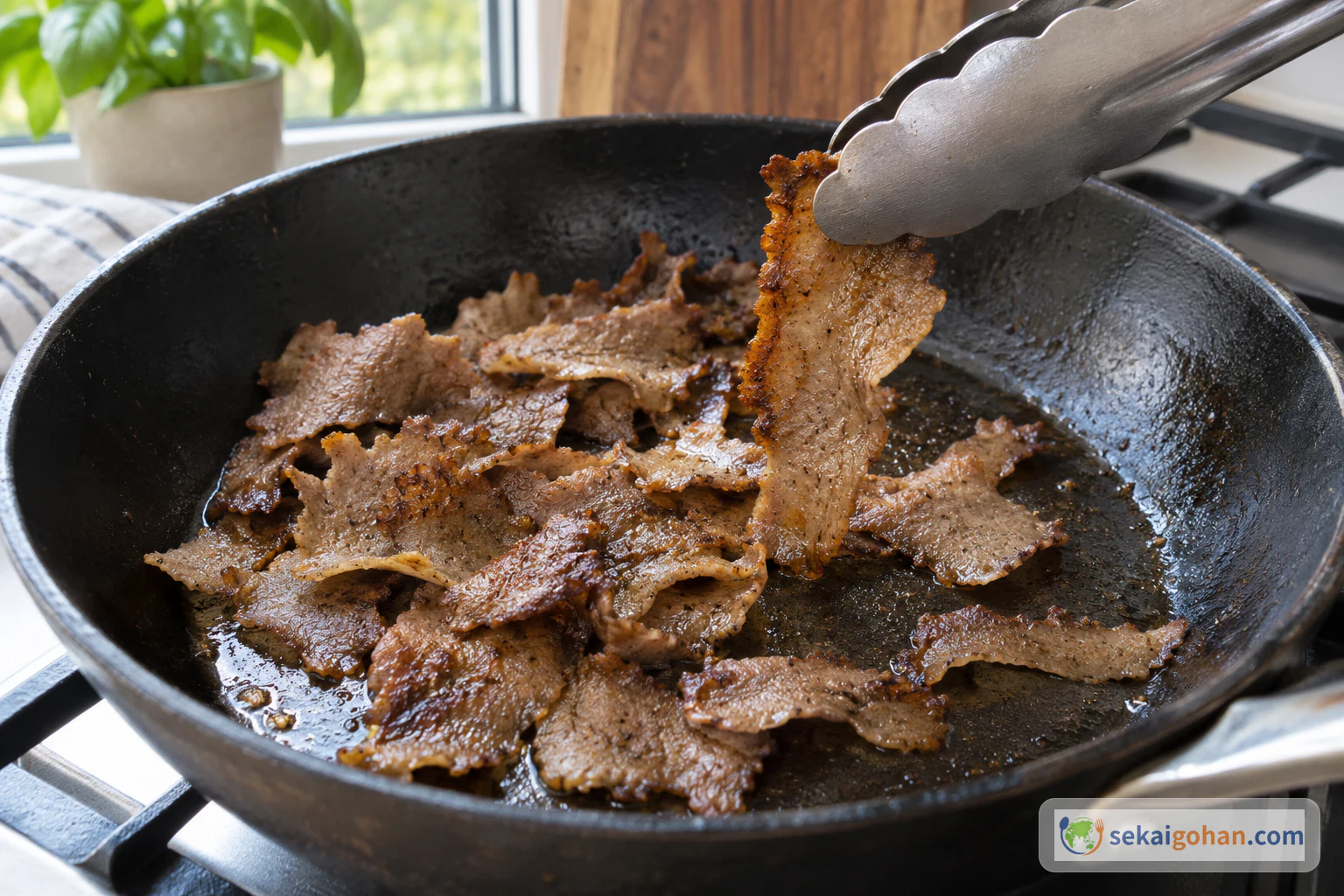
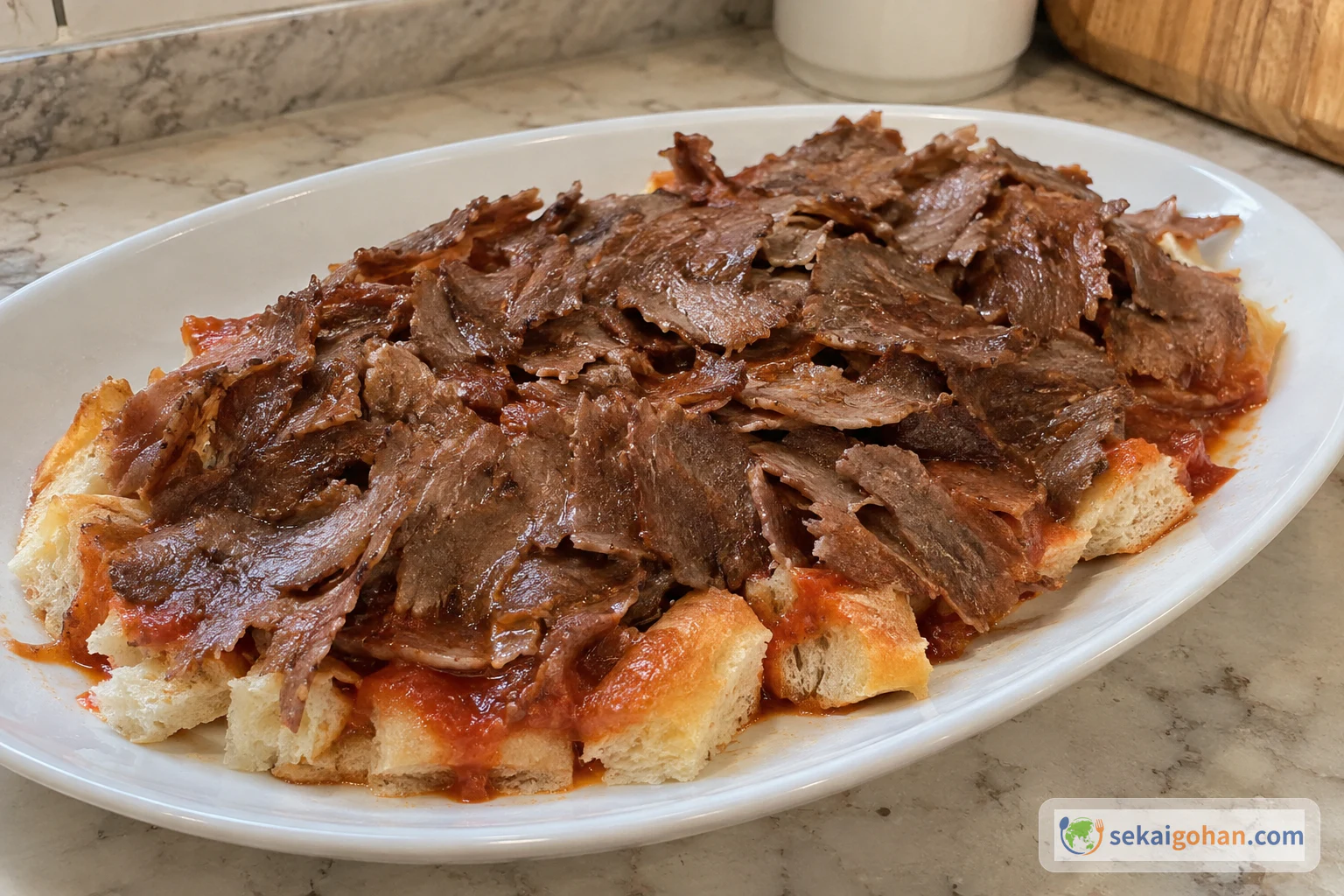
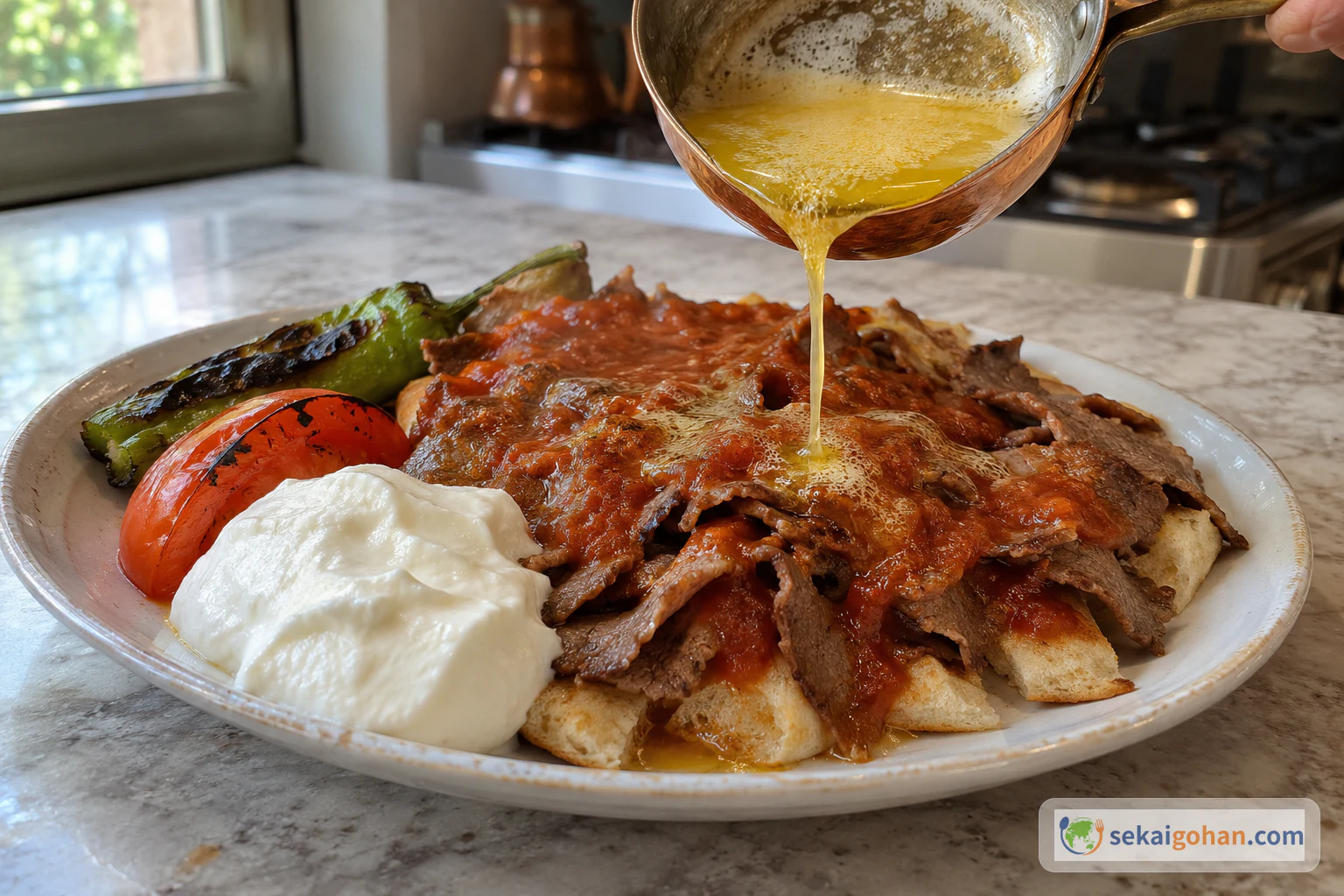
Squares of warm pide drink up a thick red tomato sauce. Thin shavings of browned beef cover them, yogurt waits at the side, and melted butter is poured over just before the plate reaches the table. This is İskender kebap, also called Bursa kebabı, a specialty of the city of Bursa. At home you can make it without a vertical spit: beef fillet and ground beef are seasoned separately, stacked in layers, chilled until firm, then sliced thin and browned in a skillet.
You can find more of the country's cooking on our Türkiye page.
İskender Kebap in Bursa
İskender Efendi developed the dish in 1867 in Bursa's Kayhan district. He used thin slices of lamb cut from a vertical spit and served them with pide, yogurt, tomato sauce and butter.
This version builds the same plate but cooks the meat differently. Layered beef browned in a skillet stands in for spit-cut lamb. Other home cooks take their own routes. One, for example, layers beef fillet with ground lamb and uses a different sauce and an oven.
Ingredients for 6 Servings
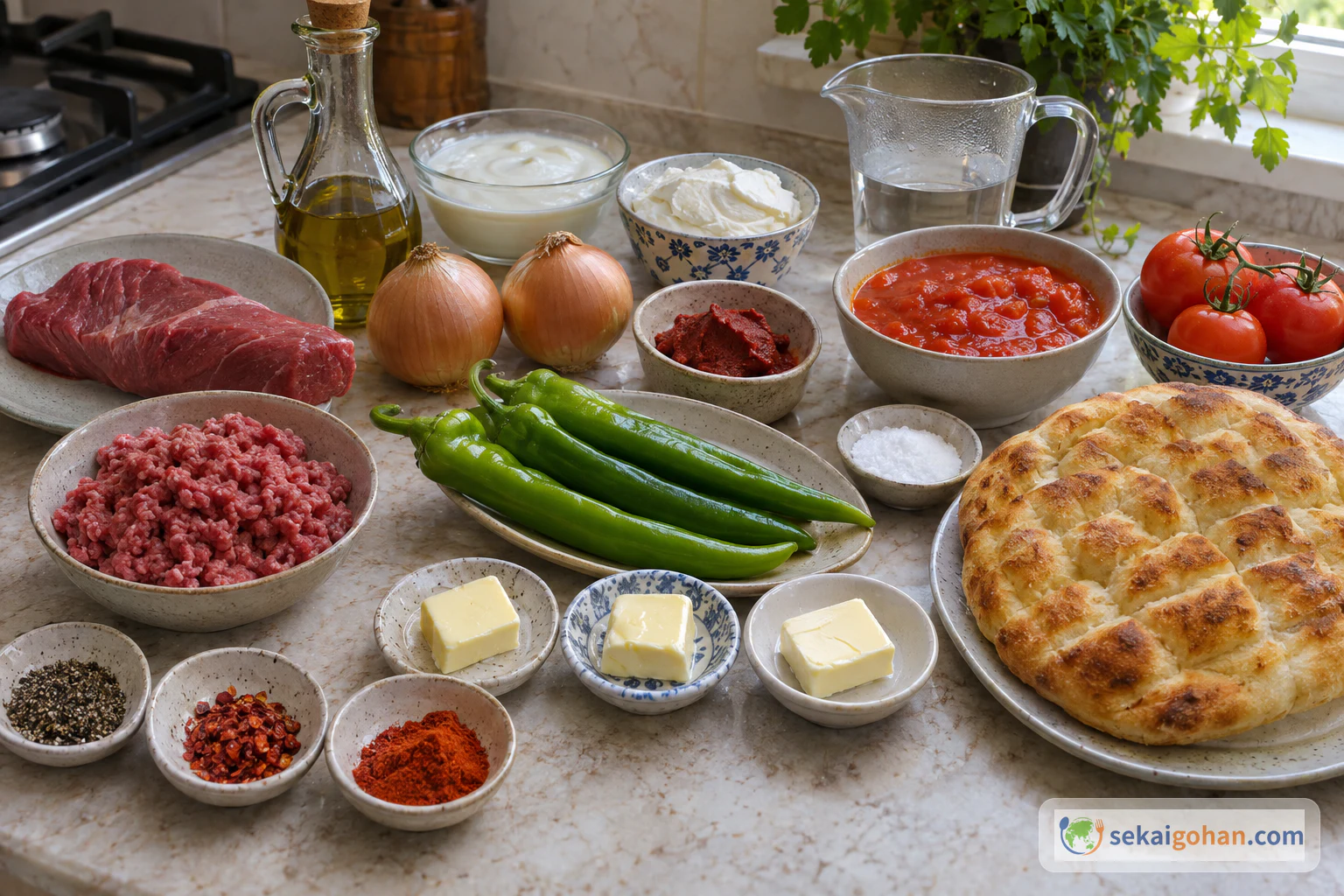
Keep each portion for its own job. Each meat gets its own onion, the sauce tomatoes are separate from the garnish tomatoes, and butter is used separately for the sauce, the frying and the finish.
Choosing Ingredients for İskender Kebap
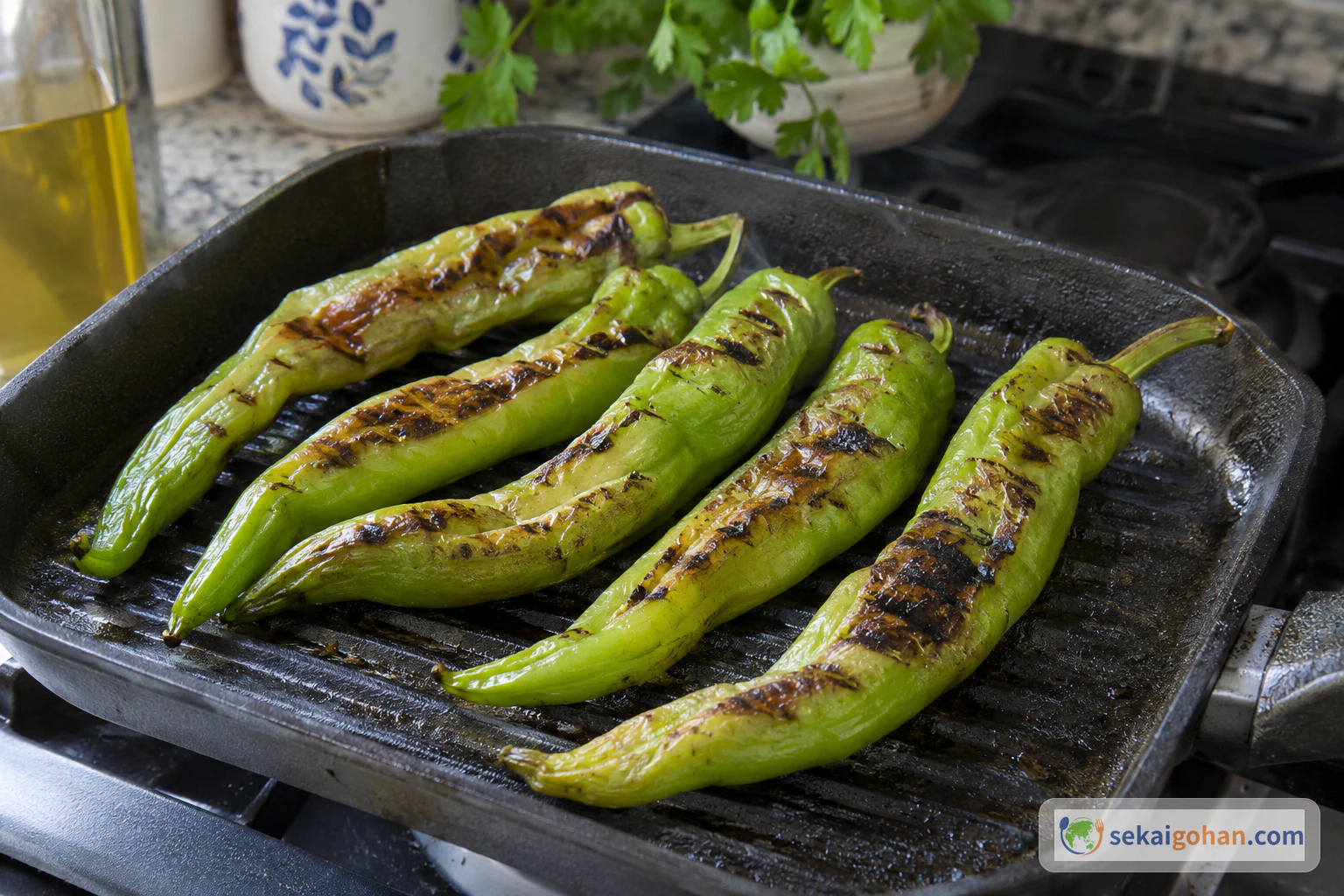
- Long green peppers: Use the slender green peppers common in Turkish cooking if you can. Small bell peppers or other green peppers have a different shape and heat, so they give you a different garnish.
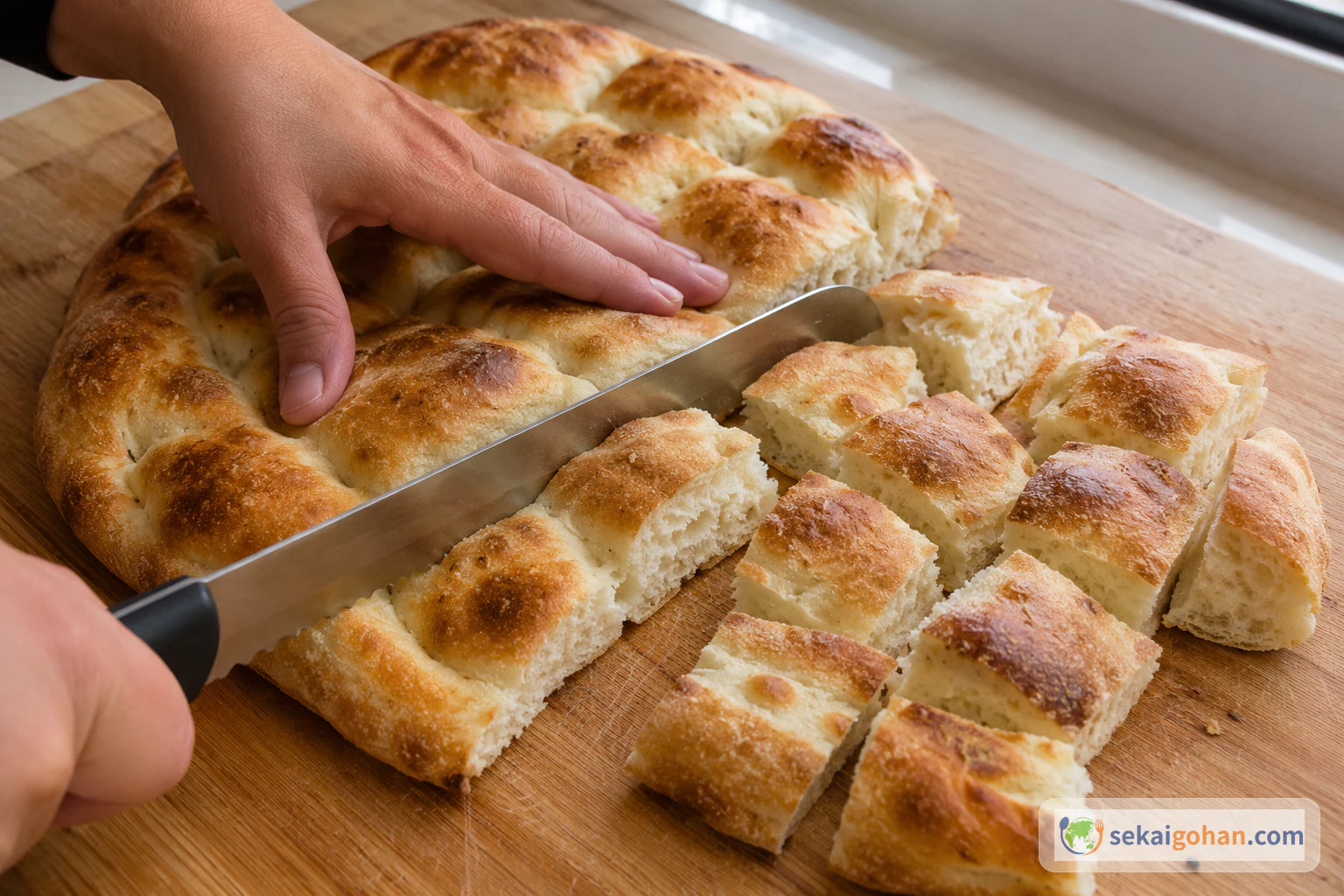
- Bread: Tırnak pide is the traditional choice. A similar fluffy flatbread or a thick unsweetened one also works, though the texture and thickness will differ.
- Thick yogurt: Strained unsweetened yogurt comes close in texture.
- Fillet marinade heat: Treat the 1 tsp of black and red pepper as a combined upper limit and divide it to taste. Ground red pepper or flakes both work, and it's wise to start on the mild side. Taste the blended marinade before it touches the raw beef, never afterward.
- Frying fat: Olive oil can replace the butter in the same amount.
- Beef fillet: It slices thinly with ease.
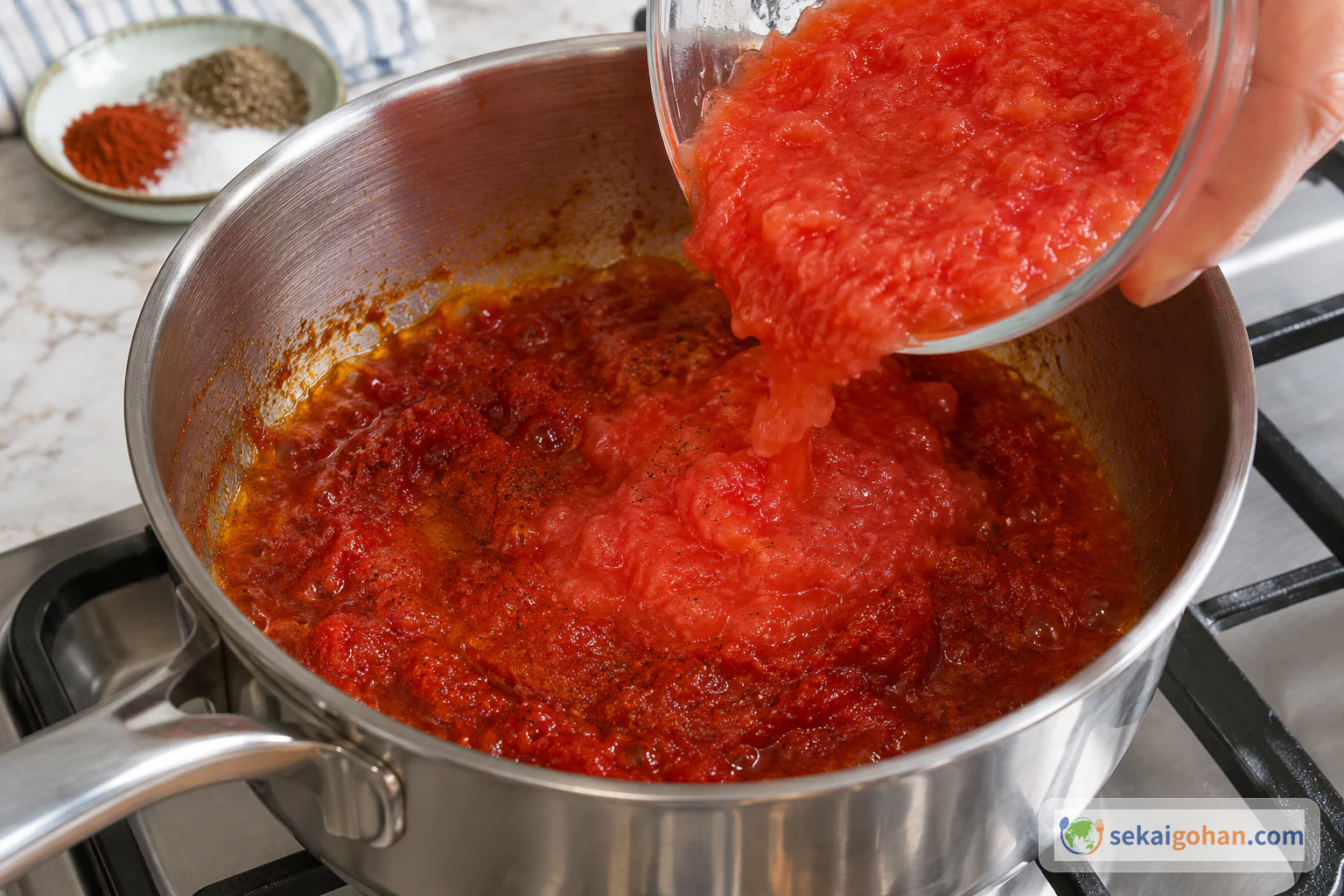
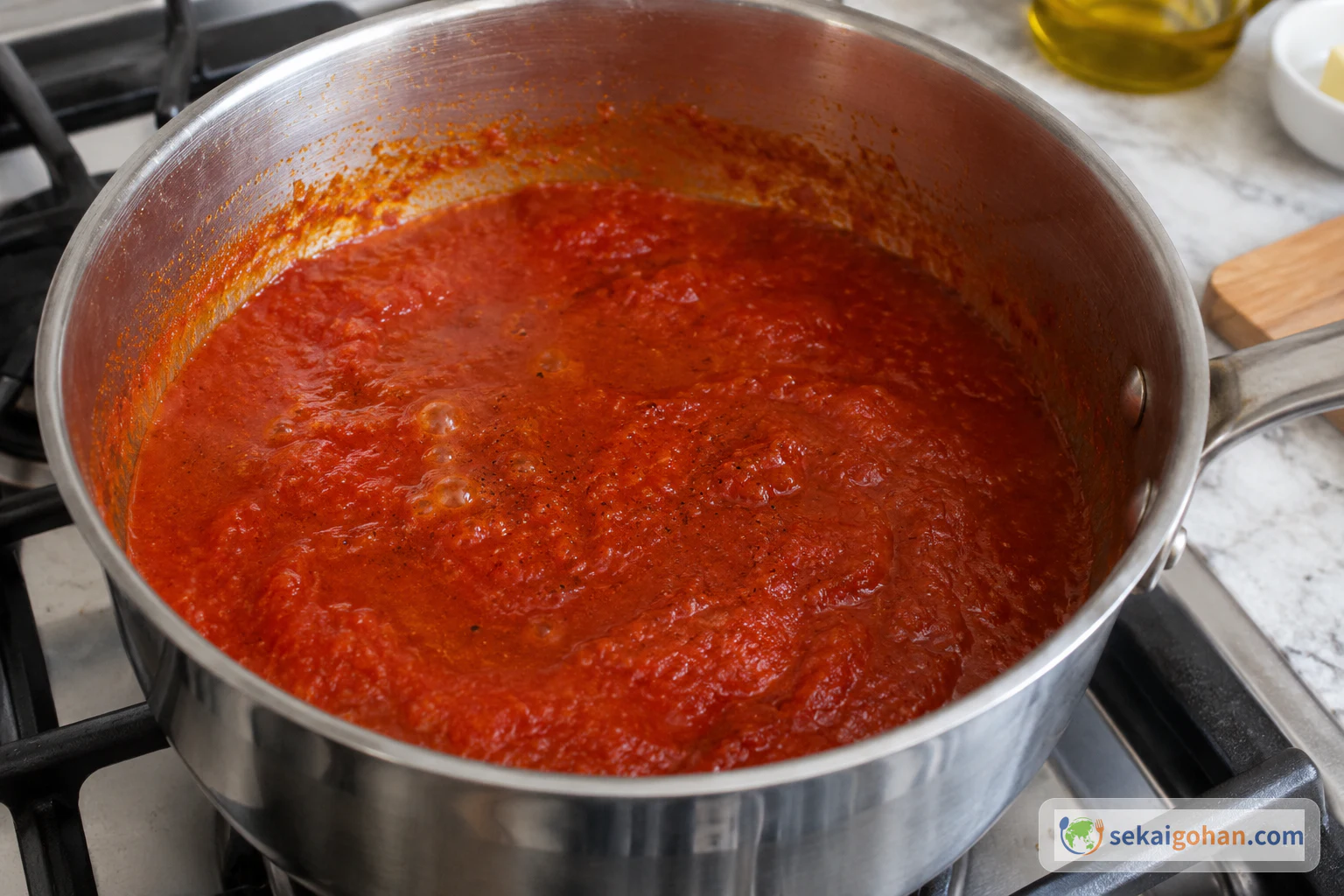
- Sauce tomatoes: The sauce uses grated fresh tomatoes. Canned tomatoes would change the flavor.
This dish contains milk (yogurt and butter) and wheat (pide), and it is made with beef. Check the labels on packaged bread and yogurt.
Equipment
- Food processor
- Box grater
- Mixing bowls, including one for each raw meat
- Food-grade freezer bag that closes securely
- Tray that fits your refrigerator and freezer
- Sharp knife and cutting board reserved for raw meat
- Bread knife and a separate clean cutting board
- Saucepan for the tomato sauce
- Small saucepan for the finishing butter
- Heavy skillet for the meat and bread
- Separate pan with a lid for holding cooked meat
- Grill pan for the vegetables
- Separate clean tongs or utensils for raw and cooked food
- Broad serving plate
Method: Chill, Slice Thin, Then Build the Plate
The meat needs chilling time before you can slice it, so start ahead. Judge the log by how firm it is, and judge the sauce by how thick it is.
- Thaw or soften the log in the refrigerator, not on the counter.
- Cut only what you will cook right away, and don't repeat freezing and thawing.
- Keep the knives, boards, utensils and hands that touch raw meat away from cooked and ready-to-eat food.
- This dish contains ground beef, so don't serve it rare. Cook to 167°F (75°C) at the center for at least 1 minute. Brown color alone doesn't tell you it's done.
İskender Kebap Problems and Fixes
| Problem | Likely cause | What to do |
|---|---|---|
| The log is too hard to cut | Frozen past the point of slicing | Let it soften in the refrigerator, not on the counter, then slice and cook right away |
| The layers fall apart as you slice | The log has become too soft or was not packed tightly | Cut carefully and cook what you cut right away. Don't refreeze it. Next time, slice while it is firmer |
| The meat steams and stays pale | Too many slices in the pan | Cook smaller batches with space between the slices |
| The sauce is thin | Too much water | Simmer it a little longer |
| The sauce is too stiff | Not enough water | Stir in hot water a little at a time |
| The bread doesn't take up the sauce well | The bread went on the plate cold | Warm it in the skillet before cutting, and rewarm the sauce before plating |
| The butter loses its effect | It was poured too early | Melt and pour it only when everything else is on the plate |
Raw meat needs cold handling throughout. Thaw only what you need, keep it cold while you do, and avoid freezing and thawing it again and again. Keep the tools for raw meat apart from those for ready-to-eat food.
Serving İskender Kebap and Variations
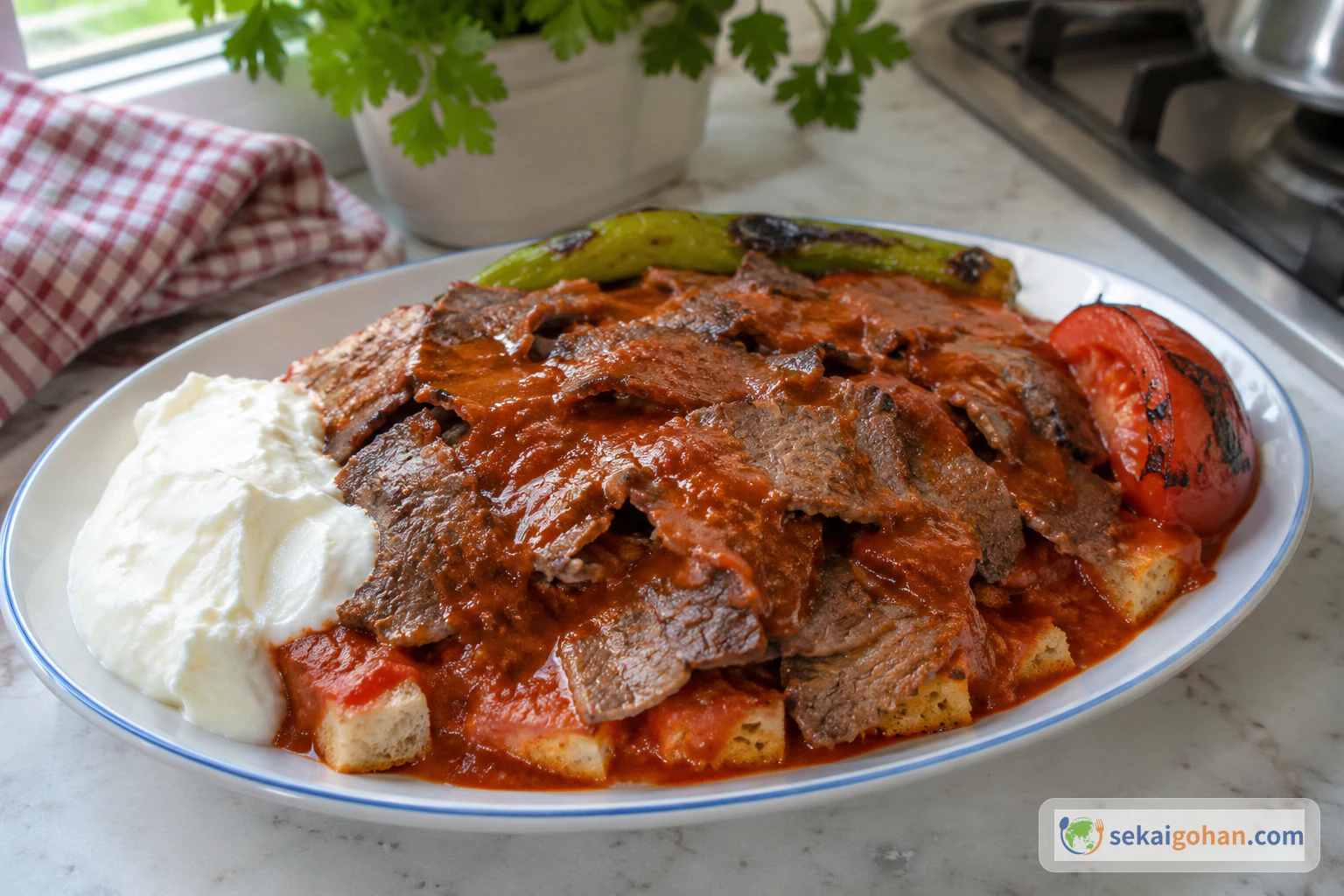
Serve right after the butter goes on, while the meat, sauce and bread are still warm and the cool yogurt still stands apart from them.
| Change | What it means |
|---|---|
| No oregano | Oregano in the fillet marinade is optional |
| Lamb in the mix | A different recipe, so the amounts would need reworking rather than a simple swap |
| Lamb tail fat | A traditional route to deeper flavor, not needed here |
Frequently Asked Questions
Can I make İskender kebap with only beef?
Yes. This recipe uses beef fillet and ground beef. The classic version uses lamb cut from a vertical spit.
Why not leave the log on the counter for 30 minutes?
Raw meat should thaw in the refrigerator or by another cold method, not at room temperature. So soften the log in the refrigerator.
How do I know the meat is done?
Cook to 167°F (75°C) at the center for at least 1 minute. Brown color alone doesn't tell you it's done, and this dish should never be served rare.
How long can I keep the frozen log or leftovers?
Freezing here only firms the log for slicing. It isn't a storage method, and it doesn't make raw meat safe.