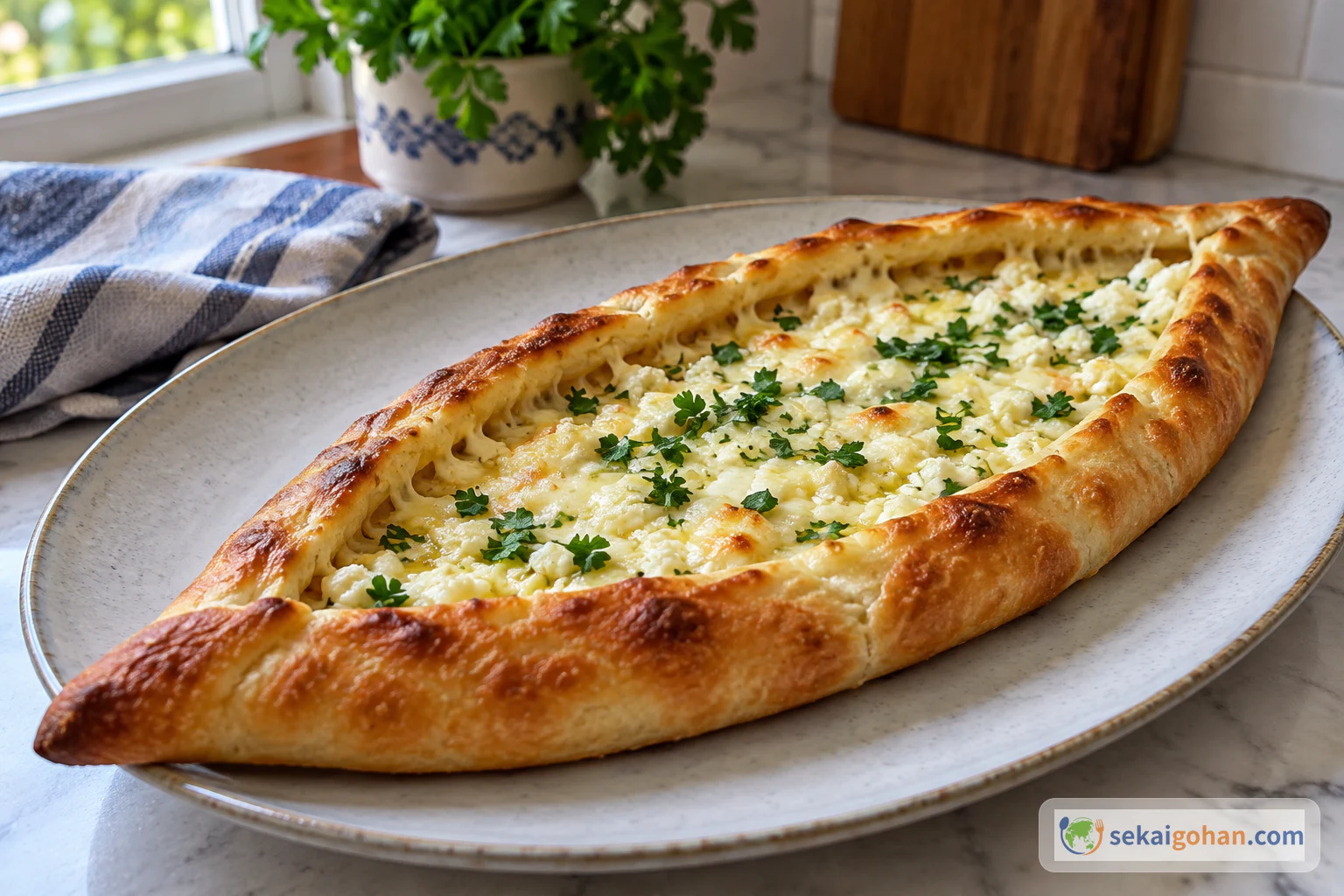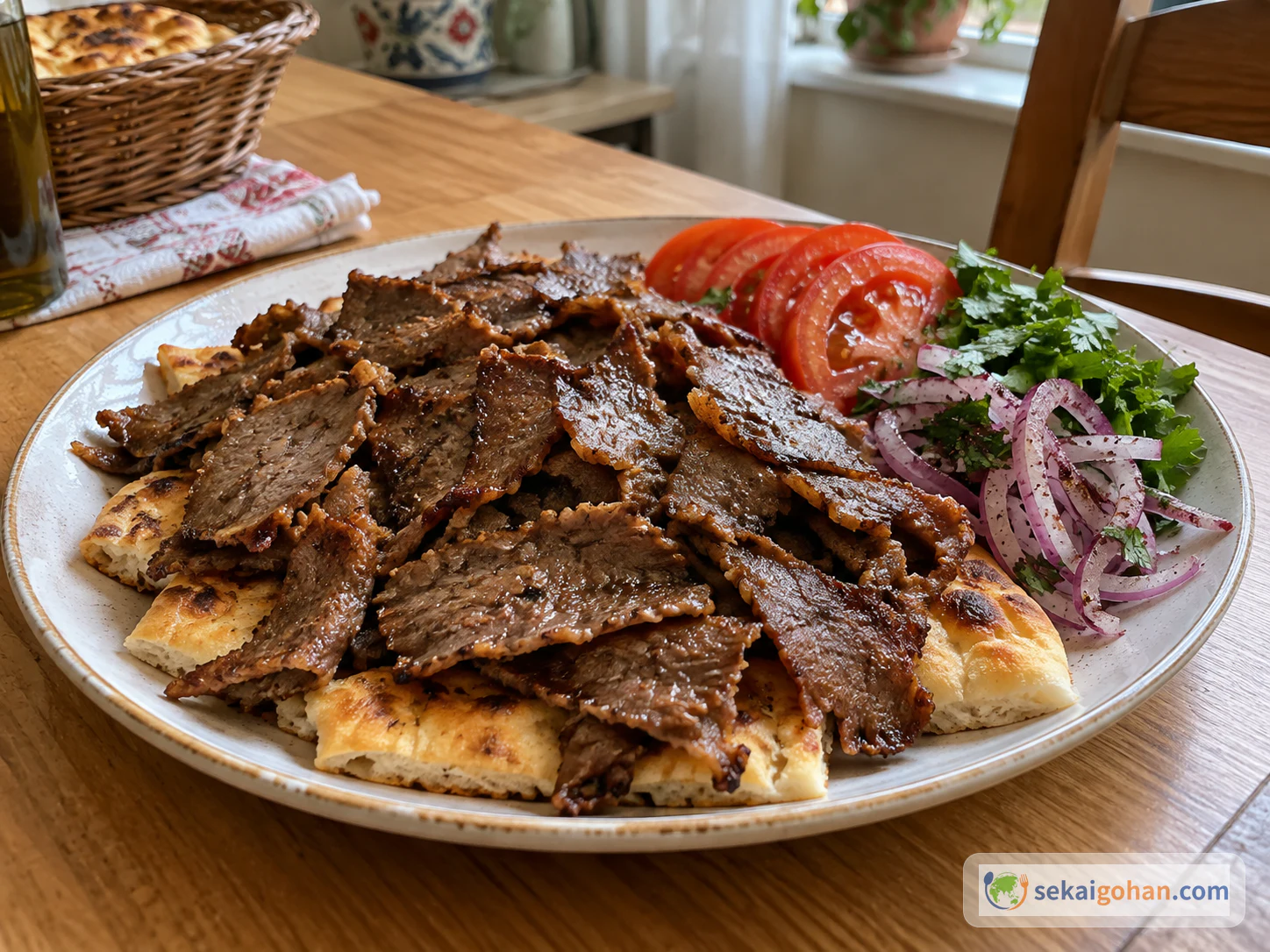
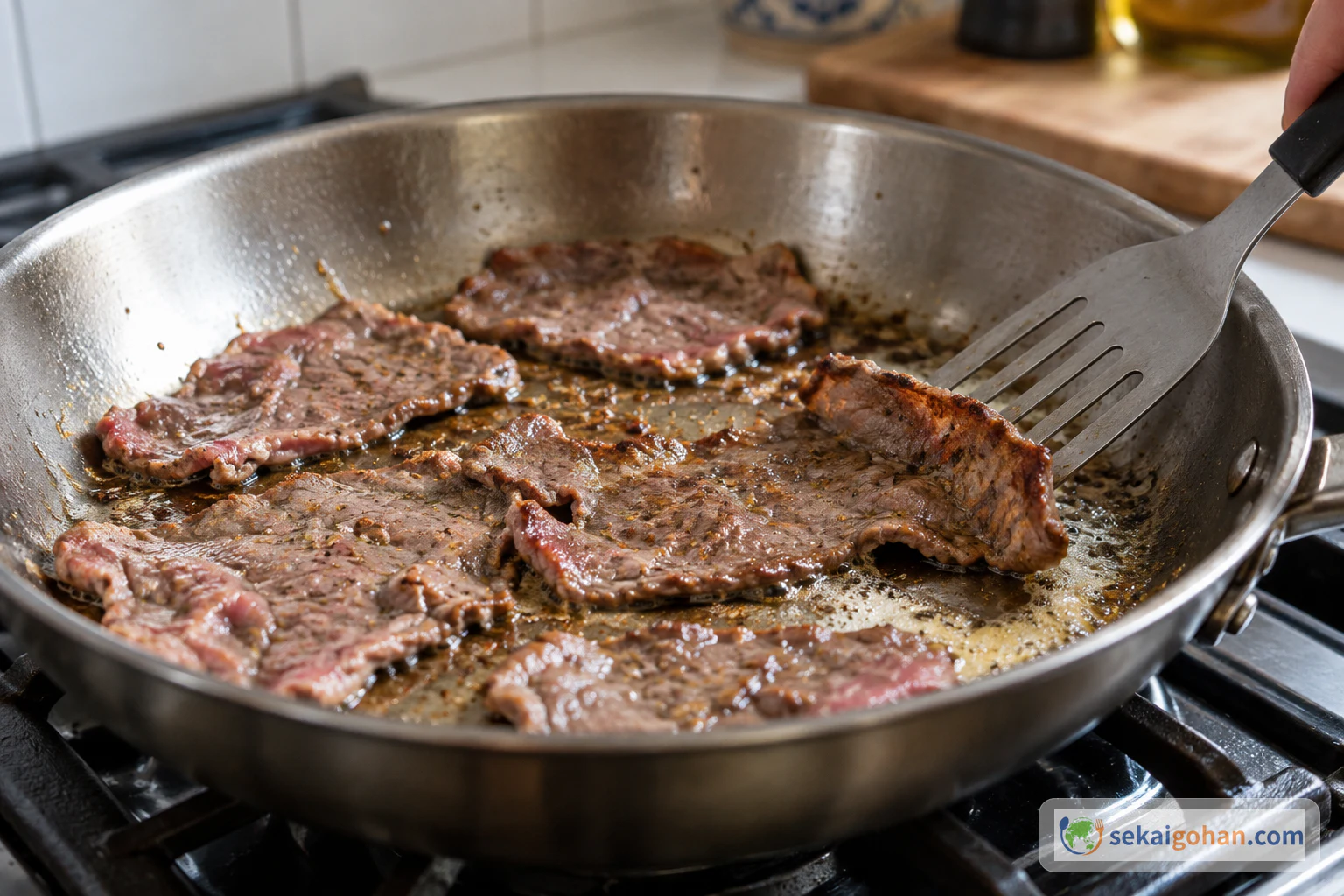
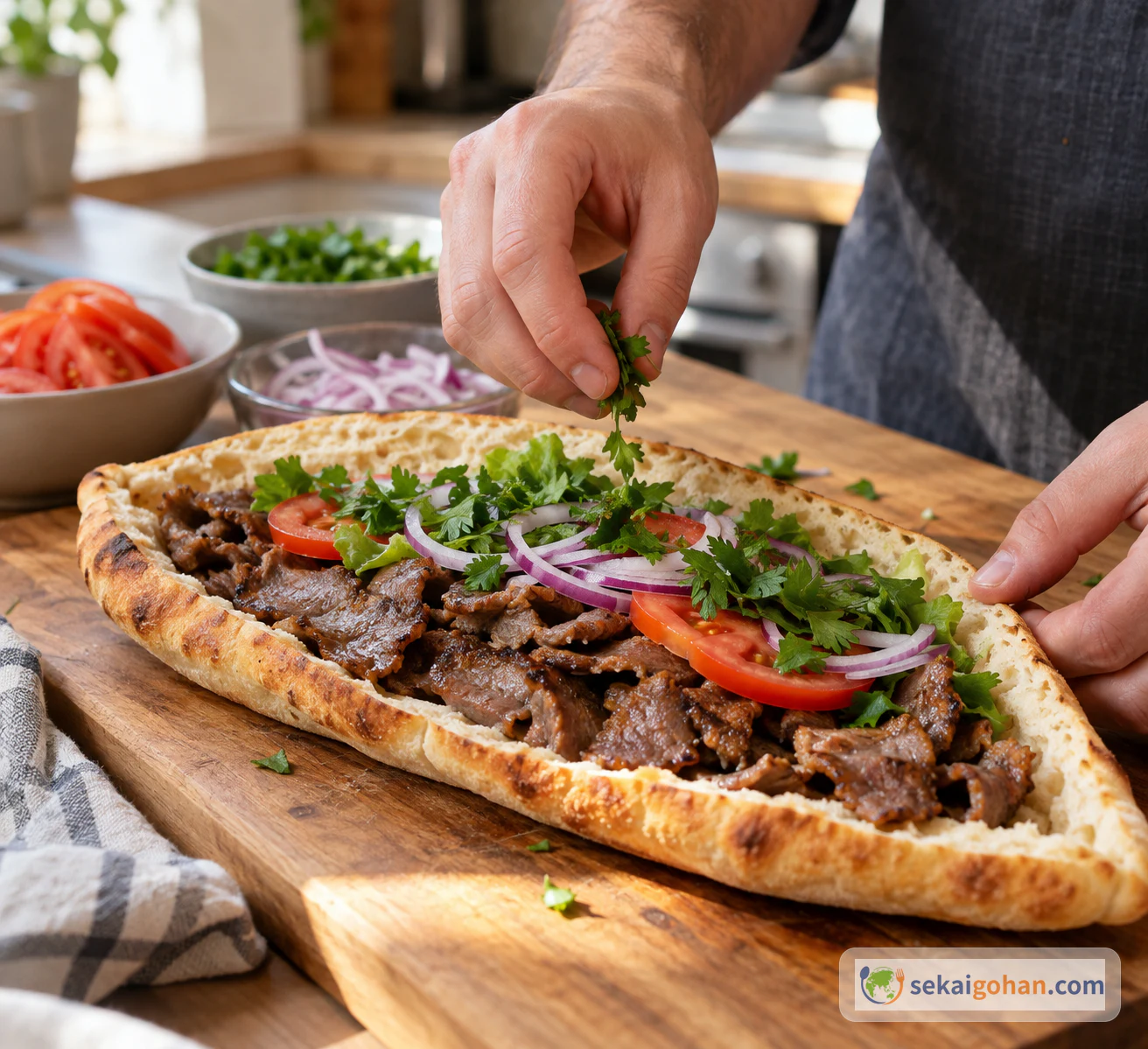
A small handful of very thin, marinated slices hits a buttered skillet, gives up its moisture, and then starts to brown at the edges. Turned a few times and lifted out, the meat goes onto warm pide with tomato, onion and a few leaves. Döner kebab from Turkey (Turkish: döner kebap) is usually shaved from a turning cone of meat in a shop, but you can get very close at home with a knife, a cold roll of layered meat and a pan. The result is thin, seasoned slices with crisp, browned edges.
What Döner Kebab Is
Döner comes from dönmek, "to turn," and the name describes the method. Seasoned meat is stacked into a cylinder on an upright spit, the spit rotates in front of the heat, and the cook shaves off the outer layer as it browns. Every serving is a pile of thin slices with crisp edges. Shish kebab works differently: the meat is threaded on skewers. For skewered kebabs such as Adana and shish, see the kebab recipe. For meat roasted on a horizontal spit and sliced, see cağ kebabı.
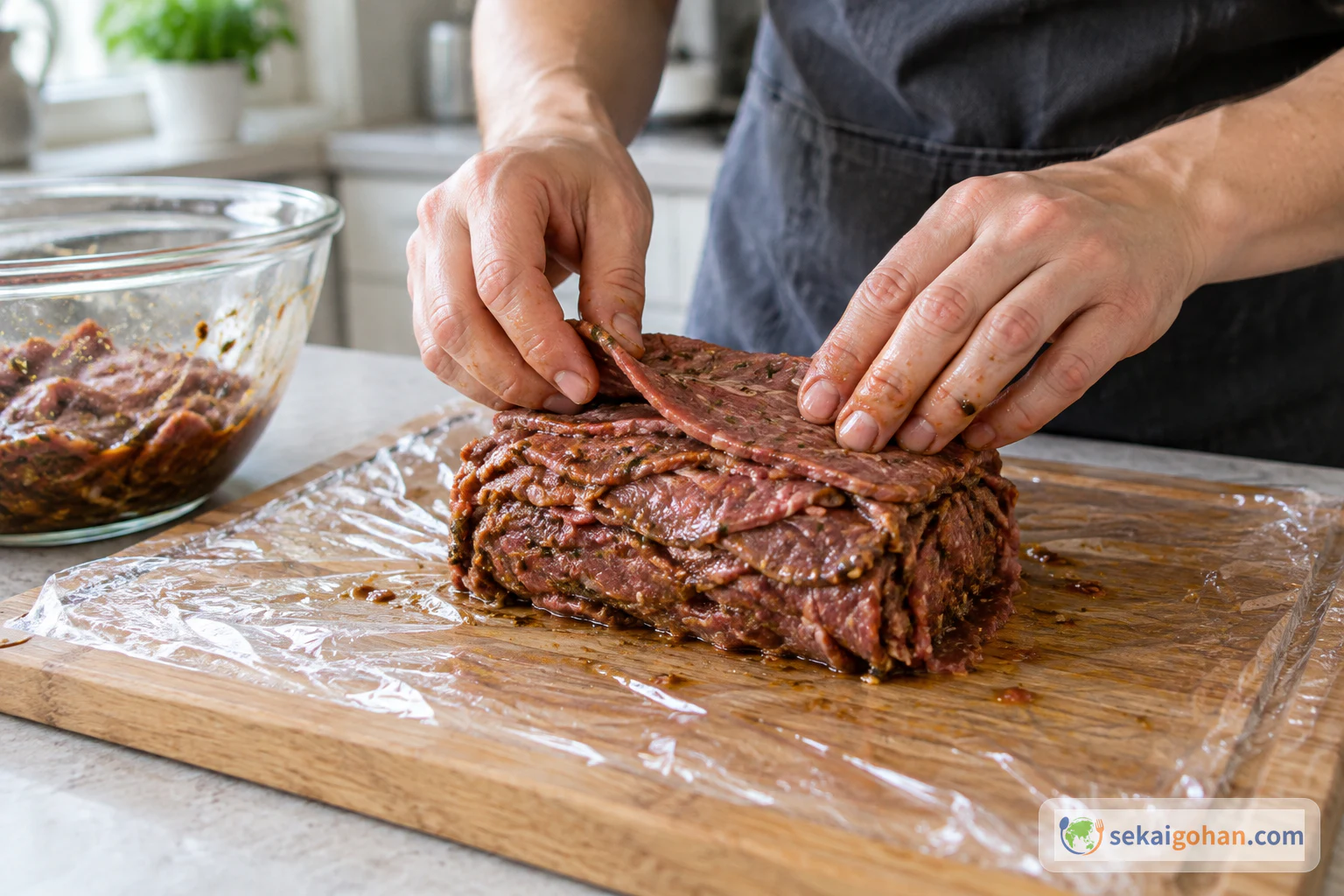
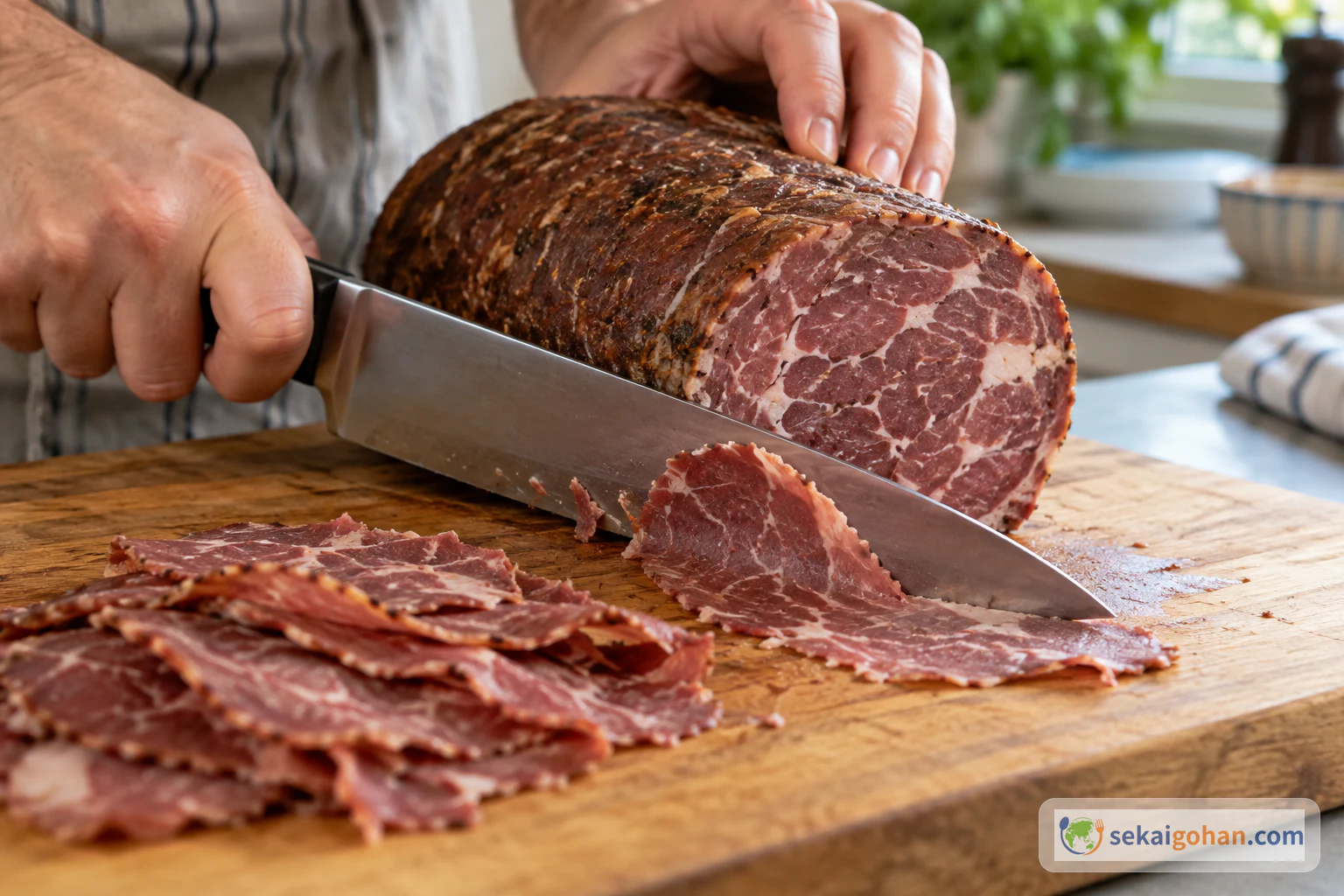
A home kitchen can't recreate that outer char over a moist interior exactly, but it can get the meat thin. Everything in this method serves that goal. You marinate the meat for a long time, stack it into a roll, chill it until it's firm enough to slice evenly, and sear each batch in a hot skillet.
Ankara's Yaprak Döner
Regional styles can be very different from the small frozen roll made here. Ankara döner is made with 22 lb (10kg) of lamb hind leg, 2.25 lb (1kg) of tail fat, 2.25 lb (1kg) of tomato and salt. The meat is opened into thin sheets, seasoned overnight with tomato and salt, then stacked on the spit with tail fat between the layers and turned in front of a charcoal fire.
From Plate to Bread
In Turkey, döner was eaten as lamb on a plate. Turkish immigrants in 1970s Berlin turned it into a sandwich in bread. Turkey and Germany still differ on how döner should be made and served, so the bread, vegetables and sauces around the meat change from place to place.
Shawarma, a Levantine dish, is also cooked on an upright spit, but its name, seasoning and table are its own. For that dish, see shawarma.
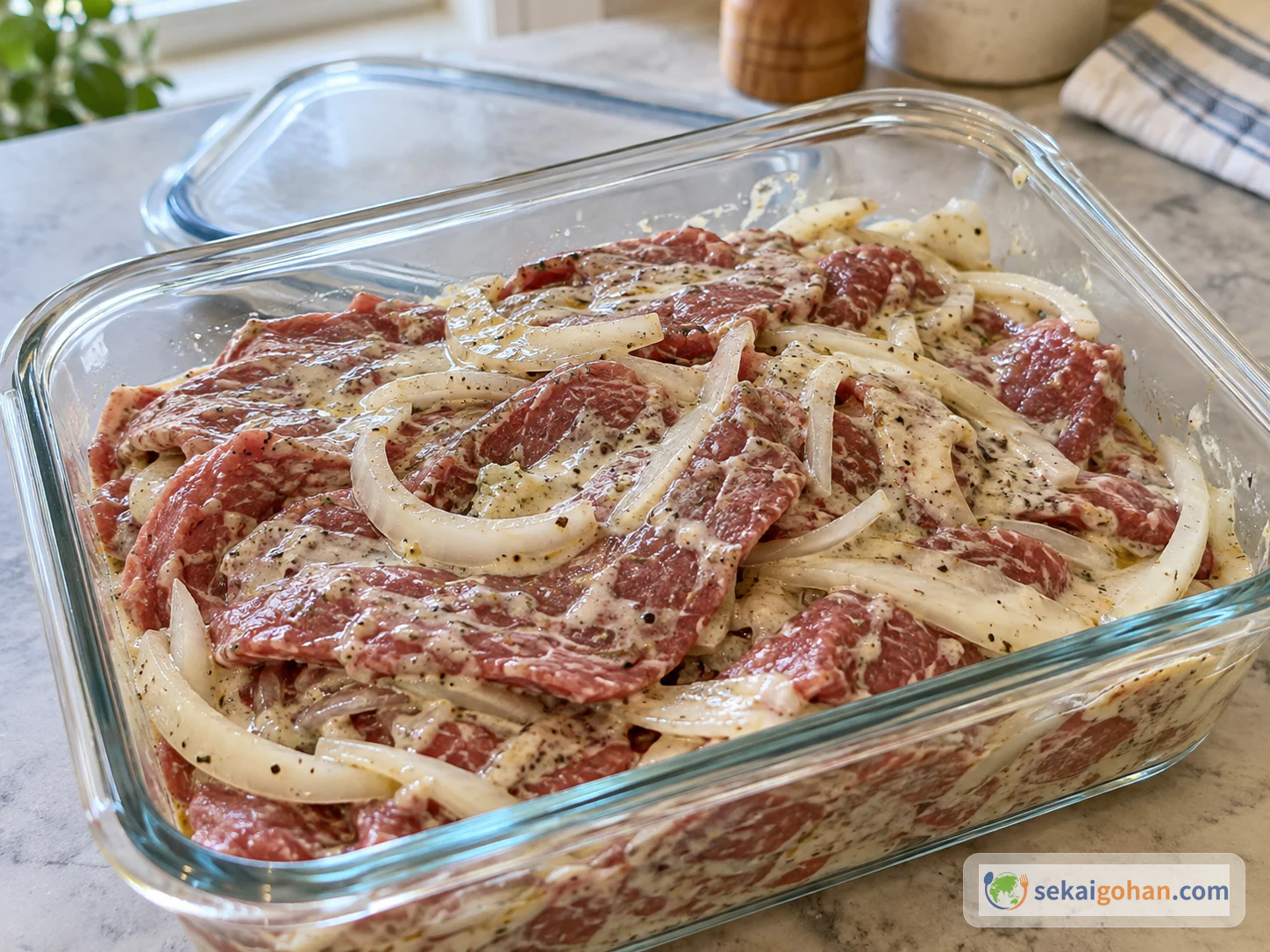
Prepare this recipe one day and cook it the next day or later. The meat marinates in the refrigerator for at least 6 hours (ideally overnight). It is then stacked and frozen overnight, and thawed in the refrigerator before slicing. The hands-on work is short; most of the time is spent waiting.
Ingredients for 2 Servings: Meat, Marinade and Butter for the Pan
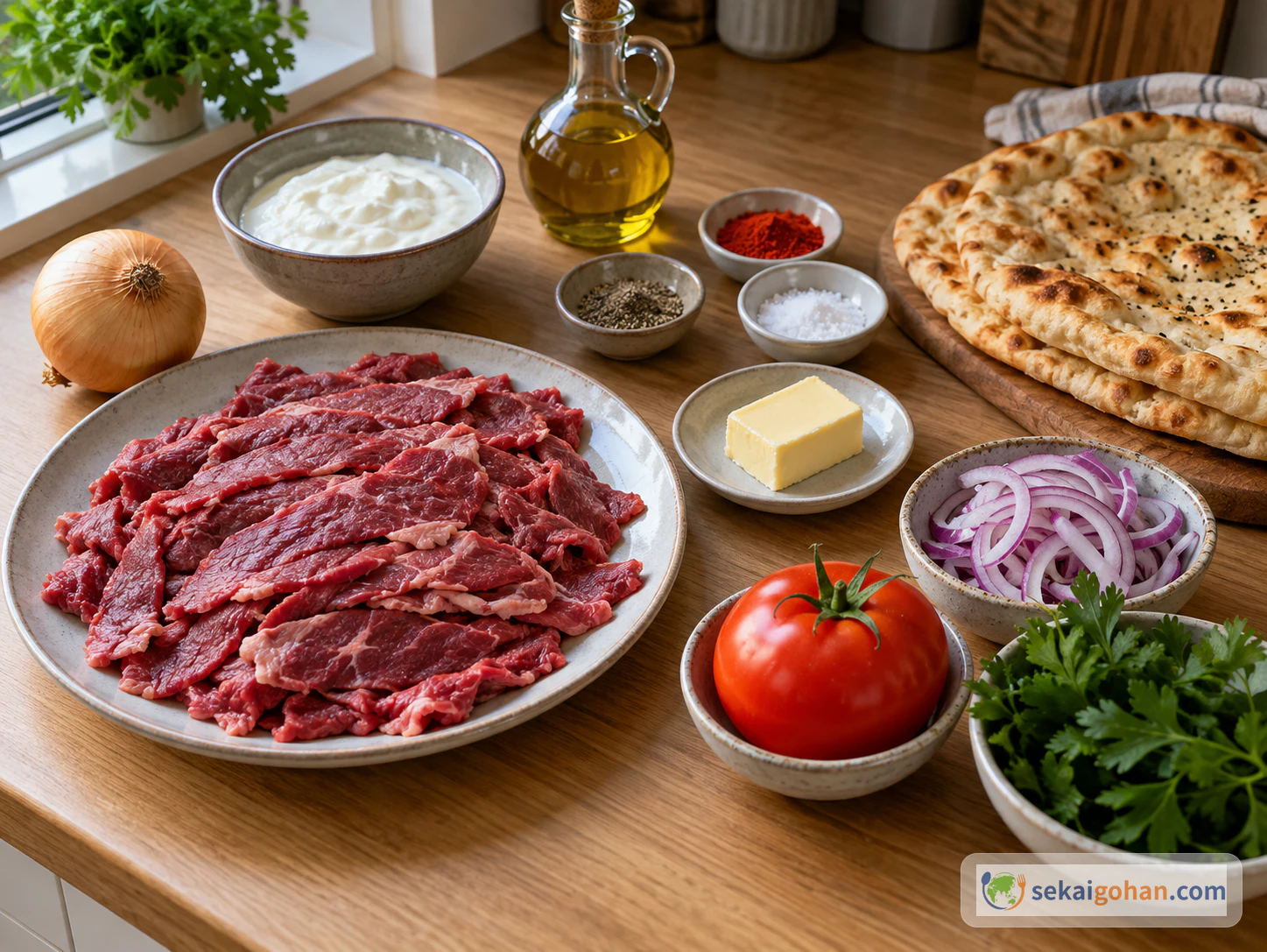
These amounts make two servings. Choose one meat; the amounts are the same for beef or lamb. The butter is kept back for cooking, not mixed into the marinade.
The serving items are optional accompaniments and are not part of the recipe's base amounts.
Yogurt and butter contain milk. Pide contains wheat, so check the label for wheat and milk, and watch for cross-contact on shared tools. Keep the tomato, onion and greens you will eat raw on a clean board and in a clean container, prepared before you handle raw meat. Never serve the marinated onion raw.
Equipment
- A sharp chef's knife
- A cutting board that does not slip, plus a separate clean board for raw vegetables and cooked meat
- A glass or other container with a lid, for marinating in the refrigerator
- Food-safe plastic wrap, for forming the roll
- A skillet and a spatula
- A cooking thermometer, to confirm the meat reaches 167°F (75°C)
- A clean plate for the cooked meat (not the one that held raw meat)
Choosing the Meat, Fat and Pepper for Döner
Beef round or beef ribeye. Round has little fat, so it gives a lean, clean-tasting result. Keep the slices thin and don't overcook them. Ribeye has more fat and gives a sweeter, richer bite.
Lamb. Lamb has a very different aroma from beef. It moves the dish toward Turkey's lamb-based styles, such as Ankara döner, so expect a different flavor.
Butter versus tail fat. Ankara's döner layers lamb tail fat (kuyruk yağı) into the meat, which gives a stronger lamb aroma than butter in a skillet can. Tail fat is hard to find, so this home version uses butter.
Ground red pepper. Red peppers vary widely in heat. Use ordinary ground red pepper, which is different from pul biber. Start with a modest amount and add more at the table.
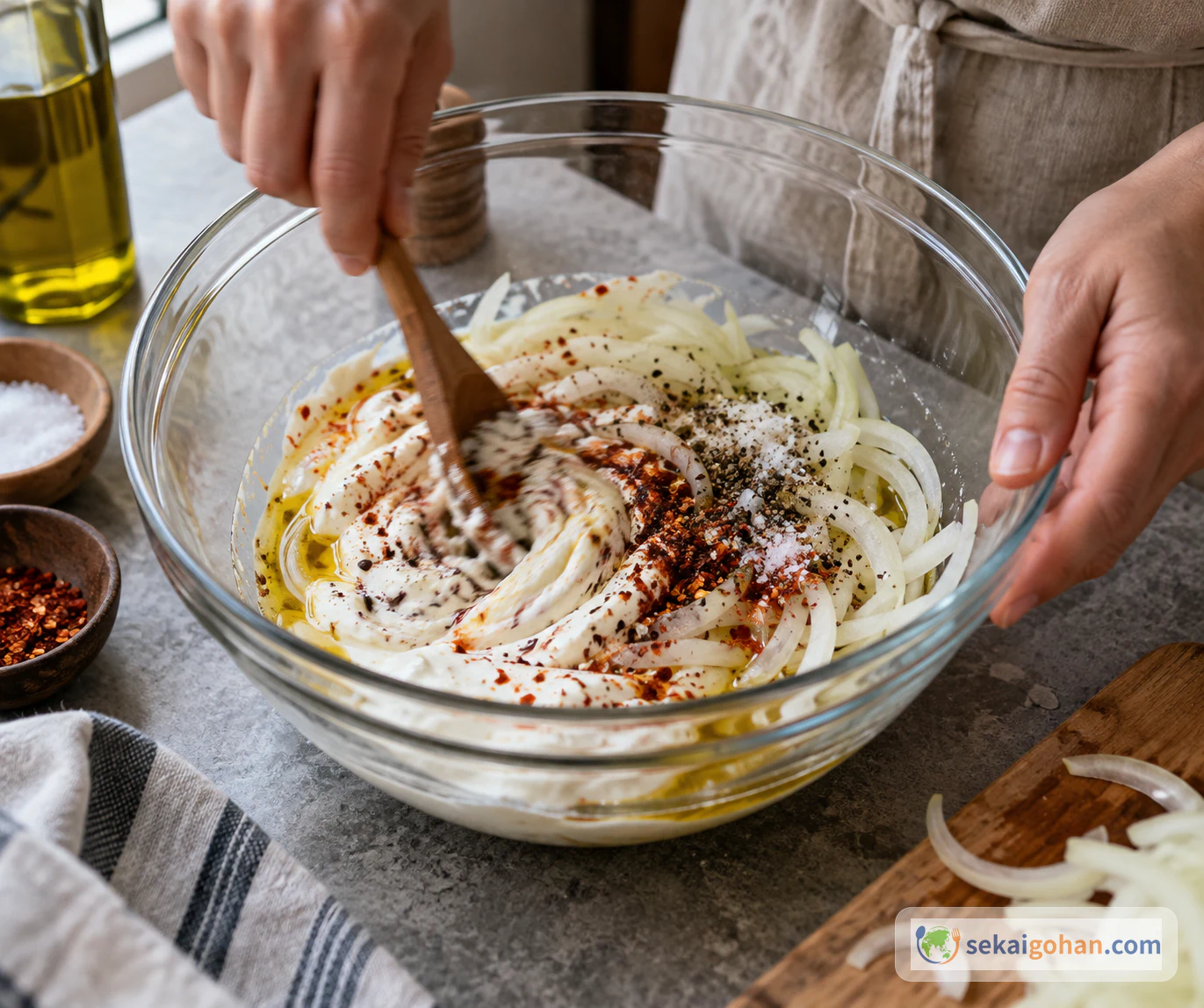
Yogurt. It's only 1 tbsp, but it shapes both the flavor and the way the surface of the meat cooks, so don't leave it out. Keep the marinade yogurt separate from any yogurt you serve as a sauce.
Method: From Marinade to Thin, Browned Slices
Marinate and thaw only in the refrigerator, never on the counter. Never cook the roll while it is still frozen. Keep raw-meat tools away from vegetables and cooked meat. Judge doneness by temperature, not by the clock.
Döner Troubleshooting: Slicing and Searing
| Problem | Likely cause | What to do |
|---|---|---|
| The roll won't slice | Too soft after thawing | Return it to the freezer briefly to firm up. Fully frozen meat is too hard to cut safely; use a sharp knife and a board that doesn't slip |
| Slices are thick and chewy | The roll wasn't firm enough when cut | Leave the cooked slices as they are. Next time, adjust the chilling for thinner, more even slices |
| The meat looks boiled | Too much in the pan at once | Cook smaller batches with space between the slices. Let the moisture evaporate, then leave the meat mostly still until it browns |
| Dry, lean result | Beef round has little fat | Next time use ribeye or lamb rather than extra oil |
| Too spicy | Ground red pepper varies in heat | Use less in the marinade and add more at the table |
| No thermometer | — | Slice thinly and evenly and cook in batches, not as a thick block. Color alone cannot confirm 167°F (75°C), so a thermometer is strongly recommended |
Serving, Variations and Storing Döner
In Bread or on a Plate
The wrap in step 6 is the simplest way to eat home döner. You can also skip the bread and serve the meat on a plate with tomato, onion and greens, and add rice for a fuller meal. Add sauce to a wrap a little at a time so it doesn't hide the meat. For more Turkish sauces to set on the table, see kebab sauce.
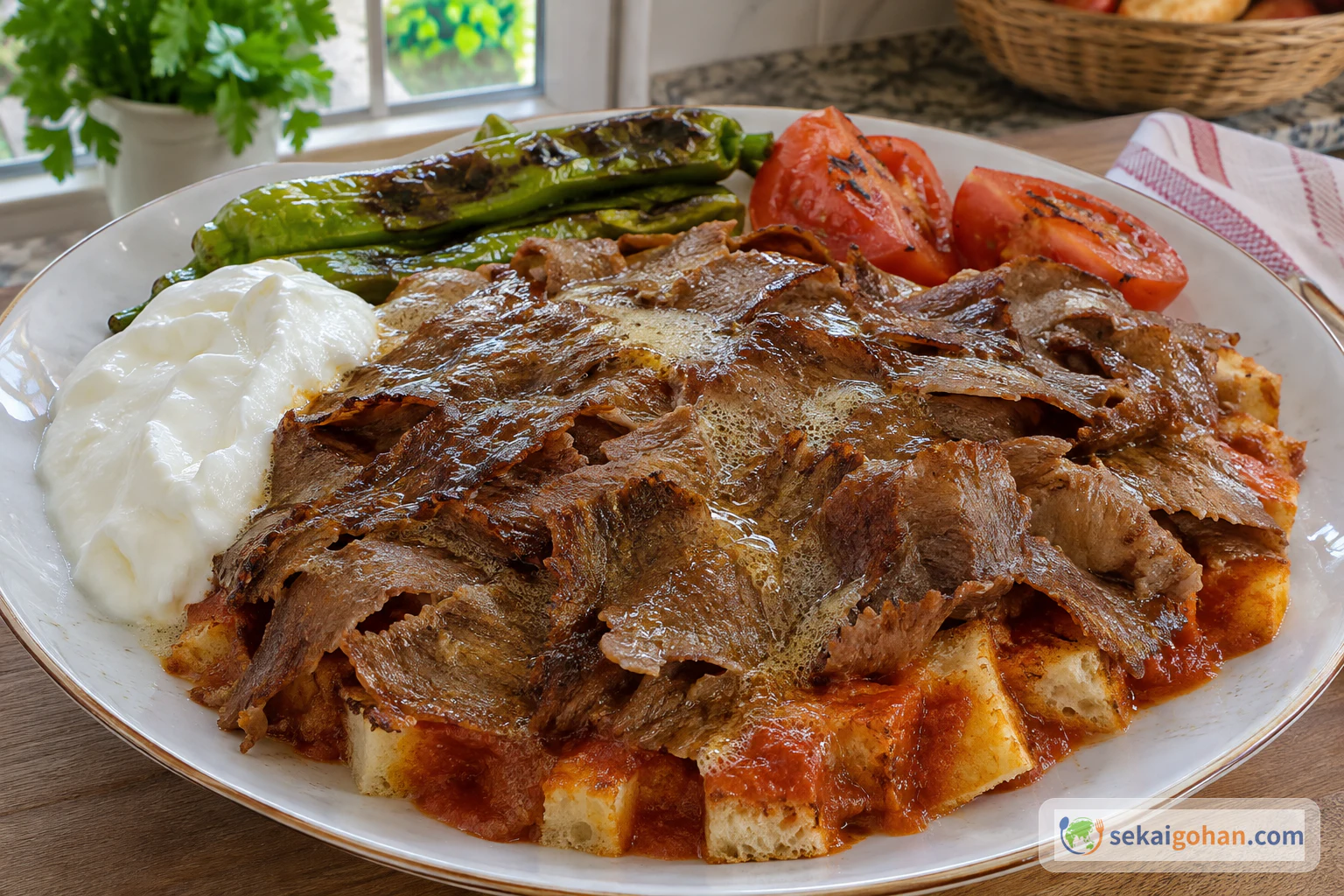
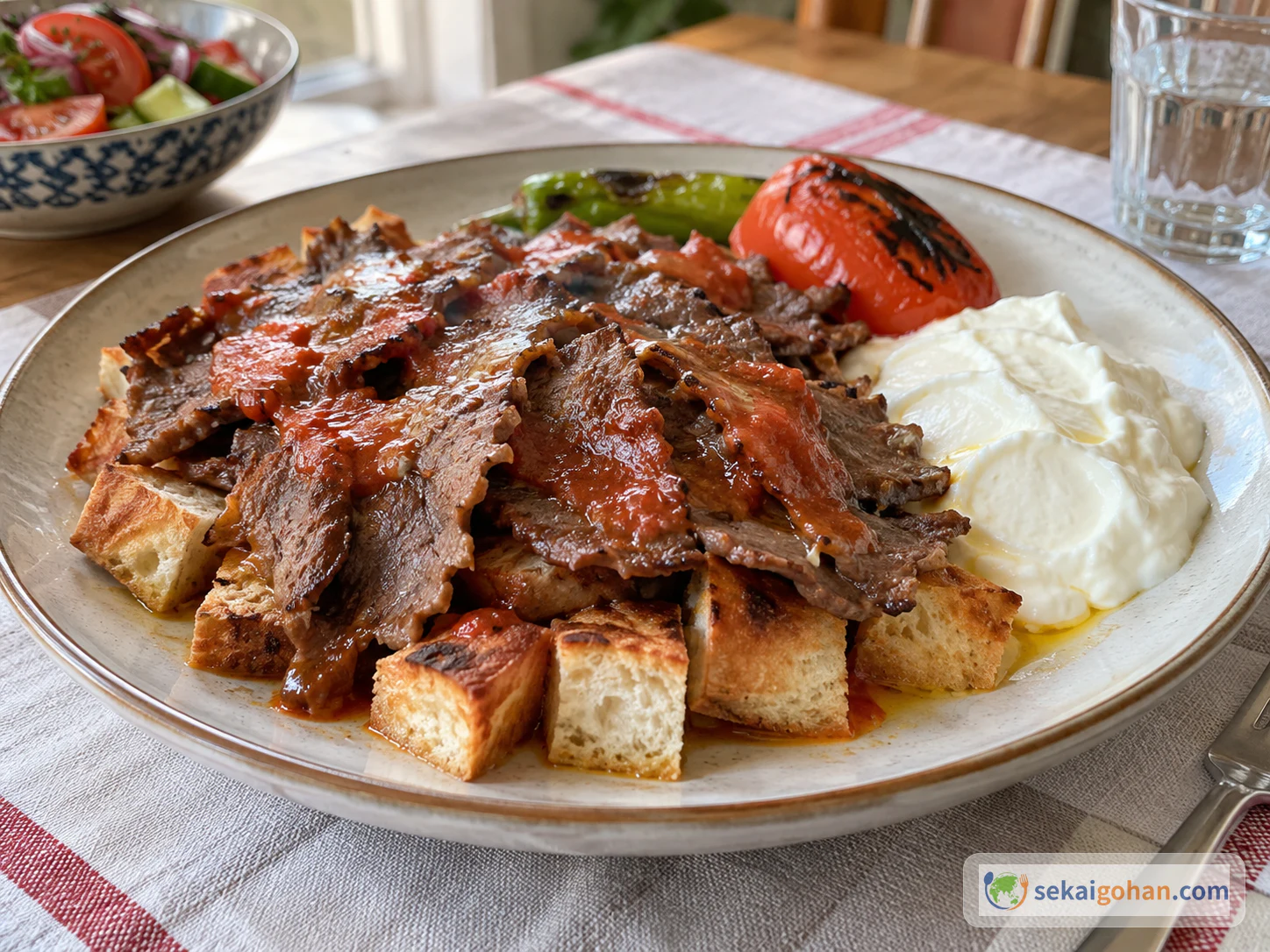
A more elaborate plated option borrows from İskender kebap, a separate dish: pide topped with thin-sliced döner meat, tomato sauce and yogurt, with grilled tomato and peppers and melted butter.
Changing the Cut
With ribeye, start with less butter in the pan and see how much fat the meat releases. Lamb shoulder or a similar cut brings plenty of aroma on its own, so it needs no extra red pepper.
Holding, Leftovers and Food Safety
The simplest approach at home is to cook only what you will eat and serve it straight from the pan. Do not leave cooked or raw meat at room temperature, and do not carry the thawed raw roll over to another day.
Döner meat can grow harmful bacteria if it is held at the wrong temperature. Cook it to 167°F (75°C), hold cooked meat at 140°F (60°C) or above, and give it a second cook just before serving. To keep cooked meat, cool it quickly: from 140°F (60°C) to 70°F (21°C) within 2 hours, then from 70°F (21°C) to 41°F (5°C) within a further 4 hours. Then refrigerate it at 41°F (5°C) or below.
Keep raw meat refrigerated. Keep cold sauces in the refrigerator, away from raw meat and cooked food, until you need them. Keep the yogurt marinade and any yogurt sauce chilled, and use separate tools and containers for raw meat and anything eaten raw.
Frequently Asked Questions
What is the difference between döner kebab and shish kebab?
Döner is cooked on a vertical rotating spit and sliced thin from the outside. Shish is smaller pieces of meat threaded onto a skewer and grilled. The two differ in how the meat is cut and how the heat reaches it.
Can I cook the frozen roll straight from the freezer?
No. Thaw it in the refrigerator first, slice it while it's still cold, and cook every slice through to 167°F (75°C).
Can I eat leftover cooked meat the next day?
Only if you cooled it quickly, refrigerated it, and then reheated it thoroughly. Don't leave leftovers at room temperature for long. At home, the easiest approach is to cook only what you'll eat.
What sauce goes with it?
For a wrap, add sauce a little at a time so the meat still comes through. Tomato sauce, yogurt and butter together belong to İskender kebap, which is a separate plated dish.