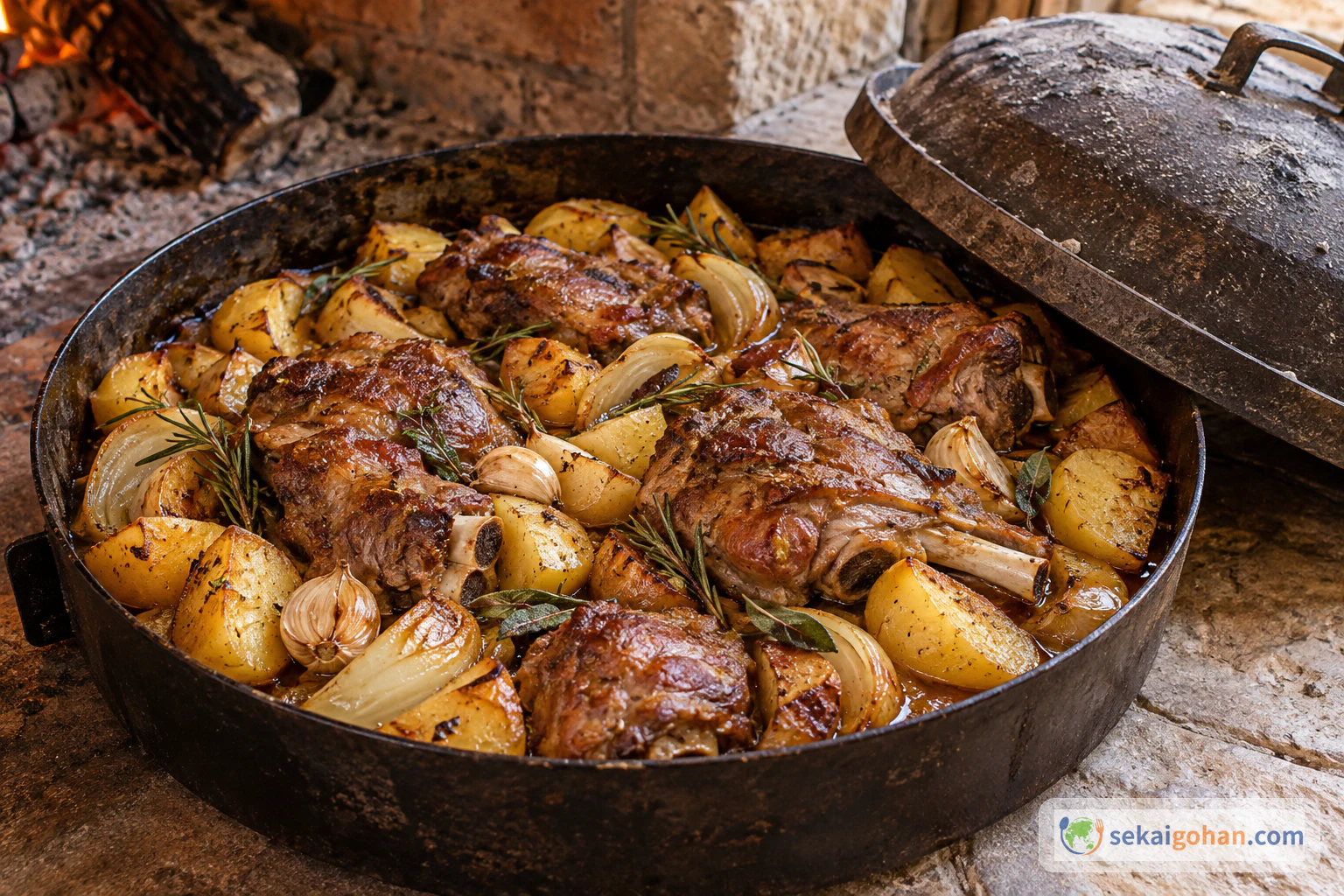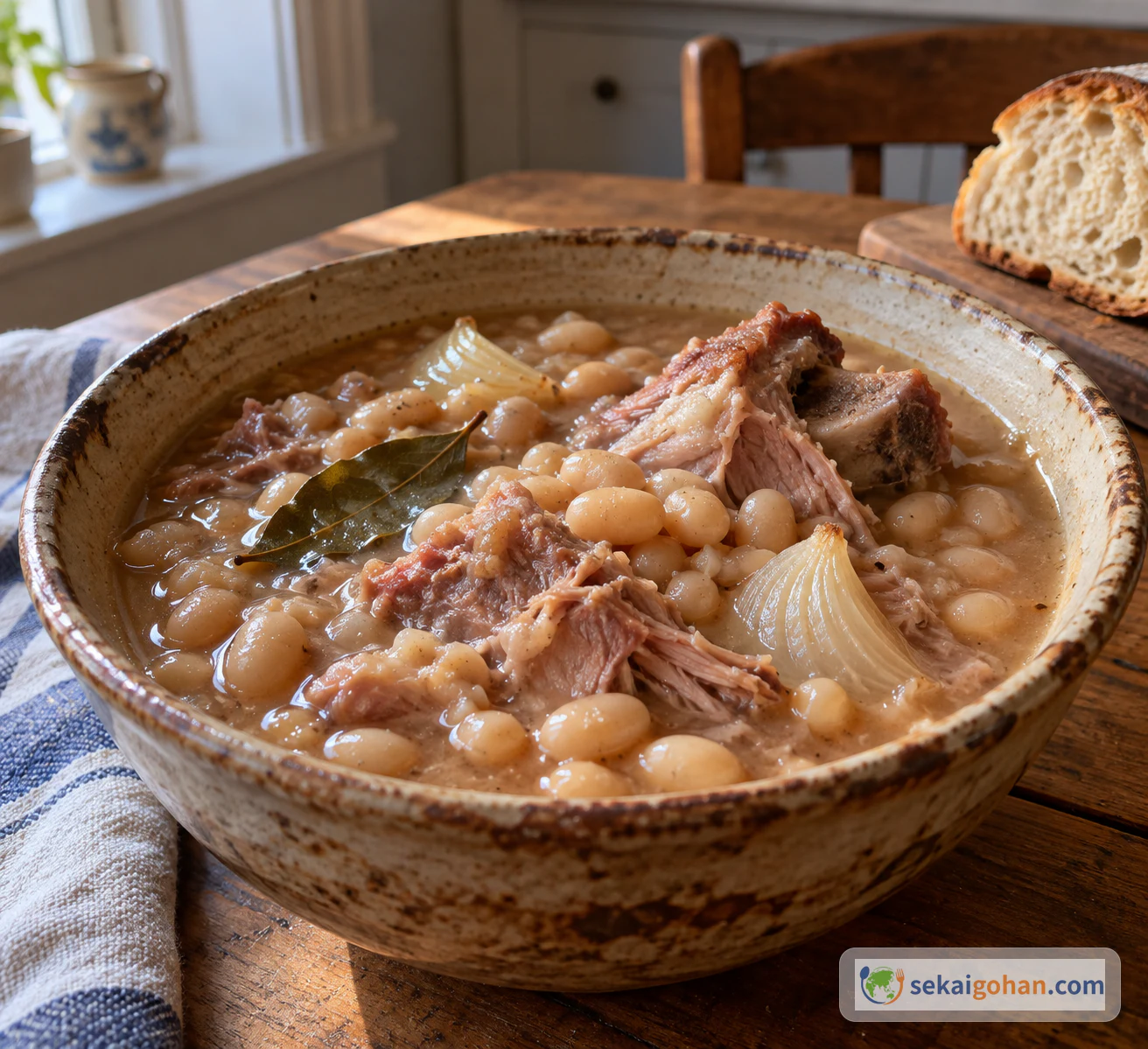
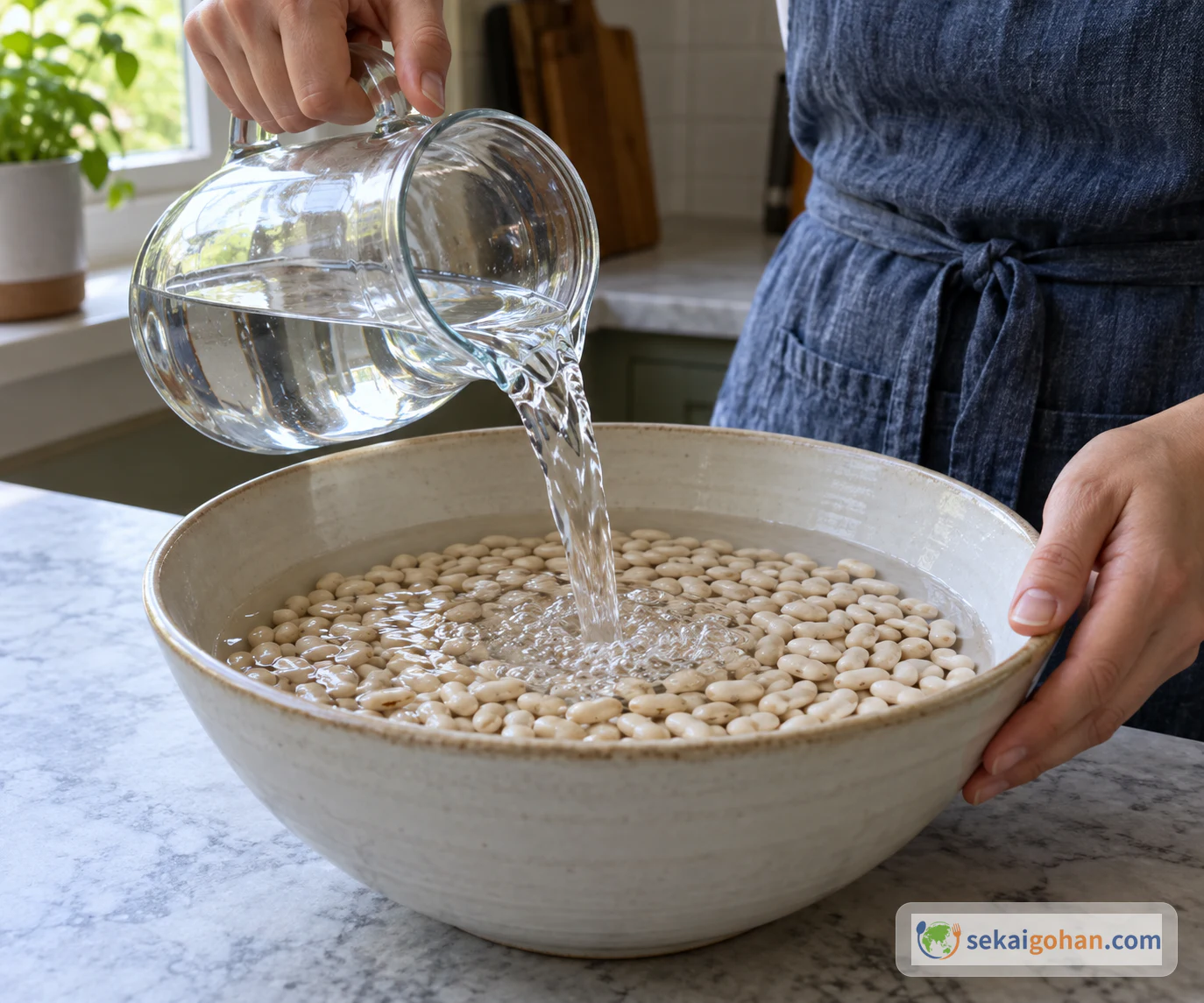
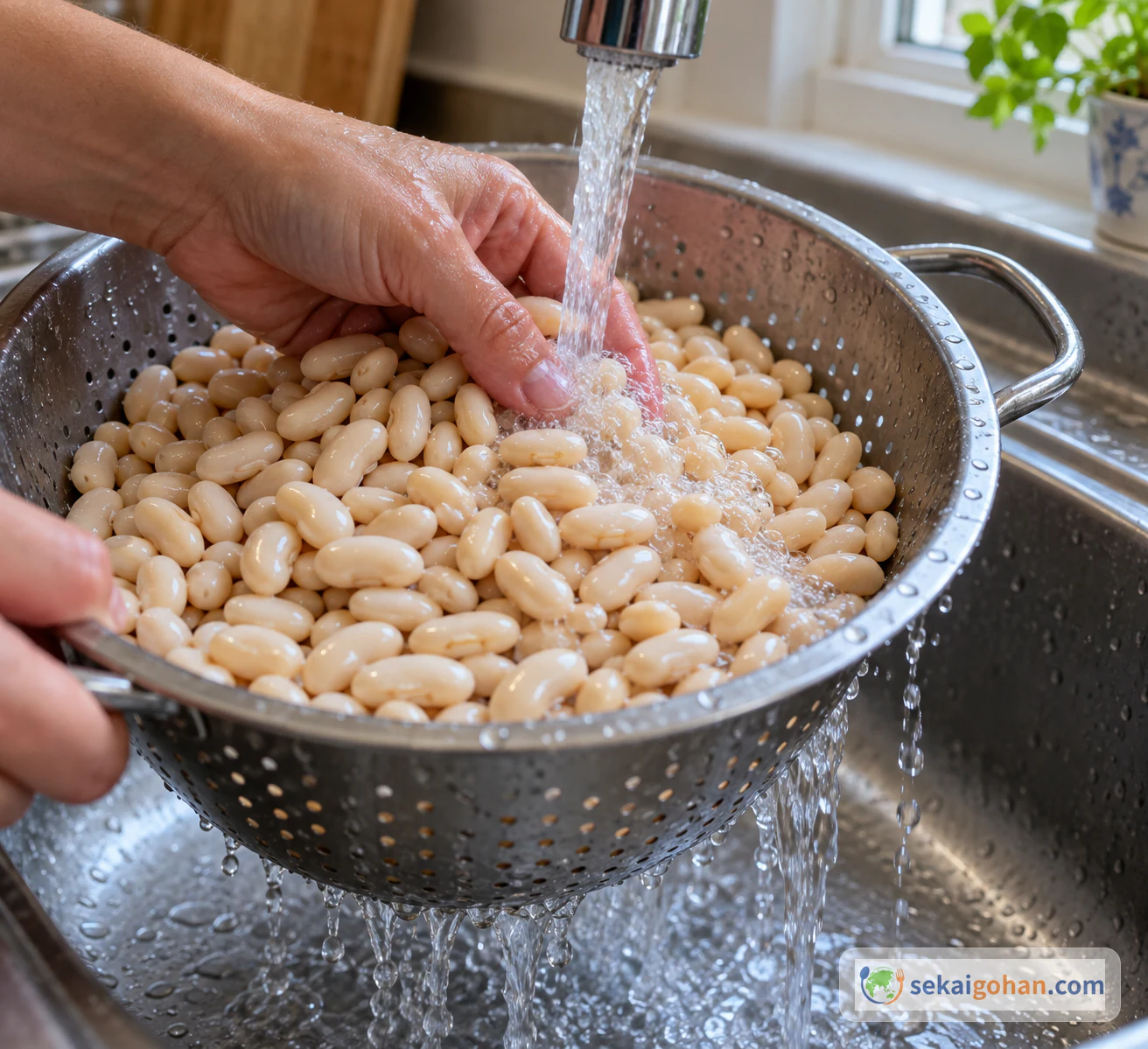
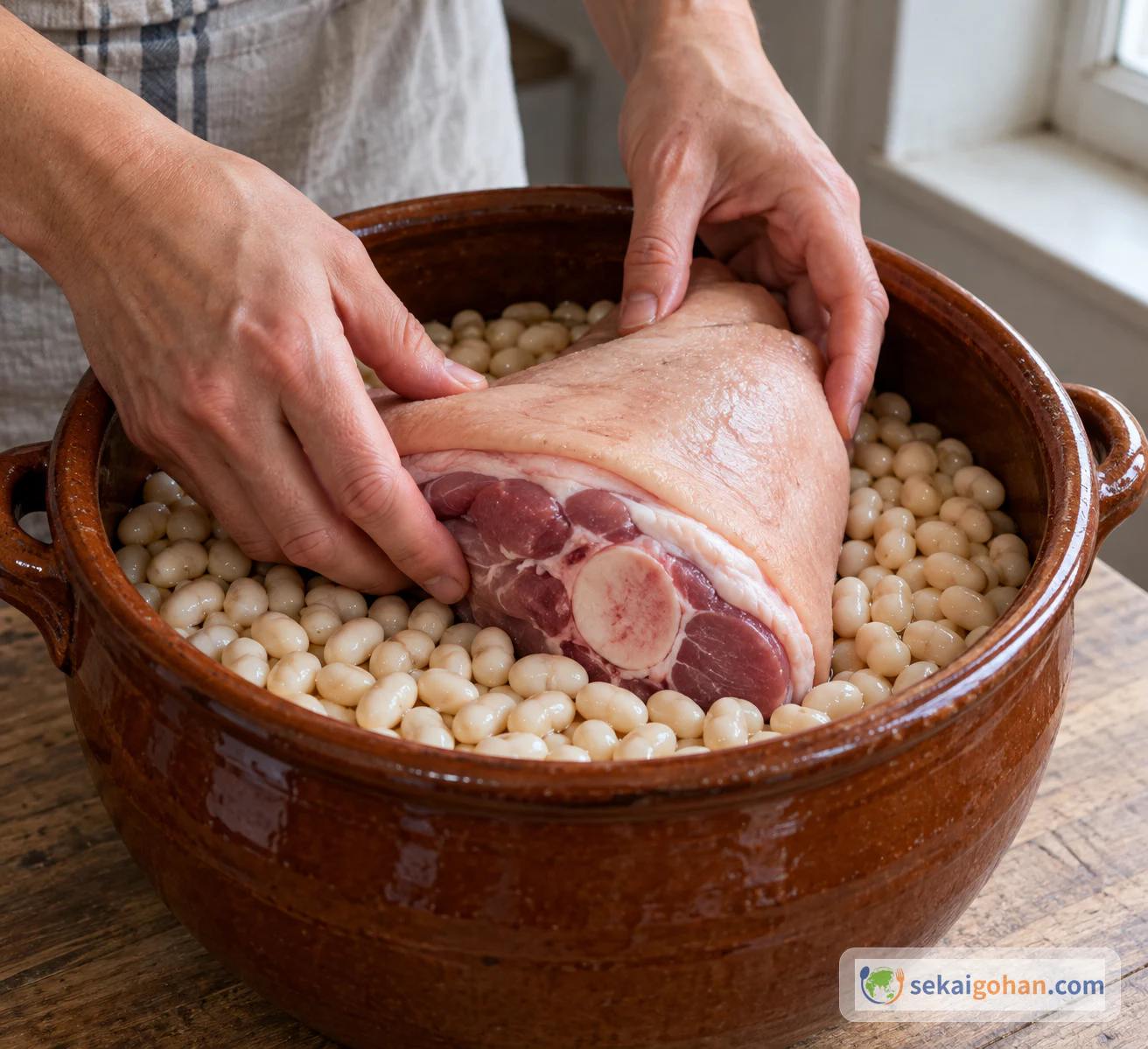
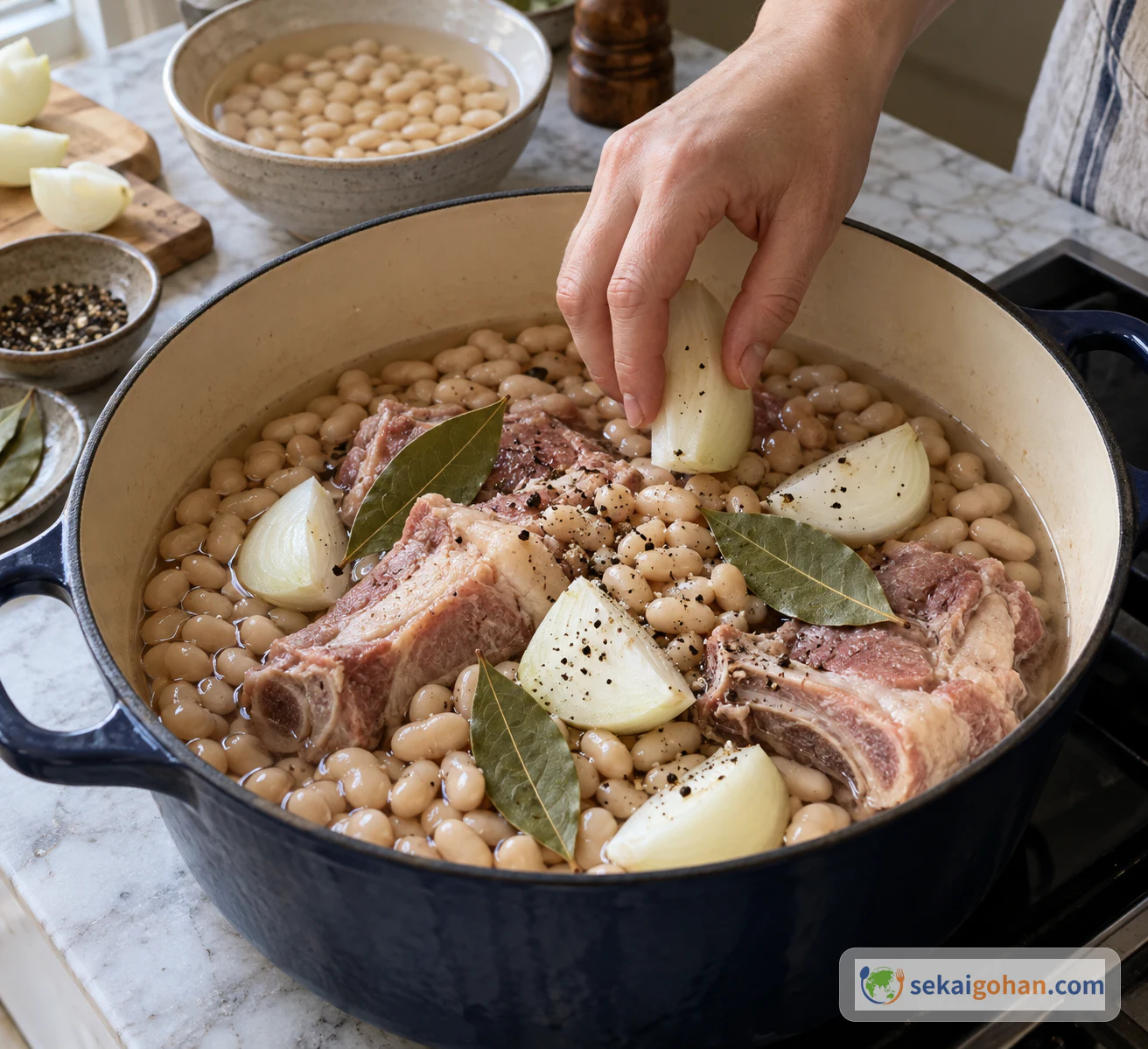
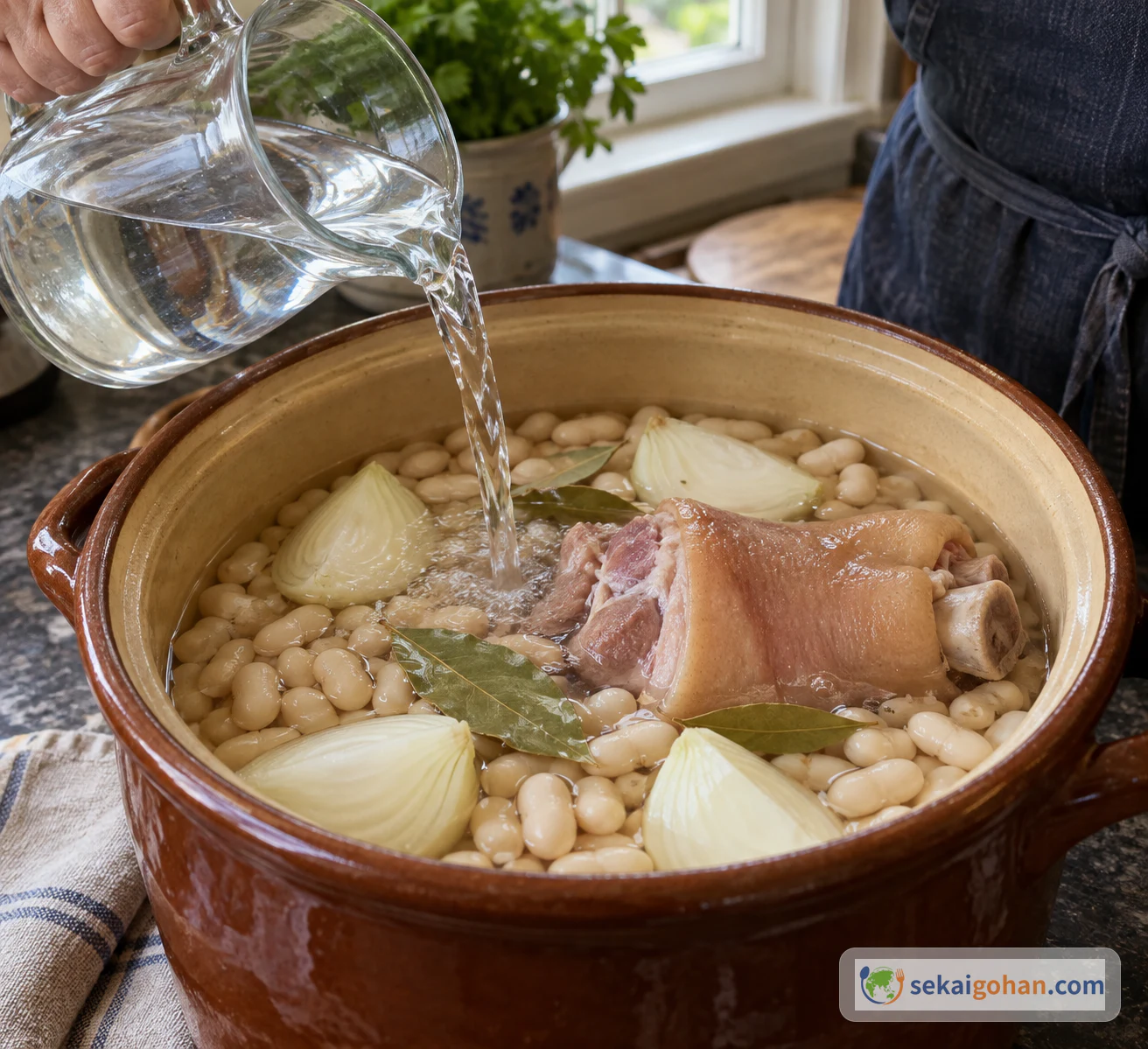
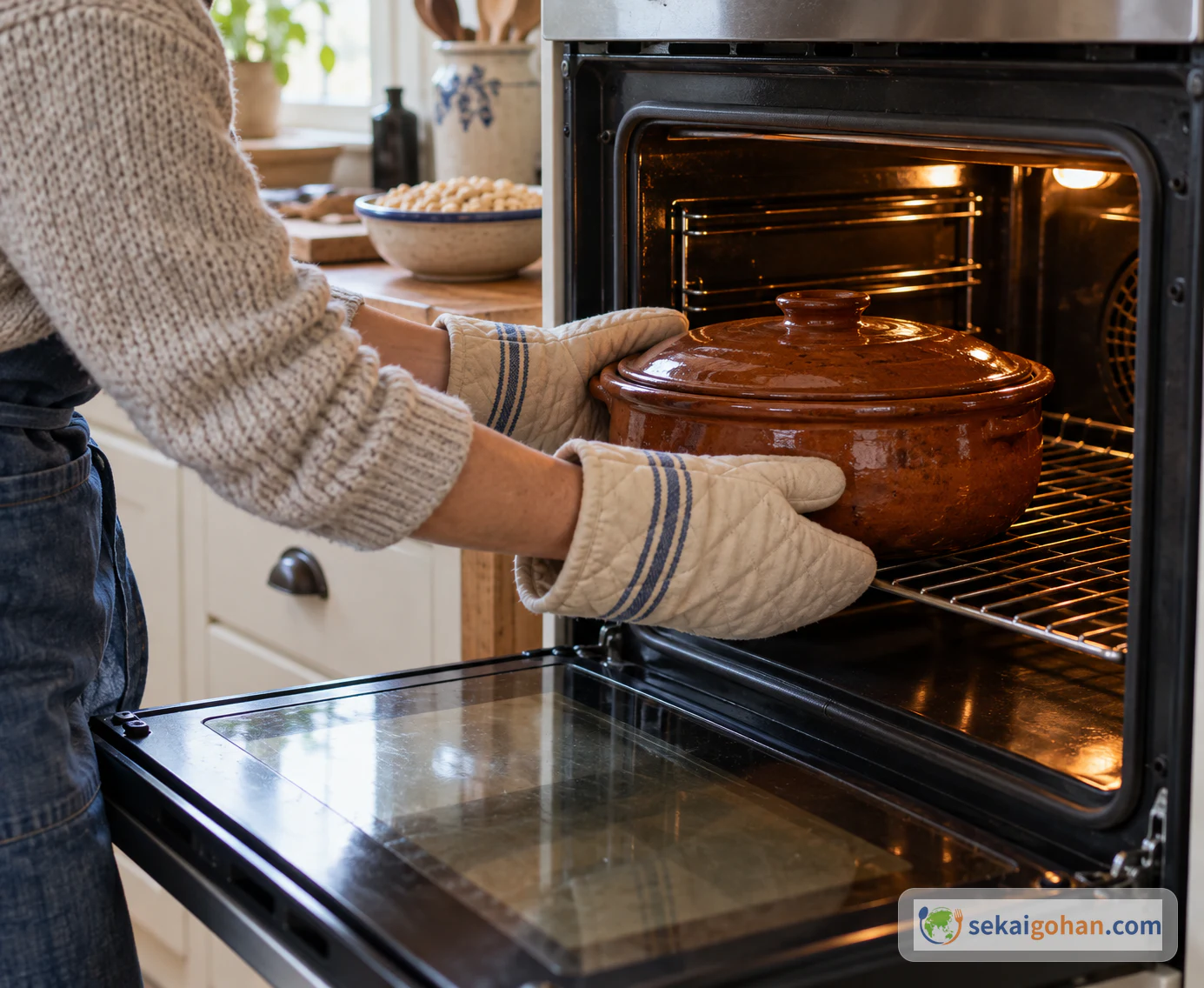
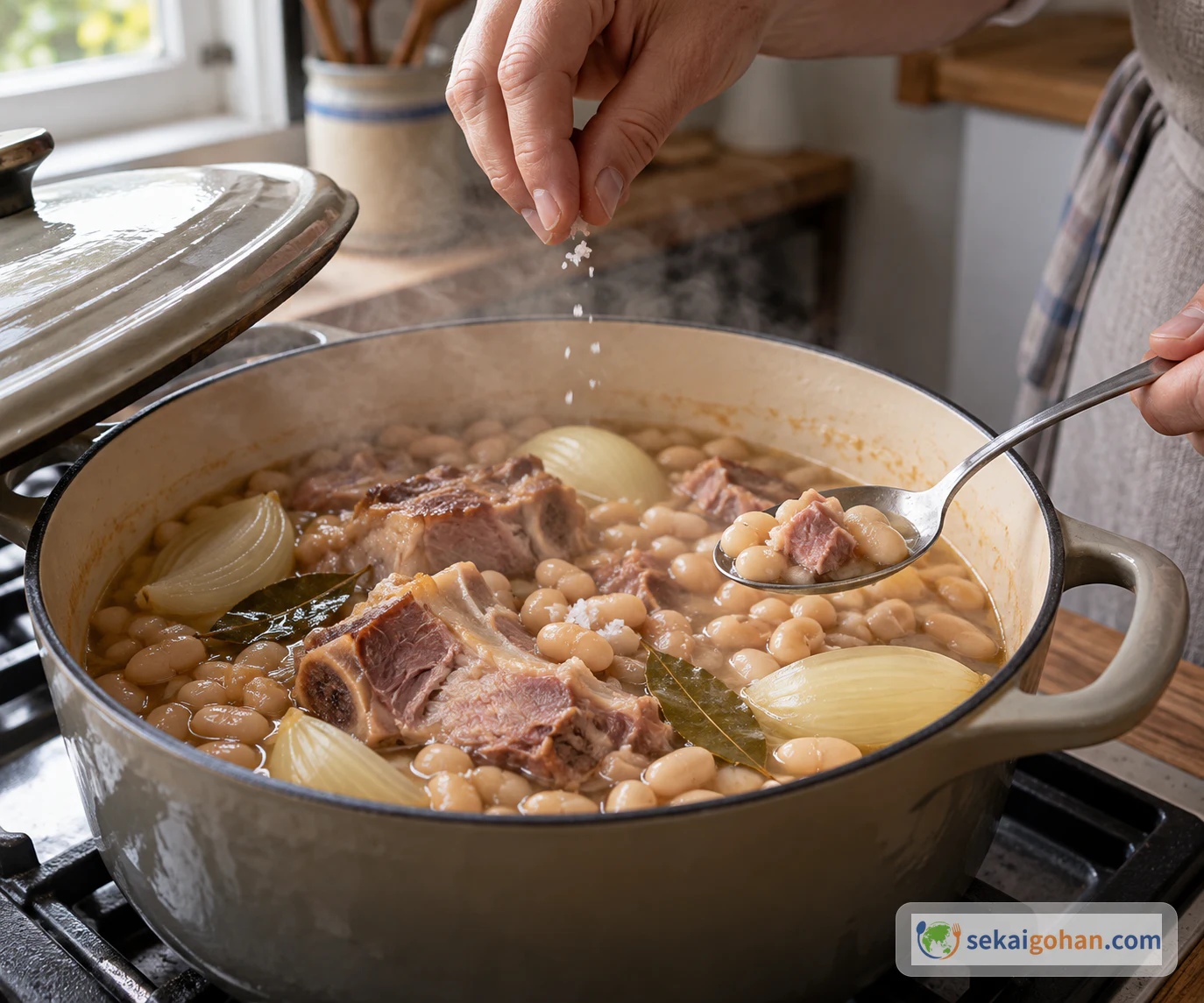
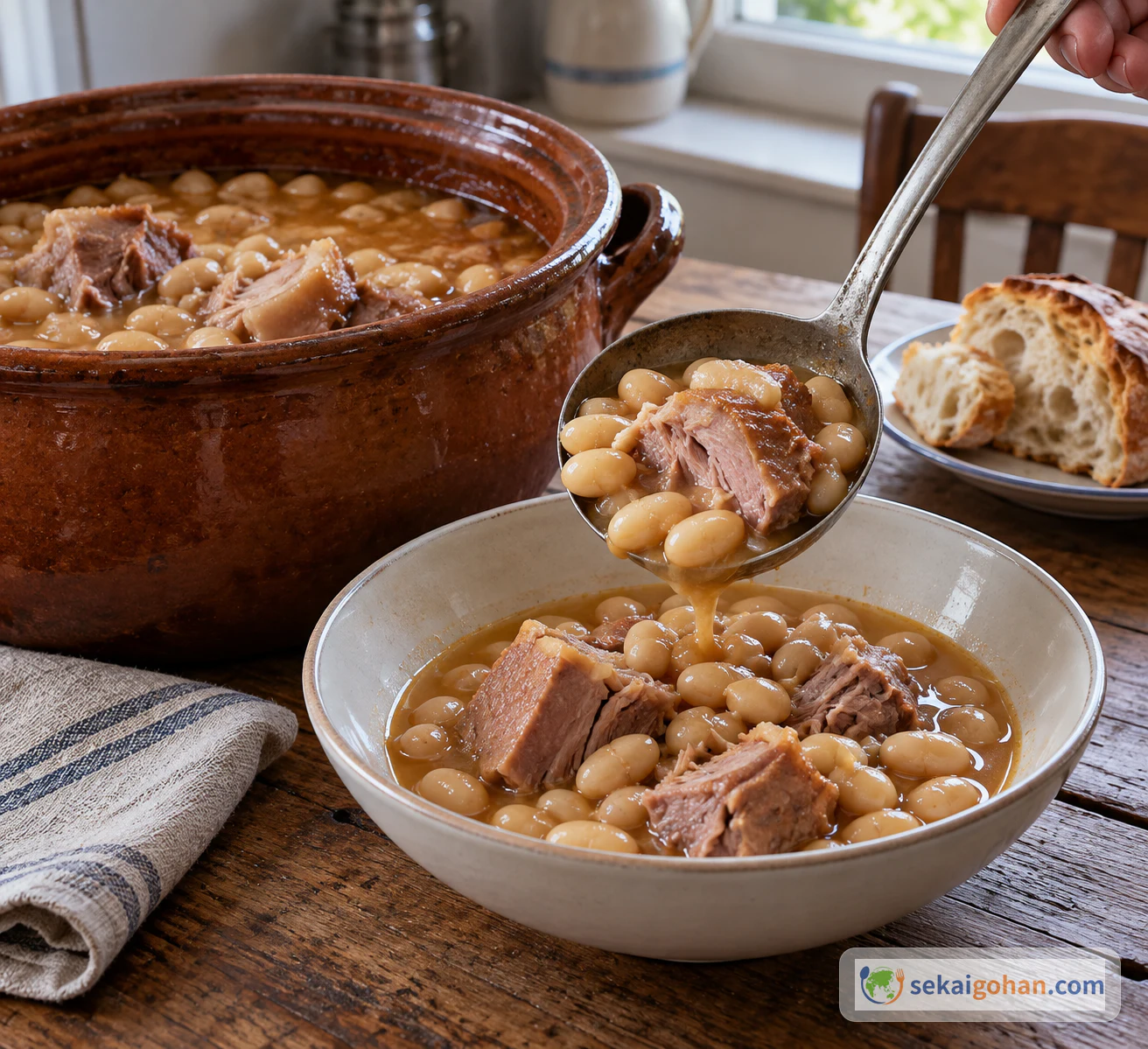
On Guernsey, the bean jar once spent the night at the baker's: households in town carried their pots to the bakery and left them overnight. On farms, a large range or a furze oven did the same job. Either way, the cook's part is small. You soak the beans, fill the pot, and let time and low heat do the rest. The result is soft white beans and bone-in pork, cooked until the meat comes away from the bone.
Guernsey Bean Jar, Then and Now
Bean jar is a Guernsey speciality, a hearty dish of pork or beef in the style of a cassoulet, though it is its own island dish and not French cassoulet. No single bean jar speaks for the island. Households differ over the meat, the beans and whether carrots go in. The recipe here dates from the 18th century, and an older spelling of the name is "enne jarraie d'haricaots."
The bakery story comes up in more than one account: bean jars cooked overnight in the bakery's residual heat, and some accounts link the dish to winter and Bonfire Night. Old recipes, cooks' memories and today's menus don't add up to one fixed formula. What they share is long, low heat. Bean jar is still served today, and Cobo Tearoom offers a local bean jar slow-cooked for 18 hours.
If you like comparing how other places pair beans and meat, red beans and rice is another bean tradition, and Dublin coddle is another regional one-pot dish of meat and vegetables.
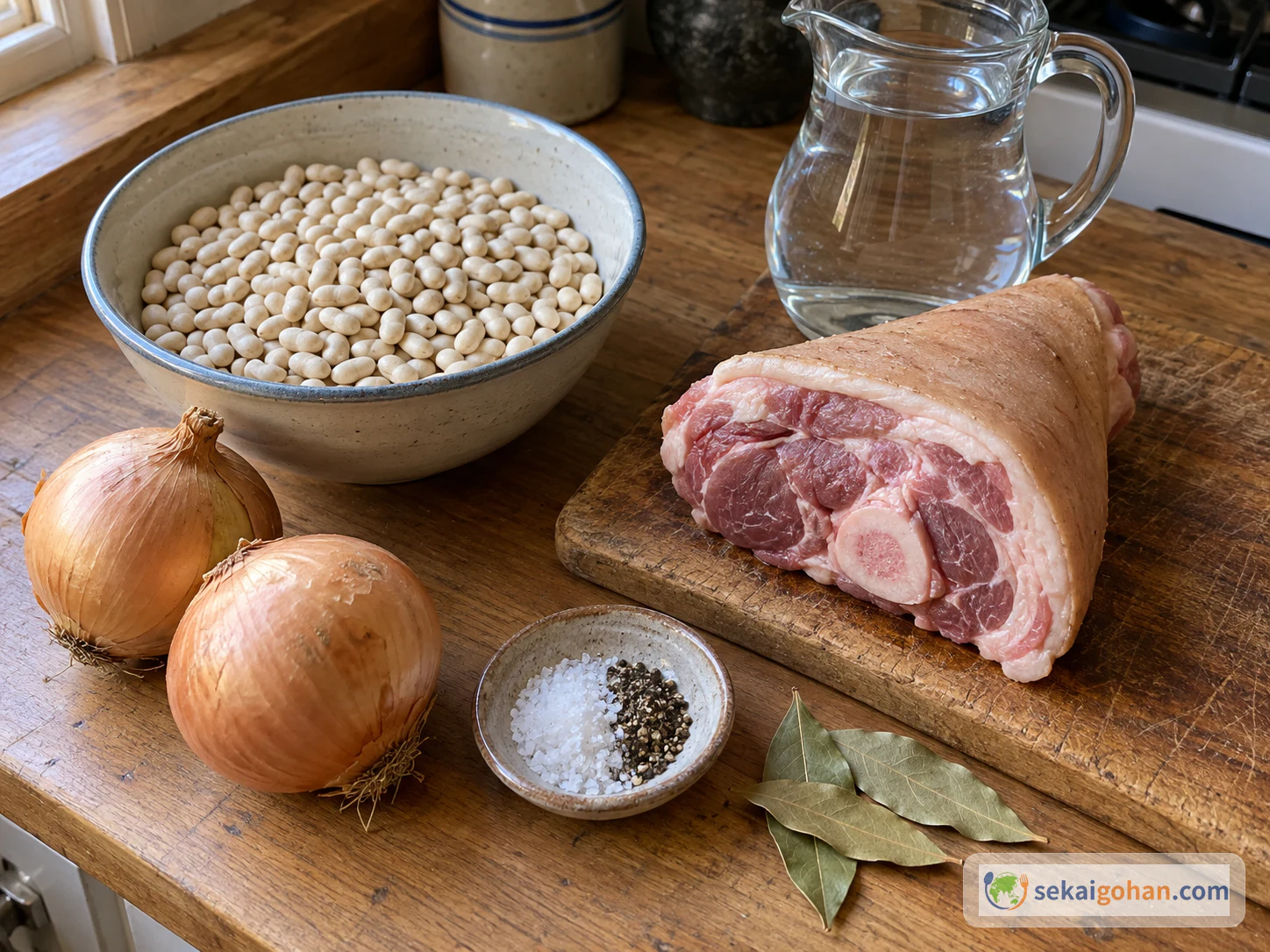
Ingredients for 6 Servings
Equipment
- Large bowl
- Colander
- Large pot
- Heavy oven-safe casserole with a well-fitting lid, or an earthenware bean jar or crock
- Oven mitts
- Spoon
Choosing Beans and Pork for Bean Jar
Look for dried white beans labeled haricot. Another large white bean, such as Japanese daifuku beans, can stand in, but the variety will make a difference. For the pork, use a bone-in piece of fresh leg. If you use a salted cut such as gammon instead, adjust the final salt by taste.
An earthenware jar or crock is traditional, but a heavy, lidded, oven-safe casserole works just as well with the same beans and meat.
None of the ingredients is egg, dairy or wheat. If you have an allergy, still check the labels on what you buy, and treat any bread served alongside separately.
Method: From an Overnight Soak to Soft Beans
Raw or undercooked beans contain phytohaemagglutinin (PHA), which can cause nausea, vomiting and diarrhea. Properly cooked beans are safe. Boil the soaked beans in fresh water for at least 30 minutes. Don't rely on low-temperature cooking such as a slow cooker for this step.
Bean Jar Troubleshooting
Bring the beans to fully soft and the pork to the point where it comes away from the bone. Keep the seasoning simple, and don't let the pot run dry.
Raw or undercooked beans contain PHA, so the boil of at least 30 minutes after soaking is a food-safety step. Don't skip it. For dry kidney-type beans, soak for at least 5 hours, drain them, and boil them in fresh water for at least 30 minutes.
After that, judge by the beans and the meat rather than the clock. Your pot, your oven and the age of your beans can all change how long the dish takes.
| What you see | What to do |
|---|---|
| Beans still firm after 5 hours | Keep cooking, covered, and check the water. Serve only once the beans are completely soft |
| Liquid running low | Add water, replace the lid, and check more often from then on |
| Pork not yet coming away from the bone | Return the covered pot to the oven and check again later |
| Dish tastes flat at the end | Add salt a little at a time, tasting between additions |
| A salted cut made the pot too salty | Next time, taste before salting, since the meat may already season the beans |
Serving Bean Jar and Island Variations
Crusty bread goes well alongside. Once you've made the base version, you can explore what other island cooks do, changing one thing at a time. These are separate recipes rather than swaps for the amounts here. Another Guernsey version, for example, uses belly pork with haricot and butter beans in a low-to-medium oven for at least 3–4 hours.
| Variation | Where it appears | How to approach it |
|---|---|---|
| Beef instead of pork | Recipes with beef shin, and some with a pig's trotter | Follow that recipe's amounts and times |
| Haricot and butter beans | Some recipes, such as one using 7 oz (200g) of each for 4 servings | Use a mixed-bean recipe rather than altering the 1 lb (500g) here by guesswork |
| With carrots | Some households add them; one recipe uses 2 carrots | Take it from a recipe that includes them |
Frequently Asked Questions
Why 300°F (150°C) if other recipes go up to 350°F (170°C)?
The old recipe asks only for gentle cooking in a moderate oven. Other island recipes, with different ingredients, give 300–350°F (150–170°C) for 6–8 hours, or gas 2–3. This version takes the low end. Judge doneness by soft beans and meat that comes away from the bone.
How long is "overnight"?
The recipe says at least 5 hours or overnight, with no fixed number for overnight. Whichever you choose, keep checking the liquid.
Can I make it without pork?
Yes, beef versions exist, but follow a recipe written for beef, such as one that uses beef shin, rather than reusing the amounts and steps here.