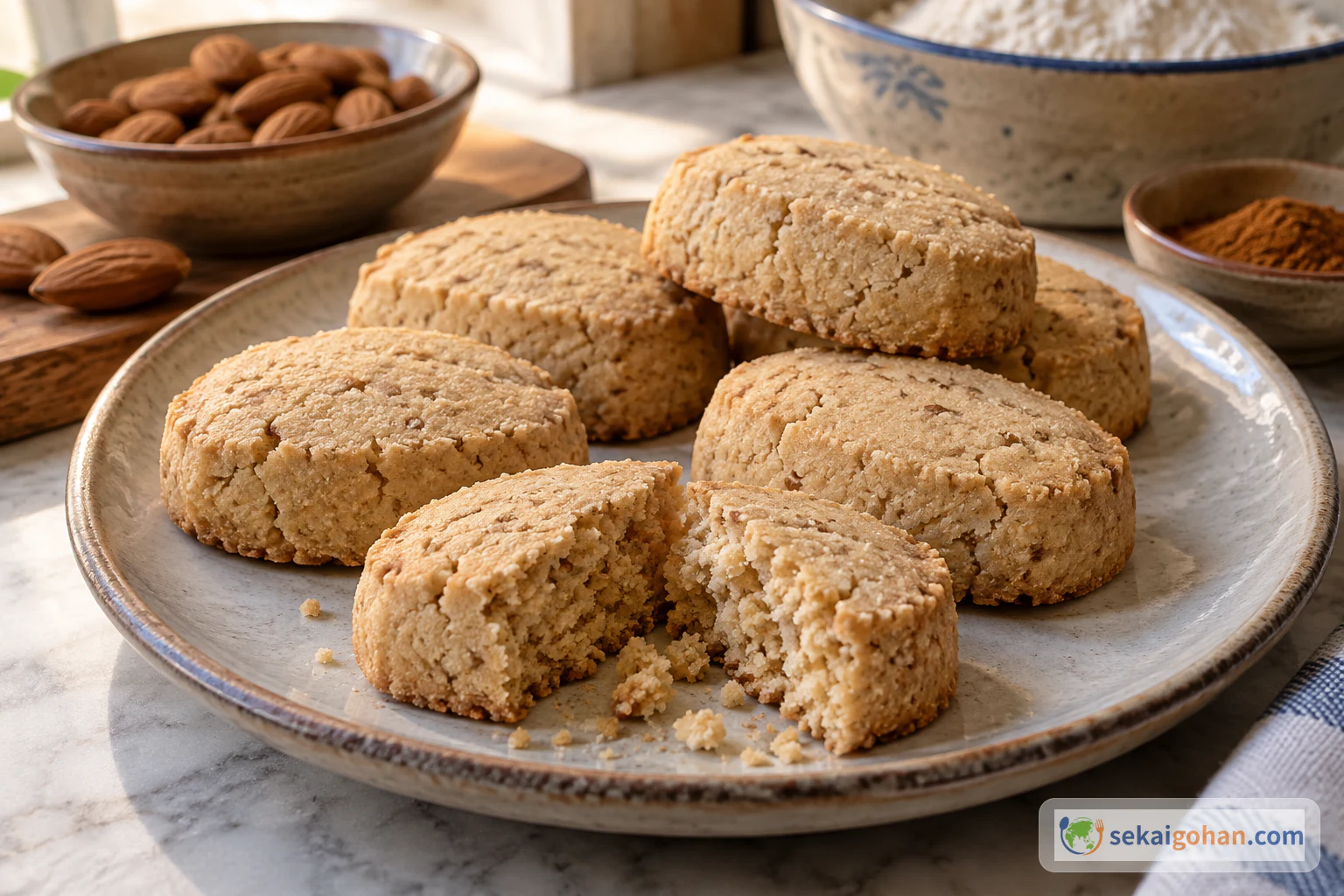
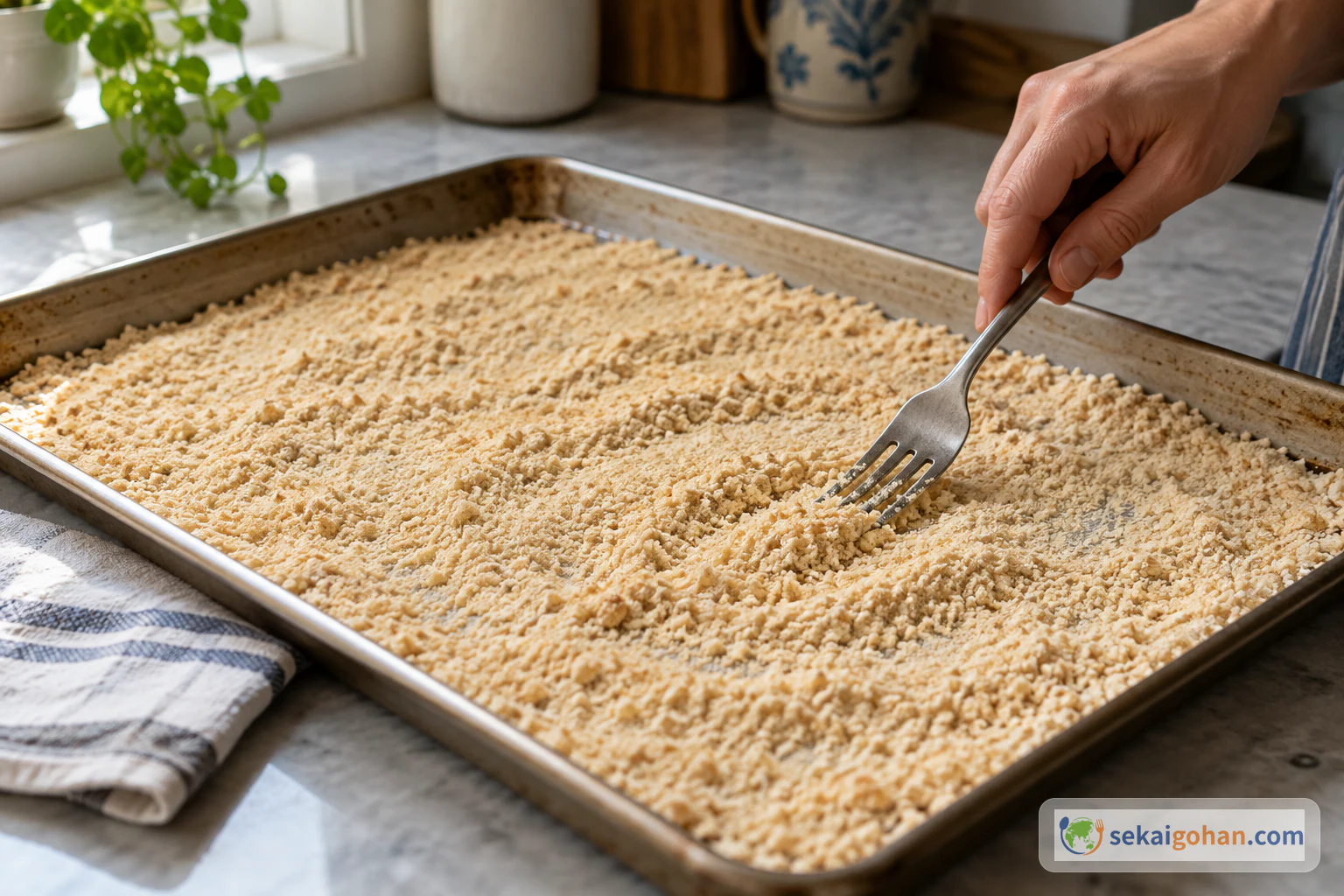
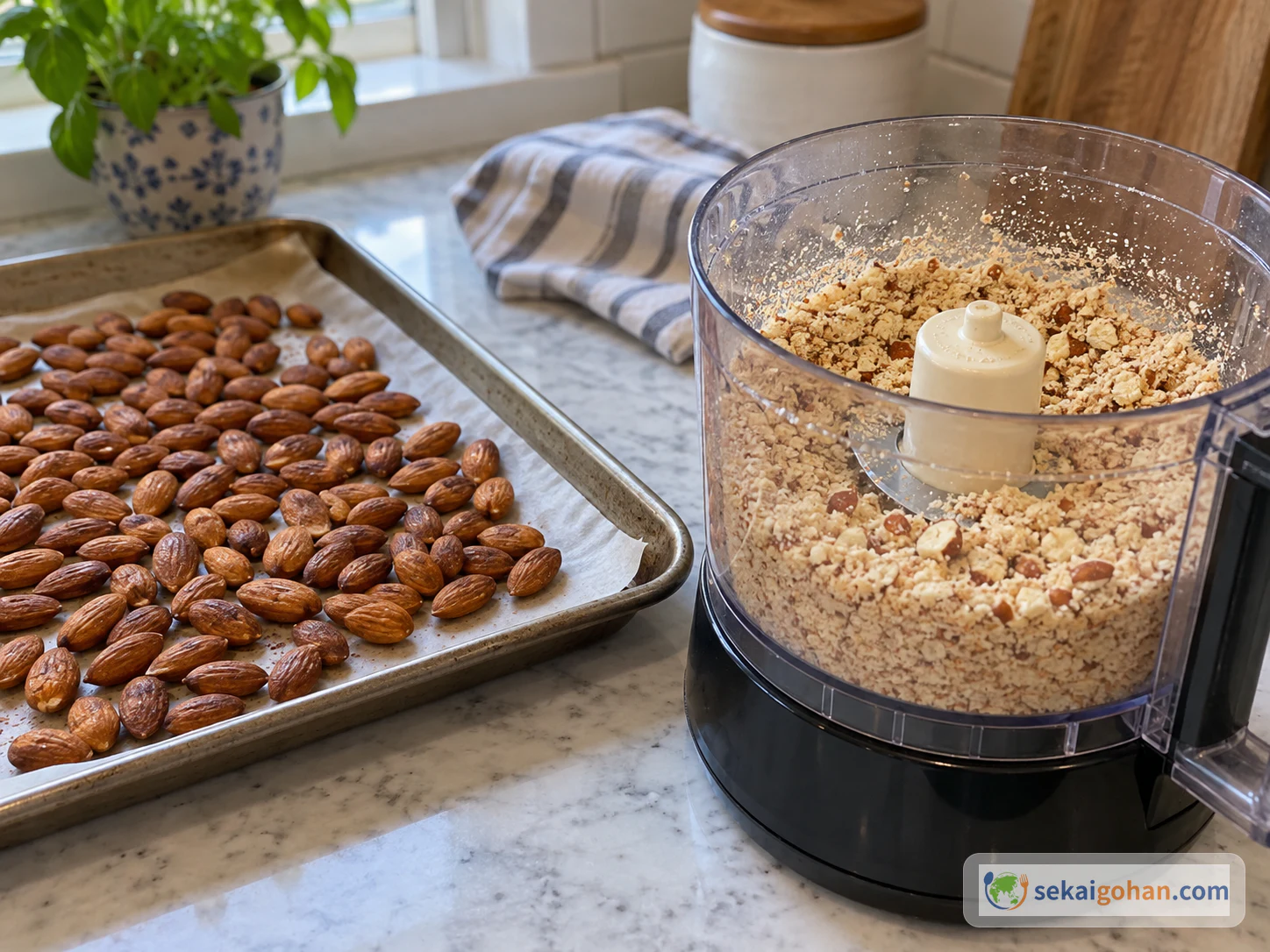
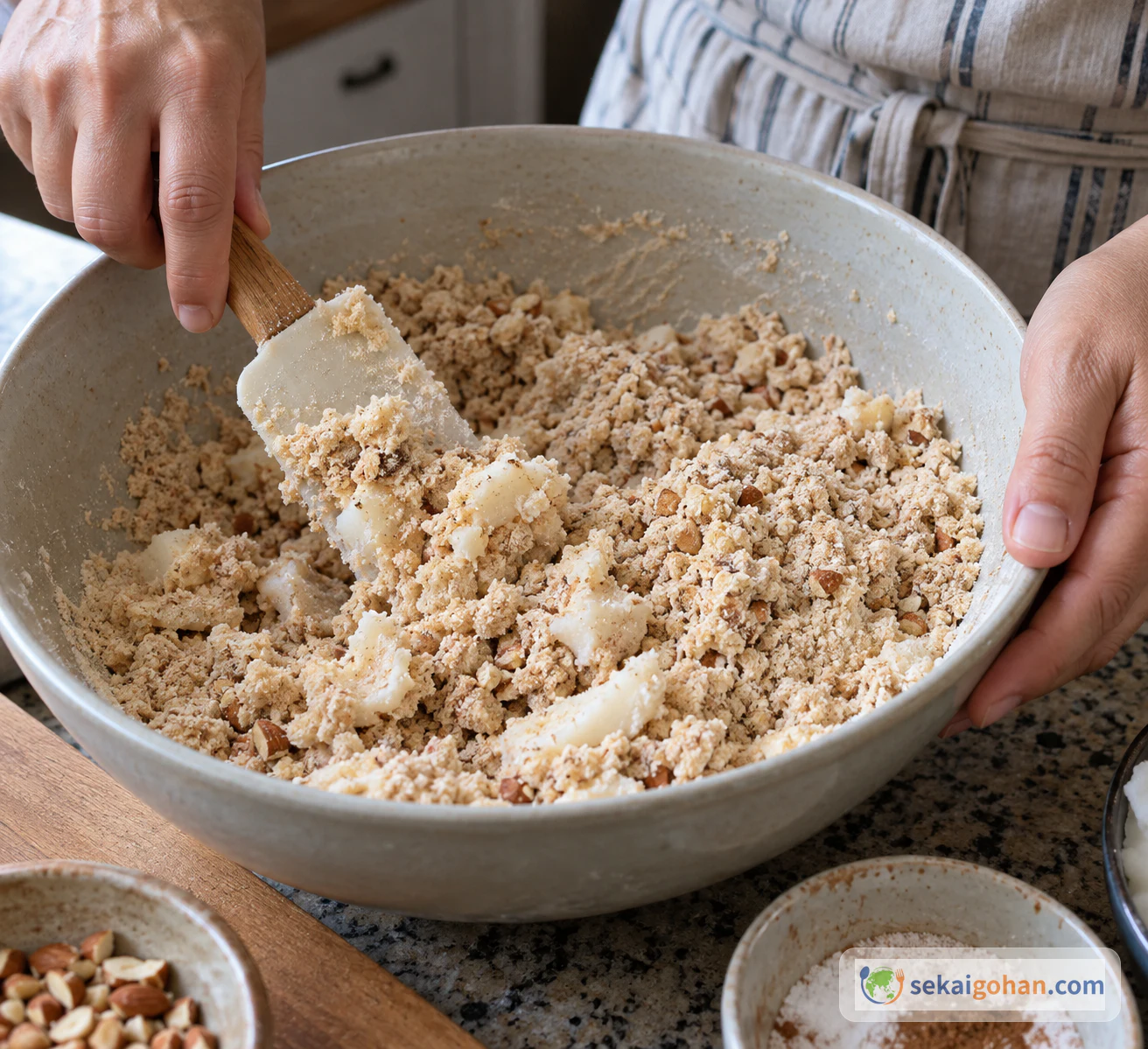
In the town of Estepa, in the Sierra Sur of Seville province, polvorones are made in autumn and then eaten in homes across Spain at Christmas. They are small, thick and tender, made with toasted flour, lard, powdered sugar and almonds, and fragile enough to fall apart as you bite into them. That fragility is the whole appeal, and it is also the hard part at home. The dough resists being kneaded into a smooth mass, and the baked sweets break if you lift them while they are hot. Most of what follows comes back to those two points. For more dishes from the same country, see our Spain page.
Polvorones and Their History in Estepa
The polvorón (plural: polvorones) belongs to Estepa. Mantecados de Estepa and Polvorones de Estepa are both protected local products under the IGP, and local factories were already running in the first half of the 20th century. This is the town's own account of the sweet, not a settled history of the polvorón everywhere.
Records of mantecado making at the Santa Clara convent go back to the 16th century. Those records concern mantecados, though, so they don't give today's polvorón a birth date. The story picks up in the late 19th century with Micaela Ruiz Téllez, known as La Colchona, who is credited with refining and toasting the flour. Her husband's transport work carried the sweets farther afield. Drying the outside helped them survive the journey, and they became popular as a Christmas sweet.
Spain has other almond sweets, but they are a different kind of confection. Catanies from Catalonia, for example, are chocolate-coated almonds. The polvorón depends on toasted flour and that crumbly texture.
Ingredients: Toasted Flour and Lard at the Center
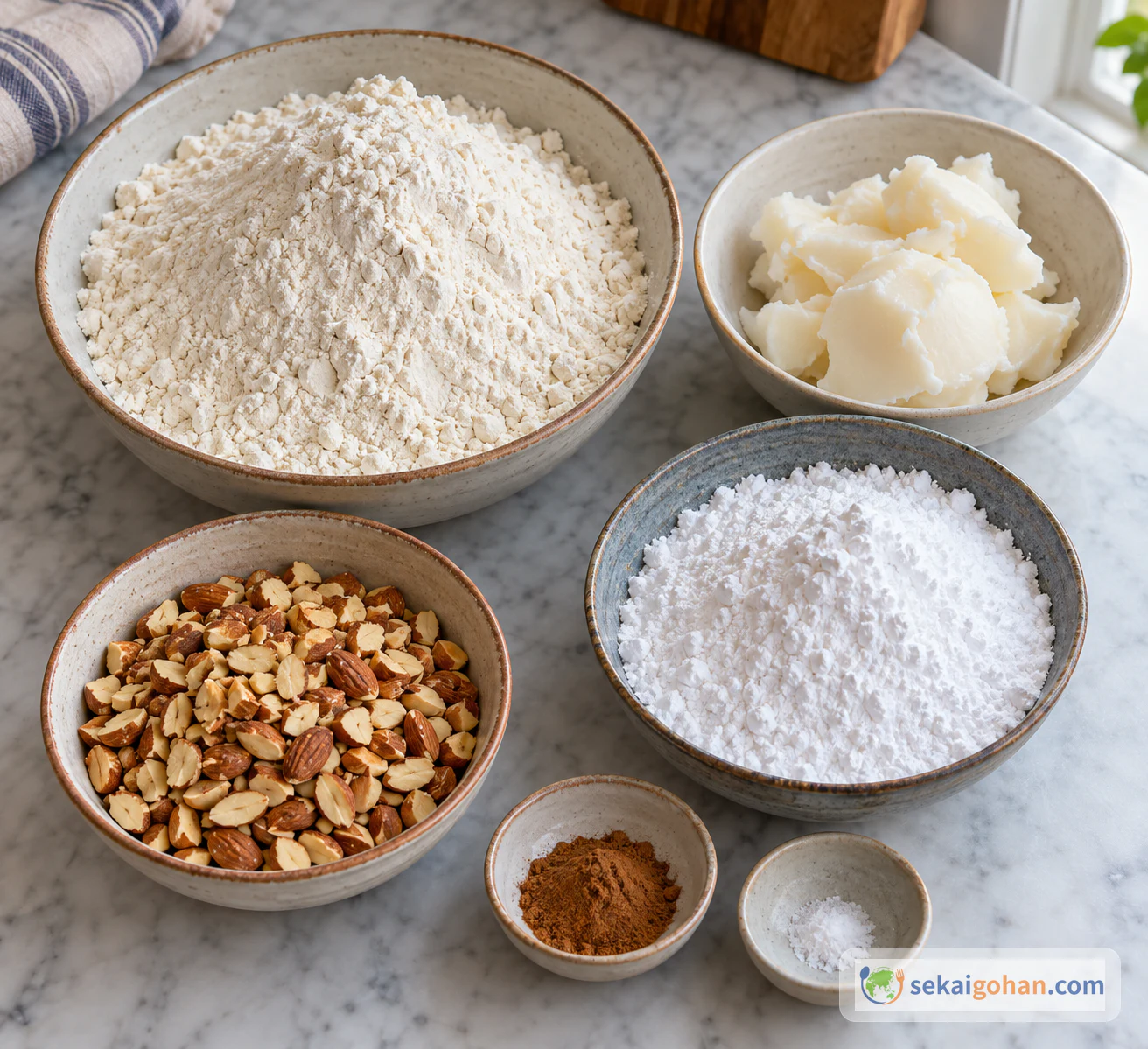
All of the powdered sugar goes into the dough. There is no dusting of sugar at the end.
Equipment
- Baking trays
- Parchment paper
- Sieve
- Mixing bowl and spatula
- Food processor or grinder for the almonds
- Food wrap
- Rolling pin
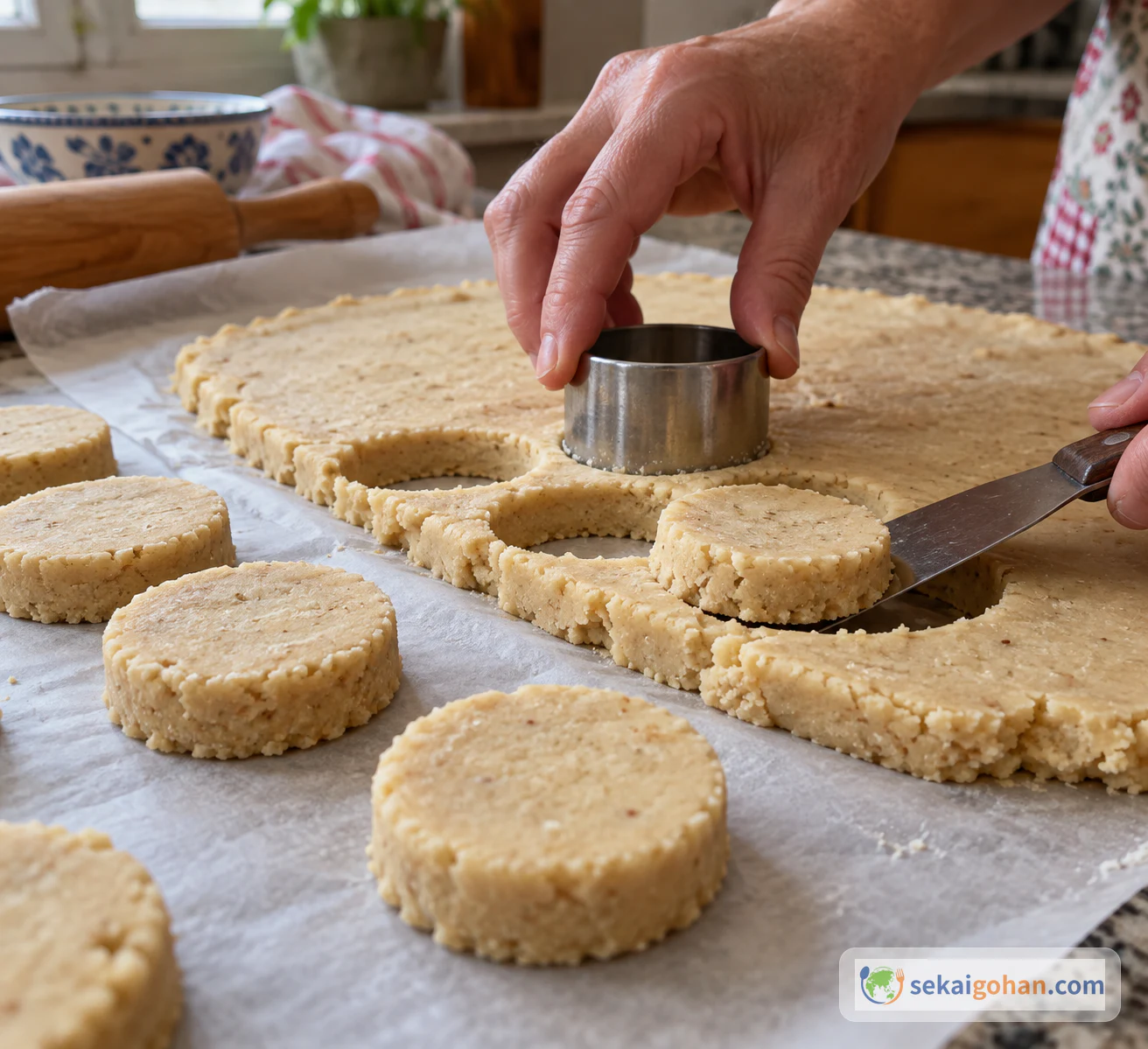
- Round or oval cutter, 1.5 inches (3.5–4 cm) across (a small glass also works)
- Thin spatula
Choosing Ingredients for Polvorones
Flour. Harina de repostería translates as pastry flour. If you can't find it, another soft wheat flour is a close stand-in.
Lard. Lard carries the flavor and gives these sweets the way they melt in the mouth, so check that what you buy is made from pork fat. Butter or vegetable oil makes a different sweet, not a like-for-like swap.
Almonds. Unsalted, skinned almonds that you toast and grind yourself come closest to the recipe. Ready-ground almond flour is a shortcut, but the texture will change.
Sugar. Use powdered sugar. Granulated sugar has coarser crystals that don't suit this formula.
These sweets contain almonds, wheat and pork fat. Check the labels on your ingredients if you are baking for someone with an allergy or a dietary restriction.
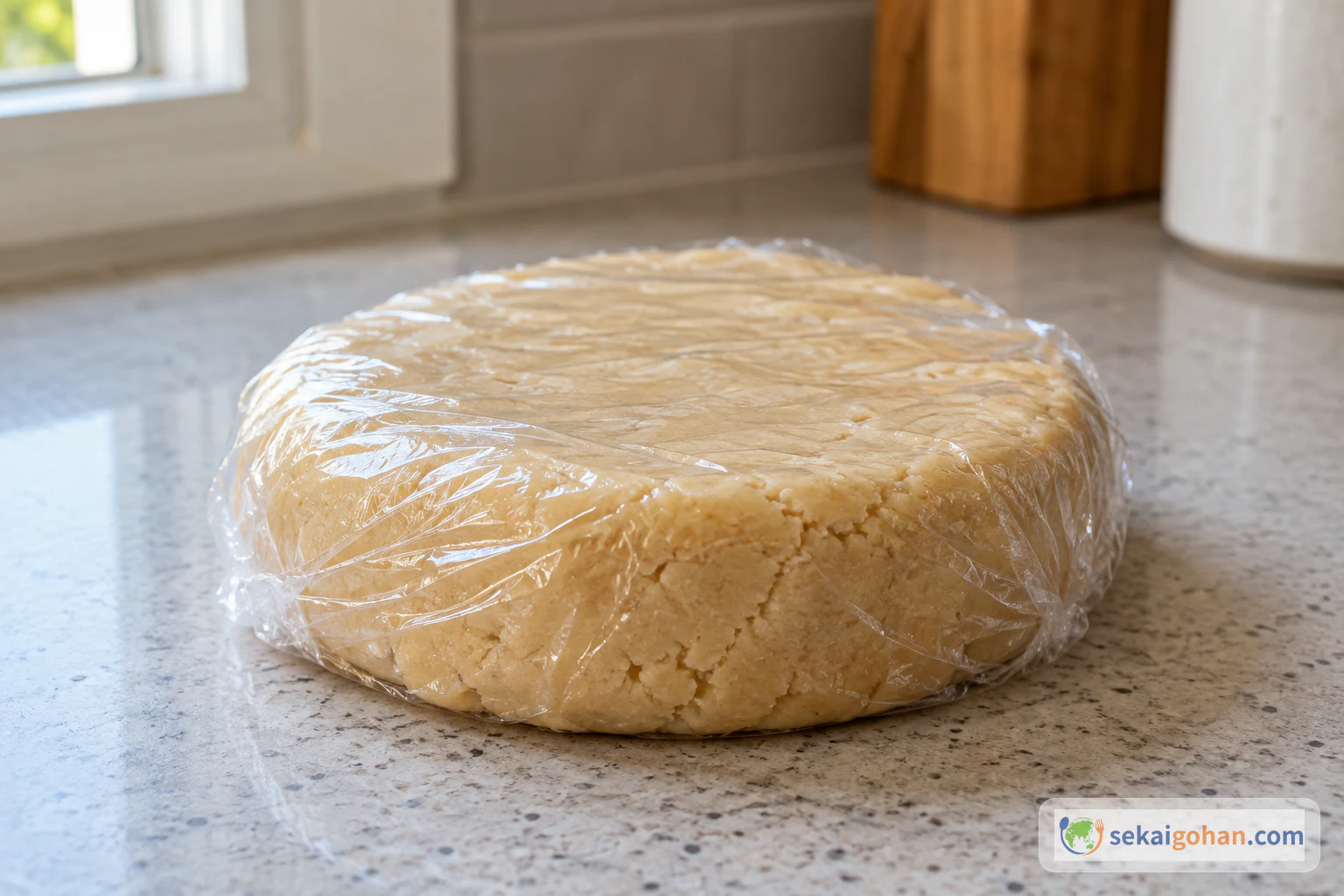
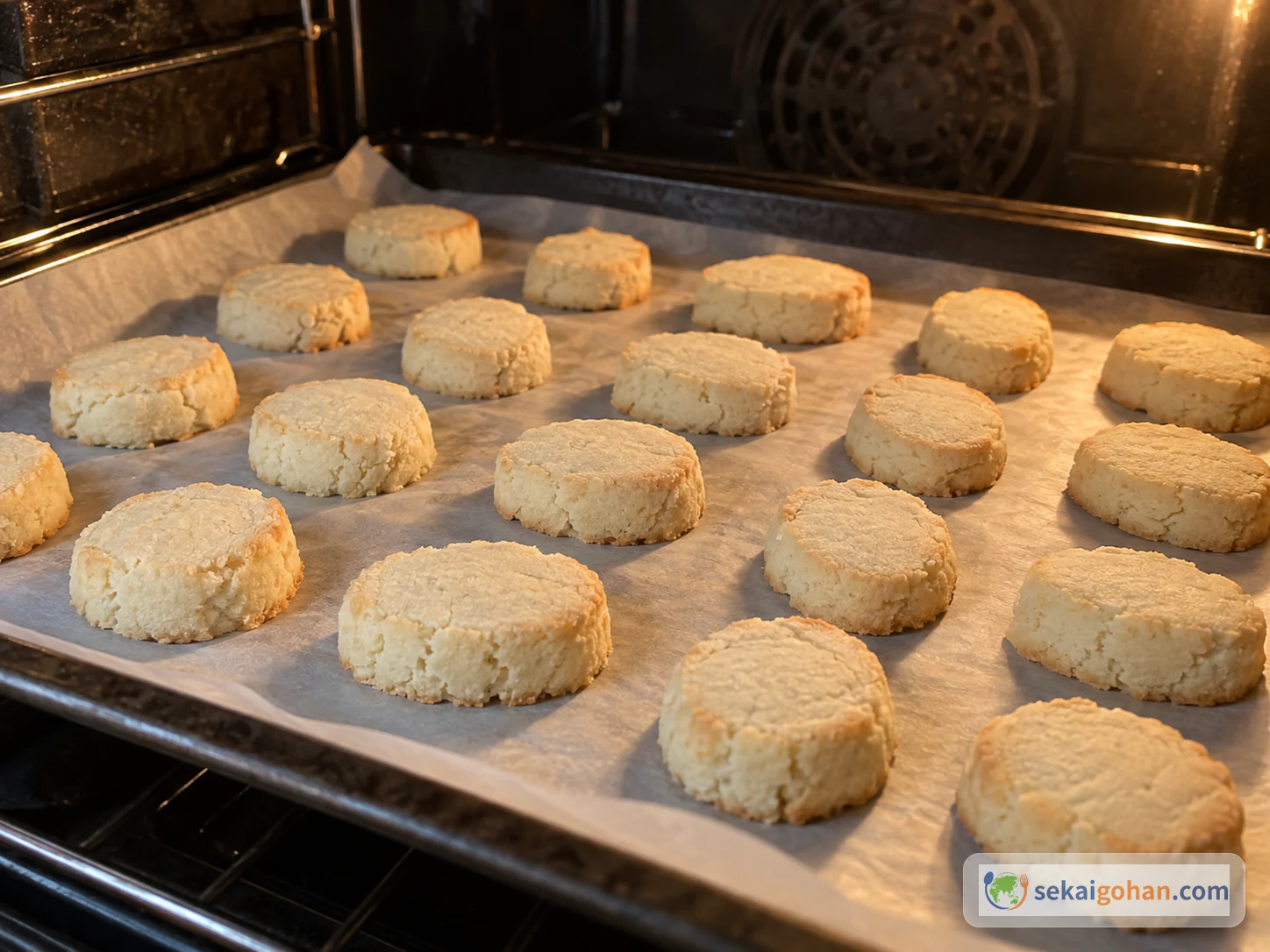
Method: From Toasted Flour to a Fully Cooled Tray
Each oven step gives one temperature for a fan oven and one for an oven without a fan. Use the pair that matches yours.
Polvorón Problems and Fixes
Go by the visual cues in each step as well as the times.
Crumbly is the goal, so a dough that looks sandy is normal. When something does go wrong, it usually comes down to the warmth of the lard, how hard the dough was worked, or impatience at the end.
| Problem | What to check | What to do |
|---|---|---|
| The dough won't hold together | Temperature of the dough and the state of the lard | Use lard that is soft but not melted, and gather the dough by hand |
| The dough cracks when rolled | Whether it is being worked too hard | Press the cracks closed by hand and avoid strong kneading |
| The dough feels pasty or greasy | Whether it was overmixed or the lard had melted | Next time, use soft unmelted lard and stop as soon as the mixture begins to come together |
| The ground almonds turn oily | Whether the nuts were still warm or were ground too long | Cool the almonds first and stop grinding before they become a paste |
| The flour is still pale after 15 minutes | Color, not just time | Keep toasting and stirring until it has a light color; 15 minutes is the minimum |
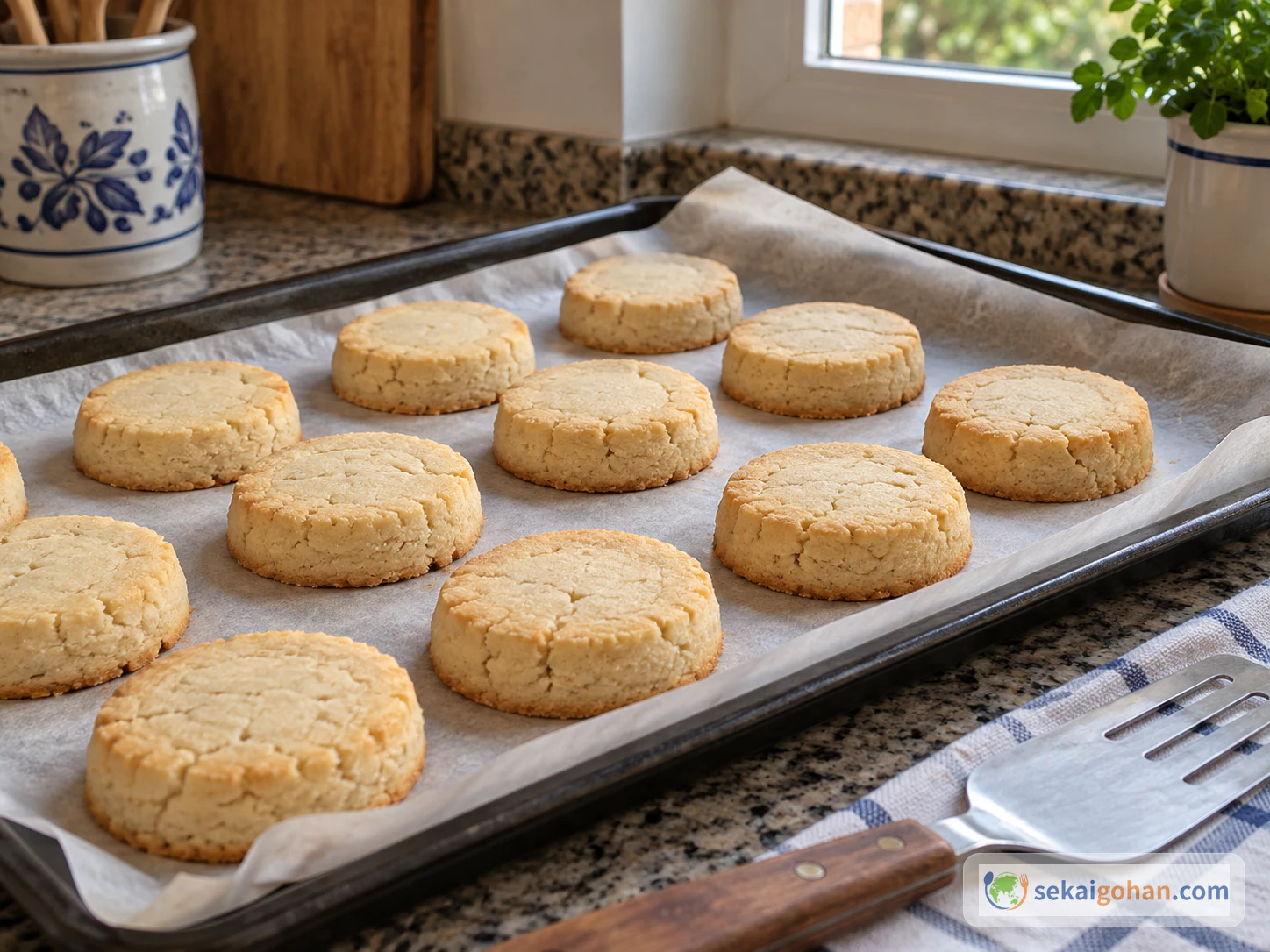
| The sweets break when moved | Whether they were still warm | Leave them on the tray until completely cool |
Serving, Storing and Variations
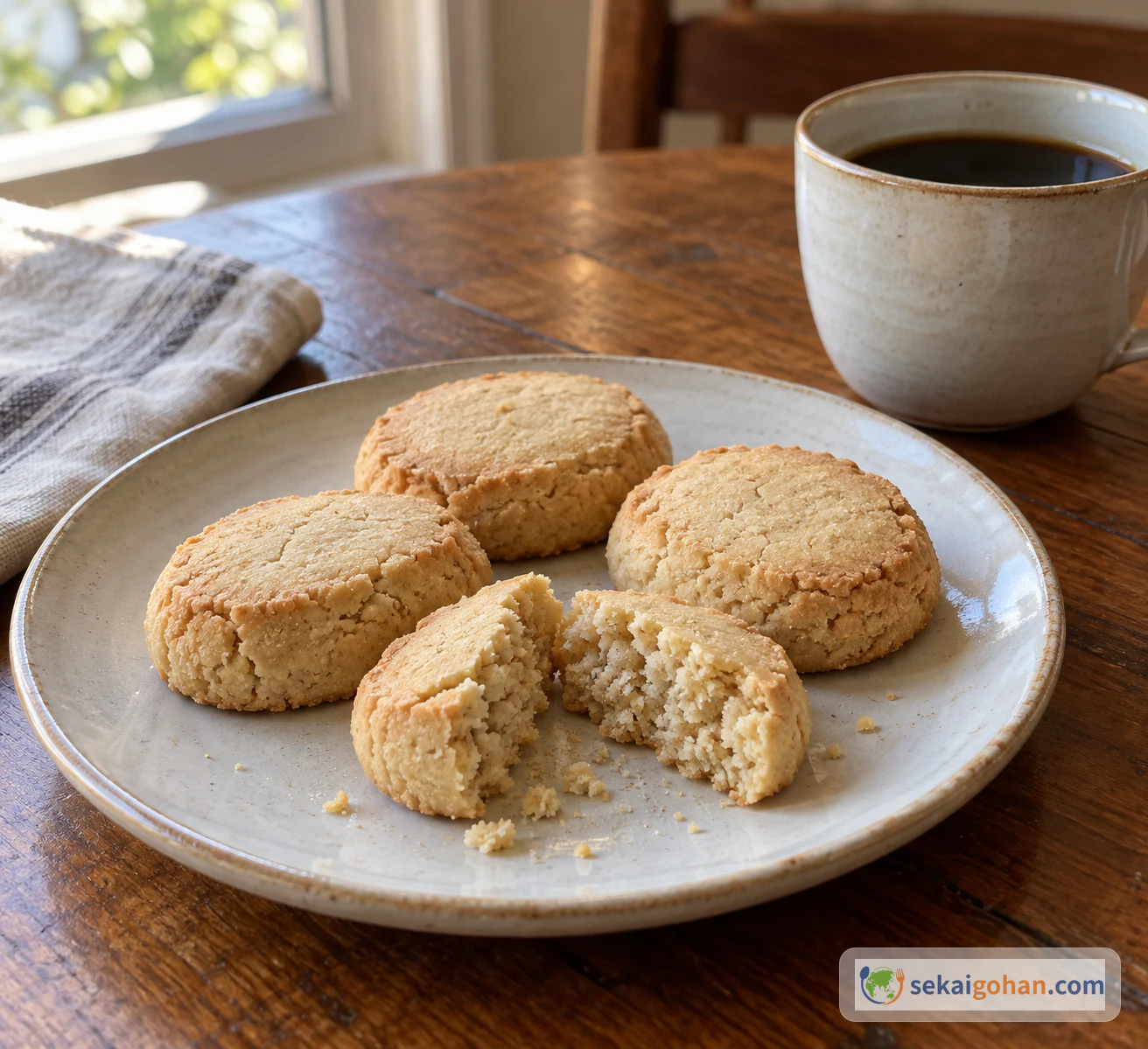
Polvorones need nothing added once they are baked. Set them on a small plate after a meal with a cup of coffee, and handle them gently. Once they are completely cool, store them in an airtight container.
Recipes for polvorones differ in more than small details, so follow one from start to finish instead of combining steps. A lemony, sugar-finished version shows how far a home recipe can move: 7 oz (200 g) lard, 13.5 oz (380 g) flour, 4.5 oz (125 g) ground almonds, one lemon, 1 tsp cinnamon and 5.5 oz (150 g) powdered sugar, with 3.5 oz (100 g) of that sugar in the dough and the rest for finishing. The flour and almonds are toasted in a frying pan for 10 minutes rather than in the oven, and the sweets bake at 350°F (180°C) for 13 minutes before cooling completely on the tray.
A butter version is a reasonable home adaptation, but expect a different sweet with its own flavor.
Frequently Asked Questions
Are polvorones the same as mantecados?
They are closely related, and the two names overlap. Accounts of the difference vary on shape, the use of almonds and surface finish.
Why toast the flour?
Toasting gives polvorones their distinctive earthy, crumbly texture. It is also why the dough is only brought together, never kneaded.
How many does this make?
This recipe makes 38 raciones, or servings. Your count will depend on the thickness and cutter you use within the stated ranges.
How long does the whole recipe take?
Longer than the 25 minutes in the header. Toasting the flour takes at least 15 minutes, the almonds take 8–10, the dough rests for 30 minutes, and baking takes about 12 minutes, plus cooling. Plan around the individual steps.