Cottage Pie: British Beef Mince Under Golden Mashed Potato

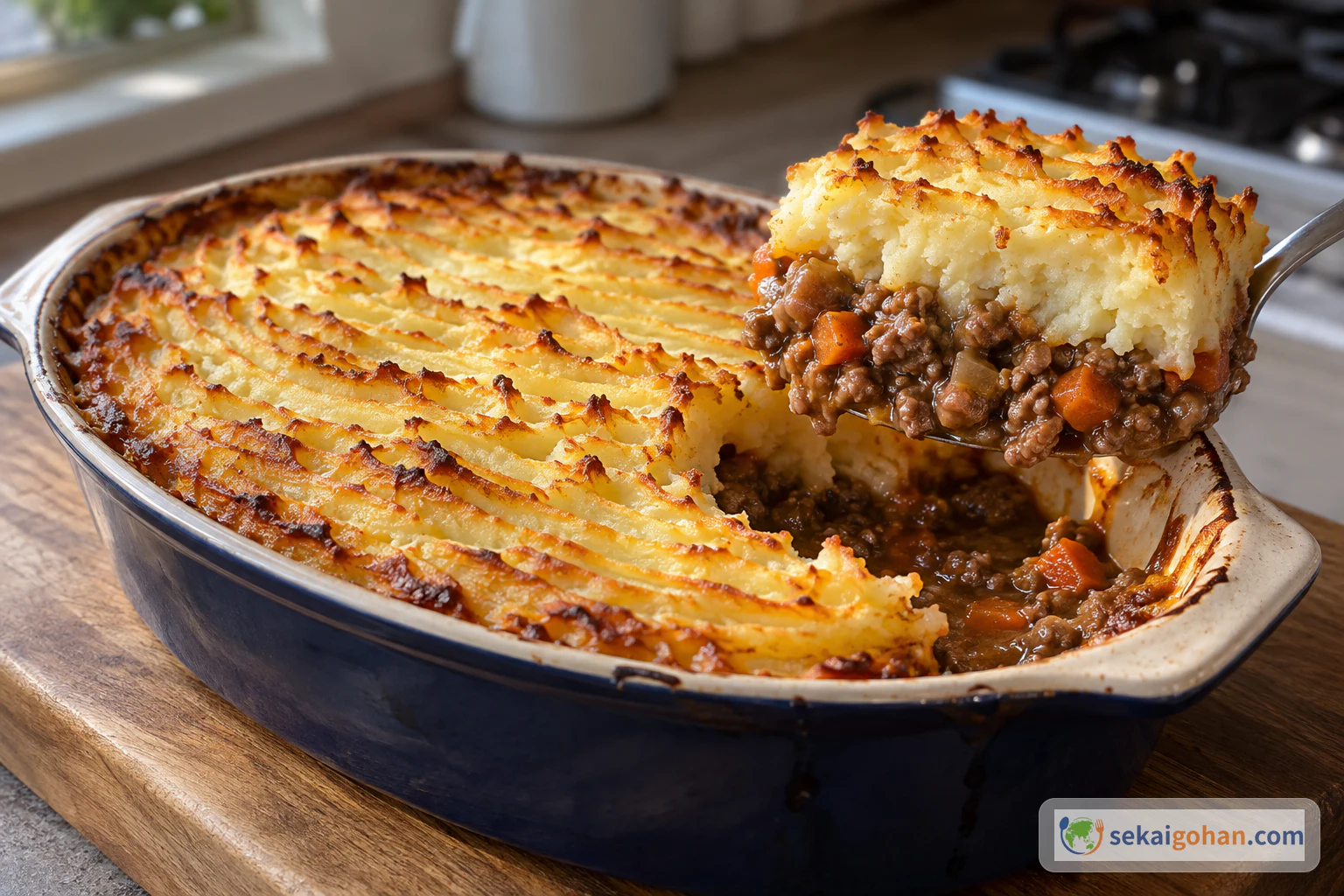
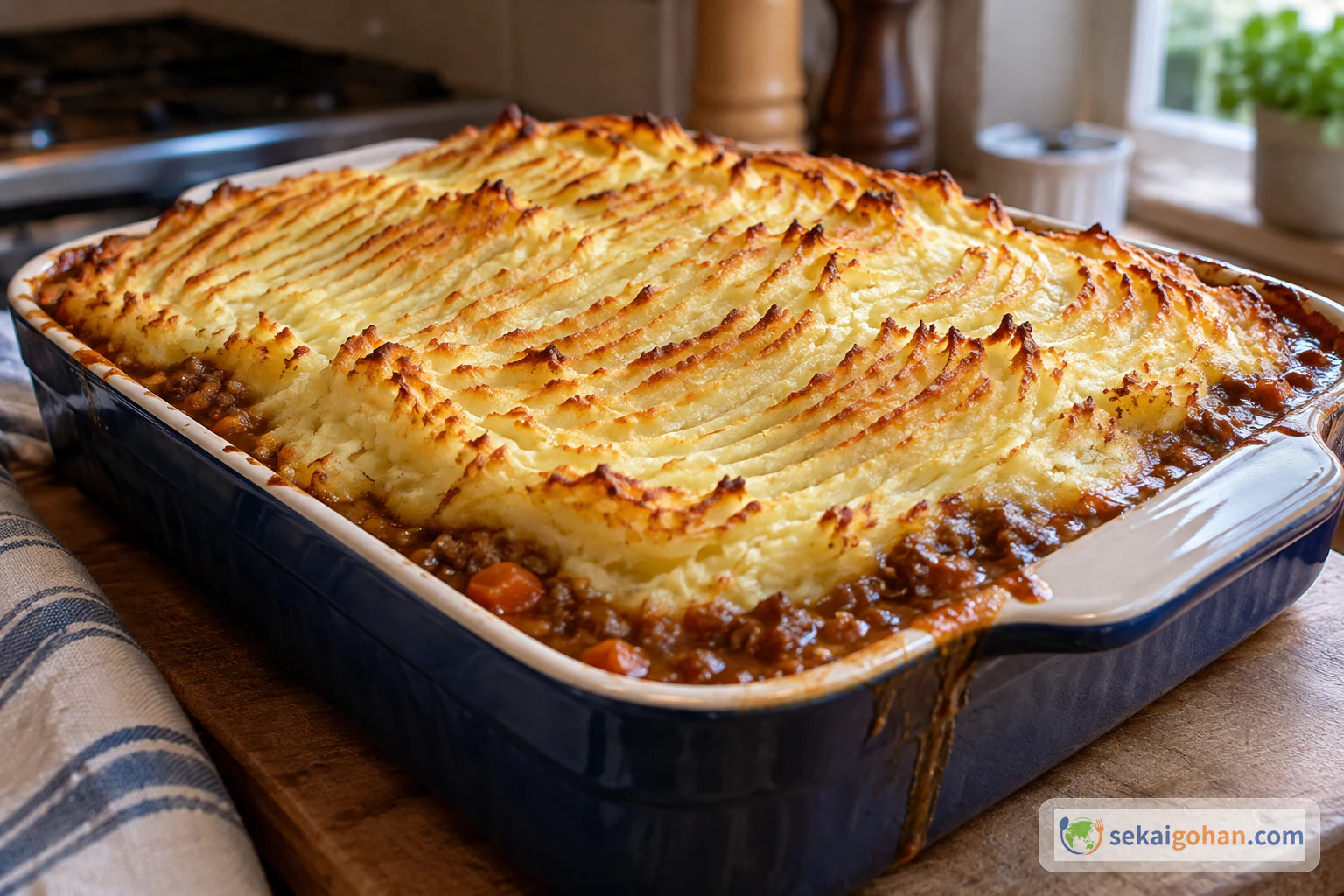
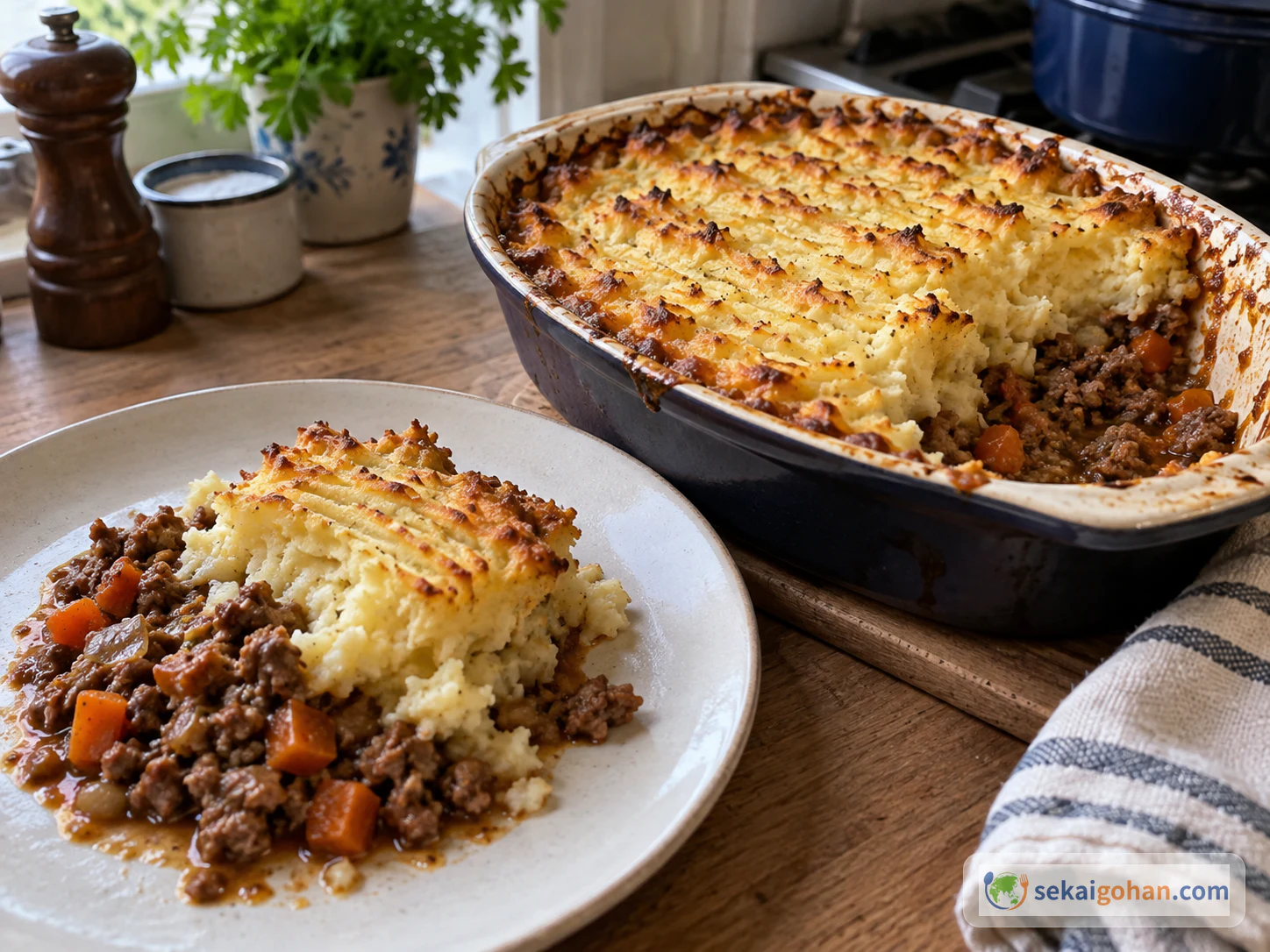
Cottage pie with a browned mashed-potato top; a spooned-out portion shows the beef mince filling beneath
Serves
4 servings
Cuisine
British

How to make cottage pie, the British home dish of beef mince topped with mashed potato. Covers how it differs from shepherd's pie, how to reduce the filling so it isn't watery, a mash that holds its ridges, food-safe cooling and reheating, and honest substitutions for ingredients outside the UK.

Cooking flow

Cooking steps

STEP11 / 6

Preheat the oven and start the potatoes

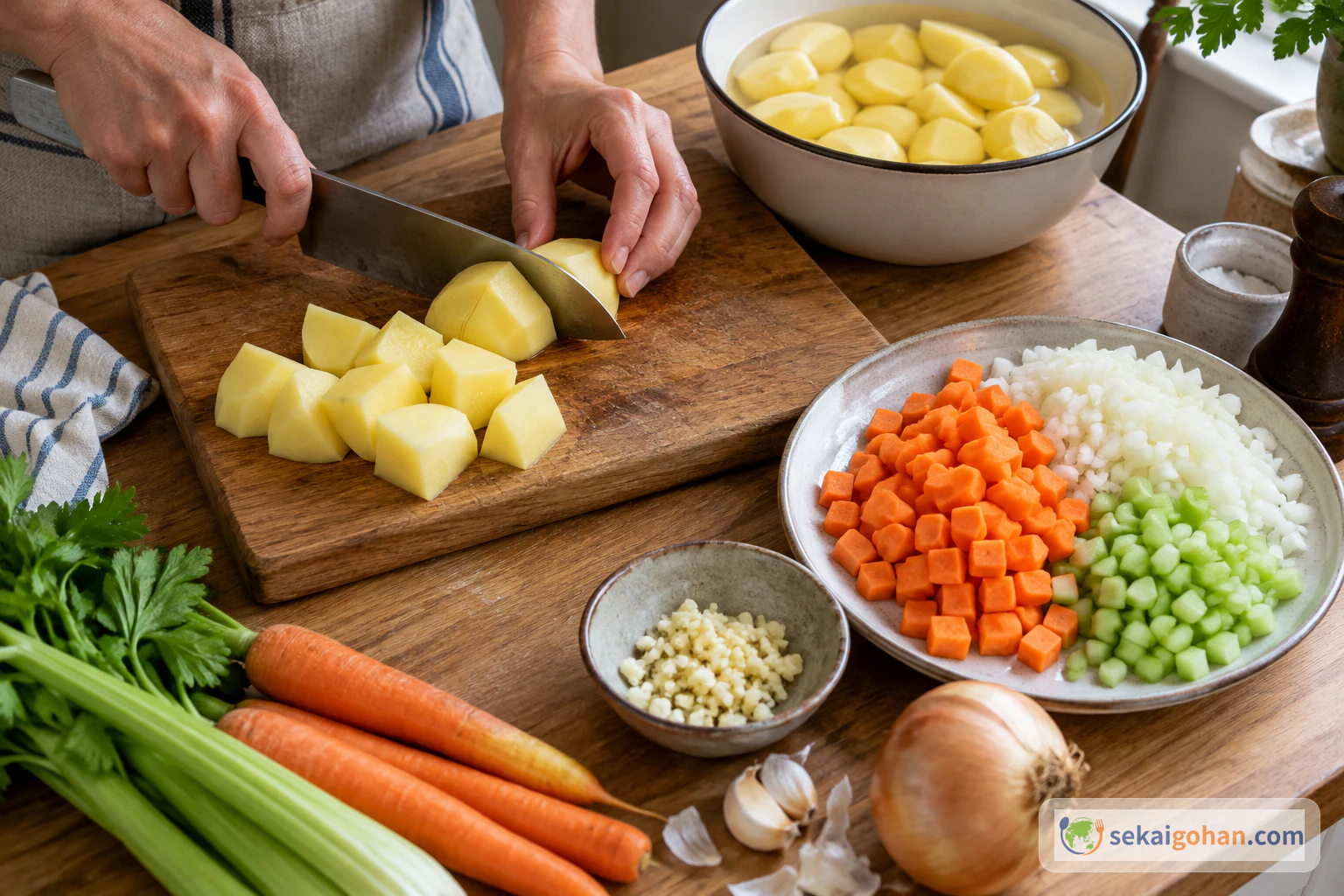
Potatoes cut into even pieces, with onion, carrot and celery being chopped
Even potato pieces cook through together; the vegetables are chopped while the water heats

Preheat the oven to 375°F (190°C) conventional / 350°F (170°C) fan. Cut the potatoes into even 1.5 inches (3–4 cm) pieces so they all cook at the same rate. Put them in a pot of cold water with a little salt, bring to the boil and cook for 15–20 minutes, until a skewer slides in without resistance.

While they cook, finely chop the onion, carrot, celery and garlic.

STEP22 / 6

Brown the beef mince and cook it through

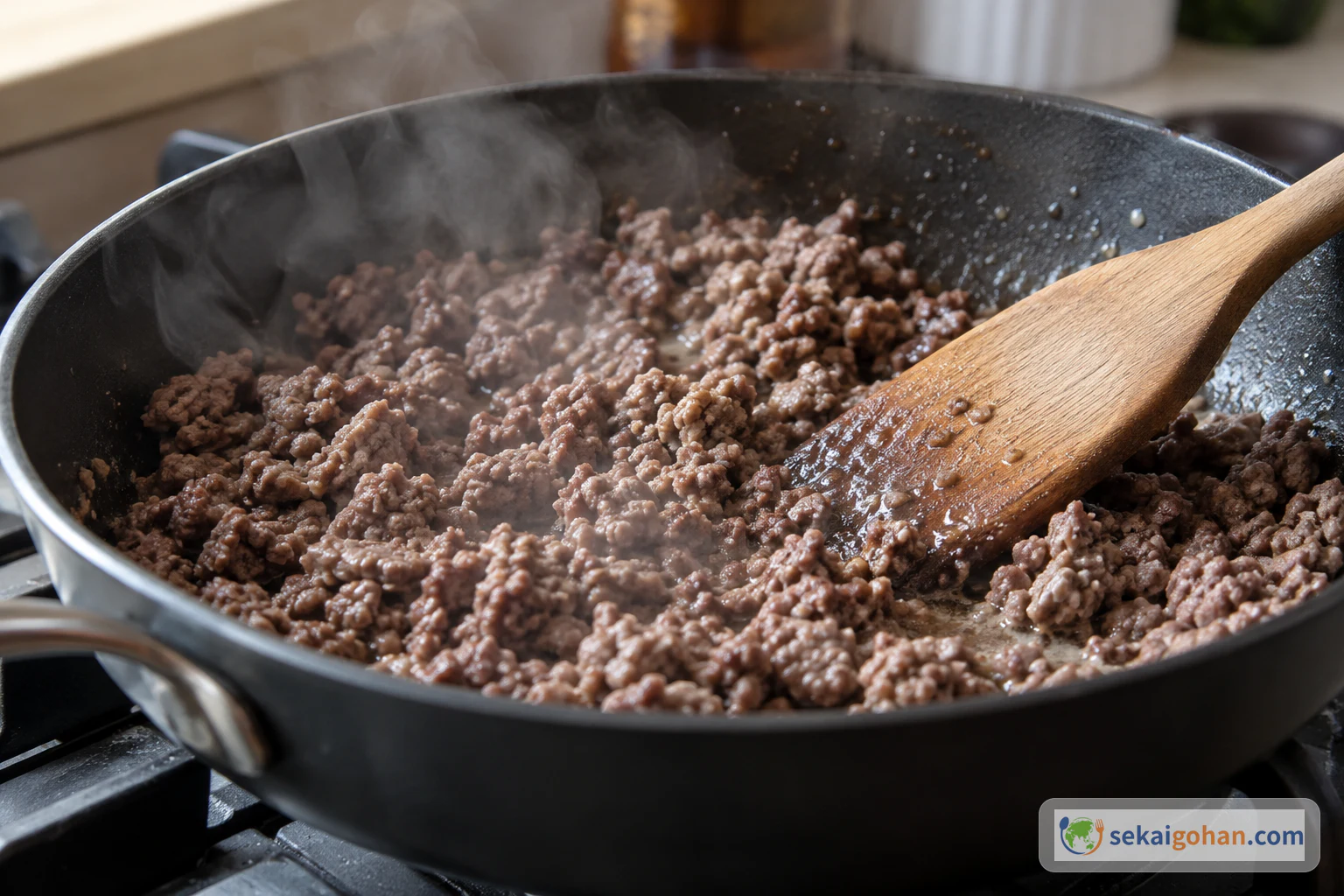
Beef mince broken up in a pan and cooked until no red remains
Break the mince small and cook until no raw red patches remain

Heat the oil in a wide pan. Spread the mince out and leave it for a few minutes without stirring too much, then break it into small pieces. Keep cooking until no raw red meat remains and the mince is steaming. If your pan is crowded, brown it in batches.

Browning and thorough cooking are two separate checks: browning is for flavour, while cooking the mince right through is a food-safety requirement. Keep utensils used for raw meat separate from those used once it is cooked.

STEP33 / 6

Add the vegetables and reduce the filling

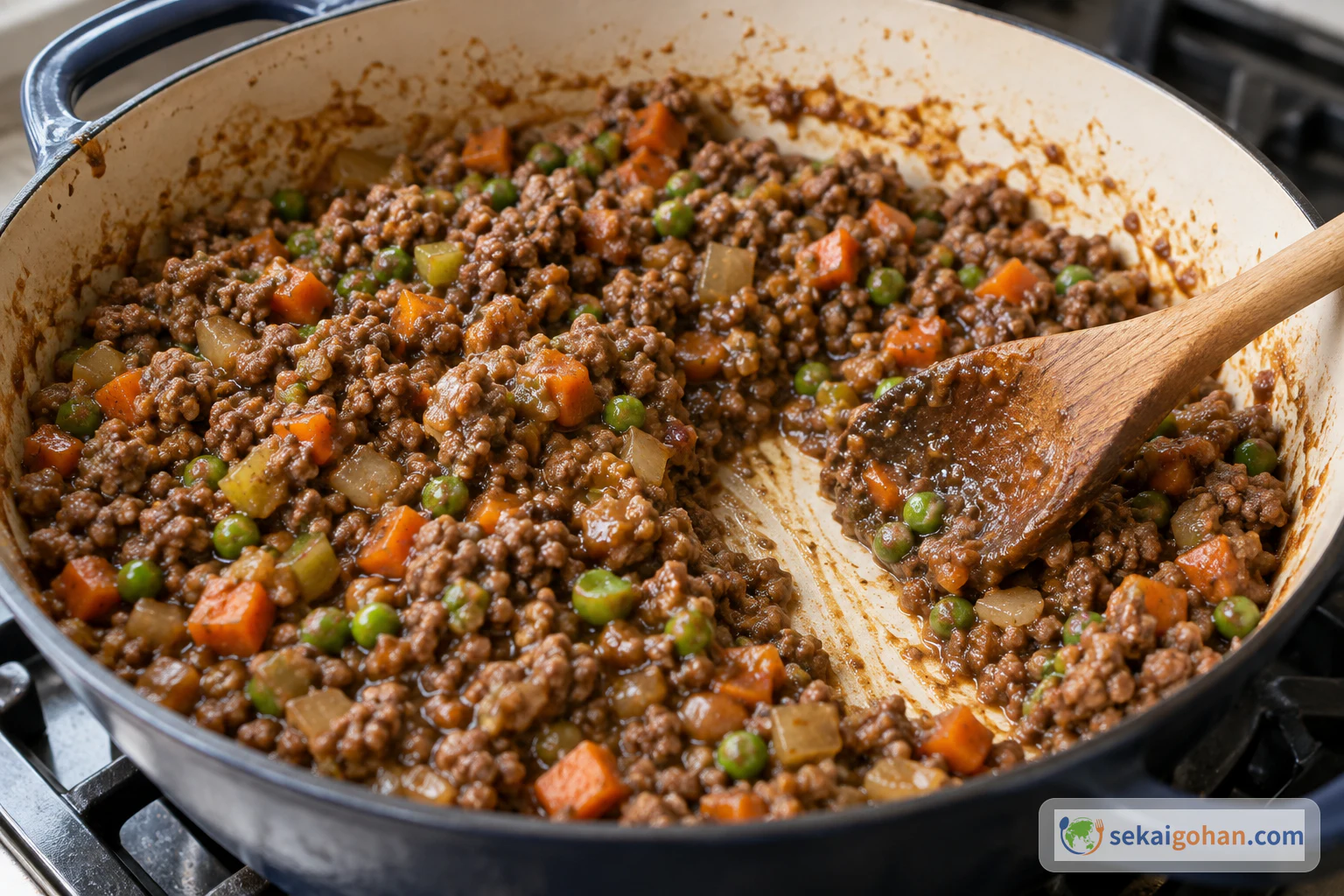
Beef mince and vegetables reduced in stock to a thick filling
The gravy should cling to the mince, with no pool of liquid left in the pan

Add the onion, carrot, celery and garlic and cook for 5–7 minutes, until the onion is translucent and the vegetables have softened a little. Stir in the tomato paste and flour and cook briefly so the raw flour taste goes.

Pour in the stock a little at a time, then add the Worcestershire sauce, thyme and black pepper. Simmer gently and uncovered for about 15–20 minutes, but judge by the filling rather than the clock: it is ready when a spoon drawn across the bottom of the pan leaves a trail that does not immediately fill back in. If it is still thin, keep simmering uncovered. Add the peas for the last 2–3 minutes, then taste and adjust the salt.

A wet filling lets the mash slide and sink, so this reduction is the step that holds the whole pie together.

STEP44 / 6

Mash the potatoes

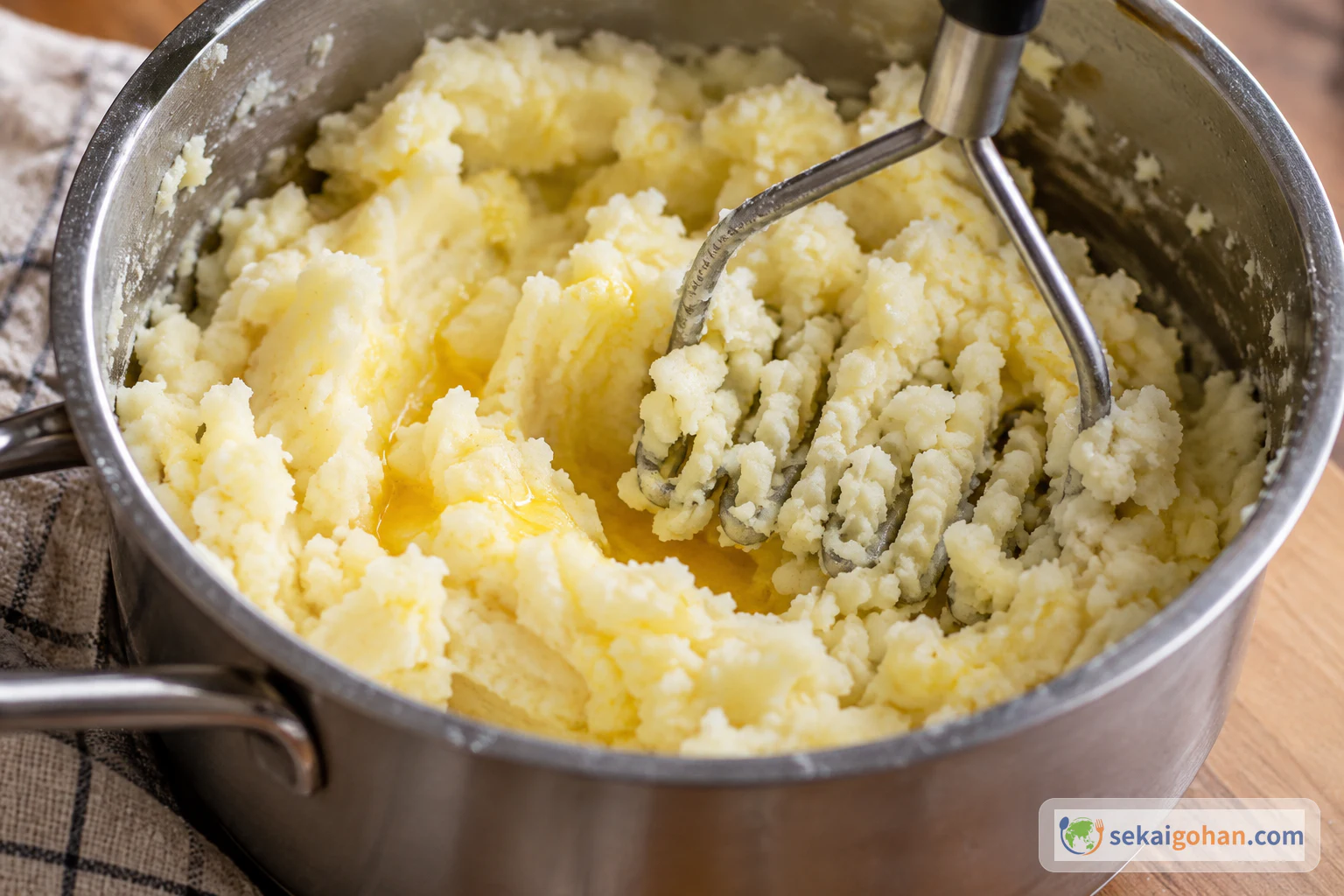
Drained potatoes being mashed with butter and milk
A thick, fluffy mash that holds its shape, not a runny purée

Drain the potatoes, return them to the pot and set it over low heat for about 30 seconds to drive off surface moisture. Mash, mix in the butter, then add the warmed milk a little at a time. Aim for a mash that sits on a spoon and holds its shape, not a loose purée. Waterlogged potatoes make a weak topping.

STEP55 / 6

Assemble the pie

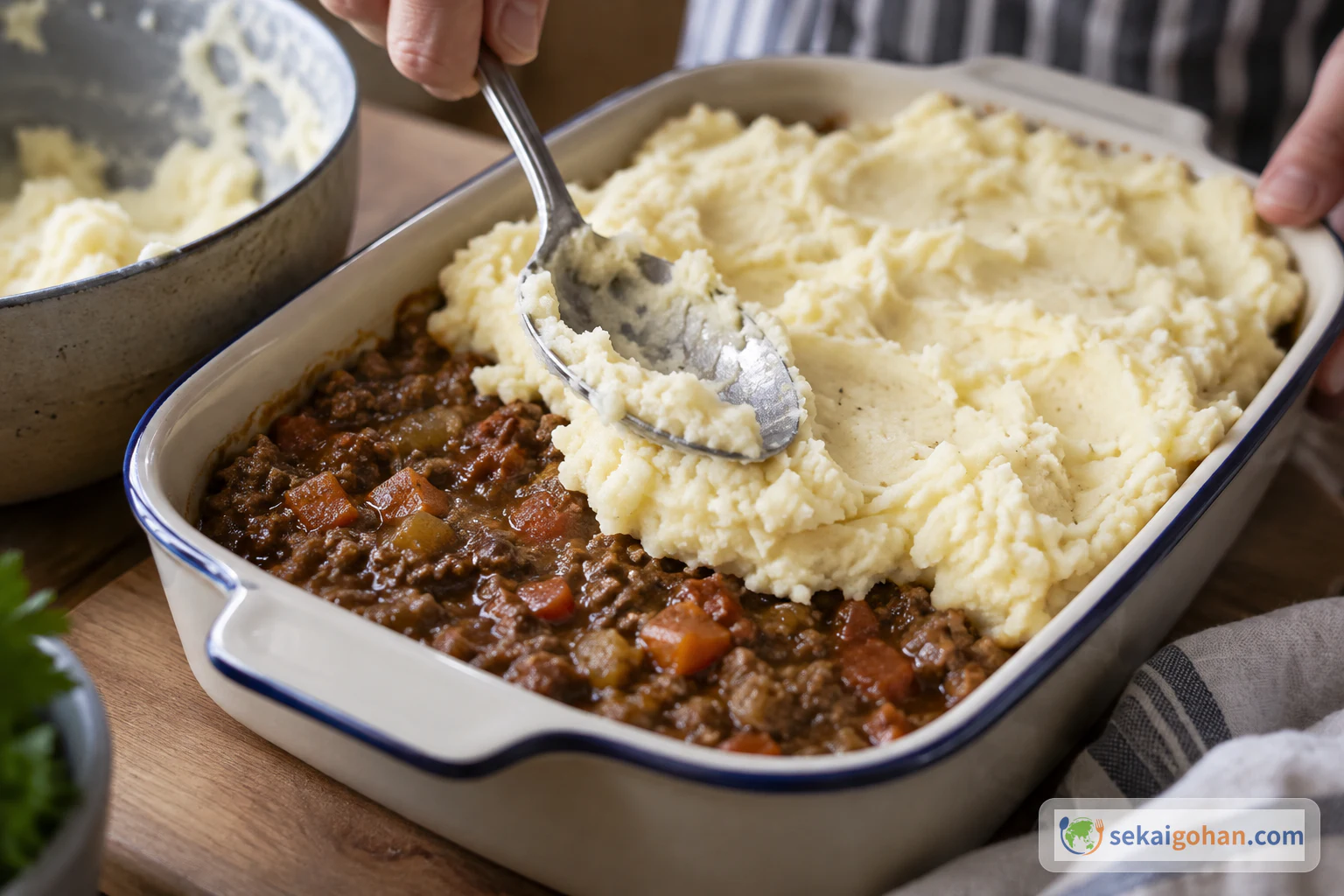
Mashed potato spread from the edges over the beef filling
Working from the edges inward keeps the filling from pushing up through the mash

Spoon the filling into the baking dish and let it settle for about 5 minutes. Then spread the mash from the edges of the dish towards the centre, sealing the filling in. Drag a fork across the top to make lines and small peaks; more ridges mean more surface to brown.

STEP66 / 6

Bake until golden and hot through

Cottage pie with fork-marked mash browned golden in the oven
Golden ridges and bubbling edges, with the centre hot through

Bake at 375°F (190°C) / 350°F (170°C) fan for about 20–25 minutes, depending on your oven and dish. The pie is done when the top is golden, the edges are bubbling and the centre is hot all the way through.

Check both: the centre must be steaming hot. If you use a thermometer, 158°F (70°C) held for 2 minutes is a safe target.

0 / 0
Ingredients

Ingredients

1 / 2

Beef filling

Ingredient Amount Role
Beef mince 1 lb (500 g) The body of the filling
Onion 5.5 oz (150 g) (1 medium) Sweetness and the base of the filling
Carrot 4 oz (120 g) (1 medium) Sweetness and colour
Celery 2 oz (60 g) (about 1 stalk) Aromatic depth
Garlic 1 clove (about 5 g) Aroma; optional
Neutral oil 1 tbsp (15 ml) Keeps the mince from sticking
Tomato paste 1 tbsp Savouriness and colour
Plain flour 1 tbsp Helps bind the gravy
Beef stock 1 cup (250 ml) Simmering liquid
Worcestershire sauce 1 tbsp (15 ml) Tang and spiced depth
Dried thyme 1 tsp British-style herb aroma
Peas 2.75 oz (80 g) Colour and sweetness; frozen are fine
Black pepper to taste Seasoning
Salt to taste Add late, after tasting the stock
2 / 2

Mashed potato topping

Ingredient Amount Role
Potatoes (floury) 2 lb (900 g) The topping
Salt a little For the cooking water
Butter 1.25 oz (35 g) Richness
Milk ¼ cup (75 ml), adjusting up to ½ cup (100 ml) Brings the mash to a spreadable firmness
0 / 0

At the edge of the dish, dark beef gravy bubbles up between the potato and the rim. Across the top, the ridges left by a fork have turned golden at their peaks, while the hollows stay pale and soft. This is cottage pie, a British home dish: savory beef mince baked under a lid of mashed potato instead of pastry. It's comforting and filling, with a rich gravy under a crust that's crisp on top and soft underneath.

About Cottage Pie
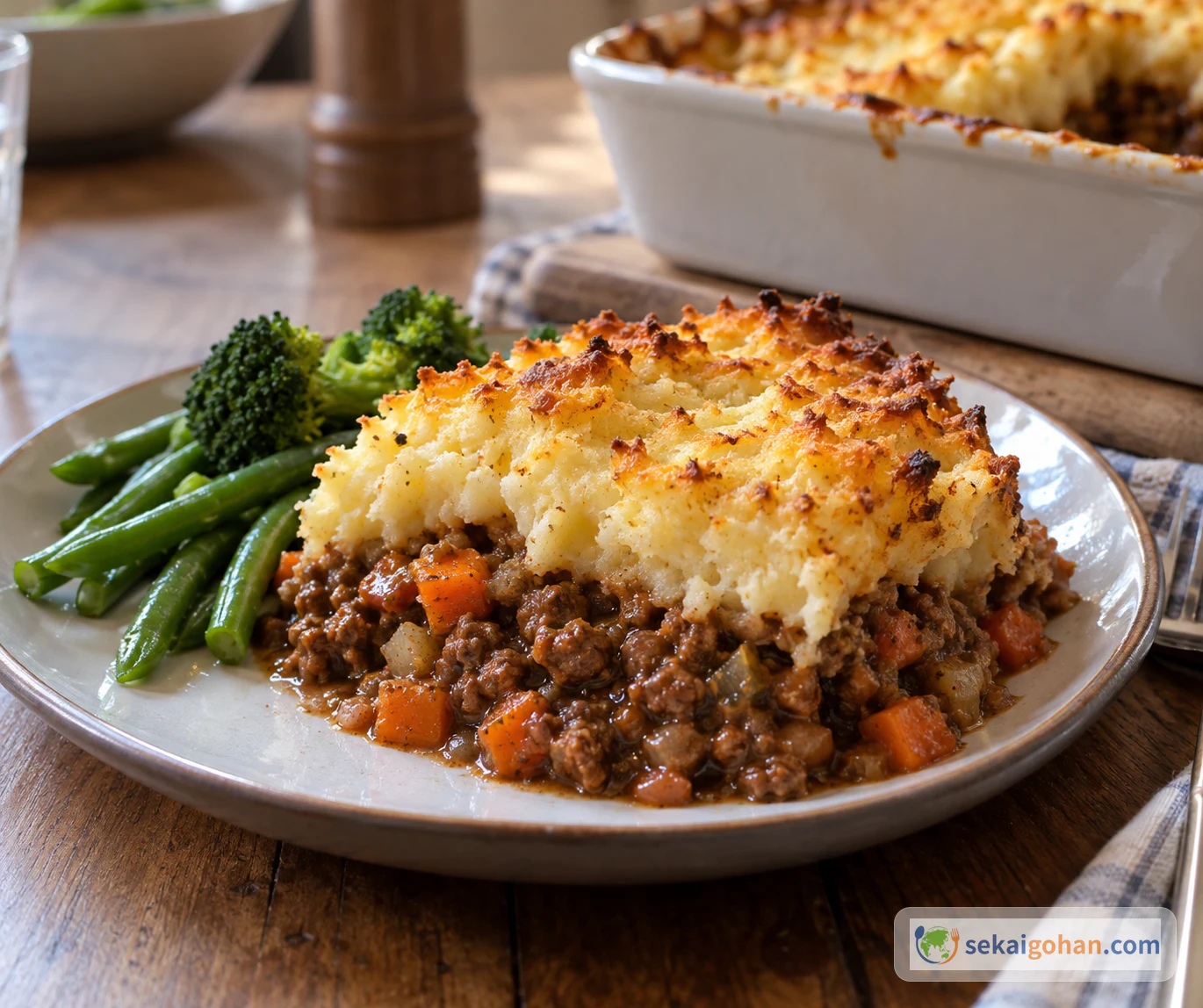
A portion of cottage pie served on a plate, with beef filling under browned mashed potato
Cottage pie is served as an everyday family supper: beef filling below, browned mash above

At its simplest, cottage pie is beef mince cooked in gravy with vegetables, spread in a baking dish and covered with mashed potato. It's family food. It also gets mixed up with shepherd's pie all the time. In modern UK cooking, the beef version is called cottage pie and the lamb version is shepherd's pie.

The history is less tidy than people often say. A 1791 entry mentions a 'cottage-pye' made with chopped veal, but it doesn't say what went on top, so nobody knows whether that pie had a potato lid. The mashed-potato topping is usually traced to the nineteenth century, when potatoes were a cheap way to stretch meat. Who invented the dish, and when it was first mentioned, are both unknown.

Whatever the name's past, a good cottage pie today comes down to two textures. The beef filling should be reduced until it clings rather than pools, so it can hold up the topping. The mash should be firm enough to hold fork ridges that brown in the oven.

Ingredients for 4: Beef Mince, Floury Potatoes and a Reduced Gravy
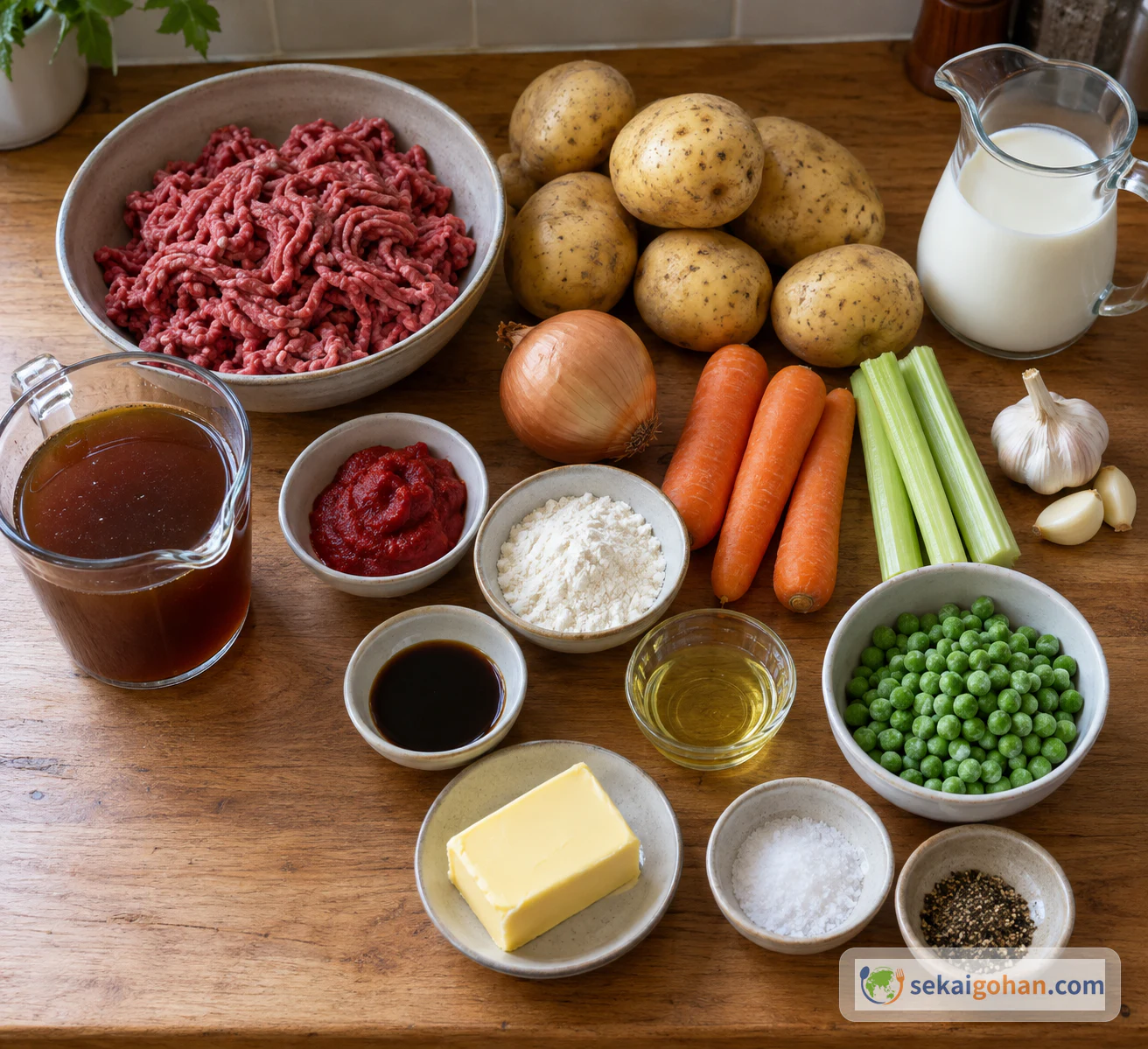
Cottage pie ingredients: beef mince, potatoes, onion, carrot, celery, peas and more
Everything for the filling and the mash, including the cooking oil

Beef mince and potato are the anchors of the dish. Onion, carrot and peas are the usual vegetables. Measure the tomato paste, flour and thyme with spoons.

Allergens

This recipe contains milk (butter and milk), celery, and wheat/gluten if you use the flour. Some Worcestershire sauce brands contain fish. Check package labels, including for stock.

Equipment

  • A pot for boiling the potatoes
  • A wide frying pan or sauté pan for the filling
  • An ovenproof baking dish
  • A potato masher (a fork works too)
  • A skewer for testing the potatoes
  • A spoon for checking the filling and a fork for marking the mash
  • A probe thermometer, if you have one

Choosing Ingredients for Cottage Pie

Potatoes: Choose a floury, mashing variety. Potatoes vary in how dry and starchy they are, so with very floury ones, hold back some of the milk and add it only as needed.

Beef mince: Very lean mince needs a little extra oil for browning. With fattier mince, you can use less than the tablespoon of oil.

Stock: Stock cubes and granules vary a lot in salt. Taste the stock first, and season with salt only at the end.

Worcestershire sauce: A sweeter, fruitier Worcester-style sauce, such as the Japanese style, works fine. It just makes the filling sweeter and tangier.

Flour: If you reduce the filling well, you can leave the flour out. Potato starch or cornflour won't do the same job. Reducing the filling is what does the real work.

Celery, garlic and thyme: You can leave out the celery if you dislike it, though the filling loses some aromatic depth. Garlic is optional. Mixed dried herbs can stand in for thyme, but blends differ, so the aroma will shift.

How to Make Cottage Pie

Work in parallel

The potatoes go on first and cook while you make the filling, so the mash and the filling are ready at roughly the same time.

Cottage Pie Troubleshooting
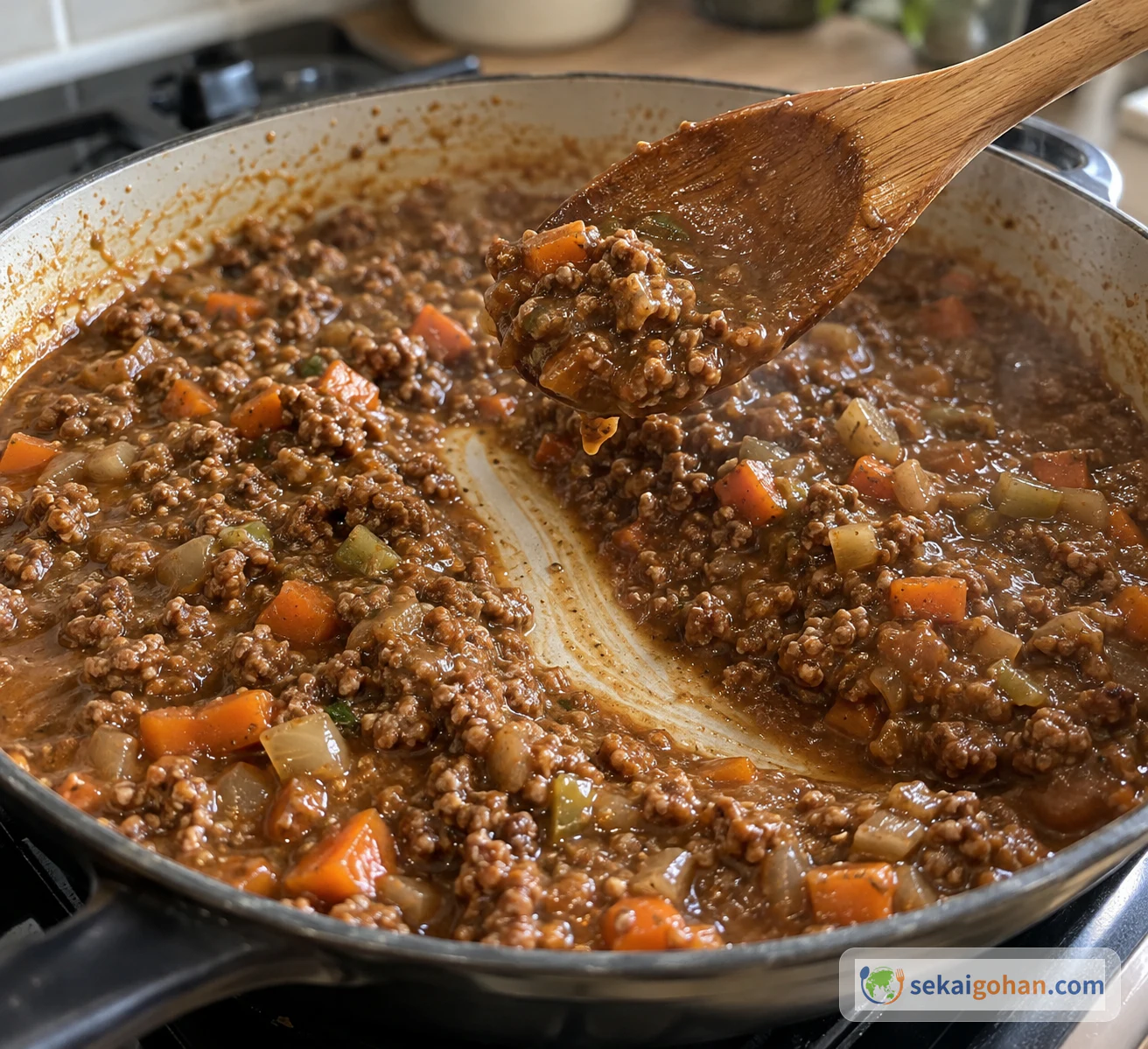
A loose beef gravy being reduced in a pan before the mash goes on
If the filling is loose, reduce it uncovered before topping
Problem Likely cause What to do
Watery filling Not reduced enough before topping Simmer uncovered until the spoon trail holds. The flour helps, but the reduction matters most
Mash sinks into the filling Filling too loose, mash too wet, or filling still too hot Reduce the surface liquid, let the filling settle a little, use a firmer mash and lay it from the edges inward
Pale top Smooth surface Rough up the mash with a fork and bake on a higher shelf, watching so it does not burn
Filling too salty Salty stock Taste the stock first and add salt only at the end
Filling too dry Over-reduced or lean mince Loosen with a little hot stock, then simmer again before topping

Cottage Pie Variations and Storage

Variations

There's plenty of room to play around the beef and mash. Pick one or two changes rather than piling in every vegetable you have.

  • Mushroom and thyme: Mushrooms give a deeper, more savory filling.
  • Peas and carrot: Familiar, sweet vegetables.
  • Lighter, vegetable-heavy: Add courgette, green beans and sweetcorn.
  • Tomato-forward: Tomatoes make a looser, brighter sauce, so judge the reduction carefully.
  • Cheddar on the mash, or root-vegetable mash: Cheese gives a saltier, browner crust, so use less salt elsewhere.

To finish, you can brown the mash under the grill, or bake at 350°F (170°C) conventional / 300°F (150°C) fan.

Storing and Reheating

Divide leftovers into shallow portions so they cool quickly. Refrigerate them within 2 hours, then eat them within 48 hours or freeze them.

Reheat leftovers only once, until they're steaming hot all the way through. The oven and the microwave both work. Covering the dish keeps it from drying out, but what matters most is that the whole portion is piping hot.

Frequently Asked Questions

Can I use frozen peas?

Yes. Add them near the end of simmering, for the last 2–3 minutes.

Can I make it ahead?

Yes. Prepare the filling and mash ahead, chill them promptly, and assemble before long. Leftovers after baking follow the storage advice above.
Sources