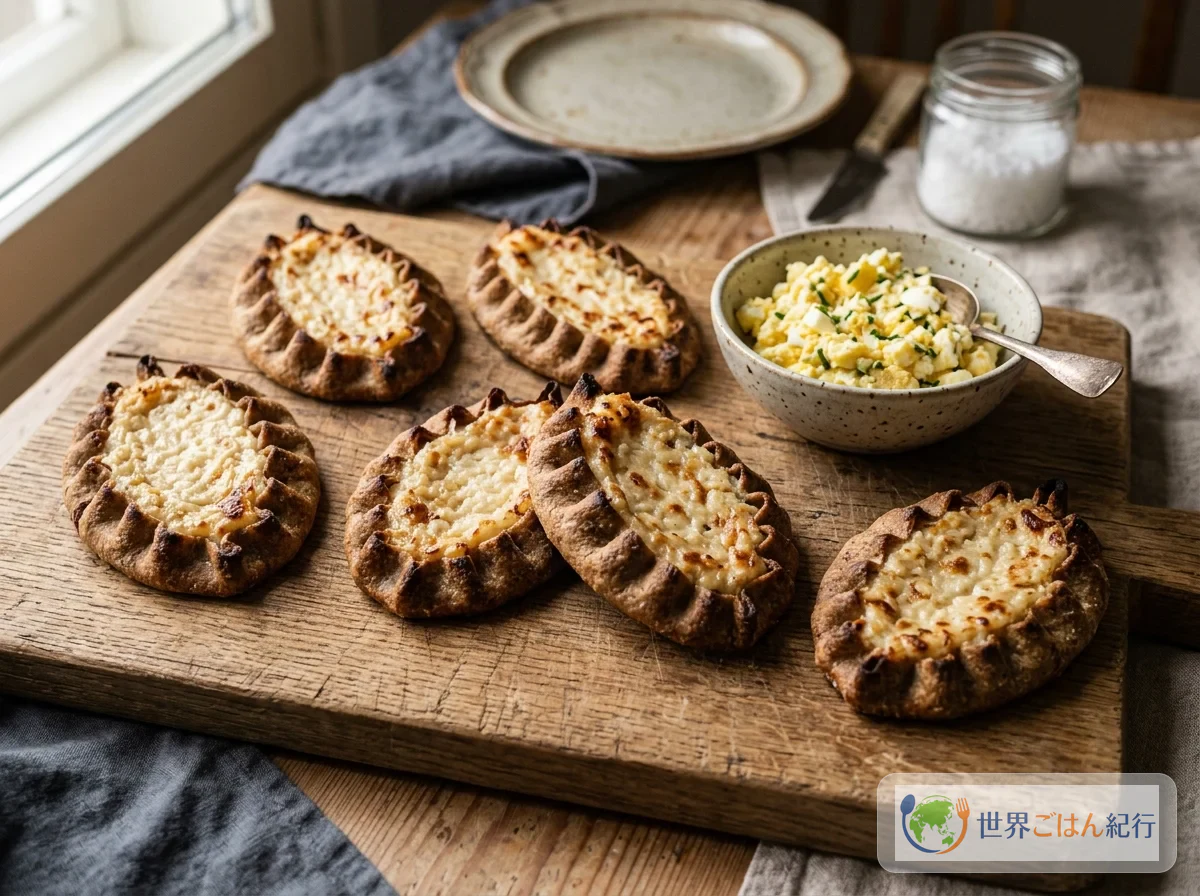
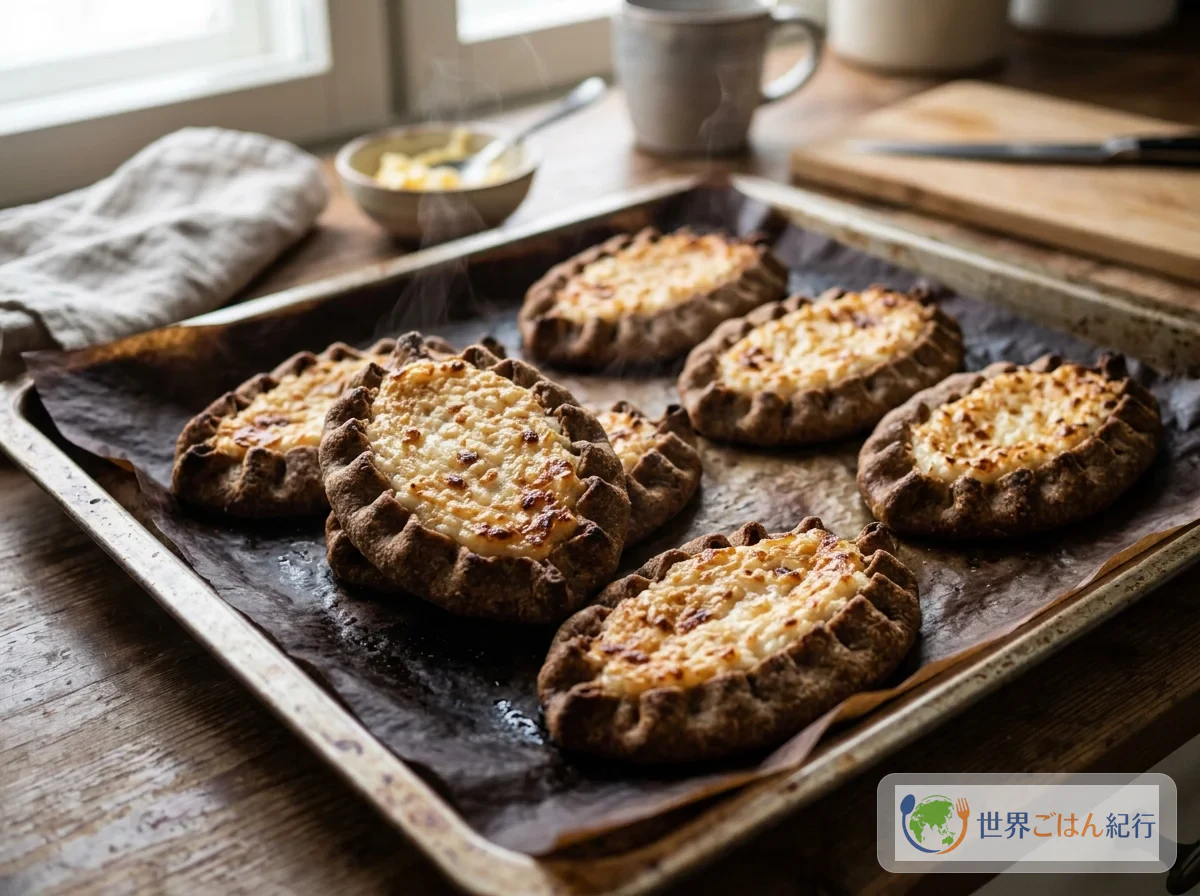
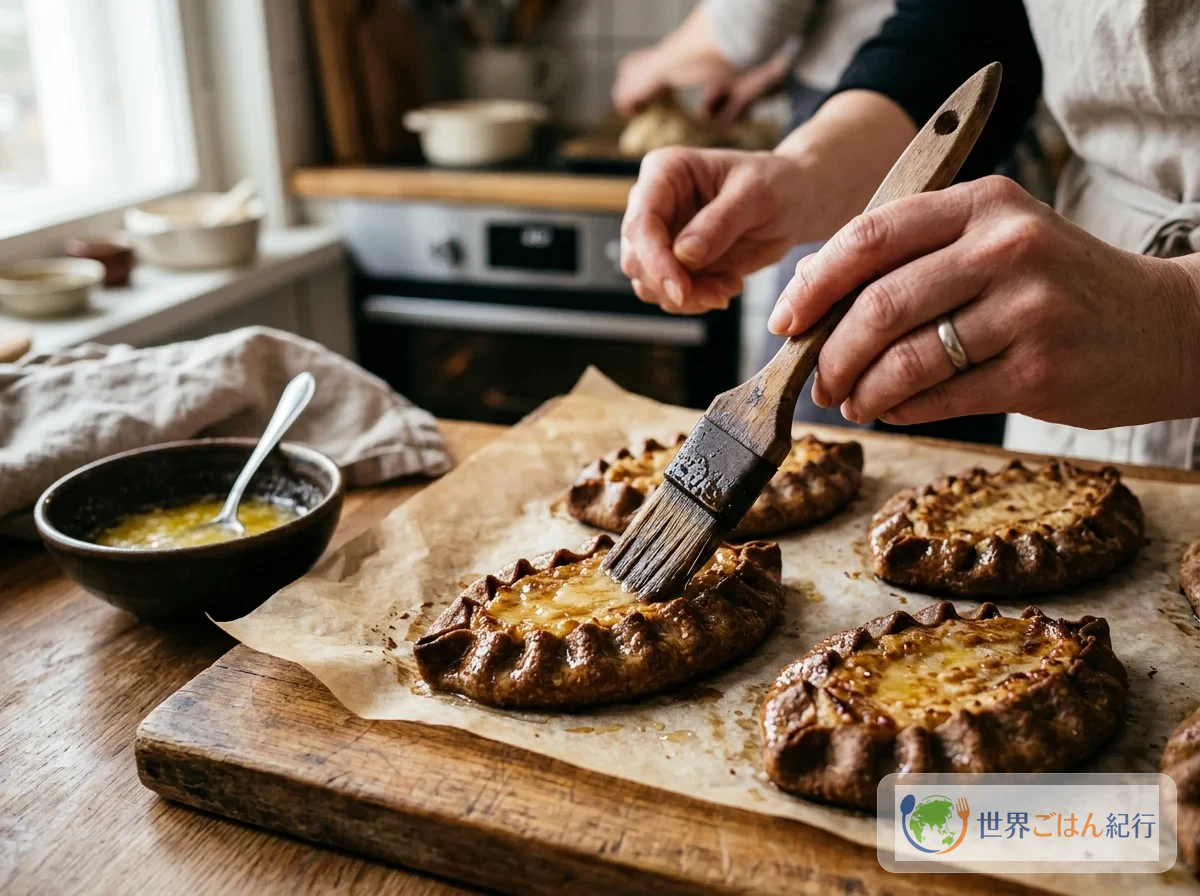
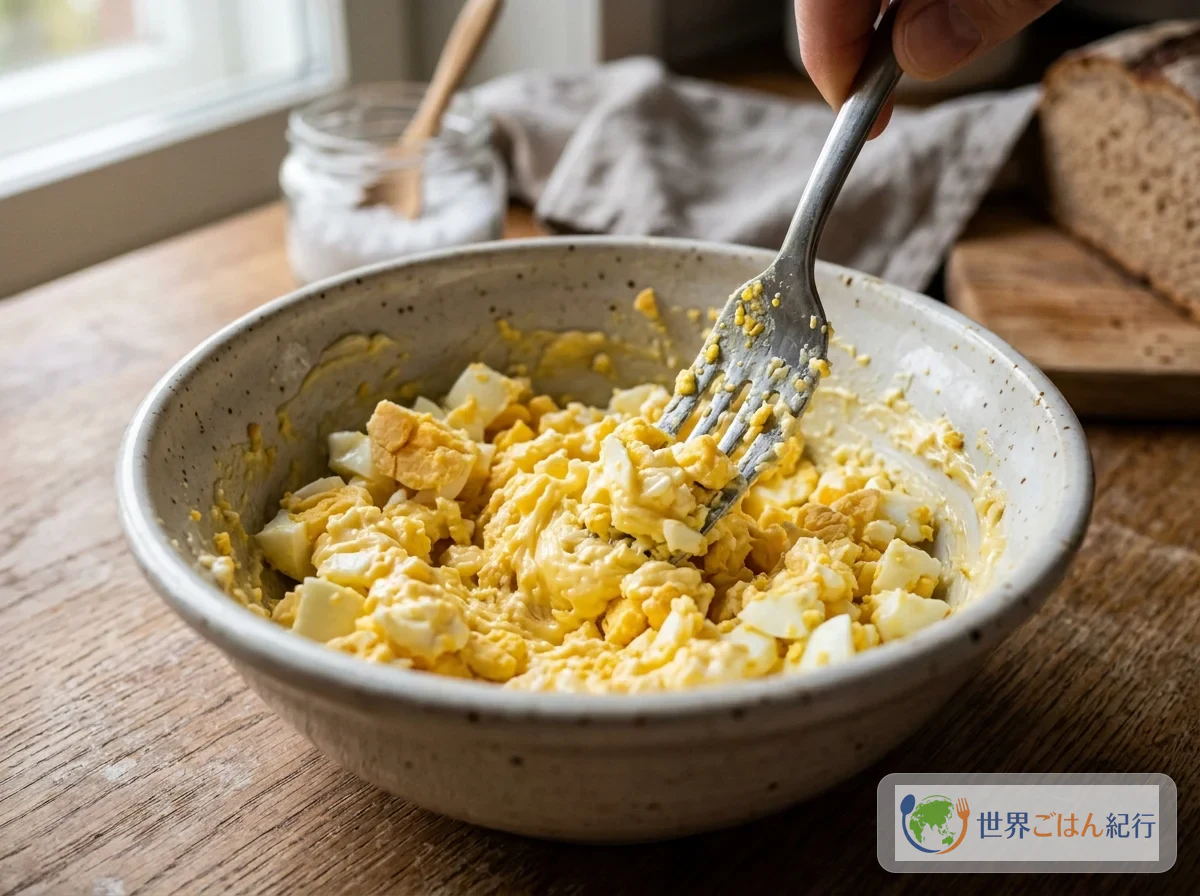
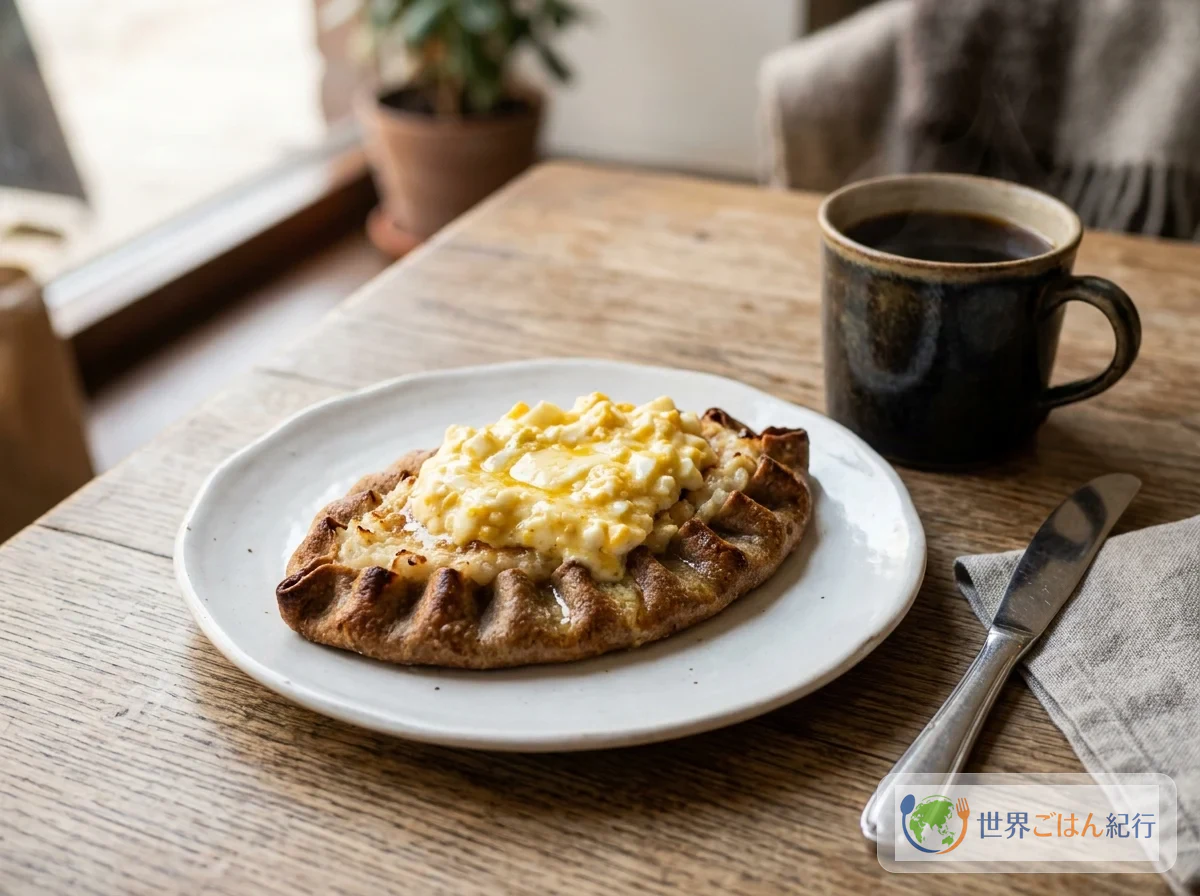
Fresh from a very hot oven, the little boat-shaped pies get a generous spread of munavoi, egg butter, which starts melting into the crust right away. Bite in and three layers meet at once: a crisp, fragrant rye shell, creamy rice porridge, and rich butter studded with chopped egg. This is karjalanpiirakka, the Karelian pie from eastern Finland, and for a Finn that first bite tastes like home.
About karjalanpiirakka
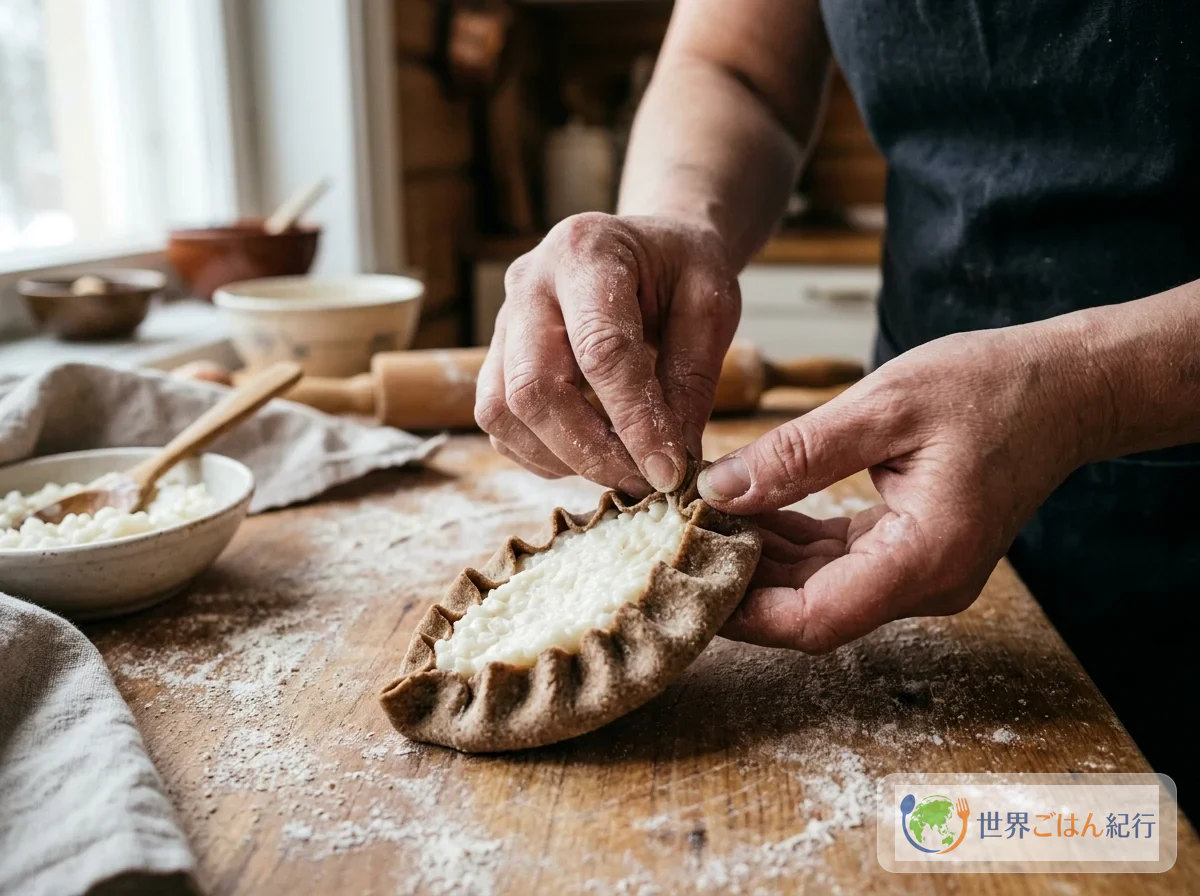
Salmon, reindeer meat and sausages grilled in the sauna all have a fair claim on Finnish food. But ask a Finn for the single most cherished food, and the first name that comes up is karjalanpiirakka. A thin rye crust is wrapped around soft rice porridge cooked in milk, pinched into a little boat shape and baked hot.
The pies turn up everywhere, from breakfast and snack time to holidays. They also appear at funerals, weddings and baby naming ceremonies. At the milestones of Finnish life, karjalanpiirakka is always nearby.
Karelian history and food culture

Karelia is a region of eastern Finland on the border with Russia, a land of forests and lakes where winter lasts more than half the year. In that harsh climate, Karelian farmers learned to feed their families from limited ingredients. The earliest pies were filled with rye porridge or barley porridge, and rice porridge became the main filling later.
After the wars of the 1940s, Karelia was ceded to the Soviet Union. About 400,000 Karelians were driven from their homeland and resettled across Finland, taking only a few belongings and the recipes inherited from their mothers. They kept baking karjalanpiirakka in their new communities, shared the pies with neighbors and sold them at markets.
At first it was food only for Karelians. For them, baking piirakka kept a link to a lost home. Then the people who tasted the pies began making them too, and over the decades they spread across all of Finland and became something every Finn shares.
In 2003 karjalanpiirakka was registered as a Traditional Speciality Guaranteed (TSG) product of the European Union, recognized as part of Finland's cultural heritage. Like the Czech svíčková, it is a dish tied to national identity.
Karjalanpiirakka and Europe's other filled pies
Many parts of Europe wrap a filling in dough, each with the grains of its own land: Polish pierogi, Bosnian burek, a phyllo pie, and the large steamed Uzbek manti. Karjalanpiirakka stands out among them for its unusual combination of rye and rice porridge.
Ingredients (makes about 20)
This dish contains wheat (cake flour), dairy (milk, butter) and egg. A gluten-free version is not recommended because the dough is hard to substitute. For a dairy allergy, you can make the rice porridge with oat milk and vegan butter, but the flavor is very different.
Choosing ingredients for karjalanpiirakka
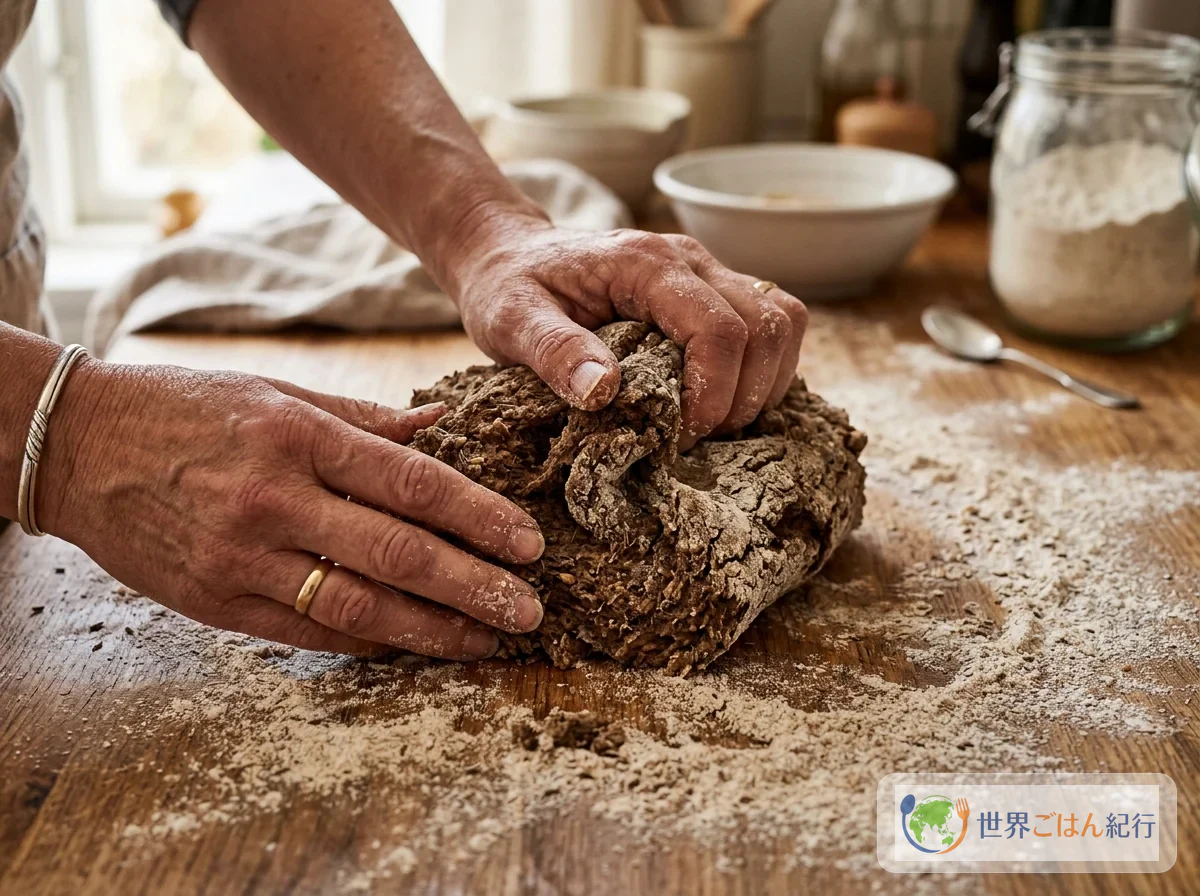
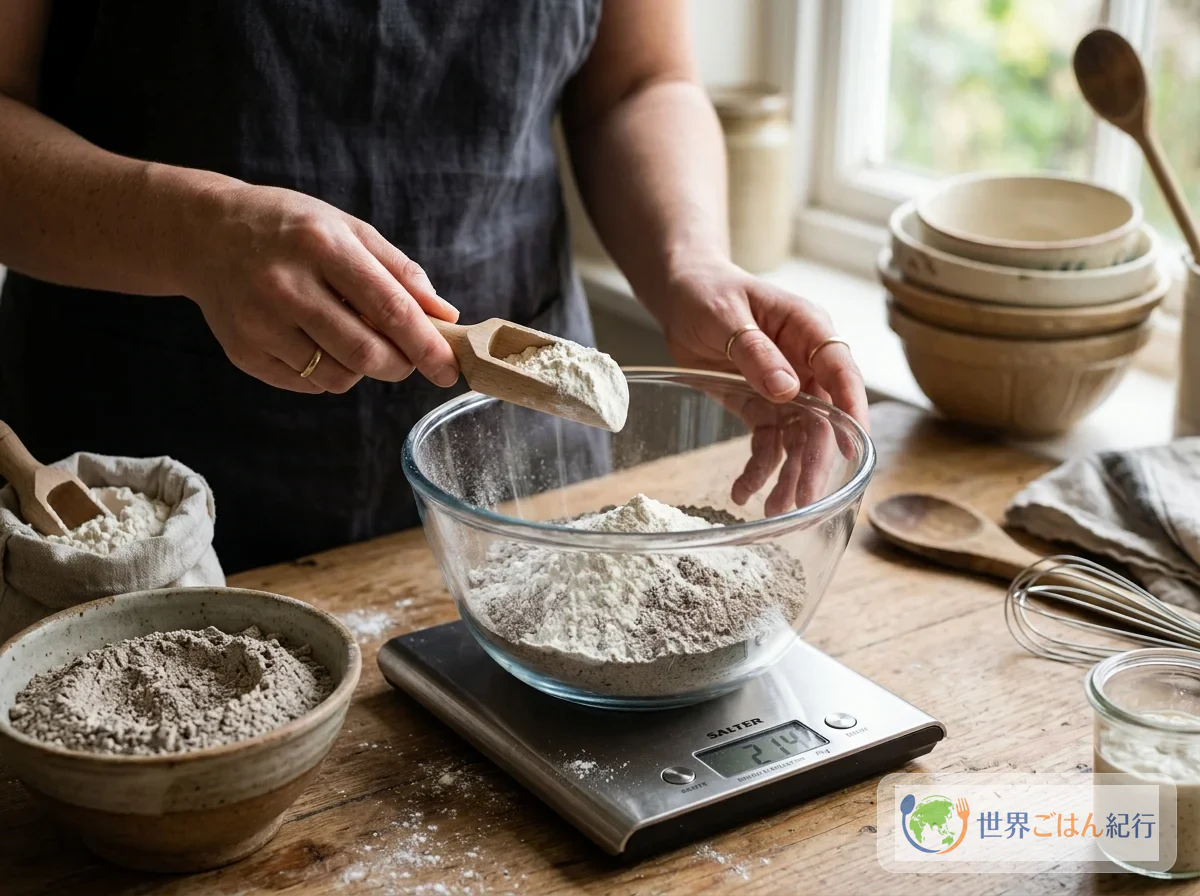
Rye flour is hard to replace. 7 oz (200 g) whole wheat flour plus 2 tbsp wheat bran comes close in flavor and color, but it cannot reproduce rye's characteristic sourness and aroma, so get rye flour if you can.
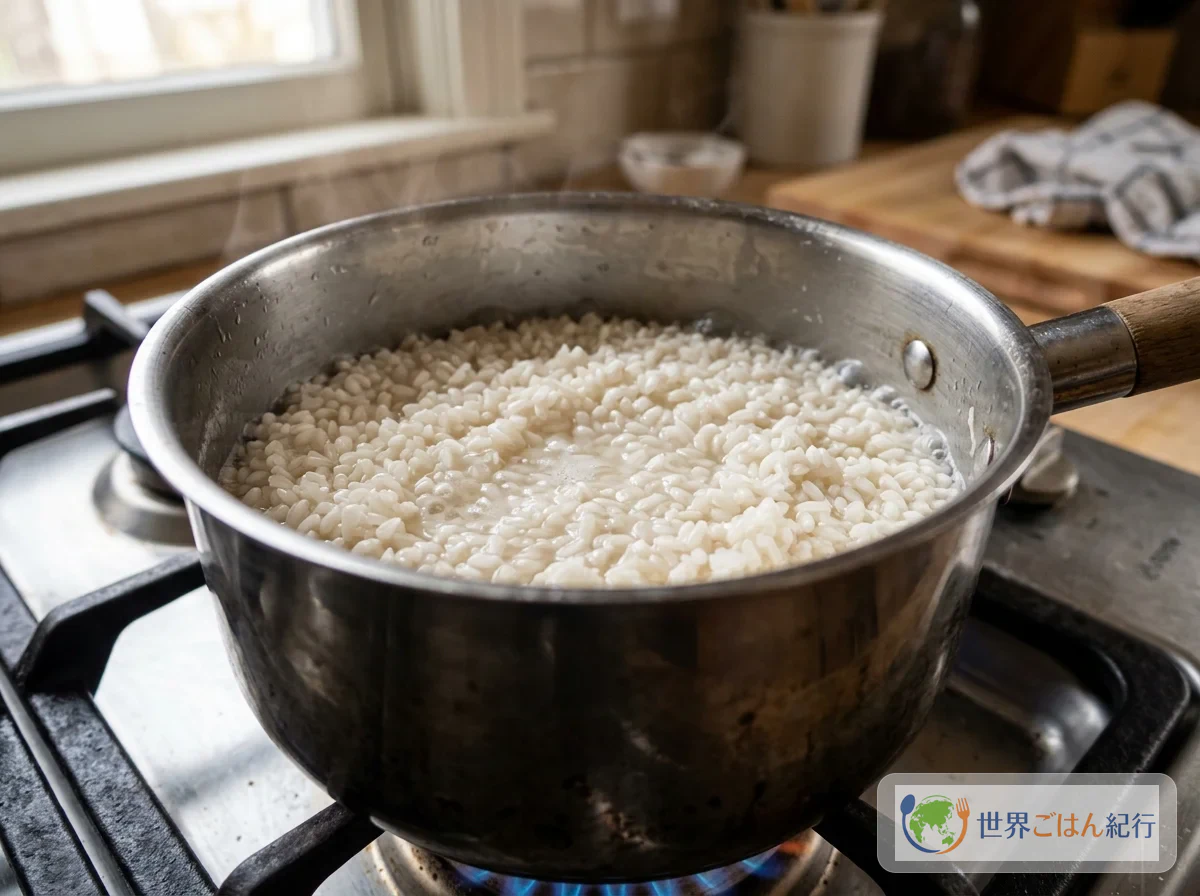
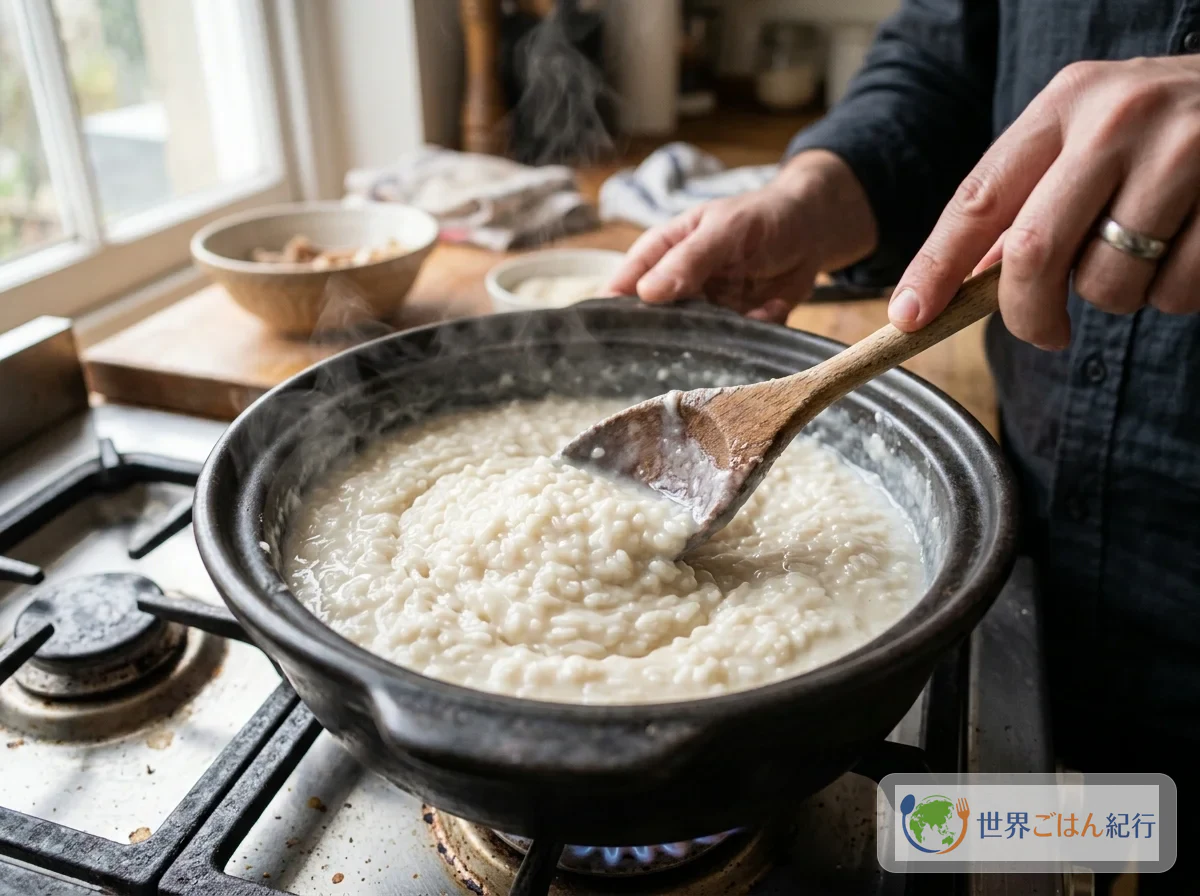
The filling needs to be a porridge simmered in milk for a long time, which is why cooked rice works poorly: even with milk added, the grains stay too distinct to turn smooth. If you have leftover rice, re-simmer it in milk for 20 minutes until it is risotto-like, and you will get a fairly close filling.
Common problems with karjalanpiirakka
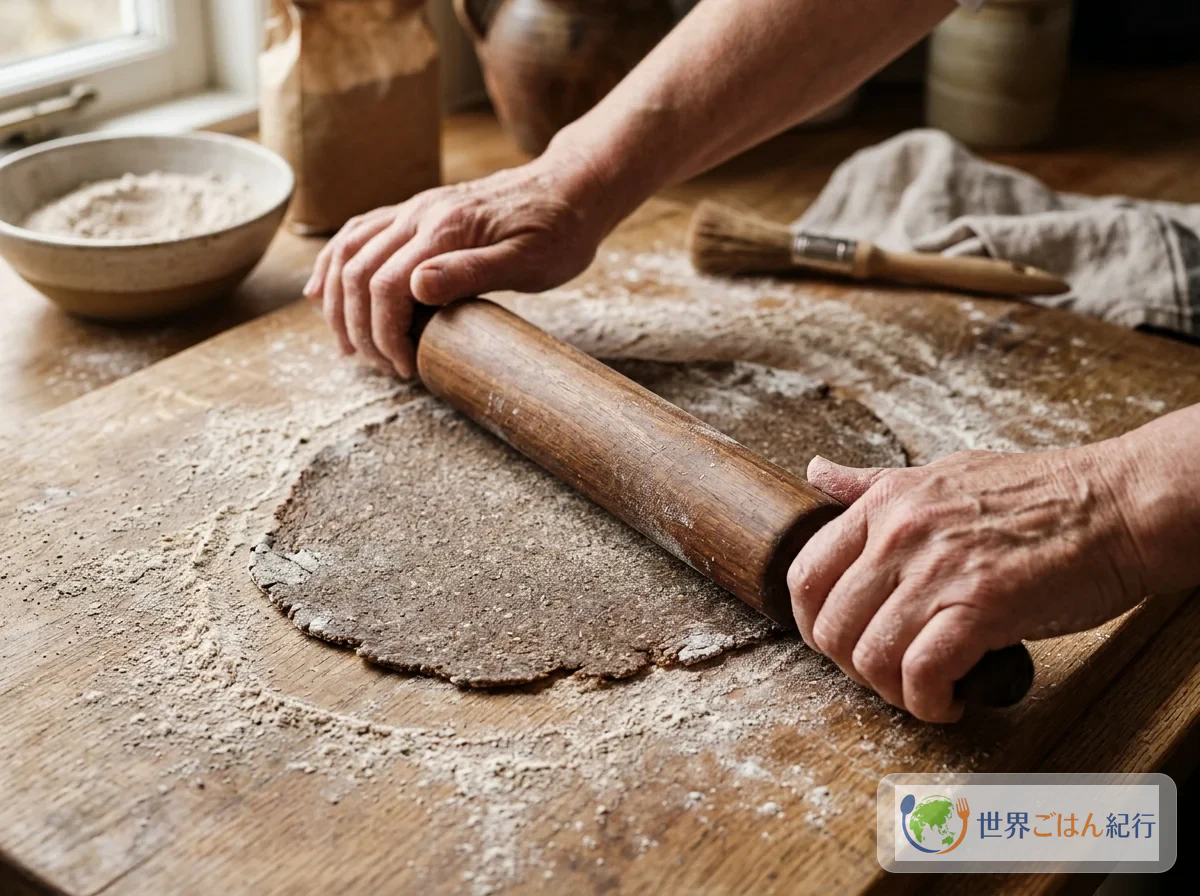
The ideal proportion is "1 part crust to 3 parts porridge." Roll the dough as thin as you can and pack in plenty of porridge. In a good pie you barely notice the crust; the first thing on your tongue should be the gentleness of the rice porridge.
Rye dough cracking is normal. Press any cracks closed with your fingers. Dry dough cracks more easily, so work with it covered in plastic wrap, or roll it between sheets of plastic wrap. If it has already stiffened, a few drops of water and another knead bring back its softness.
Shaping and baking 20 at once is a lot of work. In Finnish homes the job is usually split, one person rolling and another shaping. On your own, shape and bake about 5 at a time, and keep rolled dough under a cloth so it doesn't dry out.
Serving, storing and variations
Nutrition
At only 95 kcal, one pie makes a handy snack, with fiber from the rye, carbohydrate from the rice, and protein and fat from the munavoi. Rye is particularly rich in fiber among whole grains, and the carbohydrate in rice porridge digests slowly, so it keeps you full. Like Portuguese caldo verde, it's plain food that still nourishes.
| Nutrient | Amount (per pie, with munavoi) |
|---|---|
| Calories | 95 kcal |
| Protein | 3 g |
| Fat | 4 g |
| Carbohydrate | 12 g |
| Fiber | 2 g |
| Sodium | 120 mg |
Freezing karjalanpiirakka
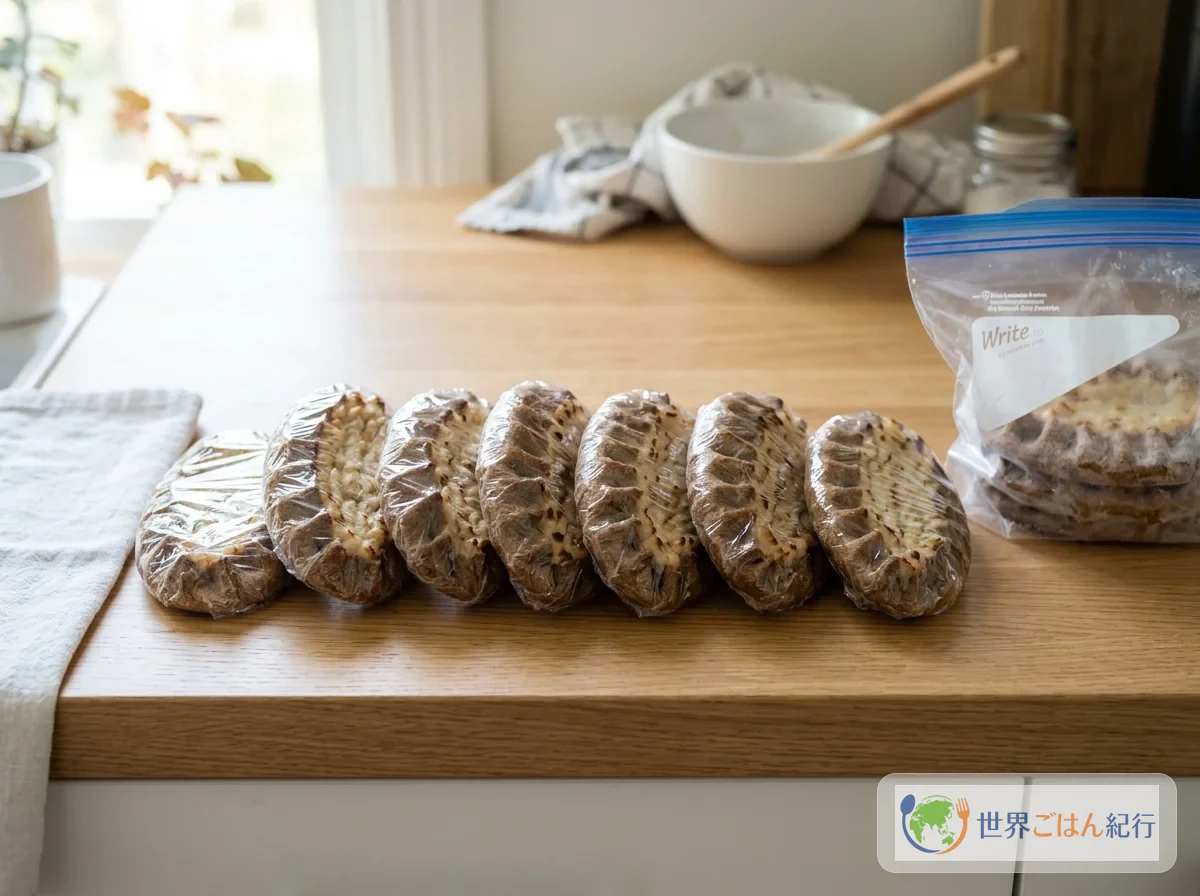
Baked karjalanpiirakka freeze very well. Let them cool, wrap each in plastic wrap and put them in a freezer bag, and they keep for 1 month. To eat, give them 3 minutes in a toaster oven.
Traditional fillings
Barley porridge (ohrapuuro) is the oldest form, from before rice became common in Finland. Simmer 3.5 oz (100 g) barley in 1¾ cups (400 ml) milk for 30 minutes. Its chewy bite has a charm all its own.
Potato filling (perunapiirakka) is a popular variant in North Karelia. Boil 14 oz (400 g) potatoes, mash them, and smooth with 1 oz (30 g) butter and 3.5 tbsp (50 ml) milk. The taste is close to the filling of Lithuanian cepelinai, and to the potato filling of pierogi.
Carrot filling (porkkanapiirakka) has grown popular with the recent focus on health. Grate 10.5 oz (300 g) carrots and simmer in ¾ cup (200 ml) milk and 20 g butter for 20 minutes until soft. Faintly sweet carrots go superbly with rye.
Modern toppings
Salmon and cream cheese is a twist popular in Helsinki cafes: top baked pies with cream cheese and smoked salmon and serve as an appetizer or with wine. Dill and sour cream is a Finnish summer staple, 1 tbsp sour cream and fresh dill on each pie, and some households use it in place of munavoi. For a cheese version (juustopiirakka), mix 2.75 oz (80 g) coarsely grated Emmental into the rice porridge before shaping; it melts in the oven for a richer taste.
If you want to keep cooking, try Carbonnade, Waterzooi or Pasticada next.
FAQ
Q1. What if my oven does not reach 475°F (250°C)?
Bake at 230°C (445°F) for 15 to 18 minutes, judging by the color. In an electric oven use both top and bottom heating; in a gas oven put the pies on the upper rack.
Q2. Can I use just butter instead of munavoi?
You can, but munavoi is far better. The texture of boiled egg together with the richness of butter is essential to the finished pie, and it takes only 5 minutes to make.
Q3. How many should I aim to make?
This recipe makes about 20. Finnish homes usually bake 40 to 60 at once and freeze them for quick breakfasts and snacks. Start with this batch, and if you like it, double it next time.