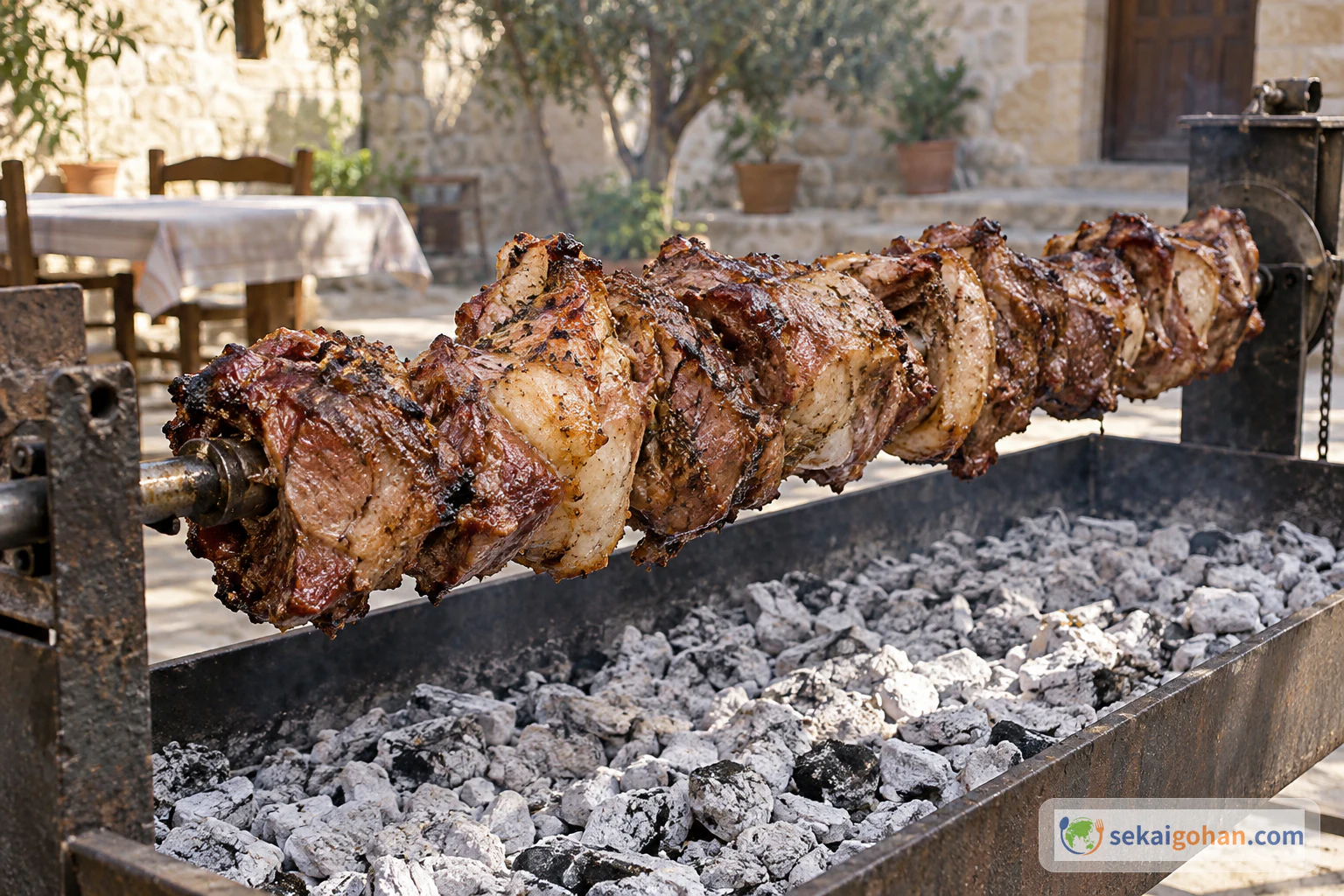
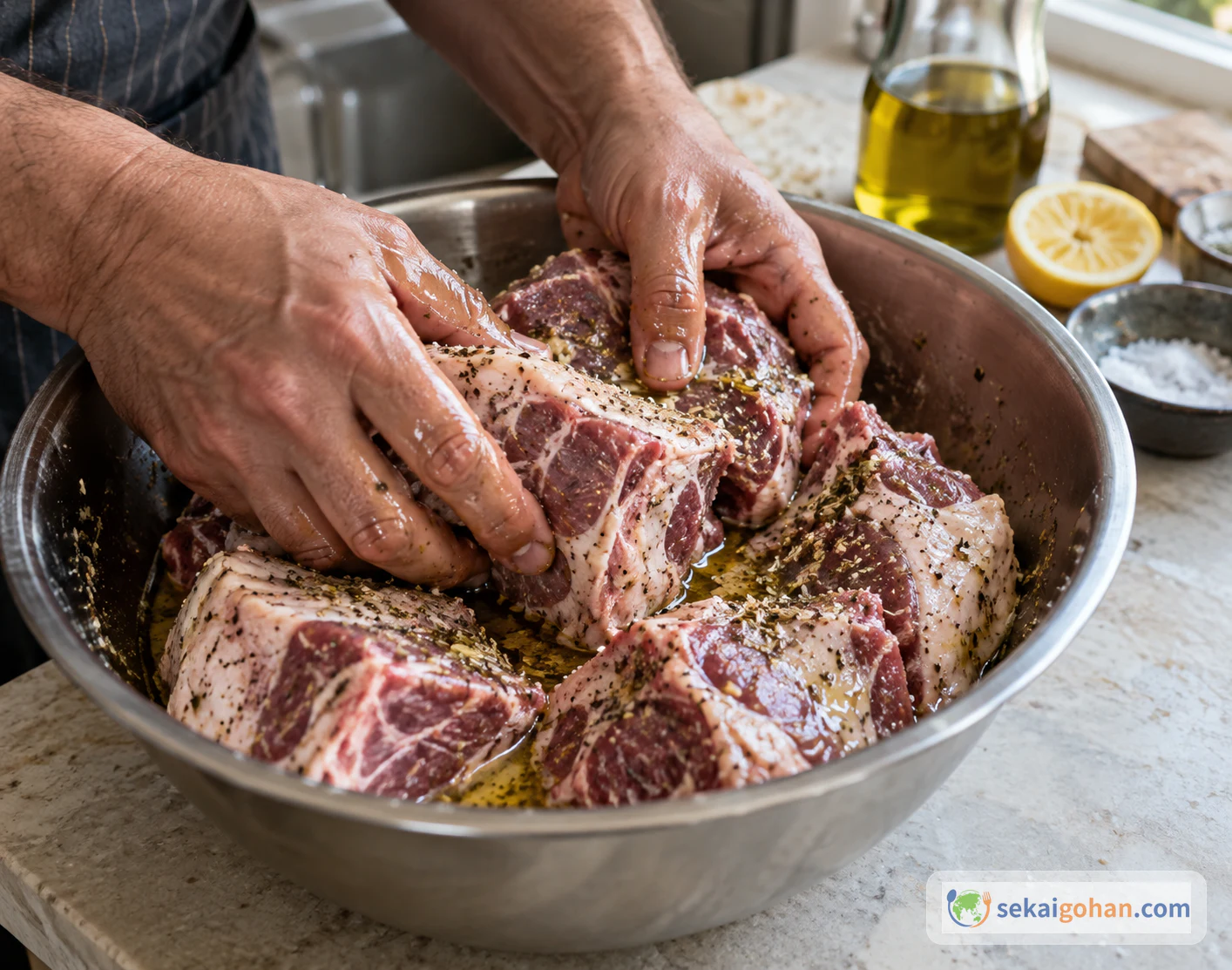
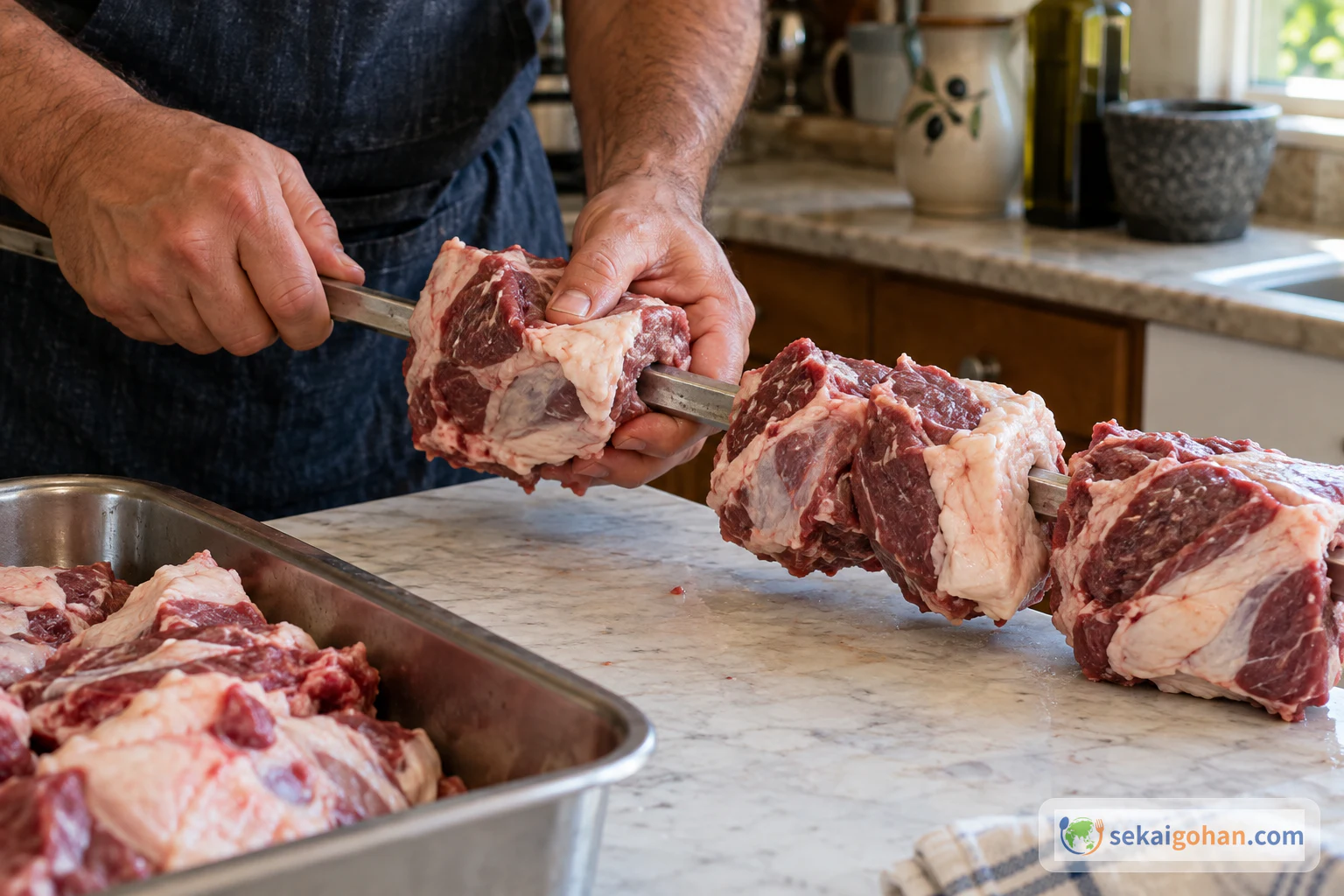
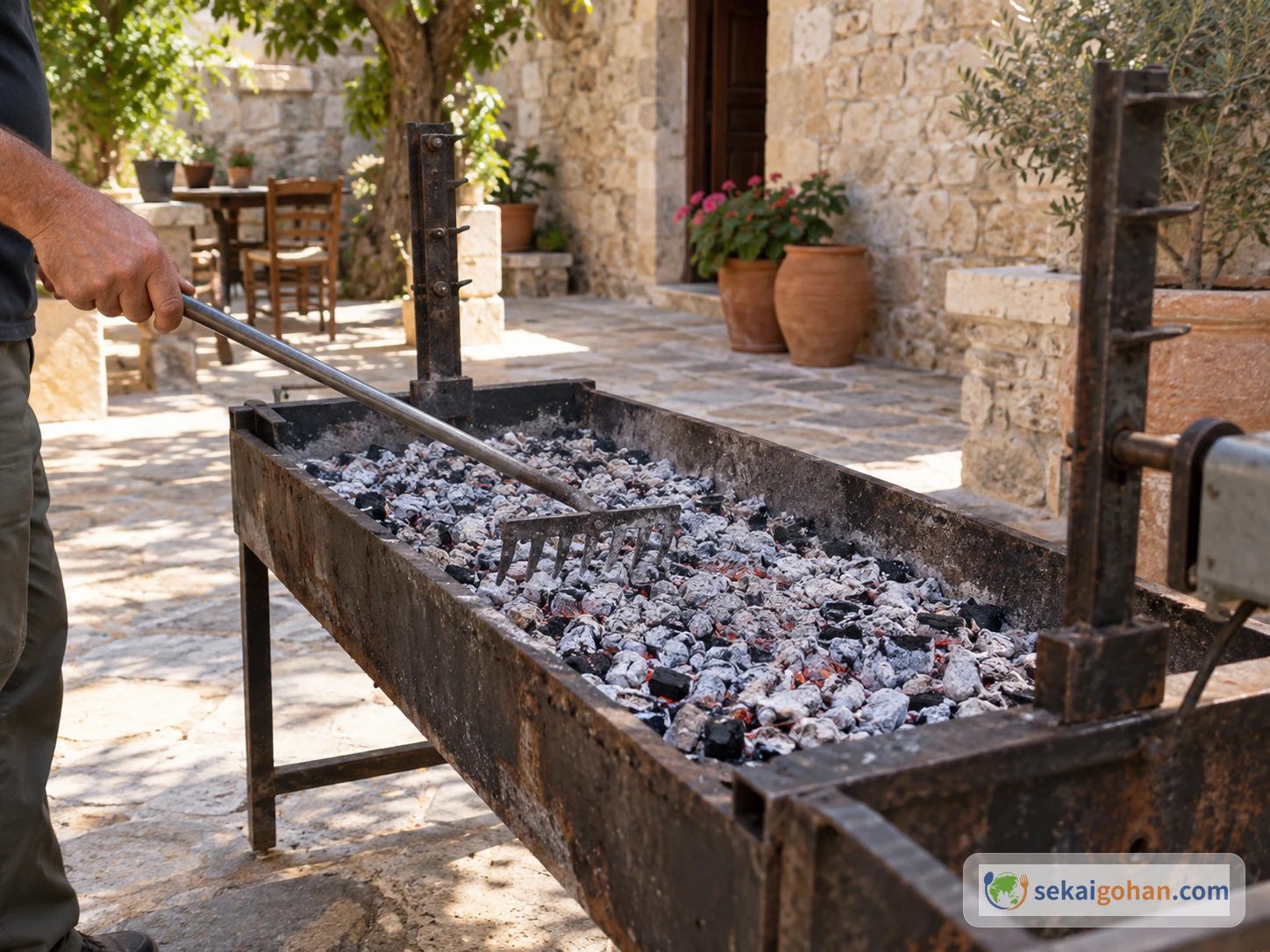
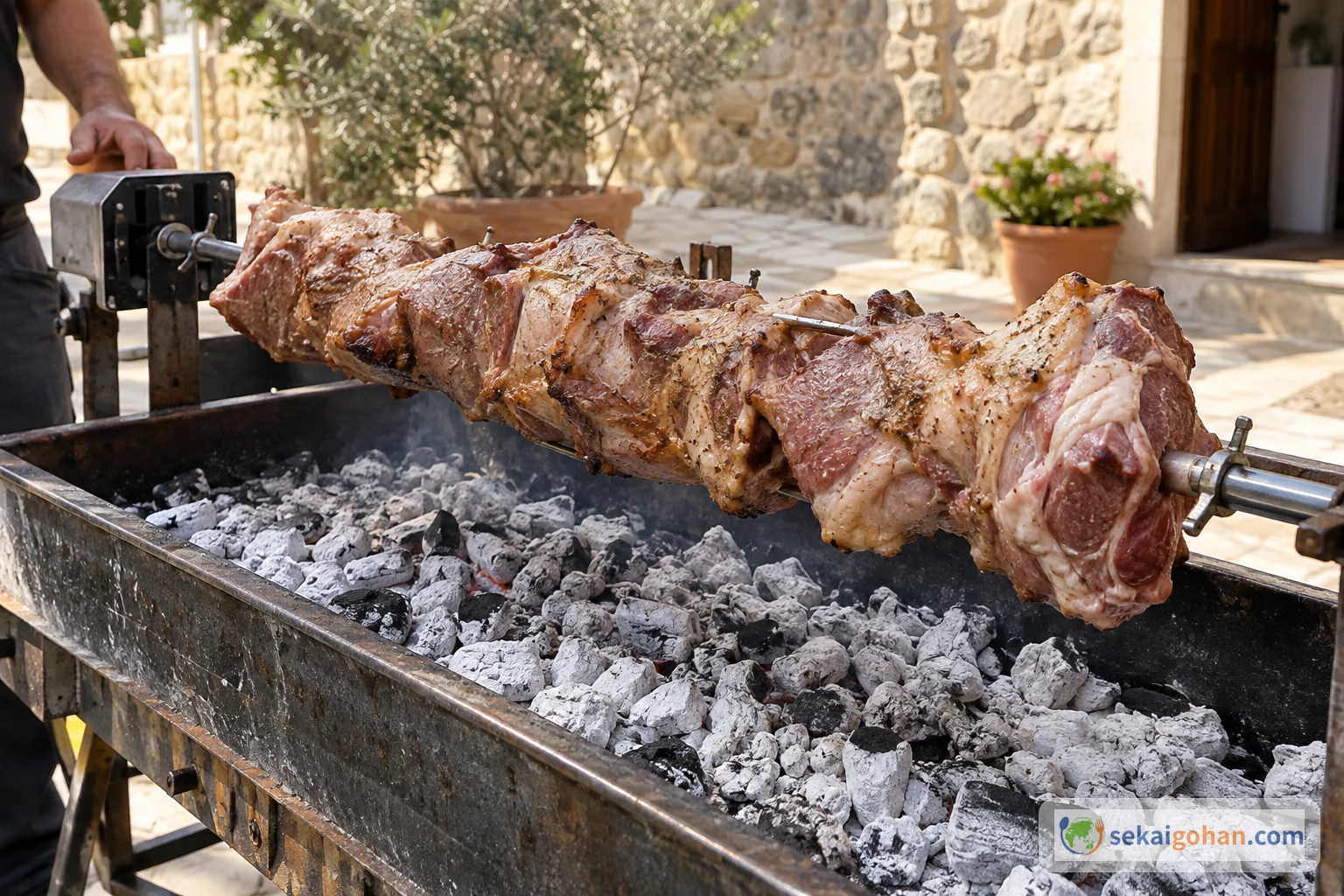
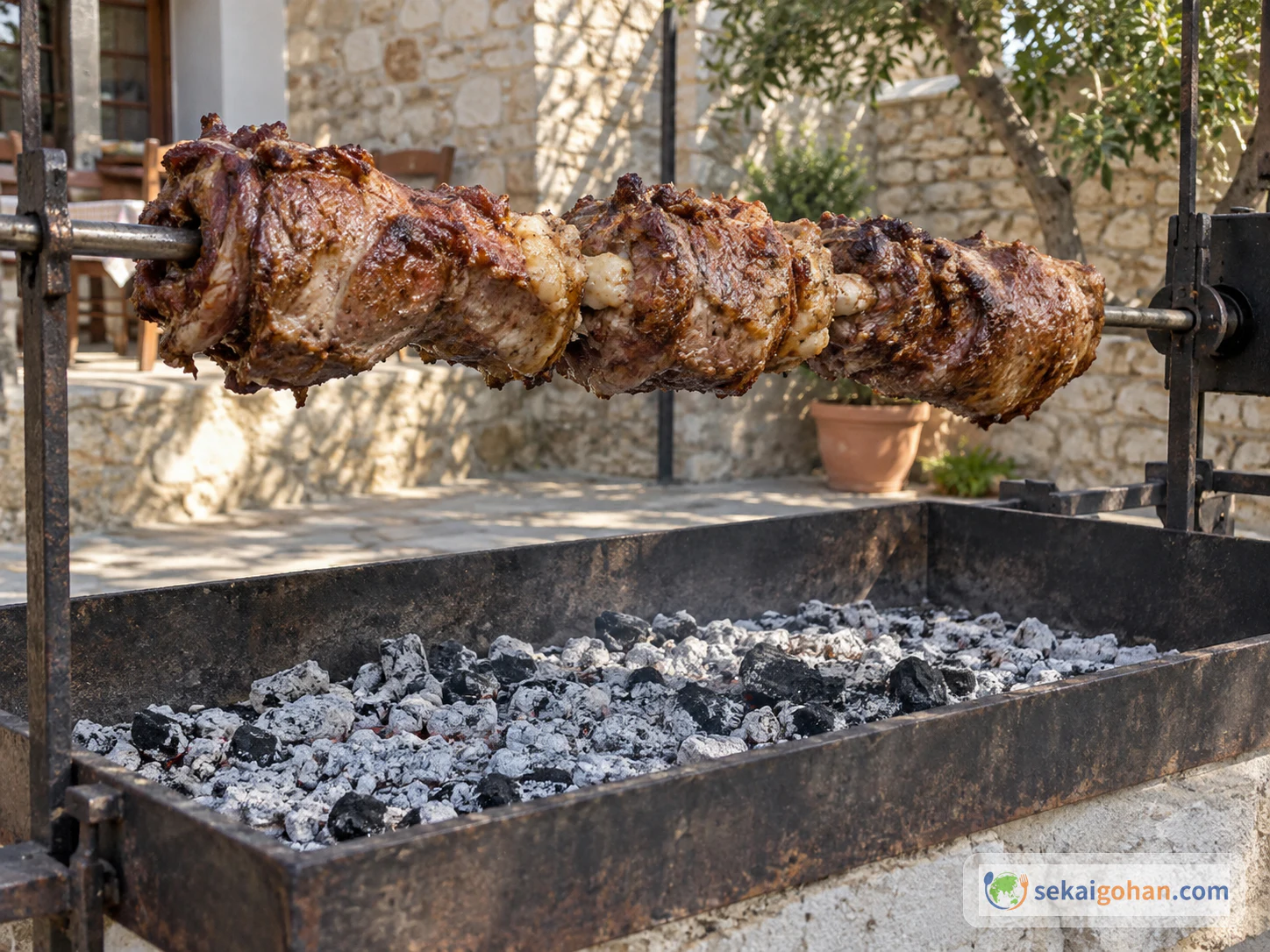
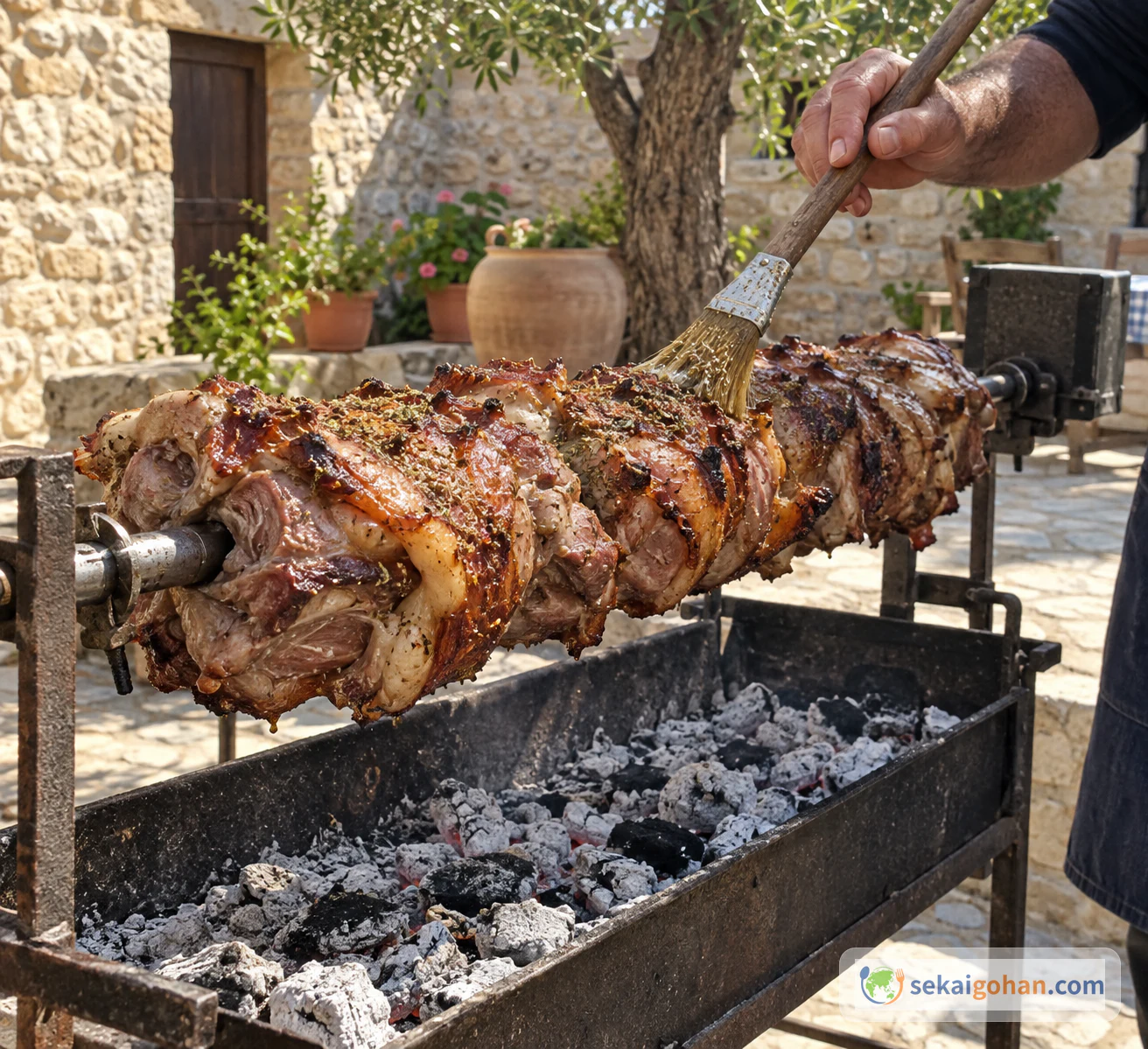
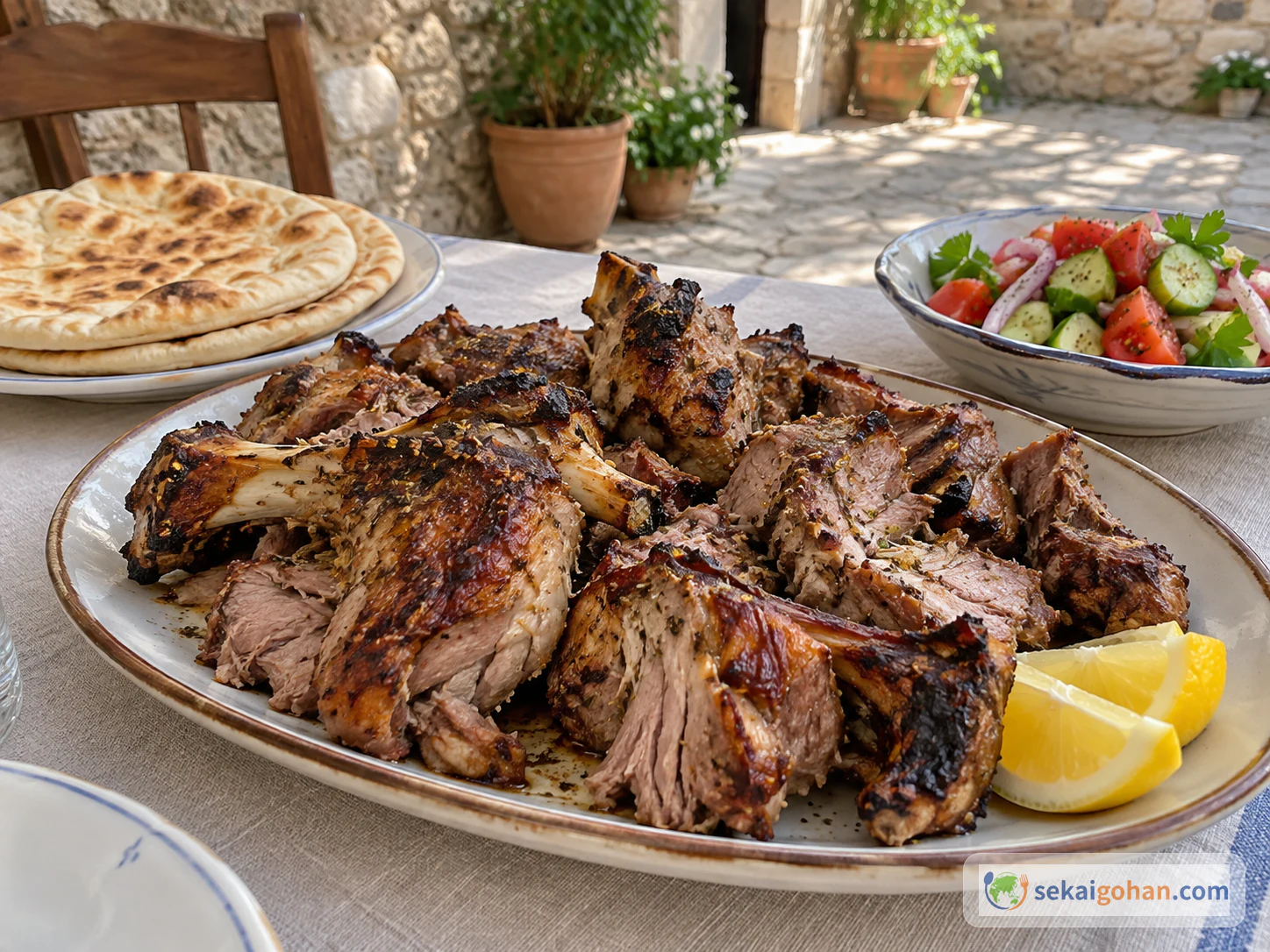
Wait until the charcoal burns down and its surface turns white with ash before the spit goes on. Then load the long skewer with big, fist-sized pieces of lamb, fat left on, and start it turning. The cooking settles into a slow rhythm that suits a long gathering. This is souvla, Cyprus's spit roast: hot over the coals at first, then raised higher and cooked slowly. The seasoning stays simple, with olive oil, lemon, salt, pepper and oregano.
Souvla in Cyprus
Souvla is a favorite at festivities, large family meals and picnics. It is a dish shaped by gatherings: the spit turns for hours while people wait around it. Cooks use lamb, pork and chicken, seasoned with fresh herbs, and the dish is also called kontosouvli. For more dishes from the island, see our Cyprus country page.
Souvla (σούβλα) and souvlaki sound alike, but they are separate dishes. Souvla uses large pieces of meat on a long spit, turned over charcoal for a long time; souvlaki is made from small pieces on short skewers. Cut the lamb down to souvlaki size and you have changed the dish itself, along with the cooking time.
| Dish | Form of the meat | How it is cooked |
|---|---|---|
| Souvla | Large pieces of meat | Threaded onto a long spit and turned over charcoal |
| Souvlaki | Small pieces of meat | Short skewers |
| Sheftalia | Minced meat wrapped in caul fat | A different dish with a different shape |
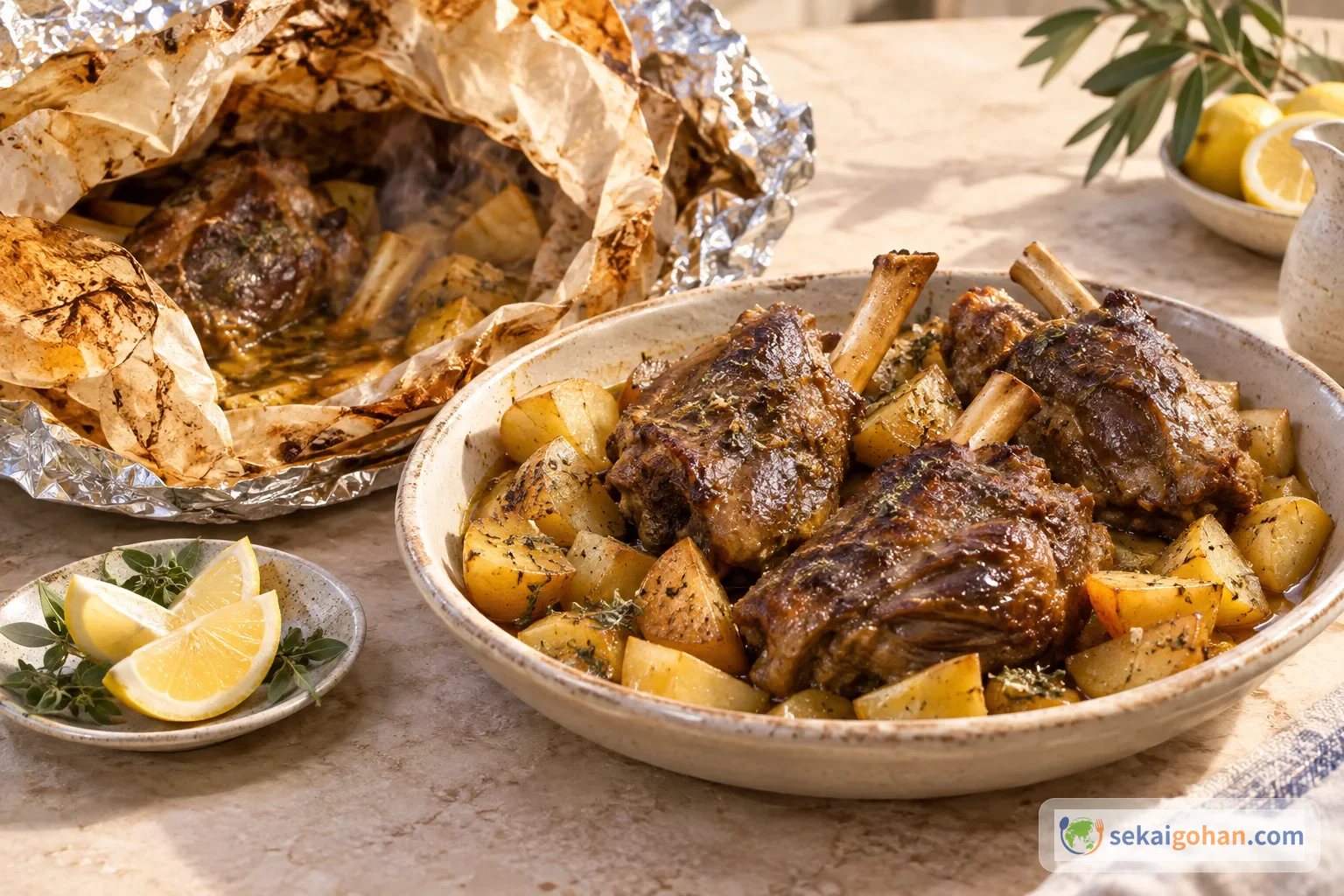
| Kleftiko | Lamb | Sealed and cooked for a long time in an oven |
Even if you don't own a charcoal rotisserie, it pays to understand how the dish is built: piece size, fat, turning and distance from the heat. That will help you choose equipment and judge what a substitute can and cannot do.
Ingredients: Lamb Neck or Shoulder in Fist-Sized Pieces
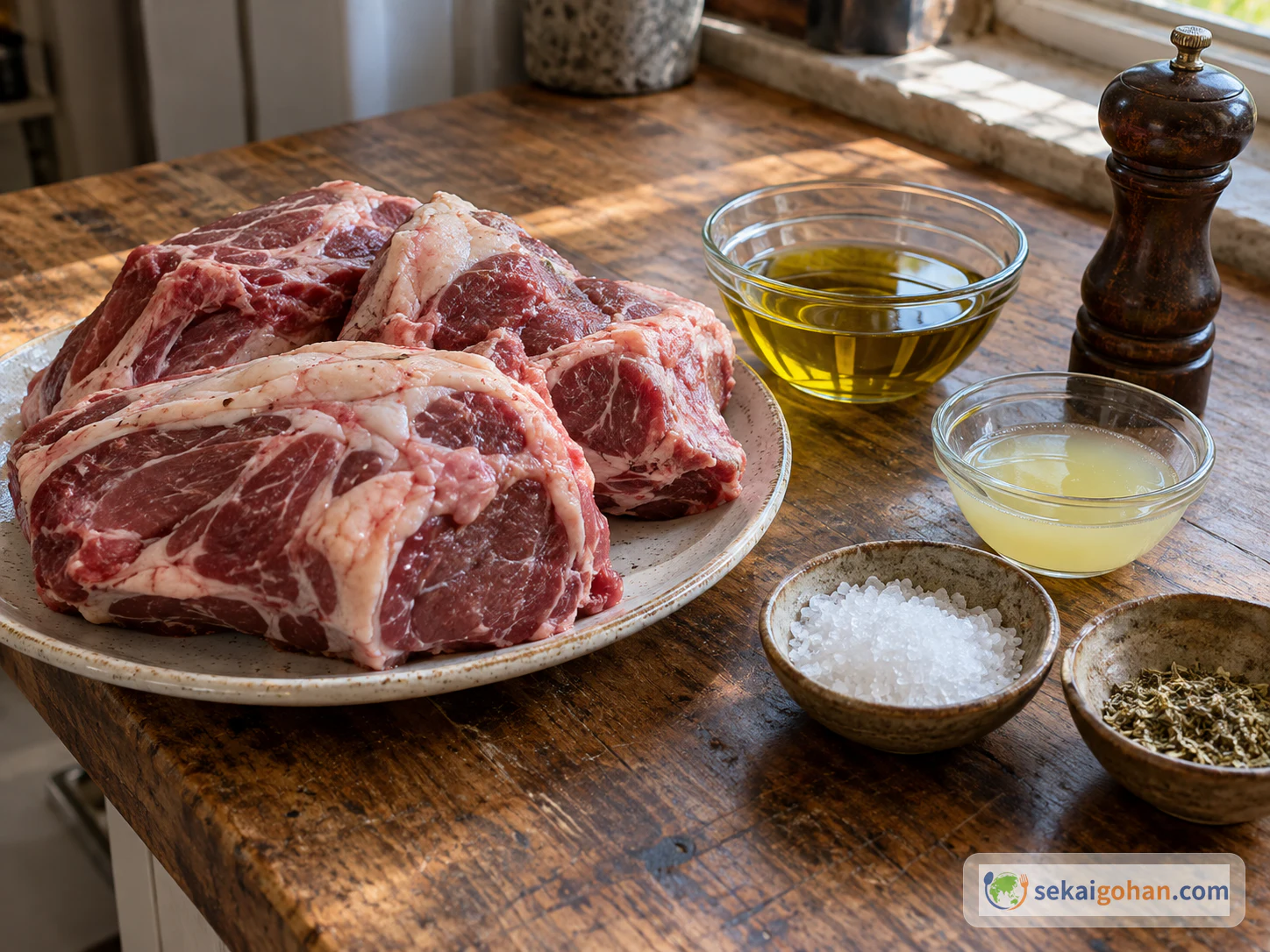
These amounts serve 4.
Choosing Lamb for Souvla
Neck or shoulder. Either works. Lamb neck can be hard to find, so lamb shoulder is a good choice. Ask a butcher for large pieces suitable for a long spit, and explain that you want some fat left on.
Bone in or boneless. Either works too. Bone-in pieces can be harder to secure on the spit, and taking the internal temperature is trickier because the probe must not touch bone.
Salt and pepper. Rub the salt and pepper onto the meat first, then add the rest of the marinade. Season with pepper to taste.
Lemon to finish. Finish the lamb with lemon. Extra lemon at the table is optional.
No major labeled allergens appear in the recipe's own ingredients. Cross-contact depends on your kitchen and equipment. Pita served alongside contains wheat; it is an optional side, not part of the base recipe.
Equipment
- A charcoal grill suited to spit roasting (in Cyprus, a foukou)
- Charcoal
- A long, sturdy spit with a rotisserie motor; check the manufacturer's maximum load
- A mixing bowl large enough for the marinating lamb
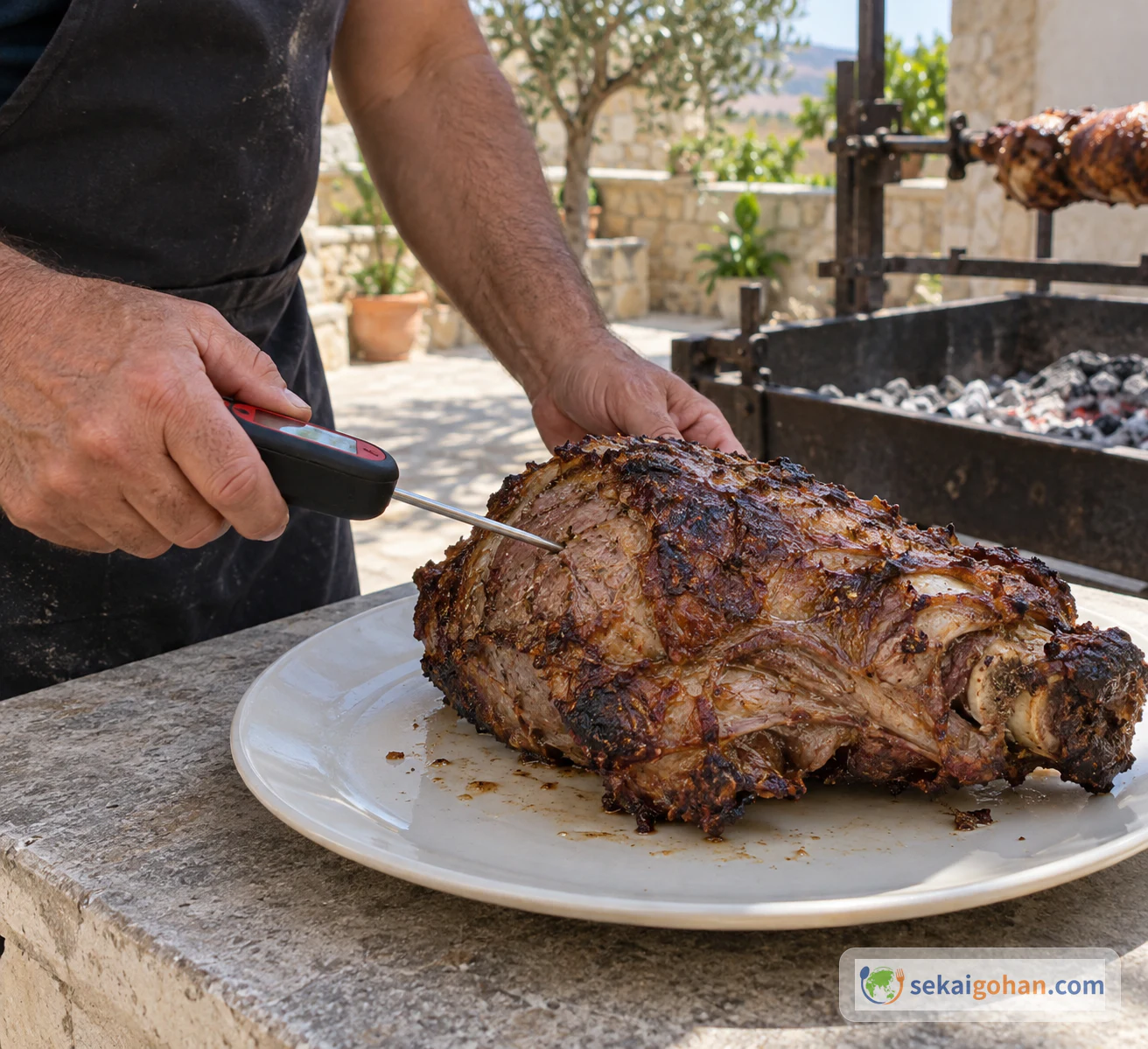
- A food thermometer
- A long-handled, heat-safe basting brush
- Separate plates, tongs and utensils for raw meat and for cooked meat
Method: From Marinade to a Slow-Turning Spit
Marinate for several hours and allow about 2–3 hours on the spit. Judge doneness with a thermometer, not by the clock alone.
Raw or undercooked meat carries a risk of food poisoning, so cook it thoroughly. Use separate chopsticks and utensils for raw meat and for cooked food; apply the same to plates, tongs and brushes here.
Souvla Troubleshooting
| Problem | Likely cause | What to do |
|---|---|---|
| The spit tilts or won't turn smoothly | Pieces uneven in size, fat bunched in one place, too much weight | Rethread with pieces of similar size and the fat spread out. Stay within the rotisserie's maximum load |
| Only the outside is burning | The spit stayed too close to the coals | Move on to the raised stage. Keep the order: hot at first, then distance, then slow cooking |
| The meat is dry | Too much fat trimmed, cooking judged by time only | Leave some fat on next time, and use a thermometer to decide when to stop |
| Hard to tell if it's done | Large pieces, possibly bone-in | Measure at the thickest part, away from bone, and follow the USDA temperature and rest |
Storing and Varying Souvla
Souvla is best eaten freshly cooked. If you keep leftovers, cool and store them safely; if you can't, cook only what you will eat.
- Lamb shoulder: Use it when neck isn't available, with the same amounts and method.
- Pork shoulder (a different recipe): Pork souvla is made in Cyprus too. A home version uses bone-in pork shoulder, olive oil, oregano, salt and pepper, marinated for 3–4 hours and turned on the spit about 12 inches above white-hot coals for 1–2 hours. Keep it separate from the lamb amounts and cooking stages above.
- Less lemon at the end: Keep the lemon in the marinade and skip or reduce the extra lemon at the table to adjust the acidity.
- Without a rotisserie: Short skewers or a home grill are a substitute, not the original method. Smaller pieces cook faster and won't give the same texture, so rely on the thermometer for timing.
Frequently Asked Questions
Can I make it in the oven?
An oven cannot reproduce charcoal spit roasting, and the result isn't kleftiko either, which is a different dish of lamb sealed and cooked in the oven. If you substitute, expect a different flavor and texture, and judge doneness with a thermometer.
How long does it cook?
Plan on about 2–3 hours on the spit after the first hot stage, and several hours of marinating before that. The time shifts with the size of the pieces and the distance from the coals, so use a thermometer.
How do I know it's cooked through?
Appearance alone won't tell you. Measure the thickest part, away from bone. For whole cuts of lamb, aim for 145°F / 62.8°C, then rest for at least 3 minutes.