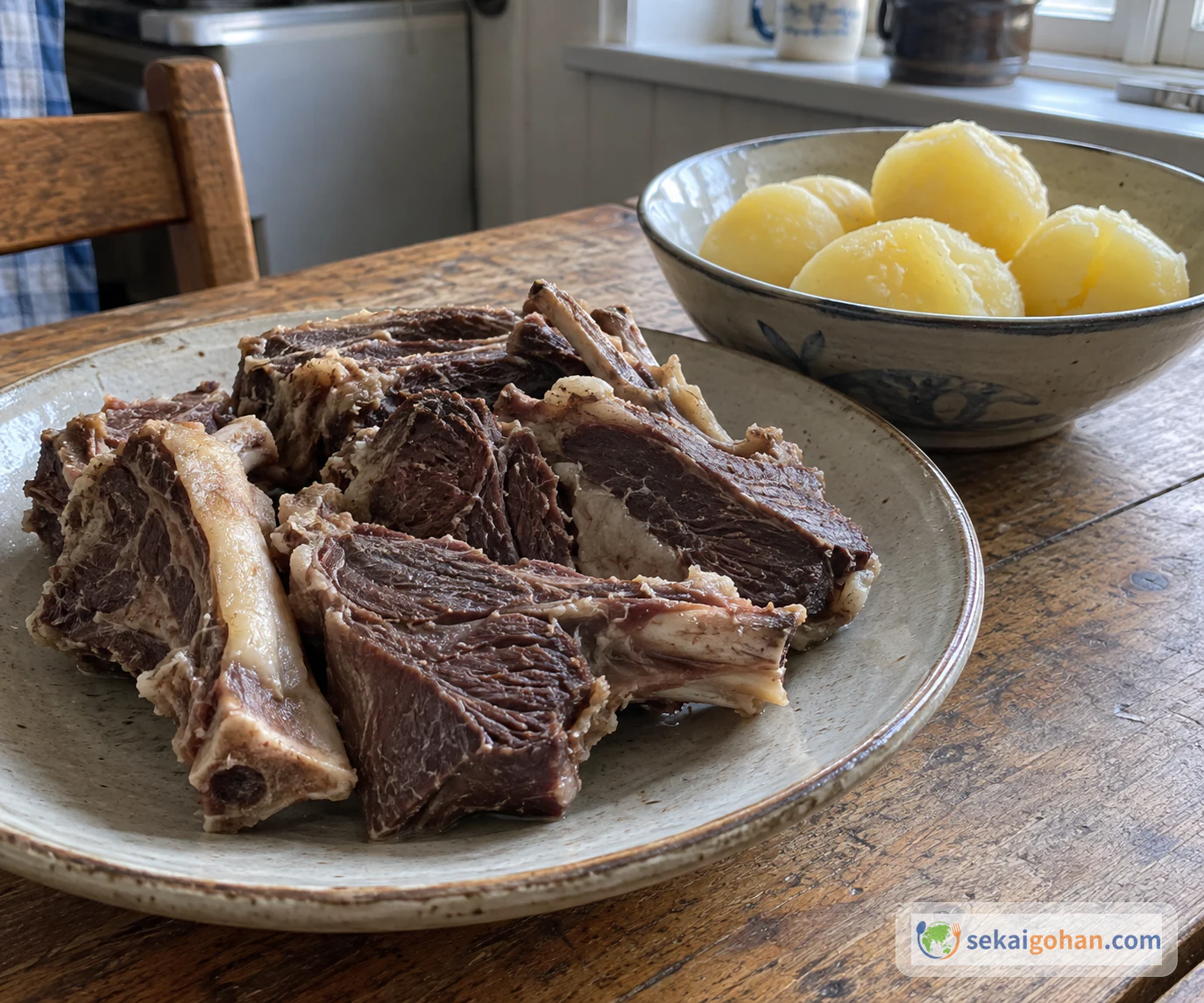
Take a big block of beef out of the freezer, still white with frost, put it on a baking sheet and slide it into a low oven. No knife, no skillet, no thawing. For ordinary roast beef that order would give you pause, but this is how tjälknöl begins. The meat cooks slowly for hours, goes into a spiced brine while still hot, and comes out with a well-seasoned surface and a moist center. Sliced thin and cold, it sits beside potatoes, lingonberry jam and pickled cucumber.

About tjälknöl, Sweden's frozen roast
Name and origin
Tjälknöl is a cold roast from Norrland, in northern Sweden, and is especially tied to the Medelpad region. In Swedish, tjäl means frozen ground or frost and knöl means a lump, so the name describes exactly what goes into the oven: a frozen lump of meat. The traditional meat is moose.
The story goes that in the 1970s a Swede, Ragnhild Nilsson, fell asleep with frozen moose meat in the oven. By morning the meat had cooked slowly at low temperature, and soaking it afterward in brine brought the seasoning together. The story spread and the dish became a local specialty of Medelpad. It sounds a little too neat for an accident, but tjälknöl lasted as home cooking because the cold northern kitchen already had the habits behind it: handling frozen meat and eating game in thin slices.
Why the meat goes in frozen
Most roasts follow the same routine: season, thaw, bring to room temperature, sear at high heat. Tjälknöl skips all of it. Because the meat goes in frozen, the center warms slowly and the outside is less likely to toughen abruptly. The brine afterward gets salt into a thick piece without a long marinade, and cooling the roast before slicing it thin lets the juices settle, so even a slightly tough cut is easy to eat.
Traditional versions vary. Oven temperatures range from 167 to 212°F (75 to 100°C), roasting takes 8 to 17 hours depending on the size of the meat, and brines often include bay leaf, black peppercorns, juniper berries, garlic, sugar and lingonberries. Here the oven sits at 176°F (80°C), which holds steady in a home oven.
Ingredients: assembling them in a home kitchen

This serves 6. The hands-on time is short, but roasting and soaking take long, so starting the evening before or on a weekend morning lets you make it calmly.
This recipe uses beef. For game such as venison or moose, the core-temperature target differs from beef, so check the safe temperature for that meat. At home, don't judge by color alone; use a core thermometer. For children, older people, pregnant people or anyone with a weakened immune system, cook to the safe side and keep the meat chilled, with less time at room temperature before and after eating.
The brine in this dish is strong, but the meat soaks only a few hours. It is not for keeping meat for days; it brings flavor in from the surface quickly. If it turns out too salty, don't cut the salt. Instead, take the meat out at 4 hours, slice off an end and taste.
Choosing the beef, spices and equipment for tjälknöl

Moose is hard to shop for, so at home use lean beef such as round, rump or inside round. Choose a cut with little fat and sinew, sold as a block of about 2.25 lb (1 kg). A block sold for roast beef is easy to handle, but heavy marbling hardens when cold and makes the texture heavy.
The meat has to be frozen solid; refrigerated meat straight from the store won't work. The surface warms first and the interior slowly catches up, and that slow change is what creates the texture. To keep freezer odors out, wrap the meat twice in plastic on the day you buy it, put it in a storage bag and freeze.
The supermarket covers the beef, salt, sugar and potatoes. Three things are worth a separate trip: a core thermometer, lingonberry jam and allspice. The thermometer is your safety check, because cutting into the meat to check the color lets the juices escape. After about 2 hours of roasting, once the meat is firm enough to pierce, insert it into the thickest part.
Lingonberry's sweet-sour flavor suits lean meat sliced cold and thin better than fatty meat. Cranberry sauce is a close substitute, but for the feel of a Nordic table, serve lingonberry at least once.
The brine gets its aroma from bay leaf, black pepper and a little allspice, the same Nordic spice used in köttbullar. Keep it light, only 1/3 tsp per 1 quart (1 L) of brine, for a little warmth behind the pepper and bay; too much makes the meat taste herbal. Juniper berries add a coniferous fragrance typical of Nordic and game cooking, but the dish works fine without them, so don't go out of your way to find them.
Use lean beef instead of moose, with a low oven, a core thermometer and 1 quart (1 L) of brine. The aim is a cold roast that is delicious sliced thin the next day.
Getting tjälknöl right: temperature, salt and slicing
Core temperature
For lean beef, aim for a core temperature of 65–68°C. For beef steaks and roasts, reach 145°F (63°C) and then rest the meat 3 minutes. For game such as venison, 160°F (71°C) is the safer target at home. Recommended targets also include 65°C, 154°F (68°C) and 158°F (70°C), so check with a thermometer and decide based on the meat and who is eating.
Brine and saltiness
The brine is strong on purpose. It isn't meant for days of soaking like preserved meat; it brings flavor into the hot roast quickly. Cut an end at 4 hours and taste: if it's mild, soak up to 5 hours, and if the flavor has come through, take it out.
If it does turn out too salty, rinse the surface quickly with water, pat it dry with paper towels and slice thin. Serve it with potatoes, bread, unsalted butter and cucumber rather than on its own, and the saltiness spreads out. Next time keep the brine the same and shorten the soak to 4 hours.
Slicing thin

Let the roast cool before slicing, then cut it about 0.125 inch (2 mm) thick. Thin slices are what make lean meat tender to eat; thicker ones chew noticeably tougher.
Serving and storing tjälknöl

Tjälknöl is less a fresh-from-the-oven feast than a cold meat you eat in thin slices, a little at a time. On a plate, serve it with potato gratin, boiled potatoes, pickled cucumber and lingonberry jam. For lunch, spread thin butter on rye bread and layer the meat, cucumber and lingonberries on top.
Store the sliced meat in an airtight container in the refrigerator for about 2 days. The brine won't stretch that at home, where the door opens and knives touch the meat. Take out only what you'll eat and put the rest back right away. Reheating tightens lean meat, so skip soups and stir-fries and use it in a sandwich, a salad or beside potatoes.
For more Swedish cooking, köttbullar also pairs meat with sweet-sour lingonberry. Denmark's smørrebrød fits a cold Nordic table, and Norway's warm lamb and cabbage fårikål shows another side of northern meat dishes.
FAQ
Can I thaw the meat before roasting?
For the true tjälknöl texture, roast it frozen. Thawed meat can be roasted low too, but the heat goes in differently and it cooks faster. In that case, manage the core temperature as you would for ordinary roast beef and keep the brine soak short.
Can I make it without a core thermometer?
It's hard to get right without one. After 8 to 10 hours at low heat you can't judge the core temperature by looks, and timing depends on the size of the meat and your oven. A thermometer reduces both the chance of failure and the food-safety risk.
Can I eat it warm?
You can, but it's best chilled and sliced thin. To take the chill off, leave it at room temperature for about 10 minutes instead of microwaving it. Too much heat tightens the lean meat, and thin slices turn tough.