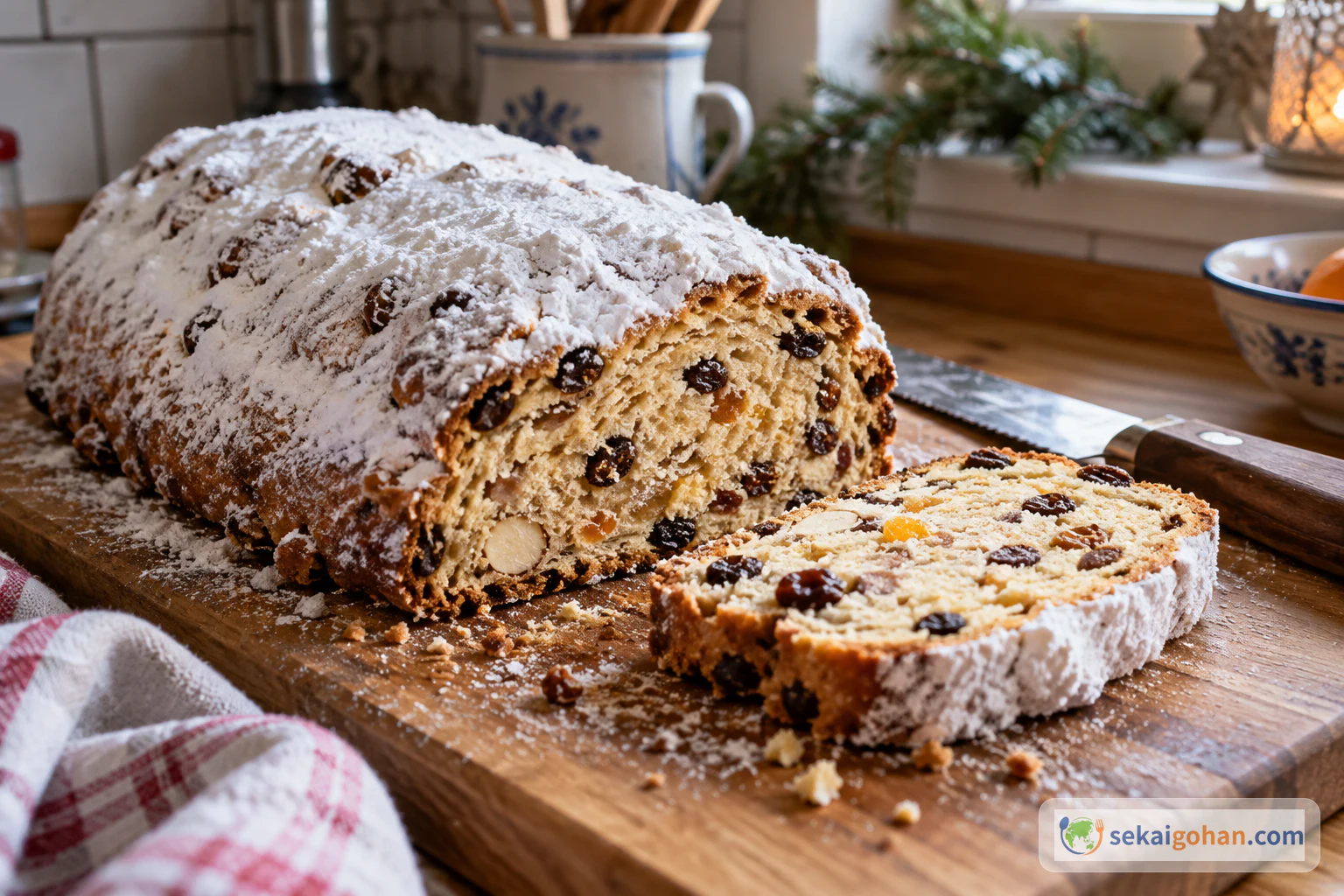
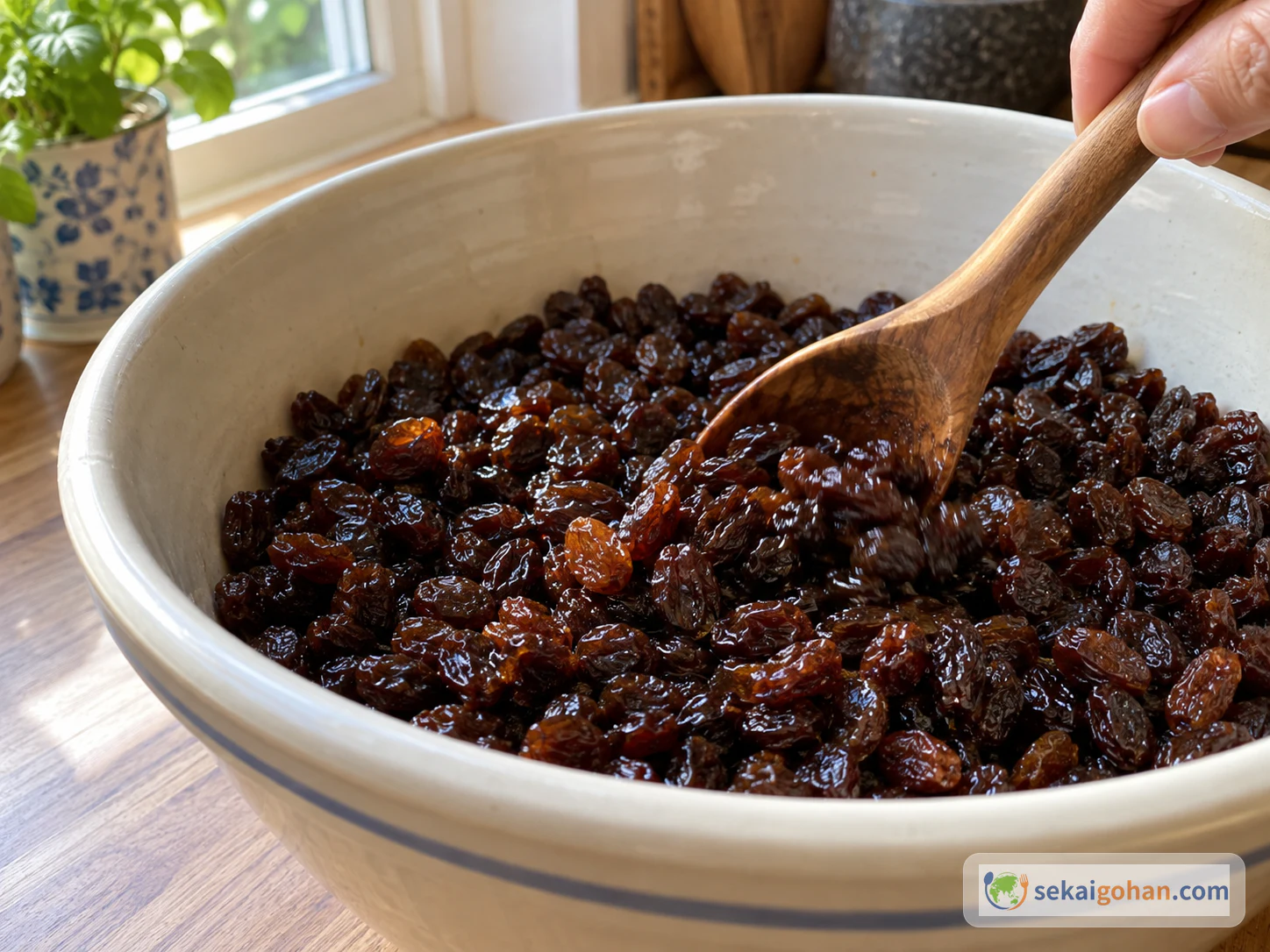
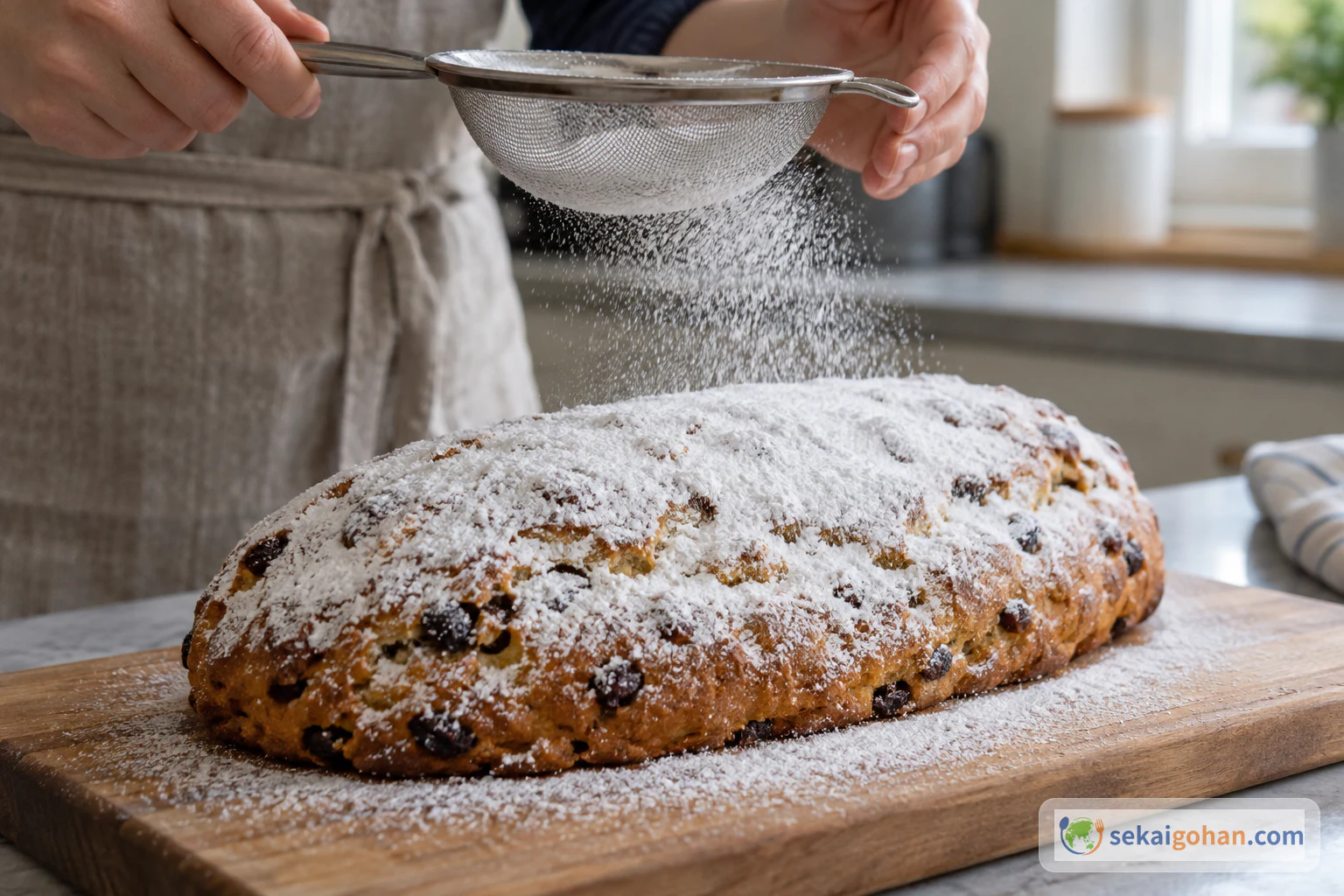
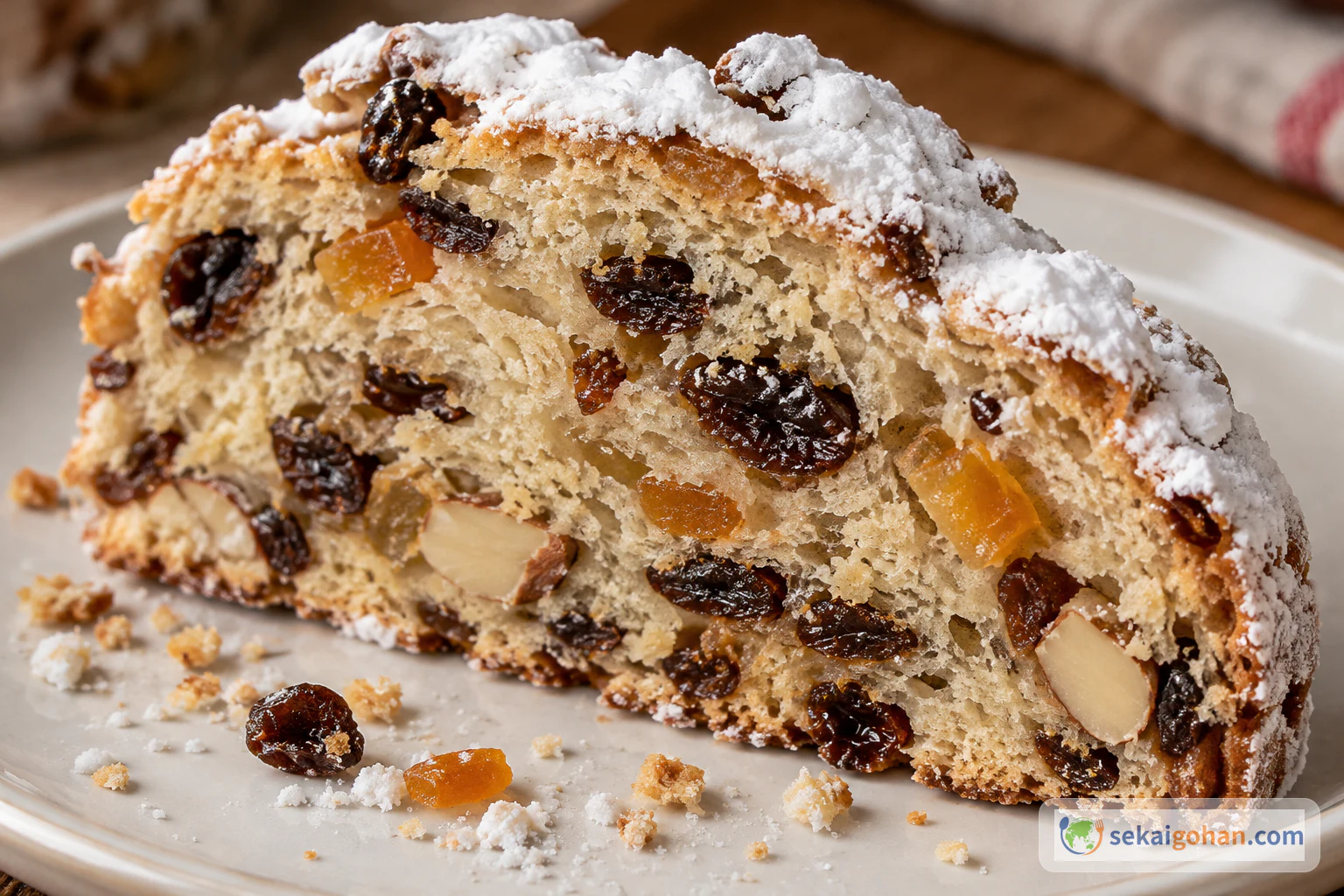
On an Advent afternoon in a German home, a loaf of Stollen sits beside the coffee cups. A knife cuts a thin slice through the soft white layer of icing sugar, and dark raisins, bright pieces of candied citrus peel and pale almond show in the crumb. This German Christmas bake is a yeast-raised wheat dough, heavy with butter and full of fruit, nuts and spice, made here in the Dresden style. It takes its time. The raisins soak the night before, and the loaf is finished over two days: brushed with butter while still hot, then with butter and sugar after a night's rest.
Stollen and Dresdner Christstollen
Stollen often gets called a "fruitcake" or "fruit bread," but it is really a leavened bread. Dresdner Christstollen is a yeast-raised wheaten loaf with fruits, nuts and spices. Its structure comes from the dough, and its richness comes from the butter, dried and candied fruit and almonds worked into it. The traditional finish is butter and icing sugar.
The Protected Dresden Name
Stollen is baked across Germany and in many home kitchens, but Dresdner Christstollen (also Dresdner Stollen or Dresdner Weihnachtsstollen) is a protected geographical indication. Under EU protection recognized in 2010, the name belongs to Stollen made in Dresden and twelve surrounding municipalities. The protected product is a raisin Stollen made only in bakeries and pastry shops in and around Dresden, marked with the producers' seal and the EU seal. A loaf from your own kitchen, however carefully made, is a home-baked German-style Stollen.
The History of Stollen in Dresden
The trail of Stollen leads back to Dresden, where the first documented mention is a hospital invoice from 1474. Back then the loaf was a fasting food, a plain dough of flour, yeast and water, and today's rich Christmas bake grew from that modest beginning.
Butter changed everything. It was not permitted during the fasting period until a papal letter, the so-called Butterbrief, allowed its use, in either 1490 or 1491. Once butter could go in, the loaf could become the rich, keeping bake Stollen is now.
Tradition holds that a giant Stollen was baked in 1730 for Augustus the Strong, and Dresden still celebrates that story in its festive calendar. Other origin stories link the name to a tunnel and read the shape as a swaddled infant. These are colorful traditions rather than documented history.
What Goes into Stollen
Bakers vary the spice mix and finishing details from one shop to the next. The characteristic ingredients are raisins or sultanas, butter, candied lemon and orange peel, sweet and bitter almonds, and, optionally, rum. For more German dishes, see our Germany page.
Ingredients for One Large Stollen Loaf
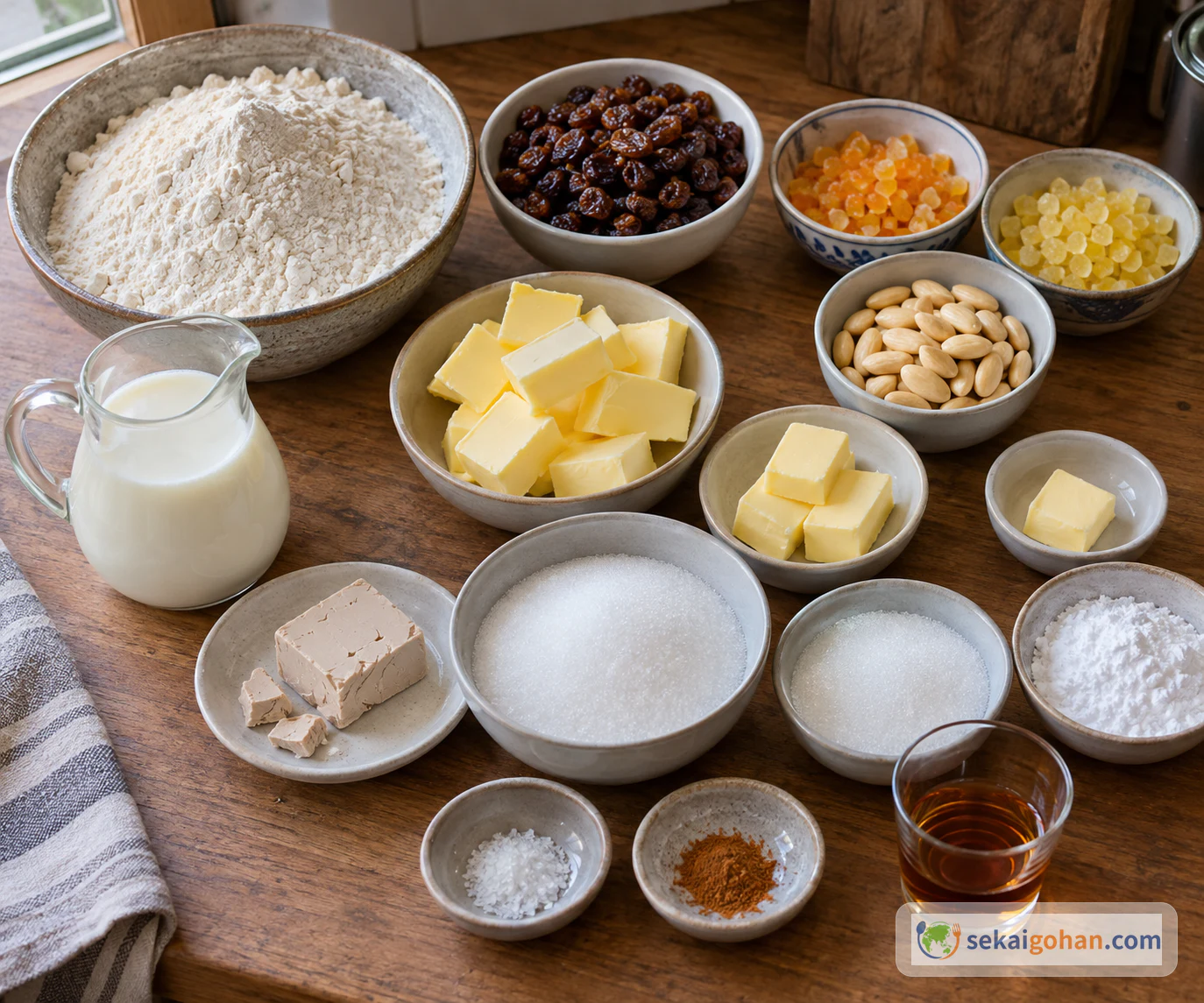
The recipe makes one 4-Pfund Stollen (a German "pound"). If you scale it down, scale every ingredient by the same factor, and remember that the baking cues below are for one large loaf.
Use 1 lb (465 g) raisins and unsalted butter, softened to room temperature, for the dough.
This Stollen contains wheat (gluten), milk and butter, almonds (tree nuts) and yeast, and the raisins are soaked in rum. Check the labels of candied peel and other processed ingredients for allergen and shared-facility statements. Do not rely on the substitutions below to make the recipe allergy-safe.
Equipment
- Bowl or lidded container for soaking the raisins
- Large mixing bowl
- Cloth or cover for resting the dough
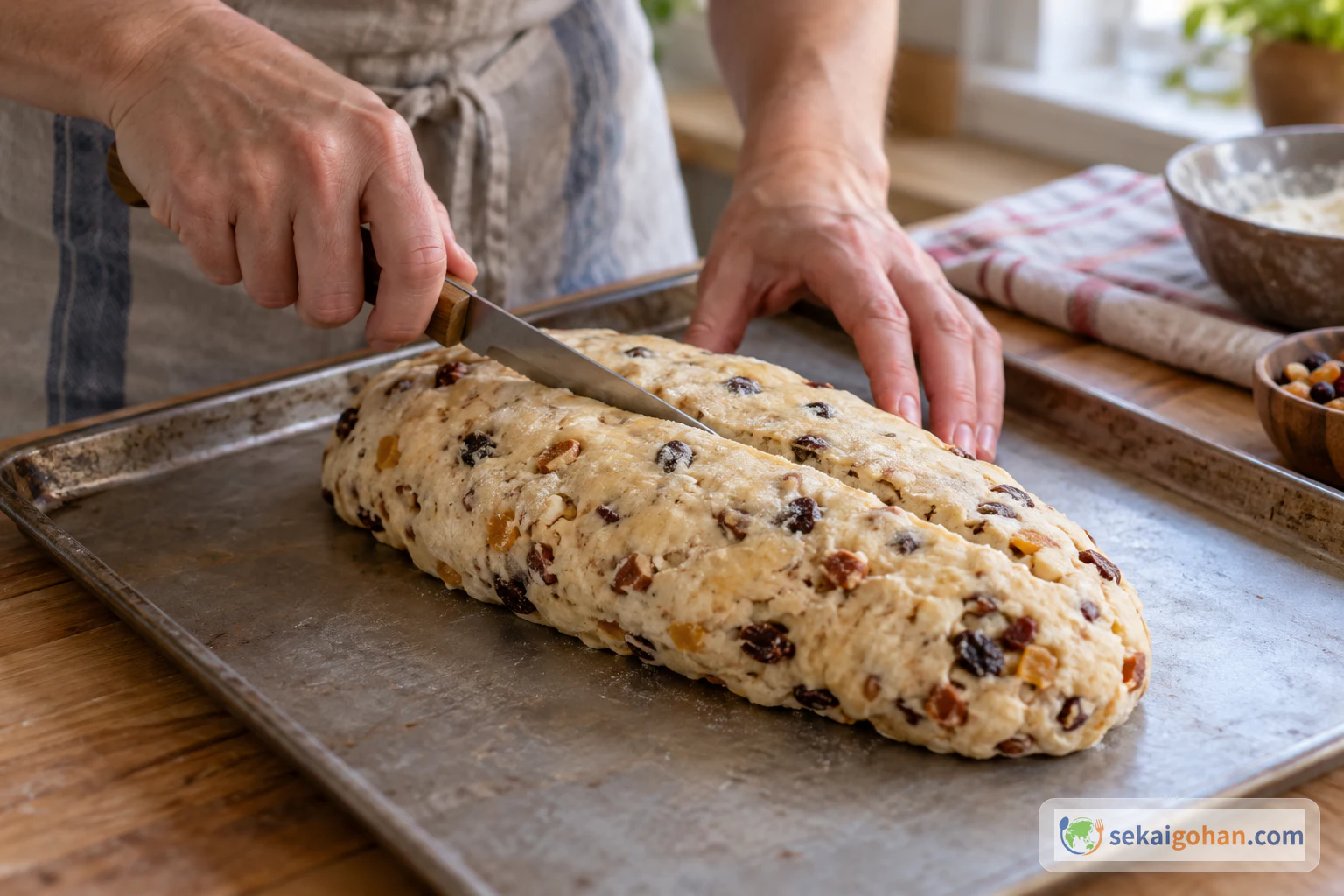
- Knife for the lengthwise cut
- Flat baking tray
- Oven
- Pastry brush
- Small bowl or pan for melting butter
- Sieve for the icing sugar
- Probe thermometer (optional, for checking the center of the loaf)
Choosing Ingredients and Substitutes for Stollen
Flour. Type 405 is a German flour designation with no exact match on supermarket shelves elsewhere. It is the standard here, and a local flour can change the texture.
Fresh yeast. If you can't find fresh yeast, follow your yeast manufacturer's conversion guidance.
Mace. Mace (Macis) is the lacy covering of the nutmeg seed. Mace and nutmeg come from the same fruit, but they smell different, so swapping in nutmeg will change the aroma.
Candied peel. Use chopped candied lemon (citron-style) and orange peel, 4 oz (116 g) combined, in any ratio you like.
Almonds. Roughly chopped almonds keep their texture in the crumb. You can slice or chop them differently to adjust the texture, as long as you keep to 3.25 oz (90 g).
Butter. Clarified butter (Butterschmalz) can replace the butter in the dough. It contains less water, so the result will differ from a loaf made with unsalted butter. Use one or the other.
Rum. To avoid alcohol, soak the raisins in juice instead. Juice-based Stollen recipes use different proportions and include eggs, so expect a somewhat different loaf.
How to Make Stollen
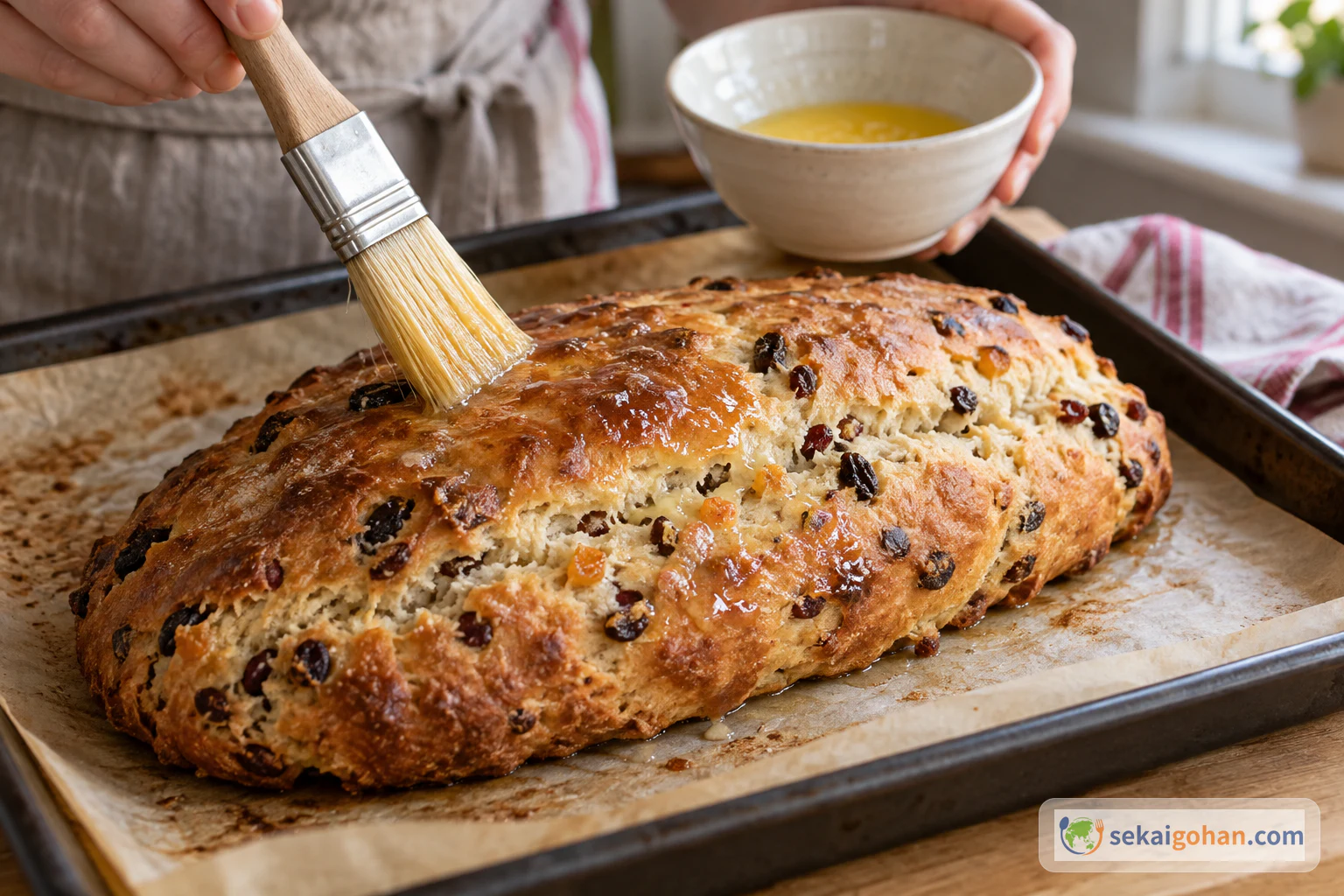
Day one: soak the raisins in the evening. Day two: knead, rest, shape, bake and brush with butter. Day three (after one night): butter again, then finish with granulated sugar and icing sugar.
Timings are given only for the dough rest and for the first stage of baking. Elsewhere, judge by the state of the dough and the loaf rather than the clock.
Judging Doneness and Fixing Common Stollen Problems
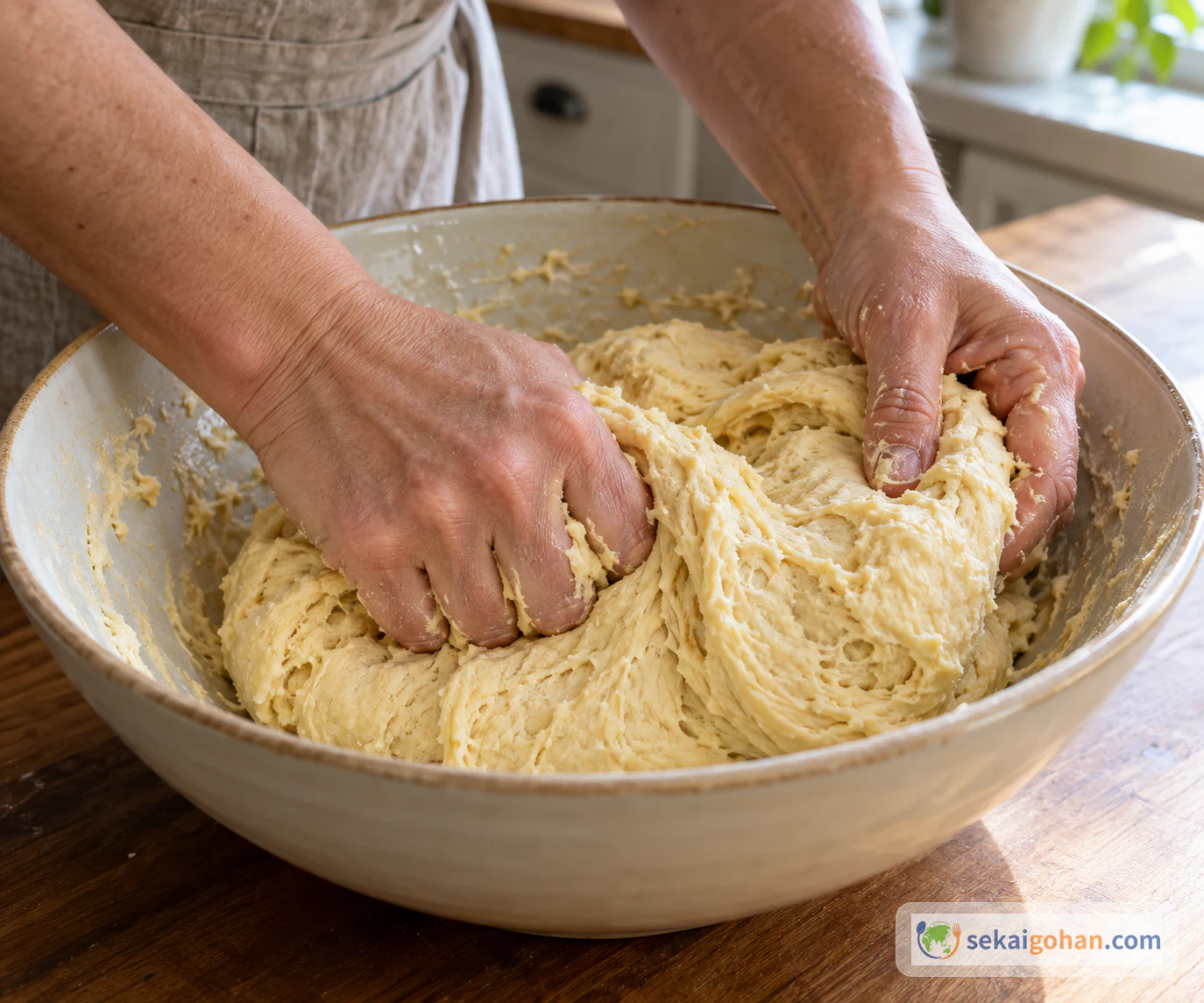
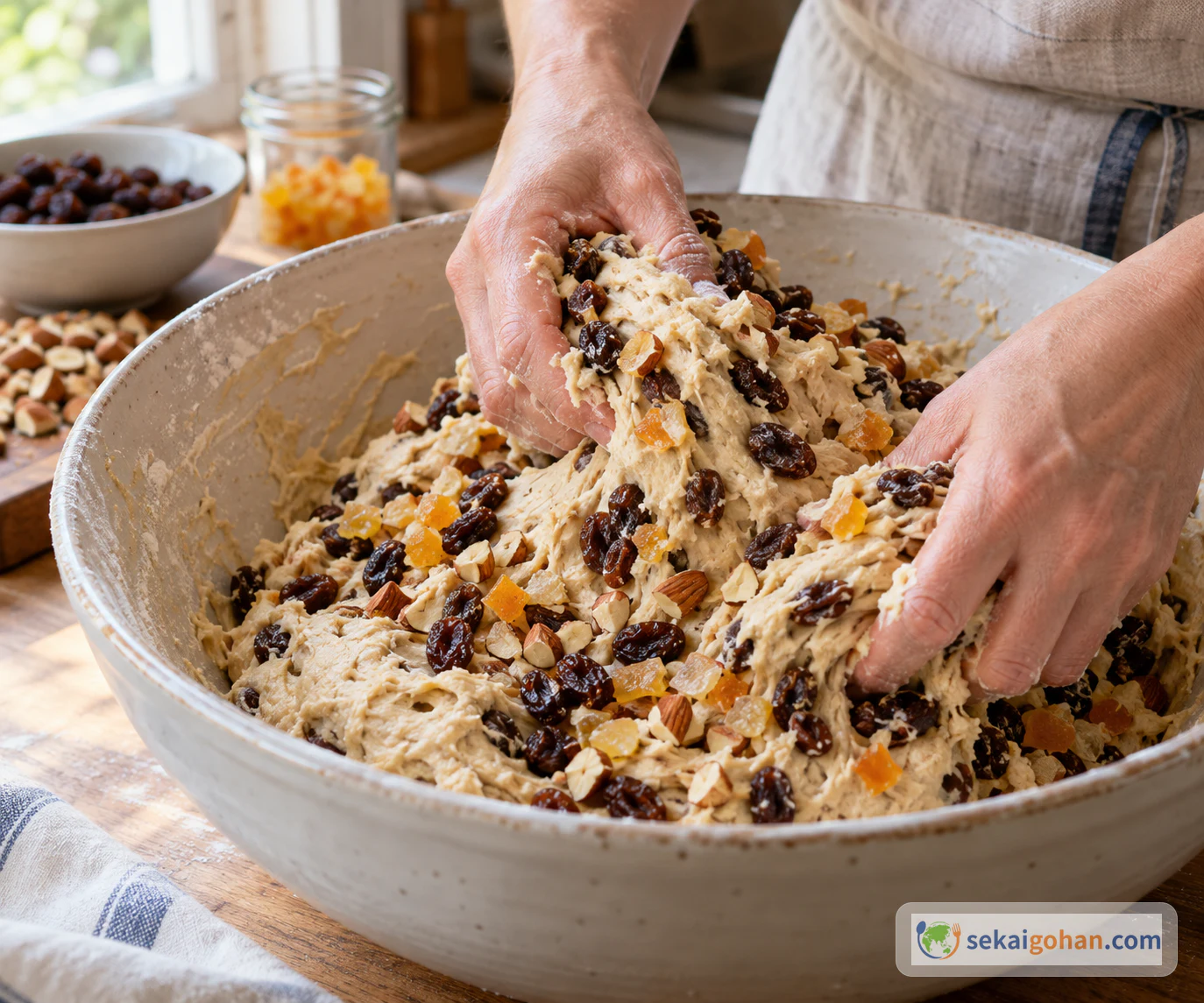
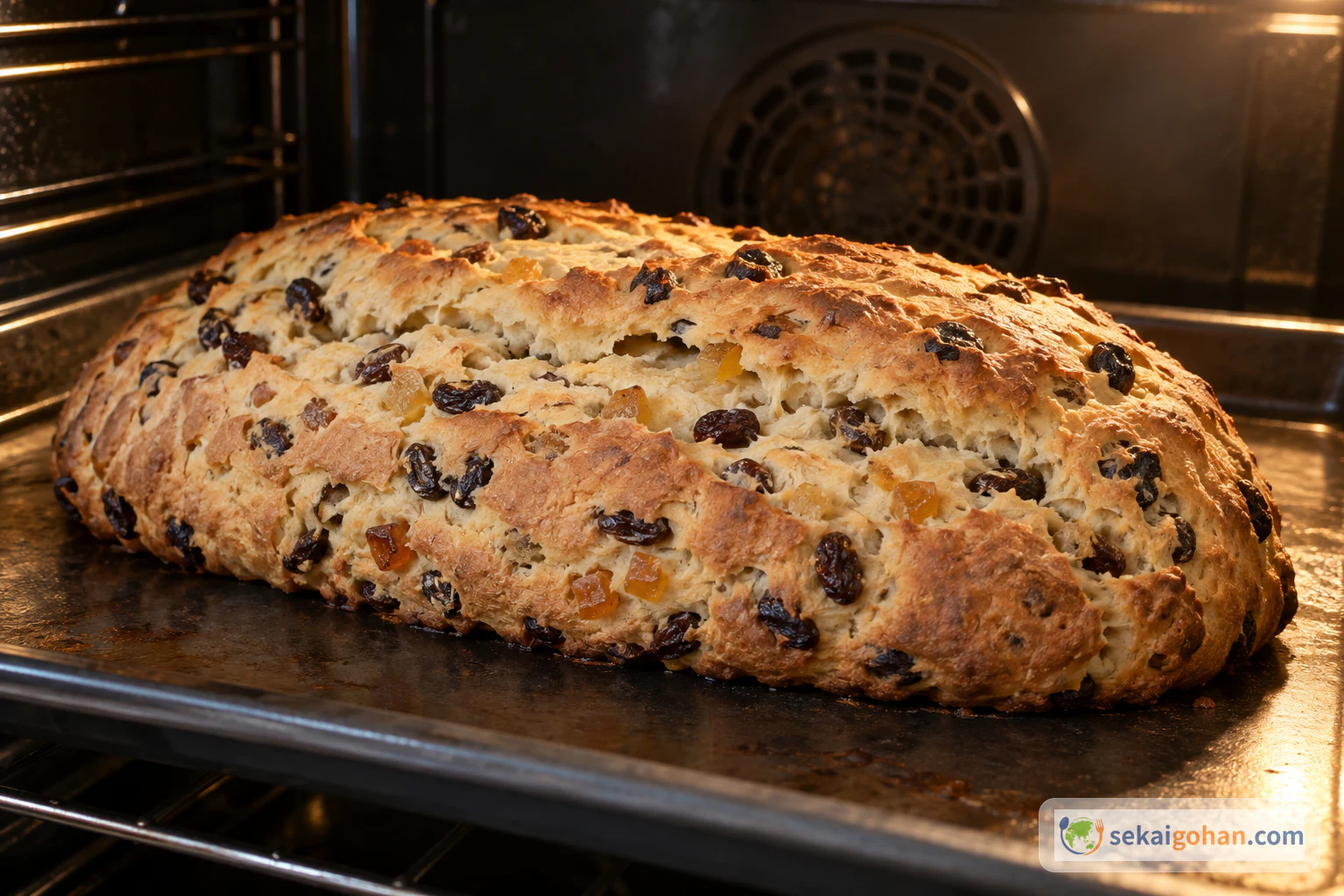
The tricky parts for a home baker are kneading a stiff, rich dough, spreading the fruit evenly and knowing when a thick loaf is done. For doneness, look for three cues: a light brown surface, a crumb that springs back when pressed without sinking too much, and about 203°F (95°C) in the center if you have a thermometer.
| Problem | What to look at | What to try |
|---|---|---|
| The dough feels very heavy and stiff | This is a rich, dense dough by design | Make sure the butter is softened before mixing, and knead until smooth before adding fruit |
| Fruit is clumped in places | Fruit added in one lump, or liquid left on the raisins | Drain the raisins, add the fruit in portions and knead until spread evenly |
| The surface colors quickly | The loaf starts at 400°F (200°C) | Watch the color around the 25-minute mark and lower to 180–160°C |
| Unsure whether the center is done | Thick loaves are hard to judge by eye | Use the springback and center-temperature cues above |
| Fruit on the surface looks scorched | Exposed fruit takes direct heat | Remove badly burnt pieces at your discretion |
| Sugar does not cling | Butter coating too thin, or sugar added without fresh butter | Brush with melted butter again just before the granulated sugar |
Serving, Resting and Varying Stollen
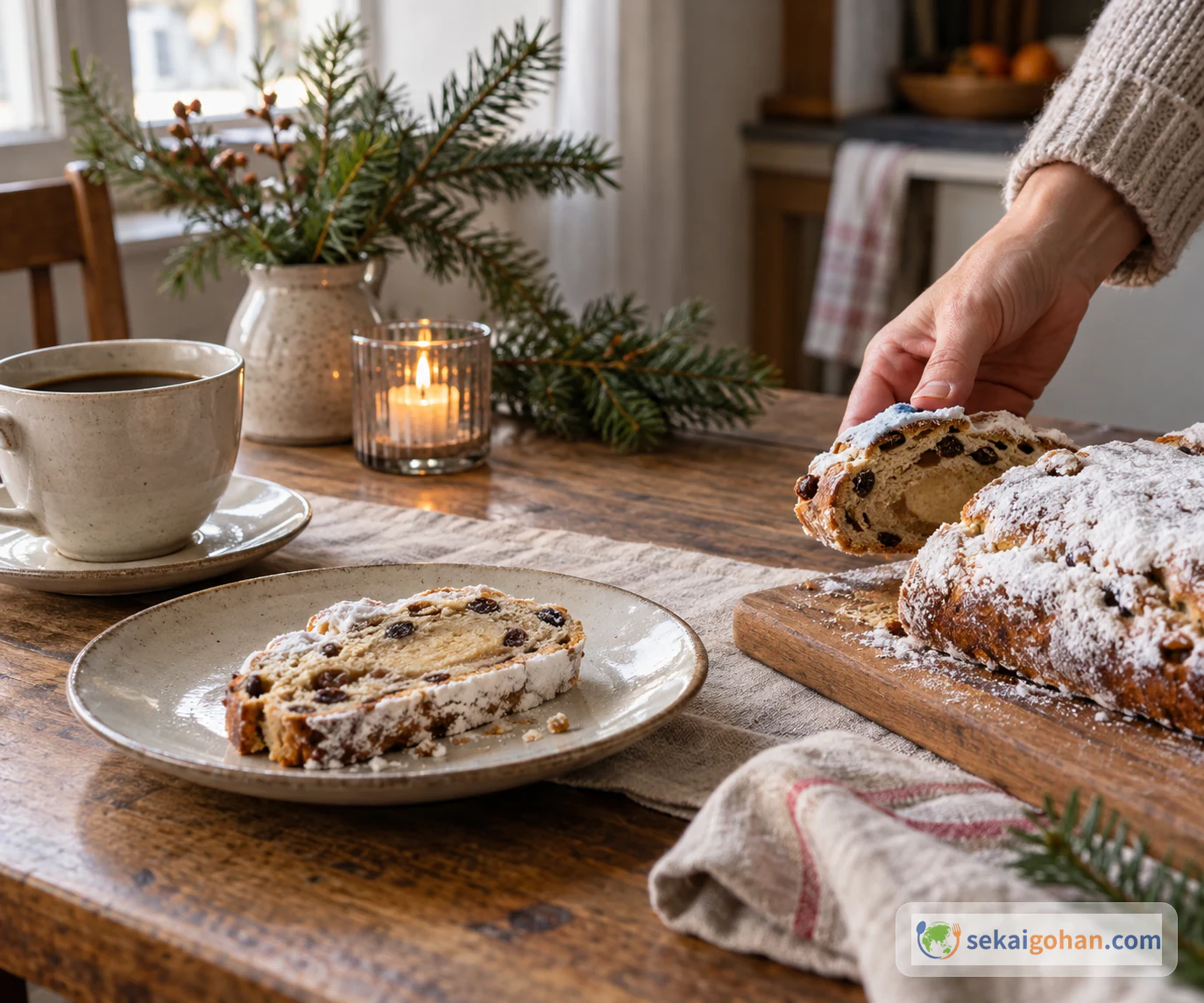
Stollen belongs to the Christmas season, and in Dresden it is tied to the city's seasonal traditions and festivities. At the table it is cut into thin slices, which suits a loaf this rich.
Once it is baked, cooled and finished, you can eat it right away. Traditionally, though, the finished loaf rests in a dark, cool place for four weeks so the flavors can settle. That rest is optional.
Two variations change the bake more than you might expect. Marzipan-filled Stollen adds an ingredient that changes moisture and baking, so adjust for it rather than simply adding it to the standard formula. Dividing the dough into smaller loaves changes how long they need in the oven; judge them by color, springback and center temperature.
Frequently Asked Questions
How long does Stollen keep?
The four-week rest in a dark, cool place is a flavor step, not a safe storage period. How long the loaf keeps depends on your kitchen, how it was baked and how it is wrapped. If you see mold, notice an off smell or find it overly damp, do not eat it.
Which allergens does it contain?
Wheat (gluten), milk and butter, almonds (tree nuts) and yeast, plus rum in the soaked raisins. The substitutions above do not make the recipe allergy-safe.