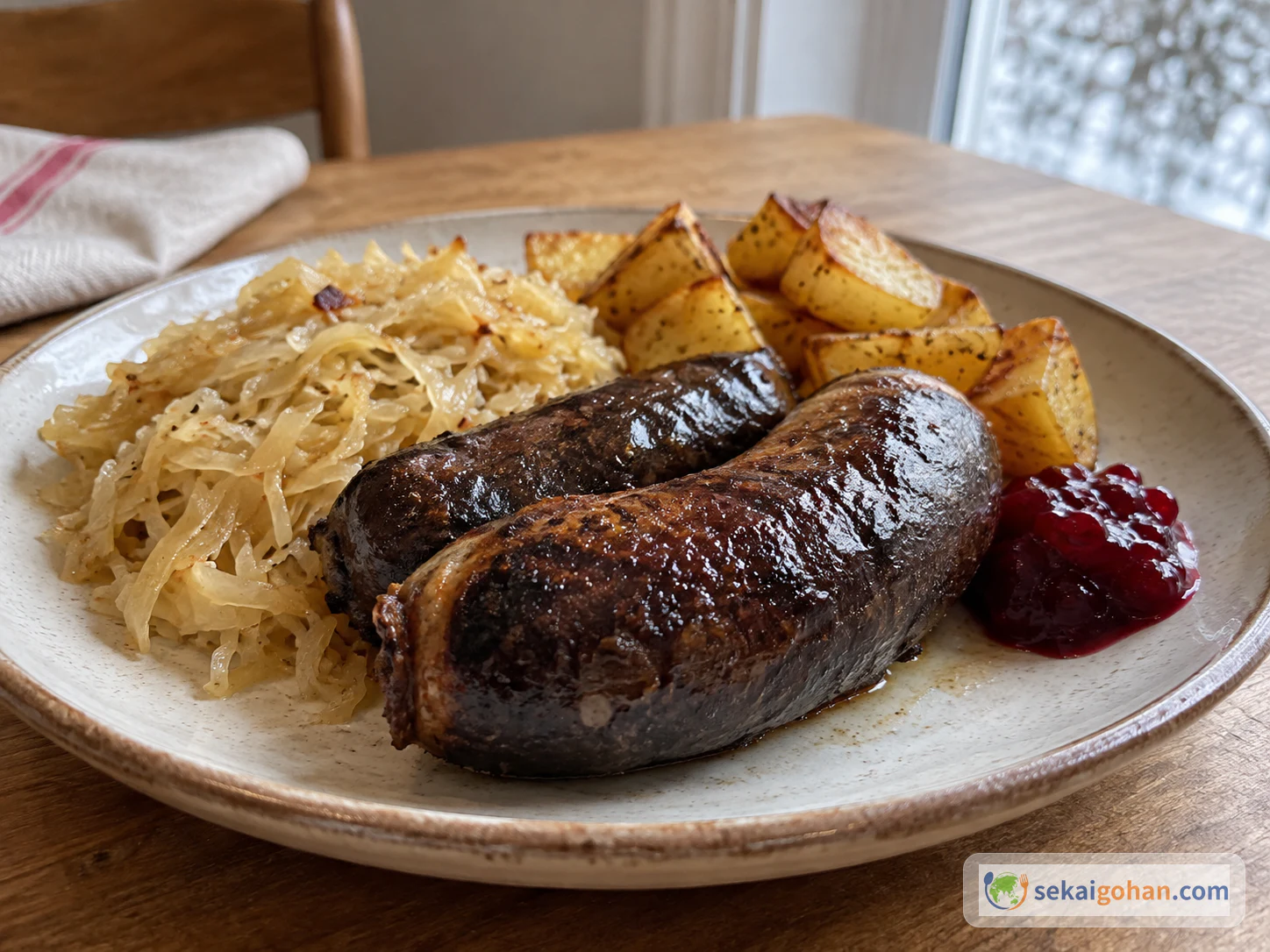
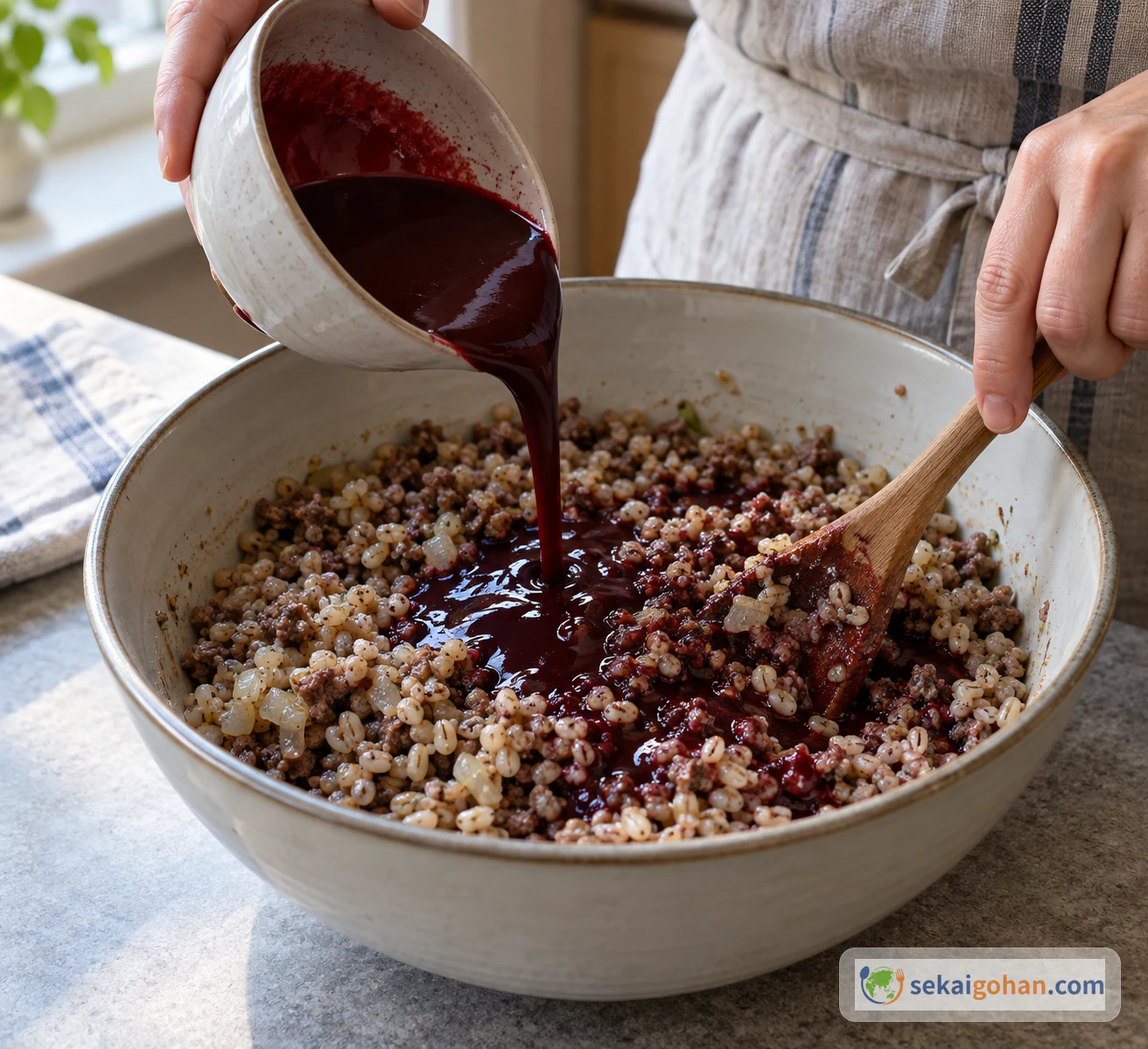
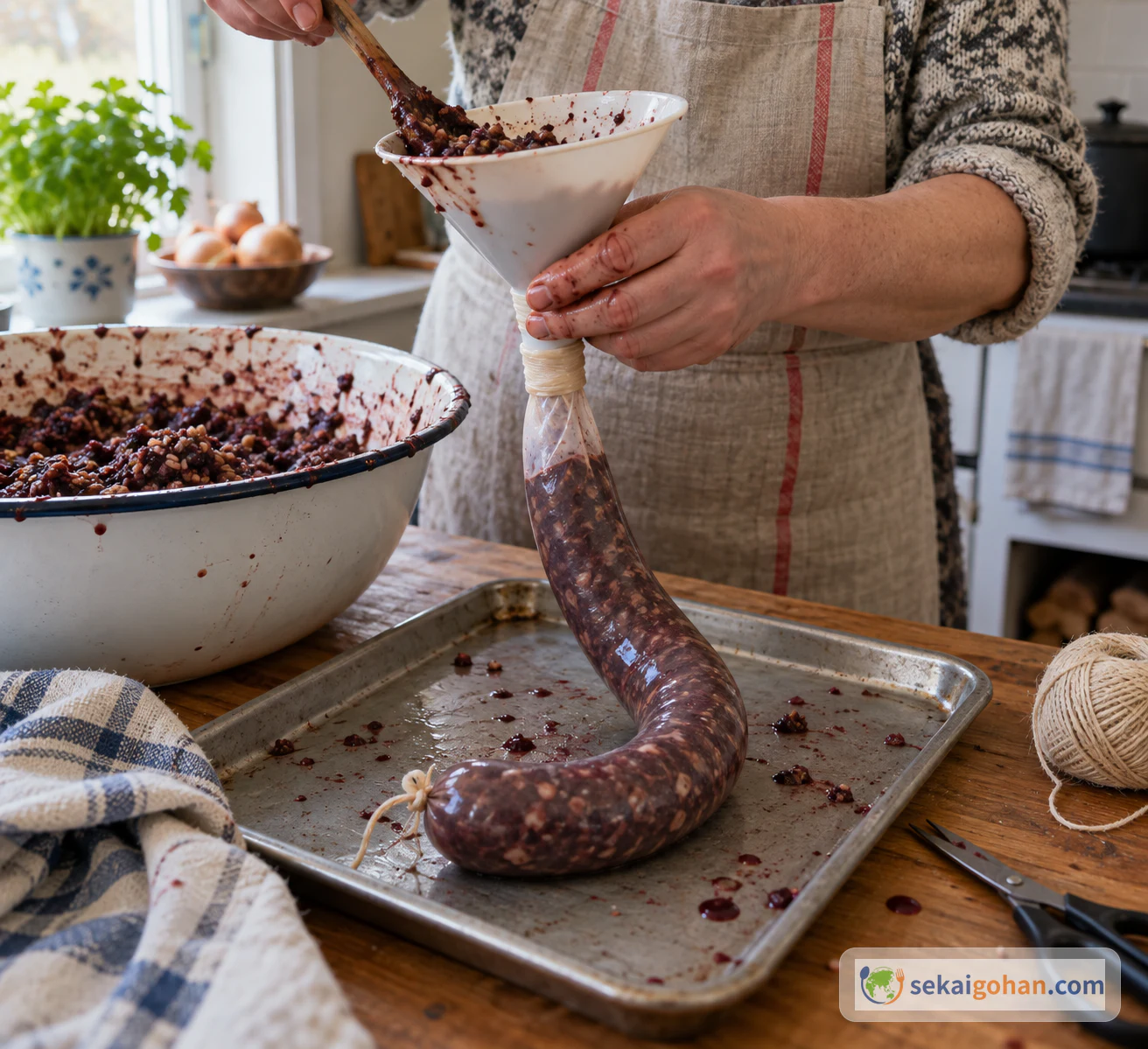
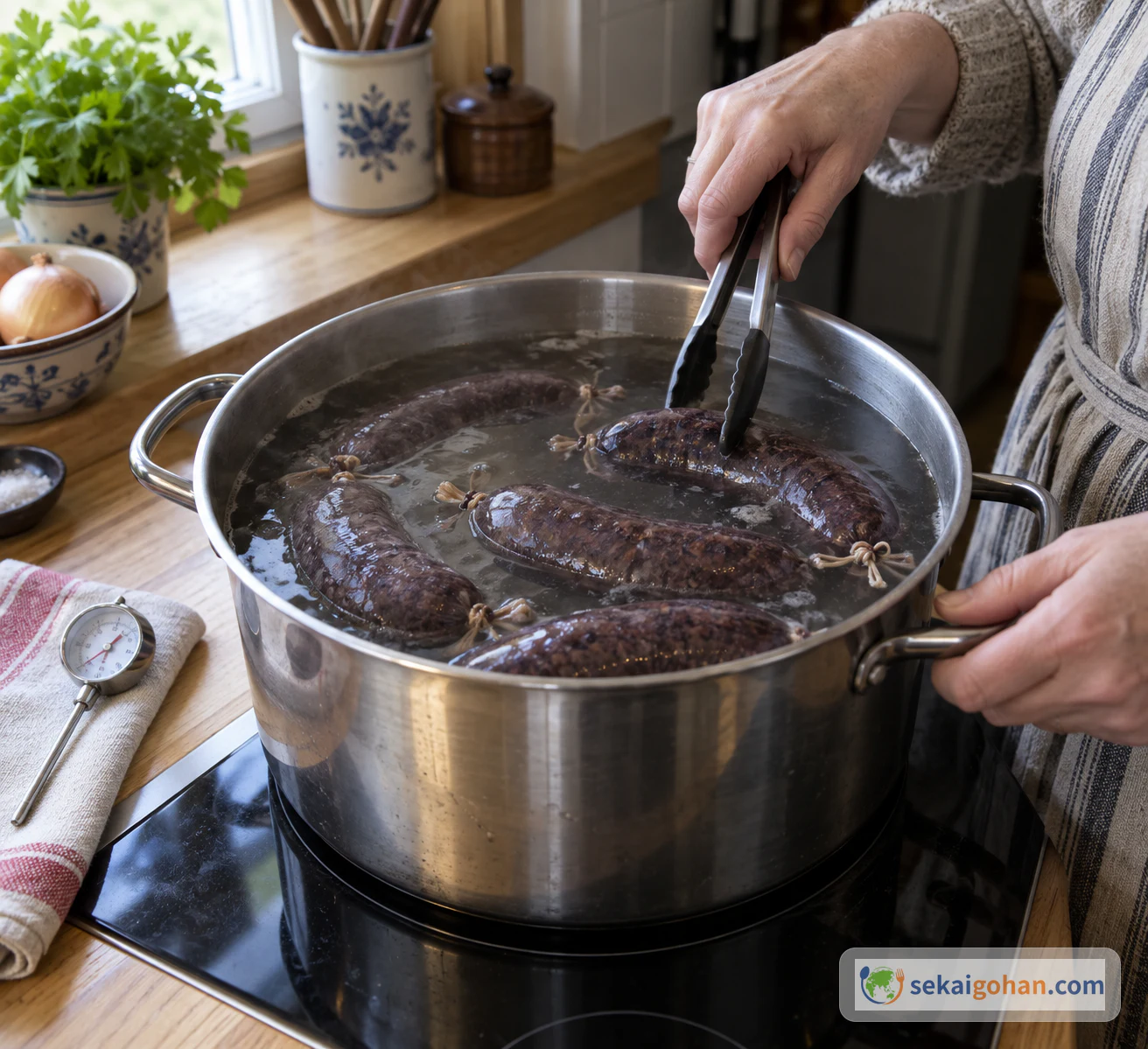
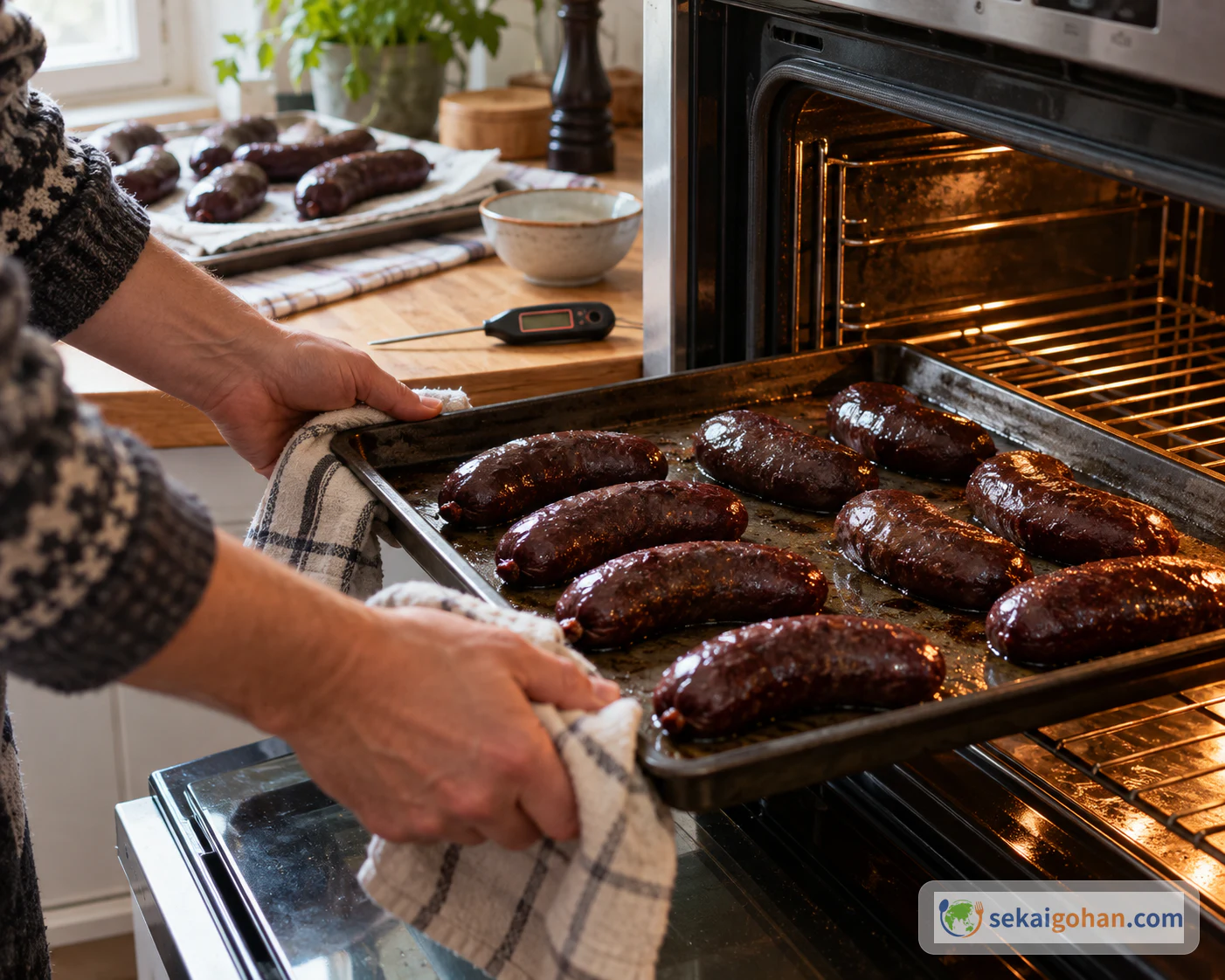
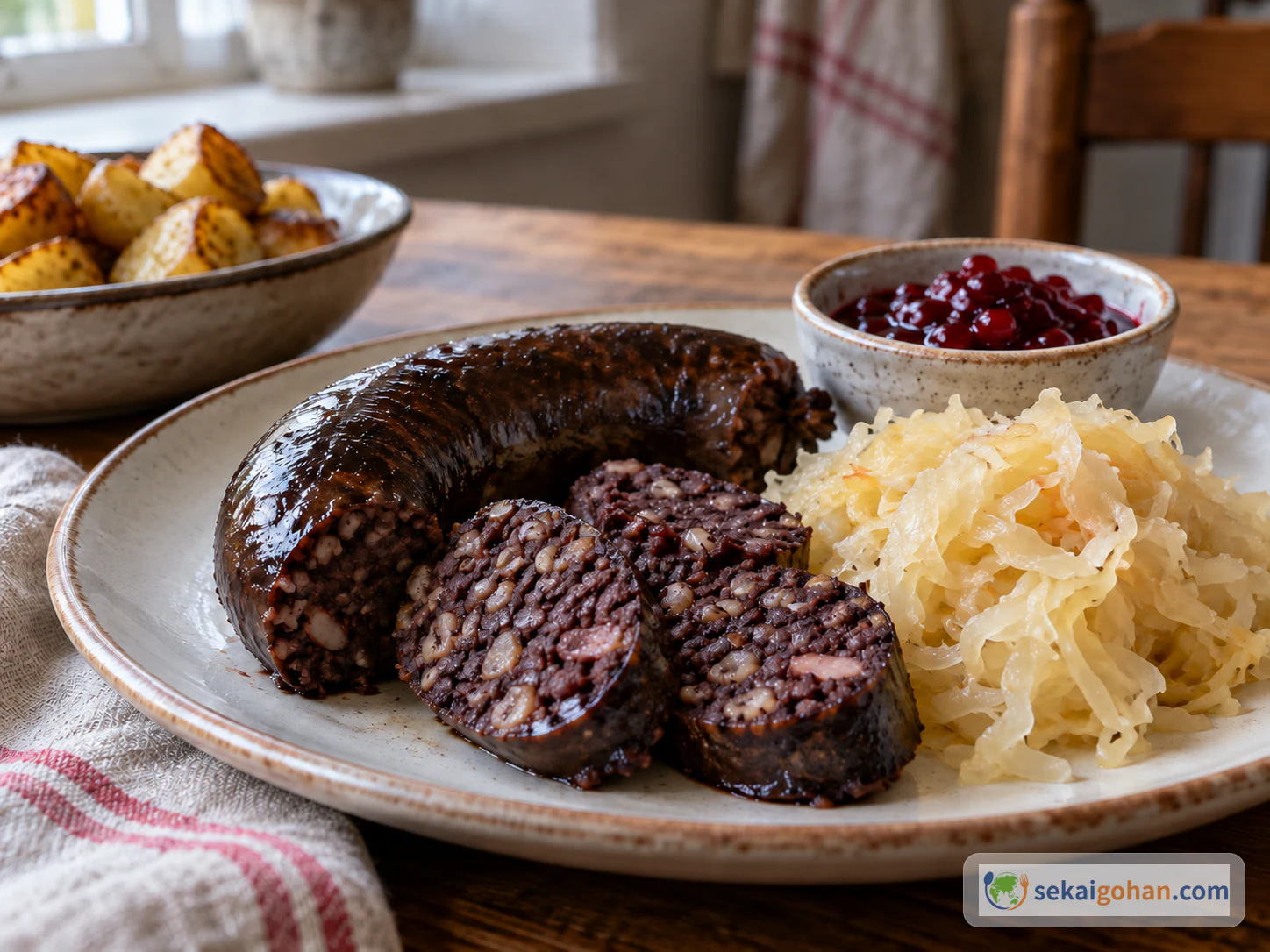
On an Estonian Christmas table, verivorst sits among the sült, sauerkraut, roast potatoes and pork, its casing baked or fried until crisp. It's on most Estonians' Christmas tables. Inside that crackling skin is a rich sausage of pig blood, barley groats and pork, and it tastes best with something sour beside it, like sauerkraut or a spoonful of lingonberry jam.
Verivorst in Estonia
Many Estonians consider verivorst with sauerkraut and lingonberries a national dish. Blood sausage spread there from the early 19th century through contact with Swedes and Latvians, and it became tied to the rhythm of the year. Slaughter season began on 29 September, and Christmas food preparation began on St Thomas Day, 21 December. The sausage belongs to a broader culture of winter stores. It's still associated with autumn and winter solstice tables, though you can now buy it year-round.
The tradition is still made by hand. Before Christmas, about ten sausage makers and interested locals gather at the Abja day center, working from knowledge handed down by their ancestors. The meat, casings and blood now come from local farmers. Home versions vary widely across Estonia in meat, fat, barley, spice and blood.
Verivorst is linked to Finnish mustamakkara and Latvian asinsdesas. They're related by name and region but are different recipes. For more of the country's cooking, explore our Estonian recipes, including mulgikapsad, a separate dish that also uses barley and pork.
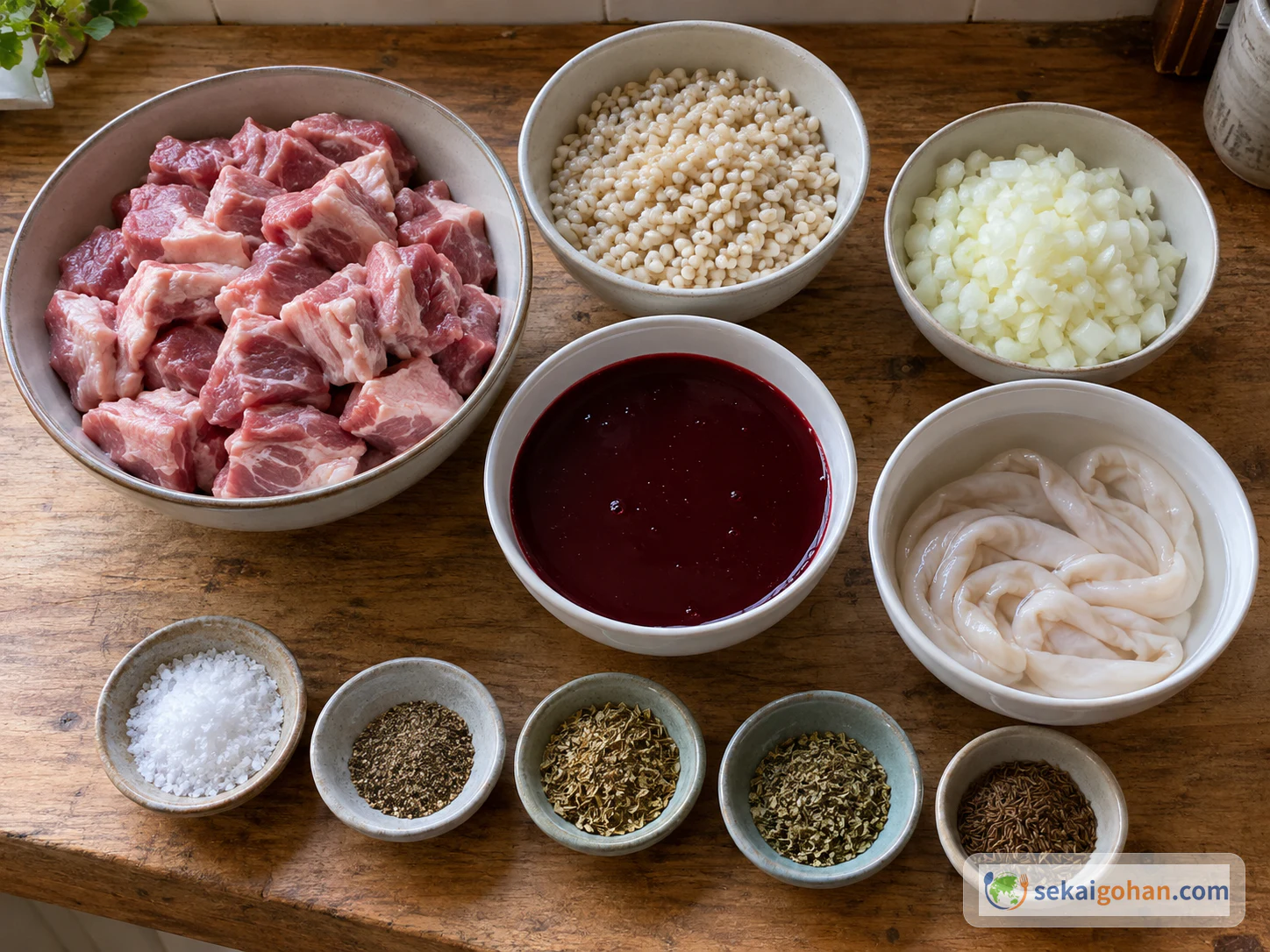
Ingredients
Equipment
- Large pot for the barley
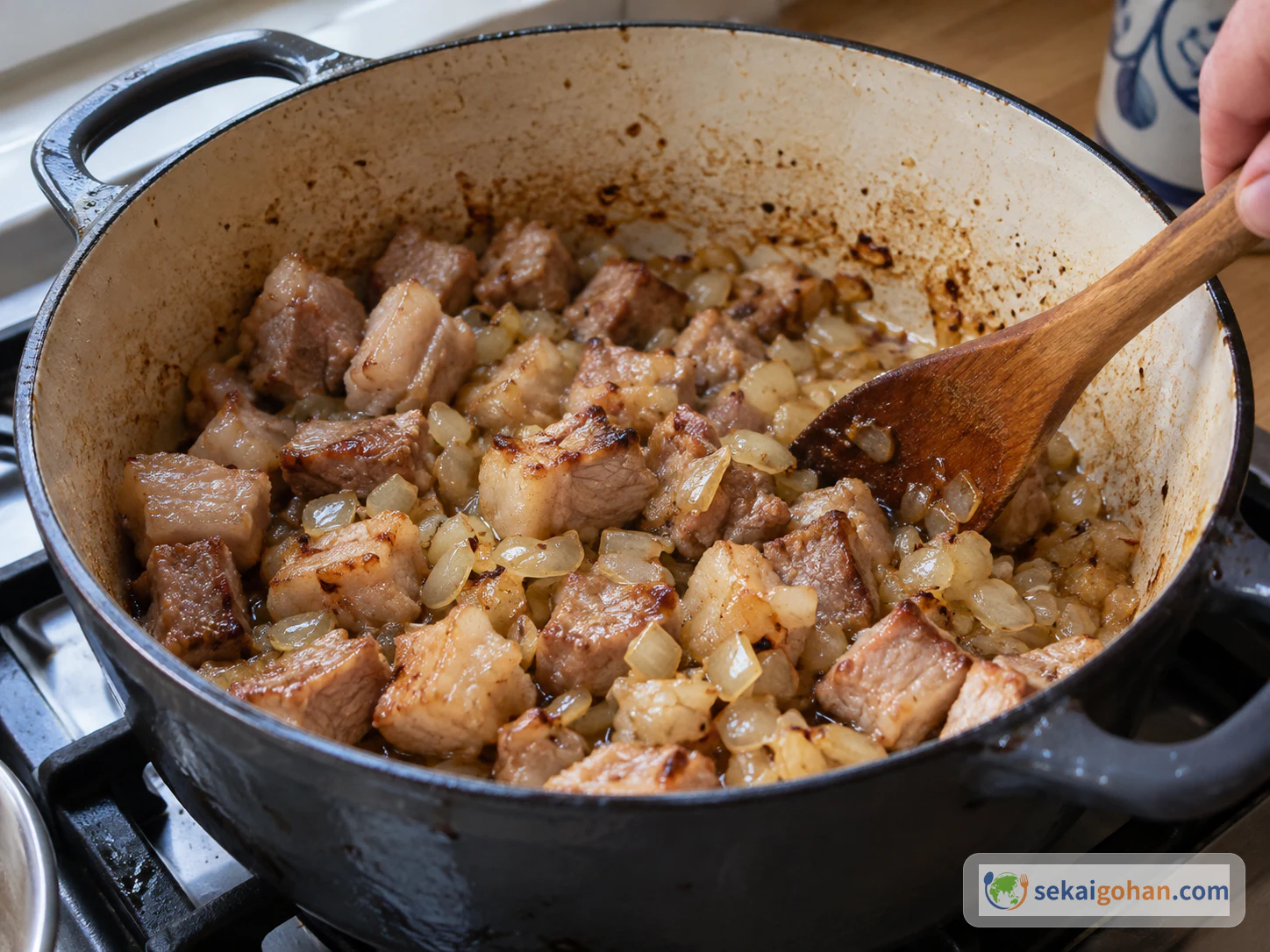
- Heavy pot or frying pan for the pork and onion
- Wide pot for poaching
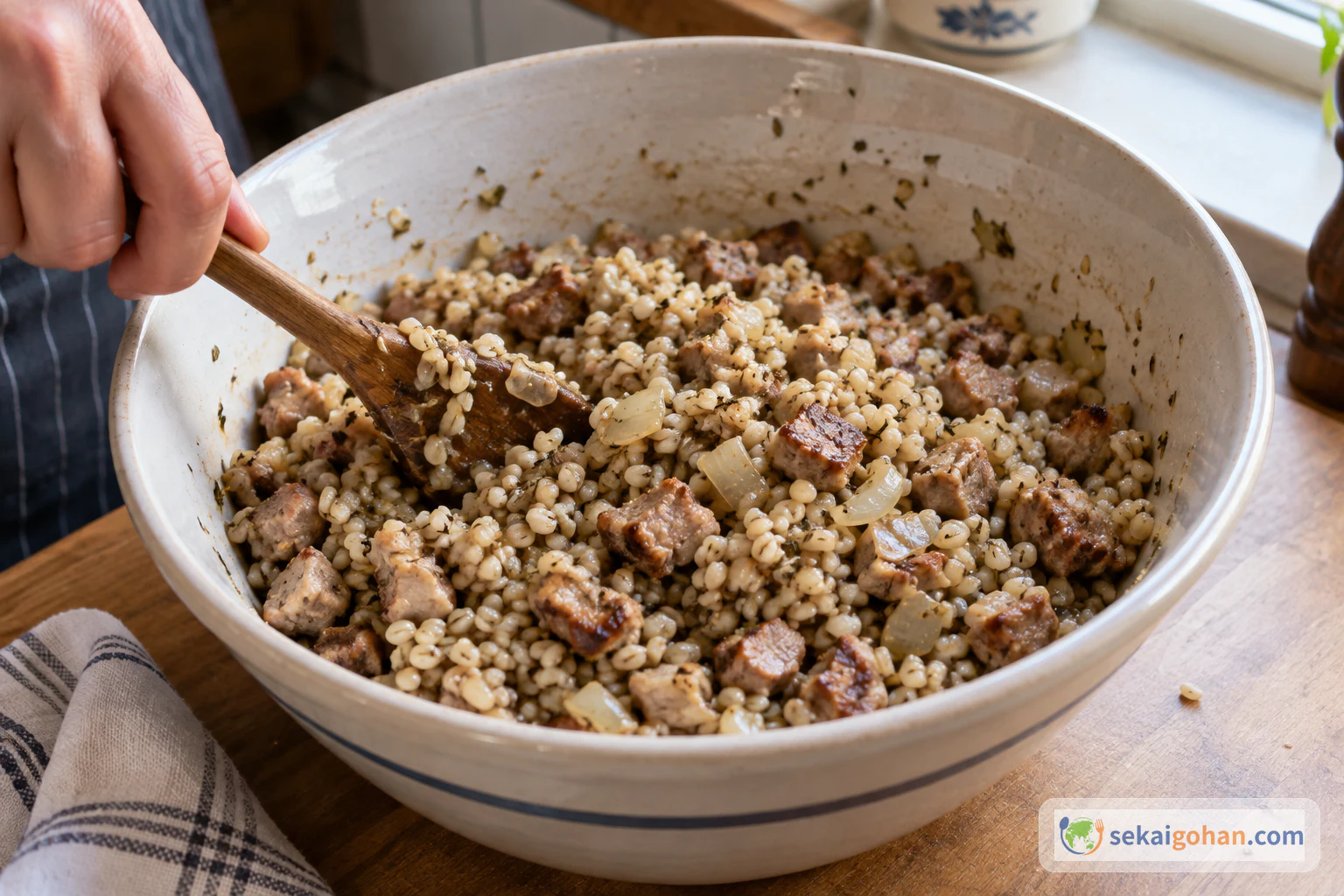
- Large mixing bowl
- Fine sieve for the blood
- Sausage-stuffing funnel
- Kitchen thread
- Clean, fine needle
- Wire rack
- Baking tray
- Food thermometer
- Separate utensils and boards for raw pork and blood
Choosing Blood, Casings and Barley for Verivorst
Pig blood is the biggest obstacle. Ask a butcher or a business food supplier whether they sell blood specifically for eating. Use only blood labeled as food-grade, and follow the seller's instructions and dates for thawing frozen blood. If you can't confirm that it's food-grade, don't use it. Stick to pig blood in fresh form, not another kind of blood or dried blood.
Verivorst needs both blood and casings. A look-alike made from other ingredients isn't verivorst, so if you can't get both, buy ready-cooked blood sausage and heat it instead.
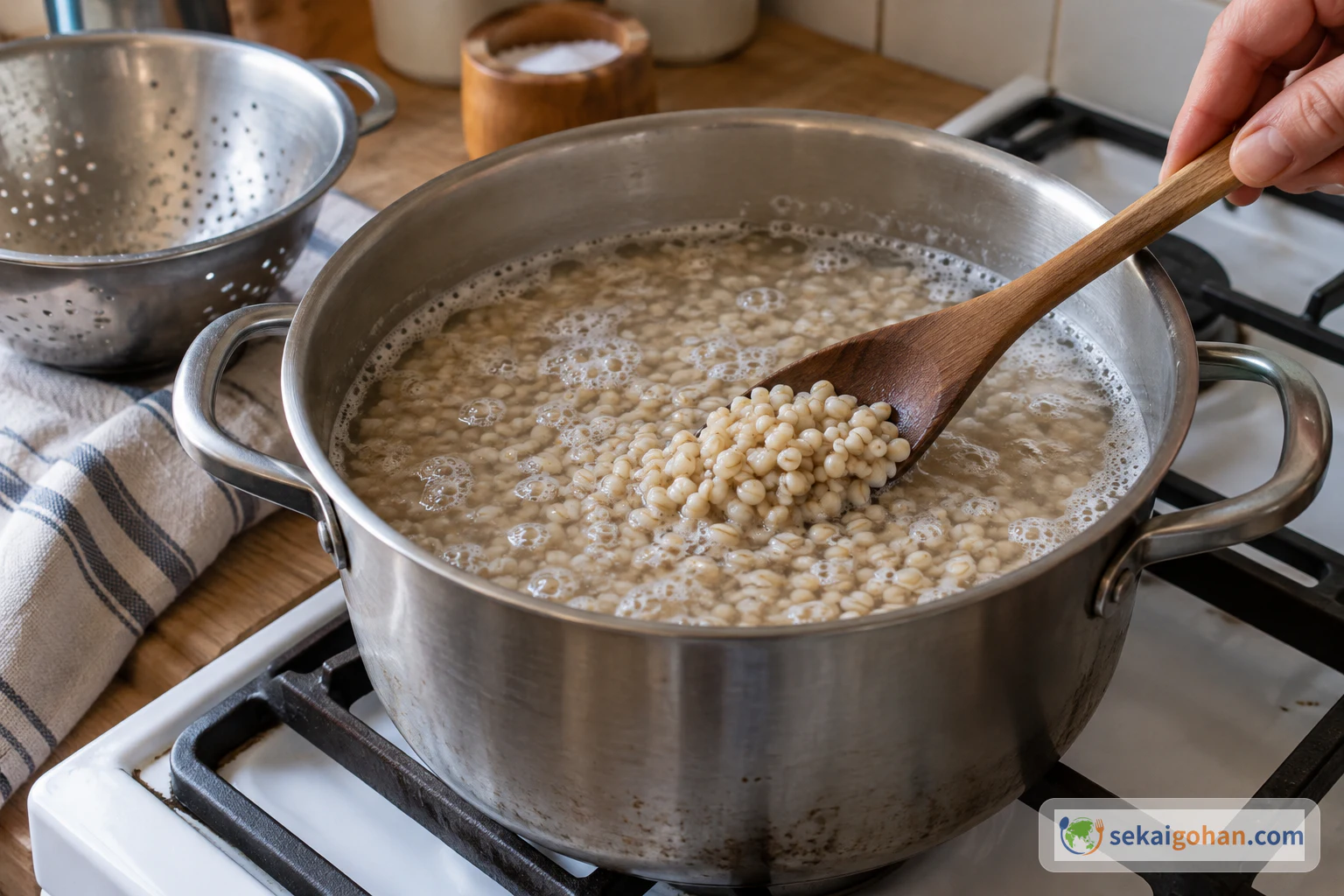
Barley: look for whole pearled grains, sold in Japan as marumugi. Rolled barley is a different product and will change the texture. Weigh the barley dry, since 2.25 lb (1 kg) of dry groats can become 3–4 kg once cooked.
Casings: salted natural hog casings need rinsing and soaking before use. Lightly salt any cleaned casings you don't use and keep them in the refrigerator.
How to Make Verivorst
Blood is an excellent medium for bacterial growth, so hygiene and temperature control are essential. Keep it refrigerated until just before use; fresh blood should be stored at 37°F (3°C) or below. Wash your hands before and after handling raw pork or blood, and keep their juices away from other foods by using separate utensils. Never taste the raw filling.
Verivorst Troubleshooting
Keep the barley grains separate, cool the filling before the blood goes in, stuff the casings loosely, and never let the poaching water boil. Finish with a thermometer: 167°F (75°C) at the center for at least 1 minute.
| Problem | Likely cause | What to do |
|---|---|---|
| The barley turned to porridge | Heat too high | Simmer over low heat next time and stop while the grains are separate |
| The blood set when added | Filling still too warm | Next time, cool until you can stir the mixture by hand |
| The filling won't pass through the funnel | Too thick | Fold in more blood, up to about 2½ cups (600 ml) in total |
| Casings burst in the pot | Overfilled, or the water boiled | Lower the heat, and fill the next batch to less than three-quarters |
| Sausages float | Trapped air | Prick only where needed with a clean, fine needle |
| The needle hole releases red liquid | Not yet poached enough | Continue poaching below a boil |
| Casings burst in the oven | Oven too hot | Keep the temperature around 350°F (175°C) |
| The center is below 167°F (75°C) | Thick sausage or not enough time | Keep baking until it holds 167°F (75°C) for at least 1 minute |
Serving, Storing and Varying Verivorst
Serving
The traditional way is to pan-fry verivorst until crisp and eat it with cowberry or lingonberry jam. At Christmas, serve it with cranberry sauce, or with sauerkraut and browned potatoes. However you crisp it, check the center with your thermometer.
Storage and Reheating
Don't leave cooked sausage at room temperature for long. Divide leftovers into shallow containers so they cool quickly, then refrigerate at 50°F (10°C) or below or freeze at −15°C or below. Reheat to 167°F (75°C) or above, and discard anything that has been kept too long.
Other Versions
Each of these is its own recipe, so don't mix their amounts into the one above.
| Version | What differs |
|---|---|
| Abja-Paluoja | Adds a head of garlic and sugar to the marjoram, salt and pepper. Bakes at 350°F (180°C) for 20–30 minutes |
| Salted and fresh pork | Uses both salted and fresh pork and a much higher share of barley, seasoned with marjoram, oregano and caraway |
| Smoked bacon | Uses 1 lb (500 g) smoked bacon, 10.5 oz (300 g) onion and 2 tbsp butter per 2.25 lb (1 kg) groats, with allspice among the seasonings |
| Fatty fresh and smoked pork | Uses both fatty fresh pork and smoked pork |
| Technical version | Uses head meat, fat, lungs, skins and allspice |
Frequently Asked Questions
What can I do if I can't get pig blood?
Buy a ready-cooked blood sausage and heat it until crisp and to 167°F (75°C) or above. Retail supply is hard to find. In Japan, frozen Spanish pig blood has been listed in 1 lb (500 g) packs, and wholesale shipments from Okinawan meat centers were reported in 2017, so contact sellers directly to check what's available now.
Can I use plastic wrap or a mold instead of casings?
No. Without casings it would no longer be the same stuffed sausage.
How much casing do I need?
For 2.25 lb (1 kg) of barley, have 10 m of casing ready. This recipe uses half that barley with proportionally more meat, so have up to 10 m ready and prepare only what you use.