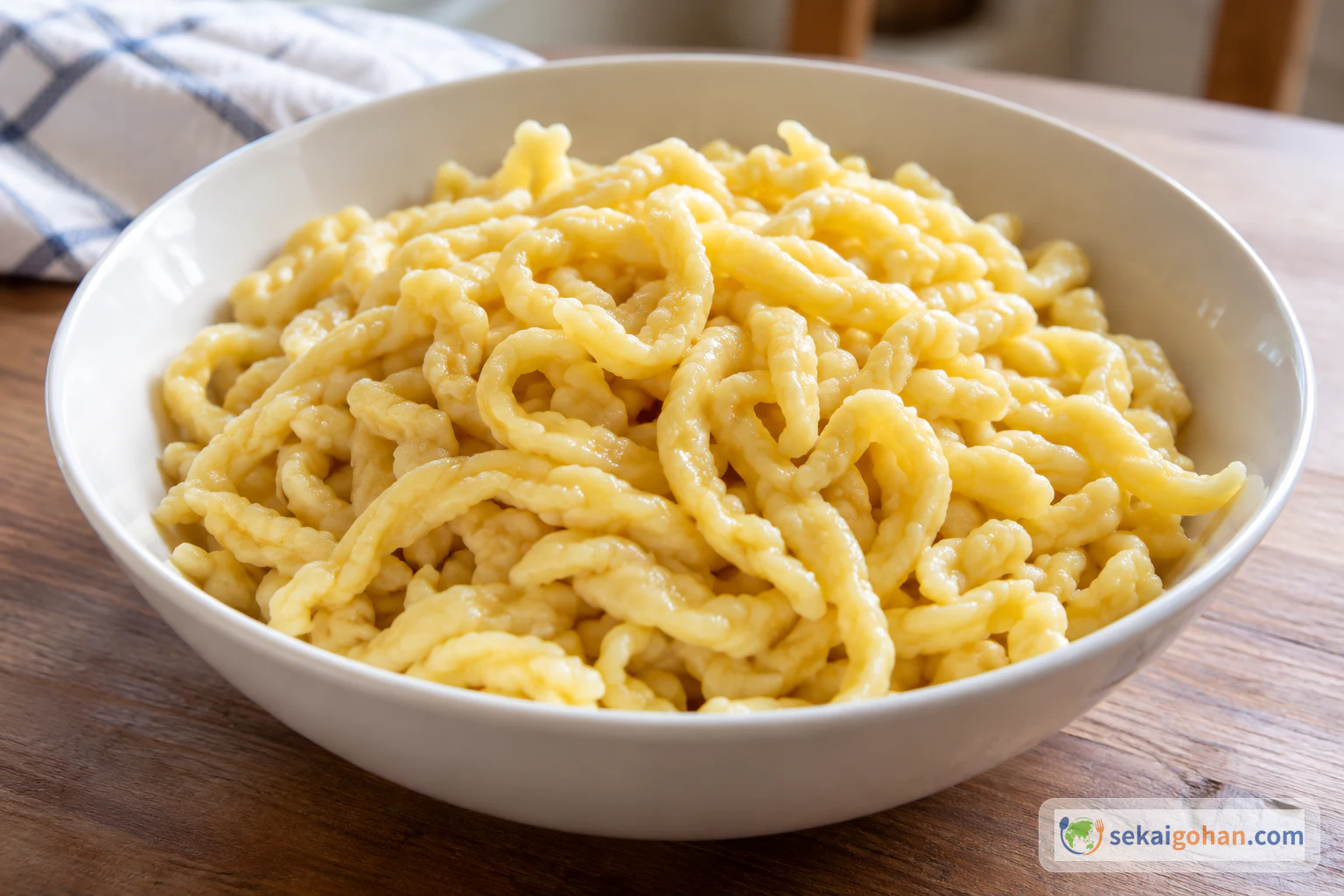
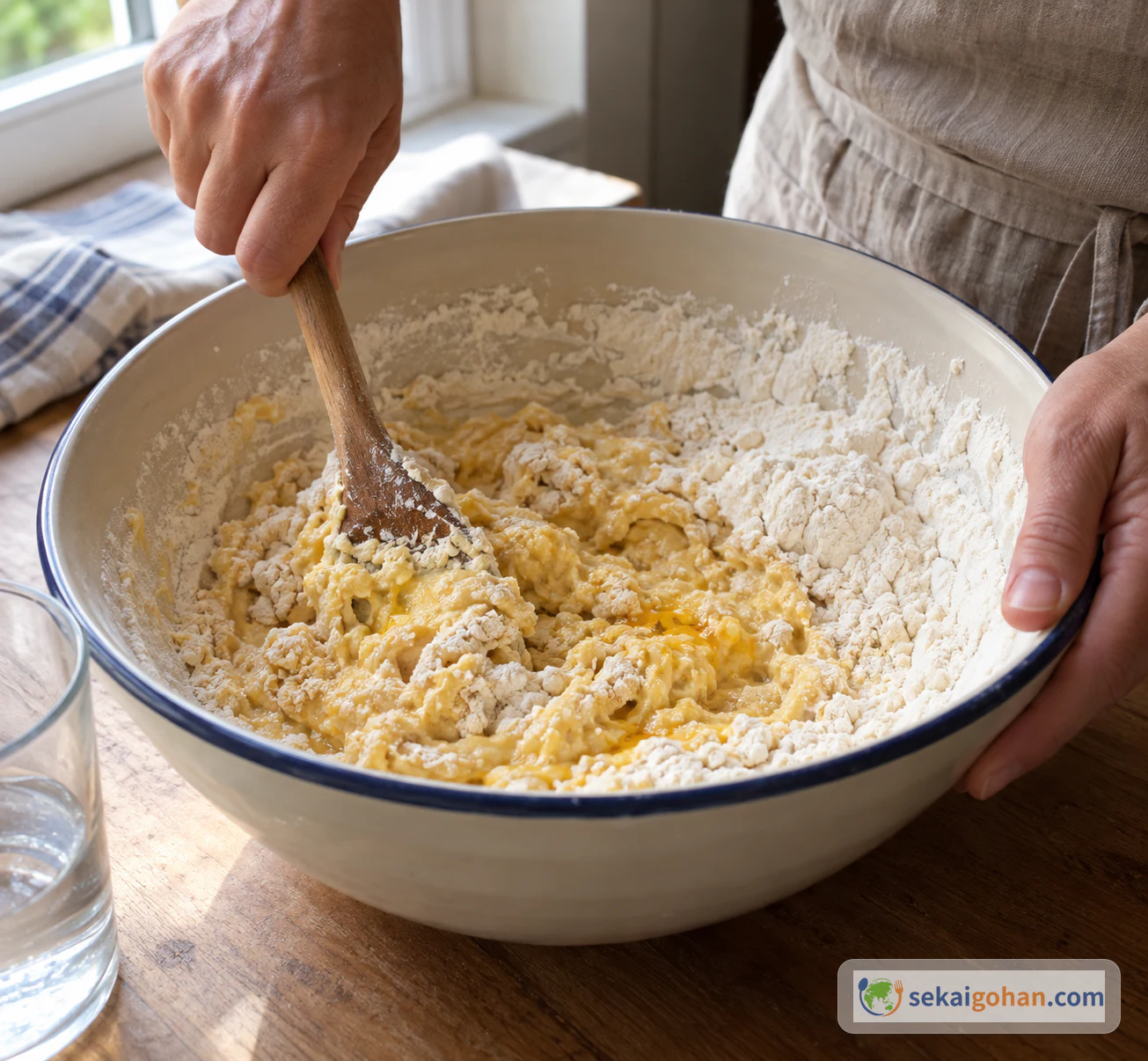
A spoonful of short, yellow egg noodles goes onto the plate next to a meat dish, and the thick, dark sauce settles in between the strands. On another day, the same noodles sit beside a pot of lentils with a sausage. In Swabia, in the southwest of Germany, that's how spätzle turn up at the table: soft, slightly irregular, buttery, and made to hold on to whatever sauce is nearby. The dough could hardly be simpler, just wheat flour, eggs, water and a pinch of salt. What makes the difference at home is how stiff the dough turns out and how you get it into the pot.
Spätzle in Swabia: Shapes, History and Name
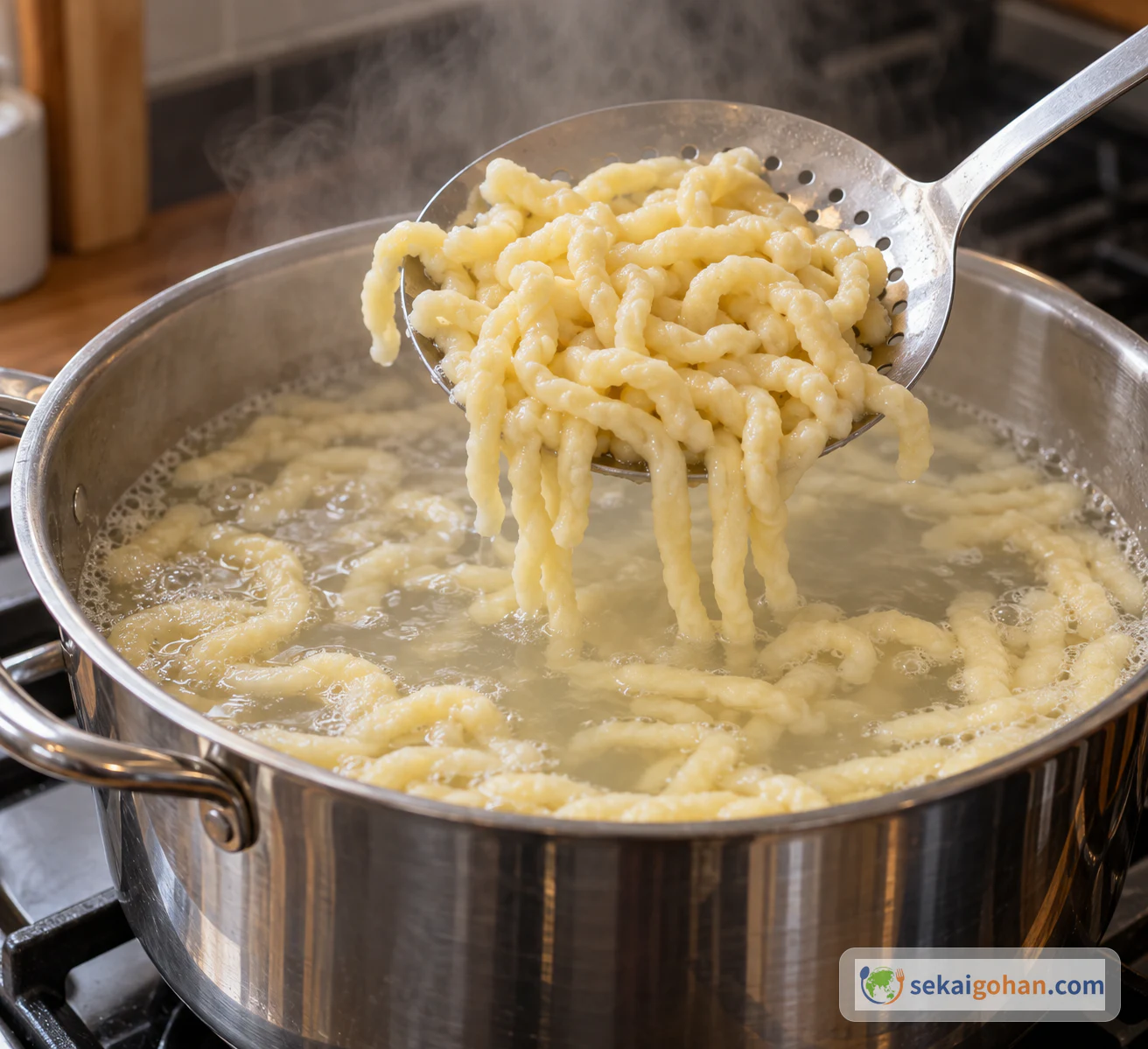
Spätzle are a Swabian food: yellow egg noodles about 1 inch (2–3 cm) long, made in the region since at least the 18th century. They were once a Lenten dish. Locals eat them alongside meat dishes, with lentils and sausage, with cheese, or simply with sauce.
The German name is Spätzle; without the umlaut it is often written "Spaetzle."
Three ways of shaping
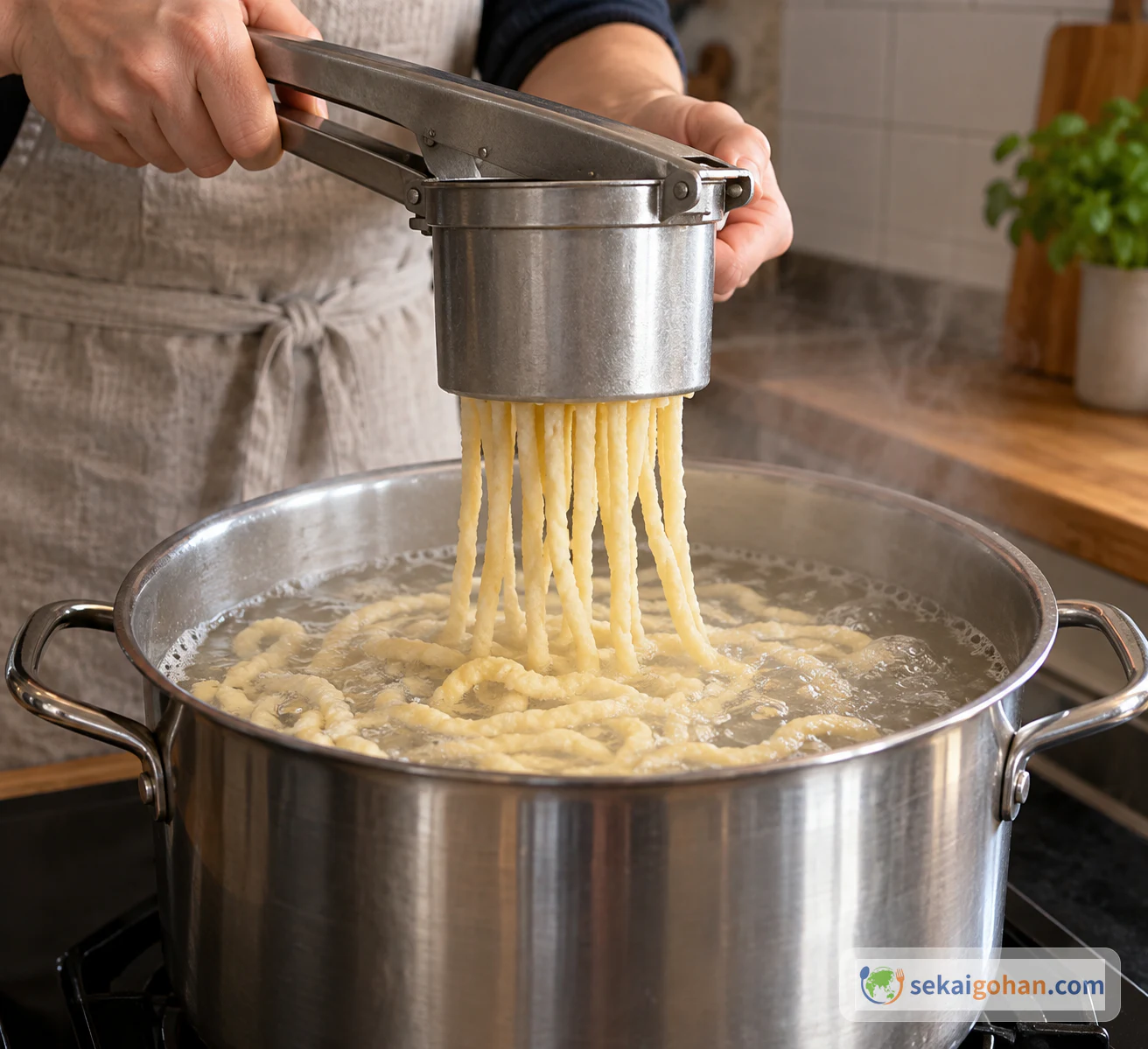
How the dough reaches the water decides the shape. Hand-scraping from a board is still regarded as a mark of special quality today.
| Shaping method | Resulting form | Notes |
|---|---|---|
| Spätzle press | Long strands | The method used in this recipe |
| Scraped from a wet board with a knife | Hand-shaped, traditional form | Traditional hand method |
| Hobel (a grater-like shaper) | Shorter shapes, close to Knöpfle | Used by some cooks |
Board scraping takes practice and gives a different shape from the press. If you try it, work carefully near the boiling water and steam.
The protected name
"Schwäbische Spätzle / Schwäbische Knöpfle" is a registered name with Protected Geographical Indication (PGI) status. Germany is the country of origin, and the original EU registration dates to 8 March 2012. The protection applies to products made in Swabia according to the registered specification.
As for where the name comes from, one story says it derives from "Spatzen," small sparrows, because the dough held in the hand looked like a sparrow. It's a nice image, but it remains a legend rather than an established origin.
Ingredients: Serves 4, with the Water Added in Stages
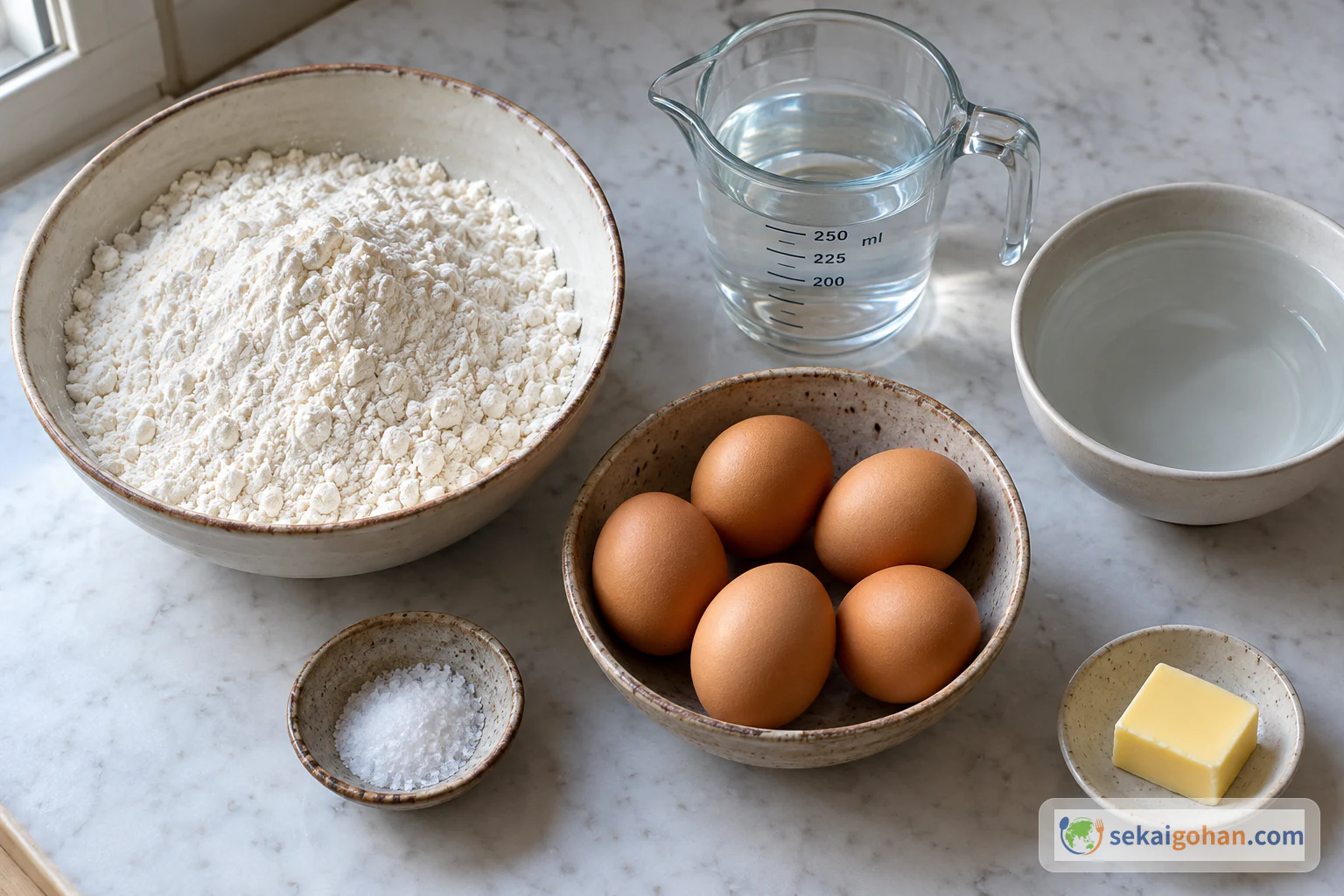
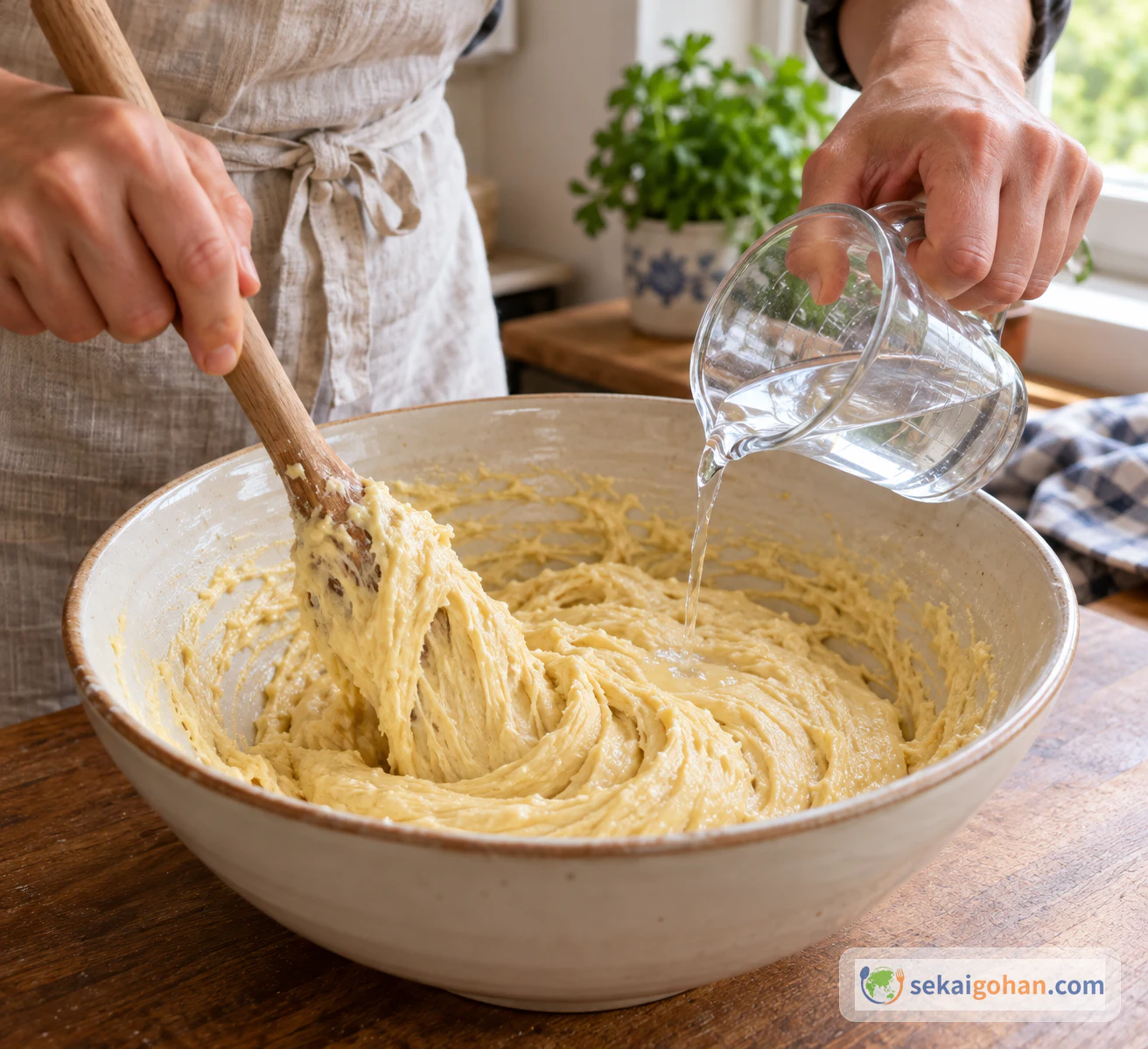
Measure out up to 1 cup (250 ml) of water in a separate jug. Mix in about half first, then add the rest little by little, stopping when the dough looks right and the total stays within 1 cup (200–250 ml).
Choosing Flour, Eggs and Butter for Spätzle
Everything here comes from an ordinary supermarket.
- Flour: Use German Type 405 flour. If you can't find it, plain all-purpose wheat flour is the closest substitute. Cake flour gives a noodle that is too soft.
- Eggs: Note the size of your eggs so you can compare the dough next time. Flour and egg size both change how much water the dough needs, so add water only until the dough is pressable, even if that falls short of 1 cup (250 ml).
- Butter: Use just enough to coat the noodles thinly. Unsalted butter is a sensible choice, since the dough is already salted.
- Lentils and sausage: If you're serving them, cook or prepare them separately.
This recipe contains wheat (flour), egg, and milk (butter). Check with everyone at the table before cooking.
Equipment
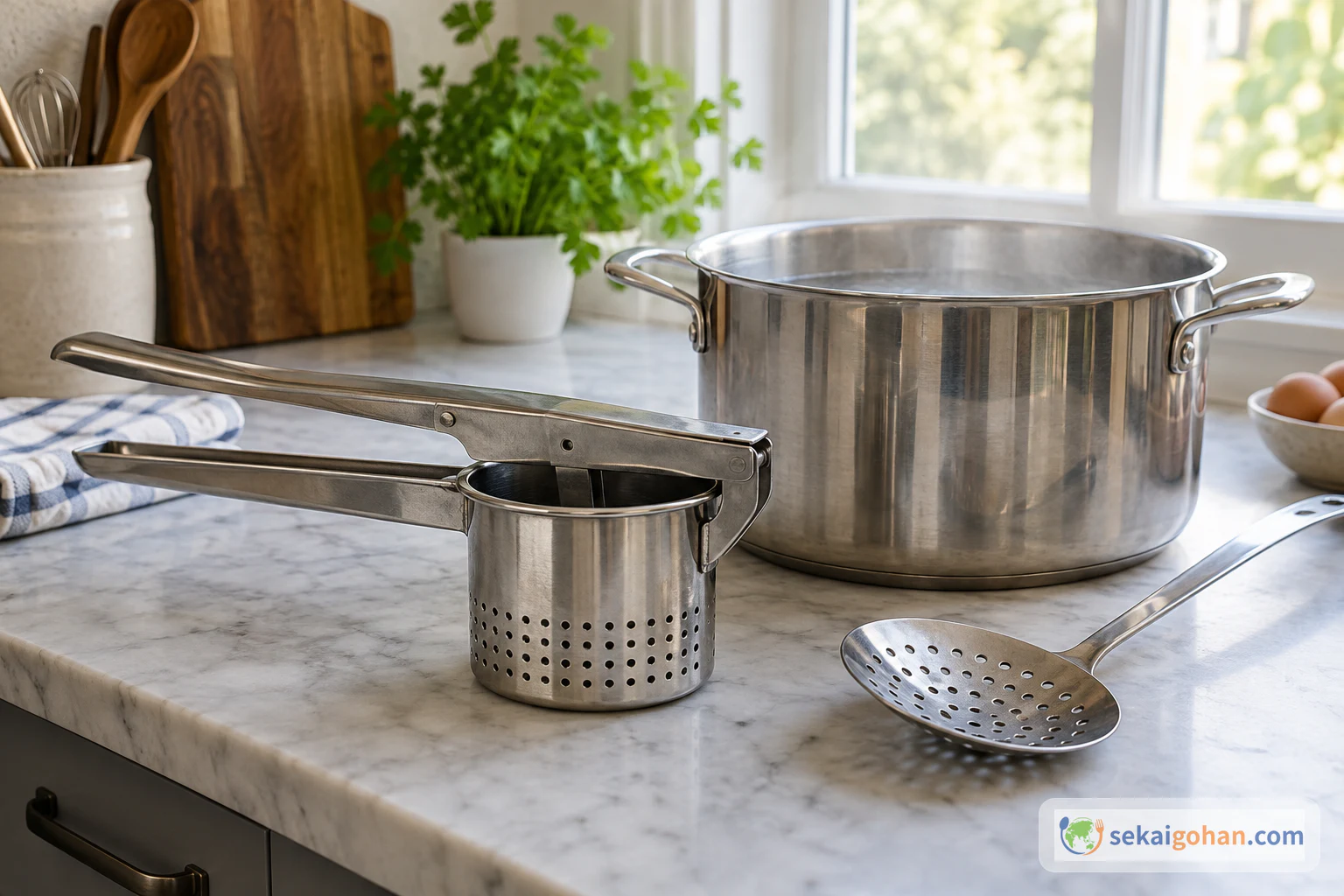
- Spätzle press (Spätzlepresse), for shaping the noodles
- Large pot for boiling water
- Slotted skimmer or slotted ladle
- Large mixing bowl and a wooden spoon
- Measuring jug for the dough water
- Bowl of cold water and a colander
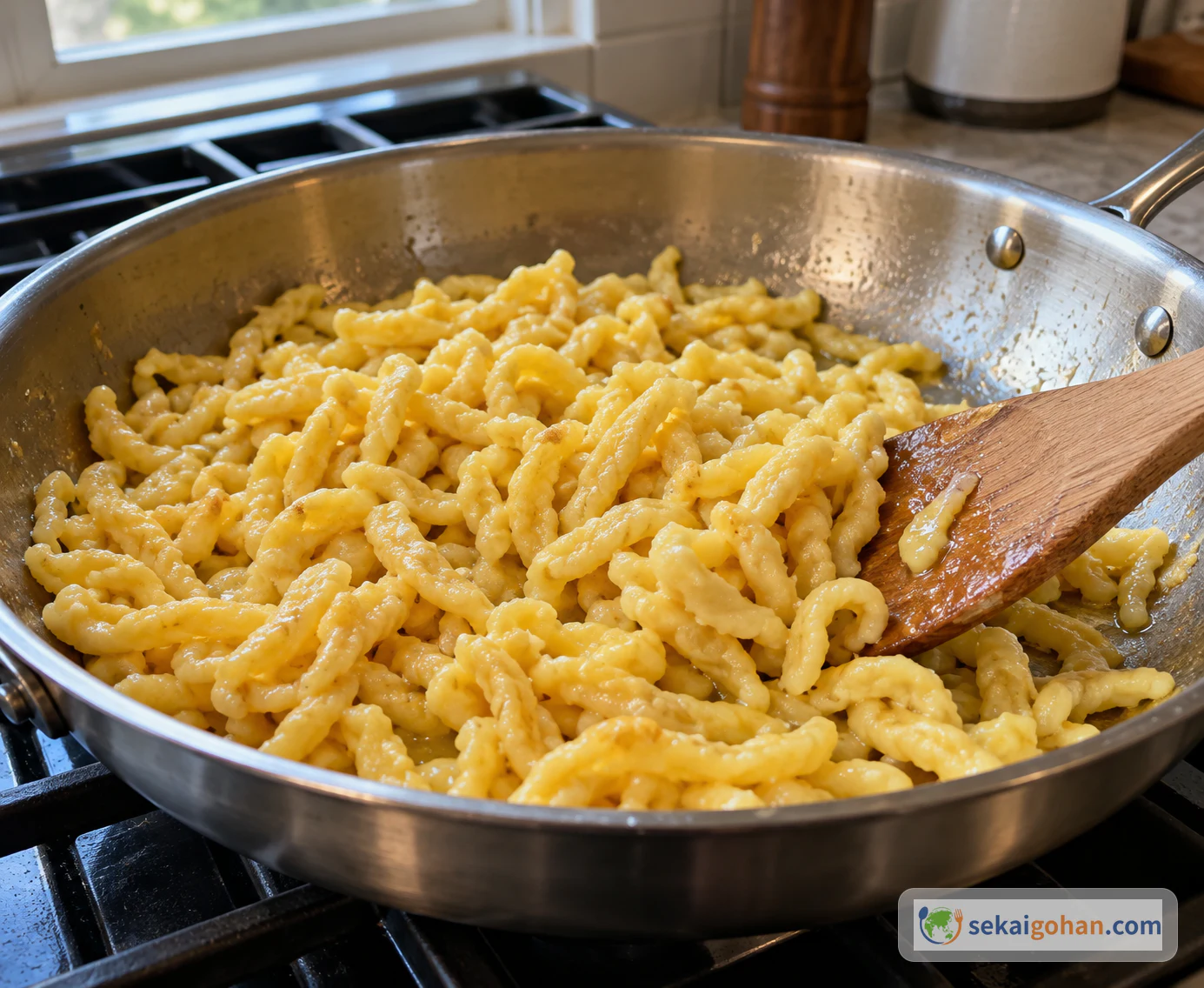
- Wide skillet for warming the noodles with butter
A dedicated press pushes dough into the pot quickly, but it is a single-purpose tool that needs storage space. If you plan to make spätzle often, it is worth having.
Method: Mix, Press, Lift, Butter
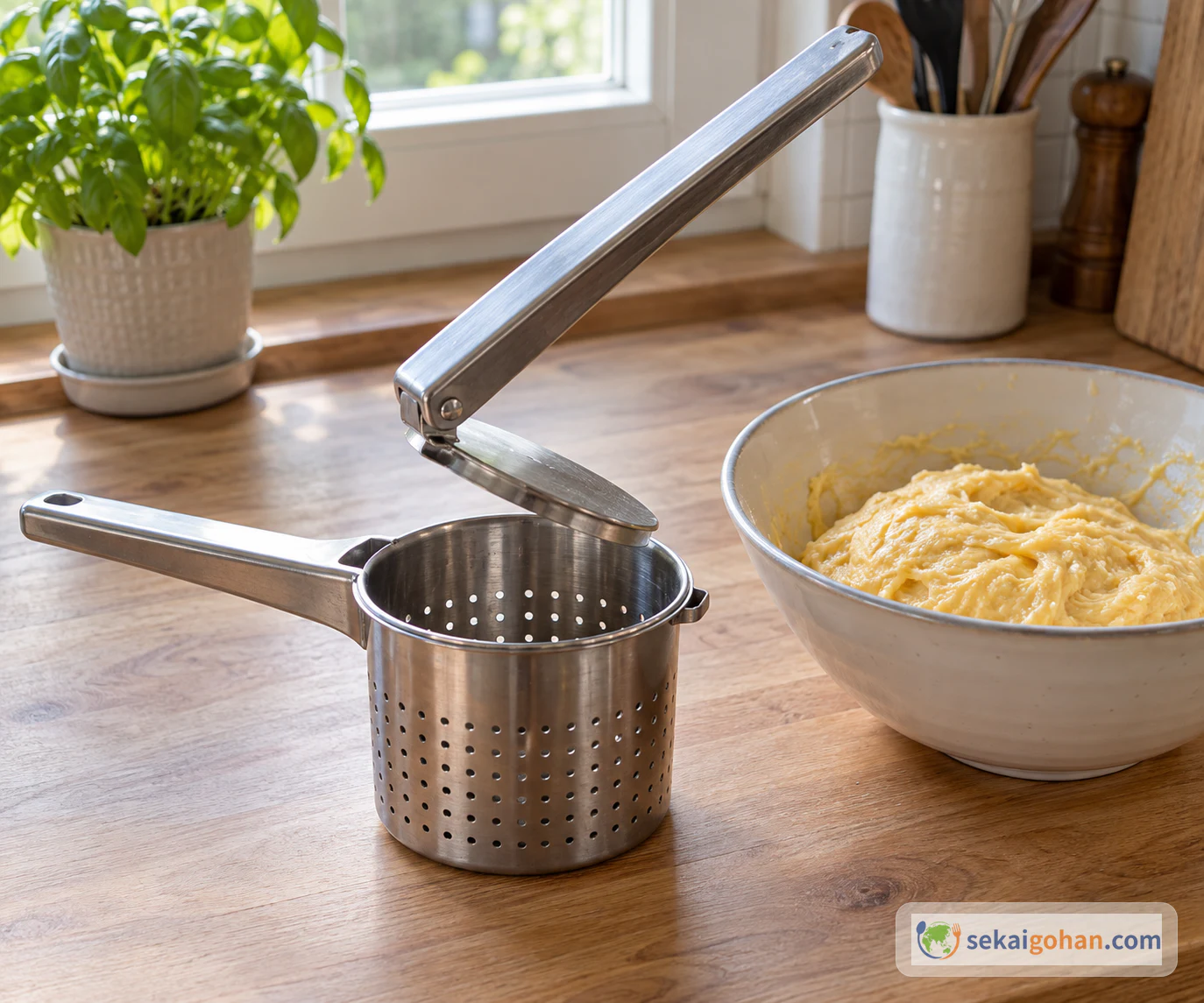
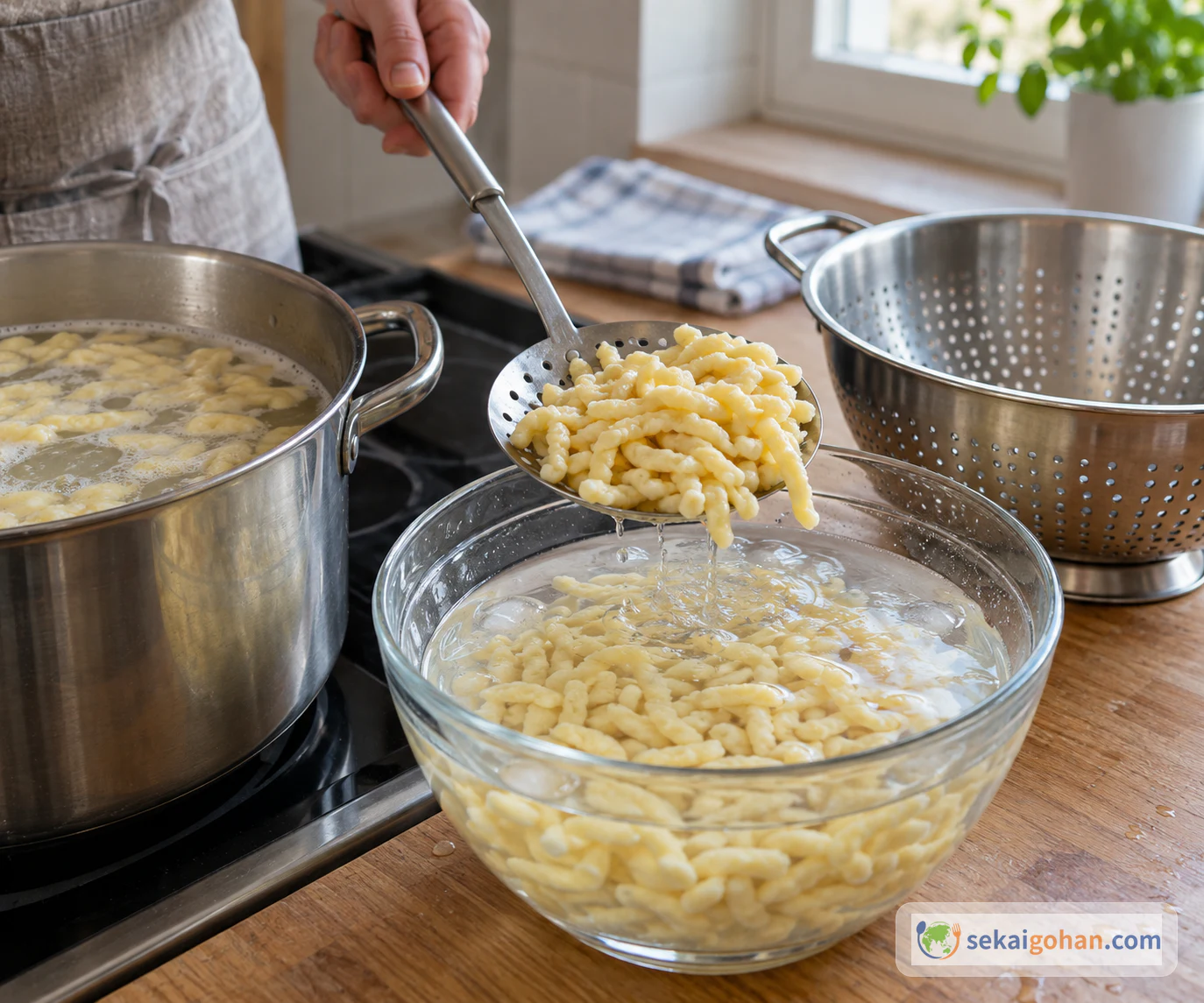
Before you start, make sure the press is clean and dry, and get the water boiling in a large pot. Set the bowl of cold water and the colander next to the stove, so you can move each batch from the pot to the cold water without waiting.
Floating is your cue to lift the noodles out, but it does not show they are hot all the way through. Cook food thoroughly, with the center at 167°F (75°C) for at least 1 minute. Make sure the final butter step warms the noodles well.
Fixing Common Spätzle Problems
Measuring the water separately and adding it gradually prevents most of these problems before they start.
| Problem | Likely cause | What to do |
|---|---|---|
| The dough is lumpy | The water went in all at once, or the dough wasn't beaten enough | Keep beating until no lumps remain before filling the press. Next time, start with about half the water |
| The dough is too stiff to press | Water addition stopped too early | Add the remaining water in small amounts, beating after each addition, without going past 1 cup (250 ml) in total |
| The dough is very loose | Too much water was added at once | Next time, add the water more slowly and stop as soon as the dough can be pressed |
| The noodles form one big clump in the pot | Too much dough at once, or the water wasn't at a full boil | Press smaller batches and wait for the water to return to a boil before pressing the next one |
| The noodles stick together after cooking | The cold-water step was skipped, or they weren't drained well | Take each batch briefly through cold water to keep the noodles from sticking, and drain well before adding butter |
Serving and Storing Spätzle
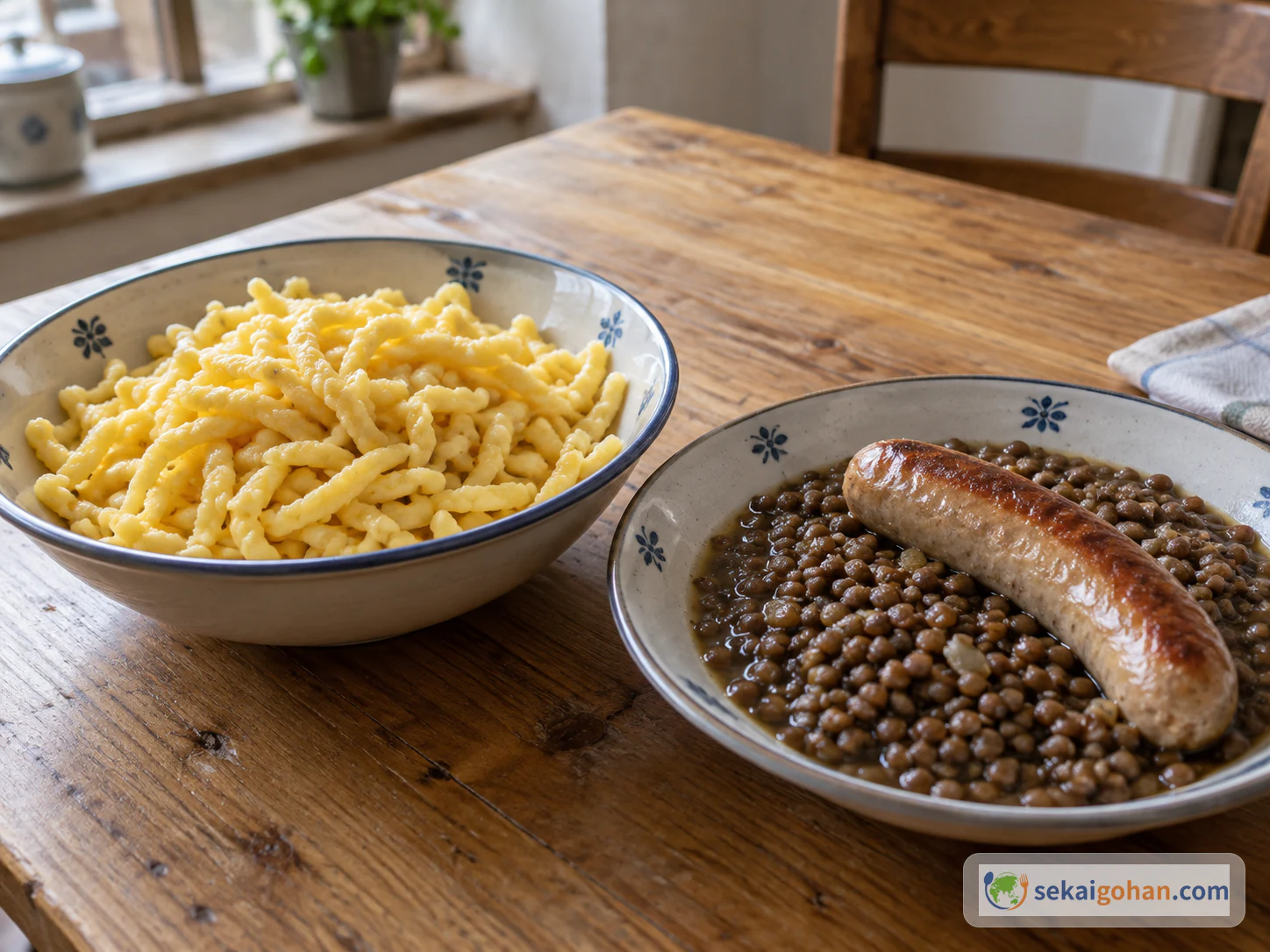
Plain buttered spätzle are a base rather than a finished dish, and that's their charm: they take on whatever you put next to them.
- With meat in a rich sauce: The noodles soak up the sauce, so keep them simply buttered.
- With lentils and sausage: Serve the lentils and sausage separately and keep the noodles plain.
- With butter, or with sauce alone: The simplest way, and a perfectly good one.
- With butter and breadcrumbs: A regional way to finish them.
- With cheese: Spätzle are also eaten with cheese, butter and fried onions. For the cheese-layered dish, see Käsespätzle.
Spätzle also go into Gaisburger Marsch, the Stuttgart beef broth with potatoes. For more of the regional table these noodles belong to, see more dishes from Germany.
Don't leave cooked spätzle at room temperature for long. Divide leftovers into shallow containers so they cool quickly, refrigerate them, and reheat them thoroughly before eating. Extra spätzle can also be bagged for the freezer and reheated in a microwave after thawing.
Frequently Asked Questions
Are Spätzle and Knöpfle the same thing?
They are closely related flour-and-egg noodles. Knöpfle are the shorter, rounder form, and the protected name covers both: "Schwäbische Spätzle / Schwäbische Knöpfle."
How much water should I add to the dough?
The total is 1 cup (200–250 ml) for 1 lb (500 g) flour and 5 eggs, but that range is the outer limit, not the amount to pour in first. Mix in about half (roughly ½ cup (100–125 ml)), then add the rest a little at a time until the dough is smooth, lump-free and pressable.
Should I salt the cooking water?
Salt only the dough, with a pinch. Cook the noodles in plain boiling water.