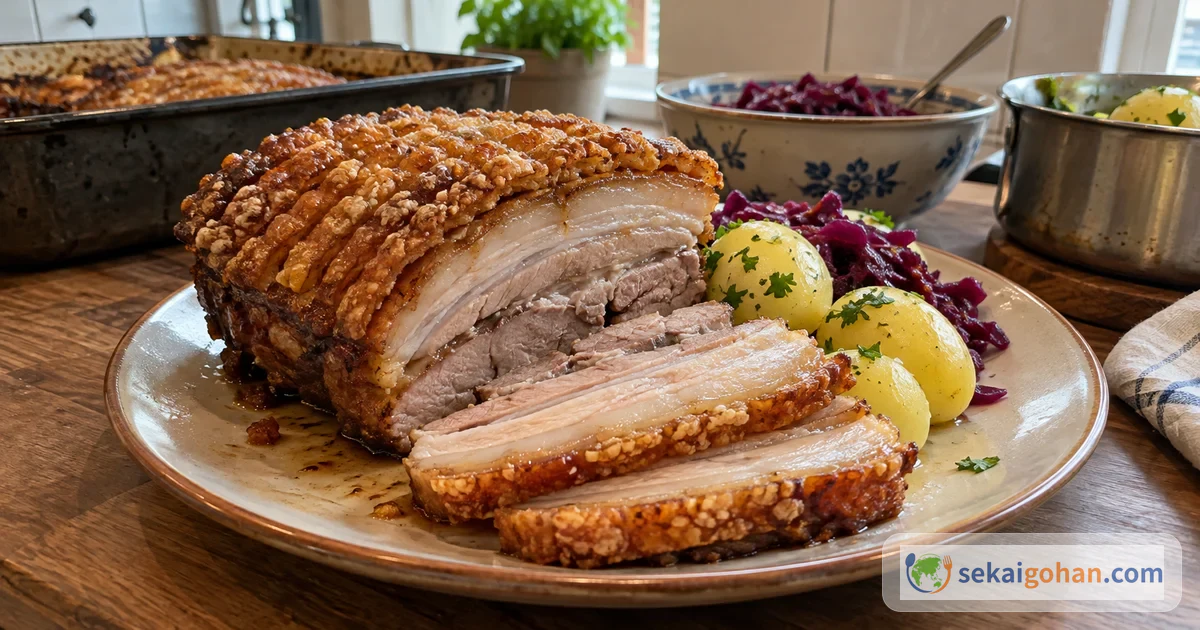
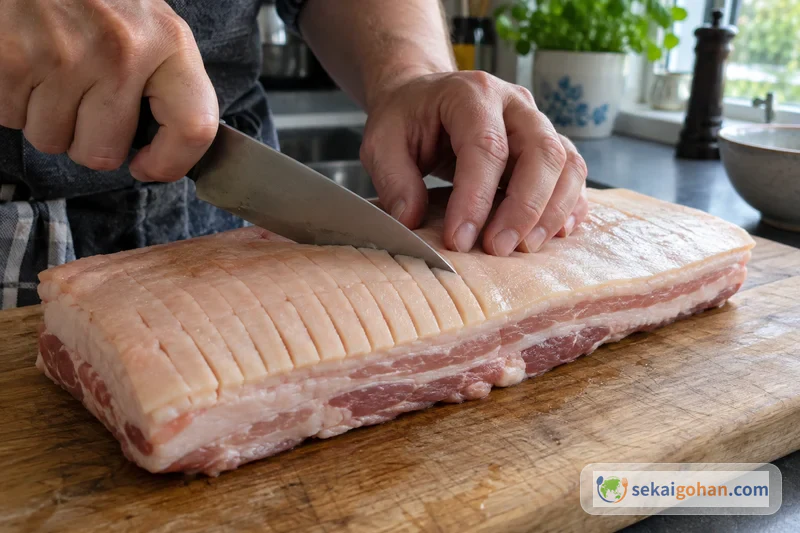
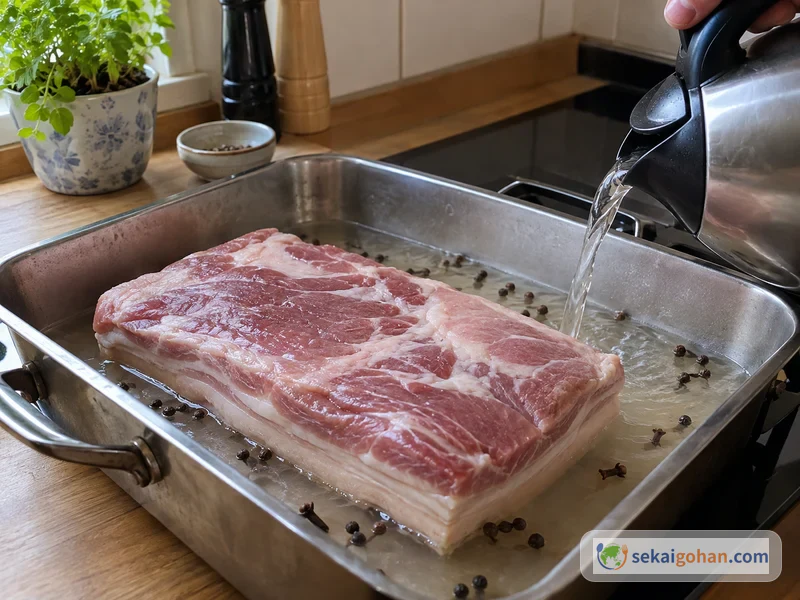
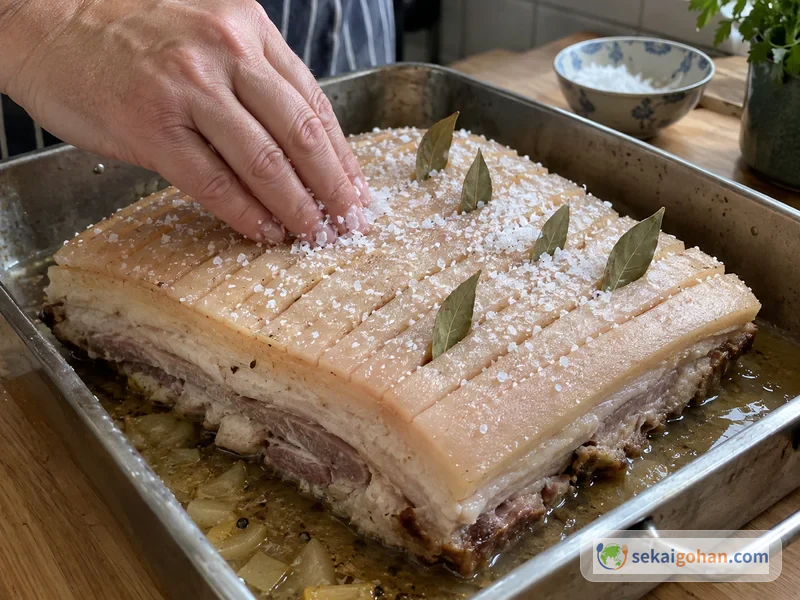
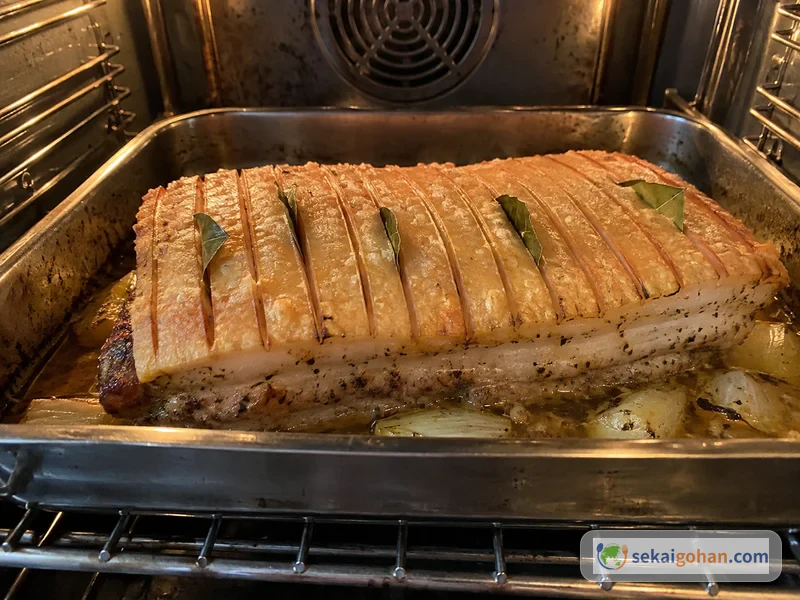
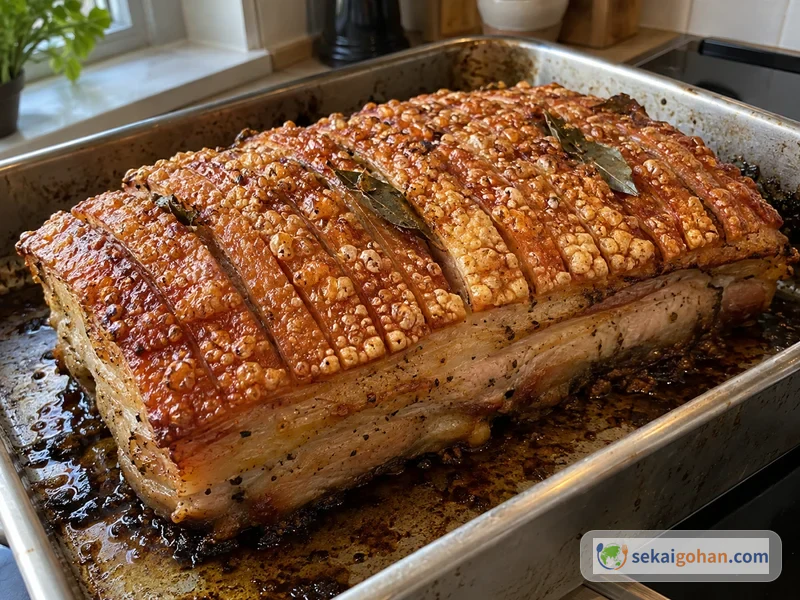
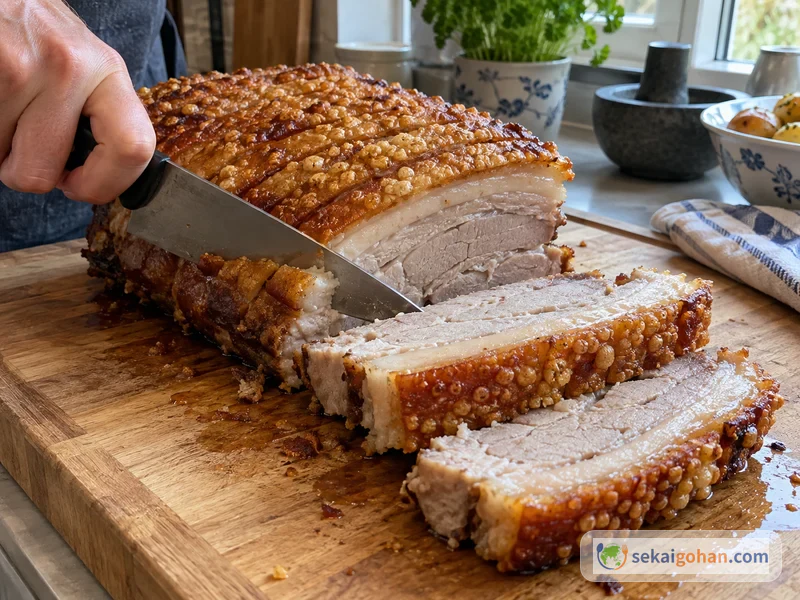
On the evening of December 24, the smell of roasting pork fat, bay leaf and clove drifts from kitchens in Danish homes. Open the oven door and the skin has cracked into fine fissures, puffed and golden, and when a knife goes in there is a dry "crack." Flæskesteg is Denmark's roast pork cooked with the skin on, and for generations it has been the centerpiece of the Christmas Eve table. Everything depends on how crisp you can get that skin. The steps are simple, but take your time with the scoring of the skin and the salt, because they change the result completely.
Flæskesteg on the Danish Christmas table
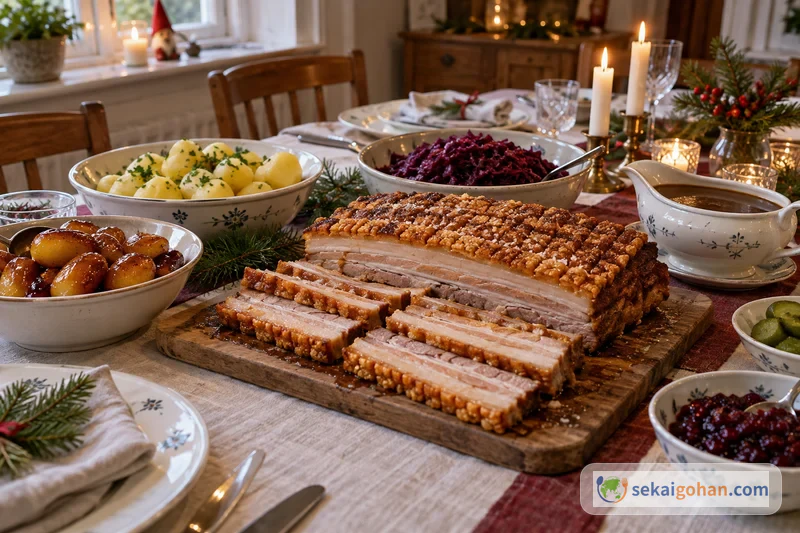
Danes have eaten pork for centuries, but oven-roasted pork only became common at home after wood-fired household ovens spread in the 1860s. Roasting with the skin on has been part of the dish from the start.
Pork at Christmas has its roots in 19th-century farming. Pig farmers preserved meat in brine and had to eat it before it grew too salty, and because pigs were slaughtered in November, pork landed on the Christmas feast. Wealthy 19th-century homes, meanwhile, followed German and French Christmas customs and treated goose, and later duck, as the higher-status meat.
Many Danish homes serve both duck and flæskesteg on Christmas Eve. About three in four people eat duck on December 24, and about 60% eat pork. Rather than choosing one, putting two meats on the table is the Danish way.
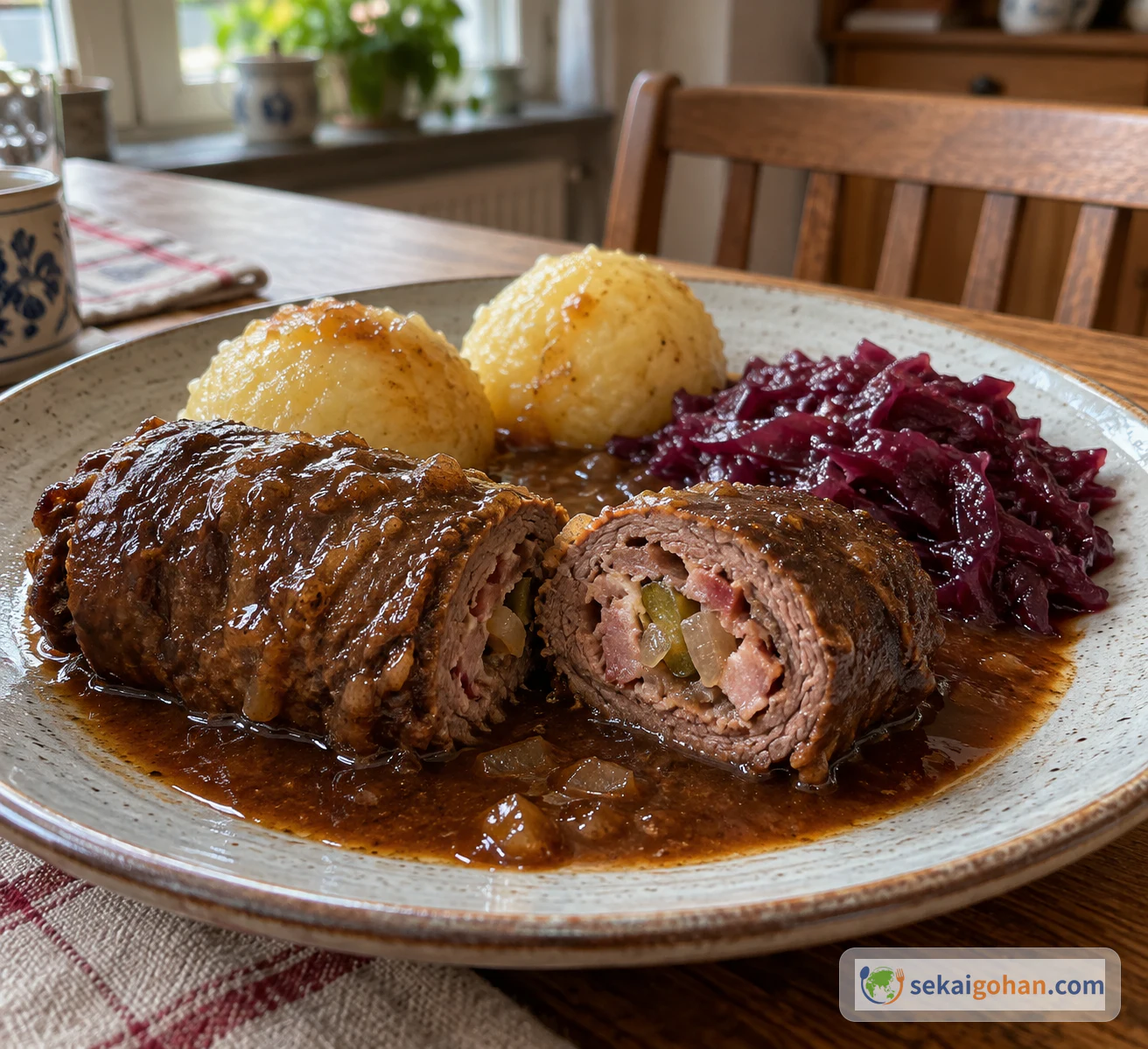
The rest of the table has a fixed cast: boiled potatoes, potatoes glazed brown with sugar and butter (brunede kartofler), boiled or braised red cabbage (rødkål), and gravy made from the pan juices. After the meal comes risalamande, a cold rice pudding with chopped almonds, vanilla and whipped cream, eaten with cherry sauce.
Ingredients (serves 4)
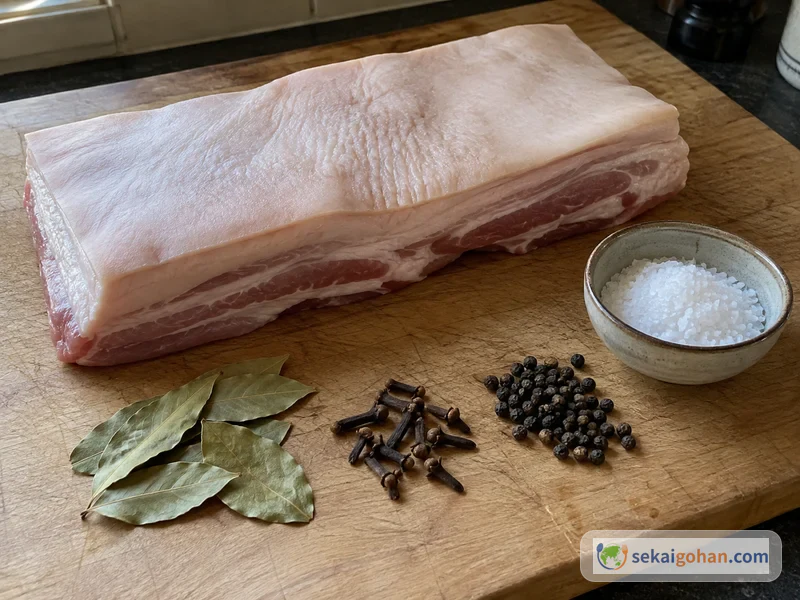
Skin-on pork belly is not always on the shelf at an ordinary supermarket, since much of the pork belly sold there has had the skin removed. Look for it at a butcher or specialty meat shop, or online, often frozen. In Denmark the loin-side kamsteg is also popular, but skin-on belly is usually easier to find and, being fattier, is less likely to dry out when roasted.
Move frozen skin-on pork to the refrigerator and thaw it slowly, allowing 2–4 days for a roasting joint. The drier the surface of the skin, the crisper it bakes, so after thawing, pat it thoroughly dry with paper towels.
Choosing a cut for flæskesteg
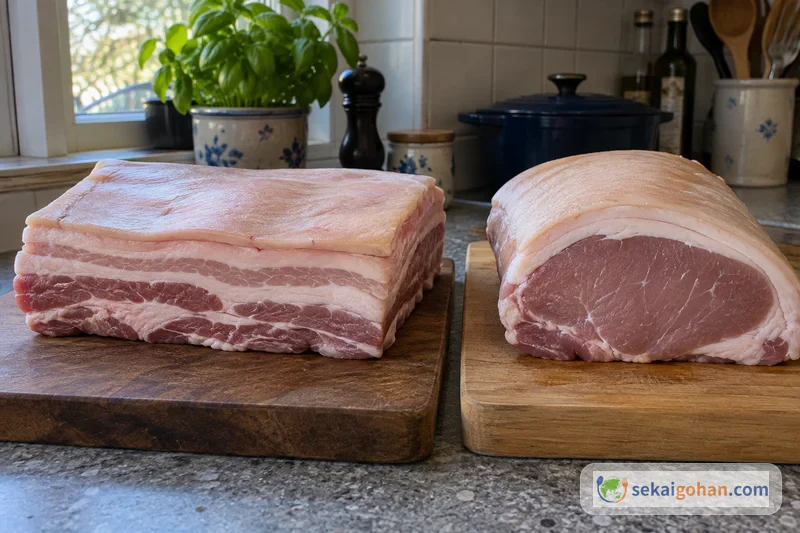
In Denmark, flæskesteg is the name of the dish, roast pork baked with the skin on, and two cuts are popular. Kamsteg (loin) comes from the back and carries more lean meat. Ribbenssteg (belly) has layers of lean meat and fat, so it dries out less even when overcooked.
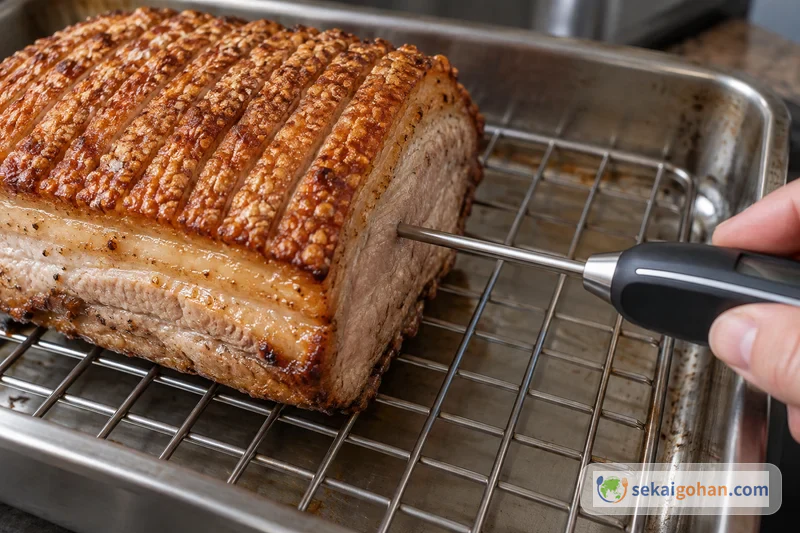
The doneness temperature differs by cut: 149°F (65 °C) for kamsteg and 167°F (75 °C) for ribbenssteg. At home, heat the center to 167°F (75 °C) for at least 1 minute for either cut. Fatty belly stays moist even at that temperature.
Baking times differ by cut. A roasting shoulder takes about 2 hours 15 minutes, and loin about 1 hour 45 minutes. Even for the same flæskesteg, cooking time depends a lot on the cut and size.
How to make flæskesteg
Prep takes about 20 minutes. Baking is 20 minutes skin side down, 50 minutes after turning over, 10–20 minutes to puff the skin at the end, and 15 minutes of rest. This recipe assumes a convection oven. In an electric oven without convection, raise the temperature at each stage by 10–20 °C and adjust the time while watching the color.
Heat pork to 167°F (75 °C) at the center for at least 1 minute. Even fresh pork, if not heated through, can cause food poisoning or hepatitis E virus infection. Pork loin is sometimes finished at 149°F (65 °C) at the center, but at home, aim for 167°F (75 °C) for at least 1 minute and check with a thermometer.
At the final 450°F (230 °C), pork fat splatters onto the roasting pan and tends to smoke. When opening the oven door, keep your face back and use heavy oven mitts. Be careful of burns from the hot pan juices you transfer.
If the skin will not puff no matter what, another method is to broil it for a few minutes under the oven's grill (top heat) function. But it goes from golden to burnt black in seconds, so watch it closely at the oven door.
Serving flæskesteg and using leftovers
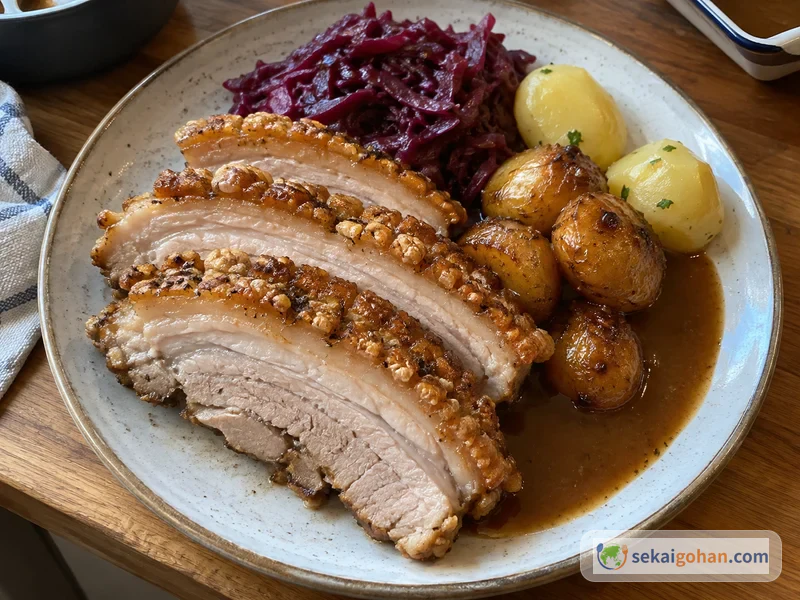
Arrange the carved flæskesteg skin side up, with sweet-sour braised red cabbage and the two kinds of potatoes alongside. Plenty of Danish homes take shortcuts here: canned small boiled potatoes tossed in caramel, and jarred or canned red cabbage. Warm a jar of imported red cabbage and the table comes together easily.
For the gravy, skim the fat from the pan juices you set aside, move them to a pot, and thicken with flour. Juices carrying the aroma of pepper and bay leaf are salty and meaty enough on their own.
If any is left the next day, slice it thin and lay it on rye bread as Denmark's open-faced sandwich, smørrebrød. Cold flæskesteg with red cabbage, prunes, orange and pickled cucumber is the classic combination. Danish hot dog stands also sell it warm in a bun.
Frequently asked questions
What if I cannot get skin-on pork?
Skinless pork belly block still makes fragrant roast pork by the same steps, though you lose the crisp skin that is the star of the dish. Skin-on belly is easiest to find at butchers or online.
The skin did not get crisp. What was the cause?
Common causes are scores too shallow for the salt to go deep, a damp skin surface, and too little heat at the finish. Pat the skin dry before baking and raise the finish to 450°F (230 °C). For spots that still will not puff, broil briefly under the grill function without taking your eyes off it.
Should I add cloves?
They are optional; Danish recipes sometimes list them as "can be omitted." Bay leaf alone gives enough aroma.
Can I make it ahead?
The skin is crispest on the day it is baked. Let leftover meat cool, refrigerate it, and finish it soon. Slice it cold for open-faced sandwiches, or if reheating, heat it until it is hot all the way through.