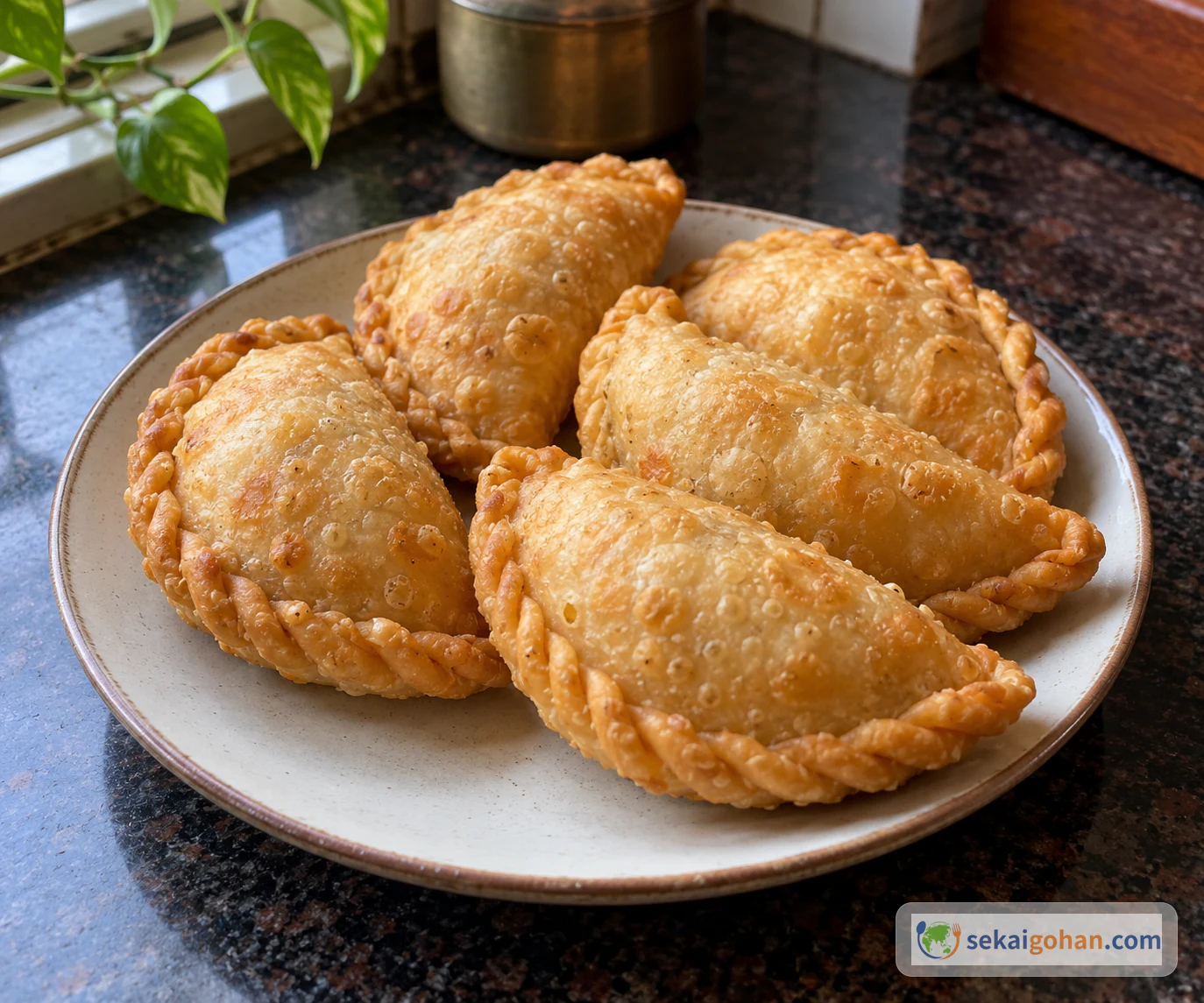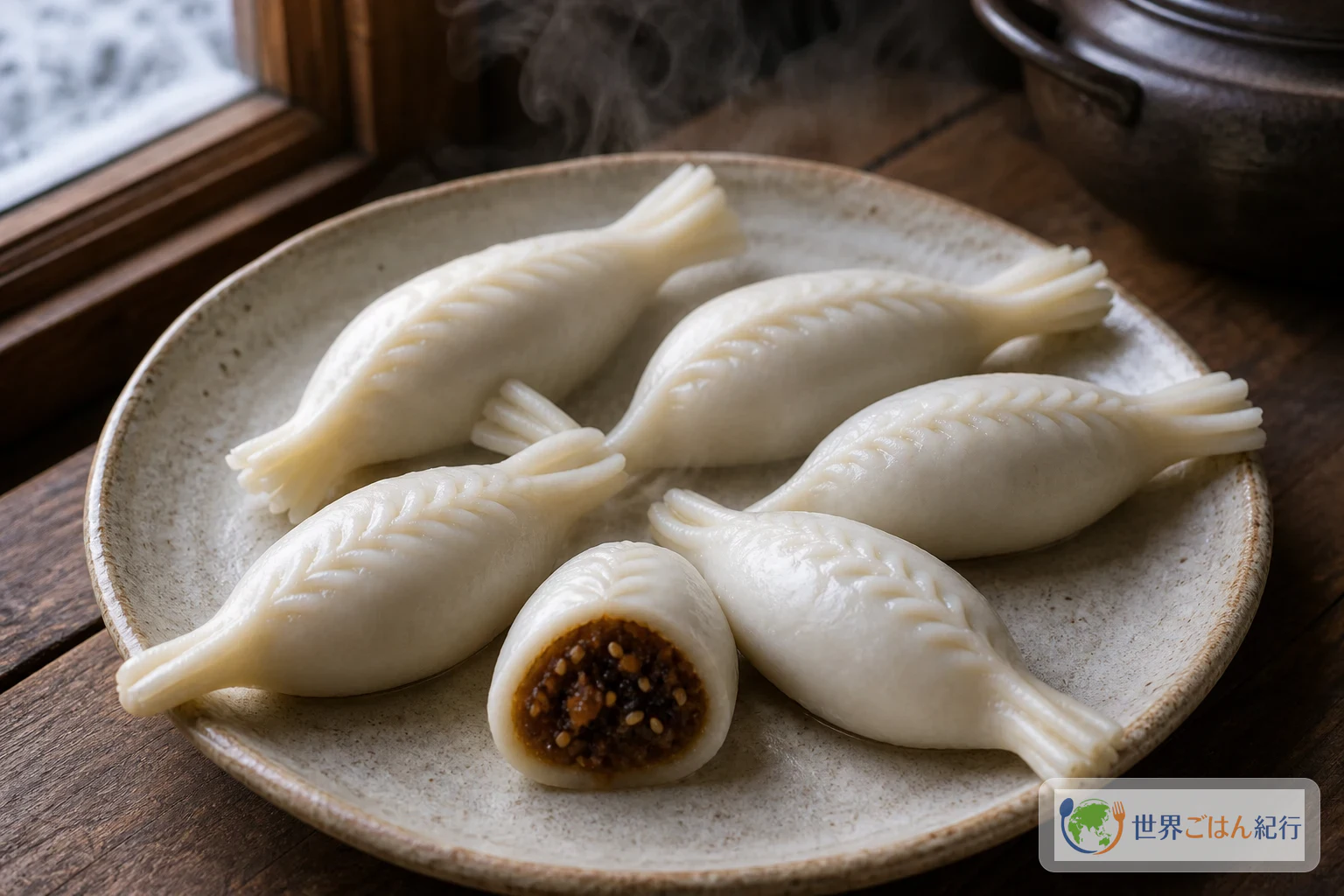
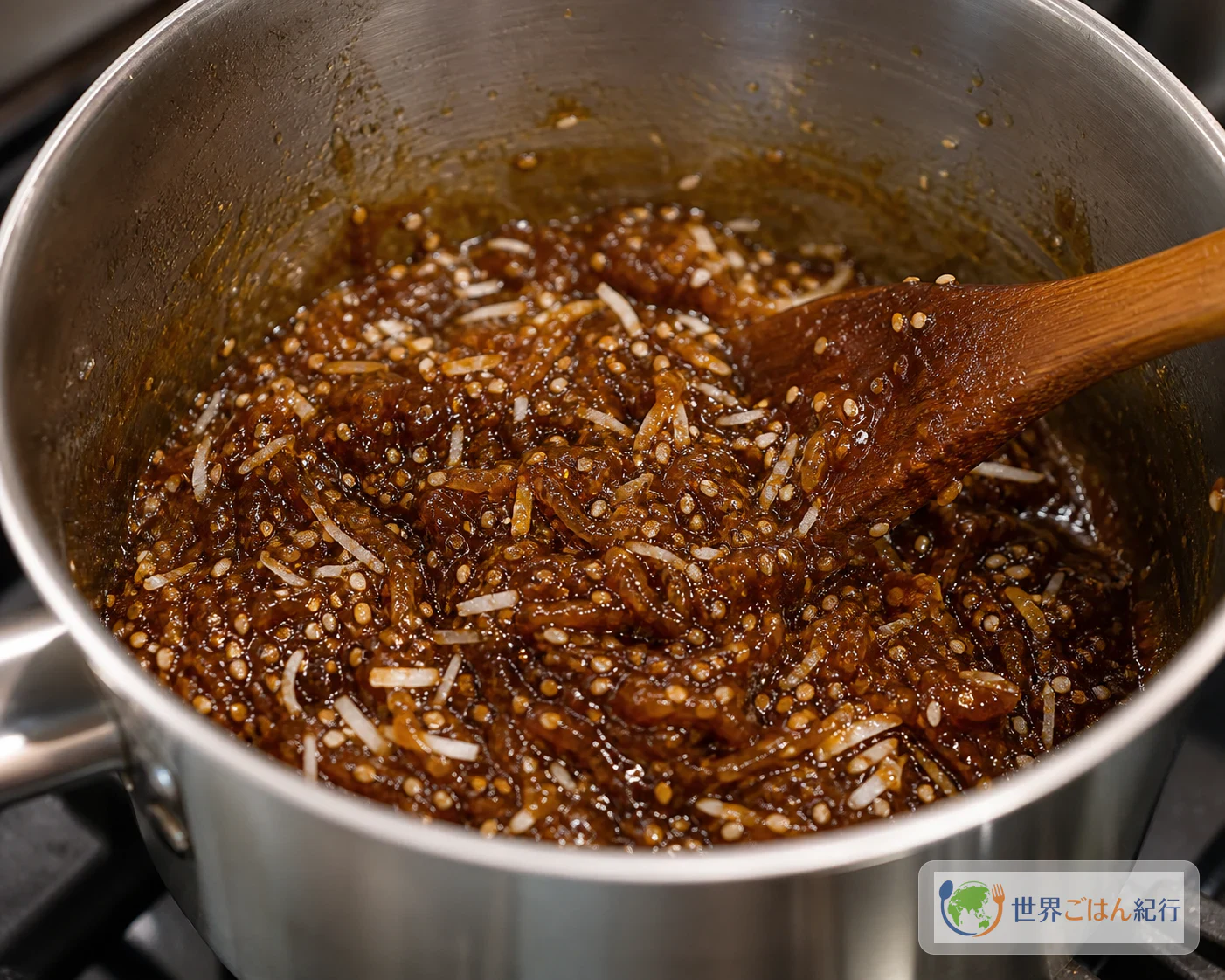
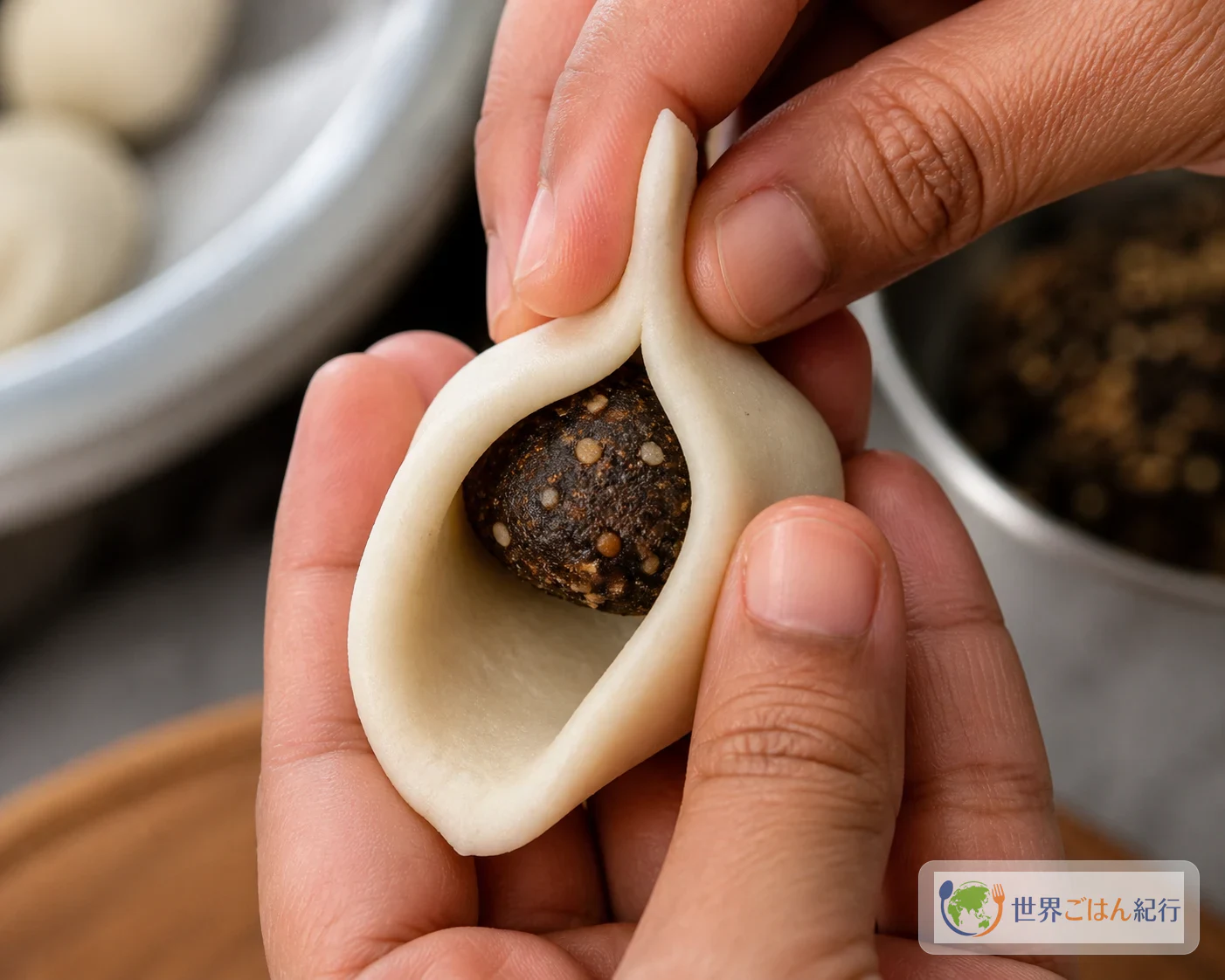
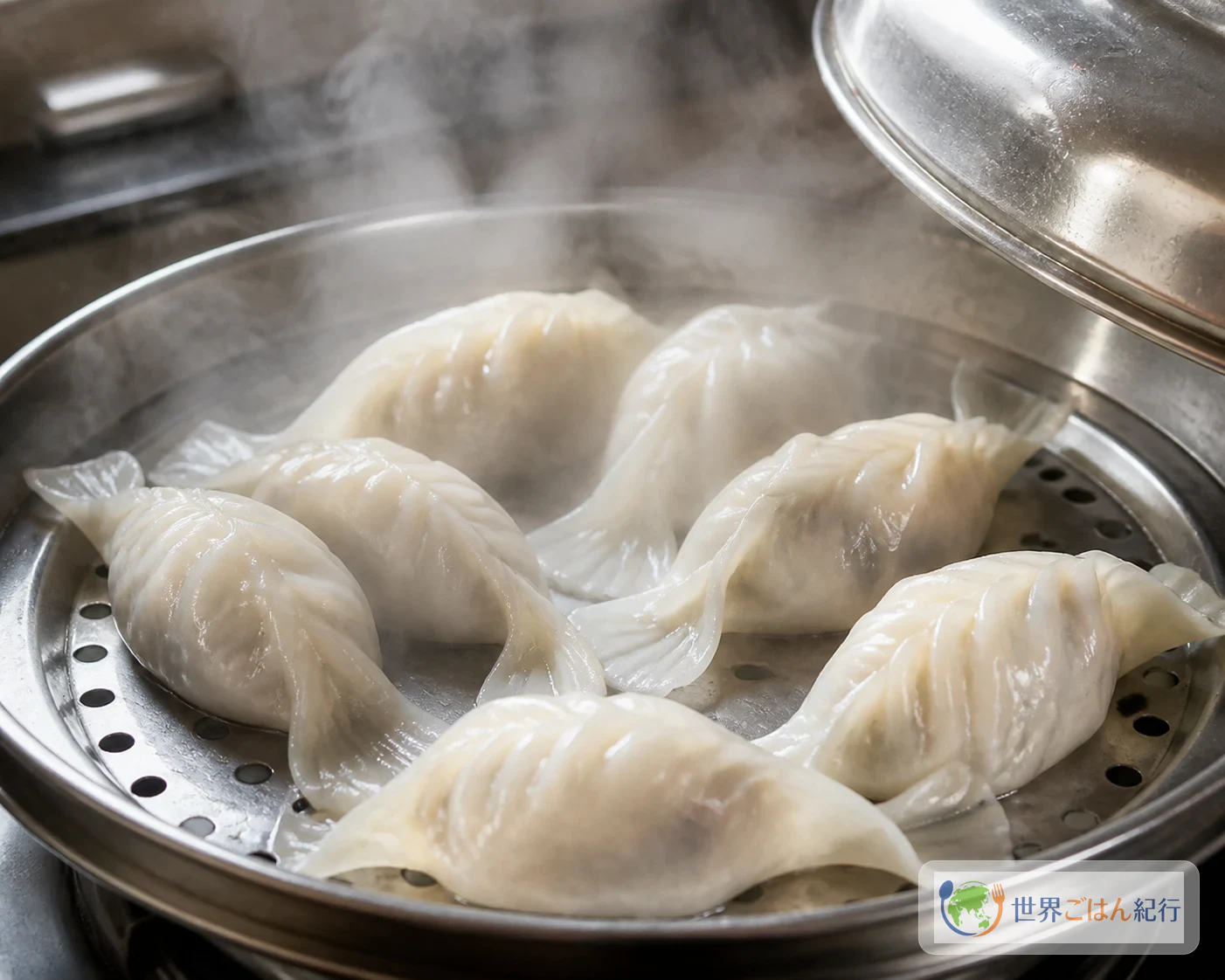
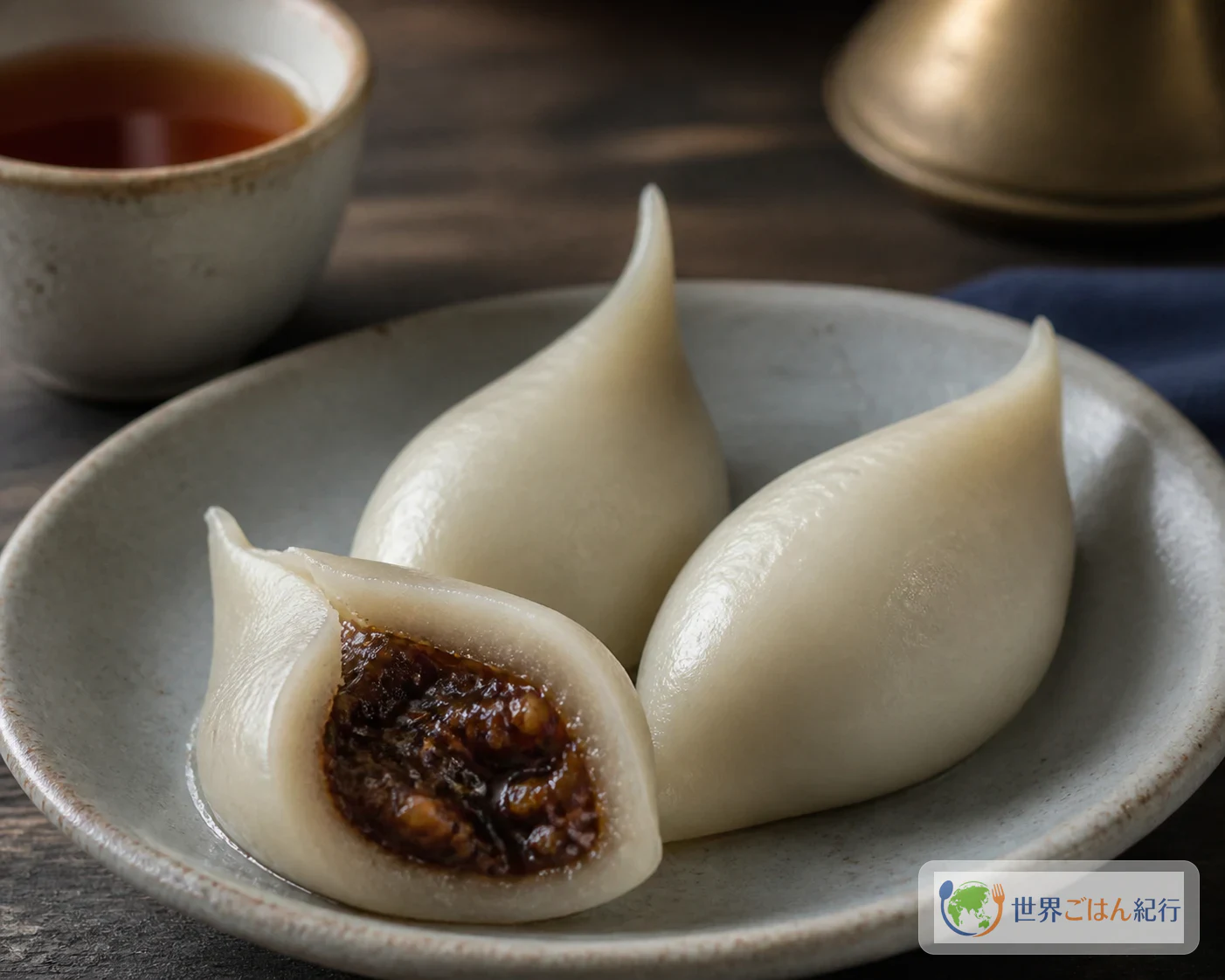
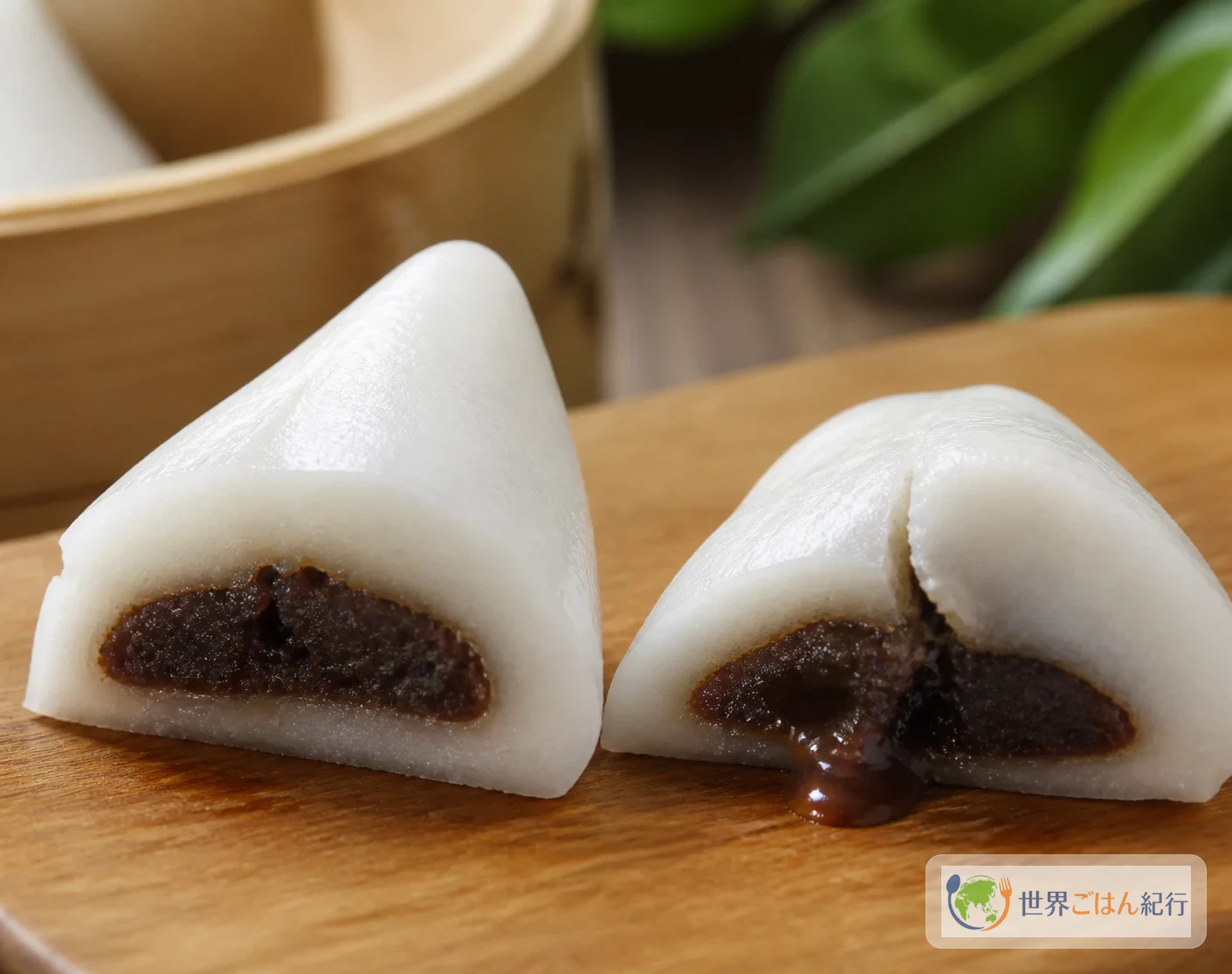
Lift the lid of the steamer and thin threads of steam rise from the white rice-flour parcels, each with a long tail like a fish. Break one open and the deep brown inside catches your eye: a chaku filling, a little like brown sugar, flows out slowly, and the toasty aroma of roasted sesame carries into the hot dough. Yomari (योमरी) comes from the Newar people of Nepal. Rice-flour dough is wrapped around chaku (a solid, molasses-like sugar) or khuwa (reduced milk), given its fish-like tail, and steamed. It looks like a dumpling, but it's a sweet through and through: soft dough, a fragrant filling, and the plump texture that only steam gives.
Yomari and Yomari Punhi in the Kathmandu Valley
Yomari belongs to Yomari Punhi, a Newar festival held on the full moon of the Nepali month of Thinla. The date shifts every year with the Nepali calendar, but the meaning stays the same: people of the Kathmandu Valley honor Annapurna, goddess of grain and food, give thanks for the rice harvest, and share yomari at home. If you think of it as a sweet that a family steams together in the season of new rice, it becomes much easier to decide how to substitute ingredients outside Nepal.
There are several origin stories. One says a couple in Panauti first made it with new rice and molasses; another says a sweet shared with a stranger grew into the festival. The name means 'delicious bread' in Newar.
In winter, yomari is eaten beside a brazier while steam rises from the steamer. Family members take turns shaping them and eating the ones that come out hot, so the table keeps its handmade look even when no two shapes match. The Newar also make yomari for a child's even-numbered birthdays, so it's more than a once-a-year festival sweet.
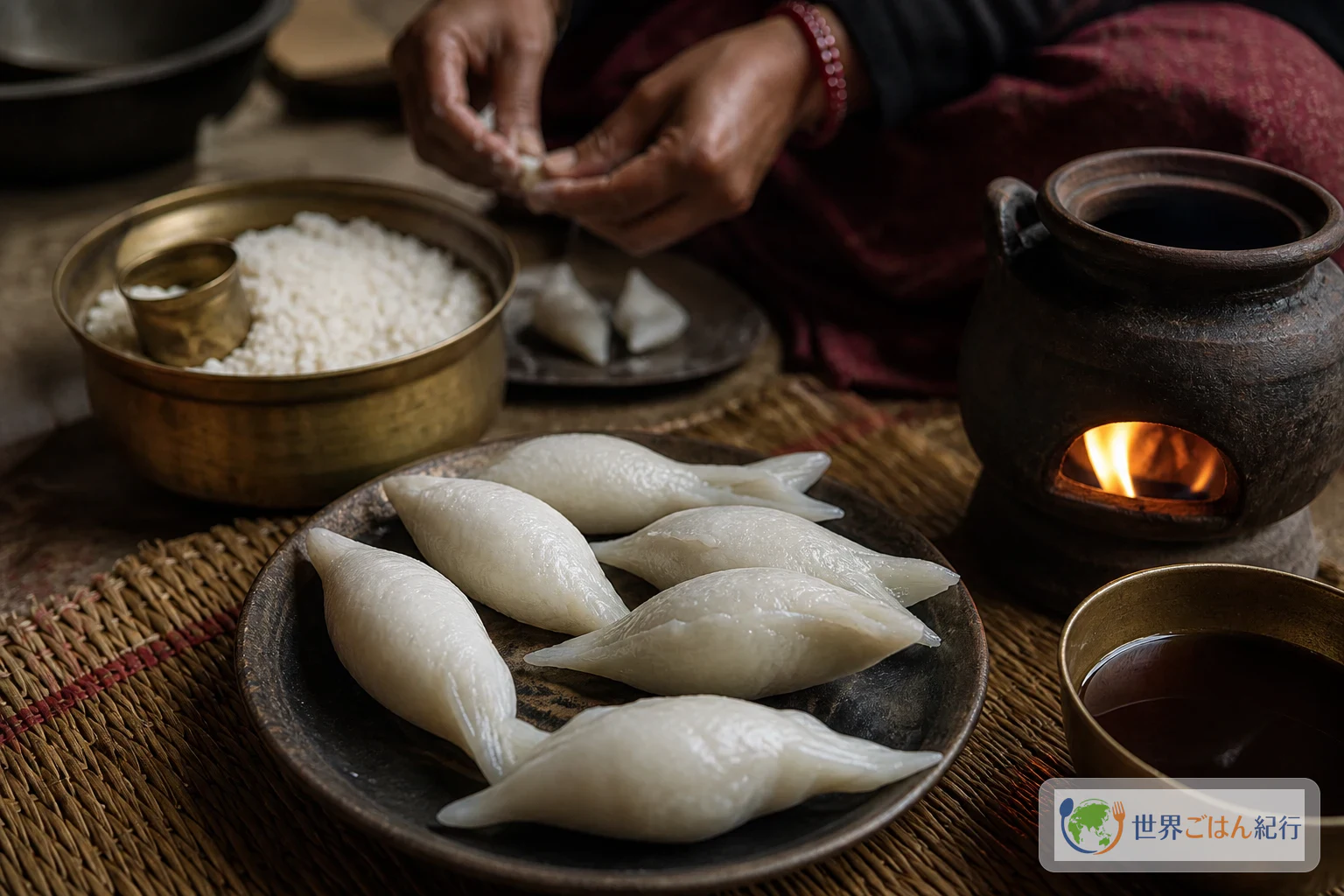
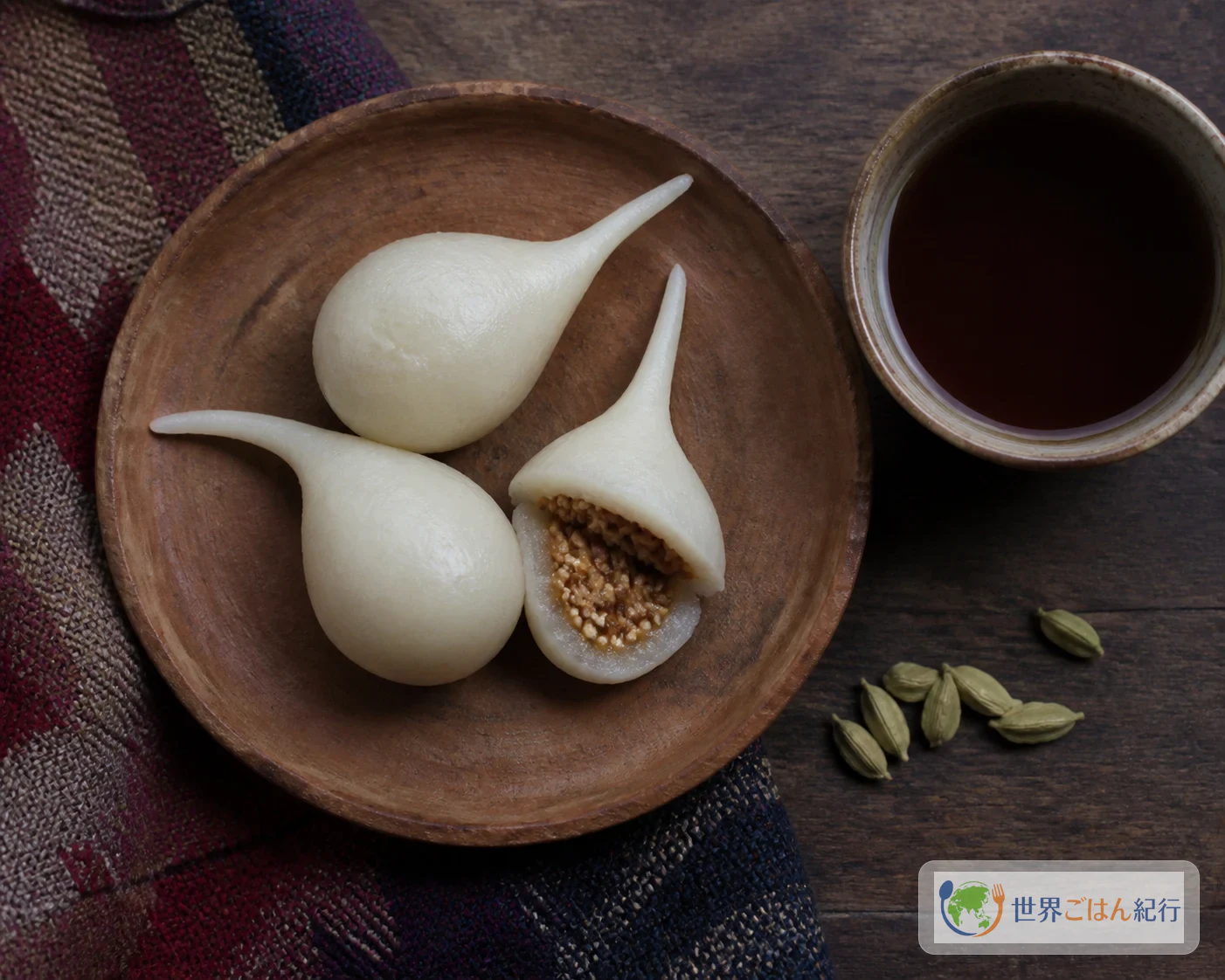
Households and towns differ mostly in the filling and the shape. The basic version is a rich chaku filling with sesame and coconut, while khuwa makes a white, milky one. In Bhaktapur, the chaku-and-sesame filling is called bayo yomari and the black lentil filling is called mayo yomari. And besides the fish, the shape is sometimes likened to a fig.
Ingredients (serves 6, makes 12)
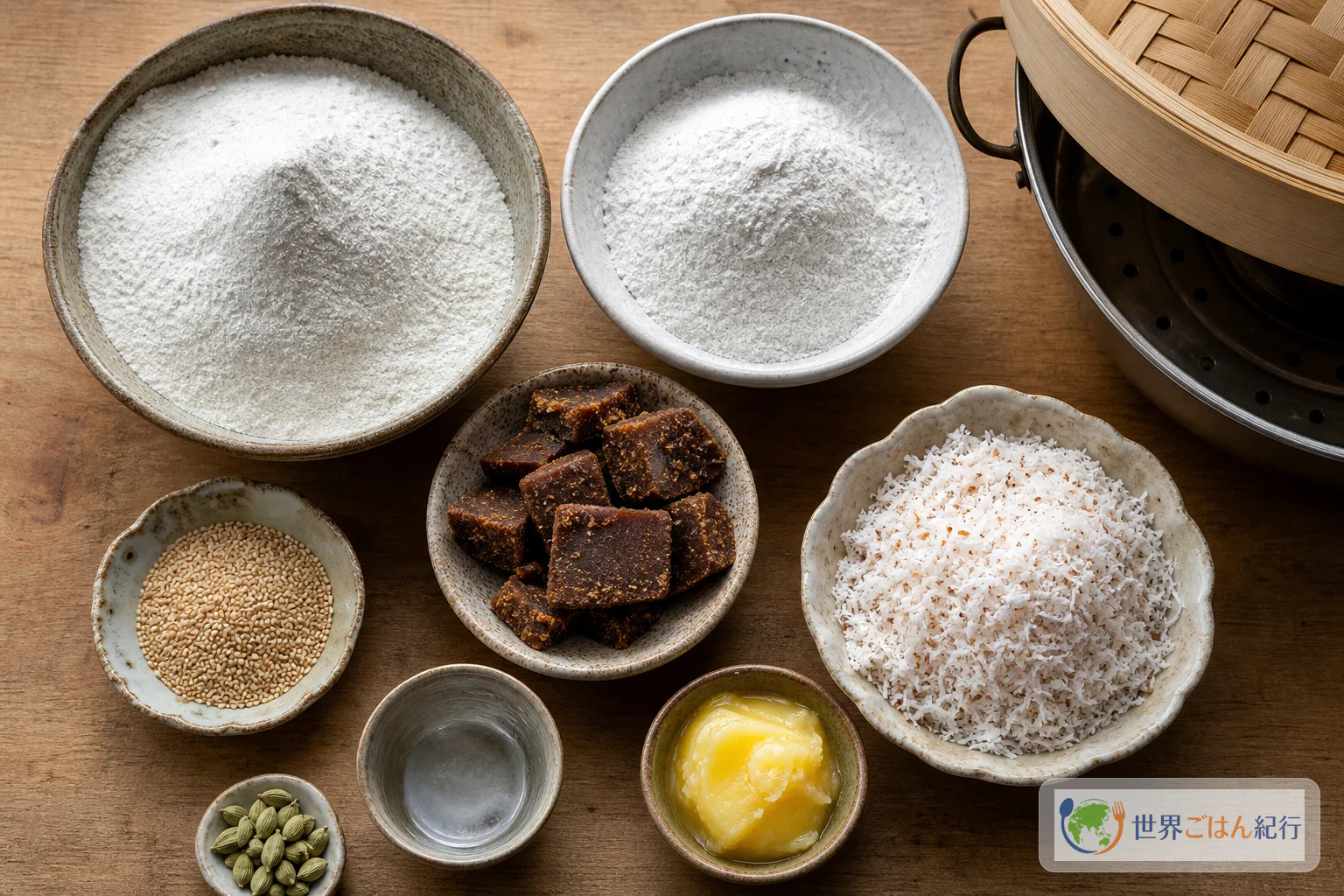
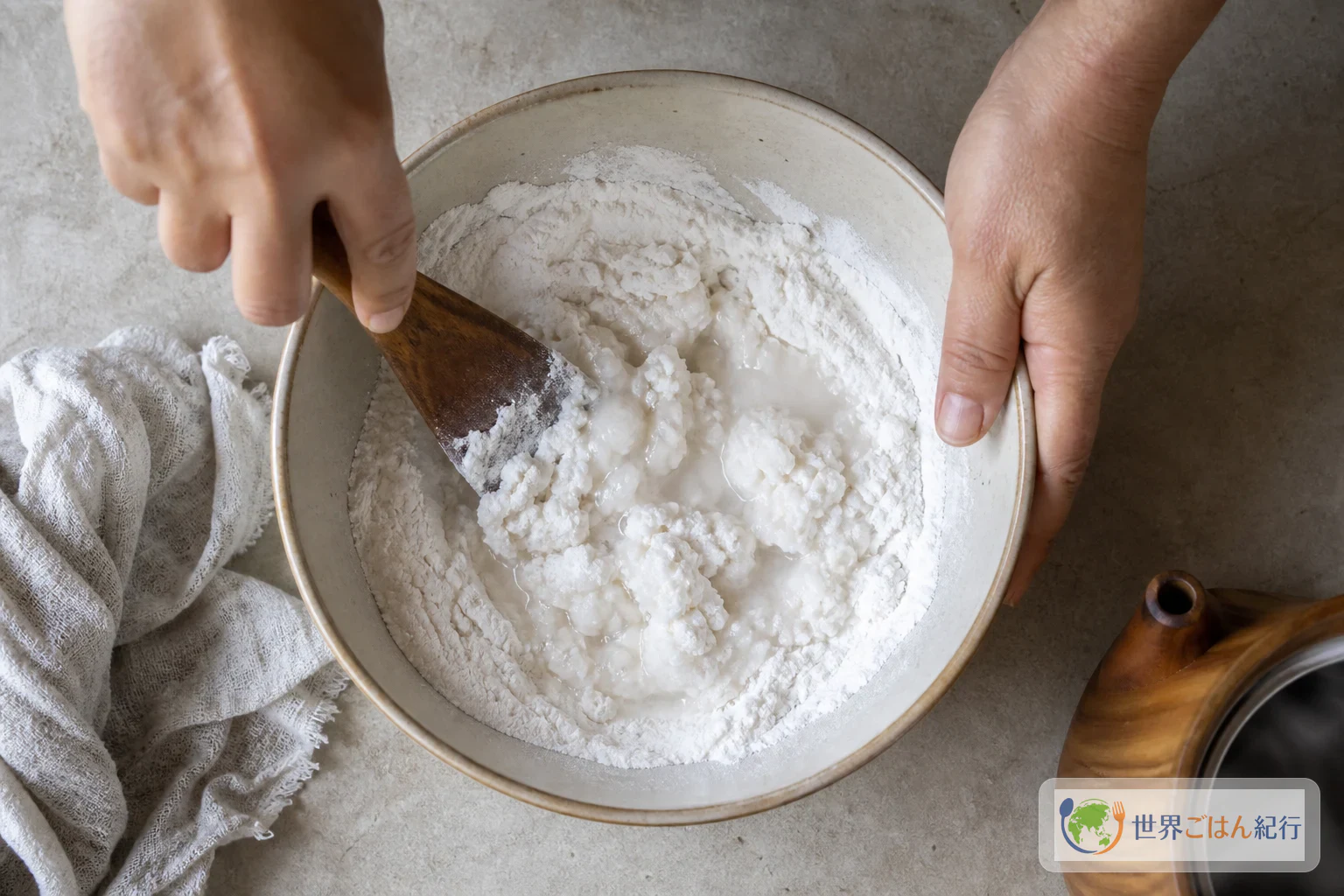
This quantity is based on 2 pieces per person. The dough is mostly joshinko (non-glutinous rice flour) with only 1 oz (30 g) of glutinous rice flour added. That small amount makes the base of the tail less likely to crack the first time you shape them. Don't add more glutinous rice flour: the dough turns mochi-like and sticky.
Shiratamako absorbs water at a different speed, so don't add all the hot water at once. You only use 1 oz (30 g), so the leftover can go into shiratama dumplings or fruit daifuku. If you make yomari only once, joshinko alone is fine.
Chaku is a solid sugar used in Nepali sweets and drinks. Brown sugar makes the flavor lighter. Don't build your shopping around a mail-order chaku whose ingredients and quantity you can't confirm. If you're making yomari just this once, use 5 oz (140 g) brown sugar and 1.5 tbsp (20 ml) water, and cook the filling down for less time.
Cardamom needs only 3 pods, so buy whole pods if you'll also use them in chai or baking. Pods hold their aroma better than powder. For a single batch, don't add the cinnamon in your cupboard; the core flavor stays intact.
Changing to a khuwa filling
If you prefer the round sweetness of milk to the deep aroma of chaku, make a khuwa filling for 12 pieces. Put 4 oz (120 g) khuwa, 1.25 oz (35 g) raw cane sugar, 15 g dried coconut and 0.3 g cardamom in a small pot over low heat. Cook, pressing with a wooden spatula, for 4–5 minutes until it holds together. It firms as it cools, so once it's cool enough to handle, divide it into 12 and press with your fingers to remove the corners. Khuwa is dairy, so the filling contains dairy even if you make the dough without ghee.
Contains sesame, coconut and dairy. Check the labels: for dairy if you choose khuwa, for dairy-derived ingredients if you choose ghee, and for production-line information on the glutinous rice flour and rice flour. A steamer boils dry if the water runs out, so if your pot can't steam 12 at once, do it in two batches.
Choosing ingredients for yomari
Rice flour for the dough
Base the dough on joshinko and bring it together with hot water. Using only shiratamako pushes it too close to mochi, and potato starch changes the crumbly texture that rice flour gives. Wheat flour makes a different sweet altogether.
Chaku, sesame and coconut
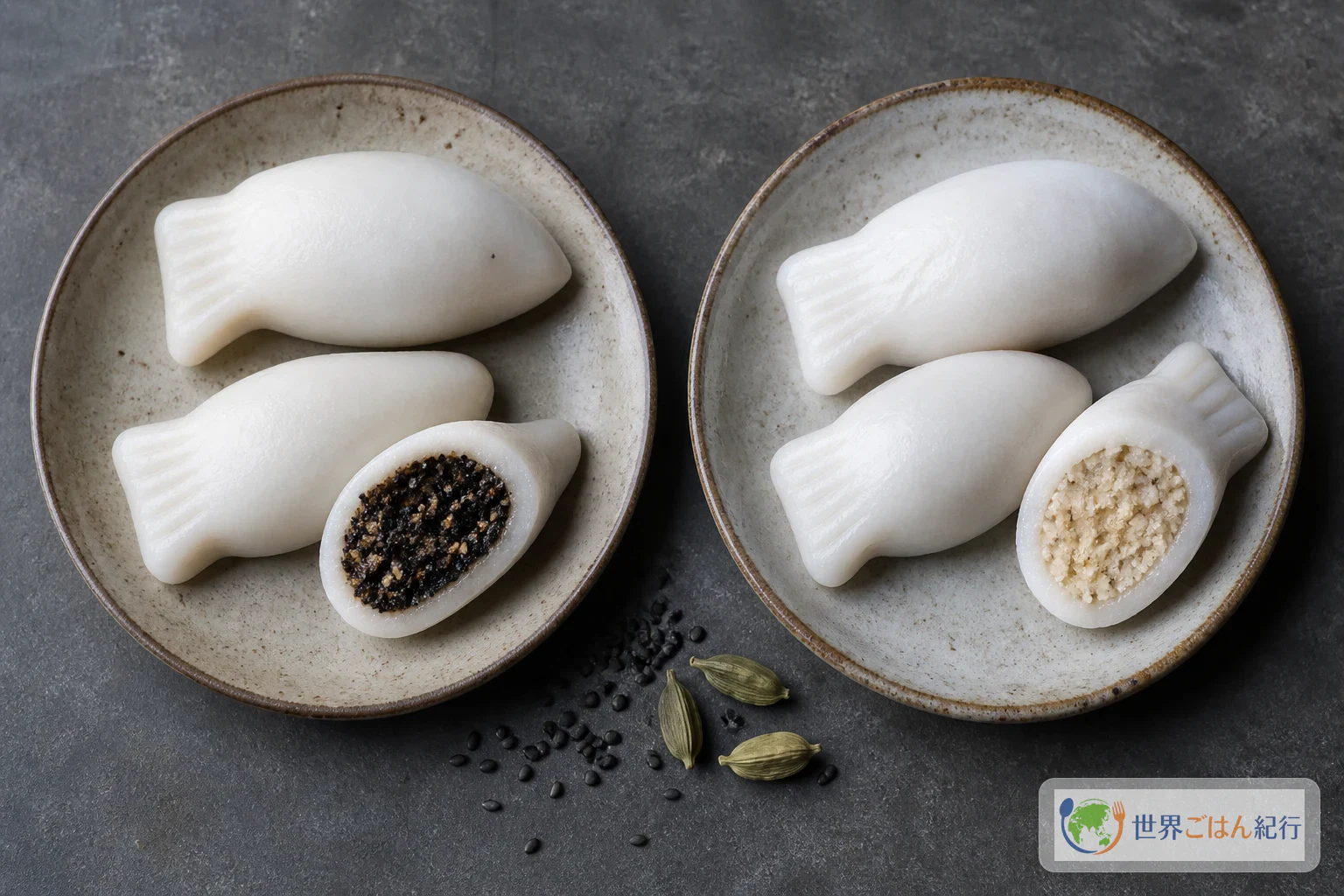
The filling shapes the flavor of yomari more than the exact shape of each skin. The rich chaku filling of the festival day leads with the toasty notes of molasses and sesame, while khuwa lets the round sweetness of milk meet the sweetness of the rice flour.
Chaku gives the depth of molasses. Without it, use 5 oz (140 g) brown sugar, 1.5 tbsp (20 ml) water, 1.5 oz (45 g) sesame and 20 g coconut, and add just 3 cardamom pods if the sugar's aroma is weak. Finish a brown-sugar filling without boiling it, and it flows pleasantly inside the dough. Plain brown sugar on its own is a poor first try: steam melts it, and it tends to collect at the bottom.
White sesame has a gentle aroma; black sesame brings more color and bitterness. For your first batch, use 1.5 oz (45 g) of white sesame. Crushing it coarsely leaves more grain in the filling than chopping with a knife, and an electric mill tends to grind it too fine.
A suribachi, or even the bottom of a sturdy bowl, is enough for sesame, so if you already own one, keep using it. A natural granite mortar and pestle in a size that suits you is worth having if you want to keep sesame coarse, crush cardamom seeds, and cook more Nepali or spice dishes. It's large and heavy, though, so with tight storage an ordinary suribachi does the job.
Khuwa
Khuwa is a nearly solid dairy product made by reducing milk, whiter than the chaku filling and smoother in the mouth. Let it cool a little before rolling it into the dough. A hot filling loosens the dough, and the bottom opens before it even reaches the steamer.
Steamer
A metal steaming tray set over a deep pot works, as does a colander lined with a steaming cloth. What matters is steady steam: in a pot that can't hold it, the skin absorbs moisture before the surface sets.
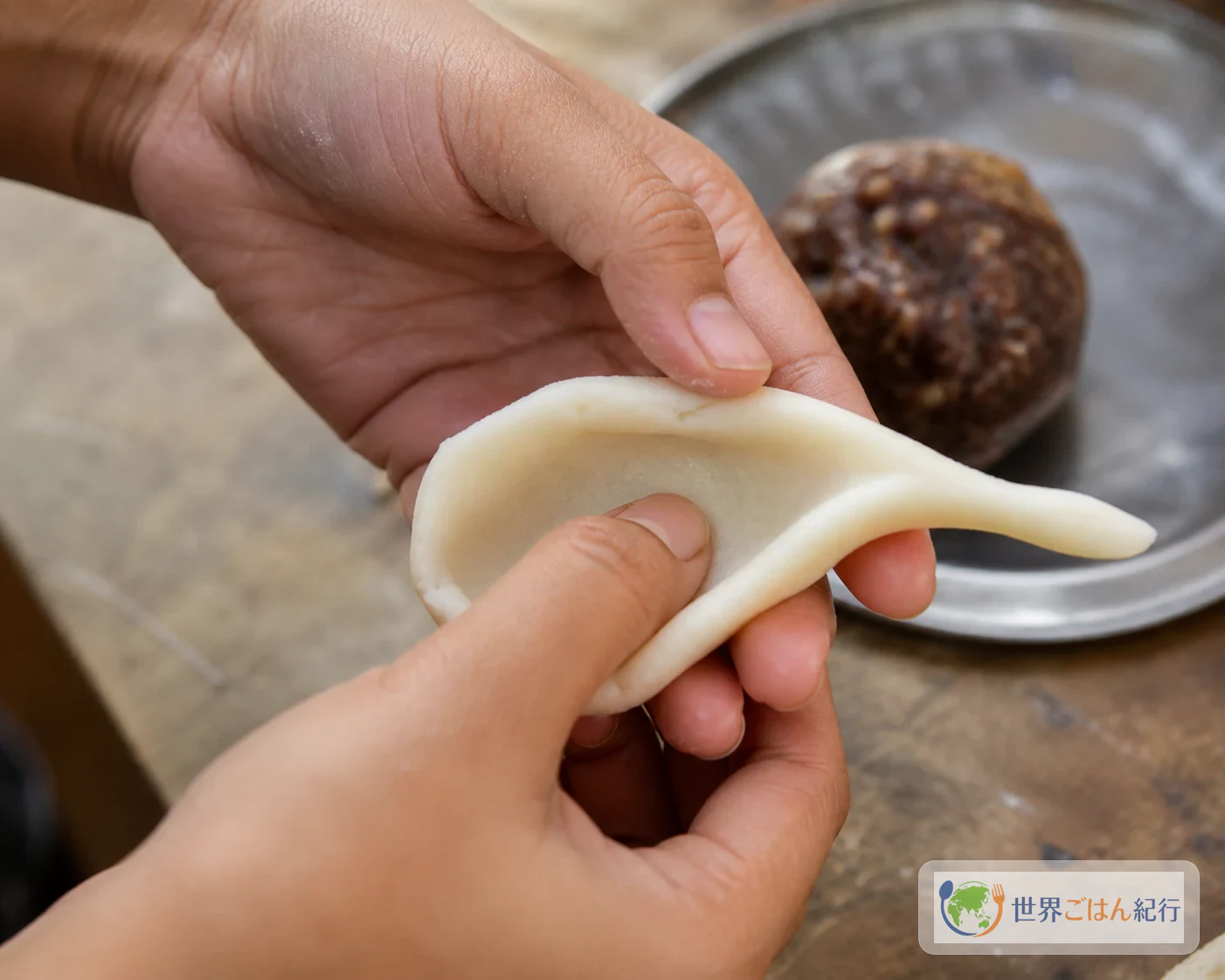
Method: shape the hot dough into a fish tail
Before making the dough, put 3–4 cm of water in the steamer, cover and heat over high heat. If you arrange the yomari while the steam is still weak, the skin absorbs too much moisture and turns heavy. Line the steaming tray with 12 pieces of parchment or brush it thinly with oil.
Fixing cracked, hard or floury yomari
The base of the tail cracks during shaping
The dough has cooled and dried out. Wrap the rest of the dough in a damp cloth, put 1–2 drops of water on the cracked surface, and press it back together with your fingers. If the line still opens, knead in 1 tsp (5 ml) hot water and rest 5 minutes. Adding flour to counter the dryness only makes it crack more.
The bottom opens after steaming
The bottom wall is thin, there's too much filling, or the steam is weak. For the next batch, leave about 0.125 inch (4 mm) at the bottom and reduce the filling from 18 g to 15 g. Put them in only once the water boils, and keep the lid closed for 15 minutes after arranging them. Yomari that have already split are still good: spoon the filling onto a plate and eat it with the warm skin.
The filling sets like candy
The chaku was boiled, or too much moisture evaporated while it cooled. Return it to a small pot, add 1 tsp (5 ml) water and warm it over low heat for just 30 to 60 seconds. Stop when a line drawn with a wooden spatula stays for about 3 seconds. Adding a lot of water at once makes the filling run during steaming and leak from the seam.
The center of the skin is floury
The dough wall is thick or the steam is too weak. Make the wall 3–4 mm when shaping, check that the steam is strong before putting them in, and steam the white skin until just before it turns translucent. If it hasn't improved after 18 minutes of steaming, next time divide the dough into smaller 1.5 oz (45 g) pieces and open the tip of the tail a little to let air escape before closing it.
Serving, storing and varying yomari
Serving with tea
Rather than stacking steamed yomari high, set them out 2 at a time with one broken open to show the filling; they're easier to eat that way. Unsweetened black tea suits the richness of chaku, and milk tea suits khuwa. Leave out whipped cream and ice cream so the tea and the warm sweet can stand on their own.
For a fuller Nepali table, make savory momo first and set yomari beside it as a steamed dessert. Serve everyday dal bhat alongside the Newar rice dish pukala, and you see how rice shapes the whole food culture, not just one festival sweet.
Storage and reheating
Let them cool, put them in an airtight container and plan on 2 days in the refrigerator. Before eating, cover with damp paper towels and reheat in a steamer for 5–7 minutes to bring the skin back. To freeze, wrap fully cooled ones individually and plan on 1 month. Steam them straight from frozen, 5–8 minutes longer than usual, and confirm they're hot at the center.
Other fillings and shapes
For a black lentil filling in the Bhaktapur style, mash 4 oz (120 g) boiled black lentils until the moisture is gone, then bring them together over low heat with 1.25 oz (35 g) brown sugar, 8 g ghee and 15 g sesame. Whenever you change the filling, adjust its moisture and thickness as well as its sweetness.
Keep the fish-like tail if you can, though a boat shape with a shorter tail also steams well. Round ones work too, but the filling collects at the bottom. For your first 12, focus on a thick base and a wall evened out at 3–4 mm rather than identical shapes; for the tail, just pinching the end with your fingertips is enough.
FAQ
Without chaku, can it still be yomari?
Yes. A brown-sugar filling has less of chaku's molasses aroma, but as long as you don't boil it and you combine it with toasted sesame and coconut, you keep the heart of yomari: a rice-flour skin around a dark filling. Avoid honey and maple syrup on a first try; they hold a lot of moisture and leak easily during steaming.
Can I make it with joshinko alone?
Yes. Replace the 1 oz (30 g) glutinous rice flour with 1 oz (30 g) joshinko and start with 1 cup (220 ml) hot water. A joshinko-only dough tends to crack at the seam, so rest it 10 minutes and leave the wall about 0.125 inch (4 mm) thick when shaping.
What if I can't eat sesame or dairy?
You can increase the coconut in place of sesame, but the toasty flavor and grainy texture of the filling will change. To avoid dairy, replace the ghee with vegetable oil and choose the chaku filling rather than khuwa. Rice flour and sugar can also be produced on shared lines, so if you have allergies, check the label on each product.