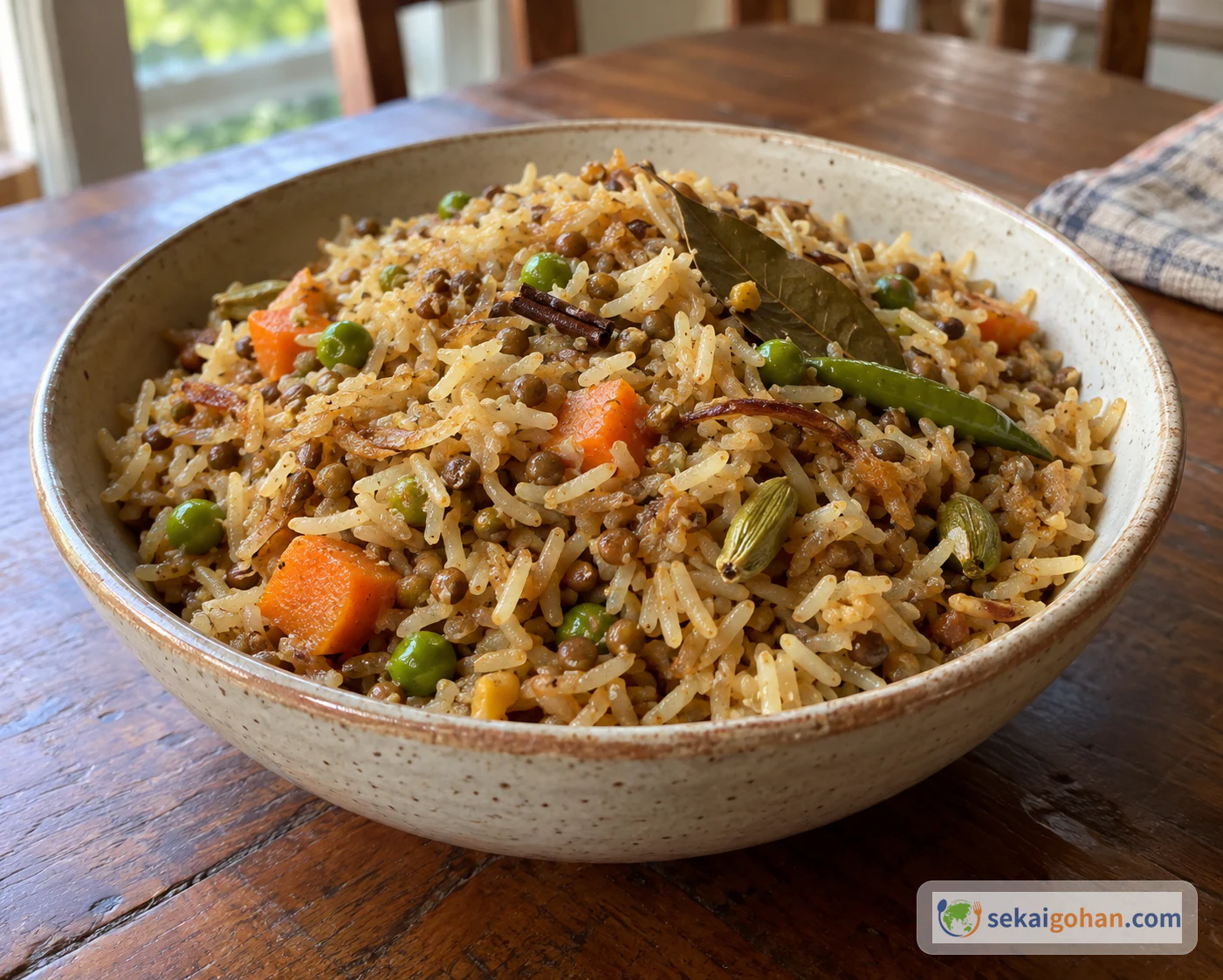
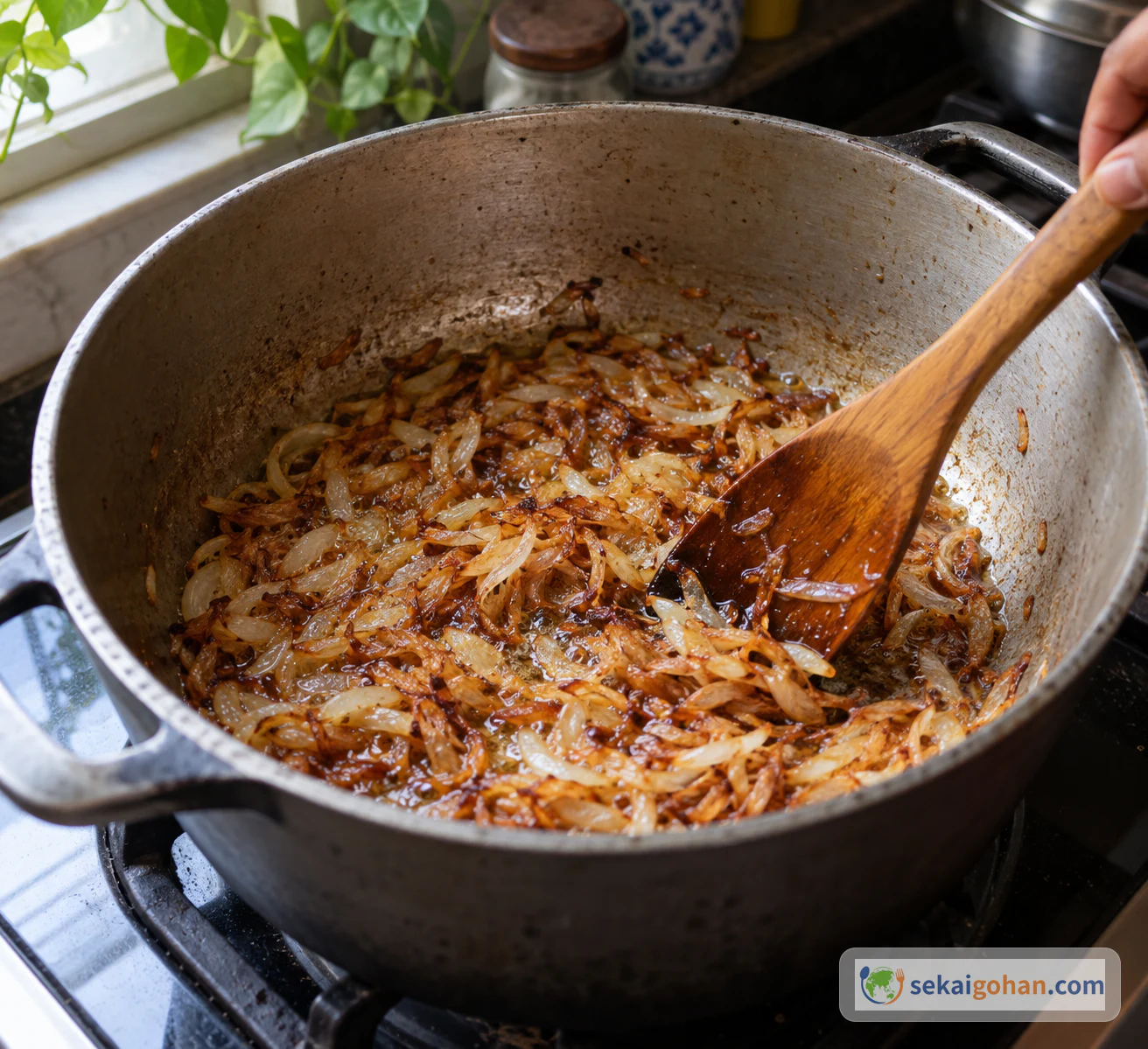
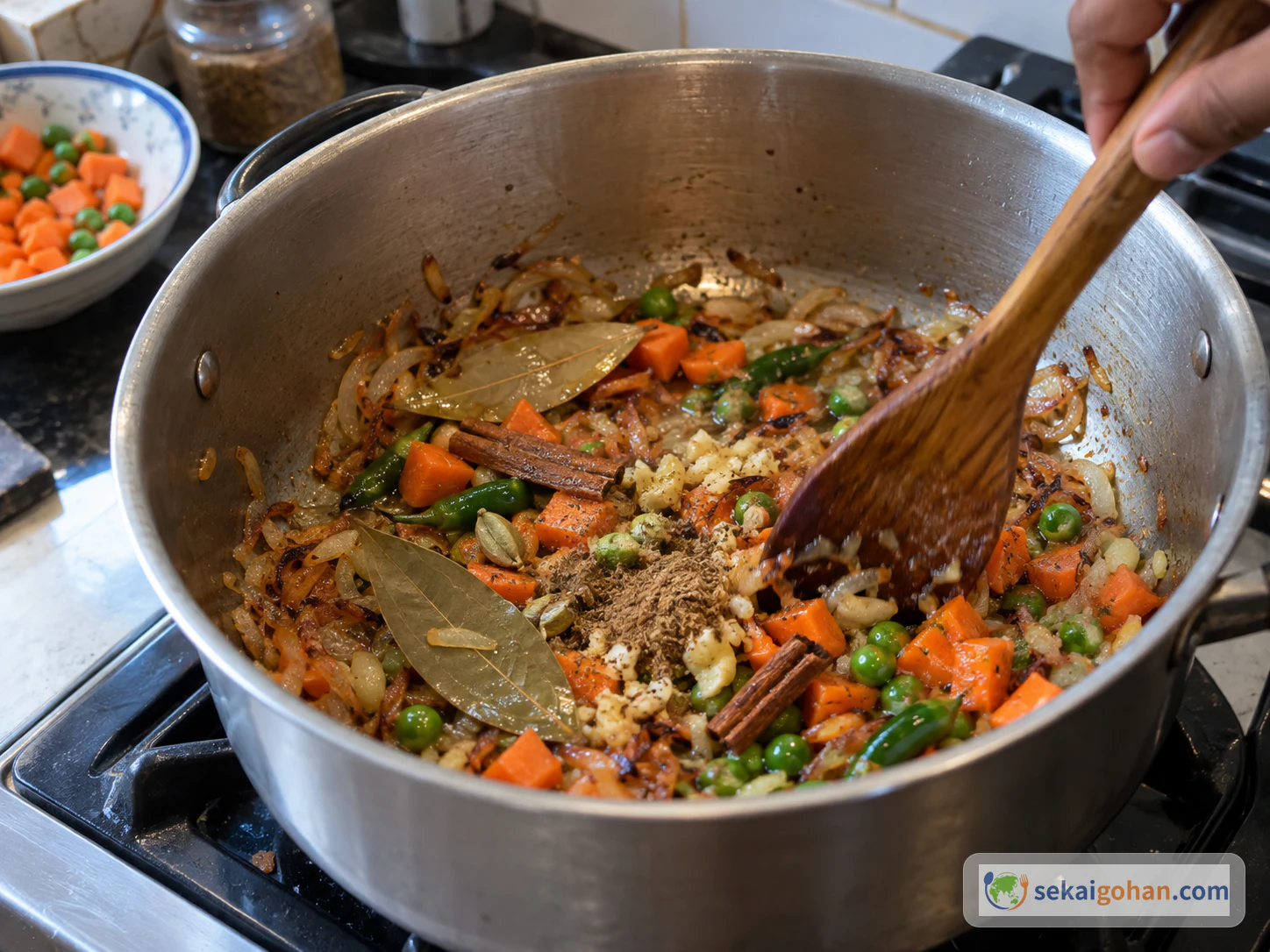
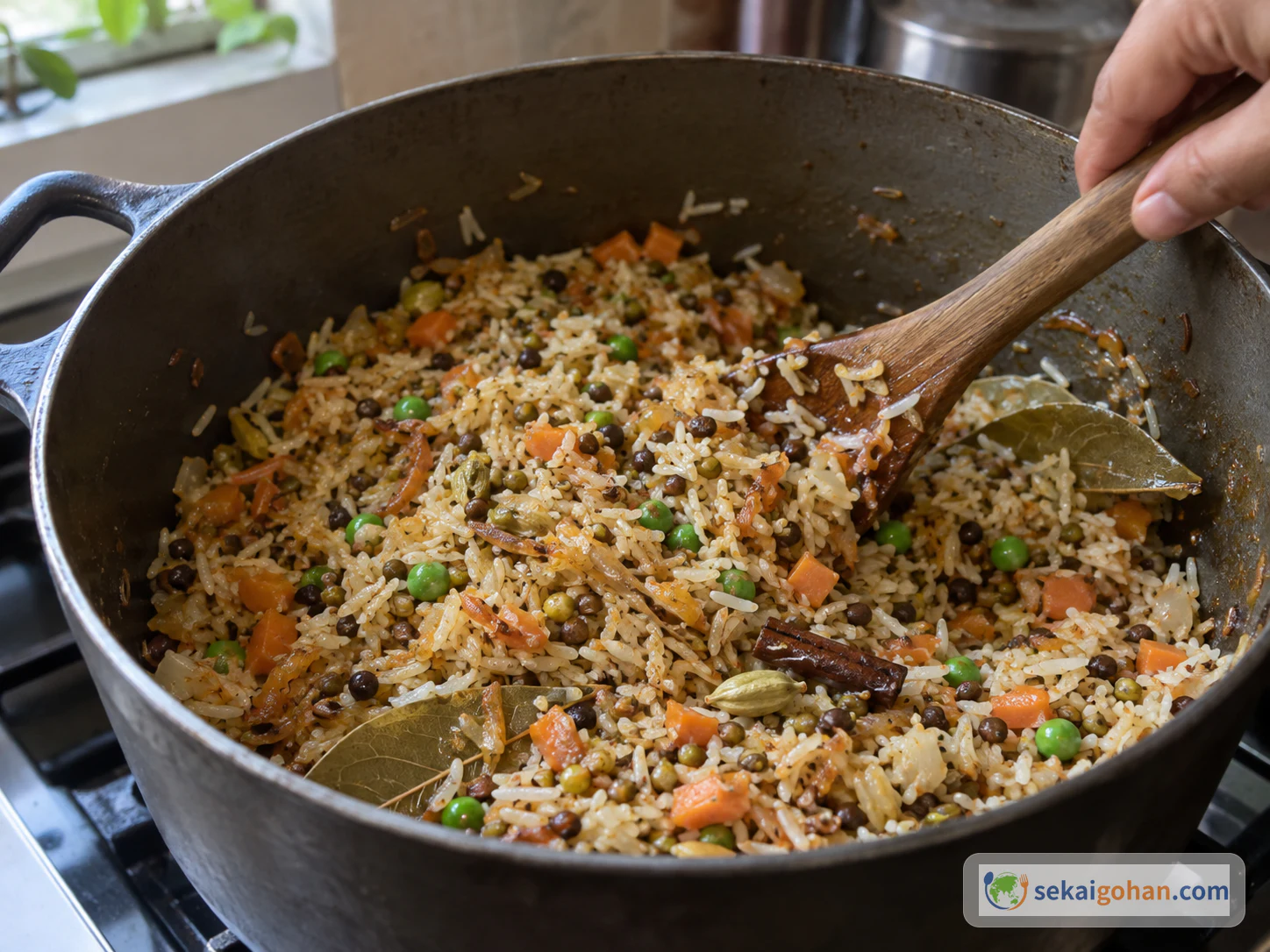
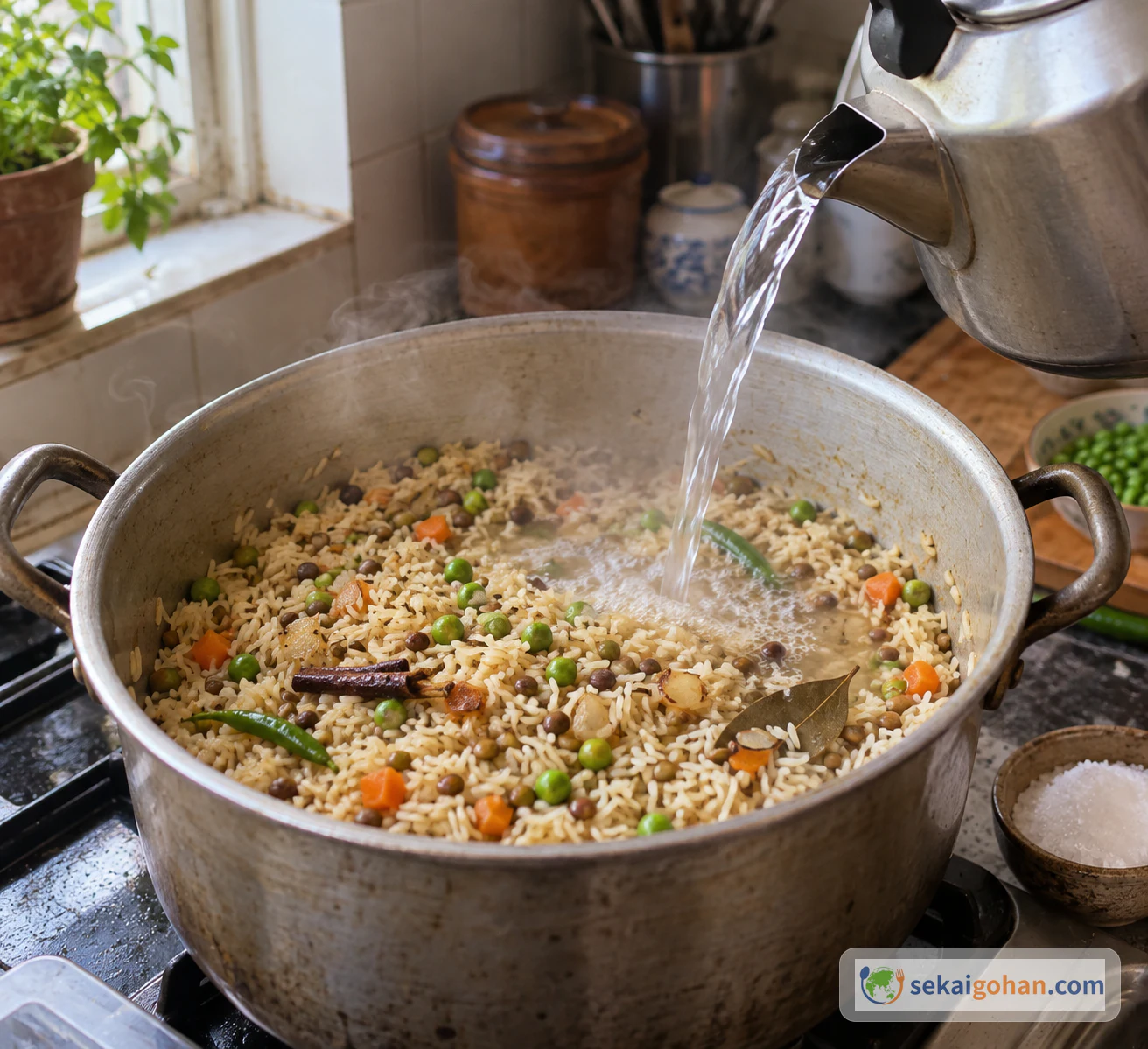
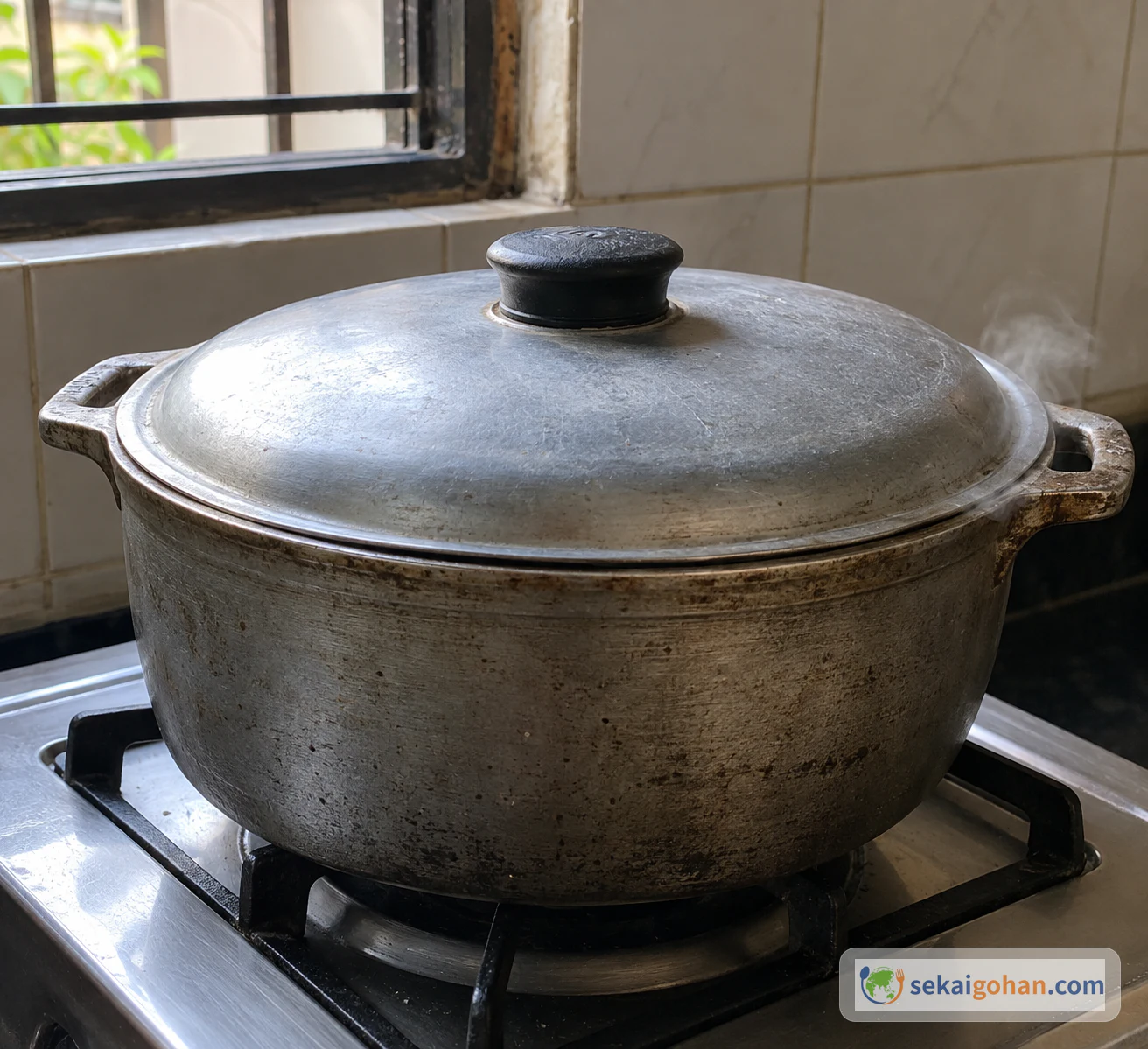
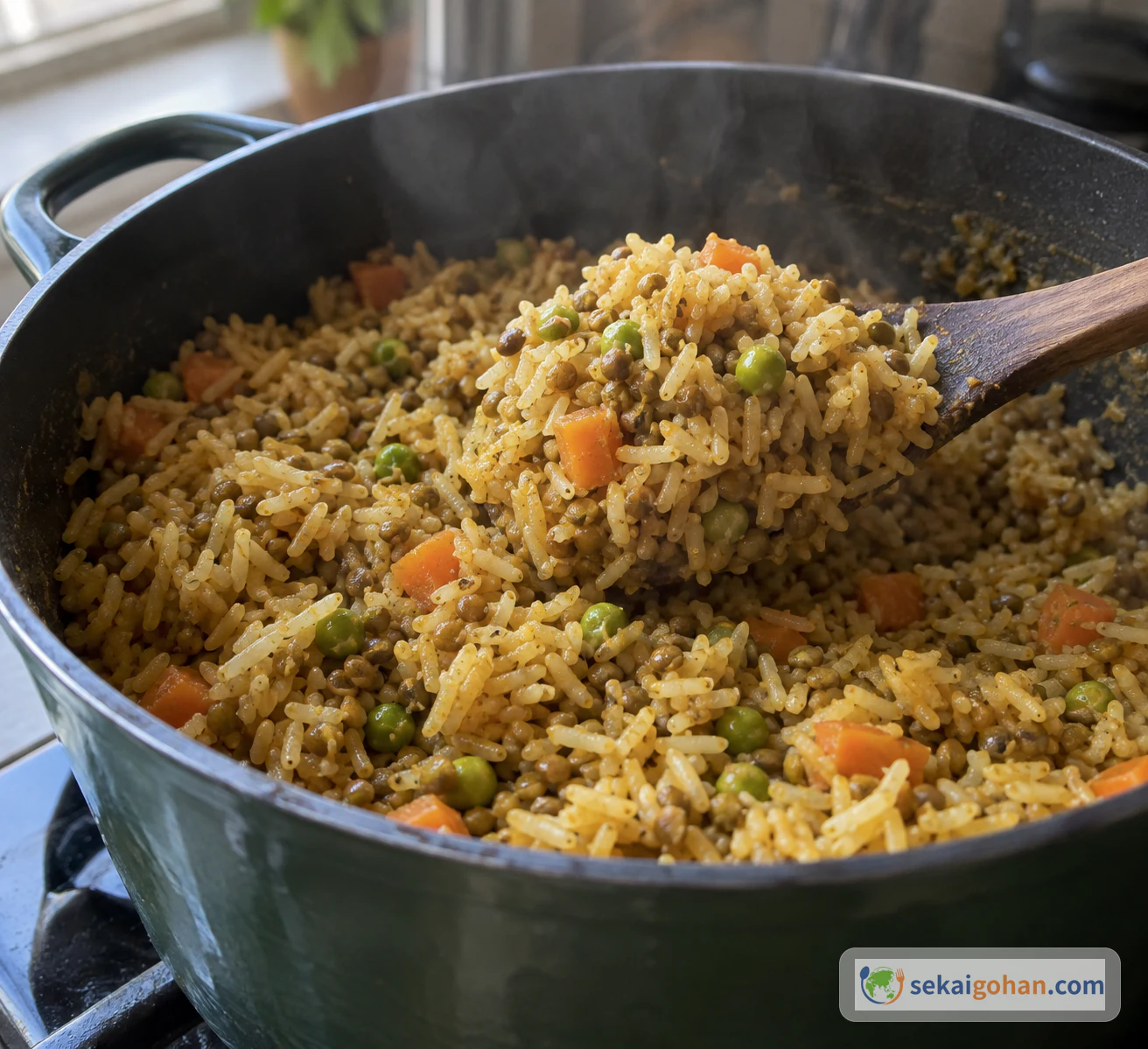
Thinly sliced onions turn deep brown in oil. In go garlic, ginger, cumin, bay leaves, cinnamon, cardamom, green chilies, carrot and peas, and the pot fills with the scent of whole spices. Then the rice and roasted pulses join them and are stirred for several minutes until each grain shines with oil. Only then does the boiling water rush in, raising a cloud of steam, before the lid goes on. That sequence is what makes bhuna khichuri (ভুনা খিচুড়ি), a fragrant rice-and-pulse dish from Bangladesh, with separate, aromatic grains rather than a soft porridge.
What Bhuna Khichuri Is
Bhuna khichuri is eaten in Bangladesh and parts of India, and it is one of the foods of Dhaka. It is made with aromatic, slender rice and mixed roasted pulses, and it is the pot people cook on rainy days and for special occasions.
If you know khichdi as a soft, spoonable pot of rice and mung beans finished with a tempering of spiced oil, this is a different thing. Here the rice and pulses are fried first and then cooked, so the grains keep their shape and carry the aroma of the spices and the oil.
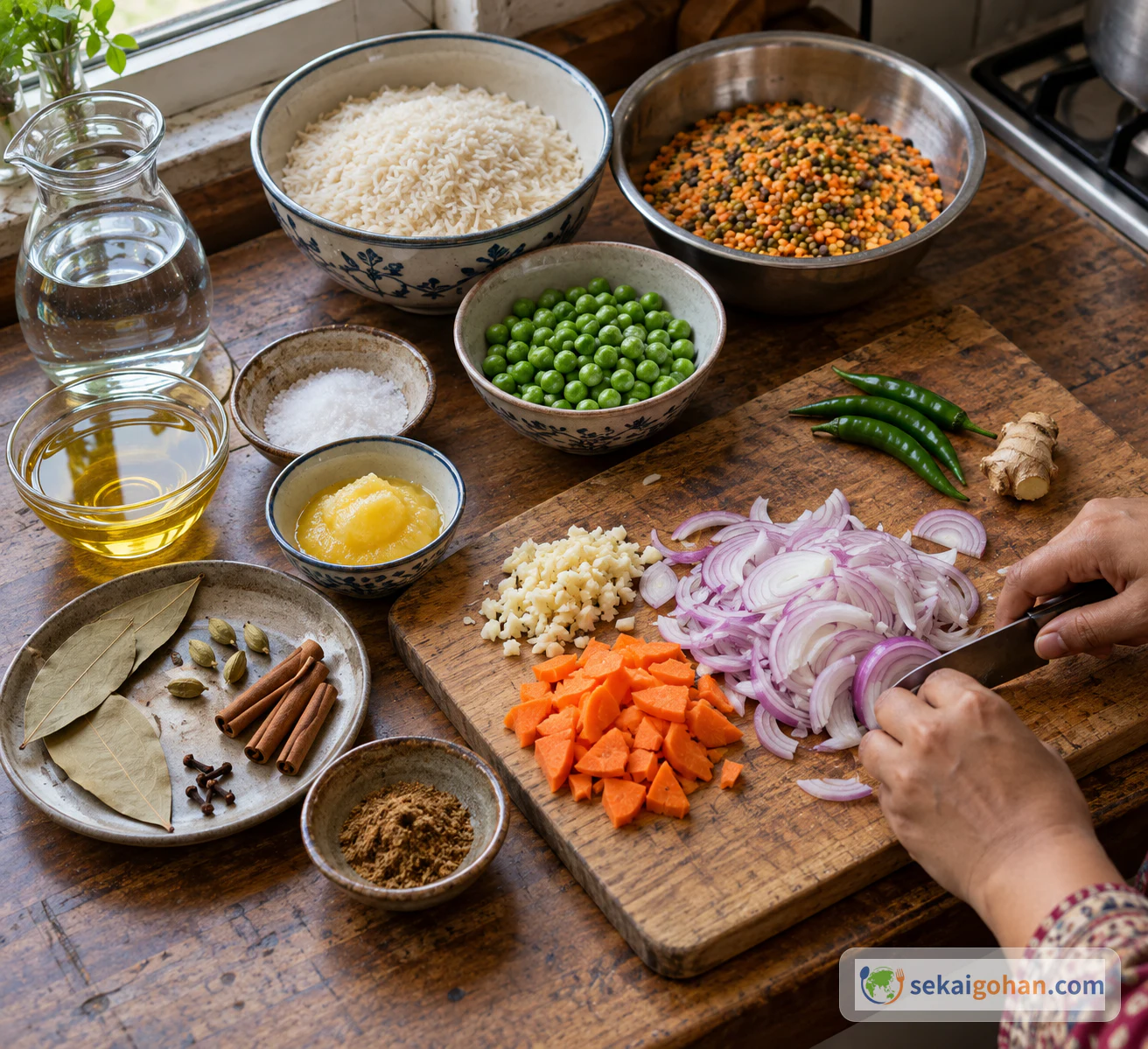
Ingredients: Amounts Exactly As Listed
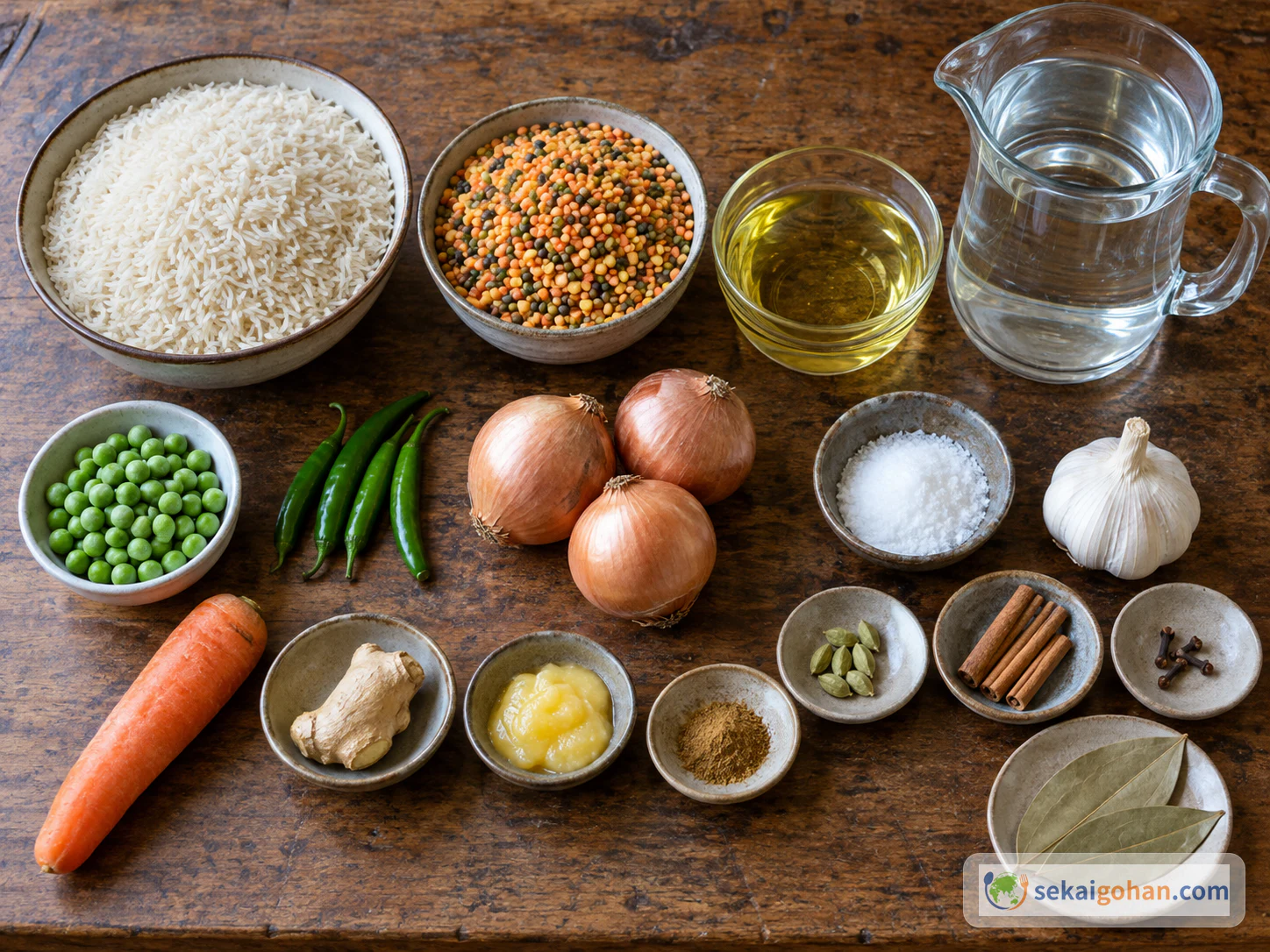
Whatever cup you use, use the same one for the rice, the pulses, the oil and the water, so the proportions stay as written.
Turmeric is not added to this recipe. Keep the oil at 1 cup and the salt at 2 tablespoons.
Equipment
- A heavy pot with a tight-fitting lid, large enough for the rice, pulses and 8 cups of water
- A sharp knife and cutting board for slicing the onions very thinly
- One measuring cup, used for the rice, pulses, oil and water alike
- A kettle or second pot for bringing the water to a boil
- A wooden spoon or spatula for frying and for turning the finished rice
Choosing Rice, Pulses and Spices for Bhuna Khichuri
Rice. Use an aromatic, slender rice: the Bangladeshi varieties kalizira, chinigura, badsha bhog and katari bhog, or basmati and jasmine. Outside South Asia, basmati is the easiest to find. Plain long-grain rice won't give you the same fragrance.
Pulses. Use roasted pulses made from a mixture of lentil, black gram and mung bean. Whole, split or skinned black gram all work, so use whatever is easy to find. Chickpeas and other pulses outside this mix belong to other versions of the dish.
Spices and aromatics. Cardamom, cinnamon, cloves, bay leaves and cumin powder build the aroma, with onion, garlic, ginger and green chilies underneath.
Dietary note. This recipe contains no meat, fish or egg, but it includes butter fat or ghee, so it is vegetarian rather than vegan. For allergies, check the labels of the pulses, spices and ghee you buy.
Method: Fry First, Then Cook Covered
Pots, stoves and rice all vary, so judge each stage by color, aroma and the state of the grains.
The order matters more than speed: onions first, then aromatics and spices, then the rice and pulses, then the ghee, and finally boiling water and salt. Have everything prepared and the water boiling before you start.
Bhuna Khichuri Troubleshooting
| What you see | Possible causes | What to do |
|---|---|---|
| Weak aroma, grains lack definition | Rice and pulses were not fried long enough before the water went in | Fry for 6–8 minutes until the grains are glossy and smell toasty, adjusting for your stove's strength |
| Rice is mushy or the pot is watery | Type of rice, pot diameter and heat level can all play a part | Check the rice and the size of your pot first. Keep the 8 cups of water; they are part of the proportions |
| Centers of the rice or pulses still hard after 8–10 minutes | Pot and heat differ | Keep the lid on and check again, rather than serving by the clock |
| Onions bitter or blackened | Onions went past brown during step 2 | Aim for deep golden-brown and soft; burnt onions make the whole dish bitter |
| Wondering whether turmeric is missing | Turmeric is not in the ingredient list | This version is made without turmeric |
Serving Bhuna Khichuri and Other Versions
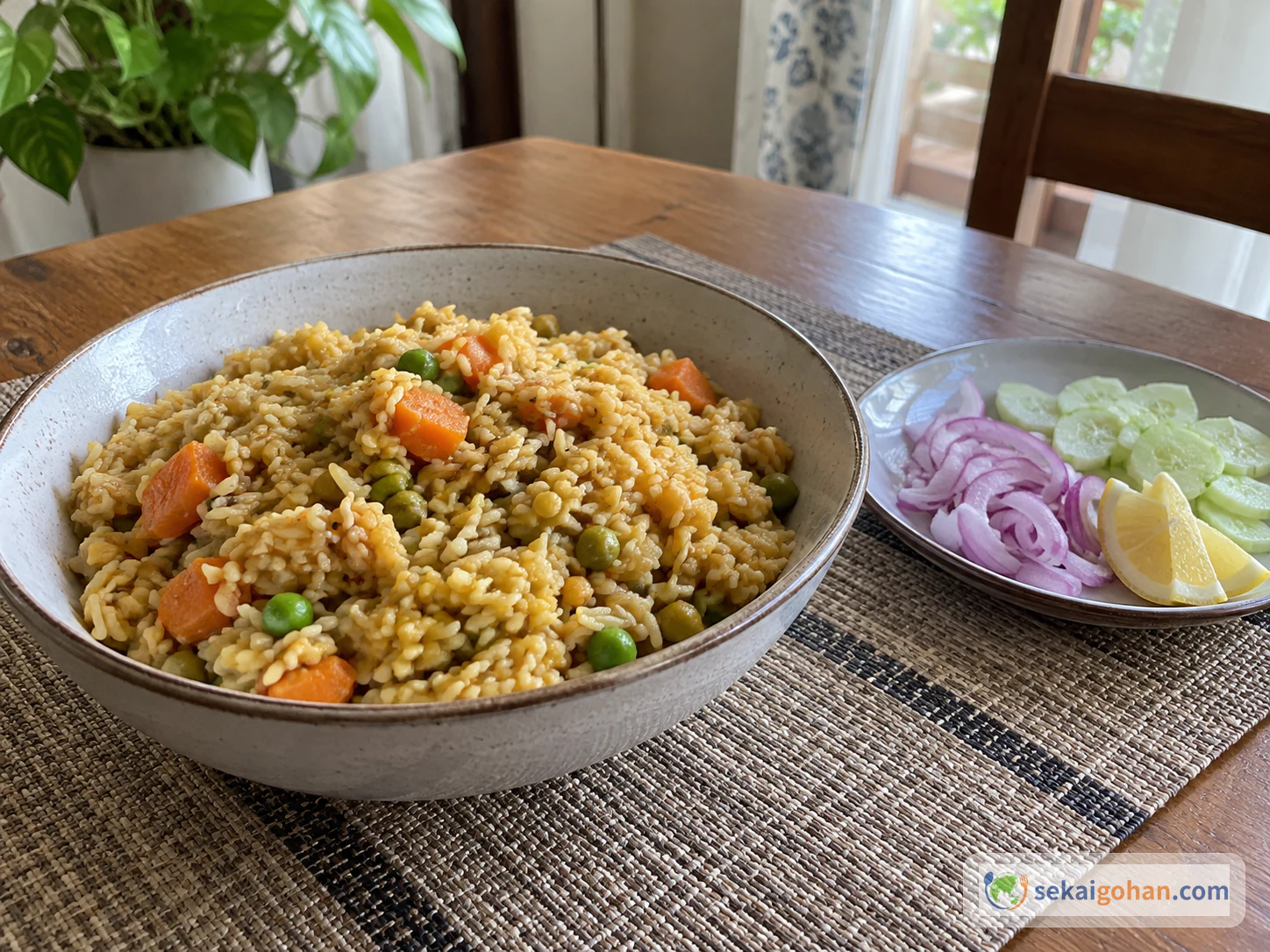
Serve bhuna khichuri with fried ilish (hilsa), beef, chicken, egg or vegetables, or simply with salad, onion and lemon. Put these on their own plate rather than into the pot, so the khichuri keeps its grain and stays meat-free. Fried hilsa is cooked as its own dish.
Chicken, beef and mutton versions also exist, each a separate recipe with its own proportions. A mutton version uses polao rice with roasted mung beans, chickpeas and masoor lentils. A beef version cooks the meat separately before combining it with rice and pulses that have been fried before cooking. All of them share the step that gives the dish its character: rice and pulses fried before the water goes in.
For more dishes from the same country, see Bangladesh.
Frequently Asked Questions
Can I use Japanese or other short-grain rice?
You can, but short-grain rice changes the texture, so treat it as a compromise rather than the same dish. Basmati, which is on the ingredient list, is the closest option that is easy to find.
How many people does this serve?
No serving count is given. Measure every amount with the same cup so the proportions hold.
Why are the cloves not in the method?
The ingredient list includes 3 cloves, but no step says when to add them.