Chevdo: Gujarati Thin-Poha Snack Mix (ચેવડો)

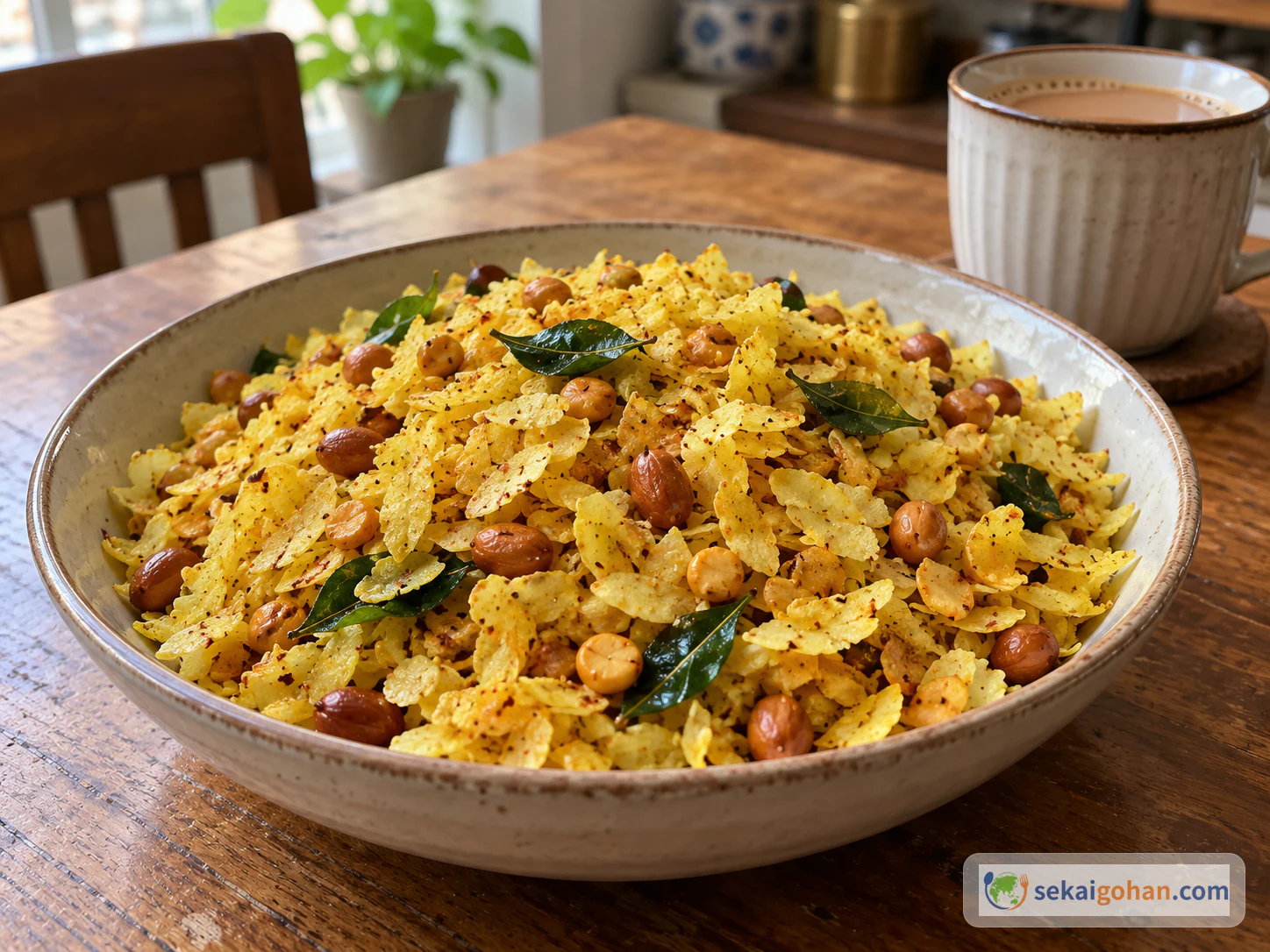
Gujarati chevdo of thin poha, peanuts, roasted gram and curry leaves
Serves
8 servings
Level
Beginner
Cuisine
Indian (Gujarati)

How to make chevdo (ચેવડો), a dry Gujarati snack mix of sun-dried, dry-roasted thin poha with fried peanuts, roasted gram, curry leaves and a sweet-salty spice finish. It explains how chevdo differs from poha, from Nadiad's chavanu and from deep-fried thick-poha versions. It also covers the tricky ingredient names: dalia, black salt, curry leaves and ground sugar.

Cooking flow

Cooking steps

STEP11 / 9

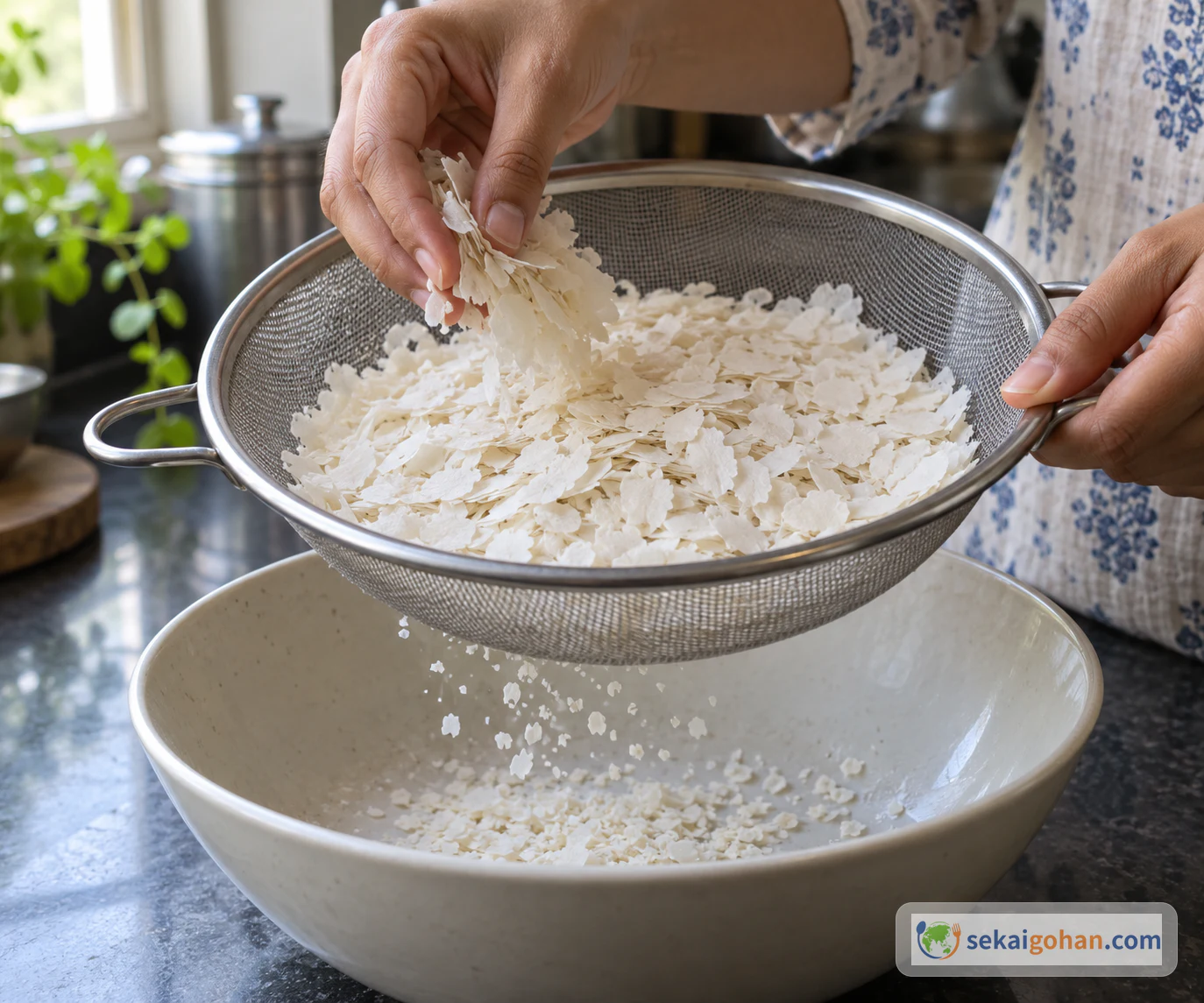
Sift the thin poha

Sifting thin poha through a sieve to remove broken bits and powder
Sift away the crumbs so the delicate flakes stay whole

Sift the 1 lb (500 g) thin poha through a wide sieve over a clean bowl to remove crumbs and powder.

STEP22 / 9

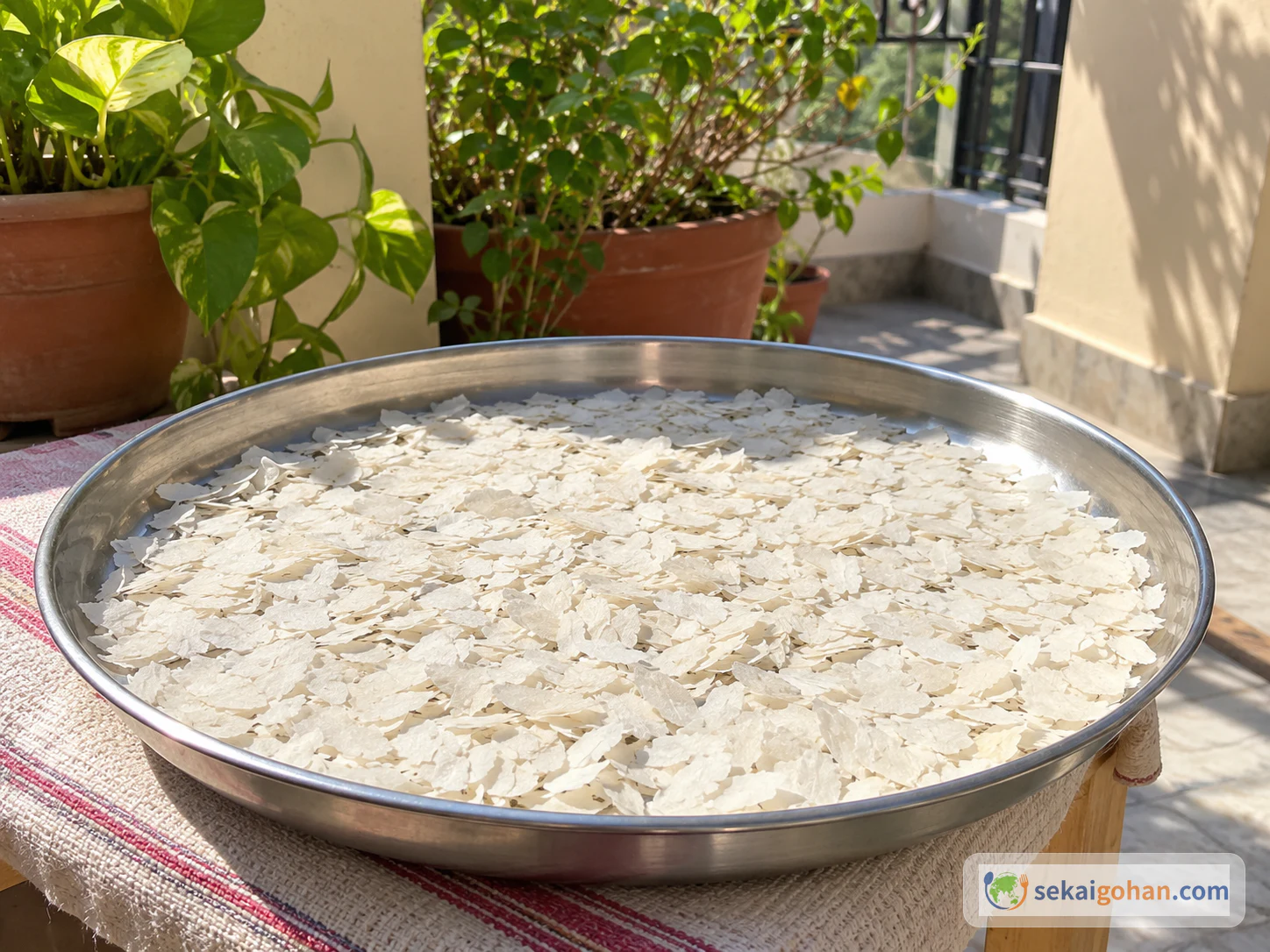
Dry the poha in the sun for one day

Thin poha spread on a clean tray, drying in the sun
Spread the flakes thinly on a clean tray for the day of sun-drying

Spread the sifted poha in a thin layer on a clean tray and leave it in the sun for one day.

STEP33 / 9

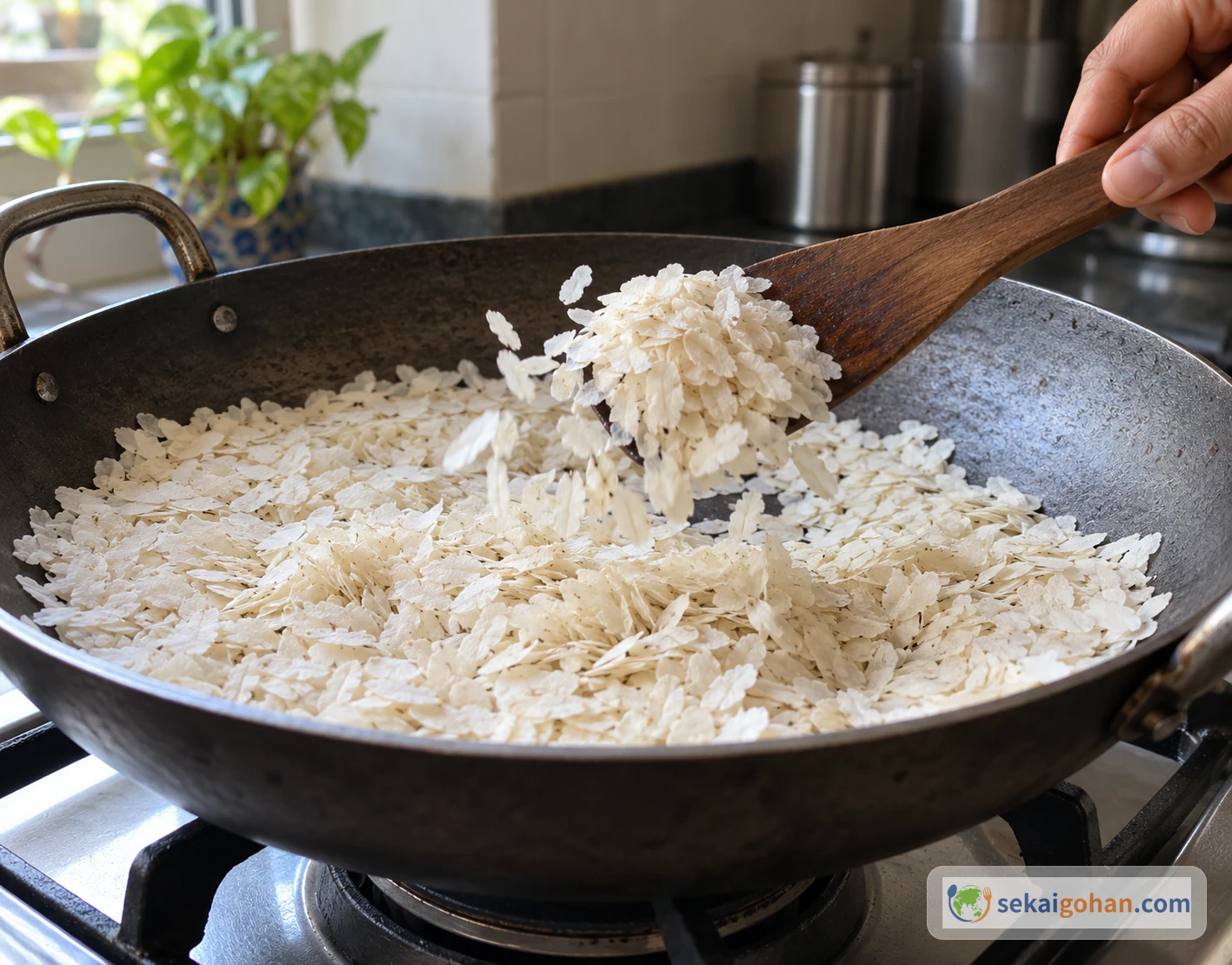
Dry-roast the poha with no oil

Dry-roasting sun-dried thin poha in a pan with no oil
Stir the dry flakes gently in the empty pan until crisp

Put the sun-dried poha in a wide pan with no oil. Roast it, stirring gently, until the flakes are crisp. Set aside.

STEP44 / 9

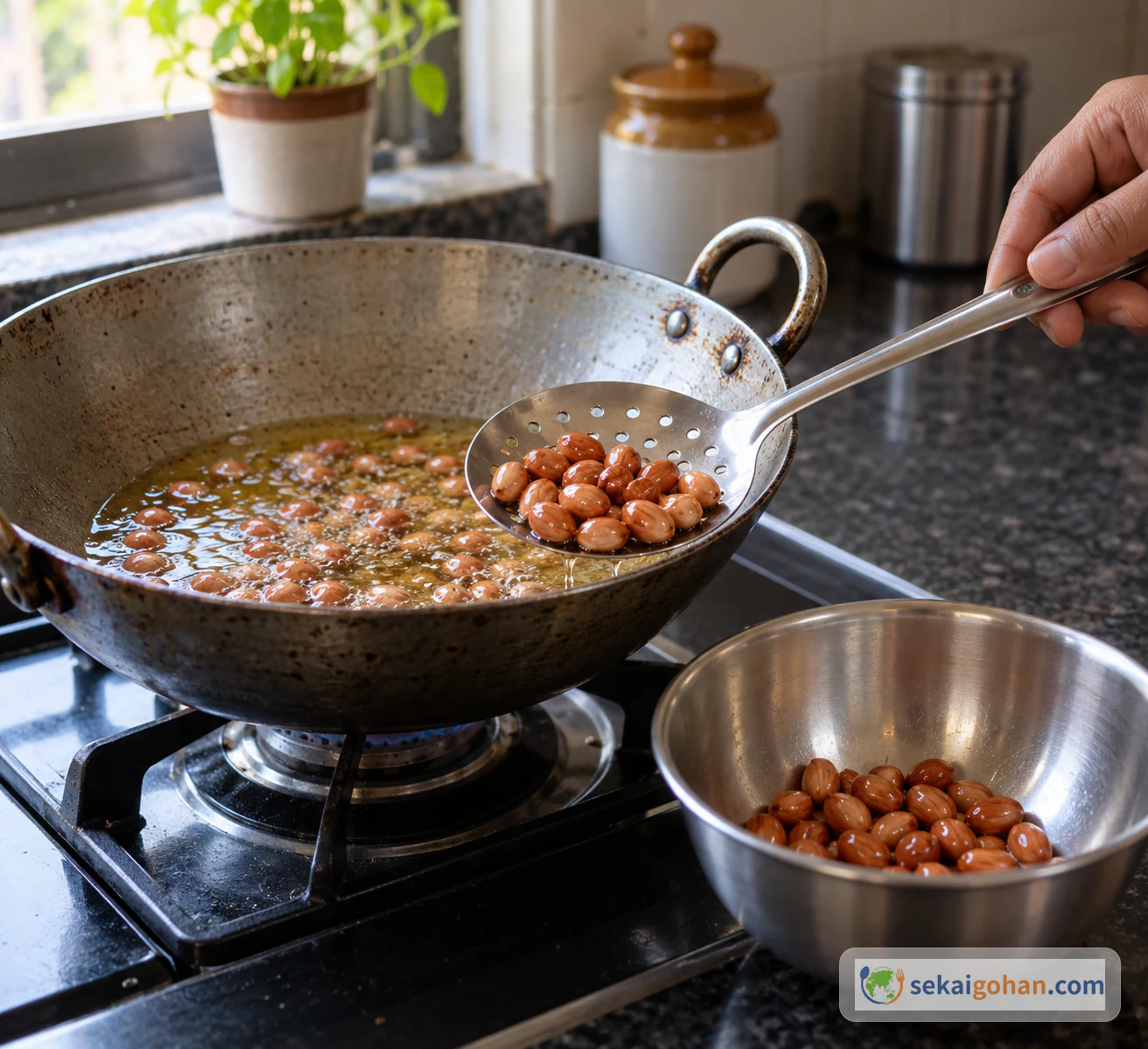
Fry the peanuts

Frying peanuts in oil and lifting them out
Fry the peanuts on their own and lift them out into a small bowl

Heat the oil in a kadai and fry the 1.75 oz (50 g) peanuts. Lift them out with a slotted spoon into a small bowl.

STEP55 / 9

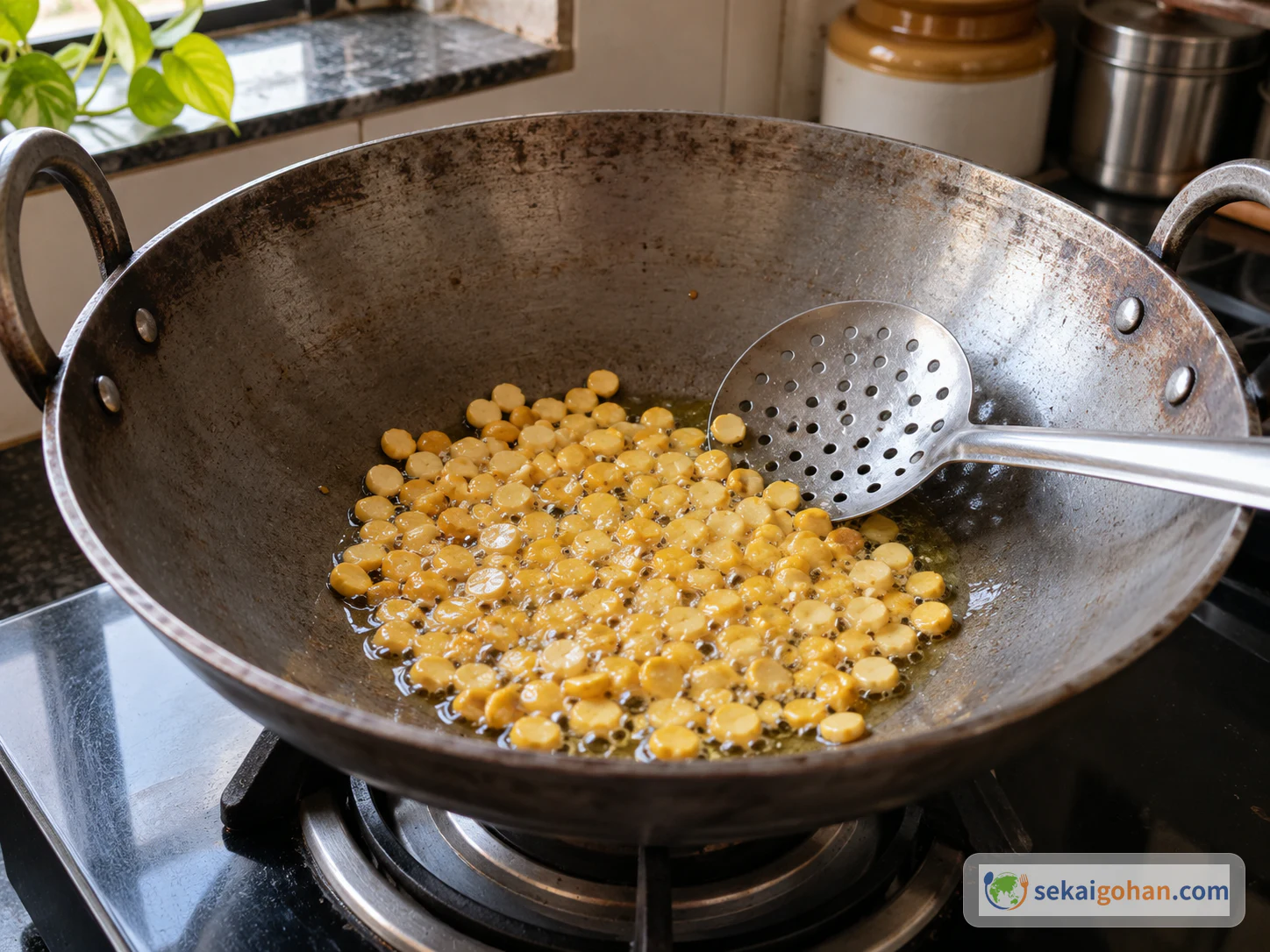
Fry the roasted gram separately

Frying roasted gram separately from the peanuts
Fry the roasted gram as its own batch after the peanuts

Fry the 1.75 oz (50 g) roasted gram in the oil, separately from the peanuts. Lift it out into its own bowl.

STEP66 / 9

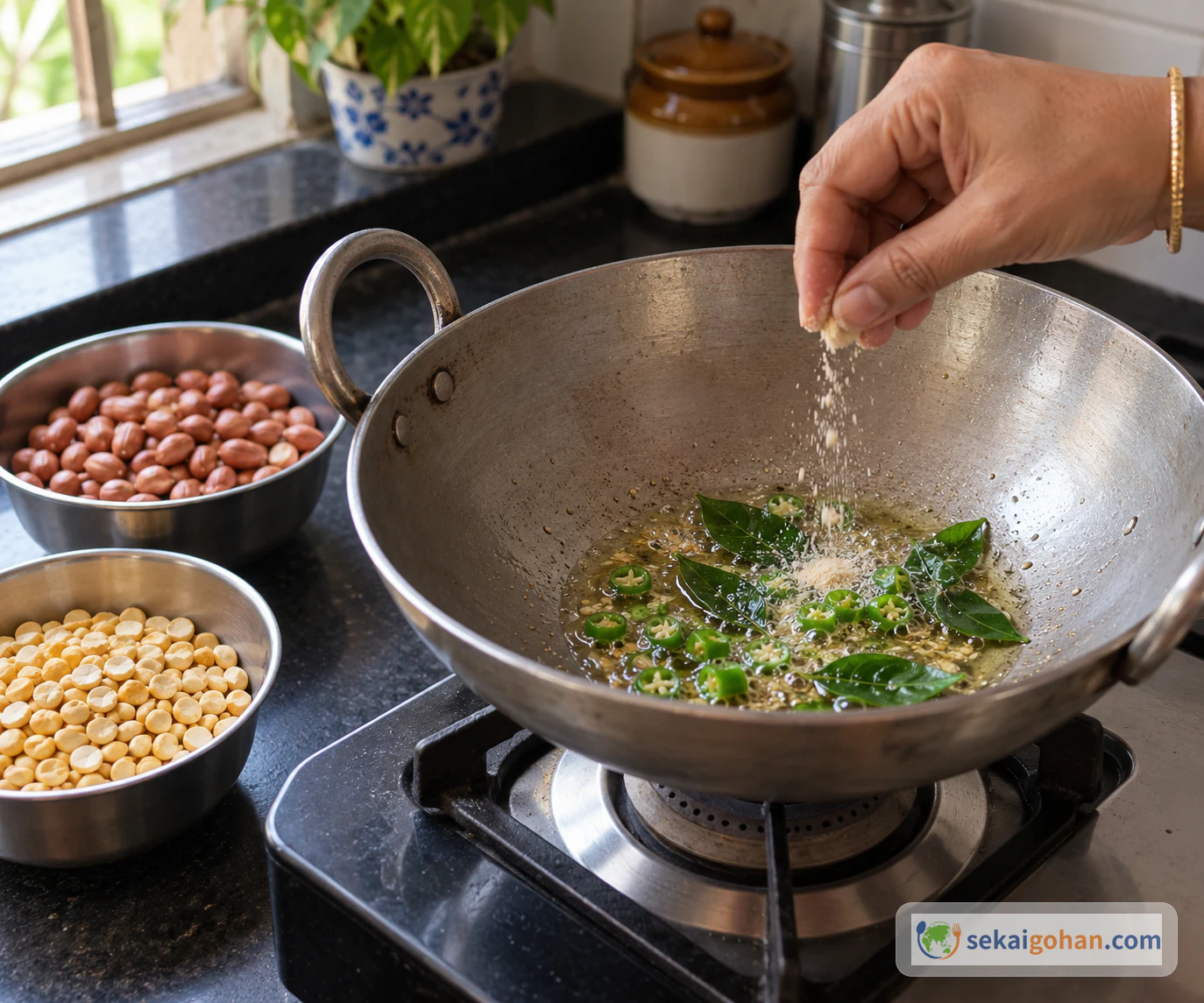
Temper the hing, green chili and curry leaves

Hing, chopped green chili and curry leaves tempering in oil
Let the hing, chili and curry leaves release their aroma into the oil

Add the pinch of hing, the chopped green chilies and the curry leaves to the oil for the tempering.

STEP77 / 9

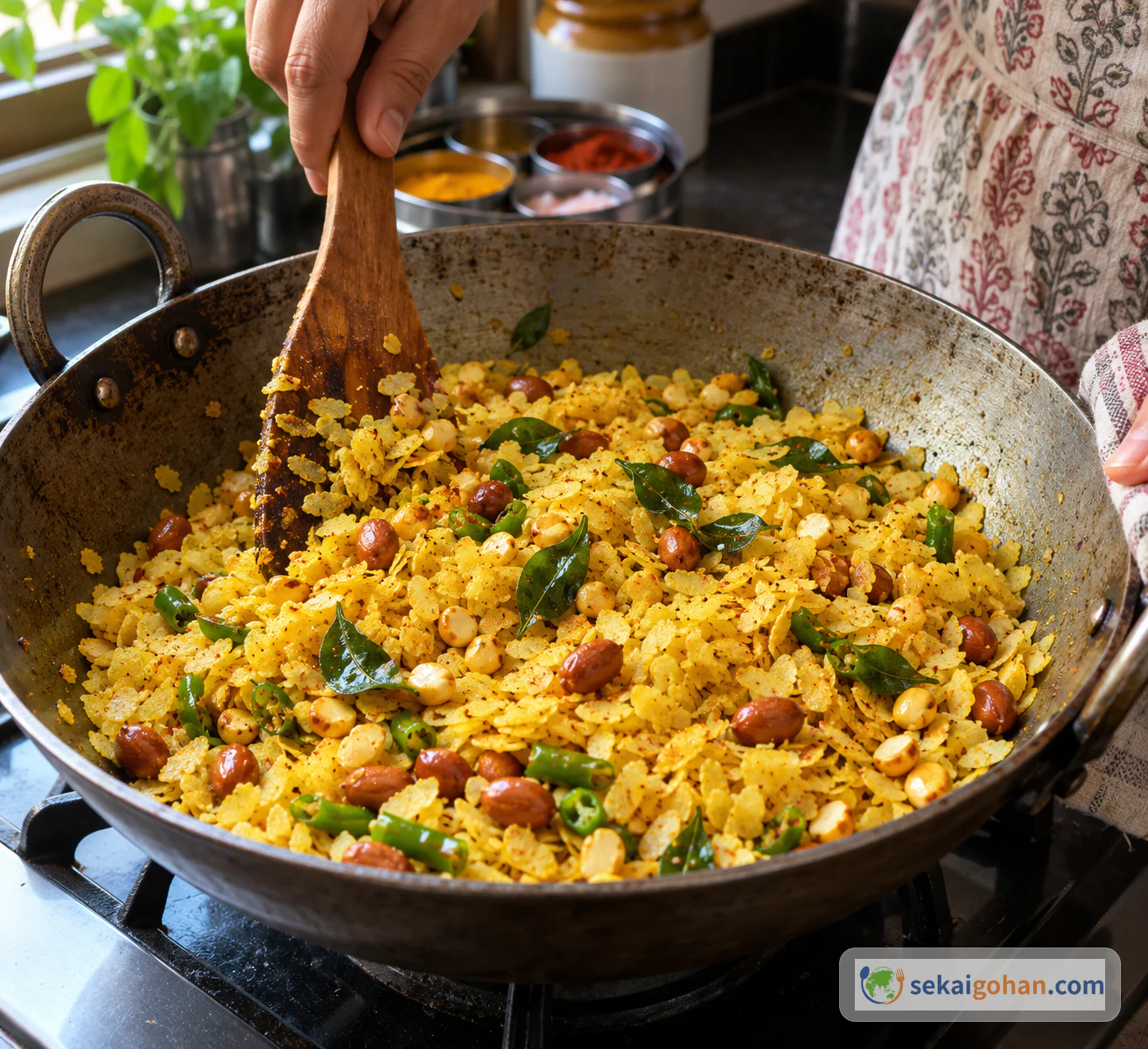
Add the poha and spices, then turn off the heat

Folding the roasted poha and fried ingredients with turmeric and salts
Mix the poha, fried ingredients and spices together, then turn off the heat

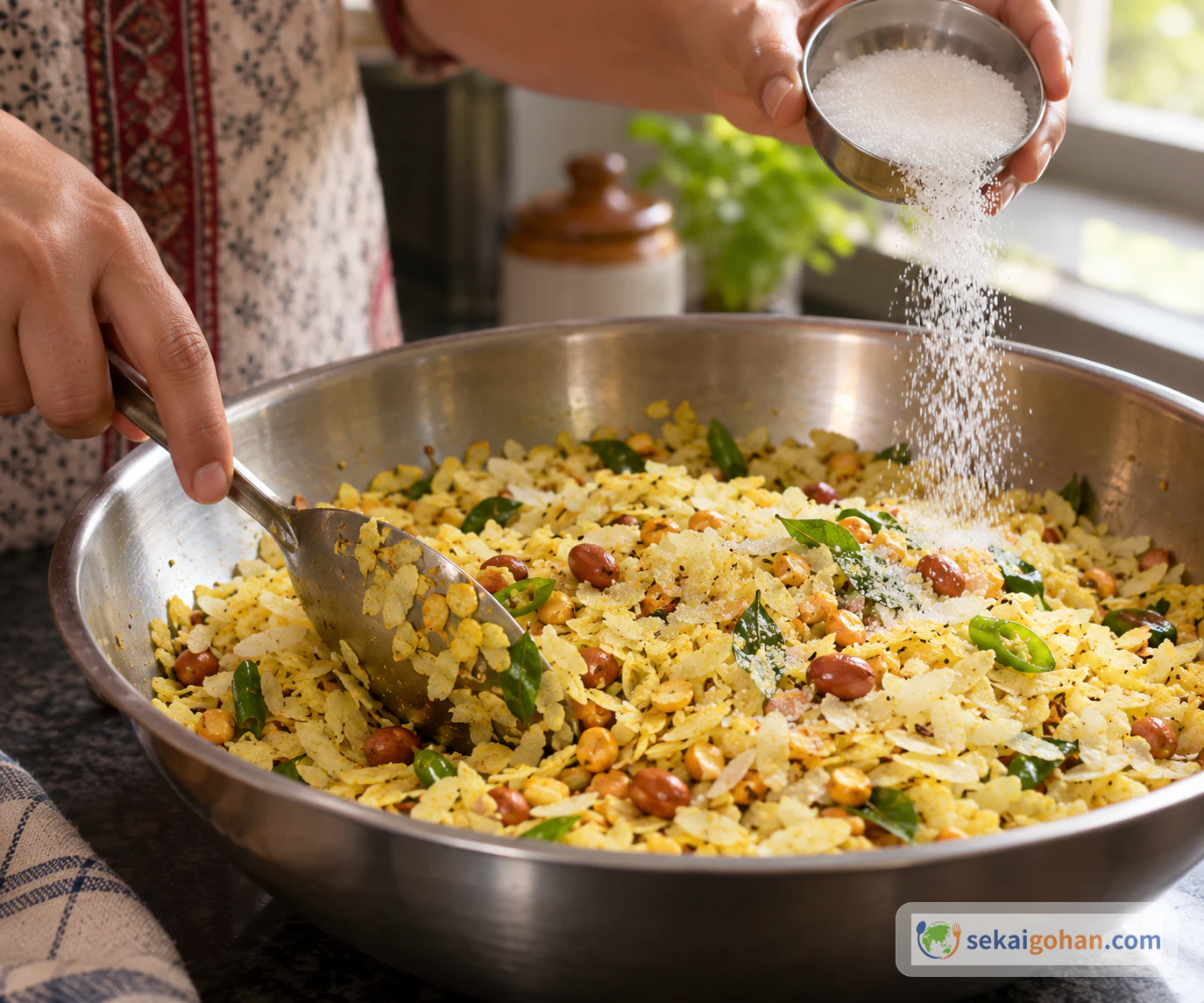
Add the roasted poha to the tempering with the turmeric, red chili powder, black salt and salt to taste. Return the fried peanuts and roasted gram, mix everything well, and turn off the heat.

STEP88 / 9

Cool slightly and add the ground sugar

Mixing ground sugar into slightly cooled chevdo
Add the sugar only after the heat is off and the mix has cooled a little

Let the chevdo cool slightly. Sprinkle in the ground sugar and mix it through.

STEP99 / 9

Cool completely and store

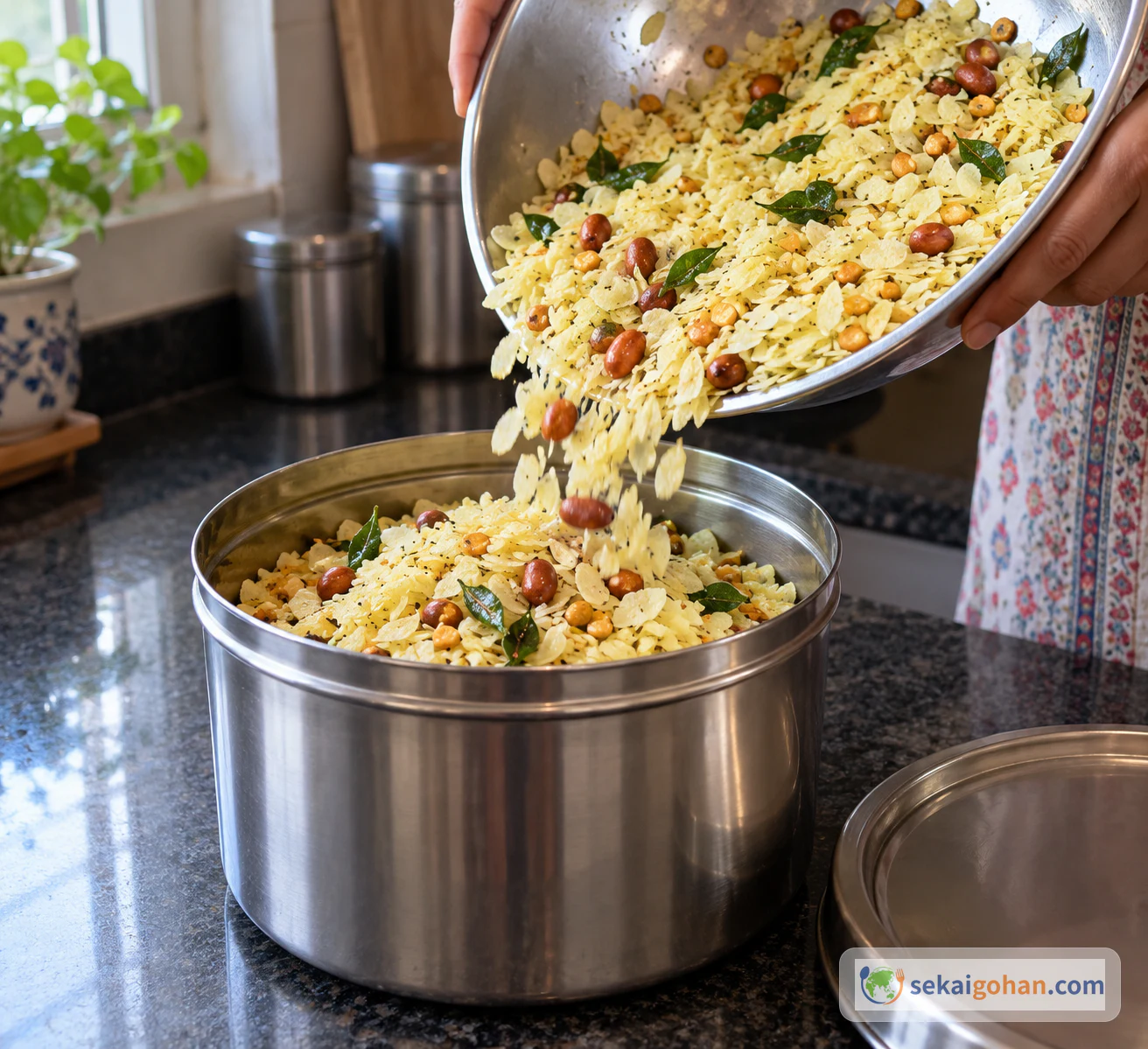
Transferring fully cooled chevdo into a lidded storage tin
Close the container only once the chevdo has cooled all the way

Let the chevdo cool completely, then transfer it to an airtight container and close the lid.

0 / 0
Ingredients

Ingredients

1 / 1

Ingredients

Ingredient Amount Role
Thin poha (પાતળા પૌવા, thin flattened rice) 1 lb (500 g) The base of the mix. Sifted, sun-dried and dry-roasted
Peanuts 1.75 oz (50 g) Fried on their own for crunch
Roasted gram (dalia) 1.75 oz (50 g) Fried separately from the peanuts. This is roasted split chickpea, not broken wheat
Curry leaves (meetho limdo) 8–10 leaves Aroma in the tempering
Green chilies 2, chopped Heat and freshness in the tempering
Hing (asafoetida) a pinch Aroma in the tempering
Oil 1.75 oz (50 g) For frying the peanuts and roasted gram, and for the tempering
Turmeric ½ chamchi Color and warmth
Red chili powder 1 chamchi Heat and color
Black salt (sanchal) ½ chamchi Added separately from ordinary salt
Salt to taste Ordinary salt
Ground sugar (daldeli sakar) 1 chamchi Sweet finish, added after the mix has cooled slightly
0 / 0

In Gujarat, a bowl of something dry and crunchy often sits beside the afternoon tea. Very often that something is chevdo (ચેવડો). This version is a Gujarati home recipe from Baroda (Vadodara). Thin flattened rice is sifted, dried in the sun for a day, then roasted in a dry pan with no oil. Peanuts and roasted gram are fried separately. A quick tempering of hing, green chili and curry leaves gives the oil its aroma, and turmeric, red chili, black salt and salt season the mix. A spoonful of ground sugar goes in at the very end.

Chevdo in Gujarat

Chevdo with Afternoon Chai

Nadiad's chevdo, also called chavanu, is the signature dry mixture of that town, and people across Gujarat eat it with afternoon masala chai. The Baroda mix here is different, but it's eaten the same way: a small handful at a time, with the tea kept in its own cup and never poured over the snack.
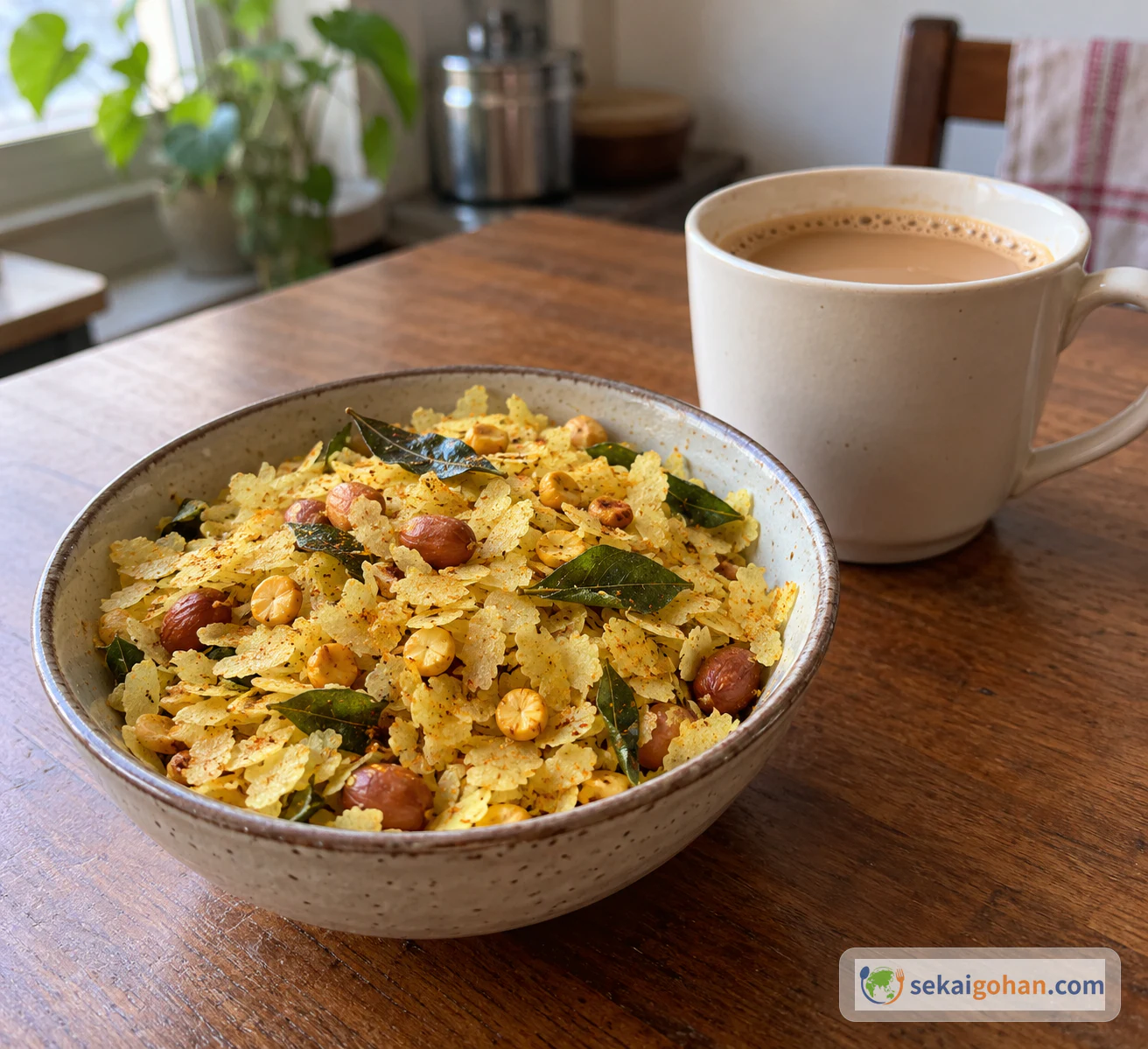
Thin-poha chevdo in a small bowl with a separate cup of chai
Chevdo served in a small bowl, with tea alongside in its own cup

Gujarati dry snacks, or nasto, are made in large batches and stored, often in the run-up to Diwali. That's why a recipe like this one ends with an airtight container.

Chevdo Styles and Names

Chevdo is a beaten-rice mix, and its name is linked to Maharashtra's chiwda. The same snack family is often called chivda or chiwda, especially in Maharashtra. The name covers a lot of different mixes, so go by the ingredients rather than the name.

Style What sets it apart Compared with this recipe
Nadiadi chevdo / chavanu (Kheda district) Poha, chickpea-flour sev, fried peanuts and a sweet-tangy spice blend Uses sev; the Baroda mix has none
Deep-fried chevdo (medium-thick poha) Medium-thick poha that is deep-fried, plus puffed rice, cashews, chana and moong dal, potato sticks, potato chips and raisins Thicker poha, a different way of heating it, more ingredients
Microwave chevdo (thin or nylon poha) Thin or nylon poha cooked in a microwave with no oil A separate method with its own timings and add-ins
Broader chevdo / chiwda Beaten-rice mixes, sometimes with peanuts, dried coconut and cornflakes Shows how much household mixes vary

Chevdo is also different from poha the dish, such as Indori poha, which is a cooked flattened-rice dish. In chevdo, poha is just the ingredient, dried and roasted into a crunchy snack. You can find more dishes from the same country on the India country page.

Ingredients: Thin Poha, Peanuts and Roasted Gram (Serves 8)
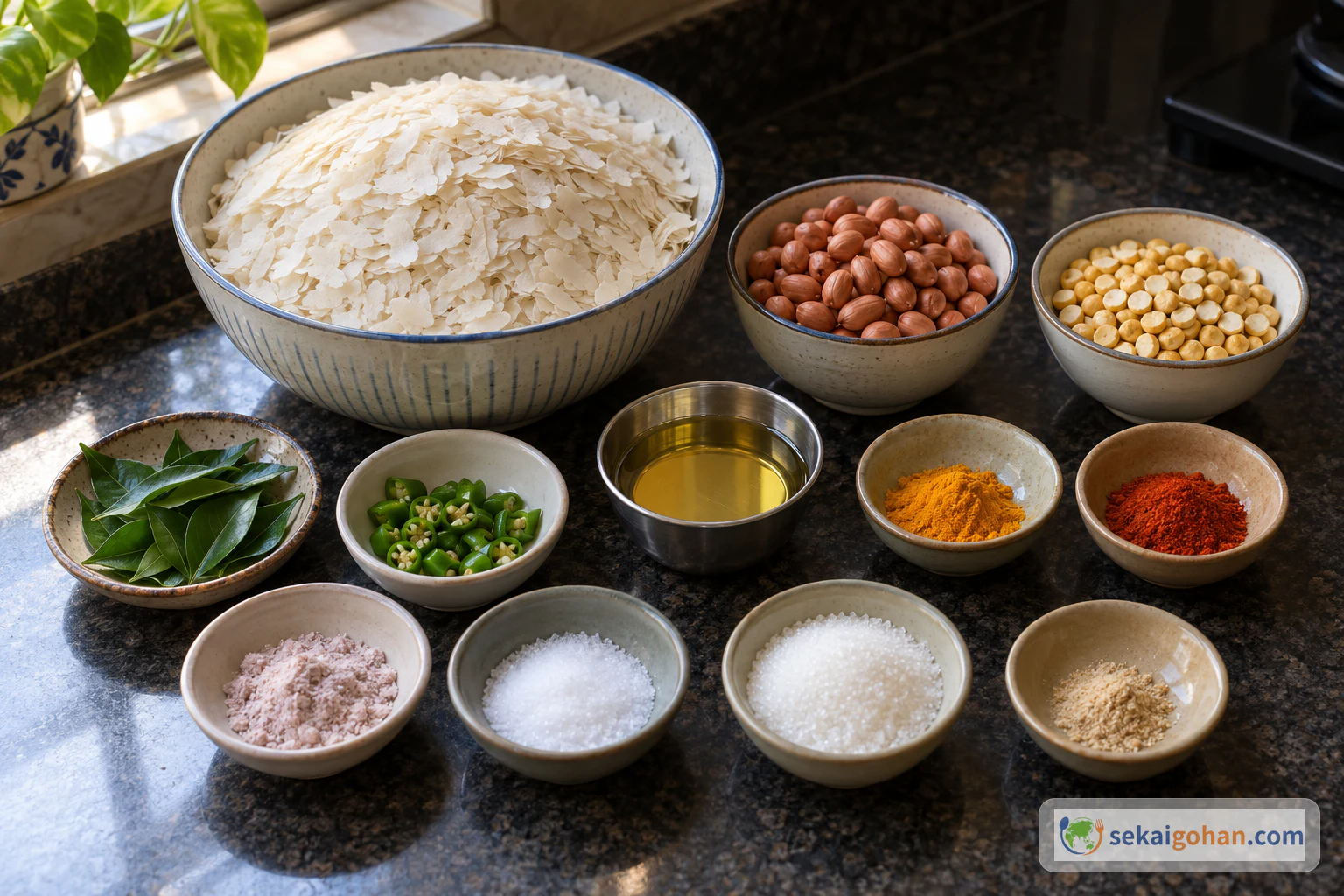
Thin poha, peanuts, roasted gram, curry leaves and seasonings laid out for chevdo
Get the thin poha, the two fried ingredients and the seasonings ready in separate bowls

Keep black salt and ordinary salt in separate bowls, and set the ground sugar aside for the very end.

Equipment

  • Wide sieve and a clean bowl
  • Clean shallow tray for sun-drying
  • Wide, heavy pan or kadai
  • Slotted spoon and small bowls for the fried ingredients
  • Heatproof spatula
  • Airtight container or tin with a lid

Choosing Poha, Dalia and Salts for Chevdo

Poha thickness. Look for packs labeled "thin poha" or "nylon poha" at Indian grocers. The dry-roasting here is meant for thin flakes. Medium or thick poha won't give the same result.

Dalia is roasted gram. In Gujarati chevdo, dalia means roasted split chickpeas (roasted chana or gram). The trouble is that in English-language shops, "dalia" often means broken wheat cereal, so check the ingredients on the pack.

Curry leaves. Meetho limdo means "sweet neem," but it's the Gujarati name for curry leaves, not the medicinal neem leaf. Fresh and dried curry leaves smell different.

Two salts. Black salt (sanchal or kala namak) and ordinary salt are separate ingredients here, and you need both. Import grocers and spice shops carry black salt.

Ground sugar. This is plain sugar ground fine. Icing or confectioners' sugar is a different product and can contain starch.

Allergy

This chevdo contains peanuts and chickpeas (roasted gram). If anyone eating it has dietary restrictions, also check the labels of hing and packaged spices.

Method: Dry, Roast, Fry Separately, Then Season

The two time markers

Plan a full day for sun-drying the poha before you roast it. Judge each roasting and frying stage by how the food looks and smells.

Chevdo Troubleshooting

Most problems are easier to prevent while you're shopping and setting up than to fix later.

What you notice Likely reason What to do
The flakes are thick and chunky Medium or thick poha was bought Look for "thin" or "nylon" poha; thicker poha suits the deep-fried styles
The "dalia" pack looks like cracked wheat Broken wheat cereal was bought Look for roasted gram (roasted split chickpeas) instead
Only one salt on the counter Black salt and ordinary salt were treated as the same thing Use both: ½ chamchi black salt and ordinary salt to taste
The leaves bought are not curry leaves Neem or another leaf was bought instead Meetho limdo means curry leaves. Use those
Sugar going in over the flame The sugar step came too early Turn off the heat, let the mix cool slightly, then add the sugar
Steam inside the container It was sealed while still warm Let it cool completely before closing the lid; trapped moisture works against a dry snack

Frequently Asked Questions

Is a chamchi a teaspoon?

Chamchi means "spoon." The turmeric, black salt, red chili and sugar are measured in chamchi, not teaspoons or millilitres.

How long does it take?

Allow 45 minutes, plus a full day for sun-drying the poha. Plan the drying day as its own step. When you roast and fry, go by how the food looks and smells.

How long does chevdo keep?

Let the chevdo cool completely, then keep it in an airtight container. There's no fixed shelf life here, so judge freshness yourself.
Sources

  • Jayshree Doshi (Baroda), "પાતળા પૌવા નો ચેવડો (Thin Poha Chevdo Recipe In Gujarati)," Cookpad. The recipe followed here: its title and author, the 8-serving and 45-minute displays, the full ingredient list and amounts, and the order of the steps (sift, sun-dry for one day, roast; fry the peanuts and dalia separately; temper; add the poha and spices; turn off the heat; cool slightly; add the sugar; store). https://cookpad.com/in-gu/recipes/15625985
  • District Administration, Kheda / Government of Gujarat, "Culinary Delights." Nadiadi chevdo (chavanu) as a dry mixture from Nadiad made with poha, chickpea-flour sev, fried peanuts and a sweet-tangy spice blend, enjoyed with afternoon masala chai. https://kheda.nic.in/culinary-delights-2/
  • Scroll.in, "A new book on Mumbai's food history examines how Gujarat's nasto and undhiyu gained popularity," excerpt from Pronoti Datta, In the Beginning There Was Bombay Duck: A Food History of Mumbai. Gujarati dry snacks (nasto) made in large batches and stored, often before Diwali; chevdo described as a beaten-rice mix and linked to Maharashtra's chiwda. https://amp.scroll.in/article/1088816/scroll_in
  • TRS Foods, "Chevdo — With Flattened Rice, Red Peanuts and Chana Dal." A different chevdo recipe with medium-thick deep-fried poha, puffed rice, potato and other additions, used only for comparison. https://www.trsfood.com/wp-content/uploads/2023/02/Chevdo_TRSrecipes-1.pdf
  • Ankit Patel, The Indian Express Gujarati, oil-free microwave poha chevdo recipe. Gujarati usage of dalia for roasted chana and meetha limdo for curry leaves, and a separate thin-poha microwave method used only for comparison. https://gujarati.indianexpress.com/lifestyle/oil-free-pauva-chevdoa-make-in-microwave-easy-recipe-ap-12125308