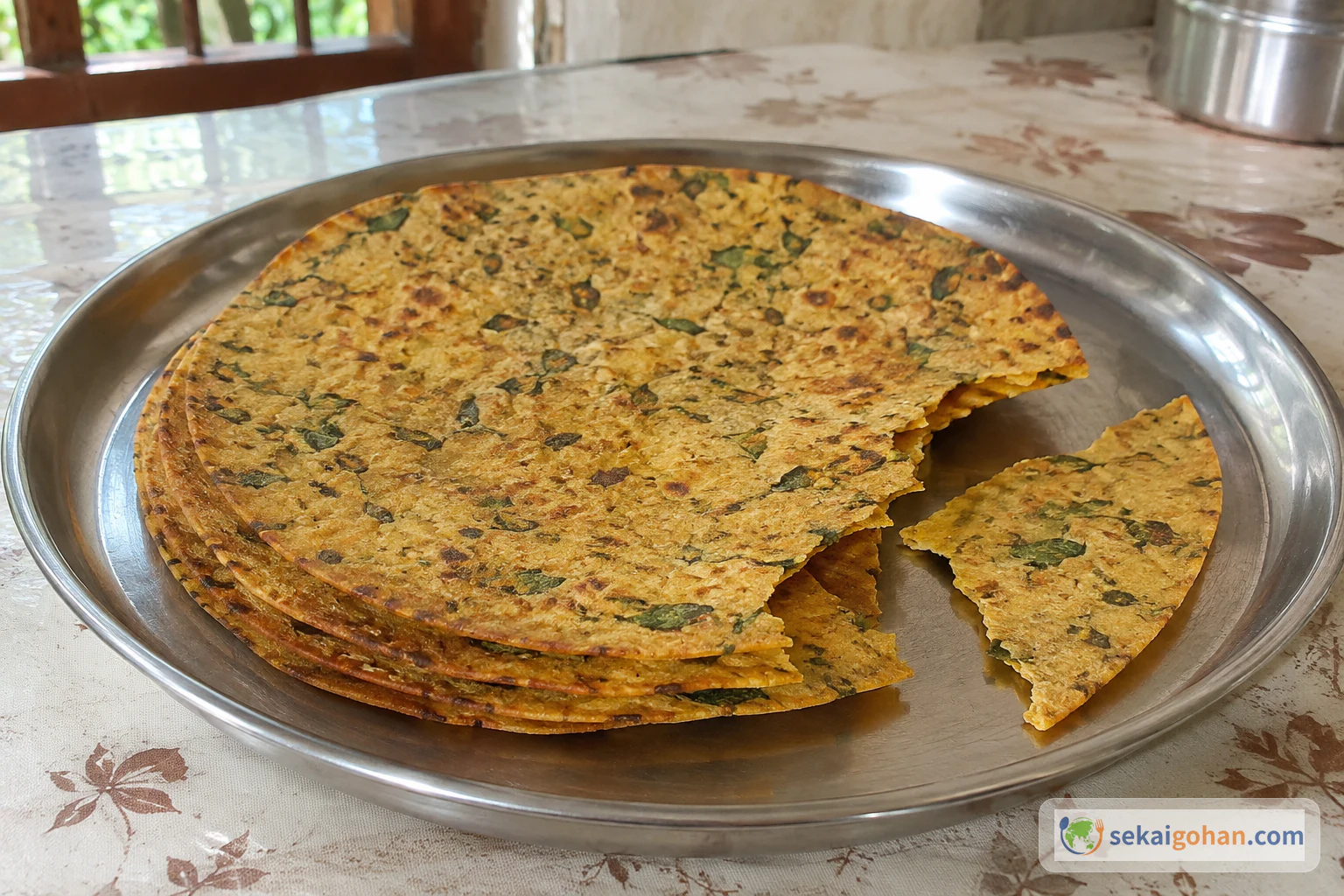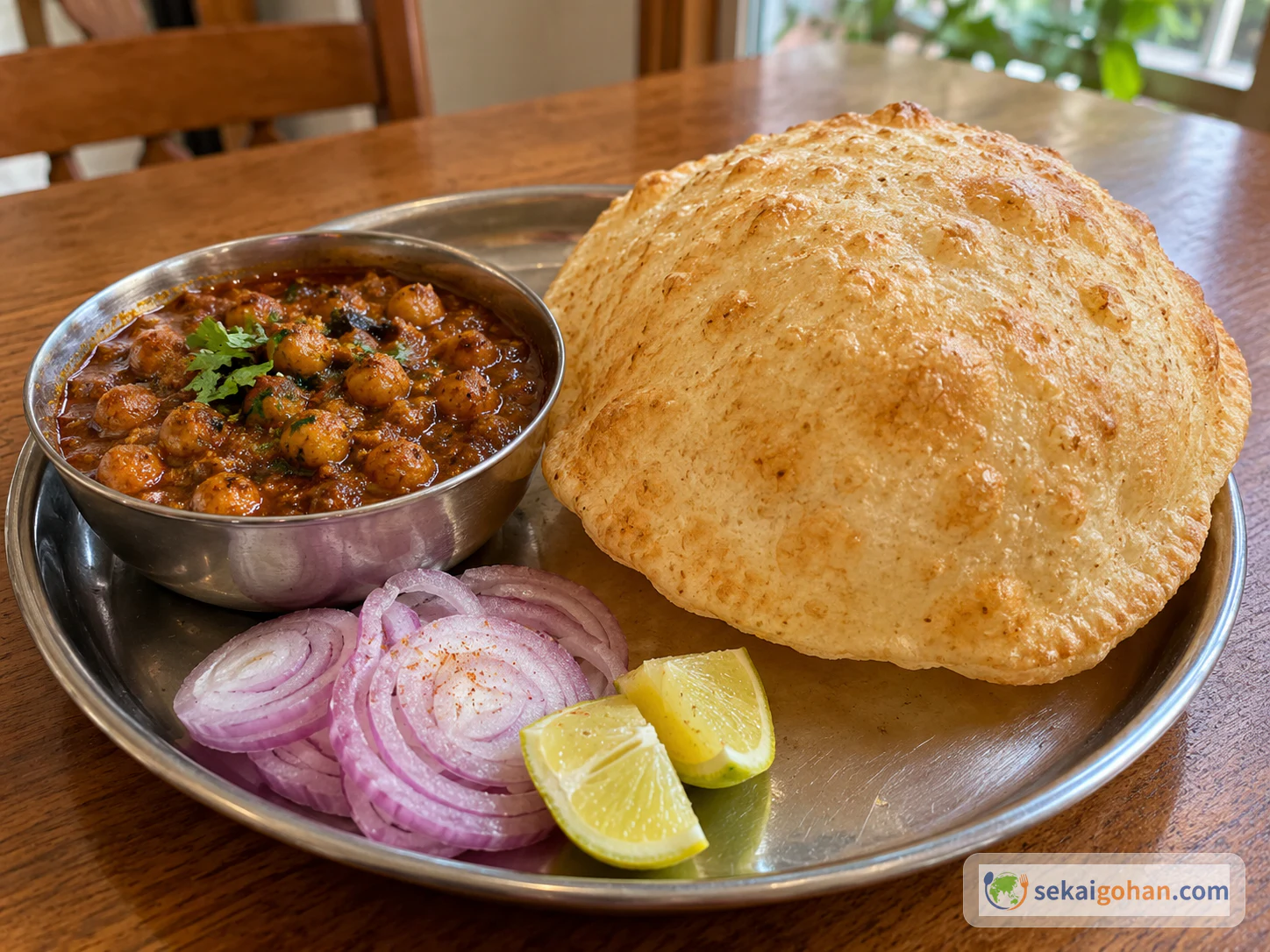
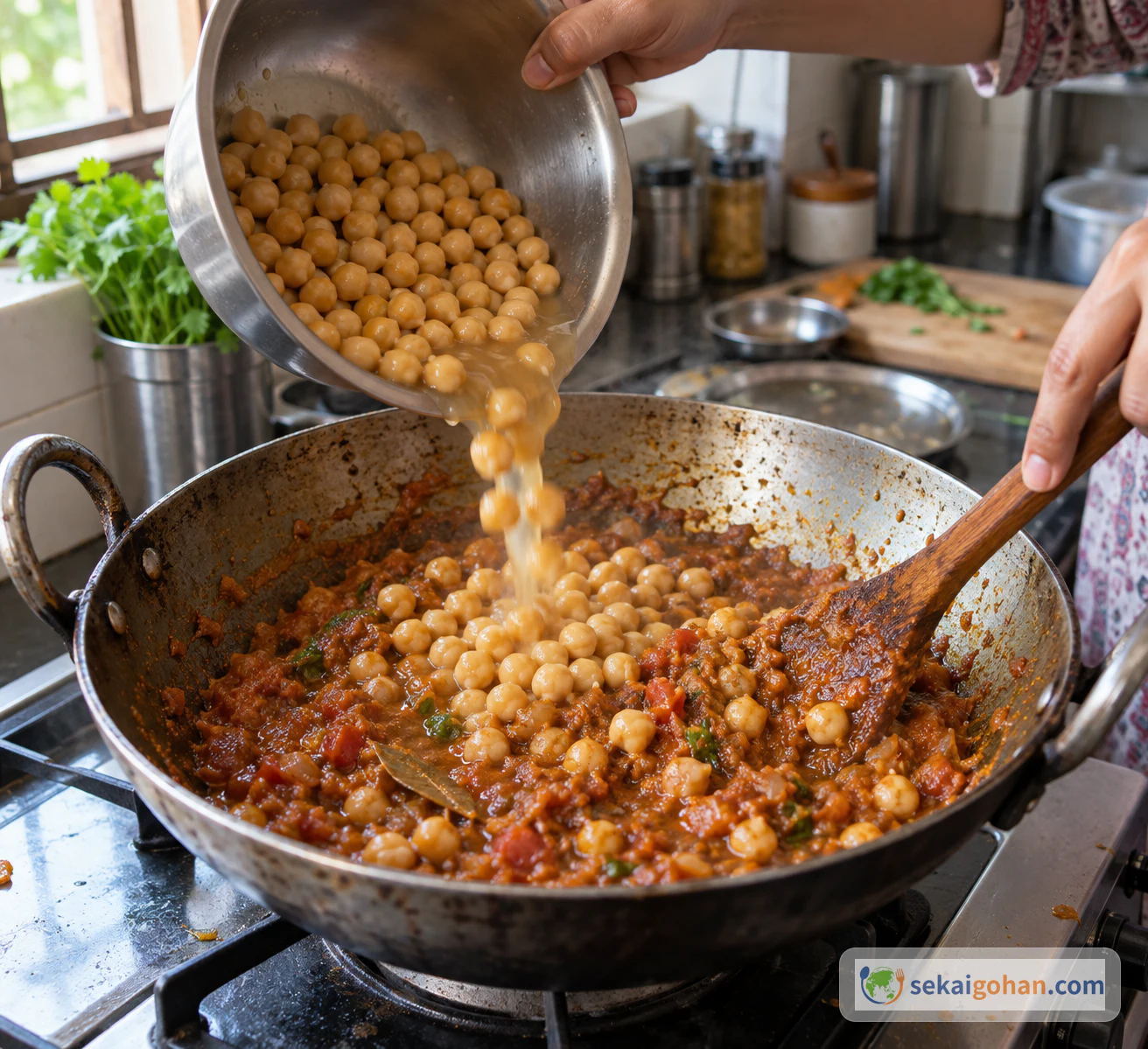
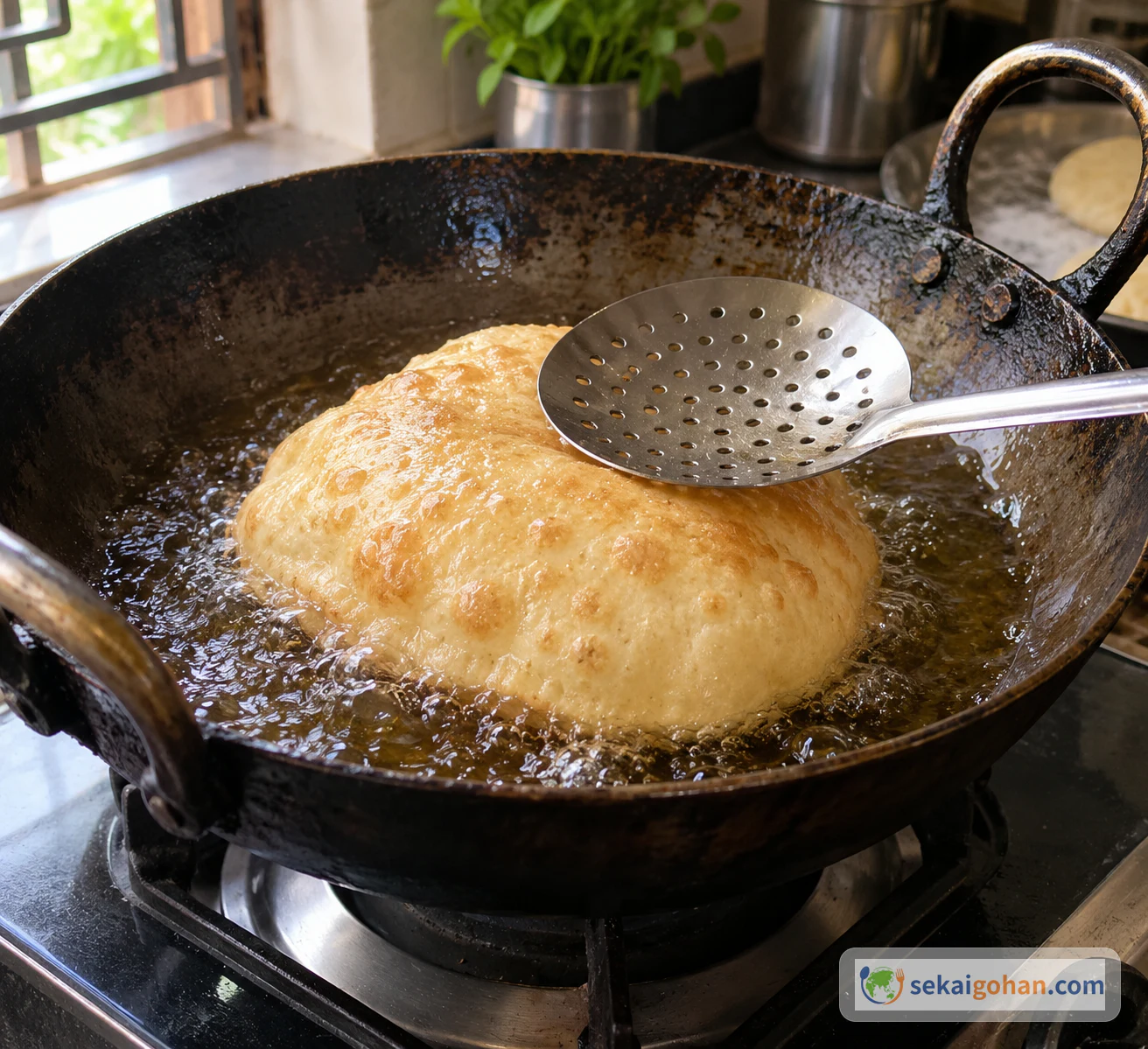
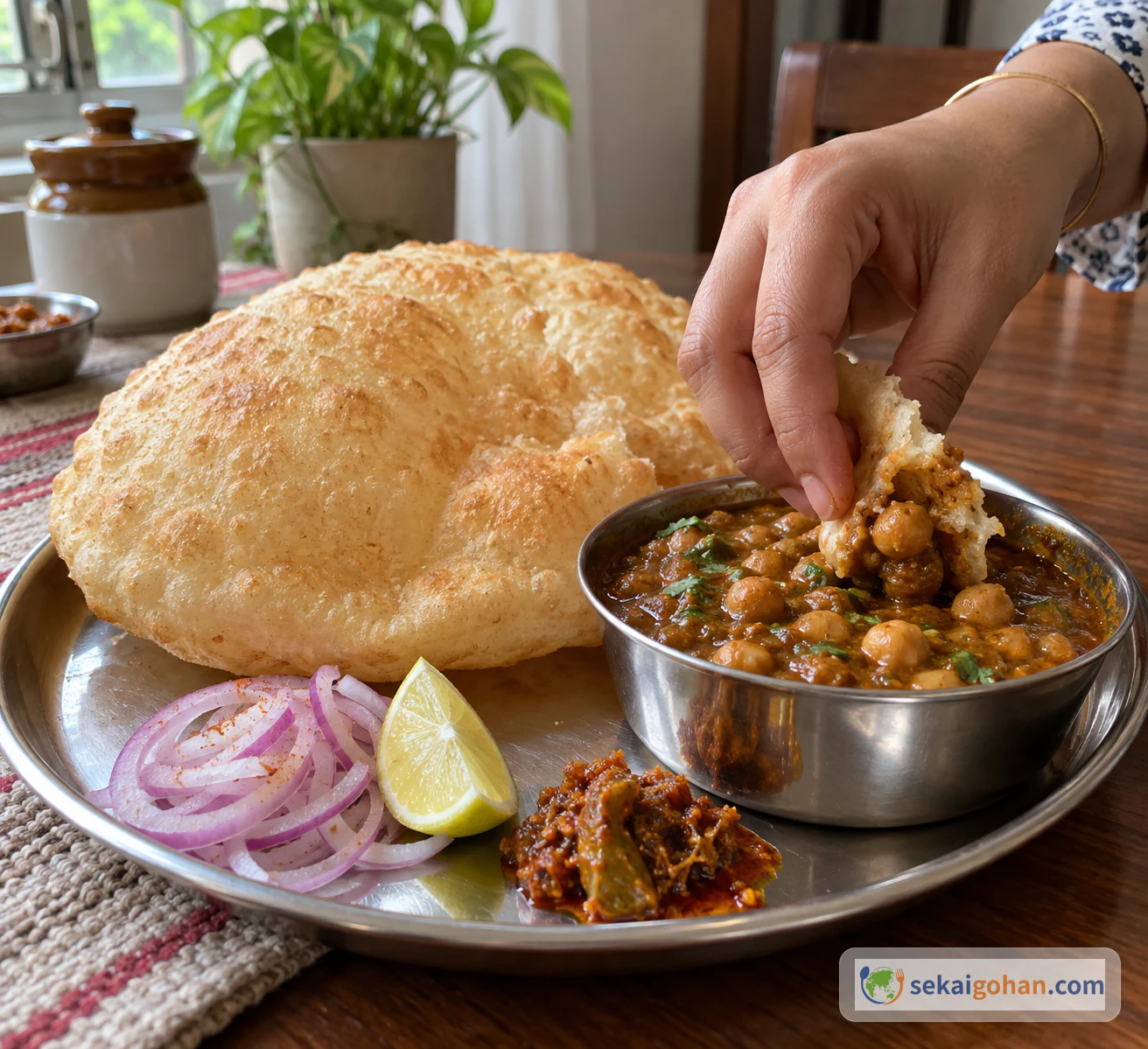
Next to a pot of chickpeas simmering in a dark, spiced gravy, a disc of rested dough slides into hot oil and swells into a golden dome. That pairing is chole bhature (छोले भटूरे): chole, chickpeas cooked with spices, and bhature, a leavened dough fried until it puffs. You tear off a piece of the hot bread and use it to scoop up the thick, tangy curry. Sliced raw red onion, lemon, green chili and pickle come alongside to cut through the richness.
Chole Bhature in Punjab and Delhi
Chole bhature is a North Indian combination of spiced chickpeas and fried bread. It's a Punjabi dish, often eaten for breakfast or brunch, and it's made both at home and at street stalls. In Delhi it's one of the signature street foods. Eateries there serve it with fried bread, alongside dishes like chole chawal (chickpeas with rice), matar kulcha and parathas.
Every cook makes it a little differently. Gravy thickness, sourness and heat vary from kitchen to kitchen, and so do the dough's resting time and leavening. This recipe makes four servings.
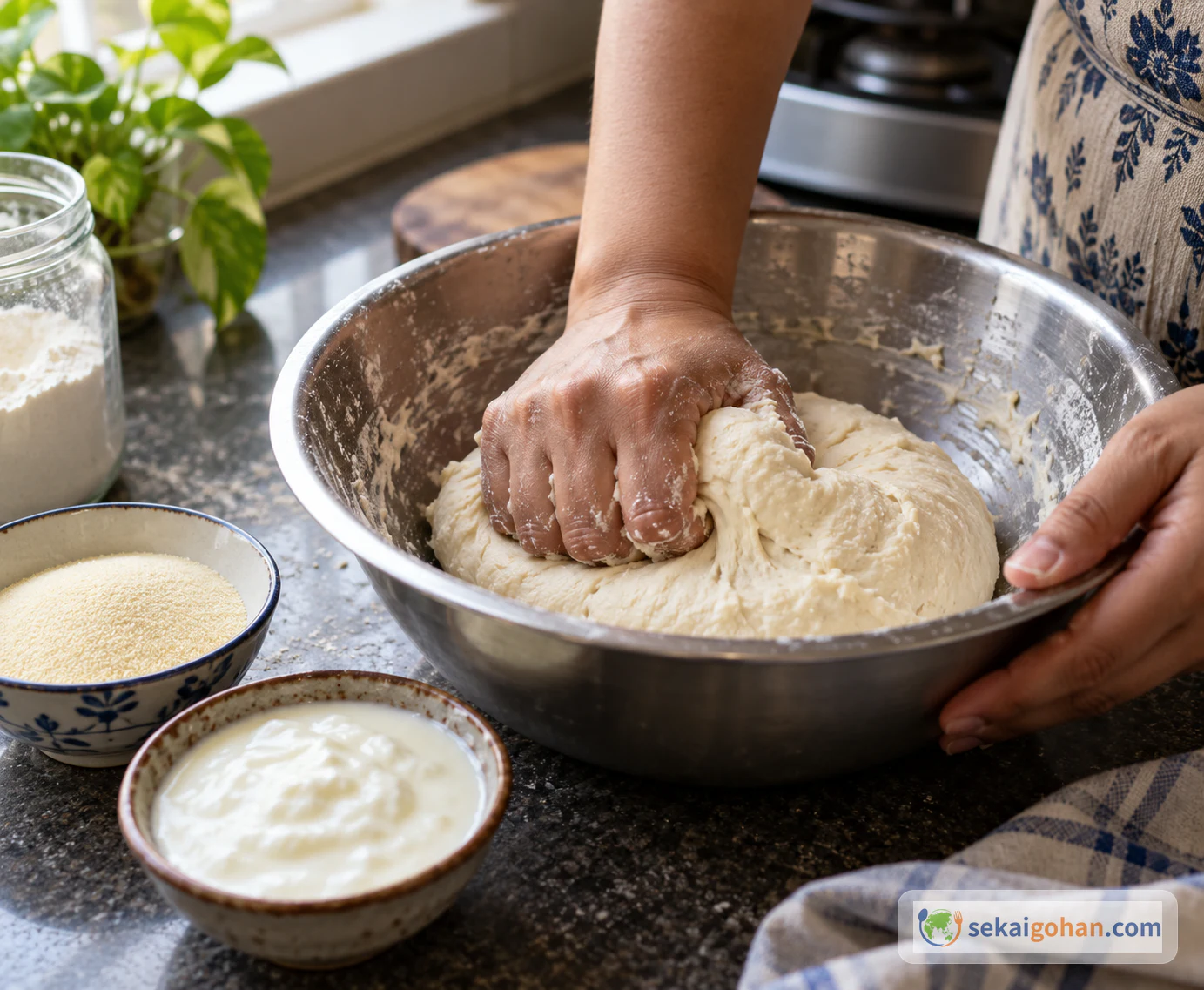
What sets the dish apart is that two things have to be ready at the same moment, with the bread still hot when it reaches the table. Timing is the hard part, so work in this order: soak the chickpeas ahead, make the dough while the chickpeas cook, build the curry while the dough rests, and fry last.
You will see it written chole bhature, chhole bhature, chole bhatura or chana bhatura. Bhatura is one bread; bhature is the plural. Searching with more than one spelling turns up more recipes and grocery listings.
Ingredients (4 servings)
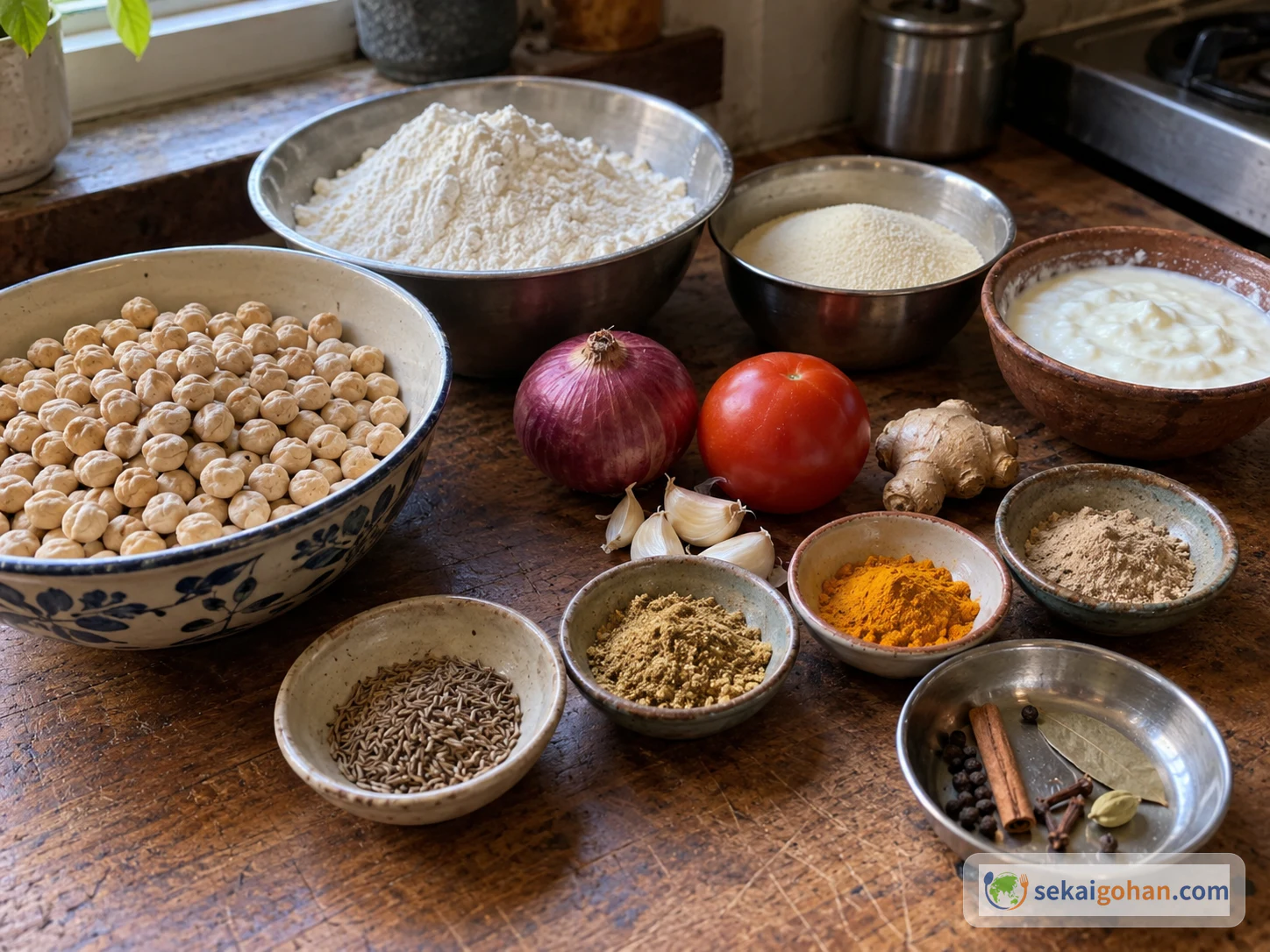
Use the same measuring cup for every ingredient so the proportions stay consistent.
Most of the chole spices are easy to find: cumin, coriander, turmeric and chili are in ordinary supermarkets. Amchur, chole masala, fine sooji, maida and tej patta are worth a trip to an Indian grocer or an online shop. A packaged chole masala saves you from buying every whole spice, but taste before adding extra salt or amchur, since blends differ. If your local semolina is coarse, it is not the same as the fine sooji used here.
This recipe contains wheat (maida, sooji) and milk (yogurt; ghee if used). Swapping only the ghee for oil does not make it dairy-free, because the dough contains yogurt; soy yogurt also changes the rise and flavor. Watch for shared frying oil and equipment, and check spice blend labels for allergen and shared-facility statements.
Choosing Ingredients for Chole Bhature
The sourness usually comes from amchur, dried mango powder, which gives a round, fruity tartness and goes in at the end of simmering. If you can't find it, use lemon juice, added a little at a time just before you turn off the heat. It makes the curry tangy too, but with a brighter citrus aroma rather than the same flavor.
For the bread you need maida, a refined wheat flour, and sooji, fine semolina. Look for both at Indian grocers. Refined flours differ from country to country, so expect the dough to stretch and puff a little differently. If you can't find fine sooji, leave it out; the bread's surface and bite will change, though.
Ghee adds a dairy fragrance and richness, while neutral oil keeps things lighter. The dough contains yogurt, so using oil alone does not make the dish dairy-free.
How to Make Chole Bhature
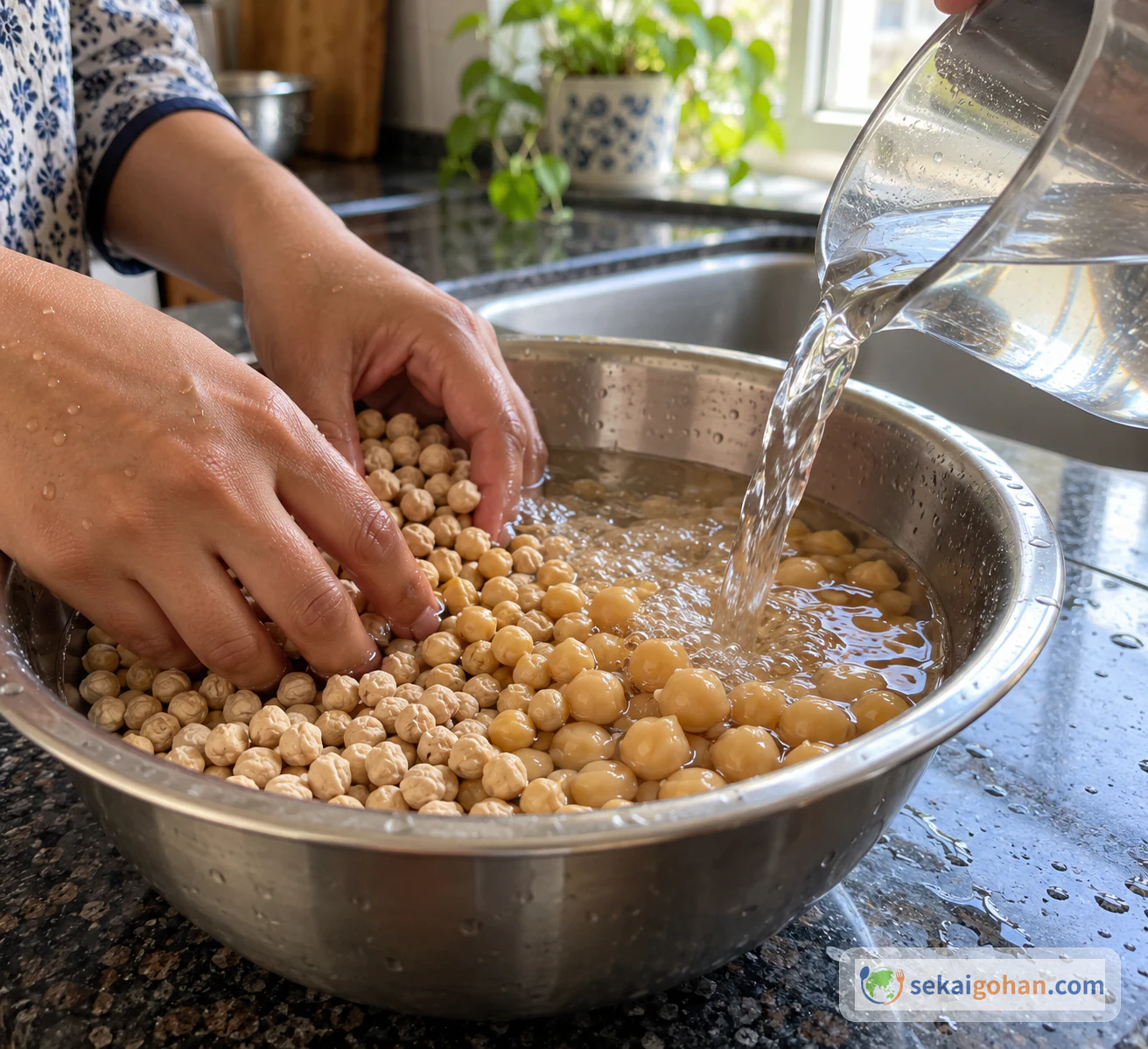
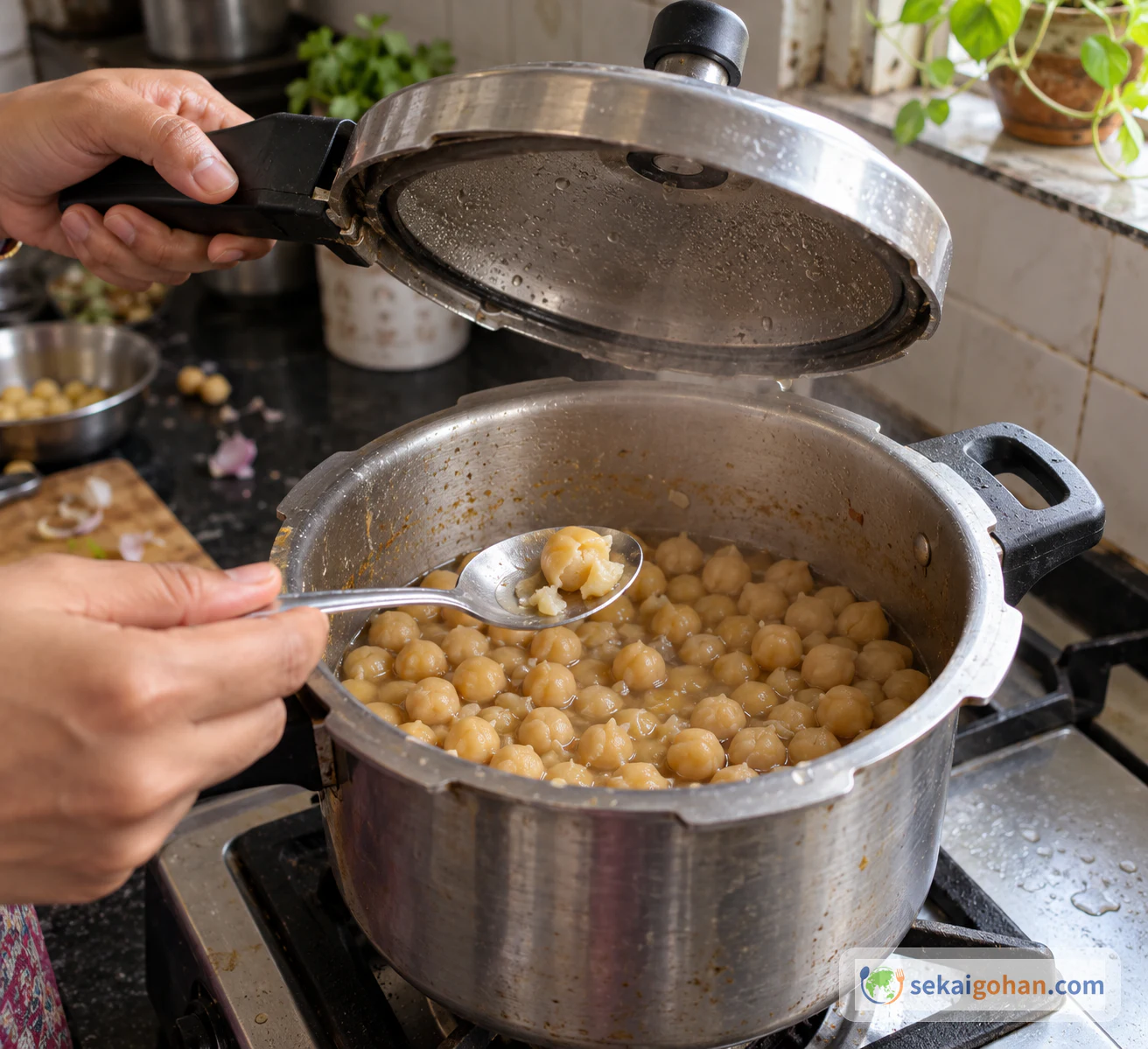
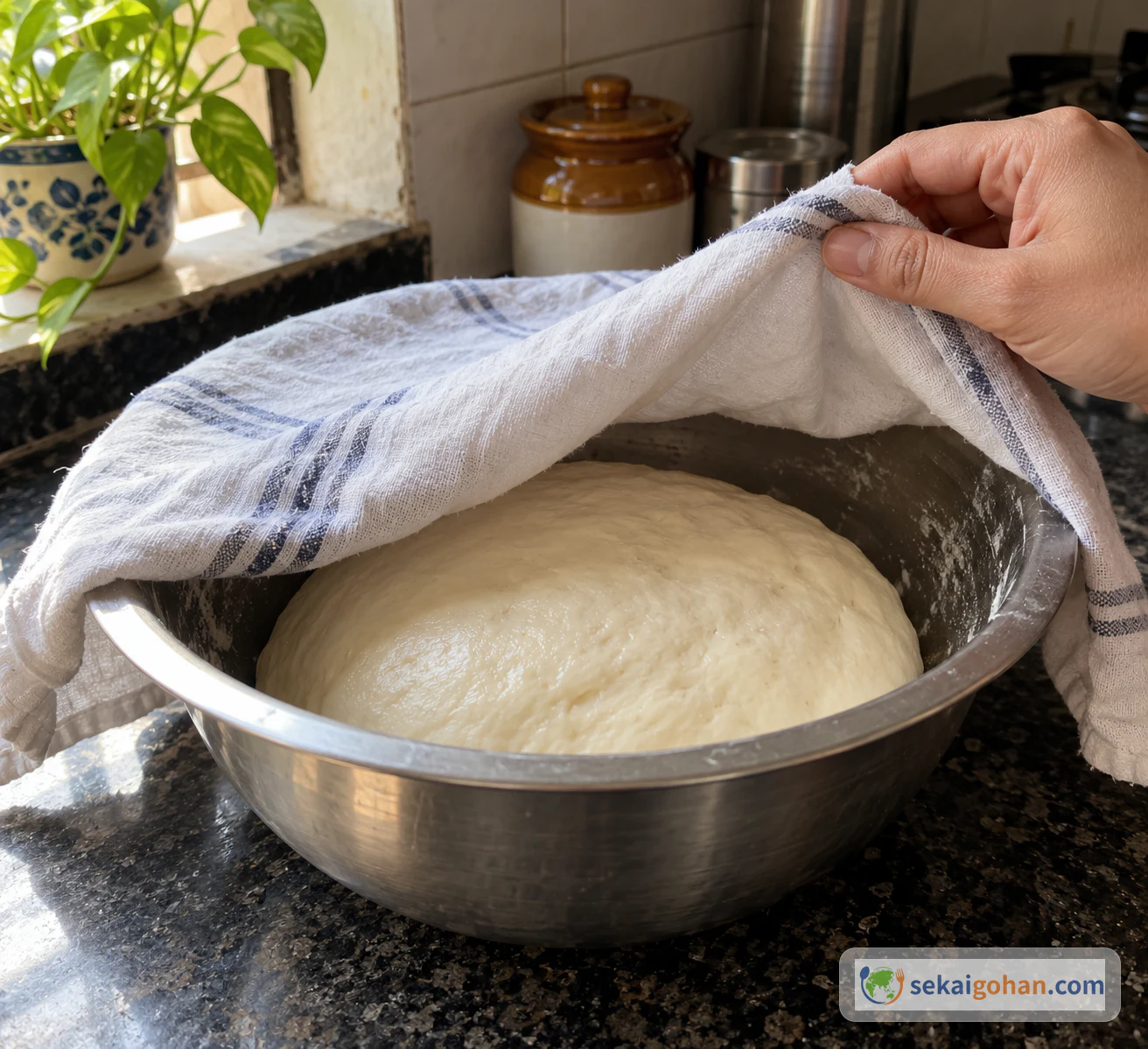
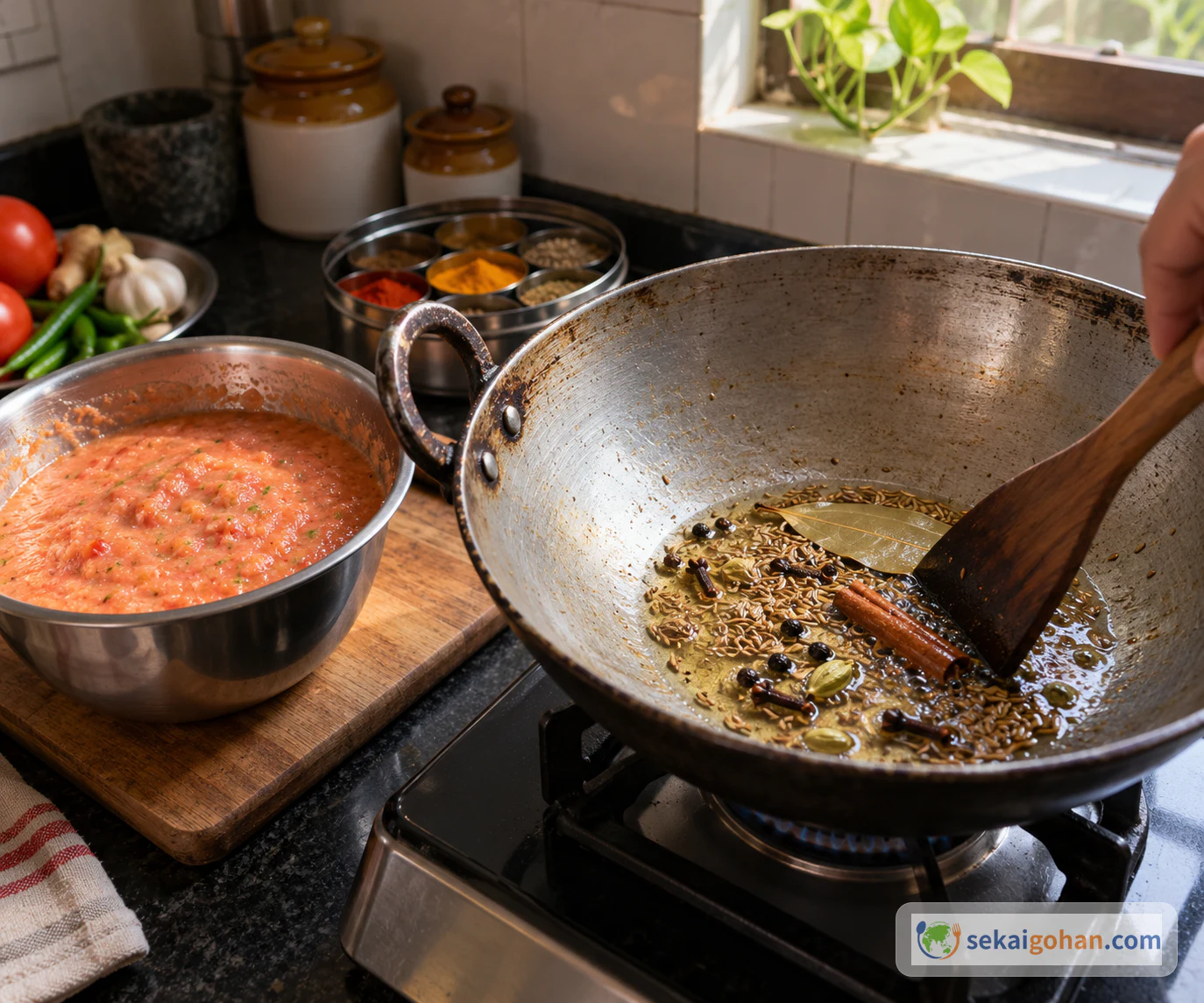
Soak the chickpeas the night before or in the morning. While they cook, make the dough; while it rests, build the curry; fry the bread last, just before eating.
Troubleshooting Chole Bhature
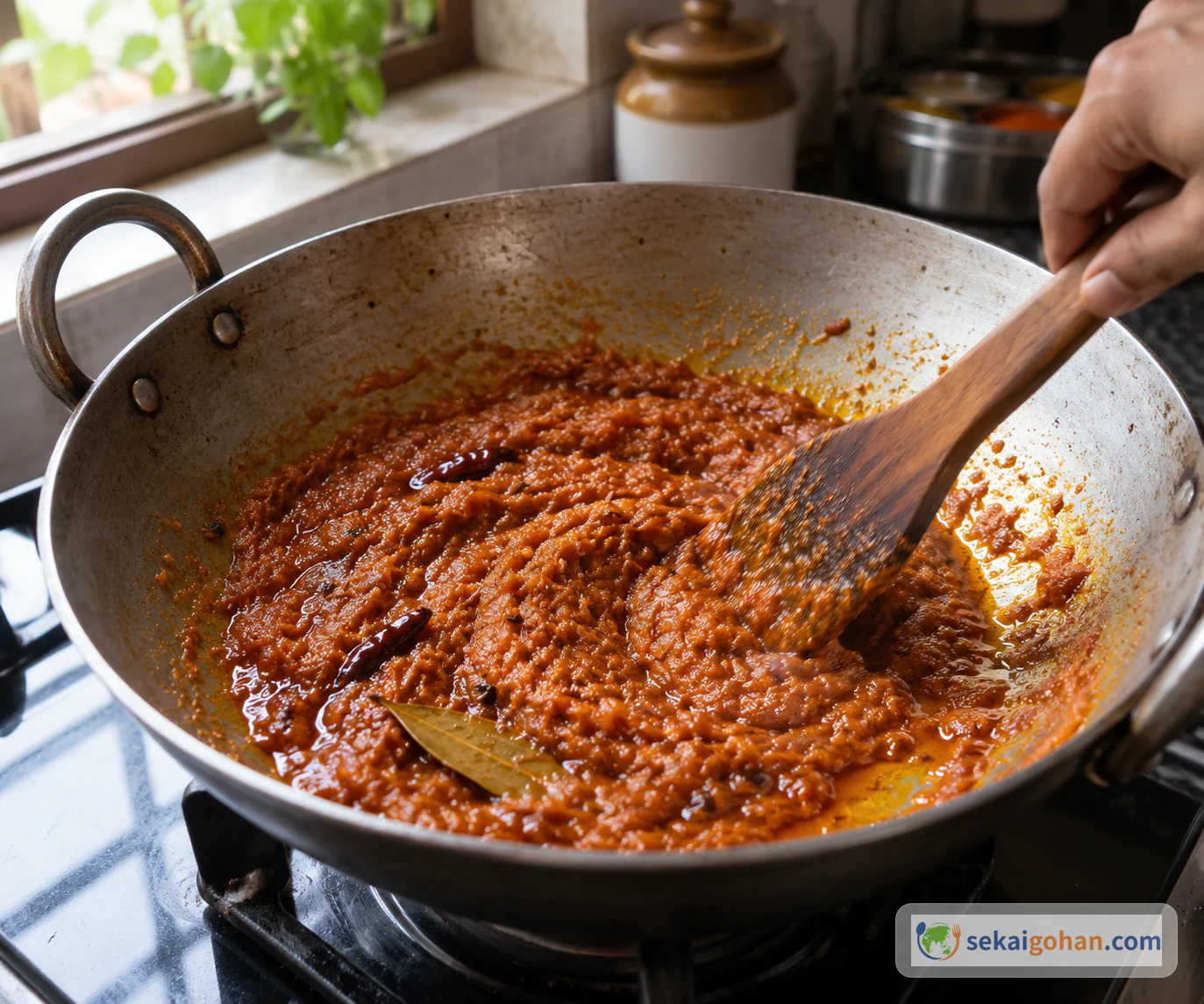
Two textures make the dish. The chickpeas need to be soft enough to crush between your fingers, and the gravy needs to be thick enough to cling to a piece of bread. Both come from patience: cook the chickpeas until they crush easily, then simmer the curry long enough for partly mashed chickpeas to thicken it.
| Problem | Likely cause | What to do |
|---|---|---|
| Chickpeas stay hard | Old chickpeas, too short a soak | Add water and keep cooking before adding salt or anything sour. With a pressure cooker, follow the manufacturer's water and release instructions |
| Gravy is watery | Too much liquid, too short a simmer | Mash some chickpeas into the gravy and simmer uncovered. Hold off on extra salt until it has reduced |
| Bhature don't puff | Stiff dough, too short a rest, uneven thickness, oil too cool | Fix one thing at a time: soften the next batch, rest longer, roll evenly, and test the oil with a small piece. Note what you changed |
| Bhature are hard like puris | Rolled too thin | Roll a little thicker and evenly, so it puffs into a soft, airy bread |
| Bhature brown before puffing | Oil too hot | Lower the heat slightly and test again with a scrap of dough |
| Too hot or too sour | Chili, amchur or spice blend | Adjust at the end; serve extra lemon and chilies at the table so each person can tune their plate |
Serving, Variations and Leftovers
Bhature are best eaten straight from the oil, because their texture suffers as they cool. Have the chole hot and the accompaniments sliced before the first bread goes in.
For a milder plate, leave out the green chili, cut back on the red chili powder, and put chilies on the table instead. Cumin and coriander still carry the aroma.
If you have leftovers, cool them promptly, refrigerate them, and reheat until steaming hot all the way through.
Frequently Asked Questions
What is the difference between chole bhature and chana masala?
Chole is the spiced chickpea curry, and bhature are the fried breads. Chole bhature is the two served together as one plate. A pot of chole on its own is close to the dish many people know as chana masala.
Can I use canned chickpeas?
Yes. Use about 3 cups of drained chickpeas, skip the soaking and pressure cooking, and add them in step 7. It's much faster, though the chickpeas are a little less tender at the center, and the gravy doesn't come together as well as it does with dried chickpeas cooked in their own liquid. Canned chickpeas are often salted, so taste before you add salt, and use water to bring the gravy to the right thickness.
How long should bhatura dough rest?
This recipe rests it for 30 minutes to 2 hours, covered, in a warm place. Other cooks rest it for 3–4 hours or longer. Room temperature and leavening both make a difference, so don't go by the clock alone. The dough is ready when it has relaxed and rolls out easily.
Why are both baking soda and baking powder in the dough?
This recipe uses both. Measure each one, because they are not interchangeable. Some recipes use both and others rely on one, which is one reason bhatura recipes differ.
For more dishes from the same country, see recipes from India.