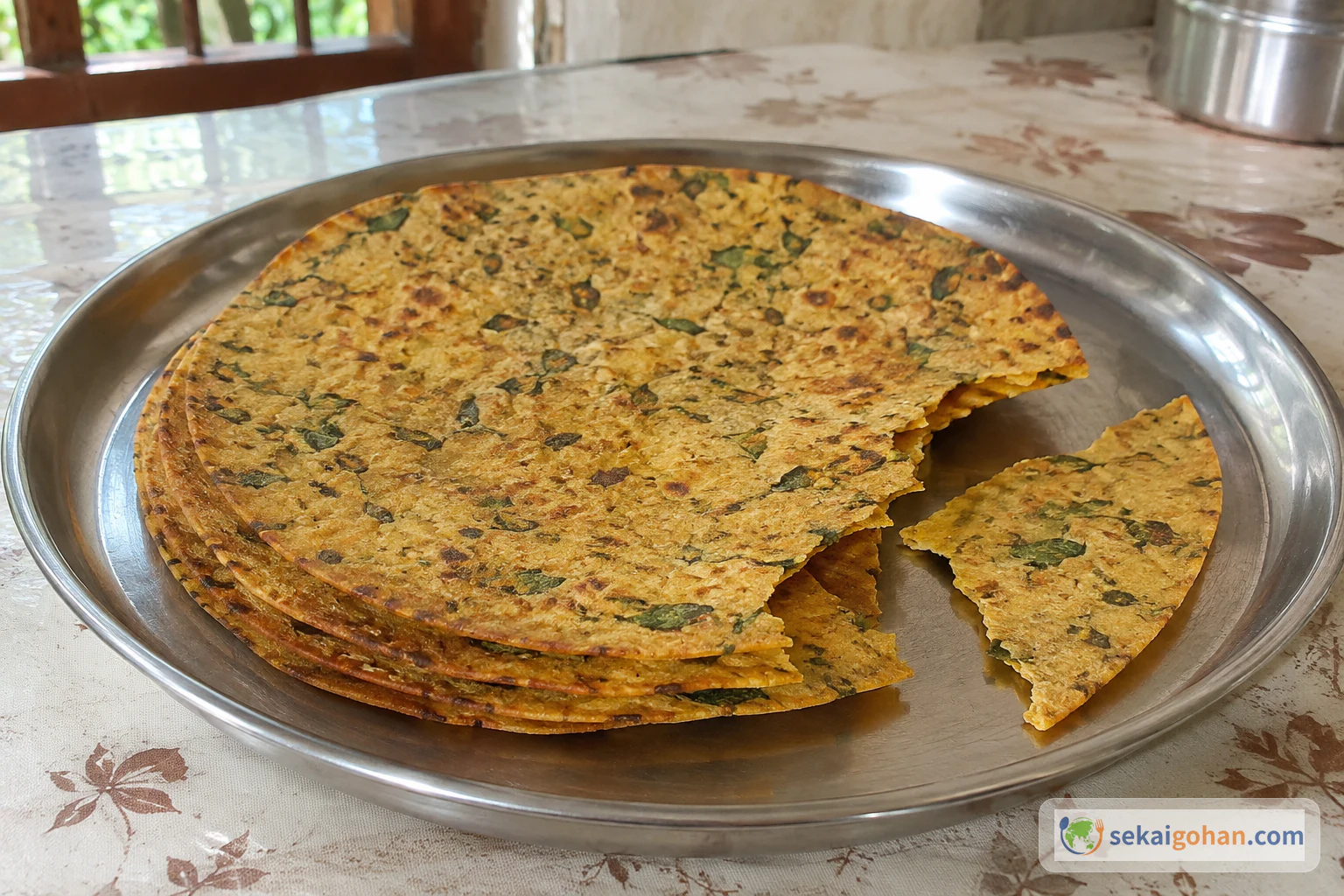
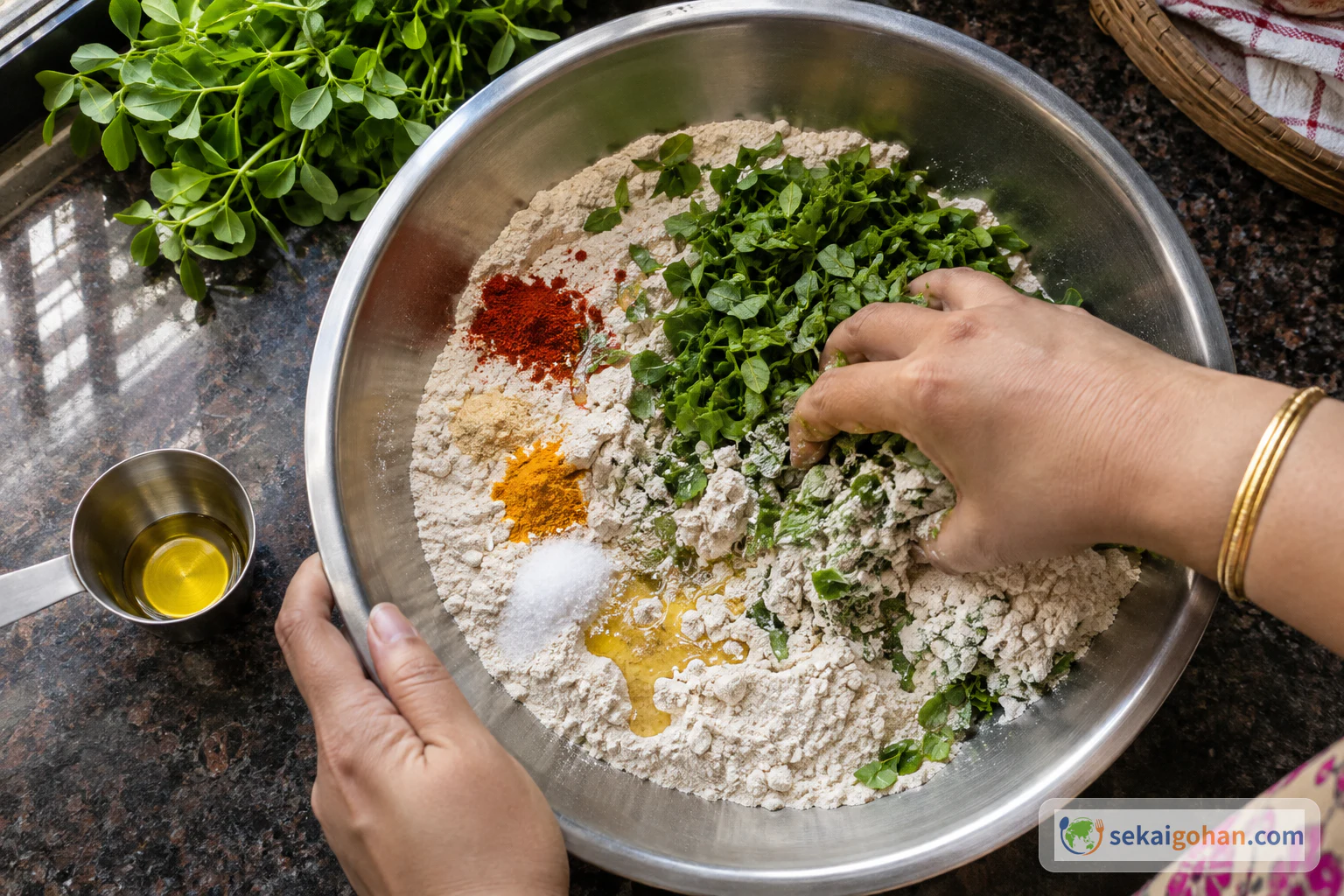
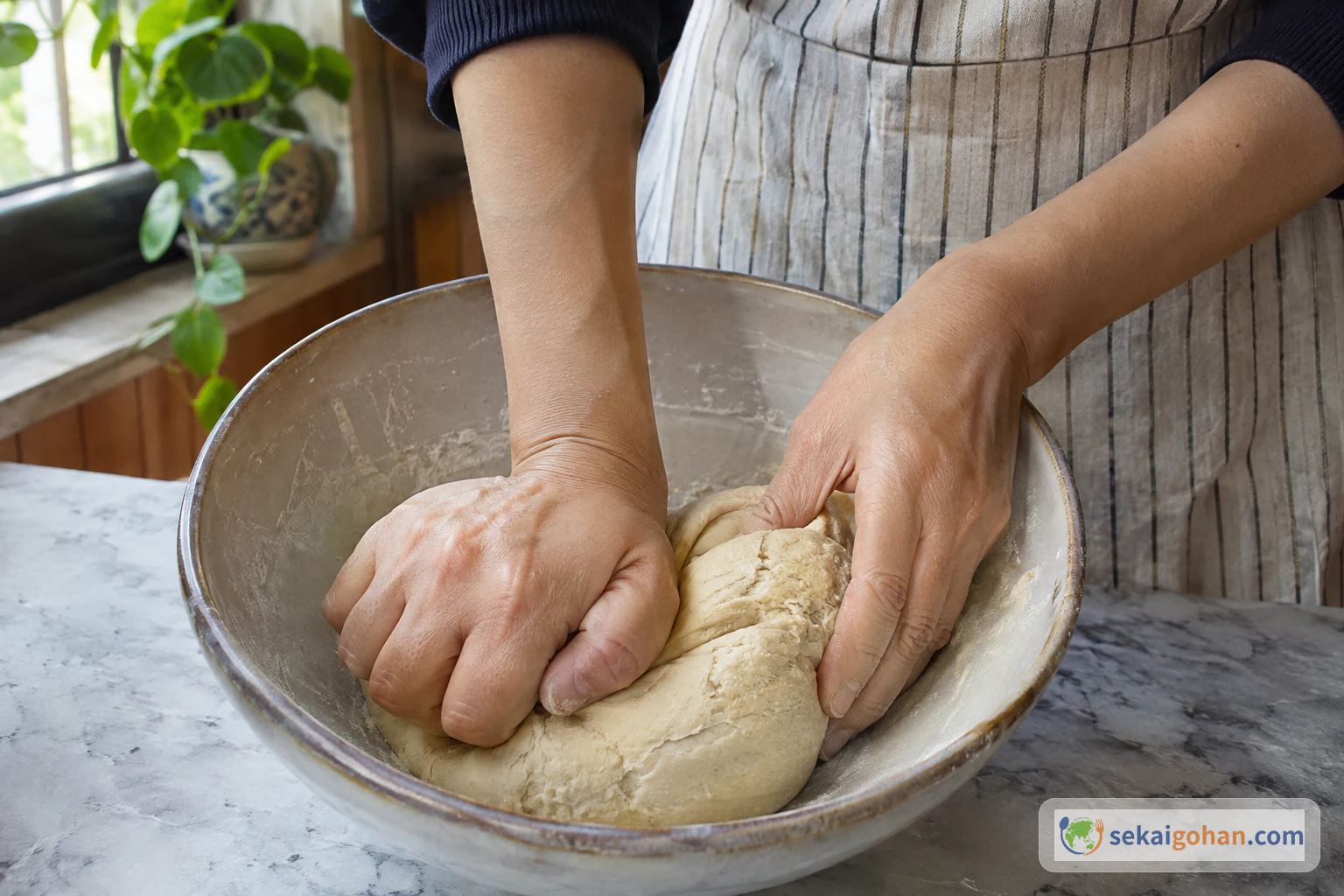
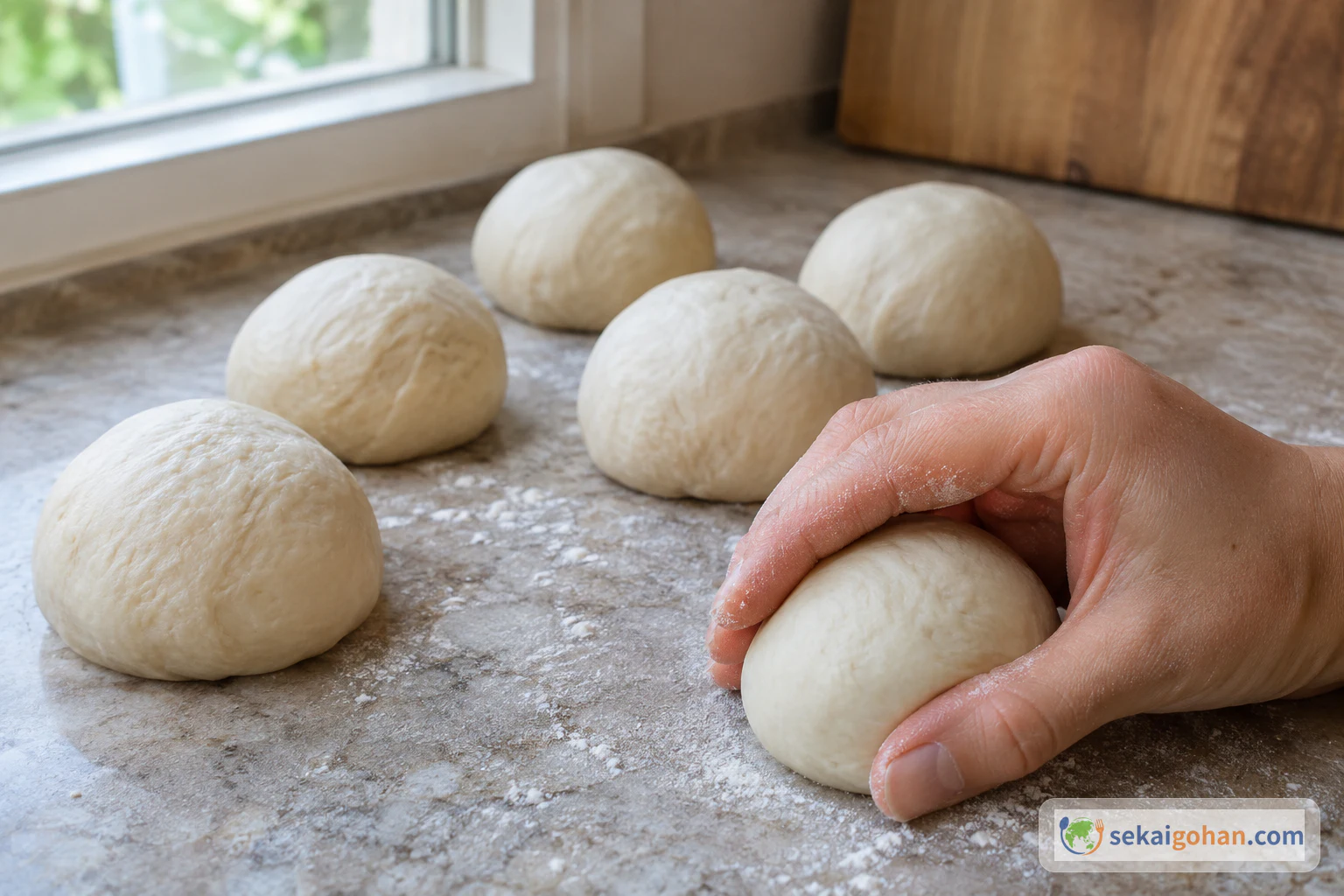
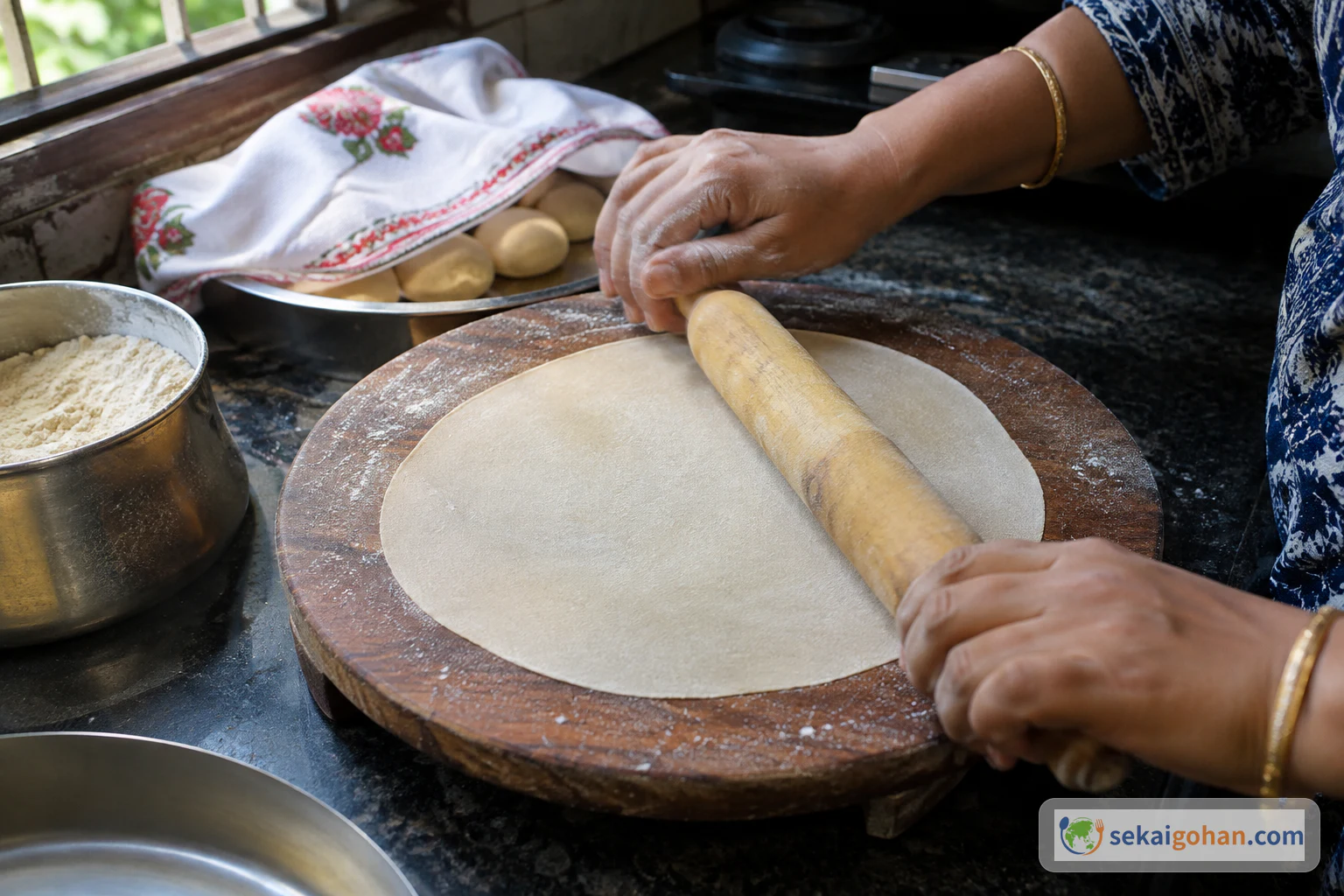
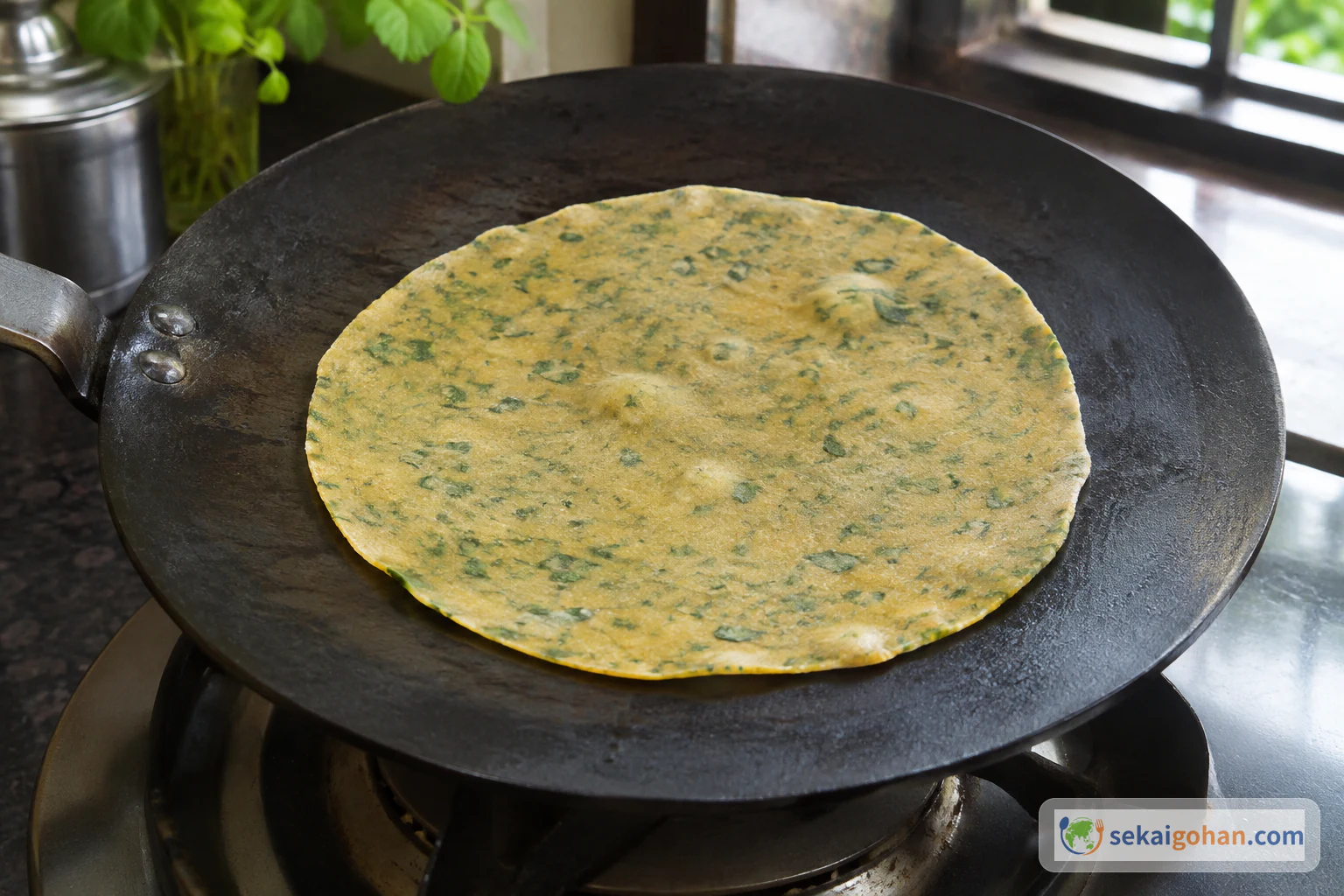
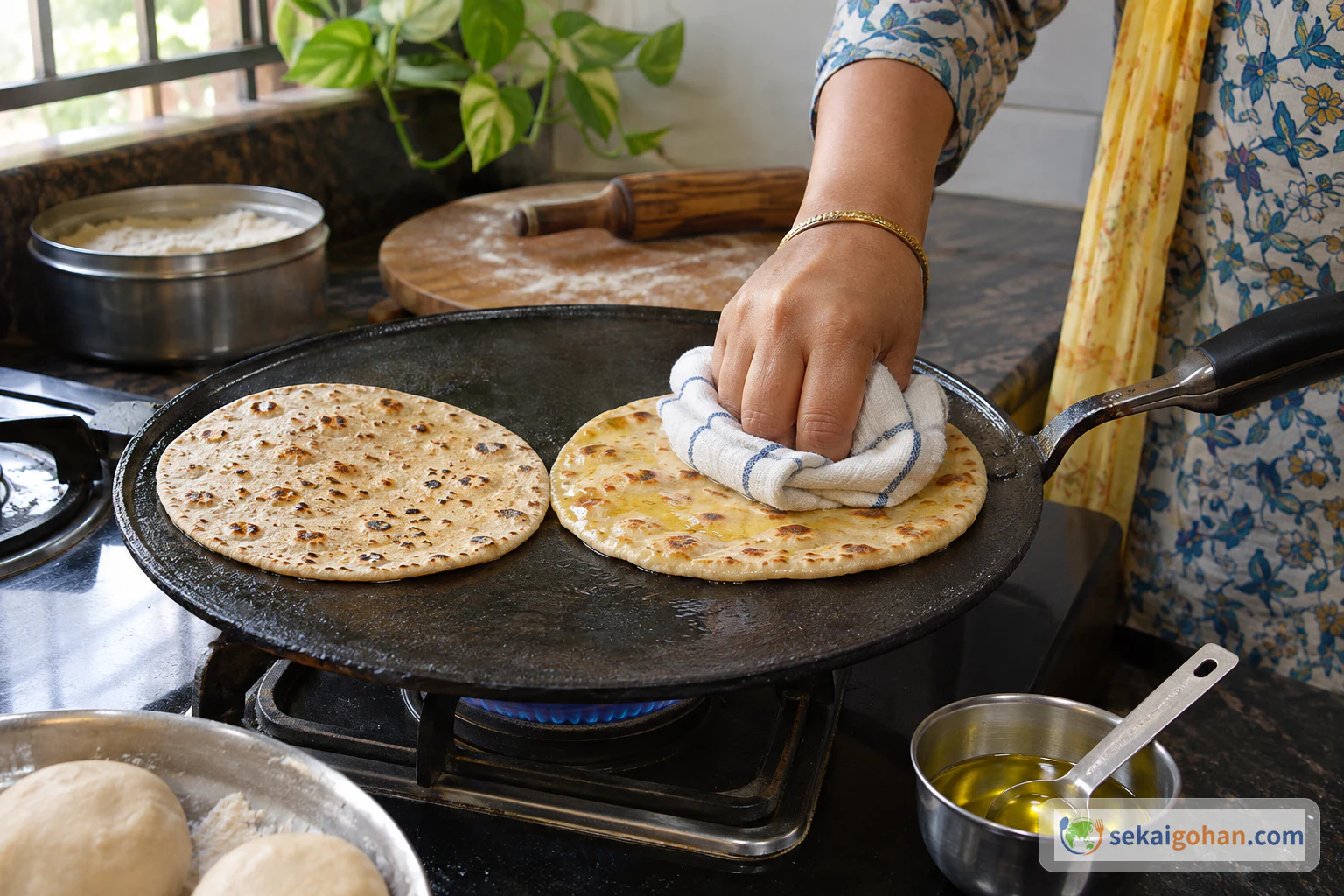
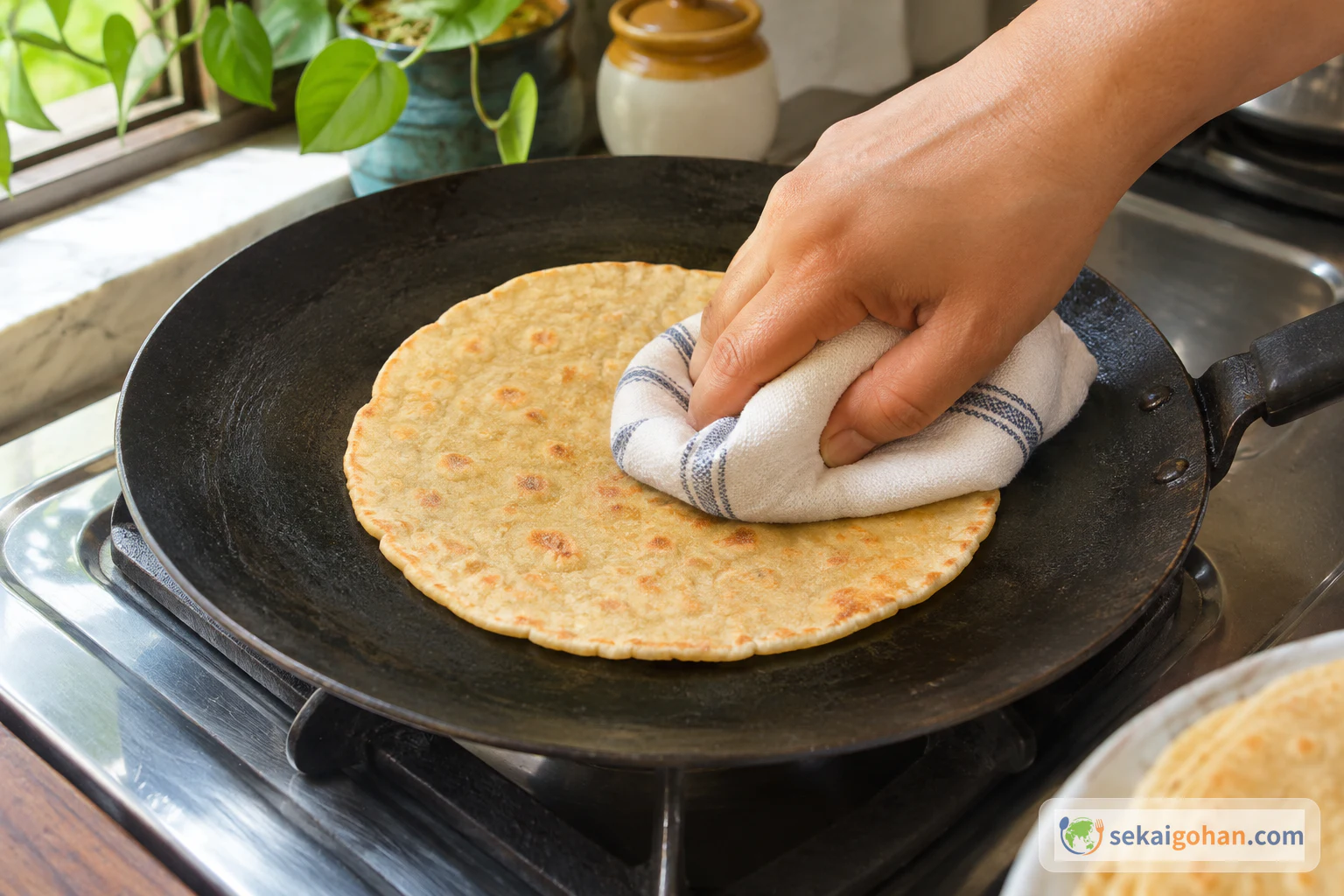
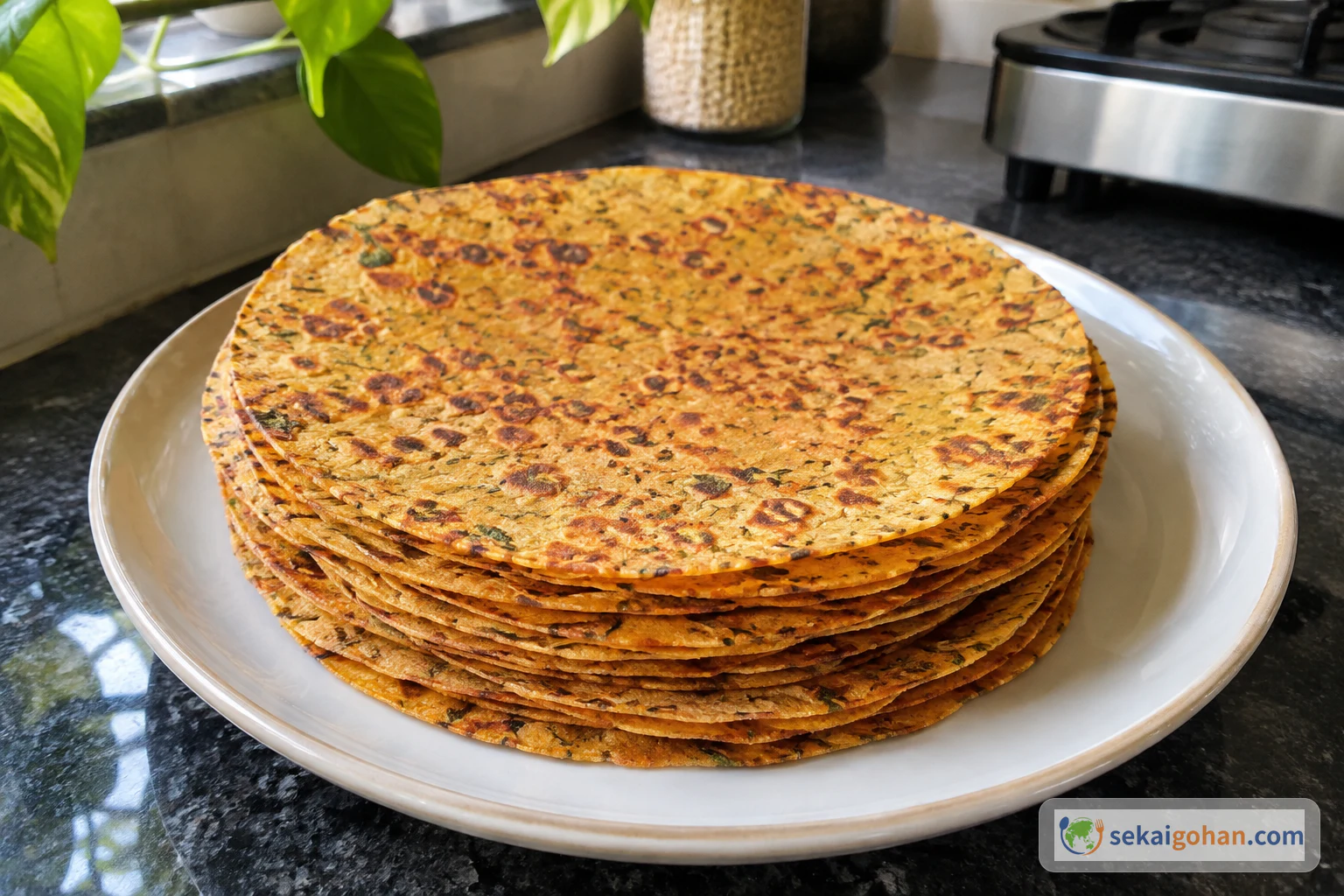
A round of whole wheat dough, flecked green with fenugreek leaves, goes onto a hot iron pan. At first it looks like a thin chapati. But instead of lifting it off once it puffs and softens, you oil it and press it down with a wooden press or a folded cotton cloth. Then you turn it, flip it again and keep pressing until the round is dry and crisp all the way through. That is khakhra (Gujarati: ખાખરા), a thin, papad-like snack from Gujarat in western India. The pressing keeps the round flat and lets it dry evenly instead of puffing up like bread. This version is methi khakhra, made with whole wheat flour, fresh fenugreek leaves, chilli, asafoetida and turmeric.
About Methi Khakhra
Khakhra is a thin, crisp snack from Gujarat, and methi is one of several common flavors. Others include jeera (cumin), pudina (mint) and ajwain, and mungdi is a sweet version. You'll find khakhra in both Gujarati and Rajasthani cooking, where it counts as a popular farsan, or savory snack.
Origin and history
Older households used to crisp day-old chapatis on a flat pan. A commercial farsan market grew up from the 1950s. One Ahmedabad khakhra business started selling in small quantities in the early 1960s and later added more flavors.
Khakhra also travels well. In Kachchh, dry rotlis, theplas, khakhras and sev are among the foods people make and store for journeys. Factory-made khakhra uses a different process: thin sheets are cooked on hot plates and then roasted again to drive off more moisture. The home method works on the same idea of a thin sheet dried right out, just without the machines.
Khakhra and thepla
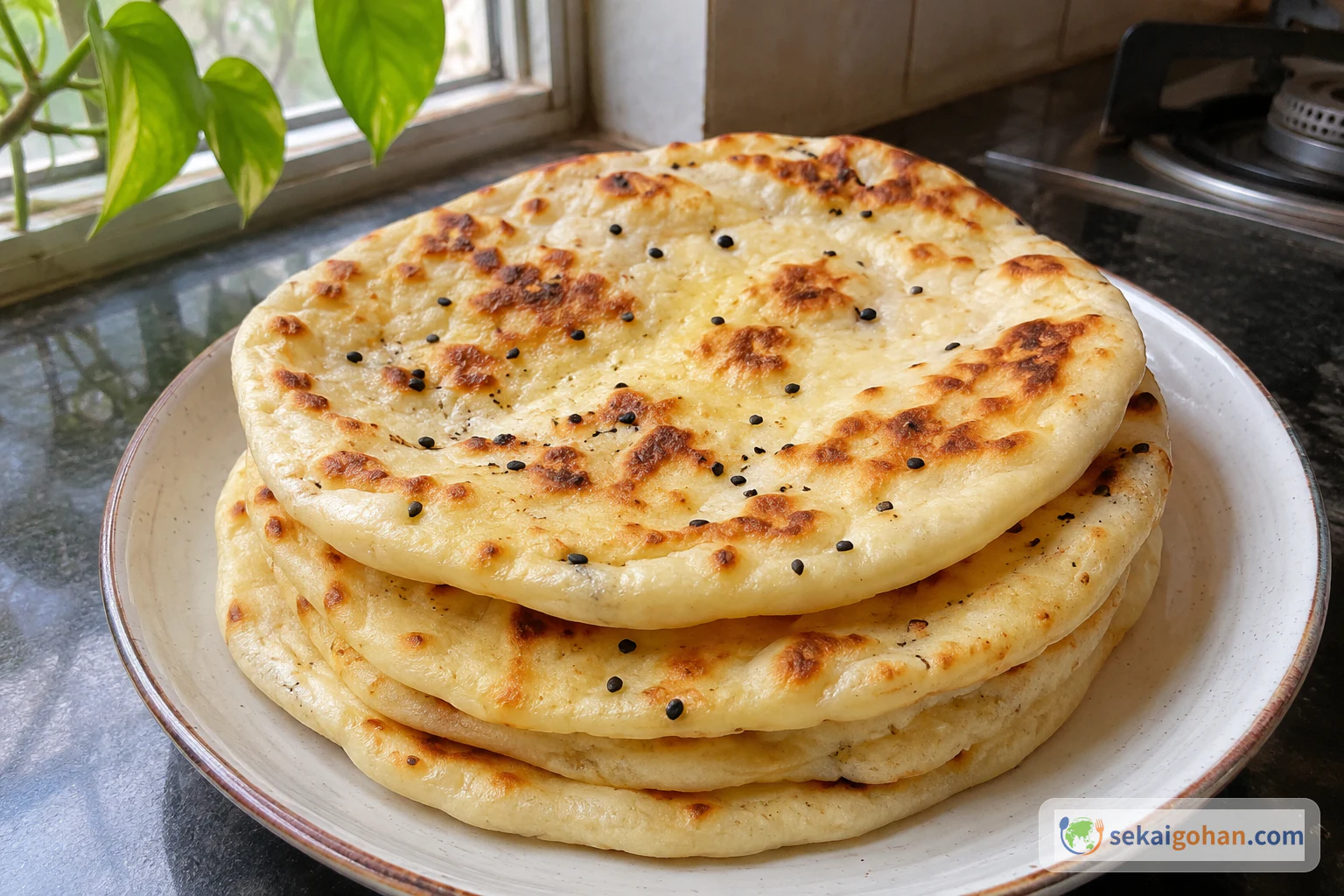
Thepla is another Gujarati flatbread that can have methi in the dough. The difference is in the finish. Thepla stays soft and flexible, while khakhra is pressed on the pan until it is dry and brittle. If your rounds come off the pan still bendable, they are closer to a soft flatbread and need more time under the press.
Ingredients for Methi Khakhra (20 Dough Portions)
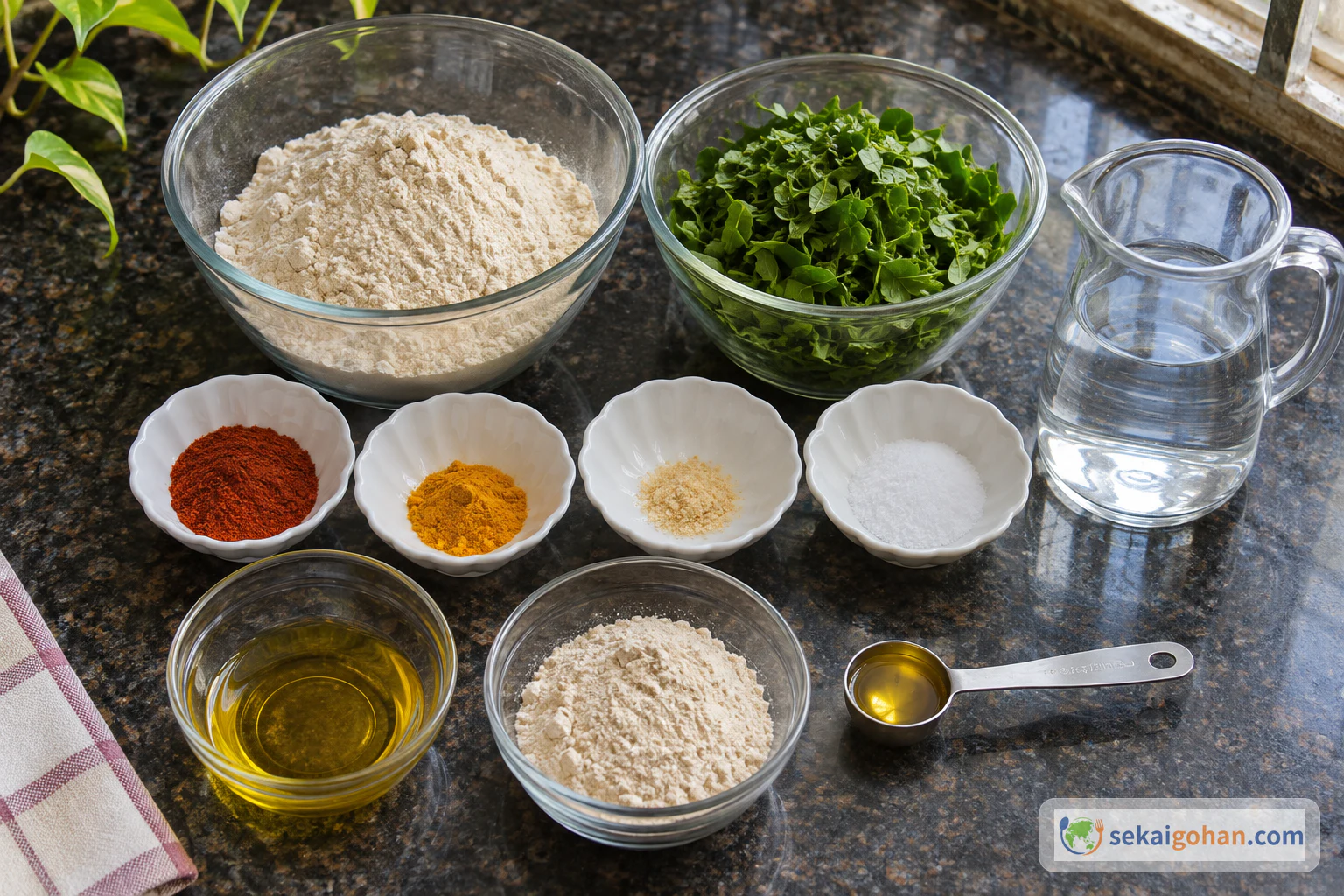
Equipment
- Knife and cutting board
- Mixing bowl and a cover for it
- Rolling pin and board
- Iron skillet or tawa
- Wooden khakhra press, or a clean, thick folded cotton cloth
- Flat plate
- Clean airtight container
The iron pan and oil are hot throughout. Never press a round with your bare hand; use a wooden press or a thick folded cloth and keep your fingers away from the metal. This dough contains wheat. Asafoetida and chilli powder are often blended products, so check their labels for allergens.
Choosing Flour, Methi and Spices for Khakhra
Flour. Use whole wheat flour, sold as atta in Indian grocery stores. Its toasty flavor is part of the snack, so stick with it rather than plain white flour.
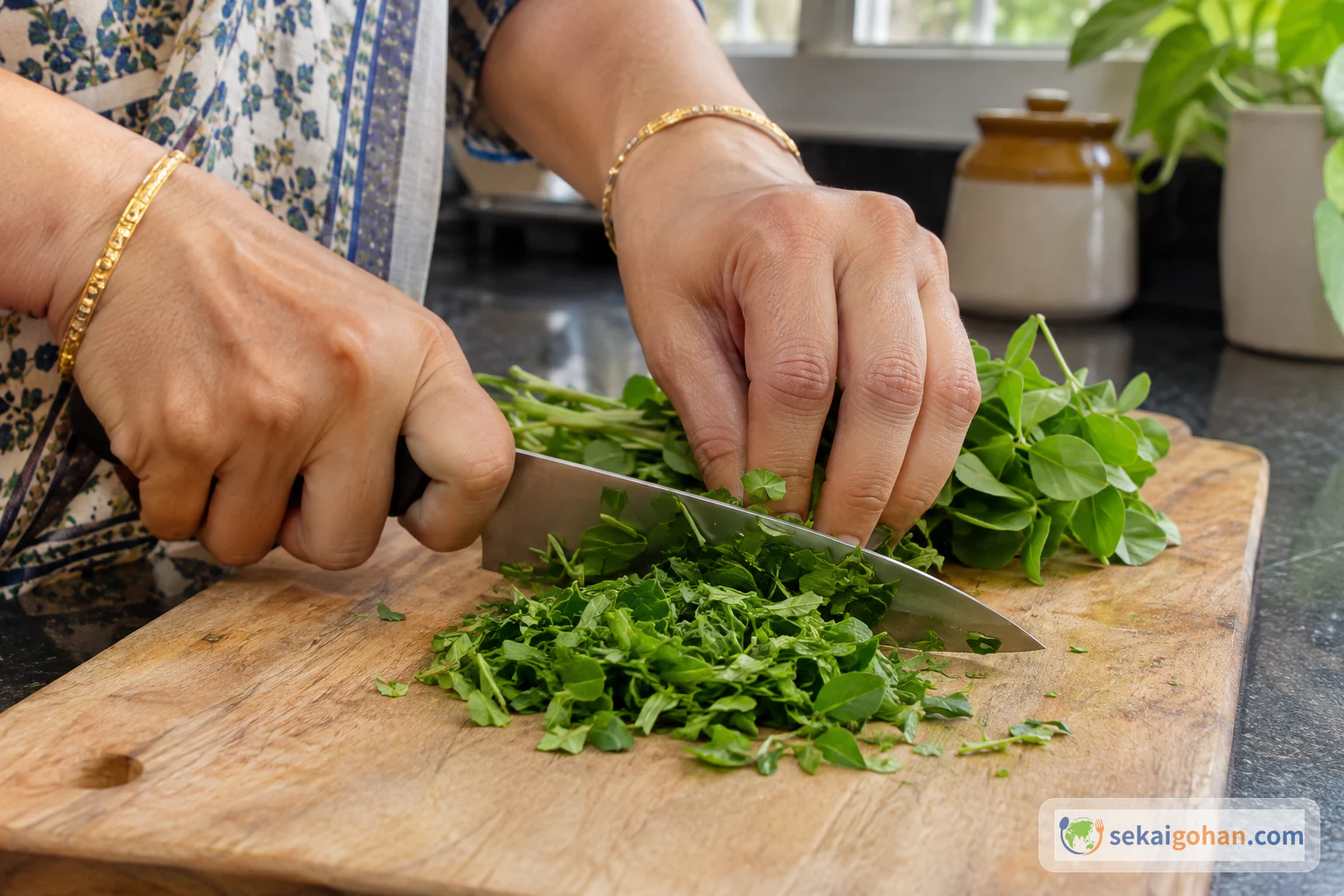
Methi. Look for fresh fenugreek leaves, labeled methi or fenugreek leaves, at Indian or international grocers. Dried fenugreek leaves (kasuri methi) are a different form and can't stand in at the same amount. Home recipes that use dried fenugreek come with their own flour, oil and cooking amounts, and those don't carry over to this recipe. If you can't get fresh methi, it's better to follow a khakhra recipe written for dried leaves.
Chilli powder. Indian red chilli powder is what you want here. Any other chilli powder will change both the heat and the flavor.
Oil. An everyday cooking oil is fine. Keep the oil for the dough separate from the oil you spread on each round while it cooks.
Method: Roll Very Thin, Then Press Until Crisp
Each round starts on a medium-high pan until a few air pockets appear. After the first flip, oil it, lower the heat to medium and press and turn until it is completely crisp.
Common Khakhra Problems and Fixes
| Problem | Likely cause | What to do |
|---|---|---|
| Dough is too hard or won't come together | Water went in too fast, or not enough | Add water a little at a time and knead between additions until the dough is stiff but holds together |
| Rounds come off soft in places | Rolled too thick, or lifted off too soon | Roll each ball very thin, and keep pressing and turning until the whole round is crisp |
| Dark spots or scorching | Heat too strong | Lower the heat and keep pressing and turning so the round dries rather than burns |
| Bubbles keep rising | Not enough pressing | Press the bubbles down with the wooden press or folded cloth as you turn the round. Never use a bare hand on the hot pan |
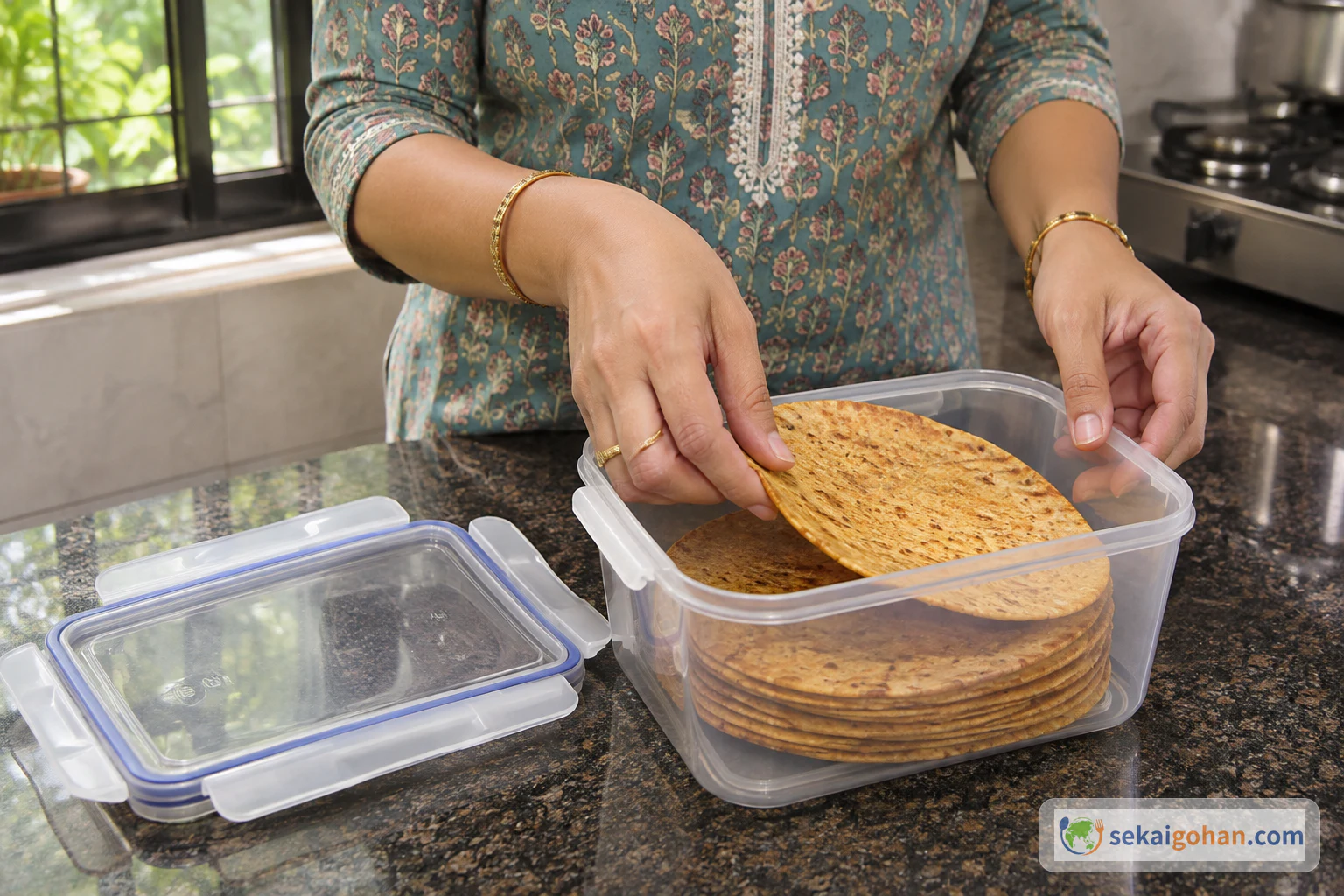
| Khakhra lose their crunch after storing | Packed while still warm | Let them cool completely on the plate before they go into the airtight container |
Serving Methi Khakhra
Methi khakhra is good just as it is, with no topping or dip: at breakfast, with a cup of tea, or packed for a trip. If you're making more Gujarati food, try theplas, which share the methi-in-the-dough idea but stay soft, or dhokla, a Gujarati snack made in a completely different way. Raita is a separate dish, not a set partner for khakhra, though you can serve it alongside if you like.
Frequently Asked Questions
How many khakhra does this make?
The method divides the dough into 20 portions, and the recipe card lists 10–15 servings. One counts rounds and the other counts servings, so the two numbers don't need to match.
How long does khakhra keep?
Stack the cooked rounds on a flat plate and let them cool completely. Then store them in a clean airtight container.
What temperature and thickness should I aim for?
Follow the cues in the steps rather than a set pan temperature, dough thickness or cooking time per round. Roll the rounds very thin, wait for a few air pockets before the first flip, and keep pressing until the whole round is crisp.