Kuzhakkattai: Savory Tamil Finger-Pressed Rice Dumplings (Uppu/Kara Pidi Kozhukkattai)

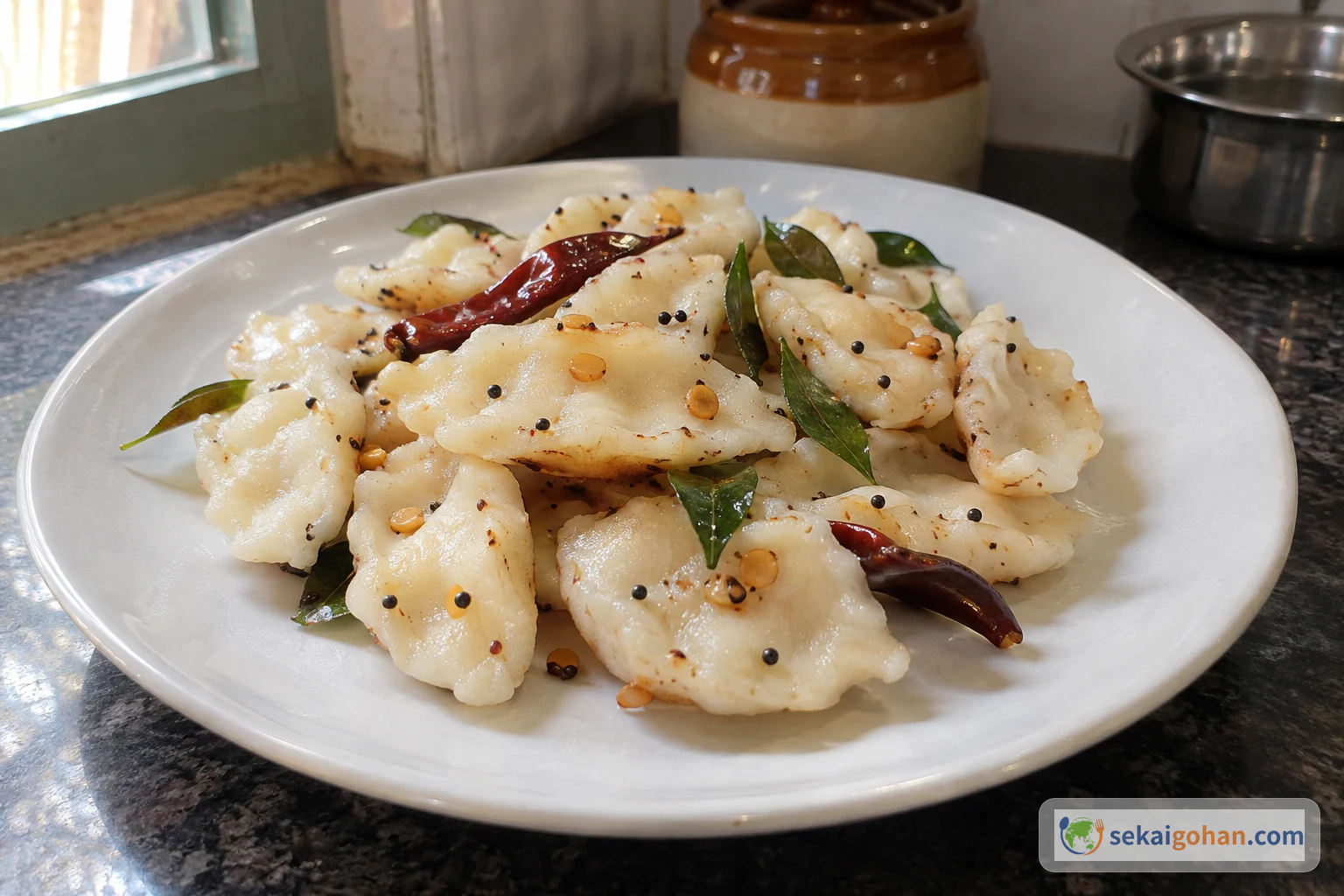
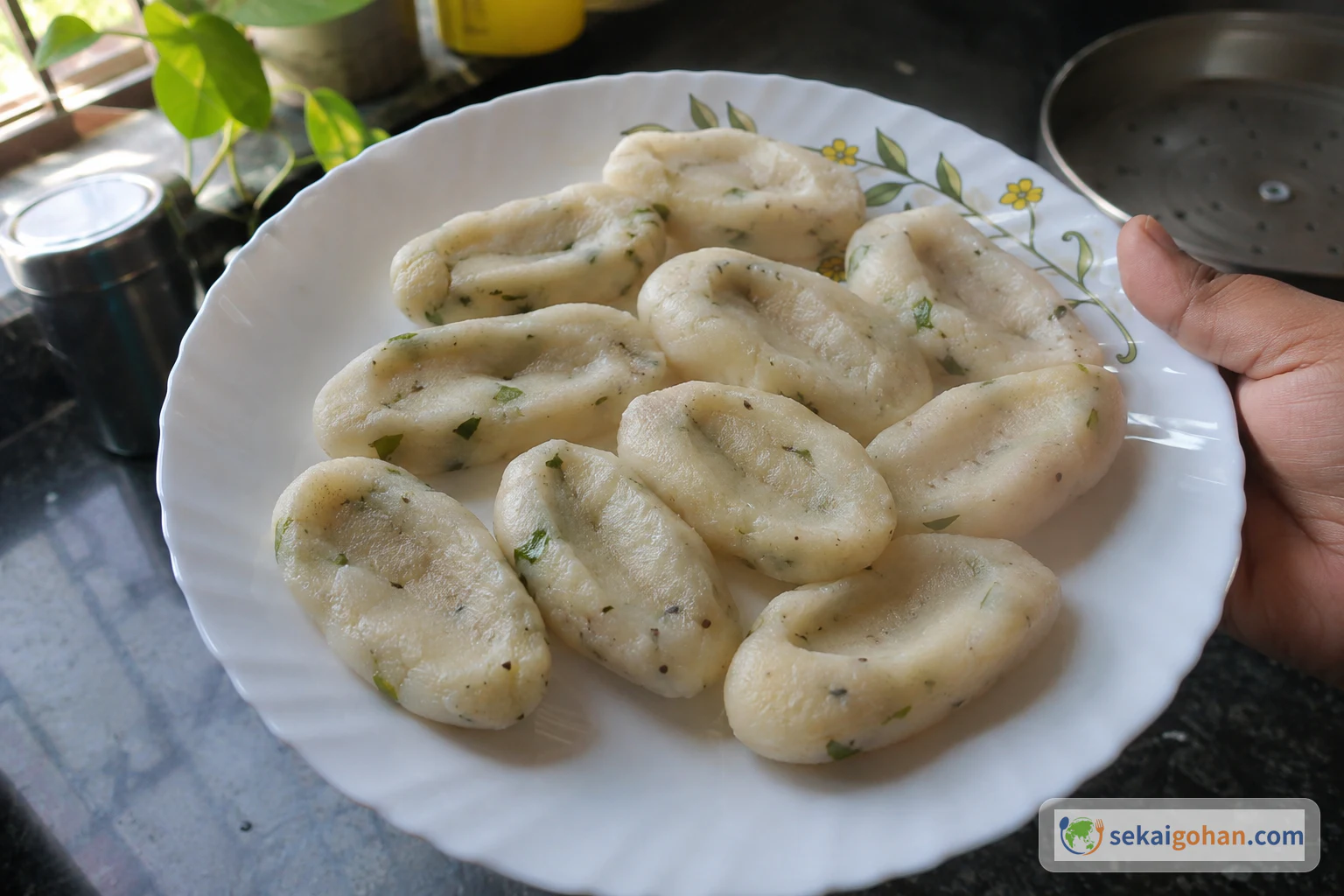
A finished plate of savory rice-flour dumplings with finger impressions
Serves
20–25 dumplings
Level
Intermediate
Cuisine
Indian

How to make kuzhakkattai in its savory Tamil form, uppu/kara pidi kozhukkattai: unfilled rice-flour dumplings mixed with a mustard, urad dal and red chilli tempering, bound with boiling salted water, pressed by hand and steamed. Covers choosing flour, handling hot dough, troubleshooting, and how this style differs from sweet and Malabar versions.

Cooking flow

Cooking steps

STEP11 / 12

Prep the chillies and curry leaves

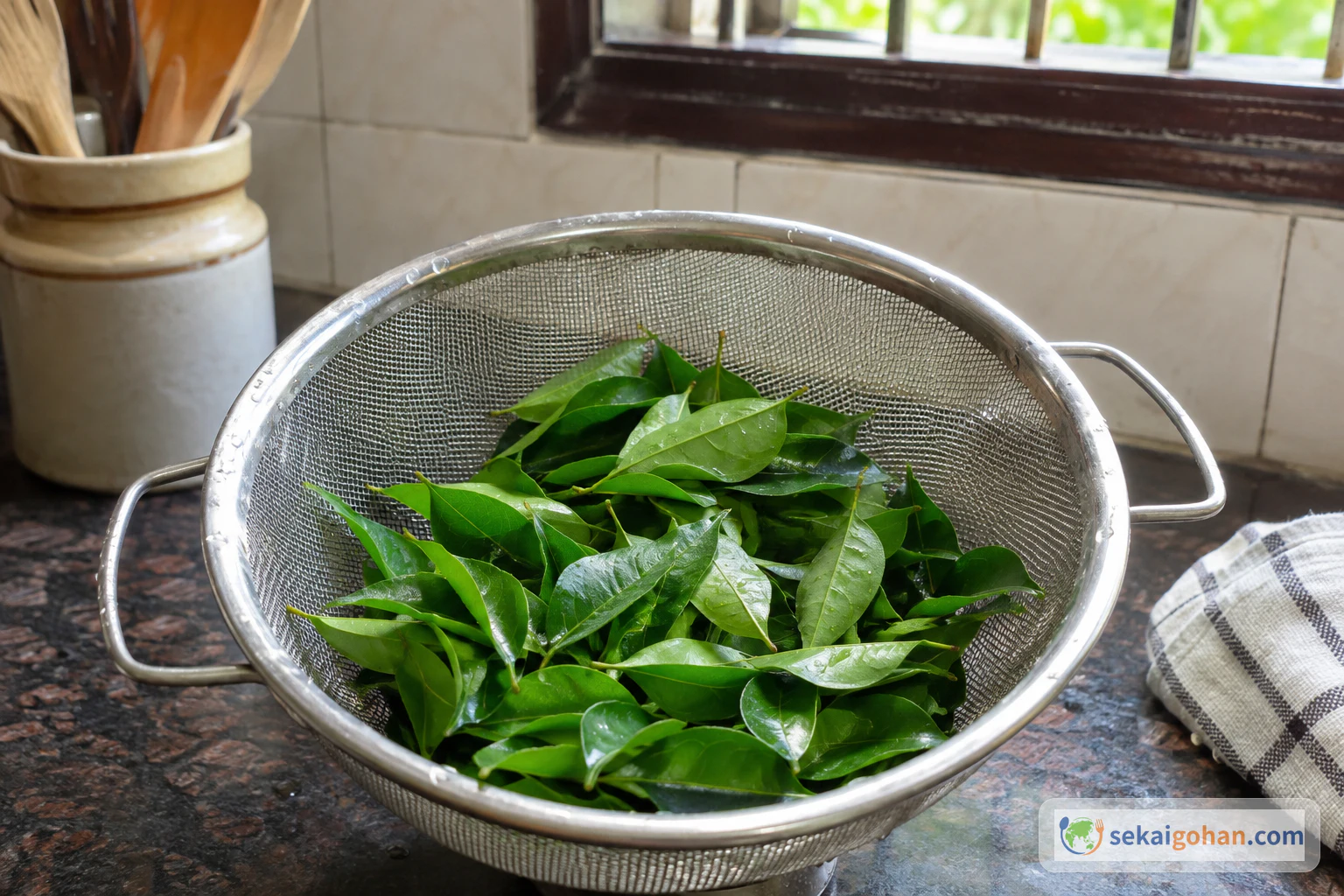
Draining excess water from the rinsed curry leaves in a colander
Remove the excess water before the leaves reach the hot oil

Split 2 dried red chillies into sections and set them aside. Rinse a few curry leaves under running water, if using, then let them drain in a colander and remove the excess surface water. Do this well before they go near hot oil, because water can make oil spatter. The leaves should look dry on the surface.

STEP22 / 12

Roast and sieve the rice flour

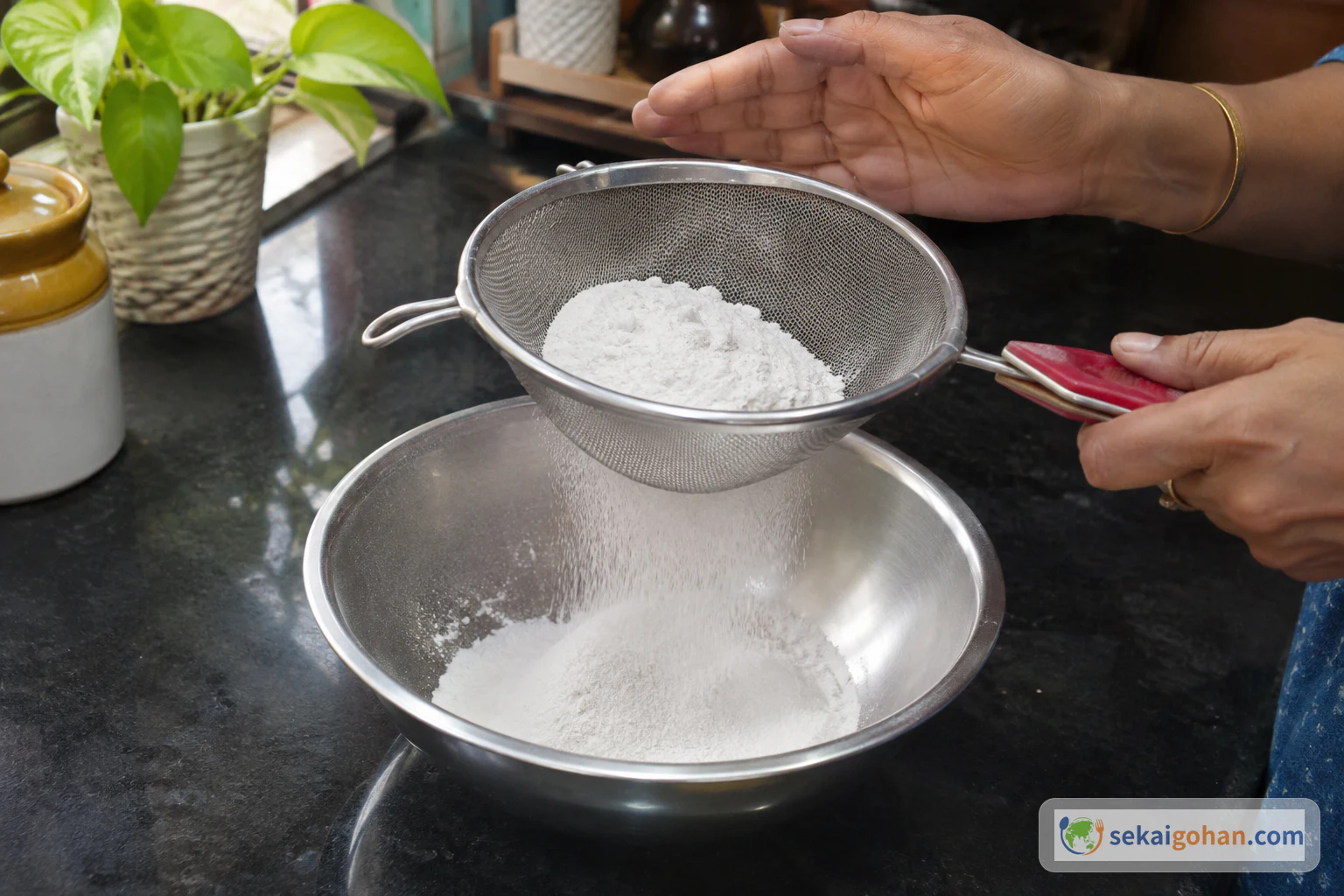
Sieving the dry-roasted rice flour into a clean bowl
Sieving leaves a smooth flour

Put 2 cups of rice flour in a dry pan with no oil. Stir as it roasts to take away the raw smell. Sieve the roasted flour into a clean bowl to remove any granules, then transfer the smooth flour to a wide mixing bowl, which leaves room for mixing later. The flour should look smooth and fine.

STEP33 / 12

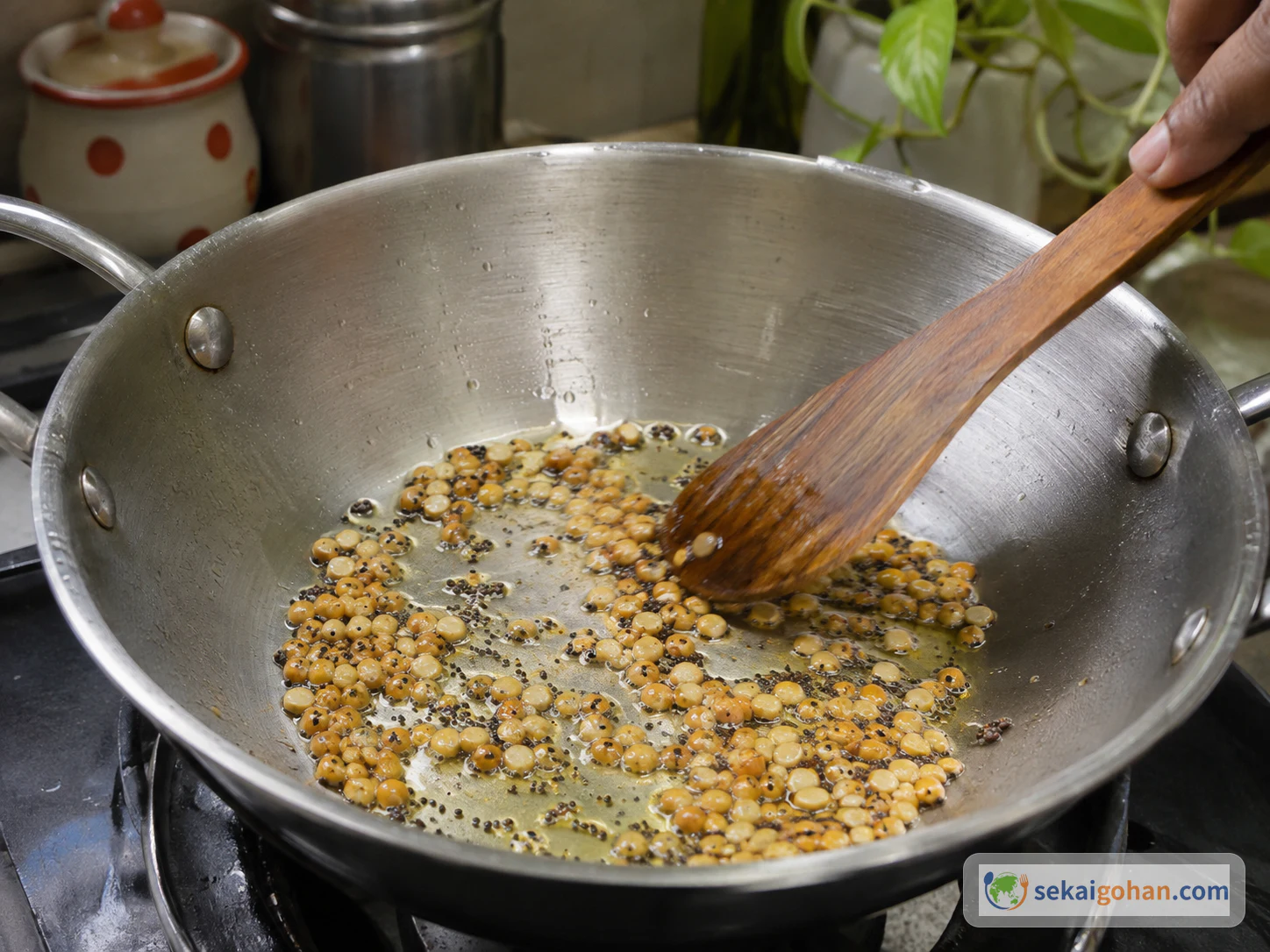
Temper the mustard seeds and urad dal

Stirring urad dal in the oil as it turns golden
Look for golden dal, not burnt dal

Pour 1 tbsp of oil into the small pan and heat the oil on its own, before any seeds go in. Add 1 tsp of whole mustard seeds to the hot oil and let them splutter, keeping your hands and face back from the pan. Then add 1 tsp of urad dal and stir until the dal turns golden, taking care not to burn it.

STEP44 / 12

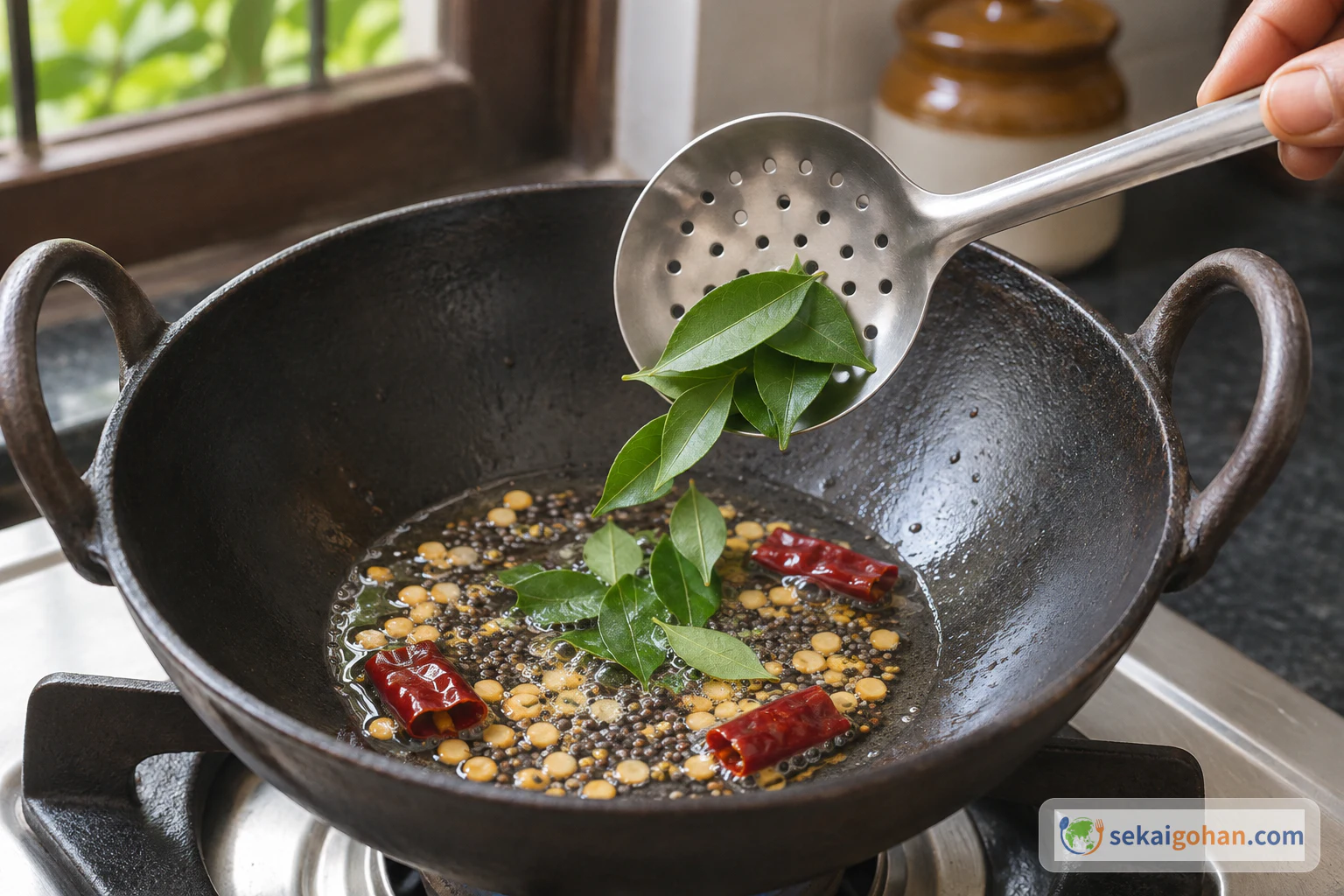
Add the chillies and curry leaves

Adding the optional curry leaves to the tempering with a long-handled utensil
A long-handled utensil keeps your hand away from the hot oil

Add the split red chillies to the pan. If using curry leaves, use a long-handled utensil to lower the prepared leaves gently into the hot oil, and keep your hands clear of the pan. Let them cook in the tempering until the leaves are done in the oil.

STEP55 / 12

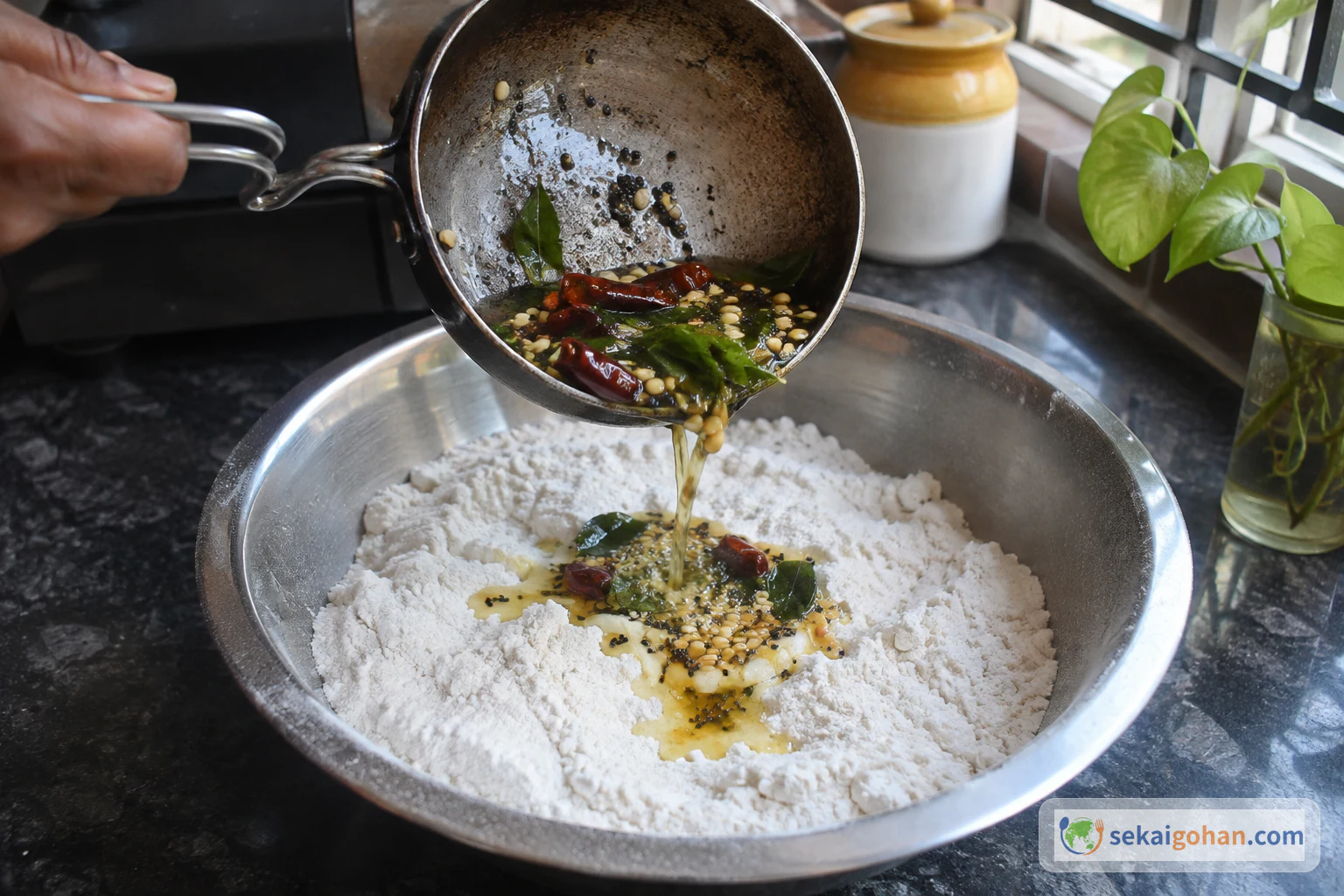
Pour the tempering over the flour

Pouring the tempered oil over the rice flour
The tempering goes into the dry flour before any water

Carefully pour the hot oil and everything in it over the flour in the wide bowl. Stir with a spoon until the tempering is mixed through the flour. No water goes in yet, so the flour should still look dry.

STEP66 / 12

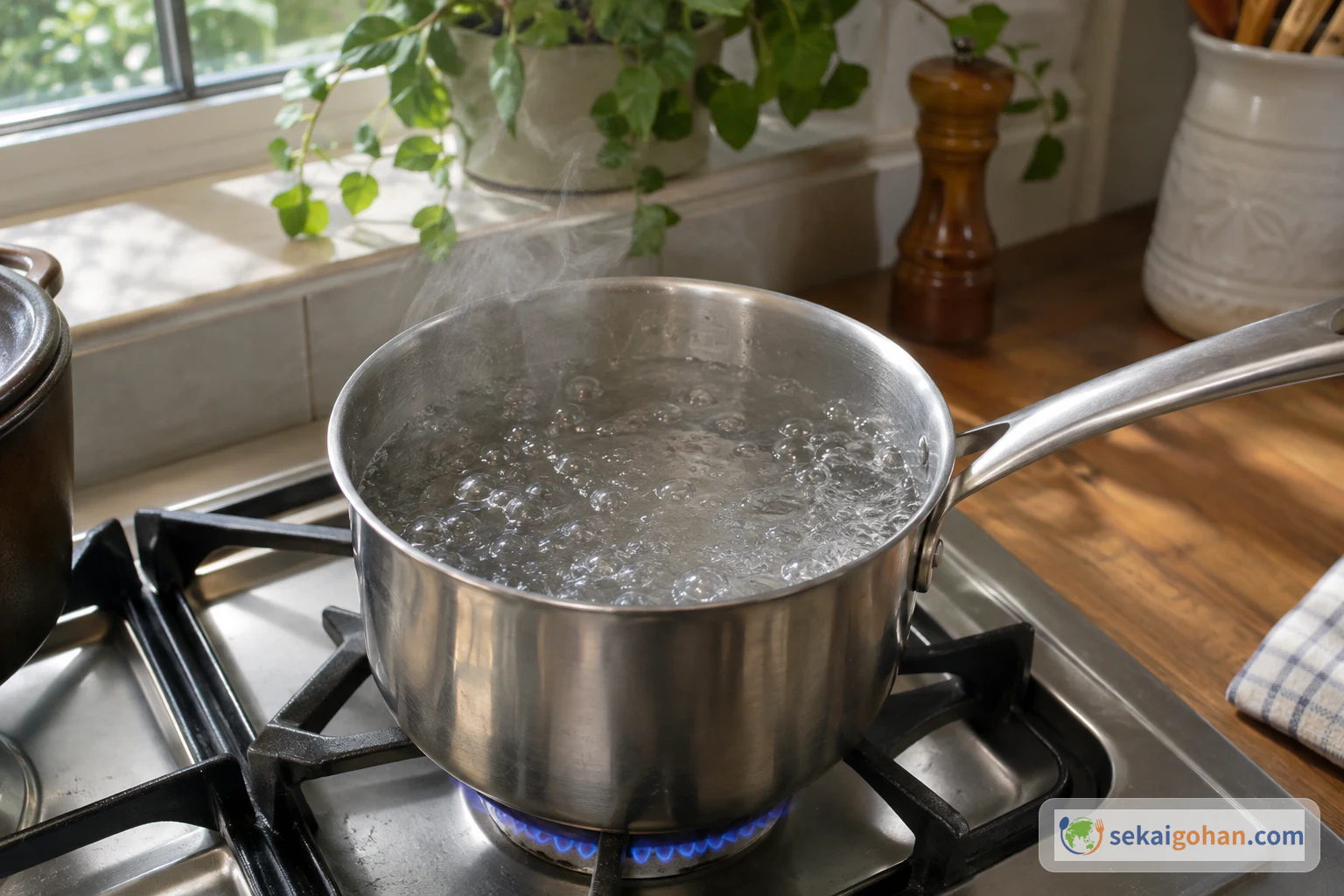
Boil the salted water

Salted water boiling in the saucepan
Use the water while it is boiling

Pour 1½ cups of water into a clean, separate saucepan and add salt to taste. Bring the salted water to a boil. Use the water while it is boiling.

STEP77 / 12

Mix the dough

Mixing the flour and salted water into a dough with a utensil
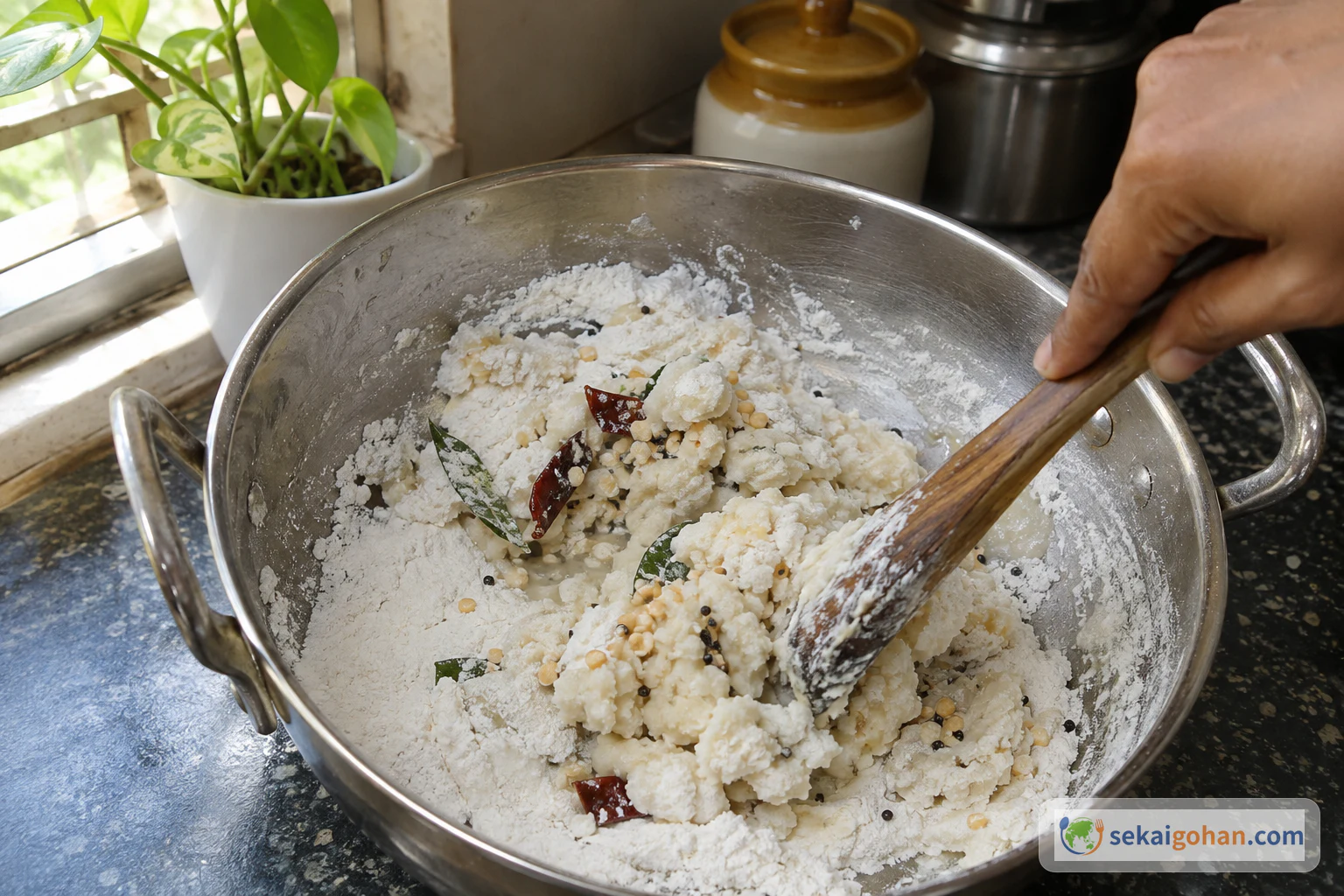
Aim for a dough that is neither sticky nor dry

Carefully pour the boiling water into the seasoned flour, a little at a time. Keep your hands out of the bowl. Mix with a sturdy utensil, not your hands, until the dough is neither sticky nor dry. If it still seems dry, add a little more boiling water. If it starts to turn sticky, hold back any water you have left.

STEP88 / 12

Cool the dough until you can handle it

Dough resting in a bowl until it is comfortable to handle
Let the dough rest before you touch it with bare hands

Leave the dough in the bowl, away from the heat, until you can handle it comfortably. Test it with care, because the inside of the mass can stay hot. It is ready when you can touch it without discomfort.

STEP99 / 12

Shape the dumplings

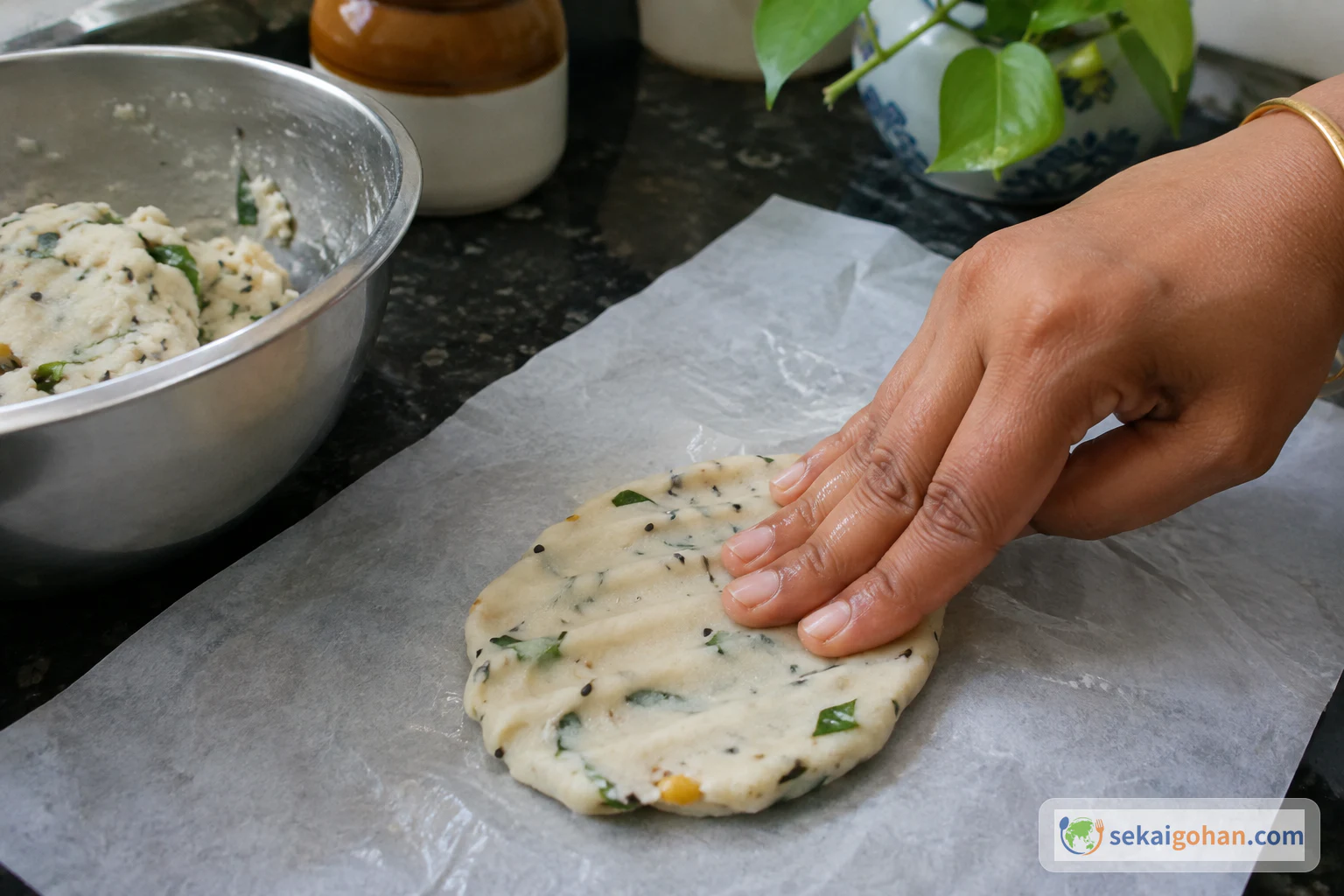
Pressing a portion of dough with the fingers to shape it
The finger impressions are the shape of this dumpling

Take a small portion of dough. The full batch makes about 20–25 dumplings. Press each portion gently in your fingers to form an oval with finger impressions. There is no fixed number of grooves, and nothing goes inside.

STEP1010 / 12

Set up the steamer

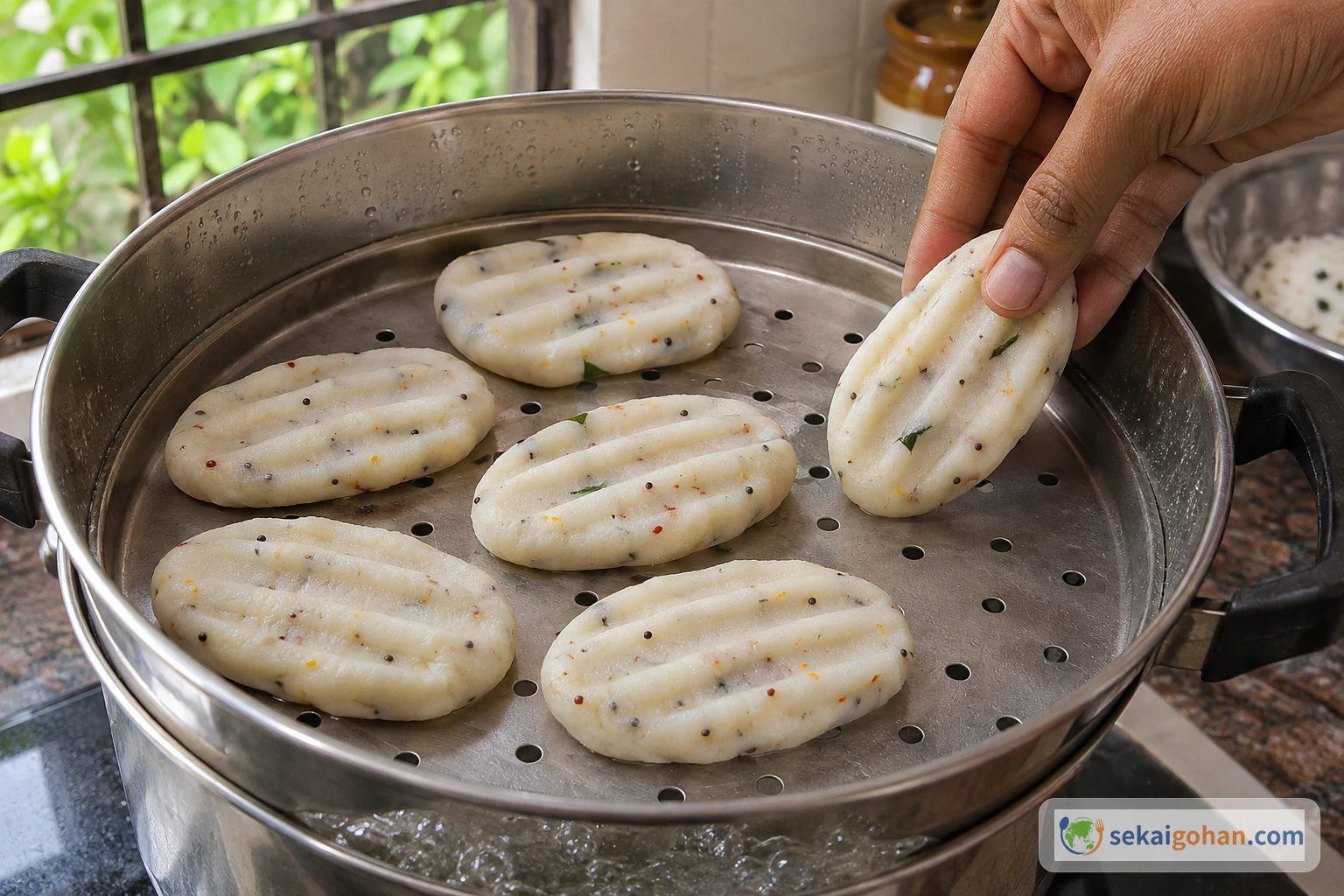
Arranging the shaped dumplings on the steamer insert
The dumplings sit above the water

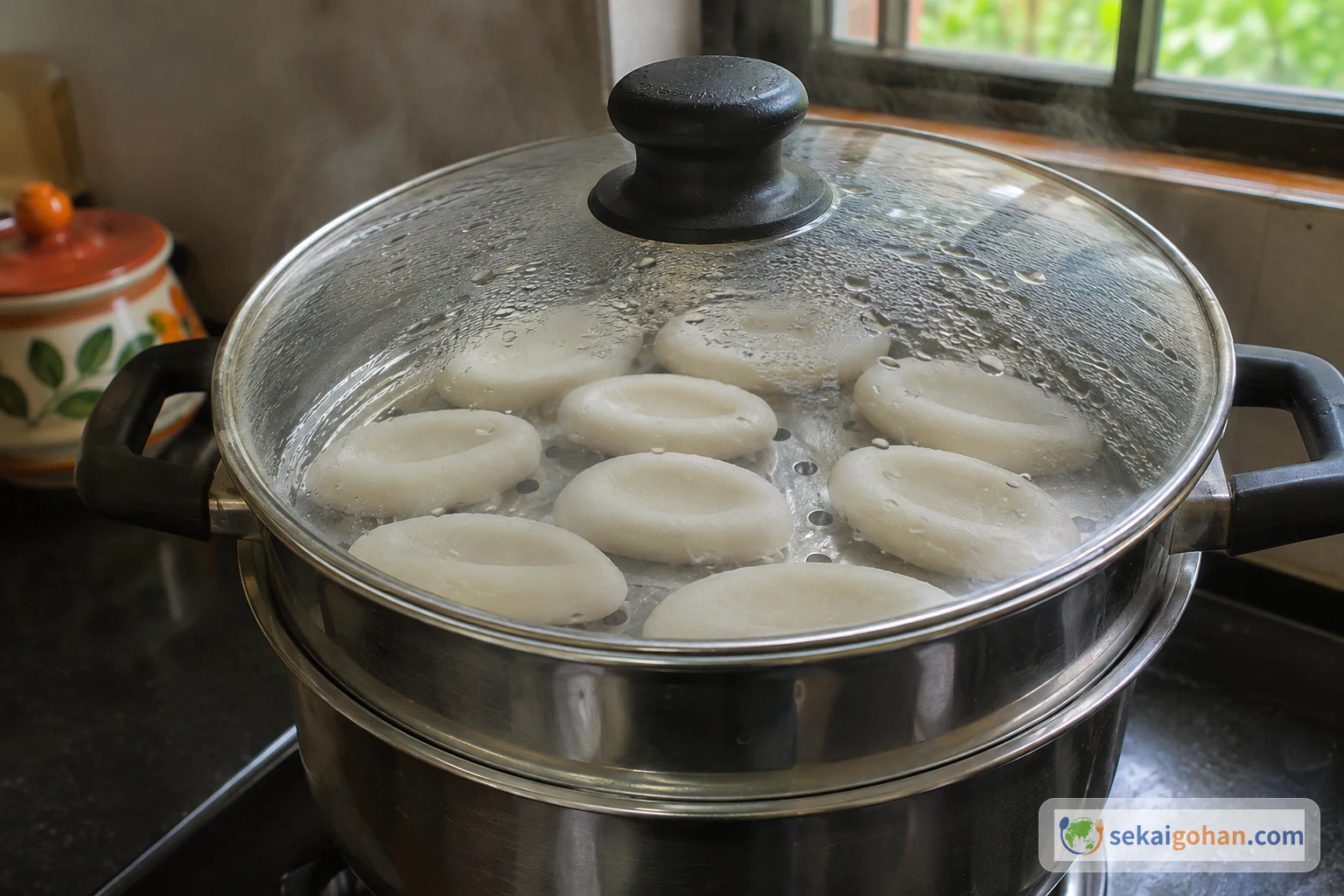
Add water to the lower part of the steamer as its own instructions direct. This is separate from the dough water. Place the shaped dumplings gently on the steamer insert, above the water and not in it, then lower the lid onto the steamer. The dumplings should sit clear of the water under a closed lid.

STEP1111 / 12

Steam the dumplings

The closed steamer with dumplings steaming inside
Steam for 8–10 minutes with the lid on

Steam for 8–10 minutes with the lid on. Avoid going far past this, because over-steaming can make the dumplings hard. Lift the lid carefully, tilting it so the steam moves away from your hands and face. The dumplings should look cooked through and feel firm yet soft.

STEP1212 / 12

Lift out and serve

Warm steamed savory dumplings served on a plate
Serve the dumplings fresh from the steamer

Lift the dumplings out one at a time with a suitable utensil, as the dumplings and steamer are hot. Put them on a plate and serve them warm and freshly steamed, with chutney on the side if you like.

0 / 0
Ingredients

Ingredients

1 / 1

Ingredients

Ingredient Amount Role
Raw rice flour, sold for idiyappam or string hoppers (pacharisi maavu) 2 cups The body of the dough
Salt (uppu) to taste Seasons the boiling water and the dough
Water (thanneer) 1½ cups Boiled with the salt to bind the dough
Oil (yennai) 1 tbsp Carries the tempering into the flour
Mustard seeds (kadugu) 1 tsp Used whole and spluttered in the oil
Dehusked black gram (urad dal) 1 tsp Cooked in the oil until golden
Dried red chillies (milagai vatral) 2, split Heat and aroma
Curry leaves (kariveppilai) a few, optional Cooked in the tempering
0 / 0

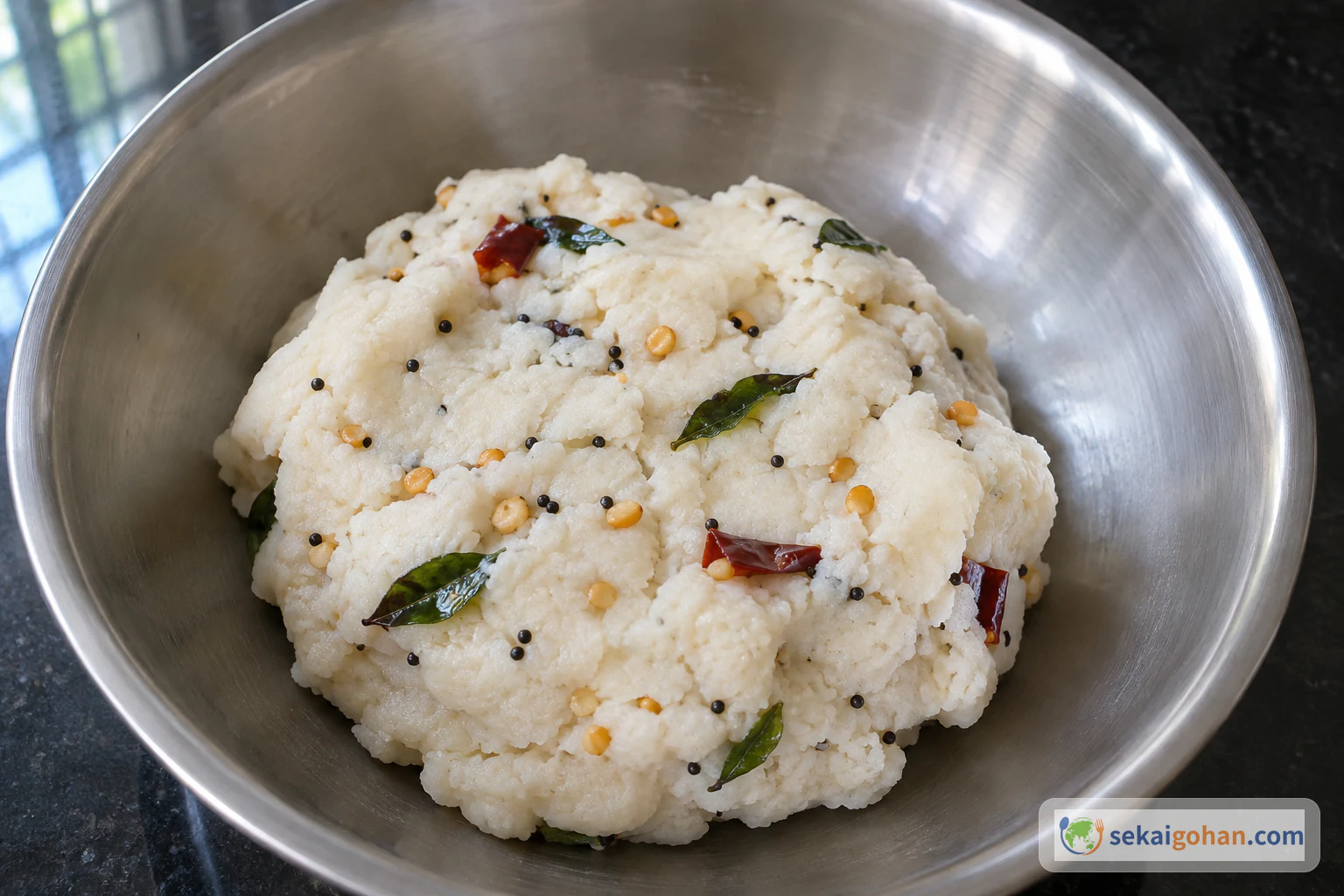
Dry-roasted rice flour waits in a wide bowl. Hot oil goes over it, carrying spluttered mustard seeds, golden urad dal, split red chillies and a few curry leaves, and then boiling salted water, until everything comes together as a soft dough. Each piece is pressed between the fingers and keeps their marks. This is uppu or kara pidi kozhukkattai, the savory Tamil style: no filling, the seasoning mixed right through the dough, the dumplings steamed and served fresh.

Kuzhakkattai: One Name, Several Dumplings

The name trips people up. Many readers expect a sweet dumpling with a coconut and jaggery center, but nothing is wrapped inside this one, unlike filled modhakam. The word covers several quite different preparations, so it's best to think of it as a family of dishes rather than one fixed recipe.

Two of the best-known styles are sweet and two are savory. Some put the flavor inside a wrapper, some mix it through the dough, and the Malabar version adds it after steaming:

Style Type How it differs
This recipe: savory pidi Savory Unfilled; tempering mixed into flour, then boiling salted water; pressed by hand and steamed
Sweet Pooranam Kozhukattai Sweet Rice-flour and hot-water dough, filled with fried gram, coconut, jaggery and cardamom; cup or half-moon shapes, steamed
Sweet pidi Sweet Rice flour combined with jaggery syrup and coconut, cardamom optional; fist-pressed and steamed
Malabar Kozhukkatta Savory Small rice-flour balls steamed separately, then tossed with a coconut-spice mixture tempered with mustard; served hot

The savory pidi version is linked to Pillayar Chaturthi, and it's also a dish people associate with cooking alongside a child, since the pressing is simple, hands-on work. For more from the same country, see our India page.

Ingredients
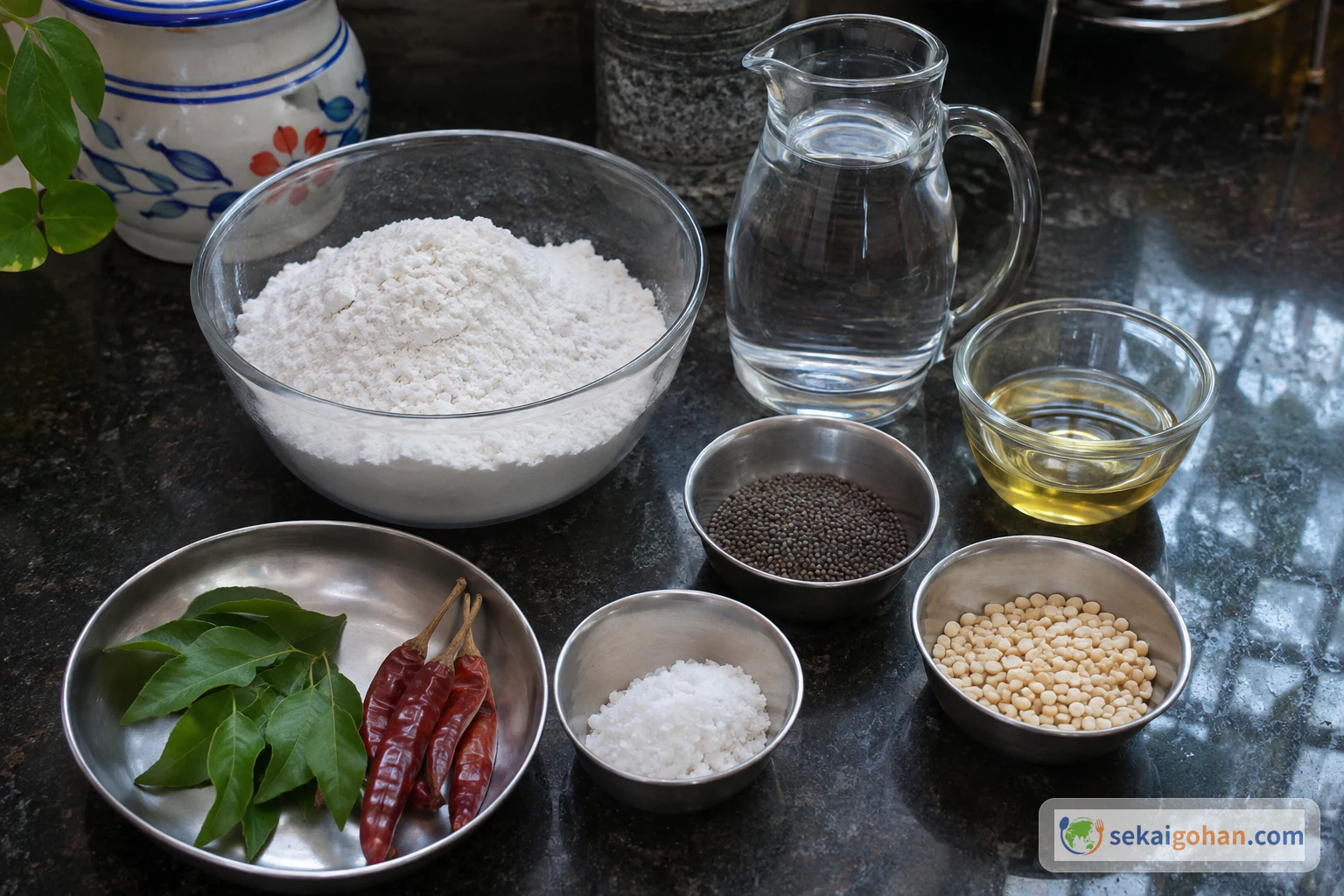
Raw rice flour, salt, water, oil, mustard seeds, urad dal, dried red chillies and curry leaves laid out separately
Everything for the dough and tempering, before any cooking starts

Makes about 20–25 dumplings.

Choosing the Flour, Oil and Leaves for Kuzhakkattai

Flour. Look for shop-bought rice flour labeled for idiyappam or string hoppers. Dry-roast and sieve it even though it's ready-made. Brands absorb water differently, so judge the dough by feel as well as by the water amount. Other rice flours, such as Japanese rice flour, can differ in rice type, particle size and absorption; you can try them, but expect to adjust the water.

Oil. Any cooking oil you normally use is fine. Rapeseed oil is one option.

Chillies. Use more or fewer depending on your taste and how hot your chillies are.

Curry leaves. These are optional. If you use them, wash them and remove the excess water, then put them through the hot oil rather than scattering them raw on top.

Allergens and labels

Check the labels on your flour, urad dal, mustard seeds and oil for allergens and shared-facility statements.

Equipment

  • Dry pan for roasting the flour
  • Sieve
  • Clean bowl and a wide mixing bowl
  • Small pan for the tempering
  • Long-handled utensil, such as a slotted spoon
  • Colander
  • Separate saucepan for the water
  • Jug for pouring water
  • Sturdy spoon or similar utensil for mixing hot dough
  • Household steamer with an insert and lid
  • Utensil for lifting out the dumplings
  • Serving plate

Method: From Dry Flour to Fresh Dumplings

About the photographs

The photographs show each action. Check amounts, timing, temperature and doneness with your own measures and senses, because a photo can't confirm them.

Hot water, hot oil and doneness

Boiling water, hot oil and steam can all burn, so use utensils and keep bare hands out of the hot dough. Steam for 8–10 minutes.

Kuzhakkattai Troubleshooting

What you notice Likely reason What to do
Flour still smells raw It needs more dry-roasting Keep stirring it in the dry pan before sieving
Granules in the flour The flour was not sieved, or not sieved well Sieve before the tempering goes in
Dough is dry Too little water for your flour Mix in a little more boiling water with a utensil
Dough is sticky Too much water for your flour Hold back any remaining water. Use less next time
Dough is too hot to shape It needs more resting time Keep waiting, and don't test it with a full handful
Pieces are hard to shape The pressed form takes some practice Roll the dough into small balls instead
Oil spatters when the leaves go in Water is left on the leaves Remove the excess water first and use a long-handled utensil
Steamed dumplings are hard Over-steaming Stay within 8–10 minutes next time

Patience helps with the dough: wait until it's comfortable to handle before you start pressing. Set up the steamer's water and lid according to its instructions, and when the dumplings are done, open it with care and lift them out with a utensil.

Serving Kuzhakkattai

These dumplings work as a snack, for breakfast or for dinner. Serve them fresh, right after steaming, with any chutney you like.

If pressing feels awkward, shape the dough into small balls instead. The finger-pressed form is still the main version, though, because those marks are what give the dish its look.

Frequently Asked Questions

Which flour should I buy?

Use shop-bought flour labeled for idiyappam or string hoppers. Making your own means soaking raw rice for two hours, draining it, shade-drying it to about 75%, grinding it, then roasting and sieving it.

What size cup should I use?

Any cup, as long as you measure the flour and water with the same one. The recipe works by proportion, not by gram weight, and the salt is to taste.

Can I leave out the curry leaves?

Yes, they are optional. Skip steps 2, 3 and 14 if you aren't using them.

How many dumplings does it make?

About 20–25 dumplings.
Sources