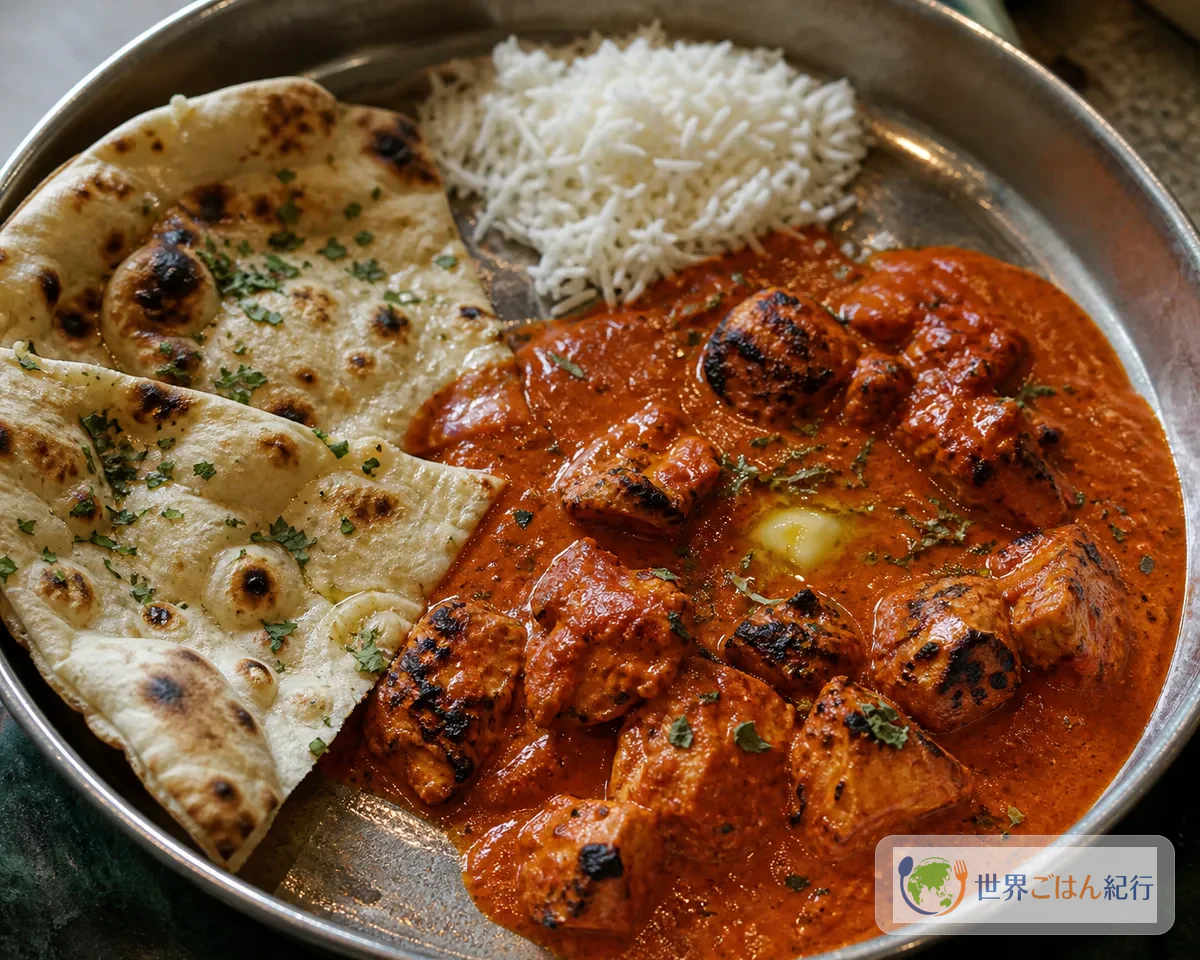
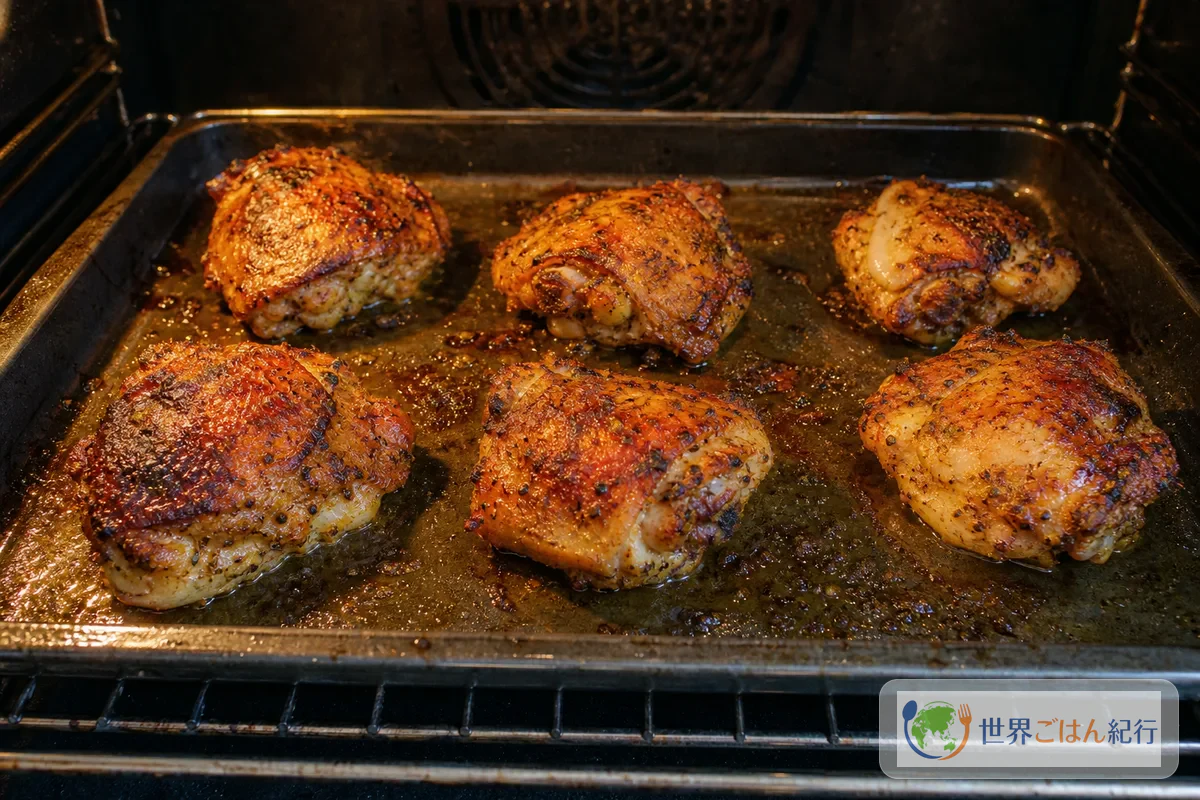
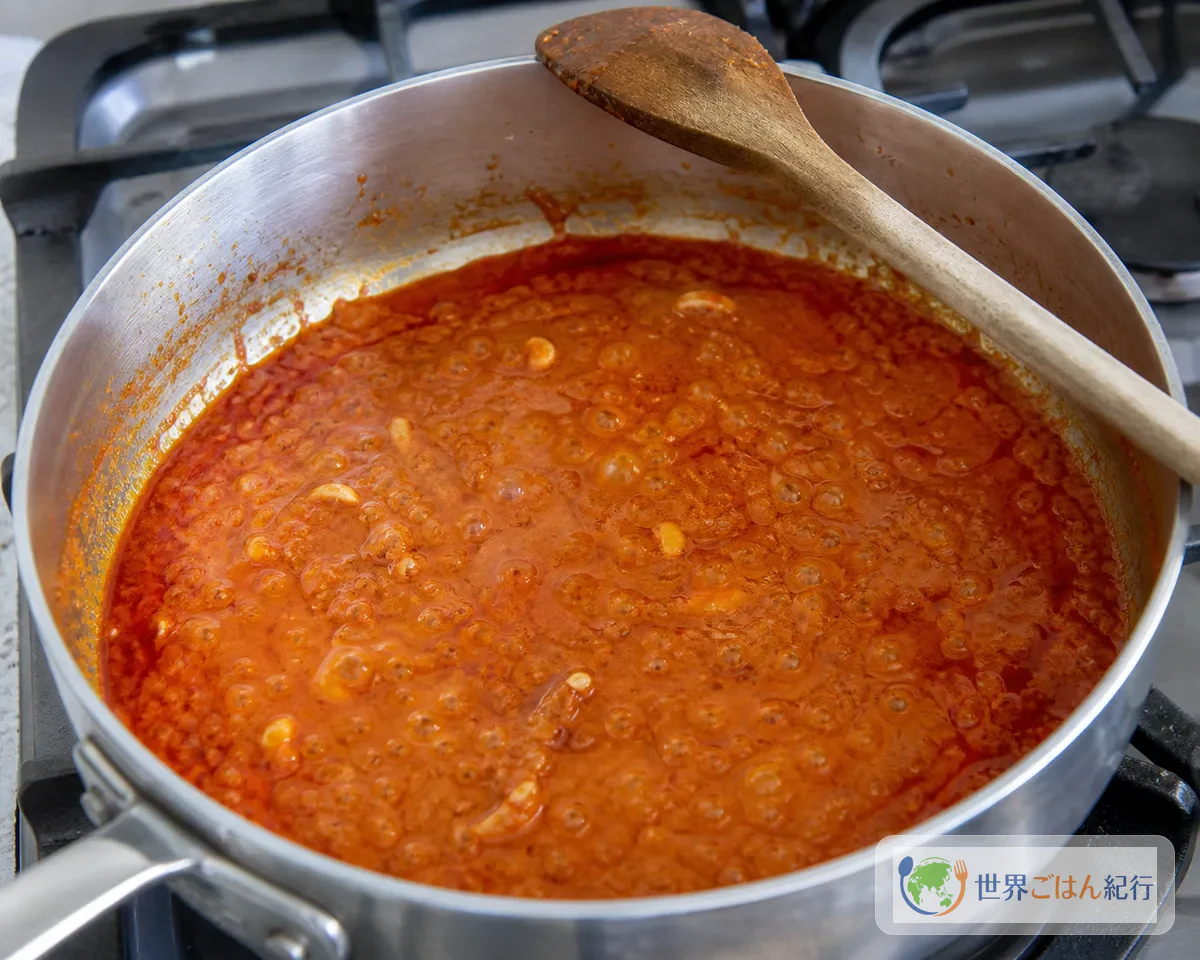
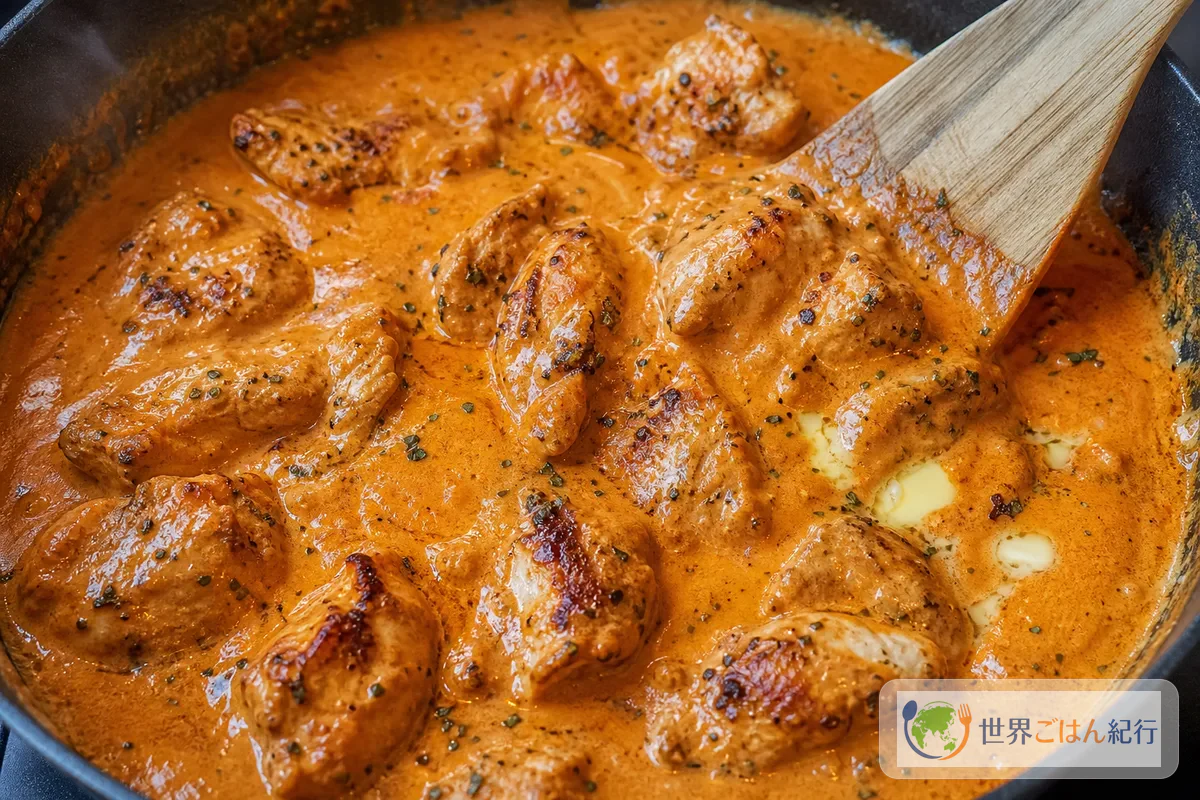
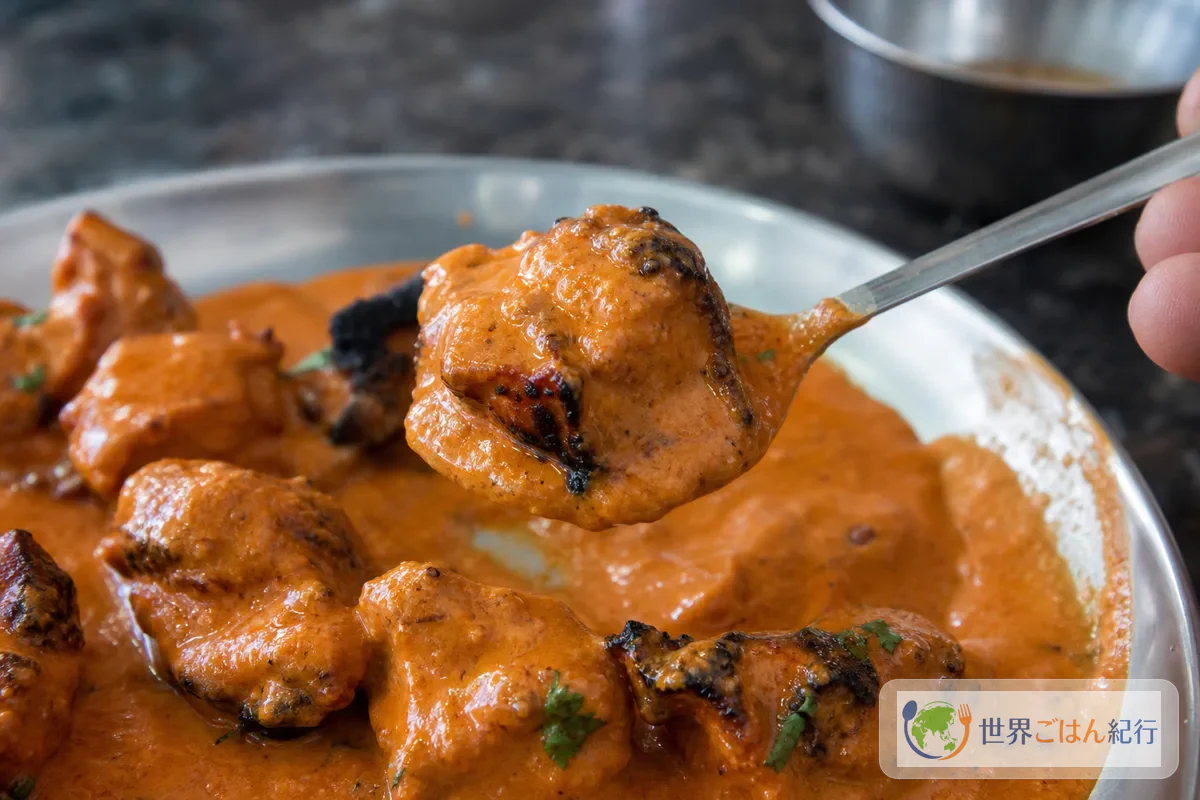
Straight from the oven, the chicken is reddish-brown and charred at the edges. Break a piece open and the surface is toasty while the inside still holds its juices. In a separate pot, butter melts into the acidity of the tomato and cream rounds off its corners, and the moment the browned chicken touches that sauce, the aroma shifts from grilled chicken to a diner's curry. In India the dish is called murgh makhani: murgh means chicken, and makhani refers to something with a buttery character. It began as a north Indian restaurant dish built on tandoor-roasted chicken, and this home version gets its browning from a hot oven instead.
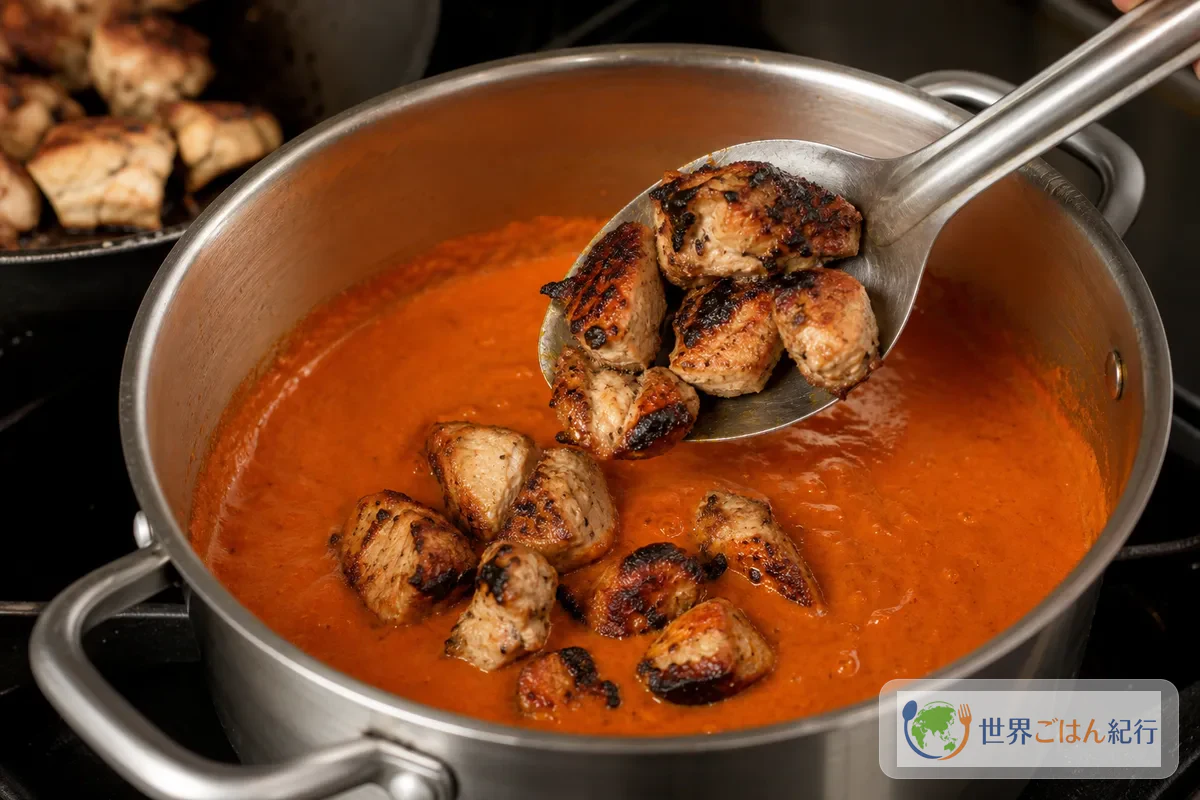
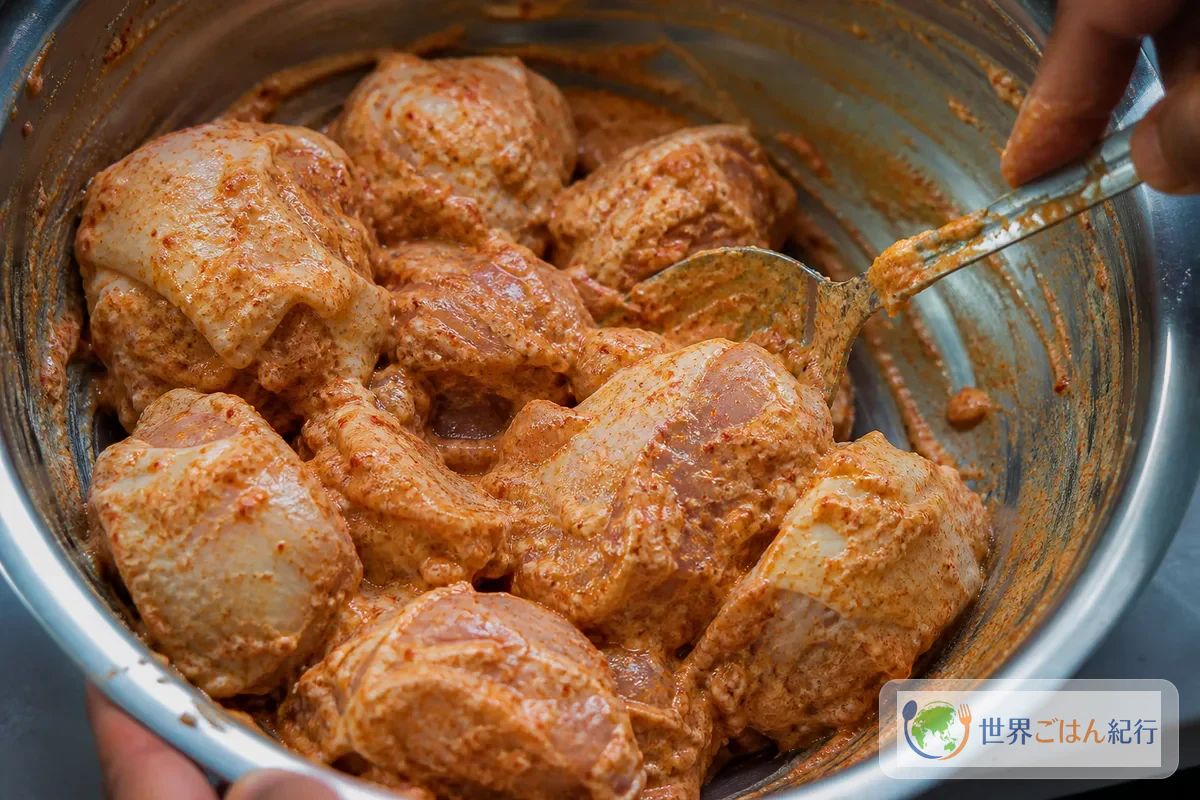
Cut boneless chicken thighs into 4–2 inches (5 cm) bite-size pieces and marinate them in a yogurt marinade for 6–8 hours. Roast at 450°F (230 °C) for 18–22 minutes and confirm that the center of the thickest part has reached 167°F (75 °C) for at least 1 minute. Reduce the sauce in a separate pot, then combine it with the chicken.
Because the chicken marinates overnight, plan a day ahead. On the day itself, all that's left is making the sauce, roasting the chicken and bringing the two together, and a home oven is all the special equipment you need.
Butter chicken in Delhi
Origins in Daryaganj
Search for the origin of butter chicken and one name always comes up: Moti Mahal, a restaurant in the Daryaganj district of Delhi, where the dish was born in the 1950s. Juices and leftover chicken from the tandoor weren't wasted. They went into a sauce of butter and tomato, and a way of carrying easily dried-out chicken over to the next day turned into a thick red gravy. The richness of butter chicken started as thrift, not luxury.
Who made it first is disputed. The Moti Mahal account centers on Kundan Lal Gujral, while the Daryaganj restaurant, in the same area, claims credit for Kundan Lal Jaggi and his family. Both carry on a lineage of cooks who opened restaurants in Delhi after Partition, each with its own memory of tandoor cooking.
How it is eaten in Delhi
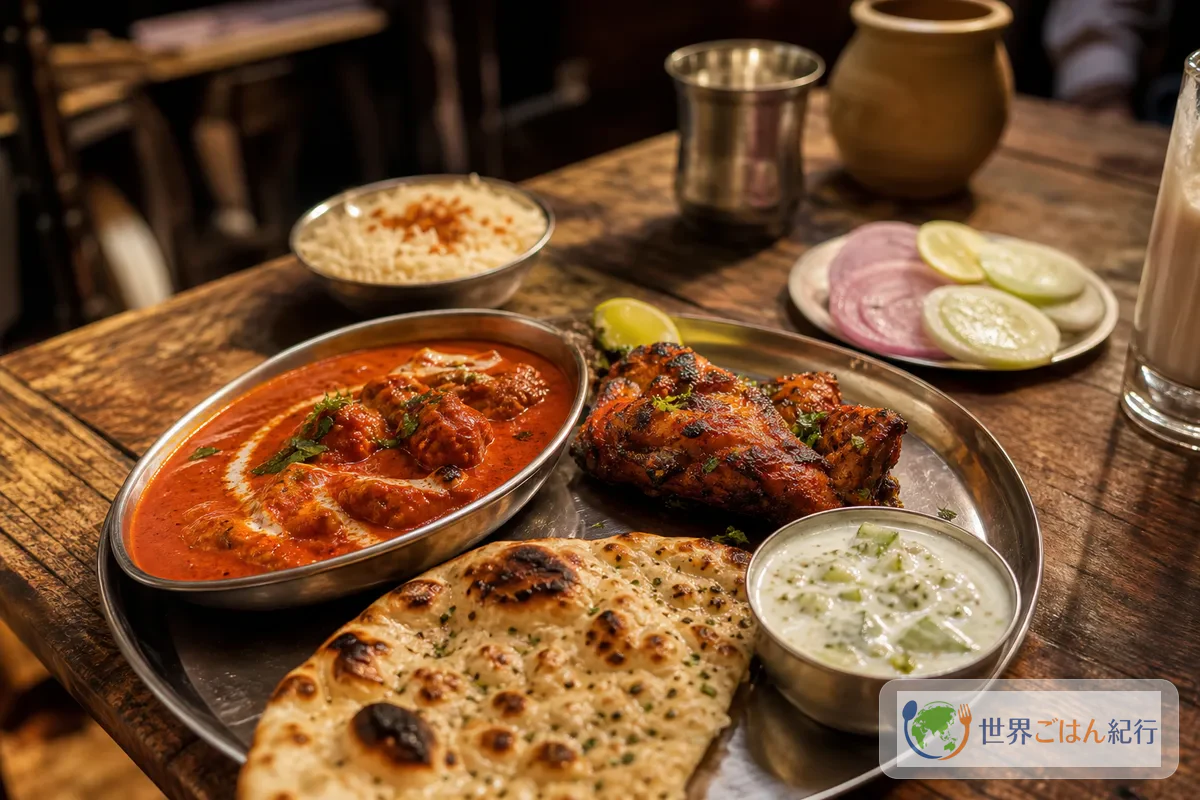
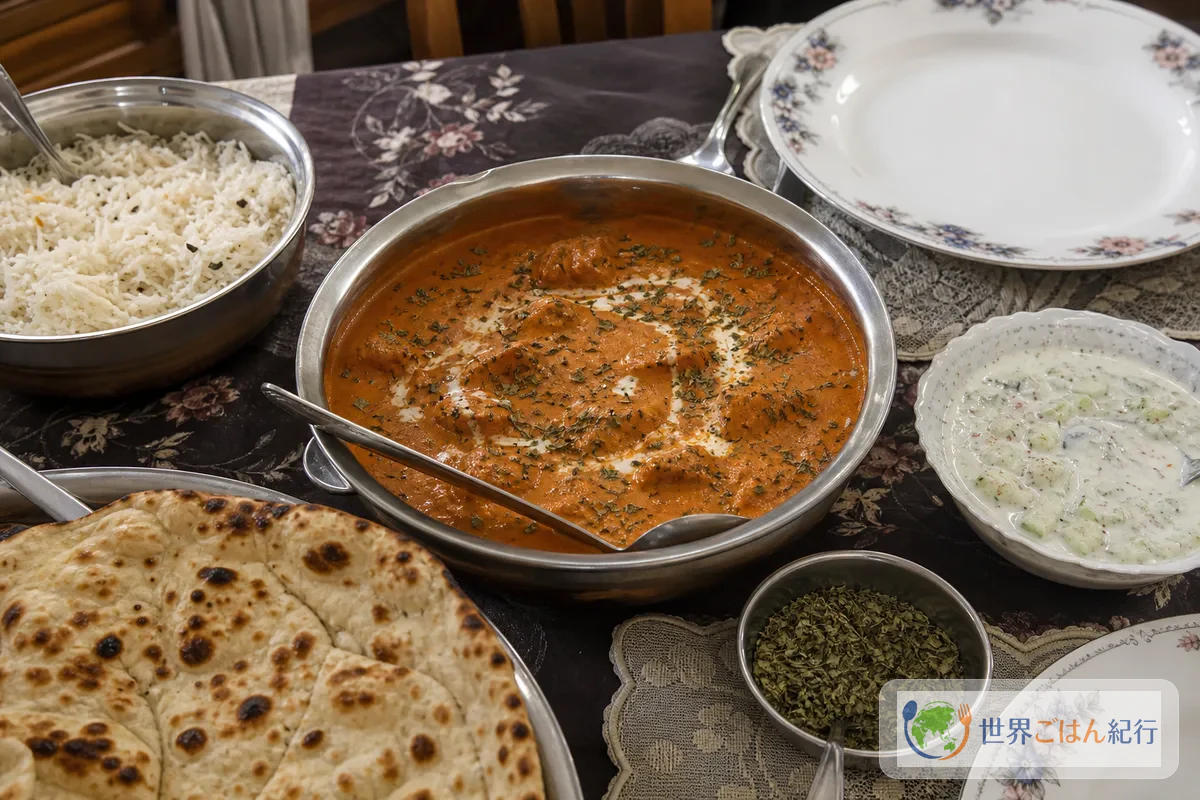
Daryaganj is where Old Delhi's markets and eateries cluster, and butter chicken belongs to that kind of table: roasted meat, bread, sauce and drinks set close together, with everyone reaching in to combine them. Taste the dish by itself with a spoon and it's sweet and rich. Tear off some naan, scoop up sauce with a browned piece of chicken, and the acidity and toastiness come first, with the butter smoothing things out from behind.
That's why a Delhi plate isn't really about the sauce alone. Restaurants often flood the plate so you can dip naan again and again, which is fun at home too, but the dish is built to bring tandoor-roasted chicken, the wheat of the bread and the acidity of tomato together in one mouthful.
Why the chicken is roasted first
Whichever origin story you believe, they agree on one thing: the roasted chicken and the tomato-and-butter sauce are separate steps. Simmer the chicken in the sauce from the start and it turns tender, but the aroma of browning fades. Roast it first, and the char and juices on the surface stay put, so the flavor gains layers once the sauce coats it at the end.
When a home version tastes "off," the culprit is more often the surface of the chicken than the dairy. Yogurt-marinated chicken cooked in a pan over low heat gives off water and drifts toward plain steamed chicken. A tandoor chars the surface quickly with intense heat; at home, the shortcut is a fully preheated oven, with the pieces spaced apart. If liquid collects on the tray the chicken steams, so don't leave the marinade on too thickly. Turn the pieces once at 10 minutes, and move on when the edges are brown and the surface looks dry. You don't need black char. A few toasty spots are enough to add depth once the chicken meets the red sauce.
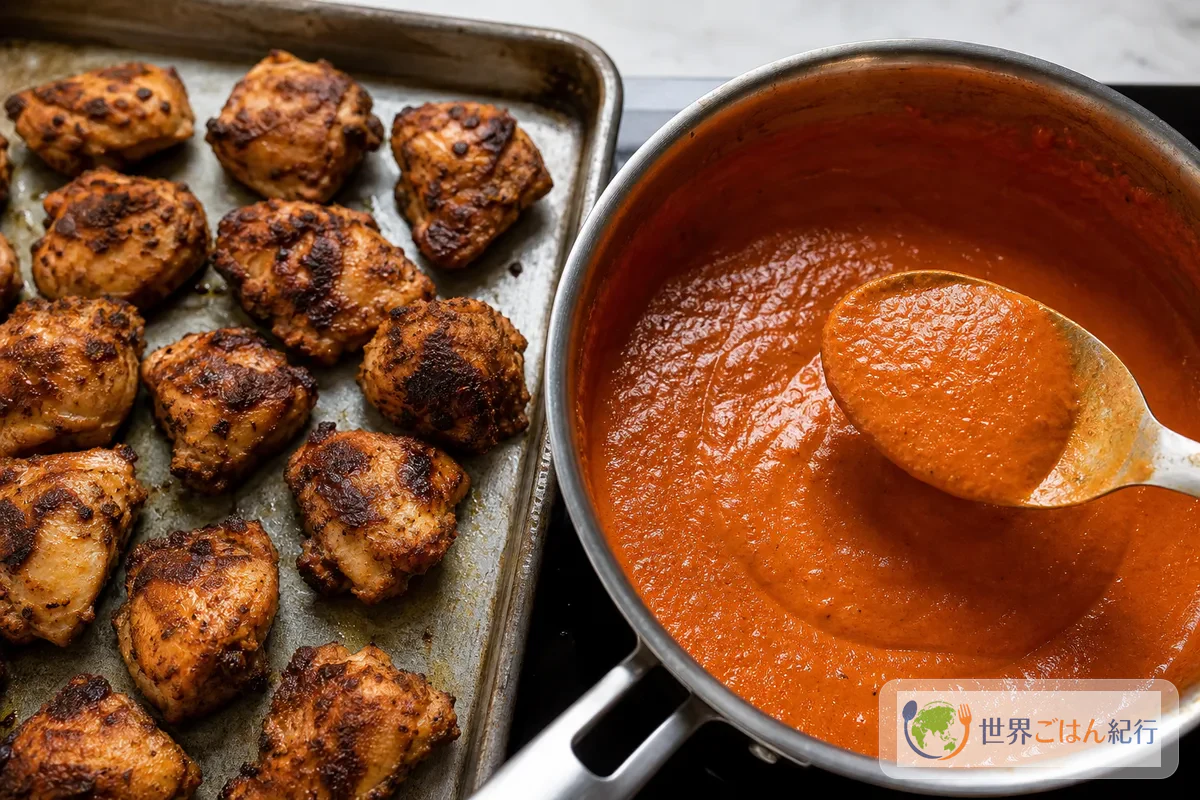
Three things hold the dish together: roast the chicken, cook the tomato until its raw smell is gone, and add the cream at the end without boiling it. Keep those steps separate and you can make butter chicken far from Delhi without losing its structure.
Variations and chicken tikka masala
North Indian restaurants differ in the details. Some use boneless chicken tikka, which is easy to scoop up with the sauce, and some use bone-in chicken for the savoriness of a stew. Some add cashews for body; others finish lightly, centered on tomato and butter.
Butter chicken looks a lot like chicken tikka masala, and that's natural: both are spiced chicken combined with a tomato-based sauce. Murgh makhani is best understood as roasted chicken returned to a smooth tomato sauce containing butter, and keeping that in mind makes substitutes easier to choose.
Ingredients for 4, and substitutions
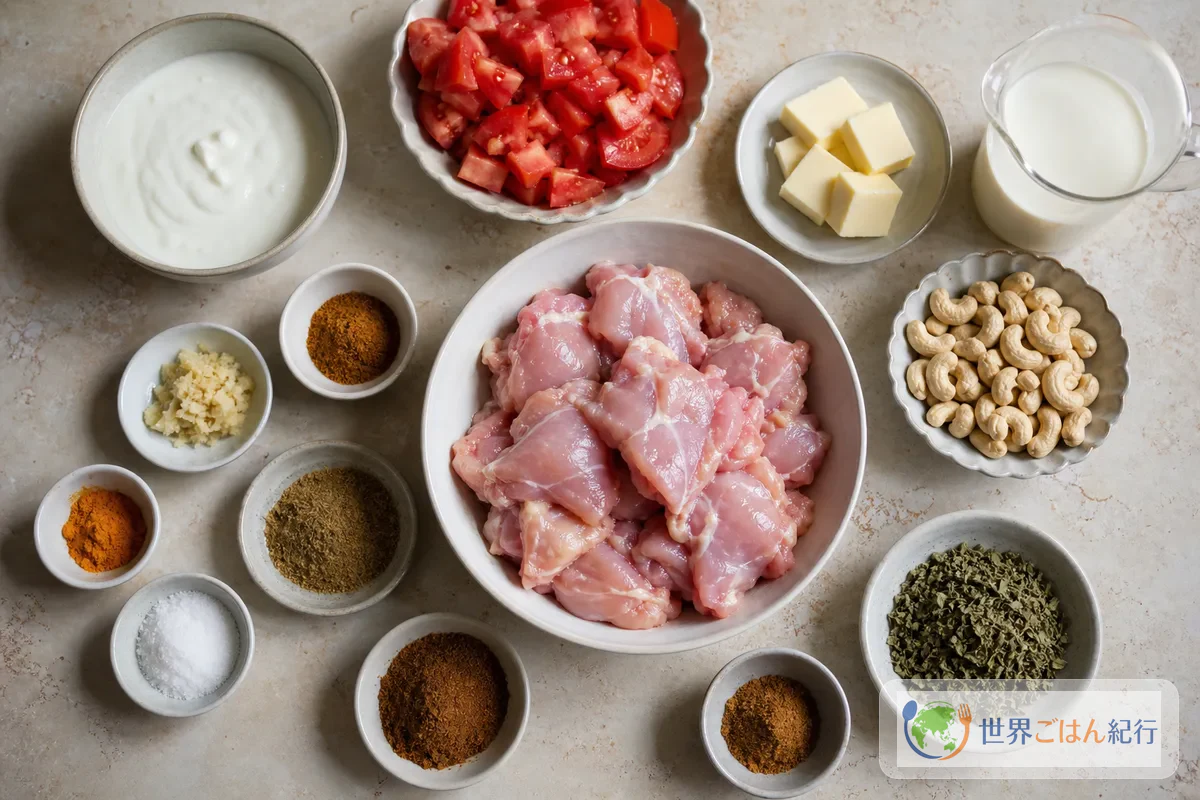
The list looks long, but divided into three sets (the chicken marinade, the sauce and the finish), it is easy to shop for. You can use chopped ripe fresh tomatoes. But unsalted tomato passata, or strained whole tomatoes, gives consistent water content across seasons and varieties, and makes the thickness easier to judge.
Chicken marinade
Milk can replace heavy cream, but the sauce gets lighter. In that case, add 5 g more butter at the end. Coconut milk brings its own aroma forward, so skip it if you want to stay close to murgh makhani. Cashews add thickness, but you can make it without them if you reduce the tomato enough.
Accompaniments
Prepare naan, chapati or basmati rice for 4. Naan if you want to enjoy plenty of sauce; basmati rice with little added aroma if you want something to catch the heat and fat lightly. If you serve a cucumber and yogurt raita, keep the salt low so you do not stack up salt across the whole meal.
The dish uses dairy, chicken and cashews. Even if you omit the nuts, wash the blender and cutting board if you share them. Store-bought garam masala and tomato products can contain salt or allergen labeling, so check the label on the container when you buy.
Kasuri methi needs only 1 tsp at a time, so you don't need a large bag for this recipe alone. If you'll keep cooking Indian food, buy a small amount. If not, leave it out and add garam masala at the end.
Choosing ingredients and tools for butter chicken
Spices
Chicken thighs, yogurt, tomato and cream all come from an ordinary supermarket. The only things worth buying specially are garam masala, which sets the finishing aroma, and kasuri methi. Garam masala brands differ in how strongly they show cardamom and cinnamon. A large pack only makes sense if you also cook biryani, tandoori chicken and bean dishes; if you'll make this once a month, use a blend you already have or buy a small pack.
Check the package for whether the garam masala contains salt or coloring. This recipe uses 7 g salt for an unsalted blend, so with a seasoned type, reduce the salt in the marinade.
Kasuri methi is dried fenugreek leaf. Rub it lightly between your fingers and a sweet, grassy aroma rises, and the dish instantly tastes more Indian. If you can't find it, leave it out and add a little garam masala at the end instead. Basil or nori would pull the aroma in a different direction.
Substitutes
Skinless chicken thighs from an ordinary supermarket are fine. A 450°F (230 °C) oven stands in for a tandoor, strained whole tomatoes can replace tomato passata, store-bought naan works, and if you have no basmati rice, another long-grain or short-grain rice will do.
Some swaps change more. Ordinary curry powder in place of garam masala changes the backbone of the aroma, and milk instead of cream makes the sauce lighter. Neither is a failure; it's home cooking where you know what has changed.
Tools for a smooth sauce
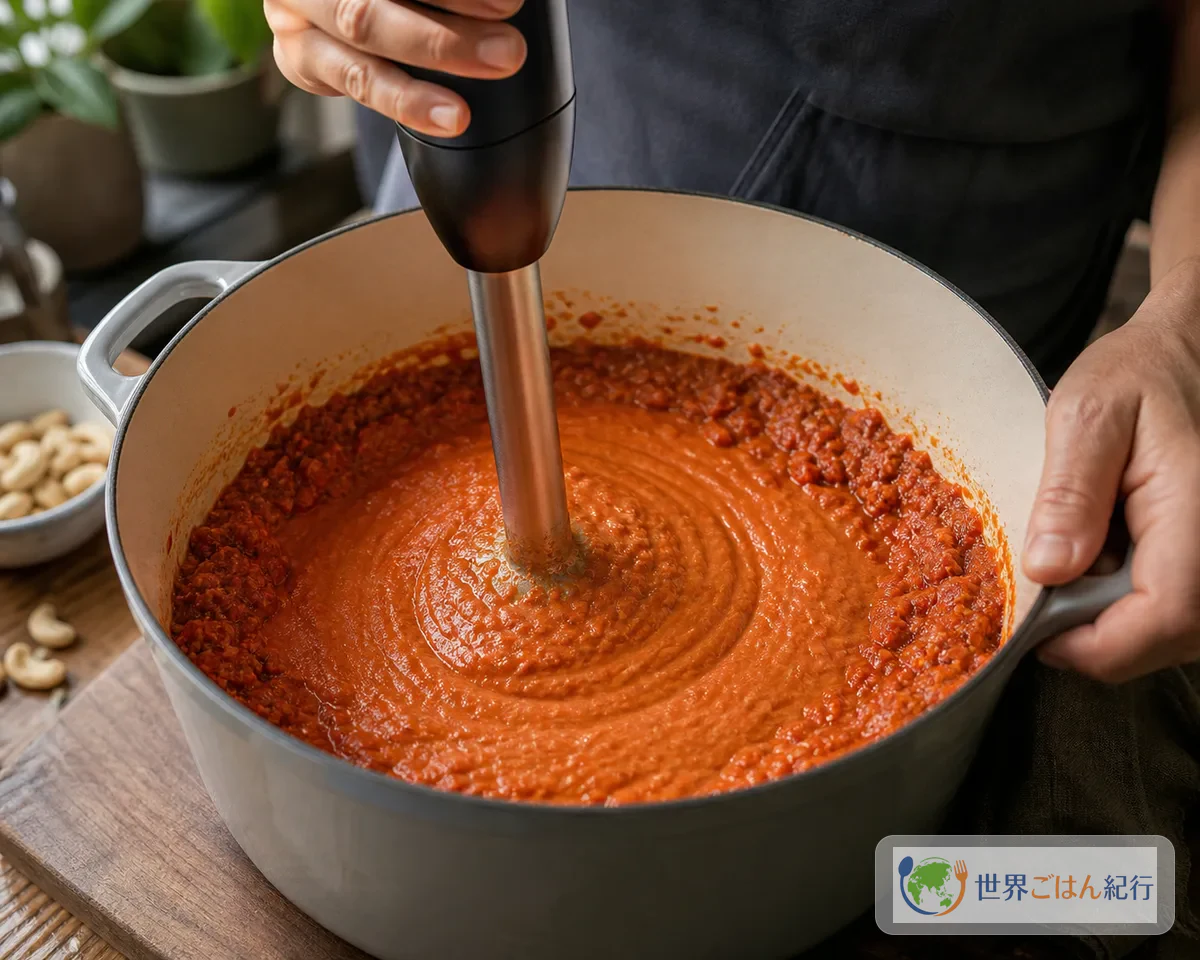
If you add cashews, the texture depends on leaving no grains at the end. A hand blender lets you purée the sauce right in the pot. Filling a countertop blender with hot sauce is dangerous, so cool it a little, respect the fill line, hold the lid down and blend in small batches. A strainer removes tomato skin and seeds even without a blender.
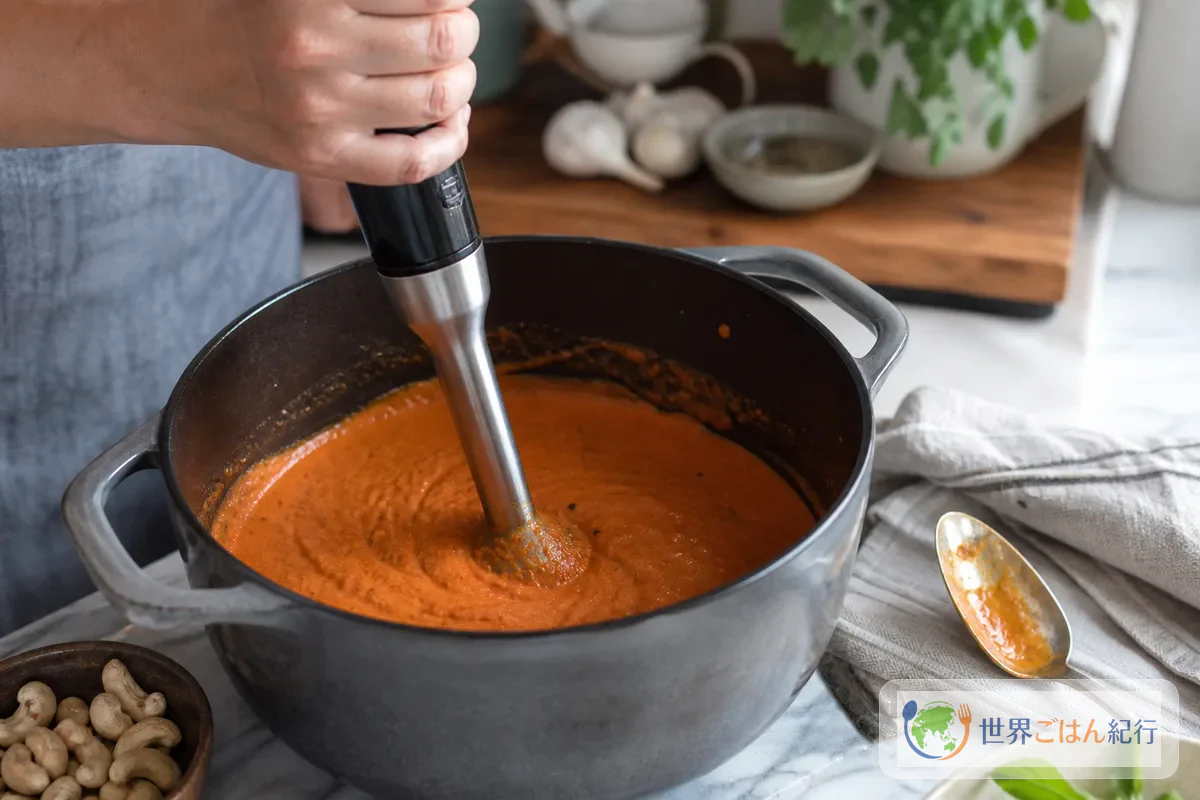
If you make soups, hummus and purées about once a week, a dedicated blender or food processor saves labor. Just don't buy a large 3.75 quarts (3.6 L), 700 W model only for butter chicken for 4, especially if storage space is tight.
How to make it
Keep the cutting board and tongs used for raw chicken separate from the roasted chicken and the serving plates. Confirm the center of the thickest part has reached 167°F (75 °C) for at least 1 minute, and refrigerate leftovers within about 2 hours.
Fixing butter chicken: thickness first
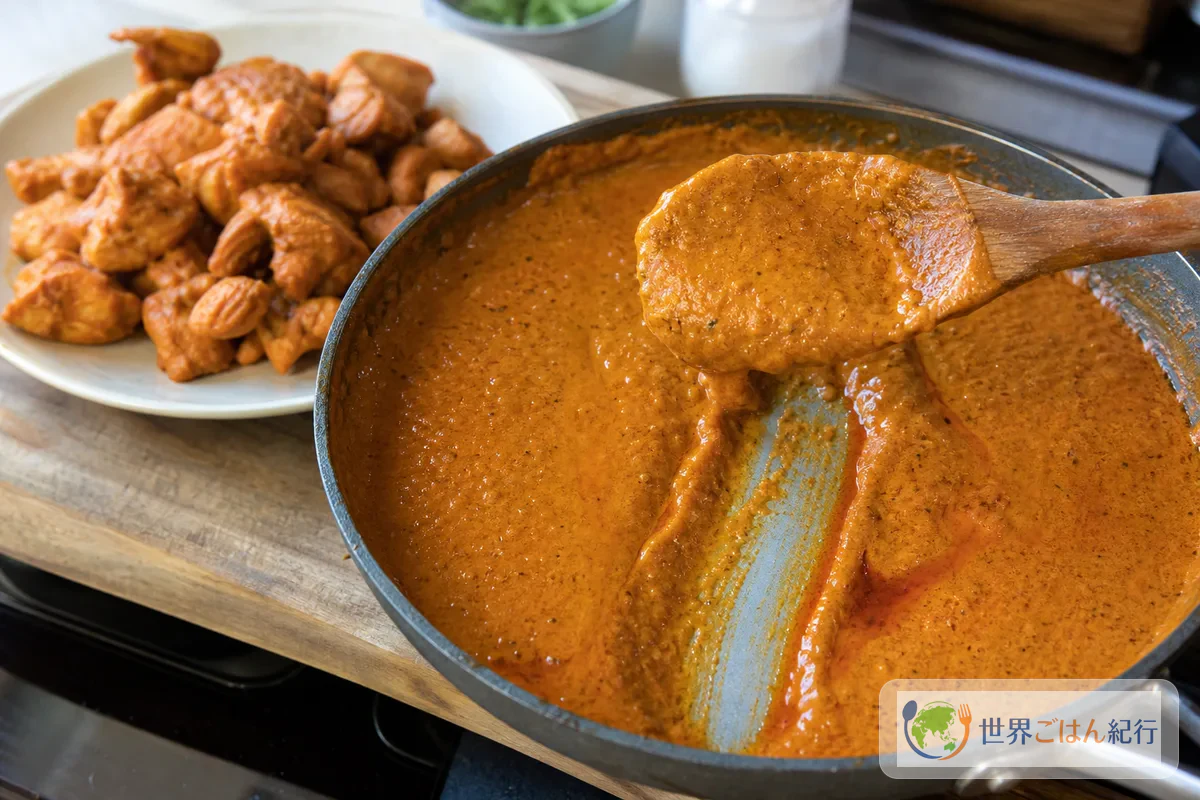
Butter chicken is easier to repair by restoring thickness than by adding flavor. More garam masala won't fix a thin sauce; it only strengthens the aroma. Check the moisture in the pot first, then the acidity, and the dairy last.
| Problem | Main cause | How to fix it |
|---|---|---|
| Sauce is thin and runs off the chicken | Watery tomato, not reduced enough | Take the chicken out and simmer over medium-low heat for 3–5 minutes, until a wooden spoon leaves a line for 2 seconds |
| Tomato acidity is sharp | Not simmered enough, variety differences | Extend 5 minutes over low heat, then add 5 g butter and 1/2 tsp honey |
| Sweetness is forward | Honey or tomato sugar is high | Turn off the heat and add 1 tsp lemon juice and a pinch of salt at a time |
| Chicken is tough | Pieces too small, overroasted, or kept cooking while checking the core temperature | Return to the sauce, cover and cook 3 minutes over low heat. Next time, even out the thickness and shorten the roasting |
| Too hot | Too much chili powder | Add cream 1 tbsp at a time. Do not dilute with water; adjust salt last |
| Sauce is oily and separated | Dairy boiled over high heat | Turn off the heat, add 1 tbsp hot water and stir slowly with a whisk |
If the aroma seems weak, add garam masala 1/4 tsp at a time at the end rather than all at once. What tastes faint in the pot often feels right with naan or rice.
Once the chicken goes into the sauce, warm it only briefly over low heat. A hard boil thickens the sauce but draws moisture from the surface of the chicken. And before deciding it needs more seasoning, eat a bite with naan: the sauce on its own makes it easy to misjudge how much the bread or rice will absorb.
Serving and storing butter chicken
Sides and plating
Choose the sides by the balance of fat and acidity. On a day you pile buttery naan onto a rich sauce, a cucumber raita or thinly sliced onion settles the plate. With basmati rice, keep the sides light and serve less sauce so the aroma comes through. Make an Indian raita first. For more on tandoor-style roasting, see tandoori chicken, and on a day you want soft rice and lentils without chicken, khichdi, another South Asian home dish, lightens the menu.
| Eater / occasion | Plating | Seasoning adjustment |
|---|---|---|
| Family tearing naan | More sauce, on a shallow plate | Less heat, a little acidity left |
| Lunch with rice | Chicken in the center, not too much sauce | Do not add more honey; hold back the garam masala |
| Next-day lunch box or make-ahead | Chicken and sauce in the same container | Slightly less cream, so reheating separates less |
Storage and reheating
Don't leave the finished pot on the stove to cool slowly. Cool it briefly, portion out what you'll eat now, move the rest to a shallow container and refrigerate it within about 2 hours. Even fully cooked chicken needs careful storage to stay safe.
Refrigerated, butter chicken keeps within 3 days, when its aroma and texture hold best. To freeze, separate the chicken and sauce into single portions, cool them completely and seal. The sauce tends to separate after thawing, so warm it in a pot over low heat, stirring in hot water 1 tsp at a time.
To reheat in a microwave, go 1 minute at a time at 600 W, stirring from the center each time. In a pot, cover it over low heat and add a little hot water so it doesn't scorch. Make sure it is hot all the way through and that the thick part of the chicken has been at 167°F (75 °C) for at least 1 minute; a thick sauce can be hot on the surface and still cold in the center.
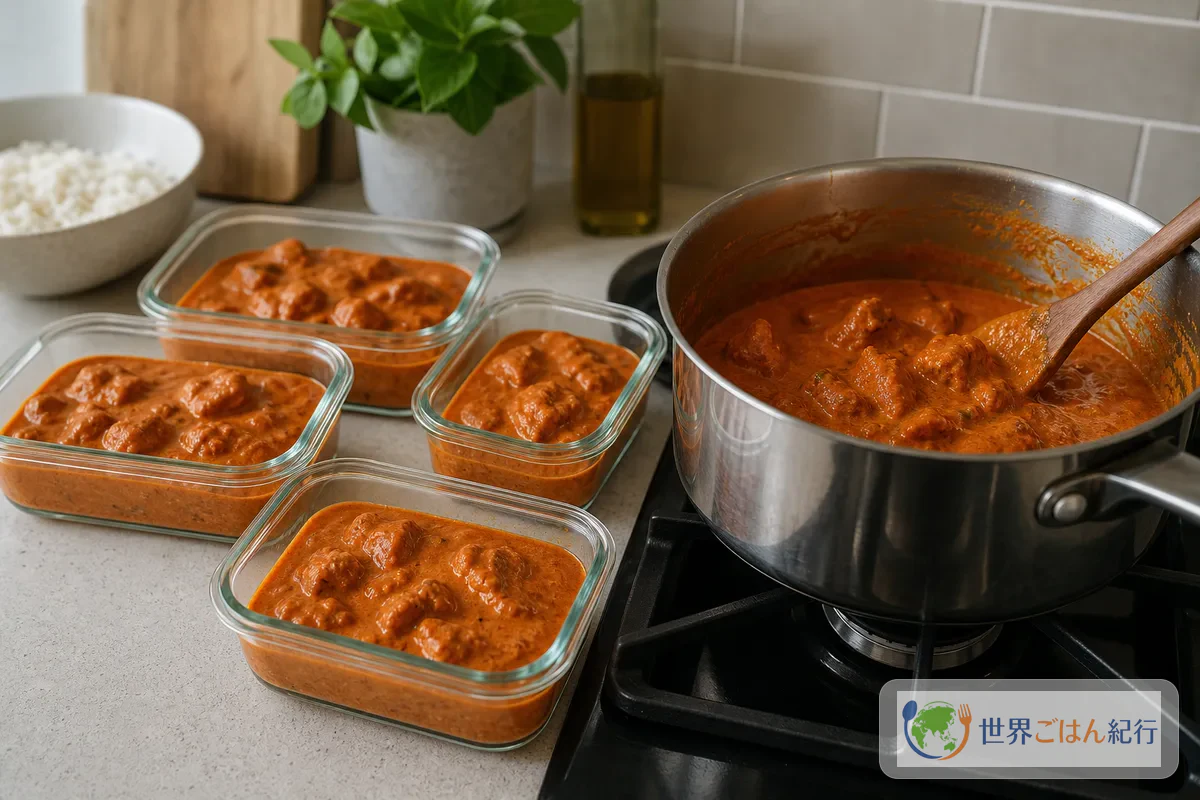
Oil rising to the surface after storage is normal. Butter hardens in the cold and can look separated when warmed, but low heat and a few teaspoons of hot water bring it back together. If the aroma has faded, rub in a little kasuri methi just before eating or add a pinch of garam masala.
Frequently asked questions
Can I make it taste authentic without a tandoor?
You won't get a tandoor's smoke, but roasting the chicken separately from the sauce keeps the structure of the dish. With a broiler or grill, cook over high heat while watching the surface, and heat the center of the thickest part to 167°F (75 °C) for at least 1 minute. It scorches easily, so check it sooner than you would in the oven.
Can I switch to chicken breast?
You can, but even it out to about 1 inches (2 cm) thick and start checking at 15–18 minutes of roasting. Because breast is lean, leave the marinade on thickly and take it off the tray soon after roasting. If moistness is the priority, thighs are less likely to fail.
Can I make it with curry powder alone?
You can, but it moves away from the aroma of murgh makhani. Curry powders differ in their ratio of turmeric, cumin and other spices, and their color and aroma tend to dominate. If you have no garam masala, cut back the marinade spices and finish with a little black pepper; that holds together better than strong curry powder.
The sauce turns orange instead of red.
The color depends on the thickness of the tomato, the amount of butter and when the cream goes in. Simmer the tomato for 12–15 minutes before adding the butter, and add the cream last. To deepen the color without changing the heat, choose Kashmiri chili or paprika rather than more chili.
Can I make it smooth without a blender?
Yes. Omit the cashews and strain the tomato, and a wooden spoon is all you need. If you use cashews, soak them in lukewarm water for 20 minutes and chop them finely with a knife before adding. Passing the sauce through a strainer at the end smooths the mouthfeel further.
Sources
- Delhi Tourism, "Purani Delhi Food" (Delhi Tourism, origin and food culture of Old Delhi, accessed 2026-07-18)
- National Geographic, "What is butter chicken and where is it from?" (multiple accounts of its origin, accessed 2026-07-18)
- The Indian Express, "Butter chicken of irresistible flavour, culinary rivalry, fight for legacy" (Delhi restaurants and the origin dispute, 2025-01-10, accessed 2026-07-18)
- Moti Mahal, "Our Story" (Moti Mahal's official account of the origin, accessed 2026-07-18)
- Daryaganj, "Our Legacy" (Daryaganj's official account of the origin, accessed 2026-07-18)
- Great British Chefs, "Murgh makhani - butter chicken" (comparison of ingredient structure and cooking, accessed 2026-07-18)
- Ministry of Health, Labour and Welfare of Japan, "About the causes and prevention of food poisoning from meat" (guide to heating the center of meat, in Japanese, accessed 2026-07-18)
- USDA FSIS, "Chicken from Farm to Table" (heating chicken and handling leftovers, accessed 2026-07-18)
Roast the chicken first, reduce the tomato, and combine them at the end over low heat. If you keep to that order, even a kitchen without a tandoor can create the moment when the browned surface sinks into the sauce. Buy garam masala only if you will use it in other Indian dishes, and choose tools only if you will use them for more than this one dish. This dish works without large packs of spice or special equipment. Decide what you will cook next before you put anything in your basket.