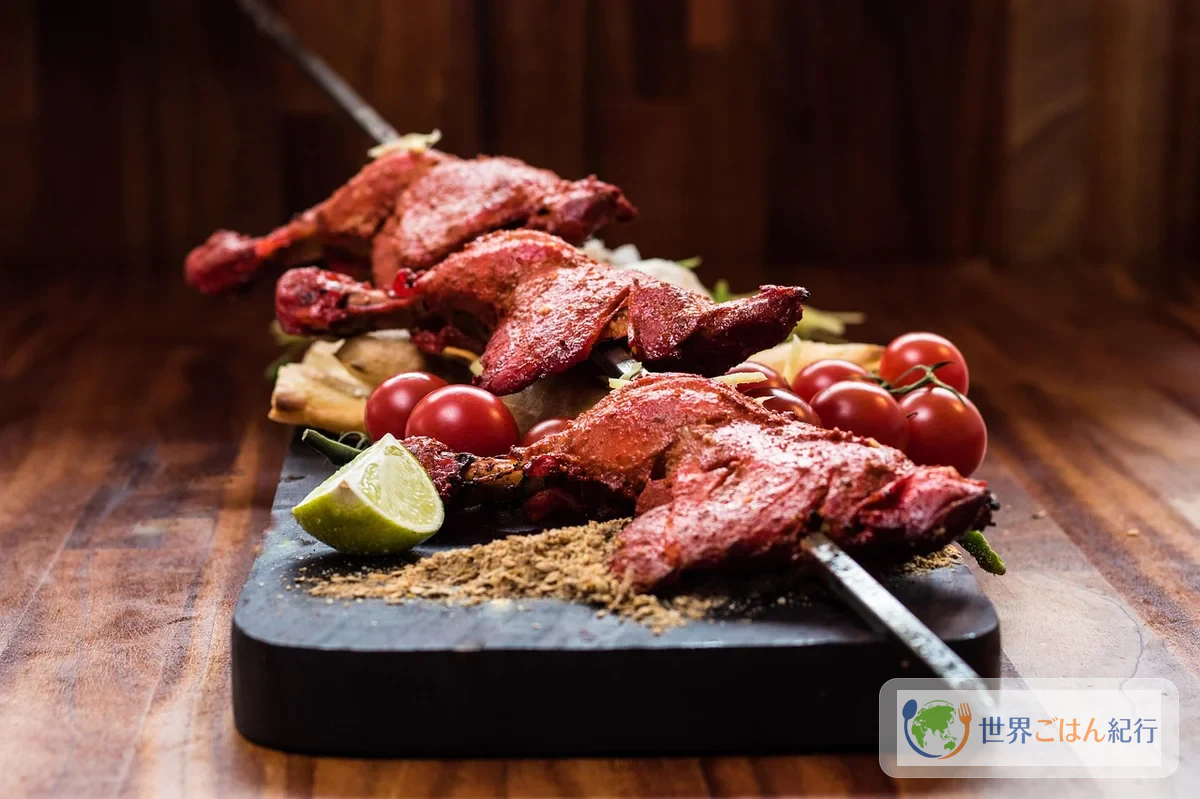

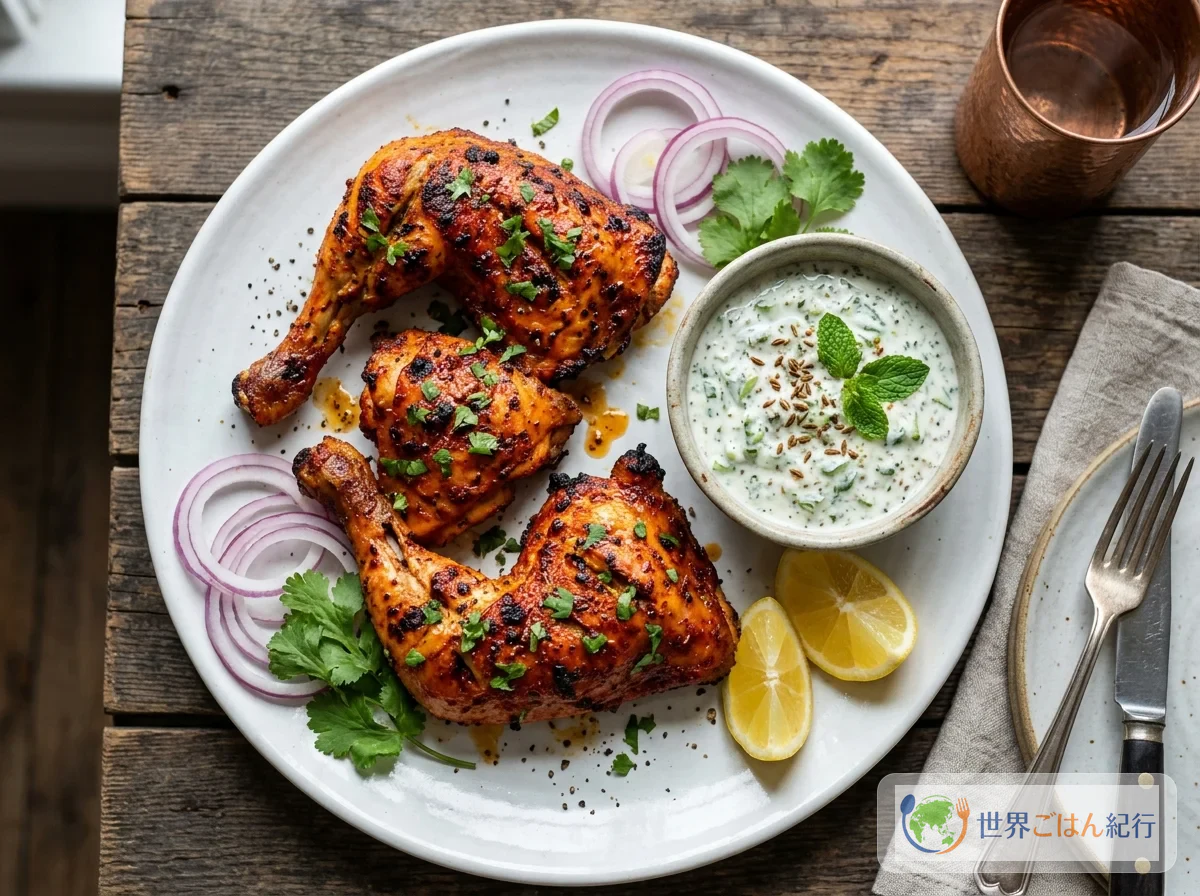
The chicken comes out of the oven a vivid orange-red, crisp on the outside, juicy inside and fragrant with spice. Tandoori chicken (तंदूरी चिकन / Tandoori Chicken) is the signature dish of Indian cuisine: chicken marinated in yogurt and spices, then roasted in a cylindrical clay oven called a tandoor. Today it is practically a synonym for Indian food, and you can make it properly in a home oven without a tandoor. Serve it alongside samosas and biryani for a full Indian table.
The history of tandoori chicken
From Peshawar to Delhi
In the 1920s, at a restaurant called Moti Mahal in Peshawar's Gora Bazaar, a cook named Kundan Lal Gujral tried something nobody else did. He put chicken marinated in yogurt and spices into the tandoor, the clay oven built for baking naan. In Indian food culture, putting meat into an oven made for bread was a radical idea.
In 1947, in the chaos of the Partition of India and Pakistan, Gujral fled from Peshawar (now in Pakistan) to Delhi. All he could carry was his skill and his memory. In Delhi's Daryaganj district he rebuilt Moti Mahal with his partners Kundan Lal Jaggi and Thakur Dass Magu, all three Punjabi Hindu refugees from Peshawar.
The turning point came when a friend, the politician Mehr Chand Khanna, introduced tandoori chicken to the first prime minister, Jawaharlal Nehru. Nehru liked it, and Moti Mahal began catering official state dinners. The Shah of Iran, U.S. President Richard Nixon and Jackie Kennedy all sat at its tables. The politician Maulana Azad summed it up: "To come to Delhi and not eat at Moti Mahal is like going to Agra and not seeing the Taj Mahal."
Butter chicken, a sibling dish
The same kitchen gave the world another famous Indian dish. To resell unsold tandoori chicken the next day, Gujral remade it with tomato gravy and butter, and that was the origin of "butter chicken (murgh makhani)." The two dishes were born at the hands of the same cook.
How a tandoor cooks
The texture and flavor of tandoori chicken come from the way a tandoor cooks, using three kinds of heat at once. Infrared radiation from the clay walls envelops the chicken, circulating hot air heats it evenly, and smoke from charcoal or wood penetrates the meat and gives it a smoky flavor. Together they produce the ideal result: crisp outside, juicy inside.
Why yogurt works as a marinade
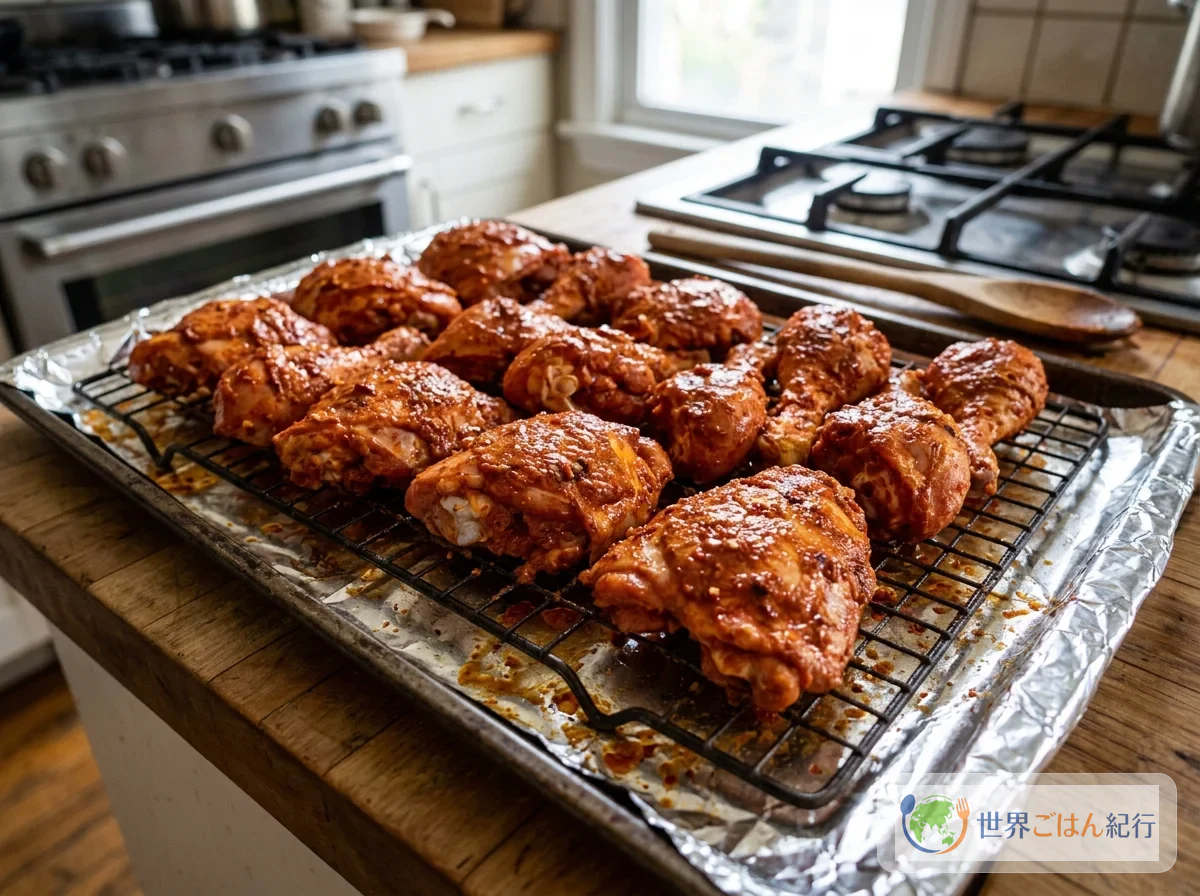
The lactic acid bacteria in yogurt convert lactose to lactic acid, which gently denatures the meat's proteins. Lactic acid acts more mildly than vinegar or lemon juice, so the meat stays moist. As the proteins unravel, they form a structure that traps water and helps prevent drying during cooking. And because yogurt clings to the surface of the meat, the spices stay put instead of running off. The best marinating time is 6–24 hours.
Ingredients (serves 4, 2.75 lb (1.2 kg) bone-in chicken)
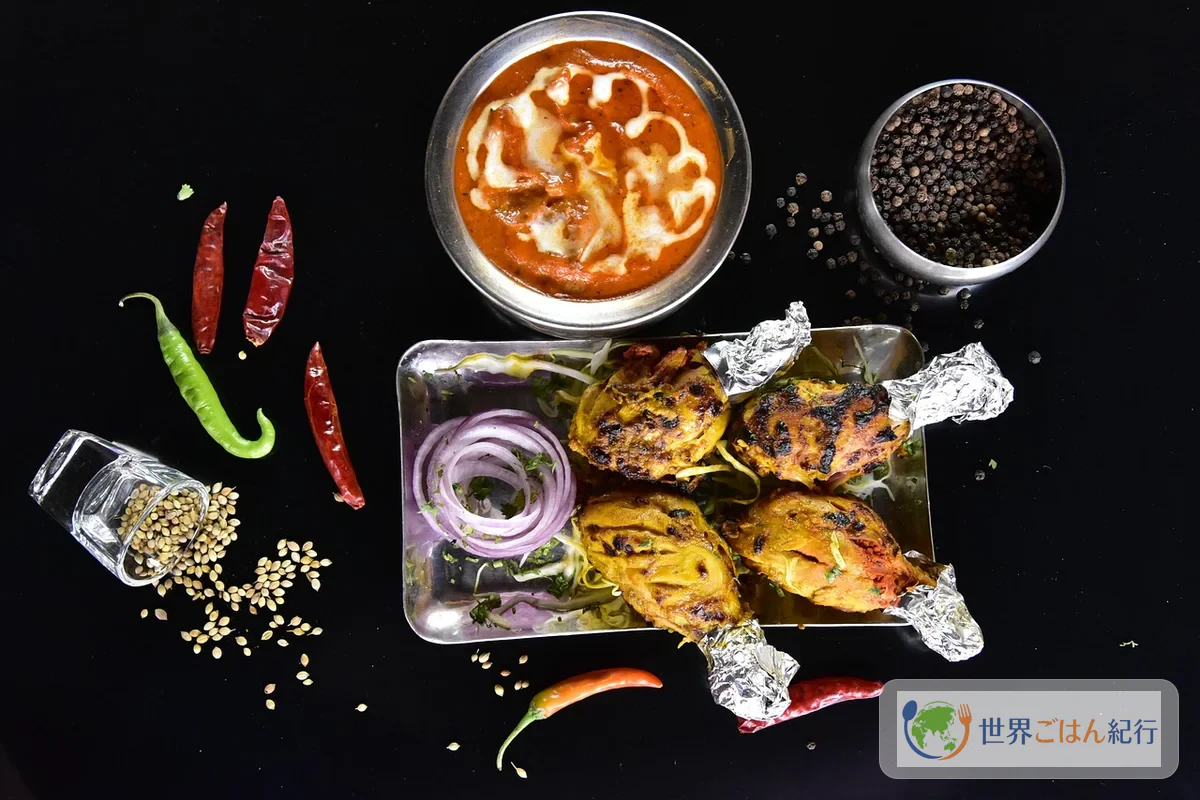
Choosing ingredients for tandoori chicken
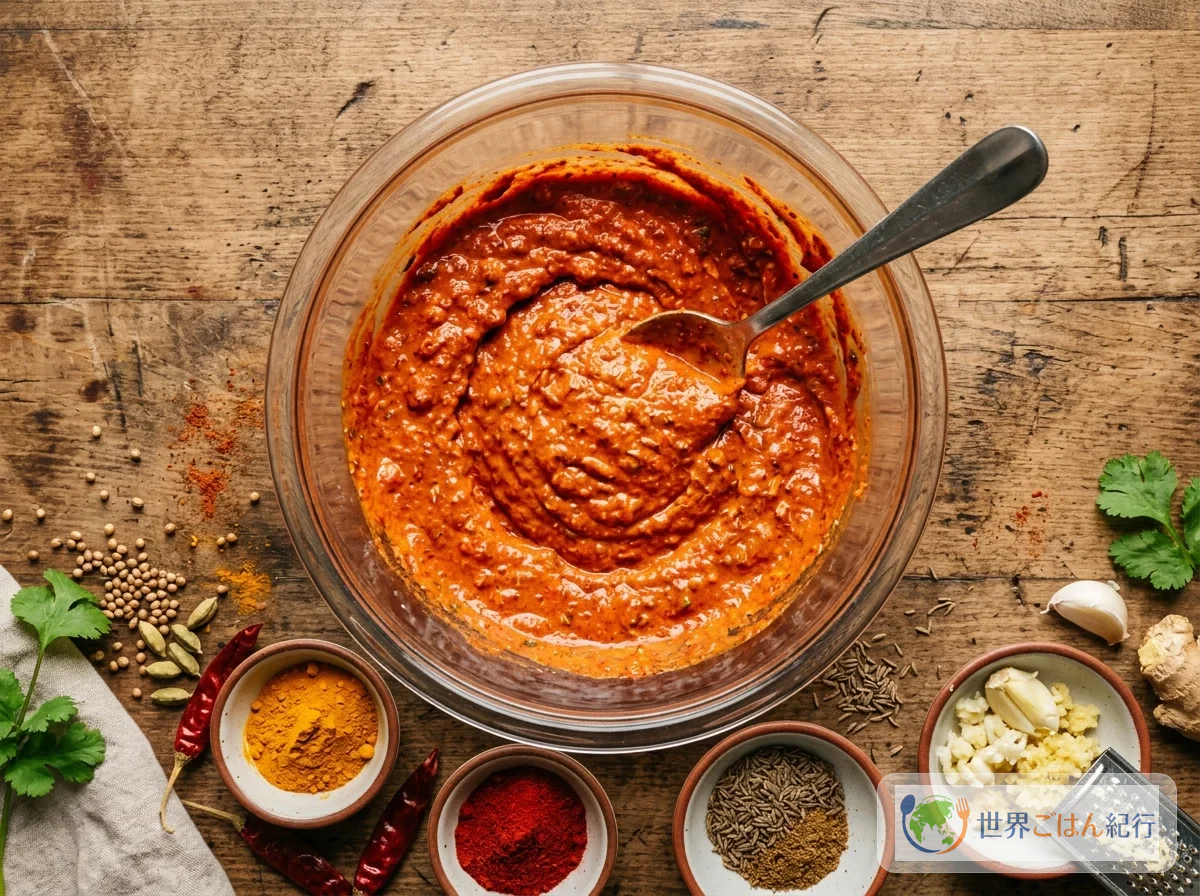
Ordinary plain yogurt is watery, and the marinade runs off the meat. Use Greek yogurt, or yogurt drained for 30 minutes in a strainer lined with paper towels. Called "hung curd," it is an essential preparation in tandoori recipes.
The vivid red comes from Kashmiri chili. It has little capsaicin (the pungent compound) and plenty of carotenoid pigment (capsanthin), so it gives a bright orange-red with mild heat. Restaurants sometimes use synthetic colorings (such as Red 40), but with enough Kashmiri chili, natural pigment alone does the job.
Kasuri methi (dried fenugreek leaves) is missing from most home recipes, yet it is essential to restaurant tandoori. Just 1 tsp in the marinade adds a toasty, nutty aroma and moves the taste much closer to the restaurant's. You can find it at Indian grocery stores or online.
Tips and common mistakes with tandoori chicken
For a deeper flavor in less time, try the two-stage marinade restaurants use. First rub the chicken with salt, chili powder and vinegar and leave it for 30 minutes, then apply the yogurt-based marinade. The first acid opens up the proteins on the surface so the yogurt reaches deeper.
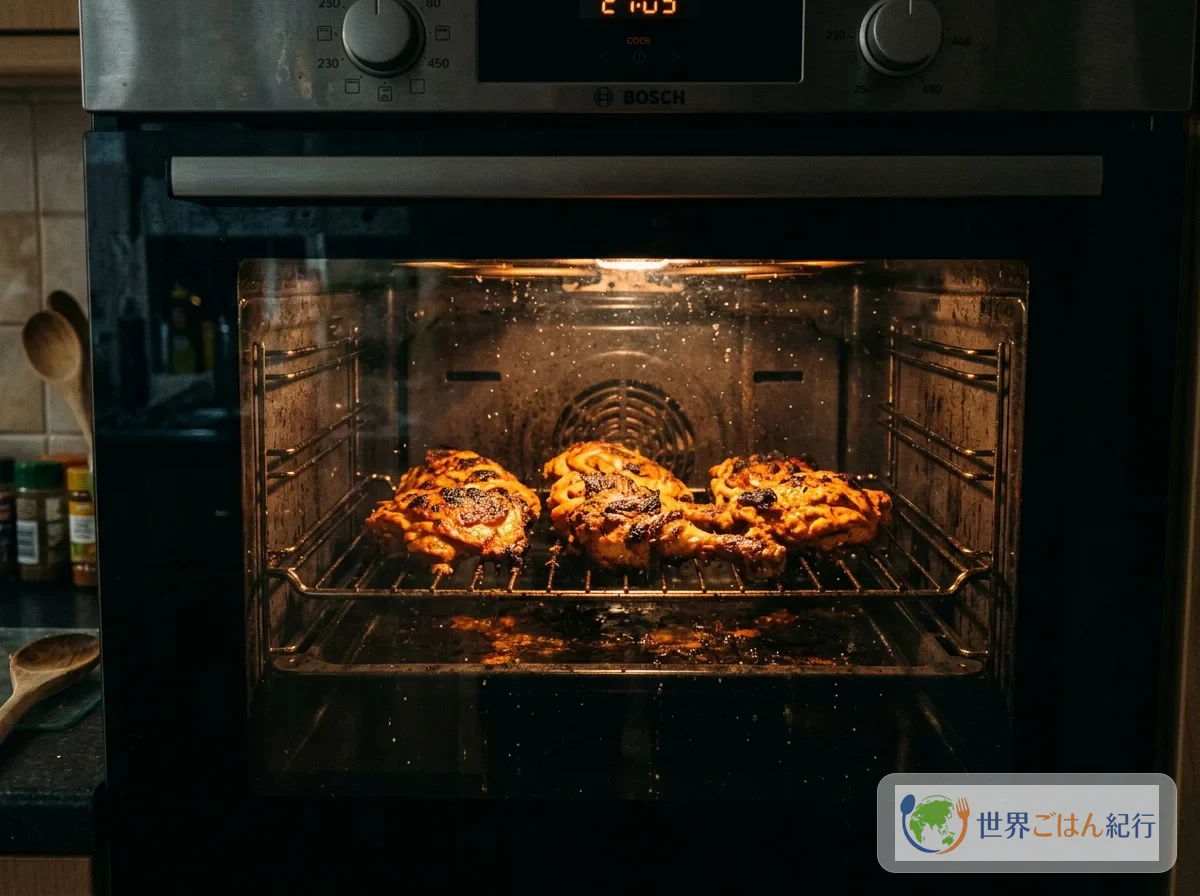
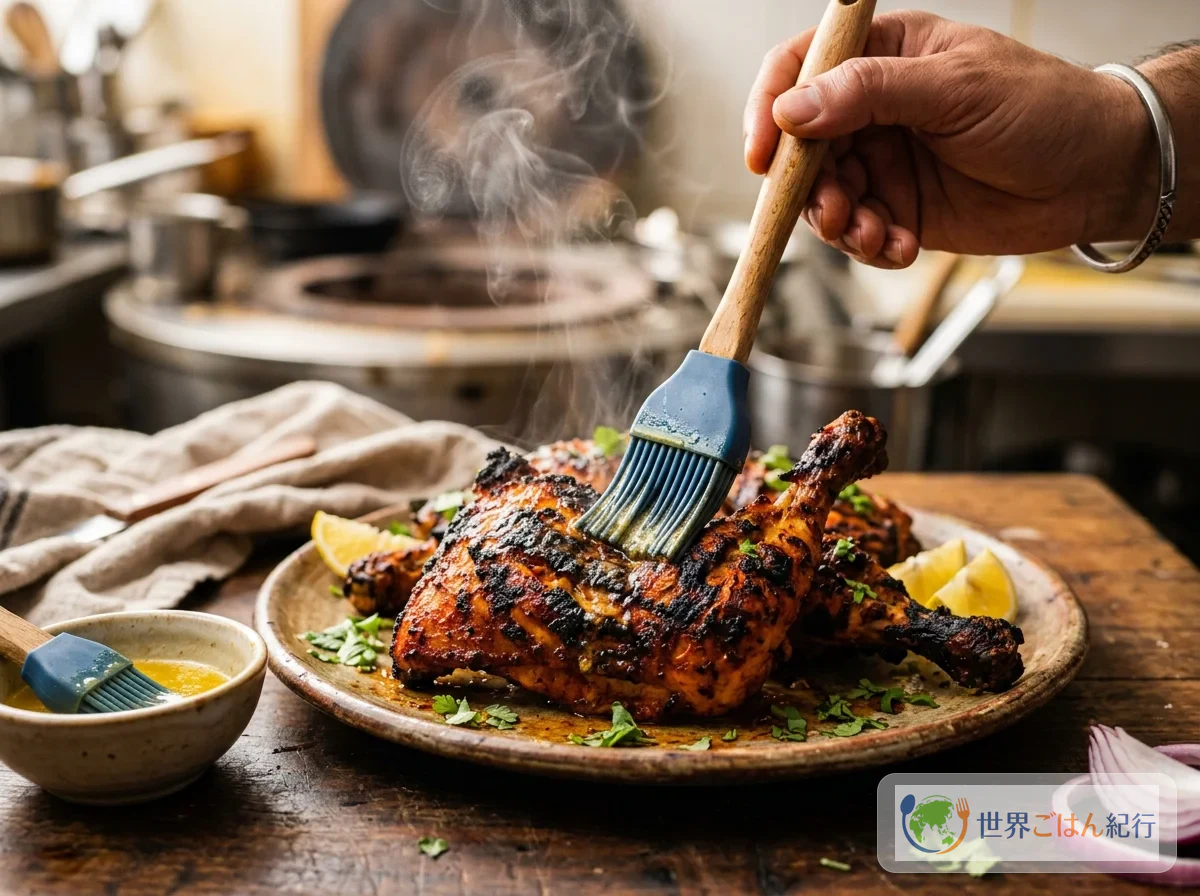
Heat is where a home oven falls short. The inside of a tandoor reaches up to 900°F (480°C), while a home oven tops out at 475°F (250°C), so preheat thoroughly (15–20 minutes) to narrow the gap. If you preheat the tray too, heat reaches the chicken the moment it goes down, which encourages the Maillard reaction. Re-brushing the marinade during baking and finishing over strong heat under a fish-grill or broiler also get you closer to a tandoor result.
A home oven can't give you smoke, either. Make up for it with the broiler at the end, or with the "dhungar" technique: set a piece of hot charcoal on aluminum foil beside the food and cover the pot.
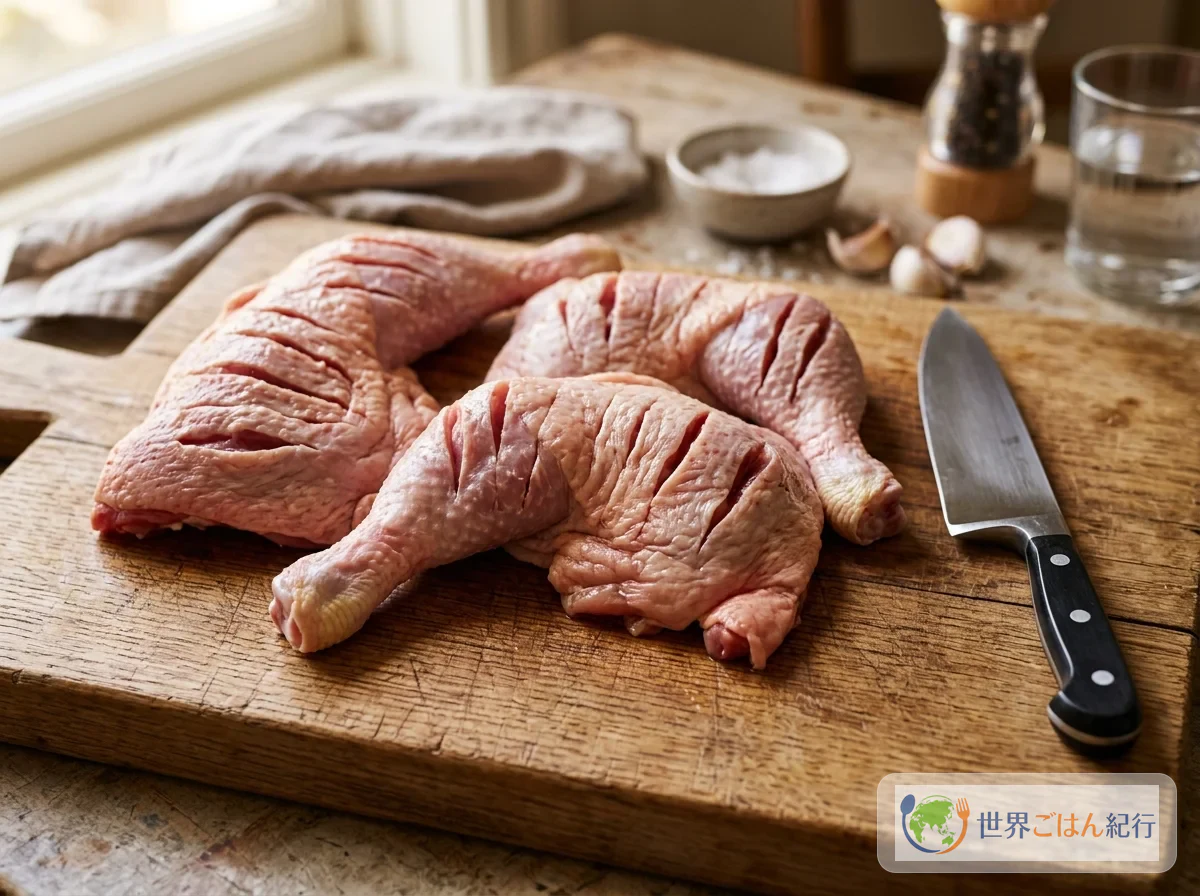
Bone-in thighs are fully cooked at an internal temperature of 167°F (75°C). Beyond that the moisture escapes and the meat dries out. Inserting a thermometer into the thickest part is the reliable way to check. The surface can be charred while the inside is still raw, so do not judge by appearance alone.
Serving, storage and variations
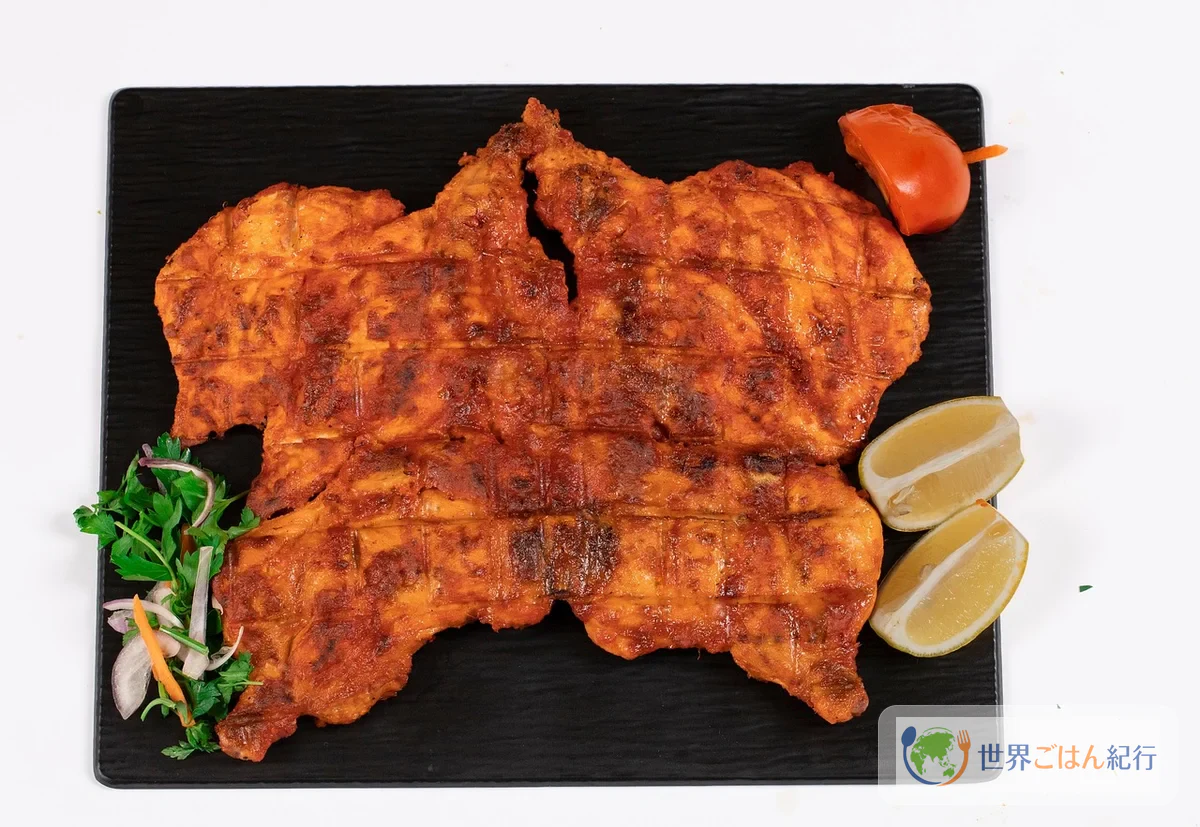
Leftovers keep 2 days in the refrigerator and 2 weeks in the freezer. The marinade itself is versatile and works on many ingredients; cooking methods that pair spices with meat, like kebab and dolma, are found across the Middle East and South Asia. Khichdi and dal bhat are also good ways to round out an Indian home-cooked meal.
Chicken tikka
The difference between tandoori chicken and chicken tikka is the bone. Chicken tikka uses boneless, skinless thigh or breast cut into bite-size pieces, in the same marinade, threaded on skewers and grilled as an appetizer. It cooks in about 25 minutes, faster than tandoori chicken. It is also the ancestor of chicken tikka masala, born in a Scottish curry house in the 1970s.
Vegetarian versions
"Paneer tikka," paneer cheese marinated and baked the same way, is a classic Indian vegetarian dish. "Tandoori gobi" (cauliflower cut into bite-size pieces), mushrooms, potatoes and sweet potatoes suit the marinade too. For a vegan version, replace the yogurt with soy yogurt.
A milder version for children
Leave out the chili powder and cayenne pepper and color the marinade with 2 tbsp of paprika alone. Increasing the yogurt to 9 oz (250 g) makes it milder, and 1 tbsp of ketchup adds a sweetness children find easy to eat.
A shortcut marinade from pantry staples
When you'd rather not gather each spice, mix 1 tbsp curry powder, 4 tbsp yogurt, 1 tbsp ketchup, 1 tsp each of garlic and ginger, 1/2 tsp salt and 1 tsp paprika for a simple tandoori marinade.
Frequently asked questions
Q. The marinade does not turn red. Do I need food coloring?
No. If the color is pale, increase the paprika. Combined with the yellow of turmeric, it makes a beautiful orange-red. Synthetic coloring does not affect taste, and natural pigment gives enough color.
Q. Can I make something new from the leftovers?
Yes. Shred the leftover chicken and simmer it with 7 oz (200 g) canned tomatoes, ½ cup (100 ml) heavy cream, 2 tbsp butter and 1 tsp garam masala, and you have instant butter chicken, the same trick Gujral used.
Q. Can I use a store-bought tandoori paste?
Yes. Store-bought tandoori paste or tandoori seasoning is a convenient option. Commercial products often contain no amchur (dried mango powder) or kasuri methi (dried fenugreek leaves), so adding a small amount of these brings the taste closer to a restaurant's.
Q. What else besides chicken works?
Paneer cheese, shrimp and lamb chops are the classics, as covered in the samosa article. Marinate them for less time than chicken, about 30 minutes to 2 hours.