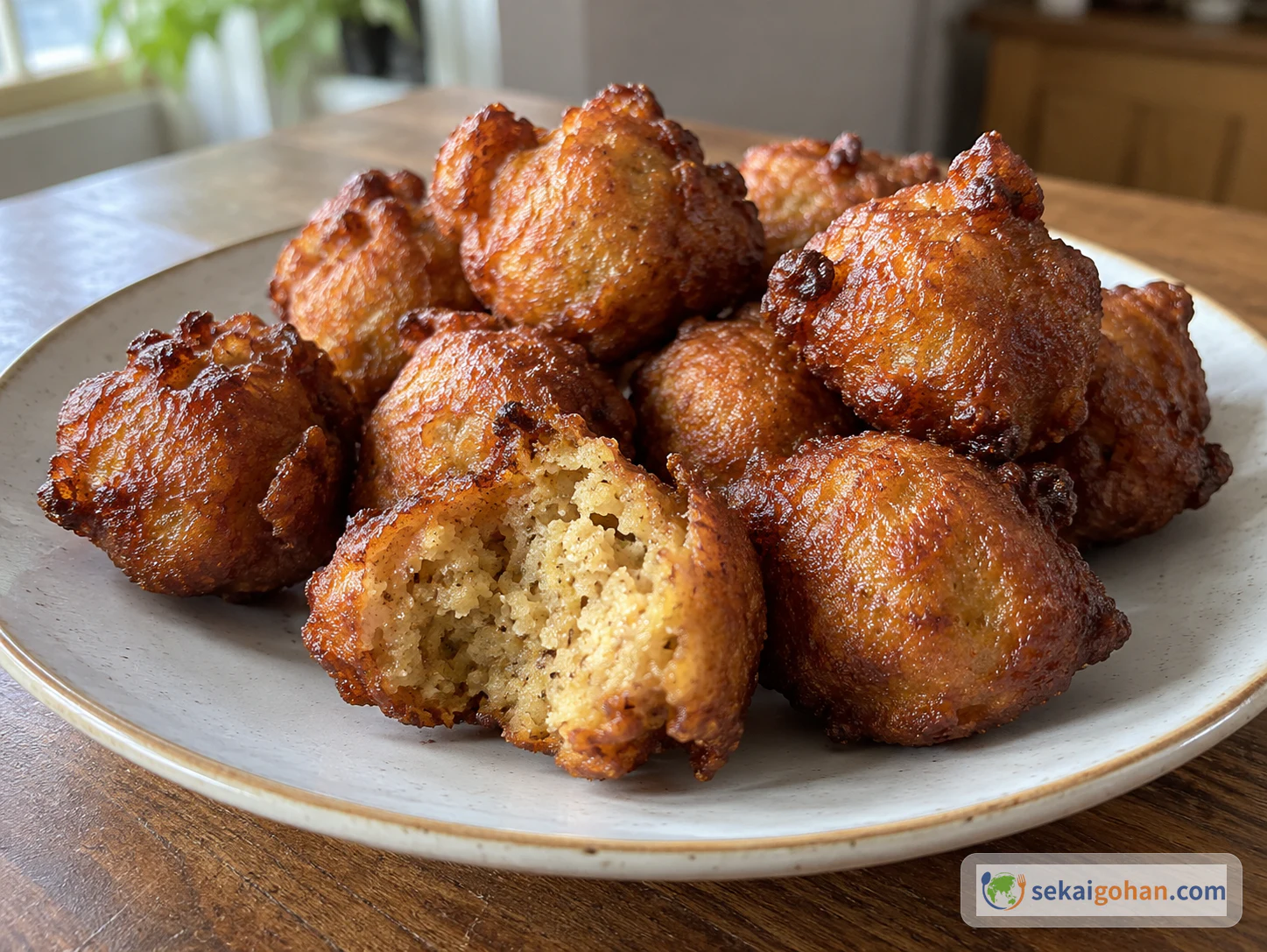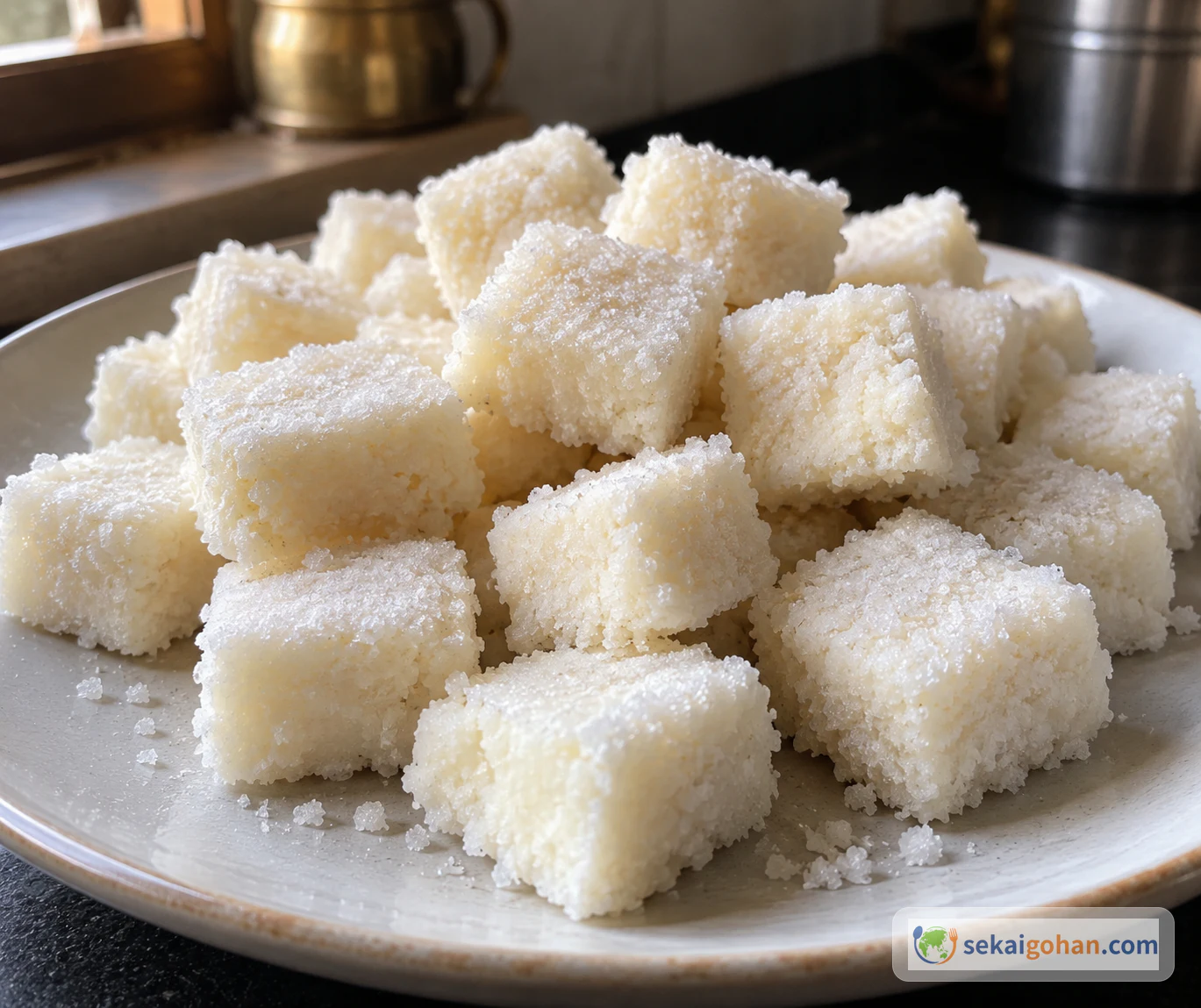
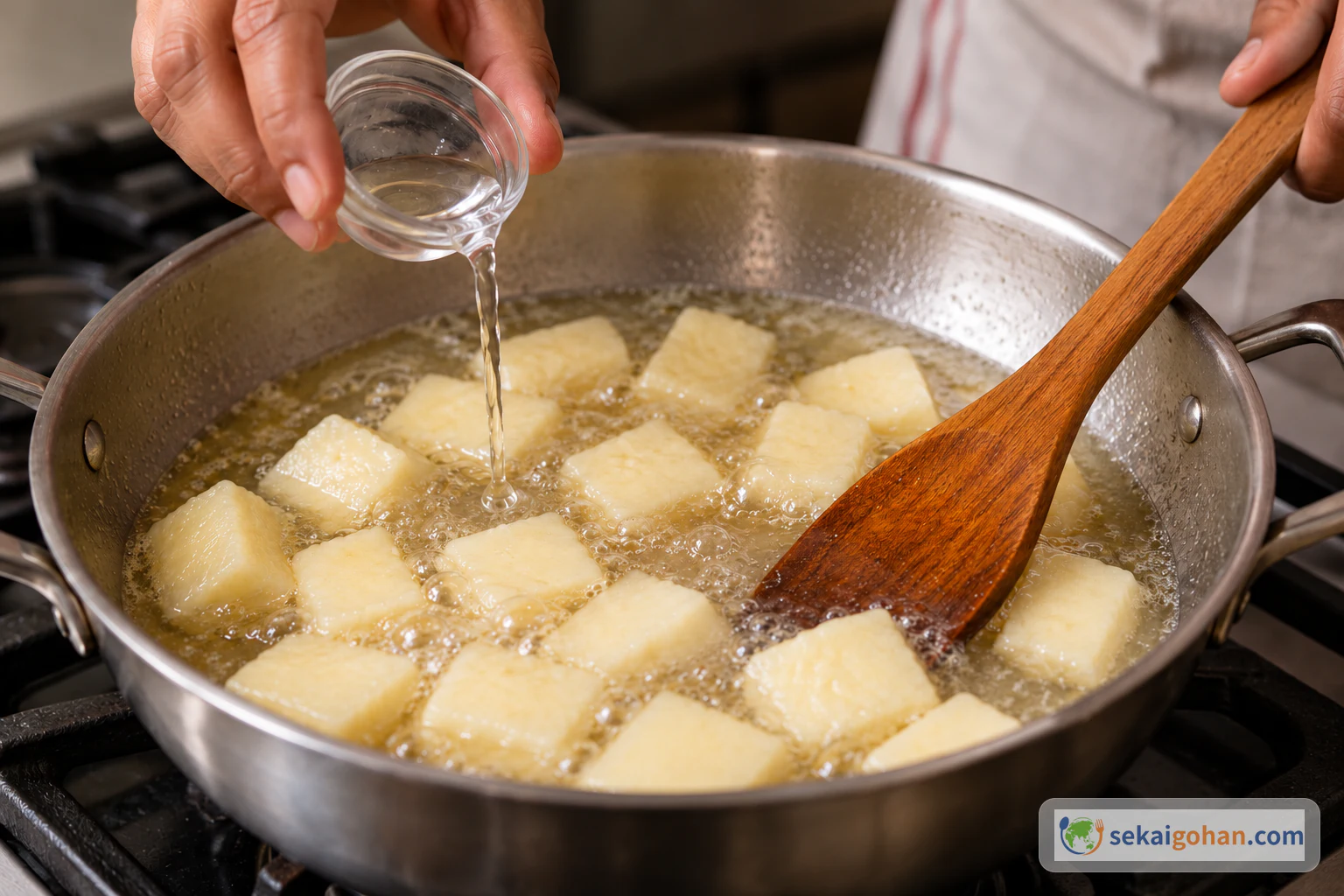
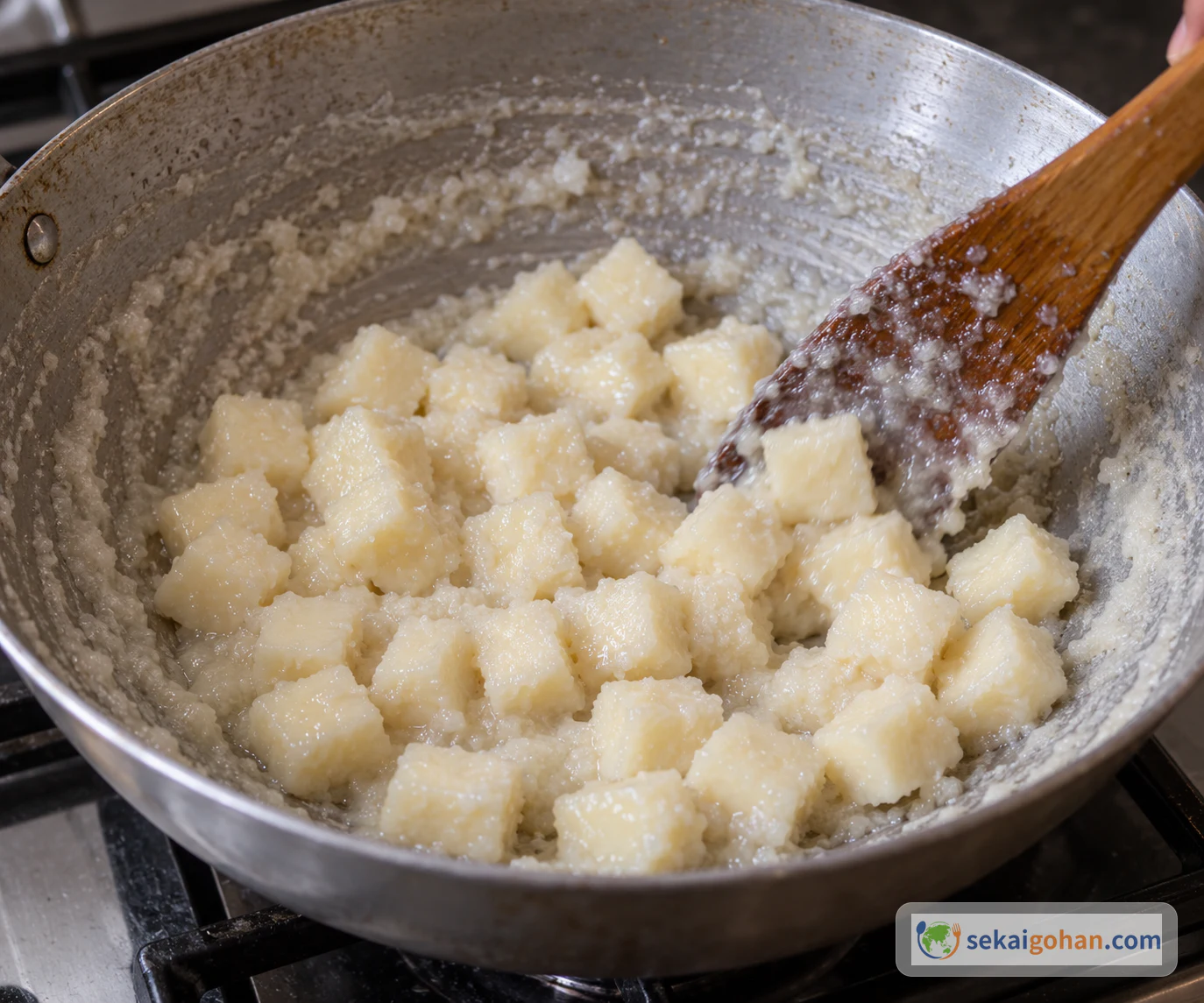
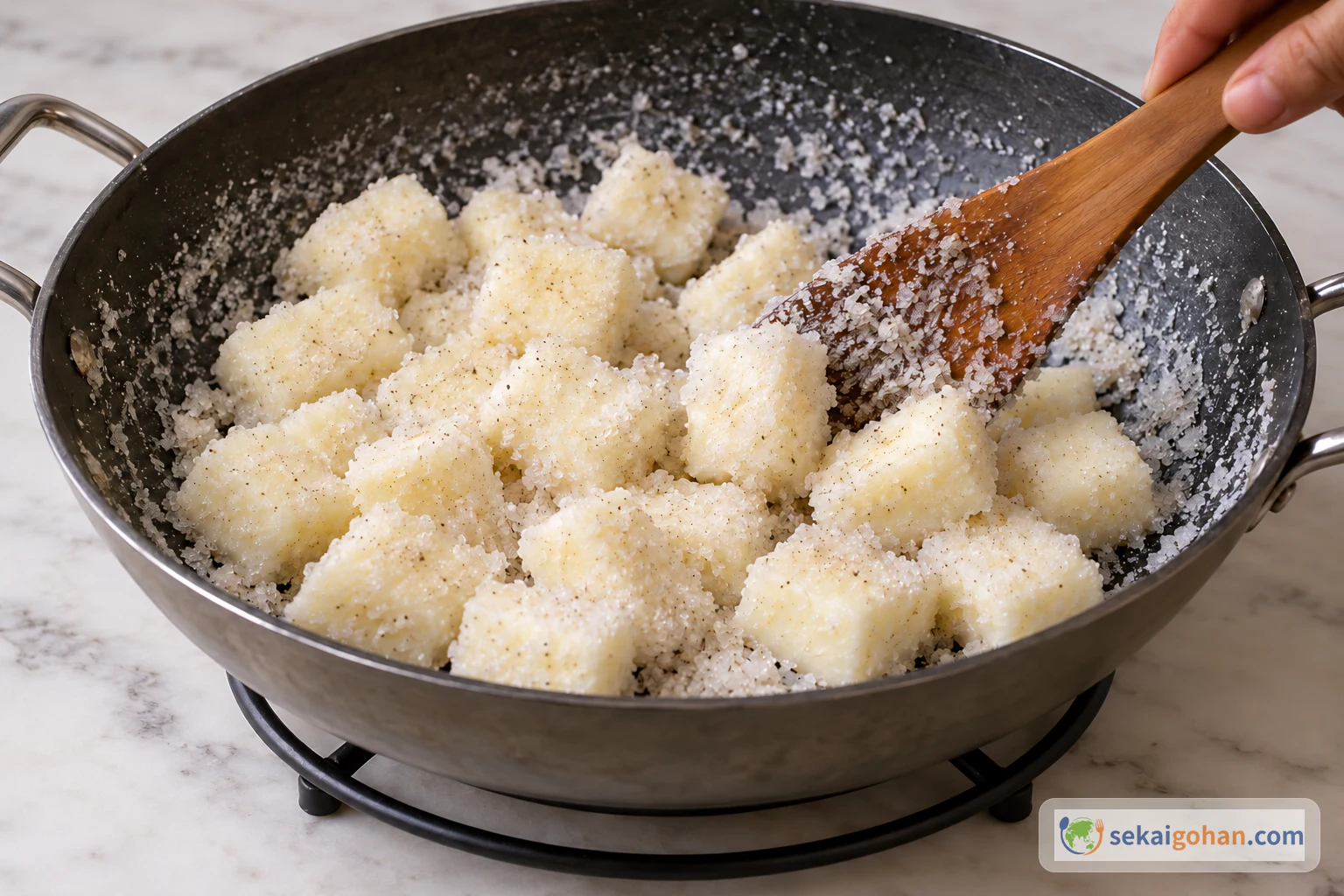
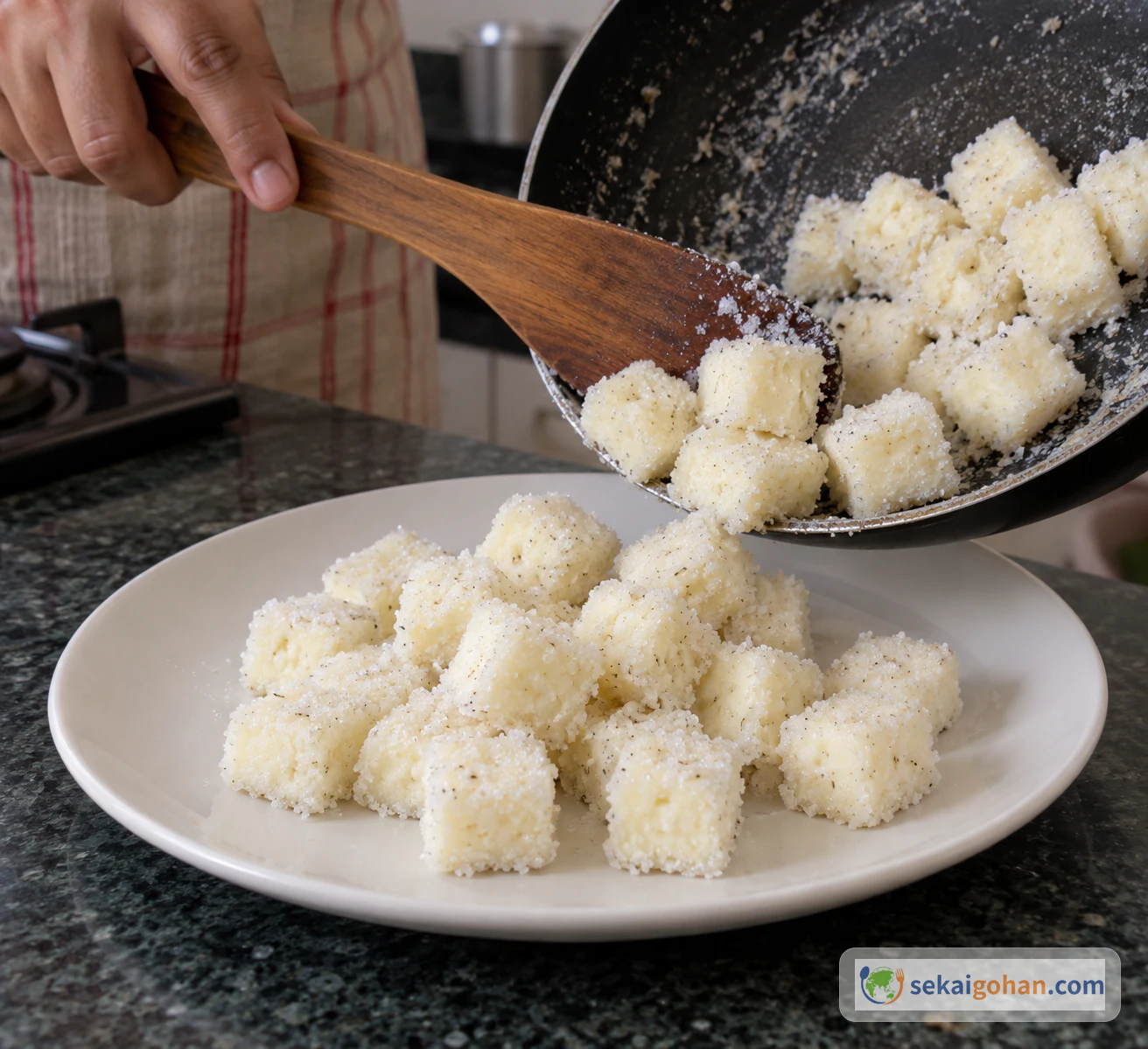
Each cube comes out of the pan looking dusty rather than glossy, a small block of soft cheese wrapped in a dry, matte, white sugar coat. Nothing pools on the plate. That dry finish is what makes Chhena Mudki, a sweet of fresh cheese and sugar from Bhadrak in Odisha, also loved in Bengal as Chena Murki. This version keeps to five ingredients: paneer, sugar, water, cardamom powder and rose water. The cubes have a firm, close-knit texture under their crisp shell of sugar.
Chhena Mudki in Bhadrak, Odisha and Bengal
How the sugar coat forms
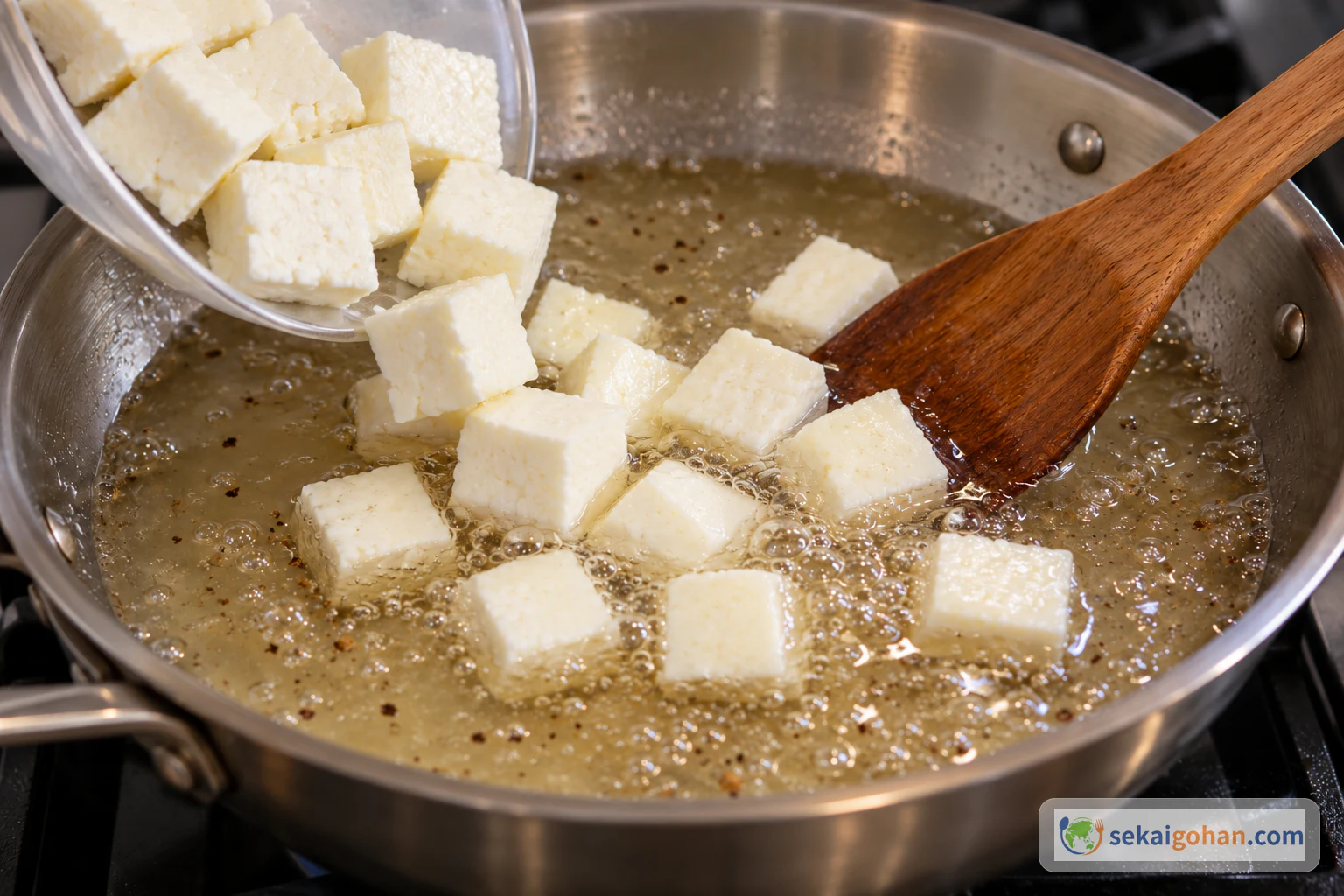
The cubes are first cooked in a sugar syrup. Then the pan comes off the heat, and steady stirring turns that syrup into a crystalline white shell around every piece. That sets it apart from rasgulla, whose round chhena balls are cooked in syrup and stay soaked with it.
Roots in Bhadrak
Bhadrak district counts Chena Mudki among its famous sweets, alongside Palua Ladu. An older form of chhena mudki was one of the cakes made for Bhadrak's seafarers and traders: roasted cottage cheese with sugar, ghee and rice powder. Its method and proportions have not come down to us.
Chhena Murki as it is known today originated in coastal Bhadrak and is now found across Odisha. Pieces of cheese, cut round, in cubes, cuboids or other shapes, are combined with a thick milk-and-sugar preparation, and the sweet turns up at weddings and feasts. The version here is a Bengali one, and paneer murki is sold in Odisha and other regions too. For more dishes from across the country, see India.
You will see Chhena Mudki, Chena Mudki, Chhena Muduki, Chhena Murki and Chena Murki. The version made with paneer is also called paneer murki. Searching with several spellings brings up more recipes.
Ingredients (4 servings)
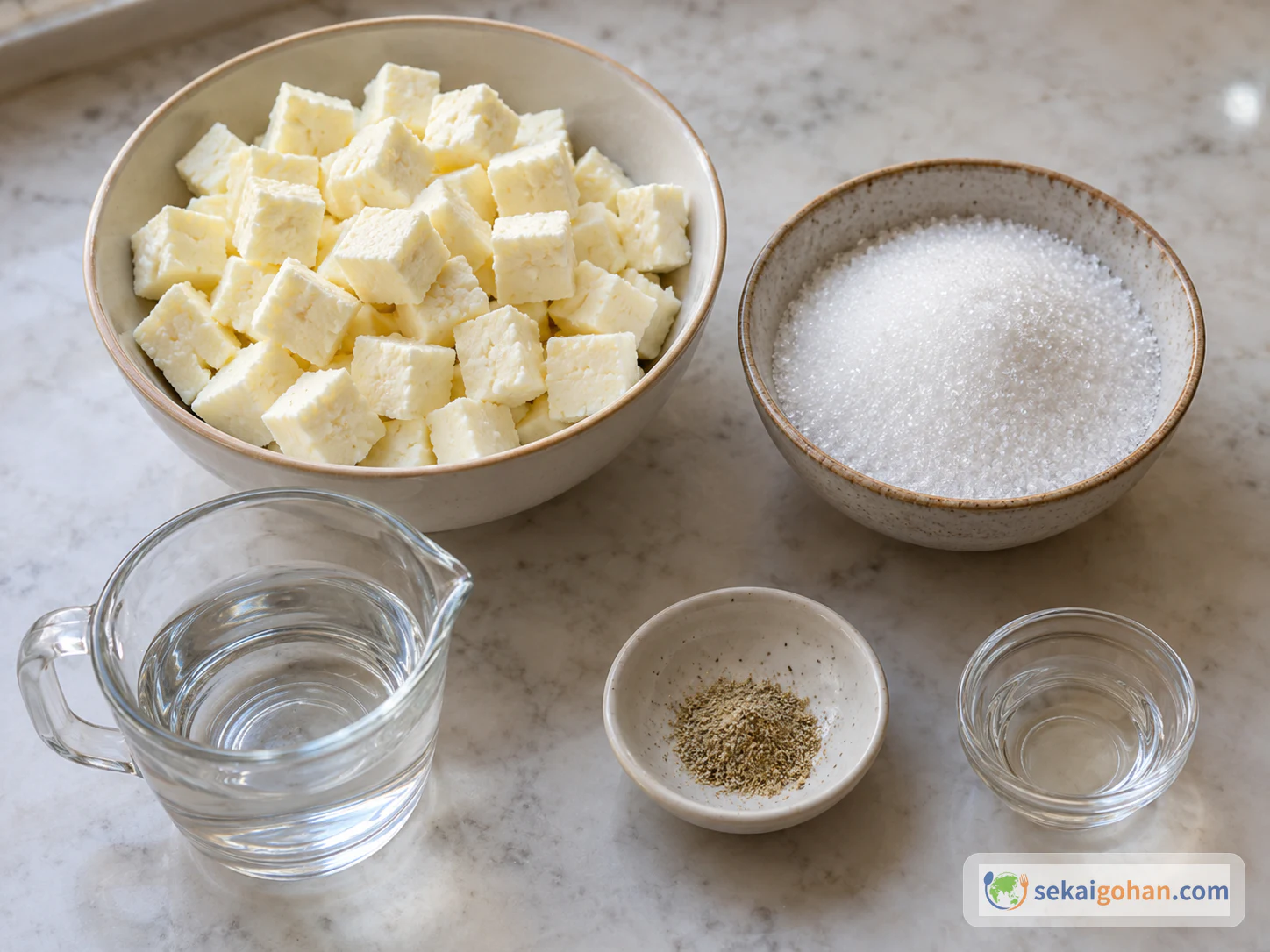
1 cup = 250 ml.
The recipe uses no ghee, frying oil, semolina, milk, nuts, saffron, food coloring or kewra.
Equipment
- Knife and cutting board
- Wide pan or heavy, shallow pan
- Wooden spatula or heatproof spatula
- Measuring cup and measuring spoons
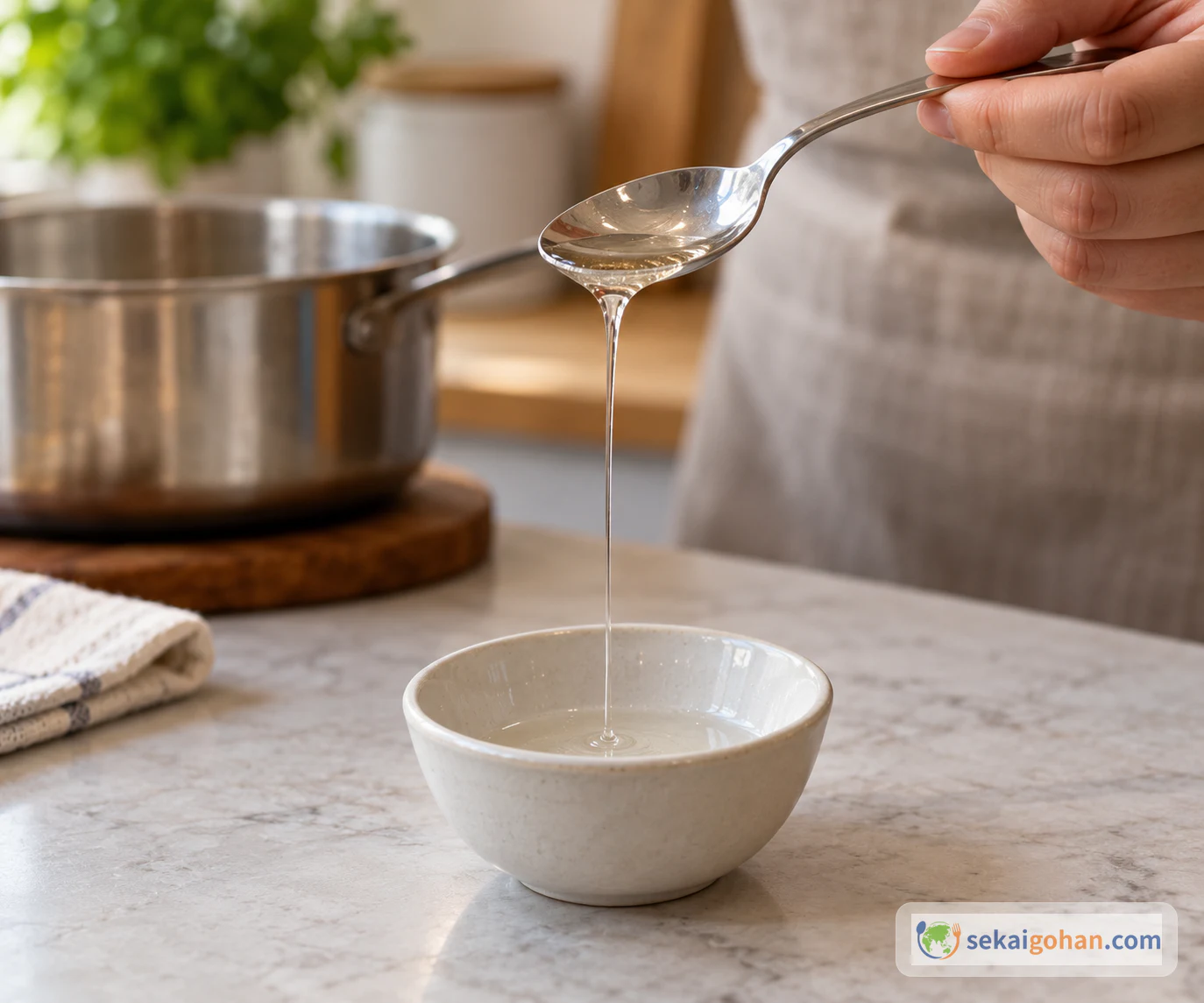
- Small spoon and small bowl, for looking at the syrup
- Heatproof trivet or stand to rest the hot pan on
- Plate for the finished cubes
You don't need a sugar thermometer or a frying pot. Judge the syrup by how it looks, not by a temperature.
Choosing Paneer for Chhena Mudki
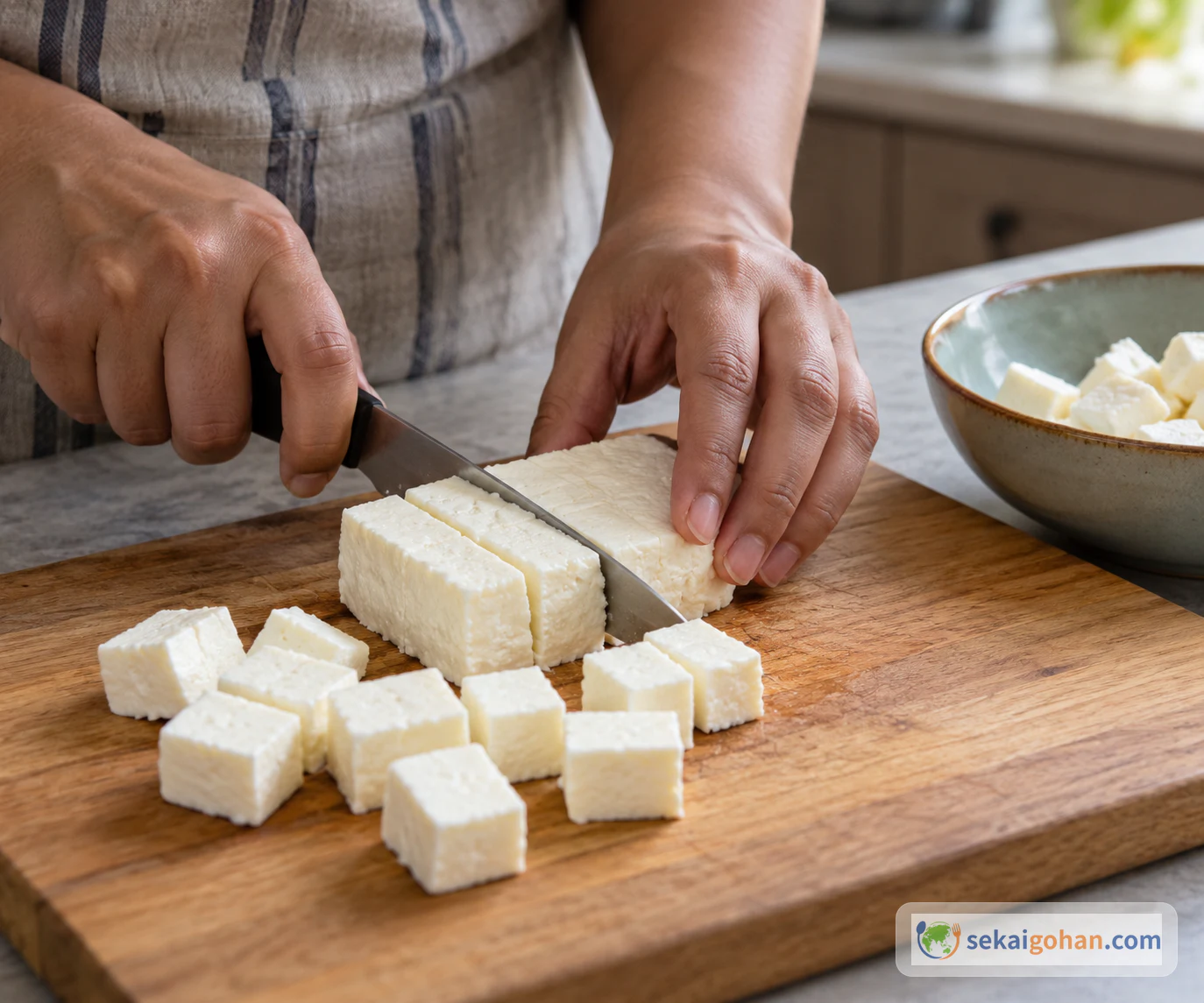
Buy the softest, freshest paneer you can find. Sweet-shop paneer is ideal, and ordinary shop-bought paneer works too, though hard, refrigerated, packaged paneer is less suitable. Cardamom and rose water carry the flavor, so keep both.
Paneer and chhena are close relatives. Both start as hot milk curdled with acid, with the curds separated from the whey. Chhena is then hung in muslin to drain on its own, which leaves a soft curd, while paneer is drained in muslin and pressed to push out extra water. So 8 oz (225 g) of paneer isn't the same as 8 oz (225 g) of loose, freshly made chhena.
Sugar syrup that has boiled down is much hotter than boiling water and sticks to skin. Never touch the syrup in the pan, or syrup on a spoon, with your fingers. Use a long-handled spatula, and have the trivet ready before the pan comes off the heat. This sweet is made from paneer, a milk product.
Method: From One Thread of Syrup to a Dry White Coat
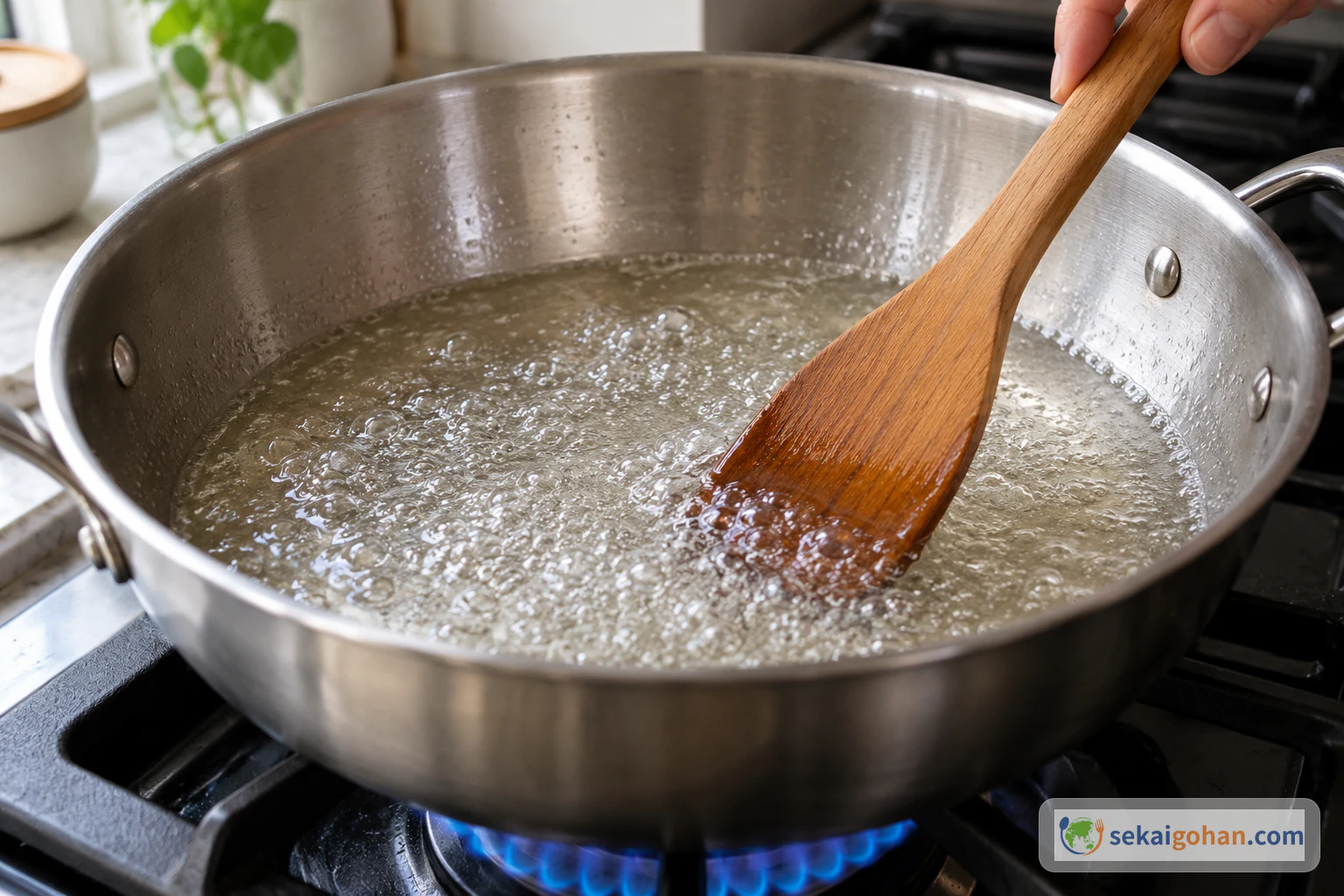
Allow 5 minutes of prep and 15 minutes of cooking (20 minutes in total) for 4 servings. Boil the syrup for 1–2 minutes and cook the paneer for 5 minutes. Judge the reduction and drying stages by eye.
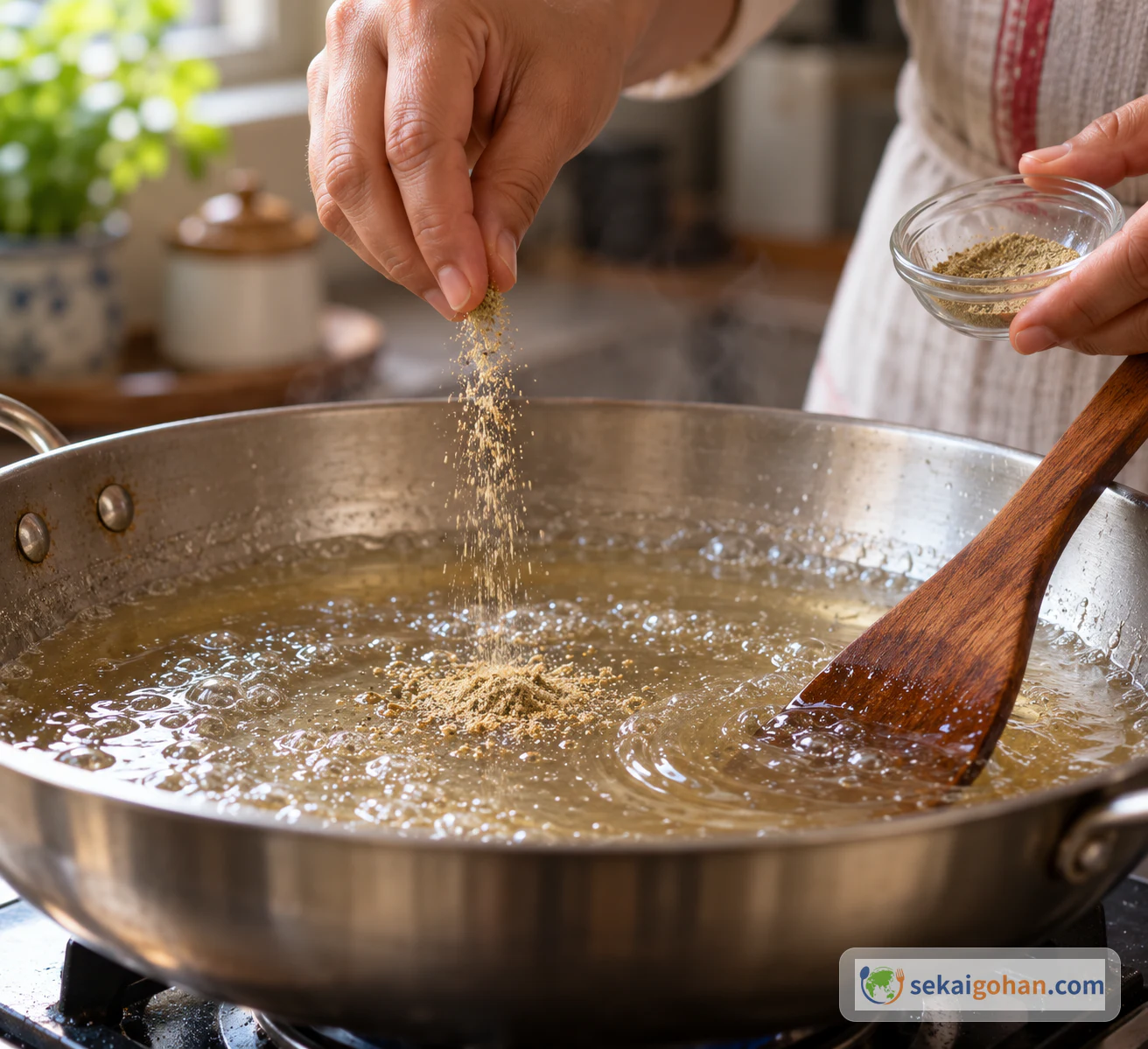
Add the rose water right after the 5-minute paneer stage, before the final reduction.
Chhena Mudki Problems and Fixes
| What you see | What to look at | What to do |
|---|---|---|
| Clear syrup still pools around the cubes at step 8 | The moisture has not cooked off yet | Stay on medium heat and keep stirring until the syrup turns thick and white before moving to step 9 |
| The coat is still sticky or glossy after the pan comes off the heat | The drying stage isn't finished | Keep stirring on the trivet until the syrup dries into a matte coat on every cube |
| Some cubes are coated more thickly or cooked differently from others | Mixed cube sizes | Next time, cut the paneer into pieces of similar size |
| The paneer seems firm and tight rather than soft | The type of paneer | Look for fresh or soft sweet-shop paneer next time |
| The result looks like cheese soaking in syrup | The coat never formed | Keep cooking and stirring until the syrup dries into a white coat |
Storing and Varying Chhena Mudki
Let the coated cubes cool, then keep them chilled at up to 43°F (4–6 °C). They're a fresh dairy sweet, so treat them like one.
Once you have the plain white version down, there's room to play. The sugar-coated cubes are sometimes finished with extra flavor, color or nut flakes; kewra is one such flavor.
Frequently Asked Questions
Can I use homemade chhena instead of paneer?
The recipe is written for paneer. Chhena is softer because it isn't pressed, and the recipe gives no amount of chhena to replace the 8 oz (225 g) of paneer or any guide to how it behaves in the syrup.
Why does the rose water go in before the syrup turns white?
That's the order in this method. Some cooks add the rose water later, once the syrup has turned thick and white.
Do I need a thermometer for the syrup?
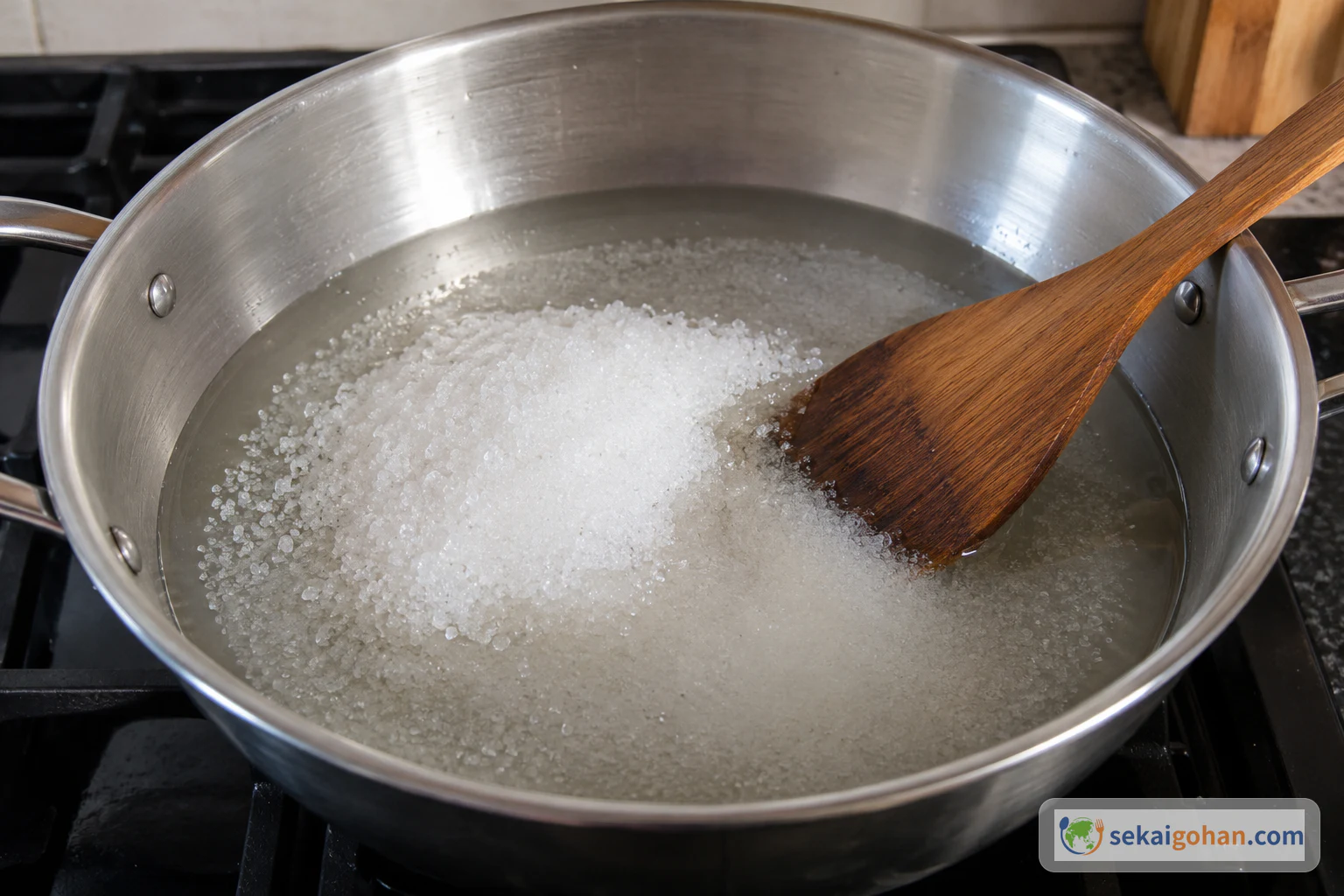
No. You're looking for one-thread consistency after 1–2 minutes of boiling on high. Let a small sample cool, then watch it fall from a spoon. Never touch the hot syrup.