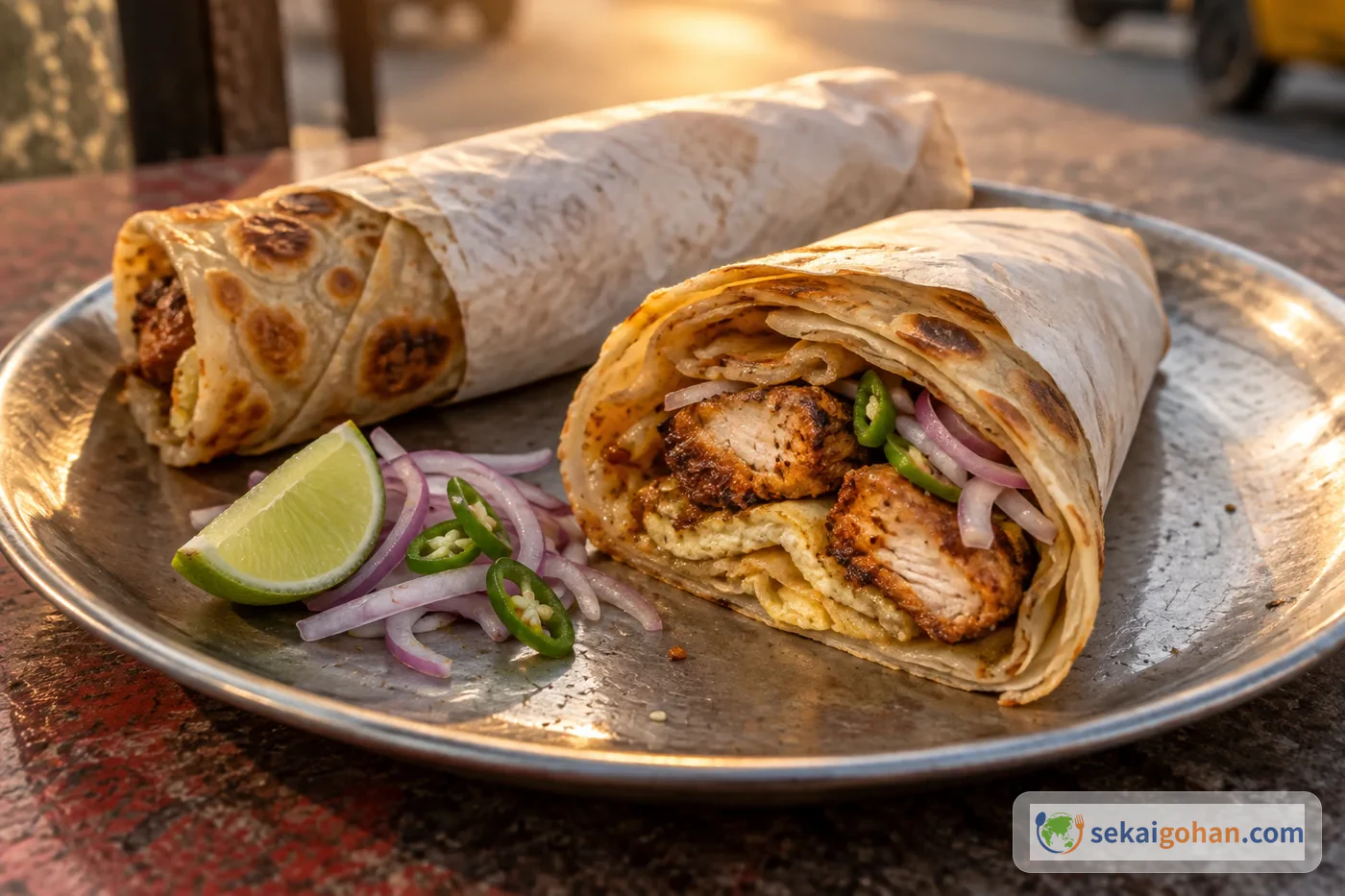
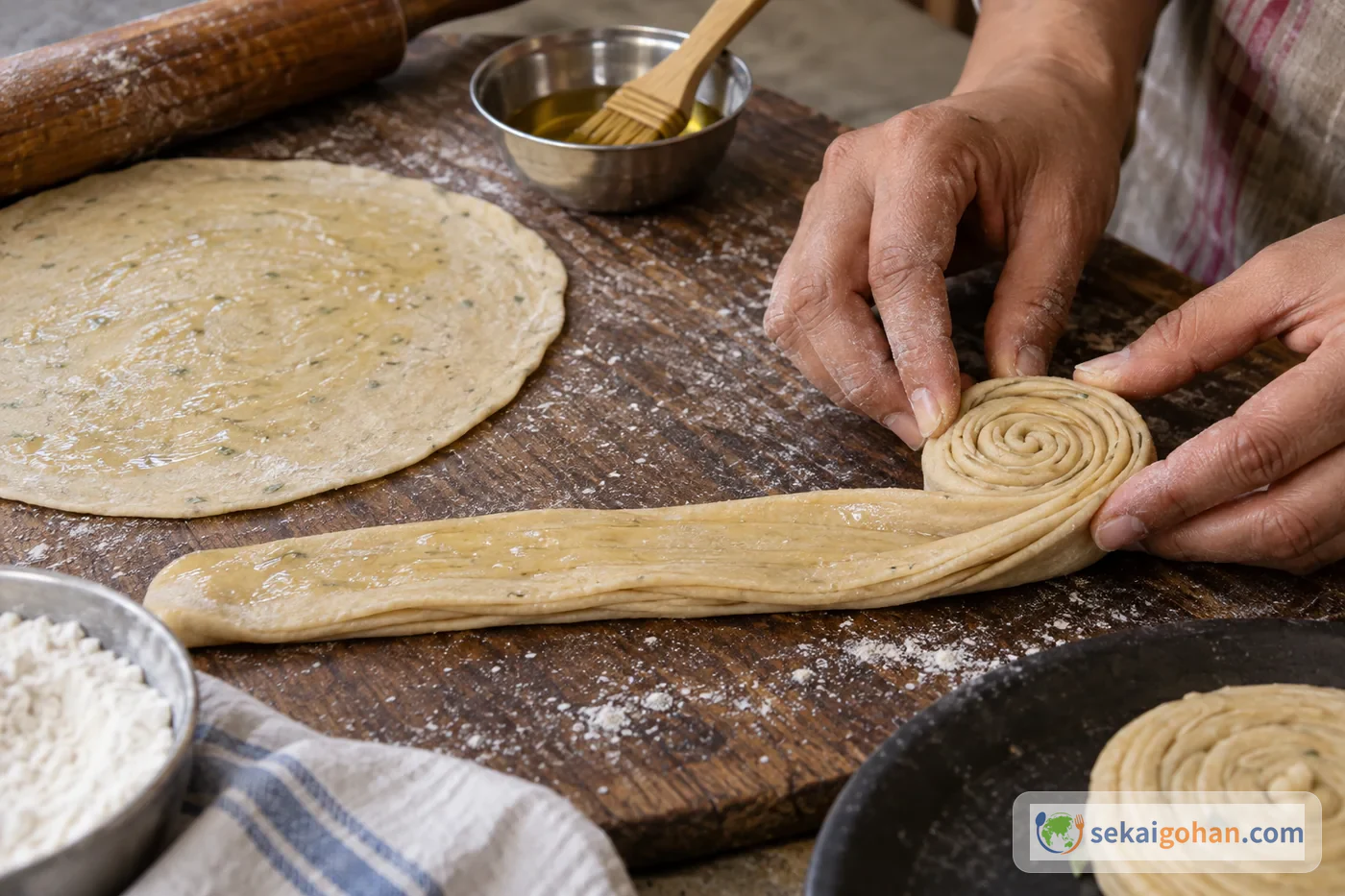
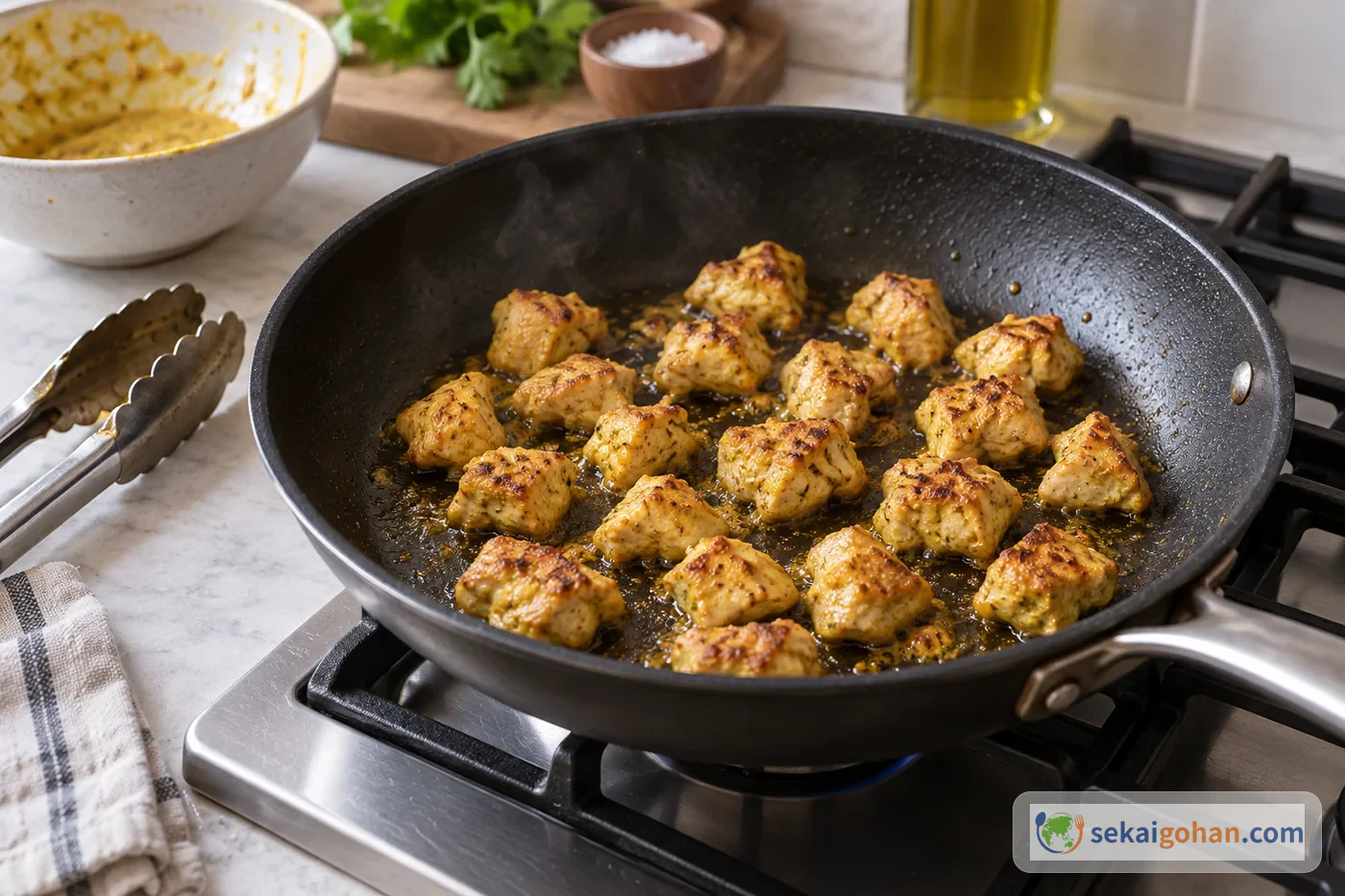
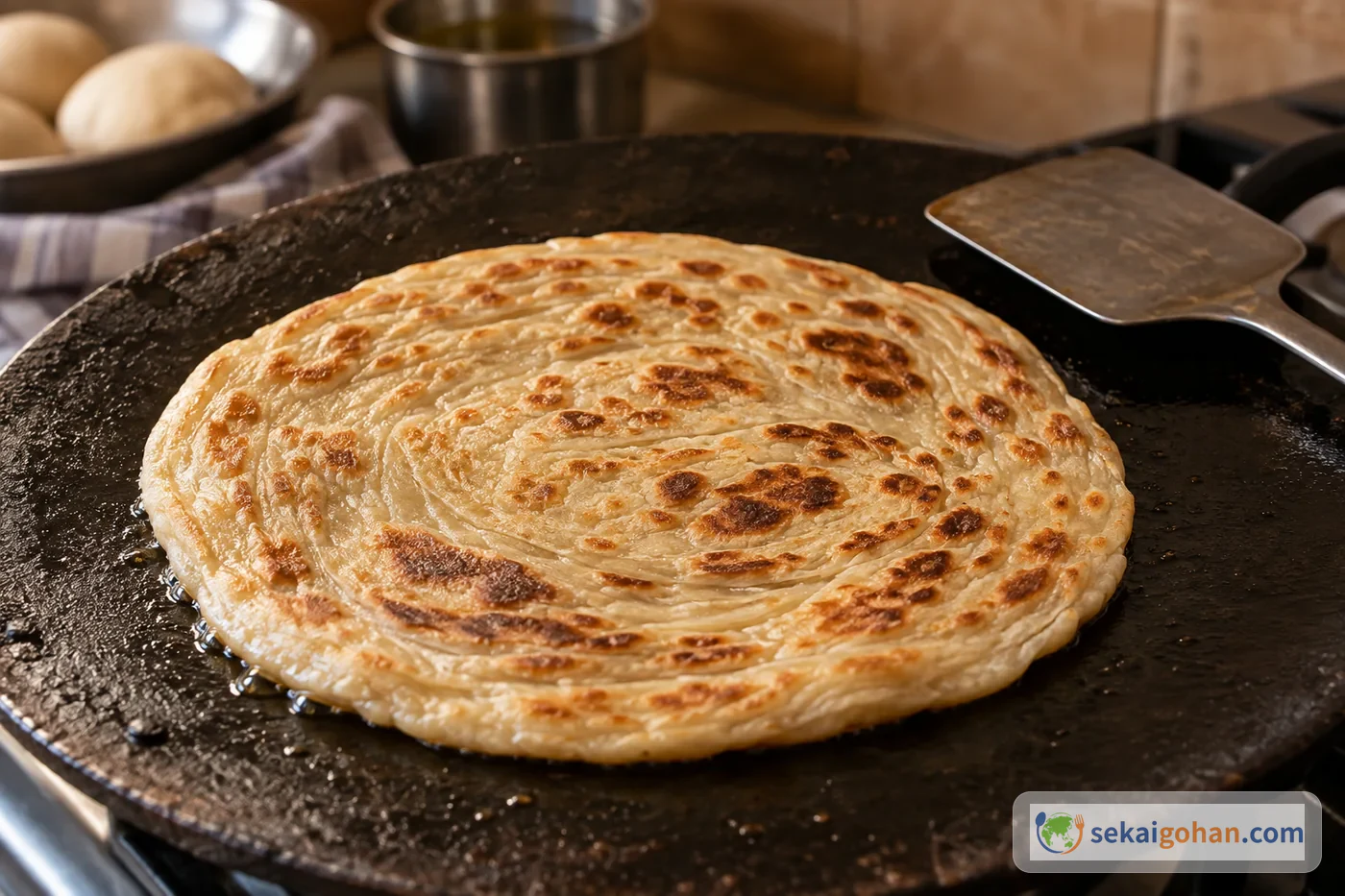
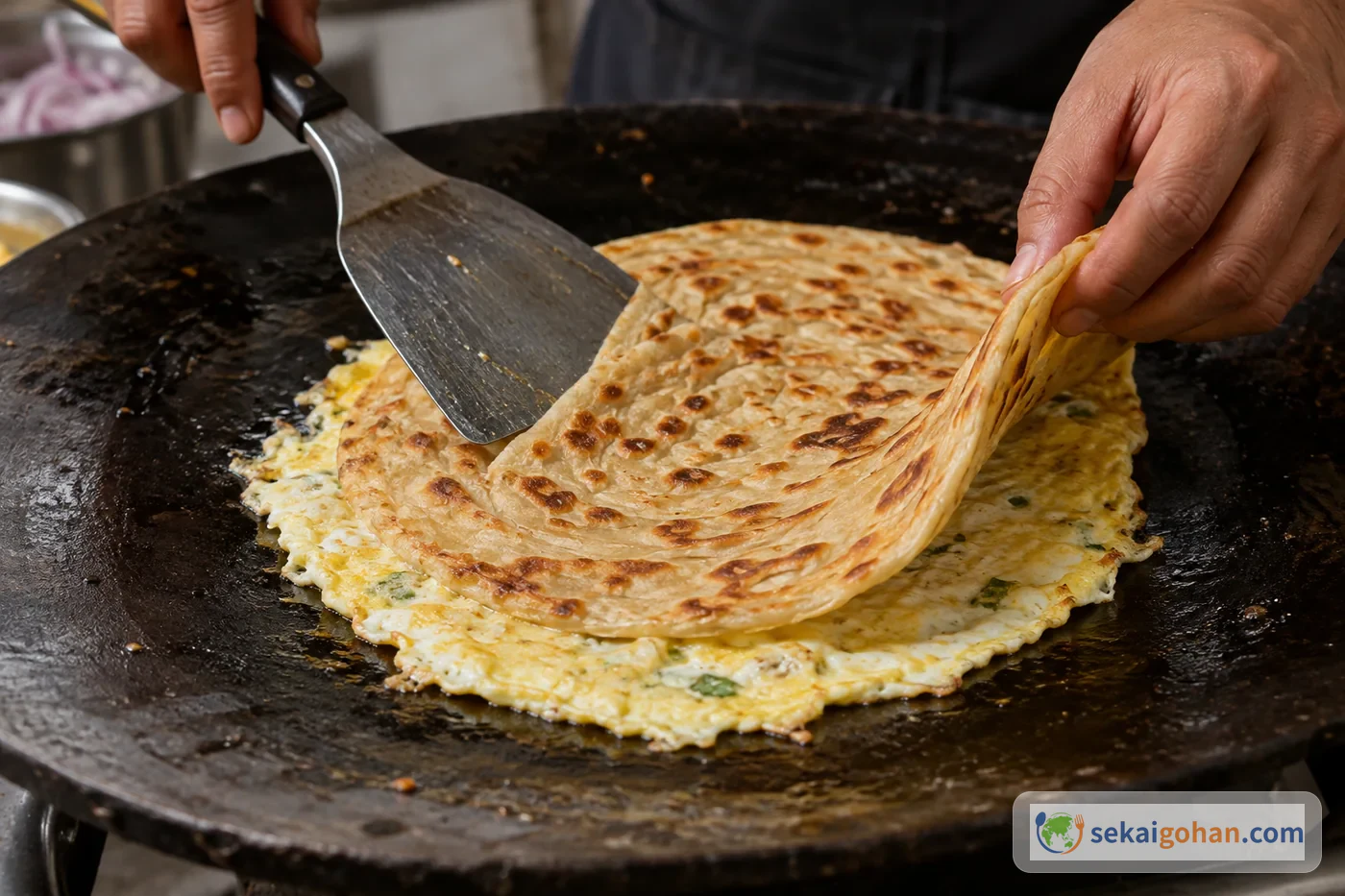
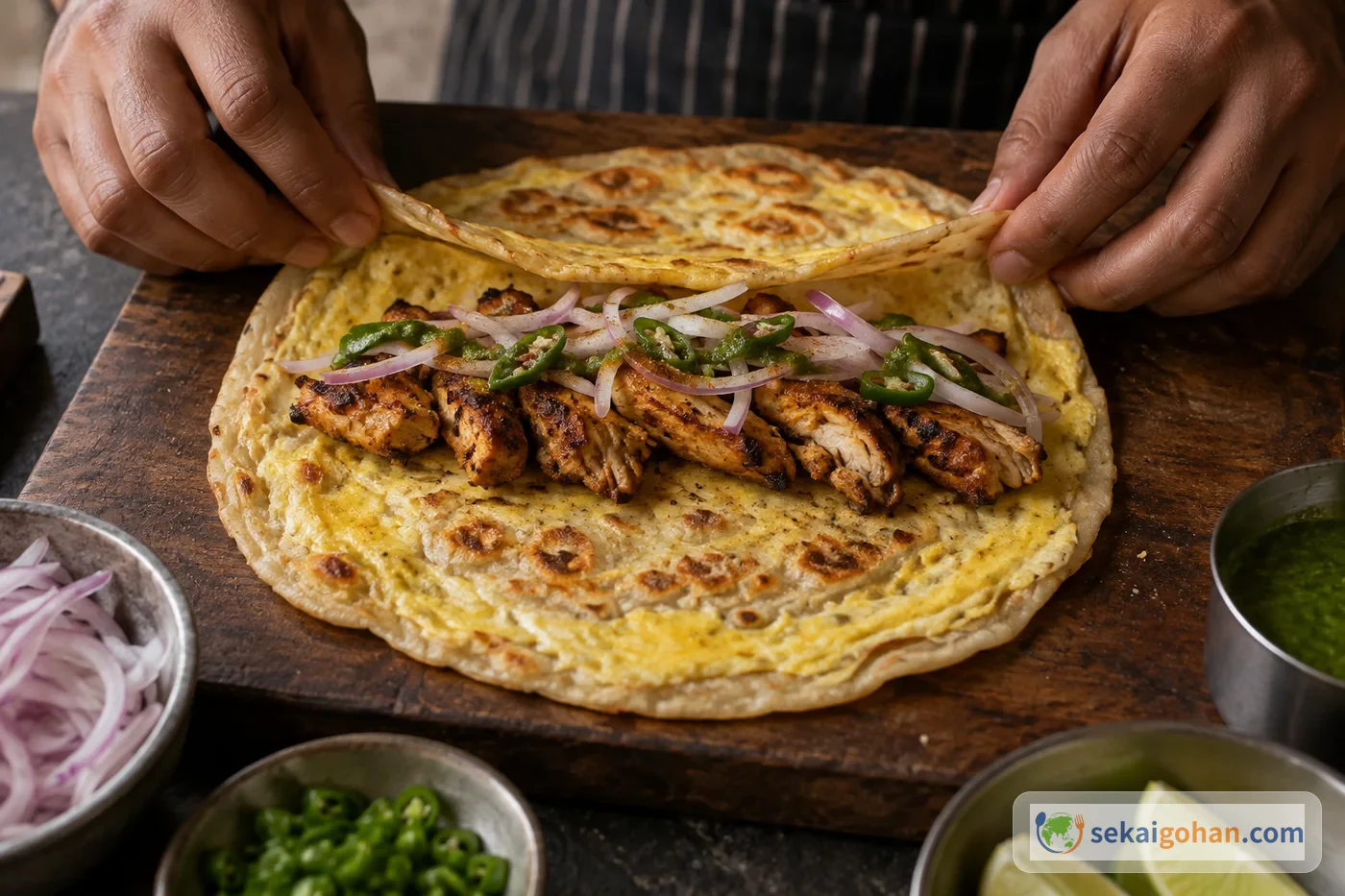
Spread a thin layer of egg on a hot griddle and lay a fresh paratha over it. Once the egg sticks to the dough, flip it, add charred chicken kebab, onion and lime, and roll the whole thing up in paper. Kolkata's kathi roll is street food you eat with one hand: hot dough, the toasty flavor of grilled meat and the crunch of raw aromatics, all in one wrap. An ordinary frying pan works fine at home. Roll the paratha thin, layer it with oil, cook the chicken in small batches and finish with a squeeze of lime. That gives you a satisfying roll that doesn't lean on sauce.
Kathi Roll in Kolkata
A kathi roll is kebab laid on a paratha and rolled up. In its basic form, skewered meat goes onto a thin flatbread with onion, green chili and lime, and the roll is wrapped in paper. In another version, an egg is cooked first and stuck to the paratha, so you get meat, egg and aromatics in a meal you can hold in one hand. The name comes from kathi, meaning skewer. Cooks kept the word even after they switched from bamboo skewers to iron ones.
Nizam's in Kolkata opened in 1932 and is often credited as the birthplace of the dish. That claim, along with the tale of a British customer who wanted to eat without getting his hands messy, belongs to folklore. Nobody has found records from the time that settle who invented the roll or when. The real appeal is the idea itself: take the kebab off the skewer and wrap it in bread with aromatics, so you can eat it walking down the street.
Fillings vary from shop to shop in Kolkata. Some keep it to onion, green chili and lime. Egg, amchur, chili sauce and extra vegetables all depend on the shop and on the order. Some people grew up calling it an "egg roll," and home versions often add cucumber and ketchup. In Kolkata, lines form after dance class and during festival season.
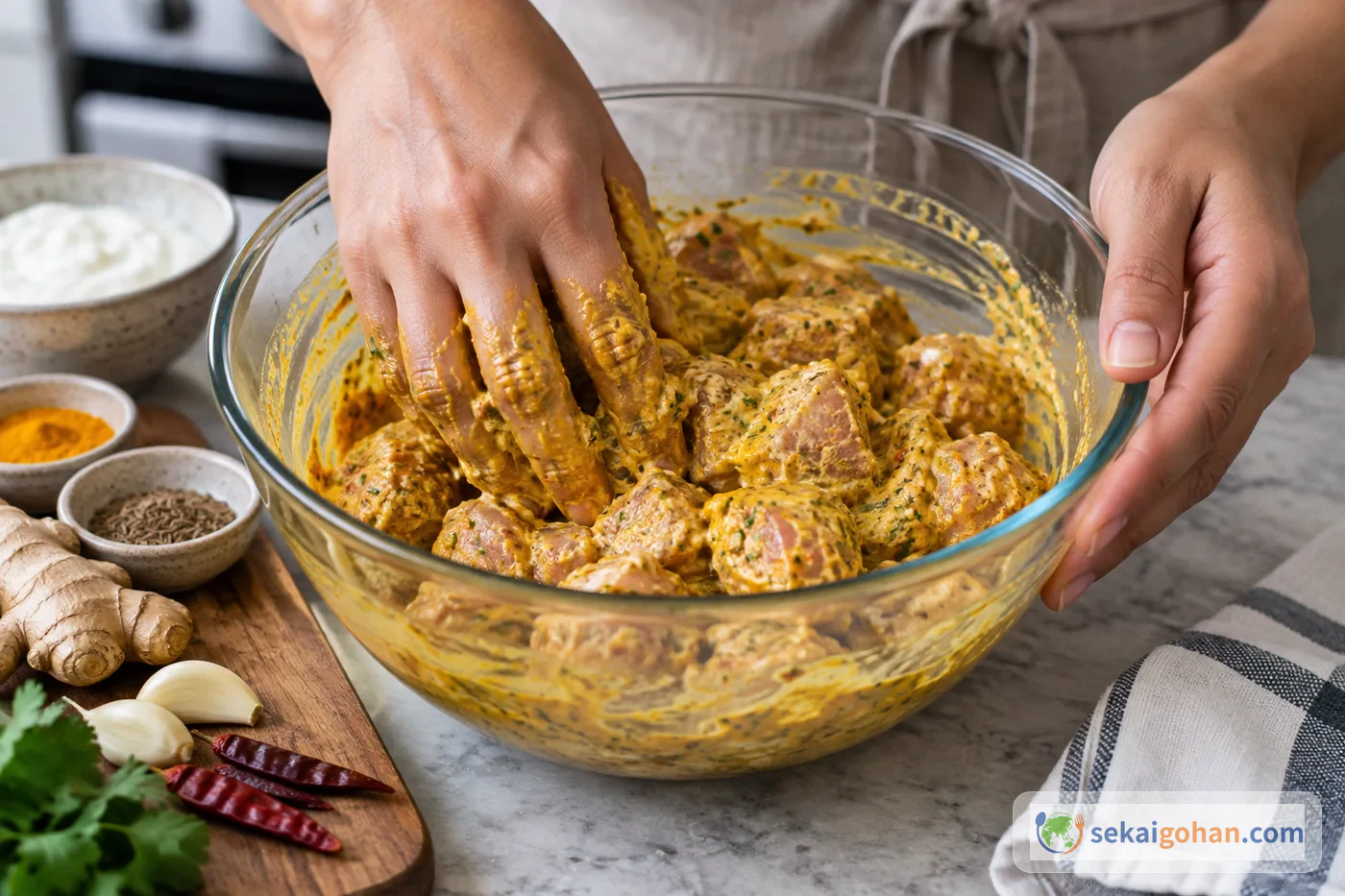
This home version uses chicken thighs marinated in yogurt and spices, a layered paratha, egg, onion and lime. A shop's griddle and the smoke from the skewers are hard to copy at home, so the aim is to bring together the browning on the chicken, the layers in the paratha, and the sour crunch of raw aromatics in a single bite.
Ingredients (makes 4 rolls)
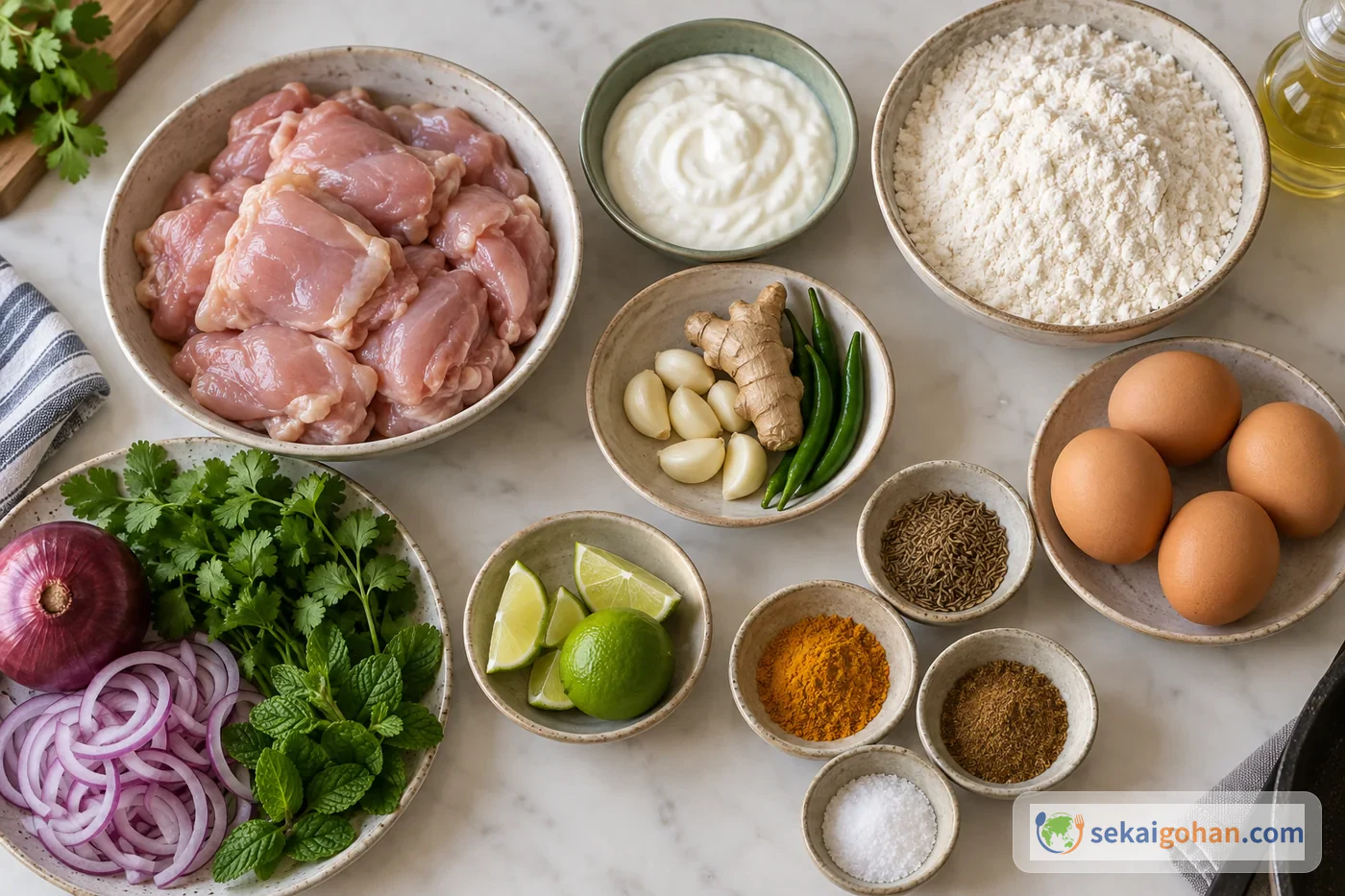
This recipe contains chicken, egg, wheat and dairy (yogurt). Store-bought garam masala and chili powder differ in ingredients and production lines from product to product, so if you have allergies, check the labels.
Amchur is a seasoning made by grinding dried mango, suited to adding sourness without adding the moisture of lime. The chutney here can be made with lime alone. If you'd like to use amchur, buy a small amount unless you plan to use it in several Indian dishes.
Choosing Ingredients and Tools for Kathi Rolls
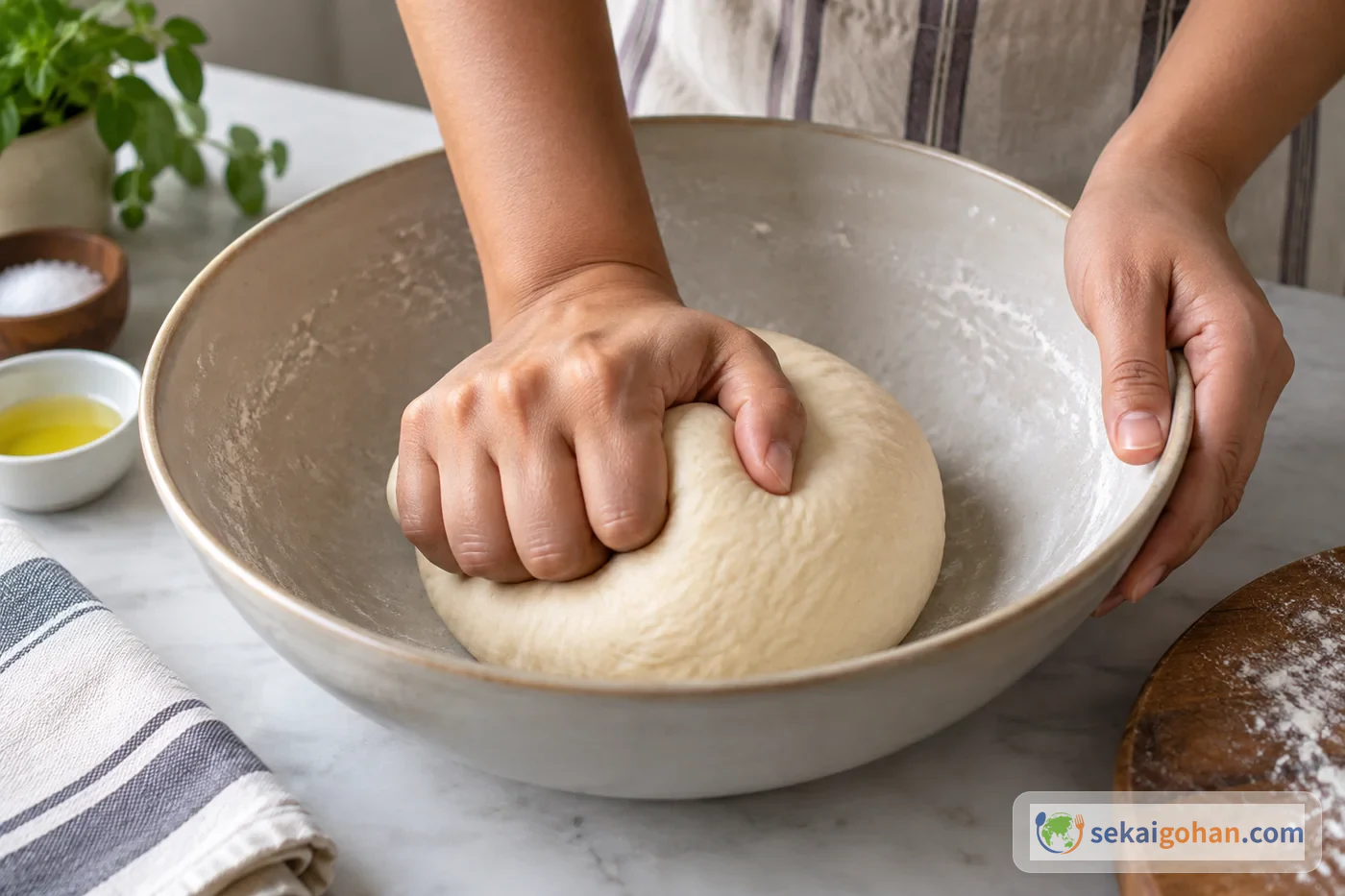
Many recipes use maida (refined wheat flour) for the paratha. At home, medium-strength flour (chūrikiko, similar to all-purpose) is the easiest to handle. If you can't find it, mix equal parts cake flour and bread flour, which tears less when rolled than cake flour alone. It still isn't maida, so expect a slightly lighter paratha with layers that separate a little differently. Add the water gradually and stop when the flour comes together into a soft dough that clings slightly to your fingers.
Amchur (dried green mango powder) adds a dry sourness that lime alone can't quite give, and it does so without adding moisture. For a one-off batch, lime stands in well. Add it to the chutney 1 tsp at a time and stop before the herb aroma fades.
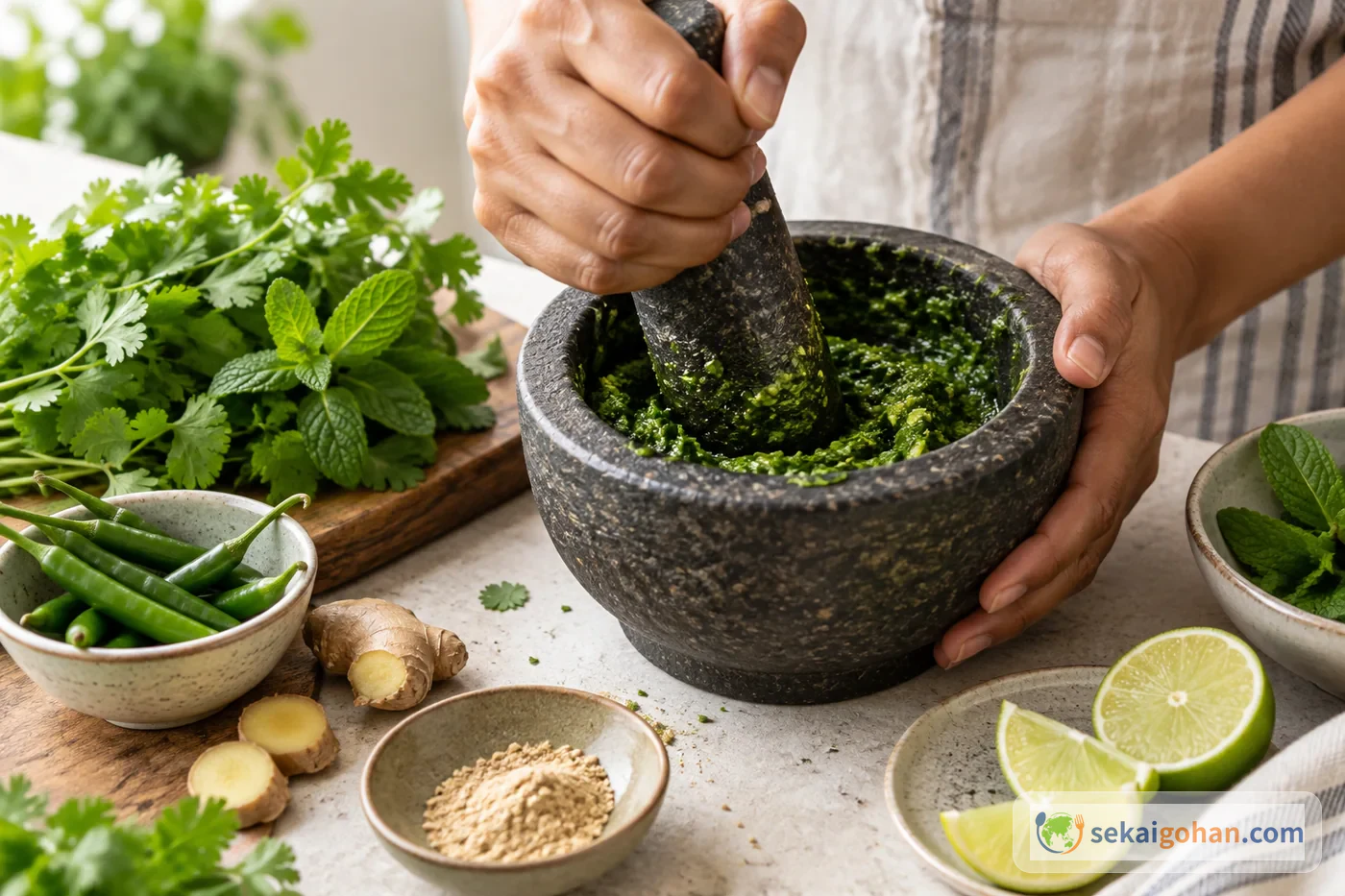
For the chutney, a knife is enough if you only need to chop green chili and ginger fine. If you want a dense paste where the herbs and lime blend into one, crush them in a mortar, which leaves fewer bits of leaf. A granite mortar and pestle is worth buying if you make chutneys or ginger-garlic paste often. For a single batch, a knife, a mortar you already own or a small blender will do.
Kathi Roll Troubleshooting
Dough and paratha
If the dough shrinks back as you roll it, it needs more rest, not more kneading. Cover it with a cloth for 10 minutes and roll again without pressing hard. Cracked edges mean the dough is dry. Wet your hands, stroke the surface and let it rest 5 minutes, and it will come together more easily.
A tough paratha usually comes from overcooking or drying out after cooking, not from the flour. Take it off the heat as soon as spots appear on both sides, then stack the parathas and wrap them in a cloth. If one has cooled and hardened, sprinkle a few drops of water in the pan, cover and warm over low heat for 20–30 seconds. Water poured straight onto the dough makes it sticky, so let steam do the work.
Chicken
In a home frying pan, the key is not to crowd the chicken. Use a pan big enough to cook it in two batches, so the meat browns instead of steaming as it releases moisture. If it turns white as if boiled, take it out, wipe off the moisture, heat the empty pan and cook again in halves. If the meat is already cooked through, give it only a short sear in the hot pan to brown it.
Cut the meat to about 2 cm and cook until the center reaches 75°C (167°F) for at least 1 minute. Color alone won't tell you, so check the center. Without a thermometer, cut open the largest piece and make sure it's white all the way through. If you see any pink or clear juices, keep cooking over low heat.
Egg and rolling
If the egg stays in the pan instead of sticking to the paratha, it was spread too wide, or the dough went on after the egg had fully set. For the next one, brush on a thin layer of oil, lay the paratha down as soon as the edge of the egg begins to set, and press lightly all over with your palm or a spatula. If the dough tears when you roll it, use less filling and wipe the moisture off the onion and cucumber first.
Variations, Serving and Storage
Fillings
The meat and paratha pairing stays, but what you add or leave out changes the roll's character. Use the street-stall version as a guide and adjust the vegetables and heat to what you have.
- Egg chicken roll: the basic form of this recipe. Stick egg to the paratha and wrap with grilled chicken, onion and lime.
- Mutton roll: swap the chicken for small pieces of lamb. Cut them to an even thickness and cook thoroughly to the center. Lamb has a strong aroma, so extra onion and lime help pull it together.
- Paneer roll: use cubed paneer instead of chicken, with more green chutney. Indian vegetarian recipes also pair paneer with a chutney of green chili, mint and coriander. Amchur and chaat masala both work for sourness.
- Potato roll: coarsely mash boiled potatoes and season with cumin and salt. It makes an easy meatless snack, and the crunch of cucumber keeps it from feeling heavy.
- Egg-only roll: leave out the chicken and use 2 eggs to give the dough some body. More onion, lime and chutney keep the flavor from going flat.
If you don't like heat, leave out the green chili, go light on the chutney and add more lime. Start with small amounts of aromatics so the spices in the meat and the toasty dough still come through.
At the table
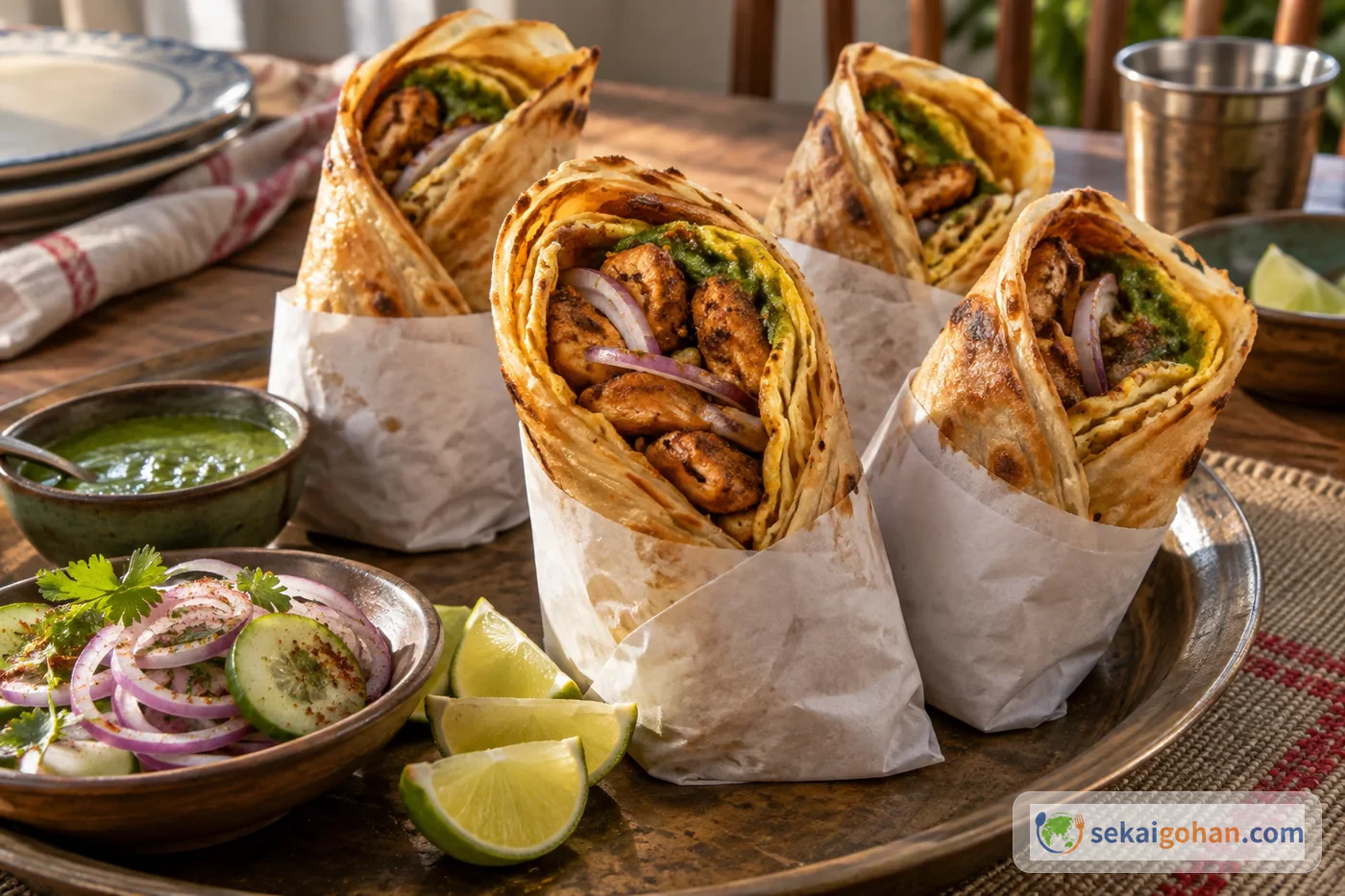
Eat the rolls fresh, while the layers of dough are still loose and the toasted egg and hot meat are still steaming. Wrapping them in paper keeps the filling from falling out the bottom, the way it's done at street stalls. Sour pickles or thinly sliced vegetables make good sides. Serve the chutney, lime and green chili separately so everyone can set their own heat and sourness.
Storage and reheating
To make ahead, store the chicken, parathas and aromatics separately. The chutney's moisture softens finished rolls, so don't store them assembled. If you're packing them to go, wrap the fillings and dough separately and assemble just before eating. Don't leave cooked chicken out at room temperature to cool for long. Put it in a clean airtight container, refrigerate and eat it by the next day. Reheat it all the way to the center, and don't put reheated meat back in the refrigerator again and again.
Once the parathas are cool, stack them with paper between each one. They keep in the refrigerator until the next day, or freeze them for longer. To warm one in a frying pan, cover it over low heat for a little steam, then take the lid off at the end to crisp the surface again. Keep cutting boards and chopsticks that touched raw chicken away from cooked meat and vegetables, and wash them with detergent afterward.
Nutrition (approximate, per roll)
About 620 kcal, 1.25 oz (36 g) protein, 23 g fat, 2.25 oz (63 g) carbohydrates, 3 g fiber and about 2.2 g salt equivalent. The figures vary with the cut of chicken and the amounts of flour, oil and chutney.
FAQ
Can I use store-bought tortillas instead of paratha?
Yes, though the texture and aroma change. Tortillas are lighter and have fewer layers, so brush them thinly with oil, cook them in a frying pan and coat them with egg to make them easier to wrap. For the flaky, layered character of a real paratha, use the dough in this recipe.
Can I make the chutney in a blender?
Yes. Put the herbs, ginger, green chili, salt and lime in a small blender, and add water 1 tsp at a time only if the blades won't turn. Too much water makes the roll soggy, so stop when the chutney drips slowly from a spoon. Chopping everything fine with a knife and mixing in lime works too.
Can I use chicken breast?
Yes. Breast has less fat than thigh and dries out more easily, so cut it to an even thickness and stop cooking as soon as the center is cooked through. The yogurt marinade helps it hold on to moisture, but it won't save overcooked meat.
Further reading
- Tandoori chicken: compare it when you want to change how the chicken is marinated and cooked.
- Mughlai paratha: a paratha dish from the same Bengal region, with a filling cooked inside.