Chilli Gobi: Crisp Battered Cauliflower Tossed Dry in a Chilli Sauce

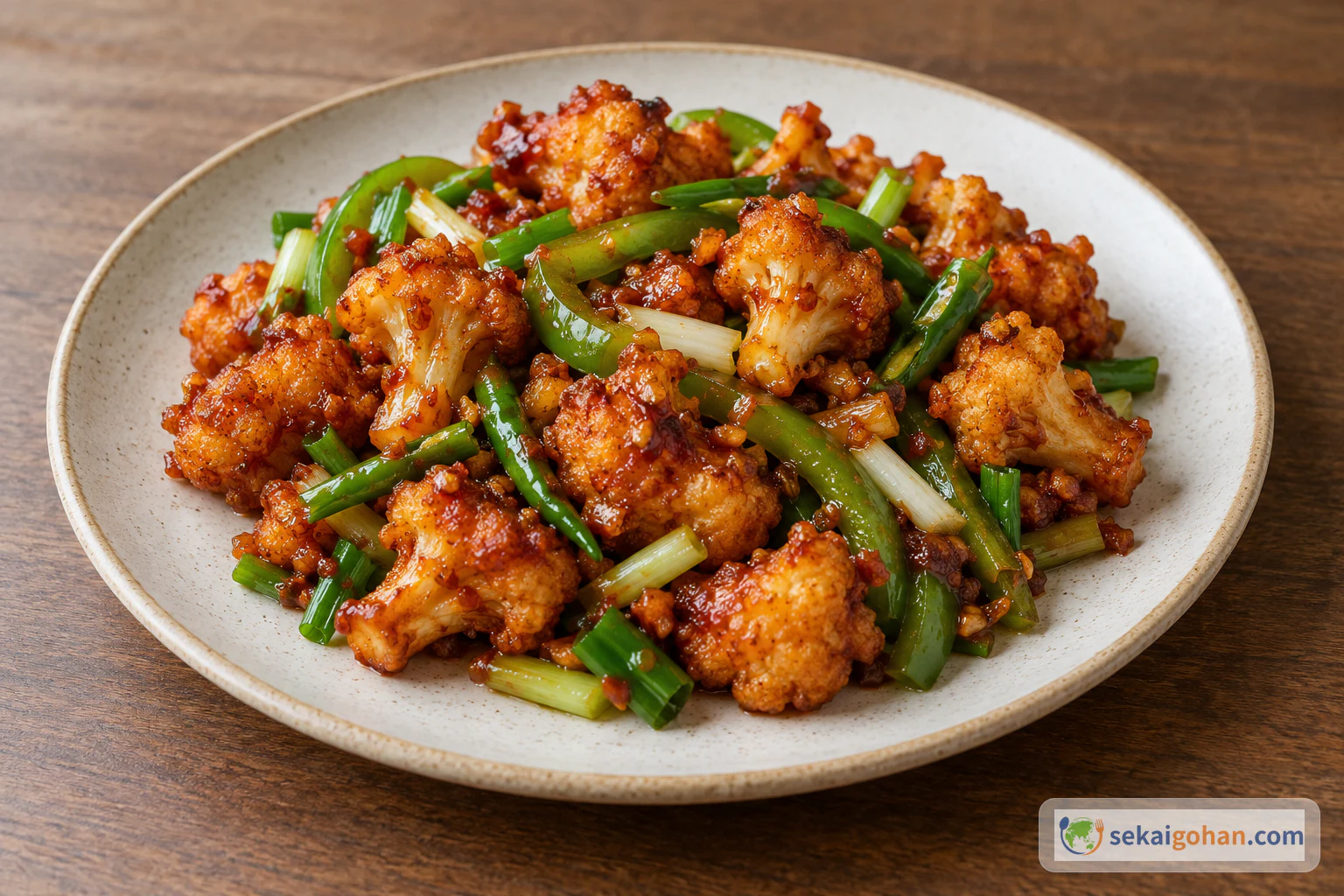
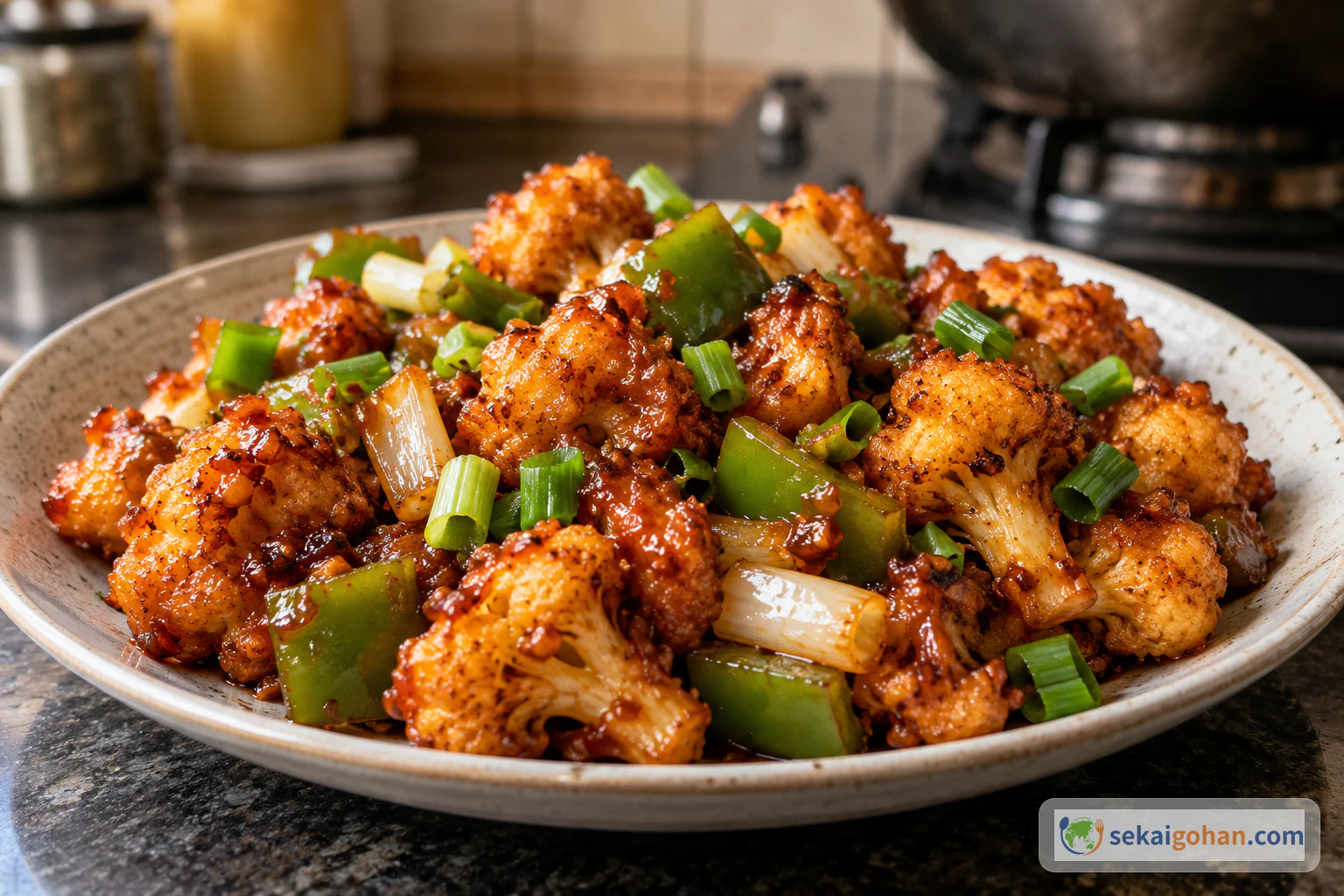
A finished plate of Chilli Gobi, the dish front and center
Serves
4 servings
Cuisine
Indian

How to make the dry version of Chilli Gobi (Cauliflower Chilli), an Indo Chinese starter. Small cauliflower florets are blanched for 5 minutes, coated in a spiced flour-and-corn-starch batter and fried in batches. They are then tossed quickly with sesame oil, ginger, garlic, green chillies, spring onion, capsicum and a light soy and sweet red chilli sauce coating. Includes context on Indian Chinese food, ingredient choices and fixes for common problems.

Cooking flow

Cooking steps

STEP11 / 8

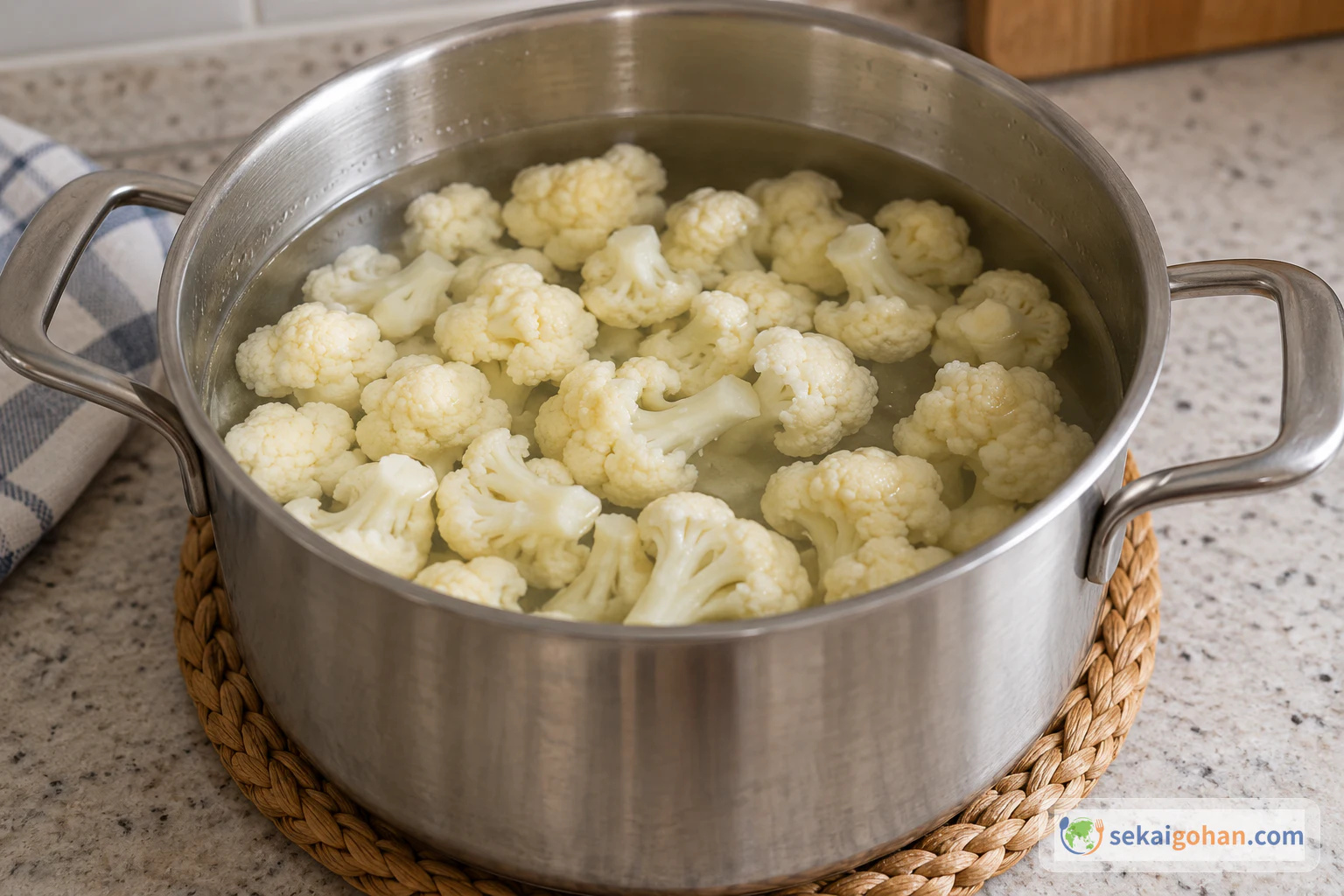
Blanch the florets for 5 minutes off the heat

Cauliflower florets added to salted water after the heat is turned off, blanching for 5 minutes
The water has stopped boiling and the pot sits off the burner while the florets blanch

Rinse the cauliflower and separate it into small florets. Bring 2.5 cups water and 1/4 tsp salt to a rolling boil in a saucepan. Turn off the heat and move the pot off the burner to the counter or a trivet. Then add the florets and leave them in the hot water for 5 minutes. Drain them thoroughly, so that little water clings to the florets before they meet the batter.

STEP22 / 8

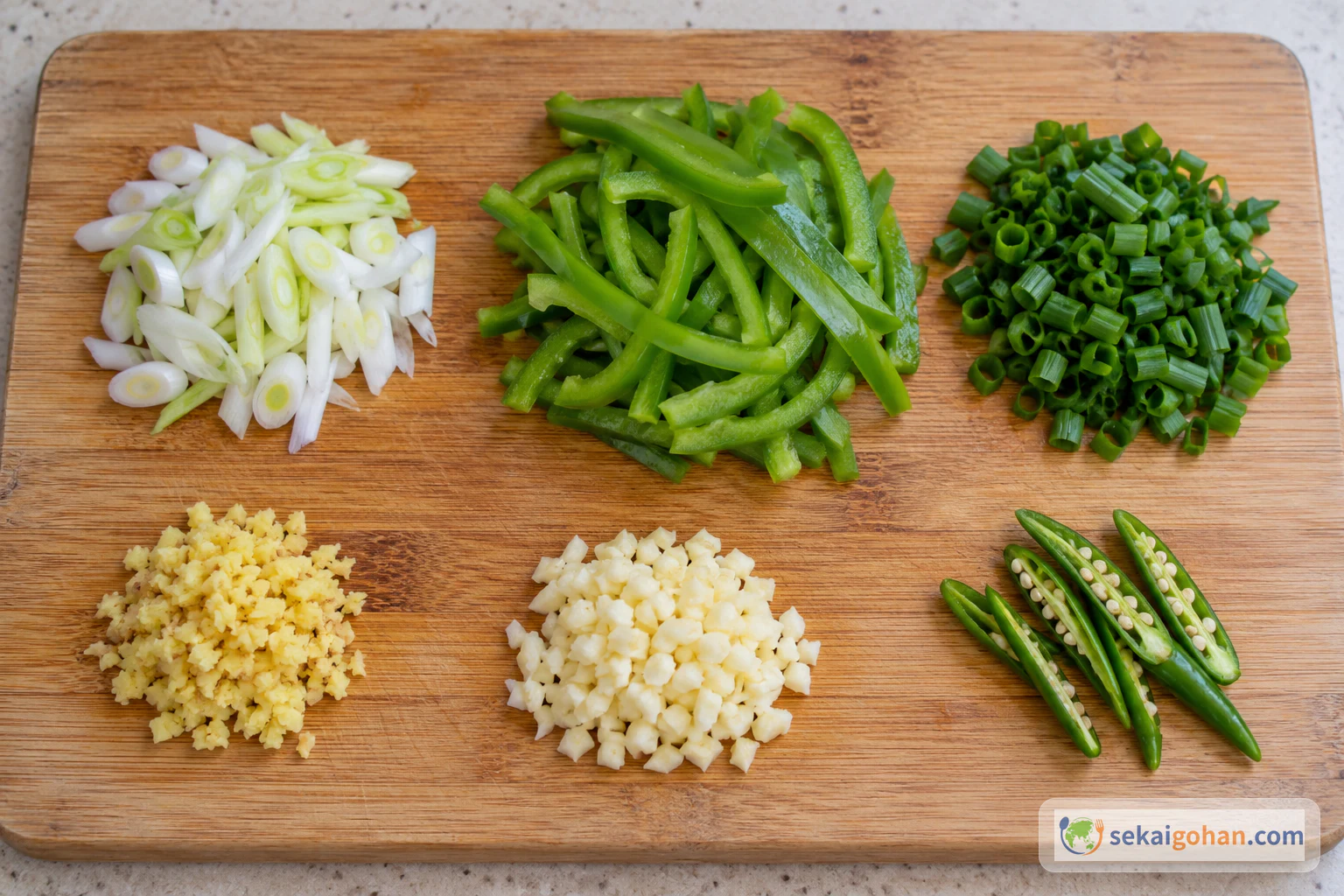
Cut the sauce vegetables and aromatics

Spring onion whites, capsicum, ginger, garlic and green chillies cut into separate piles
Spring onion whites and greens are cut and kept apart; the greens wait for the finish

Slice the spring onion whites and chop the greens, keeping the greens in a separate bowl for the end. Thinly slice the green capsicum. Finely chop the ginger and garlic, and slit the green chillies lengthwise. Keep each one in its own pile.

STEP33 / 8

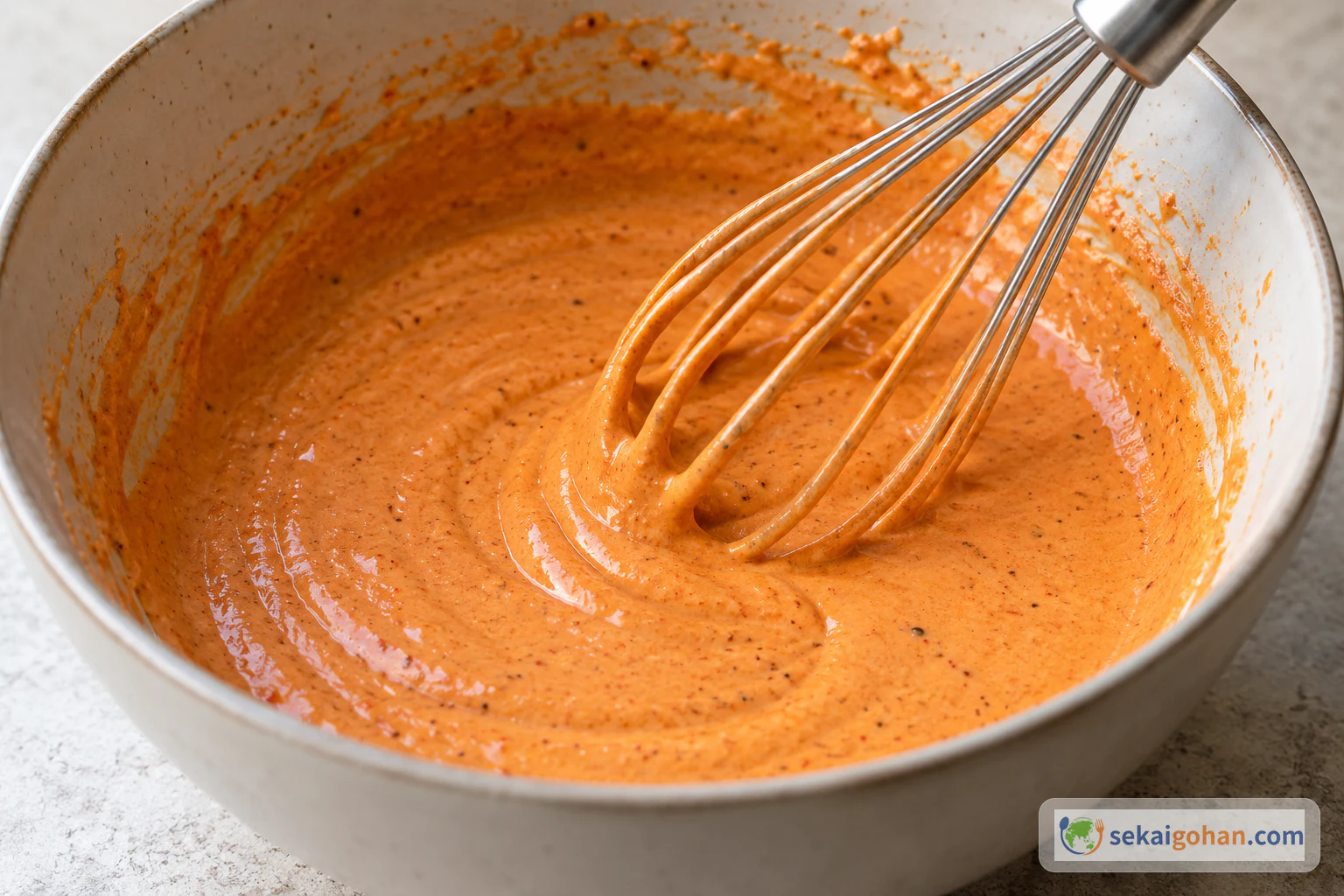
Mix a smooth batter

Flour, corn starch, spices, soy sauce, sweet red chilli sauce and water whisked into a smooth batter
A smooth, medium-thick batter that is fluid enough to coat a floret

In a mixing bowl, combine the all-purpose flour, corn starch, Kashmiri red chilli powder, 1/4 tsp black pepper, 1 tsp rock salt, 1 tsp soy sauce and 1/2 tsp sweet red chilli sauce. Add the water a little at a time, whisking, until the batter is smooth and of medium consistency. Use 3/4 cup to 1 cup of water, depending on the flour. Stop when the batter flows but still coats a floret.

STEP44 / 8

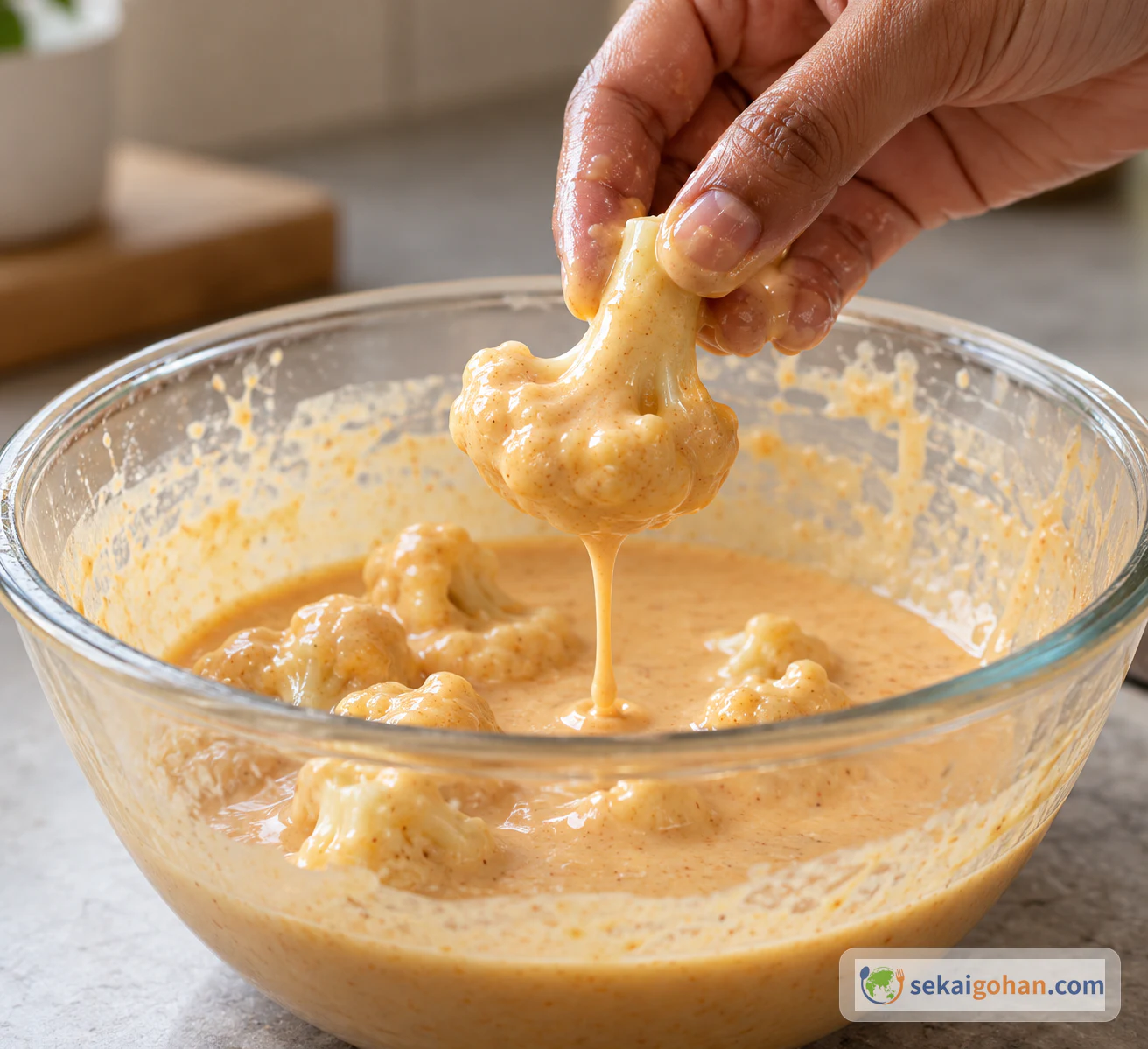
Coat the florets and let the excess drip off

A batter-coated floret lifted from the bowl as excess batter drips back
Let excess batter drain back into the bowl so each floret has an even coat

Add the drained florets to the batter and turn them until each one is evenly coated. Lift them out and scrape or let the excess batter drip back against the side of the bowl. You want a thin, even coat, not a thick clump.

STEP55 / 8

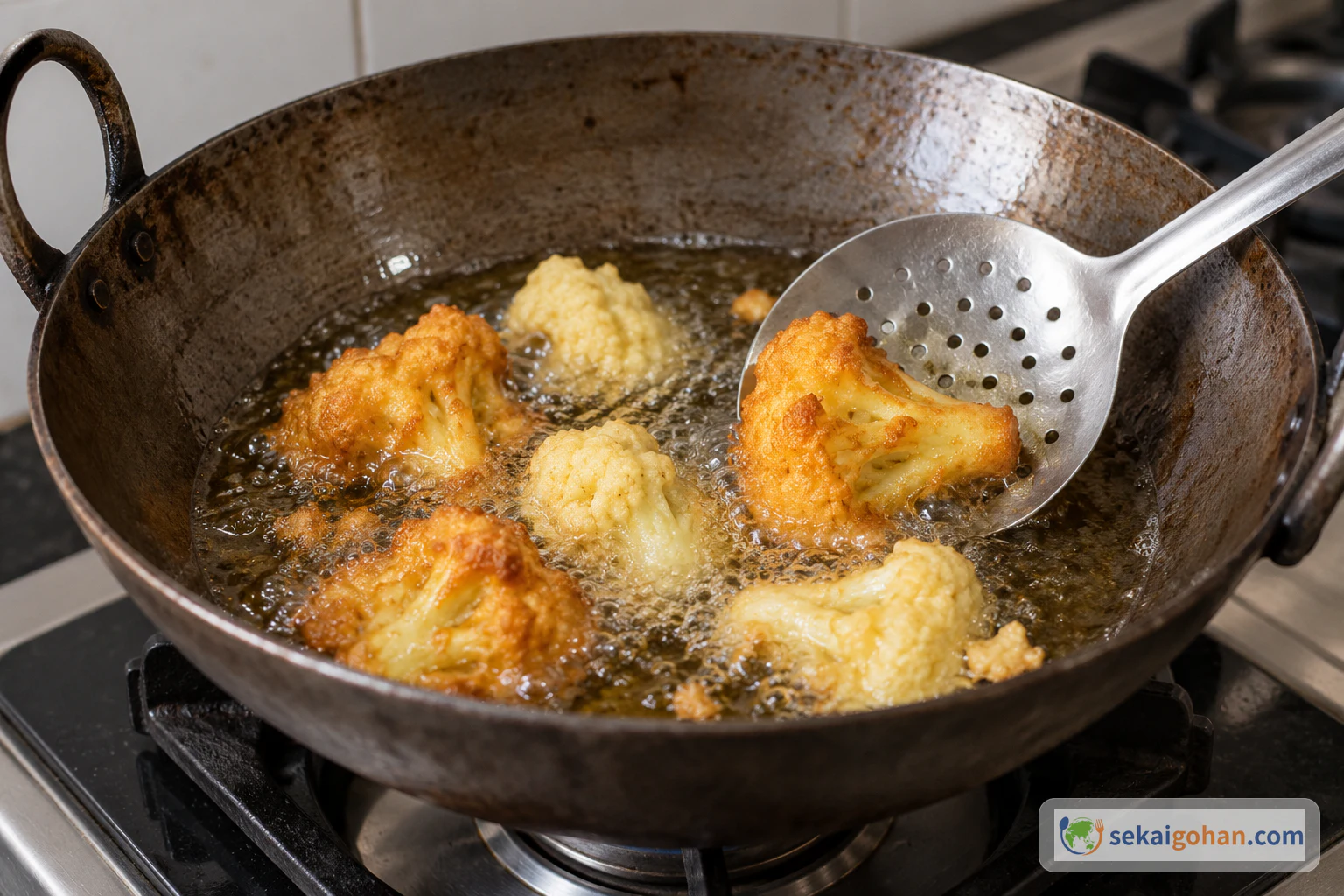
Fry in small batches until golden and crisp

Coated cauliflower florets frying in an uncrowded batch in medium-hot oil
One uncrowded batch; turn the florets until each is golden and crisp

Heat the oil for deep frying over medium heat until it is medium-hot. Add a few coated florets at a time without crowding the pan. When one side is golden and crisp, turn them. Keep turning a few times until the florets are golden and crisp all over. Pieces in one batch color at slightly different rates. Lift them out with a slotted spoon or spider and drain on paper towels. Repeat with the rest, frying 3 to 5 batches depending on the size of your pan.

STEP66 / 8

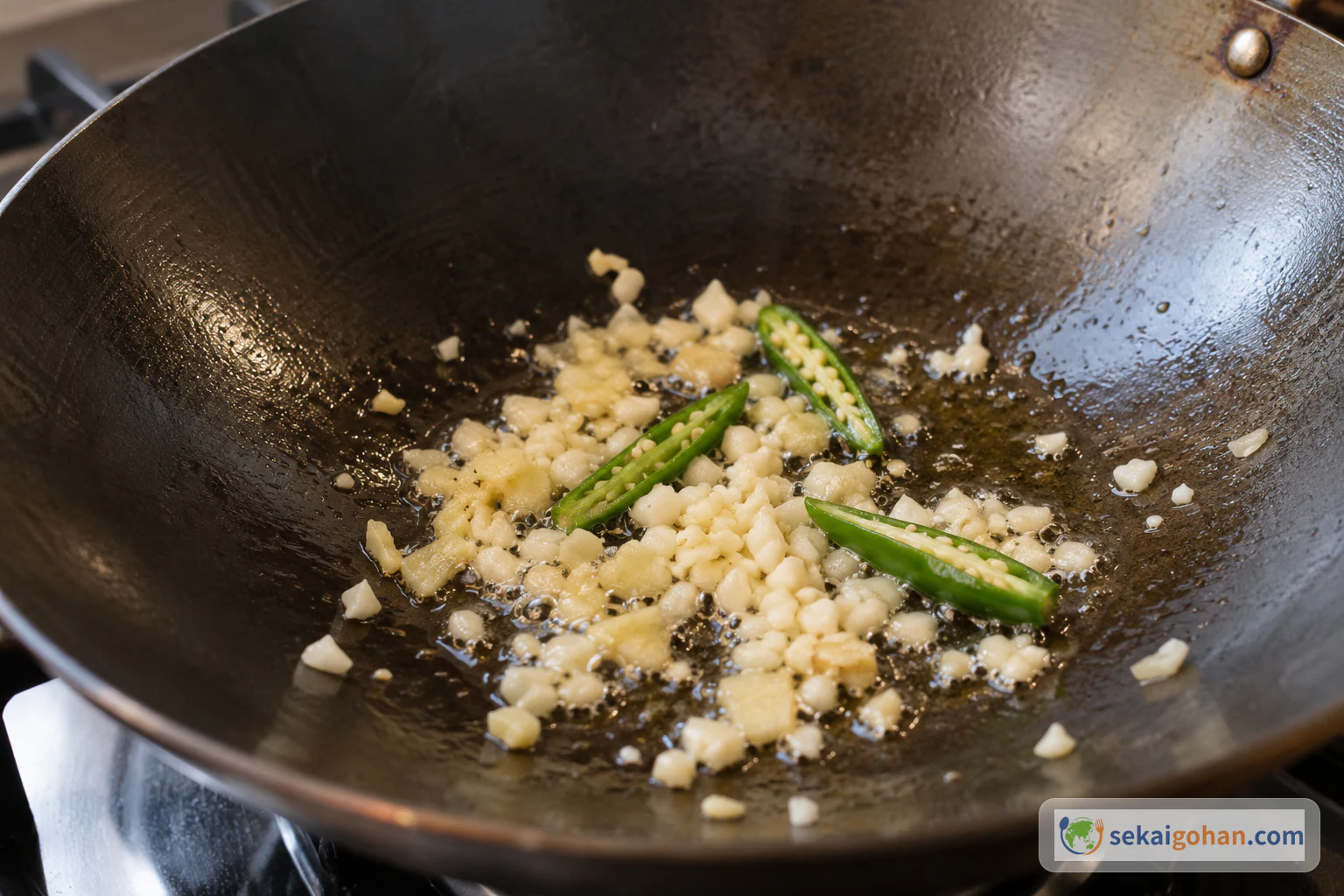
Cook the aromatics in sesame oil

Ginger, garlic and green chillies sizzling for a few seconds in hot sesame oil
The aromatics should be just sizzling and fragrant, not browned

Heat 1 tbsp toasted sesame oil in a wok. Add the ginger, garlic and slit green chillies and stir for a few seconds, just until the raw smell is gone. Do not let them brown.

STEP77 / 8

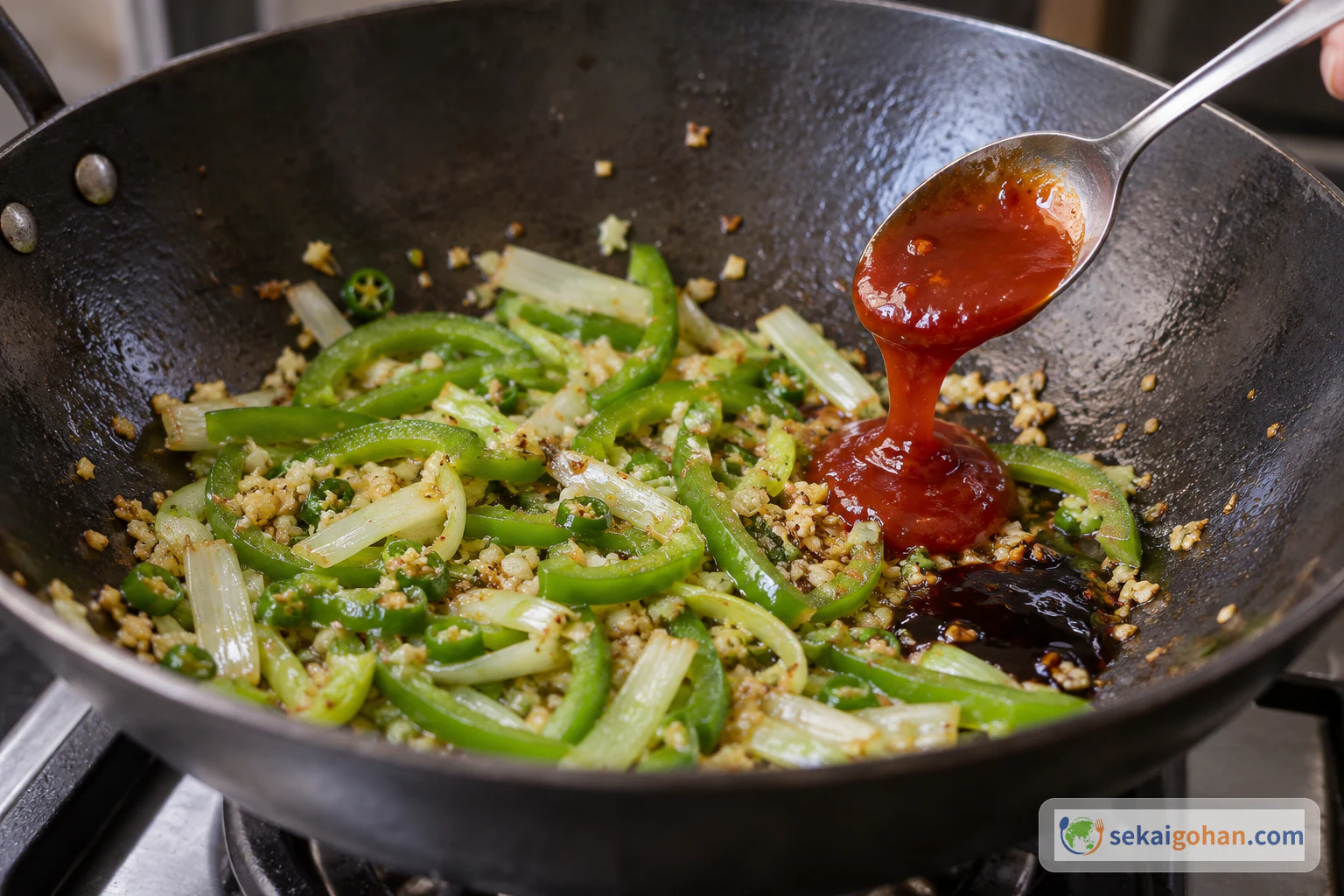
Add the spring onion whites, capsicum and sauces

Spring onion whites and capsicum cooked, then soy sauce and sweet red chilli sauce added over low heat
With the heat lowered, the two sauces go in once the onion is translucent

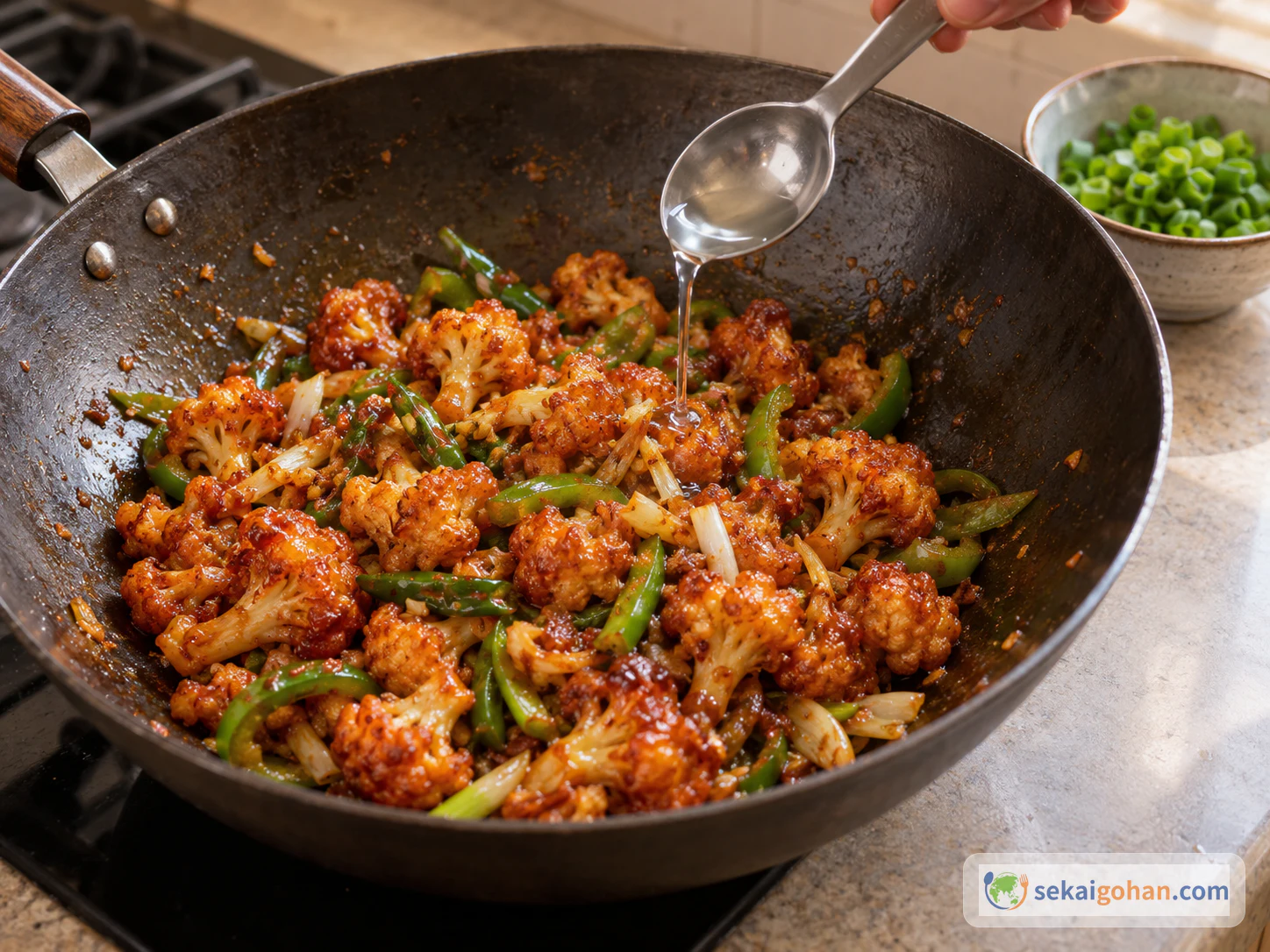
Add the spring onion whites and green capsicum. Raise the heat to medium or medium-high and stir constantly until the onion is translucent, lowering the heat if anything starts to burn. Turn the heat down, then add 1 tsp soy sauce and 1 tsp sweet red chilli sauce and mix well.

STEP88 / 8

Toss the fried florets, then finish off the heat

Fried florets tossed in the sauce, with mirin added after the heat is off and spring onion greens waiting
Mirin goes in off the heat; the spring onion greens follow last

Add the fried florets with 1/2 tsp sugar, 1/4 tsp black pepper and a few pinches of salt. Toss over medium to medium-high heat until the florets are evenly and lightly coated. Turn off the heat, add 1 tsp mirin and mix. Scatter over 2 tbsp spring onion greens and serve hot, right away.

0 / 0
Ingredients

Ingredients

1 / 1

Ingredients

Ingredient Amount Role
Cauliflower 1 small to medium head, 350 g The main ingredient. Cut into small florets, not crumbs
Water (for blanching) 2.5 cups Brought to a boil for the blanch
Salt (for blanching) 1/4 tsp Seasons the blanching water
All-purpose flour 1 cup Batter base
Corn starch (corn flour) 4 tbsp Batter, for a crisp shell
Kashmiri red chilli powder 1 tsp Color and mild heat in the batter
Black pepper (for the batter) 1/4 tsp Batter seasoning
Rock salt (for the batter) 1 tsp Batter seasoning
Naturally fermented soy sauce (for the batter) 1 tsp Batter seasoning
Sweet red chilli sauce (for the batter) 1/2 tsp Batter seasoning
Water (for the batter) 1 cup (3/4 to 1 cup, as the batter needs) Brings the batter to a smooth, medium consistency
Oil for deep frying as needed Frying the coated florets
Toasted sesame oil 1 tbsp Cooking the sauce base
Ginger, chopped 1 tbsp Aromatic
Garlic, chopped 1 tbsp Aromatic
Green chillies 2–3, slit lengthwise Aromatic heat
Spring onion whites, sliced 1/2 cup (2 medium spring onions) Sauce vegetable, cooked until translucent
Green capsicum (green bell pepper), thinly sliced 1/3 cup (1 small) Sauce vegetable
Naturally fermented soy sauce (for the sauce) 1 tsp Sauce seasoning
Sweet red chilli sauce (for the sauce) 1 tsp Sauce seasoning
Sugar 1/2 tsp Seasoning for the toss
Black pepper (for the toss) 1/4 tsp Seasoning for the toss
Salt (for the toss) a few pinches, to taste Final seasoning
Mirin 1 tsp Added off the heat
Spring onion greens, chopped 2 tbsp Final garnish
0 / 0

Ginger, garlic and slit green chillies hit hot toasted sesame oil, and within seconds their raw smell softens. Spring onion whites and thin strips of green capsicum follow, then a spoonful each of soy sauce and sweet red chilli sauce, and finally the golden, batter-fried cauliflower. A quick toss, a little mirin, a scatter of spring onion greens, and it's done. This is Chilli Gobi, a popular Indo Chinese starter and snack. This is the crispy, dry version: small, crisp florets in a light, glossy chilli coating instead of a gravy.

Chilli Gobi and Indian Chinese Food

"Gobi" means cauliflower, and you'll also see the dish spelled Chilly Gobi. It's sometimes confused with Aloo Gobi, which is a different dish: cauliflower cooked with potatoes and spices. Chilli Gobi belongs to Indian Chinese cooking, a hybrid cuisine that took shape as Chinese immigrant communities in India met Indian tastes and restaurant culture. Kolkata and Tangra are part of that history, though no one knows exactly how the style began and spread.

Nobody has recorded a place of origin, a date or an inventor for Chilli Gobi itself. The "Indo Chinese" label tells you what style of cooking it belongs to, not when or where it first appeared. For more dishes from the same country, see the India country page.

What this plate should keep

Keep the florets small and crisp, and keep the sauce as a light, glossy coating rather than a gravy. Everything after the frying happens fast, so have the vegetables cut and the sauces ready before you start.

Ingredients for 4 Servings
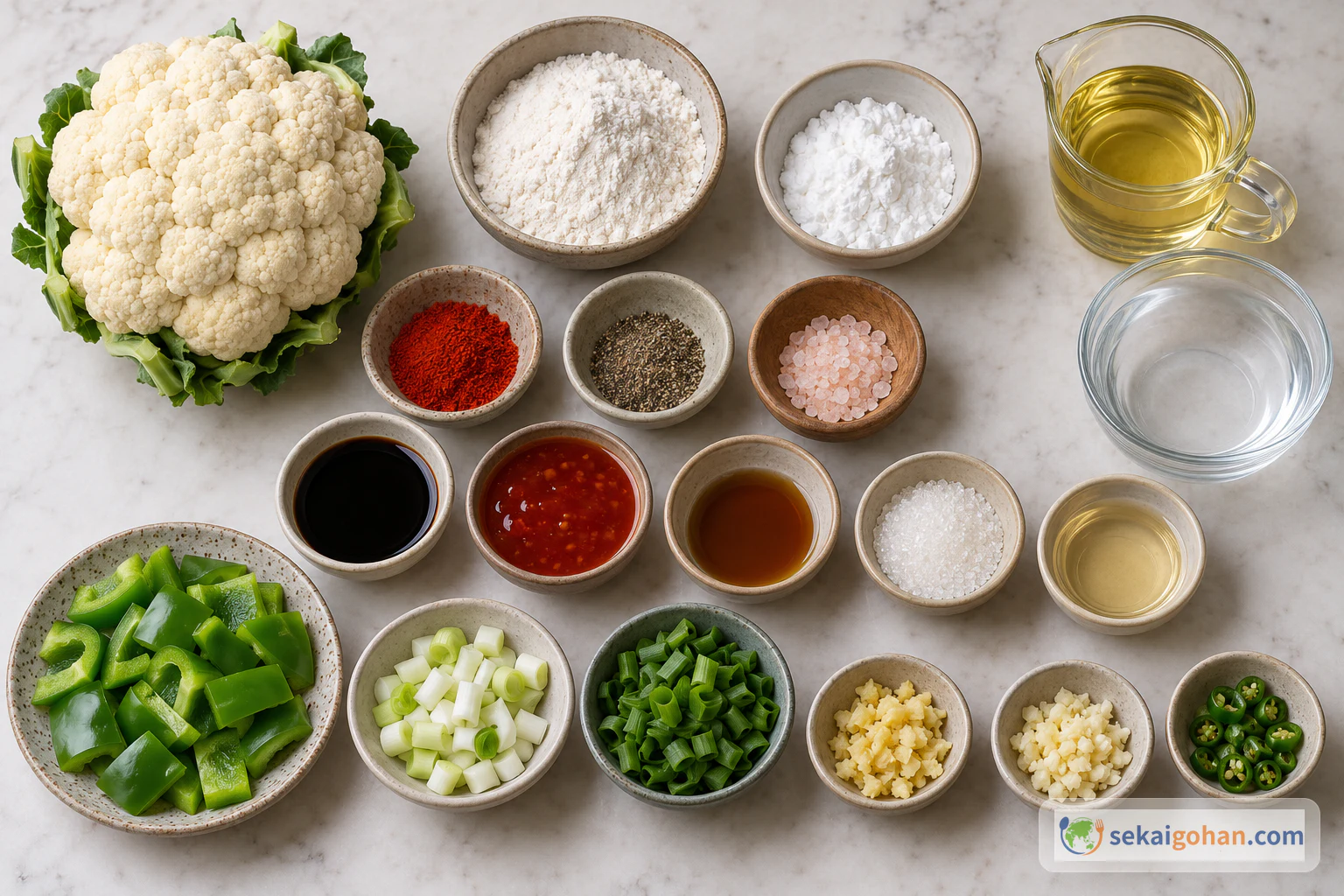
Cauliflower, flour, corn starch, aromatics, chilli sauce and other Chilli Gobi ingredients arranged separately
One cauliflower, two powders, the aromatics and the sauces, set out by group before cooking

There are three separate uses for salt: 1/4 tsp in the blanching water, 1 tsp rock salt in the batter, and a few pinches in the final toss. Keep them separate. The spring onion whites go into the sauce, and the greens are kept aside for the very end.

Allergens and labels

The batter contains wheat flour, and soy sauce contains soy. Ingredients in soy sauce and sweet red chilli sauce vary by product, so check each label for allergens before you cook.

Equipment

  • Saucepan for blanching
  • Trivet or heatproof spot on the counter
  • Colander or strainer
  • Mixing bowl and whisk for the batter
  • Kadai or wok for deep frying
  • Slotted spoon or spider
  • Plate lined with paper towels
  • Wok for the sauce and the final toss
  • Cutting board and knife

Choosing Ingredients for Chilli Gobi

Corn starch, not cornmeal. The "corn flour" in this batter means corn starch. Cornmeal or a coarse maize flour won't give you the same coating.

Salt for the batter. If you're using iodized salt, use 1/3 to 1/2 tsp in place of the 1 tsp rock salt.

Soy sauce. Use a naturally fermented soy sauce in both the batter and the sauce.

Seasonings. The amounts are written for Kashmiri red chilli powder, sweet red chilli sauce, toasted sesame oil and mirin. If you swap one of them, swap only that one. You'll find the alternatives in the FAQ. The dry version gets its flavor from the listed sauces alone, with no tomato ketchup, vinegar, stock or thickened slurry.

Method: Blanch, Batter, Fry, Then Toss Fast

Before the wok goes on

The sauce stage moves in seconds. Finish cutting the vegetables in step 2 and fry all the florets in step 5 before you heat the sesame oil.

Fixing Common Chilli Gobi Problems

Most problems come down to the batter, crowded oil or extra liquid in the wok.

Problem What to look at What to do
The batter is too thick to coat thinly Not enough water for your flour Whisk in a little more water, staying within 3/4 to 1 cup in total
The batter runs straight off the florets Water added too quickly Next time add water a little at a time and stop as soon as the batter is smooth and medium-thick
The coating is heavy or clumpy Excess batter left on the florets Let each floret drip against the side of the bowl before frying
Florets stick together or color unevenly in the oil Too many in the pan at once Fry fewer per batch and turn them a few times
The coating feels damp Florets not drained well after blanching, or not drained after frying Drain thoroughly after the blanch, and rest the fried florets on paper towels
Garlic or ginger starts to brown Heat too high Lower the heat; these need only a few seconds
The sauce pools like a gravy Extra liquid added Keep to the listed sauces in their small amounts; add no water or stock

Serving Chilli Gobi

A plate of Chilli Gobi scattered with spring onion greens, served hot
Serve the dry Chilli Gobi on its own plate as soon as it is tossed

Get it to the table as soon as the spring onion greens go on, while the fried edges are still crisp. You want separate florets with a glossy coating and no pool of sauce underneath. Serve it on its own as a starter or snack, with no rice, noodles or dipping sauce. Chilli Gobi is best hot, so fry and toss it shortly before you eat.

Frequently Asked Questions

What other ingredients can I use?

Instead of Kashmiri red chilli powder, you can use deghi mirch. For the chilli sauce, sweet chilli garlic sauce or Sriracha both work. The sauce oil can be peanut oil, sunflower oil or raw sesame oil. In place of 1 tsp mirin, use 1/2 tsp of rice wine, rice vinegar or white vinegar. Swap one item at a time and don't combine the alternatives.

Why are there three separate salt amounts?

Each one has its own job. The 1/4 tsp goes into the blanching water. The batter gets 1 tsp rock salt, or 1/3 to 1/2 tsp iodized salt. The final toss gets a few pinches, to taste. Keep them separate.

How hot should the frying oil be, and for how long?

Fry over medium heat in medium-hot oil, in small batches: 3 to 5 depending on the size of your pan. There's no fixed temperature or time, so go by eye. Each batch is done when it's golden and crisp on all sides.

Is Chilli Gobi the same as Gobi Manchurian?

That's not settled. Nobody has said for sure whether the two names mean the same dish, or how they would differ.

Is there a version with sauce?

Yes, there's a gravy version. Keep this dry one dry, though: don't add water or stock to the wok.
Sources

  • Dassana Amit, "Chilli Gobi (Cauliflower Chilli)," Dassana's Veg Recipes. The recipe author's own page. Describes the dish as a popular Indo Chinese starter or snack and separates the crispy dry version from a gravy version. Gives 4 servings, 15 minutes prep, 45 minutes cooking and 1 hour total, plus the full batter and sauce formula with its ingredient options. The method covers the blanch, batter, batch frying, sauce order and off-heat finish. The page also recommends naturally fermented soy sauce and identifies corn flour in this recipe as corn starch. https://www.vegrecipesofindia.com/chilli-gobi/
  • Dassana Amit, "About Dassana Amit & Dassana's Veg Recipes," Dassana's Veg Recipes. The author's self-description as a vegetarian chef, recipe developer and food photographer, with the statement that the site's recipes are prepared and tested in the author's home kitchen. https://www.vegrecipesofindia.com/about/
  • Maria Thomas, "The story of how India fell in love with Chinese food," Scroll.in (first published on Quartz). Broad background on Indian Chinese food as a hybrid cuisine shaped by Chinese immigrant communities, Indian tastes and restaurant culture, including Kolkata and Tangra. Notes uncertainty about how the adaptation began and spread. It does not establish Chilli Gobi's own origin. https://scroll.in/magazine/898067/the-story-of-how-india-fell-in-love-with-chinese-food