Dibba Rotti (Minappa Rotti): A Fermented Urad Dal and Rice Rava Cake Cooked in a Kadai

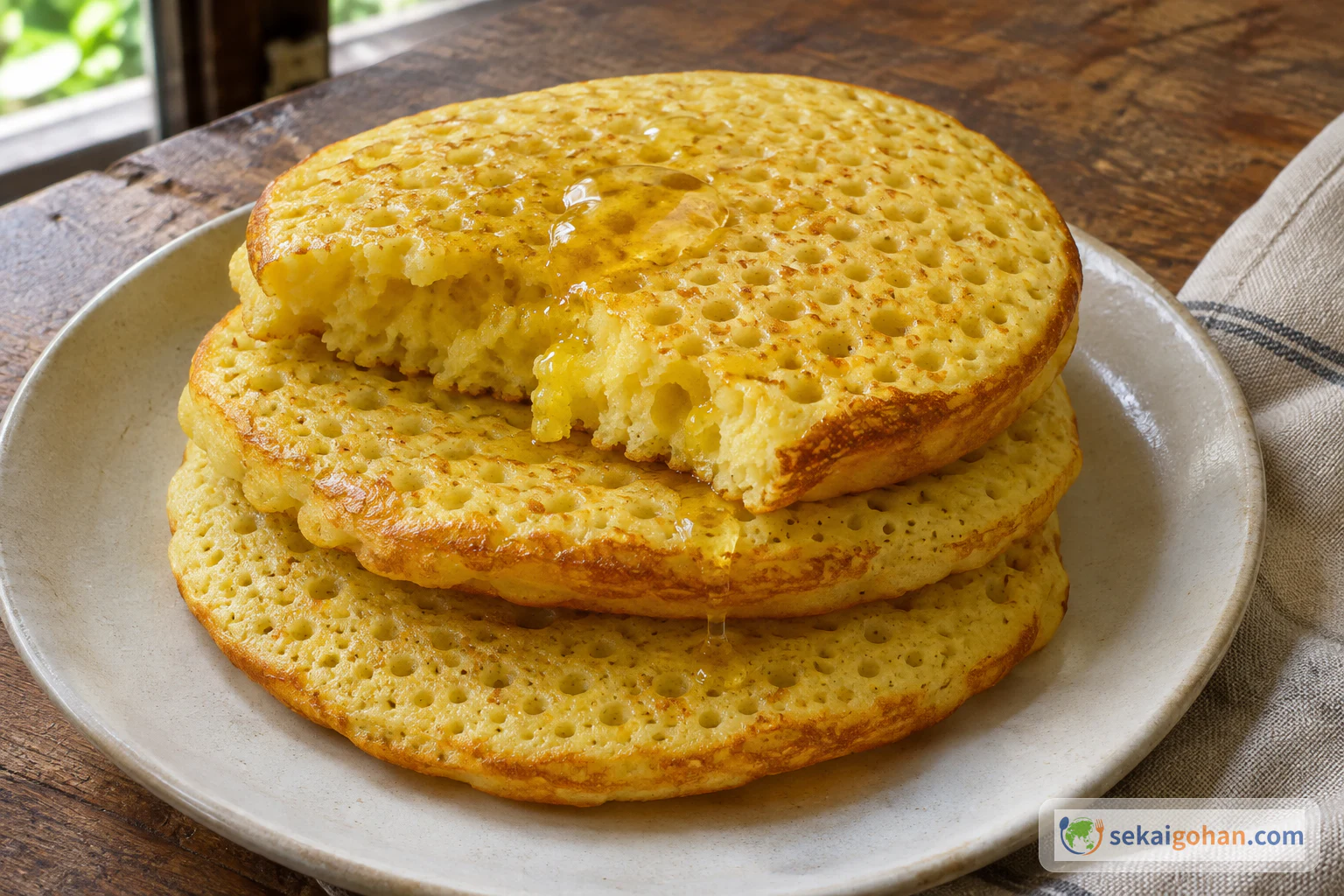
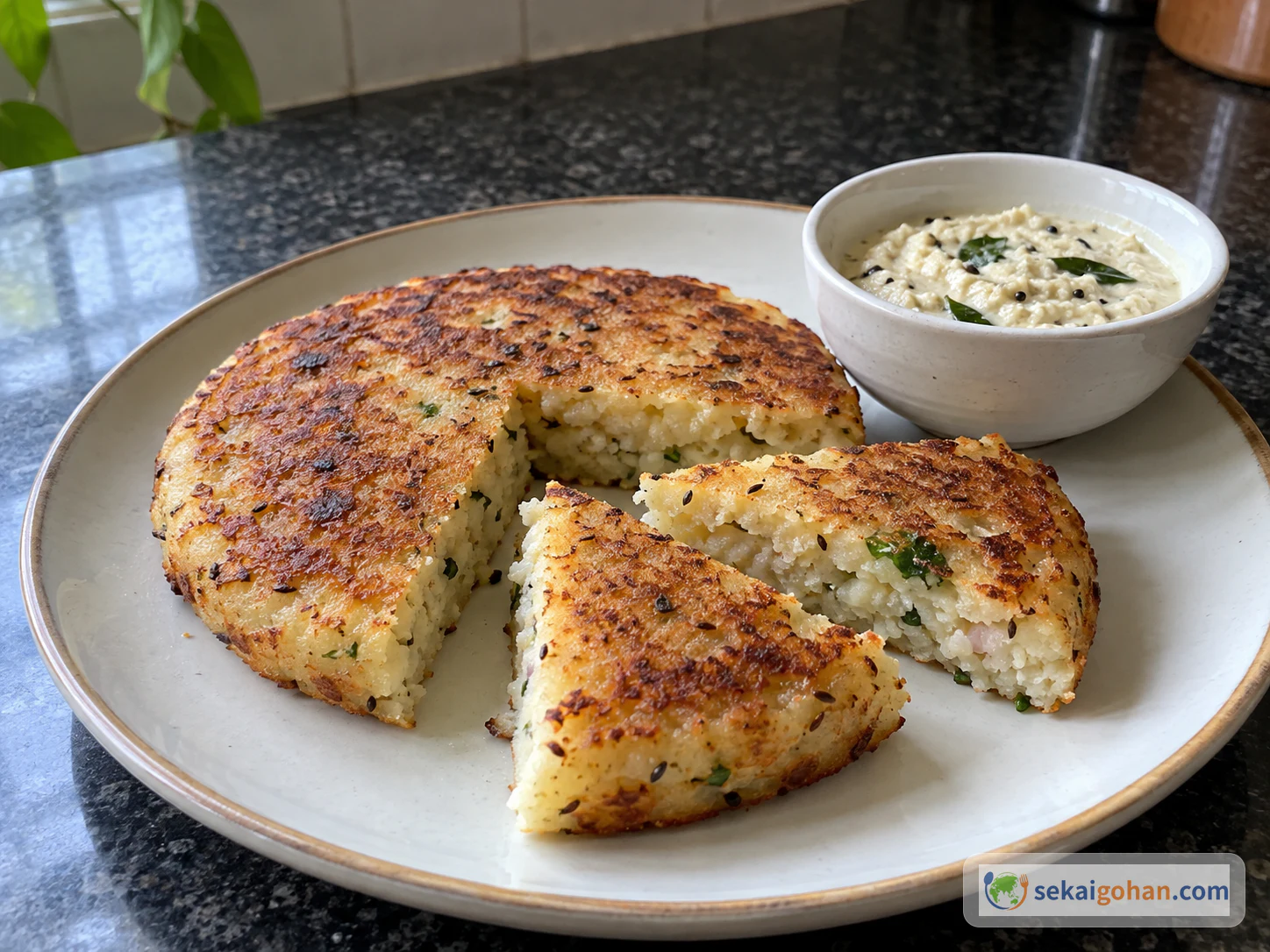
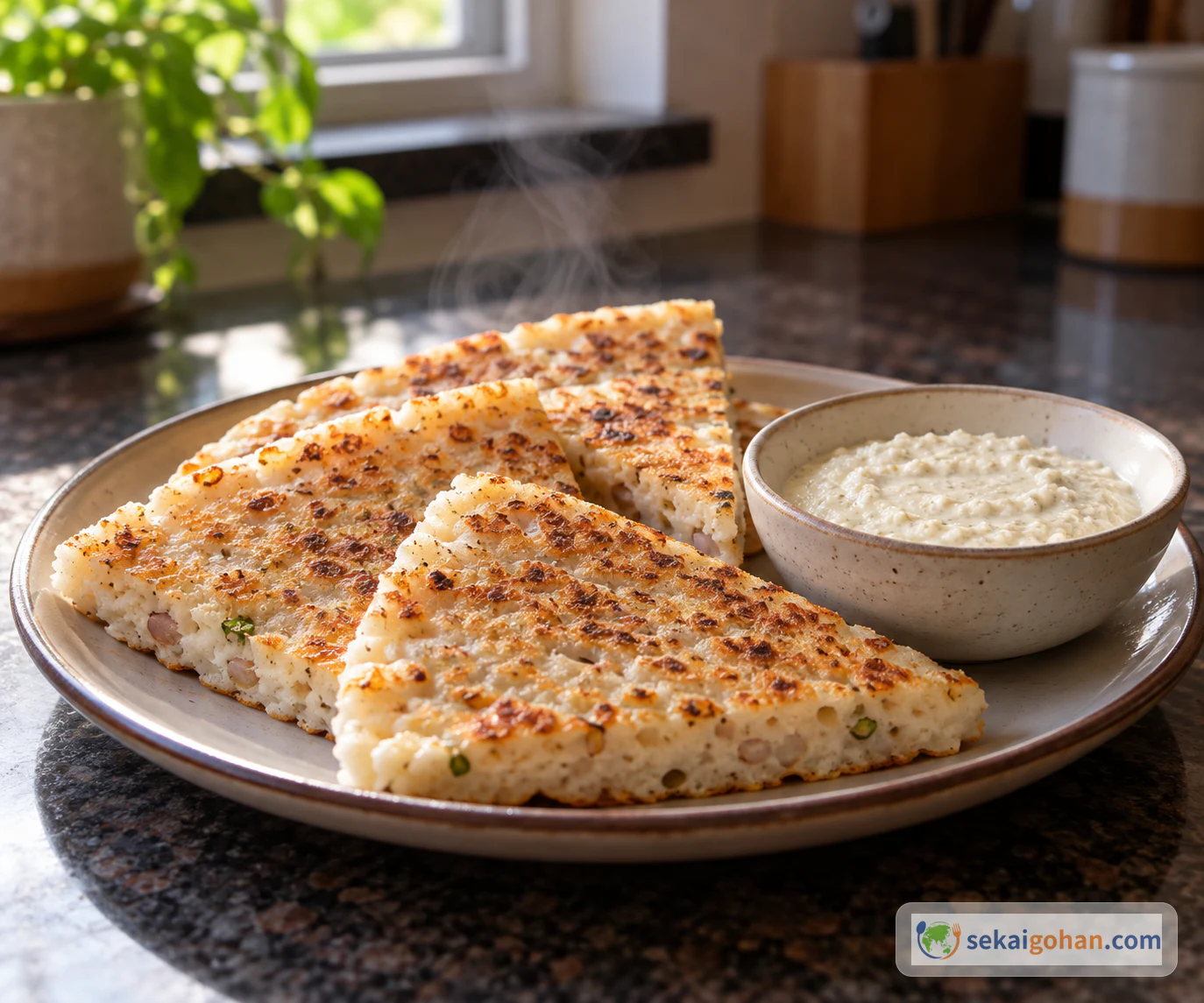
Dibba rotti cooked in a kadai and cut into wedges, with prepared coconut chutney
Cuisine
Indian

How to make dibba rotti (Minappa rotti), a thick pan-cooked cake of skinless whole urad dal and rice rava. The dal and rava soak separately, the batter ferments for 5 hours, and it cooks covered in a kadai, is flipped, then cut into wedges and served hot with coconut chutney. Also covers the difference between the card times and the step times, and what is not known about salt, water and yield.

Cooking flow

Cooking steps

STEP11 / 8

Soak the urad dal and rice rava

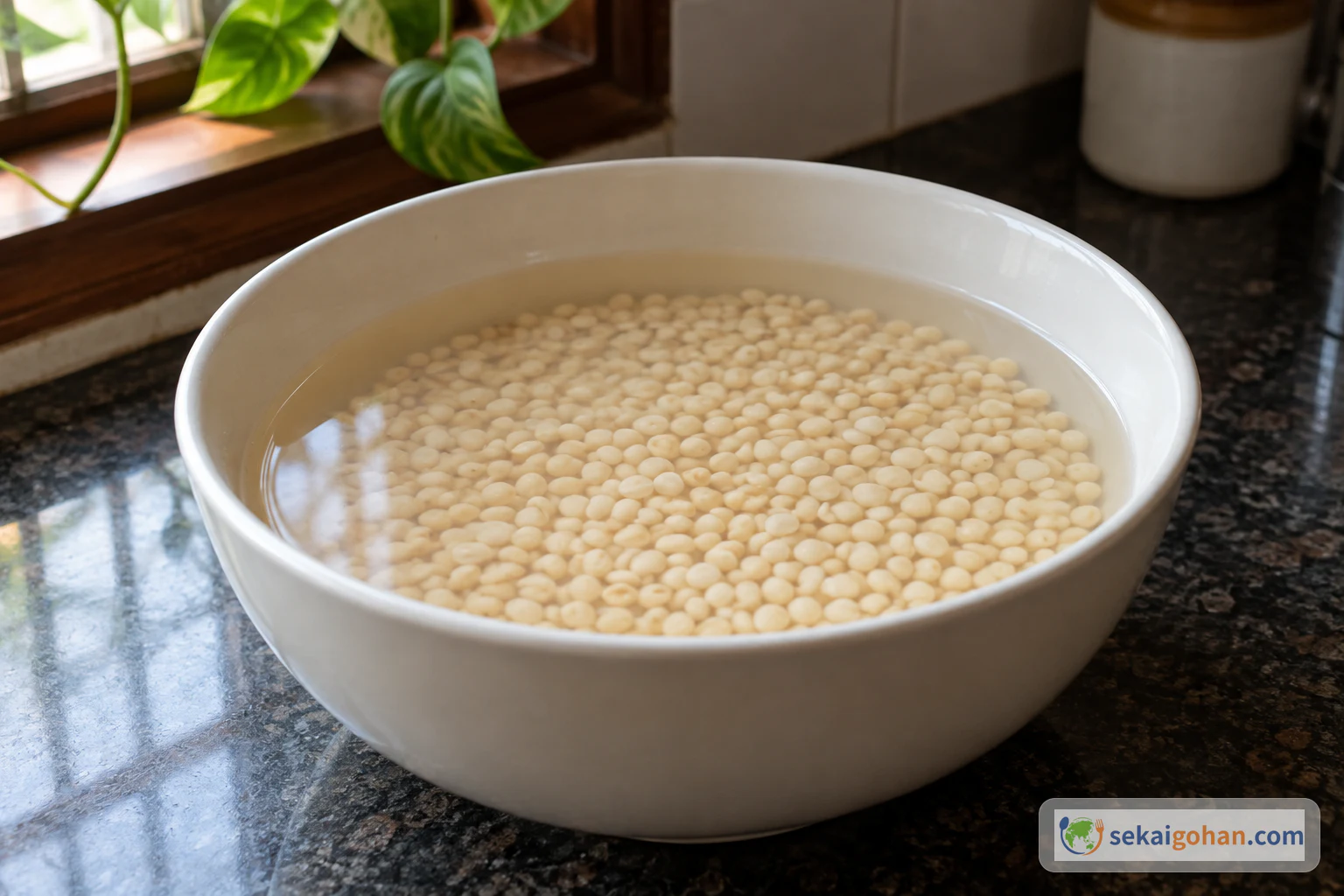
Urad dal soaking in water
Soak the urad dal on its own

Wash 1/2 cup skinless whole urad dal in water, then soak it in water for 6 hours. In a separate bowl, soak 1 1/4 cup rice rava in water for 6 hours, keeping it apart from the dal. Both are ready when they have softened in their water.

STEP22 / 8

Grind the dal and mix the batter

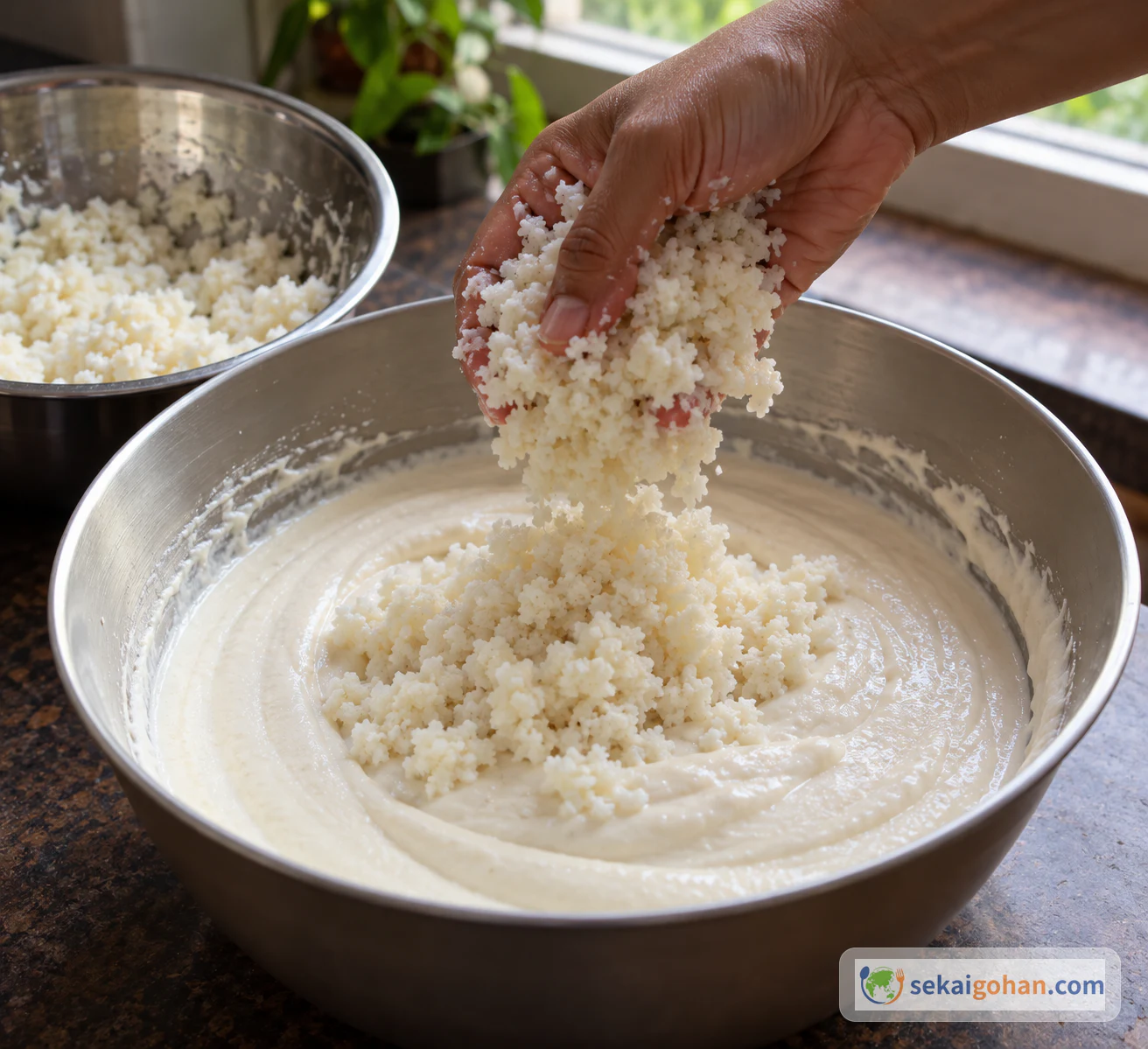
Adding squeezed rice rava to the urad dal batter
Squeezed rava goes into the smooth dal batter

Drain the urad dal and grind it with a little water, only as much as needed, into a smooth batter. Don't add too much water; the batter should not be watery. Squeeze the water out of the soaked rice rava, then add it to the dal batter along with salt to taste and mix it through. The batter is ready when it is smooth, thick and evenly mixed.

STEP33 / 8

Ferment the batter

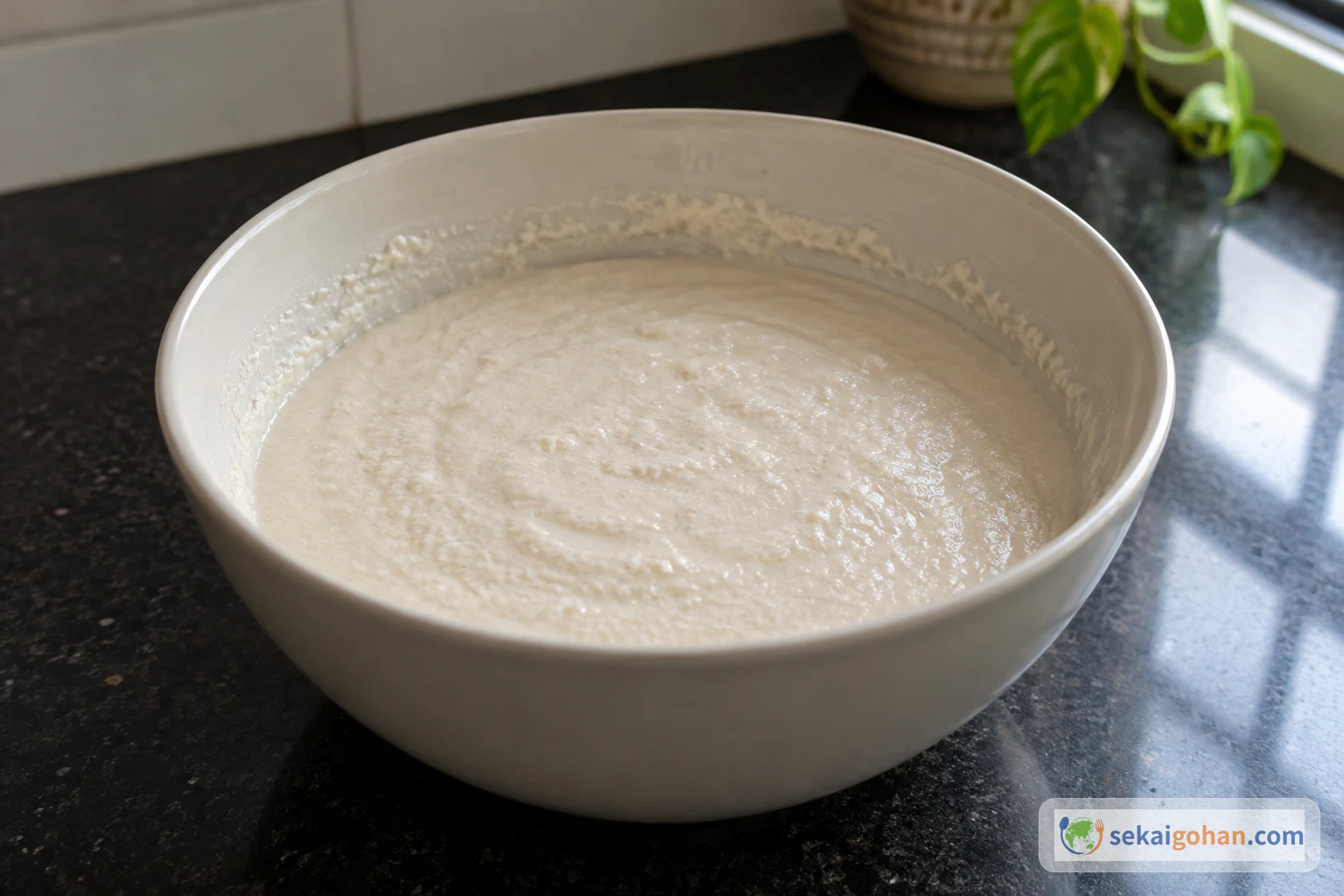
Mixed batter set aside to ferment for 5 hours
The batter ferments before the aromatics are added

Leave the batter to ferment for 5 hours. Salt goes in before fermentation, and the aromatics are added only afterward.

STEP44 / 8

Add the aromatics

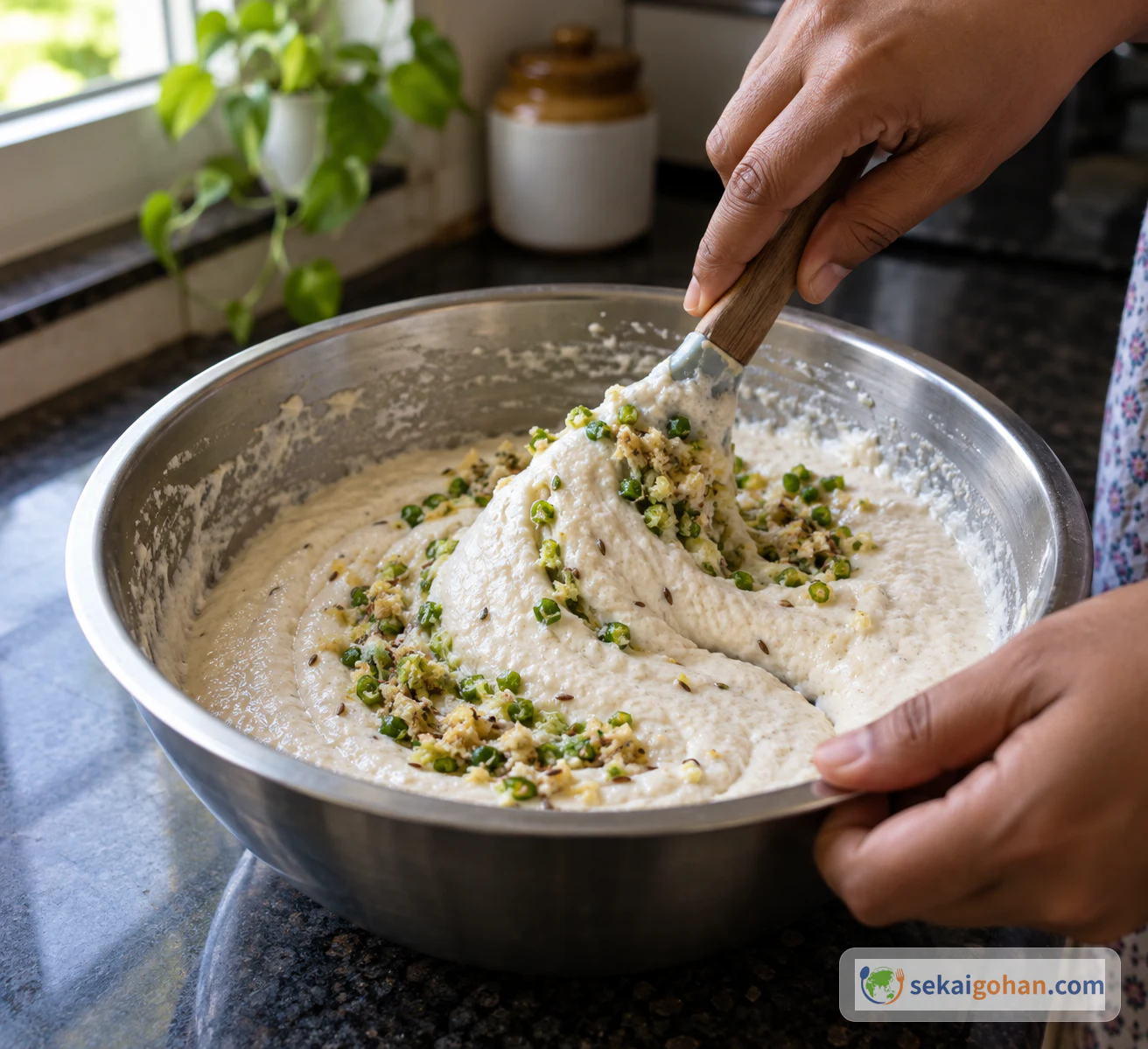
Mixing the coarse aromatics into the fermented batter
The aromatics go in only after fermentation

Coarsely grind 1 inch ginger, 2 green chillies and 1 tsp cumin seeds together. Keep the texture coarse, not a smooth paste. Mix the ground aromatics into the fermented batter. The batter is ready when the flecks of ginger, chilli and cumin are spread evenly through it.

STEP55 / 8

Heat the oil and pour in the batter

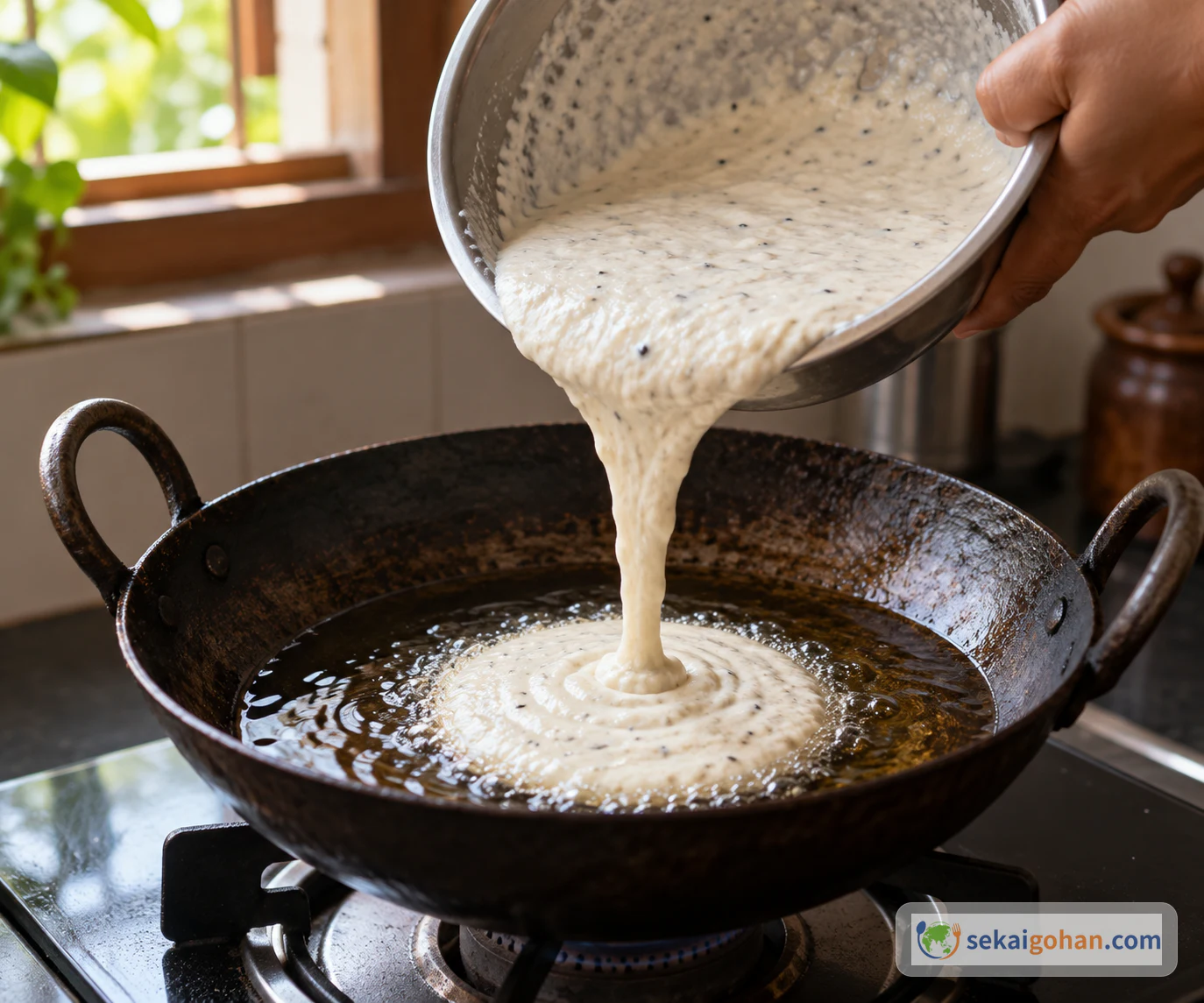
Pouring a bowlful of batter into the hot kadai
One bowlful of batter goes into the oiled kadai

Heat 4 Tbsp cooking oil in a kadai. When the oil is hot, turn the heat down to low. Pour a bowlful of batter, about 5–6 ladles, into the kadai. The batter is ready for the lid when it sits in an even layer in the oiled pan.

STEP66 / 8

Cook the first side

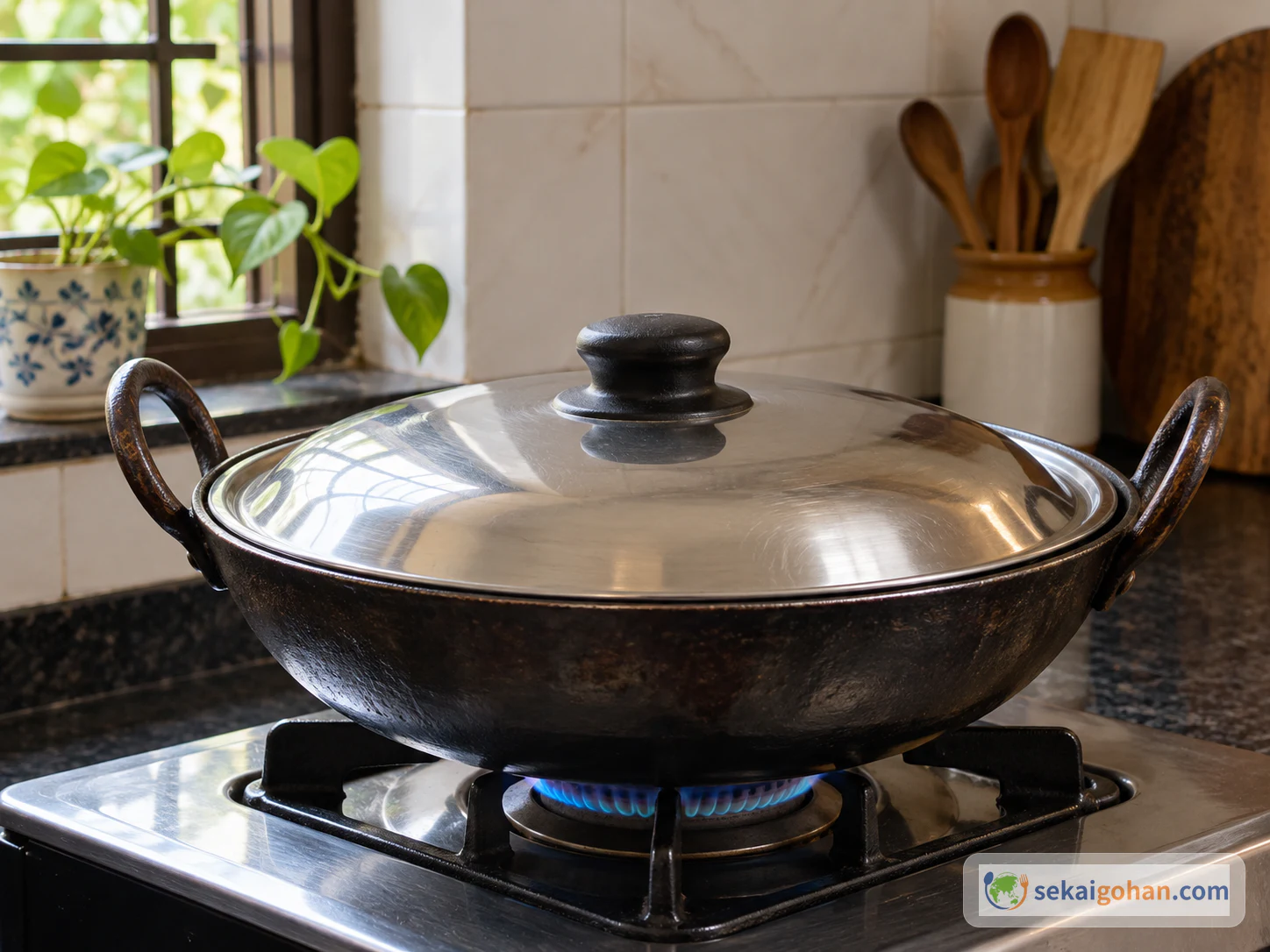
The covered kadai on low heat while the first side cooks
Cook the first side covered, on low heat

Put the lid on the kadai and cook covered on low heat for 10–12 minutes. It is ready to turn when the sides pull away from the kadai and the underside is browned.

STEP77 / 8

Flip and cook the second side

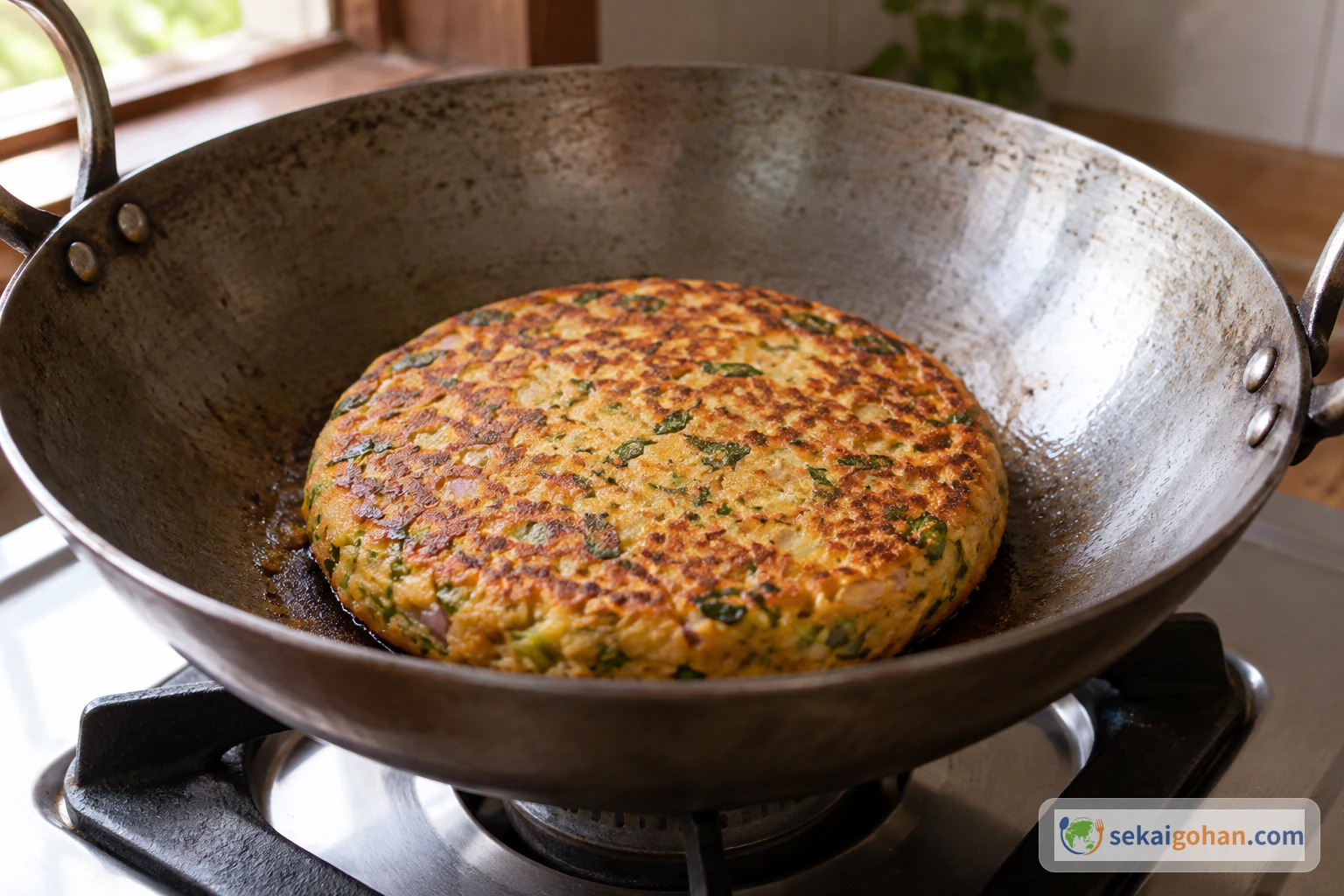
Cooking the second side of the flipped dibba rotti
Cook the second side

Lift off the lid and flip the rotti over. Cook the other side for 8–10 minutes. The rotti is done when the second side is browned like the first.

STEP88 / 8

Cut and serve

Dibba rotti wedges served with prepared coconut chutney
Serve hot, with coconut chutney alongside

Lift the cooked rotti out of the kadai and cut it into wedges. Serve the wedges hot with prepared coconut chutney. The browned crust should show along the cut edges.

0 / 0
Ingredients

Ingredients

1 / 1

Ingredients

Ingredient Amount Role
Skinless whole urad dal 1/2 cup Washed, soaked and ground into a smooth batter. Keep it whole, not split
Rice rava (idli rava) 1 1/4 cup Soaked in its own bowl, squeezed, then added to the dal batter
Salt to taste Mixed into the batter before fermenting
Water as needed For soaking, plus a little for grinding the dal
Ginger 1 inch Coarsely ground and added after fermenting
Green chillies 2 Coarsely ground with the ginger and cumin
Cumin seeds 1 tsp Coarsely ground with the ginger and chillies
Cooking oil 4 Tbsp Heated in the kadai before the batter goes in
Prepared coconut chutney as needed To serve alongside, hot
0 / 0

A thick cake browns slowly in a covered kadai until its sides pull away from the pan. Then it's flipped, cooked a little longer, cut into wedges and served hot with coconut chutney. Dibba rotti is made from fermented urad dal and rice rava, with coarsely ground ginger, green chillies and cumin folded into the batter. It is often billed as an Andhra special, and it's one of many dishes from India built on a soaked, ground and fermented batter.

About Dibba Rotti

The dish goes by two names, Dibba Rotti and Minappa Rotti (also spelled "Minapa Rotti"), and neither is the official one. Whatever you call it, the method is the same: soak, grind, ferment, then cook slowly in a covered pan.

The process starts with two bowls sitting side by side for six hours, one with skinless whole urad dal and the other with rice rava. Only the dal is ground, with just a little water, into a thick, smooth batter. The rava is squeezed and folded in, salt goes in, and the batter ferments for five hours. The ginger, chillies and cumin wait until fermentation is done. Then the batter goes into hot oil in a kadai, the heat drops to low, and the lid goes on.

Plan around the step times

The steps include two 6-hour soaks and a 5-hour fermentation, so plan your day around them. Follow the time in each step.

Ingredients
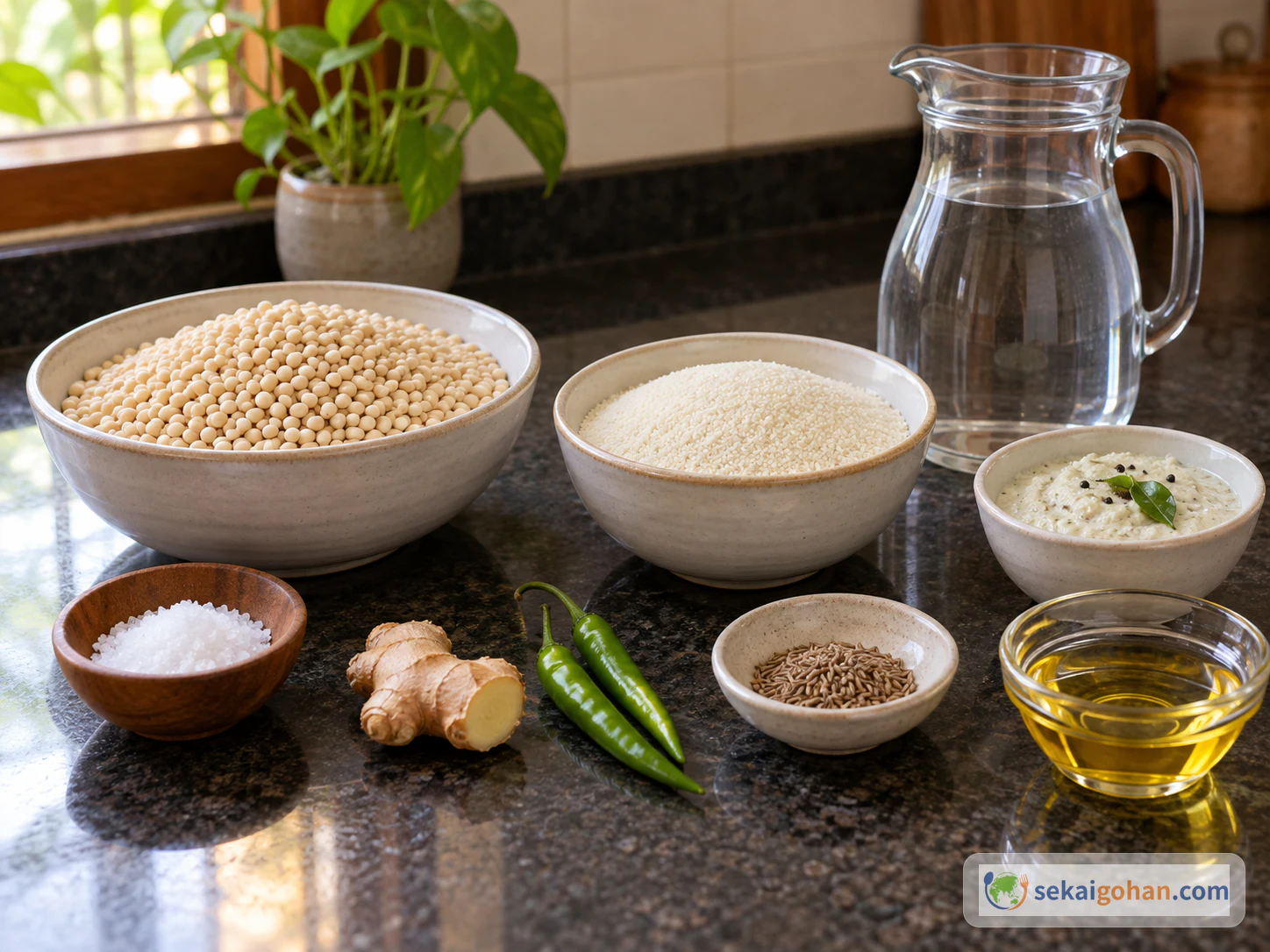
Skinless whole urad dal, rice rava, aromatics and prepared coconut chutney laid out for dibba rotti
Urad dal and rice rava form the batter; ginger, green chillies and cumin go in after fermentation

Equipment

  • Two bowls, for soaking the dal and the rava separately
  • A wet-grinding setup for grinding the urad dal into batter
  • Something to coarsely grind the ginger, green chillies and cumin seeds
  • A mixing bowl for the batter
  • A kadai with a lid
  • A spatula for flipping
  • A plate, a board and a knife for cutting wedges

Choosing the Dal and Rava for Dibba Rotti

Skinless whole urad dal is hulled urad that is still in whole grains. Stick with whole grains rather than split dal. When you shop, search by that general name and check the label so you get whole, skinless urad.

Rice rava is a coarse grain made from rice, also sold as idli rava. Check that it's rice-based rather than wheat. Wheat rava (semolina), rice flour and whole rice all behave differently, so none of them works as a stand-in. Ready-made idli batter is a different product too, not a shortcut.

Whatever cup you use, measure the dal and the rava with the same one. The rest is probably already in your kitchen: salt, ginger, green chillies, cumin seeds and cooking oil. If you don't have coconut chutney on hand, pick up a prepared one to serve alongside.

Method

How the steps flow

Steps 1–6 prepare the batter: soak the dal and rava separately, grind only the dal, then squeeze the rava and combine. Steps 7–10 cover salt, fermentation, and adding the aromatics afterward. Steps 11–19 cover cooking under a lid, flipping, cutting and serving.

Common Dibba Rotti Mistakes

Most of what goes wrong with this rotti comes from changing the order of the steps or rushing the pan. Keep an eye on these:

  • Watery batter: add only a little water while grinding the dal. Go by texture; you want it smooth and thick.
  • Rava not squeezed: squeeze the soaked rice rava before it goes into the batter, leaving the soaking water behind.
  • Aromatics too early: salt goes in before fermentation. Ginger, chillies and cumin go in only after the 5 hours.
  • Turning the first side too soon: wait until the sides pull away from the kadai and the underside is browned, within the 10–12 minute range. The second side needs 8–10 minutes.
  • Too much oil: the 4 Tbsp of oil is for the whole recipe, not per rotti or per bowlful.

Frequently Asked Questions

How many dibba rotti does this make?

Each bowlful (5–6 ladles) goes into the pan at one time, so cook one bowlful at a time.

Do I need ice water when grinding the dal?

Ice water only comes into it when grinding in a mixie. With ordinary wet grinding, as in these steps, plain water is fine.

What kind of pan does the recipe use?

Any kadai with a lid will do. The lid is what matters.

Can I leave out the ginger and green chillies?

Yes, they can be left out, though the rotti is made with them in the amounts listed.
Sources