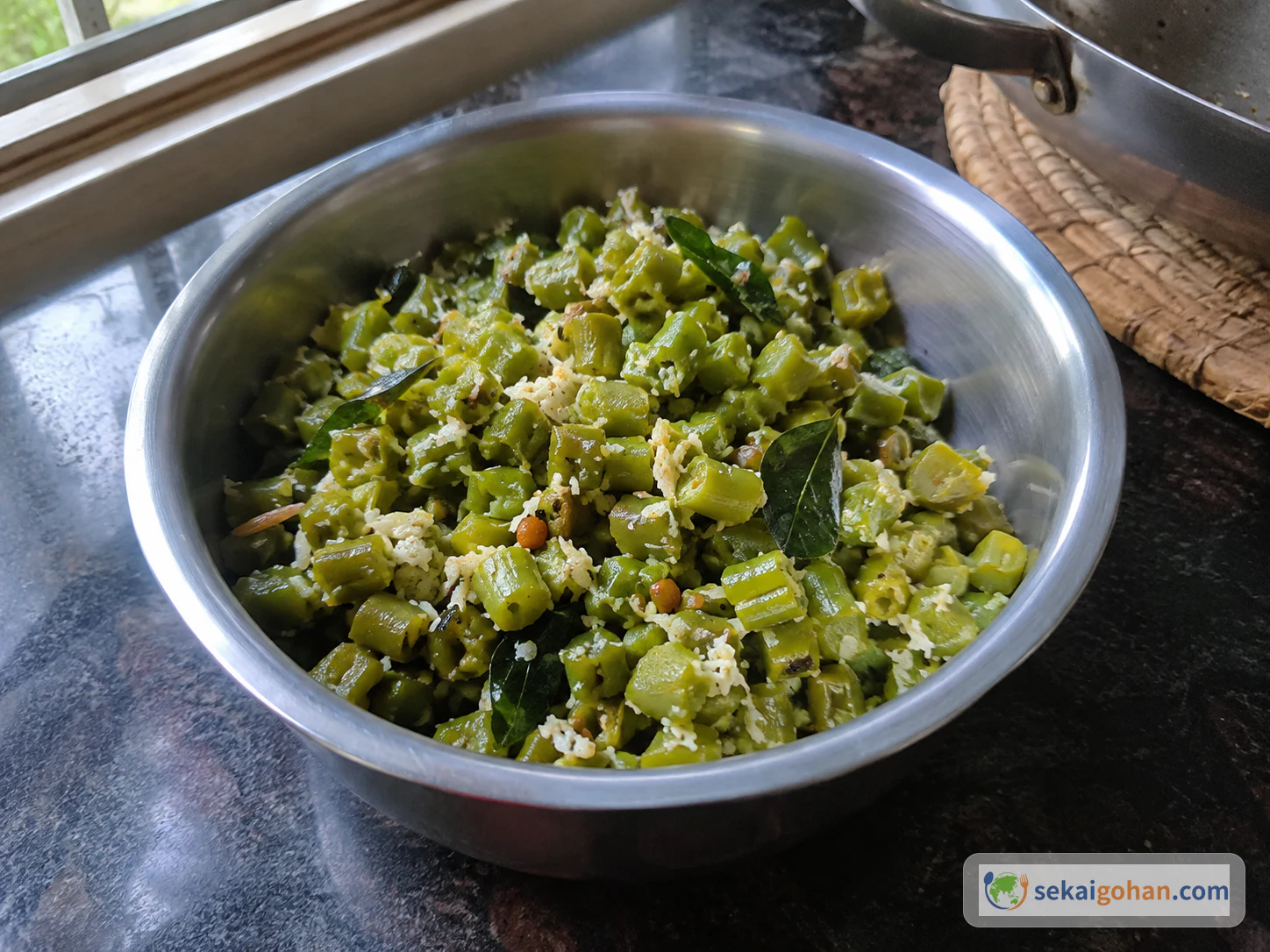
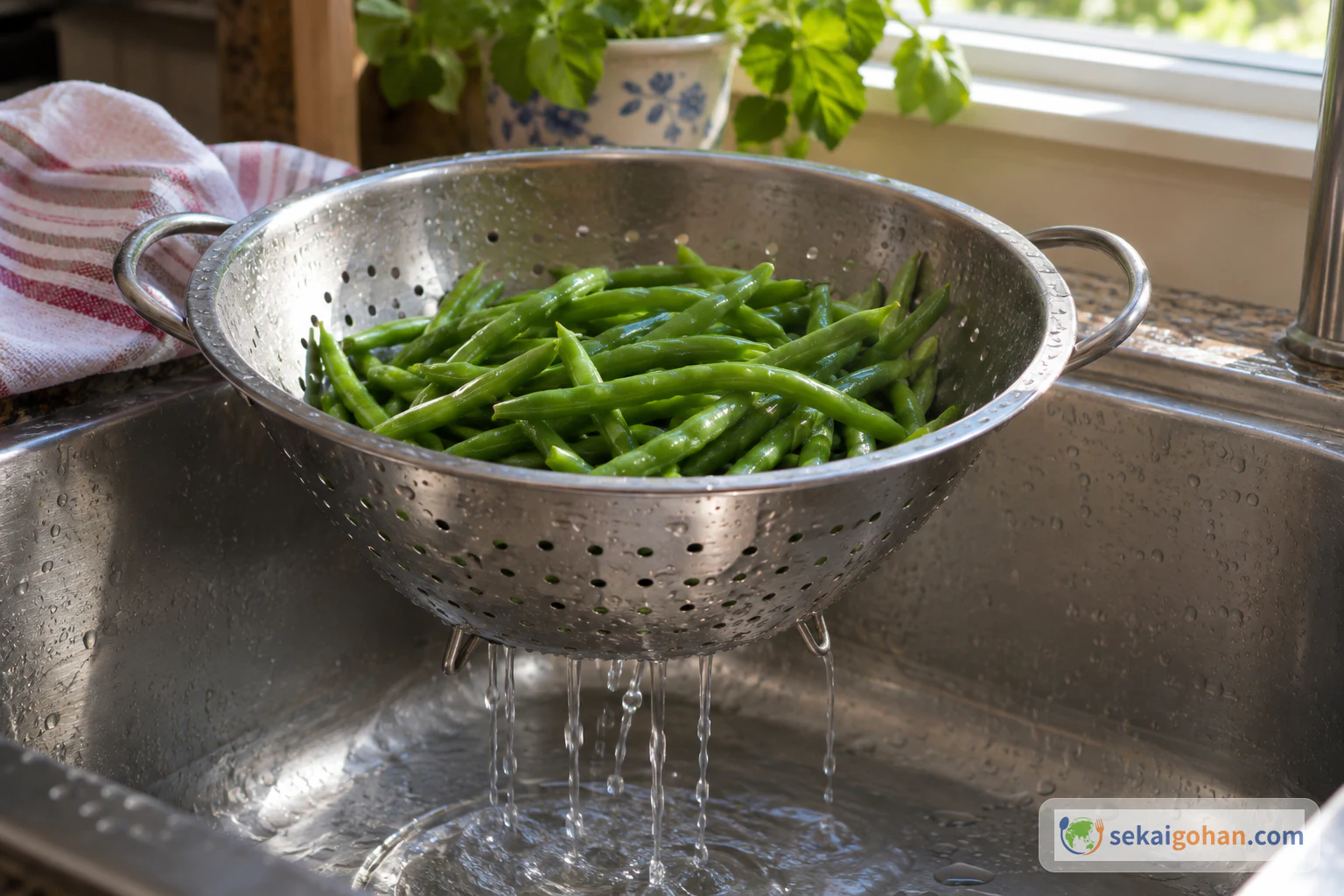
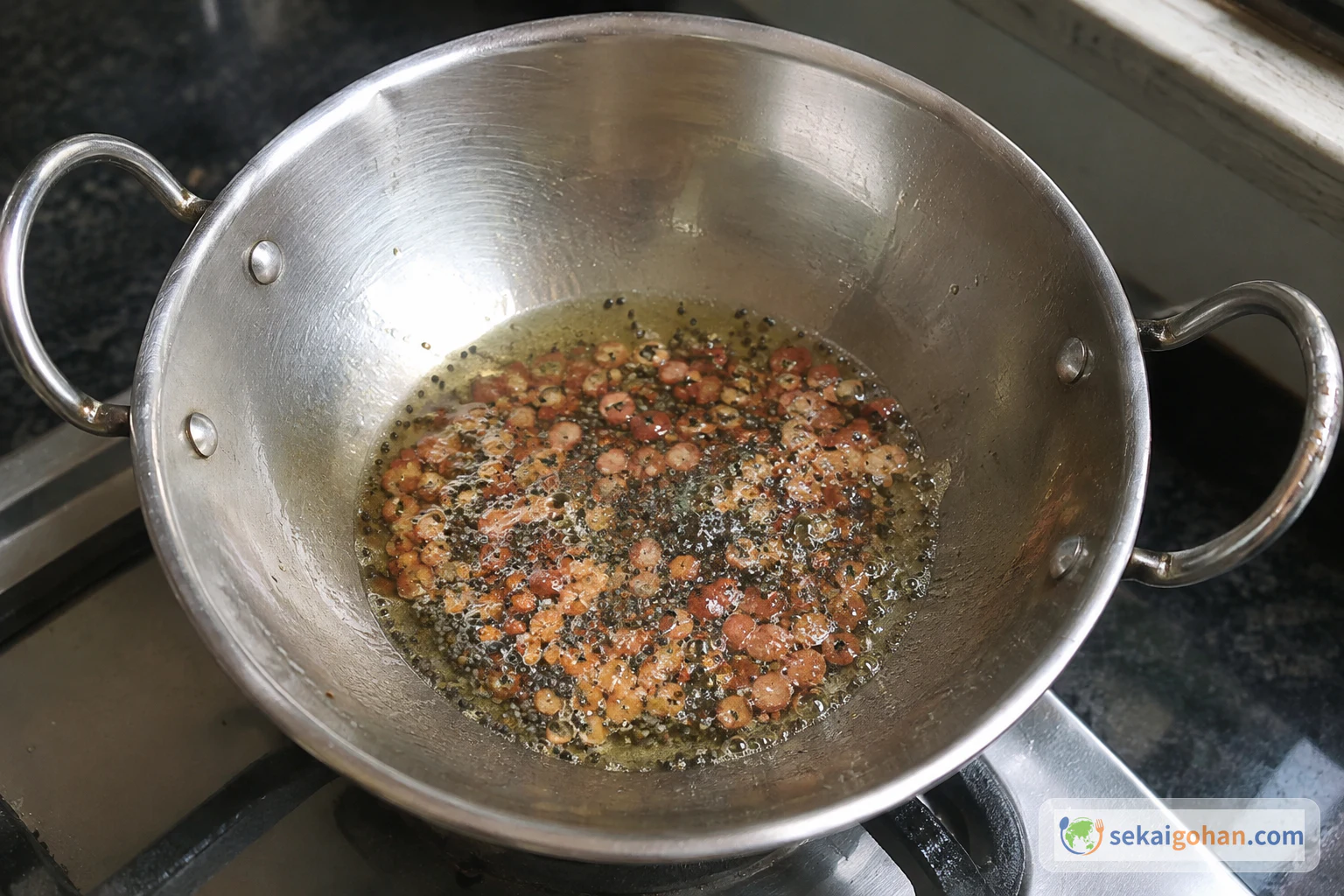
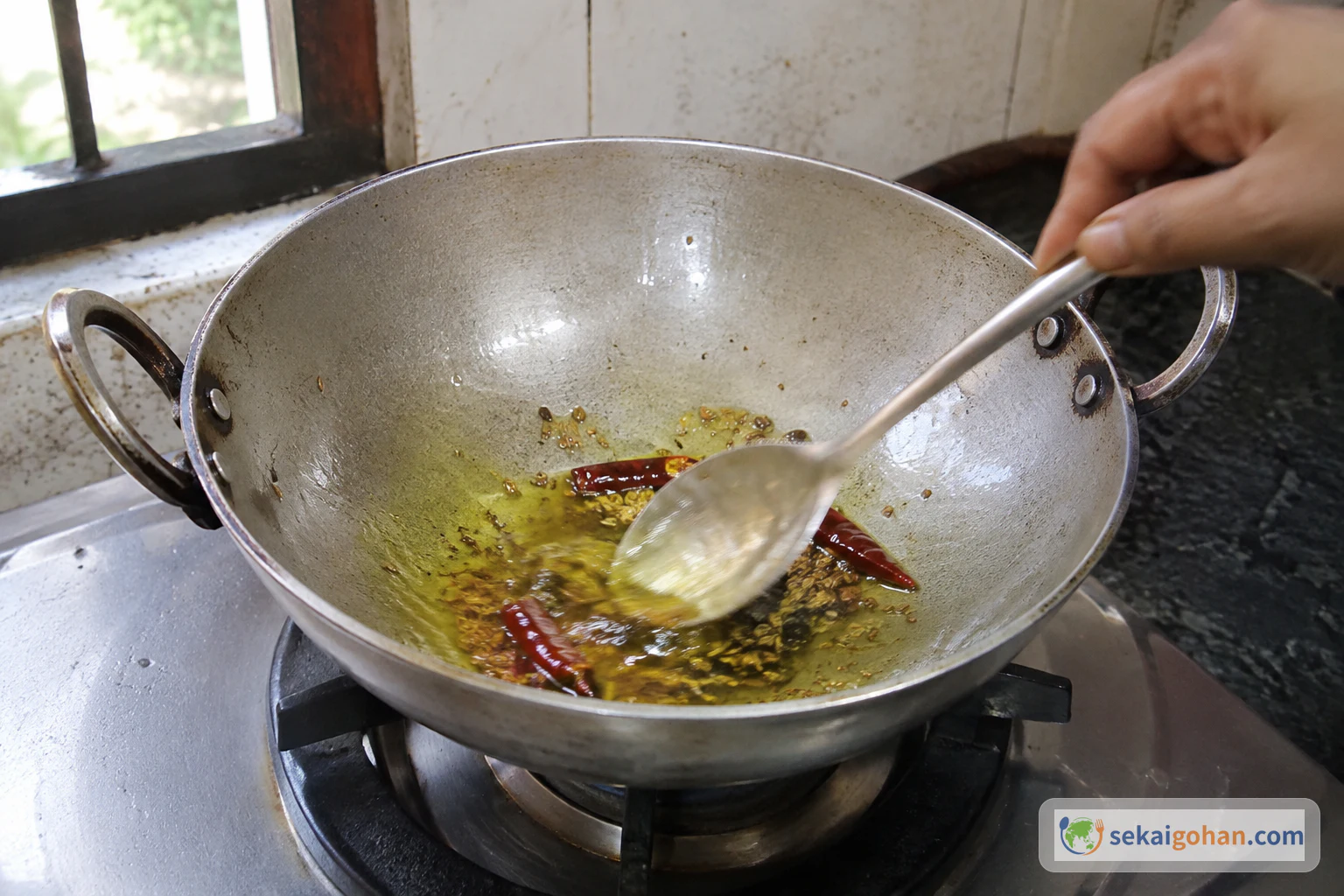
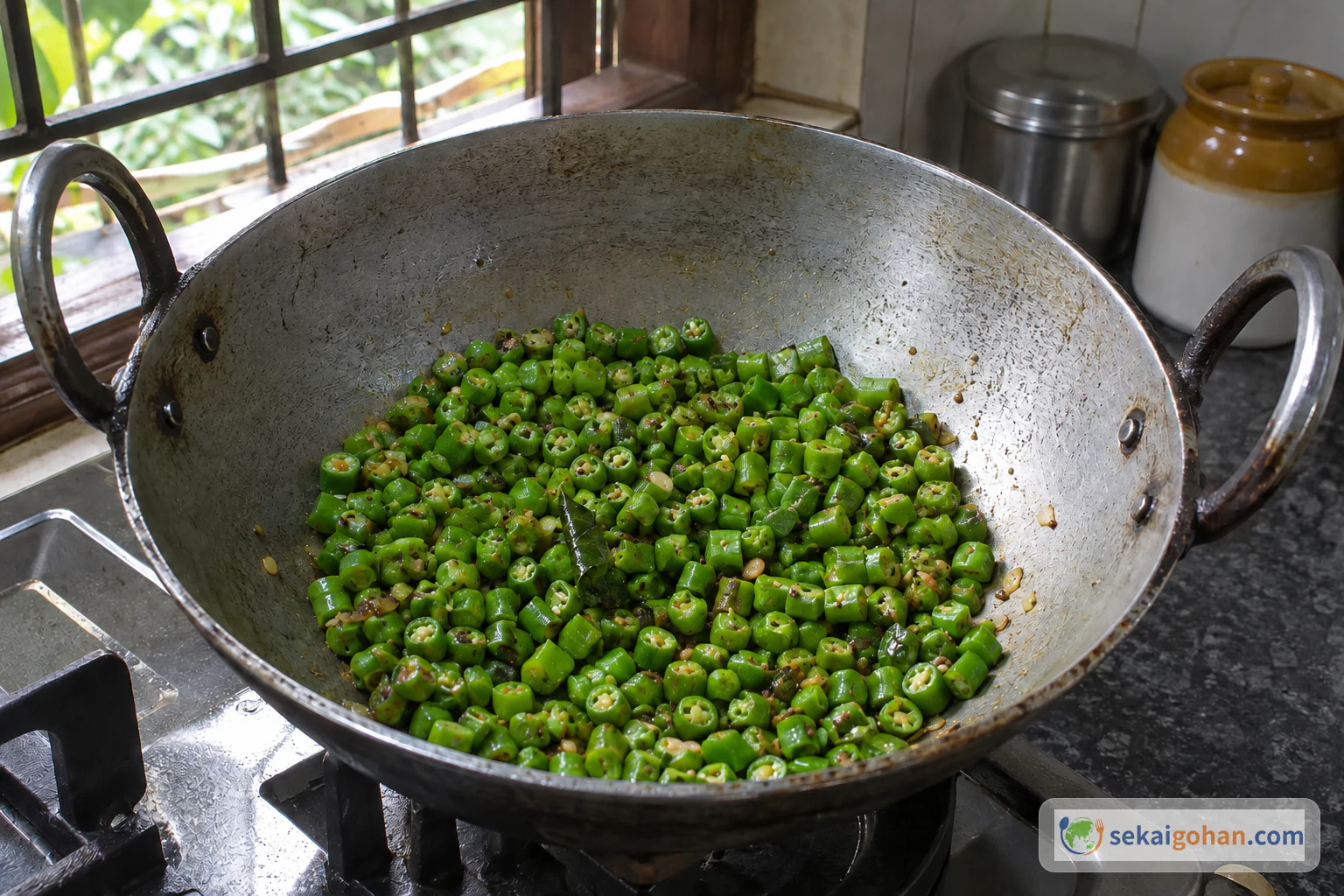
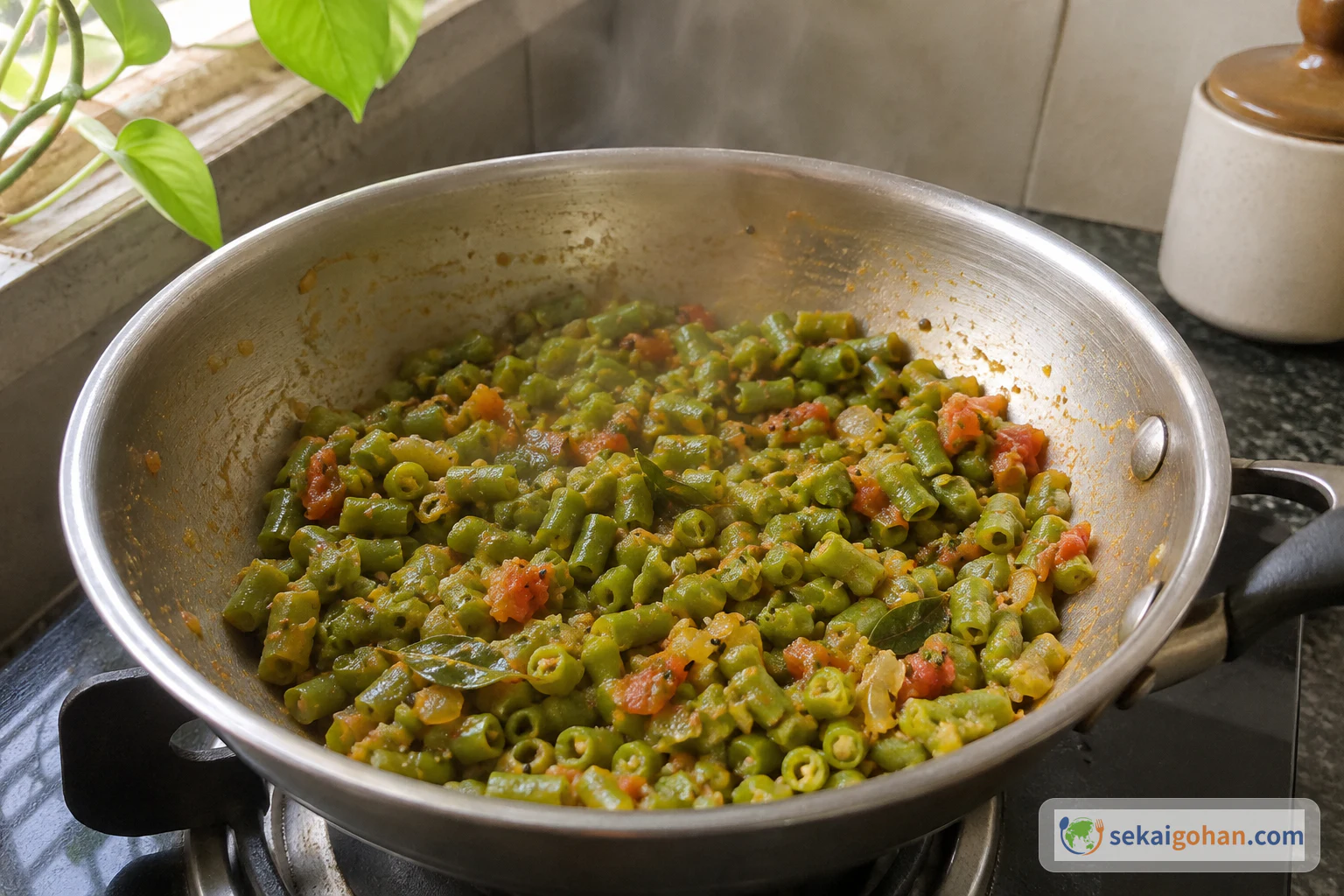
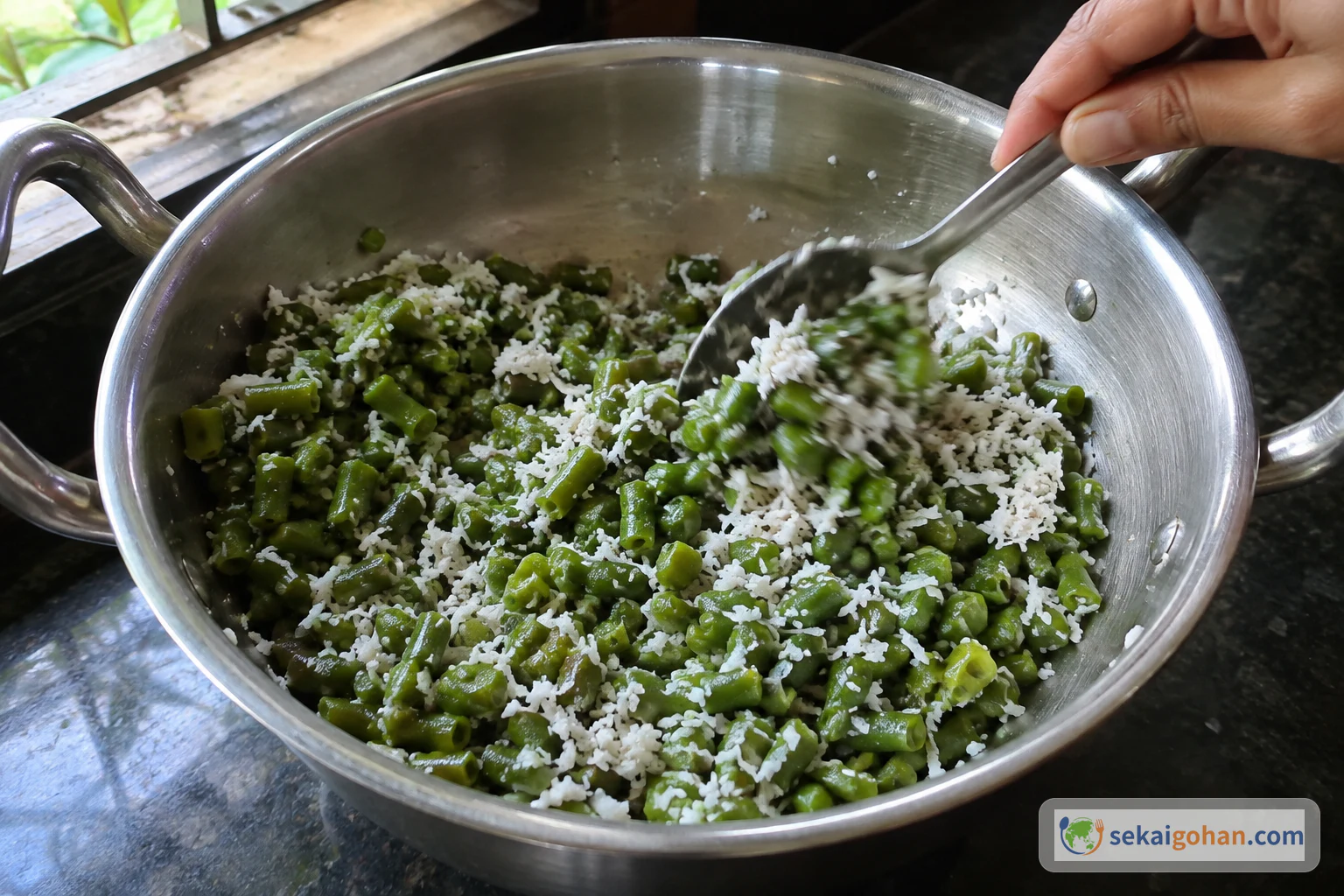
Mustard seeds splutter in a little oil over low heat while split urad dal turns a maroonish red beside them. Dried chillies and curry leaves follow, then turmeric and a pinch of hing, then a pile of finely cut green beans. Once the beans are tender under the lid and the pan is dry, 2–3 tbsp of coconut gets mixed through and the heat goes off right away. That's beans poriyal: a South Indian side dish of green beans or French beans, mildly spiced and fragrant with coconut.
Beans Poriyal, a South Indian Dry Side Dish
Poriyal is a dry vegetable preparation from South India. Plenty of other vegetables get the poriyal treatment too, but the amounts and method here are worked out for beans. For more dishes from the country, see our India page.
10 minutes prep, 20 minutes cooking, 30 minutes total, 2 servings.
Ingredients for Green Bean Poriyal
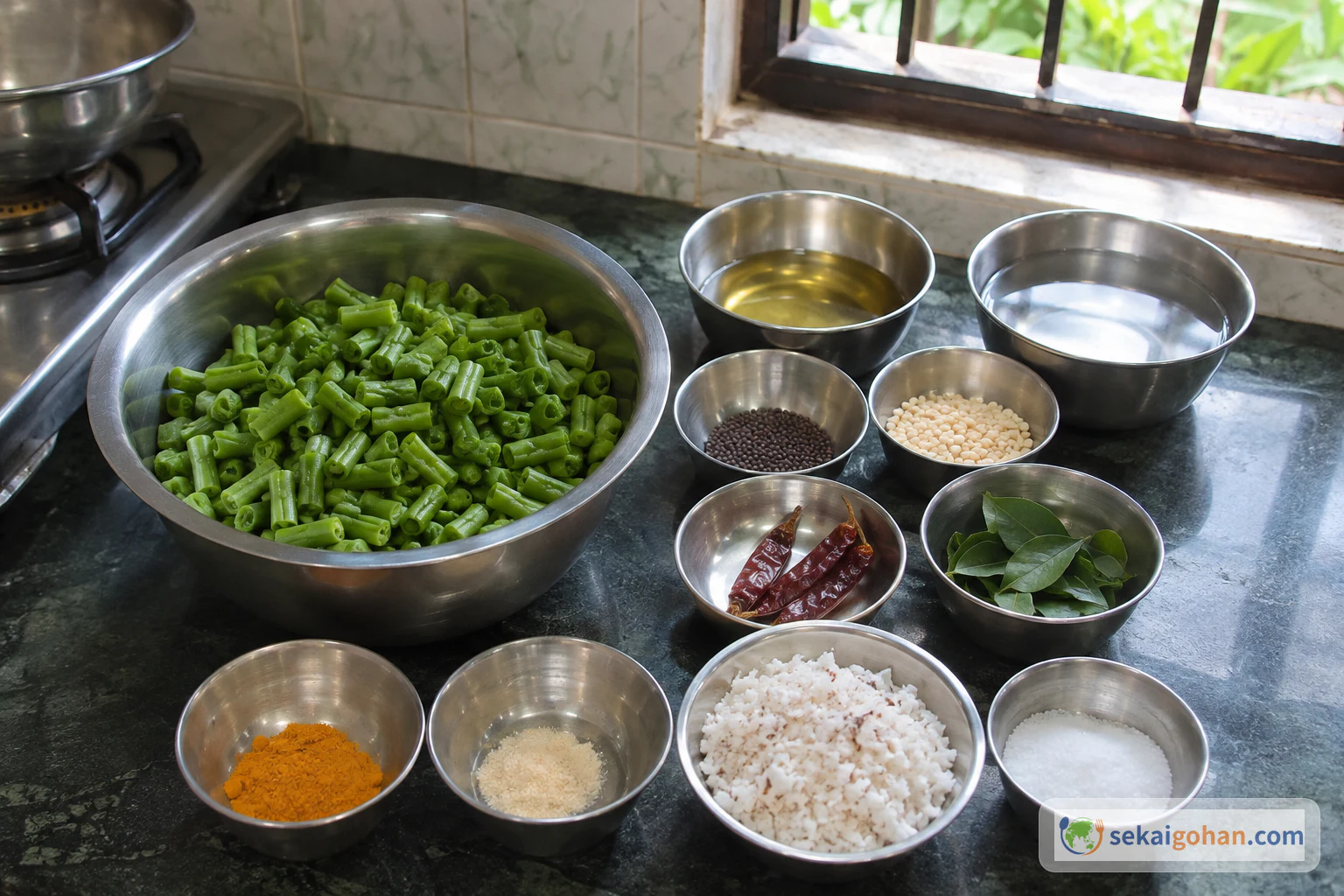
Choosing Coconut, Hing and Other Ingredients
Most of this list is easy to find. Four items may take a bit of looking for: curry leaves, split husked urad dal, hing and unsweetened desiccated coconut. The oil is a neutral one.
- Coconut: Choose a food-grade commercial desiccated coconut sold as ready to eat and unsweetened, and follow its label.
- Hing: Read the label on the product you buy. Hing isn't always gluten-free.
- Chillies: Use dried red chillies, broken open with the seeds removed.
What you buy determines whether the coconut is ready to eat and unsweetened, and what the hing contains. Go by the label.
Equipment
- Colander
- Knife and cutting board
- Pot, pan or kadai with a lid
- Spoon for stirring
- Measuring spoons and a cup measure
Method: From Tempering to Tender Beans
Steps 19 and 21 apply only in the situations they describe. Skip them if your pan doesn't call for them.
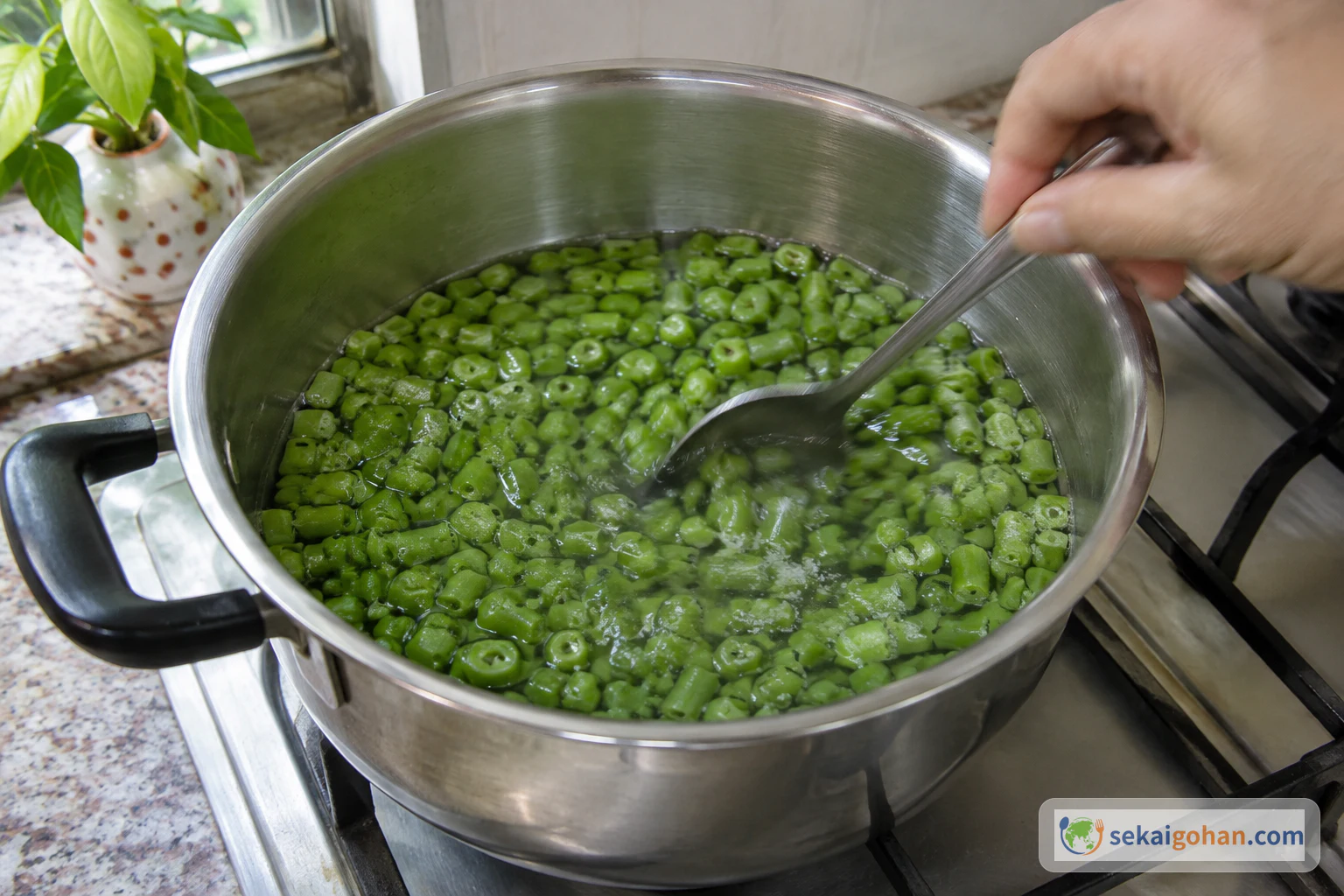
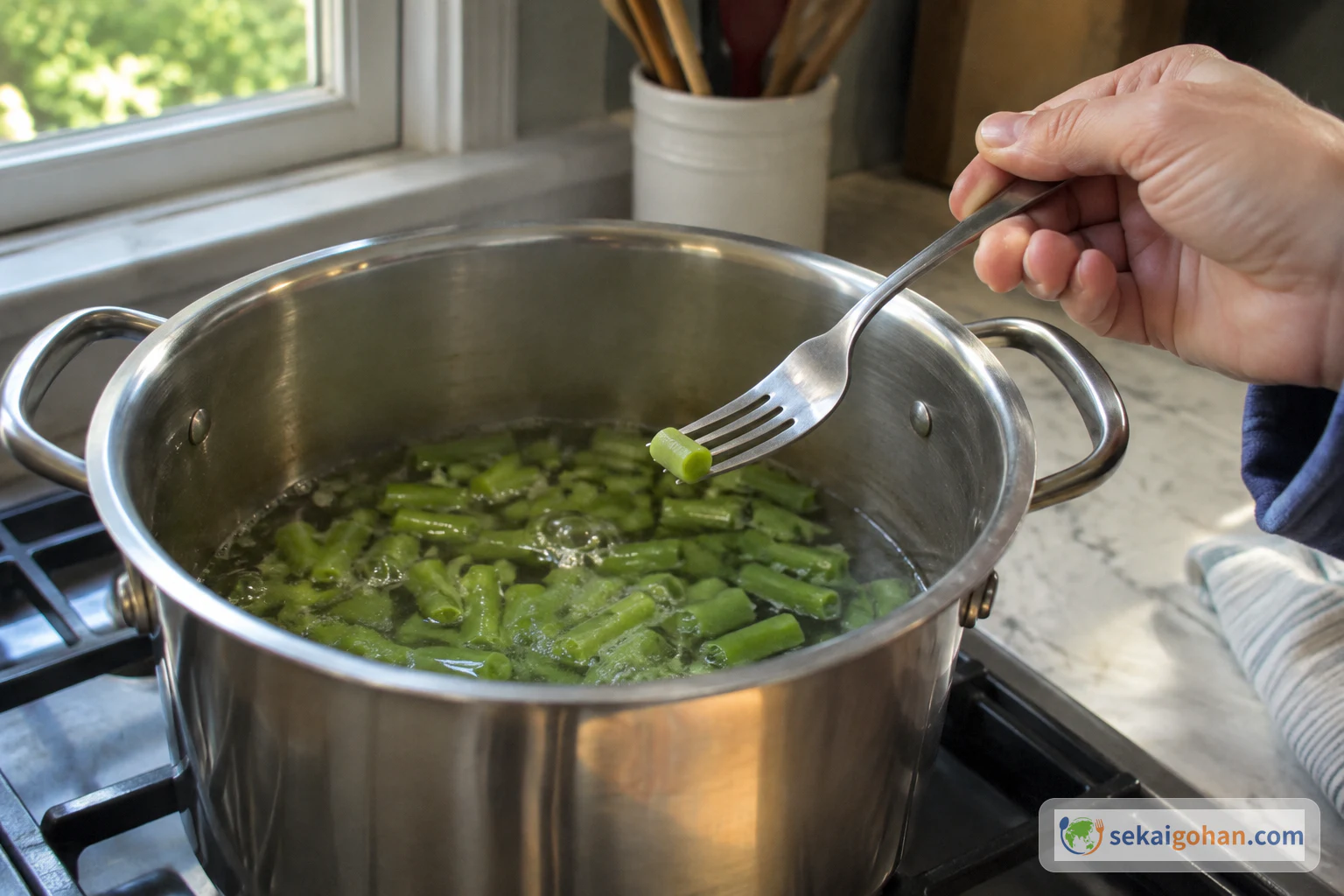
The images show each action. Judge tenderness and doneness by what is in your own pan.
Fixing Common Beans Poriyal Problems
Most of the work is in two places. First, keep the tempering on low heat so the mustard seeds and urad dal don't burn. Second, add the coconut only once the beans are tender and no free water is left in the pan, then mix and switch off the heat.
| What you see | What to do |
|---|---|
| The dal is darkening quickly | Keep the heat low and move on to step 3 as soon as the mustard seeds have spluttered and the dal is maroonish red. Don't let it burn |
| A bean's strings won't pull off easily | Leave them and go on to cutting |
| The pan is dry and the beans are still not tender | Add water as needed, cover and keep simmering on low heat |
| The water is still there and the beans are not tender | Keep the lid on and continue on low heat without adding more water |
| The beans are tender and water remains | Take off the lid and let the water evaporate before adding the coconut |
| The beans are tender and the pan is already dry | Skip step 7 and go straight to the coconut |
Serving and Varying Beans Poriyal
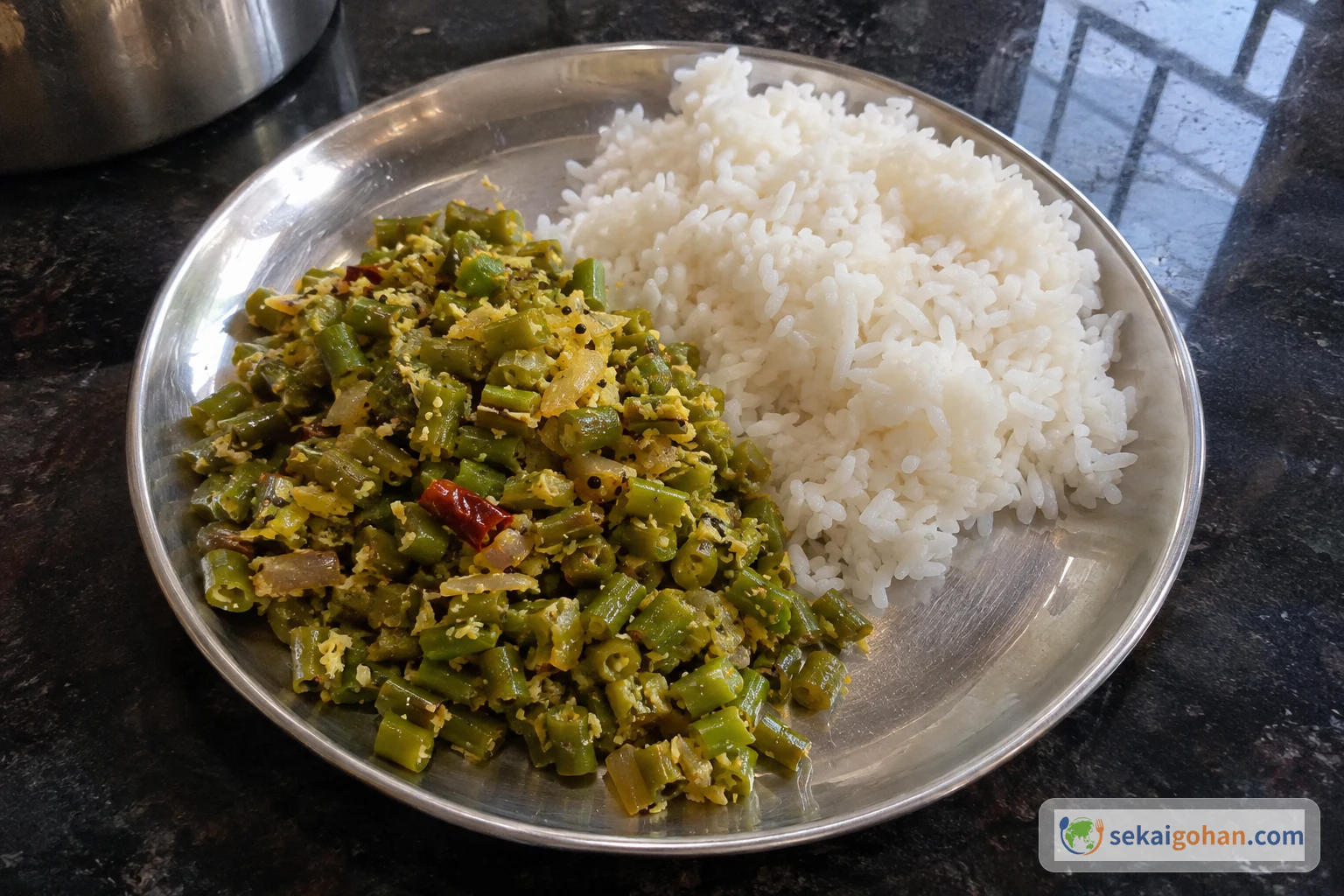
Serve the poriyal warm, straight from the pan, as a side dish. It works with rice alongside sambar or rasam, with roti or paratha, or with dal and rice.
The recipe has a little room to play. Slice the beans diagonally or straight across, as long as they stay about 1/4 inch wide. Use 2 tbsp or 3 tbsp of coconut, whichever you like, and if you want a coconut note in the fat as well, swap the neutral oil for 2 tbsp coconut oil.
Frequently Asked Questions
How much water will I need in total?
There's no fixed total. Start with 1/2 cup and add more if the pan dries out before the beans are tender.
How long does the covered simmer take?
There's no set time, so go by the beans and simmer until they're tender. The cooking as a whole takes 20 minutes.
Can I use fresh coconut?
This recipe is written for commercial ready-to-eat unsweetened desiccated coconut and doesn't include a method for fresh.
Can I use these amounts for other vegetables?
Not automatically. The amounts, water and doneness cues here are for beans, so for another vegetable, use a recipe written for that vegetable.