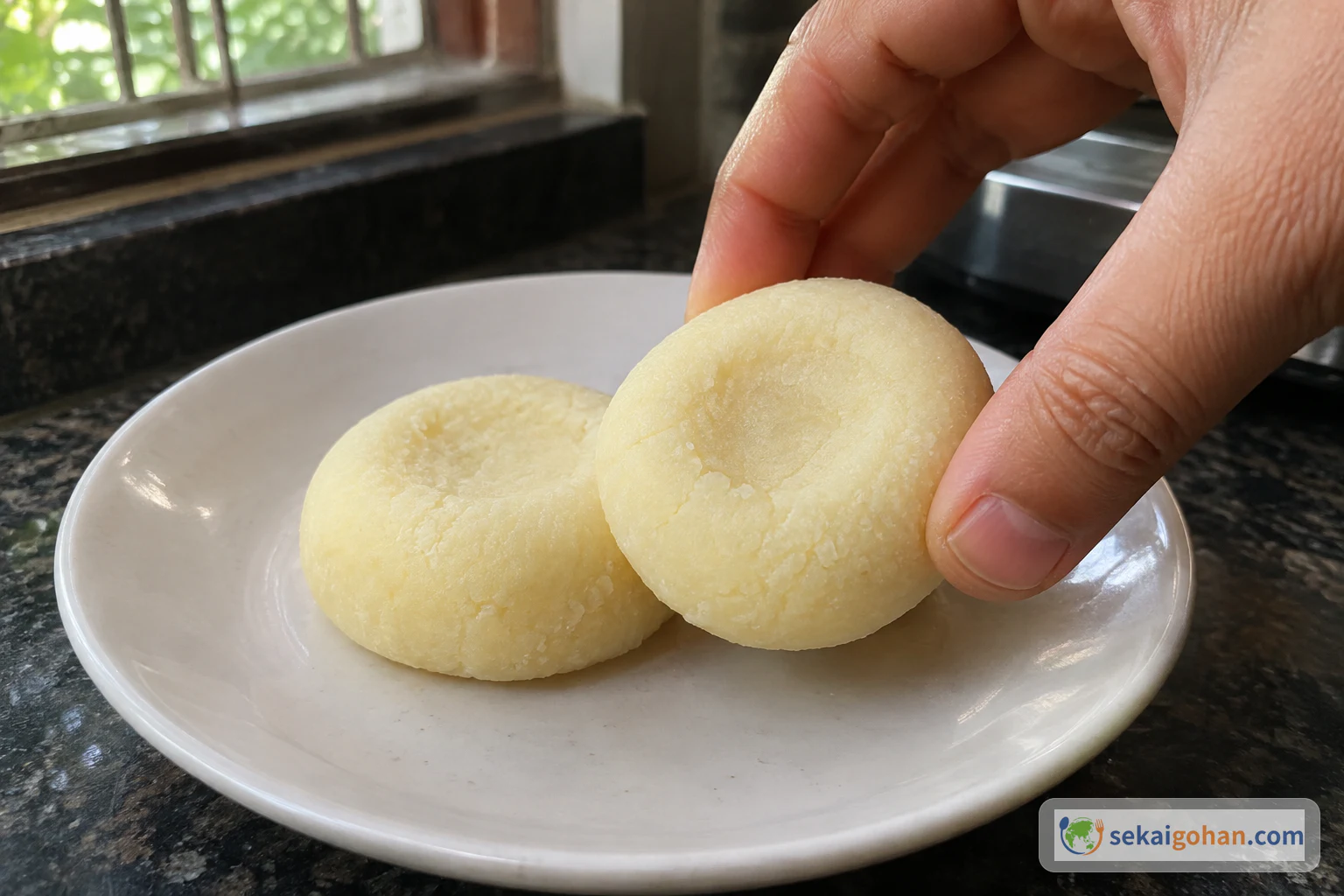
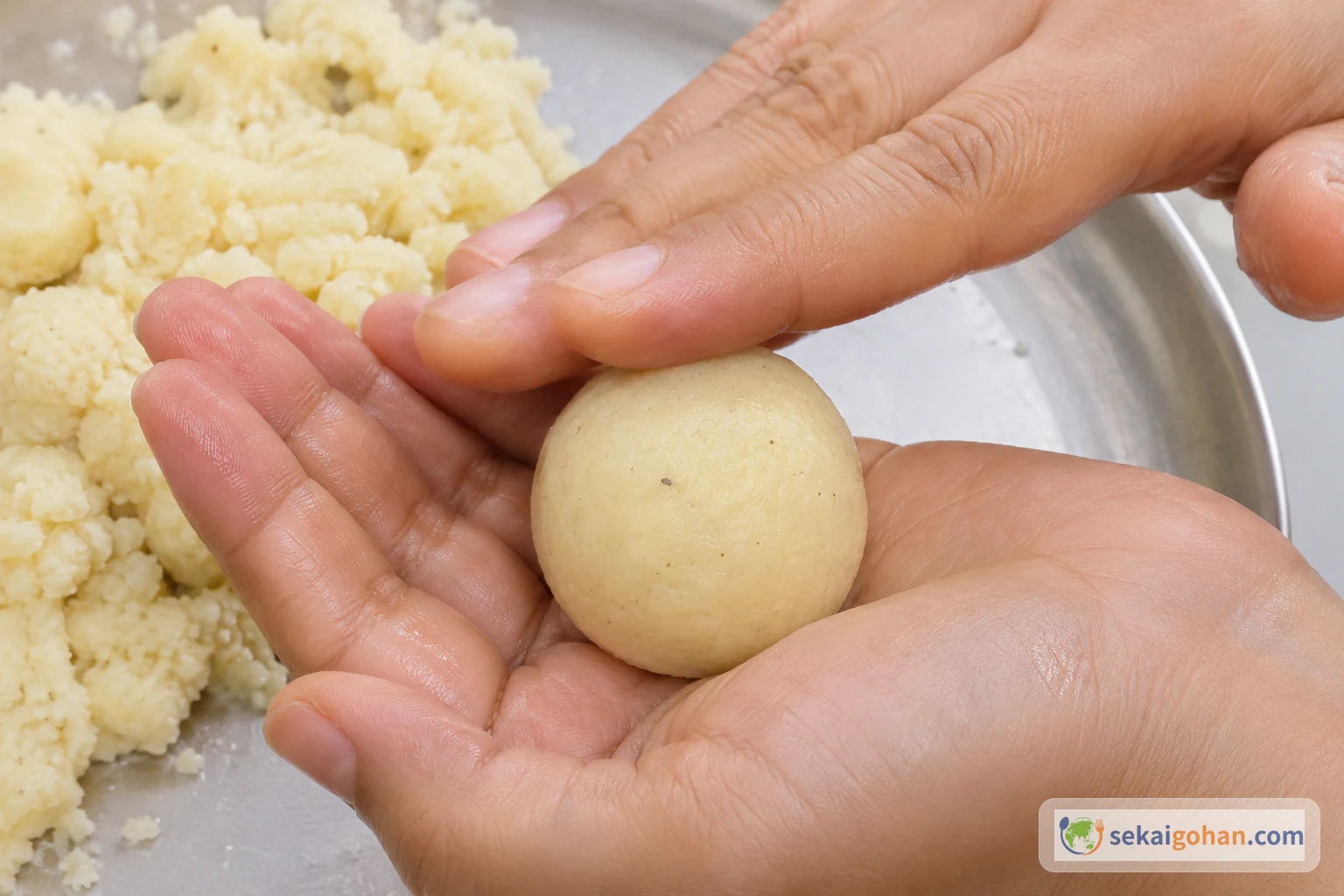
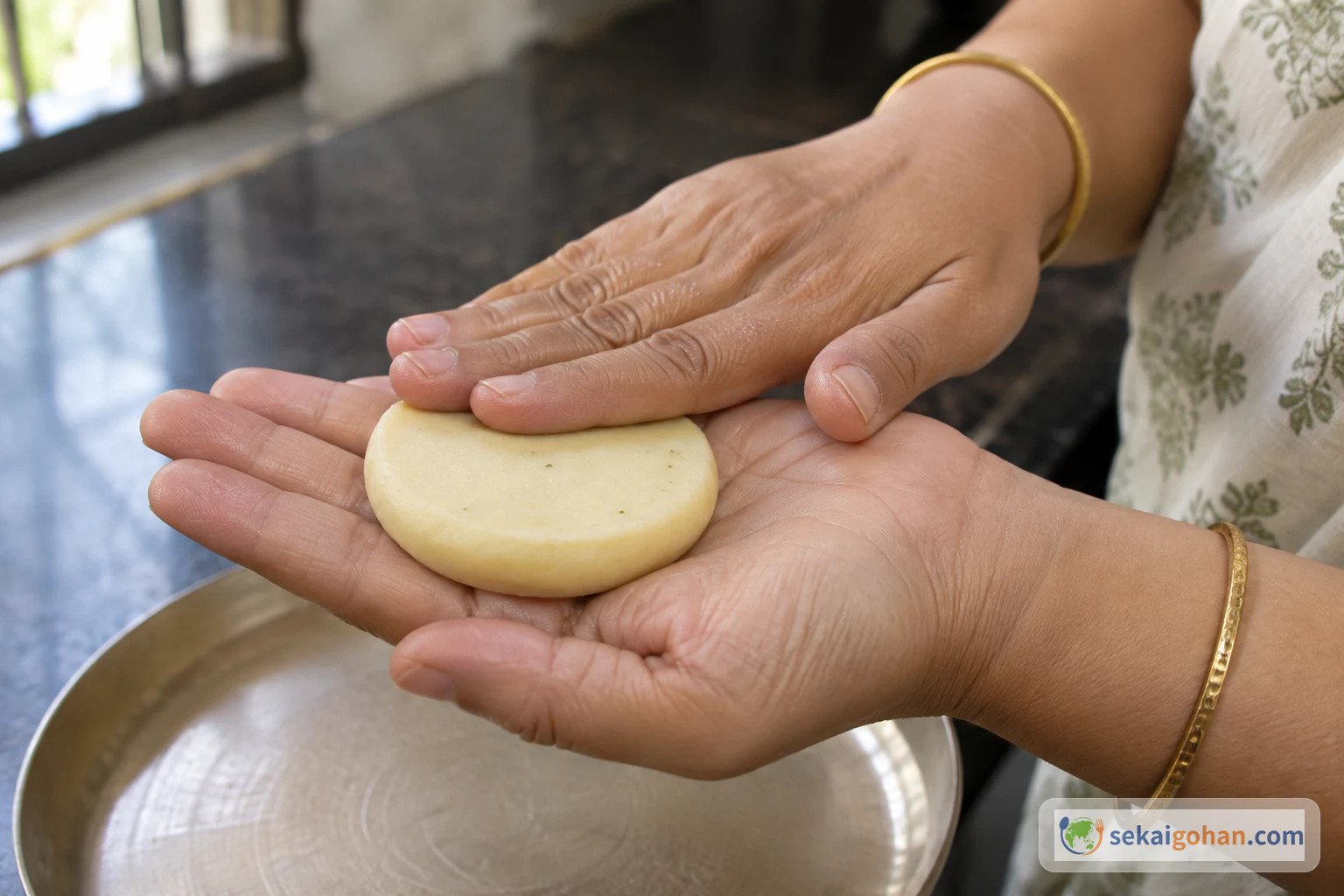
Thick, pale discs of milk peda sit on a steel plate, each one rolled smooth and pressed gently flat between the palms. It's about as plain as an Indian sweet gets: grated khoya, sugar, a little cardamom and a splash of milk, stirred over low heat until the mixture gathers into one soft mass. The flavor is milky and gently sweet, with cardamom in the background. Doodh peda is a North Indian sweet, and this version keeps it simple.
About Milk Peda
Peda is one of many sweets across India built on khoa (also written khoya, or called mawa), a traditional dairy product made by cooking milk down with heat. The name covers a whole family of sweets, and how they're made changes with regional taste. Each regional version has its own formula, so it's best thought of as its own dish rather than a tweak to this one. For more dishes from the same country, see India.
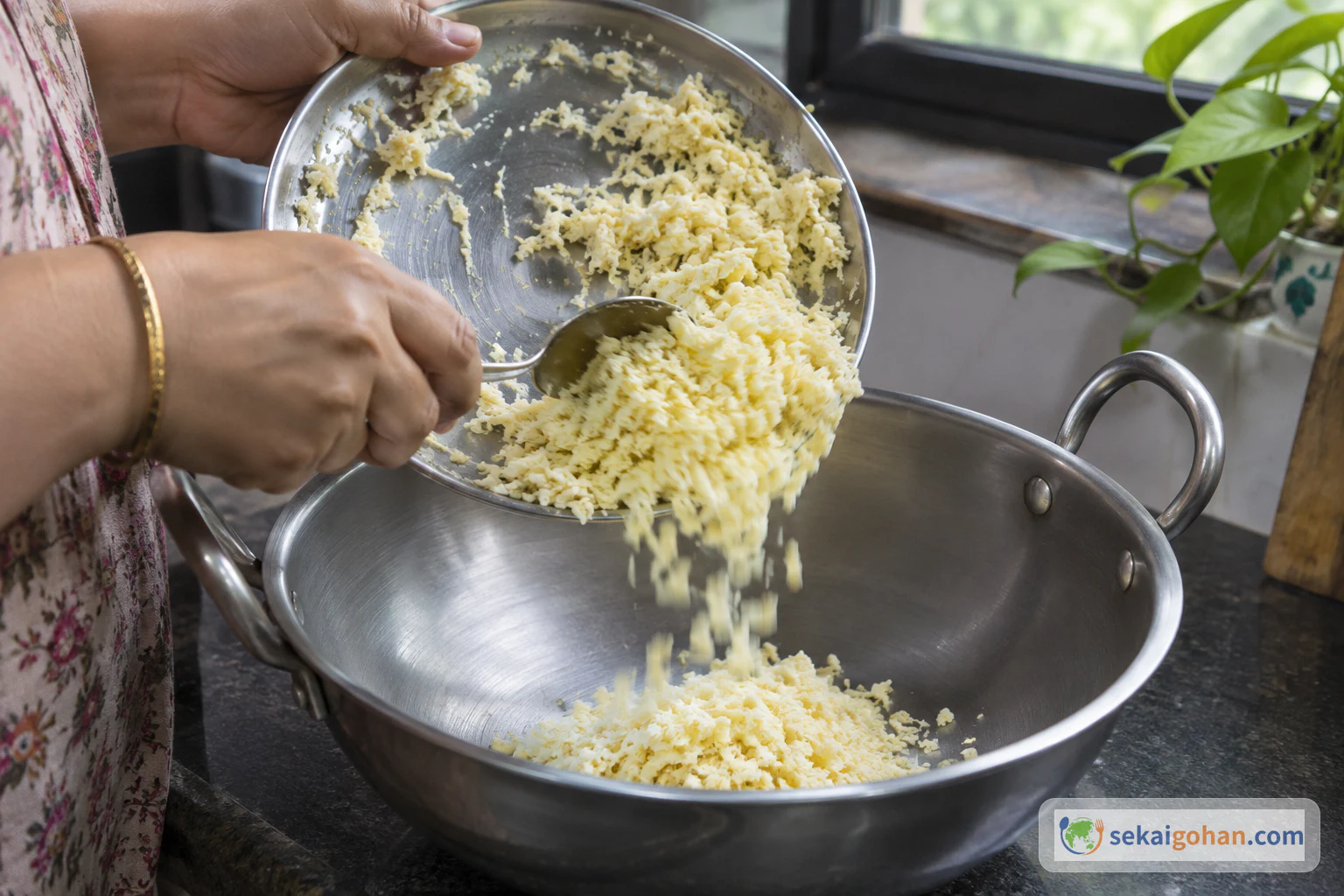
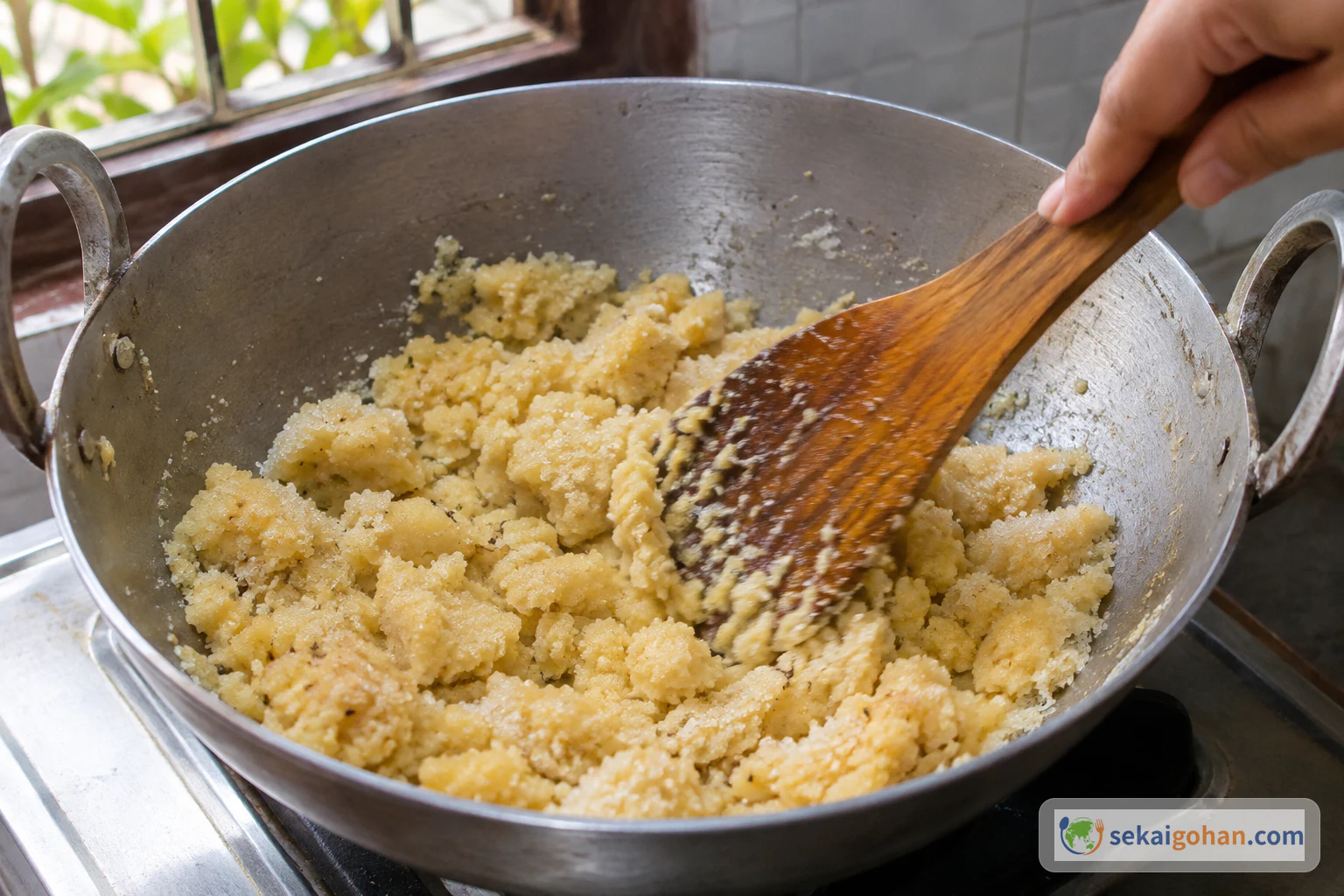
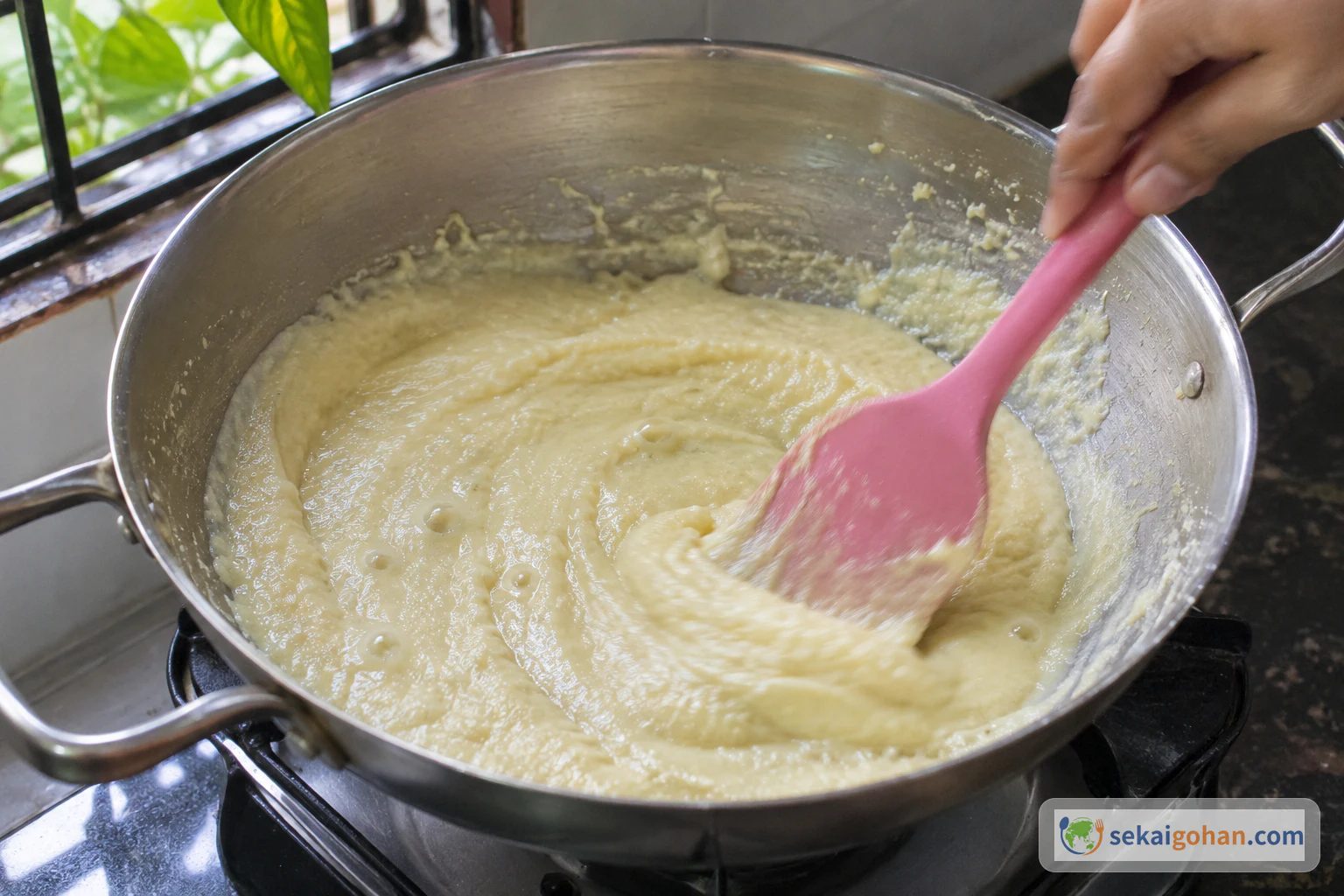
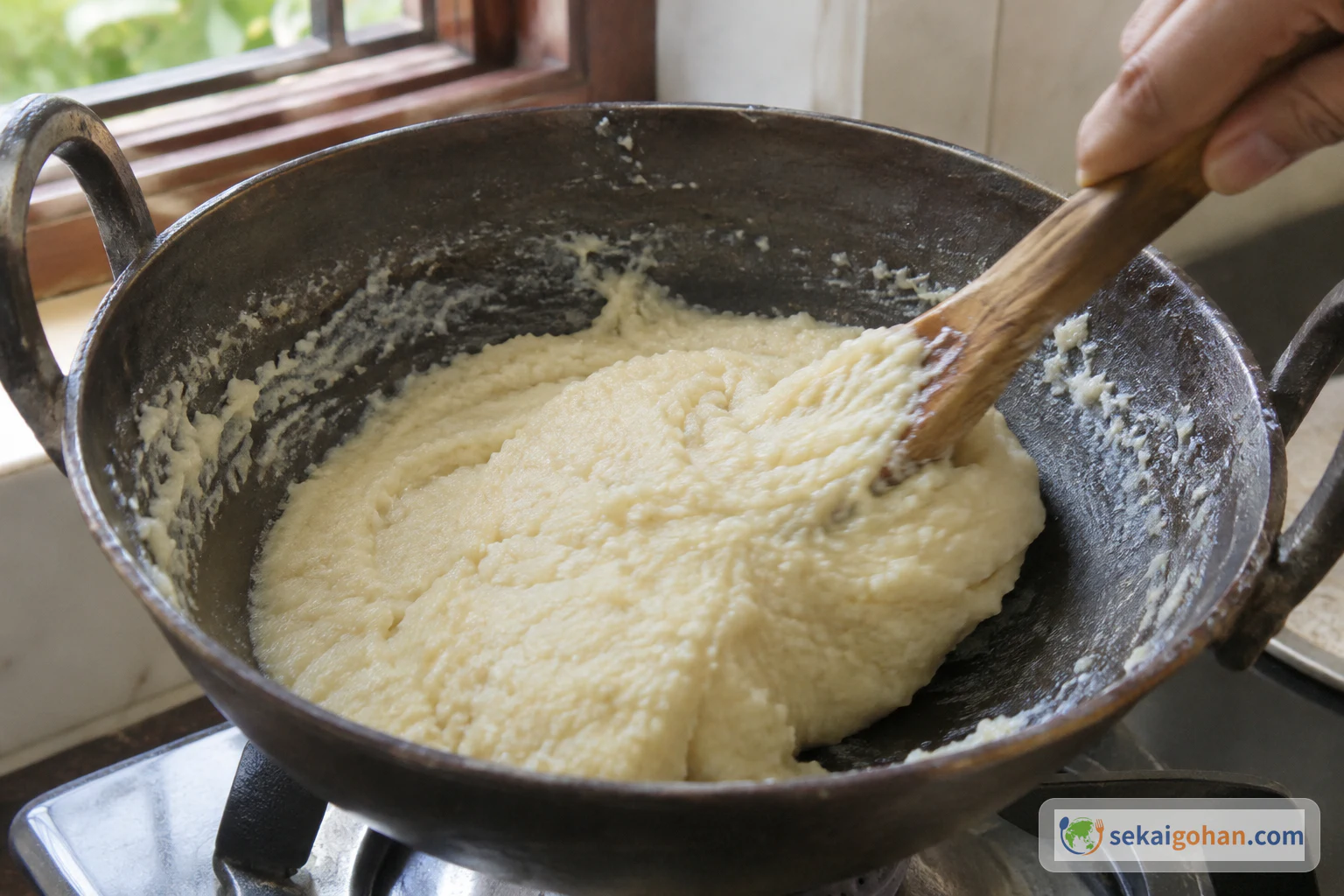
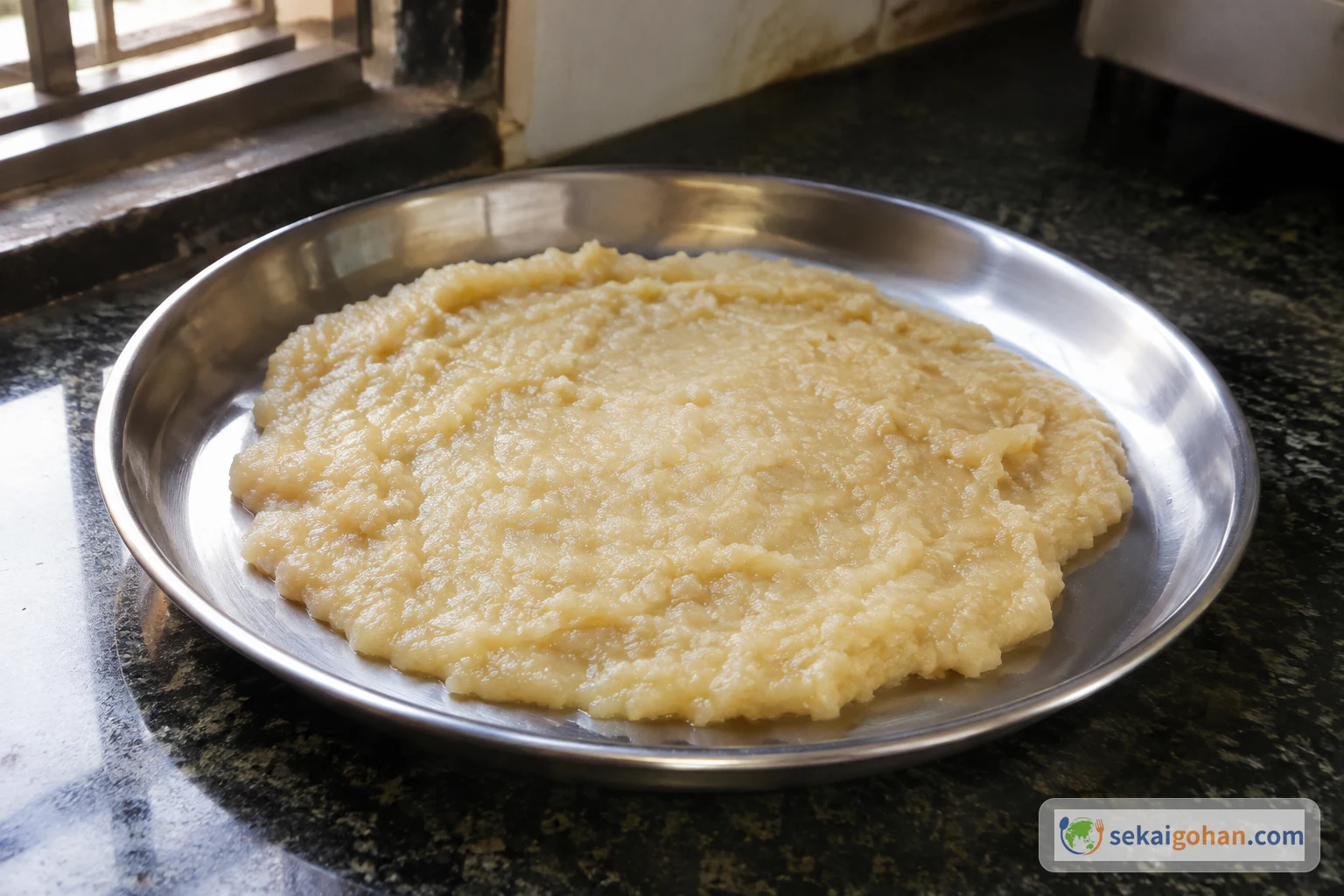
This doodh peda starts from khoya that's already made. It goes back into a heavy-bottomed pan with sugar and a little milk and is stirred over low heat. First it turns soft and creamy, with small bubbles rising through it. Then it thickens and starts to come away from the sides of the pan. It goes onto a steel plate while hot and is shaped once it's cool enough to handle.
Ingredients: Four Things, Kept Plain
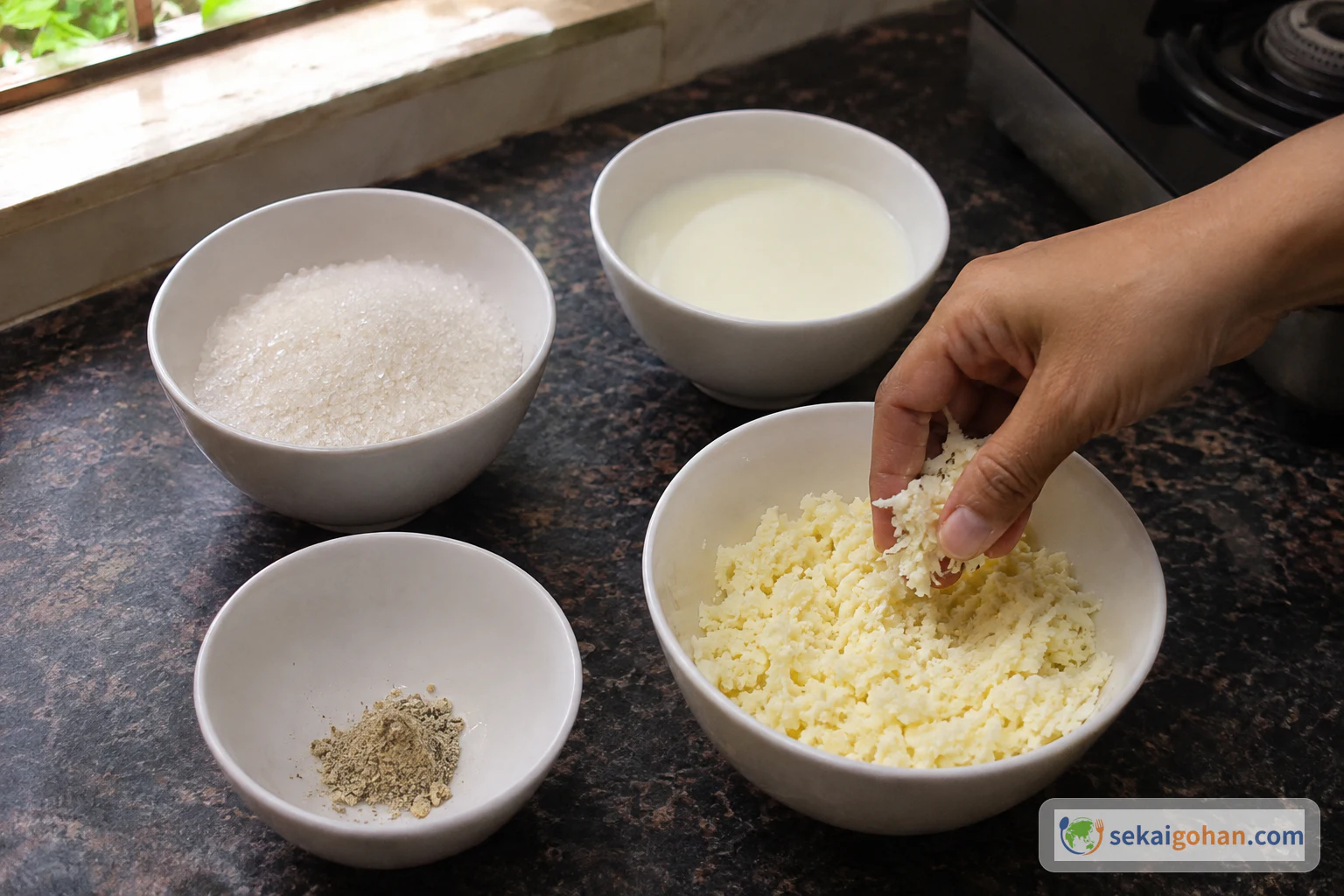
Choosing the Khoya for Milk Peda
Look for good-quality commercially prepared unsweetened khoya, also sold as mawa. The sugar is measured separately, so sweetened khoya won't work here. Stick with store-bought khoya. Homemade khoya, condensed milk and milk powder don't stand in for it in this recipe.
Use exactly 2 tablespoons of milk and add it all at once at the point given in the method, even if the mixture looks dry. This peda is plain on purpose: no nuts, saffron, rose or other flavorings, no ghee on your hands and no pattern pressed into the top. All you taste is khoya, sugar, cardamom and milk.
Peda is a dairy sweet. Khoya and milk are both milk products.
Equipment
- Grater
- Heavy-bottomed pan
- Spatula (a wooden one works well)
- Steel plate or tray
- Small serving dish
Method: Low Heat, Constant Stirring, Shaping While Lukewarm
The key signs are a soft, creamy mixture with small bubbles, followed by a thick mixture that starts to leave the sides of the pan. Keep the color pale and don't let it brown.
Milk Peda Troubleshooting
The whole method comes down to low heat, constant stirring and watching the pan. The mixture is ready when it's thick and pulling away from the sides. Shape it while it's still lukewarm.
| What you see | What to do |
|---|---|
| The mixture is still loose and doesn't leave the pan | Keep it over low heat and keep stirring until it is thick and starts to pull away from the sides. |
| The color is darkening toward brown | Keep the heat low and stir without stopping. Aim for a slight change in color, not browning. |
| The mixture looks dry after the milk goes in | Keep to the 2 tablespoons and carry on stirring over low heat. |
| It's too hot to handle on the plate | Wait until it is lukewarm and comfortable to touch before you portion it. |
| You're waiting for it to cool completely | Shape it while it is still lukewarm. |
| You end up with more or fewer than about 12 pieces | The count depends on piece size, so aim for medium peda. |
Frequently Asked Questions
Does it really take 15 minutes?
Prep takes 5 minutes and cooking takes 10 minutes, 15 minutes in all. Judge the cooking by how the mixture looks and behaves in the pan, not by the clock.
How many peda does this make?
About 12 medium peda. Your count depends on how big you make each piece.
How long does peda keep?
Peda is best served fresh, right after shaping.