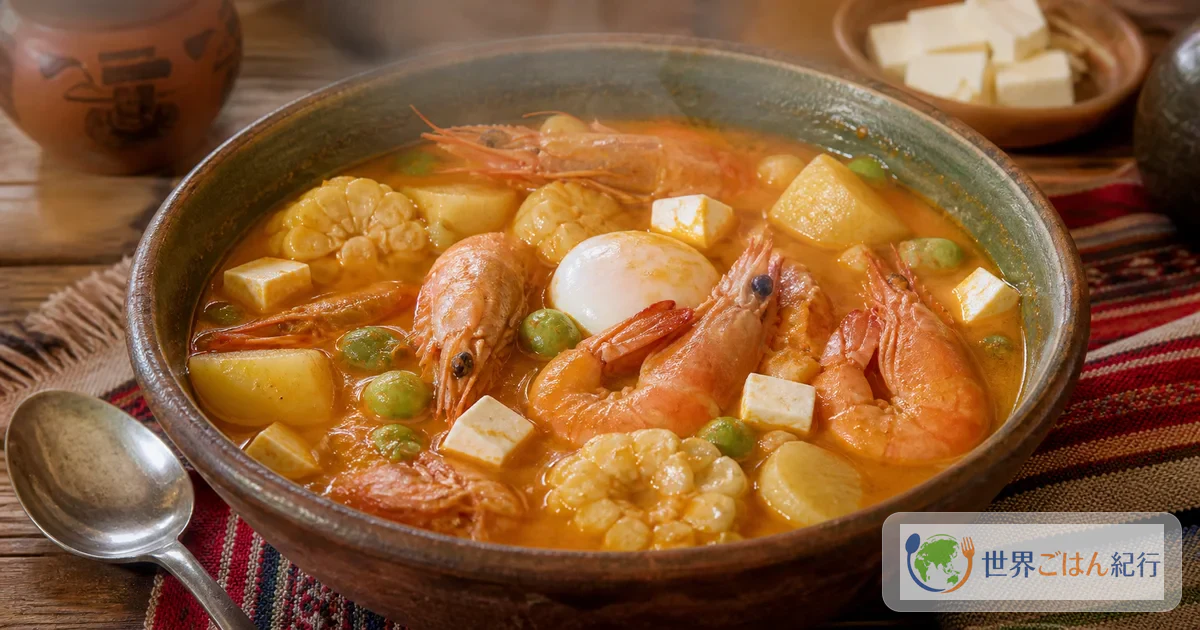
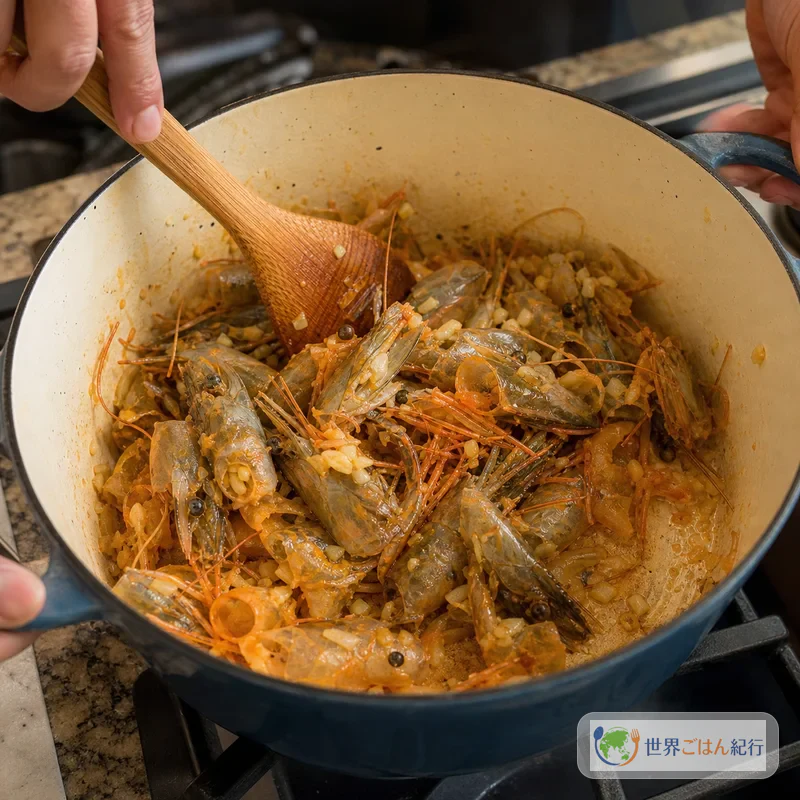
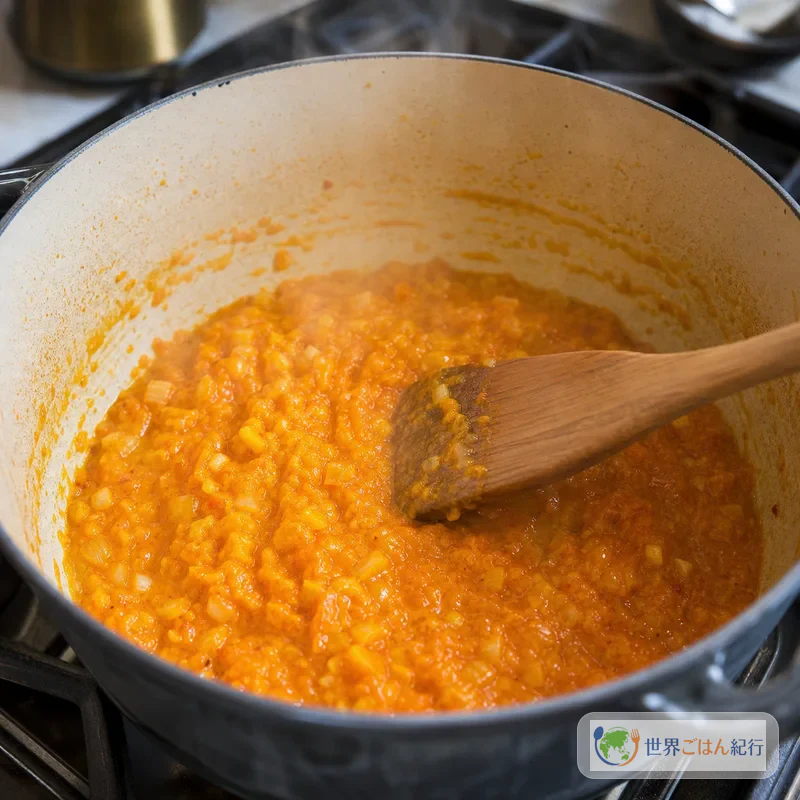
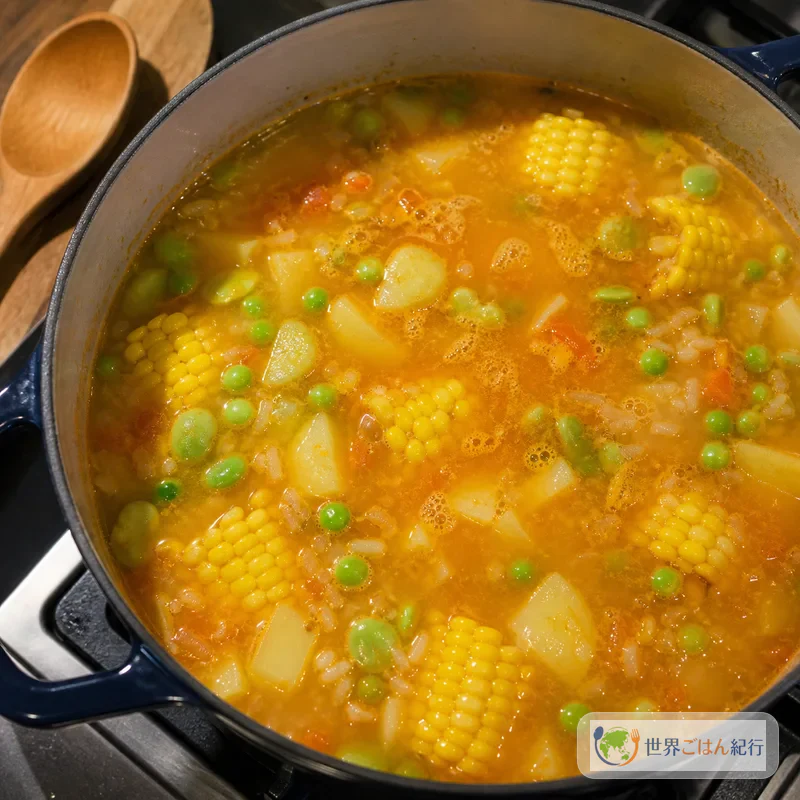
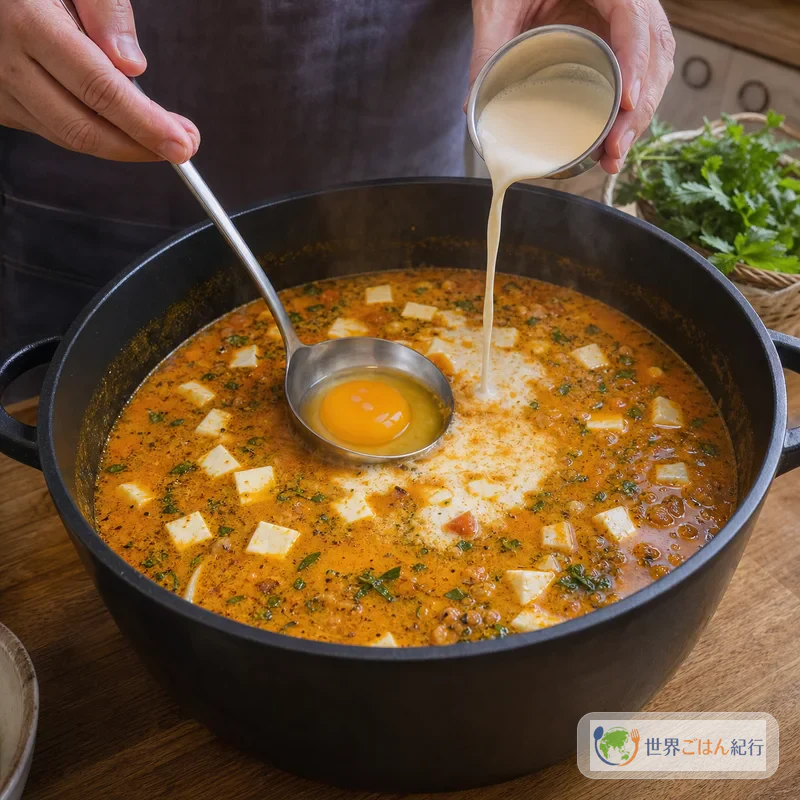
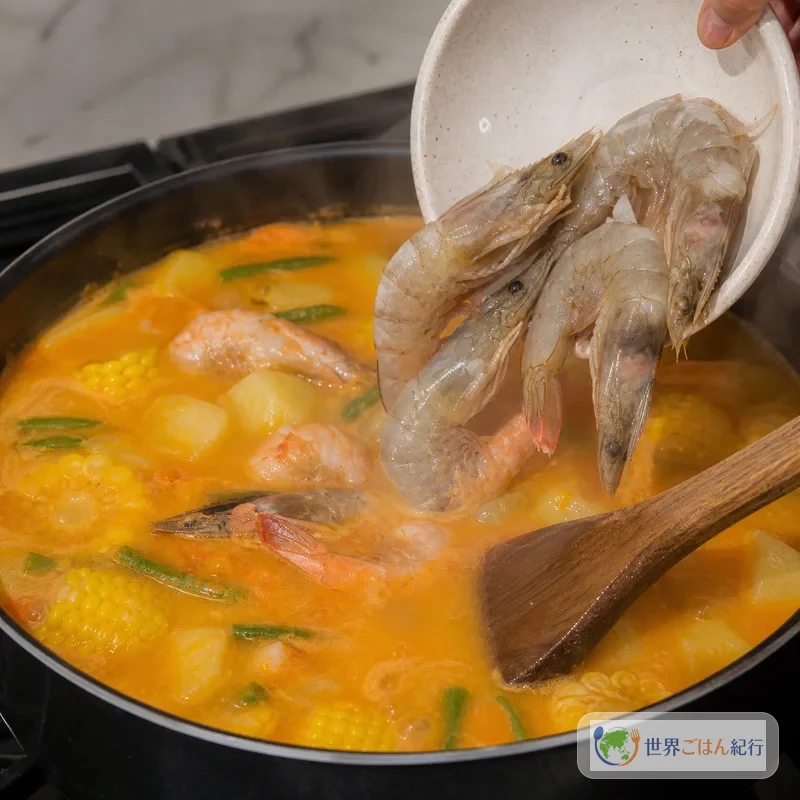
Crush the shrimp heads and shells into the pot where the onion and garlic have just softened, pour in water, and watch the stock turn orange as it simmers. Then come the fruity heat of ají amarillo, floury potato, and the sweetness of rice and corn, with milk, cheese and egg at the end and the shrimp flesh returned just before the heat goes off. In one mouthful you get the toasty shell, soft potato, grains that keep their bite, and springy shrimp. Chupe de camarones is a rich shrimp soup from Arequipa in southern Peru, and it eats like a full meal. Start with the shrimp heads to build the base, decide between ají amarillo and yellow bell pepper, and the rest is well within reach of a home kitchen.
About Chupe de Camarones
Arequipa and the picantería
Arequipa's food culture is hard to discuss without the picantería. These places grew out of taverns that served chicha, and they became part of the town's table, built around spicy food and drink. The dish served changes with the day of the week, and chupe is one to eat slowly, in conversation, around a pot full of ingredients.
Traditionally made in a wood-fired pot, chupe de camarones is a shrimp soup with milk and cheese, where the roundness of dairy sits over a shrimp stock. The word chupe comes from Quechua, meaning "deep dish." As the dish spread from the Andes to the coast, ingredients and cooking methods of Spanish origin were added.
A soup that takes the place of a staple
The shrimp share the pot with potato, corn, rice, beans, egg and cheese, and each spoonful brings a different texture. That variety is why chupe, although it is a soup, takes the place of a staple. Give the other ingredients their full weight rather than letting the shrimp carry everything.
Regional differences
Chupe has no single origin story, because the ingredients and thickness change from place to place. Some pots combine coastal seafood; mountain pots use more potato and beans. Away from Arequipa, the shrimp stock and the order of cooking matter more for flavor than the wood fire. Draw that first stock carefully and the center of the flavor moves toward the shrimp.
In Spanish it is written chupe de camarones. You will also see "chupe de camarón," but camarones is the plural, meaning shrimp. For searching, try "Peruvian shrimp soup" or "Arequipa chupe."
Method: Make the Stock and Return the Shrimp at the End
Work in this order: make a stock from the shrimp heads and shells, cook down the aderezo, cook the rice and vegetables, add dairy and egg, then return the shrimp. If you cook the shrimp from the start, the flesh turns hard, so add them back for the last few minutes only.
Keep simmering here and the shrimp turn from a stock ingredient into a hard one. Stir once from the bottom of the pot, and serve before the flesh curls up too tightly.
Ingredients (serves 4)
This recipe uses shrimp, egg, milk and cheese. Don't serve it to people with crustacean, egg or milk allergies, or cook those ingredients in a separate pot for them. Wash the cutting board and knife that touched raw shrimp with detergent before the next task. Refrigerate or freeze shrimp right after buying. Only eat shrimp raw if they are sold for eating raw.
Choosing Ingredients for Chupe de Camarones
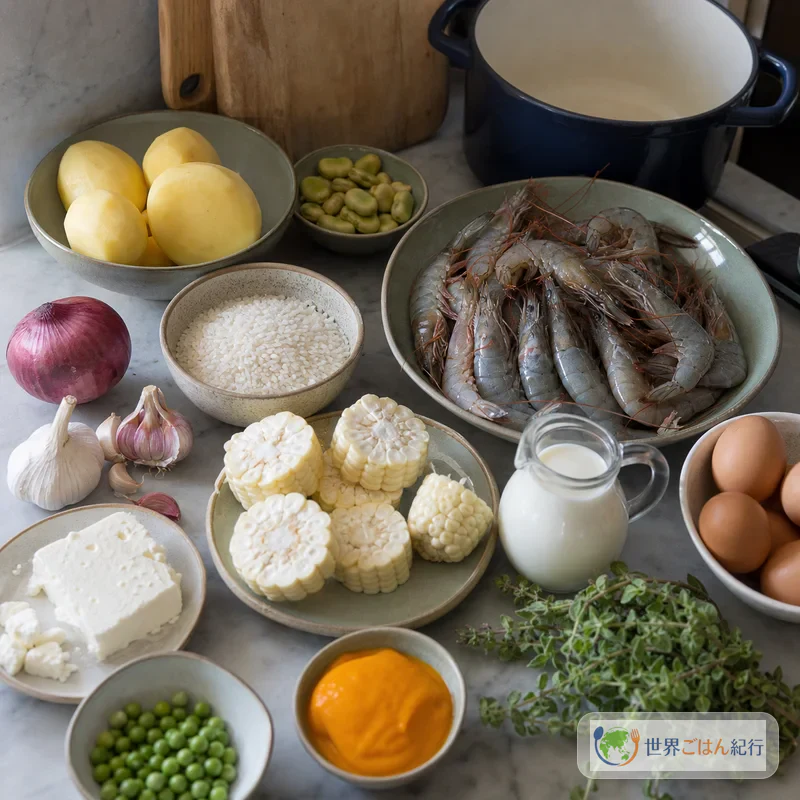
Most of what goes into chupe is easy to find nearby: potato, onion, tomato, pumpkin, corn, milk, cheese and eggs. The two worth seeking out are raw head-on shrimp and ají amarillo. A deep pot and an ordinary sieve are all the equipment you need.
The role of each ingredient
Every ingredient in the pot has a job. Shrimp heads and shells make the stock, ají gives aroma and heat, potato and rice thicken the soup, corn and beans add bite, and milk and cheese bring the roundness at the end.
| Role | Local element | Substitute |
|---|---|---|
| Stock | River crayfish or shrimp heads and shells | Raw head-on shrimp. If headless, add a little unsalted fish stock |
| Aroma and heat | Ají amarillo, ají panca | Ají amarillo paste. For panca, use paprika and a little chili flakes |
| Thickening | Potato, rice | Starchy potatoes such as Russet or Yukon Gold, short-grain rice |
| Sweetness and texture | Choclo, pumpkin, fava beans, green peas | Fresh, frozen or canned corn, whichever is easiest |
| Green aroma | Huacatay | Dried huacatay. If you don't have it, use a little mint and oregano |
| Finish | Milk, cheese, egg | Unsweetened evaporated milk, low-salt fresh cheese, eggs |
Shrimp
Black tiger shrimp or red shrimp are easy to find and work well. Raw head-on shrimp give the stock more depth. With peeled, headless shrimp, add a small amount of unsalted fish stock; the sweet aroma from simmering the shells will be milder.
Ají amarillo and substitutes
Ají amarillo gives heat along with the aroma of yellow flesh. Swap in only chili flakes and the pot turns red while the sweet aroma of chupe thins out. A paste of yellow bell pepper with a little chili flakes comes much closer to the real flavor.
A jar of ají amarillo paste is worth buying if you want that yellow aroma for more than chupe, such as ceviche's seafood marinade or causa limeña. Check the product name, net contents, ingredient list and storage method on the label. If you are unsure about the heat, use 20g instead of 1 oz (30g) the first time, then divide the rest into portions and freeze it.
Potatoes
Potatoes that break down are welcome here, because the melted part becomes the thickness of the soup. If you want some chunks, cut half the potatoes large and the rest small. Mixing sizes changes how the plate looks and eats.
| What you want | Reason to buy | Reason to pass |
|---|---|---|
| Ají amarillo | You will make Peruvian dishes several times, for the aroma too | The only aim is heat, and there is no other use |
| Raw head-on shrimp | You want to make stock from the shells and heads and use the flesh too | You want to skip the preparation time. Swap in peeled shrimp and fish stock |
| Dried huacatay | You want to try the aroma of a green herb | For one time, mint and oregano are enough |
| A large deep pot | You want to make 4 servings without boiling over | For just 2 servings, a saucepan you already have is enough |
Chupe de Camarones Troubleshooting
- The soup is thin: Warm the shrimp stock you set aside and add it ½ cup (100ml) at a time. Adding water alone thins the aroma too.
- The milk separated: It most likely boiled. Turn off the heat, mix a little of the hot soup at a time into milk in another bowl, then return it to the pot. It won't come back completely, so next time add the dairy over low heat.
- The shrimp are hard: Overcooked. Take out the flesh you can and put it on a plate, then pour warm soup over it just before eating. Next time, cook for only the last 2 to 4 minutes.
- Too hot: Add a little unsweetened evaporated milk or shrimp stock, and add more potato. Adding sugar to hide the heat muddies the sweetness of the corn.
- Too salty: Dilute with unsalted stock and add a few more ingredients. Milk alone won't hide the saltiness.
Serving, Storing and Varying Chupe de Camarones
At the table
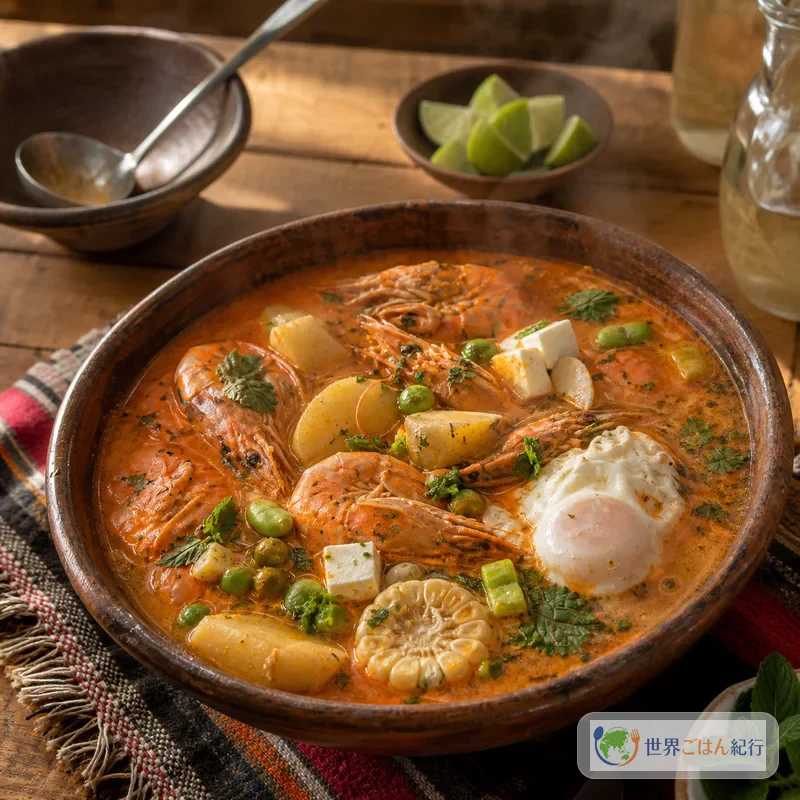
Turn off the heat and let the pot rest 5 minutes. Ladle into deep bowls, dividing the head-on shrimp, peeled flesh, egg, potato and corn evenly. The cheese sinks, so scoop once from the bottom of the pot.
Serve lime at the table instead of squeezing it into the pot. Those who love the roundness of the dairy can eat it as is, and anyone who finds it a little heavy can add a few drops. It also makes it easy to serve a child's bowl or a milder bowl from the same pot.
With rice, potato and corn already in the soup, try the first bowl on its own. If it's not enough, bring out bread with the next one. For more Peruvian cooking with the same yellow chili, try the cold starter causa limeña, the high-heat stir-fry lomo saltado, or raw seafood in ceviche.
Storage and reheating
Chupe is best the day you make it. Move leftovers to a shallow container, don't leave them at room temperature for long, refrigerate, and eat by the next day. If it smells off, feels sticky or tastes wrong, don't eat it.
Reheat one serving at a time in a small pot over low heat, rather than reheating the whole amount over and over. Boiling separates the milk and toughens the shrimp. If there are eggs in the pot, warm it until it is hot all the way to the center.
To freeze, divide the soup at the stage of stock and vegetables, before adding the shrimp and dairy. After thawing, add the milk, cheese, egg and shrimp; the texture holds up much better this way.
Variations
- Use more shrimp heads for a richer stock. Changing how you start the pot brings out more aroma than adding more flesh.
- Add 7 oz (200g) white fish with the potato to make it a shrimp and fish pot.
- For less heat, reduce the ají amarillo to 20g and add 1.75 oz (50g) yellow bell pepper. This keeps the aroma and lowers only the heat.
- Use more fava beans and fewer green peas to bring out the floury texture of the beans.
Frequently Asked Questions
Is chupe a curry?
No. The color looks similar because ají and tomato are sautéed, but it is a soup that brings shrimp shell stock, milk, cheese, egg and potato together in one pot. It's a dish you scoop up, not one you pour over rice.
Can I make it with headless shrimp?
Yes. In place of the heads and shells, use only 300ml to 1¾ cups (400ml) of unsalted fish stock and make up the rest with water. If the stock has salt in it, hold off on the final salt until the end.
Can I use milk alone?
You can, but it finishes lighter than with evaporated milk. Adding ¾ cup (200ml) of milk thins it, so start with ½ cup (150ml) and add more after checking the thickness. Keep it below a boil.
Do I need a big pot?
For 4 servings, a deep pot of 3.25 quarts (3L) or more is easier to handle. For 2 servings, halve the ingredients and use a deep saucepan you already have. Choose a pot tall enough that the stock won't boil over.