Lift the lid and the chicken broth gives off the scent of onion and bay leaf. In another pan, the yellow oil of ají amarillo has passed into the onion, and the milk soaking the bread is slowly turning into sauce. That is ají de gallina, the Peruvian dish of shredded chicken simmered with yellow chili, bread, milk and nuts. It has some heat, but what you notice most is the fruity aroma of ají amarillo, held inside the roundness of chicken broth and bread. At home, the tricky parts are the chili, the thickness of the sauce, and knowing when to stop cooking the chicken.
About ají de gallina
A yellow stew held together by bread
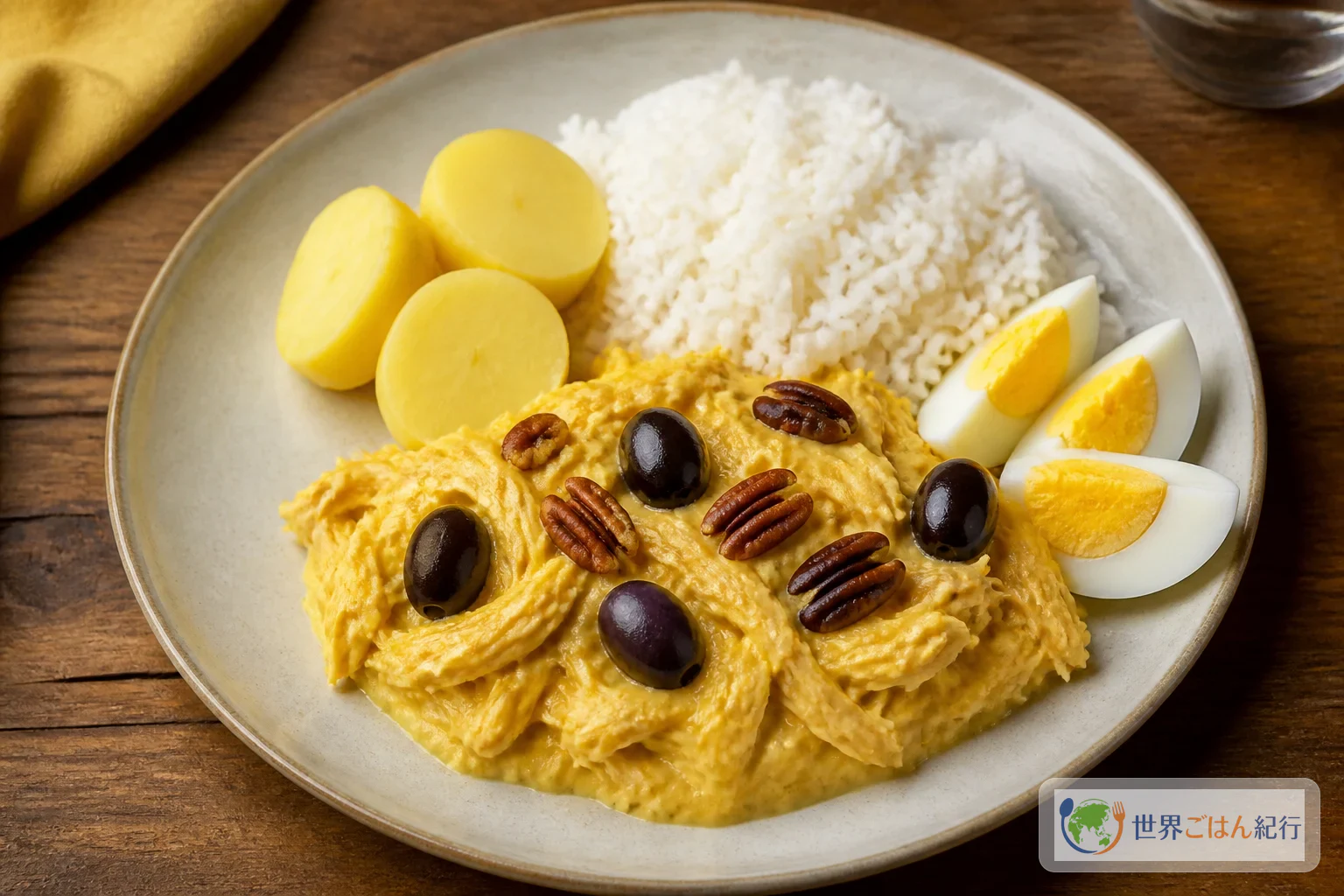
Finished ají de gallina is thicker than a soupy stew like curry. Scooped with a spoon, it clings to the chicken, and once on the plate it spreads slowly.
The bread is there for body, not for its own flavor: it holds the chicken broth and milk. Cook onion, garlic and ají amarillo in oil, combine them with the softened bread and pecans, and you get a smooth sauce without any flour.
Ají means chili pepper and gallina means hen. Home cooks use chicken today, but the old name stays in the title.
Where ají de gallina comes from
The dish grew out of several food cultures overlapping. It combines 16th-century Quechua and Spanish cooking, and it is linked to manjar blanco, a Spanish sweet. The early version was close to a sweet, rich cream of chicken breast, rice, almonds and sugar. Then ají amarillo was added, and by around 1839 it was recorded as a lightly salty dish.
That long history is why the amount of bread, the type of nut and the cut of chicken all vary. What holds it together is the bread softened in broth and milk; swap that for flour or cream and you have a different stew.
Regional differences across Peru
Ají de gallina is sometimes introduced as a Lima dish, but it is eaten across Peru. The chicken, potatoes, chilies and dairy used in each region's markets and homes change the strength of the dish and what comes with it. Heat is only one difference: some cooks add dried ají mirasol to the ají amarillo, some use pecans, walnuts or almonds, and the ratio of rice to potatoes on the plate shifts too. Versions with hen exist, as do home versions with fish or vegetables.
It also helps to compare it with papa a la huancaína, a Peruvian starter built on the same yellow chili. That one is a cold cheese sauce; this is a warm stew of chicken broth and bread.
Ingredients (serves 4)
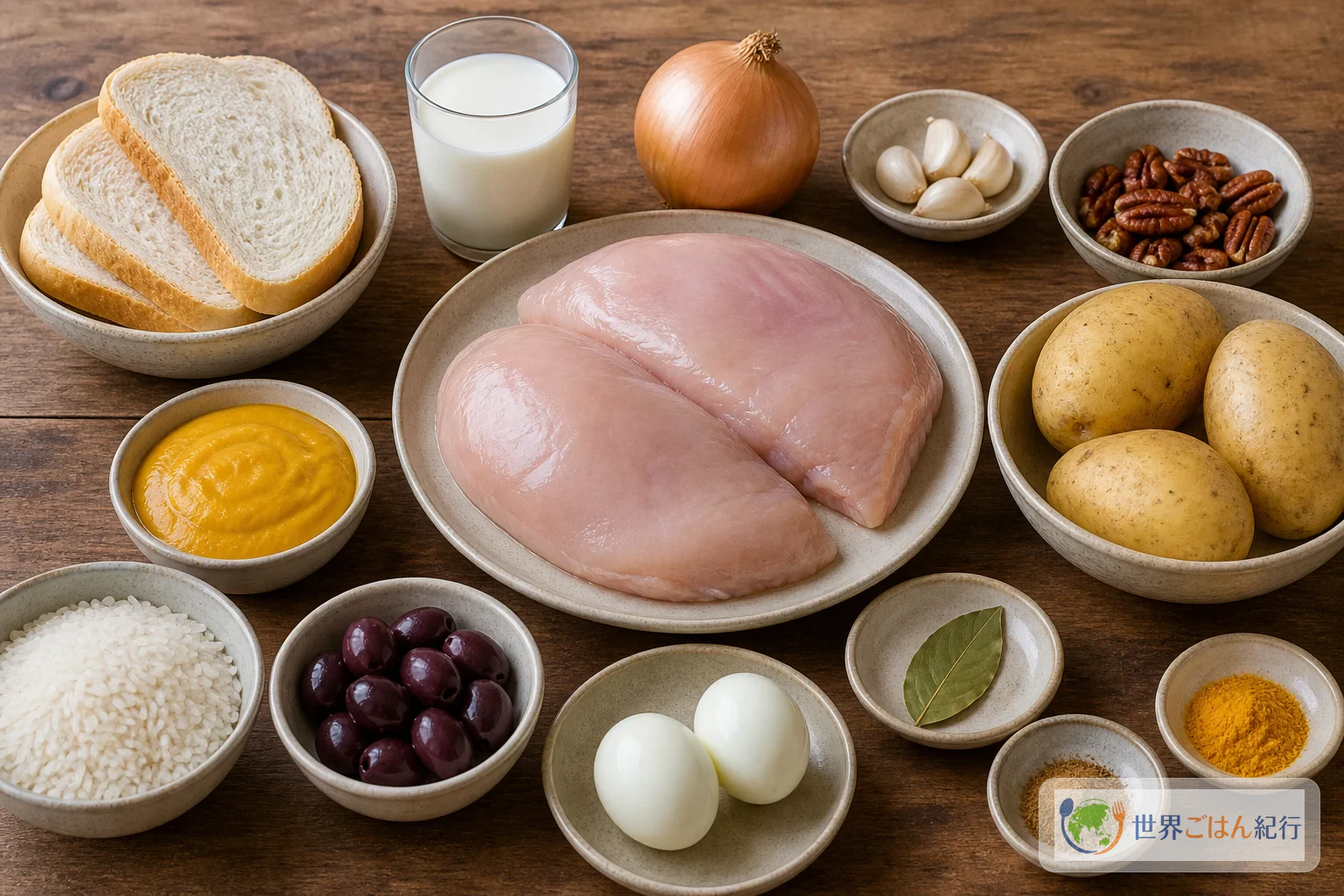
This dish uses milk, bread, chicken, nuts and cheese. If you are allergic to wheat, dairy, eggs or nuts, check the labels of any substitutes. Ají amarillo paste also differs in ingredients from product to product, so check the salt as well as the heat.
Roast 2.75 oz (80 g) yellow bell pepper, peel it, and add a little habanero powder or red chili for heat. This only approximates the color and heat. It does not match the fruity aroma or the dried-chili flavor of ají amarillo. Or start with only 1 oz (30 g) of paste, check the heat and aroma, then add the rest.
To get a uniform sauce, blend the bread and pecans fine together with the liquid. No blender or food processor? Soak the bread longer and mash it with a fork. The texture will be a little coarser. If you already have an immersion blender, you don't need to buy a new tool just for capacity.
Choosing ingredients and substitutes for ají de gallina
Ají amarillo
Ají amarillo gives heat, yellow color and a fruity aroma all at once. Chili flakes alone bring the heat but lose the color and aroma. For a milder sauce, use less paste and add a little yellow bell pepper. For more options, see how to substitute for ají amarillo.
If you can get fresh ají amarillo, remove the seeds and pith, mince it, and sauté it with the onion. It holds a lot of water, so use less than the 2 oz (60 g) of paste, reduce the broth, and watch the moisture of the sauce. Rehydrated dried ají mirasol adds a dry depth to the aroma.
Chicken breast or thigh
For ease at home, the recipe uses 1.25 lb (600 g) of chicken breast. Breast is lighter with the sauce and lets the chicken broth show through. Thigh has more fat and springiness, so it stays tender even when warmed a little longer, though the sauce turns somewhat heavier. If you simmer thigh with the skin on, fat floats up; remove the skin, or cool the broth and skim the surface.
Potatoes
Yellow and white potatoes are both common in Peru. Choose a waxy variety to hold its shape, or a floury one for a fluffy texture. Either way, cut them 1 inches (2 cm) thick so they hold the sauce, and keep the boiled potatoes from going watery.
Bread, nuts and milk
Salted crackers absorb liquid faster than bread, so the sauce sets more easily. Mix in half of the 2 oz (60 g) first and check the thickness. Cut the 7 g salt in the ingredient table to half or less, and decide after adding the cheese.
Pecans have a sweet toastiness and soft fat that round out the sauce. Walnuts bring a slight astringency, so dry-roast them lightly first. Almonds are hard; blend them longer or chop them finely before adding.
Evaporated milk has less water than milk and gives a richer finish, but swapping the full amount tends to make the sauce firm. The first time, use evaporated milk for only ½ cup (150 ml) of the ¾ cup (200 ml) of milk and make up the rest with cooking liquid.
Method: keep the broth, and make the thickness with bread
1. Simmer the chicken with the aromatics
duration: 25 min
Put 3¼ cups (800 ml) water, the chicken breast, 3.5 oz (100 g) onion cut into quarters, carrot and celery cut into 1 inches (2 cm) pieces, the crushed garlic and the bay leaf in a pot. Warm over medium heat until small bubbles rise from the edge of the pot, and when it boils, lower to low heat. Set the lid slightly ajar and cook for 18 to 22 minutes, until the thickest part of the chicken is cooked through.
Take it out when the internal temperature is 165°F (74°C) or higher. The cut face should no longer be translucent like raw meat, it should spring back when pressed, and it should shred easily with chopsticks. Lift the chicken out first so the breast does not keep cooking in the broth. Strain the cooking liquid and reserve 1¾ cups (400 ml) for the sauce. Keep the rest of the broth in reserve for adjusting the thickness.
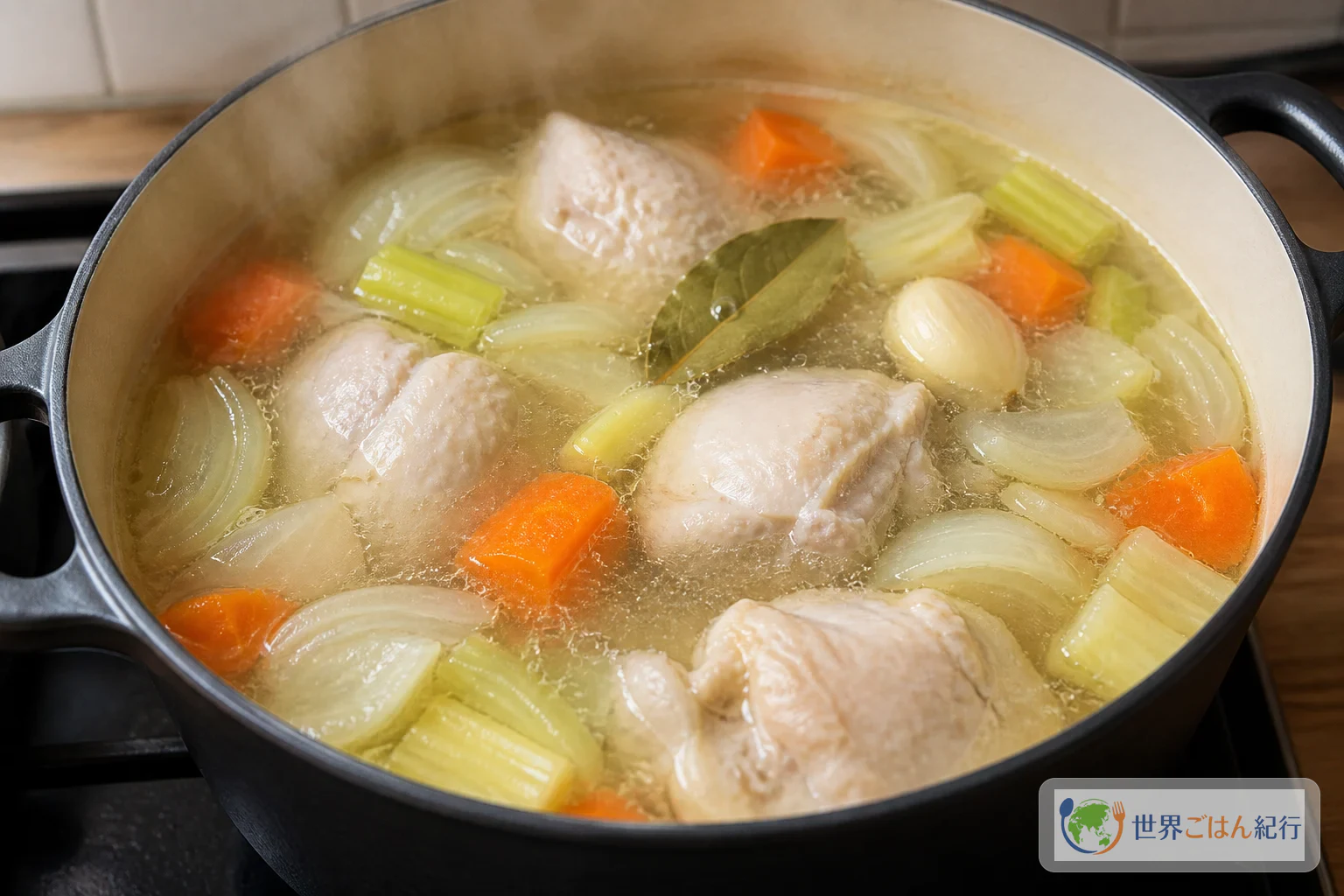
Keep it at a gentle simmer. A hard boil tightens the surface of the chicken breast and turns the broth cloudy. Skim only the foam on the surface that bothers you.
2. Soak the bread and shred the chicken
duration: 10 min
Tear 3.5 oz (100 g) of bread without the crusts and put it in a liquid made of ¾ cup (200 ml) milk and ½ cup (100 ml) warm cooking liquid. Leave it 10 minutes, until no core remains when pressed with a finger.
Let the chicken cool until you can handle it, and shred it thinly along the grain. Large chunks combine less well with the sauce, so shred until each piece falls off the chopsticks when you lift it.
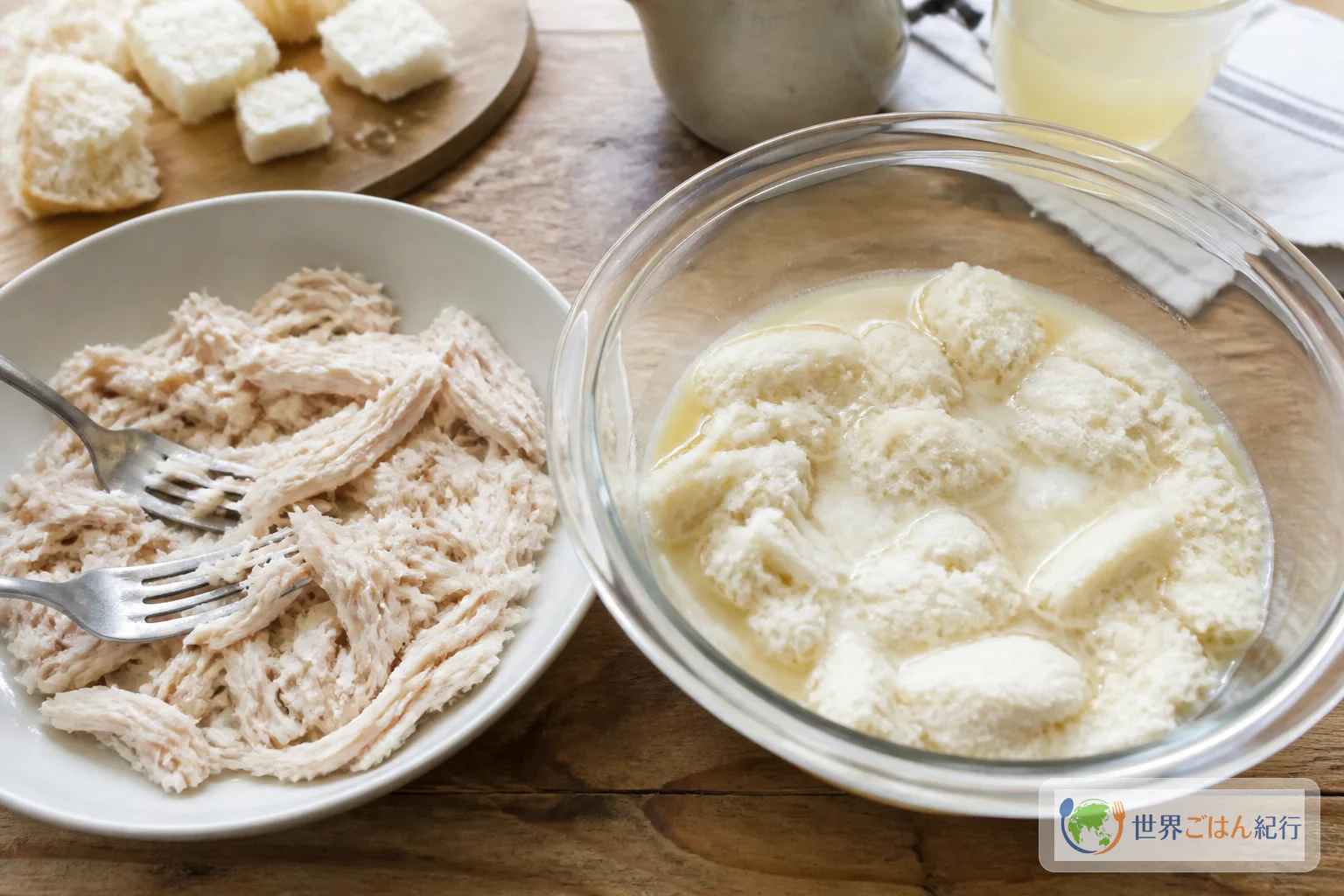
If the liquid for soaking the bread is boiling hot, the milk tends to separate. Keep the cooking liquid just warm. Once the bread has absorbed the moisture, add the rest of the liquid too.
3. Sauté the onion and ají amarillo
duration: 15 min
Put 2 tbsp (30 ml) oil and 7 oz (200 g) onion in a pan and cook over medium-low heat for 7 to 10 minutes. Cook until translucent and slightly collapsed at the edges. This brings out the sweetness of the sauce. Add 2 cloves garlic and cook 2 minutes, then add the ají amarillo paste, cumin and turmeric.
Cook another 4 to 5 minutes, stirring with a spatula. The paste is ready when a line of oil stays behind as you drag the spatula across the bottom, the corners of the onion have almost disappeared, and the paste has blended into the oil and turned from yellow to orange. Its raw green smell has weakened. Burnt chili leaves a lingering bitterness, so lower the heat if the bottom of the pan seems about to dry out.
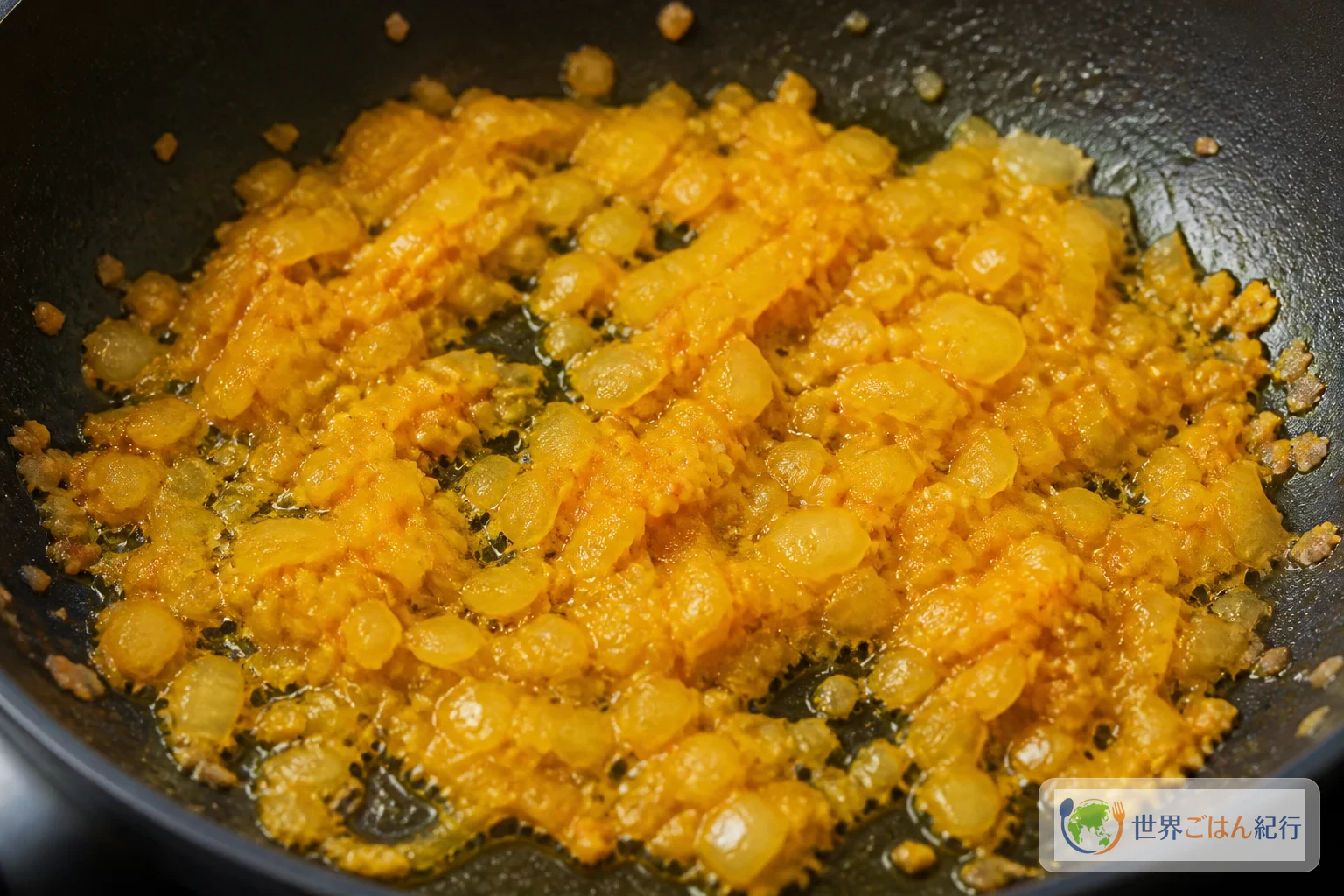
4. Blend the bread and aromatics until smooth
duration: 3 min
Put the sautéed mixture, the soaked bread, 1 oz (30 g) pecans and ½ cup (150 ml) cooking liquid into the blender. With the heat off, let the hot mixture cool a little before closing the lid. Blending hot in a closed container makes the steam expand. Blend in 30-second bursts, scraping down the sides with a spatula, until no grains can be seen.
It's ready when the sauce falls slowly from a tilted spoon in a thin ribbon. If it's too heavy, add the reserved cooking liquid 1.5 tbsp (20 ml) at a time.
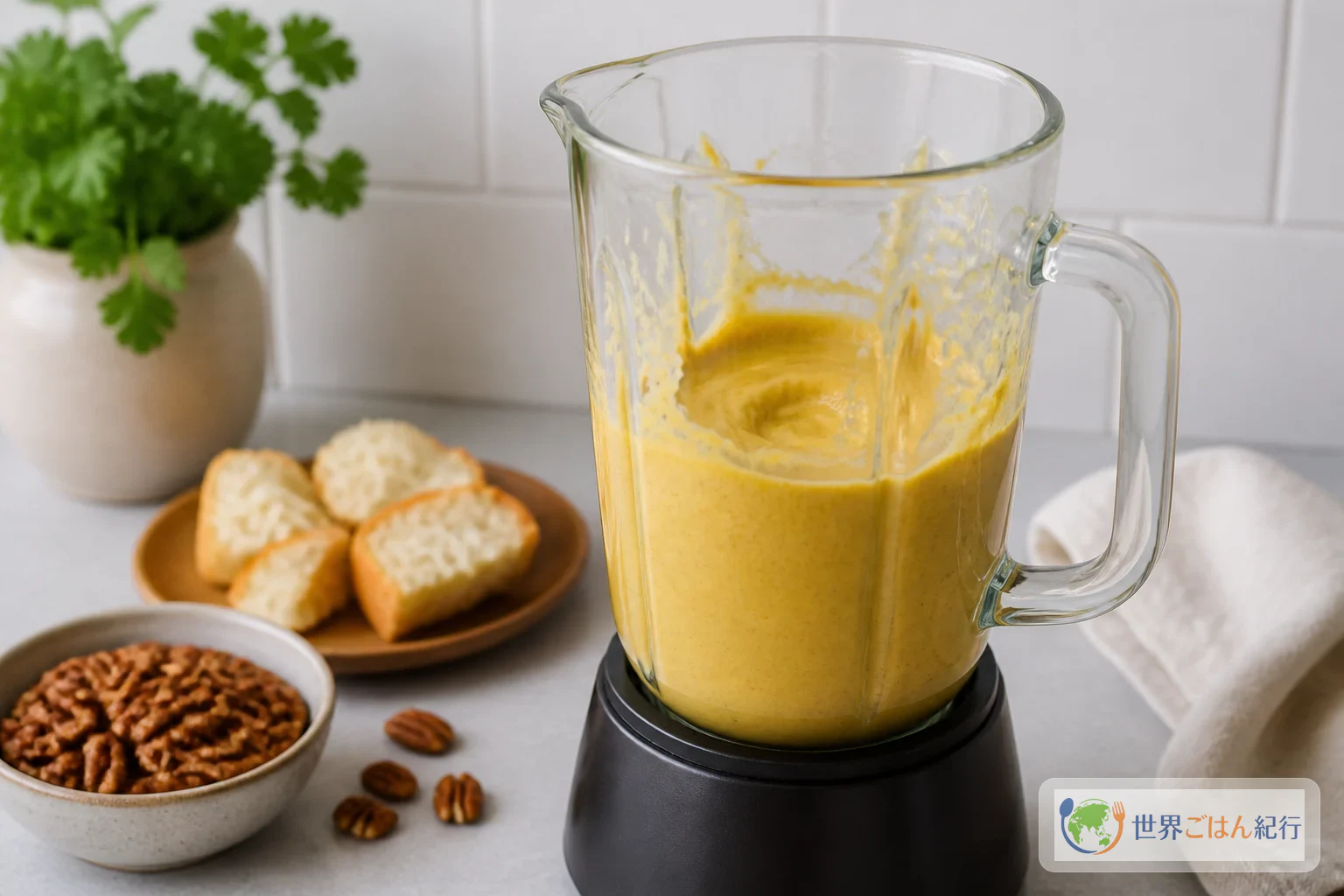
No blender? Soak the bread for about 20 minutes, chop the pecans finely with a knife, then mash with a mortar or a fork. It won't become completely creamy, but at home you can finish it with some grains left in.
5. Simmer the sauce and return the chicken
duration: 15 min
Return the sauce to the pan. Add the remaining ½ cup (100 ml) milk and ½ cup (150 ml) cooking liquid a little at a time. Cook over low heat for 8 to 10 minutes, stirring as if stroking the bottom. The sauce is ready when the spatula track stays for 2 to 3 seconds and then slowly closes back in. The bread is holding the broth.
Add 1 oz (30 g) grated hard cheese and taste for salt and black pepper. Return the shredded chicken and warm it over low heat for 5 minutes. If you boil hard after adding the chicken, the fibers tighten and the aroma of the milk is more likely to be lost.
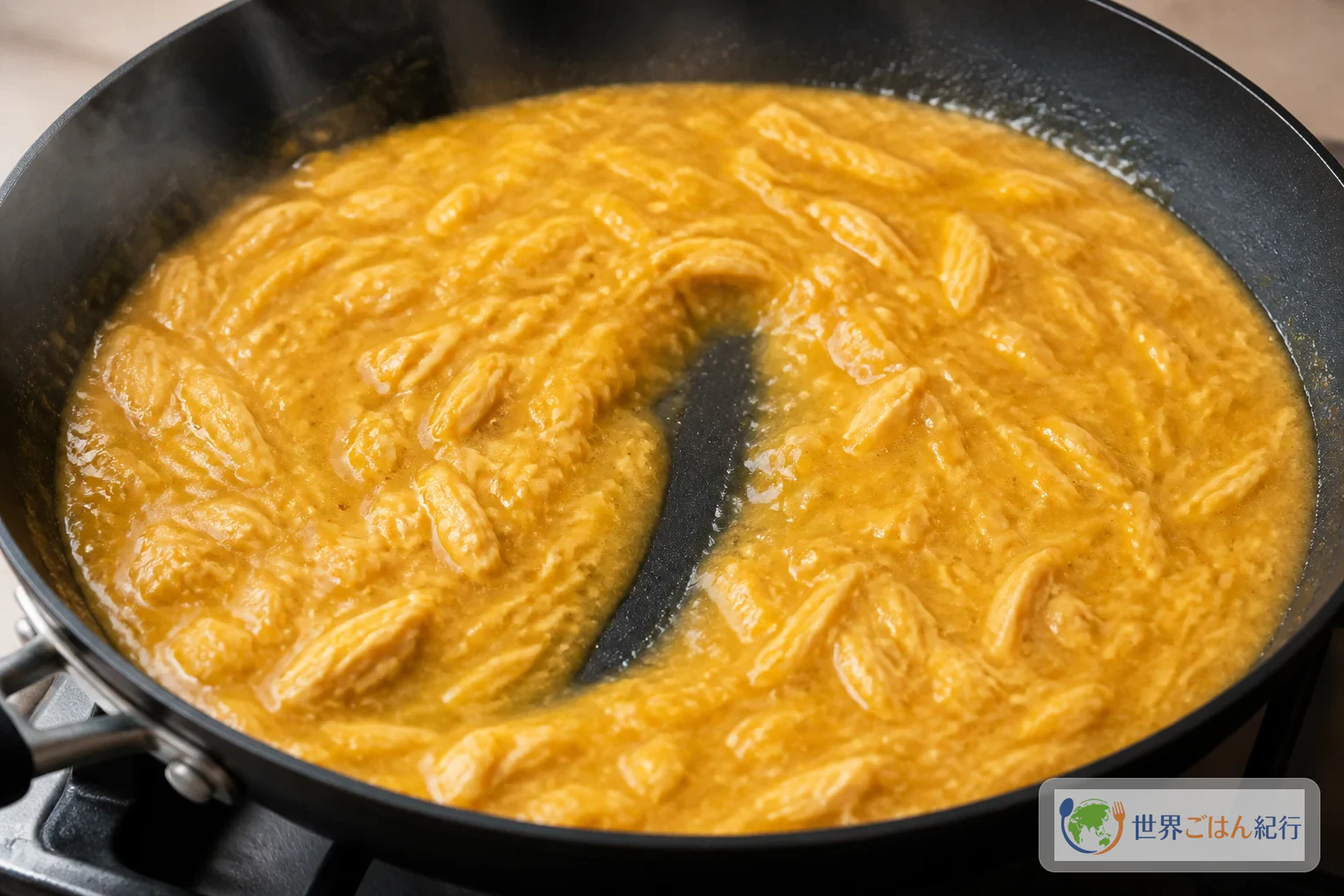
If it has reduced too much, add 3.5 tbsp (50 ml) reserved cooking liquid and rewarm over low heat. If it's loose instead, cook without the lid for just 2 to 3 minutes. Bread holds more liquid as it cools, so a sauce that's a little loose in the pot will be right at serving.
6. Plate with the potatoes and accompaniments
duration: 15 min
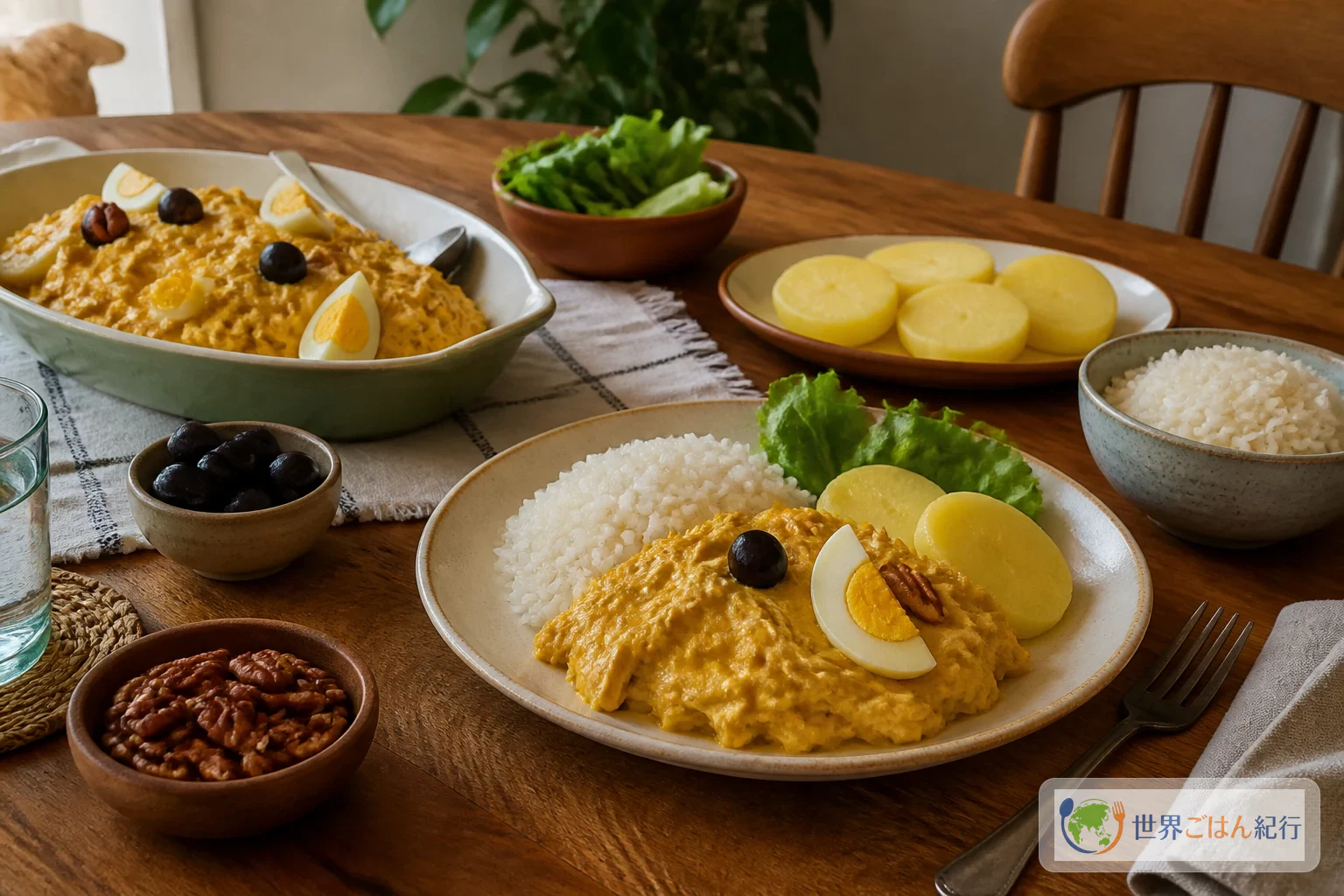
Peel the potatoes, cut into 1 inches (2 cm) thick rounds, and boil in water just covering them for 12 to 15 minutes. When a bamboo skewer goes into the center without resistance, drain in a colander. Put rice on one side of the plate, arrange the potatoes, and spoon plenty of ají de gallina over.
Cut the boiled eggs into quarters and add them with the black olives. If you keep back a little of the pecans, scattering them at the end makes the toastiness stand out against the smooth sauce.
Fixing heat, thickness and texture in ají de gallina
Heat
Ají amarillo paste differs in heat and saltiness from product to product. If you're unsure about using 2 oz (60 g) from the start, sauté 1 oz (30 g) and add the rest in small amounts after simmering the sauce. Paste added later has a weaker cooked aroma, though, so if aroma matters most, sauté the whole amount.
A sauce that is too firm or too thin
More bread makes the sauce firmer, but the bread flavor grows stronger too. If it gets too firm, thin it with chicken broth rather than milk, 1.5 to 3.5 tbsp (20 to 50 ml) at a time; broth loosens it without adding saltiness. The sauce firms up again as it cools, so judge the thickness at serving. Grated hard cheese goes in at the end, so go easy on salt early and adjust salt and cheese only if the taste seems thin.
A raw or burnt taste
Adding liquid right after the ají amarillo brings a green aroma forward. Wait until the oil has turned yellow and the onion and paste have come together, then add the bread. If the bottom has burnt, leave the black bits behind: move only the top part to another pan and carry on.
Chicken that has gone hard
If you overcooked the breast, shred it finely along the grain and add 3.5 tbsp (50 ml) chicken broth to the sauce. Warm it over low heat for 3 minutes, then turn off the heat, cover and leave for 5 minutes so the sauce's moisture goes back into the meat. Use broth here; water and extra cooking only thin the taste.
Serving, storing and varying ají de gallina
On the plate
Serve with warm rice and boiled potatoes, plus boiled egg, black olives and pecans, for a plate close to the Peruvian table. The yellow sauce beside white rice, yellow potato, black olives and the white and yolk of the egg is half the pleasure: the colors and the taste work together.
Fish and vegetable versions
You can swap the chicken for white fish, tuna or mushrooms. Fish falls apart if simmered long in chicken broth, so add it at the end, once the sauce is finished. Think of it as a new dish built on the flavor of ají de gallina, with its own timing.
Storage and reheating
Once the sauce and chicken have cooled slightly, move them to a shallow container. Eat refrigerated portions within 2 to 3 days. To freeze, divide only the sauce and chicken into single servings and use within about 1 month; keeping the rice, potatoes, eggs and olives separate stops their texture from breaking down.
Refrigerated sauce firms up as the bread takes on more liquid. Warm it in a pot over low heat with 1 to 3.5 tbsp (30 to 50 ml) chicken broth or milk, stirring. Thaw frozen portions in the refrigerator first, and check that the whole dish is hot and has reached 165°F (74°C) at the center. In a microwave, heat one portion at a time with the lid slightly ajar and stir once partway.
Cook the chicken through to the center, and when reheating, heat until the whole dish is thoroughly hot. When eating make-ahead portions, check that the internal temperature reaches 165°F (74°C).
More Peruvian dishes
For yellow chili in another texture, make papa a la huancaína: cold potatoes under a cheese sauce. Can't find ají amarillo nearby? See how to make a substitute sauce, which shows the difference in aroma and heat. And for another dish to serve with rice, try lomo saltado, beef and tomato stir-fried with the scent of soy sauce.
FAQ
Does the chicken breast get dry?
Only if it keeps boiling. Take it out once the internal temperature reaches 165°F (74°C), and after returning it to the sauce, warm it for just 5 minutes over low heat. Chicken thigh is more forgiving if you prefer a longer simmer.
Can I make it without a blender?
Yes. Soak the bread longer, chop the pecans finely, then mash everything with a mortar or fork. The sauce is less smooth, with a few grains of bread remaining, which makes it feel homey.
Is there a substitute for ají amarillo paste?
Use yellow bell pepper with a little hot chili, aiming for the yellow color and fruity aroma as well as the heat. For the mix, see how to substitute for ají amarillo.
What if I want to avoid dairy or wheat?
Swap the bread for wheat-free bread or crackers, and the milk for unsweetened plant-based milk. The finish changes with the sweetness and aroma of the plant milk and how much the bread absorbs. Leaving out the grated cheese lowers saltiness and richness, so check the ingredients and salt of your substitutes and adjust little by little.