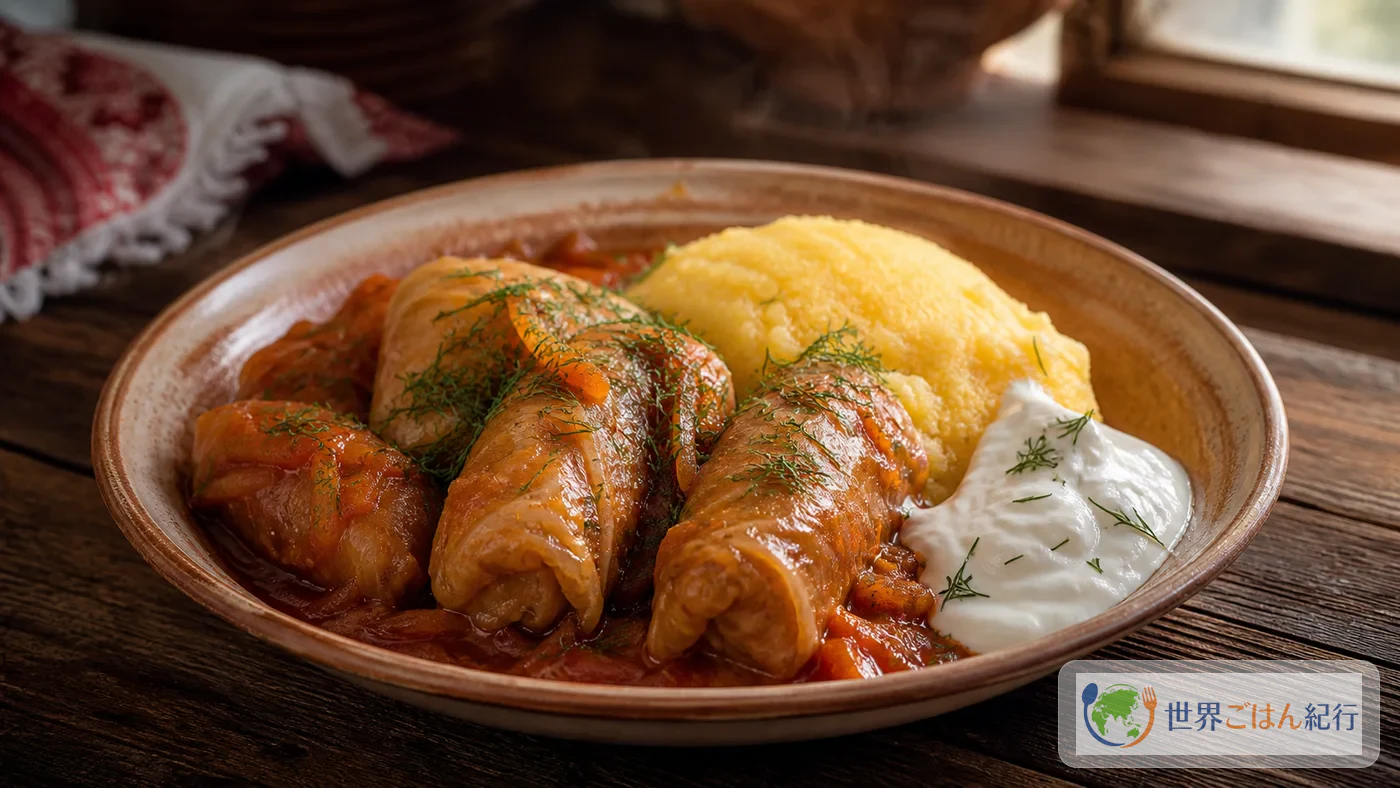
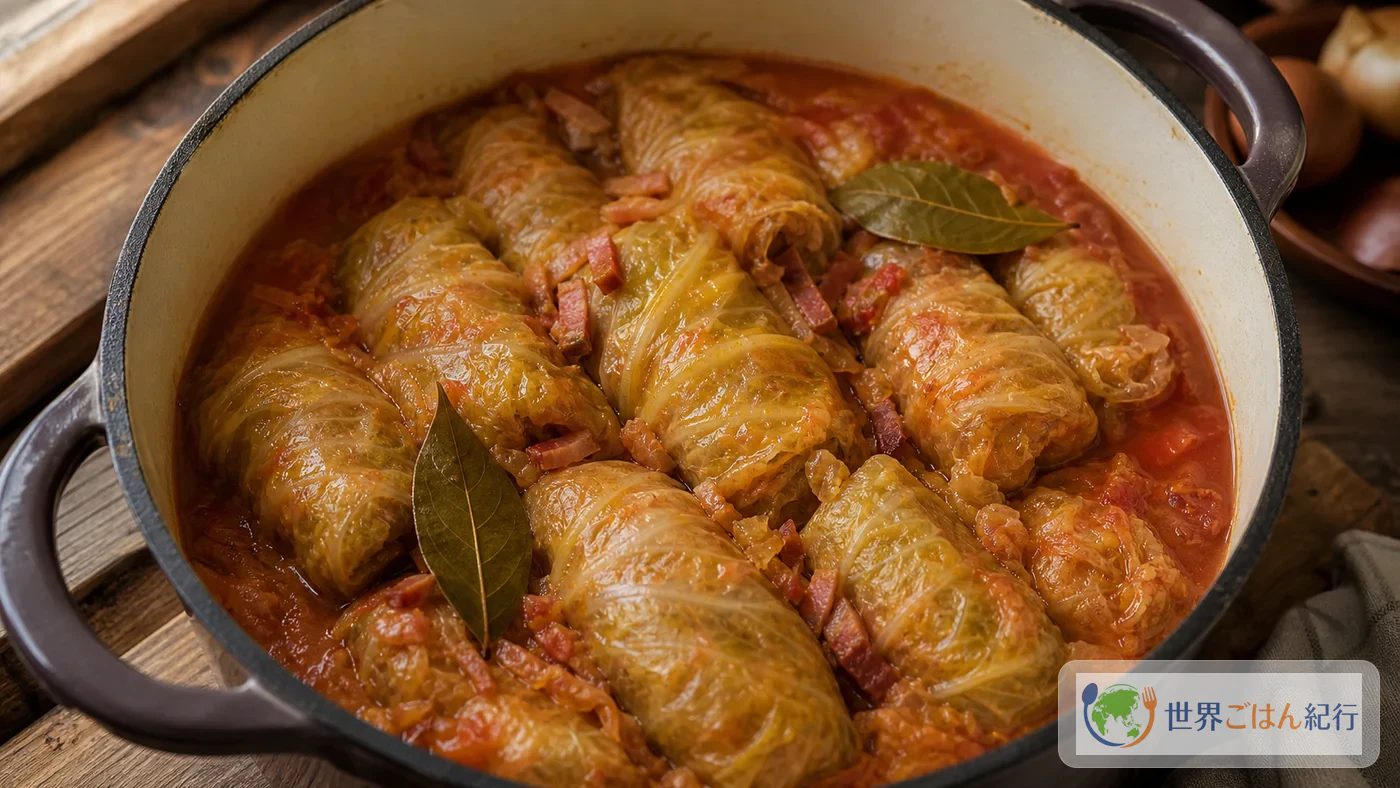
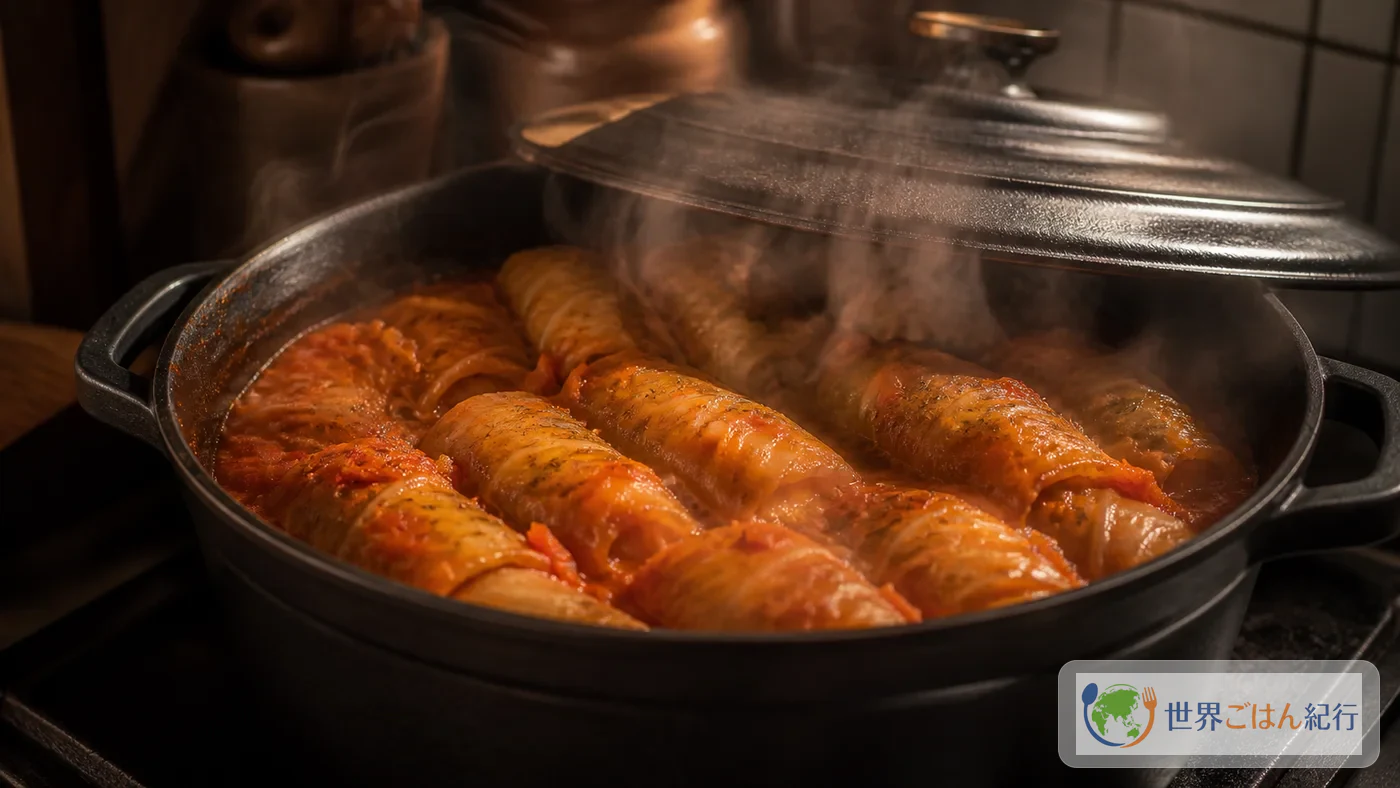
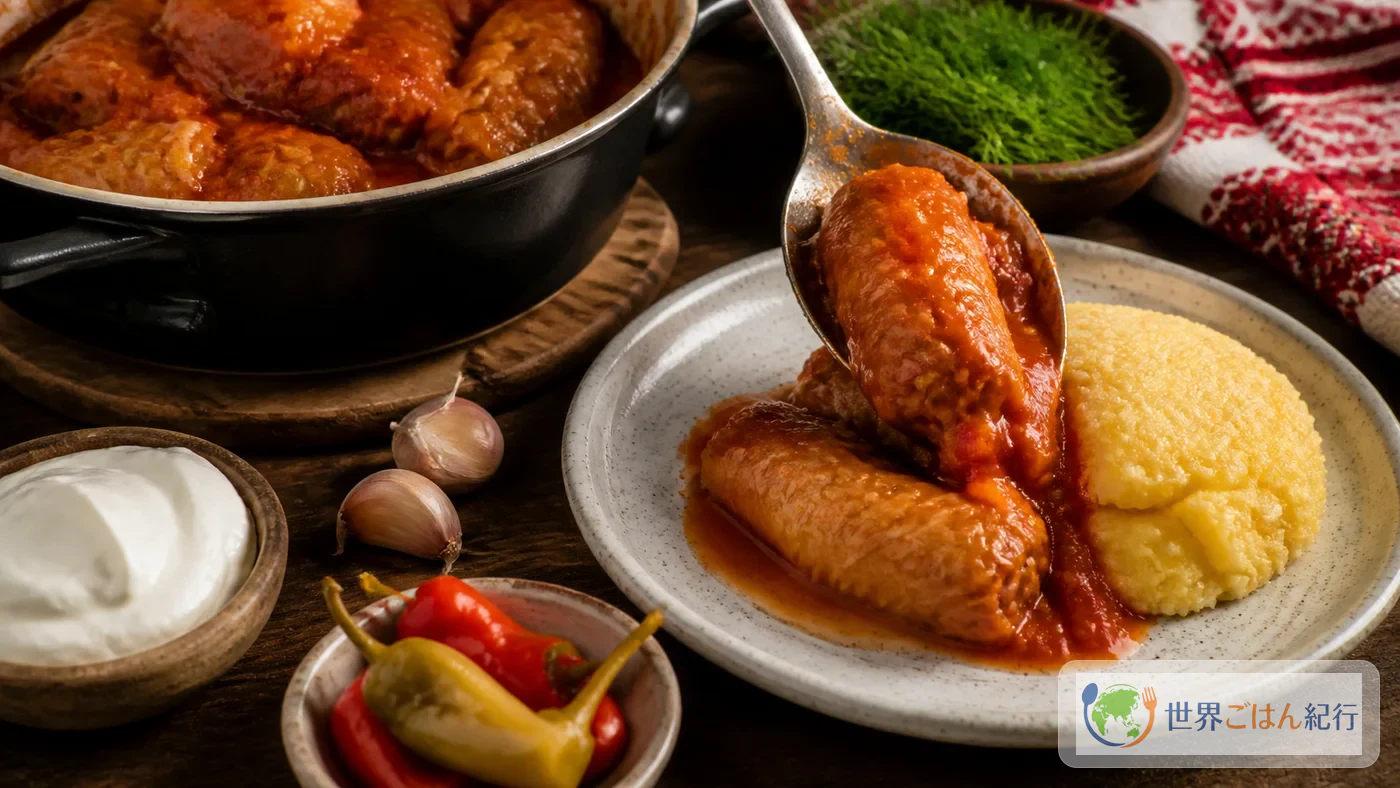
On a cold day, slide the lid of the stew pot aside a little and the sweet steam of tomato rises, carrying the sourness of fermented cabbage and a thread of smoke. Sarmale look like Western cabbage rolls, but the aroma goes somewhere else: sour cabbage, pork, rice and dill rather than sweet bouillon. In these Romanian rolls, a filling of meat and rice is wrapped in sour cabbage leaves and simmered slowly with tomato, shredded cabbage and smoked meat. They come to the table with yellow mămăligă instead of white rice. Cook them the day before if you can, because they taste better the next day.
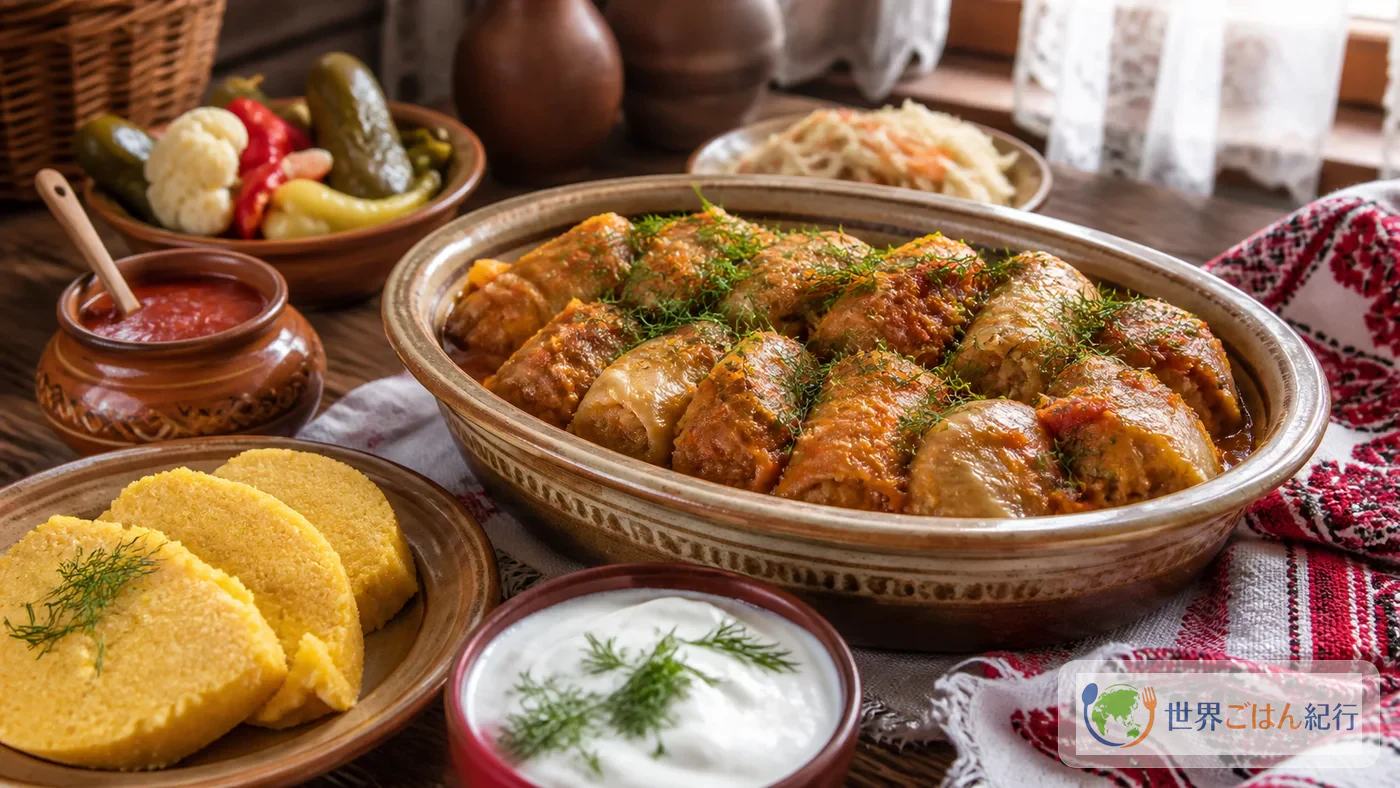
Sarmale on the Romanian table
Sarmale belong to a large family of leaf-wrapped dishes that runs from the Balkans to the Middle East. The name sarma survives in Turkish-speaking and neighboring regions as a dish name meaning "something rolled." At a Romanian table, though, the wrapping matters less than the combination: sour cabbage, pork, rice, smoked meat and mămăligă, all in one pot and on one plate.
In Romanian it is written sarmale. The singular is sarma, but because the dish arrives as several pieces, it is usually called sarmale.
Cabbage preserved by salting or fermentation is a strength of the Romanian winter kitchen, and sarmale make the most of it. For Christmas, New Year, Easter, weddings and christenings, cooks make a big pot the day before and serve it reheated, once the flavors have settled. The filling is mostly pork or mixed ground meat, sometimes with a strong smoked-meat presence, and there is a fasting-season version with mushrooms and rice. In Transylvania the smoky note is stronger, and near Moldova some households roll them small and thin.
If you like layers of sourness and meat, bigos is another Eastern European braise worth knowing. Among wrapped dishes, compare dolma.
Ingredients (serves 4): think of the sour leaves and the rice-and-meat filling separately
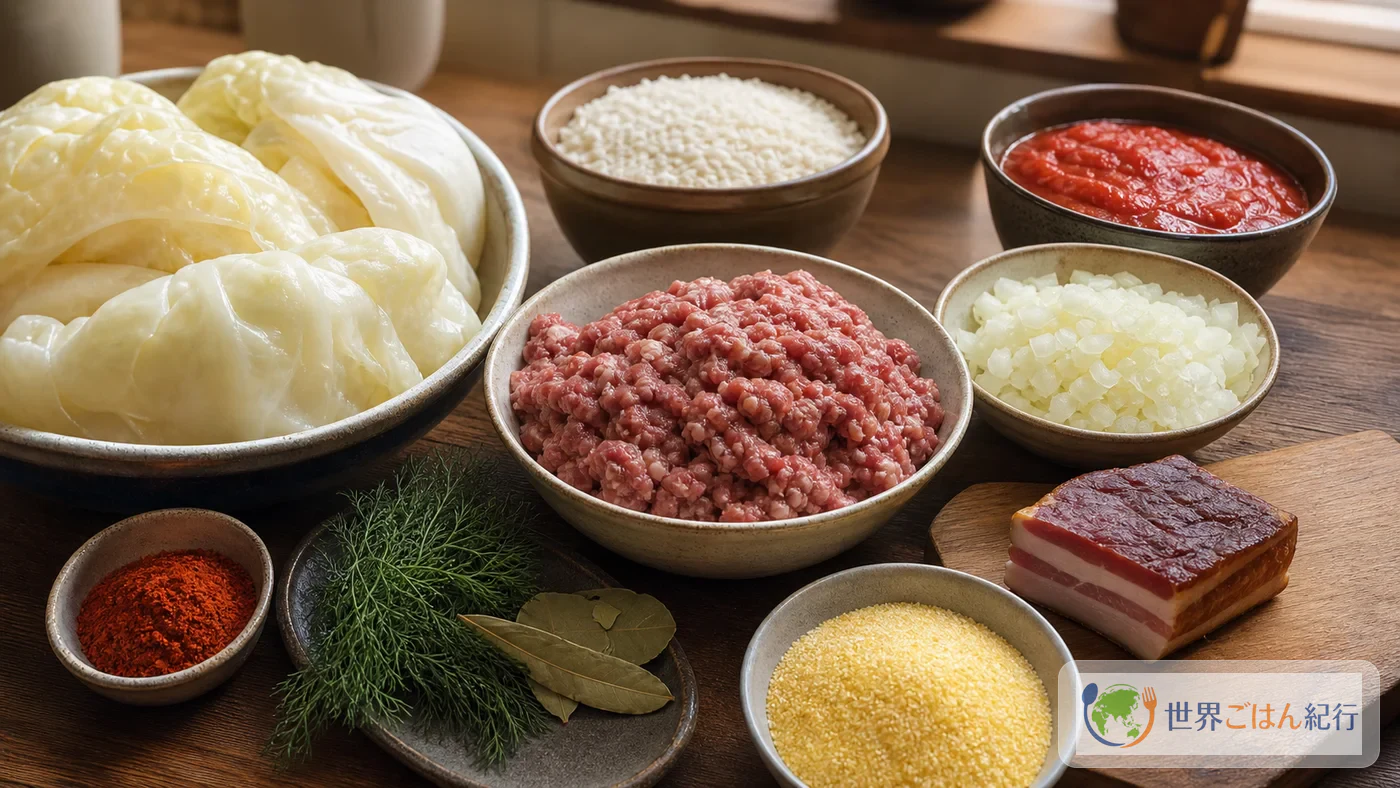
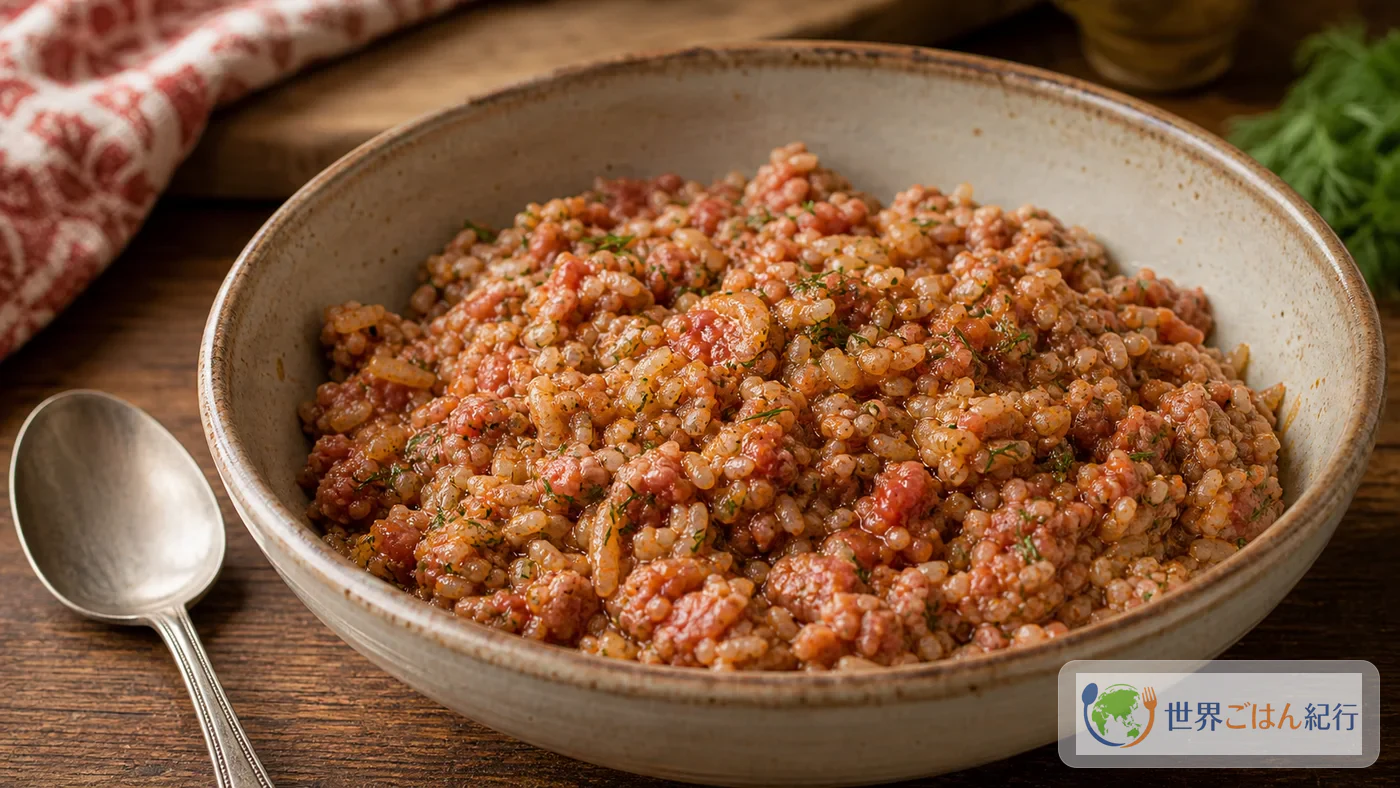
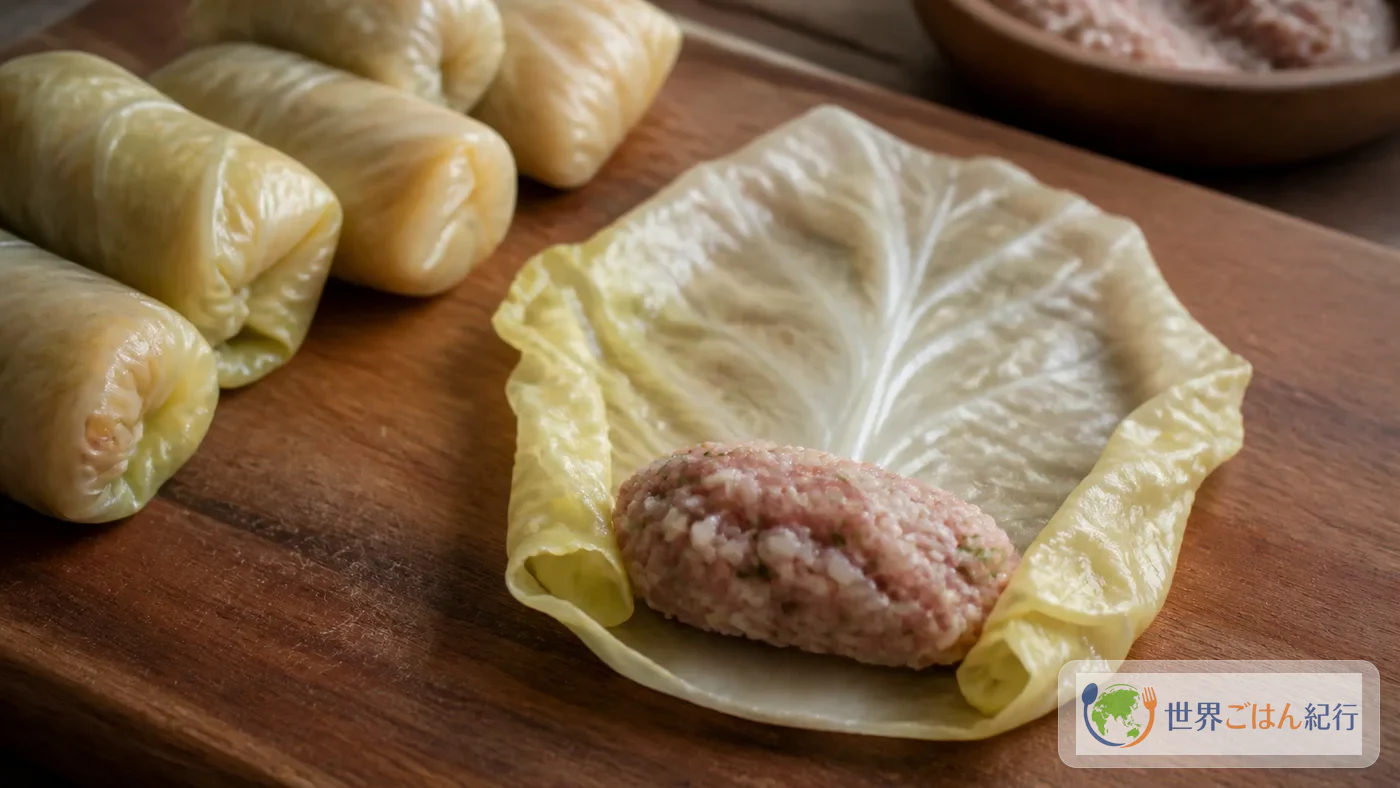
This makes about 16 fairly small sarmale, enough for 4 people. Romanian households often make more, but this amount is easy to handle in a home pot. The rice swells a little during cooking, so do not roll too tightly; leave room inside the leaf for the rice to expand.
This dish contains pork, beef, bacon and sour cream (dairy). Bacon can contain soy or wheat, and salt levels and allergen labels of sauerkraut and bacon differ by product, so check the label every time you buy. Because it is a ground-meat dish, cook it to an internal temperature of 71°C (160°F) or higher.
What to buy for this dish
Buy specially only the ingredients that support the sourness and smoke, the flour for mămăligă, a pot that can take a long braise, and a way to check that the filling is cooked through. Bacon and ground meat are ordinary supermarket items.
Ordinary paprika will do, but trying to get smoke from bacon alone makes the saltiness run ahead. Smoked paprika adds aroma in a small amount, so it is easy to use in other braises too.
You can use plain white rice instead of mămăligă, but it cushions the sour cabbage and rich meat differently. With fine polenta flour on hand, you can make the side closer to Romania.
In a thin pot, the bottom scorches during two hours of braising while the leaves on top stay tough. Use a heavy pot: it holds low heat steadily and keeps the rolls from breaking when you shake it.
With wrapped ground meat, the center is hard to judge even when the outer leaf is tender. The first time, or when using frozen meat, check the center with an instant-read thermometer to avoid overcooking.
Choosing cabbage, meat and substitutes for sarmale
The hard part at home is the sour cabbage leaf. Ordinary cabbage still makes a good roll, but sarmale get their character from sourness, and if you simply braise plain cabbage sweetly, the dish drifts toward a Western cabbage roll. Decide first what to keep and what to replace, and you will make fewer mistakes.
| Ingredient or step | Closest to Romania | Practical home solution | Verdict |
|---|---|---|---|
| Cabbage leaves | Whole fermented sour cabbage | Blanch ordinary cabbage in vinegared water and line the pot with sauerkraut | Sourness is essential |
| Filling | Mostly pork, with rice | Mixed ground meat with more pork | Ground chicken alone is too light |
| Smoke | Smoked meat called afumătură | Thick-cut bacon, smoked sausage | A little is enough; too much turns salty |
| Herbs | Dill, thyme, cimbru | Dried dill and thyme | Parsley alone is flat |
| To serve | mămăligă and smântână | Polenta flour and sour cream | Plain rice works, but it cushions the sourness differently |
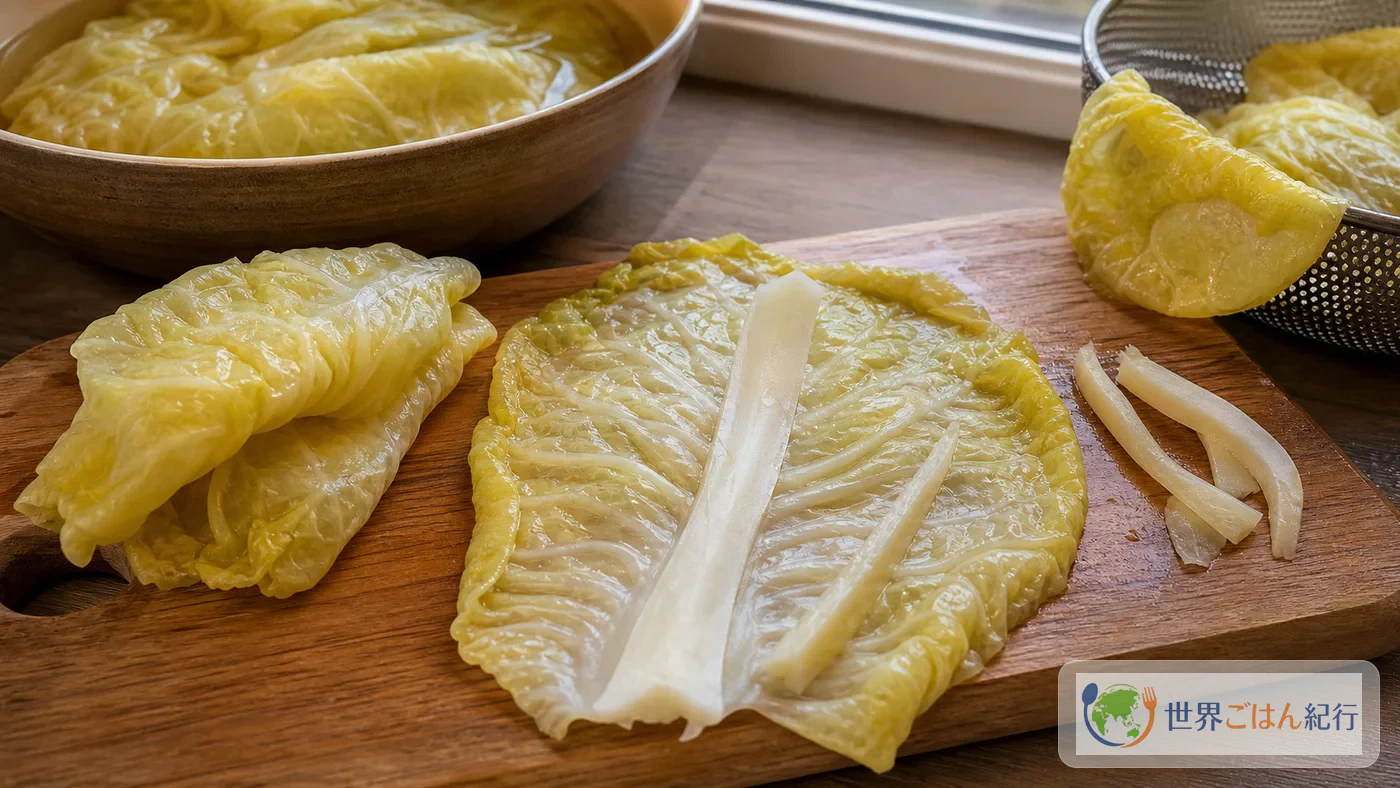
Whole fermented cabbage can sometimes be found online or at Eastern European grocers, but if you wait for it every time, you will make sarmale less often. Two shortcuts work well together: line the pot with shredded jarred sauerkraut, and give ordinary cabbage leaves a quick sour boost in water with vinegar and salt. It isn't fully fermented cabbage, but it keeps the sourness pointed in the right direction. There is also a version rolled in grape leaves, though cabbage is easier the first time.
For smoke, skip the pricey imported sausage. A little ordinary bacon with smoked paprika fills the gap and is easy to keep on hand. If you have already made mămăligă, use the same flour for the side. And don't fear the sourness or reach for sugar; round it with sour cream and mămăligă, which is closer to how Romanians eat it.
Method: do not roll too tightly, and finish slowly in the pot
Sarmale tear if you rush them over high heat. Keep the leaves supple, the filling tender, and the pot at a steady stream of small bubbles. If you keep those three, it is much easier than it looks.
Why sarmale tear or turn tough
Leaves tear when they are tough, the rib is thick, the rolls are too tight, or the pot boils too hard. Cook the cabbage over medium heat until translucent and shave the rib to about 0.125 inch (2 mm). Leave room in each roll for the rice to expand, and keep the braise from boiling hard. Torn leaves can go on the bottom of the pot, so nothing is wasted.
A tough filling comes from overmixing, too little liquid, or lean meat. Stop mixing at about 2 minutes and always add 3.5 tbsp (50 ml) water. Pork as the main meat keeps it tender, while beef alone makes it firm. Use raw rice, too: cooked rice has no room to absorb liquid and makes the texture dense.
Serving and storing sarmale
At first, sarmale, mămăligă, sour cream and pickles are all you need. If you want one more dish, cut the Romanian cheese pie plăcintă small and serve it as a starter. To explore the wider Eastern European table, cook borscht, pierogi and goulash on other days; you'll notice how differently each one uses sourness and braising.
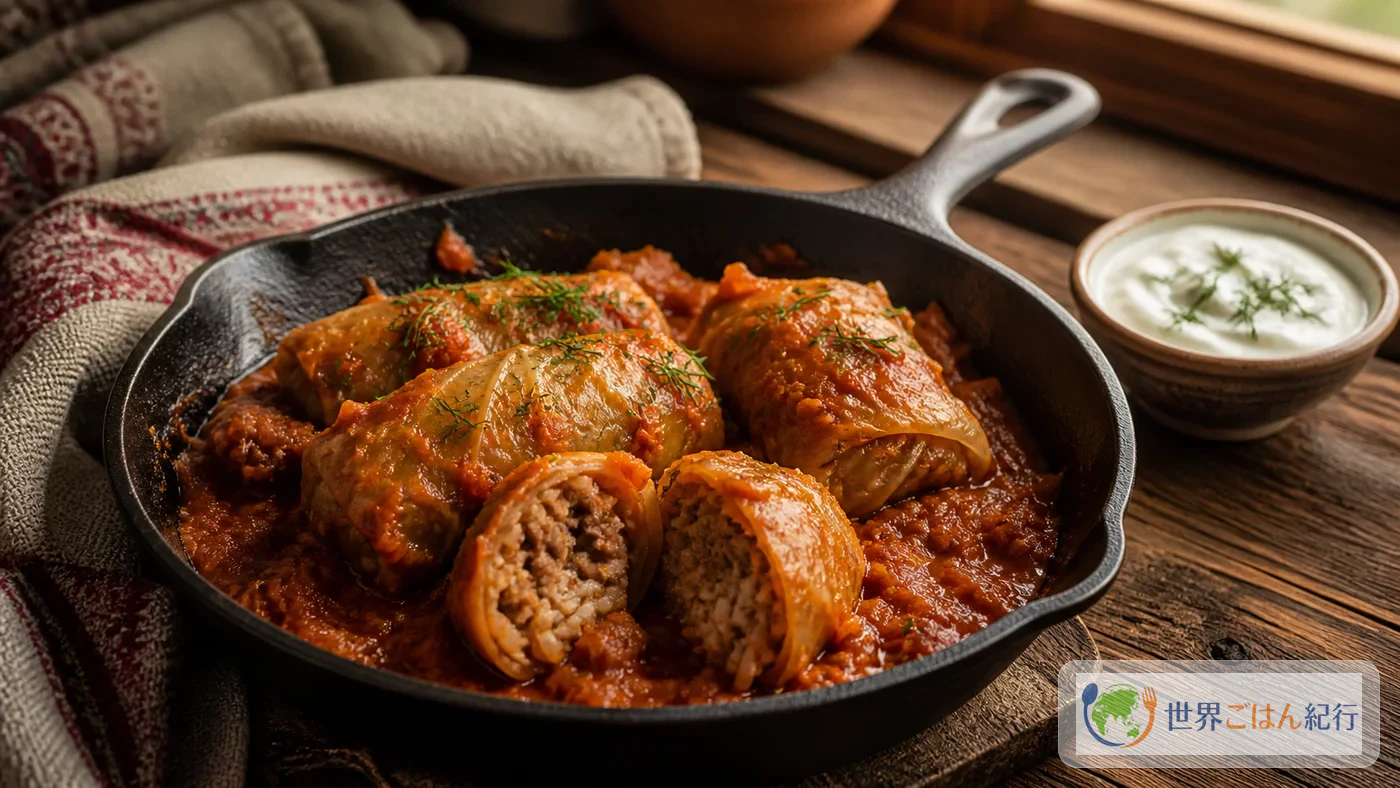
Let leftovers cool, then move them to a container with the braising liquid. Eat within about 3 days in the refrigerator, or freeze for about 1 month. To reheat, return them to a pot and warm over low heat for 10 to 12 minutes, until the liquid barely bubbles and the rolls are hot all the way through. If the liquid has tightened, add 2 to 3 tbsp water.
What goes wrong, storage and FAQ
How is it different from ordinary cabbage rolls?
The big differences are sourness and rice. Western cabbage rolls are often simmered in sweet cabbage and broth, while sarmale are layered with sour leaves, a rice-and-meat filling, tomato and smoke. Fermented cabbage, not bouillon, sits at the center of the flavor.
Can I eat it without sour cream?
You can, but sour cream softens the sour cabbage and rich filling and pulls everything together. If you avoid dairy, use strained unsweetened soy yogurt, or tofu cream with a little olive oil mixed in. Avoid sweetened yogurt; it spoils the flavor of the dish.