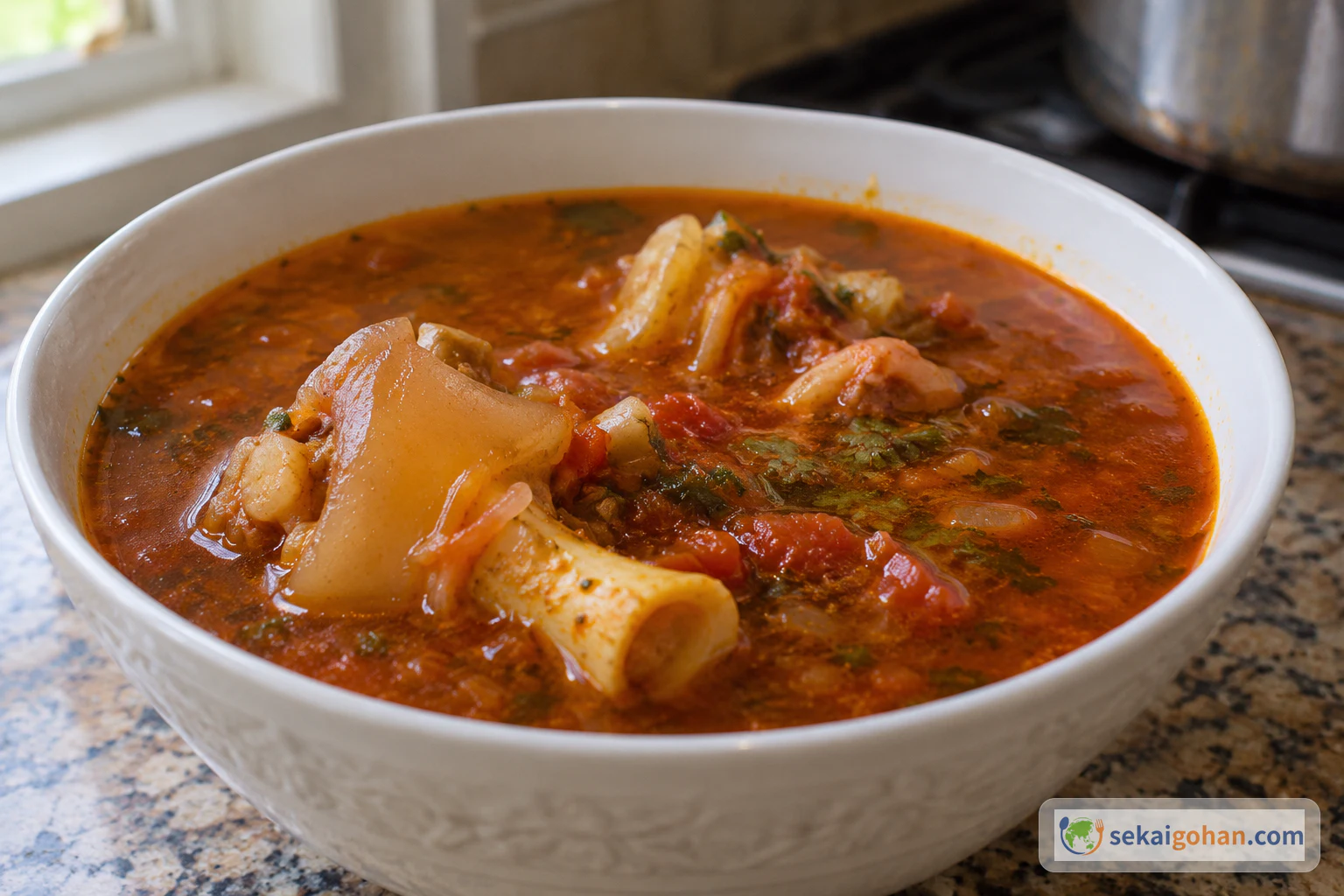
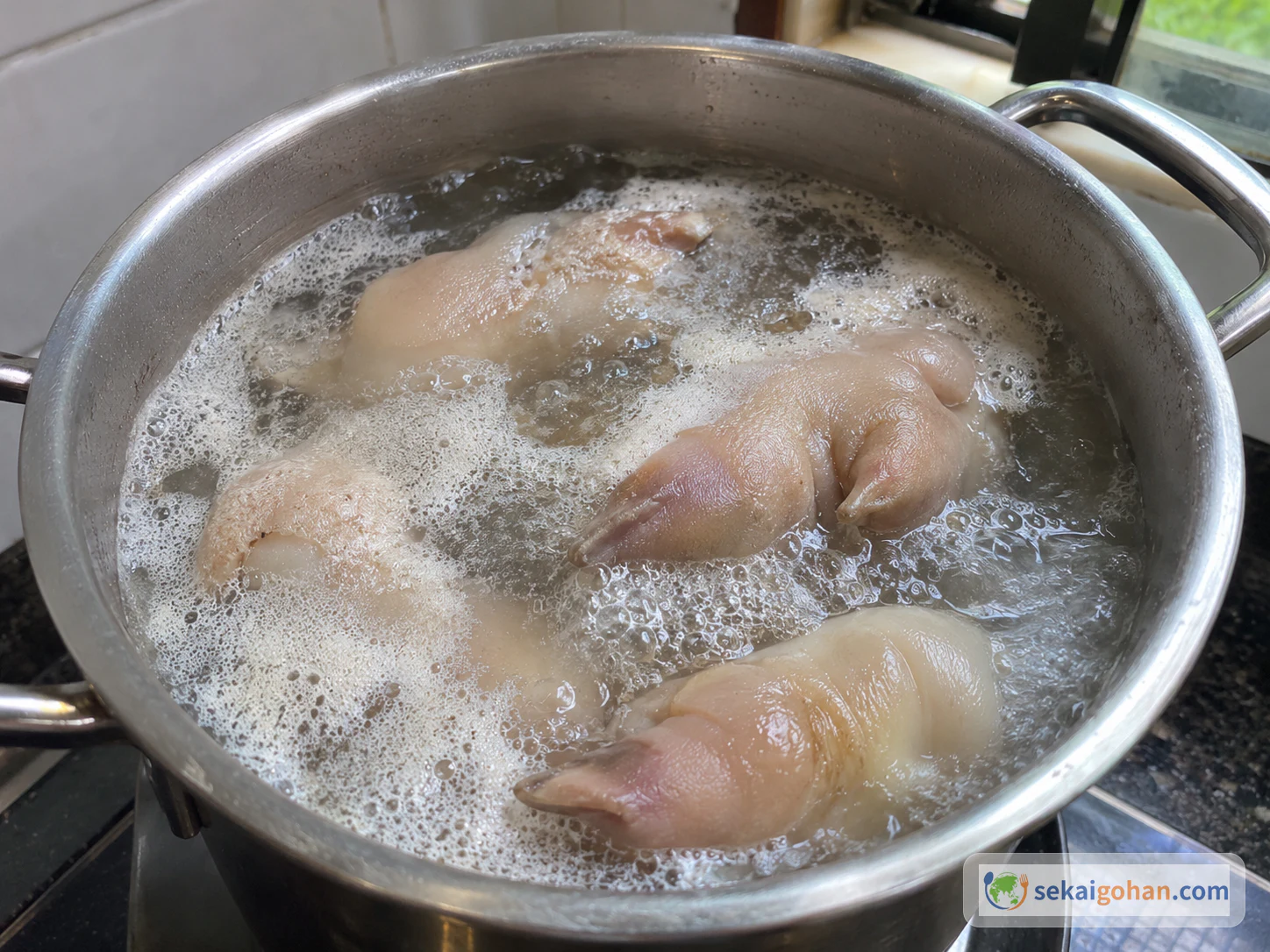
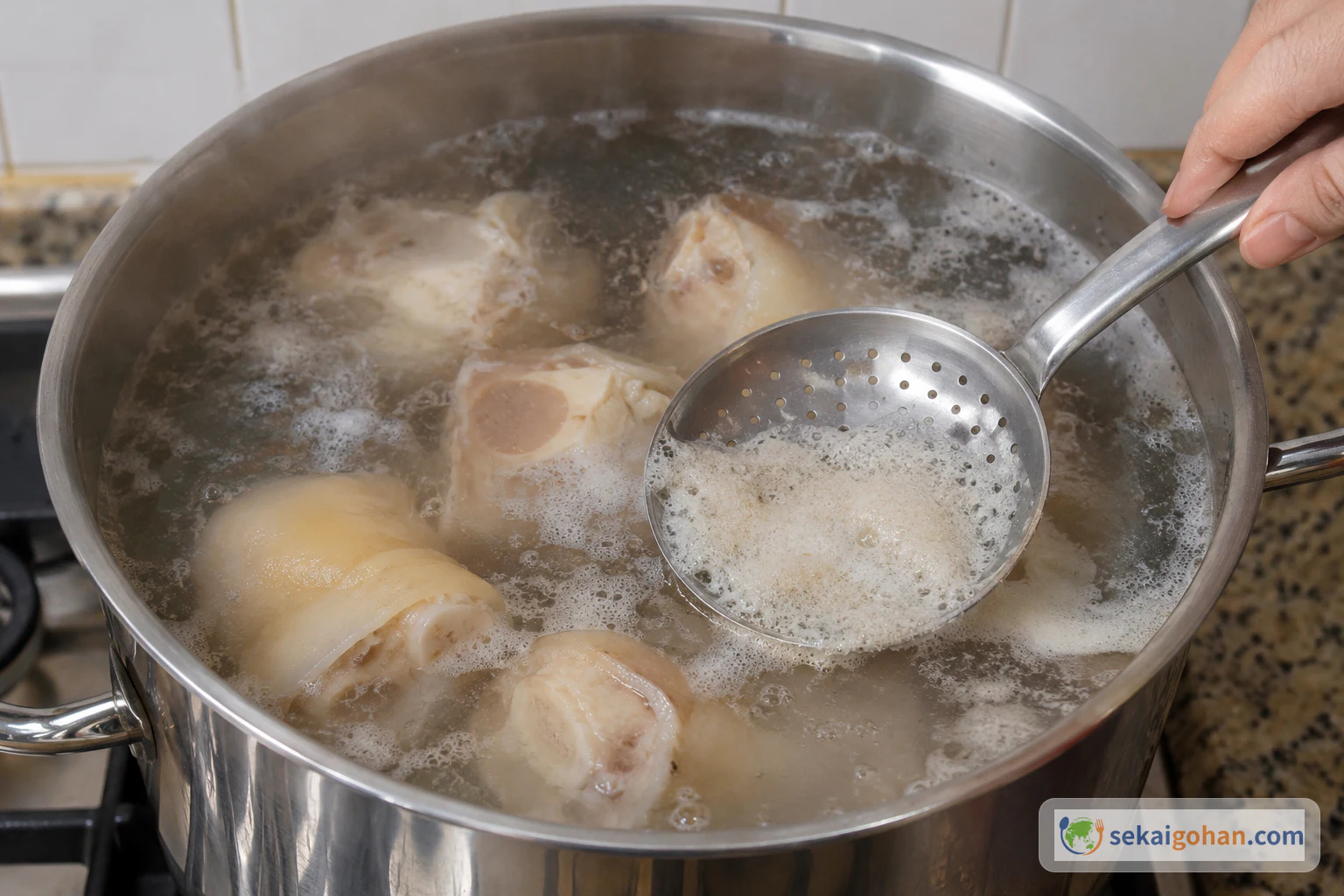
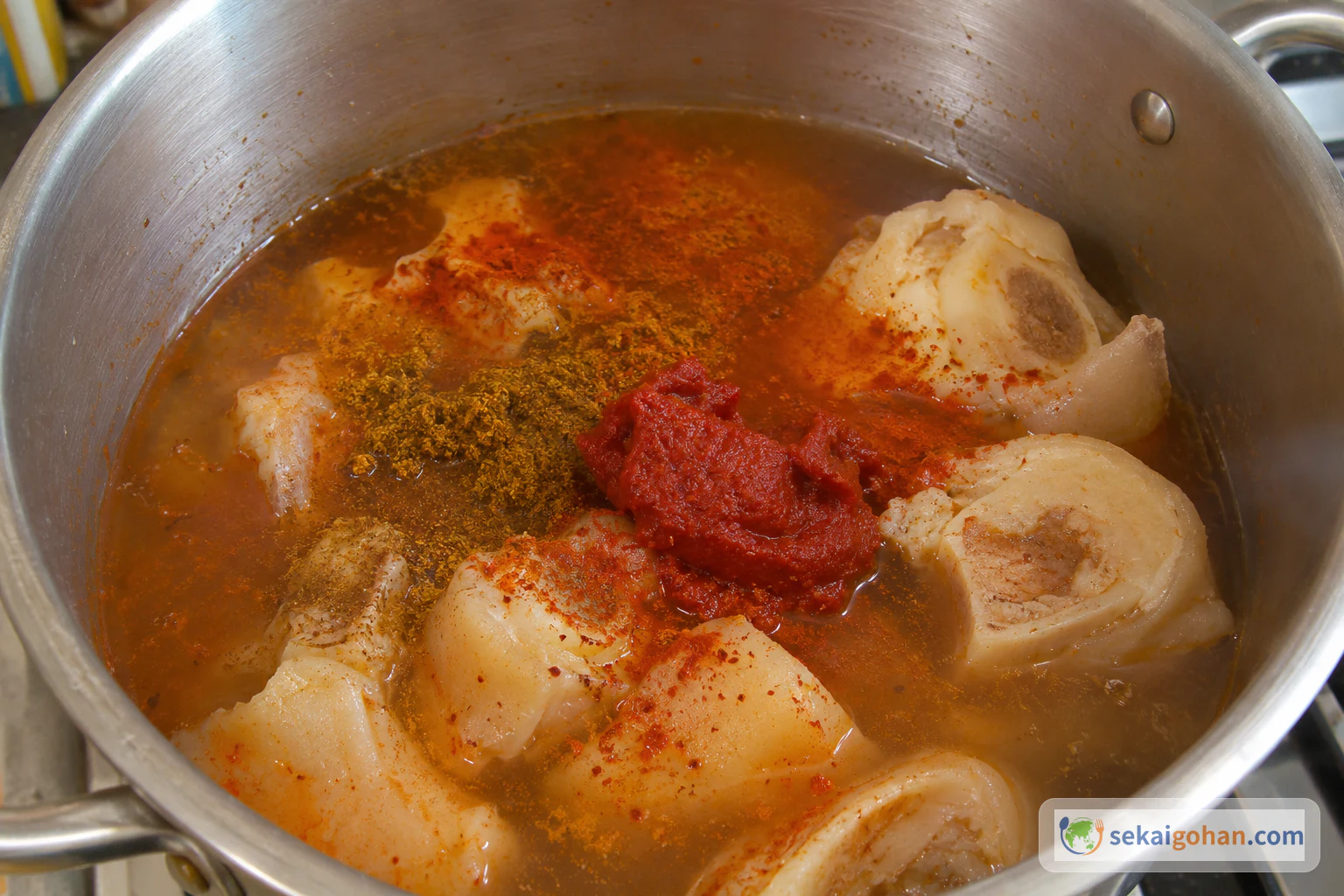
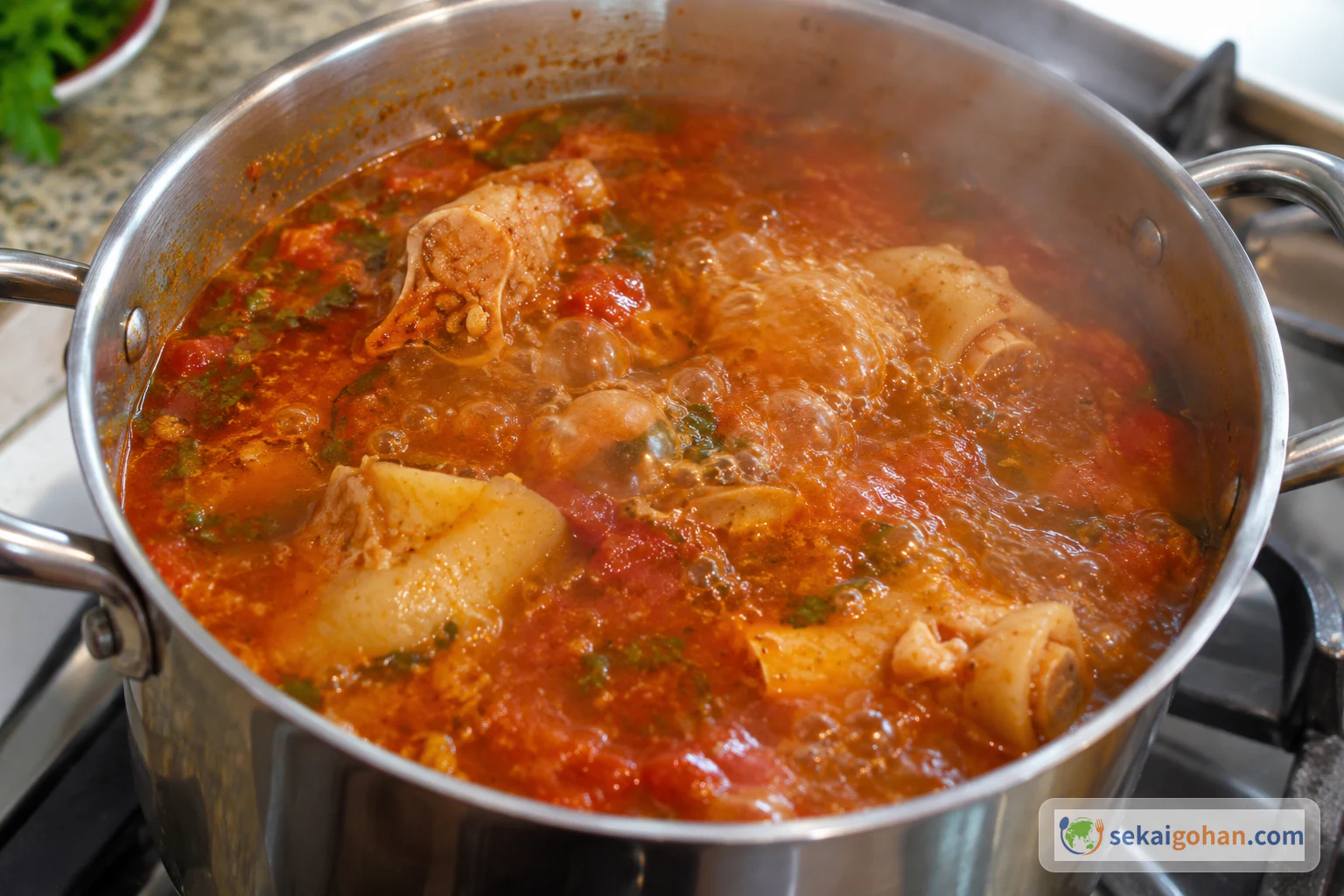
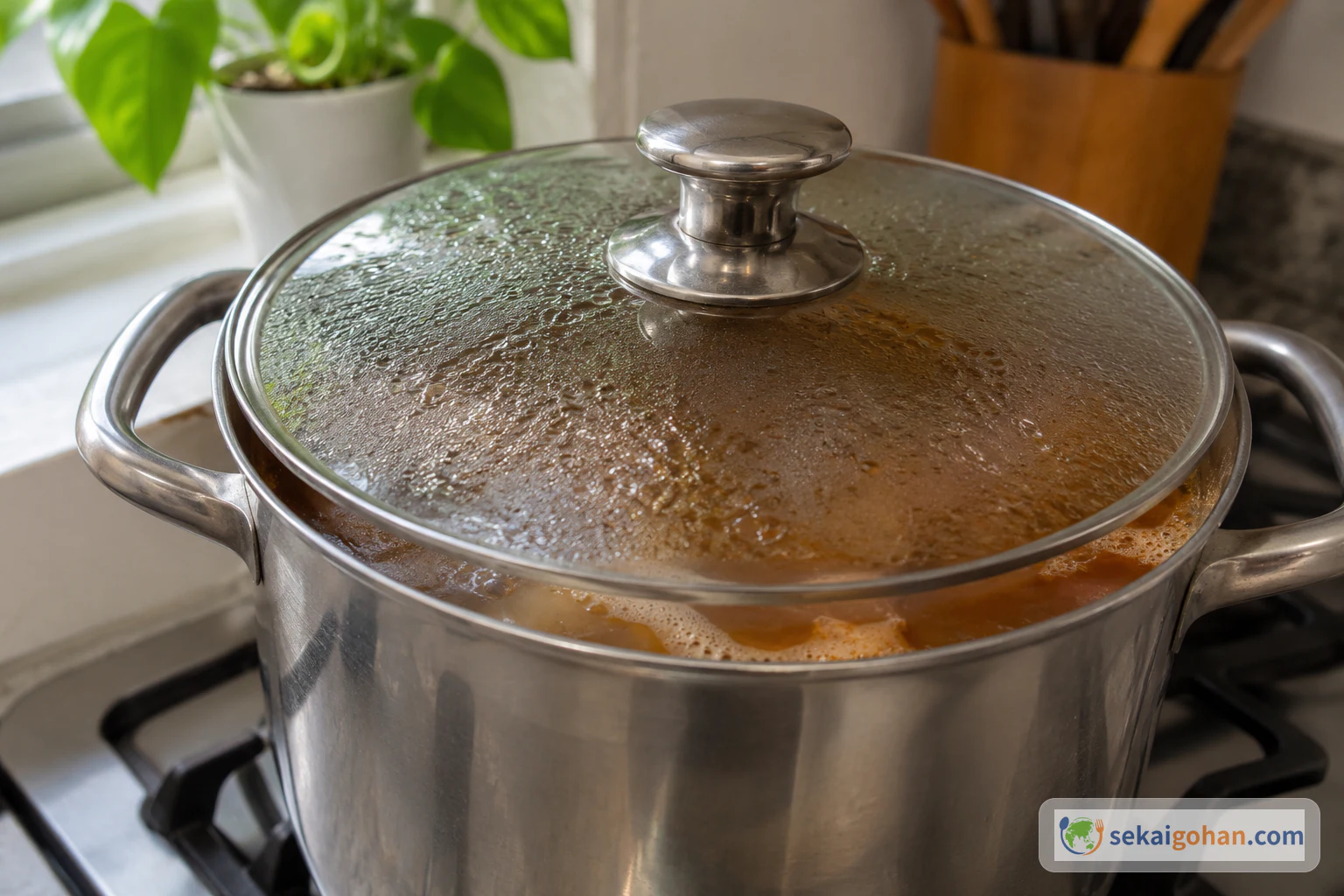
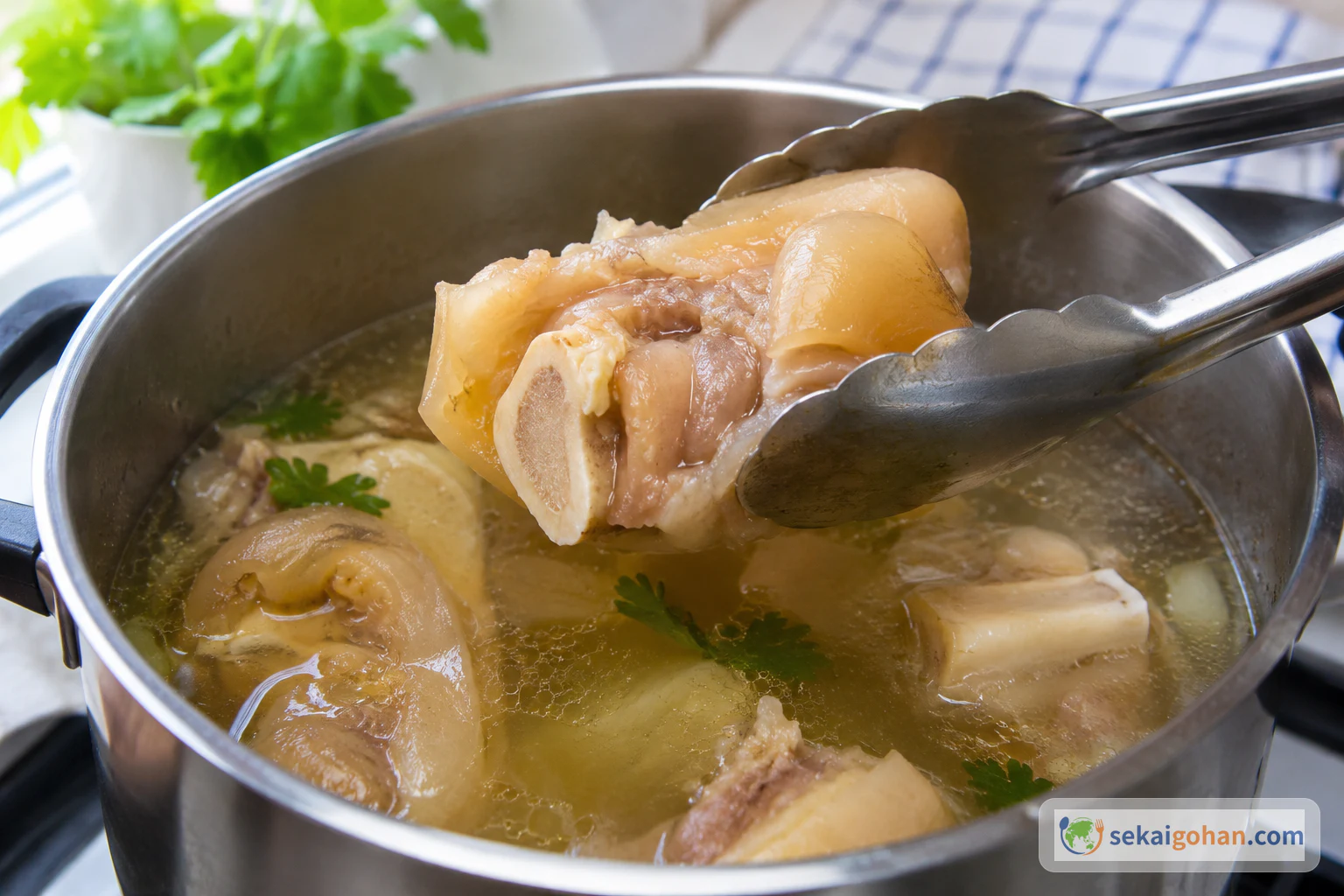
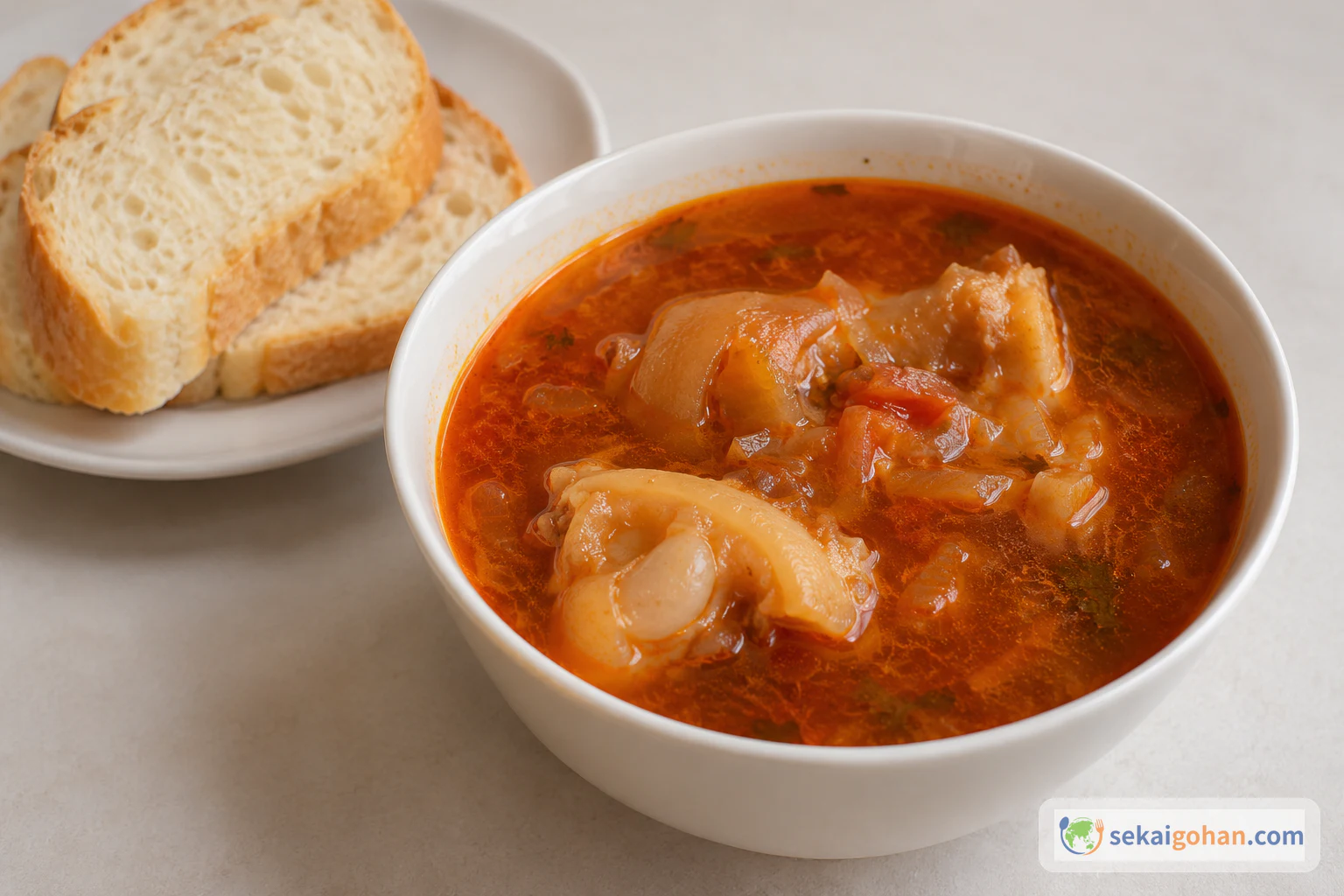
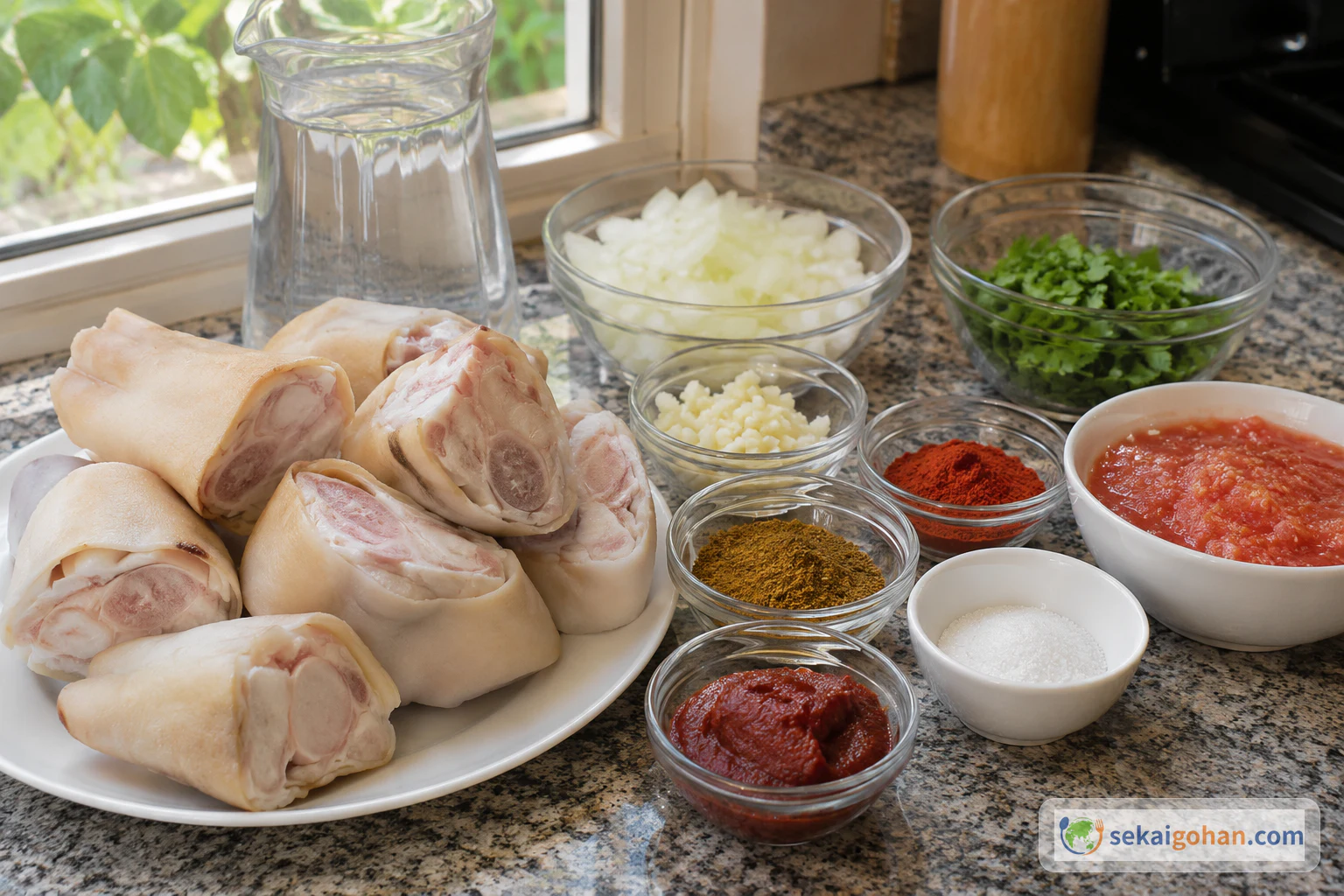
Ten pieces of cow or calf foot go into a pot of plain water. It comes to a boil, the foam is skimmed off, and that water is poured away. Then fresh water goes in, and the pot is boiled and skimmed a second time. Only after that come the soup hawaij, sweet paprika, tomato paste, garlic, salt, onion, grated tomatoes and cilantro, then a lid, low heat and a long, quiet simmer until the foot pieces turn soft.
About Yemenite Leg Soup
Despite its name, leg soup (מרק רגל תימני) is made with cow or calf foot, not shank or neck. It belongs to a family of related Yemenite soups rather than one fixed recipe. Some cooks use the same "Yemenite leg soup" name for a different pot of neck meat, calf-leg bone slices and potatoes. It also sits close to marak temani, the Yemenite chicken soup with vegetables and hawaij. The version here is the foot soup: the two boils in plain water clear the pot, and the hawaij, paprika and tomato carry the flavor through the long cook. For more from the country, see our Yemen recipes.
Ingredients: 10–12 Portions
Equipment
- Large, stable pot with a lid
- Heatproof skimmer
- Stable heatproof colander that sits securely in the sink
- Heatproof spoon
- Heatproof tongs
- Ladle
- Knife, cutting board and grater
- Soup bowls, plus a side plate if serving bread
Choosing Foot Pieces, Hawaij and Tomato
Foot pieces. Buy cow or calf foot that has already been commercially processed for food. No particular weight, thickness or cut is called for, so use the pieces as they're sold.
No equivalent cuts. Shank, neck meat, pig's feet and chicken feet make a different soup, and these amounts and steps won't work for them. If you can't find cow or calf foot, it's better to choose another soup than to swap the cut.
Hawaij. Look for the blend meant for soup. Sweet hawaij is a different mix, so if that's all you have, track down the soup blend before you start.
Tomato. Use both the tomato paste and the grated tomatoes. They're separate ingredients, and the soup needs each of them.
Method: Two Boils, Then the Lid
- Use a stable heatproof colander when draining, and keep bare hands and your face away from steam and hot food.
- Keep raw foot pieces away from foods that won't be cooked. Wash your hands and any tools that touched them.
- Plan the simmer for a time when you can stay with the pot. Don't leave it unattended or let it boil dry.
- Softness tells you about texture, not safety.
Before you start, chop the onion and cilantro, crush the garlic and grate the tomatoes. The seasonings go in one at a time below, so each is easy to follow.
Leg Soup Troubleshooting
| What you notice | What to do |
|---|---|
| The foot pieces aren't soft after 8 hours | Keep the pot covered on low and check again. Softness is the sign to stop, along with the listed time |
| The liquid is running low | Add water as needed and return to a low simmer. Never let the pot boil dry |
| The soup is boiling hard under the lid | Turn the heat down |
| Foam remains after the second skim | Skim once more before adding the seasonings |
Serving Leg Soup
At the table, you can lift the foot pieces out or leave them in. Here they stay in the bowl, with plain bread on a separate plate if you like. Potatoes, rice and bread stay out of the pot itself.
Frequently Asked Questions
Is this made with leg or foot?
Foot. "Leg soup" is the name of the dish, but it's made with cow or calf foot pieces, with no shank or neck meat.
How much water do I need?
Enough to cover the foot pieces.
Should I finish it with fresh cilantro?
No. The cilantro cooks in the pot, going in before the 8-hour simmer.
Do 8 hours and soft foot pieces mean the soup is safe?
Not on their own. Heat cooked food to 167°F (75°C) for 1 minute, and keep raw foot pieces away from food that won't be cooked.
How long does it keep, and how should I reheat it?
Don't leave the soup sitting out at room temperature for long.