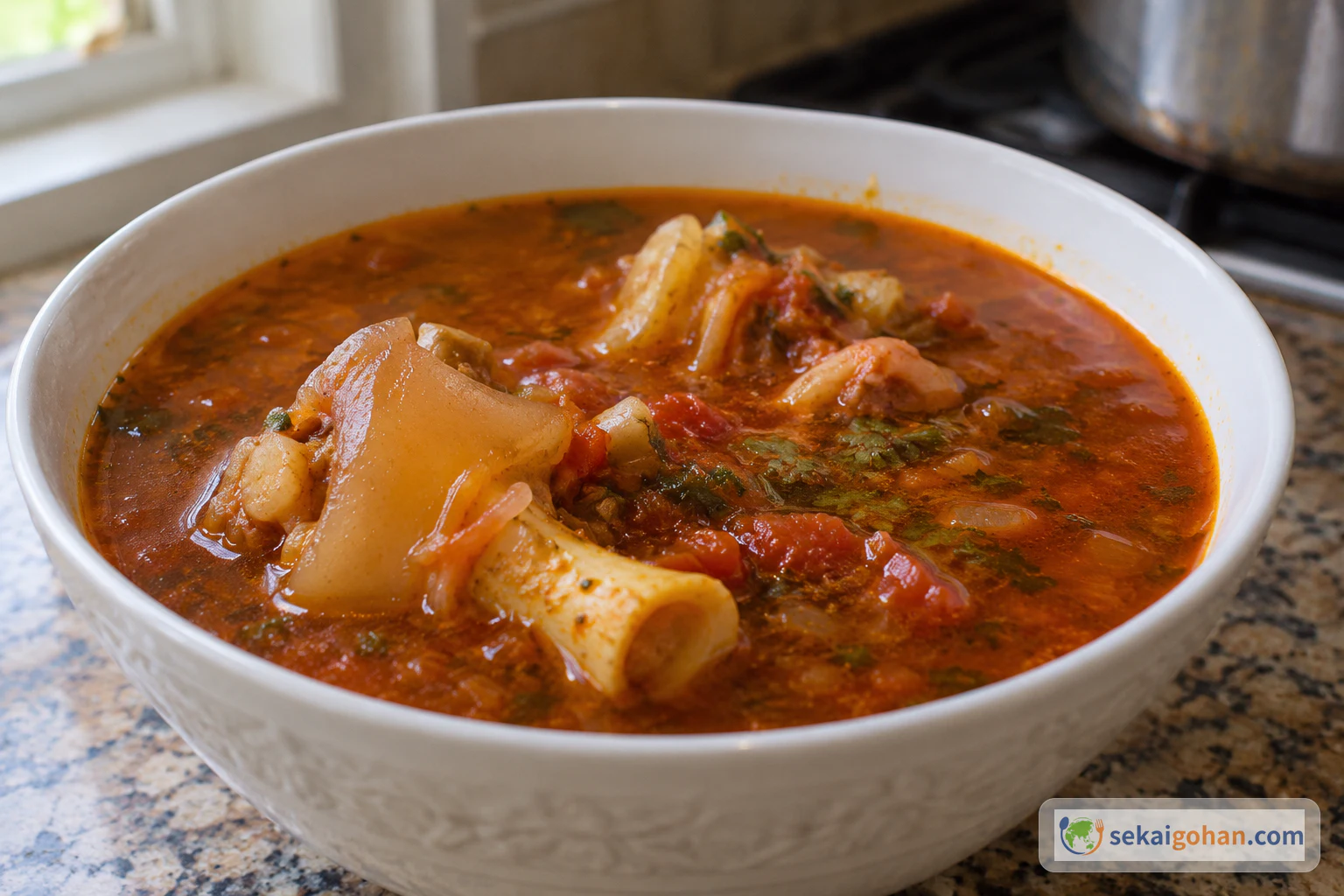
Through the steam, the red stew rises in a white mound. Push in a spoon and the tomato-and-potato broth runs out from under the foam, with a thread of green-chile aroma cutting through. That foam is hilbeh: fenugreek soaked in water, the bitter soaking water poured off, then beaten with a little fresh water and plenty of force. Saltah is a hot lunch stew from Sanaa, and the hilbeh gives it its light bitterness and body. Without it, you still have a good tomato stew, just not saltah. This version serves four with chicken thigh, potatoes, tomatoes and a light stock.
Saltah at the Sanaa Table
A Hot Bowl for Lunch

Saltah is one of the main lunch dishes of Sanaa. It's built on a meat or chicken broth called maraq, with onion, tomato, potato and egg, and it comes to the table in a special heat-resistant bowl that keeps it hot until the last spoonful. Whipped hilbeh and sahawiq, a green-chile paste, go on top at the very end. Family and friends gather around the one bowl and scoop it up with torn bread.
One theory says a hot dish of Turkish origin arrived about 100 years earlier. Saltah began in Sanaa and later spread to other regions and to Yemeni tables abroad.
Fillings, Fahsa and Home Versions
There is no single fixed form. Tomatoes, potatoes, beans and more can go in, so the meat and fillings vary from home to home and restaurant to restaurant. A version that uses raw meat in place of minced meat is called fahsa.
| Name or setting | How the dish appears | What to do at home |
|---|---|---|
| Sanaa saltah | Stew, vegetables and hilbeh layered in a hot bowl | Put the foam on last and keep it hot until eating |
| Fahsa | Raw meat instead of minced | Start with chicken thigh; lengthen the simmer when you change the meat |
| Home or restaurant variations | Lamb, beef, potato, rice, egg, beans | The more you add, the more you tune the hilbeh and sahawiq separately |
Decide the thickness of the stew and the order of adding the hilbeh before anything about the filling. At home, put your effort into keeping the stew from getting too thin and keeping the hilbeh off the heat. Change the ingredients as you like; keep those two rules and the dish holds its shape.
Hilbeh, the Part That Makes It Saltah
Hilbeh, also spelled Hulbah, comes from fenugreek. Its aroma doesn't burst out the way curry powder does. It's green and hay-like, with a bitterness that lingers at the back of the tongue, and whether you like that will decide whether you make saltah again. Whipping turns the jelly-like layer that settles at the bottom of the soaked seeds into a light, pale paste. If you're cooking for dinner, start the soak in the morning and the schedule takes care of itself.
Ingredients (serves 4): Build the Stew in Your Own Kitchen

Chicken shortens the simmer and makes it easy to judge doneness the first time. Lamb adds fat and aroma but you have to wait until the meat is tender. The same goes for beef; do not suddenly add more spice just because you changed the meat.
Without fenugreek you can still eat this as a tomato stew without the white foam. But if you want to reproduce it as saltah, making even a small batch of hilbeh makes the dish easier to judge. If you worry about the bitterness, you can start with half of the 20 g and make a smaller stew.
This dish uses chicken, eggs and fenugreek. Fenugreek rarely causes allergic reactions, but people with legume allergies such as peanut or soy can react to it too. If this applies to you, check every ingredient label and ask a health professional before cooking. Fenugreek caution / Fenugreek allergy factsheet
Check that the chicken reaches an internal temperature of 74°C (165°F) or higher. Safe minimum internal temperatures
Choosing Fenugreek for Saltah
Look for a product whose ingredient list says fenugreek seed, and check that the name says "seeds" or "whole." Products that turn out to be powder or leaves don't suit the soaking step here, and curry powder and kasuri methi are different things altogether. Whole seeds keep well and can go a little at a time into bean dishes and pickles, too.
If you buy, buy whole seeds that can be soaked, not powder. It's worth it if you want to make hilbeh and have something to crush the seeds with. Skip it if you have a legume allergy, if the bitter aroma doesn't suit your table, or if you'll only ever make one batch. If you're unsure, find a small bag at a nearby Middle Eastern or South Asian grocery and make a half batch first.
Tools: Taking It Off the Heat Matters More Than a Special Bowl
Heat-resistant stone bowls called madar or makri hold high heat and carry the dish to the table still hot. At home, transfer the stew to a small heatproof pot or a heavy enameled pot. Do not heat an empty vessel over high heat unless its specifications allow it.
For sahawiq, stopping before the tomato, green chile, cilantro and garlic become fully liquid, with some pieces left, gives a palate cleanser for the stew. You can do it with a knife, but a mortar that crushes garlic and chile quickly makes it easier to control how much aroma you release.
A mortar and pestle is not something to buy just for saltah. It is a candidate if you often make spices, herbs and pastes and your current vessel is shallow and splatters.
If you don't have one, chop the garlic and green chile with the salt on a cutting board, and mix in the tomato last. If you use a blender, pulse for 2 seconds at a time and stop before it becomes liquid. Only buy a mortar if you will make saltah often.
Method: Stew, Foam and Acid Layered at the End
You do not finish everything in the pot and then pour foam on top. Keep the stew hot, whip the hilbeh separately, then take the pot off the heat and layer. If this order breaks, either bitterness or wateriness stands out.
Fixing Saltah: Foam, Bitterness, Thickness and Heat
Hilbeh Foam
Good hilbeh forms layers of white to pale ochre foam, and when you lift the spoon, a thin ridge holds for several seconds. If it runs like liquid, there's too much water. If it's crumbly, add cold water 1 teaspoon at a time and stir. Foam separates as it stands, so whip it shortly before the stew is done.
Too Bitter
Bitterness usually comes from keeping the soaking liquid or from heat. Drain the seeds in a sieve and use fresh water, and always take the pot off the fire before the hilbeh goes on, since heating it on the stew draws out the bitterness. Sugar or honey only pushes the tomato stew somewhere else. Instead, try a few drops of lemon juice and see whether the edge rounds off. If it won't come back, don't force yourself to eat it; next time, soak longer and pour off the liquid again, which works better than whipping longer.
Do not spread all of it at the start. First place half of the four-serving amount on the surface and taste. If the bitterness and body suit you, add the rest. Keeping the foam in a separate dish also makes it easy to match each person's taste and heat level.
Too Thin
Beans, carrots or rice soak up liquid, so it's tempting to add more stock from the start, but then the surface runs when the hilbeh goes on. Begin with 3 cups (700 ml), and add 3.5 tbsp (50 ml) at a time once the ingredients are tender. On days you add rice, cook it separately and stir in a small amount at the end; the thickness is much easier to manage that way.
Heat
Adjust heat only with the sahawiq, because a lot of green chile in the stew hides the hilbeh. When children are eating, serve the sahawiq in a separate dish, use 1/4 chile and add a bit more lemon. If only the adults want heat, add the chile after setting portions aside, and the whole pot stays the same.
Storing Saltah and What to Cook Alongside
As the stew cools, the potatoes absorb the broth and the hilbeh separates, so store the stew, hilbeh and sahawiq in separate containers. Move the stew to a shallow container, cool it slightly and refrigerate within 2 hours. Use cooked leftovers within 4 days, and reheat them to 165°F (74°C).
To serve leftovers, bring only the stew to a boil, move it to a bowl and top it with a little fresh hilbeh. Boiling hilbeh in the pot makes the foam vanish and the bitterness stronger. To freeze, freeze just the stew in single portions, and make the hilbeh and sahawiq on the day you eat.
On days you want something milder, the mandi recipe shows another Yemeni dish, with meat and rice cooked separately; it also explains zahawiq, a spicy small dish of tomato and herbs. To compare other tables where bread scoops up stew, set saltah beside Jordan's mansaf (in Japanese) and Saudi Arabia's kabsa (in Japanese), and you'll see how differently dairy and rice are used.
Nutrition values are per serving: the chicken thighs, potatoes, tomatoes, oil and fenugreek divided among four people, without bread. Eggs, the saltiness of the stock and whether you keep the chicken skin all change the numbers.
Frequently Asked Questions
Can I make it with powdered fenugreek?
Yes, and powder soaks and whips faster. Choose a product made by grinding the seeds, not a curry blend or fenugreek leaves. Weigh out 20 g as is, soak for at least 2 hours, then pour off the liquid on top.
Does it taste different without a stone saltah bowl?
Taking it off the heat to finish matters more than the special bowl. Move the stew over while still hot and add the hilbeh off the heat. A small pot with a heatproof marking or a heavy enameled pot can stand in. Preheat an empty vessel over high heat only if its instructions allow it.
My hilbeh will not foam.
Usually too much water went in at once. Take a little of the seed layer into another bowl, add cold water 1 teaspoon at a time and whip again for 8 to 10 minutes. If you soaked the seeds without crushing them, the coarse grains keep the foam from holding, so crush them first next time.
Can I make the hilbeh ahead?
After a few days in the refrigerator, the water separates and the foam weakens, so it's easiest to make it right before eating and make only the stew ahead. Don't leave fenugreek sitting in water at room temperature for a long time.