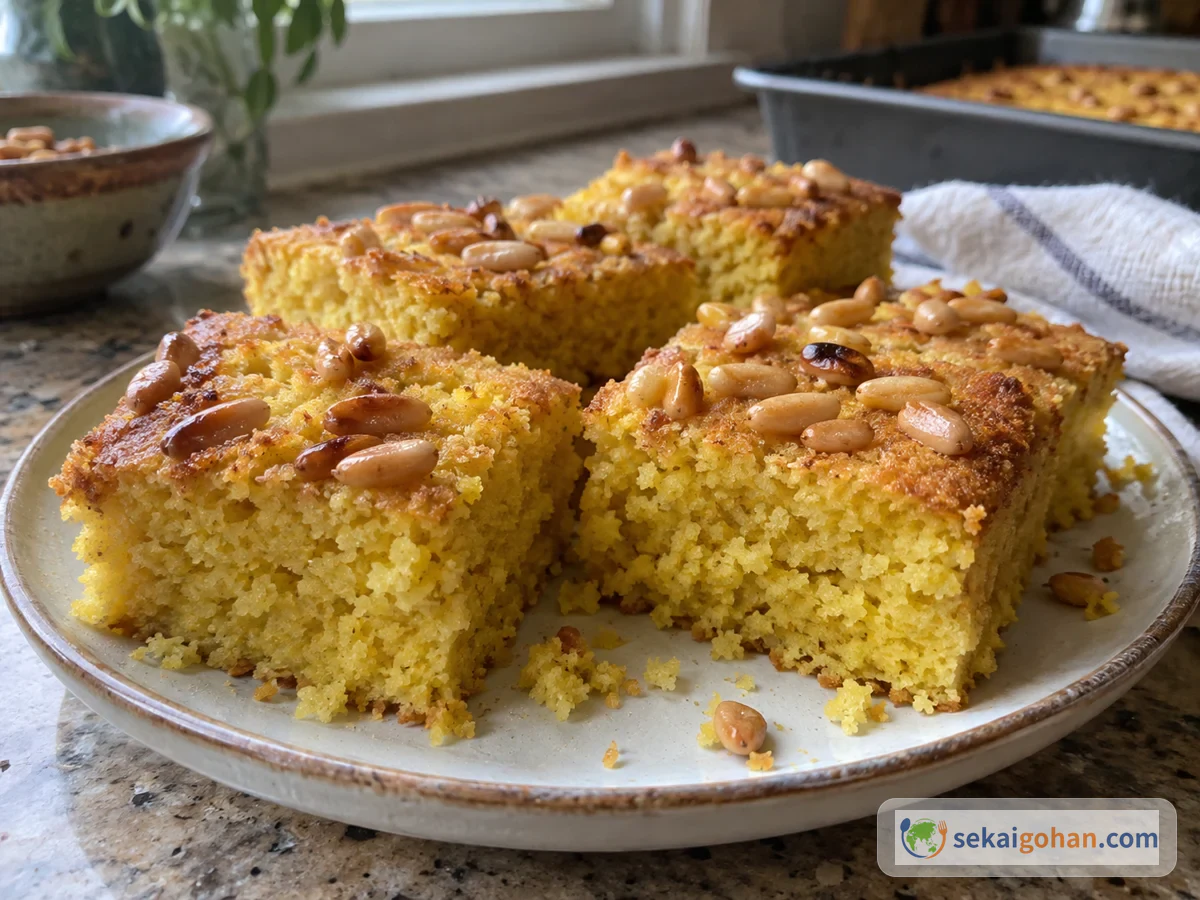
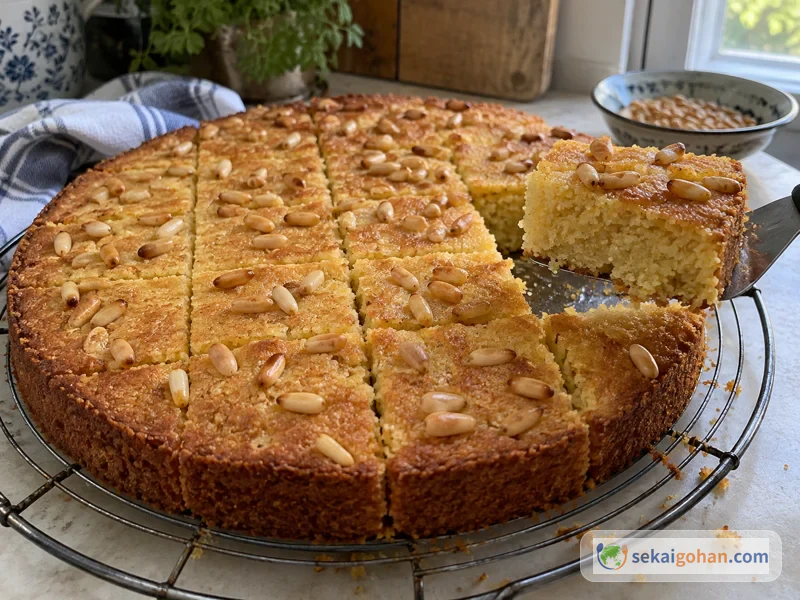
Picture a family tea hour. As you cut the cake into squares, a bright yellow shows at the cut edge, pine nuts are scattered across the top, and a pot of tea steams beside it. Sfouf, a favorite in Lebanese homes, belongs in exactly this scene.
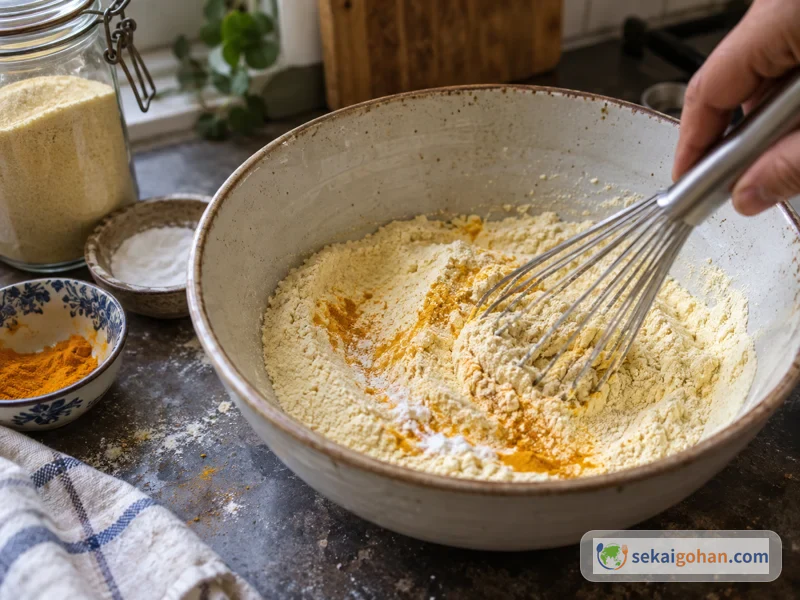
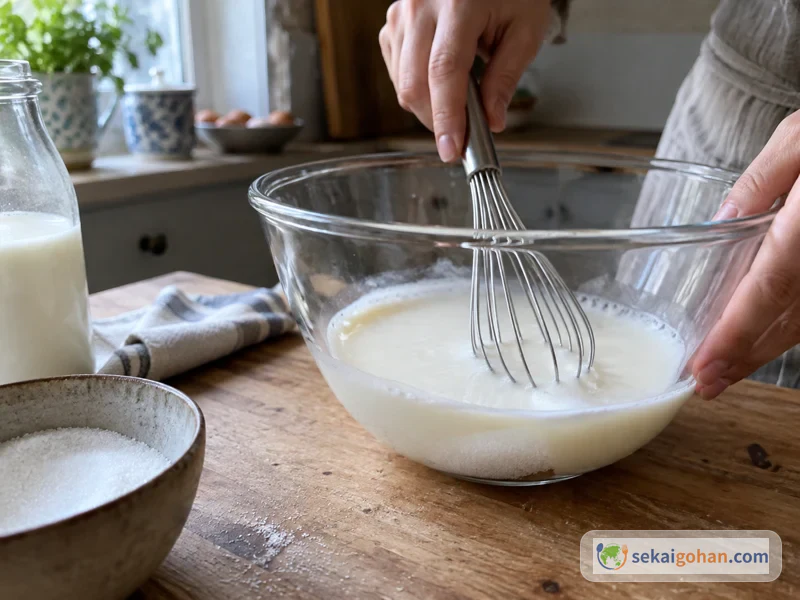
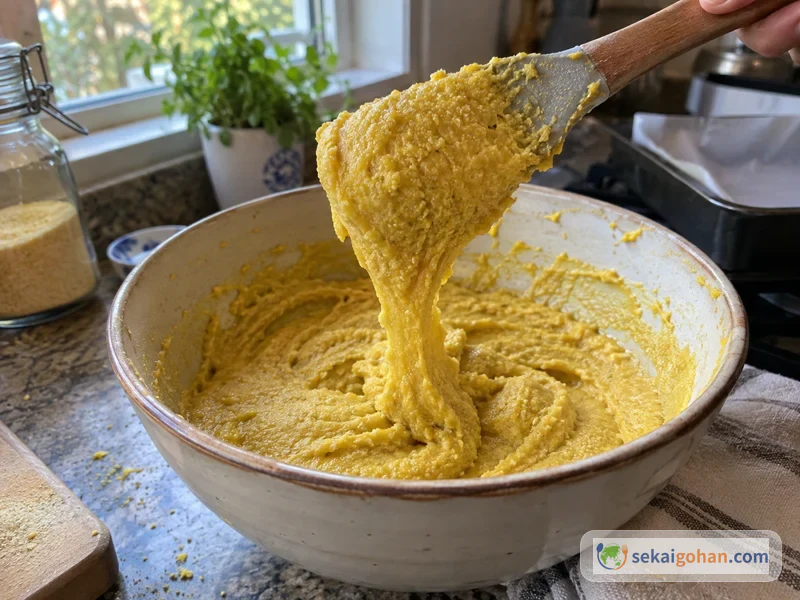
It is made with no eggs, just semolina, flour, milk and oil. The yellow of turmeric colors the batter, and the tahini brushed on the pan turns nutty as it bakes. There is no whipping of eggs or butter; you mix the dry ingredients with the wet and bake. The result is crumbly, with the grain of the semolina still there, rather than the soft rise of a sponge.
Sfouf at the Lebanese Table
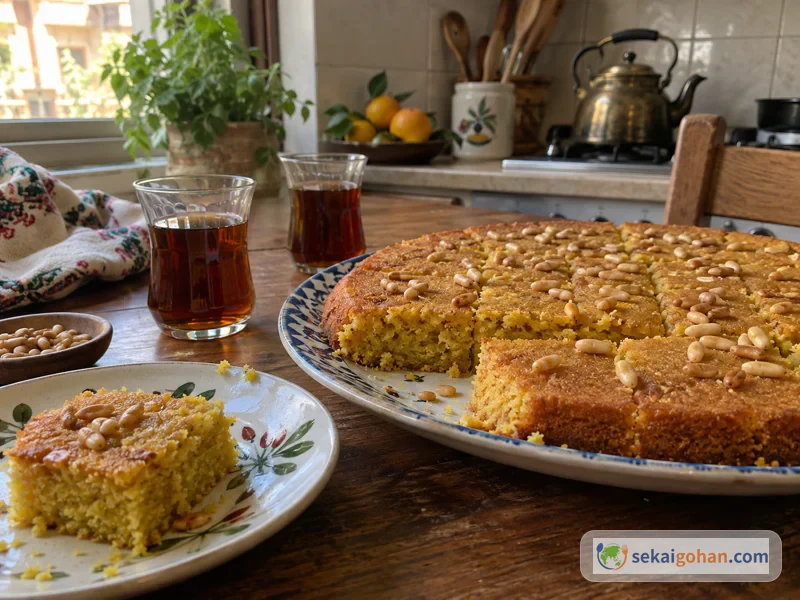
A cake for guests
Sfouf is the sweet a mother bakes when unexpected guests arrive. It needs no cream: bake it, cut it, and serve it with tea or coffee, and that is hospitality enough.
It is baked all at once in a large pan, then cut into squares or diamonds to suit the number of people. That flexible cutting is what makes it so easy to share wherever people gather.
The name Sfouf means "rows" or "lines" in Arabic, which fits the way the squares and diamonds are cut in lines. In English it is spelled Sfouf or Sfoof.
How sfouf differs from home to home
Even under the same name, sfouf changes from one household to the next: the ratio of semolina to flour, whether anise goes in, whether milk is used. Some recipes mix semolina and flour 3 to 1, others nearly 1 to 1. The flour ratio here is 7 oz (200 g) semolina to 6 oz (175 g) flour, enough flour to help the cake hold together while keeping the grain of the semolina.
Anise is another divide. Turmeric brings the yellow and a gentle, earthy scent, and some homes add ground anise seed for sweetness of aroma while others leave it out. Start with a little anise, and skip it if you dislike that scent. Use anise seed, not star anise; they are not interchangeable.
There is also a brown sfouf. Sfouf bi Debes is a different cake made with carob syrup. It is dairy-free and egg-free, and it is also enjoyed during Lent before Easter. You can't make it by swapping the sugar in the yellow base for syrup, because the liquid quantity and the flour mix differ.
Ingredients (10 inches (26 cm) round pan, serves 12)
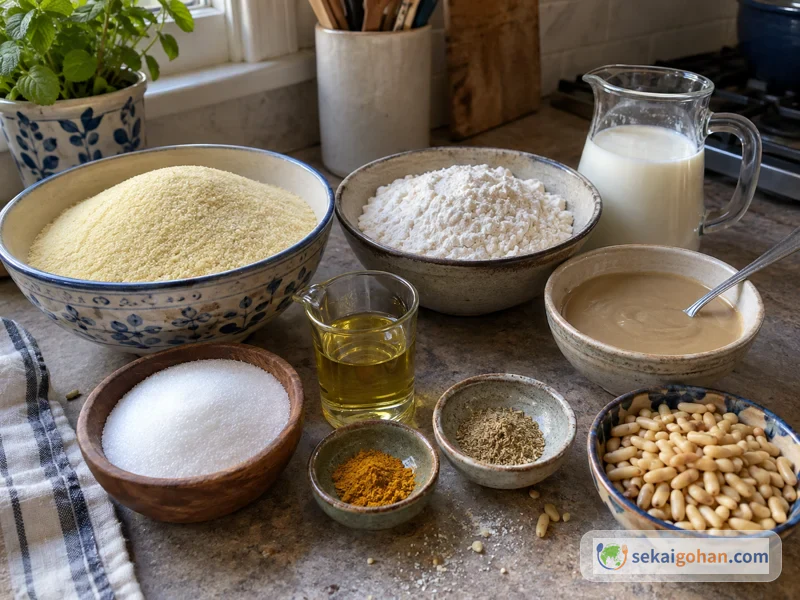
One round pan 10 inches (26 cm) across makes 12 servings. Use a cake pan at least 1.5 inches (4 cm) deep. The table below gives the quantities for one 10 inches (26 cm) round pan. A 9 inches (23 cm) square pan, with a similar inside-bottom area, can also stand in. Check doneness with a skewer in the center. If you put the whole batter in an 8 inches (20 cm) square pan, it becomes thick and the center takes longer to bake.
Even without eggs, this formula includes milk. Because it is an eggless batter that uses milk, it is not a dairy-free sweet. Sugar affects texture as well as sweetness. For your first bake, measure the basic amount exactly. Adjust the sweetness by cutting smaller pieces and pairing with unsweetened tea.
Choosing Ingredients for Sfouf
Fine semolina, made from durum wheat, is the one ingredient worth tracking down early. Check the label for "fine," since the coarse, large-grained type behaves differently; look for it under the generic name semolina in the baking section or online. Milk, sugar, vegetable oil and flour are all in ordinary grocery aisles.
All-purpose flour is the first choice. Cake or pastry flour also works, but its properties differ, so expect a different result.
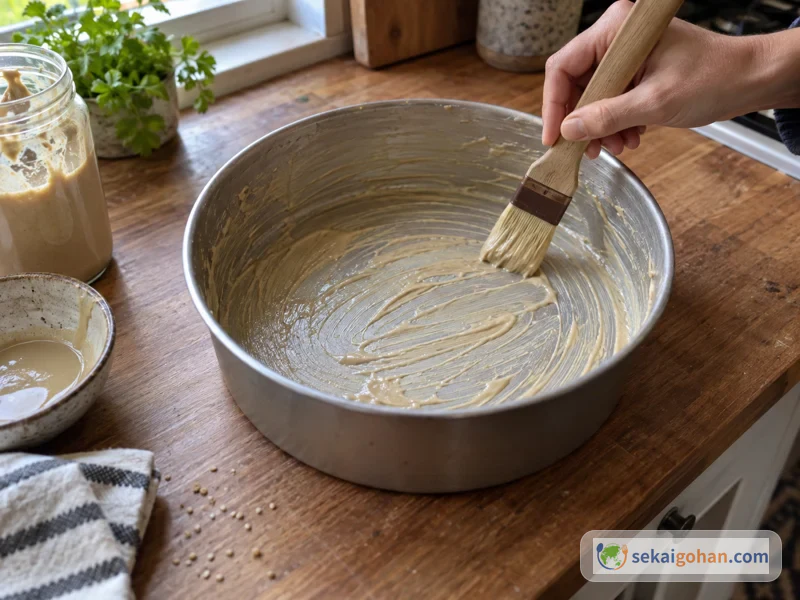
Tahini, or sesame paste, isn't mixed into the batter here; it is brushed onto the bottom and sides of the pan. If you can't find tahini for the pan, use the same volume of unsweetened, unsalted white sesame paste, though the roast level will change the aroma. To avoid sesame altogether, brush the pan lightly with oil instead and accept losing the nuttiness. If the oil in the jar has separated, stir it until smooth before measuring.
In the spice aisle, look for ground turmeric on its own. Curry powder contains several spices and won't give the same aroma. Even if you want a deeper yellow, don't increase the turmeric by much.
Don't let "eggless" lull you into missing other allergens. This formula contains wheat, milk, sesame and pine nuts. If you substitute almonds or soy milk, check the labels for additional allergens. If someone has a food allergy, don't assume the cake is safe because it has no egg; check ingredients, shared equipment and product labels.
Method
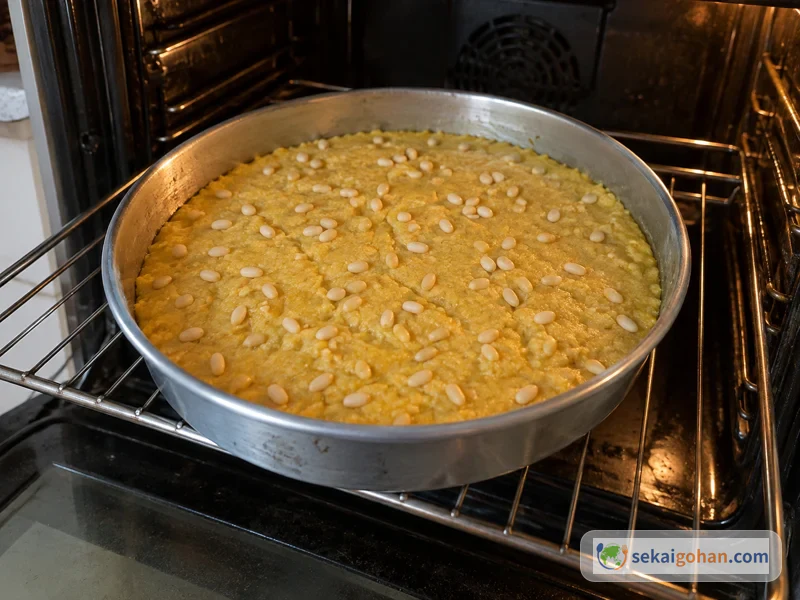
Work takes about 15 minutes, baking 30–35 minutes at 350°F (180°C), and cooling about 50 minutes. Preheat the oven while you work. Use a regular conventional (top and bottom) setting. Ovens have quirks, so do not stop at 30–35 minutes at 350°F (180°C); check with a skewer in the center.
Pine nuts that have colored nicely do not mean the center is cooked. Check the center of the batter and the surface separately. Broiling only to add color is not part of the basic method. Judge by the skewer before the color.
If the edge sticks to the pan even after cooling, slide a thin spatula around the side to release it. Do not tear it away by force. If unsure, cut in the pan and lift out one piece at a time. If any spots went uncoated with tahini, brush more thoroughly next time.
When taking the pan from the oven, use dry oven mitts and do not hold the hot pan with bare hands. Do the cutting only after both pan and cake have cooled, in a stable place.
Fixing Common Sfouf Problems
A dry or hard cake usually comes from overbaking or too much flour. Next time, weigh the flour (converting to cups introduces error), check with a skewer from 30 minutes of baking, and stop mixing as soon as the lumps of flour are gone. A cake that has already dried out can still be eaten with tea or coffee; just shorten the baking time next round.
If it crumbles while warm, check again once it has cooled completely. Crumbling is typical of semolina, and checking the texture after it cools lets you tell it apart from a moist, underbaked center. If the center is underbaked right after you take it out, return it to 350°F (180°C) and bake 3–5 minutes at a time, testing with a skewer each time. Don't store an underbaked cake that has cooled and sat for a while.
If the yellow is too strong or the aroma harsh, look at the turmeric: more of it makes the aroma and bitterness stronger, so use 1 1/2 tsp, level. If the anise bothers you, leave it out next time rather than trying to cover the aroma with sugar or cream after baking. And keep to baking powder; baking soda is not a substitute.
Serving and Variations
Serve sfouf as it is, with tea or coffee, without syrup or cream. One slice with nothing on it: a sweet cake with an unsweetened drink.
| What to change | How | Difference in texture and aroma |
|---|---|---|
| Go lighter on anise | Omit the 1/2 tsp anise seed | Turmeric and sesame scents come to the front |
| Sesame topping | Replace 1 oz (30 g) pine nuts with 1 tbsp white sesame | No big-nut crunch; a fine nuttiness instead |
| Finish with almonds | Replace 1 oz (30 g) pine nuts with 1 oz (30 g) raw sliced almonds | Flat nuts bake on the surface. Watch the color |
| No milk | Replace 1 cup (250 ml) milk with 1 cup (250 ml) unsweetened plant milk | The type of drink changes flavor and bake |
| Odorless oil | Use ½ cup (100 ml) canola oil for the ½ cup (100 ml) neutral oil | Less oil aroma, so the spices and sesame stand out |
Leftover semolina can go into layali lubnan, a cold two-layer dessert. If you'd like to try a filled sweet, there is maamoul, though its method and quantities are different from sfouf.
Cut into 12 portions, one serving of the basic formula is about 272 kcal, 5 g protein, 11 g fat and 1.5 oz (39 g) carbohydrates. These are estimates from standard ingredient values and will change with brands and with nut or milk substitutions.
Storage and FAQ
Can I make it ahead?
It is best the day you bake it. Refrigerate the rest within 1–2 hours of cooking, sealed, at 41°F (5°C) or below, and eat it within 48 hours in the fridge. If the cake is large and slow to cool, divide it into portions to cool.
Can I freeze it?
Yes. Wrap one slice at a time in plastic wrap or similar, then put the pieces in an airtight container or freezer bag so you can take out only what you need. Write the date and finish within 2 months for the best quality. Thaw in the refrigerator and eat within 24 hours once fully thawed.
Can I replace all the semolina with flour?
Not at the same weight. Absorption and texture change, and the result turns dense and doughy.
Is it spicy? Can children eat it?
There is no chili in it, but the earthy aroma of turmeric and the sweet aroma of anise divide tastes. Having no eggs doesn't make it safe for everyone with allergies: check for wheat, milk, sesame and nuts, and check the other ingredients and equipment too.
Eat it within 48 hours in the refrigerator. Do not assume one week at room temperature works in a hot kitchen. Do not eat anything that did not meet the storage conditions or that shows any change.