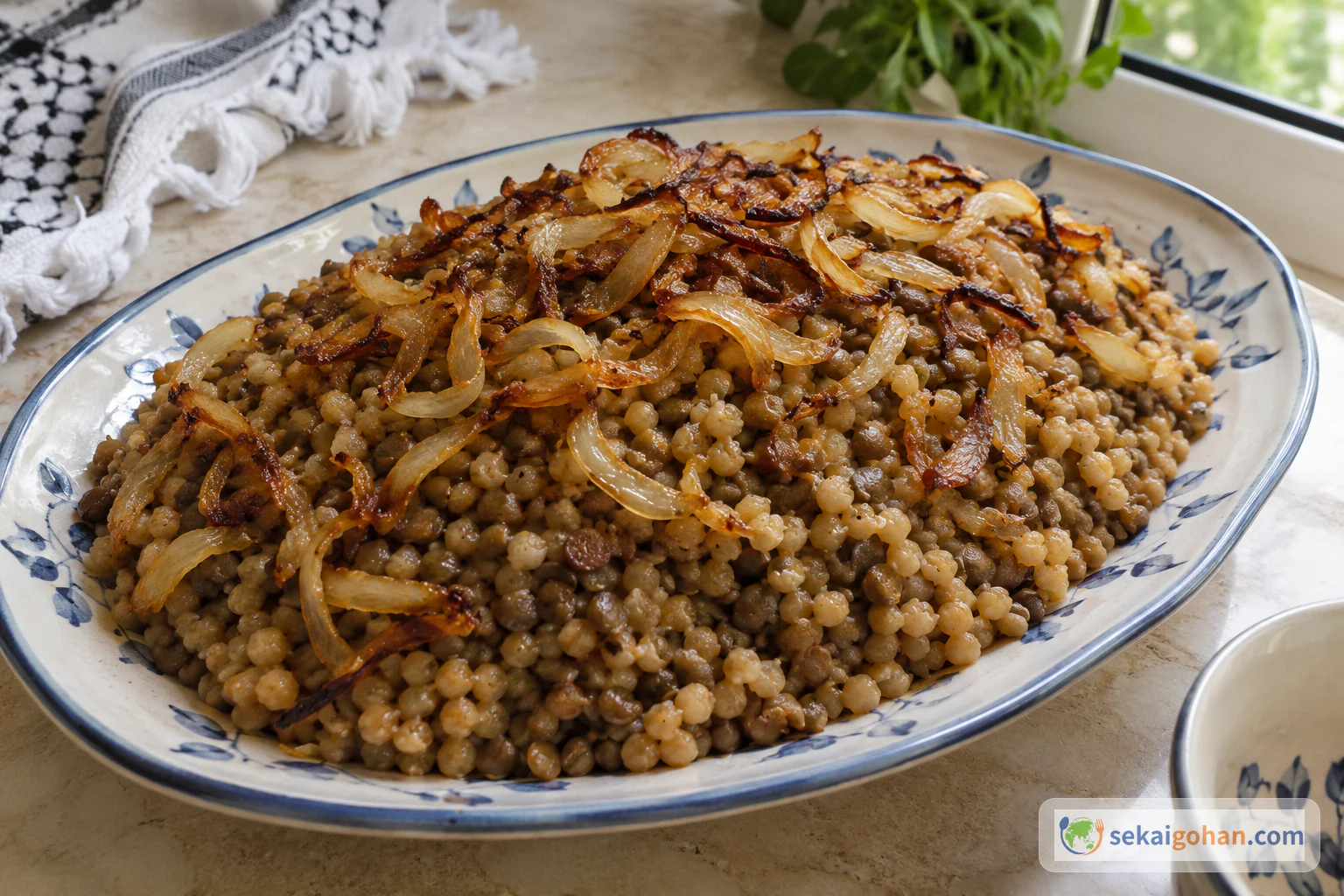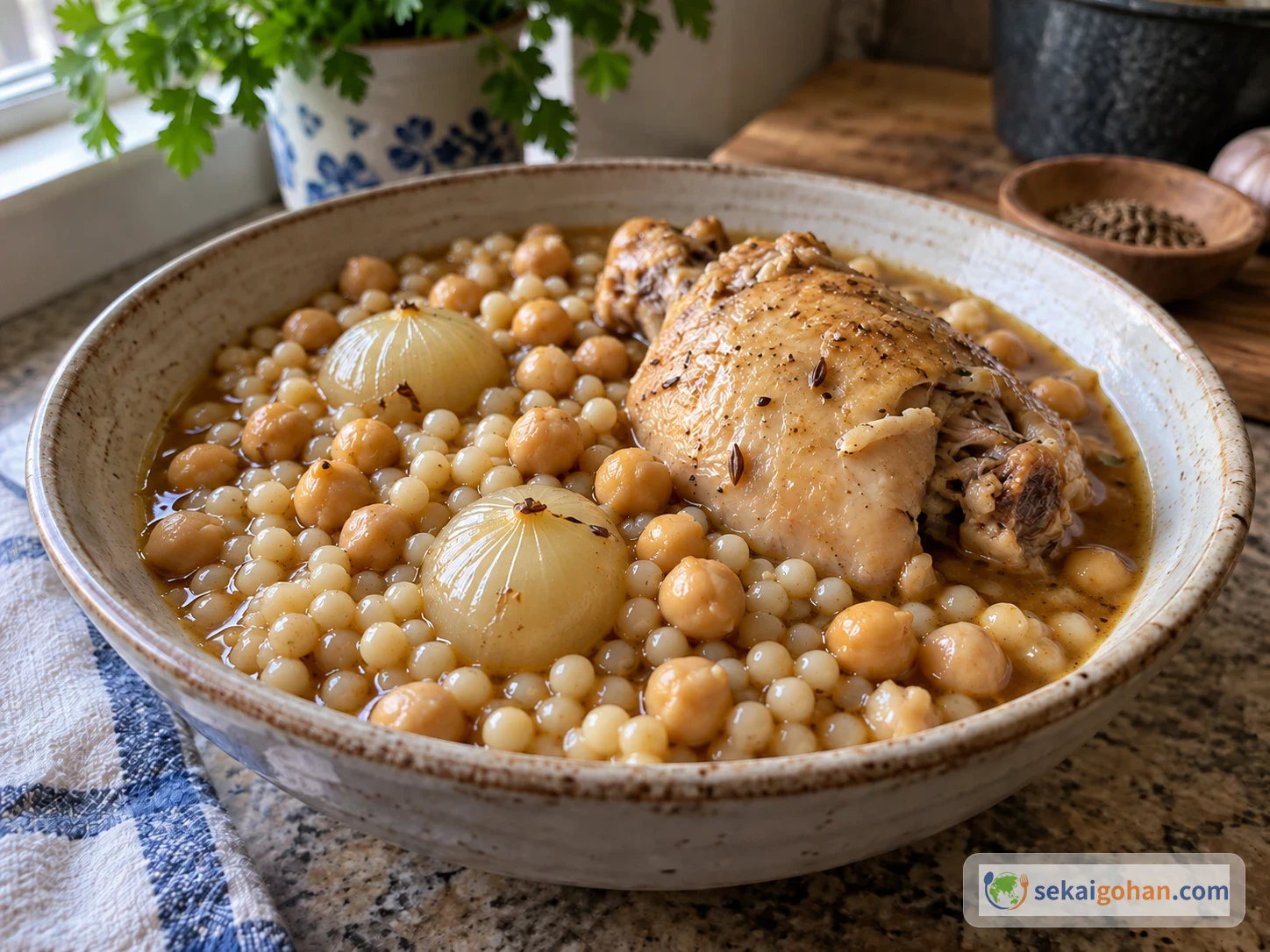
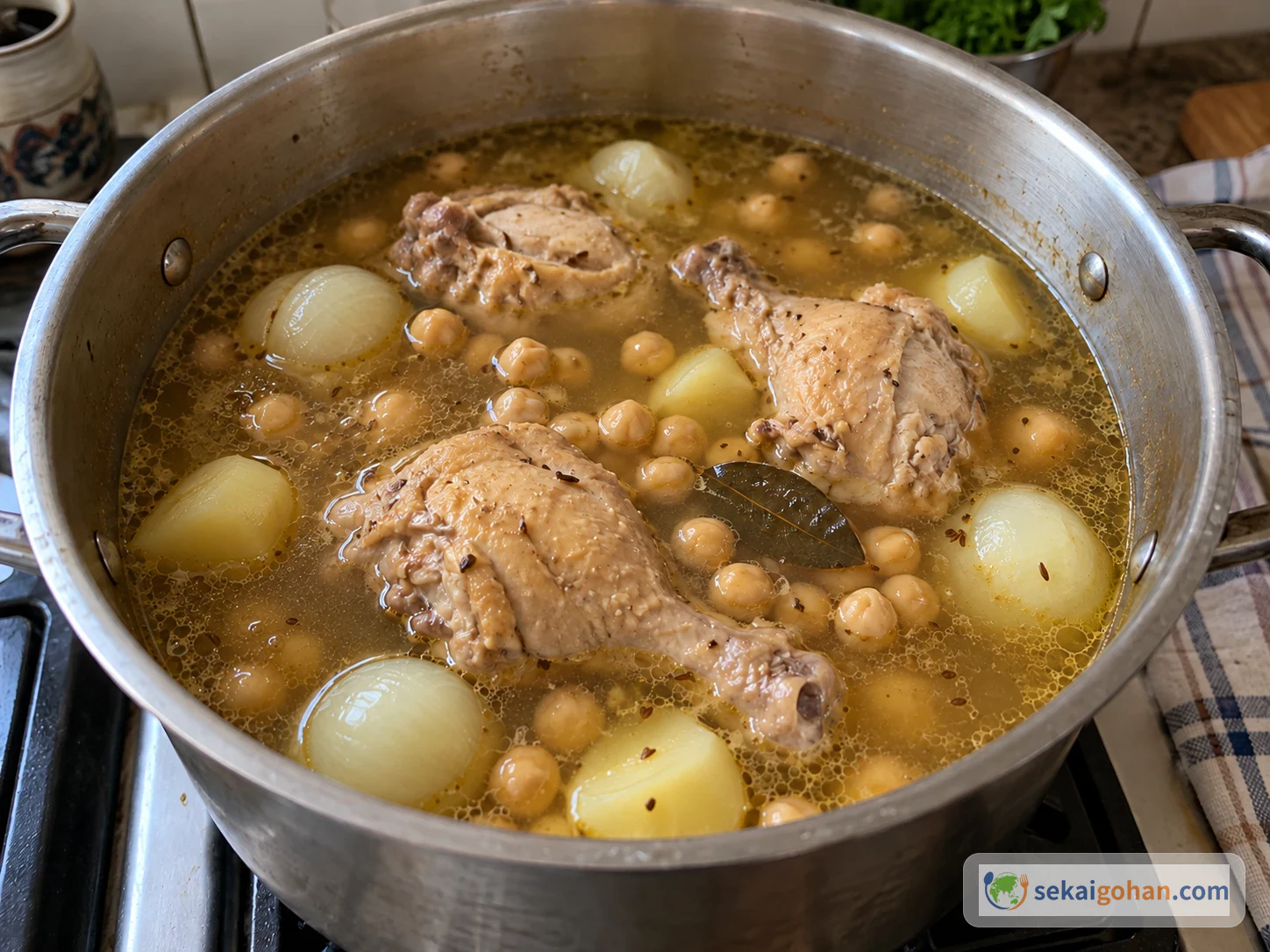
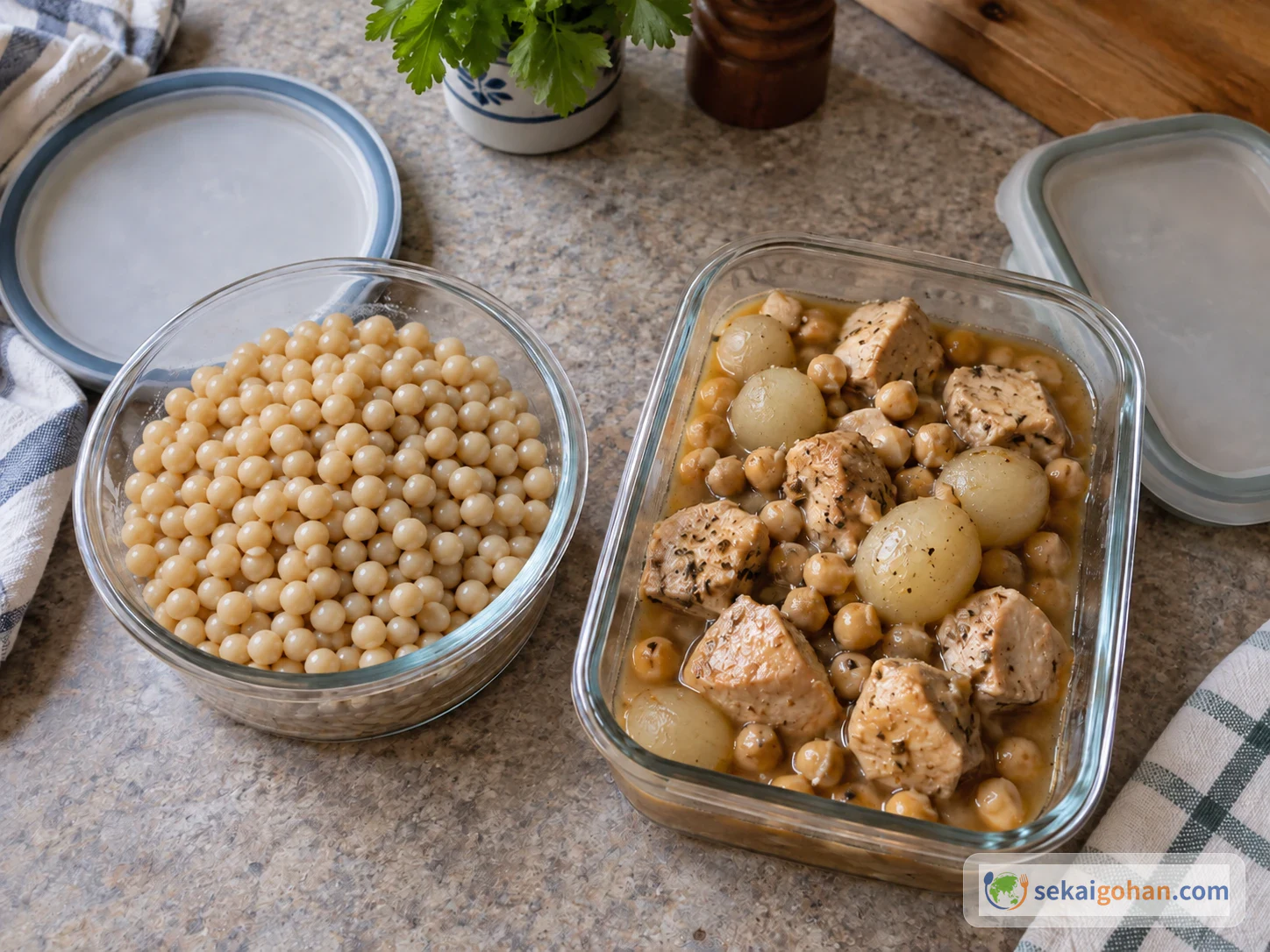
In the middle of the table sit two bowls: one of pearls, and one of broth with chicken, chickpeas and onions floating in it. Everyone spoons out large wheat pearls, ladles plenty of broth over them, and the scent of cinnamon and caraway rises from the bowl. This is Lebanese moghrabieh (Moghrabieh / مغربية): chicken, chickpeas and pearl onions simmered in a gently spiced broth, served with chewy pearls that drink it up.
Moghrabieh at the Lebanese table
The pearls and the name
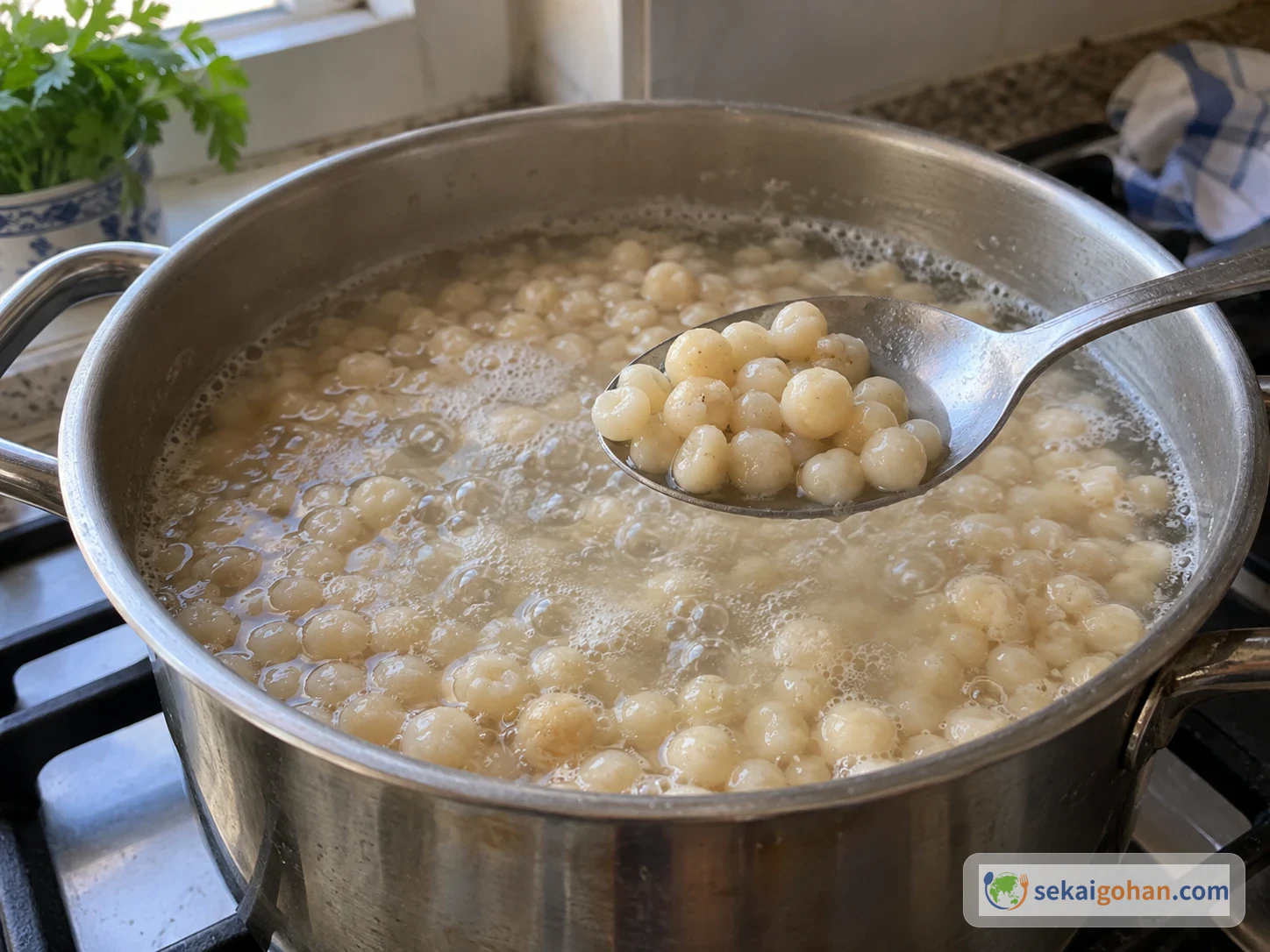
The name moghrabieh is sometimes linked to Morocco, and it belongs to both the pearls and the dish. The pearls and the dish share a name because the pearls are the heart of it. They're made from semolina dough and cooked in water until tender, the way you'd cook dried pasta. They aren't fine couscous: each pearl is big enough to pick up on its own with a spoon, and the texture is pleasantly chewy.
Maftoul looks similar but starts from different raw material. It's bulgur coated in flour and water and rolled into pearls, while Lebanese moghrabieh is semolina dough. Pearls differ by region and household, so this is a dish that changes from household to household.
How moghrabieh is eaten
Three textures share the pot: tender shreds of chicken, soft pearl onions, and chickpeas alongside the wheat pearls. The spices are caraway, cinnamon, cumin and seven-spice, with no hot chili.
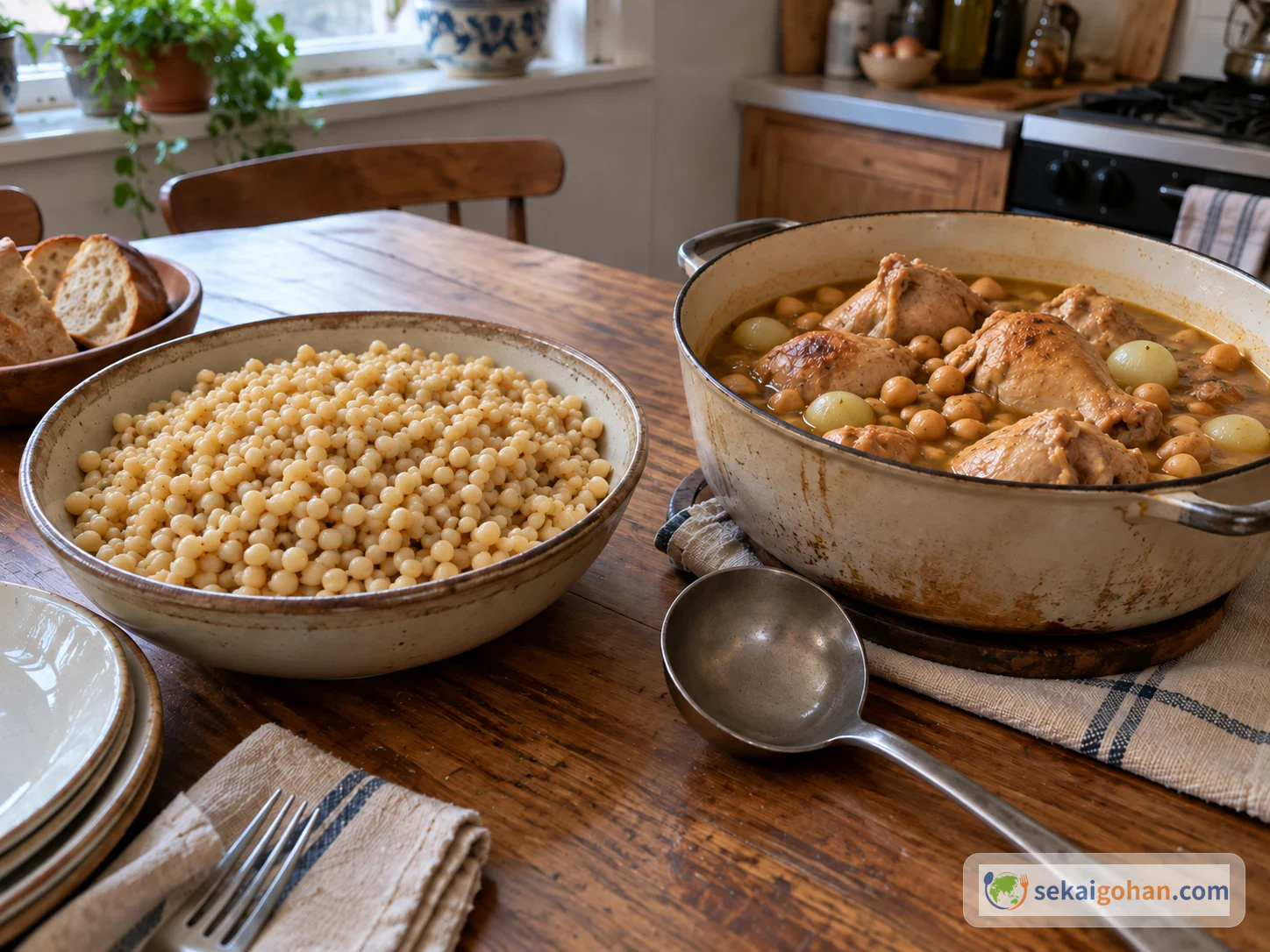
Cooked pearls keep absorbing liquid, so serve from two bowls and keep the broth and toppings separate. Add the broth just before eating. Everyone can make their plate as juicy or as dry as they like, and combining only what you'll eat makes the moisture much easier to manage than stirring everything together in the pot.
Moghrabieh also turns up at celebrations. The Daoud family, who run a restaurant in the village of Rameh in Lower Galilee, eat it on Christmas Eve.
Ingredients (serves 6)
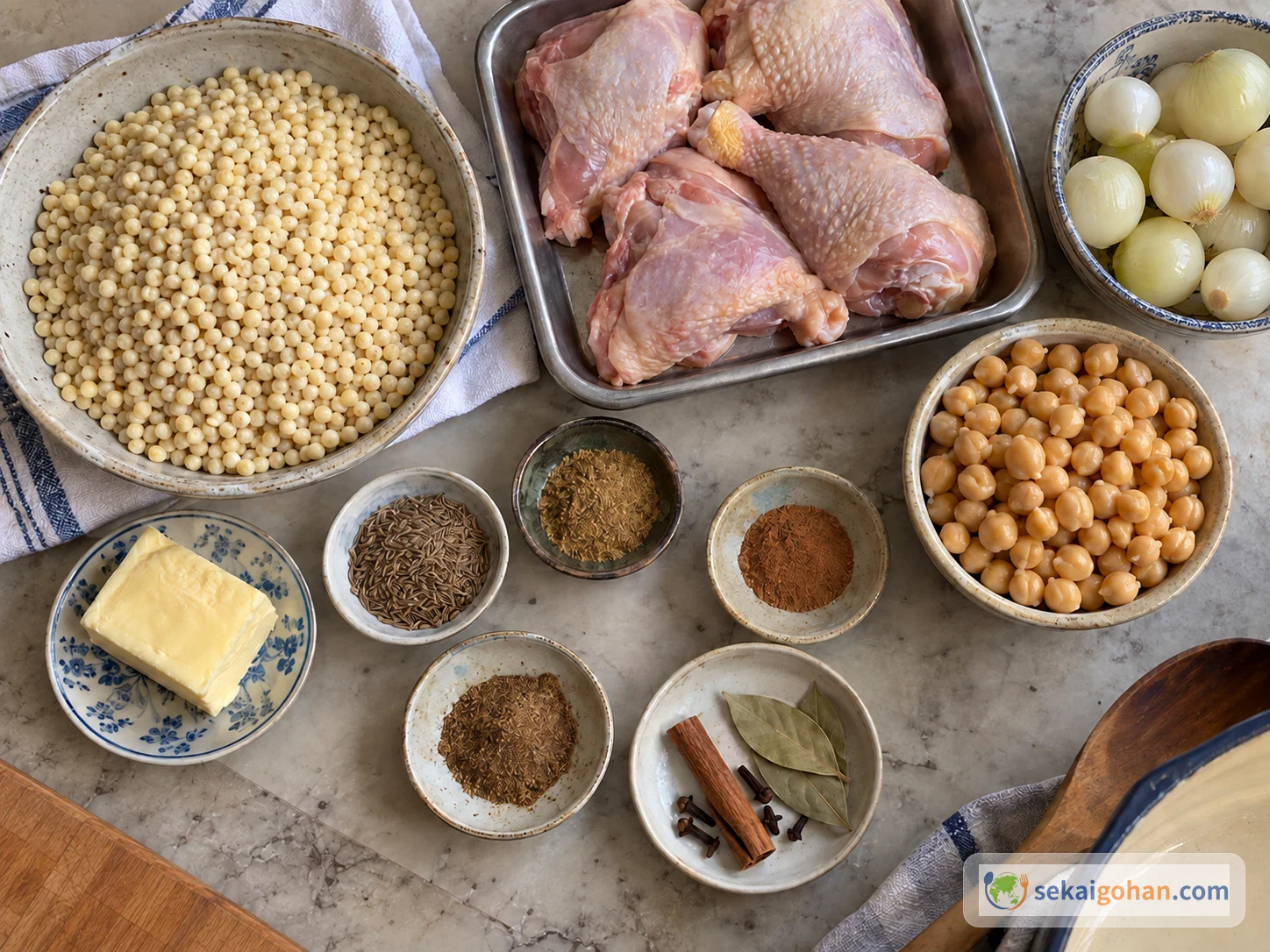
Before shopping, settle which kind of pearl you need. What you use is the dried large type of moghrabieh. Do not buy by the name "pearl couscous" alone, since it can be a fine or different type. Check the shape of the pearls and the cooking instructions on the package. 2 cups of pearls is 480 ml, and 2 cups of onions is also 480 ml (1 cup = 240 ml). The chicken is bone-in pieces totaling 1.2 kg. For a whole chicken, have the shop cut it up.
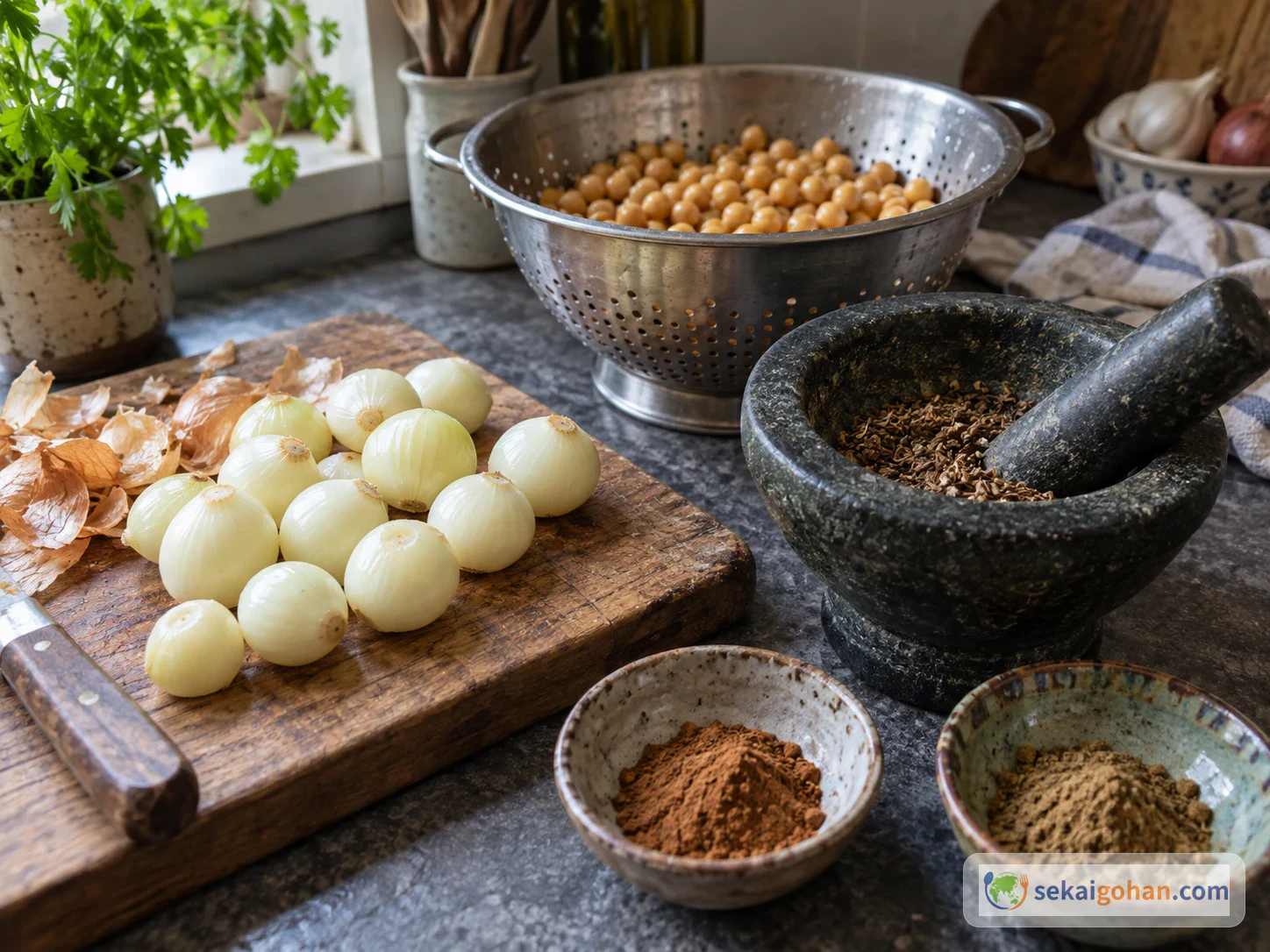
Chicken, large onions to stand in for pearl onions, and butter are easy to buy on an ordinary shopping trip. The ingredients that need a specialty shopping trip are the moghrabieh, caraway seeds and Lebanese seven-spice. Look for moghrabieh at Middle Eastern grocery stores or import food shops online, and choose one labeled as the large type for this dish. The thing to watch is that caraway is not cumin. Swapping in cumin does not give the same aroma, and cumin is already a separate item in this recipe.
If you cannot find pearl onions, peel large onions and cut them into 4 wedges, keeping the root end attached. Cut away the hard root core. If you mince them, they scatter into the broth and do not give the texture of the round whole pearl onions.
Moghrabieh contains wheat, and butter contains dairy. If you have a milk allergy, replace the butter with vegetable oil, and check seasoning labels for cross-contact warnings. If you have a wheat allergy, do not use fine couscous or maftoul instead.
Choosing pearls, meat and spices for moghrabieh
Look for dried moghrabieh. Pearl size and dryness vary by brand, so the cooking time shifts from one package to the next. Chicken is the usual meat, but some households use beef or bone-in lamb; if you switch, change the cooking time to suit the meat.
Seven-spice blends differ from product to product, so check the label. Caraway and cumin work as a pair, so keep both in the pot rather than leaning on one in place of the other.
Method
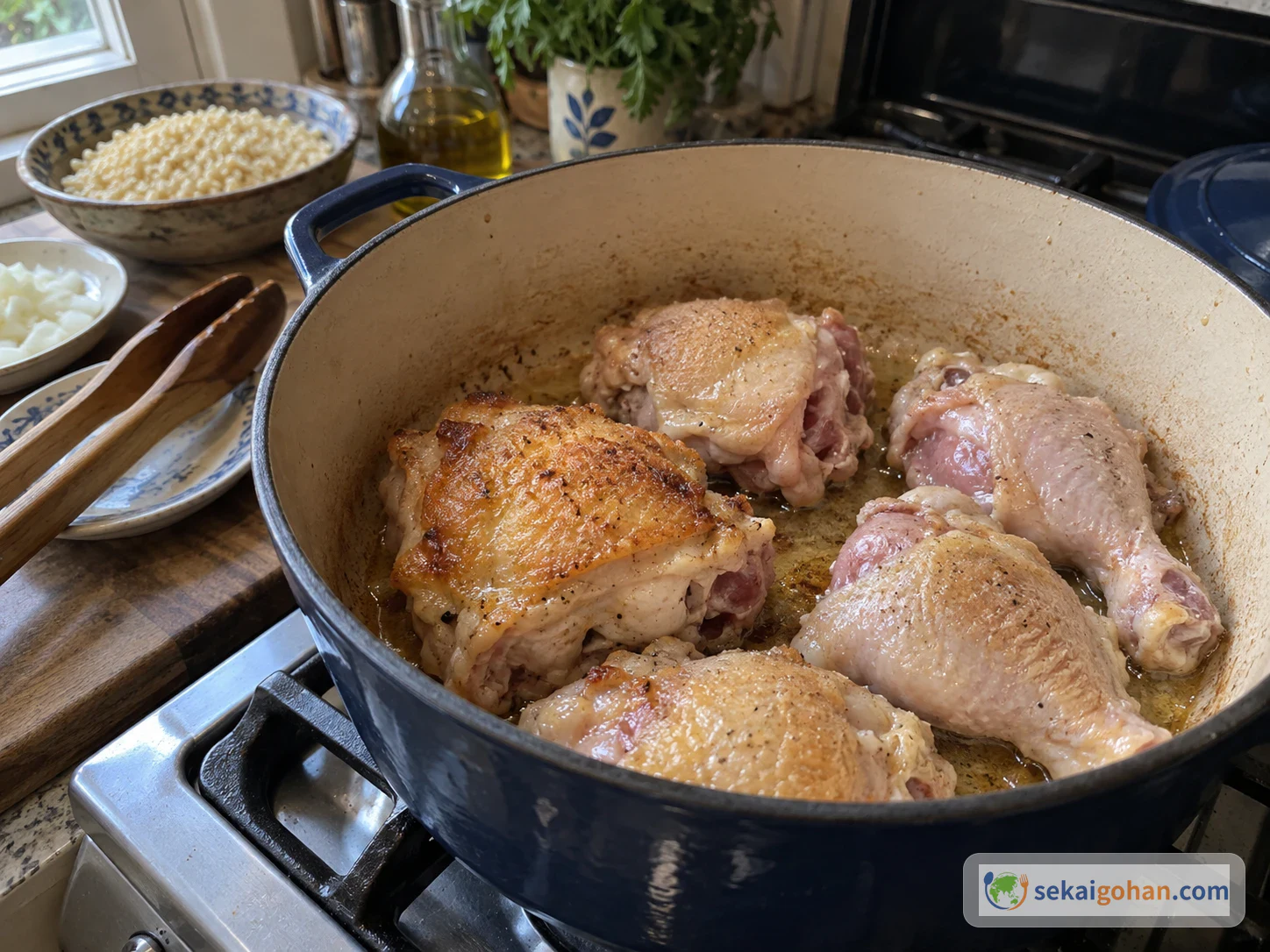
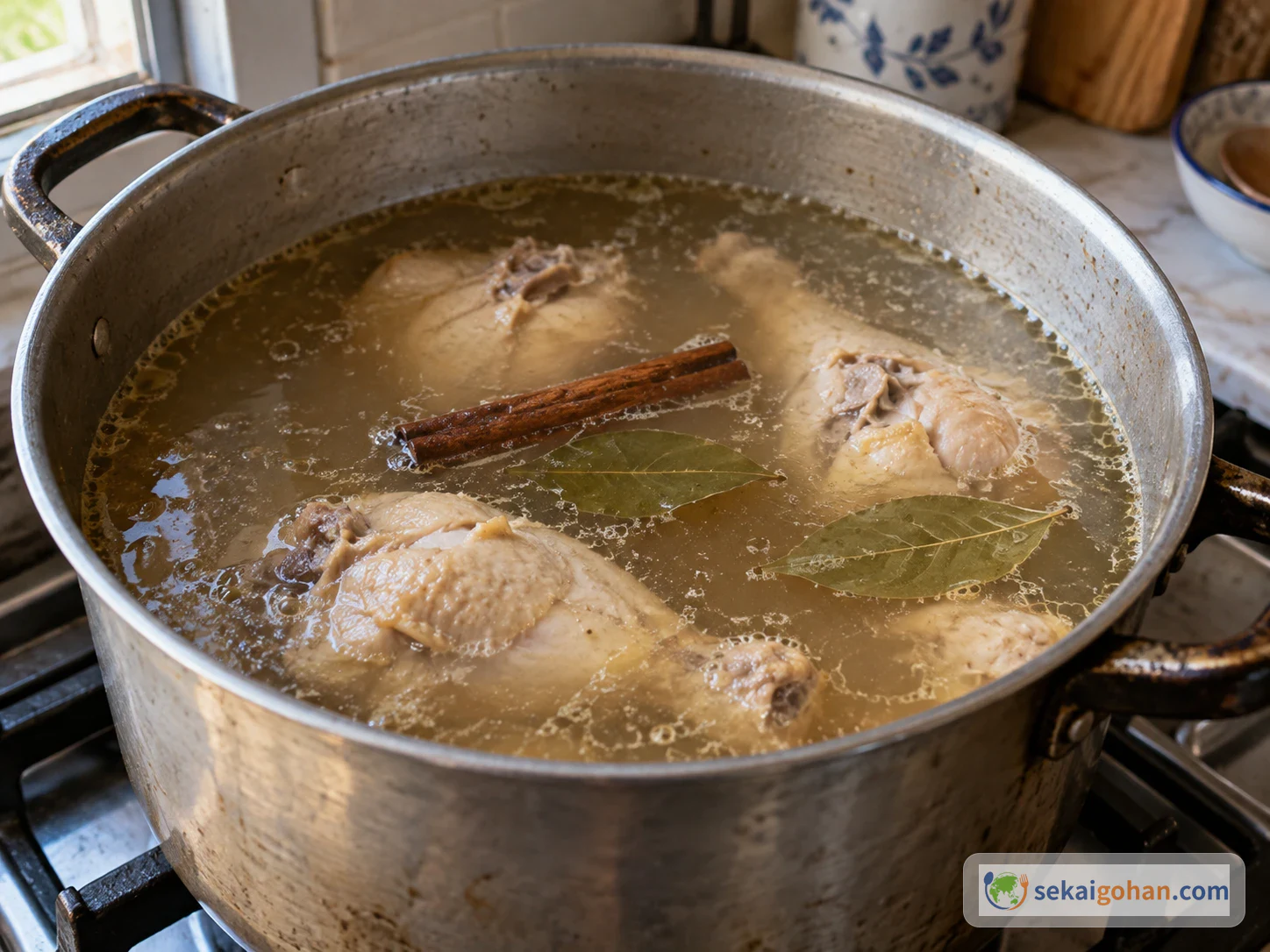
Use two pots: one to simmer the chicken and one to boil the pearls. Keep the chicken pot and the pearl pot separate, and start boiling the pearls in the latter half of the chicken's simmering. Plan on 15 minutes of prep, 80 minutes of cooking including heating, and 95 minutes overall. Follow the boiling time on the package, and check the chicken with a thermometer; time alone does not confirm it is safely cooked.
If you start boiling the water for the pearls around the time you add the onions, the pearls will finish cooking just as the chicken is done. If the pearls finish first, drain them and toss with the finishing butter, and add the broth just before you finish. Until the chicken's temperature check is done, do not serve with tongs that touched the raw meat.
Common moghrabieh problems and fixes
Doneness takes two separate checks: bite a pearl for tenderness, and check the chicken with a thermometer. A hard core is a different problem from too little salt. If you haven't started finishing yet, extend the boil by 2–3 minutes. If you're already finishing, add hot broth 3.5 tbsp (50 ml) at a time, simmer over low heat for 2–3 minutes, and check again. The clock alone won't tell you, so bite one to check the core.
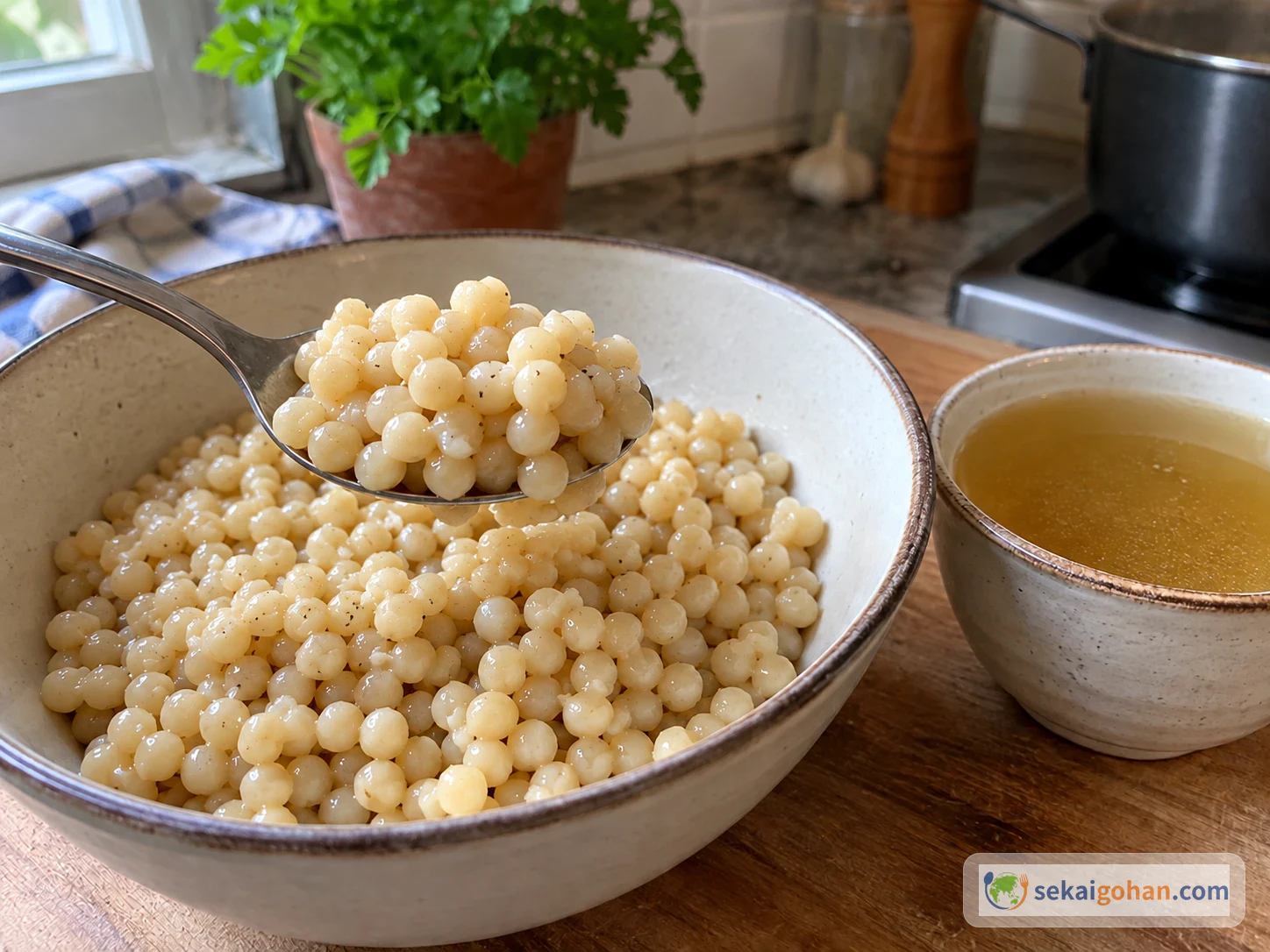
If already tender pearls have absorbed the broth and gone dry, add hot broth 3.5 tbsp (50 ml) at a time just before eating. If the pearls are starting to fall apart, turn off the heat right away and stir less. If the bottom has scorched, leave it be and move only the unscorched top portion to another pot.
Adjust the spices and the saltiness separately. Salt gets stronger as the broth reduces, so taste the broth and the pearls separately, twice: before the pearls absorb it, and before it's poured on the plate. If it turns out too salty, add water ½ cup (100 ml) at a time and reheat; piling on spices won't hide it.
Serving moghrabieh: drier, juicier and other variations
The dry Tripoli version
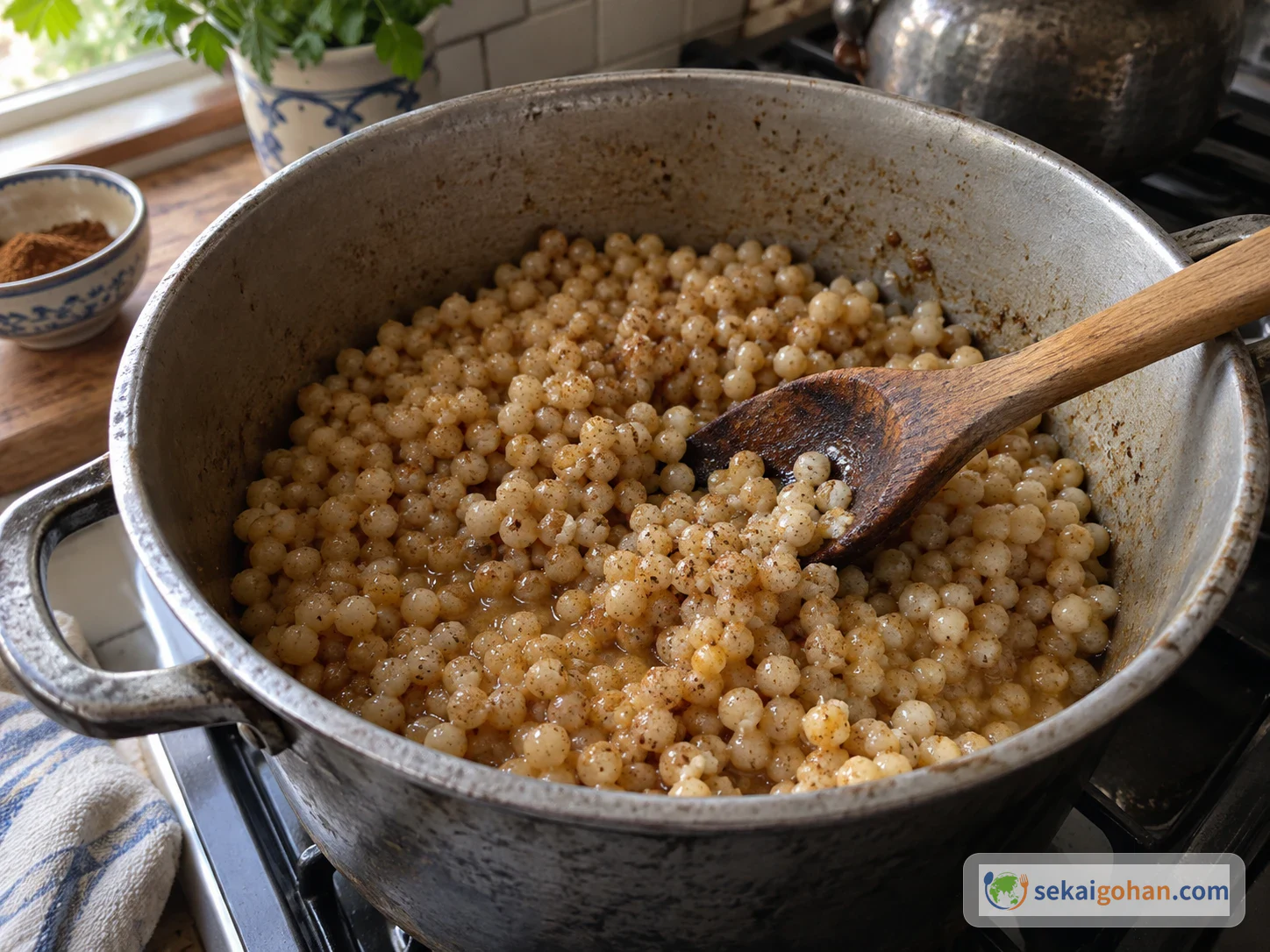
The home version from Tripoli is a drier moghrabieh without chicken, and it's a different method altogether, not the chicken stew with the broth poured off. The pearls are soaked for 1 hour, boiled for about 20 minutes with a cinnamon stick, bay leaf and cloves, then stir-fried with ghee, onion and chickpeas and finished with cinnamon and baharat. It's sometimes eaten wrapped in flatbread, and households freeze it in portions ahead of Ramadan.
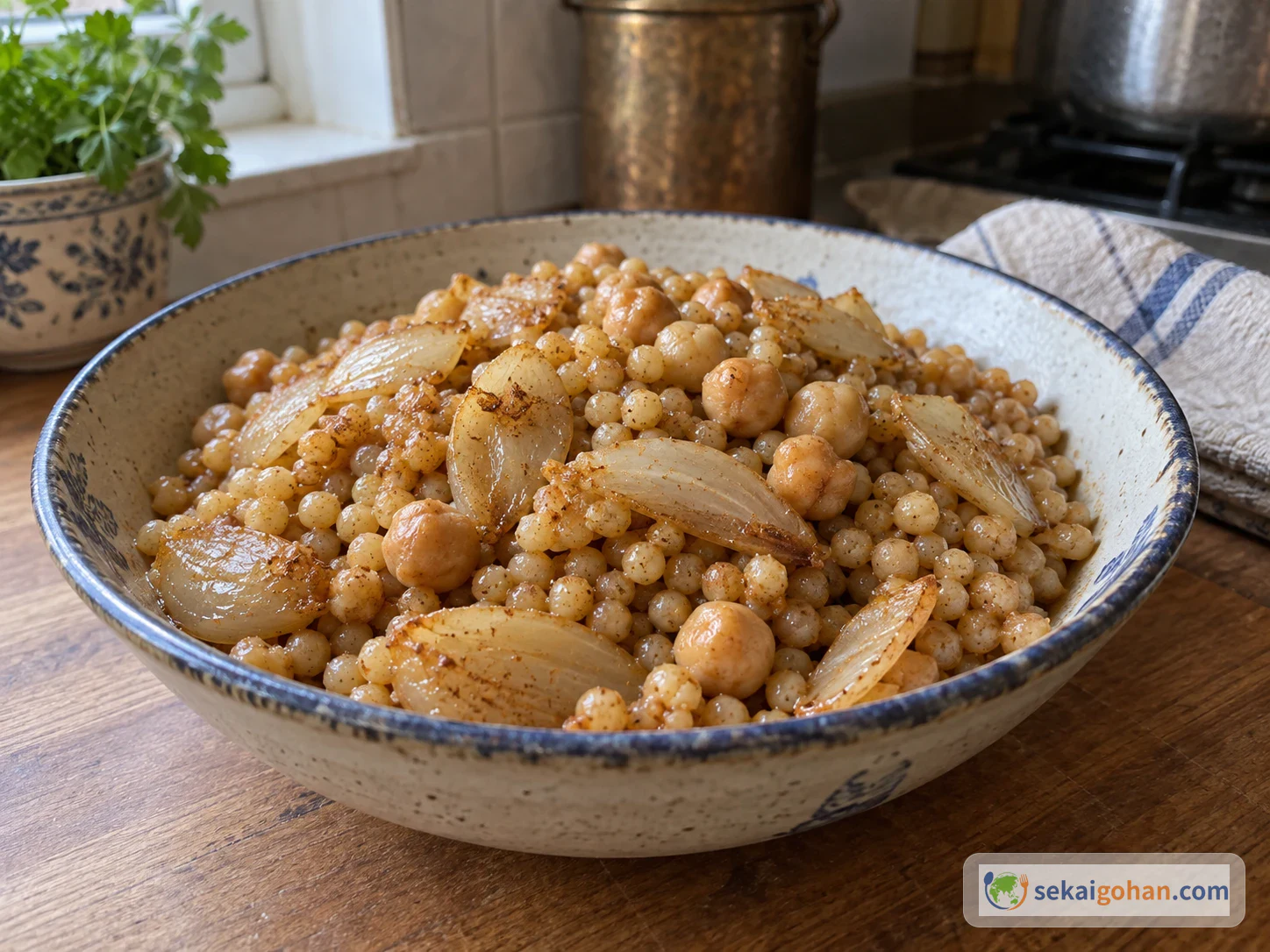
Ways to adjust moghrabieh
For a drier finish at home, or any of the other directions below, here's what to change.
| Way of eating | What changes and by how much | Result and caution |
|---|---|---|
| Enjoy it juicier | Add hot broth ½ cup (100 ml) at a time after serving | Combine pearls and broth just before eating; keep the pearls out of the full pot of broth |
| Keep it drier | Add broth 3.5 tbsp (50 ml) at a time when finishing the pearls | Check for a hard core before adding more broth. Avoid cooking it down until dry |
| Dairy-free | Replace 2 tbsp butter with 2 tbsp vegetable oil | Loses butter aroma. Still contains wheat, so it is not safe for wheat allergy |
| Meatless | Omit the 2.75 lb (1.2 kg) chicken and add 1 more can of chickpeas | Simmer the onions and spices in water. Lacks the umami of chicken |
| Wrapped in bread | 3.5 oz (100 g) of drained pearls and toppings into 1 thin flatbread | Remove the bones if using chicken. Too much liquid tears the bread |
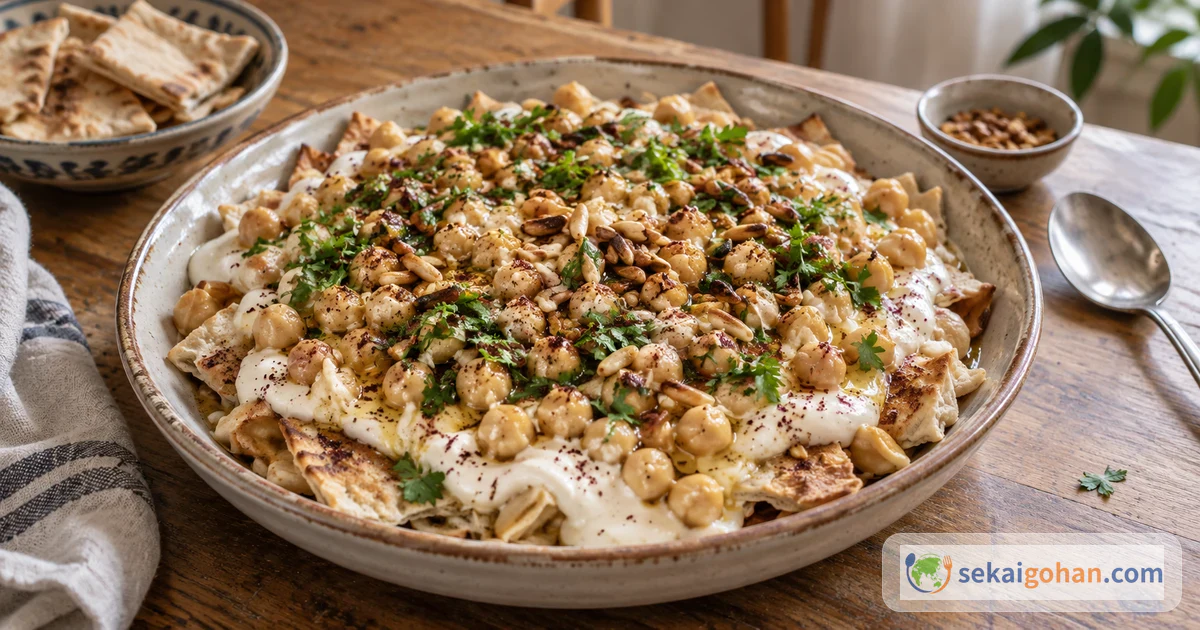
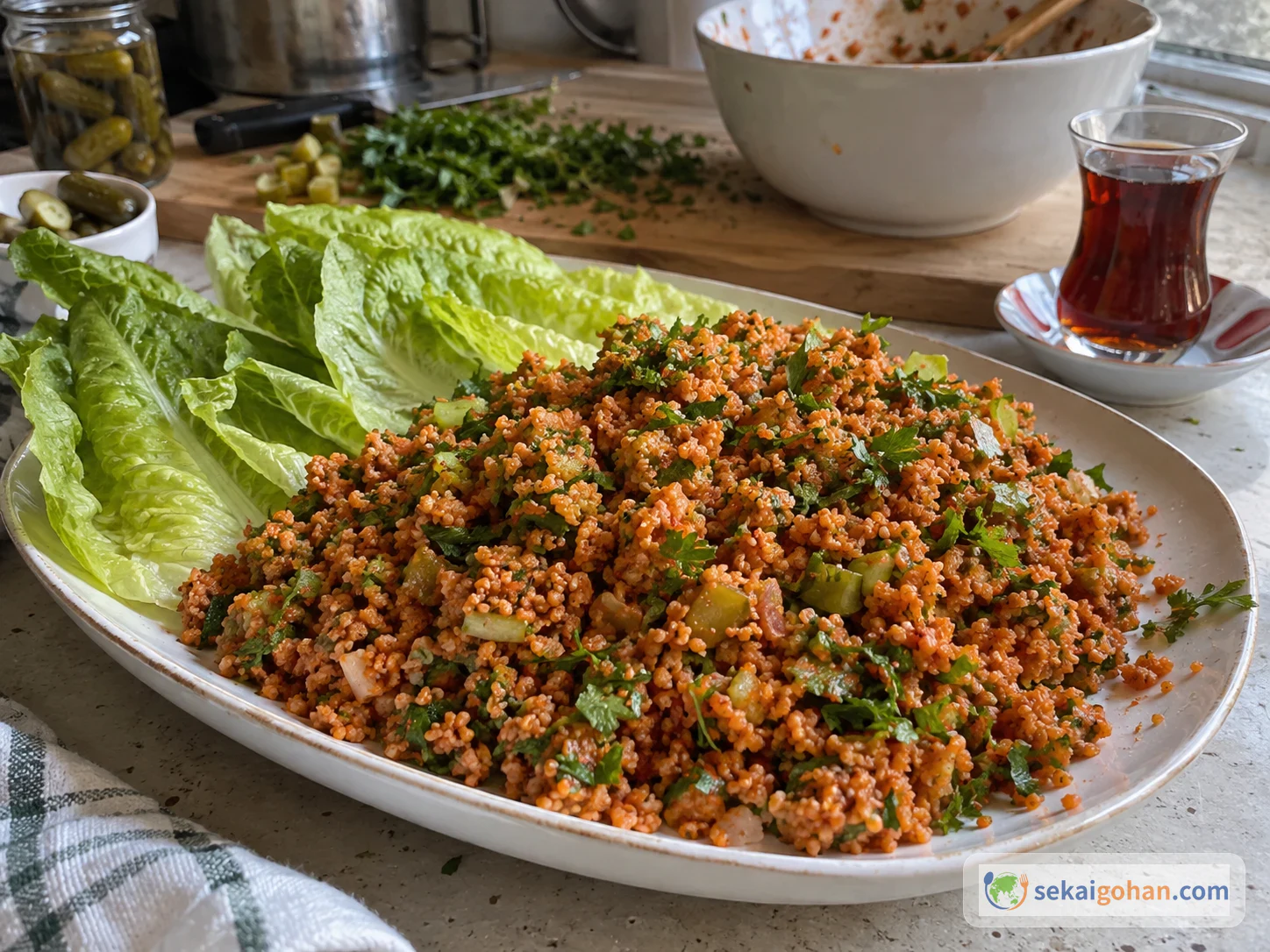
If you like this, fatteh layers chickpeas with yogurt and bread, giving you the same beans in a different texture, and tabbouleh pairs wheat grains with herbs. The bulgur in tabbouleh won't stand in for dried moghrabieh, though.
Storage and FAQ
After serving, separate the pearls from the broth and toppings and divide into shallow containers that are clean. Refrigerate within 2 hours of cooking, or within 1 hour if it has been exposed to heat above 32°C (90°F). Put the divided portions in the fridge while still warm instead of letting the big pot cool to room temperature. Refrigerated at 4°C (40°F) or below, it keeps 3–4 days; frozen at −18°C (0°F) or below, it keeps 2–3 months for best quality.
Can I substitute regular couscous?
Fine couscous won't hold up to the 15–20 minute boil; its grains change shape and texture. If you use it, prepare it by the method on its package and pour the chicken and bean broth over it just before eating. It won't taste the same as moghrabieh.
How do I reheat it the next day?
Warm the refrigerated broth with the chicken, beans and onions over medium heat, and add the pearls once everything is hot. If the liquid is low, add water or broth 50 ml at a time. Check reheating too to an internal temperature of 74°C (165°F) or higher, for chicken and for leftovers alike. In a microwave, stir partway so no cold spots remain. Thaw frozen portions in the refrigerator or in the microwave and reheat at once, never at room temperature.
What if I want it less spicy?
There's no chili, but the dish does contain black pepper and other spices. For children or anyone who dislikes strong flavors, use less black pepper. The cinnamon may smell sweet, but there's no added sugar.
What if I have a wheat or dairy allergy?
Moghrabieh, couscous and maftoul all contain wheat, so none of them is safe if you must avoid wheat. Check ingredient labels and cross-contact warnings, and treat even a small amount as unsafe.
Browning and how easily the chicken shreds tell you about flavor and texture, not safety. Keep utensils that touched the meat away from those used for eating, and check the internal temperature with a thermometer. When serving dishes that contain wheat and dairy, check before serving that no one at the table needs to avoid them.
What are the nutrition values?
The estimate per serving is 598 kcal, protein 33.7 g, fat 27.6 g, carbohydrate 64.9 g and fiber 7.5 g. Treat these as approximations: they change with the brand, the yield of bone and skin, and how much broth you drink.