Ingredients and steps on one page. Print it, or choose “Save as PDF” in the print dialog.
Sekai Gohan
Mansaf: Jordan's National Dish of Lamb in Yogurt Sauce over Saffron Rice
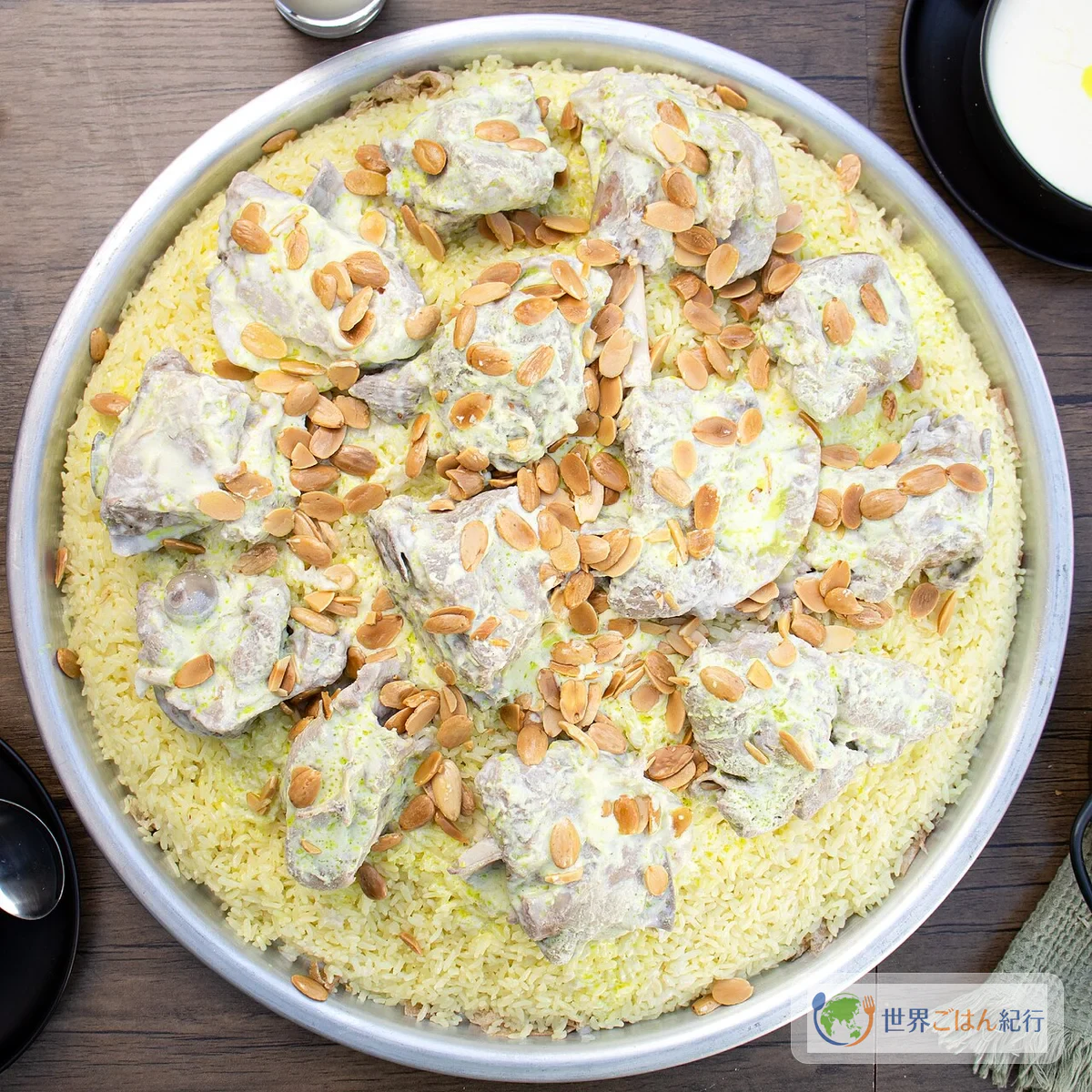
Ingredients
Lamb
| Ingredient | Amount | Substitutes & notes |
|---|---|---|
| Lamb shoulder (bone-in recommended) | 1.75 lb (800 g) | Bones are the key to savoriness. Boneless works too, but shorten the simmering time by 30 minutes. If you dislike lamb, bone-in chicken thighs can stand in |
| Water (for parboiling) | plenty | Removes the gamey smell. Discard the water once it has boiled |
Jameed (yogurt sauce)
| Ingredient | Amount | Substitutes & notes |
|---|---|---|
| Plain yogurt (unsweetened) | 1 lb (500 g) | The best substitute for jameed. Use ordinary plain yogurt, not strained yogurt |
| Egg (medium) | 1 | Essential to keep the yogurt from separating. Bring to room temperature |
| Cornstarch | 1 tbsp | Dissolve in 2 tbsp water. Stabilizes the sauce |
| Water | 2 cups (500 ml) | To adjust the thickness of the sauce |
| Salt | 1 tsp | Jameed is a very salty food. Use more salt when substituting with yogurt |
The most common failure in making mansaf is the yogurt sauce separating (curdling). When heated quickly over high heat, the casein (milk protein) coagulates and turns into crumbly granules. Follow these three rules to prevent it. (1) Mix the egg and cornstarch into the yogurt first. (2) Use room-temperature yogurt (take it out of the refrigerator 30 minutes ahead). (3) Heat over low heat, stirring constantly. It is important to keep stirring in one direction.
Spices and aromatics
| Ingredient | Amount | Substitutes & notes |
|---|---|---|
| Cardamom (whole) | 6 pods | Lightly crush to release the aroma. 1 tsp if ground |
| Bay leaves | 2 | — |
| Cinnamon stick | 1 | 1/2 tsp if ground |
| Allspice | 1 tsp | An all-purpose spice of Middle Eastern cooking |
| Turmeric | 1/2 tsp | Colors the sauce. Too much turns it bitter |
| Black peppercorns (whole) | 1 tsp | — |
| Onion (large) | 1 | Cut into quarters. For simmering |
Rice and toppings
| Ingredient | Amount | Substitutes & notes |
|---|---|---|
| Basmati rice | 10.5 oz (300 g / 2 gō) | Japanese rice also works, but basmati is far closer to the original. The light texture of long-grain rice suits the sauce. (1 gō is a ¾ cup (180 ml) Japanese rice measure) |
| Saffron | a pinch (0.1 g) | Soak in 2 tbsp warm water to bring out the color. 1/4 tsp turmeric can substitute for the color, but the aroma is different |
| Butter | 2 tbsp | Added when cooking the rice |
| Almonds (sliced or whole) | 1 oz (30 g) | Dry-toast in a skillet until fragrant |
| Pine nuts | 20 g | Lightly fry in butter. They are expensive, so cashews can substitute |
| Parsley (chopped) | to taste | For color at the finish |
Basmati is cooked differently from Japanese rice. Soak it in water for 30 minutes, drain in a sieve, then cook it in a pot in which you have melted 2 tbsp butter, together with the saffron water. Use 1.2 times the volume of water to rice (a little more than the 1.1 times used for Japanese rice). When it boils, lower the heat and cook for 12–15 minutes, then turn off the heat and let it steam for 10 minutes. When you lift the lid, golden rice with every grain standing separate appears. The biryani recipe also explains in detail how to handle basmati.
Markook (thin flatbread)
| Ingredient | Amount | Substitutes & notes |
|---|---|---|
| Thin flatbread | 2–3 sheets | Naan or chapati can substitute. Store-bought naan is fine. Tortillas work too |